
.jpg/250px-Panorama_di_Montisola_da_Sulzano_(Foto_Luca_Giarelli).jpg)


.jpg)
Community hub
Recent from talks
Contribute something
Nothing was collected or created yet.
Monte Isola
View on WikipediaMonte Isola (also known by the name of the main island Montisola; Brescian: Muntìsola) is a town and comune in the province of Brescia, in Lombardy. It is one of I Borghi più belli d'Italia ("The most beautiful villages of Italy").[2]
Key Information

.jpg)


It is located on the islands Montisola (the major island, from which it takes the name), Loreto and San Paolo in Lake Iseo and, as of 2015[update], its population is 1,770.[3] Monte Isola's population is approximately spread over eleven villages and hamlets. There are several churches built between the 15th and the 17th century with frescoes, statues, altars in vernacular art.
Geography
[edit]The municipality covers a total area of 12.8 square kilometres (4.9 sq mi); the main island, Monte Isola, with an area of 4.5 square kilometres (1.7 sq mi) ranks as the largest lake island not only in Italy, but also in South and Central Europe, but is dwarfed by the large lake islands in Northern Europe. The peak of the island at 600 metres (1,969 feet) above sea level is 415 metres (1,362 feet) above the average surface elevation of Lake Iseo (185 m (607 ft)), making Monte Isola one of the highest lake islands in Europe.
Monte Isola includes 12 frazioni: Carzano, Cure, Masse, Menzino, Novale, Olzano, Peschiera Maraglio, Porto di Siviano, Sensole, Senzano, Sinchignano and Siviano.
The bordering municipalities are Iseo, Marone, Sale Marasino, Sulzano, Parzanica, Tavernola Bergamasca and Sarnico.
There are two main ports Carzano and Peschiera with a frequent ferry service with the surrounding mainland villages, including Iseo.
History
[edit]There are indications of a Roman settlement. The first written document mentioning "Insulae curtis" dates from 905, when the island was listed among the properties of the monastery of S. Salvatore in Brescia. The family Oldofredi, rulers of Iseo, built on the island two strongholds in the 11th-12th centuries. Members of the powerful Visconti family came here to hunt in 1400. In 1497 Francesco Sforza, duke of Milan, gave the islanders some fishing rights and reduced the taxes. In the same year, Caterina Cornaro, queen of Cyprus, resided a while on the island. During the 19th century the main industry on the island was the construction of boats and the manufacturing of fishing nets.
Peschiera Maraglio and Siviano (the municipal seat)[4] merged in 1929 to create the actual comune.
In June and early July, 2016, Monte Isola was the site of The Floating Piers by artists Christo and Jeanne-Claude.
Main sights
[edit]The single-nave church of San Michele in Peschiera Maraglio was consecrated in 1648. This baroque church is notable for the many frescoes on the walls and on the ceiling and for its wooden carvings.
The shrine of Madonna della Ceriola stands 600 metres (1,969 feet) above sea level, the highest spot on the island. It can only be reached by walking from the small village of Cure.
The fortress Martinengo can be reached from Menzino. It was built in the 15th century by the Oldofredi family and enlarged in the 16th century by Martinengo. After a long period of neglect, it has been renovated in an elegant residence by the architect Vittorio Faglia. In 1497 Catherine Cornaro, queen of Cyprus, sojourned here for a short stay.
Transportation
[edit]Monte Isola can be reached through a network of ferry connection with regular schedules.[5]
Driving restrictions are currently enforced, with mopeds and bicycles only allowed on the island. An extensive grid of dedicated bike lanes and hiking trails span all over the island, reaching the peaceful fishing villages with lakeside cafés and the Madonna della Ceriola chapel, nested near the summit of the island. A circular trail of almost 9 km (6 mi) allows a complete tour of Monte Isola.
A regular bus service, with special buses, is operated by the municipality of Monte Isola.
Photogallery
[edit]-

-
 View of Siviano
 -
 Southern view of Lake Iseo, with Peschiera Maraglio and Sulzano
 -
 The shrine of Madonna della Ceriola in the highest point of the island
 -
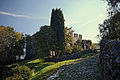 The fortress of Monte Isola
 -
 The streets of Monte Isola decorated with flowers during the Holy Cross week in September
 -
 View of the port in Peschiera Maraglio
 -
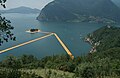 View from Montisola of The Floating Piers and the San Paolo isle in the middle, Gallinarga (Tavernola Bergamasca, province of Bergamo) in the left side of the background, and Clusane (Iseo, BS) in the right side of the background, 2016


References
[edit]- ^ "Popolazione Residente al 1° Gennaio 2018". Italian National Institute of Statistics. Archived from the original on 30 June 2019. Retrieved 16 March 2019.
- ^ "Lombardia" (in Italian). Retrieved 31 July 2023.
- ^ (in Italian) Source: Istat 2015
- ^ (in Italian) Town hall address on municipal website
- ^ "Orari traghetti Montisola". Navigazione Lago d'Iseo (in Italian). Retrieved 6 May 2015.
External links
[edit] Media related to Monte Isola at Wikimedia Commons
- (in Italian) Monte Isola official website
- Awarded "EDEN - European Destinations of Excellence" non traditional tourist destination 2010
- (in Italian) Website of the Santa Croce di Carzano festival
| Location |  | |
|---|---|---|
| Settlements | ||
| Islands | ||
| Rivers |
| |
| Valleys | ||
| International | |
|---|---|
| Other | |

Monte Isola
View on GrokipediaGeography
Location and Topography
Monte Isola is situated in the central portion of Lake Iseo, within the province of Brescia in Lombardy, northern Italy, at approximate coordinates 45°43′N 10°05′E.[5] Lake Iseo, the fourth largest lake in Italy with a surface area of about 65 km², is a glacial lake fed primarily by the Oglio River and other tributaries.[6] The island lies entirely within the lake, bordered across the water by the communes of Iseo to the southwest, Provaglio d'Iseo to the west, Sale Marasino to the southeast, and Marone to the northeast.[1] The comune also includes the small uninhabited islets of San Paolo and Loreto. As Europe's largest lake island in Central and Southern Europe, Monte Isola encompasses a main land area of 4.5 km², while the administrative comune extends to 12.8 km² including adjacent lake waters. [7] The terrain rises steeply from the lake surface, which sits at 185 m above sea level, reaching a maximum elevation of 600 m at the summit.[8] This peak, marked by the Sanctuary of the Madonna della Ceriola, stands 415 m above the lake, offering panoramic views of the surrounding Prealpine landscape.[1] Geologically, Monte Isola originated as a morainic hill formed by deposits from Pleistocene glaciers, particularly during phases prior to the Last Glacial Maximum, which shaped the overall morphology of Lake Iseo through erosional and depositional processes.[9] The island's topography features undulating hills and escarpments, with submerged extensions visible in bathymetric profiles, reflecting the ancient glacial dynamics of the Oglio glacier system that carved the lake basin.[9]Frazioni and Settlements
Monte Isola is administratively divided into 12 frazioni, serving as the primary settlements that dot the island's landscape from the lakeshore to the interior hills. These divisions encompass villages and hamlets that collectively cover the island's 4.5 square kilometers, with spatial organization influenced by the topography, including a central mountain rising to 600 meters.[10] The frazioni are: Carzano, Cure, Masse, Menzino, Novale, Olzano, Peschiera Maraglio, Porto di Siviano, Sensole, Senzano, Sinchignano, and Siviano. Siviano functions as the municipal administrative center, housing the town hall and key public services at Località Siviano 76. Peschiera Maraglio stands out as the main ferry port, accommodating the majority of arrivals from the mainland ports of Sulzano and Sale Marasino.[11][12] Settlements exhibit elevation-based variations, with lakeside frazioni such as Peschiera Maraglio, Carzano, and Porto di Siviano situated at around 185 meters above sea level along the perimeter for accessibility by water, while hillside ones like Cure, Masse, and Olzano perch higher on the slopes, offering elevated views but connected by pedestrian paths and limited internal transport. This arrangement integrates the island's coastal fringe with its upland interior.[10]Environment and Climate
Natural Features
Monte Isola, situated in Lake Iseo, experiences a humid subtropical climate with Mediterranean influences, characterized by mild, wet winters and warm, dry summers. Average annual temperatures range from about 10°C in winter to 25°C in summer, with yearly precipitation averaging around 1,000 mm, though amounts increase in the higher elevations of the island's hills due to orographic effects.[13][14] The island's vegetation reflects its lakeside Mediterranean setting, dominated by olive groves, vineyards, chestnut woods, and maquis shrubland adapted to the terraced landscapes shaped by historical agriculture. Over 15,000 olive trees cover significant portions, particularly along southern slopes, alongside vines and chestnut forests in higher areas, with Mediterranean species like palms and bougainvilleas adding to the diverse flora.[15][16] Surrounded entirely by the waters of Lake Iseo, Monte Isola lacks major rivers but features small streams cascading down its slopes. These water elements contribute to the island's humid microclimate and support its terraced ecosystems.[17] A prominent scenic feature is the 9 km circular trail encircling the island, offering panoramic views of Lake Iseo and the surrounding Pre-Alps while passing through biodiversity hotspots suitable for birdwatching. The trail highlights the varied topography, from lakeside paths to elevated vantage points, emphasizing the island's natural harmony.[15][18]Ecology and Conservation
Monte Isola plays a vital role in the broader ecosystem of Lake Iseo, supporting diverse aquatic and terrestrial biodiversity. The lake's waters harbor native fish species such as the European perch (Perca fluviatilis) and Alpine char (Salvelinus alpinus), which form the basis of the local food web and sustain traditional fishing practices.[19] Avian populations thrive around the island's shores and hills, including herons like the purple heron (Ardea purpurea) and grey heron (Ardea cinerea), alongside birds of prey such as the black kite (Milvus migrans).[20] The island's hilly terrain hosts protected flora, notably wild orchids and the rare European peony (Paeonia officinalis), which benefit from the varied microclimates created by the topography.[21] Environmental challenges threaten this biodiversity. Lake Iseo experiences persistent anoxia in its deep hypolimnetic layers, coupled with phosphorus accumulation from sediment release, leading to eutrophication and reduced water quality that impacts fish and plankton communities.[22][23] Climate change further compounds these issues, with rising temperatures and droughts reducing olive yields in terraced groves, altering local vegetation dynamics.[24] Conservation efforts focus on mitigating these threats while preserving the island's ecological integrity. The surrounding Lake Iseo wetlands, including the Torbiere del Sebino, form a key component of the EU Natura 2000 network as a Special Area of Conservation, protecting habitats for over 200 bird species and priority flora.[25] Monte Isola itself is recognized in the European Commission's EDEN network for exemplary sustainable tourism practices that support environmental preservation.[26] Local initiatives promote sustainable hiking on designated paths to limit habitat disturbance, complemented by the restoration and maintenance of anti-erosion terracing in olive orchards, which stabilizes slopes and supports biodiversity.[26] Following the 2016 Floating Piers installation, environmental monitoring has tracked recovery of lakebed habitats, confirming minimal long-term disruption to water quality and biota as of recent assessments.[27]History
Ancient and Medieval History
Archaeological evidence points to early human activity on Monte Isola during the Roman period, with discoveries of tombs and an inscription fragment indicating settlement on the island, while nearby Iseo served as the primary regional center under Roman administration.[28] By 16 BC, much of Lake Iseo, known then as Sebinus Lacus, fell under Roman rule and was incorporated into the Res Publica Camunnorum, fostering agricultural advancements including the introduction of vines, chestnuts, and olive trees.[3] The first documented reference to Monte Isola appears in a 905 AD record as "Insulae curtis," describing a curtis or estate belonging to the monastery of S. Salvatore (later S. Giulia) in Brescia, which included four houses, arable lands, vineyards, a forest, a harbor, and fisheries.[29] This early medieval notation highlights the island's role in monastic land management during the Lombard and Carolingian eras, with Benedictine nuns from S. Salvatore tasked by Lombard rulers in the 8th century with reclaiming lake territories.[3] In the 11th and 12th centuries, the Oldofredi family, lords of nearby Iseo, constructed defensive strongholds on Monte Isola to secure control over the lake region, including fortifications in Peschiera Maraglio, Sensole, and Siviano that capitalized on the island's elevated topography for strategic defense.[30] By the 14th century, the island attracted the Visconti family of Milan, who used it as a hunting ground; members of the Visconti family visited Peschiera Maraglio as guests of the Oldofredi for duck hunting around 1400.[3] Feudal control shifted with Brescia's reoccupation of Lake Iseo territories in 1248 following a defeat of Emperor Frederick II, integrating Monte Isola into broader Brescian domains under local lords.[3] In 1426, the Venetian Republic assumed dominion over the area, liberalizing fishing rights and abolishing feudal privileges to boost local economies.[3] A pivotal event occurred in 1497 when Duke Ludovico Sforza of Milan granted islanders expanded fishing privileges and tax reductions, easing burdens on the community.[31] That same year, Caterina Cornaro, the exiled Queen of Cyprus, visited and resided briefly on the island, hosted in Siviano.[32]Modern History
In the 19th century, Monte Isola's economy began transitioning from traditional fishing to specialized net-making, with mechanized workshops emerging around 1857 to produce fishing nets on a larger scale.[33] By the late 19th century, the island had gained widespread recognition as a center for fishing net production, supported by improved steam navigation on Lake Iseo starting in 1834, which facilitated trade and distribution.[3] This shift was driven by the liberalization of fishing rights under earlier Venetian rule, but by the early 20th century, net-making had become a dominant craft, employing many residents and exporting to other Italian lake regions.[34] In 1929, the island's two separate communes—Peschiera Maraglio and Siviano—merged to form the unified Comune di Monte Isola, with its administrative seat established in Siviano, streamlining local governance amid these economic changes.[35] Following World War II, traditional crafts like net-making and fishing experienced a gradual decline as Italy's broader economic miracle emphasized industrialization and urbanization, reducing demand for manual lake-based industries.[36] Electricity arrived on the island in 1922–1923, aiding modernization, but post-war reconstruction initially strained resources before tourism began to rise in the 1960s, drawing visitors to the island's natural beauty and car-free paths.[3] This period marked a pivotal economic pivot, with tourism revitalizing the local economy by promoting walking, cycling, and boating, while traditional fishing persisted on a smaller scale.[34] A landmark event in recent decades was the 2016 installation of "The Floating Piers" by artists Christo and Jeanne-Claude, a temporary 3-kilometer saffron-colored walkway connecting Monte Isola to the mainland and the islet of San Paolo from June 18 to July 3.[37] The project, conceived in 1970 and realized after decades of planning, attracted over 1.2 million visitors, overwhelming local transportation and prompting nighttime closures for repairs and sanitation to protect island residents.[38] It highlighted Monte Isola's accessibility but strained infrastructure, including ferries and paths, leading to temporary delays in regional trains and calls for better crowd management in future events.[39] As of 2024–2025, Monte Isola has seen no significant political changes, maintaining its focus on sustainable development amid post-COVID tourism recovery, with emphasis on eco-friendly practices like restricted vehicle use and promotion of local trails and ferries to handle increased visitors responsibly.[1] The island's tourism has rebounded strongly, aligning with Italy's national surge in sustainable travel, prioritizing low-impact activities such as olive grove walks and traditional fishing demonstrations to balance economic growth with environmental preservation.[26]Administration and Demographics
Government and Administration
Monte Isola functions as a comune within the Province of Brescia in the Lombardy region of northern Italy, encompassing an area of 12.61 square kilometers[40] and divided into 12 frazioni under its unified jurisdiction.[41] The administrative seat is located in the frazione of Siviano, where the municipal offices are based at Località Siviano 76.[11] The size of the town council is influenced by the resident population, adhering to standard Italian municipal guidelines for small comunes.[42] Governance is led by the mayor (sindaco), currently Lorenzo Ziliani, who assumed office on June 10, 2024, following local elections, and presides over the municipal junta (giunta comunale) and town council (consiglio comunale).[43][44] The council serves as the representative body for community decisions, while the junta handles executive functions. Key offices include the administrative sector (segreteria), which manages protocol, correspondence, school services, and cultural initiatives; social services, coordinated through dedicated administrative areas for community welfare; and the local police (polizia locale), responsible for public order, traffic enforcement, and judicial support on the island.[45][46] Local policies emphasize environmental protection and sustainable living, including car-free regulations that ban private automobiles for non-residents and limit vehicles to authorized service trucks, ambulances, and residents' mopeds to maintain peace and reduce emissions.[47] Environmental zoning classifies the entire island, including its frazioni, as a "zona di particolare interesse ambientale" under Italian legislation, restricting development to preserve biodiversity, olive groves, and lakeside habitats while guiding land use in settlements like Siviano and Peschiera Maraglio.[48] The comune integrates with Lake Iseo management by participating in the Visit Lake Iseo association, a collaboration of 16 lakeside municipalities and provincial authorities focused on coordinated conservation, tourism promotion, and water resource oversight.[49] As of 2025, Monte Isola continues to advance sustainability through EU-supported initiatives, notably its 2010 designation under the European Commission's Destination of Excellence (EDEN) program, which funds and promotes administrative projects for eco-friendly tourism, waste reduction, and habitat restoration across the island.[26]Population and Society
As of December 31, 2023, the population of Monte Isola stood at 1,611 residents, reflecting a slight decline from 1,754 in 2015 primarily due to emigration and a negative natural balance of births and deaths.[2] With the ongoing national census starting in October 2025, provisional estimates as of July 2025 indicate a population of approximately 1,584, suggesting continued stability around 1,600 amid seasonal tourism influences that support local retention.[50] The population is distributed across 12 frazioni, or hamlets, such as Siviano, Peschiera Maraglio, and Carzano, which serve as key population centers.[41] Demographically, the island exhibits an aging profile, with about 9% of residents under 15 years old, 62% aged 15-64, and 29% over 65, contributing to an average age of 49.7 years and an old-age index of 336 elderly per 100 youth.[51] Society on Monte Isola centers around close-knit communities historically rooted in fishing traditions, particularly in hamlets like Peschiera Maraglio and Carzano, where residents maintain strong interpersonal ties fostering cooperation and hospitality.[52] The primary language is Italian, supplemented by the local Brescian dialect in everyday interactions among natives.[53] Education is provided through island-based institutions, including kindergartens, primary schools, and a lower secondary school in Siviano, while older students typically access high schools on the mainland via ferry.[54]Economy
Traditional Industries
Fishing has long been the cornerstone of Monte Isola's economy, with islanders granted specific rights to the practice in 1497 by Francesco Sforza, Duke of Milan, who reduced taxes and awarded certain fishing privileges to the inhabitants.[31] The traditional agon method involves night-time trapping, particularly for perch, where fishermen deploy nets or traps at dusk and retrieve them at dawn to capture schools of fish attracted to the lake's depths.[55] Key species targeted include sardines (locally known as agone), whitefish (coregonus), and pike, which are caught using wooden boats like the naèt and preserved through salting and sun-drying for local consumption and trade.[56] These methods, honed over centuries, emphasize sustainable yields tied to seasonal migrations in Lake Iseo. Net-making emerged as a complementary industry in the 19th century, with handwoven traditions originating in home-based workshops before transitioning to semi-mechanized production around 1857.[33] Artisans in Peschiera Maraglio continue to preserve these techniques, crafting fine-mesh nets essential for lake fishing, using cotton or synthetic fibers knotted by hand to ensure durability against the water's currents.[57] This craft supplied not only local fishermen but also those across northern Italian lakes and Switzerland, forming a vital economic link until broader industrialization reduced demand.[58] Boat-building, another pillar, focused on constructing wooden vessels tailored for lake navigation, such as the long, narrow naèt used for fishing and transport.[59] Skilled carpenters employed simple tools like hammers and adzes to shape planks from local woods, producing boats that were lightweight yet sturdy for navigating Lake Iseo's waters.[60] The industry thrived until the post-1960s era, when the rise of tourism and motorized alternatives led to a sharp decline, leaving only one active yard, Cantiere Nautico Ercole Archetti, to maintain the tradition.[56] The legacy of these industries endures through regulated annual production quotas enforced for Lake Iseo's fisheries to promote sustainability. These practices, now adapted for educational tourism, highlight Monte Isola's commitment to its maritime heritage while supporting local cuisine with traditional catches like dried perch and sardines.Tourism and Modern Economy
Tourism emerged as Monte Isola's dominant economic sector following a post-1960s shift from fishing and net-making, transforming the island into a sought-after destination for its serene landscapes and cultural authenticity.[61][62] Annual visitor arrivals have grown steadily, reaching approximately 355,000 by late summer 2023—a 13% increase from prior years—with projections aiming for 500,000 by year-end, reflecting sustained appeal amid broader Lake Iseo tourism exceeding one million presences in 2024.[63][64][65] Key attractions encompass hiking along the 9 km perimeter trail and the Olive Trees Walk, alongside wine tours in the adjacent Franciacorta wine region, which complement the island's emphasis on experiential, low-key exploration.[1][66][67] A comprehensive vehicle ban prohibits cars for non-residents, permitting only bicycles, resident mopeds, and limited electric minibuses to maintain tranquility and reduce emissions, aligning with the island's eco-tourism ethos.[26][47] This regulatory framework supports sustainable practices, including its status as a Presidio Slow Food site for conserving lake sardines and promoting low-impact activities like guided footpaths and biodiversity-focused trails.[26][52] The 2016 Floating Piers artwork by Christo and Jeanne-Claude dramatically elevated global awareness, attracting over 1.2 million visitors in 16 days and catalyzing enduring tourism growth through enhanced media exposure.[68][69] Complementing tourism, olive oil production persists on a small scale, leveraging the island's favorable microclimate for extra-virgin varieties that supply local markets and agritourism experiences, while ferry operations and modest hotels bolster service-oriented employment.[52][70] As the principal economic driver—accounting for the bulk of local income alongside residual traditional sectors—tourism faces challenges from seasonal peaks, particularly July-August crowds that pressure infrastructure and water resources.[52][61]Culture and Heritage
Festivals and Traditions
Monte Isola's festivals blend religious devotion, artisanal craftsmanship, and local pride, often rooted in historical vows made during times of hardship. The most prominent is the Festa di Santa Croce, held every five years in the villages of Carzano and Novale, which transforms these medieval hamlets into a vibrant display of faith and artistry.[71] In 2025, from September 8 to 14, the event culminated in a solemn procession on September 14 honoring the Holy Cross, featuring thousands of handmade paper flowers adorning archways and streets, illuminations, cannon salutes, and fireworks.[71] This quinquennial celebration, which originated in the early 19th century as a vow to end a cholera outbreak, draws thousands of visitors and emphasizes community collaboration in creating the floral decorations.[71] Other annual events highlight the island's agricultural and cultural heritage. The Olive Oil Festival in Siviano, typically held in late November, celebrates Monte Isola's extra virgin olive oil through market stands, tastings, educational round tables on olive cultivation, and award ceremonies for local producers and school initiatives like Olive Grove Day.[72] In October, the Montisola Legend exhibition showcases vintage bicycles and motorcycles in a parade starting at 11:00 a.m. in Peschiera Maraglio, followed by an awards ceremony that honors historic vehicles and their role in local mobility traditions.[73] Nearby influences extend to the Wild Boar Festival in Sulzano on the mainland, running from early to late October, where restaurants offer seasonal menus featuring wild boar dishes, reflecting shared culinary practices around Lake Iseo.[74] Beyond festivals, enduring traditions foster community bonds and preserve artisanal skills. Net-weaving demonstrations, a craft passed down through generations of women who learned the technique from childhood, occur during summer cultural events, showcasing the manual production of fishing nets now used in international sports arenas.[62] The pilgrimage to the Madonna della Ceriola Sanctuary, held every second Sunday in July as the "Madonna of the Cholera," involves islanders processing to the summit site to renew a 1815 vow against epidemic, often via a historic mule track lined with 15 Rosary chapels.[75] These practices, including oral storytelling in the local Brescian dialect that recounts island lore during gatherings, maintain Monte Isola's distinct cultural identity amid its car-free, lakeside lifestyle.[57]Cuisine
The cuisine of Monte Isola is deeply rooted in its lacustrine environment, emphasizing fresh and preserved lake fish as foundational staples. Local specialties include dried sardines—often referring to the agone (Alosa agone), a small, sardine-like shad caught in the waters of Lake Iseo—which are salted, sun-dried for up to a month in shaded, ventilated areas, and preserved in extra-virgin olive oil from the island's terraced groves.[55][76] Salted perch (Perca fluviatilis) follows a similar process, gutted, brined for 48 hours, and air-dried before oil preservation, offering a robust flavor central to island meals. Lake pike (Esox lucius) features in dishes like fried pike balls or pike in sauce, prepared with local olive oil, capers, and anchovies to highlight the fish's firm texture.[56][77] Traditional preparations draw from the island's fishing heritage, where agone is netted at dusk using time-honored methods and immediately processed to maintain freshness. These fish are often served simply grilled or with polenta, allowing the subtle lake flavors to shine, while preserved versions age for months in oil for deeper taste. Chestnut-based desserts, utilizing nuts from surrounding Lombard hills, appear in confections like montebianco—a whipped chestnut cream mound topped with meringue—providing a sweet counterpoint to savory fish courses. Pairings with Franciacorta sparkling wines, produced nearby, enhance these dishes; the wine's effervescence cuts through the richness of oily fish preparations.[78][79][80] Culinary influences stem from the island's fishing traditions and seasonal rhythms, such as the autumn olive harvest that yields delicate, low-acidity oils ideal for drizzling over fish. In 2025, trends emphasize sustainable sourcing, with local producers prioritizing eco-friendly netting and organic olive cultivation to preserve Lake Iseo's biodiversity. Dining experiences center on family-run trattorias in hamlets like Peschiera Maraglio, where establishments such as Trattoria al Campel serve these specialties in intimate settings overlooking the lake, often boosting visibility through tourism.[81][82][83]Main Sights
Religious Sites
Monte Isola's religious landscape is characterized by historic churches and shrines that serve as focal points for devotion and community gatherings, blending spiritual significance with architectural charm. The Church of San Michele Arcangelo in Peschiera Maraglio stands as a prominent example, constructed in the early 17th century on the ruins of an earlier building and consecrated in 1648.[84] This Baroque parish church features a single-nave interior with a barrel vault, elaborate stucco work including floral motifs and mixtilinear decorations, and frescoes depicting scenes such as the Assumption of the Virgin and the Evangelists, enclosed in white plaster frames with gilded accents.[85] At the island's summit in the Cure frazione, the Sanctuary of Madonna della Ceriola represents a key pilgrimage destination, with origins possibly dating to the mid-5th century and first documented in 1410 as the island's original parish church under the name Santa Maria de Curis, believed to have been built on the site of ancient pagan worship, as indicated by archaeological findings related to pre-Christian cults.[75][86] Situated at approximately 600 meters elevation, this aisleless structure measures 23 meters in length and houses a revered 12th-century wooden statue of the enthroned Madonna and Child, drawing visitors for its spiritual role and the panoramic altar offering sweeping views of Lake Iseo.[87] The shrine's simple barrel-vaulted design underscores its enduring function as a unifying site for island faithful.[86] Smaller parish churches dot the island's frazioni, contributing to local worship and traditions; notable among them is the Church of Saints Faustino and Giovita in Siviano, built in the 16th century on a hilltop terrace with a high altar from the same era and an altarpiece attributed to local painter Antonio Gandino.[88] In Sensole, a modest chapel dedicated to Saints Peter and Paul, constructed in 1948, serves the community as an extension of Siviano's parish.[89] These sites, often featuring Baroque stylistic elements like stucco and vault decorations, play a vital role in events such as the quinquennial Feast of the Holy Cross, where processions link the island's parishes in celebration.[71] Access to many of these locations is facilitated by well-maintained trails winding through the island's terrain.[90]Historical Sites
The Martinengo Fortress in Peschiera Maraglio stands as one of Monte Isola's premier secular historical landmarks, originally built in the 14th century by the Oldofredi family as a defensive stronghold to oversee the southeastern shores of Lake Iseo. Acquired by the Martinengo family around the mid-15th century, it was enlarged during the 16th century to enhance its defensive capabilities while adapting it into a residential structure, featuring large windows and refined architectural elements. After centuries of use and subsequent neglect, the fortress has been restored as a private residence that preserves its original defensive layout.[91][92][93] Key features of the fortress include robust stone walls, a distinctive central circular watchtower dating to the 14th century, and a surrounding moat, all integrated seamlessly with the island's scenic lakeside paths that facilitate pedestrian access and views across the lake. Preservation initiatives emphasize the fortress's medieval construction techniques and strategic role, with ongoing efforts to maintain its architectural integrity amid its private ownership. Stone walls and towers throughout these landmarks not only demonstrate defensive engineering but also blend with the island's natural terrain and lakeside trails, promoting sustainable access for educational purposes.[92][93][91] Complementing the fortress, the villages of Carzano and Novale showcase well-preserved medieval cores, with clustered stone buildings and winding paths that evoke the island's early settlement history from the Middle Ages. These hamlets include small harbors historically tied to fishing and net-making, where traditional craftsmanship flourished for centuries, supporting the local economy through manual production of fishing gear. Guided tours of these sites highlight their architectural harmony with the landscape and connections to medieval trade and defense networks.[94][81][33] Overall preservation of Monte Isola's historical sites, including the fortress and medieval villages, involves community-led restoration projects.[91][92]Transportation
Access to the Island
Monte Isola, the largest lake island in Italy and South and Central Europe, is accessible exclusively by water from the surrounding mainland towns on Lake Iseo, with ferry services serving as the primary means of transport.[95] The main ferry operator, Navigazione Lago d'Iseo, provides regular services from key mainland departure points including Sulzano, Sale Marasino, and Iseo to principal island ports such as Peschiera Maraglio and Siviano.[96][97] These routes connect to other island stops like Carzano when needed, facilitating access to various parts of the island.[97] Services operate year-round with a 24-hour schedule on select routes, such as Sulzano to Peschiera Maraglio, featuring departures every 15 to 60 minutes depending on the time of day; frequencies increase during the summer peak season to accommodate higher demand from tourists.[97] Crossing times vary by route, typically ranging from 5 to 30 minutes—for instance, the Sulzano to Peschiera Maraglio leg takes about 5 minutes, while Iseo to Siviano requires around 30 minutes.[97][98] As of 2025, one-way fares for adult passengers are €2.60 from Sulzano and €3.60 from Iseo, plus a €1.50 landing fee per passenger per crossing (totals €4.10 and €5.10); round-trip fares are €8.20 and €10.20 respectively. Reduced rates apply for children, seniors, and Monte Isola residents.[96] For those seeking alternatives to scheduled ferries, private boat rentals are available from local operators on the mainland and island, offering flexible excursions around Lake Iseo.[99] Seasonal hydrofoil services are not currently offered on Lake Iseo routes.[100] The island's primary ports include Peschiera Maraglio, a historic harbor featuring traditional wooden boat infrastructure and serving as a major entry point with facilities for passengers and small vessels, and Siviano, the administrative center with a smaller port equipped for ferry docking and basic amenities.[1][101] High summer tourism volumes can lead to crowded ferries, underscoring the island's vehicle restrictions that limit private cars to promote pedestrian and bike-friendly access upon arrival.[1]Internal Mobility
Monte Isola maintains a car-free policy to preserve its serene environment and narrow roads, with private automobiles prohibited except for a limited number of authorized vehicles used by essential services such as the priest, doctor, and mayor.[16] Mopeds and motorcycles are restricted to residents only, while bicycles and e-bikes are permitted for all visitors, with rentals widely available at locations like Peschiera Maraglio to facilitate exploration.[47][102] This setup prioritizes walking and cycling as the primary modes of internal transport, aligning with the island's topography of steep hills and coastal paths that favor non-motorized movement.[103] A prominent feature for pedestrians is the approximately 9-kilometer circular path that encircles the island, offering an easy route through its 11 frazioni with minimal elevation gain of about 80 meters and typically taking 2.5 hours to complete.[18] For more adventurous travelers, hiking trails lead to the island's peaks, such as the route from Peschiera Maraglio to the Sanctuary of Madonna della Ceriola, covering 4 kilometers with a 400-meter ascent in around 80 minutes of medium difficulty; longer variants, like those via Olzano and Masse, can extend to 6.5 kilometers and up to 110 minutes.[15] These paths often begin from ferry arrival points in villages like Peschiera Maraglio or Siviano, integrating seamlessly with external access.[104] Public transportation consists of a municipal bus service that connects the island's frazioni in a looping route, with lines such as the one from Peschiera Maraglio to Cure operating daily and extending until late evening, including additional trips on weekends.[105] A supplementary shuttle bus enhanced eco-access, running from Peschiera Maraglio Pier 1 to Cure on Saturdays, Sundays, holidays, and daily in August, from 10:00 a.m. to 6:30 p.m. from April 19 to November 2, 2025, providing a low-emission option for uphill travel.[106] Accessibility features include shared roads suitable for bicycles, though dedicated bike lanes are absent, requiring riders to navigate alongside the bus route.[61] Mobility-impaired visitors face challenges due to the hilly terrain and frequent stairs, particularly on paths to elevated sites like Cure, where steep ascents and uneven steps limit wheelchair use without assistance.[107]References
- https://en.wikivoyage.org/wiki/Monte_Isola