


Community hub
Recent from talks
Contribute something
Nothing was collected or created yet.
Alosa
View on Wikipedia
| Alosa Temporal range: Potential Late Eocene occurrence
| |
|---|---|

| |
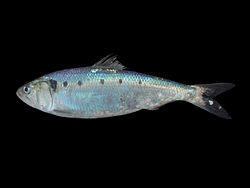
| Twaite shad, Alosa fallax | |
Scientific classification 
| |
| Kingdom: | Animalia |
| Phylum: | Chordata |
| Class: | Actinopterygii |
| Order: | Clupeiformes |
| Family: | Alosidae |
| Genus: | Alosa H. F. Linck, 1790 |
| Type species | |
| Clupea alosa | |
| Species | |
|
See text. | |
| Synonyms[2] | |
| |
Alosa[3] is a genus of fish, the river herrings, in the family Alosidae. Along with other genera in the subfamily Alosinae, they are generally known as shads.[4][5] They are distinct from other herrings by having a deeper body and spawning in rivers. Several species can be found on both sides of the Atlantic Ocean and the Mediterranean Sea. Also, several taxa occur in the brackish-water Caspian Sea and the Black Sea basin.[6] Many are found in fresh water during spawning and some are only found in landlocked fresh water.
Appearance
[edit]Alosa species are generally dark on the back and top of the head, with blue, violet, or greenish tints.[6] Some can be identified as having a grey or green back.[6] Spots are commonly found behind the head, and the fins may vary from species to species or individually.[6] Most species of Alosa weigh 300 g (11 oz) or less, with A. pontica and A. fallax weighing up to 2 kg, and A. alosa can exceed 3–4 kg.[6]
Biology
[edit]Shads are thought to be unique among the fishes in having evolved an ability to detect ultrasound (at frequencies above 20 kHz, which is the limit of human hearing).[7] This was first discovered by fisheries biologists studying a type of shad known as blueback herring, and was later verified in laboratory studies of hearing in American shad. This ability is thought to help them avoid dolphins that find prey using echolocation. Alosa species are generally pelagic.[8] They are mostly anadromous or semianadromous with the exception of strictly freshwater landlocked species.[8] Alosa species are generally migratory and schooling fish.[8] Males usually mature about a year before females; they spawn in the late spring to summer.[9][10] Most individuals die shortly after spawning.[9][10] Alosa species seemingly can change readily to adapt to their environments, as species are found in a wide range of temperatures and waters.[10]
Lifecycle and reproduction
[edit]As Alosa species are generally anadromous, they face various obstacles to survival.[11] They may have to pass through numerous barriers and waters to get to either their spawning grounds or normal habitats (the sea in most cases).[11] Estuaries are a major factor in numerous Alosa species' migrations.[11] Estuaries can be highly variable and complex environments contributing to fluctuating biological interactions,[11] with shifts in osmolarity, food sources, predators, etc.[11] Since many adult Alosa species die after spawning, only the young generally migrate to the sea from the spawning grounds.[11] Duration of migration varies among fish, but can greatly affect survival.[11]
Reproduction varies by species.[6] Studies done on Alosa in Iranian waters have shown that spawning varies in time, place, and temperature of the waters they inhabit.[6] Fecundity may also vary.[6] Species are known to spawn as early as April or as late as August.[6] Temperatures range from about 11 to 27 °C.[6] Fecundity can range from 20,000 to 312,000 eggs.[6] Eggs are pelagic.[6] Geography and temperature are important environmental factors in egg and young-of-year development.[12]
The lifespan of Alosa species can be up to 10 years, but this is generally uncommon, as many die after spawning.[6]
Systematics
[edit]| This article is part of a series on |
| Commercial fish |
|---|
 |
| Large predatory |
| Forage |
| Demersal |
| Mixed |
The systematics and distribution of Alosa shads are complex. The genus inhabits a wide range of habitats, and many taxa are migratory. A few forms are landlocked, including one from Killarney in Ireland, two from lakes in northern Italy, and two in Greece. Several species are native to the Black and Caspian Seas. Alosa species of the Caspian are systemically characterized by the number of rakers on the first gill arch.[13] They are classified as being "multirakered", "medium-rakered", or "oligorakered".[13] The multirakered are primarily plankton feeders, the oligorakered have large rakers and are predators, and the medium-rakered generally consume a mixed diet.[13] Most current species of the genus Alosa in North America can be found in Florida, whereas the distribution of most of them is broader.[14]
Morphology is notoriously liable to adapt to changing food availability in these fish. Several taxa seem to have evolved quite recently, making molecular analyses difficult. In addition, hybridization may be a factor in shad phylogeny.[15] Nonetheless, some trends are emerging. The North American species except the American shad A. sapidissima can probably be separated in a subgenus Pomolobus. Conversely, the proposed genus (or subgenus) Caspialosa for the Caspian Sea forms is rejected due to paraphyly.[15]
Species by geographical origin
[edit]North America
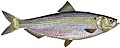
[edit]- Alosa aestivalis (Mitchill, 1814) (blueback herring)
- Alosa alabamae D. S. Jordan and Evermann, 1896 (Alabama shad)
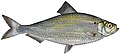
- Alosa chrysochloris (Rafinesque, 1820) (skipjack shad)

- Alosa mediocris (Mitchill, 1814) (hickory shad)

- Alosa pseudoharengus (A. Wilson, 1811) (alewife)
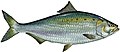
- Alosa sapidissima (A. Wilson, 1811) (American shad)
.jpg)
.jpg)
.png)
.jpg)
.jpg)
Western Europe and the Mediterranean
[edit]- Alosa agone (Scopoli, 1786) (agone)
- Alosa algeriensis Regan, 1916 (North African shad)
- Alosa alosa (Linnaeus, 1758) (allis shad)

- Alosa fallax (Lacépède, 1803) (twait shad)
- Alosa killarnensis Regan, 1916 (Killarney shad)

Caspian Sea, Black Sea, the Balkans
[edit]- Alosa braschnikowi (Borodin, 1904) (Caspian marine shad)
- Alosa caspia (Eichwald, 1838)
- A. c. caspia (Eichwald, 1838) (Caspian shad)
- A. c. knipowitschi (Iljin, 1927) (Enzeli shad)
- A. c. persica (Iljin, 1927) (Astrabad shad)
- Alosa curensis (Suvorov, 1907) (Kura shad)
- Alosa immaculata E. T. Bennett, 1835 (Pontic shad)
- Alosa kessleri (Grimm, 1887) (Caspian anadromous shad)
- Alosa macedonica (Vinciguerra, 1921) (Macedonia shad)
- Alosa maeotica (Grimm, 1901) (Black Sea shad)
- Alosa saposchnikowii (Grimm, 1887) (Saposhnikovi shad)
- Alosa sphaerocephala (L. S. Berg, 1913) (Agrakhan shad)
- Alosa tanaica (Grimm, 1901) (Azov shad)
- Alosa vistonica Economidis and Sinis, 1986 (Thracian shad)
- Alosa volgensis (L. S. Berg, 1913) (Volga shad)
Fossil species
[edit]
The following fossil Alosa species are known. An especially high diversity of fossil Alosa species is known from a mid-late Miocene-aged deposit in Pınarhisar District, Turkey:[16][17][18]
- †Alosa aralensis Chisara, 1977 - Oligocene of Russia
- †Alosa avcilarensis Rückert-Ülkümen, 1994 - Miocene of Turkey
- †Alosa baykali Rückert-Ulkümen, 1965 - Miocene of Turkey
- †Alosa elongata Agassiz, 1843 - Late Miocene of Italy, Greece and Algeria (=A. crassa Sauvage, 1873, A. numidica Sauvage, 1873, A. renoui Sauvage, 1873)
- †Alosa fortipinnata Rückert-Ulkümen, 1965 - Miocene of Turkey
- †?Alosa ganolytoides David, 1946 - mid-late Eocene of California [scale] (taxonomy uncertain)
- †Alosa genuina Daniltshenko, 1960 - Miocene of North Caucasus, Russia
- †Alosa latissima Heckel, 1853 - Oligocene of Italy, potentially Miocene of Turkey
- †Alosa paulicrenata Bratishko et al. 2015 - Middle Miocene of Kazakhstan [otolith][19]
- †Alosa pinarhisarensis Rückert-Ulkümen, 1965 - Miocene of Turkey
- †Alosa sagorensis (Steindachner, 1863) - Oligocene of Hungary & potentially Poland[20], Miocene of Turkey
- †Alosa sculptata (Weiler, 1920) - Miocene of Germany
- †Alosa spinosa (Rückert-Ulkümen, 1965) - Miocene of Turkey
- †Alosa weileri Rückert-Ulkümen, 1960 - Miocene of Turkey
The former fossil species A. ovalis Rückert-Ulkümen, 1965 is now placed in Clupeonella as Clupeonella ovalis.[17]
Recreational fishing
[edit]Commercial fishing
[edit]| Commercial capture production of wild shad in tonnes.[21][22] | ||||||||||||
|---|---|---|---|---|---|---|---|---|---|---|---|---|
| 1999 | 2000 | 2001 | 2002 | 2003 | 2004 | 2005 | 2008 | 2010 | 2011 | 2012 | 2013 | 2014 |
| 788,770 | 860,346 | 665,284 | 589,692 | 524,800 | 569,160 | 605,548 | 588,978 | 645,977 | 611,371 | 604,842 | 628,622 | 636,678 |
Management
[edit]Shad populations have been in decline for years due to spawning areas blocked by dams, habitat destruction, pollution, and overfishing. Management of shad has called for more conservative regulations, and policies to help the species have lower fishing mortality.[23]
Political significance
[edit]Shad serve a peculiar symbolic role in Virginia state politics. On the year of every gubernatorial election, would-be candidates, lobbyists, campaign workers, and reporters gather in the town of Wakefield, Virginia, for shad planking. American shad served as the focal point of John McPhee's book The Founding Fish.[24]
Culinary use
[edit]
The roe, or more properly the entire engorged uterus of the American shad—filled with ripening eggs, sautéed in clarified butter and garnished with parsley and a slice of lemon—is considered a great delicacy, and commands high prices when available.[25]
See also
[edit]References
[edit]- ^ Sepkoski, Jack (2002). "A compendium of fossil marine animal genera". Bulletins of American Paleontology. 363: 5–560. ISBN 978-0-87710-450-6. Archived 2011-07-23 at the Wayback Machine
- ^ a b Fricke, Ron; Eschmeyer, William N. & van der Laan, Richard (eds.). "Genera in the family Alosidae". Catalog of Fishes. California Academy of Sciences. Retrieved 29 April 2025.
- ^ "Alosa Linck, 1790". Integrated Taxonomic Information System.
- ^ "Alosinae". Integrated Taxonomic Information System.
- ^ Whitehead, Peter J.P. (1985). "Subfamily Alosinae". FAO species catalogue. Vol. 7. Clupeoid fishes of the world. An annotated and illustrated catalogue of the herrings, sardines, pilchards, sprats, anchovies and wolfherrings. Part 1 – Chirocentridae, Clupeidae and Pristigasteridae. FAO Fisheries Synopsis. Vol. 125/7/1. Rome: FAO. p. 190. ISBN 978-92-5-102340-2.
- ^ a b c d e f g h i j k l m Coad, Brian (1997). "Shad in Iranian Waters" (PDF). Shad Journal. 2 (4): 4–7. ISSN 1094-4990. Archived from the original (PDF) on 2013-09-10. Retrieved 31 January 2014.
- ^ Mann, David A.; Higgs, Dennis M.; Tavolga, William N.; Souza, Marcy J.; Popper, Arthur N. (2001). "Ultrasound detection by clupeiform fishes". The Journal of the Acoustical Society of America. 109 (6): 3048–3054. doi:10.1121/1.1368406. PMID 11425147.
- ^ a b c D. C. Bobori; E. T. Koutrakis; P. S. Economidis (2001). "Shad Species In Greek Waters – An Historical Overview And Present Status". Bulletin Français de la Pêche et de la Pisciculture. 362–363: 1101–1108. doi:10.1051/kmae:2001039.
- ^ a b Ingram, Travis R. (2007). Age, growth and fecundity of Alabama shad (Alosa alabamae) in the Apalachicola River, Florida (M.Sc.). Clemson University. Retrieved 31 January 2014.
- ^ a b c Bianco, P. G. (2002). "The Status of the Twaite Shad, Alosa agone, in Italy and the Western Balkans". Marine Ecology. 23 (Supplement 1): 51–64. Bibcode:2002MarEc..23S..51B. doi:10.1111/j.1439-0485.2002.tb00007.x.
- ^ a b c d e f g Lochet, A.; Boutry, S.; Rochard, E. (2009). "Estuarine phase during seaward migration for allis shad Alosa alosa and twaite shad Alosa fallax future spawners". Ecology of Freshwater Fish. 18 (2): 323–335. doi:10.1111/j.1600-0633.2008.00350.x.
- ^ Alexander, Samantha B.; Schlick, CJ Carroll; de Mutsert, Kim (October 2020). "Growth models and growing degree-days: assessment of young-of-year Alewife and Blueback Herring in Potomac River tributaries". Environmental Biology of Fishes. 103 (10): 1179–1195. Bibcode:2020EnvBF.103.1179A. doi:10.1007/s10641-020-01012-4. ISSN 0378-1909. S2CID 220948739.
- ^ a b c Malkin, E. M.; Andrianova, S. B. (2008). "Biology and traits of the formation of stock of big-eyed shad Alosa saposchnikowii". Journal of Ichthyology. 48 (6): 443–451. doi:10.1134/S0032945208060040.
- ^ Richard S. McBride (2000). Florida's Shad and River Herrings (Alosaspecies): A Review of Population and Fishery Characteristics. Florida MAR8INE Research Institute Technical Reports: Technical Report TR-5, Florida Fish and Wildlife Conservation Commission. St. Petersburg, Florida.
- ^ a b Faria, R.; Weiss, S.; Alexandrino, P. (2006). "A molecular phylogenetic perspective on the evolutionary history of Alosa spp. (Clupeidae)". Molecular Phylogenetics and Evolution. 40 (1): 298–304. doi:10.1016/j.ympev.2006.02.008.
- ^ Bagils, R. Zaragüeta (2001). "LES ALOSA FOSSILES ET LA NOTION DE GENRE EN SYSTÉMATIQUE PHYLOGÉNÉTIQUE". Bulletin Français de la Pêche et de la Pisciculture (in French) (362–363): 1059–1066. doi:10.1051/kmae:2001036. ISSN 0767-2861.
- ^ a b Rückert-Ülkümen, Neriman (1994). "Zur systematischen Stellung einiger Clupeidae aus Thrakien, Türkei". Mitteilungen der Bayerischen Staatssammlung für Paläontologie und historische Geologie. 34: 169–186.
- ^ "PBDB Taxon". paleobiodb.org. Retrieved 2025-08-11.
- ^ Bratishko, Andriy; Schwarzhans, Werner; Reichenbacher, Bettina; Vernyhorova, Yuliia; Ćorić, Stjepan (2015-12-01). "Fish otoliths from the Konkian (Miocene, early Serravallian) of Mangyshlak (Kazakhstan): testimony to an early endemic evolution in the Eastern Paratethys". Paläontologische Zeitschrift. 89 (4): 839–889. doi:10.1007/s12542-015-0274-4. ISSN 1867-6812.
- ^ "Clupeid scales from the Menilite Beds (Palaeogene) of the Carpathians - Acta Palaeontologica Polonica". www.app.pan.pl. Retrieved 2025-08-11.
- ^ FAO (2006) Yearbooks of Fishery Statistics Summary Tables
- ^ FAO (2014) Yearbook - Fishery and Aquaculture Statistics, no. 24.
- ^ "Atlantic States Marine Fisheries Commission: Shad". Archived from the original on 2013-04-14. Retrieved 2009-06-30.
- ^ "American Shad - Fish Reference Library - RedOrbit." RedOrbit - Science, Space, Technology, Health News and Information. 3 Apr. 2007. Web. 27 Nov. 2011. <http://www.redorbit.com/education/reference_library/science_1/fish/2579052/american_shad/index.html>.
- ^ singlegirldin (2012-02-29). "The Beauty of Shad Roe". Honest Cooking. Retrieved 2022-07-25.
- Froese, Rainer; Pauly, Daniel (eds.). "Species in genus Alosa". FishBase. June 2011 version.
External links
[edit]
- Tastes of the Region: Shad An article celebrating shad's cultural importance to the Hudson Valley
- Lambertville NJ Shad Festival
- Science Cheerleader - Shad: Our Pollution vs. Their Resolution.

Principal commercial fishery species groups | ||||||||||||||||||||
|---|---|---|---|---|---|---|---|---|---|---|---|---|---|---|---|---|---|---|---|---|
| Wild |
|  .png)  | ||||||||||||||||||
| Farmed | ||||||||||||||||||||
| National | |
|---|---|
| Other | |

Alosa
View on GrokipediaTaxonomy and Phylogeny
Genus Definition and Etymology
Alosa is a genus of clupeid fishes belonging to the subfamily Alosinae, commonly referred to as shads or river herrings.[6] These species are primarily anadromous, spending most of their adult lives in coastal marine environments before migrating into freshwater rivers to spawn.[7] Members of the genus exhibit herring-like morphology, including an elongated, laterally compressed body with silvery sides, a blue-green dorsal coloration, and a distinctive series of 30–50 scutes along the ventral midline featuring serrated keels.[8] The genus was established by Heinrich Friedrich von Linck in 1790.[2] The etymology of Alosa traces to Late Latin alosa or alausa, a term denoting a fish referenced by the 4th-century Roman poet Ausonius, potentially connected to ancient Saxon nomenclature for shad and influenced by Greek hals (salt) via Latin halec (pickled fish).[2][9] This nomenclature reflects historical recognition of these species' migratory habits and palatability, distinguishing them from purely marine clupeids. Alternative derivations suggest Celtic or Gaulish roots for "shad," underscoring pre-Linnaean European familiarity with the fish in riverine fisheries.[10]Species Diversity and Classification
The genus Alosa is classified within the family Alosidae, a group of clupeiform fishes encompassing shads and sardines, distinct from the broader herring family Clupeidae based on morphological and genetic distinctions such as specialized gill raker adaptations and anadromous life histories.[11] [12] The family Alosidae includes four genera and approximately 32 species in total, with Alosa representing the largest genus.[11] As of current taxonomic assessments, the genus Alosa comprises 24 recognized species, predominantly anadromous fishes inhabiting temperate marine, estuarine, and freshwater environments across the North Atlantic, Mediterranean, Black Sea, and Caspian Sea basins.[13] These species exhibit varying degrees of endemism and migratory behavior, with North American taxa generally showing broader coastal distributions from Florida northward, while Eurasian species are more localized to specific river systems.[13] Taxonomic delimitations rely on meristic traits like gill raker counts, vertebral numbers, and fin ray elements, supplemented by molecular data to resolve cryptic diversity and hybridization events.[14] The following table enumerates the recognized species, including common names where established:| Scientific Name | Common Name |
|---|---|
| Alosa aestivalis | Blueback shad |
| Alosa agone | Agone |
| Alosa alabamae | Alabama shad |
| Alosa algeriensis | North African shad |
| Alosa alosa | Allis shad |
| Alosa braschnikowi | Caspian marine shad |
| Alosa caspia | Caspian shad |
| Alosa chrysochloris | Skipjack shad |
| Alosa curensis | Kura shad |
| Alosa fallax | Twaite shad |
| Alosa immaculata | Pontic shad |
| Alosa kessleri | Caspian anadromous shad |
| Alosa killarnensis | Killarney shad |
| Alosa macedonica | Macedonia shad |
| Alosa maeotica | Black Sea shad |
| Alosa mediocris | Hickory shad |
| Alosa pseudoharengus | Alewife |
| Alosa sapidissima | American shad |
| Alosa saposchnikowii | Saposhnikovi shad |
| Alosa sphaerocephala | Agrakhan shad |
| Alosa suworowi | - |
| Alosa tanaica | Black Sea shad |
| Alosa vistonica | Thracian shad |
| Alosa volgensis | Volga shad |
Evolutionary Relationships and Fossil Evidence
The genus Alosa belongs to the subfamily Alosinae within the family Clupeidae, a group of clupeiform fishes characterized by anadromous life histories in many species.[16] Molecular phylogenetic analyses using mitochondrial DNA sequences have reconstructed the evolutionary relationships among Alosa species, revealing a monophyletic clade for the subgenus Alosa (including the formerly separate subgenus Caspialosa), which encompasses both North American (A. alabamae, A. sapidissima) and Eurasian (A. alosa, A. fallax, A. immaculata) lineages with strong bootstrap support.[17] In contrast, the subgenus Pomolobus—comprising primarily North American species such as A. chrysochloris, A. mediocris, A. aestivalis, and A. pseudoharengus—is not monophyletic, with A. chrysochloris occupying a basal position and A. mediocris sister to a clade of A. aestivalis and A. pseudoharengus.[17] Net nucleotide divergences indicate relatively recent speciation events within Alosa, such as between A. alabamae and A. sapidissima (0.0042 substitutions/site), positioning A. alabamae as an incipient species within a polytomy involving Gulf of Mexico and Atlantic lineages.[17] These patterns suggest historical vicariance events, including isolation of Gulf species like A. chrysochloris following the closure of the Suwannee Straits in the late Miocene to Pliocene, and subsequent dispersal of A. alabamae's ancestors around Florida during or after the Pleistocene.[17] Earlier classifications had split Alosa into multiple genera (e.g., Pomolobus for North American species), but molecular data support a unified monophyletic Alosa, challenging morphological subgenera and highlighting convergent traits in anadromy across Clupeidae.[16] The fossil record of the genus Alosa itself is sparse, with no confirmed species directly assigned to it, reflecting the challenges in identifying extant genera in paleontological remains due to conservative morphology in Clupeidae.[12] Clupeid fossils date to the Early Cretaceous (approximately 120 million years ago) in Europe, with North American records from the Eocene, but Alosinae-like forms appear later, in the Oligocene to Miocene of the Paratethys region.[18] Extinct relatives include Sanalosa janulosa from the Lower Oligocene of Poland and Moldavichthys switshenskae from the Sarmatian (Middle Miocene) of Moldova, both in subfamily Alosinae, indicating early diversification of shad-like clupeids in ancient inland seas.[19] [20] These fossils underscore the ancient origins of Alosinae, predating modern Alosa divergences inferred from molecular clocks, though direct calibration for Alosa remains limited by the absence of genus-level fossils.[12]Morphology and Physiology
External Appearance
Species of the genus Alosa possess a fusiform, laterally compressed body that is deeper than in most other clupeids, facilitating maneuverability in both marine and riverine environments.[2] The dorsal profile is typically convex, with the head moderately sized and the snout pointed.[21] Coloration varies by species but generally features an iridescent blue-green or greenish back, silvery flanks, and a white or pale ventral surface, often with a dark spot or spots immediately posterior to the operculum.[22] [23] The scales are large, cycloid, and deciduous, covering the body densely except for the modified scutes along the ventral midline, which are sharp, keeled, and spiny for defensive purposes.[24] Fins include a single dorsal fin positioned at the body's midpoint with 16-21 rays, small adipose fin in some species absent, pelvic fins with 6-8 rays located ventrally, an anal fin with 19-27 rays set posterior to the dorsal, and a deeply forked, homocercal caudal fin.[25] [26] The absence of a lateral line is notable, distinguishing Alosa from many other teleosts.[27] Sizes range from under 30 cm in smaller species like Alosa aestivalis to over 75 cm in larger ones such as Alosa sapidissima.[28]Internal Anatomy and Adaptations
Alosa species feature gills with long, thin, and numerous rakers adapted for filter-feeding on zooplankton and other small particles, with counts varying by species; for example, Alosa alosa has 80–130 rakers on the first branchial arch.[29][30] These structures fold efficiently during respiration, enhancing particle retention while minimizing clogging in turbid estuarine waters.[31] The swim bladder, serving buoyancy control in the pelagic marine phase, connects directly to the inner ear via paired auditory bullae—bony capsules unique to Clupeiformes—amplifying sound pressure detection up to 40 kHz, including ultrasound, which aids in predator avoidance and schooling coordination.[32][33][34] This linkage improves auditory sensitivity by 21–42 dB compared to species lacking such extensions.[35] Osmoregulatory adaptations enable transitions between marine hypo-osmoregulation and freshwater hyper-osmoregulation, primarily via gill ionocytes expressing Na⁺/K⁺-ATPase pumps for ion excretion in saltwater and uptake in rivers.[36][37] In Alosa pseudoharengus, anadromous forms maintain higher expression of seawater-specific isoforms than landlocked derivatives, reflecting relaxed selection on hypo-osmoregulatory traits in the latter.[38][39] Kidney function complements gill activity, with glomerular filtration adjusting to salinity shifts during migrations.[40] Internal dentition is reduced, lacking teeth on the palatine and vomer to accommodate soft prey passage, while the digestive tract remains short and simple, suited to rapid processing of planktonic diets without extensive enzymatic breakdown.[31][41] These features support high metabolic demands during anadromous spawning runs, where energy allocation prioritizes gonad maturation over somatic maintenance.[42]Ecology and Distribution
Habitat Preferences
Species in the genus Alosa primarily inhabit temperate coastal marine, estuarine, and riverine environments across the North Atlantic, Mediterranean, Black Sea, and Caspian Sea regions, with adults typically occupying pelagic zones of continental shelves and estuaries where they form schools.[43] Many species are anadromous, residing in saline waters for most of their adult lives before ascending freshwater rivers and streams for spawning, while juveniles migrate downstream to brackish or marine habitats after hatching; however, some taxa, such as the skipjack herring (A. chrysochloris), are more fluvial or potamodromous, favoring large rivers and reservoirs with moderate currents over sand or gravel substrates.[44] [45] These fish exhibit broad salinity tolerance as euryhaline species, enduring full marine conditions (up to 35 ppt) in oceanic phases and descending to 0 ppt during spawning migrations, with larvae acquiring seawater tolerance gradually over 4–6 weeks post-hatch through osmoregulatory adaptations.[46] [47] In marine and estuarine settings, they often occupy mid-water depths greater than 10 m, though spawning typically occurs in shallower riverine reaches with velocities supporting egg drift.[48] Temperature preferences align with temperate regimes, varying by species and stage; for example, allis shad (A. alosa) favor 7–15.6 °C in ambient waters, while spawning across taxa generally initiates at 11–27 °C, with optimal egg and larval development for alewife (A. pseudoharengus) occurring at 17–21 °C and upper lethal limits around 29–33 °C for juveniles.[49] [50] [51] Habitat suitability is further influenced by water clarity, with preferences for clear to moderately turbid conditions in riverine areas to facilitate schooling and foraging on zooplankton.[44]Geographic Range and Migration Patterns
The genus Alosa encompasses species distributed across the temperate Atlantic Ocean basins, with North American taxa ranging from the Labrador coast southward to the Gulf of Mexico and European species extending from southern Norway along the eastern Atlantic to the western Mediterranean Sea and adjacent inland waters like the Black and Caspian Seas.[52][53] In North America, prominent species such as Alosa sapidissima (American shad) inhabit coastal waters from Labrador, Canada, to the St. Johns River, Florida, while Alosa alabamae (Alabama shad) is confined to the northern Gulf of Mexico and associated river drainages from the Mississippi Delta to the Choctawhatchee River.[54][55] European representatives, including Alosa alosa (allis shad), occupy rivers and estuaries from Scandinavia to North Africa, with some populations in landlocked systems.[52] Most Alosa species exhibit anadromous life histories, migrating from saline marine or estuarine feeding grounds to freshwater rivers for spawning, a pattern driven by natal philopatry where adults return to their birth rivers.[56][57] Upstream migrations typically occur in spring, triggered by rising water temperatures (often 10–18°C), increased river discharge, and lunar phases aligning with tidal cycles to facilitate entry into estuaries.[58][59] For instance, river herring species like Alosa pseudoharengus (alewife) and A. aestivalis (blueback herring) form large schools that ascend coastal rivers such as those draining into the northwest Atlantic, with peak spawning runs documented from March to June depending on latitude.[60] Juveniles, after hatching in freshwater, undertake downstream out-migrations in late summer or fall, guided by flows and salinity cues, to reach oceanic nursery areas.[61][62] Some populations display semi-anadromous or potamodromous variations, residing primarily in brackish or freshwater systems without full marine excursions, as observed in landlocked alewife strains in the Great Lakes or certain Caspian Alosa taxa.[63] Migration success is influenced by environmental factors, including dam obstructions that have reduced access to historical spawning grounds by up to 90% in some U.S. rivers since the 19th century.[64] Marine phases involve pelagic schooling in coastal shelf waters, with foraging migrations extending hundreds of kilometers offshore before the return upstream.[65]Population Dynamics and Interactions
Populations of Alosa species, including anadromous forms such as alewife (A. pseudoharengus), blueback herring (A. aestivalis), and American shad (A. sapidissima), have undergone substantial declines across their native ranges in the northwest Atlantic since the mid-20th century. River herring (A. pseudoharengus and A. aestivalis) stocks, once supporting major commercial fisheries, decreased by orders of magnitude from the 1960s through the 2000s, with abundance indices in U.S. Atlantic coastal rivers dropping over 90% in many systems by 2010.[66][67] Similar trends affect European species like allis shad (A. alosa), where spawning populations in rivers such as the Rhine remain critically low, numbering in the hundreds of adults as of 2009 despite stocking efforts.[68] These dynamics reflect high natural variability driven by stochastic recruitment, where juvenile survival hinges on environmental cues like river discharge and temperature during spring spawning migrations, often resulting in boom-bust cycles.[69] Stage-based population models for alewife highlight that reductions in adult marine survival—estimated at 0.1–0.3 annually in recent decades—and restricted access to spawning habitats explain much of the observed declines, outweighing fecundity losses in some simulations.[70][71] Anthropogenic factors exacerbate these patterns, including dams that fragment habitats and block upstream migrations, reducing effective population sizes by limiting gene flow and spawning success; for example, impoundments have extirpated A. alabamae from portions of its Gulf of Mexico range.[72] Bycatch in non-target fisheries and historical overharvest further depress escapement rates, with U.S. Atlantic management measures since 2012 imposing moratoriums on directed catches to rebuild stocks, though recovery remains uneven due to persistent habitat constraints.[51] In introduced systems like the Great Lakes, alewife populations initially exploded post-1950s introductions, reaching billions before crashing in the 1960s–2000s amid density-dependent effects and predation, demonstrating how rapid colonization can lead to unstable dynamics absent natural controls.[47] Alosa species engage in key trophic interactions as mid-level consumers and prey, foraging on zooplankton and small fish while supporting higher predators. In estuarine and coastal ecosystems, they constitute a primary forage base for piscivores like striped bass, Atlantic cod, and bluefin tuna, with juveniles providing seasonal pulses of energy to birds and marine mammals; for instance, river herring migrations sustain breeding populations of piscivorous seabirds along the U.S. Northeast coast.[73] Predation pressure is evident in systems with stocked salmonids, where alewife abundance in Lake Michigan covaried inversely with Chinook salmon biomass from 1962 to 1999, with models estimating predation removing up to 50% of annual cohorts during peaks.[74] Competitive interactions occur with native clupeids for planktonic resources, potentially intensifying under warming conditions that favor faster-growing competitors, while hybridization between A. alosa and A. fallax in Europe alters gene pools and reduces pure-strain fitness in admixed populations.[75] Non-native introductions, such as American shad in Pacific rivers, show limited deleterious effects on resident salmonids, suggesting context-dependent interaction strengths rather than uniform invasion impacts.[76] These relationships underscore Alosa's role in maintaining food web stability, though altered predator-prey balances from exploitation and habitat loss have cascaded to dependent species.[77]Reproduction and Life History
Spawning Behavior
Species of the genus Alosa exhibit anadromous spawning migrations, ascending rivers and streams from coastal marine habitats to freshwater spawning grounds, primarily during spring months when water temperatures rise to 12–20°C.[78] This behavior is driven by photoperiod and thermal cues, with adults often schooling in large numbers upstream, sometimes exhibiting fallback movements after initial spawning attempts to retry in favorable conditions.[79] Spawning is iteroparous in species like Alosa sapidissima (American shad), allowing multiple annual or lifetime events, though some populations of Alosa alosa (Allis shad) show semelparous tendencies with high post-spawning mortality.[80] Broadcast spawning predominates, with females releasing demersal, adhesive eggs over gravel, sand, or rocky substrates in shallow, flowing waters, while several males simultaneously release milt to fertilize them externally.[78] In A. sapidissima, spawning involves aggregations of multiple males courting a single female, occurring repeatedly during upstream migration, often in warmer shallows (15–24°C) where success rates peak.[81] For Alosa pseudoharengus (alewife), migrations target smaller streams or lake tributaries from April to June, with spawning near surfaces in bays or lower river reaches, though landlocked populations adapt to lacustrine sites.[82] Nocturnal activity characterizes many events; in A. alosa, peak spawning transpires between 0130 and 0200 hours, detectable via sonar as clouds of gametes and microbubbles, with increasing intensity over consecutive nights signaling progressive reproductive synchronization.[83] Eggs hatch within 5–10 days depending on temperature, but adults typically do not guard them, relying on hydrodynamic dispersal to reduce predation risks.[78] Variations exist, such as oscillatory migrations in some alewife populations utilizing diverse habitats, underscoring adaptive flexibility amid environmental pressures like flow and temperature fluctuations.[84]Larval Development and Survival Rates
Larval development in species of the genus Alosa, such as the American shad (A. sapidissima), begins upon hatching from demersal eggs, which typically occurs 10 days after spawning at temperatures around 15–20°C.[8] Newly hatched larvae measure approximately 3–4 mm in length and initially rely on yolk-sac reserves for nutrition, with exogenous feeding commencing shortly after yolk absorption.[42] Development progresses through four distinct stages delineated by morphological, behavioral, and organogenic changes: stage 1 (0–2 days post-hatch, DAH), characterized by yolk-sac dependency and primordial formation of gills and swim bladder; stage 2 (3–5 DAH), marking the transition to mixed feeding with development of the mouth, anal opening, digestive tract (esophagus, intestine), liver hepatocytes, exocrine pancreas, and a four-chambered heart; stage 3 (6–26 DAH), featuring active exogenous feeding, pharyngeal teeth, taste buds, gut mucosal folds, differentiated stomach with gastric glands, gill proliferation, swim bladder inflation, and emergence of spleen (at 8 DAH), thymus (12 DAH), and excretory structures; and stage 4 (27–45 DAH), involving organ maturation through increased size, cellular proliferation, and structural complexity to support juvenile transitions.[42] These stages reflect adaptations for rapid organogenesis in riverine and estuarine environments, with skeletal elements like the vertebral column and fins developing progressively, though hatchery-reared larvae exhibit deformities in up to 20–30% of cases affecting caudal fin and vertebrae.[85] Survival rates during larval phases are critically low, establishing year-class strength primarily through high early-stage mortality influenced by abiotic and biotic factors. In American shad, daily mortality rates reach 19.8–25.6% for first-feeding larvae, declining to 4.3–8.7% near metamorphosis, with overall survivorship from hatch to young-of-year (YOY) often below 1–5% based on field data from the Connecticut River (1979–1982).[86] Similarly, alewife (A. pseudoharengus) post-yolk-sac larvae experience 12–27% daily mortality through yolk absorption, reducing to 2–5% in juveniles, yielding mean survival to YOY of 2.2–4.6% in Lake Michigan populations.[87] Temperature exerts a primary control, with allis shad (A. alosa) larvae achieving over 80% survival between 14.6 and 26.7°C, and embryos between 15.7 and 25.6°C, while extremes below 12°C or above 28°C induce near-total mortality via developmental arrest or physiological stress.[88] Salinity tolerances are broad, as A. sapidissima larvae show no significant growth depression or elevated mortality across 0–20‰ in controlled experiments, indicating estuarine conditions do not inherently limit survival.[89] Food availability and predation further modulate outcomes, with increased prey densities (e.g., 500–1000 Artemia individuals per liter) enhancing growth and survival in 16–18-day-old American shad larvae by reducing starvation risks during the vulnerable first-feeding window.[90] Patchy prey distributions can exacerbate mortality if not offset by high overall densities, underscoring the role of riverine plankton blooms in cohort success. Predation pressure, particularly from planktivorous fishes and invertebrates, compounds these effects, with year-class variability often traced to larval-stage losses rather than later juveniles.[86] Across Alosa species, these dynamics highlight a bottleneck where environmental stochasticity—temperature fluctuations, salinity gradients navigated during drift, and trophic mismatches—determines recruitment, with empirical models confirming that juvenile survival indices correlate strongly with future adult abundance (r = +0.92 over 4–6 years).[86]Age, Growth, and Mortality Factors
Species of the genus Alosa typically reach sexual maturity between 2 and 6 years of age, with males often maturing earlier than females; for instance, American shad (A. sapidissima) males mature at 2–3 years and females at 3–4 years, while alewives (A. pseudoharengus) and blueback herring (A. aestivalis) mature at 3–6 years.[91] Maximum lifespans vary by species and latitude, ranging from 9–10 years in northern populations of alewives to 13 years in American shad, with most individuals not exceeding 4–10 years due to post-spawning mortality or cumulative stressors.[91] [92] Growth is rapid during the first year of life, particularly in juveniles emigrating from natal rivers, where American shad reach 38–114 mm and alewives 114–127 mm, accounting for over 50% of total length increment in some populations.[91] Subsequent growth slows, following patterns described by the von Bertalanffy model in studies of pontic shad (A. immaculata) and alewives, with annual increments decreasing to 8–25% of body length after age 2; adult sizes range from 250–300 mm in alewives and blueback herring to over 700 mm in American shad.[93] [91] Latitudinal variation influences growth rates, with faster growth in southern stocks due to warmer temperatures and longer growing seasons.[94] Mortality factors are predominantly size- and stage-dependent, with larval and juvenile stages experiencing daily rates of 2–27% from predation, starvation, and environmental stressors like temperature fluctuations and hypoxia.[51] Adult natural mortality (M) averages around 0.7 year⁻¹ in river herring species, driven by predation from striped bass, cod, and marine mammals, as well as semelparity-like post-spawning exhaustion in some iteroparous populations where annual adult mortality exceeds 70%.[51] [63] Anthropogenic factors exacerbate losses, including fishing mortality (historically reducing stocks via overharvest), dam passage mortality (0–22% for juveniles depending on turbine type), and bycatch in herring fisheries, with total mortality (Z) often exceeding sustainable benchmarks (e.g., Z > 40% in multiple rivers).[91] [51] Climate-driven shifts, such as altered river flows and warming oceans, may further elevate mortality by influencing growth and predator-prey dynamics.[51]Fisheries and Exploitation
Commercial Harvesting Practices
Commercial harvesting of Alosa species, such as American shad (A. sapidissima) and river herrings (A. pseudoharengus and A. aestivalis), primarily targets spawning aggregations during spring anadromous migrations in rivers and estuaries.[95] Operations use passive gears including gill nets, weirs, trap nets, and dip nets to capture fish moving upstream, with timing aligned to peak runs from March to June in North America.[96] Harvest often prioritizes gravid females for roe, processed into sacs or separated for sale, alongside flesh for fillets or bait.[97] [98] For American shad, anchored or drift gill nets dominate estuarine and riverine fisheries, deployed in areas like the Altamaha River, Georgia, where nets are set perpendicular to currents to intercept schools.[98] Trap nets and scoop nets supplement in shallower runs, as in Nova Scotia, with selectivity challenges addressed through mesh sizes to minimize bycatch of juveniles or non-target species like salmon.[96] Landings peaked historically but declined post-1980s; for instance, U.S. East Coast commercial catch fell from over 10 million pounds in the 1960s to under 1 million by 2010 due to overharvest and habitat issues.[99] River herring harvesting employs weirs and seines at fish ladders or runs, particularly in Maine where 39 leases allow dip-netting and cast-netting for bait, yielding about 1-2 million pounds annually for lobster traps as of 2020.[100] [101] In contrast, states like Massachusetts banned commercial take in 2006 amid stock collapses.[102] European A. alosa fisheries use similar migratory-targeted gears, though regulated under EU quotas since 2008 to curb overexploitation.[95] Post-harvest handling emphasizes rapid chilling to preserve roe quality, with females eviscerated on-site to extract sacs soaked in brine or milk for market.[98] Sustainability measures, per Atlantic States Marine Fisheries Commission Amendment 3 (2010), mandate stock assessments and harvest moratoria unless escapement exceeds benchmarks, reflecting systemic declines from dams and pollution.[103] Remaining fisheries monitor effort via logbooks, enforcing quotas like North Carolina's 50,000-pound cap since 2007.[99]Recreational Fishing
Recreational fishing primarily targets the American shad (Alosa sapidissima), the largest species in the genus, prized for its strong fighting ability and acrobatic leaps when hooked on light tackle. Anglers pursue shad during annual spring migrations into coastal rivers for spawning, with peak activity occurring from April to June depending on water temperatures reaching around 18°C (65°F).[104][105] This fishery supports enthusiasts using fly rods, spinning gear, or dip nets in rivers such as the Columbia, Connecticut, Merrimack, and Delaware, where shad runs historically numbered in the millions but have declined due to overfishing, habitat loss, and dams.[7][106][107] Fishing techniques emphasize small, shiny lures or flies mimicking planktonic prey, as shad rarely feed actively in freshwater but strike out of aggression or instinct. Fly fishing with 5- to 8-weight rods is popular for the sport's challenge, often yielding fish averaging 2-5 kg (4-11 lb), though larger specimens exceed 7 kg (15 lb).[105][108] Other Alosa species, such as hickory shad (A. mediocris), receive limited recreational attention in southern U.S. waters, but river herrings like alewife (A. pseudoharengus) and blueback herring (A. aestivalis) are seldom targeted recreationally due to smaller size and lower sporting value, often restricted as baitfish.[109] Regulations reflect stock concerns, with many states imposing creel limits of 2 fish per day and seasonal closures; for instance, New York prohibits shad retention in the Hudson River, while New Jersey and Pennsylvania enforce a 2-fish limit on the Delaware.[110][111][112] The Atlantic States Marine Fisheries Commission has mandated moratoria or strict limits since 2009 in response to population crashes, prioritizing restoration over harvest, though some Pacific populations like in Washington remain open with food fish classification.[113][7]Economic Impacts
The genus Alosa, encompassing species such as American shad (A. sapidissima) and river herring (alewife A. pseudoharengus and blueback herring A. aestivalis), has historically driven significant commercial fisheries along the Atlantic coast of North America, providing direct revenue from flesh, roe, and bait uses. In the 19th and early 20th centuries, American shad landings supported major markets, with annual harvests exceeding millions of pounds in rivers like the Potomac and Hudson, contributing to regional economies through processing, transport, and export.[114] [110] By 2013, however, North Carolina's commercial American shad fishery yielded approximately 25,000 pounds with an ex-vessel value of $29,400, reflecting broader declines that have diminished direct economic output.[115] River herring species within Alosa sustain indirect economic value primarily as bait for high-value fisheries targeting lobster, striped bass, and tuna, amplifying impacts through supply chains in coastal states. In Maine, 37 municipalities manage exclusive commercial harvests of river herring, generating local revenue and incentives for habitat stewardship that extend to tourism and recreational angling.[116] These forage roles underpin broader marine economies, where river herring biomass supports predator species contributing billions in annual sales, though precise attribution remains challenging due to multi-species interactions.[117] Overexploitation and habitat degradation have eroded sustainability, rendering some Alosa harvests economically unviable and prompting shifts to imports or alternatives, as seen in alewife fisheries where commercial viability collapsed amid population drops.[118] In the Pacific, introduced American shad in the Columbia River Basin now yield commercial catches, but competition with native salmonids imposes unquantified costs on restoration efforts valued at tens of millions annually.[119] Restoration initiatives, such as those enhancing spawning access, aim to recapture lost value, with historical precedents indicating potential returns exceeding $93 million yearly in habitat productivity equivalents.[120]Conservation and Management
Threats and Decline Causes
Populations of various Alosa species, including American shad (A. sapidissima), alewife (A. pseudoharengus), and blueback herring (A. aestivalis), have experienced significant declines across their native ranges in North America and Europe, with some stocks reduced by up to 70% and range contractions exceeding 90% in extreme cases such as the Alabama shad (A. alabamae).[121] These declines are attributed primarily to anthropogenic factors disrupting their anadromous life cycles, which require unimpeded access to freshwater spawning habitats.[122] The most pervasive threat is habitat fragmentation caused by dams, which block upstream migration to historical spawning grounds and prevent juveniles from accessing estuarine rearing areas. For instance, anadromous alewife runs have declined over the past two decades due to dams impeding access to spawning waters in multiple Northeast U.S. rivers. Similarly, American shad populations in the Hudson River and James River have been severely impacted by limited habitat access from hydroelectric and navigation dams, exacerbating low recruitment rates.[113][123] Blueback herring face analogous barriers, with dams threatening remaining migratory populations by degrading spawning habitat connectivity.[124] Overexploitation through commercial and recreational fisheries has compounded these issues, historically driving down stocks by targeting spawning aggregations. In the Hudson River, overharvest was identified as the primary cause of American shad decline until moratoria were imposed, though populations have not fully recovered.[113] River herring species, including alewife and blueback herring, exhibit high vulnerability to fishing pressure due to their predictable spawning migrations, with status reviews highlighting full exploitation status linked to low abundances.[51] Pollution and degraded water quality further impair survival, particularly for early life stages sensitive to contaminants and altered hydrodynamics. Anadromous Alosa populations in polluted estuaries show reduced larval viability, as evidenced by correlations between industrial effluents and spawning failures in European allis shad (A. alosa) rivers.[125] In North American contexts, water withdrawals and habitat degradation from urbanization have similarly stressed diadromous clupeids, reducing available clean gravel beds essential for egg incubation.[122] Invasive species and altered predator-prey dynamics pose additional risks, with non-native introductions disrupting forage bases or introducing novel predators. For example, while alewife invasions in the Great Lakes have indirectly affected native equivalents through competition, native Alosa runs elsewhere suffer from invasives like striped bass preying on juveniles or competing for resources.[126] Climate variability introduces uncertainty, potentially shifting temperature cues for migration and spawning, though empirical links remain understudied relative to direct habitat impacts.[51] Hybridization between declining congeners, such as allis and twaite shad (A. fallax), also threatens genetic integrity in fragmented populations.[75]Regulatory Measures and Stock Assessments
The genus Alosa encompasses several anadromous clupeid species managed primarily through interstate compacts in North America, with the Atlantic States Marine Fisheries Commission (ASMFC) overseeing American shad (A. sapidissima), alewife (A. pseudoharengus), and blueback herring (A. aestivalis) via the Shad and River Herring Fishery Management Plan (FMP). Amendment 3 to the FMP, adopted in 2000, mandates states to implement measures reducing fishing mortality, including moratoria on directed commercial fisheries in many jurisdictions from Maine to Florida, gear restrictions such as mesh size limits in non-selective fisheries, and bycatch caps to minimize incidental capture. [103] States with ongoing fisheries must submit Sustainable Fisheries Management Plans (SFMPs) demonstrating stock stability through quotas, seasons, and monitoring, as seen in Georgia's plan allowing limited gillnet harvests tied to escapement targets. [127] For river herring under Amendment 2 (2009), directed harvests are prohibited in most states to address abundance declines, with emphasis on reducing bycatch in menhaden purse-seine fisheries via state-specific allocations and observer programs. [128] Stock assessments for Alosa species reveal persistent depletion, informing adaptive regulations. The 2020 ASMFC benchmark assessment for American shad concluded coastwide stocks were depleted relative to historical biomass, with overfishing occurring in multiple rivers due to combined commercial, recreational, and bycatch pressures, prompting enhanced restrictions like Virginia's 2008 moratorium extension. [129] [97] River herring assessments, updated in 2024, indicate variable recovery in northern stocks (e.g., Gulf of Maine alewife showing increased abundance from dam removals and harvest bans) but ongoing declines in southern blueback herring populations, leading to refined bycatch reduction targets without federal Endangered Species Act listing, as determined by NOAA in 2019 based on demographic risk evaluations. [130] [131] Alabama shad (A. alabamae), a Gulf of Mexico species, faces a 2024 petition for federal endangered status due to habitat loss and unassessed stocks, with current management limited to state prohibitions on harvest. [121] Assessments incorporate indices from run monitoring, juvenile surveys, and fishery-independent data, though challenges persist from data gaps in migratory connectivity and environmental covariates like water temperature. [51]Restoration Efforts and Controversies
Restoration efforts for Alosa species, particularly American shad (A. sapidissima) and alewife (A. pseudoharengus), have primarily involved hatchery propagation, fish passage improvements, and habitat reconnection through dam modifications or removals. In Maryland, the Department of Natural Resources has pursued a multi-decade program since the 1990s to restore American and hickory shad (A. mediocris) in Chesapeake Bay tributaries, emphasizing stocking of juveniles and adults, with over 150 million larval and fingerling shad released in the Susquehanna River basin alone by the early 2000s.[132][133] Similarly, Pennsylvania's Fish and Boat Commission, in collaboration with the U.S. Fish and Wildlife Service, stocked nearly 1.2 million American shad into the Juniata River in 2025, targeting returns in 3-5 years to rebuild spawning runs.[134] Fish passage projects, such as new ladders on the Saco River (completed 2012) and Penobscot River (2014), aim to restore access to historical spawning grounds for Gulf of Maine stocks.[135] In the Penobscot River, alewife restoration via dam removals and passage enhancements increased populations from near zero in 2010 to approximately 6 million by 2023.[136] These initiatives often integrate genetic monitoring to avoid inbreeding or maladaptation, as seen in U.S. Geological Survey assessments of Alosa populations at local and range-wide scales to inform stocking strategies.[137] Successes include the Potomac River, where American shad stocks were declared recovered and sustainable by the Atlantic States Marine Fisheries Commission in 2012 following trap-and-transport and stocking efforts.[138] However, broader rangewide abundance remains low, with millions of dollars expended on hatchery releases yielding limited natural reproduction in many systems.[139] Controversies surrounding Alosa restoration center on the efficacy and ecological trade-offs of interventions. Despite commercial fishing moratoria since the 1990s in multiple states and extensive stocking, Atlantic American shad populations persist at historic lows, prompting critiques that hatchery-dependent approaches fail to address underlying habitat fragmentation and water quality issues, with studies showing poor straying and survival of released fish.[140][141] For alewife reintroductions, local opposition has arisen over dam removals altering water levels and flows, as in Vassalboro, Maine (2017), where residents protested potential flooding risks and impacts on downstream users despite project advancements.[142] In the St. Croix River, restoration proposals faced repeated legislative rejection in Maine due to concerns over water quality degradation from nutrient loading by returning alewife schools, which could eutrophy lakes and harm salmonid fisheries, leading to calls for independent scientific reviews.[143][144] Further debates involve potential competitive effects on native species; reopening alewife habitat in Maine rivers has raised alarms among fisheries managers about disproportionate impacts on other stocks, with some estimating risks to 60,000 acres of restored areas.[145] Proponents argue for ecosystem-wide benefits, including nutrient transport enhancing productivity, but detractors in systems like the Union River highlight reintroduction as ecologically disruptive, pitting restoration advocates against those prioritizing status quo conditions.[146][147] These tensions underscore challenges in balancing Alosa recovery with broader riverine management, where government-led efforts often encounter skepticism over long-term viability absent comprehensive threat mitigation.[137]Cultural and Culinary Aspects
Historical Significance
Species of the genus Alosa, notably the American shad (Alosa sapidissima), served as a vital seasonal resource for Native American tribes along the North Atlantic coast, providing food during spring migrations and roe for consumption, while the abundant carcasses fertilized agricultural fields after spawning.[148] Archaeological remnants of stone weirs in areas like Connecticut's South Cove indicate systematic harvesting practices extending back millennia.[149] European colonists integrated shad into their economies and diets, relying on the fish's predictable runs to alleviate food shortages in early settlements; in the Potomac River basin, commercial gillnet fisheries emerged by the 18th century, with shad comprising a primary export alongside staples like tobacco.[150] During the American Revolutionary War, massive shad schools in the Schuylkill River in 1778 reportedly supplied George Washington's Continental Army at Valley Forge, preventing starvation amid supply failures and contributing to the epithet "founding fish."[151] By the 19th century, shad fisheries in the Chesapeake Bay and Delaware River generated peak annual harvests exceeding millions of pounds, underpinning regional markets until industrialization and overexploitation reduced stocks.[152][153] In Europe, the allis shad (Alosa alosa) supported longstanding riverine fisheries, with records from the Rhine system documenting catches of several hundred thousand individuals per year as late as the mid-19th century, forming a key economic pillar for riparian communities through sales and trade.[154] Intensified netting in the late 1800s accelerated declines, mirroring patterns seen in other Alosa species like the alewife (Alosa pseudoharengus), which furnished colonial New England with subsistence catches and bait from the 1600s onward.[155] These historical roles underscore Alosa's influence on pre-industrial food security and trade networks, predating modern conservation amid habitat alterations.Culinary Preparation and Nutritional Value
Alosa species, notably Alosa sapidissima (American shad), are traditionally prepared by smoking or grilling on cedar planks to complement their rich, oily flavor.[156] The fish can also be poached in broth or salted water, then flaked for incorporation into fish cakes or ground into patties for uses such as pasta, chowder, or sausages.[157] Baking involves arranging fillets in buttered dishes, dotting with butter, and sprinkling with rosemary, cooking for 10 minutes per inch of thickness at moderate heat.[158] In some regional cuisines, including adaptations in North America and Europe, shad is featured in curries or oven-grilled with accompanying sauces.[159] Shad roe, the egg sacs from female Alosa, represents a seasonal delicacy often brined in saltwater for 1-4 hours before cooking to firm texture.[160] Common methods include pan-frying after dredging in flour, cornmeal, or blackened seasoning in butter or bacon fat for 1-2 minutes per side to avoid overcooking.[161] [162] Roe may be poached gently, then roasted, broiled, or simmered in cream, sometimes combined with eggs, bacon, capers, or lemon-parsley sauce for added savoriness.[163] [164] In European contexts, such as Portugal, Alosa alosa (allis shad) and its roe are fried in thin slices or baked, with recipes emphasizing the roe alongside the flesh.[165] Nutritionally, raw American shad provides 197 kcal per 100 g, with 16.93 g protein, 13.8 g total fat (including 3.1 g saturated), and 75 mg cholesterol, alongside high levels of selenium and omega-3 fatty acids beneficial for cardiovascular health.[166] [167] Shad roe, per 3 oz cooked portion, yields approximately 165 kcal, dominated by protein (49% of calories) and fat (47%), with minimal carbohydrates.[168] [169] In Alosa alosa, raw flesh shows elevated moisture, protein, and fat content that declines seasonally as water content rises, with frying reducing moisture while concentrating lipids and proteins.[165] [170]| Nutrient (per 100 g raw American shad) | Value | Source |
|---|---|---|
| Energy | 197 kcal | [166] |
| Protein | 16.93 g | [171] |
| Total fat | 13.8 g | [166] |
| Cholesterol | 75 mg | [166] |