


Community hub
Recent from talks
Contribute something
Nothing was collected or created yet.
Naval Base Manila
View on Wikipedia

Key Information


.svg)


Naval Base Manila, Naval Air Base Manila was a major United States Navy base south of the City of Manila, on Luzon Island in the Philippines. Some of the bases dates back to 1898, the end of the Spanish–American War. Starting in 1938 civilian contractors were used to build new facilities in Manila to prepare for World War II. Work stopped on December 23, 1941, when Manila was declared not defendable against the Empire of Japan southward advance, which took over the city on January 2, 1942, after the US declared it an open city. US Navy construction and repair started in March 1945 with the taking of Manila in the costly Battle of Manila ending on March 2, 1945. Naval Base Manila supported the Pacific War and remained a major US Naval Advance Base until its closure in 1971.[1]
History
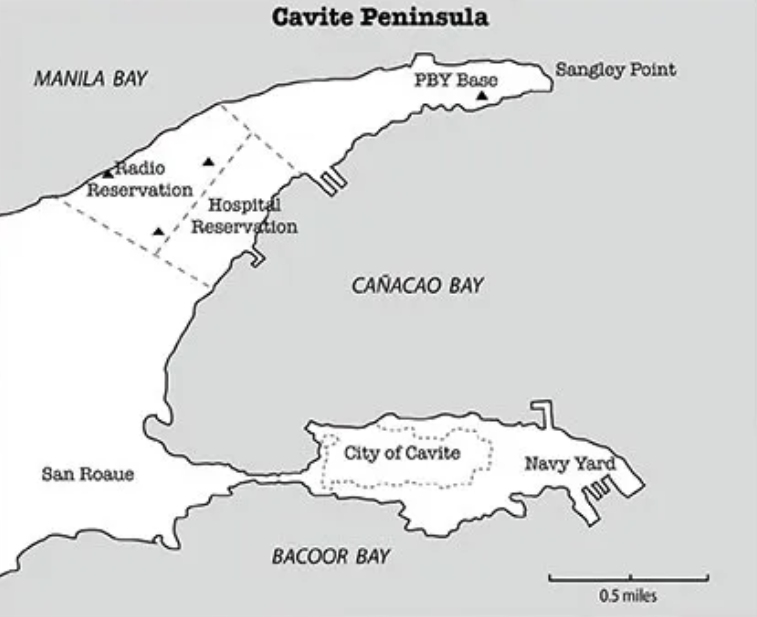
[edit]The first US Navy bases were Spain's bases taken after the 1898 Battle of Manila. At the end of the Spanish–American War, Spain ceded Manila to the United States.[2][3][4] Merchants ship from Spain and China started trading on the Sangley Peninsula in 1571. Sangley was the name given to Chinese traders, a merchant guest, in the Philippines. The two main Naval bases taken: Naval Base Cavite at Cavite City and Naval Station Sangley Point both on the Cavite Peninsula in Manila Bay, eight miles southwest of the city of Manila. The Cavite Peninsula is south of the city center of Manila. On May 1, 1898, the US Navy took over the two Naval Bases after the Battle of Manila Bay. Naval Station Sangley Point was used as a coal station for refueling ships. At the Naval Base Cavite, a repair shipyard, that Spain had called Astillero de Rivera (Rivera Shipyard), the US Navy did updates, improvements and later added a submarine base. The old Spanish hospital, run by Sisters of Charity, was taken over by the US Navy. The old hospital was replaced by a new Naval hospital, Cañacao Naval Hospital Reservation in the 1920s, this Hospital served the Navy and local population. Cañacao Naval Hospital was destroyed during the war. Starting in 1938 US and Philippines civilian contractors were used to build up the US bases at Manila. The new 1941 projects were building at Sangley Point a Seaplane base and an ammunition depot at Mariveles on the tip of Bataan Peninsula.[1][5]
On December 23, 1941, it was declared that Manila was not defendable. Most civilian contractors depart Manila. US Troop were withdrawn to the Bataan Peninsula.[6] Some Troops withdrawn to Corregidor Island in the bay, that surrendered May 6, 1942.[7] Japanese forces took over and started using the two Manila bases in January 1942. US civilians that did not depart were detained by Japan at University of Santo Tomas-(Santo Tomas Internment Camp) and Bilibid Prisons. The University of Santo Tomas prisoner of war (POW) camp held 3,000. The two Bilibid Prisons were used as processing centers, over 13,000 POWs, mostly Americans, were held there before being put on hell ships and transferred to other POW camps.[1][5] Some staff at the Naval Hospital did not evacuate, including some nurses, who became POWs with the Troops in the Battle of Bataan.[8][9] The nurses became known as the Angels of Bataan for their care of the Troop till liberated in February 1945.[10][11][12]
With the taking of Manila in 1945, in March 1945 the US Navy's Seabee, Naval Construction Battalions, began repairing the battle damage at the two bases. Soon improvement began, with new Troop arriving at Pacific War, a base for new Troops arriving was built at the Cavite naval base. With the fighting ships at war for years, a Cavite repair base and depot was built for the repair and maintenance of ships. United States Seventh Fleet headquarters moved into the 40-acre (16 ha) Manila Polo Club. At Sangley Point Seabees built a new 5,000-foot runway for Naval Air Transport Service airfield. The new airfield had 12,000-barrel tank farm, hangars, and a depot. Sangley Point seaplane base was repaired and improved, including adding a pontoon dock. The Cavite base was repaired, and a new replacement Naval hospital was built. The Manila bases and the large Fleet anchorage in Manila Bay began to build up for the expected costly invasion of Japan, planned for November 1, 1945, called Operation Downfall. With the Surrender of Japan on September 2, 1945, the invasion was not needed. The new Naval Hospital was completed and expanded. Naval Base Manila continued as US Base till 1971, when it was turned over to the Philippines Navy.[1][13][5]
Bases and facilities
[edit]- Naval Station Sangley Point (341 acres (138 ha); 1898–1941, 1945–1971, Spain 1884–1898)
- Naval Air Station Sangley Point, 341-acre (138 ha) NAB Manila, 8,000 feet (2,400 m) runway (1945–1971) now Danilo Atienza Air Base. The Navy operated Lockheed P-2 Neptune, Lockheed P-3 Orion, Martin P4M Mercator from 1945 to 1950.
- Cañacao Peninsula Seaplane Base at Sangley Point (1941) (Patrol Wing 10) (Japan 1941–1945 Kanakao base), US Navy (1945–1971). Locate on the south tip of Sangley Point at 14°29′40″N 120°54′42″E / 14.494402°N 120.911648°E. The Navy operated patrol planes: P5M Marlin, HU-16 Albatross, and PBY Catalina at the base. The Seaplane Base closed in 1965 and is now part of Sangley Point National High School. Navy operated[14]
- Naval Fuel depot at Sangley Point (1938–1941, 1945–1971)
- Cañacao Naval Hospital Reservation at Cañacao Bay (1925–1941) (Japan 1941–1945), a 27-acre (11 ha) site at14°29′28″N 120°54′19″E / 14.491034°N 120.905203°E that was destroyed during the war (also see Angels of Bataan). It replaced Spain's 1875 hospital.[15][11][16]
- Radio station at Sangley Point: three 600-foot (180 m) steel antenna towers (1915–1945). North antenna was at 14°29′39″N 120°53′58″E / 14.494284°N 120.899401°E, the other two antenna towers were next to the Cañacao Naval Hospital Reservation. Removed to build 8,000-foot runway.[17]
- Crash boat base
- US Coast Guard Air Station Sangley Point, US Coast Guard run LORAN, long-range navigation (1946–1970)[18]
- United States Marine Corps Camp (1945–1970)
- John Paul Jones School at Sangley Point opened for children of base staff (1945–1971)
- Power plant
- Sangley Point Ship Yard, two marine railways for ship repair, next to the seaplane base.
- Varadero de Manila Shipyard, (1957–1970) the US Navy shipyard at Sangley Point was turned over for private use after the Korean war in 1957. Located between the seaplane base and the former Cañacao Naval Hospital Reservation at 14°29′36″N 120°54′32″E / 14.493265°N 120.908952°E. Now a boat dock.
- Naval Base Cavite (50-acre (20 ha) Cavite Navy Yard and Sub Base) (1898–1941, 1945–1971), now Naval Station Pascual Ledesma
- Cavite Submarine base (1919-1960s)[19][20]
- Cavite Naval Fuel depot
- Torpedo repair shop
- PT boat Base (Squadron 3, 1940–1941) (1945–1946)[21]
- Ammunition depot
- Cavite ship repair, ship repair and salvage, one boat marine railway (1925–1941, 1945–1971)
- Power plant
- Cavite Naval Hospital (1945–1971) at 14°28′59″N 120°54′52″E / 14.482996°N 120.914515°E
- Mariveles Naval Section Base opened July 22, 1941.[22][23]
- Ammunition depot at Mariveles on the tip of Bataan Peninsula
- Mariveles Naval Port, the bay at Mariveles had an anti-submarine net to protect the ship there. (1941, 1945–1971) Net layers:USS Buckeye, USS Silverbell (AN-51)
- Mariveles Seaplane base, at the Mariveles port a seaplane ramp and base was built at 14°25′51″N 120°29′07″E / 14.430802°N 120.485315°E.[24]
- Mariveles Quarantine Hospital, now Mariveles Mental Wellness and General Hospital
- Supply depot – tank farm
- Mariveles Airfield, one dirt 3,800-foot runway at Bataan 14°27′N 120°30′E / 14.45°N 120.50°E complete on February 23, 1942. Used by US Army and Navy, with nearby Army Camp. Mariveles Airfield surrendered on April 10, 1942, and from there the Bataan Death March began. Airfield was retaken in February 1945.[25]
- Submarine Squadron 2
- US Army camp
- Radar stations
- Mess halls and Barracks at all three bases
- Corregidor Island in Manila Bay (1941–1942), two Naval docks, lost in Battle of Corregidor, retaken in 1945.[7]
- Malinta Tunnel, built by the United States, from 1922 to 1932 as a bomb-proof storage depot and Troop bunker. Due to many wounded troops a 1,000-bed hospital was added. Built on Corregidor Island, at 14°23′16″N 120°35′26″E / 14.38791406°N 120.59064738°E.[26]
- Harbor Defenses of Manila and Subic Bays, four US Army forts on islands at the entrance to Manila Bay. Naval mines blocked the entrance to the Port of Manila and Manila Bay for protection. On the north side of Corregidor Island, the two mines fields could be electrically be turned on and off by controls on Corregidor Island, so US ships could use the bay safely.
- US Navy Cryptologist Admiral Ernest J. King and other Naval intelligence personnel were taken off Corregidor by submarines on April 8, 1942.[27]
- Key personnel were taken off the Corregidor in Operation Flight Gridiron by two Consolidated PBY Catalina from Naval Base Perth on April 29, 1942. The mission was one of the longer rescue missions ever.[28][7][29]
- Manila Bay Naval Fleet anchorage (1898–1941, 1945–1971) (once obstacles cleared in 1945)[30]
- Port of Manila for supply depot and shore leave. (1898–1941, 1945–1971)
- Naval supply depot in the City of Manila (1898–1941, 1945–1971)[31]
- Sternberg General Hospital in Manila (US 1898–1941), destroyed during the war.
- Manila Army and Navy Club (1925–1941) (Japan 1941–1945)
- Bilibid Prison (1945–1946), used by the US to hold Japanese accused of war crimes, Tomoyuki Yamashita was held at the Prison till execution.[32]
- Manila Hotel used both by US and Japan during the war.[33]
- U.S. Naval Radio Facility Bagobantay (1945–1962)
- Fleets:
- United States Asiatic Fleet parts stationed at Manila (1902–1907, 1910–1942)
- United States Asiatic Fleet's Station CAST intelligence and radio (1938–1942)
- Motor Torpedo Boat Squadron Three (1941–1942)
- Submarine tenders Ships:USS B-1, USS B-2 and USS B-3
- United States Seventh Fleet headquarters, in the former 40-acre (16 ha) Manila Polo Club (1945)
- Fleet Post Office FPO# 3142 SF Manila
_at_anchor_in_Manila_Bay,_Philippines,_in_1945.jpg)
Naval Base Manila repair base
[edit]Naval Base Manila was a major repair base, bases at the repair facilities:[1][5]
- Marine railways as dry docks
- Repair docks and piers
- Service Squadron
- Part depots
- Machine shops
- Engineering camp
- Chemical Engineering Camp
- Small boat pool
- Motor pool
- USS Jason (AC-12)
- USS Beaver
- USS Medusa (AR-1)
- USS Rigel (AD-13)
- USS Leyte (ARG-8)
- USS Holland (AS-3)
- USS Obstructor
- USS Wright (AV-1)
- USS Currituck (AV-7)
- USS Salisbury Sound (AV-13)
- USS Gardiners Bay (AVP-39)

Auxiliary Airfields
[edit]

Manila auxiliary airfields included:[34]
- Bataan Airfield: Located on the east side of Bataan Peninsula, constructed in 1941 and used by US Army and Navy. Surrendered on April 10, 1942, with POWs becoming part of the Bataan Death March.
- Nichols Field: Established in 1919 for US Army and Navy aircraft maintenance. Lost during the war, it was reutilized from 1945 to 1947 by the Army and Naval Air Transport Service (NATS). Now known as Villamor Air Base and Ninoy Aquino International Airport, under the jurisdiction of Pasay.[35]
- Nielson Field: Initially a private airport built in 1937, it was taken over for defense in 1941 but later captured by Japan. Used by the US (APO 75) in 1945 and returned to civilian use in 1946, closing permanently in 1947. Now part of the Makati Central Business District in Makati.[14]
- North Avenue Airfield (Quezon Airfield): A small auxiliary airstrip on the Diliman Estate in Quezon City at 14°39′13″N 121°2′17″E / 14.65361°N 121.03806°E, now part of North Avenue, EDSA, and Quezon Avenue.[14]
- Balara Airfield (Quezon New Airfield): Used as an auxiliary airfield in Caloocan, is now occupied by residential houses in what is now Quezon City.[14]
- Zablan Auxiliary Airfield: Built before the war as an emergency runway at 14°36′36″N 121°04′44″E / 14.609875°N 121.078753°E, it closed after the war. It is now part of Camp Aguinaldo.[14]
- Mandaluyong East Airfield: Built by Japan but not developed by the US, now part of Shaw Boulevard in Mandaluyong and Pasig.[14]
- Pasig Airfield: Built by Japan but not developed by the US, it was used as an emergency runway at 14°35′01″N 121°06′08″E / 14.583526942582386°N 121.10226775768227°E in Pasig, running in parallel to a railroad. It is now part of residential areas in Barangay Santa Lucia, Pasig.[14]
- Grace Park Airfield (Manila North Airfield): Built by Japan, used by the US Army, and later as an emergency runway in 1945 at 14°38′49″N 121°59′00″E / 14.646844°N 121.983250°E. Located in Grace Park, Caloocan.[14]
- Dewey Boulevard Airfield: Built by Japan and not developed by the US due to its waterfront location, was briefly utilized for the movement of planes. Located in Ermita near the US Embassy, which functioned as a parking area for aircraft during that time. Now Roxas Boulevard at 14°34′15″N 120°58′55″E / 14.570947°N 120.982011°E.[14]
- Marikina Airfield: Located in Marikina, liberated by Naval Base Manila in 1945, and converted into a sports field.[14]
Seabee units
[edit]Seabee units working at Naval Base Manila: [1]
- 12th Naval Construction Regiment
- 77th Battalion
- 119th Battalion
- ACORN-45
Losses
[edit]- Ships and boats losses at Manila:[7]
- Scuttled by her crew so Japan could not use: USS Dewey (YFD-1), USS Canopus (AS-9), Yacht Maryann, Tug TT Vaga, USS Sara Thompson (AO-8), Yacht Perry, Fisheries II, SS Capillo, SS Bohol, SS Dos Hermanos, SS Magallanes, SS Montanes, USS Canopus, USS Luzon (PG-47), USS Oahu, USS Quail, USS Napa (AT-32), USS Mindanao (PR-8), USS Bittern (AM-36), USS Bittern (AM-36), USAMP Col. George F. E. Harrison, USS Genesee refloated by Japan, USS Sealion (SS-195), USS Grayling (SS-209), USS YMS-48, Mambukai and PT boats: PT-31, PT-32, PT-33, PT-35, PT-41, Q-112, Q-113 and Q-111.
- Sank in action: USS Pigeon (ASR-6), USS YAG-4, USS Tanager (AM-5), Trabajador, USS Grayling (SS-209), USS Neptune, Tug Henry Keswick, SS Bisayas, SS Daylite, Henry Keswick, SS Anakan, USLHT Canlaon, USLHT Banahao, USS Pompey, SS Kaiping, S Mauban, SS Hai Kwang, SS Seistan, SS Palawan, SS Ethel Edwards, USS Si Kiang, SS Tantalus, SS Samal, SS Paz, USS Manatawny, LCS(L)(3)-7, LCS(L)(3)-26, LCS(L)(3)-49, SS Viscaya, SS Corregidor, USS Finch (AM-9) (refloated by Japan), Q-114, and PT-34.
- Damaged: USS Fletcher (DD-445), Tug Ranger and USS Hopewell (DD-681) hit in 1945.

- Captured: Yacht BRP Banahaw
Gallery
[edit]-
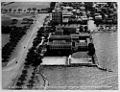
 US Naval Station Sangley Point in 1947, with Quonset hut, barracks, shops, supply depot, mess hall and more.
 -
 Seaplane Base at Sangley Point.
 -
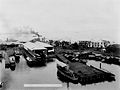 Cavite Navy Yard docks in 1899, year after it became a US Navy Shipyard
 -
 A O2U floatplane flies over the Cavite Navy Yard, in 1930, below seaplane tender USS Jason and Sangley Point
 -
 Bataan Peninsula on 24 January 1945, with Mariveles Seaplane base, port and Airfield. Japan is bombing the runway. Mariveles surrendered on April 10, 1942, the start of Bataan Death March. Mariveles was retaken in February 1945
 -
 USS Rigel (AR-11), a repair ship in Manila Bay
 -
 Cavite Navy Yard bombed by Japan on December 10, 1941. Smoke rises from Cavite Navy Yard.
 -
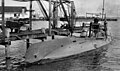 Submarine USS Shark (SS-8) at the Cavite Navy Yard 1911
 -
 USS Kline (APD-120) anchored off Manila in July 1945
 -
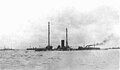 The wreck of the Spanish Navy cruiser Castilla after the Battle of Manila Bay in 1898.
 -
 Entrance to Naval Base Mariveles after the fall of Bataan.
 -
-
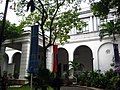 Manila Army and Navy Club
 -
 Manila Army and Navy Club Reception Area
 -
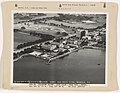 Manila Army and Navy Club in 1932
 -
 Manila Army and Navy Club Historical Marker
 -

-

-
 Manila Bay and Cavite in the bay
 -
 Naval Station Sangley Point in 1964
 -

-
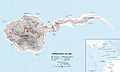 Map of Corregidor Island in 1941
 -

-
 Fort San Felipe in Cavite in 1888 on Naval Base Cavite
 -
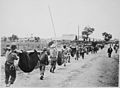 Bataan Death March that started at US Navy port at Mariveles on Bataan Peninsula on April 10, 1942, with US Army, Navy, Marines, Naval Hospital staff and Filipino Troops.
 -
 Map Bataan Death March route 1942
 -
 Japanese War Crimes Trials in Manila
 -
 Bataan Death March Memorial Las Cruces, New Mexico
 -
 Zero Kilometer Death March Marker in Mariveles


atcavite.jpg)
_anchored_off_Manila,_Philippines,_in_July_1945.jpg)


.jpg)


atCavite.jpg)


See also
[edit]
External links
[edit]References
[edit]- ^ a b c d e f "Building the Navy's Bases, vol. 2 (part III, chapter 26)". US Navy, navy.mil.
- ^ José Roca de Togores y Saravia; Remigio Garcia; National Historical Institute (Philippines) (2003), Blockade and siege of Manila, National Historical Institute, pp. 148–150, ISBN 978-971-538-167-3
- ^ "Blockade and Siege of Manila". US Navy, navy.mil.
- ^ "Battle of Manila Bay". US Navy navy.mil.
- ^ a b c d "Maps and Photos – expendable.us".
- ^ "Decision To Withdraw to Bataan". history.army.mil. Archived from the original on December 23, 2007.
- ^ a b c d "Bataan and Corregidor". US Navy, navy.mil.
- ^ "Navy Nurse POW, Philippines". US Navy navy.mil.
- ^ Oral Histories – U.S. Navy Nurse in the Pacific Theater during World War II Recollections of CAPT Ann Bernatitus, US Navy navy.mil
- ^ Norman, Elizabeth (2013). We Band of Angels, p. 24-25.
- ^ a b "Navy Nurses Behind Enemy Lines in the Philippines". US Navy navy.mil.
- ^ Monahan, Evelyn M. & Neidel-Greenlee, Rosemary (2003). All This Hell, p. 31.
- ^ "Manila Bay". US Navy navy.mil.
- ^ a b c d e f g h i j "Pacific Wrecks". pacificwrecks.com.
- ^ "NH 44684 First Reserve Hospital, Manila, Philippine Islands". NHHC.
- ^ Norman, Elizabeth (2013). We Band of Angels, p. 24.
- ^ "Pacific Wrecks – Cavite, Cavite Province, Luzon, Philippines". pacificwrecks.com.
- ^ uscg.mil, Coast Guard Air Station Sangley Point
- ^ US Navy Cavite Submarine base
- ^ US Navy Cavite Submarine base
- ^ Part I Into Action – Pearl Harbor and the Philippines
- ^ NPS.gov Mariveles Naval Section Base
- ^ pacificwrecks.com, Mariveles Naval Section Base
- ^ pacificwrecks.com Mariveles Seaplane base
- ^ pacificwrecks.com, Mariveles Airfield
- ^ tracesofwar.com, Malinta Tunnel
- ^ Naval Supplementary Radio Station Melbourne Australia stationhypo.com
- ^ In the Hands of Fate: The Story of Patrol Wing Ten, Messimer, 1985, chapter 13
- ^ PBY Catalinalanbob.com
- ^ "Pacific Wrecks – Manila Bay (Manila Harbor) Luzon, Philippines". pacificwrecks.com.
- ^ "Pacific Wrecks – Manila, National Capital Region, Luzon, Philippines". pacificwrecks.com.
- ^ "Pacific Wrecks – NAS Sangley Point (Antonio Bautista, Danila Atienza) Cavite Province, Luzon, Philippines". pacificwrecks.com.
- ^ "Pacific Wrecks". pacificwrecks.com.
- ^ Manila and Suburbs, (Japanese Airfields) Philippines (Map). July 25, 1944. Retrieved June 17, 2024.
- ^ "Pacific Wrecks – Nichols Field (Manila Airport, Ninoy Aquino Airport) Luzon, Philippines". pacificwrecks.com.


Naval Base Manila
View on GrokipediaPre-War Establishment and Development
Construction and Expansion (1938–1941)
In response to Japan's escalating aggression in Asia following the expiration of the Washington Naval Treaty in 1936, the United States initiated modernization and expansion of naval facilities in the Philippines, particularly at Cavite Navy Yard in Manila Bay, starting in the late 1930s. Manila Bay's deep, sheltered waters provided an ideal natural harbor for fleet maintenance, repair, and refueling operations, prompting investments in infrastructure to support the Asiatic Fleet. By 1938, efforts focused on upgrading existing structures, including machine shops, warehouses, and fuel depots, while expanding the workforce to over 8,000 Filipino civilians alongside 400-500 American personnel.[1] Specific projects integrated with the historic Cavite Navy Yard encompassed the construction of additional barracks, ammunition storage facilities, and radio communication stations at Sangley Point, leveraging the site's strategic position on the peninsula. Civilian contractors, coordinated under broader Pacific naval programs, handled much of the labor-intensive work, such as dredging docks and erecting support buildings across approximately 50 acres with 146 structures. New machine tools were introduced to enhance repair capabilities, reflecting a first-principles approach to resource allocation aimed at deterring potential Pacific threats through operational readiness.[1][2] In early 1941, the U.S. government approved plans for a dedicated seaplane base at Sangley Point to bolster patrol activities, including the erection of a seaplane hangar, ramp, and extensions to existing runways. These developments, part of the 16th Naval District's establishment at Cavite, were intended to integrate air and surface operations for comprehensive defense. However, construction efforts were abruptly terminated in December 1941 amid Japanese air raids and the declaration of Manila as an open city on December 23, preventing completion of key deterrence-enhancing infrastructure.[3][4]Strategic Planning and Infrastructure Investments
The U.S. Navy's strategic selection of Manila Bay, with Cavite Navy Yard on its southern shore, prioritized the site's deep-water harbors capable of accommodating capital ships, its sheltered position offering defensive advantages against surface threats, and its geographic centrality for Asiatic Fleet operations amid rising tensions in East Asia.[5][6] These factors positioned Cavite as the optimal forward base west of Hawaii, linking directly to fleet logistics for rapid response to conflicts in the western Pacific.[1] Following the 1936 expiration of basing agreements, the Navy allocated resources for targeted infrastructure upgrades at Cavite, including installation of modern machine tools and workforce expansion to bolster ship repair functions as the sole such facility in the region.[1] By 1940, enhancements extended to support aviation elements, with provisions for seaplane operations and associated hangars, reflecting empirical planning for integrated air-naval capabilities.[7] Pre-war evaluations assessed Cavite's capacity at approximately 400–500 American sailors, alongside facilities for overhauling major warships, underpinning its role in sustaining extended deployments preparatory to multinational defenses in Southeast Asia.[1] This infrastructure scaling aligned with U.S. war plans emphasizing resilience in the Philippines as a logistical hub against potential Japanese expansion.[8]Facilities and Operational Capabilities
Primary Bases and Repair Yards
The Cavite Navy Yard served as the central repair hub for Naval Base Manila, functioning as the U.S. Navy's only dedicated ship repair facility in the western Pacific by 1941, with machine shops equipped to perform overhauls and maintenance on cruisers, destroyers, submarines, and auxiliary vessels of the Asiatic Fleet.[1][7] These shops included capabilities for propeller work, hull patching, and engine repairs, supporting routine fleet sustainment without reliance on distant mainland yards.[1] However, the yard lacked large dry docks suitable for battleships, with its shallow harbor limiting it to smaller vessels and floating dry dock alternatives that were not permanently stationed there by late 1941.[1] Adjacent Sangley Point facilities integrated with Cavite across Cañacao Bay, providing supplementary repair support through marine railways and workshops for minor vessel work, alongside fuel depots that enabled refueling for the Asiatic Fleet's surface and submarine units.[7] These depots stored petroleum products sufficient for extended operations, with ammunition magazines co-located to streamline logistics for docked ships.[1] The combined infrastructure emphasized in-situ sustainment, allowing the fleet to project power without frequent transits to Pearl Harbor or the U.S. West Coast.[7] Together, Cavite and Sangley formed the operational core for fleet basing, distinct from auxiliary sites, with repair functions prioritized to maintain combat readiness amid growing tensions in the Pacific by 1941.[1] This setup supported the Asiatic Fleet's light cruiser-heavy composition, enabling rapid turnaround for patrols and exercises in Manila Bay and beyond.[7]Auxiliary Airfields and Support Installations
Naval Station Sangley Point served as the principal auxiliary airfield for U.S. Navy operations in the Manila area, featuring a single runway and seaplane facilities utilized by patrol aircraft such as the Consolidated PBY Catalina for reconnaissance and maritime surveillance missions prior to World War II.[9] A dedicated seaplane ramp was constructed and completed in January 1940 to enable efficient basing and maintenance of PBY squadrons, including those from Patrol Wing Ten, enhancing the Navy's ability to conduct long-range patrols over the Philippine waters.[10] These facilities complemented the primary repair yards by focusing on aviation support rather than heavy ship maintenance. In support of communication needs for aerial operations, three 600-foot (180 m) steel antenna towers were erected at Sangley Point in 1915 to operate the powerful Radio Sangley station, which facilitated coordination of patrol flights and fleet movements until the towers' survival through initial wartime destruction in 1945.[11] Auxiliary support installations included the Cañacao Naval Hospital at Sangley Point, which provided medical care to Navy personnel and was operational until its destruction in early 1942, with staff including nurses who were captured as prisoners of war in January 1942.[12] Barracks expansions and motor pools were integrated into pre-war infrastructure upgrades to house personnel and maintain vehicle logistics for airfield operations, ensuring sustained support without reliance on primary base resources.[1]Seabee Engineering Contributions
In March 1945, following the liberation of Manila during the Battle of Manila, units of the US Navy's Seabee Naval Construction Battalions, including the 77th and 119th NCBs, deployed to the damaged facilities around Manila Bay to undertake urgent repairs and new construction. These efforts targeted key infrastructure at Cavite Navy Yard and Naval Station Sangley Point, which had suffered extensive destruction from Japanese occupation and Allied bombings. The Seabees focused on restoring operational capacity through rapid engineering projects, such as repairing docks, erecting repair shops, and constructing aviation support facilities, enabling the bases to support Seventh Fleet logistics within months.[3][1] The 119th NCB, for instance, handled emergency repairs at Cavite, a major pre-war repair yard reduced to ruins, including the establishment of the 7th Fleet Material Yard as a central supply hub for ongoing naval construction across Manila and Cavite areas. This involved assembling quonset huts for barracks, shops, and depots, alongside waterfront enhancements for docking and unloading operations, demonstrating the Seabees' efficiency in modular, prefabricated builds under combat-adjacent conditions. Similarly, the 77th NCB, operating under the 12th Naval Construction Regiment, contributed to airfield and seaplane base reconstructions at Sangley Point, including taxiways, hardstands, and personnel accommodations to revive air operations. These outputs directly enhanced base resilience by prioritizing durable, scalable infrastructure that withstood tropical conditions and supported sustained Pacific theater logistics.[13] ![US Naval Station Sangley Point in 1947, with Quonset hut, barracks, shops, supply depot, mess hall and more.][float-right] The scale of these Seabee contributions aligned with Bureau of Yards and Docks directives for empirical efficiency, where battalions completed multifaceted projects—averaging thousands of cubic yards of earthwork and hundreds of structures—in weeks rather than months, as evidenced by the swift reactivation of repair yards that processed damaged vessels for the final push against Japan. Such feats underscored causal links between rapid fortification and operational uptime, with Seabees leveraging heavy equipment like bulldozers and cranes to mitigate wartime delays from supply shortages and residual threats. No prior equivalent pre-war engineering matched this pace, highlighting the CEC's wartime adaptations in resource-constrained environments.[3][1]World War II Operations and Challenges
Initial Defense and Early Engagements
The U.S. Asiatic Fleet, under Admiral Thomas C. Hart and headquartered in Manila, upheld a core defensive mandate to control Manila Bay's entrance and prevent its use by Japanese forces, as outlined in pre-war operational directives.[14] This posture aligned with broader U.S.-Philippine defense arrangements under the Commonwealth government, emphasizing naval vigilance amid escalating tensions in the Pacific. On December 3, 1941, Hart executed a specific presidential directive by deploying the armed yacht USS Isabel for reconnaissance of Cam Ranh Bay, a suspected Japanese staging area, signaling heightened alert status from Manila-based assets.[15] News of the Pearl Harbor attack reached Asiatic Fleet headquarters at 0257 on December 8, 1941 (local time), prompting immediate mobilization. Hart ordered the fleet's 29 submarines— the largest U.S. Navy concentration of modern boats in the theater, based primarily in Manila Bay—to sortie for war patrols targeting Japanese shipping and reconnaissance.[16] Vessels including USS Seawolf and USS S-39 commenced operations from Manila, with Seawolf concluding an initial patrol in Manila Bay by December 26 and S-39 returning from its first war patrol on December 21, focusing on disrupting early Japanese movements in Philippine waters.[17][18] Surface units, comprising cruisers and destroyers, were positioned at sea to execute pre-planned dispersal maneuvers southward, preserving combat capability while leveraging Cavite as a provisional command hub for coordination and minor repairs.[19] This initial response delayed full Japanese dominance in the region by maintaining operational submarines that sank several enemy vessels in December patrols, per fleet logs. Into early 1942, amid advancing Japanese landings, the fleet sustained dispersal from Philippine nodes before Hart's command shifted to Java by mid-January, with Cavite facilitating urgent repairs that extended submarine endurance against supply lines.[20]Japanese Attacks and Destruction
On December 10, 1941, Japanese aircraft launched a major air raid against the Cavite Navy Yard at Sangley Point, beginning around 1314 local time and lasting approximately two hours.[1] The assault involved 54 bombers targeting key infrastructure, including the power plant, fuel depot, and repair facilities, with fires ignited by ruptured oil tanks and exploding ammunition spreading rapidly across the yard.[7] This strike rendered the base's core operational elements inoperable, destroying the torpedo repair shop, warehouses, signal station, and other shore facilities essential for maintenance and logistics.[7][1] The destruction eliminated the yard's capacity to conduct repairs, as wooden structures housing machine shops and support operations were consumed by flames, leaving only limited salvageable assets.[7] Docks and central wharves sustained heavy bomb damage, further hampering any residual utility, while the attack's precision on industrial targets underscored Japanese efforts to neutralize U.S. naval sustainment in Manila Bay.[21] By evening, U.S. forces evacuated the site, relocating personnel to nearby San Roque and initiating salvage to Mariveles and Corregidor, marking the effective abandonment of the yard as a functional hub.[1] Subsequent strikes compounded the losses, with a Japanese raid on Sangley Point on December 19, 1941, obliterating remaining aviation fuel stocks, the radio tower, and any surviving power infrastructure.[1] These attacks collectively dismantled the base's repair and refueling capabilities, compelling the U.S. Asiatic Fleet to withdraw southward to alternative ports in the Dutch East Indies and Australia to evade further vulnerability.[7] The tactical outcome facilitated Japanese ground advances, culminating in the capture of Manila and Cavite on January 2, 1942, without viable U.S. naval repair presence to contest the occupation.[1]Documented Losses and Casualties
The Japanese air attack on Cavite Navy Yard on December 10, 1941, inflicted severe material damage over a two-hour period involving more than 50 bombers flying at altitudes beyond effective antiaircraft range.[1] Key facilities destroyed included the power plant, dispensary, torpedo repair shop, supply office, warehouses, signal station, commissary store, receiving station, barracks, and officers’ quarters, with fires consuming most wooden structures and spreading to docks and oil tanks.[7] A torpedo warehouse explosion exacerbated the destruction, though the naval ammunition depot escaped direct hits.[7] Among vessels, USS Sealion (SS-195) sustained two direct bomb hits, rendering it inoperable and leading to its eventual scuttling, while USS Bittern (AM-36) suffered heavy fire and debris damage, necessitating scuttling in April 1942; USS Seadragon (SS-194) and USS Peary (DD-226) also incurred damage from blasts and fires.[1] [7] A follow-up raid on Sangley Point on December 19 targeted remaining aviation fuel drums, the radio tower, and power plant, completing the systematic elimination of base infrastructure.[1] Human casualties at Cavite were significant, with official U.S. Navy records tallying approximately 65–70 personnel killed, drawn from broader Asiatic Fleet losses adjusted for the event.[1] Admiral Francis W. Rockwell estimated around 500 total killed or seriously wounded, including civilians, corroborated by reports of roughly 250 civilian bodies interred in a mass grave.[7] Specific onboard losses included four killed aboard Sealion.[1] No casualties were documented from the Sangley Point raid, as the naval hospital there had been evacuated prior.[1]Post-War Reconstruction and Legacy
Allied Recovery Efforts
Following the U.S. Army's liberation of Cavite Navy Yard in February 1945 amid the broader Battle of Manila, which concluded on March 3, 1945, Allied forces prioritized the recovery of damaged naval infrastructure in Manila Bay to support ongoing Pacific operations.[1][22] Surviving elements of the yard, including portions of docks and workshops initially devastated by Japanese air raids in December 1941, were assessed for reuse in staging logistics for General Douglas MacArthur's Luzon campaign.[7] In March 1945, shortly after Manila's recapture, the 77th and 119th Naval Construction Battalions (Seabees) deployed to the area under the Bureau of Yards and Docks to undertake emergency repairs and rehabilitation of pre-war bases like Cavite and Sangley Point.[3] These units focused on restoring dock facilities and supply depots to facilitate ship repairs and sustainment of the Seventh Fleet, enabling the anchoring and servicing of vessels such as repair ships in Manila Bay by mid-1945.[1] Seabee efforts emphasized practical engineering to reclaim usable piers for unloading supplies, directly aiding the consolidation of Allied positions post-MacArthur's formal entry into Manila on March 7, 1945.[3] However, war-induced destruction imposed causal constraints on full restoration; extensive bombing and Japanese demolition during their 1945 retreat left many structures irreparably compromised, limiting the bases to partial operational capacity for immediate wartime needs rather than complete pre-war functionality.[1] Bureau of Yards and Docks records highlight that while Seabees achieved rapid makeshift repairs to support supply lines, comprehensive rebuilding awaited post-hostilities, with sites like Sangley Point seeing Seventh Fleet landings on March 20, 1945, for initial salvage amid rubble.[3] This pragmatic approach underscored the realism of leveraging remnants for strategic sustainment in the final phases of the Philippine liberation.