


Community hub
Recent from talks
Contribute something
Nothing was collected or created yet.
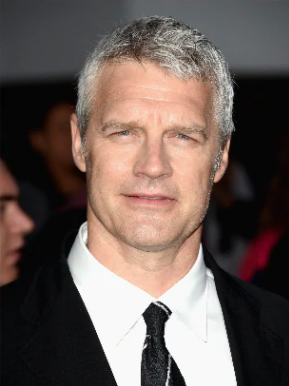
Neil Burger
View on WikipediaNeil Norman Burger is an American filmmaker. He is known for the fake-documentary Interview with the Assassin (2002), the period drama The Illusionist (2006), Limitless (2011), and the sci-fi action film Divergent (2014).[2]
Key Information


Life and career
[edit]Burger was born in Greenwich, Connecticut. After graduating from Yale University with a degree in fine arts,[3] he became involved with experimental film in the late 1980s and went on to direct music videos for such alternative artists as the Meat Puppets.[citation needed] He approached MTV about creating and directing a series of inspiring promotional announcements for what would be the MTV Books: Feed Your Head campaign against aliteracy.[citation needed] In association with Ridley Scott Associates, he directed commercials for companies including Mastercard, IBM and ESPN, and created a series of television spots for Amnesty International and their campaign for prisoners of conscience.[citation needed]
Burger made his directorial feature debut with Interview with the Assassin in 2002, which he also wrote. It won the Best Feature Film category at the Woodstock Film Festival and Avignon Film Festival, and was nominated for three Independent Spirit Awards, including Best First Film and Best First Screenplay.[citation needed]
Burger’s follow up feature was The Illusionist, starring Edward Norton and Paul Giamatti. His screenplay for the film was based on the short story "Eisenheim the Illusionist" by Steven Millhauser. It premiered at the 2006 Sundance Film Festival and opened the 2006 Seattle International Film Festival and the 2007 Deauville Film Festival. It was nominated for Best Screenplay at the 2007 Independent Spirit Awards and Best Cinematography at the 2007 Academy Awards.[citation needed]
Burger's additional credits include the 2007 post-Iraq War indie drama The Lucky Ones, starring Rachel McAdams, Tim Robbins, and Michael Peña; and Limitless (2011), starring Bradley Cooper and Robert De Niro, which opened at #1 at the box office and grossed over $160 million worldwide.[4][5]
In 2014, Burger directed the film Divergent, based on the novel by Veronica Roth. Shailene Woodley starred alongside Theo James, Kate Winslet, Miles Teller, Ansel Elgort and Ashley Judd. Released by Lionsgate, it grossed over $280 million worldwide, making it Burger's most commercially successful film to date.
Following Divergent, Burger directed the first two episodes of Showtime’s Wall Street drama Billions, starring Paul Giamatti and Damian Lewis. He then served as an executive producer on CBS’s TV adaptation of Limitless. His additional credits include the Divergent series films Insurgent (2015) and Allegiant (2016).[6]
Burger most recently directed The Upside,[7] a remake of the French hit The Intouchables. Starring Bryan Cranston and Kevin Hart, it was theatrically released in January 2019.[8]
Burger currently resides in New York City with his wife, architect Diana Kellogg, and their family.[1]
Filmography
[edit]Film
[edit]| Year | Title | Director | Writer | Producer |
|---|---|---|---|---|
| 2002 | Interview with the Assassin | Yes | Yes | No |
| 2006 | The Illusionist | Yes | Yes | No |
| 2007 | The Lucky Ones | Yes | Yes | Yes |
| 2011 | Limitless | Yes | No | Executive |
| 2014 | Divergent | Yes | No | No |
| 2017 | The Upside | Yes | No | No |
| 2021 | Voyagers | Yes | Yes | Yes |
| 2023 | The Marsh King's Daughter | Yes | No | No |
| 2025 | Inheritance | Yes | Yes | Yes |
Executive producer only
- The Divergent Series: Insurgent (2015)
- The Divergent Series: Allegiant (2016)
- All the Old Knives (2022)
Television
[edit]| Year | Title | Director | Executive Producer |
Notes |
|---|---|---|---|---|
| 1991 | Books: Feed Your Head | Yes | No | Miniseries |
| 2015-2016 | Limitless | No | Yes | |
| 2016-2023 | Billions | Yes | Yes | Directed 6 episodes |
| 2025 | The Agency | Yes | No | 2 episodes |
| 2025 | Motorheads | Yes | Yes | 2 episodes |
TV movies
- The Asset (2012)
- The Jury (2016)
References
[edit]- ^ a b "Weddings: Diane W. Kellogg, Neil N. Burger" (1997-06-01). The New York Times (NYTimes.com). Retrieved 2016-02-22.
- ^ Vineyard, Jennifer (1 August 2013). "Divergent Director Neil Burger Has an Advanced Copy of Allegiant, and He Hasn't Read it Yet". Vulture. Retrieved 14 August 2013.
- ^ Heyman, Marshall. "Downtown Director's New York". WSJ. Retrieved 2024-06-07.
- ^ Davis, Edward. "Exclusive: Neil Burger Talks 'Limitless,' Working With Robert De Niro & Making Mid-Budgeted Sci-Fi | IndieWire". www.indiewire.com. Retrieved 2017-02-25.
- ^ Cinema Fusion Archived 2008-02-18 at the Wayback Machine, Retrieved on January 17, 2007
- ^ "Bride of Frankenstein comes to life-The Hollywood Reporter: Risky Business". Riskybusinessblog.com. 16 June 2009. Archived from the original on June 20, 2009. Retrieved 2009-06-17.
- ^ McNary, Dave (2016-08-25). "Neil Burger to Direct Kevin Hart, Bryan Cranston in 'Intouchables' Remake". Variety. Retrieved 2017-02-25.
- ^ Fleming, Mike Jr. (2016-08-25). "Neil Burger To Direct Bryan Cranston, Kevin Hart In TWC's 'Intouchables'". Deadline. Retrieved 2017-02-25.
External links
[edit]
Neil Burger
View on GrokipediaNeil Burger (born 1963) is an American filmmaker specializing in direction, writing, and production of feature films and television series.[1] A graduate of Yale University with a fine arts degree, he began his career in experimental films and music videos before transitioning to narrative features.[2] Burger gained recognition for his debut feature Interview with the Assassin (2002), a mockumentary that won the Jury Prize for Best Feature Film at the Woodstock Film Festival.[3] Burger's subsequent works include the period illusion drama The Illusionist (2006), starring Edward Norton and Jessica Biel, which showcased his visual storytelling style, and the science fiction thriller Limitless (2011), adapted from the novel by Alan Glynn and featuring Bradley Cooper, marking a commercial breakthrough with its exploration of cognitive enhancement.[4][5] He directed the young adult adaptation Divergent (2014), the first in a planned franchise based on Veronica Roth's novels, emphasizing dystopian themes of societal division.[6] Other notable films include The Upside (2017), a remake of the French comedy-drama, and Voyagers (2021), a sci-fi ensemble piece with Colin Farrell addressing human instincts in isolation.[7] In television, Burger has helmed episodes of Billions and executive produced series, blending his filmic approach with serialized narratives.[6] Burger's oeuvre often delves into psychological manipulation, intellectual ambition, and moral ambiguity, with films like Limitless prompting discussions on pharmaceutical enhancement without endorsing unsubstantiated ethical panics.[8] Recent projects, such as the thriller Inheritance (2025) starring Phoebe Dynevor, continue his interest in inheritance and hidden truths.[9] While his adaptations have faced mixed critical reception for fidelity to source material, his original visions demonstrate consistent technical proficiency in suspense and character-driven plots.[10] No major public controversies surround his career, which has sustained output across independent and studio productions.[11]
Early life and education
Family background and upbringing
Neil Burger was born on November 22, 1963, in Greenwich, Connecticut.[7][12]Academic pursuits at Yale
Burger attended Yale University, where he pursued studies in fine arts.[8][2] He graduated with a degree in fine arts, completing his undergraduate education there before transitioning to visual media projects.[1][13] Specific details regarding his coursework, theses, or extracurricular involvement in film-related activities at Yale remain undocumented in available biographical accounts, with his fine arts training serving as the primary academic focus during this period.[14] This foundation in fine arts aligned with his early interests in visual experimentation, though formal film production training occurred later at New York University's Tisch School of the Arts.[2]Entry into filmmaking
Experimental shorts and music videos
Burger's entry into professional filmmaking occurred in the early 1990s through directing music videos for alternative rock acts such as the Meat Puppets, whose psychedelic and punk influences aligned with his emerging visual style emphasizing surreal and introspective elements.[15] He also helmed the 1993 video for Faith Hill's "Wild One," a country track that reached number one on the Billboard Hot Country Songs chart, showcasing his versatility in adapting narrative-driven visuals to mainstream genres.[16] Transitioning to short-form experimental content, Burger conceived and directed MTV's "Books: Feed Your Head" campaign in 1991, a series of public service announcements combating aliteracy—defined as the disinterest in reading among literate youth—by featuring celebrities reciting passages from literature over atmospheric visuals and soundscapes.[17][18] The spots, which aired between music videos, included innovative pairings like actress Sherilyn Fenn reading from Anaïs Nin's Delta of Venus, blending erotic literary prose with understated cinematography to evoke intellectual curiosity without didacticism.[19] This work, produced when Burger was 28, earned acclaim for its cult appeal and led to commercial directing contracts, marking his shift from music video aesthetics toward more conceptual, literacy-promoting shorts that prioritized evocative imagery over conventional promotion.[15]Transition to narrative features
Burger's shift from experimental shorts and music videos to narrative features began with his self-financed debut, Interview with the Assassin (2002), a mockumentary thriller he wrote and directed. The low-budget production, shot in a found-footage style, centers on an aging man claiming to be the second shooter in the JFK assassination, blending conspiracy elements with thriller tension to create a narrative-driven exploration of truth and deception.[8][20] This project represented a deliberate pivot toward scripted, character-focused storytelling, leveraging his prior visual experimentation to construct a cohesive fictional arc presented as documentary evidence.[8] The film's indie reception highlighted Burger's ability to sustain narrative suspense on limited resources, earning praise for its innovative format that blurred lines between reality and fabrication while advancing plot through interpersonal dynamics and revelations.[20] By prioritizing psychological depth over abstract visuals, Interview with the Assassin established Burger's command of feature-length pacing and thematic coherence, setting the stage for subsequent period dramas like The Illusionist (2006). This transition underscored his adaptation of short-form techniques—such as tight editing and atmospheric tension—into expansive, plot-propelled narratives suitable for theatrical release.[8]Feature film career
Independent debut and period dramas (2002–2008)
Burger's feature directorial debut was the independent mockumentary thriller Interview with the Assassin (2002), which he also wrote.[21] The film depicts a former Marine (Raymond J. Barry) confessing to his neighbor, an unemployed videographer (Dylan Haggerty), that he fired the fatal shot from the grassy knoll during the 1963 assassination of President John F. Kennedy, drawing the videographer into a web of paranoia and cover-up.[21] Produced on a modest budget by Koppelman/Levien Productions and shot in a found-footage style using digital video to mimic amateur recordings, it emphasized psychological tension over spectacle.[22] Released theatrically by Magnolia Pictures on November 15, 2002, after festival screenings, the 88-minute R-rated feature earned critical recognition for its verisimilitude and Barry's performance, holding a 67% approval rating on Rotten Tomatoes based on contemporary reviews.[23] It won Best Feature Film at the 2002 Woodstock Film Festival and received an Independent Spirit Award nomination for Best First Feature.[24] Transitioning to larger-scale productions, Burger wrote and directed the period romantic mystery The Illusionist (2006), adapted from Steven Millhauser's short story "Eisenheim the Illusionist."[25] Set in early 20th-century Vienna amid political unrest, the narrative follows master illusionist Eisenheim (Edward Norton), who reunites with his childhood love Sophie (Jessica Biel), now affianced to the power-hungry Crown Prince Leopold (Rufus Sewell), using increasingly elaborate stage magic to defy authority while pursued by skeptical police inspector Uhl (Paul Giamatti).[25] Filmed primarily in Prague and Vienna with a $16 million budget, the production featured practical effects and period-authentic sets to evoke fin-de-siècle atmosphere, complemented by Philip Glass's orchestral score.[26] Distributed by Yari Film Group and released on September 1, 2006, it achieved commercial success, grossing $87.1 million worldwide against its costs. Critics praised its atmospheric visuals and Norton's restrained portrayal, though some noted narrative ambiguities in the magical realism.[27] Burger concluded this phase with the contemporary drama The Lucky Ones (2008), co-written with Dirk Wittenborn and focusing on three U.S. Army reservists—Chesty (Tim Robbins), TK (Rachel McAdams), and T.K. (Michael Peña)—embarking on an unplanned cross-country road trip after returning from Iraq, confronting personal traumas and societal disconnection.[28] Produced by Overnight Productions and Lionsgate with a reported budget under $10 million, the 113-minute R-rated film blended comedy and pathos, drawing from real veteran experiences without overt political messaging.[29] It premiered at the Toronto International Film Festival on September 15, 2008, before a limited U.S. release on September 26, receiving modest box office returns of $4.3 million domestically but acclaim for its authentic ensemble chemistry and avoidance of sentimentality.[30]Mainstream adaptations and thrillers (2011–2014)
Burger directed Limitless, a science fiction thriller released on March 18, 2011, loosely adapted from Alan Glynn's 2001 novel The Dark Fields.[31] The film follows a struggling writer, portrayed by Bradley Cooper, who accesses enhanced cognitive abilities through a fictional nootropic drug called NZT-48, leading to rapid success amid escalating dangers. Produced on a $27 million budget by Relativity Media, Limitless achieved commercial success, earning $79.2 million domestically and over $161 million worldwide.[32] ) Critics noted its visual flair and pacing, with Rotten Tomatoes aggregating a 68% approval rating based on 202 reviews, though some faulted its uneven script for prioritizing spectacle over depth.[33] The film's stylistic elements, including rapid-cut montages and subjective camera work to depict the drug's effects, marked Burger's venture into high-concept mainstream fare, diverging from his earlier independent works. In interviews, Burger emphasized exploring human ambition and cognitive limits, drawing parallels to real-world nootropics without endorsing pseudoscientific claims of untapped brain potential, which the narrative critiques through addiction and consequence.[18] Limitless spawned a 2015 CBS television series, though it lasted one season, reflecting sustained interest in its premise but limited expansion.[31] Following Limitless, Burger helmed Divergent, a dystopian action thriller released on March 21, 2014, adapted from Veronica Roth's 2011 young adult novel of the same name.[34] Starring Shailene Woodley as Tris Prior, a teenager navigating a faction-divided society where she is classified as "divergent"—resistant to mind control—the film blends coming-of-age elements with high-stakes action sequences emphasizing fear simulations and physical trials. Summit Entertainment produced it on an $85 million budget, yielding nearly $300 million in global box office returns, buoyed by franchise potential akin to The Hunger Games.[35] [36] Reception was mixed, with a 41% Rotten Tomatoes score from critics citing derivative plotting and underdeveloped world-building, contrasted by stronger audience appeal evidenced by an "A-" CinemaScore.[37] Burger, selected after competing directors, approached the adaptation by prioritizing character-driven tension over expansive lore, incorporating practical stunts like train jumps informed by his stunt coordinator's input to ground the spectacle.[38] He viewed Divergent as a thematic extension of Limitless, both probing individual agency against systemic control, though the film's YA adaptation formula drew scrutiny for echoing prevailing dystopian trends without novel causal insights into societal division.[39] Despite sequels, the franchise faltered after Burger's involvement, with later installments receiving diminished returns.Contemporary projects and innovations (2017–present)
Burger's 2017 feature The Upside served as the American remake of the French comedy-drama Intouchables, centering on the evolving relationship between a wealthy quadriplegic (Bryan Cranston) and his parolee caregiver (Kevin Hart).[40] The film, produced by STX Entertainment, premiered at the Toronto International Film Festival on September 10, 2017, before its wide theatrical release on January 11, 2019.[41] In 2021, Burger directed Voyagers, a science fiction thriller depicting a multi-generational mission to colonize a distant planet, where a crew of adolescents rebels after uncovering withheld information about their reproductive suppressants and the mission's true purpose.[42] Starring Colin Farrell, the film explored themes of human instinct and control in isolated confinement, drawing comparisons to Lord of the Flies in space.[43] Burger followed this in 2023 with The Marsh King's Daughter, a survival thriller adapted from Karen Dionne's novel, following a woman (Daisy Ridley) who must track her escaped father (Ben Mendelsohn), a survivalist who held her captive in the wilderness during her childhood.[44] Principal photography occurred in remote Canadian locations to enhance authenticity, emphasizing practical wilderness effects over extensive CGI.[45] A hallmark of Burger's recent work is the 2025 espionage thriller Inheritance, which he co-wrote and directed, starring Phoebe Dynevor as a woman unraveling her late father's covert spy history amid global pursuits.[46] Innovatively, the production was filmed entirely on an iPhone 13, facilitating low-profile guerrilla shoots across international sites including New York City, South Korea, India, and Egypt, which minimized logistical hurdles and permitted spontaneous captures of urban authenticity without permits that might alert authorities or inflate costs.[47][48] This mobile cinematography approach imparted a raw, documentary-like urgency to the action sequences and espionage elements, challenging conventional feature-film production norms by leveraging smartphone capabilities for high-stakes narrative mobility.[49] Burger has extended into television, directing episodes of series such as The Agency (2024) on Paramount+, a CIA drama remake, and contributing to Motorheads (2025).[50] Looking ahead, he is developing a biopic centered on a former convict and drug dealer who pioneered breakthroughs in mathematics while incarcerated, highlighting themes of personal redemption through intellectual pursuit.[51] These endeavors reflect Burger's pivot toward genre-driven storytelling with experimental production techniques, prioritizing narrative efficiency and real-world verisimilitude.Television directing
Episodic work and series contributions
Burger's entry into episodic television directing occurred with the Showtime series Billions, a drama centered on high finance and legal intrigue, where he directed the pilot episode, which premiered on January 17, 2016, and the second episode titled "Naming Rights."[52] He also served as an executive producer on these initial episodes, contributing to the series' establishment of its tone through visual pacing and character introductions amid New York's elite circles.[7] In subsequent years, Burger expanded his television portfolio with contributions to prestige series. For the espionage thriller The Agency (also known as The Agency: Central Intelligence), premiering in late 2024 on Paramount+, he directed multiple episodes, including "The Rubicon" featuring Michael Fassbender and Jeffrey Wright, as well as the first season finale.[53][54] These installments emphasized tense plotting and moral ambiguities in intelligence operations, aligning with Burger's feature film expertise in psychological tension.[55] As of 2024, Burger was attached to direct the pilot and additional episodes of the Prime Video racing drama Motorheads, produced by Sony Pictures Television and written by David DiGilio, marking a venture into motorsport-themed narratives though specific air dates remain pending into 2025.[56] This selective engagement in series work underscores his preference for high-concept pilots and finales that leverage his cinematic background over routine episodic duties.[7]Directorial style, themes, and influences
Visual techniques and storytelling methods
Neil Burger's directorial approach prioritizes visual techniques that integrate aesthetic choices with narrative propulsion, aiming to immerse audiences in characters' perceptual realities rather than relying solely on dialogue or exposition. In interviews, Burger has emphasized finding "the way to tell the story visually," treating visual elements as both stylistic and structural tools to convey psychological states and thematic concerns like ambition and illusion.[18] [57] This method draws from first-hand cinematic experimentation, avoiding overused tropes such as slow-motion bullet time in favor of bespoke effects tailored to the story's core mechanics.[57] In his period drama The Illusionist (2006), Burger employs spectral imagery and unsettling editing to parallel the deceptions of magic with the illusions inherent in cinema itself, deconstructing viewer perceptions through ghostly apparitions and fragmented sequences that expose narrative "loose ends." These techniques underscore themes of sensory unreliability, positioning the film as a meta-commentary on filmmaking where visual tricks—such as manipulated lighting and optical illusions—mirror the protagonist's conjuring acts, blurring the line between reality and spectacle.[58] Burger's breakthrough in subjective visualization is evident in Limitless (2011), where he devised psychotropic effects to depict the nootropic drug NZT's impact on cognition, including raining numbers and letters to symbolize influxes of inspiration, rapid sequential cuts for instantaneous character assessments, and fluid spatial transitions linking disparate New York locales to convey hyper-efficient navigation. Cinematographer Jo Willems employed simple camera movements to evoke vertigo and disorientation during blackouts, complemented by judicious focal lengths that emphasized key poses without excessive setups, transitioning from a muted color palette to vibrant hues as the protagonist's faculties sharpen.[57] [59] [18] Extending this in adaptations like Divergent (2014), Burger visualized psychological simulations—such as aptitude tests and fear landscapes—through controlled distortions and immersive set pieces, leveraging urban skylines for dystopian world-building while structuring the narrative around multiple high-impact scenes to explore human potential under societal constraints. In recent thrillers like Inheritance (2025), he shifts to guerrilla-style handheld cinematography shot on iPhones, fostering disorientation via shaky, real-time aesthetics that mimic character paranoia and eschew polished effects for raw immediacy.[18] [60] [61] Across these, Burger's storytelling methods favor perceptual immersion over linear exposition, using visuals to drive causal chains of transformation and critique perceptual limits.Exploration of human potential and societal critique
Burger's films frequently examine the boundaries of human capability, portraying characters who transcend ordinary limitations through cognitive enhancement or instinctual awakening, while interrogating the structures that constrain or exploit such potential. In Limitless (2011), the protagonist Eddie Morra ingests NZT-48, a fictional nootropic that purportedly accesses 100% of the brain's capacity, enabling rapid learning, perfect recall, and strategic mastery that propel him from obscurity to Wall Street dominance.[62] This narrative device underscores Burger's interest in untapped intellectual reserves, positing that societal underachievement stems from biochemical barriers rather than inherent deficits, though it also reveals perils like dependency and moral erosion as enhanced individuals pursue unchecked ambition.[63] The director has described the film as centered on "power, intelligence and human potential," highlighting how such augmentation amplifies agency but exposes vulnerabilities to external predation.[62] In Voyagers (2021), Burger shifts to biological suppression, depicting a multi-generational space mission where adolescents are chemically engineered to forgo sexual drives and aggression via a drug called "the blue," fostering disciplined collectivism for survival en route to a new planet. Rebellion against this regimen unleashes primal urges, devolving the crew into tribal conflict and questioning whether human advancement requires repressing innate instincts.[64] Burger frames this as an experiment in "human nature in a vacuum," akin to laboratory subjects stripped of cultural overlays, to probe core identity: "Who are we at our core?"[65] The film critiques technocratic interventions that prioritize societal stability over individual authenticity, implying that enforced conformity breeds volatility, as evidenced by the crew's rapid fracture into dominance hierarchies absent oversight.[66] Burger's early mockumentary Interview with the Assassin (2002) extends this scrutiny to institutional veracity, where a self-proclaimed JFK co-conspirator's testimony erodes the official record, fostering doubt in established histories. Through handheld footage and escalating evidence like hidden films, the work indicts media complacency and governmental opacity, portraying ordinary individuals as repositories of suppressed truths that challenge elite narratives.[67] This approach critiques societal reliance on curated facts, suggesting that human testimony, however flawed, can disrupt hegemonic controls when unfiltered by institutional gatekeepers.[68] Across these projects, Burger employs speculative premises to dissect causal links between personal agency and collective order, often revealing how pursuits of potential—whether amplified or restrained—unmask power imbalances. In Divergent (2014), factional divisions mirroring aptitude tests enforce social roles, with the heroine's divergence symbolizing resistance to reductive categorization, thereby lambasting bureaucratic systems that stifle multifaceted human traits for purported efficiency.[69] Such motifs reflect Burger's recurrent thesis that societal engineering, while ostensibly optimizing outcomes, frequently subverts authentic human flourishing by prioritizing uniformity over variability.[64]Critical and commercial reception
Film-by-film analysis of reviews and awards
Interview with the Assassin (2002) received mixed critical reception, with reviewers praising its innovative mockumentary style and tension-building but critiquing its reliance on the central gimmick for engagement. The film holds a 67% Tomatometer score on Rotten Tomatoes based on 57 reviews, reflecting divided opinions on its plausibility and execution, while audience scores stand at 57%.[23] It earned festival recognition, including Best Feature Film awards at the Woodstock Film Festival and Avignon Film Festival, alongside nominations for three Independent Spirit Awards: Best First Feature, Best First Screenplay, and Best First Cinematography.[24] Metacritic aggregates a 60/100 score from 23 critics, labeling it mixed or average.[70] The Illusionist (2006) garnered generally favorable reviews for its atmospheric visuals, intricate plotting, and performances, particularly Edward Norton's lead role, though some faulted its predictable romance and sleight-of-hand mechanics. It achieved a 74% Certified Fresh Tomatometer on Rotten Tomatoes from 193 reviews, with an 83% audience score, and Roger Ebert awarded it 3.5/4 stars for its enchanting mystery.[27] [71] Awards included an Academy Award nomination for Best Cinematography for Dick Pope's work and an Independent Spirit Award nomination for Best Screenplay.[72] The National Board of Review listed it among the top ten independent films of the year.[73] The Lucky Ones (2008) faced largely negative critical response, with detractors highlighting contrived character arcs and sentimental tone despite acknowledgments of strong acting from Rachel McAdams, Tim Robbins, and Michael Peña. Rotten Tomatoes reports a 38% Tomatometer from limited reviews and 54% audience score.[10] No major awards or nominations were secured, underscoring its limited impact amid the indie drama landscape. Limitless (2011) drew mixed reviews, lauded for its brisk pacing and Bradley Cooper's charismatic portrayal of cognitive enhancement but criticized for shallow exploration of ethical implications and plot conveniences. It holds a 68% Tomatometer and 74% audience score on Rotten Tomatoes.[10] The film received no significant directorial awards, though its commercial success amplified Burger's mainstream profile without critical accolades. Divergent (2014) elicited polarized reception, with critics panning its derivative dystopian tropes and uneven adaptation of Veronica Roth's novel, while audiences appreciated the action and Shailene Woodley's performance; it scores 41% critics versus 69% audience on Rotten Tomatoes.[10] Absent notable awards, it launched a franchise but highlighted tensions between spectacle-driven appeal and narrative depth. The Upside (2019), a remake of the French film Intouchables, received mixed-to-negative reviews for cultural insensitivities and formulaic uplift, despite praise for Bryan Cranston and Kevin Hart's chemistry, yielding 43% Tomatometer and a discrepant 82% audience score on Rotten Tomatoes.[10] It garnered no awards for Burger's direction. Voyagers (2021) met with poor critical consensus, faulted for underdeveloped sci-fi concepts, weak scripting, and failure to probe themes of human nature under isolation, registering 25% Tomatometer and 55% audience scores.[10] No awards followed, reflecting its box-office and reception struggles. Later works like Inheritance (2020) and The Marsh King's Daughter (2023) continued the pattern of middling reviews, with Inheritance at 55% critics for its thriller twists but narrative gaps, and the latter at 40% for atmospheric tension undermined by pacing issues, both showing audience scores 20-30 points higher.[10] These films lack prominent awards, emphasizing Burger's consistent directorial focus over critical breakthroughs.Box office performance and industry impact
Burger's directorial efforts have collectively generated $564,720,848 in worldwide box office revenue, placing him at #355 among directors by aggregate earnings.[74] His films demonstrate a pattern of variable commercial viability, with early independent works yielding modest returns and mid-career studio projects achieving profitability through strong audience appeal in genres like thriller and young adult adaptation. Key successes include Limitless (2011), which earned $155,564,919 worldwide against a $27 million budget, driven by its March opening and positive word-of-mouth for its high-concept premise.[74] Divergent (2014) marked his highest-grossing film at $276,014,965 globally on an $85 million budget, debuting with $54,607,747 domestically and launching a franchise that ultimately exceeded $1 billion in series totals, though Burger helmed only the initial entry.[74][35][75] The Upside (2019), a remake of the French hit The Intouchables, performed solidly with $125,818,440 worldwide, including $108,235,497 domestically from a $37.5 million budget, bolstered by its January release and star-driven appeal.[74][41]| Film | Year | Worldwide Gross | Production Budget |
|---|---|---|---|
| Divergent | 2014 | $276,014,965 | $85 million |
| Limitless | 2011 | $155,564,919 | $27 million |
| The Upside | 2019 | $125,818,440 | $37.5 million |
| Voyagers | 2021 | $4,131,781 | $29 million |