
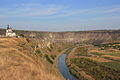
.jpg/250px-Biserica_Sf._Cuvios_Vasile_din_Orhei_St._Basil_Church_in_Orhei_(48002809927).jpg)


.jpg/2000px-Biserica_Sf._Cuvios_Vasile_din_Orhei_St._Basil_Church_in_Orhei_(48002809927).jpg)
Community hub
Recent from talks
Contribute something
Nothing was collected or created yet.
Orhei
View on Wikipedia
Orhei (Romanian pronunciation: [orˈhej]) is a city, municipality[2] and the administrative centre[3] of Orhei District in the Republic of Moldova, with a population of 22,183. It lies roughly 40 kilometres (25 miles) north of the capital, Chișinău.
Key Information

.jpg)
.jpg)

.jpg)


History
[edit]
Orhei is believed to derive its name from the Hungarian word Őrhely, meaning “guard post” or “lookout post,” and could be linked to a Hungarian army outpost guarding the gyepű.[4][5] Locally, orhei was understood to mean “strengthened hill,” “fortress,” or “deserted courtyard.”[6] The town historically served as an important defensive outpost on Moldavia’s eastern border.
In the 14th century, the Crimean Tatars established a settlement at Orheiul Vechi (Old Orhei), constructing baths, mosques, and other buildings, leaving a lasting cultural influence. By the early 15th century, the area was incorporated into the Moldavian principality, and Orhei gradually shifted to its present location, with the first documented mention in 1554 during the reign of Alexandru Lăpușneanu.[7]
After centuries under Moldavian rule, Orhei was ceded to the Russian Empire in 1812 following the Russo-Turkish wars. Like the rest of Bessarabia, it became part of the Kingdom of Romania after World War I, was annexed by the Soviet Union in 1940, briefly recaptured by Romania in 1941, and re-occupied by the USSR in 1944 during the Uman–Botoșani offensive. After World War II, the town was rebuilt, and in 1991 it became part of the Republic of Moldova.
Before 2003, Orhei served as the capital of Orhei County, a large administrative region, until the country was reorganized into smaller raions (districts).
The St. Dumitru Church, constructed by Vasile Lupu, is located in the town. Lupu, who ruled from 1634 to 1653, is credited with ushering in the town's so-called golden age, and a statue in the central square honors his legacy.
Orhei has gained national and international attention as a political stronghold of fugitive Moldovan oligarch Ilan Shor. Since his election as mayor in 2015, Shor built a network of local support that has enabled his influence to endure even after he fled the country amid criminal investigations. His preferred candidates, such as Pavel Verejanu in the 2019 mayoral election,[8] have continued to secure dominant victories in the city, often with overwhelming majorities.
Demographics
[edit]According to the 2024 census, 22,183 inhabitants lived in Orhei (making it the ninth largest city in Moldova), an increase compared to the previous census in 2014, when 21,065 inhabitants were registered.[9][10]
- Moldovans[a] (86.0%)
- Romanians (9.20%)
- Ukrainians (1.90%)
- Russians (1.70%)
- Others (1.00%)
| Year | Pop. | ±% |
|---|---|---|
| 1897 | 12,336 | — |
| 1930 | 15,279 | +23.9% |
| 1959 | 14,131 | −7.5% |
| 1970 | 25,707 | +81.9% |
| 1979 | 30,260 | +17.7% |
| 1989 | 38,038 | +25.7% |
| 2004 | 25,641 | −32.6% |
| 2014 | 21,065 | −17.8% |
| 2024 | 22,183 | +5.3% |
- ^ There is an ongoing controversy regarding the ethnic identification of Moldovans and Romanians.
- ^ In March 2023, the Parliament of Moldova passed a law updating all legislative texts and the constitution to refer to the national language as Romanian, effectively rendering the term "Moldovan" obsolete.[11][12]
At the onset of the Great War, Orhei's population was estimated at 25,000. About two-thirds of the inhabitants were Jewish, while the remainder consisted primarily of Romanians, with smaller groups of Ruthenians, Russians, and others.[13]
Religion
[edit].jpg)
.jpg)
Orhei was home to many Jews prior to World War II, and has a large Jewish cemetery. Currently, only one synagogue remains active in the community. The primary churches are the Romanian Orthodox Church and the Russian Orthodox Church. The area is also home to congregations of Baptists, Roman Catholics, Seventh-day Adventist Church, the Church of Jesus Christ of Latter-day Saints, the Salvation Army, and Jehovah's Witnesses.
Economy
[edit]Orhei was the first place in what was then known as Bessarabia, to have a successful tobacco industry. The area is also known for wine production.[13]
Sport
[edit]FC Milsami Orhei is based in the city. The team won the Moldovan National Division in 2015 and 2025.
Media
[edit]Orhei has two local radio stations: Radio Orhei (101.6 FM) founded in 2005, contains news from region and republic.[14] In 2018, its name was cloned by a broadcaster affiliated to the Șor Party – Radio Orhei FM (97.5 FM).[15][16] Radio Orhei FM broadcasts news from the Orhei region, Moldova national news, international news, and Russian, Moldovan, and Romanian music.[17] There is also an Orhei City Hall site.[18]
Natives
[edit]- Jacobo Fijman
- Dovid Knut
- Mihail Maculețchi
- Alex Magala
- Rodica Mahu
- Pasha Parfeny
International relations
[edit]
Gallery
[edit]-
-

-
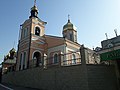 Saint Nicholas church
 -
 Armenian church


References
[edit]- ^ Results of Population and Housing Census in the Republic of Moldova in 2014: "Characteristics – Population (population by communes, religion, citizenship)" (XLS). National Bureau of Statistics of the Republic of Moldova. 2017. Retrieved 1 May 2017.
- ^ LEGE Nr. 248 din 03.11.2016 pentru modificarea și completarea Legii nr. 764-XV din 27 decembrie 2001 privind organizarea administrativ-teritorială a Republicii Moldova Archived 19 February 2019 at the Wayback Machine (in Romanian)
- ^ "Moldova Pitorescá" (PDF). Archived from the original (PDF) on 18 May 2019.
- ^ Faragó, Imre (2014). Márton, Mátyás (ed.). Domborzat- és tájábrázolás (PDF). Vol. Sokrétű térképészet II. Eötvös Loránd Tudományegyetem Informatikai Kar. p. 985. ISBN 978-963-284-468-8.
- ^ Nándor Bárdi, László Diószegi, András Gyertyánfy, "Hungarians in Moldavia" Archived 5 March 2010 at the Wayback Machine, Magyar Kisebbség 1–2 (7–8), 1997 (III), pp. 370–390.
- ^ Teodor PORUCIC – Lexiconul termenilor entropici din limba română în Basarabia, extras din Arhivele Basarabiei, 1931, nr. 1–4, Chişinău
- ^ "History of Orhei". The official website of the City Hall of Orhei. (in Romanian)
- ^ "Pavel Verejanu becomes mayor of Orhei with over 80% of the votes cast and with differences of millions between the income declared at CECE and ANI". 21 October 2019. (in Romanian)
- ^ "Rezultatele finale ale Recensământului Populației și Locuințelor 2024: Caracteristici etnoculturale ale populației". National Bureau of Statistics of the Republic of Moldova. (in Romanian)
- ^ "2014 Moldova Census of Population and Housing". National Bureau of Statistics of the Republic of Moldova. (in Romanian, Russian, and English)
- ^ "Chisinau Recognizes Romanian As Official Language". Radio Free Europe/Radio Liberty. 5 December 2013. Archived from the original on 23 September 2016. Retrieved 11 March 2014.
- ^ "Moldovan parliament approves law on Romanian language". Reuters. 16 March 2023. Retrieved 11 July 2024.
- ^ a b Kaba, John (1919). Politico-economic Review of Basarabia. United States: American Relief Administration. p. 14.
- ^ "RO-MD.INFO | cu subiect si predicat, și nu doar". radioorhei.info. Retrieved 1 May 2025.
- ^ "Orhei Radio Station 'Cloned' – How and in Whose Benefit | Media Azi". Archived from the original on 8 July 2018. Retrieved 1 May 2025.
- ^ "Radio Orhei in Litigation with the BCC after Their Name was 'Cloned' | Media Azi". Archived from the original on 10 August 2018. Retrieved 1 May 2025.
- ^ "Radio Orhei Fm 97,5". Archived from the original on 16 June 2021. Retrieved 15 July 2022.
- ^ "Primaria orașului Orhei – Republica Moldova". www.orhei.md. Retrieved 1 May 2025.
- ^ "Piatra Neamț – Twin Towns". 2007–2008 piatra-neamt.net. Archived from the original on 16 November 2009. Retrieved 27 September 2009.
Further reading
[edit]- Orgeyev/Orhei (pp. 372–375) at Miriam Weiner's Routes to Roots Foundation
External links
[edit]
| Municipalities |  | |
|---|---|---|
| Capitals of autonomous units | ||
| District seats4 | ||
| Other towns | ||
1 In Transnistria. 2 Controlled by the Transnistrian authorities. 3 Also a municipality. 4 The seat of Dubăsari District is the commune of Cocieri (not a city). | ||
| Districts | |
|---|---|
| Autonomous territorial units | |
| Municipalities | |
| |

| International | |
|---|---|
| National | |
| Other | |

Orhei
View on GrokipediaOrhei is a city and municipality serving as the administrative center of Orhei District in central Moldova.[1] Situated in the Răut River valley approximately 48 kilometers north of the capital Chișinău, it has a population of about 25,000 and is renowned for the nearby Old Orhei (Orheiul Vechi) archaeological landscape, which preserves multilayered evidence of human activity spanning from Geto-Dacian defensive structures of the 7th to 2nd centuries BCE, through Tatar-Mongol fortifications, to medieval Moldavian urban settlements and rock-hewn monasteries established around the 14th century.[2][3][4] The site's continuous occupation underscores its role as a key historical hub in the region, featuring natural limestone formations integrated with architectural remnants that highlight adaptive human engineering in a strategically defensible terrain.[5]
Geography
Location and topography
Orhei is positioned in central Moldova, approximately 48 kilometers north of Chișinău, the national capital, within the Răut River valley.[1] The city's coordinates are roughly 47.38°N 28.82°E, placing it at an elevation of about 86 meters above sea level.[6] This central location facilitates connectivity via road networks, with driving distances to Chișinău ranging from 51 to 95 kilometers depending on the route.[7][8] The topography of Orhei features a landscape dominated by limestone ridges and valleys formed through river erosion along the Răut.[3] The surrounding terrain includes dramatic limestone cliffs and gorges, particularly prominent in the adjacent Old Orhei area, where the river has carved deep incisions into the rock over millennia.[9] These geological formations contribute to a varied elevation profile, with ridges rising significantly above the valley floor, supporting diverse microenvironments. The urban layout of Orhei centers along the fertile Răut valley, encompassing residential, commercial, and industrial zones amid arable land that constitutes a key natural resource for the region.[10] The Orhei district, with the city as its administrative hub, spans 1,228 square kilometers and exhibits a population density of approximately 102 inhabitants per square kilometer as of 2017 data.[11][12] Limestone deposits prevalent in the ridges provide additional resources, underpinning local geological and potential extractive activities.[13]Climate and environment
Orhei possesses a moderate continental climate, with distinct seasonal variations driven by its inland position and topography. Winters are cold, with January recording an average temperature of -5.1°C, often accompanied by snowfall and temperatures dropping below -10°C on occasion. Summers are warm, peaking in July at an average of 21.5°C to 22°C, fostering conditions suitable for outdoor activities and crop growth. These patterns align with long-term data from regional weather stations, reflecting a climate influenced by both Atlantic air masses and continental highs.[14][15] Annual precipitation averages 550-600 mm, concentrated primarily from April to October, with June being the wettest month at around 80-85 mm. This distribution supports rain-fed agriculture in the surrounding fields, though irregular summer droughts can impact yields of staples like maize and grapes. Frost-free periods typically span 160-170 days, enabling a growing season that underpins local farming productivity.[15][16] Ecologically, Orhei's landscape includes undulating hills and the Răut River valley, rendering soils vulnerable to erosion from runoff and overgrazing on slopes. Soil loss rates in such areas have historically reached 10-20 tons per hectare annually in untreated pastures, exacerbating degradation of chernozem fertility essential for agriculture. Rehabilitation projects, such as contour plowing and reseeding of 500 hectares in the Orhei district, have mitigated erosion by enhancing vegetation cover and boosting pasture yields up to 2.5-fold.[17][18][19]History
Ancient and medieval periods
Archaeological excavations at Old Orhei, located near the modern city of Orhei in Moldova, reveal evidence of continuous human settlement dating back to the Paleolithic period, with more substantial structures emerging in the Iron Age. The site features remnants of a Geto-Dacian fortress from the 6th to 1st centuries BCE, including earthen and wooden fortifications that served as a center for military and political administration.[4] These defenses, situated on a promontory ridge overlooking the Răut River valley, incorporated natural limestone cliffs for strategic advantage, with excavated pillar holes and a stone altar indicating cultic practices typical of Geto-Dacian sanctuaries from the 4th to 3rd centuries BCE.[4] Cave complexes in the area, hewn into the rock, likely supported defensive and possibly ritual functions during this era, though direct continuity between pagan uses and later occupations remains unproven by artifacts.[20] In the medieval period, the region experienced disruption from Mongol invasions in the 13th century, leading to the establishment of a Golden Horde fortress known as Shehr al-Jedid, built atop earlier structures.[20] This Tatar-Mongol settlement featured urban planning elements adapted from steppe nomadic traditions, but it declined by the mid-14th century.[3] Following the Mongol withdrawal, the area came under the control of the Moldavian Principality, with a new medieval town of Orhei constructed after 1368 CE on the ruins of the Horde site, marking a shift toward sedentary Christian governance.[3] Rock-hewn monasteries emerged in the limestone cliffs during the 13th to 14th centuries, carved by Orthodox monks as hermitages with cells, chapels, and tunnels, evidencing the transition to Christian monasticism amid the site's layered pagan and nomadic overlays.[21] These monasteries, including the Birth of the Virgin Mary complex, remained active into the 18th century, with preserved graffiti and architectural features underscoring their role in early Moldavian religious life.[20]Early modern to Soviet era
Orhei served as an administrative hub in the Principality of Moldavia under Ottoman suzerainty from the 16th to early 19th centuries. In 1812, following the Russo-Turkish War and the Treaty of Bucharest, the town was annexed by the Russian Empire as part of Bessarabia Governorate, renamed Orgeev, and established as the center of Orhei District. Russian policies encouraged Jewish settlement, leading to demographic expansion; the 1897 census recorded 7,144 Jews amid a total population of roughly 12,000.[22][10] Following World War I, Bessarabia united with Romania in 1918, and Orhei became the seat of Orhei County until Soviet forces annexed the region in June 1940 per the Molotov-Ribbentrop Pact's secret protocols. The brief Soviet occupation triggered deportations targeting perceived class enemies and nationalists, including significant numbers of Jews sent to Siberia, which disrupted local demographics before the German-Romanian counteroffensive in June 1941. During the Axis reoccupation until 1944, Romanian authorities imposed ghettos and facilitated deportations of the remaining Jewish population to Transnistria, resulting in near-total annihilation of the community.[22][23] Soviet reincorporation after 1944 placed Orhei within the Moldavian Soviet Socialist Republic, where forced collectivization of agriculture from 1946 onward consolidated farms into kolkhozy, prompting rural-to-urban migration for administrative and processing roles. Limited industrialization, including food processing tied to collectivized output, further attracted workers from surrounding areas, driving population growth from approximately 14,000 in 1930—marked by a Jewish plurality of 6,302—to over 30,000 by the 1989 census, reflecting broader Soviet urbanization patterns despite wartime losses.[22][23]Post-independence developments
In the years following Moldova's declaration of independence on August 27, 1991, Orhei remained largely insulated from the armed conflict in the Transnistria region during 1992, preserving its role as a stable administrative and economic center in the country's core territory. While the war displaced over 100,000 people nationally and strained resources in eastern districts, Orhei experienced no direct hostilities, allowing continuity in local governance and basic services amid broader economic transition challenges from the Soviet era. Significant urban renewal efforts accelerated in the mid-2010s under mayor Ilan Șor, elected in June 2015, who prioritized infrastructure using municipal funds. Projects included the reconstruction of six key streets—Junimii, Maxim Gorki, Sportivilor, Nicolae Stamati, Alexandru cel Bun, and segments intersecting Vasile Lupu boulevard—marking the first such comprehensive modernizations by Orhei City Hall. Additionally, Șor spearheaded the development of OrheiLand, Moldova's largest theme park, opened in 2018 with free public access, as part of broader investments estimated at $250 million across local facilities. These initiatives coincided with heightened scrutiny over Șor's involvement in the 2014 banking fraud, where approximately $1 billion was siphoned from three major Moldovan banks through opaque loans, leading to his 2017 conviction for fraud and eventual flight to Israel and Russia.[24][25] The 2024 Population and Housing Census recorded Orhei's resident population at 22,183, up slightly from 21,065 in the 2014 census, reflecting modest local growth despite national emigration reducing Moldova's overall population by 13.6% over the decade. This uptick contrasts with pervasive labor migration trends, bolstered perhaps by targeted local developments, though the city continues to grapple with Moldova's geopolitical frictions between pro-Western and pro-Russian factions.[26]Demographics
Population trends and statistics
The population of Orhei municipality stood at 22,183 residents according to the 2024 Population and Housing Census conducted by the National Bureau of Statistics of Moldova, marking it as the ninth-largest urban center in the country.[26] This figure reflects minimal net growth from approximately 22,000 in the 2014 census, contrasting with the national trend of a 13.6% population decline over the same period due to combined effects of sub-replacement fertility and sustained out-migration.[26][27] Key drivers of these trends include a total fertility rate of 1.61 children per woman in 2023, well below the 2.1 replacement level, resulting in crude birth rates around 10.8 per 1,000 population nationally and similarly low in Orhei. This demographic pressure is exacerbated by net emigration, with an estimated -24.4 migrants per 1,000 population annually, primarily to EU countries and Russia for economic opportunities, though Orhei's urban status has partially offset losses through inbound rural-to-urban migration within the district. In the broader Orhei District, encompassing rural communes, the population fell from 101,502 in 2014 to 79,242 in 2024, highlighting sharper declines in peripheral areas and reinforcing Orhei city's role as the administrative and economic hub concentrating remaining population growth.[26][27] These patterns align with national urbanization shifts, where the urban population share rose from 38% in 2014 to 46.4% in 2024, driven by rural depopulation.[26]Ethnic, linguistic, and religious composition
The ethnic composition of Orhei consists predominantly of individuals self-identifying as Moldovan or Romanian, groups that together account for over 85% of the national population per the 2024 census, with similar proportions in central Moldovan urban centers like Orhei due to limited ethnic diversity in the region.[28] Russian and Ukrainian minorities, comprising about 3-5% and 5% nationally respectively in recent data, are present in Orhei as remnants of Soviet-era population transfers and industrialization, though their numbers have decreased through post-independence emigration and assimilation.[27] These minority groups often maintain distinct cultural practices, correlating with preferences for Russian-language media and policies favoring federalism over unification with Romania, though such divisions do not alter the overwhelming ethnic homogeneity.[29] Linguistically, Romanian—linguistically identical to the self-designated "Moldovan" variant used in official state contexts—serves as the primary language of daily communication and education in Orhei, spoken natively by the vast majority. Russian persists as a minority language, particularly in administrative functions, commercial signage, and intergenerational household use among older residents and Slavic minorities, but its prevalence has waned since the 1990s amid language laws promoting Romanian in public spheres.[30] Self-reported native language data from the 2014 census indicate Romanian/Moldovan dominance nationally at over 80%, with Russian at under 10%, patterns mirrored in Orhei's urban setting where bilingualism facilitates interaction but does not challenge the core linguistic uniformity.[27] Religiously, Eastern Orthodox Christianity prevails, with affiliation rates exceeding 90% nationally and comparably high in Orhei, where multiple Orthodox churches such as St. Dumitru Cathedral serve as focal points for community rituals and holidays.[31] The 2014 census recorded 96.8% of declarants as Orthodox among those stating a faith, underscoring the faith's role in cultural continuity post-Soviet secularization.[32] Historical Jewish presence, significant in interwar Orhei with synagogues and communal institutions, has dwindled to negligible levels following the Holocaust, deportations, and emigration, leaving the local synagogue as a preserved artifact now slated for museum conversion rather than active worship.[33] Smaller non-Orthodox groups, including Catholics and Protestants, exist marginally without dedicated institutions in the city proper.[34]Government and politics
Local administration and governance
Orhei, as the administrative center of Orhei District, operates under Moldova's decentralized local government framework, featuring a mayor elected by majority vote and a municipal council selected through proportional representation every four years. This hybrid electoral system, governed by the Republic of Moldova's Electoral Code, ensures direct accountability for executive leadership while distributing legislative roles among parties based on vote shares in local elections held on fixed dates, such as November 5, 2023.[35] Administrative reforms pursued since 2015 have aimed to streamline territorial organization by reducing redundancies in the Soviet-inherited raion structure, retaining Orhei's role as district seat with enhanced local autonomy in service delivery like utilities and education, though subject to national policy alignment. Raion councils coordinate broader district functions, complementing municipal operations without overriding city-level decisions.[36] The city's budget relies on limited own revenues from property taxes, land fees, and local nontax collections, supplemented by shared national taxes (e.g., 3% of private income tax) and central transfers that typically comprise over 70% of total funds in similar Moldovan municipalities, reflecting structural fiscal constraints.[37][38] Monitoring reports highlight empirical transparency shortcomings, such as inconsistent publication of procurement details and budget executions on official portals, affecting public oversight in Orhei's local authorities despite statutory obligations under the Law on Transparency in Decision-Making.[39]Political influences and controversies
Ilan Șor served as mayor of Orhei from June 2015 to November 2017, during which he spearheaded infrastructure projects including road repairs, park renovations, and public building upgrades funded through private investments estimated at tens of millions of dollars.[25] Supporters credited these initiatives with improving local living standards and boosting economic activity in a region plagued by post-Soviet stagnation, arguing they demonstrated effective governance absent from national pro-EU policies.[40] Critics, however, alleged that such spending masked vote-buying schemes, with Șor reportedly distributing cash incentives to residents—up to $100 per voter in some claims—corroborating patterns of clientelism that inflated Șor Party support in Orhei to over 60% in the 2019 local elections, far exceeding national averages.[41] [42] Șor's tenure coincided with his central role in the 2014 Moldovan bank fraud, dubbed the "theft of the century," where approximately $1 billion—equivalent to 12% of Moldova's GDP—was siphoned from three banks through fraudulent loans and laundered abroad, exacerbating national debt and eroding public trust in institutions.[25] [40] In June 2017, a Chișinău court convicted him of fraud and money laundering, sentencing him to 7.5 years in prison; the term was extended to 15 years in absentia in April 2023 after he fled to Israel and Russia, evading extradition.[43] This scandal fueled local factional divides in Orhei, where Șor's ouster led to polarized politics: pro-Șor factions decried judicial overreach as politically motivated by pro-Western elites, while opponents highlighted how the fraud's economic ripple effects— including bank collapses and austerity—stifled regional investment, imposing a causal drag on Orhei's growth independent of ideological narratives.[44] Post-exile, Șor amplified pro-Russian sentiments in Orhei through the banned Șor Party, orchestrating protests from 2023 to 2025 against President Maia Sandu's pro-EU government, framing them as resistance to energy crises and perceived cultural erosion.[45] These actions included offers of $3,000 monthly stipends to participants in August 2025, drawing hundreds to Orhei streets and escalating tensions ahead of the September 2025 parliamentary elections.[46] Raids on September 22, 2025, by Moldova's National Anticorruption Center in Orhei and Chișinău detained suspects linked to illegal party financing and electoral corruption tied to Șor's network, seizing funds and uncovering schemes to mobilize voters against EU integration.[47] While Șor allies portrayed these detentions as suppression of legitimate dissent—citing voter turnout spikes in Orhei polling stations (exceeding 55% locally versus national figures)—evidence from multiple probes substantiated organized vote inducements, underscoring how such influences perpetuated corruption cycles that hindered transparent governance and economic recovery in the district.[48] [41]Economy
Primary industries and employment
The economy of Orhei district relies heavily on agriculture, which dominates primary production due to the fertile soils of the Răut River valley and the fact that approximately half of the district's territory consists of arable land.[49] Key crops include grains such as wheat and maize, sunflowers for oilseed, vegetables, and fruits, with viticulture supporting local wine production amid Moldova's broader reputation for varietals like those from the Codru region encompassing Orhei.[49] [50] Agricultural activities, often conducted on smallholder farms, account for a substantial share of employment, aligning with national patterns where modeled estimates indicate over 50% of total employment in the sector as of 2023, though formal statistics report around 27% due to prevalent informal and subsistence farming.[51] [50] Light manufacturing complements agriculture through food processing for local produce and limited textile operations, while services such as retail and basic logistics have seen modest expansion in the urban center of Orhei city. These secondary sectors employ a smaller portion of the workforce compared to farming, with industrial activities historically including tobacco processing—once a pioneering feature in the region—but now overshadowed by agro-processing. Overall employment remains stable, with district-level unemployment tracking national rates of approximately 4-5% in recent quarters, bolstered by household remittances from labor migrants abroad that mitigate rural underemployment risks.[52] [53]Infrastructure, trade, and recent economic challenges
Orhei's transport infrastructure primarily relies on road and rail connections integrated into Moldova's national network. The city is served by the M2 highway, a key magistral road spanning 185 km that links Chișinău to the northern regions and the Ukrainian border, passing directly through Orhei and facilitating freight and passenger movement.[54] Rail access is provided via the Chișinău-Odessa line, with Orhei station enabling connectivity to the capital and eastern borders, though services have been constrained by regional disruptions. Limited local aviation options exist, with residents dependent on Chișinău International Airport, approximately 50 km south, for air travel. Trade in the Orhei district aligns with Moldova's broader patterns, emphasizing agricultural and light industrial exports directed toward the European Union and traditional partners like Russia and Ukraine. Road and rail links via M2 and the northern rail corridor support commodity flows, including food products and textiles, with exports valued at part of the national total of $3.56 billion in 2024. Imports, particularly energy and machinery, arrive through similar routes from Romania and Russia, though the district's logistics are bottlenecked by underdeveloped secondary roads and reliance on central hubs.[55][56] The 2022 Russian invasion of Ukraine triggered significant disruptions to Orhei's trade and infrastructure, including halted rail transit through Ukraine and severed energy supplies routed via the same path, exacerbating Moldova's dependence on Russian gas. Sanctions on Russia compounded energy price spikes, contributing to a 4.6% national GDP contraction in 2022 and persistent inflation in fuel and electricity costs through 2025.[57][58] By 2025, the cutoff of Russian gas transit via Ukraine intensified an energy crisis, with Moldova declaring an emergency in December 2024 due to depleted reserves and heightened import costs.[59] Economic recovery remains subdued, with World Bank projections indicating 1.5% GDP growth for 2025 amid lingering war effects and sluggish export demand, reflecting flat performance in districts like Orhei tied to vulnerable northern trade corridors.[60][61]Culture and society
Historical and archaeological sites
Old Orhei (Orheiul Vechi), situated approximately 60 kilometers north of Chișinău along the Răut River gorge, represents a multilayered archaeological landscape with evidence of human occupation spanning from the Paleolithic era to the medieval period. Excavations have uncovered fortifications, settlements, and monastic structures, confirming its role as a strategic location due to natural defenses provided by limestone cliffs and river valleys. The site's archaeological features include remnants of Geto-Dacian citadels from the 1st century BCE, a 13th-century Mongol-Tatar fortress, and the foundations of a medieval Moldovan town established after 1368 CE on the ruins of prior Mongol structures.[3][62] The cave monastery complex, hewn directly into the cliffs, dates primarily to the 13th-14th centuries, when Orthodox monks expanded natural caves into cells, chapels, and tunnels totaling over 50 compartments connected by narrow passages. Archaeological surveys indicate these monastic installations overlay earlier pagan cult sites, with rock carvings and altars suggesting pre-Christian rituals before Christian adaptation around the 10th-11th centuries. The complex remained active until the late 18th century, after which it was abandoned due to invasions and environmental factors.[21][4] Inscribed on UNESCO's Tentative List since 2018, Old Orhei's significance lies in its preserved stratigraphic layers, which provide empirical data on cultural transitions from Dacian, Mongol, and Slavic influences through Moldovan state formation. Annual visitor numbers exceed 150,000, drawn by the site's accessibility and interpretive trails, though tourism pressures exacerbate natural erosion on exposed limestone facades. Preservation initiatives, including structural assessments by Moldovan heritage experts, address risks from weathering and seismic activity, with ongoing monitoring to mitigate degradation without large-scale interventions that could alter original features.[3][5][63]Religious institutions and practices
Eastern Orthodoxy predominates among religious institutions in Orhei, reflecting national patterns where over 90 percent of the population identifies with Orthodox Christianity according to the 2014 census data.[31] Active Orthodox sites include urban churches such as the 17th-century St. Dumitru Church, noted for its preserved architecture and hilltop location, and the Saint Nicholas Church, both affiliated with the Moldovan Orthodox Church under the Russian Orthodox tradition.[64] In the surrounding Orhei District, the Curchi Monastery, founded in the 1770s and featuring multiple churches, operates as a major center with restored facilities following Soviet-era closure in 1958.[65] The Old Orhei historical complex preserves cave monasteries carved into limestone cliffs, inhabited by Orthodox monks since the 13th century and maintained for worship into the present, including the hilltop church.[21] Practices center on traditional Orthodox rites, such as liturgies, icon veneration, and monastic life, with the Curchi site hosting festivals and pilgrimages.[65] Minority faiths maintain smaller presences, including a Roman Catholic church built in Gothic Revival style using local materials, serving limited adherents in this predominantly Orthodox area.[66] An Armenian church dedicated to Saint Mary stands as a national architectural monument, though its active use is minimal amid historical assimilation of the Armenian community.[67] The Jewish community, once comprising up to 65 percent of Orhei's population in the early 20th century with multiple synagogues, was severely reduced by World War II pogroms and subsequent emigration; today, a single synagogue operates for the remnant population, supported by a community center and museum established in 2023.[68] [69] Local reports indicate minimal interfaith conflicts, aligned with broader Moldovan religious freedom assessments.[31]Media, education, and cultural life
Local media in Orhei includes Radio Orhei 97.5 FM, which broadcasts a mix of Moldovan, Romanian, Russian, and international music alongside news and event coverage.[70] Orhei TV, a regional television station launched around 2018 and affiliated with local political figures, retransmitted Russian state media content until its broadcasting license was suspended in December 2022 by Moldovan authorities for disseminating disinformation related to Russia's invasion of Ukraine.[71] This reflects a broader pattern in Orhei's media landscape, where Russian-language programming has been prominent, aligning with the region's ethnic and linguistic diversity, including significant Russian-speaking populations influenced by proximity to Transnistria and historical Soviet-era Russification.[72] Education in Orhei operates within Moldova's national system, encompassing kindergartens for ages 3-6, primary schools (grades 1-4), gymnasiums (grades 5-9), and lyceums (grades 10-12), with vocational institutions facing mergers due to declining enrollment from youth emigration and demographic shifts.[73] Emigration has reduced the school-age population nationwide, with remittances sometimes funding education for children left behind but overall contributing to lower attendance and institutional consolidation, trends evident in Orhei district where international aid supports school infrastructure to boost access.[74][75] Cultural life in Orhei centers on events linked to nearby historical reserves, including the annual Medieval Festival at Orheiul Vechi, which features reenactments, traditional crafts, and performances drawing thousands in late June.[76] Other gatherings, such as the DescOperă open-air classical music festival in summer and the Festivalul Lupilor (Festival of Music and Traditions) in early August, emphasize folk music, dance, and heritage preservation in the Trebujeni amphitheater.[62][77] Gustar Fest, held in mid-August, focuses on culinary traditions and sensory experiences, reinforcing community ties to the area's natural and cultural assets.[78]Sports and leisure
Local sports teams and facilities
FC Milsami Orhei serves as the leading professional football club in Orhei, competing in Moldova's top-tier Super Liga. Renamed from Viitorul Orhei in 2010 under new ownership, the club achieved national championships in the 2014–15 and 2024–25 seasons, along with Moldovan Cup wins in 2011–12 and 2017–18, and a Supercup title.[79][80] The team has participated in UEFA competitions, including the Champions League qualifiers and Conference League, reflecting its competitive standing within Moldovan football.[81] Home matches are hosted at CSR Orhei (Complexul Sportiv Raional Orhei), a multi-purpose stadium originally founded in 1980 with major renovations completed by 2007, featuring a seating capacity of 2,539.[82][83] The Orhei District Sport Complex functions as a key venue for broader athletic training and community events, supporting local fitness and recreational activities.[84] Basketball maintains a presence through the Basketball Junior Team Orhei, emphasizing youth training and development as of 2024.[85] Earlier, BC Orhei competed in the National Men's Basketball Championship, securing victories such as an 78–60 win over SSSRO-4 in 2008 and defeating Fireball in 2009.[86][87] Youth sports initiatives in Orhei include football development programs launched around 2014 by local club efforts and the Ilan Shor Foundation, aimed at expanding children's participation.[88] Since 2016, municipal investments have added sports grounds and playgrounds to enhance community access and youth engagement in physical activities.[12]Notable people
Prominent figures from Orhei
Meir Dizengoff (1861–1936), born in the village of Akimovici in the Orhei district of Bessarabia, served as the first mayor of Tel Aviv from 1909 to 1925 and again from 1928 until his death, playing a key role in the city's early development and infrastructure projects.[89][90] Dovid Knut (1900–1955), a Russian-language poet and member of the French Resistance during World War II, was born in Orhei and later emigrated to Paris, where he contributed to émigré literature with works reflecting themes of exile and urban life.[91] Mihail Maculeţchi (born 1861), a Bessarabian politician born in Orhei, served as a member of the Moldovan Parliament from 1917 to 1918, participating in the regional assembly during the transition from Russian imperial rule.[92] Pavel Parfeni, known professionally as Pasha Parfeni (born May 30, 1986), is a singer and songwriter born in Orhei who represented Moldova at the Eurovision Song Contest in 2012 with "Lăutar" and in 2023 with "Soarele și luna," achieving national chart success and promoting Moldovan folk influences in pop music.[93][94] Alex Magala (born June 24, 1989), a performer and sword swallower born in Orhei, gained international recognition through appearances on America's Got Talent in 2013 and 2021, where he showcased acts combining extreme skills with dance, and later competed on Ukraine's Got Talent.[95] Ilan Șor (born March 6, 1987), a businessman and politician raised in Moldova after his family relocated from Tel Aviv, served as mayor of Orhei from 2015 to 2019, during which he invested in local infrastructure and cultural projects amid his ownership of the local football club FC Milsami Orhei, though his tenure ended following a banking fraud conviction.[25][96]International relations
Twin towns and partnerships
Orhei maintains formal twinning agreements with Bicaz and Piatra Neamț, both located in Neamț County, Romania. These partnerships emphasize mutual cooperation in areas such as culture, education, and local governance, though specific quantifiable outcomes like trade volumes or exchange participant numbers remain undocumented in public records.[97][98] Earlier agreements include ties with Ukrainian cities Smila (Cherkasy Oblast), Komsomolsk (Poltava Oblast), and Dolina (Ivano-Frankivsk Oblast), formalized around 2012 during local celebrations that involved official delegations, aimed at regional collaboration amid shared post-Soviet contexts.[99] No recent data confirms ongoing activities or benefits, such as joint projects yielding measurable economic gains. Following political shifts after 2019, including the departure of former mayor Ilan Șor, Orhei's international partnerships have not publicly expanded toward EU-oriented ties, with available records showing persistence of existing Eastern European links rather than new Western alignments.[100]References
- https://www.wikidata.org/wiki/Q108260211