Hubbry Logo
Osteitis pubisOsteitis pubisMain
Open search
Osteitis pubis
Community hub
Osteitis pubis
logo
8 pages, 0 posts
0 subscribers
Be the first to start a discussion here.
Osteitis pubis
Osteitis pubis
from Wikipedia
Osteitis pubis
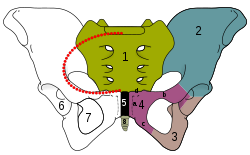
  1. 5 is Pubic symphysis

Osteitis pubis is a noninfectious inflammation of the pubic symphysis (also known as the pubis symphysis, symphysis pubis, or symphysis pubica), causing varying degrees of lower abdominal and pelvic pain. Osteitis pubis was first described in patients who had undergone suprapubic surgery, and it remains a well-known complication of invasive procedures about the pelvis. It may also occur as an inflammatory process in athletes. The incidence and cause of osteitis pubis as an inflammatory process versus an infectious process continues to fuel debate among physicians when confronted by a patient who presents complaining of abdominal pain or pelvic pain and overlapping symptoms. It was first described in 1924.

Signs and symptoms

[edit]

The symptoms of osteitis pubis can include loss of flexibility in the groin region, dull aching pain in the groin, or in more severe cases, a sharp stabbing pain when running, kicking, changing directions, or even during routine activities such as standing up or getting out of a car. Tenderness on palpation is also commonly present in the adductor longus origin.[1]

Causes

[edit]
  • Pregnancy/childbirth
  • Gynecologic surgery
  • Urologic surgery
  • Athletic activities (e.g. running, football, American football, ice hockey, tennis)
  • Major trauma
  • Repeated minor trauma
  • Rheumatological disorders
  • Unknown cause

In the pre-antibiotic era, osteitis pubis was an occasional complication of pelvic surgery, and in particular, of retropubic prostatectomy.

Overload or training errors

[edit]
  • Exercising on hard surfaces (like concrete)
  • Exercising on uneven ground
  • Beginning an exercise program after a long lay-off period
  • Increasing exercise intensity or duration too quickly
  • Exercising in worn out or ill-fitting shoes

Biomechanical inefficiencies

[edit]
  • Faulty foot and body mechanics and gait disturbances
  • Poor running or walking mechanics
  • Tight, stiff muscles in the hips, groin, and buttocks
  • Muscular imbalances
  • Leg length differences

Diagnosis

[edit]

Osteitis pubis may be diagnosed with an X-ray, where irregularity and widening of the pubic symphysis are hallmark findings. Similar change is also demonstrated with Computed Tomography (CT), but the multi-planar nature of CT has a higher sensitivity than conventional radiography. Though not well visualised on ultrasound (US), thickening of the superior joint capsule with cyst formation is a clue to the diagnosis, as well as secondary changes (i.e. tendinosis) of the adjacent adductor muscles - particularly the adductor longus and rectus abdominis. US is also useful for excluding a hernia, which may co-exist with osteitis pubis and warrant additional treatment.

Both US and CT may be used for injecting the pubic symphysis with corticosteroid as part of an athlete's treatment program.[2] Magnetic resonance imaging combines the diagnostic advantages of CT and ultrasound, also shows bone marrow edema, and has the advantages of not being operator dependent (unlike US), nor using radiation (such as CT and X-rays). As such, MRI is the modality of choice for evaluation, diagnosis, and treatment planning.[3]

Treatment and prevention

[edit]

Until recently, there was no specific treatment for osteitis pubis. To treat the pain and inflammation caused by osteitis pubis, antiinflammatory medication, stretching, and strengthening of the stabilizing muscles are often prescribed. In Argentina, Topol et al. have studied the use of glucose and lidocaine injections ("prolotherapy", or regenerative injection therapy) in an attempt to restart the healing process and generate new connective tissue in 72 athletes with chronic groin/abdominal pain who had failed a conservative treatment trial. The treatment consisted of monthly injections to ligament attachments on the pubis. Their pain had lasted an average of 11 months, ranging from 3–60 months. The average number of treatments received was 3, ranging from 1–6. Their pain improved by 82%. Six athletes did not improve, and the remaining 66 returned to unrestricted sport in an average of 3 months.[4] Another retrospective study compared exercise-based therapy, corticosteroid injection, and platelet-rich plasma (PRP) injection in football players with MRI-confirmed adductor-related groin pain. Functional outcomes and return-to-sport rates were similar among the three groups, showing no statistically significant differences. Exercise-based therapy alone provided comparable efficacy to injection-based treatments and should be preferred as the first-line conservative option due to its non-invasive and cost-effective nature.[5]

Surgical intervention - such as wedge resection of the pubis symphysis - is sometimes attempted in severe cases,[6] but its success rate is not high, and the surgery itself may lead to later pelvic problems. Recent advances in the field of hip arthroscopy have introduced endoscopic resection of the pubic symphysis which has a potentially higher success rate with fewer complications.[7]

The Australian Football League has taken some steps to reduce the incidence of osteitis pubis, in particular recommending that clubs restrict the amount of bodybuilding which young players are required to carry out, and in general reducing the physical demands on players before their bodies mature.

Osteitis pubis, if not treated early and correctly, can more often than not end a sporting individual's career, or give them an uncertain playing future.

Epidemiology

[edit]

The incidence of osteitis pubis among Australian footballers has increased sharply over the past decade. There are believed to be three reasons for this:

  • The increasing physical demands of Australian rules football. As the game has become more professional, with players becoming full-time athletes, such factors as running speed, kicking length, jumping, and tackling have all increased, placing increasing stress on the pubic region.
  • The increasing hardness of the surfaces of football grounds. Grounds are better drained than in the past, and the game is increasingly played in roofed stadiums, in which the grounds receive no rain. Australian football evolved as a winter game played on soft, muddy grounds, and modern surfaces have made muscle and bone injuries more common.
  • The increasing demand for size and strength among footballers. This has led young players to concentrate on building muscle mass before their bodies are fully mature. The additional strain that highly developed abdominal muscles place on the pubic bone explains the higher prevalence of osteitis pubis in young players. Some develop the condition while still playing school-level football.

Pregnancy

[edit]

Damage can occur to the ligaments surrounding and bridging the pubic joint (symphysis) as a result of the hormone relaxin, which is secreted around the time of birth to soften the pelvic ligaments for labor. At this time repetitive stress or falling, tripping, and slipping can injure ligaments more easily. The hormone usually disappears after childbirth and the ligaments become strong again. In some women the weakness persists, and activities such as carrying their baby or stepping up even a small step can cause a slight but continuous separation or shearing in the ligaments of the symphysis where they attach to the joint surfaces, even causing lesions in the fibrocartilage and pubic bones. Symptoms include one or more of the following: pain in the pubic area, hips, lower back, and thighs. This can take months (or even years) to go away.

X-rays taken during the early stages of osteitis pubis can be misleading - pain may be felt, but the damage doesn't appear on the films unless stork views (i.e. standing on one leg) are obtained. As the process continues and progresses, later pictures will show evidence of bony erosion in the pubic bones. Osteitis pubis can also be associated with pelvic girdle pain.

References

[edit]
[edit]
Revisions and contributorsEdit on WikipediaRead on Wikipedia
from Grokipedia
Osteitis pubis is a noninfectious, chronic inflammatory condition of the and adjacent soft tissues, typically resulting from repetitive microtrauma or overuse, and presenting as insidious-onset or lower that impairs daily activities and athletic performance. It most commonly affects athletes in sports involving kicking, running, or rapid directional changes, such as soccer and hockey, with an incidence ranging from 0.5% to 8% among athletes and higher rates (up to 18%) in male soccer players. The condition arises from biomechanical imbalances, including muscle weaknesses around the and , or from non-athletic factors like , pelvic surgery, or rheumatologic disorders. The is a secondary cartilaginous (amphiarthrodial) located at the anterior aspect of the , connecting the two pubic bones via a fibrocartilaginous disc covered by , stabilized by superior and arcuate ligaments, and serving as an attachment site for muscles such as the rectus abdominis, external obliques, and adductors.

Introduction

Definition

Osteitis pubis is a noninfectious, chronic inflammatory condition affecting the and adjacent soft tissues. The condition was first described in 1924 by Edwin Beer in patients who had undergone suprapubic surgery, with the term "osteitis pubis" originally suggesting an infectious osteitis process; however, it is now recognized as an aseptic inflammatory response without bacterial involvement. Key characteristics include manifesting as erosive changes and osteolysis, sclerosis of the subchondral bone, and ligamentous stress at the symphysis pubis, which can lead to joint widening or irregularity; severity is often graded radiographically, with grade 1 showing sclerosis, grade 2 erosions, and grade 3 joint widening with instability. It should not be confused with symphysis pubis dysfunction (SPD), a condition typically seen in due to from hormonal influences without significant bony resorption or inflammatory changes in the .

Anatomy

The is a secondary , classified as an , that unites the medial surfaces of the superior rami of the left and right pubic bones in the anterior . It features an interpubic fibrocartilaginous disc that fills the irregular gap between the pubic bones, providing both stability and a slight degree of flexibility to the pelvic ring. This joint is reinforced by several ligaments, including the superior pubic ligament, which extends between the pubic tubercles superiorly; the inferior pubic ligament, connecting the lower borders of the pubic rami; and the arcuate pubic ligament, forming a fibrous arch at the inferior margin of the symphysis. These structures collectively limit excessive motion while permitting the transmission of forces across the during locomotion and weight-bearing activities. Several key muscles attach directly or indirectly to the pubic symphysis and surrounding pubic bone, contributing to pelvic stability and facilitating movements of the hip and trunk. The rectus abdominis muscle inserts onto the pubic crest and anterior pubic ligament, aiding in trunk flexion and core stabilization. The adductor longus, adductor brevis, and adductor magnus muscles originate from the pubic body and symphysis, enabling hip adduction and internal rotation, while the gracilis muscle attaches to the inferior pubic ramus, supporting thigh adduction and knee flexion. Additionally, the pyramidalis muscle, a small triangular structure present in about 80% of individuals, arises from the pubic crest and contributes to tensing the linea alba. These muscular attachments play a critical role in maintaining the integrity of the pelvic ring during dynamic activities such as running, kicking, and single-leg stance, where forces are distributed across the symphysis to prevent instability. Biomechanically, the pubic symphysis permits only minimal motion to accommodate pelvic stresses, with normal physiological translation limited to approximately 2 mm in the vertical direction and 1-2 degrees of rotation in the . This limited mobility ensures efficient load transfer between the and lower limbs without compromising joint integrity. The vascular supply to the arises primarily from a pubic branch of the obturator artery and a pubic branch of the , forming a rich anastomotic network that supports the avascular fibrocartilaginous disc and surrounding ligaments. Innervation is provided by branches of the , , and , which convey sensory feedback from the joint and adjacent structures.

Etiology and Pathophysiology

Causes

Osteitis pubis is primarily caused by repetitive mechanical stress leading to inflammation of the pubic symphysis, with athletic overuse being the most common trigger. In athletes, particularly those engaged in sports involving kicking, sprinting, or rapid directional changes such as soccer, hockey, ice hockey, rugby, and distance running, the condition arises from biomechanical overloading of the symphysis pubis and adjacent soft tissues. This repetitive microtrauma, often due to muscle imbalances between the rectus abdominis and adductor groups, affects approximately 0.5% to 8% of athletes overall, with higher rates of 10% to 18% annually reported in male soccer players. Pregnancy and the postpartum period represent another key etiological factor, driven by hormonal changes such as increased relaxin levels that relax pelvic ligaments, leading to symphyseal instability and potential diastasis. This mechanical stress can precipitate , particularly in cases of or multiparity, though osteitis pubis remains less common than general , which affects up to 45% of pregnant women. Postpartum persistence may occur due to inadequate recovery or resumed high-impact activities like running. Postsurgical causes are linked to procedures disrupting pelvic mechanics, including urologic surgeries (e.g., or urethropexy, with incidences under 1% to 2.5%), gynecologic operations like , and repairs. These interventions can induce chronic irritation or altered force distribution across the . Less frequent causes include infectious etiologies, typically bacterial from pathogens like spreading via urogenital routes, often following pelvic surgery, delivery, or indwelling catheters; is also implicated in some cases. Rheumatologic conditions, such as , contribute through chronic inflammatory joint involvement, with erosive changes at the observed in affected patients. Biomechanical factors, including leg length discrepancies, (present in up to 86% of cases), or abnormal pelvic alignment, exacerbate symphyseal stress by promoting uneven load distribution. Risk factors for osteitis pubis include male predominance (2 to 5 times higher than in females, largely due to participation), age range of 20 to 40 years, and history of prior injuries, which predispose individuals to recurrent overload.

Mechanisms

Osteitis pubis arises primarily from microtrauma to the , initiating an inflammatory cascade that promotes local inflammation and contributes to and periosteal reactions in the surrounding pubic rami. This process is exacerbated by repetitive mechanical stress, where shear forces across the —often from athletic overuse—lead to at the insertions of the rectus abdominis and adductor muscles, progressing from an with subchondral to chronic marked by sclerosis, erosions, and cartilage degeneration. In , hormonal influences, particularly relaxin and , induce and increase the gap by 2 to 3 mm, surpassing the 's capacity and resulting in stress fractures or avulsion injuries that mimic or precipitate pubis-like changes. The condition evolves through distinct healing phases: an initial subacute phase dominated by hyperemia, osteolysis, and persistent due to unresolved microtrauma, followed by a chronic phase involving , space narrowing, and potential symphyseal instability if inflammation persists untreated. Bone biopsies of the parasymphyseal pubic region in athletes with chronic groin demonstrate new woven formation consistent with a of pubic stress , indicating a maladaptive repair response.

Clinical Presentation

Signs

Tenderness over the is a hallmark physical sign of osteitis pubis, elicited by direct and often present bilaterally due to at the symphysis and adjacent adductor origins. This localized pain on pressure helps differentiate it from other pelvic pathologies during examination. Gait abnormalities are frequently observed in patients with osteitis pubis, including an antalgic limp or waddling pattern resulting from pain avoidance and adductor muscle tightness or weakness. These alterations in ambulation compensate for discomfort during and movement. Mild swelling around the may be visible or palpable in acute presentations, reflecting the inflammatory process in the surrounding tissues. Specific provocative tests confirm the through observable responses. The adduction squeeze , performed by resisting adduction (often with a clinician's fist between the knees at 45 degrees of flexion), reproduces symphyseal indicative of pubic or adductor involvement. The single-leg stance elicits ipsilateral symphyseal discomfort during unilateral , highlighting or at the . These maneuvers, along with the bilateral adductor , correlate with underlying bone marrow on imaging.

Symptoms

Patients with osteitis pubis typically experience an insidious onset of dull, aching pain in the or suprapubic region, which can become debilitating over time, particularly in athletes. This pain is often described as vague and ill-defined in the anterior pelvic area and worsens with activities involving hip adduction or abduction, such as kicking, sprinting, adductor , , or transitioning from sitting to standing. It may also be exacerbated by coughing, sneezing, , or walking on uneven terrain in more advanced stages. The pain generally improves with rest and, in early stages, may temporarily alleviate after warm-up. The pain can radiate to the lower , , inguinal region, , or medial thighs, contributing to a broader sense of pelvic discomfort. In chronic cases, patients may report persistent night pain or a sensation of and in the pelvic area. Functional limitations are common, including difficulty with hip adduction, waddling or , and challenges in performing daily activities or sports, such as inability to continue athletic participation or even basic ambulation in severe presentations. In pregnancy-related cases, symptoms may be associated with due to altered pelvic mechanics. Symptoms often progress from an acute phase lasting weeks, characterized by sharper pain during activity, to a chronic phase spanning months to a year, marked by ongoing , , and reduced mobility. Associated features include a clicking or grinding sensation () at the during movement and painful adductor muscle spasms. Fever is uncommon and typically indicates a rare infectious , such as osteomyelitis pubis, rather than the more prevalent noninfectious form.

Diagnosis

Clinical Evaluation

The clinical evaluation of osteitis pubis begins with a detailed to identify the onset, which is typically insidious in athletes due to repetitive microtrauma from activities such as kicking or rapid directional changes in like soccer or hockey, but may be acute following , , or pelvic surgeries. Aggravating factors often include hip adduction, abduction, or flexion during exercise, while relieving factors involve rest and avoidance of provocative movements; a thorough or obstetric history is essential to contextualize these patterns. Inquiry into prior urologic or gynecologic procedures is critical, as these can precipitate the condition through altered biomechanics or direct trauma. Red flags warranting urgent investigation include fever, chills, or dysuria suggesting infection such as osteomyelitis, and unexplained weight loss or night pain raising concern for malignancy, though tumors are rare in this context. Physical examination starts with inspection for pelvic asymmetry or , followed by revealing focal tenderness over the and adjacent groin structures, often with localized swelling in athletic cases. testing demonstrates pain-limited hip flexion and adduction, reflecting at the symphysis and adductor origins. Assessment of and strength is incorporated, as weakness in these areas may exacerbate symphyseal stress, particularly in athletes or postpartum patients. Special tests enhance diagnostic specificity; the squeeze test, where resistance is applied to adductor contraction, elicits symphyseal pain, while the lateral compression test provokes discomfort by stressing the pubic joint. The Flamingo test, involving single-leg stance, reproduces pain indicative of symphyseal instability, and Patrick's (FABER) test helps differentiate sacroiliac involvement by localizing pain to the anterior if positive in the . Differential diagnosis is refined through targeted questioning to exclude mimics; for instance, a history of acute twisting injury suggests hip labral tear, a reducible bulge points to , and focal bone tenderness elsewhere indicates of the pubic ramus or . In athletes, recent guidelines emphasize a multidisciplinary approach involving specialists, physiotherapists, and occasionally orthopedic input early in evaluation to optimize diagnostic accuracy and tailor return-to-sport planning.

Imaging

Plain radiography is the initial imaging modality for evaluating suspected osteitis pubis, though it often appears normal in the early stages of the condition. Diagnostic changes typically emerge 3 to 6 weeks after symptom onset, including subchondral sclerosis, marginal erosions, and joint space widening exceeding 10 mm, which is deemed abnormal. (MRI) serves as the gold standard for confirming osteitis pubis, offering high sensitivity for early detection of , which manifests as T2-weighted hyperintensity signaling active disease. It also identifies associated around the and enthesophytes in chronic cases, with fat-suppressed sequences enhancing visualization of and periosteal reactions. Bone scintigraphy detects early stress reactions at the through increased radiotracer uptake, particularly useful when plain films are negative, though it lacks specificity for disease severity. Computed tomography (CT) provides detailed assessment of bony architecture in chronic osteitis pubis, highlighting erosions, sclerosis, and potential . is valuable for evaluating concomitant adductor , revealing thickening or fluid collections at insertions. Laboratory tests support imaging by differentiating aseptic from infectious causes; in typical noninfectious osteitis pubis, inflammatory markers such as (CRP) and (ESR) remain normal, whereas elevations prompt investigation for infection. Rheumatologic serologies, including , are recommended to exclude conditions like if clinical suspicion arises. MRI-based grading systems classify osteitis pubis severity to guide management; one established scale includes grade 0 (no ), grade I (mild involving less than 1 cm of the ), grade II (moderate of 1-2 cm), and grade III (severe exceeding 2 cm, often affecting both pubic rami).

Management

Conservative Approaches

Conservative approaches form the cornerstone of initial management for osteitis pubis, aiming to alleviate , reduce , and promote healing through non-invasive strategies. These methods are typically recommended for 3-6 months, with most patients experiencing significant improvement or full resolution. Most cases are treated conservatively, with recovery taking weeks to months, focusing on reducing inflammation, stabilizing the pelvis, and gradual restoration of activity. Relative rest and activity modification are essential early interventions, involving avoidance of aggravating activities such as high-impact sports, running, or movements that stress the , often for 4-8 weeks to allow to subside. In cases requiring weight reduction on the pelvis, crutches may be used to offload the affected area. Gradual return-to-play protocols follow, progressing from low-load activities like walking or to sport-specific drills, guided by pain-free functional milestones such as adductor strength tests. Pharmacotherapy primarily targets pain and inflammation with nonsteroidal anti-inflammatory drugs (NSAIDs), such as ibuprofen at doses of 400-600 mg three times daily, alongside acetaminophen for milder symptoms or when NSAIDs are contraindicated. For severe cases, stronger painkillers may be needed, and local steroid injections could be considered, though these are typically reserved for more persistent symptoms. These medications are used short-term during the acute phase to support adherence to rehabilitation. Physical therapy emphasizes a multimodal rehabilitation program, including core stability exercises like transverse abdominis activation to enhance stability, stretching of the adductors, hip flexors, pelvic floor, and glutes to improve flexibility, and strengthening of the lumbopelvic region through progressive exercises such as Swiss ball bridges or eccentric hip adductions. Personalized plans developed by a therapist often include a pelvic belt for additional stabilization. Adjunctive modalities, including ice application for 10-15 minutes several times daily in the acute phase to reduce swelling and pain, and heat therapy for chronic stages to promote circulation, as well as transcutaneous electrical nerve stimulation (TENS) for pain relief, complement the exercise regimen to facilitate recovery. Supportive measures, particularly in pregnancy-associated cases, include the use of pelvic belts to stabilize the symphysis pubis and reduce mechanical stress on the , often worn during weight-bearing activities to alleviate discomfort. strategies may also be advised to minimize pelvic load in non-pregnant individuals. Evidence from recent studies indicates that 80-90% of cases resolve with conservative care within 3-6 months, with multimodal rehabilitation protocols, including those endorsed by orthopedic societies like the American Academy of Orthopaedic Surgeons (AAOS) for related conditions, showing high success in restoring function without recurrence in most athletes. In refractory cases, advanced interventions may be considered. Good prognosis with patience; seek ortho/sports med if persists.

Advanced Interventions

For persistent or severe cases of osteitis pubis where conservative management has failed, advanced interventions such as targeted injections and surgical procedures may be considered to alleviate symptoms and restore function. Targeted injections into the represent a minimally invasive option for short-term relief and potential healing promotion. injections, often administered under fluoroscopic or guidance (e.g., betamethasone combined with local anesthetics like lidocaine), can provide rapid symptomatic improvement by reducing , though their use is approached cautiously due to risks such as weakening and potential long-term morbidity. Regenerative injections, including with dextrose solutions (typically 12.5% dextrose in lidocaine) and (PRP), aim to stimulate tissue repair; has demonstrated symptomatic in athletes after an average of 2.8 sessions, with sustained benefits observed over 17 months of follow-up, while PRP case reports indicate successful return to full activity in recalcitrant cases. Surgical interventions are reserved for cases with significant or pain, focusing on addressing the underlying at the or adjacent structures. In rare stubborn cases, surgery such as symphysis fusion may be considered, but it carries high risks including posterior pelvic instability and is not a first-line choice. involves the removal of inflamed symphyseal tissue, either openly or endoscopically, and has shown high efficacy in athletes, with 91% achieving pain-free running and full return to activity within 2.5 to 12 months. , which fuses the using plates and bone grafts, stabilizes the joint in instances of disruption but carries risks of posterior pelvic . Adductor is indicated when predominates, often combined with , enabling an average return to sports in 14.4 weeks, while plating may be employed for symphyseal disruptions to enhance stability. These advanced treatments are typically indicated after at least 6 months of unsuccessful conservative , particularly when severe substantially impairs or athletic performance. Surgical outcomes generally report success rates of 85-91%, with patients returning to pre-injury activity levels in 3-6 months, though recovery can extend to 12 months depending on the procedure. Complications, occurring in a minority of cases, include infection, , , and recurrence, with endoscopic approaches potentially reducing morbidity compared to open . Recent advances emphasize less invasive techniques and biologics to improve outcomes. Minimally invasive , such as endoscopic pubic symphysectomy, allows for bone-conserving while preserving symphyseal stability, yielding high patient satisfaction and excellent functional scores in midterm follow-up for recalcitrant cases.00137-6/fulltext) Emerging biologic therapies, including injections, show promise in reducing and supporting ligamentous healing in chronic presentations, though evidence remains largely case-based and warrants further randomized trials.

Epidemiology and Prognosis

Epidemiology

Osteitis pubis remains a rare condition in the general , with no comprehensive epidemiological studies establishing its precise incidence, though it is infrequently reported outside athletic or postpartum contexts, affecting less than 1% of non-athletes. In athletic populations, prevalence ranges from 0.5% to 8%, with elevated rates in high-impact kicking and running sports. For instance, in elite soccer players, it accounts for 3% to 5% of total injuries across multiple seasons, while annual prevalence among male soccer athletes reaches 10% to 18%. In Australian football, the condition has the second-highest incidence after strains, with over three new cases per club per season in the Australian Football League. Demographically, osteitis pubis disproportionately affects males in a 2:1 to 5:1 compared to females, particularly those aged 20 to 40 years involved in competitive sports such as soccer, rugby, and . This male predominance stems from greater participation in at-risk activities, though the disparity is narrowing with rising female athletic involvement, approaching parity in some sports as of 2023. In non-athletic settings, such as and postpartum periods, the condition is more evenly distributed or female-predominant and is considered rare, often linked to pelvic instability; one primary care study in a non-athletic found a 25:1 female-to-male among 26 cases, with a mean age of 36 years. Geographic trends show higher reporting in and due to soccer prevalence, and in from Australian rules football, with underdiagnosis suspected in women globally owing to overlap with pregnancy-related pain. Risk stratification highlights greater susceptibility among professional athletes compared to amateurs, driven by intensive volumes exceeding 20 hours per week and repetitive pelvic stress. Overuse from rapid directional changes, kicking, and sprinting exacerbates vulnerability in these groups.

Prognosis

The prognosis for osteitis pubis is generally favorable with appropriate and patient adherence to treatment, as the condition is self-limiting in most cases, though recovery duration varies based on severity, , and factors. It is important to seek consultation from an orthopedic or sports medicine specialist if symptoms persist beyond initial conservative management. Acute cases often resolve within 2-4 months with conservative treatment, while chronic presentations may require 6-12 months for full symptom relief. Overall, the average time to complete recovery is approximately 9.5 months in men and 7 months in women, with a range from 3 weeks to over 32 months reported across diverse populations. Recurrence rates can reach up to 25% without proper . Several factors influence outcomes, including early , which significantly improves resolution rates and reduces duration. In athletes, 70-90% successfully return to pre-injury levels of sport participation, typically within 3-6 months following structured rehabilitation, though competitors may face longer timelines due to performance demands. is poorer in postpartum cases, where hormonal influences and pelvic instability can lead to prolonged or recurrent symptoms, often persisting for several months after delivery. Postsurgical etiologies, such as after urologic or gynecologic procedures, are associated with extended recovery and higher complication risks compared to athletic overuse. Presence of edema on MRI correlates with delayed healing and lower likelihood of complete recovery. Complications are uncommon but can include progression to symphyseal , which exacerbates and limits mobility in severe or untreated cases. of the pubic bone is a rare , potentially arising from vascular compromise during the inflammatory process. Prolonged may also contribute to psychological effects, such as frustration or reduced , particularly among competitive athletes sidelined for extended periods. In the long term, the majority of patients achieve full functional recovery without residual deficits. Recent advancements, including MRI-guided interventions for precise and , have improved prognostic accuracy and shortened recovery in complex cases. Biologic treatments, such as injections, show promise in reducing chronicity by promoting tissue repair, with case reports indicating return to activity within weeks to months in refractory athletic presentations.

References

Add your contribution
Related Hubs
User Avatar
No comments yet.