Hubbry Logo
Peak expiratory flowPeak expiratory flowMain
Open search
Peak expiratory flow
Community hub
Peak expiratory flow
logo
8 pages, 0 posts
0 subscribers
Be the first to start a discussion here.
Peak expiratory flow
from Wikipedia
Peak expiratory flow
A peak flow meter issued in Europe.
MeSHD010366

The peak expiratory flow (PEF), also called peak expiratory flow rate (PEFR) and peak flow measurement,[1] is a person's maximum speed of expiration, as measured with a peak flow meter, a small, hand-held device used to monitor a person's ability to breathe out air. It measures the airflow through the bronchi and thus the degree of obstruction in the airways. Peak expiratory flow is typically measured in units of liters per minute (L/min).

Function

[edit]
Peak flow meter (made in USA)

Peak flow readings are higher when patients are well, and lower when the airways are constricted. From changes in recorded values, patients and doctors may determine lung functionality, the severity of asthma symptoms, and treatment.

Measurement of PEFR requires training to correctly use a meter and the normal expected value depends on the patient's sex, age, and height. It is classically reduced in obstructive lung disorders such as asthma.

Due to the wide range of 'normal' values and the high degree of variability, peak flow is not the recommended test to identify asthma. However, it can be useful in some circumstances.

A small portion of people with asthma may benefit from regular peak flow monitoring. When monitoring is recommended, it is usually done in addition to reviewing asthma symptoms and frequency of reliever medication use.[2]

When peak flow is being monitored regularly, the results may be recorded on a peak flow chart.

It is important to use the same peak flow meter every time.

Scales or reference values

[edit]
Normal values, shown on EU scale.[3]

To interpret the significance of peak expiratory flow measurements, a comparison is made to reference (normal, predicted) values based on measurements taken from the general population. Various reference values have been published in the literature and vary by population, ethnic group, age, sex, height and weight of the patient. For this reason, tables or charts are used to determine the normal value for a particular individual. More recently, medical calculators have been developed to calculate predicted values for peak expiratory flow. There are a number of non-equivalent scales used in the interpretation of peak expiratory flow.[4]

Some examples of Reference Values are given below. There is a wide natural variation in results from healthy test subjects.

  • Wright scale[5][6]
  • EN 13826 or EU scale[7]
  • NHANESIII[8] reference values provided by the US Centers for Disease Control (CDC)

In 2004 the UK switched from the original Wright scale to the newer, more accurate European scale. Wright values may be converted to the EU scale using the following formula:[9]

The reverse calculation is:

Where is the value in the Wright scale.

These formulas have also been trended over time in both rural and metropolitan areas both as air quality studies and as studies on asthma due to the Peak Flow measurement's accuracy as a predictor of mortality and poor prognosis.[10]

Measurement

[edit]

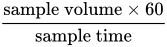
Measurements may be based on 1 second or less but are usually reported as a volume per minute. Electronic devices will sample the flow and multiply the sample volume(Litres) by 60, divided by the sample time(seconds) for a result measured in L/minute :
The highest of three readings is used as the recorded value of the Peak Expiratory Flow Rate. It may be plotted out on graph paper charts together with a record of symptoms or using peak flow charting software. This allows patients to self-monitor and pass information back to their doctor or nurse.[11]

Peak flow readings are often classified into 3 zones of measurement according to the American Lung Association;[12] green, yellow, and red. Doctors and health practitioners can develop an asthma management plan based on the green-yellow-red zones.

Zone Reading Description
Green Zone 80 to 100 percent of the usual or normal peak flow readings are clear. A peak flow reading in the green zone indicates that the asthma is under good control.
Yellow Zone 50 to 79 percent of the usual or normal peak flow readings Indicates caution. It may mean respiratory airways are narrowing and additional medication may be required.
Red Zone Less than 50 percent of the usual or normal peak flow readings Indicates a medical emergency. Severe airway narrowing may be occurring and immediate action needs to be taken. This would usually involve contacting a doctor or hospital.

History

[edit]

The measurement of peak expiratory flow was pioneered by Martin Wright, who produced the first meter specifically designed to measure this index of lung function. Since the original design of instrument was introduced in the late 1950s, and the subsequent development of a more portable, lower cost version (the "Mini-Wright" peak flow meter), other designs and copies have become available across the world.[13]

See also

[edit]

References

[edit]
[edit]
Revisions and contributorsEdit on WikipediaRead on Wikipedia
from Grokipedia
Peak expiratory flow (PEF), also known as peak expiratory flow rate (PEFR), is the maximum speed at which air can be forcefully expelled from the lungs during a vigorous exhalation, typically measured in liters per minute (L/min) using a portable handheld device called a peak flow meter. This measurement provides a simple, non-invasive assessment of airway patency and lung function, primarily used to monitor and manage obstructive respiratory conditions such as asthma. It reflects the degree of airflow limitation in the larger airways and serves as an early warning indicator for exacerbations before symptoms become severe. PEF measurement involves taking a deep breath and then exhaling as forcefully and rapidly as possible into the peak flow meter, with the highest of three consecutive attempts recorded as the reading. Normal values vary by age, sex, height, and ethnicity, but are individualized based on a patient's "personal best"—the highest reading obtained over 2–4 weeks during stable health, often ranging from 400–700 L/min in adults and 150–450 L/min in children. Readings are interpreted using color-coded zones relative to the personal best: (80–100%, good control), (50–80%, caution and potential need for intervention), and red (below 50%, indicating a ). Proper technique is essential, as inconsistent effort or device calibration can lead to inaccurate results. In clinical practice, regular PEF monitoring is recommended for individuals with moderate to severe , enabling self-management through personalized action plans that guide adjustments, trigger avoidance, and timely medical consultation. It is particularly valuable in settings where full is unavailable, offering quick insights into asthma control and response to therapy, though it is less reliable in young children due to challenges with technique. Peak flow meters adhere to standards set by organizations like the to ensure consistency across devices.

Definition and Function

Definition

Peak expiratory flow (PEF) is defined as the maximum expiratory flow rate achieved at the during a forced maneuver, starting from full inflation. This metric represents the highest speed at which air can be expelled from the s under maximal effort. It is conventionally expressed in units of liters per minute (L/min). The primary purpose of PEF is to provide a rapid evaluation of airflow limitation within the airways, serving as a key indicator of lung function. In contrast to forced expiratory volume (FEV), which measures the volume of air exhaled over a defined time period such as one second, PEF focuses exclusively on the peak velocity of expiration. This distinction allows PEF to offer a simple, immediate insight into potential airway narrowing.

Physiological Role

Peak expiratory flow (PEF) represents the maximum rate achieved during the initial phase of a forced expiratory maneuver, starting from total capacity, and serves as a key indicator of large airway patency. This effort-dependent measure relies on the coordinated of expiratory muscles to generate high pleural pressures, propelling air through the central airways at the highest possible velocity before flow limitation occurs. In healthy individuals, PEF typically reflects the wave speed mechanism, where flow is constrained by the physical properties of the airways rather than solely by muscular effort once maximal is reached. The physiological underpinnings of PEF are closely tied to the interplay between elastic recoil and . pressure, which is maximal at full inflation, provides the primary driving force for expiration, while low upstream minimizes frictional losses and allows rapid acceleration of airflow. Airway wall compliance and cross-sectional area at the flow-limiting "" further modulate PEF by influencing the onset of dynamic compression in the larger bronchi. Disruptions in these , such as increased resistance from narrowed airways, directly attenuate peak flow rates. Reductions in PEF are a sensitive signal of or obstruction, as they indicate compromised airway caliber that elevates resistance and diminishes the effectiveness of elastic recoil in generating high initial flows. In conditions involving airway narrowing, such as exacerbations, PEF drops progressively with the degree of obstruction, often falling below 80% of predicted values before more severe spirometric changes become evident. This makes PEF a valuable proxy for detecting early alterations in large airway dynamics, though it is less sensitive to small airway involvement.

Measurement Techniques

Procedure

The measurement of peak expiratory flow (PEF) follows a standardized protocol to ensure reliable and reproducible results, typically performed using a handheld peak flow meter. The patient should stand upright or sit straight with the back supported to optimize expansion and expiratory force. Proper patient training is essential, as suboptimal technique can lead to underestimation of PEF; clinicians often demonstrate the procedure and supervise initial attempts to correct errors such as incomplete lip sealing or hesitant . To perform the measurement, first resets the meter's indicator to zero or the bottom of the scale. They then take a maximal inspiration, filling the lungs completely while keeping the nose unobstructed (no nose clips are typically required). The mouthpiece is placed firmly between the teeth, with sealed tightly around it to prevent air leaks, ensuring the does not obstruct the path. The patient exhales as forcefully and rapidly as possible in a single blast, using abdominal and to achieve maximal effort within the first 1-2 seconds of expiration. This maneuver is repeated in quick succession, with short rests between attempts to avoid , and the highest of the three values is recorded as the PEF reading. Coughing, incomplete efforts, or air leaks invalidate a blow, necessitating repetition. For immediate clinical interpretation during monitoring, PEF values are often classified into color-coded zones based on the of the patient's personal best or predicted value: the represents 80-100% (indicating good control), the yellow zone 50-80% (signaling caution and potential need for intervention), and the red zone below 50% (indicating severe obstruction requiring urgent action). These zones guide self-management in conditions like , but accuracy depends on consistent technique and regular calibration of the device.

Devices and Scales

Peak expiratory flow (PEF) is measured using portable peak flow meters, which are handheld devices designed to quantify the maximum speed of air expulsion during a forced . The original device, known as 's peak flow meter, was a mechanical instrument invented by Dr. B.M. in the as a large, circular, clock-faced apparatus that used a spring-loaded vane mechanism to indicate flow rates up to 1000 L/min. This mechanical design relied on physical components for measurement without electronic components, making it simple and cost-effective but prone to variability in calibration. Subsequent developments led to miniaturized mechanical versions, such as the Mini-Wright peak flow meter introduced in the , which retained the vane-based mechanism but offered improved portability in a compact, format measuring up to 880 L/min for adults or 400 L/min for low-range models suited to children and smaller adults. Digital or electronic peak flow meters emerged later, incorporating sensors and microprocessors to provide precise readings, often with additional features like , Bluetooth connectivity for transmission to healthcare providers, and the ability to measure other parameters such as forced vital capacity (FVC) in some handheld spirometers. These electronic devices typically cost more than mechanical ones but enhance accuracy and user convenience through automated calculations and reduced operator error. PEF measurement scales have evolved to address inaccuracies in early calibrations, with the original scale (also called Wright-McKerrow) serving as the foundational standard but over-reading flows in the mid-range (300-500 L/min) by up to 80 L/min due to limitations in testing methods at the time. The scale, standardized under EN 13826:2003, was introduced in 2004 to ensure greater accuracy and consistency across devices, specifying requirements for peak expiratory flow meters (PEFMs) used in spontaneous breathing assessments, including flow ranges from 50-800 L/min and compliance testing with computerized pumps for precise waveform simulation. This standard mandates for legal sale in the EU and has influenced global manufacturing, replacing non-compliant Wright-scale devices. The NHANES III reference equations, derived from a large U.S. of over 7,400 asymptomatic nonsmokers aged 8-80 years, provide a standardized framework for interpreting PEF values across ethnic groups (Caucasian, African-American, Mexican-American), emphasizing predicted norms based on age, height, and sex rather than device-specific scaling. Conversion between the and scales is necessary for historical data comparability, with correction formulas developed using on simulated flows; for Mini- meters, the equation is PEF_{corrected} = 0.00090 \times (PEF_{recorded})^2 + 0.373 \times PEF_{recorded} + 47.4, yielding a residual standard deviation of 7 L/min when aligned to EN 13826 standards. For larger meters, a similar quadratic adjustment applies: PEF_{corrected} = 0.00075 \times (PEF_{recorded})^2 + 0.585 \times PEF_{recorded} + 53.2 (residual standard deviation: 6 L/min). These conversions account for the original scale's systematic overestimation, enabling alignment with modern -calibrated devices. NHANES III values can be integrated by applying these corrections to -based predictions before comparison to reference equations. Calibration of peak flow meters is critical for reliability, with mechanical devices like the Mini-Wright individually assembled and tested against master standards to meet ISO 23747 or EN 13826 criteria, ensuring accuracy within ±10% across the measurable range through or pump simulations of expiratory flows. Digital meters undergo electronic sensor validation, often self-calibrating via built-in diagnostics, though no universal method exists to directly calibrate between different brands due to inherent design variations. Modern devices prioritize portability, weighing under 200 grams and fitting in a pocket, with disposable mouthpieces for and battery-powered operation in lasting months, facilitating frequent home monitoring without compromising precision.

Reference Values and Interpretation

Normal Ranges

Peak expiratory flow (PEF) reference values are established to represent normal lung function in healthy individuals, derived from large-scale population studies such as the , which analyzed data from over 7,000 asymptomatic, lifelong nonsmokers aged 8 to 80 years across Caucasian, African-American, and Mexican-American ethnic groups. These predicted values account for key demographic factors including age, sex, height, and ethnicity, as PEF naturally varies with growth in youth, peaks in early adulthood, and declines gradually with age, while taller stature and male sex generally yield higher values. The use of ethnicity-specific adjustments in these equations has become controversial, with recent guidelines from the American Thoracic Society recommending race-neutral approaches to avoid potential underdiagnosis in minority populations. For adults, representative normal PEF ranges typically fall between 550 and 700 L/min for and 350 to 500 L/min for , though these can adjust downward by 10-15% for African-American or Mexican-American individuals compared to Caucasians of similar age and . For instance, a 30-year-old Caucasian of 175 cm might have a predicted PEF of approximately 630 L/min, while a 40-year-old Caucasian of 165 cm could expect around 430 L/min, illustrating the combined influence of these factors. Personalized predictions are often obtained using nomograms, standardized charts, or online calculators that implement NHANES III-derived equations, allowing clinicians to input patient-specific details for accurate baseline assessment. These tools, endorsed by organizations like the American Thoracic Society, facilitate quick determination of an individual's normal range, with typical diurnal variability up to 20% considered within healthy limits.

Factors Influencing Values

Peak expiratory flow (PEF) values are influenced by several demographic factors that contribute to variations from predicted norms. Age plays a significant role, with PEF typically peaking in the 20-30 years age group at approximately 430 L/min in healthy women, followed by a progressive decline thereafter. This decline accelerates after age 40, averaging about 3.8 L/min per year in men and 2.0 L/min per year in women, reflecting age-related reductions in elasticity and muscle strength. Sex differences also affect PEF, with males generally exhibiting higher values than females—such as mean PEF of 367 L/min in men versus 253 L/min in women—primarily due to larger airway diameters in males. correlates positively with PEF, increasing by roughly 1.5 L/min per centimeter in men and 1.1 L/min per centimeter in women, as taller stature is associated with greater volume and airway size. Environmental and behavioral factors further modify PEF readings. , for instance, reduces PEF in a dose-dependent manner, with smokers showing values around 410 L/min compared to 513 L/min in non-smokers, and the effect worsening with age and pack-years due to airway inflammation and obstruction. Altitude influences PEF through changes in air density; at high altitudes (e.g., 2150 m), values are significantly higher—such as 265 L/min in boys versus 245 L/min at —because lower air density decreases , facilitating greater expiratory flow. Temperature and impact meter accuracy rather than physiological PEF directly; lower temperatures (e.g., 7°C) can reduce uncorrected meter readings by up to 5-10%, while high has minimal effect, necessitating corrections for environmental conditions during measurement. Diurnal variations and short-term influences like recent exercise also cause fluctuations in PEF. PEF exhibits a , with values lowest in the morning (e.g., around 8.7 L/s at 8:00 AM) and highest in the afternoon or evening (e.g., 8.9 L/s at 5:00 PM), resulting in about 6% variability in healthy individuals due to natural cycles in airway tone and levels.

Clinical Applications

Asthma Management

Peak expiratory flow (PEF) monitoring plays a central role in management by enabling patients to perform daily home assessments, which facilitate early detection of exacerbations before severe symptoms emerge. Patients are advised to establish a personal best PEF value through consistent measurements over 2-4 weeks during stable periods, using the same device and recording the highest of three consecutive readings each time. This personal best serves as the reference point for ongoing monitoring, typically conducted twice daily (), allowing individuals to track subtle declines in lung function that may signal impending attacks. Integration of PEF into written action plans, as recommended by the Global Initiative for Asthma (GINA), structures management around color-coded zones based on percentages of the personal best: the (80-100%) indicates good control with maintenance therapy; the yellow zone (50-79%) prompts increased reliever medication or step-up in controller therapy; and the red zone (<50%) requires immediate intervention, such as additional short-acting beta-agonists or oral corticosteroids. These plans empower patients to adjust treatments proactively, reducing emergency visits and improving control, particularly for those with moderate to severe persistent . GINA guidelines emphasize providing all adults and adolescents with such personalized plans to guide self-management. Evidence from clinical studies demonstrates that PEF variability—calculated as the difference between morning and evening readings or over several days—effectively predicts exacerbations, with variability exceeding 20% often preceding attacks by days. For instance, longitudinal of home PEF has shown that increasing variability correlates with heightened , enabling timely interventions. In the , advancements in digital tracking have enhanced this utility, with smartphone-connected PEF meters and apps allowing logging, trend , and alerts for variability thresholds, as validated in recent systematic reviews of digital biomarkers for control.00060-1/fulltext)

Other Respiratory Conditions

Peak expiratory flow (PEF) monitoring plays a role in managing (COPD) by providing a simple, home-based measure to track disease progression and assess responses to . In COPD patients, serial PEF measurements can detect daily variations in function, helping identify and predict before they become severe. For instance, declines in PEF have been associated with increased exacerbation risk, allowing for timely interventions like adjusting therapy. Studies show that PEF can reliably identify moderate to severe obstruction in COPD, with a peak flow below 80% predicted serving as a sensitive indicator, though it is less specific than . Additionally, post- improvements in PEF, often exceeding 10-15% of baseline, help evaluate treatment efficacy in reducing expiratory flow limitation. Beyond COPD, PEF is applied in and allergic reactions through serial monitoring to detect work-related or allergen-induced airway variability. In , at least two weeks of twice-daily PEF recordings, compared between work and non-work periods, aids diagnosis by revealing patterns of diurnal and occupational decline, with sensitivity around 72% when interpreted against objective standards. This approach is particularly useful in field settings for workers exposed to irritants, as recommended by occupational health guidelines emphasizing portable PEF meters for serial assessment. For allergic reactions, such as those in or acute exposures, PEF variability correlates with airway hyperresponsiveness, enabling early detection of in atopic individuals. In , PEF serves as a screening and monitoring tool to assess pulmonary involvement, particularly in resource-limited settings where full is unavailable. Portable PEF meters allow for regular evaluation of expiratory flow, helping track disease severity and response to therapies like mucolytics or antibiotics. Guidelines from respiratory societies, including the 2022 ATS/ERS standards on pulmonary function test interpretation, endorse PEF for field assessments in various respiratory disorders due to its simplicity and accessibility, though it should complement rather than replace comprehensive testing. This utility extends to diverse conditions by providing objective data on airflow limitation in outpatient or community-based evaluations.

Limitations and Comparisons

Potential Errors and Variability

Peak expiratory flow (PEF) measurements are susceptible to user errors, primarily stemming from poor technique, insufficient effort, or inconsistent timing of assessments. Improper or , such as failing to take a full breath or not providing maximal effort, can result in significantly lower readings than actual values. Additionally, accelerating using the or cheeks instead of relying solely on lung force leads to inaccurate results. Inconsistent timing exacerbates variability, as PEF exhibits natural diurnal swings, with variations up to 20% observed in individuals with due to circadian rhythms in airway caliber. Device-related issues further contribute to measurement inaccuracy and inconsistency. Peak flow meters may experience calibration drift over time, leading to systematic errors in readings, although some models demonstrate stability after repeated use. Turbine-type meters are particularly sensitive to low temperatures, where readings can decrease due to changes in gas and mechanical response, potentially underestimating true PEF in cold environments. Regular validation against standards is essential to mitigate these effects. Population-specific factors limit the reliability of PEF interpretations when reference norms are not adjusted appropriately. In obese individuals, excess body mass restricts chest wall , resulting in systematically lower PEF values compared to non-obese peers, which can confound assessments if standard predictions are applied. Among the elderly, age-related declines in muscle strength and lung elasticity often yield diminished PEF, increasing the risk of misclassification for respiratory impairment. Similarly, ethnic differences necessitate tailored reference values; for instance, equations derived from Caucasian populations overestimate PEF by 12-15% in individuals of African descent, leading to potential underdiagnosis of limitation.

Relation to Other Lung Function Tests

Peak expiratory flow (PEF) measurement offers a quick and portable alternative to , particularly for monitoring large airway function in conditions like , as it requires minimal equipment and can be performed by patients without specialized training. However, PEF is less sensitive to small airway dysfunction compared to spirometry parameters, which better detect early or peripheral airflow limitations. The correlation between PEF and forced expiratory volume in one second (FEV1), a key spirometry metric, typically ranges from 0.7 to 0.8 in clinical studies, indicating moderate agreement but highlighting PEF's limitations as a standalone proxy. While PEF integrates well with comprehensive pulmonary function tests (PFTs) for ongoing assessment, it cannot substitute for the FEV1/forced (FVC) ratio, which is essential for diagnosing obstructive diseases and grading severity. Full PFTs, including , provide a broader evaluation of lung volumes and flow rates, making them indispensable for initial diagnosis, whereas PEF excels in serial home monitoring to track variability and response to . Recent reviews from 2024 have explored combining PEF with mobile applications for remote monitoring, showing improved control and adherence compared to traditional in-clinic , though these digital approaches complement rather than replace formal testing. For instance, app-integrated PEF tracking enables real-time data sharing with clinicians, potentially reducing exacerbations, but validation against remains crucial for accuracy.

History and Development

Early Development

The measurement of peak expiratory flow (PEF) originated in the mid-1950s through the work of British bioengineer Basil Martin Wright at the in , . Wright designed the first dedicated peak flow meter in 1956 to provide a practical alternative to cumbersome existing devices for assessing lung function. This instrument, a lightweight and portable tool, allowed for quick, repeatable measurements of maximum forced expiratory flow rate during a single breath. The invention was motivated by the need for an accessible method to monitor respiratory conditions, particularly as the use of inhalers rose following the introduction of the first pressurized in 1956. At the time, traditional equipment was bulky, required trained operators, and fatigued patients, limiting its utility for routine clinical or home-based assessment of airflow obstruction in . Wright's device addressed this by enabling patients to self-measure PEF easily, facilitating better evaluation of treatment responses amid growing reliance on aerosolized therapies. The first peak flow meter was publicly introduced in 1959, detailed in a seminal publication co-authored with C.B. McKerrow. Early clinical validation involved testing the meter on healthy subjects and patients with respiratory impairment, comparing PEF readings to forced and demonstrating its sensitivity to effects; for instance, in asthmatic individuals, PEF increased significantly after inhalation of adrenaline , confirming its value in detecting reversible airway obstruction. These initial trials established PEF as a reliable, objective index of ventilatory capacity, paving the way for its adoption in respiratory .

Modern Advancements

In the 1970s, the introduction of the Mini-Wright peak flow meter marked a significant advancement in portability and accessibility for peak expiratory flow (PEF) measurement. Developed as a compact, lightweight version of the original meter, it enabled by patients at home and in clinical settings, particularly benefiting pediatric and geriatric populations with its ease of use and lower cost. A key standardization effort occurred in 2004 with the adoption of the (EU) scale under the EN 13826 standard, which replaced the older scale to enhance measurement accuracy and consistency across devices. This non-linear scale, calibrated for better alignment with actual airflow dynamics, became mandatory for CE-marked meters sold in , facilitating global comparability and reducing variability in PEF readings between instruments. The saw the rise of digital integration in PEF monitoring through smart meters equipped with connectivity, allowing real-time data transmission to mobile applications for enhanced tracking and clinician oversight. Devices such as the MIR Smart One spirometer, introduced around 2015, combined PEF measurement with app-based logging to support remote management by alerting users to declines in function. Similarly, platforms like the Smart Peak Flow system, emerging in the late , integrated -enabled meters with user-friendly apps to visualize trends and predict exacerbations. Advancements in during the have further refined PEF applications, with studies developing predictive models to forecast airflow variations in patients. For instance, hybrid approaches combining and algorithms have demonstrated improved accuracy in predicting daily PEF rates by analyzing historical data and environmental factors, aiding proactive intervention. These AI-driven tools, often integrated into digital platforms, enhance personalization in respiratory care. Recent guidelines have emphasized PEF's role in , promoting its use for remote monitoring amid the expansion of services. The 2023 and 2024 Global Initiative for Asthma (GINA) reports highlight PEF variability as a diagnostic and management tool in virtual consultations, recommending integrated apps for tracking to reduce exacerbations through timely adjustments in therapy. Complementing this, the American Academy of Allergy, & Immunology (AAAAI) guidelines on remote monitoring endorse Bluetooth-enabled PEF devices to enable continuous , improving outcomes in chronic respiratory conditions via platforms.

References

Add your contribution
Related Hubs
User Avatar
No comments yet.