Hubbry Logo
Peter AufschnaiterPeter AufschnaiterMain
Open search
Peter Aufschnaiter
Community hub
Peter Aufschnaiter
logo
8 pages, 0 posts
0 subscribers
Be the first to start a discussion here.
Peter Aufschnaiter
Peter Aufschnaiter
from Wikipedia

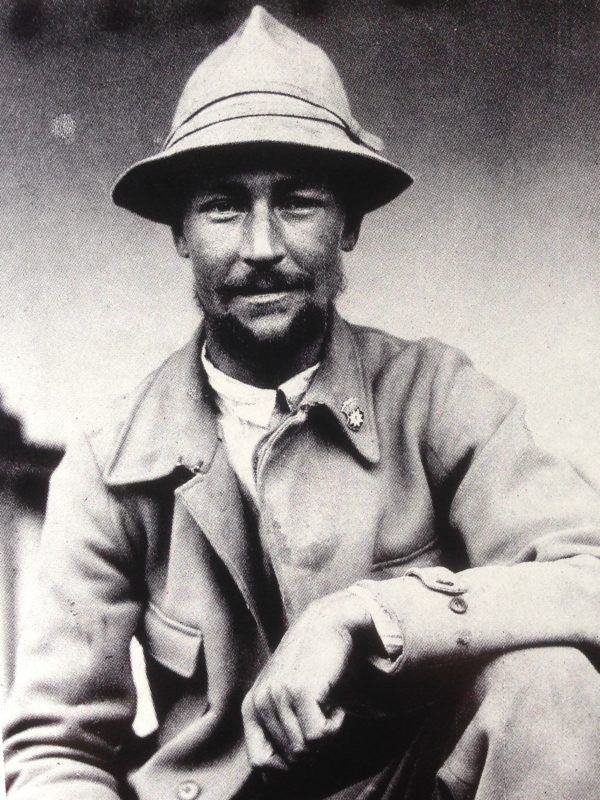
Peter Aufschnaiter (2 November 1899 – 12 October 1973) was an Austrian mountaineer, agricultural scientist, geographer and cartographer. His experiences with fellow climber Heinrich Harrer during World War II were depicted in the 1997 film Seven Years in Tibet.

Key Information

Early life

[edit]

Born in Kitzbühel, Austria-Hungary, Peter Aufschnaiter attended high school in Kufstein.[1] During his school education he was drafted into military service in the First World War in 1917. After he finished his final exams in 1919 he went to Munich in Germany to study agriculture.

Climbing

[edit]

In his early years he began climbing in his beloved Kaiser mountain range; later, in Munich, Aufschnaiter became acquainted with several German alpinists of the time. He took part in expeditions to Kangchenjunga (1929 and 1931) in Sikkim, where he reached a height of 7,700 m (25,300 ft). On these expeditions he had first contacts with Tibetans and learned the Tibetan language.

Nazi Party

[edit]

After the Machtergreifung of 30 January 1933, he joined the Nazi Party. From 1936 he worked full-time for the German Himalaya Foundation [de] established that year by Paul Bauer.

Capture and Tibet

[edit]

After several attempts at the Nanga Parbat, Aufschnaiter led a small four-man expedition in 1939, including Heinrich Harrer, to the Diamir Face with the aim of finding an easier route to the peak. Having concluded that the face was viable, they were in Karachi at the end of August waiting for a freighter to take them home. The ship being long overdue, Harrer, Ludwig and Lobenhoffer tried to reach Persia with their shaky car, but several hundred kilometers northwest of Karachi they were detained by British colonial authorities and escorted back to Karachi, where Aufschnaiter had stayed on.

Two days later, war was declared and on 3 September 1939, all were put behind barbed wire to be transferred to a detention camp at Ahmednagar near Bombay two weeks later. They considered escaping to Portuguese Goa, but when further transferred to Dehradun, they found Tibet more promising. Their goal was to reach the Japanese front in Burma or China.

Aufschnaiter and Harrer escaped and were re-captured a number of times before finally succeeding. On 29 April 1944 after lunch a group of seven, Rolf Magener and Heins von Have disguised as British officers, Harrer, Aufschnaiter, the Salzburger Bruno Treipel (aka Treipl) and the Berliners Hans Kopp and Sattler, disguised as native Indian workers, walked out of the camp. While Magener and von Have took the train to Calcutta and from there found their way to the Japanese army in Burma,[2][3] the others headed for the closest border. After Sattler had given up on 10 May, the remaining four entered Tibet crossing the Tsang Chok-la Pass (5,896 metres) on 17 May 1944 and thereafter split into two pairs: Harrer and Kopp; Aufschnaiter and Treipel. On 17 June Treipel, exhausted, bought himself a horse and rode back to the lowlands. Several months later, when the remaining three were still without visas for Tibet, Kopp gave up too and left for Nepal (where he was handed over to the British within a few days).

Aufschnaiter and Harrer, helped by the former's knowledge of the Tibetan language, proceeded to the capital of Lhasa which they reached on 15 January 1946, having crossed Western Tibet (passing the sacred Mount Kailash), the South-West with Gyirong County and the Northern Changthang Plateau.

From then on Aufschnaiter played a collabrorative role in Tibet. Employed by the government he helped plan a hydroelectric power plant and a sewage system for Lhasa and started first attempts at river regulations and reforestation in the area. He also looked into improving the quality of seeds. With Harrer he charted the first exact map of the capital city. His archaeological findings led to a correspondence with the scholar Giuseppe Tucci. His work is described in Heinrich Harrer's Seven Years in Tibet and Harrer's autobiography Beyond Seven Years in Tibet: my life before, during and after. Aufschnaiter's own book, Eight Years in Tibet, includes many of his own photographs and sketches.

In October 1950 the advance of the Chinese People's Liberation Army to Lhasa forced Aufschnaiter and Harrer to join the caravan of the Dalai Lama when he retreated to the Chumbi Valley bordering Sikkim and India. Harrer proceeded to India, but Aufschnaiter stayed at Gyantse and left Tibet only 10 months later. Harrer's book, Seven years in Tibet states that, "On 20 December 1950, Peter left Lhasa. Heinrich Harrer had already left for southern Tibet in the middle of November, finally leaving the country in March 1951. But Aufschnaiter wanted to stay in Tibet as long as possible, and in fact remained another ten months. (...) at this time he was on the south-western frontier of Tibet. On the way there he visited the monastery of Rongphu, which the Chinese had not yet destroyed, and from there climbed, alone, as far as No. 1 camp on the northern ascent route to Everest."[4]

He arrived in Nepal in 1952 where he worked as a cartographer and then in New Delhi, for the Indian Army. In 1955, he first-ascended Ronti (6063 m) in the Garhwal Himalayas, together with Canadian George Hampson in pure alpine style. He eventually obtained a Nepalese passport which allowed him access to many restricted remote areas and he discovered valuable early Buddhist wall paintings. Aufschnaiter spent most of his remaining years in Nepal, working as an agricultural engineer. At first he worked for Swiss Technical Aid.[5] From 1956 on he held a position as an agriculture expert for the United Nations Food and Agriculture Organization.

Death

[edit]
Aufschnaiter's grave in Kitzbühel, Austria

Aufschnaiter returned to Austria much later in life and died in Innsbruck in 1973 at the age of 73.[5] He is buried at Kitzbüheler Bergfriedhof, Austria. Only very late in his life, the introverted Aufschnaiter began writing memoirs but did not see them published. After his death, the manuscript was first in the possession of mountaineer Paul Bauer. Finally it was edited and published by Tibet scholar Martin Brauen of the Museum of Ethnology at the University of Zurich.

Filmography

[edit]

In the 1997 film Seven Years in Tibet, Aufschnaiter is portrayed by David Thewlis. In the film, he falls in love while in Lhasa with the local tailor Pema Lhaki, and marries her.

See also

[edit]

References

[edit]
[edit]
Revisions and contributorsEdit on WikipediaRead on Wikipedia
from Grokipedia

Peter Aufschnaiter (2 November 1899 – 12 October 1973) was an Austrian mountaineer, cartographer, geographer, and agricultural engineer renowned for his escape from British internment in during the Second World War and his extended residence in , where he contributed practical expertise to the region's infrastructure and documented its geography and culture.
Born in , , Aufschnaiter developed an early passion for the , undertaking notable climbs and expeditions before the war, including participation in the 1939 German-Austrian attempt on alongside . Interned as a in British India after the outbreak of hostilities, he endured multiple failed escape attempts before successfully fleeing a camp near Dehra Dun in April 1944 with Harrer and others, embarking on a grueling 21-month trek across the into despite harsh terrain, weather, and border restrictions. Upon reaching in 1946, Aufschnaiter integrated into Tibetan society, serving the government in roles such as agricultural advisor and hydraulic engineer; he designed and oversaw the construction of a hydro-electric supplying the capital, improved systems, and produced accurate maps and ethnographical records that remain valuable for scholarly study of independent . Unlike Harrer, who departed amid the 1950 Chinese advance, Aufschnaiter remained until 1952, deepening his affinity for the land and people before later working in and on development projects until his death. His personal notes, sketches, and photographs, compiled posthumously in Peter Aufschnaiter's Eight Years in Tibet, offer firsthand insights into a vanishing era, underscoring his legacy as both adventurer and pragmatic contributor to remote highland societies.

Early Life

Birth and Education

Peter Aufschnaiter was born on 2 November 1899 in , Tyrol, , then part of . He grew up in the small Tyrolean town of as the son of a shopkeeper from a merchant family, with his mother originating from a farming background. Aufschnaiter attended locally in before enrolling in a (Gymnasium) in . In 1917, at the age of 17, he was drafted into the Austrian army and served during the final years of . Following the war, Aufschnaiter briefly attended the before transferring to the in autumn 1921 to study , with additional focus on geography. These studies equipped him with expertise in , which later informed his contributions in and beyond.

Introduction to Mountaineering

Peter Aufschnaiter developed an early interest in through climbs in the Tyrolean Alps surrounding his birthplace in , with initial ascents in the nearby Alps and Kaisergebirge range during his youth in the and early . These local peaks, part of the ' rugged terrain, provided foundational training in technical climbing and navigation, influenced by the region's prominence as a center for Alpine sports. A serious foot injury sustained from a fall in the Kaiser mountains persisted throughout his life but failed to halt his pursuits, demonstrating his resilience and commitment to the sport. While pursuing studies in and at the Technical University in , Aufschnaiter joined the Academical Alps Association, where he connected with leading German and Austrian alpinists and progressed to advanced routes, including first ascents in the during the and . This period honed his expertise in high-altitude techniques, route-finding, and endurance, skills derived from primary accounts in his unpublished diaries and corroborated by expedition records, preparing him for international ventures beyond the Alps.

Pre-War Career and Political Involvement

Himalayan Expeditions

Aufschnaiter first ventured into the Himalayas as a member of the 1929 German expedition to Kangchenjunga, led by Paul Bauer, which sought to ascend the world's third-highest peak via the north-east spur but retreated after establishing Camp V at approximately 7,400 meters due to deteriorating weather, avalanche risks, and logistical challenges. In 1931, he rejoined Bauer for a second attempt on Kangchenjunga, advancing further to 7,700 meters on the same spur before turning back amid similar high-altitude obstacles, including rockfall and oxygen scarcity, marking one of the era's notable pre-war pushes without supplemental oxygen. By 1939, Aufschnaiter led a expedition to , comprising himself, , Max Reuss, and Hans Herzberger, focused on scouting unclimbed routes on the Diamir Face rather than a full summit bid. The team identified a prominent rock feature, later named the Aufschnaiter Rib, as a potential line of ascent, while evaluating hazards and establishing base camps up to 5,000 meters; the effort yielded valuable topographic data but was aborted in August upon Britain's on , stranding the group in British India. These expeditions highlighted Aufschnaiter's expertise in alpine-style Himalayan travel, emphasizing route-finding and adaptation to extreme conditions without modern aids.

Nazi Party Membership and Motivations

Peter Aufschnaiter joined the in May 1933, several months after Hitler's appointment as on 30 January 1933. His decision reflected a broader sentiment among some favoring , or political union with , which the Nazi regime promoted as a national goal even before the formal incorporation of in 1938. Aufschnaiter's stated motivation centered on advancing this , which aligned with his opportunities in and rather than explicit ideological fervor; archival evidence indicates no significant active political engagement or activities on his part prior to or during . Party membership facilitated professional access, including employment from 1936 onward with the Deutsche Himalaya-Stiftung, a state-backed organization funding alpine expeditions to symbolize German physical and national superiority. In 1939, Aufschnaiter led a four-man expedition to in British India, sponsored by Nazi authorities as part of efforts to achieve mountaineering feats that bolstered regime propaganda—though the team failed to summit, with two members dying in an avalanche. Unlike his companion , who held (SS) rank, no records confirm Aufschnaiter's SS affiliation, suggesting his involvement remained confined to standard party membership and expedition logistics. This pragmatic alignment with Nazi structures enabled Himalayan ventures amid restricted international travel and funding under the regime.

World War II Internment

Capture in India

In , Peter Aufschnaiter organized and led a small German reconnaissance expedition to assess the Diamir Face of , joined by fellow Austrian mountaineer , as well as Hans Lobenhoffer and Lutz Chicken, with the goal of scouting a potential climbing route for future attempts. The team conducted surveys and minor ascents during the summer, concluding the face was viable but technically challenging, before beginning their return journey via in late August. On September 3, 1939, following Britain's on two days after the German , British authorities in interned Aufschnaiter and his expedition companions as enemy aliens due to their Austrian and German nationalities—Austria having been annexed by in 1938. Initially detained in for lacking proper travel documents amid the escalating conflict, they were promptly transferred under military escort to Ahmadnagar Central Camp, approximately 200 kilometers southeast of Bombay (now ), where they were held as civilian internees in accordance with the Geneva Convention. The camp housed several hundred German, Austrian, and Italian civilians, including missionaries, engineers, and other expedition members, under British colonial administration's policy of to neutralize potential Axis sympathizers in neutral or allied territories. Conditions at Ahmadnagar were spartan but relatively organized, with internees organized into self-managed groups for labor, , and , though Aufschnaiter and Harrer quickly began plotting escapes, viewing their detention as unjust given their non-combatant status as mountaineers. Early attempts to flee, including plans to reach Portuguese or neutral Persia, failed due to heightened security and recapture, leading to their transfer in 1941 first to and then to Premnagar near Dehra Dun, closer to the , where persisted until their successful escape in April 1944.

Escape and Trek to Tibet

In April 1944, Peter Aufschnaiter joined and five other prisoners in escaping the British internment camp at Dehra Dun, , following prior failed attempts from that and earlier camps like . The group departed on April 29, disguising themselves as British officers and Indian laborers before using a ladder to scale walls and bluffing past guards via unguarded "Chicken Runs" alleyways within the compound. Aufschnaiter, Harrer, and companion Hans Kopp initially trekked northward through the Himalayan foothills toward , reaching Nelang at 11,000 feet and the River—about 100 miles south of the Tibetan border town of Hanle—by June 17. The party later split, with Aufschnaiter and Harrer continuing independently, navigating by night to evade patrols and acquiring local aid such as yaks for transport. Their route crossed multiple high-altitude passes exceeding 5,000 meters, involving prolonged exposure to , risks, and logistical challenges over roughly 2,000 kilometers. Aufschnaiter's self-taught knowledge of Tibetan language and customs facilitated negotiations with border nomads and officials, enabling the pair to bypass formal entry restrictions into . After approximately 20 months of arduous foot travel, marked by periods of foraging, temporary shelter in monasteries, and evasion of Chinese and British frontier forces, they entered undetected through its main gate on January 15, 1946.

Life in Tibet

Arrival and Integration in Lhasa

Aufschnaiter and arrived in on 15 January 1946, concluding a 21-month from their World War II internment camp in Dehra Dun, , marked by high-altitude crossings, evading patrols, and surviving on scant resources in western . Their physical state upon entry was dire: clad in shredded sheepskin coats, nearly barefoot, and transporting minimal valuables—including one tola of gold and 1.5 rupees—via a single . This followed months of preparation in border regions like Kyirong, where they secured a lamyig travel permit from authorities after a four-month process, enabling their sanctioned approach to the capital. Aufschnaiter's rudimentary proficiency in the Tibetan language, gained from pre-war Himalayan expeditions involving border contacts, proved instrumental in navigating initial formalities and advocating for their stay. The Tibetan administration, wary of foreigners yet pragmatic in its isolationist policy, granted provisional residence to the pair as neutral Europeans , housing them modestly while assessing their utility amid Lhasa's limited technical expertise. This cautious acceptance stemmed from Tibet's independence and aversion to British influence, positioning the arrivals as potential assets rather than threats. Integration accelerated through Aufschnaiter's civil engineering background and linguistic edge, positioning him for advisory roles in infrastructure within months; Harrer, less technically oriented, adapted more socially. Their adherence to local customs, including monastic protocols and avoidance of political entanglements, fostered trust among officials and nobility, laying groundwork for deeper societal embedding despite cultural barriers like dietary and religious norms.

Contributions to Tibetan Administration

Upon arriving in Lhasa in late 1944 or early 1945, Peter Aufschnaiter secured employment with the Tibetan government, initially as a surveyor and technical advisor, drawing on his pre-war experience in and . His primary contributions focused on and agricultural modernization, including the planning and construction of Tibet's first major irrigation canal near , which aimed to expand and enhance water management in the region's arid highland valleys. He also conducted field experiments with new crop seeds and farming techniques to boost yields of staple grains like barley, addressing chronic food shortages exacerbated by Tibet's isolation and traditional subsistence methods. Aufschnaiter further assisted in urban development projects for , designing a system to mitigate issues in the densely populated capital and surveying two detailed city maps that facilitated administrative planning and resource allocation. In collaboration with Tibetan officials, he proposed a hydroelectric power plant to harness local rivers for , though implementation was limited by the government's conservative approach and resource constraints prior to the 1950 Chinese invasion. Additionally, he contributed to rudimentary aviation infrastructure by outlining a small runway, reflecting efforts to connect with the outside world amid growing geopolitical pressures. These initiatives, executed between 1945 and 1951, represented practical applications of Western technical knowledge within Tibet's theocratic administration, often under the patronage of figures like Dundul Namgyal Tsarong, though they faced resistance from traditionalists wary of foreign influence. Aufschnaiter's work emphasized self-reliance, avoiding dependency on external aid, and yielded tangible improvements in water distribution and experimentation, as documented in his personal records and later scholarly analyses of his Tibetan diaries. While not involved in high-level policy or —roles more aligned with contemporaries like —his engineering inputs supported the government's modernization attempts during a period of relative autonomy.

Cultural and Personal Adaptation

Upon arriving in in January 1945, Aufschnaiter rapidly mastered the Tibetan language, leveraging his prior linguistic aptitude to communicate effectively with locals and officials, which was essential for his roles in government service. This proficiency enabled detailed interactions across Tibetan society, from peasants and nomadic herdsmen to nobility and the , allowing him to document everyday customs and social structures with precision. Aufschnaiter's personal adaptation reflected a profound affinity for Tibetan reticent mountain culture, aligning with his own quiet and modest disposition; he embraced a simple, hermit-like existence, owning minimal possessions and eschewing material excess in favor of cultural immersion. He participated in religious pilgrimages and studied ancient , demonstrating respect for spiritual practices without formal conversion, which deepened his understanding of Tibetan daily life and feudal . His eight-year tenure in until 1952, extending beyond Heinrich Harrer's departure in 1951, underscored this attachment; Aufschnaiter expressed enduring fascination with the region's landscapes, people, and traditions, producing extensive diaries and observations that reveal no romantic partnerships or family formation, contrary to later fictional depictions. This period marked a shift from his pre-war pursuits to a sustained, empathetic engagement with Tibetan society, informed by direct empirical observation rather than external ideologies.

Post-Tibet Period

Departure During Chinese Invasion

As the People's Liberation Army (PLA) of the launched its invasion of on October 7, 1950, capturing the eastern region of by October 19 following minimal resistance from Tibetan forces, the Tibetan government anticipated further incursions toward . This prompted the to depart on November 17, 1950, with a caravan of officials retreating southward to the near the Indian border, signing the under duress in May 1951 that nominally incorporated into while allowing limited autonomy. Peter Aufschnaiter, having integrated deeply into Tibetan society as an agricultural advisor and hydraulic engineer since 1948, initially accompanied elements of this exodus but chose an independent path amid the political upheaval and advancing PLA presence. Aufschnaiter departed specifically on December 20, 1950, as documented in contemporaneous accounts, relocating temporarily to in southern where he remained for approximately ten months amid the transitional administration under Chinese influence. During this period, he pursued mountaineering endeavors, including a trek to Rongphu Monastery at the base of and an ascent to the (Camp I) on the mountain's north face, activities unhindered by immediate PLA enforcement in western but reflective of the deteriorating security for foreign residents. His prolonged stay in allowed observation of the shifting power dynamics, with Tibetan officials negotiating with incoming Chinese representatives, but escalating tensions and restrictions on non-Tibetan personnel ultimately necessitated full departure. By early 1952, Aufschnaiter crossed into , marking the end of his seven-year tenure in , where he had contributed to infrastructure projects like systems and in . The invasion's causal effects—disrupting Tibet's de facto independence established since and imposing centralized control—directly compelled his exit, as sustained foreign advisory roles became untenable under the new regime's policies toward outsiders and traditional governance. In , he transitioned to employment with the of the , focusing on and agricultural development, leveraging skills honed in .

Professional Work in Asia

Following his departure from Tibet amid the Chinese invasion in late 1950, Peter Aufschnaiter relocated to Nepal in 1951, where he initially served as a hydraulic engineer for the Government of Nepal and the United Nations, specializing in irrigation and water management projects until 1959. In this capacity, he contributed to infrastructure development aimed at improving agricultural productivity in Himalayan regions, drawing on his prior experience in civil engineering and geography. From 1959 to 1962, Aufschnaiter worked in for the , undertaking engineering and developmental initiatives, including cartographic surveys and efforts. He also engaged in seed expertise roles, importing and planting highly resistant crops to avert famine risks in during this period. Additionally, he designed sewage systems and conducted border documentation, such as surveys of Everest's north side and . Returning to in 1962, Aufschnaiter became a long-term consultant for the (FAO) of the , focusing on agricultural advisory and water resource management until his death in 1973. To facilitate access to restricted Himalayan valleys for and fieldwork, he acquired Nepalese , enabling deeper involvement in regional projects. His efforts emphasized practical enhancements to local agriculture and , informed by his multidisciplinary background in , cartographer, and .

Later Climbing Expeditions

After departing in early 1952 amid the advancing Chinese forces, Aufschnaiter resettled in , where he took up agricultural engineering roles with the , focusing on projects in and the Indus Valley. Despite these professional commitments, he continued in the into his later years, undertaking lightweight alpine-style ascents that emphasized minimal support and . These expeditions, often conducted with small teams, reflected his enduring expertise honed from pre-war Himalayan ventures. In June 1955, at age 55, Aufschnaiter achieved the of Ronti (6,063 m) in the , north of the Sanctuary in northern . Partnered solely with Canadian climber George Hampson, they approached from Nanda Prayag, trekking through remote valleys before tackling the peak's challenging north ridge in pure alpine style without fixed ropes or large porters. The summit was reached on , marking a notable accomplishment for Aufschnaiter post-Tibet, as the route involved technical snow and ice sections amid unstable weather. This climb demonstrated his adaptability to high-altitude alpinism well into . Later in the decade, Aufschnaiter extended his activities to , climbing Chusumdo Ri (6,609 m) in the Himal during the late . Accompanied by a single Sherpa partner, he again employed a minimalist approach, navigating the peak's steep faces and seracs with limited equipment. This expedition underscored his preference for intimate, low-logistics ventures over large-scale efforts, allowing focus on route-finding and endurance in isolated terrain. Into the early 1960s, while based in , Aufschnaiter conducted exploratory trips along Nepal's northern regions, including surveys near the north side of and further documentation of (8,027 m) from eastern vantage points. These forays combined with geographic observation, building on his earlier Tibetan mapping experience, though they prioritized over full summits amid restricted access to areas. Such activities waned as and professional demands increased, with Aufschnaiter shifting more toward scholarly pursuits by the mid-1960s.

Death and Legacy

Final Years and Passing

After departing Asia following his tenure with the United Nations Food and Agriculture Organization, Aufschnaiter returned to Austria in his later years, settling in a modest lifestyle reflective of his preference for solitude and reflection on his Himalayan experiences. He remained unmarried and had no children, distancing himself from public acclaim despite his adventurous past. Aufschnaiter died on October 12, 1973, in Innsbruck, Austria, at the age of 73. He was buried at the Kitzbüheler Bergfriedhof in his birthplace of Kitzbühel.

Publications, Archives, and Scholarly Recognition

Aufschnaiter's writings were not widely published during his lifetime, but a comprehensive posthumous compilation, Peter Aufschnaiter's Eight Years in Tibet, was edited and translated by Martin Brauen and released by Orchid Press in Bangkok in 2002. This 208-page volume draws directly from Aufschnaiter's personal notes, diaries, sketches, and photographs amassed during his residence in Tibet from 1944 to 1952, offering detailed accounts of Tibetan customs, landscapes, and administrative roles. It includes bibliographical references and a large folded color map, emphasizing his observations as a civil engineer and ethnographer rather than narrative storytelling. His archives constitute a substantial unpublished legacy, encompassing diaries, manuscripts (including an unfinished book on Tibet), correspondence, texts in German, English, and Tibetan, sketches, maps, drawings, photographs, and collected objects from his time in Tibet (1944–1952) and later in Tibetan-speaking regions of Nepal (1952–1971). These materials provide meticulous, firsthand documentation of pre-invasion Tibetan society, agriculture, and hydrology, with visual records capturing sites and practices rarely preserved elsewhere. The Austrian Academy of Sciences' Institute for Social Anthropology has led efforts to catalog, publish, and analyze this corpus through projects funded by the Austrian Science Fund, highlighting its value for social anthropological and historical research despite remaining largely unresearched nearly 50 years after his death. Scholarly recognition of Aufschnaiter's contributions centers on the ethnographic and historical utility of his records, which offer rare eyewitness perspectives on Tibetan life unfiltered by later political narratives. Researchers, such as Christian Jahoda in a 2023 biographical study, have extracted and analyzed his unpublished diaries and papers to reconstruct biographical and cultural details, underscoring their precision as primary sources for locations and events with limited alternatives. His joint legacy with , including shared collections, has informed mappings and retracings of mid-20th-century Tibetan , though Aufschnaiter's introverted documentation style receives acclaim for its empirical depth over popular appeal. No major lifetime honors are recorded, but posthumous compilations and archival projects affirm his enduring role in Tibetology.

Media Portrayals

Role in "Seven Years in Tibet"

Peter Aufschnaiter served as Heinrich Harrer's primary companion and co-escapee in the 1952 memoir , where Harrer recounts their joint internment as Austrian nationals in a British prisoner-of-war camp in , , following the outbreak of . Aufschnaiter, an experienced civil engineer and mountaineer who had led the 1939 German expedition, collaborated with Harrer and four others in planning and executing their escape on April 1, 1944, by tunneling under the camp's barbed wire and navigating through remote Himalayan terrain. The narrative emphasizes Aufschnaiter's practical skills during their subsequent 21-month odyssey across , which involved traversing high-altitude passes, enduring starvation, and evading patrols, culminating in their arrival in on January 15, 1946. In , Harrer depicts Aufschnaiter—seven years his senior—as adapting more rapidly to Tibetan customs, mastering the within months, and securing an advisory role in the government's agricultural and departments by late 1946. Aufschnaiter contributed to canal designs, flood control along the Kyichu River, and agricultural enhancements, such as introducing European farming techniques, which Harrer attributes with improving local yields and earning Aufschnaiter favor among officials like the of . Harrer's account positions Aufschnaiter as a stabilizing influence, handling bureaucratic integration while Harrer pursued personal connections, including with the young ; however, Aufschnaiter's tenure in these roles extended beyond Harrer's 1951 departure, reflecting his deeper immersion in Tibetan statecraft until the 1950 Chinese advance prompted his exit. These portrayals align with Aufschnaiter's documented expertise, though Harrer's first-person perspective has drawn scrutiny for potential embellishments favoring his own arc over Aufschnaiter's understated contributions. In the 1997 film adaptation directed by , Aufschnaiter—portrayed by —is shown as the expedition's pragmatic leader and Harrer's foil, guiding their escape and trek while critiquing Harrer's initial and Nazi affiliations. The film amplifies dramatic elements, including a fictional Tibetan wife (Pema, played by ) and family for Aufschnaiter, which contradict historical records showing he remained unmarried and childless during his Tibetan residency. Core events like the escape and integration draw from the book but subordinate Aufschnaiter's administrative achievements to Harrer's spiritual growth narrative.

References

Add your contribution
Related Hubs
User Avatar
No comments yet.