Hubbry Logo
DonkeyDonkeyMain
Open search
Donkey
Community hub
Donkey
logo
8 pages, 0 posts
0 subscribers
Be the first to start a discussion here.
Donkey
Donkey
from Wikipedia

Donkey
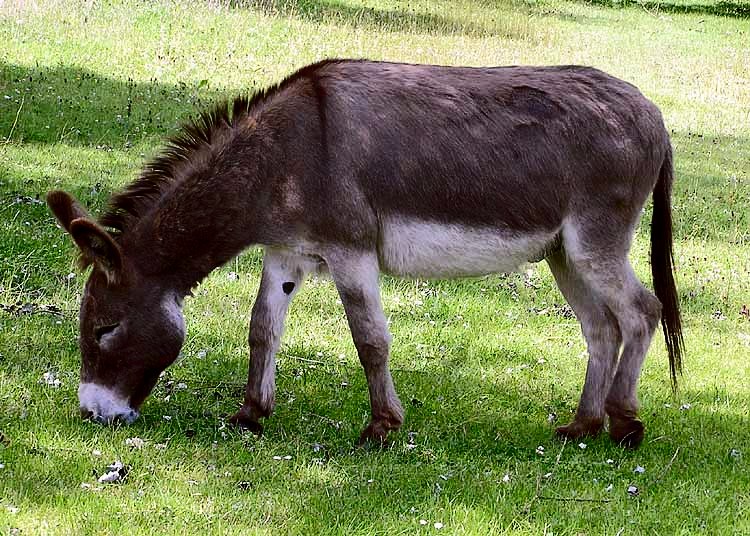
A donkey in Clovelly, North Devon
Domesticated
Scientific classification Edit this classification
Kingdom: Animalia
Phylum: Chordata
Class: Mammalia
Order: Perissodactyla
Family: Equidae
Genus: Equus
Species:
Subspecies:
E. a. asinus
Trinomial name
Equus africanus asinus

The donkey or ass is a domesticated equine. It derives from the African wild ass, Equus africanus, and may be classified either as a subspecies thereof, Equus africanus asinus, or as a separate species, Equus asinus.[1]: 1  It was domesticated in Africa some 5000–7000 years ago,[1]: 2 [2]: 3715 [3] and has been used mainly as a working animal since that time.

There are more than 40 million donkeys in the world, mostly in underdeveloped countries, where they are used principally as draught or pack animals. While working donkeys are often associated with those living at or below subsistence, small numbers of donkeys or asses are kept for breeding, as pets, and for livestock protection in developed countries.

An adult male donkey is a jack or jackass, an adult female is a jenny or jennet,[4][5][6] and an immature donkey of either sex is a foal.[6] Jacks are often mated with female horses (mares) to produce mules; the less common hybrid of a male horse (stallion) and jenny is a hinny.

Nomenclature

[edit]

Traditionally, the scientific name for the donkey is Equus asinus asinus, on the basis of the principle of priority used for scientific names of animals. However, the International Commission on Zoological Nomenclature ruled in 2003 that if the domestic and the wild species are considered subspecies of a common species, the scientific name of the wild species has priority, even when that subspecies was described after the domestic subspecies.[7] This means that the proper scientific name for the donkey is Equus africanus asinus when it is considered a subspecies and Equus asinus when it is considered a species.[8][7]

At one time, the synonym ass was the more common term for the donkey. The first recorded use of donkey was in either 1784[9] or 1785.[10][11][12]: 239  While the word ass has cognates in most other Indo-European languages, donkey is an etymologically obscure word for which no credible cognate has been identified. Hypotheses on its derivation include the following:

  • perhaps from Spanish for its don-like gravity; the donkey was also known as "the King of Spain's trumpeter".[11]
  • perhaps a diminutive of dun (dull grayish-brown), a typical donkey colour.[10][13]
  • perhaps from the name Duncan.[10][14]
  • perhaps of imitative origin.[14]

From the 18th century, donkey gradually replaced ass and jenny replaced she-ass, which is now considered archaic.[15] The change may have come about through a tendency to avoid pejorative terms in speech and may be comparable to the substitution in North American English of rooster for cock, or that of rabbit for coney, which was formerly homophonic with cunny (a variation of the word cunt). By the end of the 17th century, changes in pronunciation of both ass and arse had caused them to become homophones in some varieties of English.[12]: 239  Other words used for the ass in English from this time include cuddy in Scotland, neddy in southwestern England and dicky in southeastern England;[12]: 239  moke is documented in the 19th century and may be of Welsh or Romani origin.

Burro is a word for donkey in both Spanish and Portuguese. In the United States, it is commonly applied to the feral donkeys that live west of the Rocky Mountains;[16] it may also refer to any small donkey.[17]: 147 

History

[edit]
Donkey in an Egyptian painting c. 1298–1235 BC

The genus Equus, which includes all extant equines, is believed to have evolved from Dinohippus, via the intermediate form Plesippus. One of the oldest species is Equus simplicidens, described as zebra-like with a donkey-shaped head. The oldest fossil to date is approximately 3.5 million years old, and was located in the US state of Idaho. The genus appears to have spread quickly into the Old World, with the similarly aged Equus livenzovensis documented from western Europe and Russia.[18]

Molecular phylogenies indicate the most recent common ancestor of all modern equids (members of the genus Equus) lived ~5.6 (3.9–7.8) mya. Direct paleogenomic sequencing of a 700,000-year-old middle Pleistocene horse metapodial bone from Canada implies a more recent 4.07 Myr before present date for the most recent common ancestor (MRCA) within the range of 4.0 to 4.5 Myr BP.[19] The oldest divergencies are the Asian hemiones (subgenus E. (Asinus), including the kulan, onager, and kiang), followed by the African zebras (subgenera E. (Dolichohippus), and E. (Hippotigris)). All other modern forms including the domesticated horse (and many fossil Pliocene and Pleistocene forms) belong to the subgenus E. (Equus) which diverged ~4.8 (3.2–6.5) million years ago.[20]

The ancestors of the modern donkey are the Nubian and Somalian subspecies of African wild ass.[21][22][23] Remains of domestic donkeys dating to the fourth millennium BC have been found in Ma'adi in Lower Egypt, and it is believed that the domestication of the donkey was accomplished long after the domestication of cattle, sheep and goats in the seventh and eighth millennia BC. Donkeys were probably first domesticated by pastoral people in Nubia, and they supplanted the ox as the chief pack animal of that culture. The domestication of donkeys served to increase the mobility of pastoral cultures, having the advantage over ruminants of not needing time to chew their cud, and were vital in the development of long-distance trade across Egypt. In the Dynasty IV era of Egypt, between 2675 and 2565 BC, wealthy members of society were known to own over 1,000 donkeys, employed in agriculture, as dairy and meat animals and as pack animals.[24] In 2003, the tomb of either King Narmer or King Hor-Aha (two of the first Egyptian pharaohs) was excavated and the skeletons of ten donkeys were found buried in a manner usually used with high ranking humans. These burials show the importance of donkeys to the early Egyptian state and its ruler.[25]

By the end of the fourth millennium BC, the donkey had spread to Southwest Asia, and the main breeding centre had shifted to Mesopotamia by 1800 BC. The breeding of large, white riding asses made Damascus famous,[citation needed] while Syrian breeders developed at least three other breeds, including one preferred by women for its easy gait. The Muscat or Yemen ass was developed in Arabia. By the second millennium BC, the donkey was brought to Europe, possibly at the same time as viticulture was introduced, as the donkey is associated with the Syrian god of wine, Dionysus. Greeks spread both of these to many of their colonies, including those in what are now Italy, France and Spain; Romans dispersed them throughout their empire.[24]

The first donkeys came to the Americas on ships of the Second Voyage of Christopher Columbus, and were landed at Hispaniola in 1495.[26] The first to reach North America may have been two animals taken to Mexico by Juan de Zumárraga, the first bishop of Mexico, who arrived there on 6 December 1528, while the first donkeys to reach what is now the United States may have crossed the Rio Grande with Juan de Oñate in April 1598.[27] From that time on they spread northward, finding use in missions and mines. Donkeys were documented as present in what today is Arizona in 1679. By the Gold Rush years of the 19th century, the burro was the beast of burden of choice of early prospectors in the western United States. By the end of the placer mining boom, many of them escaped or were abandoned, and a feral population established itself.[citation needed]

Conservation status

[edit]

About 41 million donkeys were reported worldwide in 2006.[28] China had the most with 11 million, followed by Pakistan, Ethiopia and Mexico. As of 2017, however, the Chinese population was reported to have dropped to 3 million, with African populations under pressure as well, due to increasing trade and demand for donkey products in China.[29] Some researchers believe the actual number may be somewhat higher since many donkeys go uncounted.[30] The number of breeds and percentage of world population for each of the FAO's world regions was in 2006:[28]

Region No. of breeds % of world pop.
Africa 26 26.9
Asia and Pacific 32 37.6
Europe and the Caucasus 51 3.7
Latin America and the Caribbean 24 19.9
Near and Middle East 47 11.8
United States and Canada 5 0.1
World 185 41 million head
The Baudet du Poitou is among the largest breeds of donkey
At a livestock market in Niger

In 1997, the number of donkeys in the world was reported to be continuing to grow, as it had steadily done throughout most of history; factors cited as contributing to this were increasing human population, progress in economic development and social stability in some poorer nations, conversion of forests to farm and range land, rising prices of motor vehicles and fuel, and the popularity of donkeys as pets.[30][31] Since then, the world population of donkeys is reported to be rapidly shrinking, falling from 43.7 million to 43.5 million between 1995 and 2000, and to only 41 million in 2006.[28] The fall in population is pronounced in developed countries; in Europe, the total number of donkeys fell from 3 million in 1944 to just over 1 million in 1994.[32]

The Domestic Animal Diversity Information System (DAD-IS) of the FAO listed 189 breeds of ass in June 2011.[33] In 2000 the number of breeds of donkey recorded worldwide was 97, and in 1995 it was 77. The rapid increase is attributed to attention paid to identification and recognition of donkey breeds by the FAO's Animal Genetic Resources project.[28] The rate of recognition of new breeds has been particularly high in some developed countries. In France only one breed, the Baudet du Poitou, was recognised until the early 1990s; by 2005, a further six donkey breeds had official recognition.[34]

In developed countries, the welfare of donkeys both at home and abroad has become a concern, and a number of sanctuaries for retired and rescued donkeys have been set up. The largest is The Donkey Sanctuary near Sidmouth, England, which also supports donkey welfare projects in Egypt, Ethiopia, India, Kenya, and Mexico.[35]

In 2017, a drop in the number of Chinese donkeys, combined with the fact that they are slow to reproduce, meant that Chinese suppliers began to look to Africa. As a result of the increase in demand, and the price that could be charged, Kenya opened three donkey abattoirs. Concerns for donkeys' well-being have resulted in a number of African countries (including Uganda, Tanzania, Botswana, Niger, Burkina Faso, Mali, and Senegal) banning China from buying their donkey products.[36]

In 2019, The Donkey Sanctuary warned that the global donkey population could be reduced by half over the next half decade as the demand for ejiao increases in China.[37][38]

Characteristics

[edit]

Donkeys vary considerably in size, depending on both breed and environmental conditions, and heights at the withers range from less than 90 centimetres (35 in) to approximately 150 cm (59 in).[1]: 6  Working donkeys in the poorest countries have a life expectancy of 12 to 15 years;[39] in more prosperous countries, they may have a lifespan of 30 to 50 years.[6]

Donkeys are adapted to marginal desert lands. Unlike wild and feral horses, wild donkeys in dry areas are solitary and do not form harems. Each adult donkey establishes a home range; breeding over a large area may be dominated by one jack.[40] The loud call or bray of the donkey, which typically lasts for twenty seconds[41][42] and can be heard for over three kilometres, may help keep in contact with other donkeys over the wide spaces of the desert.[43] Donkeys have large ears, which may pick up more distant sounds, and may help cool the donkey's blood.[44] Donkeys can defend themselves by biting, striking with the front hooves or kicking with the hind legs. Their vocalization, called a bray, is often represented in English as "hee haw".

Cross on back

[edit]

Most donkeys have dorsal and shoulder stripes, primitive markings which form a distinctive cross pattern on their backs.[45][46]

Breeding

[edit]
A three-week-old donkey foal

A jenny is normally pregnant for about 12 months, though the gestation period varies from 11 to 14 months,[6][47] and usually gives birth to a single foal. Births of twins are rare, though less so than in horses.[6] About 1.7 percent of donkey pregnancies result in twins; both foals survive in about 14 percent of those.[48] In general jennies have a conception rate that is lower than that of horses (i.e., less than the 60–65% rate for mares).[6]

Although jennies come into heat within 9 or 10 days of giving birth, their fertility remains low, and it is likely the reproductive tract has not returned to normal.[6] Thus it is usual to wait one or two further oestrous cycles before rebreeding, unlike the practice with mares. Jennies are usually very protective of their foals, and some will not come into estrus while they have a foal at side.[49] The time lapse involved in rebreeding, and the length of a jenny's gestation, means that a jenny will have fewer than one foal per year. Because of this and the longer gestation period, donkey breeders do not expect to obtain a foal every year, as horse breeders often do, but may plan for three foals in four years.[6]

Donkeys can interbreed with other members of the family Equidae, and are commonly interbred with horses. The hybrid between a jack and a mare is a mule, valued as a working and riding animal in many countries. Some large donkey breeds such as the Asino di Martina Franca, the Baudet du Poitou and the Mammoth Jack are raised only for mule production. The hybrid between a stallion and a jenny is a hinny, and is less common. Like other inter-species hybrids, mules and hinnies are usually sterile.[6] Donkeys can also breed with zebras, in which case the offspring is called a zonkey (among other names).

Behaviour

[edit]

Donkeys have a notorious reputation for stubbornness, but this has been attributed to a much stronger sense of self-preservation than exhibited by horses.[50] Likely based on a stronger prey instinct and a weaker connection with humans, it is considerably more difficult to force or frighten a donkey into doing something it perceives to be dangerous for whatever reason. Once a person has earned their confidence they can be willing and companionable partners and very dependable in work.[51]

Although formal studies of their behaviour and cognition are rather limited, donkeys appear to be quite intelligent, cautious, friendly, playful, and eager to learn.[52]

Uses

[edit]

The donkey has been used as a working animal for at least 5000 years. Of the more than 40 million donkeys in the world, about 96% are in underdeveloped countries, where they are used principally as pack animals or for draught work in transport or agriculture. After human labour, the donkey is the cheapest form of agricultural power.[53] They may also be ridden, or used for threshing, raising water, milling and other work.[54] Some cultures that prohibit women from working with oxen in agriculture do not extend this taboo to donkeys.[55]

In developed countries where their use as beasts of burden has disappeared, donkeys are used to sire mules, to guard sheep,[24][56] for donkey rides for children or tourists, and as pets. Donkeys may be pastured or stabled with horses and ponies, and are thought to have a calming effect on nervous horses. If a donkey is introduced to a mare and foal, the foal may turn to the donkey for support after it has been weaned from its mother.[57]

In the United States, Canada, and Australia, donkeys are used as livestock guard animals for smaller livestock such as sheep.[58] When working as livestock guard animals, also called predator control animals or mobile flock protectors, donkeys will bray loudly and attack potential predators by kicking out with their front hooves.[58] In 2019, donkeys comprised 14.2% of livestock guard animals in the United States.[59]

A few donkeys are milked or raised for meat.[30] Approximately 3.5 million donkeys and mules are slaughtered each year for meat worldwide.[60] In Italy, which has the highest consumption of equine meat in Europe and where donkey meat is the main ingredient of several regional dishes, about 1,000 donkeys were slaughtered in 2010, yielding approximately 100 tonnes (98 long tons; 110 short tons) of meat.[61] Asses' milk may command good prices: the average price in Italy in 2009 was €15 per litre,[62] and a price of €6 per 100 ml was reported from Croatia in 2008; it is used for soaps and cosmetics as well as dietary purposes. The niche markets for both milk and meat are expanding.[28] In the past, donkey skin was used in the production of parchment.[28] In 2017, the UK based charity The Donkey Sanctuary estimated that 1.8 million skins were traded every year, but the demand could be as high as 10 million.[36]

Lt. Richard Alexander "Dick" Henderson using a donkey to carry a wounded soldier at the Battle of Gallipoli

In China, donkey meat is considered a delicacy with some restaurants specializing in such dishes, and Guo Li Zhuang restaurants offer the genitals of donkeys in dishes. Donkey-hide gelatin is produced by soaking and stewing the hide to make a traditional Chinese medicine product. Ejiao, the gelatine produced by boiling donkey skins, can sell for up to $388 per kilogram, at October 2017 prices.[63]

In warfare

[edit]

During World War I John Simpson Kirkpatrick, a British stretcher bearer serving with the Australian and New Zealand Army Corps, and Richard Alexander "Dick" Henderson of the New Zealand Medical Corps used donkeys to rescue wounded soldiers from the battlefield at Gallipoli.[64][65]

According to British food writer Matthew Fort, donkeys were used in the Italian Army. The Mountain Fusiliers each had a donkey to carry their gear, and in extreme circumstances the animal could be eaten.[66]

Donkeys have also been used to carry explosives in conflicts that include the war in Afghanistan and others.[67][68] In 2025 Donkeys were issued to Russian forces participating in the invasion of Ukraine to ferry supplies, with Russian officials stating logistical issues as the reason.[69][70]

Care

[edit]

Shoeing

[edit]
A donkey shoe with calkins
Farriers shoeing a donkey in Cyprus in 1900

Donkey hooves are more elastic than those of horses, and do not naturally wear down as fast. Regular clipping may be required; neglect can lead to permanent damage.[6] Working donkeys may need to be shod. Donkey shoes are similar to horseshoes, but usually smaller and without toe-clips.

Nutrition

[edit]
Local man watching his donkey graze near the Aidarkul Lake an artificial lake in Uzbekistan. Donkeys are particularly well suited for grazing in dryland environments.

In their native arid and semi-arid climates, donkeys spend more than half of each day foraging and feeding, often on poor quality scrub.[71] The donkey has a tough digestive system in which roughage is efficiently broken down by hind gut fermentation, microbial action in the caecum and large intestine.[71] While there is no marked structural difference between the gastro-intestinal tract of a donkey and that of a horse, the digestion of the donkey is more efficient. It needs less food than a horse or pony of comparable height and weight,[72] approximately 1.5 percent of body weight per day in dry matter,[73] compared to the 2–2.5 percent consumption rate possible for a horse.[74] Donkeys are also less prone to colic.[75] The reasons for this difference are not fully understood; the donkey may have different intestinal flora to the horse, or a longer gut retention time.[76]

Donkeys obtain most of their energy from structural carbohydrates. Some suggest that a donkey needs to be fed only straw (preferably barley straw), supplemented with controlled grazing in the summer or hay in the winter,[77] to get all the energy, protein, fat and vitamins it requires; others recommend some grain to be fed, particularly to working animals,[6] and others advise against feeding straw.[16] They do best when allowed to consume small amounts of food over long periods. They can meet their nutritional needs on 6 to 7 hours of grazing per day on average dryland pasture that is not stressed by drought. If they are worked long hours or do not have access to pasture, they require hay or a similar dried forage, with no more than a 1:4 ratio of legumes to grass. They also require salt and mineral supplements, and access to clean, fresh water.[78] In temperate climates the forage available is often too abundant and too rich; over-feeding may cause weight gain and obesity, and lead to metabolic disorders such as founder (laminitis[79]) and hyperlipaemia,[77] or to gastric ulcers.[80]

Throughout the world, working donkeys are associated with the very poor, with those living at or below subsistence level.[54] Few receive adequate food, and in general donkeys throughout the Third World are under-nourished and over-worked.[81]

Feral populations

[edit]
Feral burros in Red Rock Canyon

In some areas domestic donkeys have returned to the wild and established feral populations such as those of the burro of North America and the Asinara donkey of Sardinia, Italy, both of which have protected status.[citation needed] Feral donkeys can also cause problems, notably in environments that have evolved free of any form of equid, such as Hawaii.[82] There is a small community of feral donkeys on St. John, U.S. Virgin Islands, that descend from the animals brought by Danish colonists for agricultural work. While they add to the island's charm, they also cause issues such as vegetation damage and road hazards, leading to population management efforts.[83][84] In Australia, where there may be 5 million feral donkeys,[26] they are regarded as an invasive pest and have a serious impact on the environment. They may compete with livestock and native animals for resources, spread weeds and diseases, foul or damage watering holes and cause erosion.[85]

Donkey hybrids

[edit]

The earliest documented donkey hybrid was the kunga, which was used as a draft animal in the Syrian and Mesopotamian kingdoms of the second half of the 3rd millennium BCE. A cross between a captive male Syrian wild ass and a female domesticated donkey (jenny), they represent the earliest known example of human-directed animal hybridization. They were produced at a breeding center at Nagar (modern Tell Brak) and were sold or given as gifts throughout the region, where they became significant status symbols, pulling battle wagons and the chariots of kings, and also being sacrificed to bury with high-status people. They fell out of favor following the introduction of the domestic horse and its donkey hybrid, the mule, into the region at the end of the 3rd millennium BCE.[86]

A male donkey (jack) crossed with a female horse produces a mule, while a male horse crossed with a jenny produces a hinny. Horse–donkey hybrids are almost always sterile because of a failure of their developing gametes to complete meiosis.[87] The lower progesterone production of the jenny may also lead to early embryonic loss. In addition, there are reasons not directly related to reproductive biology. Due to different mating behavior, jacks are often more willing to cover mares than stallions are to breed jennies. Further, mares are usually larger than jennies and thus have more room for the ensuing foal to grow in the womb, resulting in a larger animal at birth. It is commonly believed that mules are more easily handled and also physically stronger than hinnies, making them more desirable for breeders to produce.[citation needed]

The offspring of a zebra–donkey cross is called a zonkey, zebroid, zebrass, or zedonk;[88] zebra mule is an older term, but still used in some regions today. The foregoing terms generally refer to hybrids produced by breeding a male zebra to a female donkey. Zebra hinny, zebret and zebrinny all refer to the cross of a female zebra with a male donkey. Zebrinnies are rarer than zedonkies because female zebras in captivity are most valuable when used to produce full-blooded zebras.[89] There are not enough female zebras breeding in captivity to spare them for hybridizing; there is no such limitation on the number of female donkeys breeding.

See also

[edit]

References

[edit]
[edit]
Revisions and contributorsEdit on WikipediaRead on Wikipedia
from Grokipedia
The donkey (Equus asinus) is a domesticated perissodactyl mammal in the family , descended from the (Equus africanus) through a single domestication event in northeastern approximately 5,000 years ago. Adapted for endurance in harsh, arid conditions, it features a robust build with long ears for dissipation, an erect mane, a cow-like tail, and narrow hooves suited to rocky terrain, typically measuring 90–140 cm at the and weighing 180–450 kg. Donkeys have served primarily as pack and draught animals, capable of carrying loads up to 20–30% of their body weight over long distances while subsisting on low-quality , thereby enabling ancient trade networks, agricultural labor, and across and into the . Their , caution, and —often exceeding 30–40 years—distinguish them from horses, though these traits can manifest as apparent stubbornness when mistreated or overburdened.

Taxonomy and Nomenclature

Scientific Classification

The donkey is classified in the genus Equus of the family Equidae, with the binomial name Equus asinus Linnaeus, 1758. This species encompasses the domesticated donkey, distinct from its wild ancestor, the African wild ass (Equus africanus), although some taxonomic treatments have proposed classifying domestic donkeys as a subspecies of the latter. The complete taxonomic hierarchy for Equus asinus is as follows:
RankClassification
KingdomAnimalia
PhylumChordata
ClassMammalia
Order
Family
GenusEquus
SpeciesEquus asinus
This classification places donkeys among the odd-toed ungulates, sharing the family Equidae with horses and zebras. The species name asinus derives from Latin, reflecting the animal's historical , and the domestic form lacks formally recognized wild subspecies, with variation primarily expressed through breeds developed via human selection rather than natural subspeciation.

Etymology and Terminology

The English word donkey first appeared in print around 1785, with its precise origin remaining uncertain but possibly deriving from a diminutive form of dun, referring to the animal's typical dull gray-brown coat color, or as a slang or dialectal term akin to hypocoristic names like Duncan. It was initially documented in the works of lexicographer Francis Grose, who defined it as a synonym for the ass, reflecting its emergence in colloquial English rather than classical roots. In contrast, ass represents the older and more formally correct English term for the species Equus , tracing back to Old English assa (c. 900 CE), which likely entered via Celtic intermediaries from Latin asinus, denoting a small, horse-like beast of burden used since antiquity. The term asinus itself may stem from a pre-Indo-European substrate or Middle Eastern linguistic influences, predating domestication records by millennia. By the , ass had largely yielded to donkey in everyday British and American usage due to the latter's less vulgar connotations, as ass increasingly overlapped with slang for via phonetic shifts from Old English ærs. Specific gender terminology includes jack or jackass for an intact male donkey, a usage attested since the combining the common name Jack with ass to denote breeding males valued for their strength in producing hybrids like mules. The female counterpart is jenny or jennet, terms of medieval origin possibly linked to French jenet (a light ) or as a feminine form paralleling jack, emphasizing reproductive roles in working animal husbandry. Regional variants include burro, borrowed from Spanish and Portuguese burro (from Late Latin burricus, meaning small horse), commonly applied in the Americas to smaller or feral donkey populations, particularly those descended from Spanish colonial stock in the southwestern United States. These terms distinguish domesticated working animals from wild asses but do not denote separate species, with ass retaining precedence in scientific and zoological contexts for the genus Equus asinus.

Evolutionary and Domestication History

Wild Ancestors and Origins

The domestic donkey (Equus asinus) descends from the (Equus africanus), a native to the arid and semi-arid regions of northeastern , including parts of Eritrea, Ethiopia, and Somalia. This wild progenitor is characterized by its slender build, large ears, and adaptations for harsh environments, such as efficient and endurance in extreme heat, traits retained in domesticated descendants. Genomic analyses confirm that modern donkeys derive primarily from two subspecies of the African wild ass: the (E. a. africanus), once widespread along the Nile Valley, and the (E. a. somaliensis), inhabiting the . Evolutionary divergence of the ass lineage from other equids, including horses (Equus caballus) and zebras, occurred approximately 2-3 million years ago in , with E. africanus representing the closest living relative to domesticated donkeys. Fossil evidence and studies indicate that wild asses maintained small, nomadic populations in fragmented habitats, making them challenging for early capture compared to more gregarious equids. Unlike Asiatic wild asses (Equus hemionus), which show genetic divergence and were not involved in donkey domestication, the African species provided the foundational stock due to geographic proximity and ecological suitability for human pastoralist societies in the region. The wild ancestors' range historically extended across the and Saharan fringes during wetter climatic phases, but habitat loss and overhunting have reduced populations to critically endangered levels today, with fewer than 600 individuals remaining in the wild. This scarcity underscores the domestication process's impact, as from these stocks led to the proliferation of donkeys far beyond their ancestral territories, while pure wild lineages nearly vanished.

Process of Domestication

The domestication of the donkey (Equus asinus) occurred through a single event in eastern approximately 7,000 years ago, derived from the (Equus africanus africanus), with genetic analyses revealing a strong phylogeographic signal supporting this origin and subsequent admixture with Nubian wild ass populations. This process likely began amid Saharan between 5,000 and 7,000 years ago, as pastoralist groups transitioned from hunting wild asses to managing herds for and burden-bearing, driven by the need for reliable pack animals in arid environments where larger struggled. Unlike domestication, which emphasized riding and warfare, donkey management focused on selective retention of traits like endurance, sure-footedness, and tolerance for sparse , with early evidence indicating rather than immediate morphological fixation. Archaeological indicators of the process include pathological changes in metapodial s from sites like Abydos in , dated to around 4600–4000 BCE, showing increased dorsiflexion and biomechanical stress consistent with load-carrying before overt size reduction or dental alterations typical of later domestication syndromes. These traces suggest a protracted management phase where wild-caught individuals were progressively integrated into human-controlled groups, with cross-sectional geometry analyses revealing shifts toward greater in third phalanges, indicative of habitual burden use rather than free-ranging locomotion. Genetic studies corroborate this timeline, documenting reduced Y-chromosome diversity and mitochondrial clustering that point to bottlenecks during initial capture and breeding, without evidence of multiple independent domestications. The process unfolded gradually, with donkeys exhibiting behavioral plasticity—such as reduced flight responses and affiliative bonding—facilitated by human provisioning in semi-captivity, contrasting with the more aggressive dispositions of their wild progenitors. By 3000 BCE, integrated use in Egyptian and Levantine economies is evident from faunal assemblages and depicting burdened animals, marking the transition to full where reproduction occurred exclusively under human oversight. This causal pathway, rooted in ecological pressures and pragmatic selection, underscores donkeys' role as foundational to early trade networks, predating wheeled vehicles in many regions.

Global Spread and Breed Development

Domestication of the donkey (Equus asinus) occurred once in around 5000 BCE, after which the species dispersed across via ancient trade networks, facilitating human expansion in arid and semi-arid environments. Genomic analysis of ancient and modern specimens traces two primary lineages: one from Nubian wild asses spreading northward to the and Mediterranean by the early third millennium BCE, and another from Somali wild asses extending eastward into Arabia and beyond. Archaeological remains, including donkey bones and harness artifacts from Egyptian sites dated to circa 3000 BCE, confirm their integration into Nile Valley agriculture and transport, from where they proliferated to and the . By the late , donkeys had reached , with evidence of their use in Minoan and around 2000–1500 BCE, likely via Phoenician maritime trade. Roman expansion further disseminated them across the empire from the 1st century BCE, where emphasized traits for pack-carrying and production—crosses with yielding hybrids vital to between the 2nd and 5th centuries CE. In , genetic markers indicate arrival in the by 2000 BCE, followed by diffusion along precursors to Central and , where they supported and caravan trade. Introduction to the Americas began with Iberian explorers in the 1490s, as Spanish vessels carried donkeys to the Caribbean and mainland for mining and agriculture; by the 16th century, populations numbered in the thousands across Mexico and Peru. Recent excavations at Jamestown, Virginia, uncovered donkey remains dated to 1607–1610, indicating English colonists acquired them en route—possibly from Spanish sources—decades earlier than previously documented, supplementing horse imports for colonial labor. Parallel to this dispersal, breed development arose through human selection for local adaptations, yielding morphological diversity without multiple domestication events. African lineages retained compact builds suited to endurance, averaging 90–120 cm at the , while Eurasian introductions underwent enlargement—European breeds like the Poitou donkey reaching 140–150 cm by the medieval period for enhanced draft capacity and output. In , regional variants diverged under climatic pressures, with Central Asian types emphasizing resilience to altitude and cold; overall, over 100 recognized breeds today reflect these gradients, classified into Somali, Nubian, and Arabian clades via .

Physical Characteristics

Anatomy and Morphology

The donkey (Equus asinus) possesses a compact, sturdy skeletal framework optimized for endurance and stability under load, featuring seven , eighteen , five lumbar vertebrae, five sacral vertebrae, and 15 to 17 caudal vertebrae. This configuration results in a shorter spine relative to , with prominently developed dorsal vertebrae contributing to a strong, straight back capable of supporting substantial weights. The musculoskeletal system mirrors that of equines generally, with robust , dense cortical in long bones for weight-bearing, and well-developed epaxial muscles along the spine and to facilitate load distribution and locomotion over uneven terrain. Limbs exhibit straight alignment and a more upright shoulder angle than in horses, enhancing sure-footedness and reducing energy expenditure during prolonged travel; forelimbs connect via a pronounced scapular tuber, while hindlimbs feature a relatively straight hock for efficient propulsion. Hooves are characteristically U-shaped, narrower mediolaterally than those of horses, with elongated anteroposterior dimensions, rounded toes, and upright walls that promote wear resistance in arid environments but require specific trimming to prevent imbalances. The neck displays a robust muscular structure with distinct lymphatic and vascular arrangements differing from horses, supporting resilience to environmental stressors. Cranial morphology includes an elongated skull with pronounced occipital crest and large auditory bullae, housing extended pinnae that exceed 25 cm in length for enhanced heat dissipation via increased vascular surface area. The forebrain, as visualized in magnetic resonance imaging, features gyri and sulci patterns adapted for sensory processing suited to foraging and predator detection in open habitats. Dermal layers vary regionally in collagen density, with higher concentrations in load-bearing areas like the back, conferring toughness against abrasions and harness friction. Gastrointestinal morphology emphasizes a capacious hindgut for fibrous diet fermentation, with esophageal pigmentation and a buccinator-reinforced cheek aiding bolus manipulation of coarse vegetation.

Size, Coat, and Distinctive Markings

Donkeys exhibit significant size variation depending on , with miniature varieties measuring under 36 inches (91 cm) at the , standard donkeys ranging from 36 to 48 inches (91 to 122 cm), and mammoth breeds exceeding 54 inches (137 cm) for females or 56 inches (142 cm) for males. Adult weights typically span 100 to 500 kg (220 to 1,100 lbs), with standard donkeys averaging 180 to 270 kg (400 to 600 lbs) and influenced by factors such as , , and regional adaptation; males generally possess denser structure and slightly greater mass than females within the same category. The coat of domestic donkeys is generally short and dense, adapted for in arid environments, though some breeds feature longer, coarser hair or seasonal shedding patterns. Predominant colors include gray (most frequent), followed by , , and roan dilutions; rarer variants encompass with black points, smoky shades approaching , and spotted or dun patterns, with pure being exceptional and genetically recessive. Coat in donkeys parallel those in but show reduced diversity due to focused on utility rather than aesthetics. Distinctive primitive markings, retained from wild ancestors, characterize most donkeys irrespective of base color: a dorsal stripe of darker hair extends from the poll along the spine to the , intersected by a transverse shoulder stripe at the forming a cross-like . Additional features often include zebra-like barring on the legs, dark edging on ears, and pale "light points" such as white muzzles or circumocular rings, which enhance in natural habitats and persist even in solid-colored individuals. These markings arise from and expressions, providing empirical evidence of Equus asinus's evolutionary ties to African wild asses.

Behavior and Temperament

Social and Cognitive Traits

Donkeys are highly social animals, exhibiting a stronger propensity for social interaction than , with sizes in the wild varying based on food availability, typically ranging from small family units to larger groups of up to 30 individuals. Their demonstrates marked flexibility, influenced by resource distribution, size, and , allowing to diverse environments while maintaining stable, long-lasting preferential bonds that are more pronounced than in many other equids. Unlike the more rigidly hierarchical herds of , donkey groups often feature less linear dominance structures, with donkeys showing lower overall dominance compared to or mules in mixed-species settings, prioritizing affiliative bonds over aggressive competition. Donkeys form strong pair bonds, often selecting a preferred companion—typically another donkey—with whom they engage in mutual grooming, vocal communication, and synchronized behaviors, which serve to reduce stress and enhance welfare; isolation from conspecifics can lead to behavioral issues such as depression or stereotypic actions. These bonds reflect a high degree of social plasticity, enabling donkeys to integrate with other like horses or goats when donkey companions are unavailable, though optimal well-being requires interaction with their own kind. Cognitively, donkeys possess abilities comparable to , with scientific assessments indicating no significant inferiority in spatial , learning, or ; for instance, studies using tasks have demonstrated their capacity for problem-solving and route optimization similar to equine peers. They exhibit understanding and short-term retention of at least one minute, as shown in controlled experiments with miniature donkeys, underscoring their perceptual and mnemonic strengths. Donkeys also display responsiveness, learning associations between actions and rewards effectively, which supports their historical utility in complex tasks requiring decision-making and environmental adaptation. Personality variations influence cognitive styles, with some individuals showing optimistic judgment biases in ambiguous situations, correlating with traits like boldness and sociability. Historical underestimation of donkey intelligence likely stems from anthropomorphic biases rather than empirical deficits, as psychometric evaluations reveal cognitive variation patterns akin to those in humans when scaled appropriately.

Adaptability and Environmental Interactions

Donkeys demonstrate exceptional adaptability to arid and semi-arid environments, originating from the physiological traits of their wild ancestors, the , which inhabit regions. These traits include efficient water conservation mechanisms, such as the ability to tolerate significant —up to 30% body weight loss—while maintaining functionality, followed by rapid rehydration without adverse effects upon access. Donkeys possess kidneys that produce highly concentrated , minimizing loss, and they exhibit behavioral adaptations like reduced activity during peak heat to conserve energy. In terms of dietary resilience, donkeys thrive on poor-quality , including thorny shrubs and dry vegetation that other equids avoid, due to slower gastrointestinal transit times that enhance nutrient extraction from low-energy feeds. This allows them to sustain themselves in regions with sparse vegetation and during droughts, where populations fluctuate markedly but donkey numbers remain stable. Their lower metabolic rate and energy expenditure during further reduce maintenance requirements compared to larger . Donkeys tolerate high temperatures and low humidity effectively, with studies indicating physiological stress peaks in hot-dry seasons but overall superior heat endurance over , seeking shelter primarily during or rather than . While they prefer warm climates and show less insulation from their coarse coat in extreme , they adapt behaviorally by increasing intake for . Environmental interactions reveal donkeys as low-impact grazers in native habitats, with selective browsing that promotes vegetation diversity, though in non-native areas like protected zones, their hard hooves can contribute to and via fur and manure. In semi-arid , their survival advantages over other species stem from combined physiological efficiency and opportunistic habitat use, enabling persistence in marginal lands unsuitable for intensive .

Reproduction and Genetics

Mating, Gestation, and Offspring

Donkeys (Equus asinus) exhibit polyestrous , with jennies (females) typically ovulating monthly during the breeding season, which peaks in spring from late to early when daylight length increases, aligning with their long-day breeder . Jennies reach around 1.5 years but commonly begin breeding at 2 to 3 years of age, while jacks (males) display territorial behaviors, including prolonged courtship with vocalizations, , and mounting attempts during estrus, which lasts 5 to 7 days. involves the jack mounting the jenny after excitation, with copulation often requiring multiple attempts due to the species' non-harem social structure and jacks' slower arousal compared to . Gestation in jennies averages 365 days, ranging from 11 to 14 months (approximately 360 to 375 days or occasionally longer), exceeding that of by about one month due to physiological differences in uterine development and fetal growth rates. During this period, jennies maintain normal activity levels unless complications arise, with fetal viability monitored via detecting heartbeat from day 25 onward; single births predominate, though twins occur rarely and often result in dystocia. Offspring, termed foals, are precocial: healthy donkey foals stand within 2 hours of birth, nurse within 2 to 4 hours (critical for transfer), and exhibit alert behavior soon after. Jennies provide for 4 to 6 months, during which foals begin grazing solid around 2 weeks and wean fully by 6 months; rapid early growth includes faster development requiring trimming every 4 to 8 weeks. Foals remain dependent on maternal protection for the first 2 to 4 weeks, vulnerable to chilling if exposed to wet conditions without shelter, and achieve by 2 years, perpetuating the cycle.

Hybridization Capabilities

Donkeys (Equus asinus), possessing 62 chromosomes, can hybridize with horses (Equus caballus, 64 chromosomes) to produce or hinnies, both typically sterile due to the resulting 63 chromosomes disrupting . A results from a male donkey (jack) bred to a female (), inheriting the donkey's strength and endurance alongside the 's size; these hybrids have been bred for millennia for labor, with generally more common and viable than hinnies because female exhibit higher fertility and receptivity to donkey sires compared to male with female donkeys (jennies). Hinnies, the of a male () and female donkey, are smaller and less frequently produced due to challenges in -jenny success, though they share similar hybrid vigor traits like hardiness and longevity. While male and hinnies are invariably sterile, rare cases of fertile female have been documented historically, enabling limited to parent species, but such fertility remains exceptional and unconfirmed in controlled modern studies. Donkeys also hybridize with zebras (Equus spp.), yielding zonkeys or zedonks, which exhibit striped patterns from the zebra parent overlaid on donkey-like conformation; a zonkey typically arises from a male zebra and female donkey, while a zedonk involves the reverse. These zebra-donkey crosses are genetic rarities, often requiring or managed conditions due to behavioral incompatibilities, and the offspring are almost always sterile for the same chromosomal mismatch reasons as equine hybrids, limiting their propagation beyond first-generation (F1) individuals. Documented examples include natural matings in regions like , where a zedonk foal was reported from escaped animals, highlighting occasional spontaneous occurrence but underscoring the hybrids' novelty rather than practical breeding utility. Hybridization with other equids, such as onagers or hemiones (Equus hemionus), has historical precedent in ancient , where "kungas"—elite draft hybrids—were produced from female donkeys and male hemiones for warfare and prestige, as confirmed by analysis of burials dating to circa 2500 BCE. Modern attempts yield infertile or inviable offspring due to greater genetic divergence, though crosses with closely related wild asses (Equus africanus) can produce fully fertile hybrids, reflecting the donkey's domesticated origins from African ass lineages. Overall, donkey hybridization demonstrates hybrid vigor in traits like resilience but is constrained by sterility, rendering it unsuitable for sustained breeding lines without advanced interventions.

Economic and Practical Uses

Labor and Transportation Roles

Donkeys have functioned as essential draft and pack animals for over 5,000 years, enabling expansion through , , and migration in arid and mountainous regions where larger equines like falter. Their in ancient around 4000 BCE supported early civilizations by transporting goods across deserts and facilitating the spread of farming practices. In labor roles, donkeys pull plows, carts, and sleds for tilling fields, hauling water, and moving harvests, particularly in small-scale farming where are unaffordable or impractical on uneven terrain. A typical working donkey, weighing 200-400 kg, can sustain loads of 20-30% of its body weight—often 40-120 kg depending on fitness and balance—over distances up to 20-30 km daily, outperforming porters in efficiency for bulk transport. For transportation, donkeys excel as pack animals in pathless areas, carrying salt, , building materials, and market goods in rural , , and , where they navigate narrow trails inaccessible to vehicles. Their , derived from narrow hooves and strong ligaments, allows traversal of rocky slopes, while low water and forage needs suit sparse environments. Globally, around 43 million donkeys, concentrated in countries like (over 10 million) and (nearly 8 million), perform these roles, directly aiding over 600 million people in low-income households by reducing manual labor burdens and enabling economic access. has diminished their use in industrialized areas since the , yet in developing regions, donkeys persist as cost-effective alternatives, requiring minimal veterinary input and thriving on marginal diets.

Military and Historical Warfare Applications

Donkeys have served in since antiquity, primarily as pack animals capable of carrying loads up to three times their body weight over difficult terrain where wheeled vehicles or horses proved inadequate. Their and ability to on minimal enabled sustained operations in arid or mountainous regions, though pure donkeys were often supplemented by stronger hybrids for heavier duties. In ancient around 2500 BCE, produced "kungas"—hybrids of domesticated donkeys and wild onagers—for pulling war chariots, marking an early engineered adaptation for battlefield mobility predating domestication in the region by centuries. By 520 BCE, donkeys appeared in documented military exploits, such as aiding Persian forces in supply transport during campaigns. The Roman legions employed donkeys from circa 200 BCE onward for hauling provisions, tools, and equipment, leveraging their endurance despite preferring mules for and bulkier loads in extended marches. Medieval European armies utilized donkeys to draw carts laden with arms, armor, foodstuffs, cooking gear, tents, and even personnel, facilitating sieges and field maneuvers across varied landscapes. During , donkeys proved indispensable in and rough fronts like Gallipoli and the Middle Eastern theater, transporting , water, rations, and medical evacuations where mechanized options failed; Allied forces alone requisitioned about 80,000 donkeys and mules, contributing to the estimated 8 million equine deaths from exhaustion, , and combat. A emblematic case involved Australian stretcher-bearer and his donkey (variously named Duffy or Murphy) at Gallipoli from May to August 1915, who ferried over 300 wounded soldiers from Shrapnel Gully to aid stations under fire until Simpson's fatal wounding on August 6. In , donkeys supported Allied logistics in theaters like , , and , carrying supplies through jungles, mountains, and deserts inaccessible to trucks; thousands were shipped from the and other Allied nations for these roles, often shielding troops from shrapnel as improvised barriers. Their low maintenance relative to horses—requiring less water and grain—sustained operations amid fuel shortages and supply disruptions.

Alternative Products and Modern Economies

Donkey milk serves as a niche , prized for its similarity to milk in composition, including low content and high levels, making it suitable for individuals with cow milk allergies or in and pharmaceuticals. Global production remains limited due to the animal's low yield—approximately 1-2 liters per day per donkey—necessitating specialized farming in regions like , , and parts of . The market, valued at USD 32.6 million in 2023, is projected to reach USD 69.07 million by 2032, growing at a (CAGR) of about 8.5%, driven by demand for functional foods and skincare applications. In and , small-scale operations supply premium products, with prices often exceeding €10 per liter, reflecting high production costs and targeted marketing to health-conscious consumers. Donkey meat consumption occurs primarily in cultural contexts in , where it is valued for purported medicinal properties and as a , and in parts of and . Annual slaughter in reached 1.47 million donkeys in 2023, accounting for a significant portion of global supply, though overall consumption remains low compared to or . The global donkey meat market was estimated at USD 0.6 billion in 2024, with forecasts to USD 1.1 billion by 2033 at a CAGR of around 7%, supported by fragmented small-scale producers in Asia and export dynamics from countries like and . Production efficiency lags behind other meats due to slower growth rates and smaller carcass yields, typically 40-50 kg per animal, limiting scalability in industrialized systems. Donkey hides represent a high-value byproduct, primarily processed into ejiao, a gelatin used in traditional Chinese medicine for purported blood-tonifying effects, with global demand surging since the 2010s. , facing domestic donkey shortages, imports skins from and , where trade volumes have escalated, driving skin prices from under USD 1 per kg in 2010 to over USD 5 by 2020 in exporting regions. This market, tied to ejiao production valued in billions indirectly through pharmaceutical sales, has prompted economic incentives for farmers in countries like and , where selling hides supplements income amid declining draft animal utility. However, supply constraints—global donkey populations fell by 10% from 2010 to 2020—have inflated live animal prices, creating short-term gains but risking local herd depletion without breeding programs. In modern economies, donkey-derived products sustain marginal livelihoods in low-mechanization areas of and , where over 90% of the estimated 50 million donkeys provide indirect economic value through byproducts rather than primary labor in urbanizing contexts. has reduced traditional roles in wealthier nations, shifting focus to specialty markets, yet overall industry growth faces challenges from overexploitation and regulatory gaps in . Empirical assessments indicate that while product trades generate revenue—e.g., household boosts from hide sales in exporting nations—they correlate with reduced long-term asset ownership for the poorest, as donkeys embody multi-year utility supplanted by one-time sales. Emerging initiatives, such as value-added processing in , aim to balance extraction with conservation, though data on net economic contributions remain sparse outside niche sectors.

Welfare Considerations and Controversies

Health Challenges in Working Donkeys

Working donkeys, predominantly utilized in low-income countries for and labor, commonly suffer from musculoskeletal injuries due to overloading and improper harnessing, with studies reporting prevalence rates of up to 45% in examined populations. These injuries often manifest as lesions, girth sores, and damage, exacerbated by loads exceeding 50% of body weight in over 87% of cases observed in field assessments. contributes to chronic and limb trembling, correlating with cumulative clinical scores for issues like knuckling. Lameness affects a significant proportion of working donkeys, with prevalence ranging from 14% to over 40% across various studies in regions like and , often linked to hoof neglect, conformational abnormalities, and repetitive strain from draught tasks. In non-intervention areas, lameness rates can reach 25.5%, more than double those in managed groups, highlighting causal factors such as prolonged and inadequate farriery. Poor body condition, observed in many working equids, amplifies these risks, as underfed donkeys exhibit reduced resilience to mechanical stress. Gastrointestinal parasitism poses another prevalent threat, with helminth burdens like strongyles and cyathostomes infecting up to 73% of donkeys in endemic areas, leading to , , and through nutrient and intestinal damage. In developing countries, where is infrequent, these parasites compound effects, as donkeys rely on fibrous, low-quality that fails to offset energy deficits from heavy labor. Hyperlipemia and , tied to dietary imbalances and stress, further impair gut function, with clinical signs including and metabolic derangements. Environmental stressors such as heat exposure and intensify these challenges, promoting and heat stress in overworked animals, while infectious diseases like epizootic lymphangitis cause debilitating and ocular lesions in untreated herds. deficiencies, including underage working and fear-inducing handling, elevate overall morbidity, underscoring the need for and veterinary interventions to mitigate causal pathways from exploitation to .

Debates on Meat, Skin, and Export Trades

The global trade in donkey remains limited compared to other , with consumption primarily in regions such as , parts of , and historically in , where it is valued for its lean protein content similar to . Debates center on during slaughter, with studies in documenting inadequate stunning and handling practices leading to distress, though nutritional assessments indicate many working donkeys arrive at abattoirs in fair body condition prior to processing. Proponents argue that utilizing end-of-life donkeys for provides economic value to impoverished owners without incentivizing overbreeding, while critics from welfare organizations highlight inconsistent compliance with humane slaughter standards in informal markets. The donkey skin trade, driven predominantly by demand for ejiao—a gelatin derived from hides used in traditional Chinese medicine—has escalated dramatically, with China producing approximately 5,000 tons annually, requiring an estimated 4 to 6 million skins per year. This demand has led to widespread slaughter in exporting countries like those in and , where reports document inhumane practices including beating, overuse of blunt force, and occasional live skinning by untrained personnel, contravening animal welfare laws in multiple jurisdictions. However, such accounts predominantly originate from advocacy groups like , which may emphasize negative outcomes over contextual factors like resource constraints in low-income settings where donkeys function as disposable draft animals. Export trades involve live shipments from to for slaughter, often via routes that exacerbate welfare issues through overcrowding and prolonged transport without food or water, prompting bans in several nations. prohibited donkey exports in 2019, followed by domestic slaughter bans in and , culminating in the African Union's continent-wide prohibition on skin exports and slaughter for trade purposes in February 2024. These measures address population declines—potentially halving Africa's donkey numbers by 2040 without intervention—but have sparked debates over enforcement amid ongoing illegal trade valued at millions in skins. Controversies pit and welfare concerns against economic imperatives in developing regions, where donkeys support 158 million people by enabling and income for the poorest households, correlating with reduced and improved . The trade offers short-term revenue for disposing of aged or injured animals, yet informants in affected communities report net losses from , reduced working stock, and declining livelihoods, underscoring the causal trade-off: while ejiao demand depletes essential assets without scalable domestic breeding in source countries, abrupt bans risk uncompensated economic harm absent alternatives like regulated farming or synthetic substitutes. Empirical assessments reveal no of equivalent amplification beyond standard practices in under-regulated markets, though the trade's scale—killing nearly 6 million donkeys yearly—renders it ecologically untenable given stagnant global populations around 50 million.

Empirical Assessments of Utility vs. Suffering Claims

In developing countries, donkeys contribute substantially to economies, with an estimated 50 million donkeys worldwide primarily serving as draft animals for , , and income generation. Ownership enables multiple income streams, including direct earnings from hiring out donkeys for carting goods—reported to yield higher returns than alternative labor in rural —and indirect savings on or human costs, conferring up to six distinct benefits such as and crop hauling. In , donkey-dependent s derive measurable socio-economic value, with owners reporting enhanced livelihoods through plowing and pack , where quantitative valuations link ownership to poverty alleviation via increased productivity. These utilities are particularly pronounced in , where over 7 million Kenyans directly benefit from working donkeys, facilitating and resilience in areas lacking mechanized alternatives. Empirical welfare assessments of working donkeys reveal prevalent issues, including wounds in 31-42% of cases, ectoparasite infestations in 65%, thin body condition in 85%, and or limb pathologies exceeding 90% prevalence across low-income regions. Lameness affects over one-third of equids, often exacerbated by overloading, extended work hours, and inadequate care, with donkeys showing poorer outcomes than or mules due to harsher usage patterns. These metrics, derived from field surveys in , , and brick kiln operations, indicate suffering linked to environmental stressors, owner practices, and poverty-driven overload rather than labor per se. Comparative studies balance these against , finding that health impairments impose economic costs—such as lost workdays from —outweighing baseline labor strains, with interventions like veterinary care yielding net gains in both and condition scores. In smallholder Kenyan systems, donkey benefits (e.g., 20-30% household from hire or traction) persist despite challenges like theft or parasites, as alternatives like tractors remain unaffordable, rendering removal counterproductive to human welfare. Rural Ethiopian analyses show owners prioritizing economic roles, with welfare varying by attitude and location but correlating positively with when management improves, suggesting suffering claims overlook contextual necessities where donkeys avert greater human hardship. Overall, data affirm donkeys' net positive impact in resource-scarce settings, though biased welfare-focused sources may amplify without quantifying offsetting enhancements.

Husbandry and Management

Nutritional Requirements

Donkeys require a diet primarily composed of low-energy, high-fiber forages to align with their efficient hindgut fermentation, which allows greater nutrient extraction from poorer-quality feeds compared to horses. Unlike horses, donkeys thrive on mature grass hay, straw, or other fibrous materials, with recommended daily intake of 1.3% to 1.7% of body weight on a dry matter basis for maintenance, adjusted downward for sedentary animals to prevent obesity. A common maintenance ration consists of approximately 75% straw and 25% moderate-quality grass hay, providing sufficient energy while minimizing risks of laminitis or excessive weight gain inherent to their thrifty metabolism. Donkeys require about 75% of the energy needs of a comparably sized horse, reflecting their lower basal metabolic rate and superior digestive efficiency for low-nutrient forages. Protein needs are modest, with preliminary data indicating lower requirements than ; for a 225 kg adult donkey at maintenance, approximately 90 grams of crude protein daily suffices, typically met through mixed grass hay without concentrates. Grains or high-protein feeds should be avoided except in cases of underweight animals or , as donkeys digest more effectively than , reducing the necessity for energy-dense supplements. Forage-only diets often fall short in micronutrients, necessitating supplementation with loose minerals such as , , , , iron, cobalt, and iodine to support immune function, hoof health, and . Vitamins, particularly A, D, and E, may also require fortification via ration balancers if hay quality is suboptimal, though specific donkey requirements remain unestablished in formal guidelines like those from the National Research Council, which adapt equine standards downward. Access to clean water is critical, with donkeys consuming 3 to 10 liters per 100 kg body weight daily depending on environmental temperature and workload, as dehydration impairs digestion and electrolyte balance. Overfeeding lush pasture or alfalfa can lead to hyperlipemia, a fat metabolism disorder more prevalent in donkeys than horses due to their predisposition for insulin resistance. Monitoring body condition score—ideally 5 on a 9-point scale—guides adjustments, prioritizing ad libitum access to low-calorie fiber over restricted feeding to mimic natural grazing behaviors and sustain gut health.

Veterinary Care and Farriery

Veterinary care for donkeys emphasizes preventive measures due to their stoic nature, which often masks early signs of illness such as or hyperlipemia. Routine annual examinations by a are recommended, including assessments of body condition, dental health, and parasite load via fecal egg counts to guide targeted with agents like . Vaccinations typically include core protections against , administered as a primary series of two doses four to six weeks apart followed by annual boosters, and region-specific vaccines such as or where endemic risks exist. Dental care is critical, as donkeys possess teeth prone to uneven wear, hooks, and ramps that impair mastication and lead to if untreated. Young donkeys require examinations twice yearly until full adult develops around age five, with floating procedures to correct sharp edges using specialized power floats adapted for their anatomy. Common health challenges include gastrointestinal disorders like impaction , often linked to inadequate intake, and external parasites such as lice, necessitating vigilant monitoring and prompt intervention to prevent secondary infections. Farriery practices for donkeys prioritize natural wear and minimal intervention, as their hooves are thicker and more resilient than those of , featuring a U-shaped wall and straighter angles that support lifestyles in arid environments. Hooves should be picked daily to remove debris and checked for thrush or abscesses, with professional trimming every six to eight weeks to maintain balance and prevent cracks or white line separation exacerbated by wet conditions. Shoeing is rarely required except for working donkeys on hard surfaces, using lighter, concave designs to accommodate their upright conformation and reduce risk, which though less prevalent than in ponies, demands early in obese individuals.

Breed Conservation Initiatives

Conservation efforts for donkey breeds focus on preserving amid declining populations driven by agricultural mechanization and reduced traditional uses. Organizations such as maintain a conservation priority list that includes several donkey breeds classified as critical, including the , , and Miniature Donkey, emphasizing independent registries and breeding protocols to prevent . The Poitou donkey exemplifies successful international recovery programs; by the 1970s, fewer than 80 individuals remained worldwide, prompting dedicated breeding at facilities like the Asinerie du Baudet du Poitou in . Current global populations hover around 300 to 500, with approximately 70 purebreds in the United States, supported by cross-border transfers and censuses coordinated by groups like . In , the Martina Franca breed faces endangerment, with genetic analyses and targeted breeding programs underway to sustain its agricultural and therapeutic roles, highlighting the need for empirical monitoring of population structure. Broader initiatives, such as the Worldwide Donkey Breeds , facilitate global collaboration among researchers to model demographic evolution and implement sustainable conservation for small, genetically isolated populations like the . The contributes through research on vulnerable breeds, analyzing risks from and promoting via natural grazing programs that integrate conservation with habitat management. Regional efforts, including those for Sicilian and Pega donkeys, underscore breed-specific registries and preservation to counter .

Feral Populations and Ecology

Locations and Population Dynamics

Feral donkey populations, consisting of free-roaming descendants of domesticated Equus asinus, are primarily found in arid and semi-arid regions where they were introduced for labor in mining and transport before becoming established without human management. These populations thrive due to high adaptability to dry environments, lack of natural predators, and reproductive rates that can exceed 20% annually in unmanaged settings. Australia hosts the largest feral donkey population, estimated at over 5 million individuals, concentrated in central and northern areas including the Kimberley pastoral district of and the Victoria River region of the . These groups exhibit stable to increasing dynamics in rugged, water-scarce terrains, with densities varying from low in expansive deserts to higher near permanent water sources, driven by broad dietary flexibility and social herd structures that enhance survival. In the United States, feral burros occupy public rangelands in the Southwest, with key populations in , , , and managed under the Wild Free-Roaming Horses and Burros Act. As of March 1, 2025, the on-range population stood at 19,333, far exceeding the Bureau of Management's appropriate management level of approximately 2,919, prompting ongoing gathers and fertility controls to curb growth rates of 15-25% per year. Smaller feral herds persist in isolated locations such as the Karpaz Peninsula in , where populations remain unquantified but ecologically significant, and hyper-arid zones in with densities around 1 donkey per km², reflecting localized expansion tempered by human interventions and environmental constraints. Overall, global donkey numbers are dwarfed by domestic stocks but pose challenges through rapid proliferation in suitable habitats absent predation or control measures.

Ecological Impacts and Management

Feral donkeys, as invasive herbivores in arid and semi-arid ecosystems, primarily impose negative ecological effects through intensive , trampling, and resource competition. In hyper-arid regions like the , feral donkey densities averaging 1.03 individuals per km² (SE 0.19) lead to , , and displacement of native from water and forage resources. Similar degradative impacts occur in , where donkeys introduced in 1866 now number in the tens of thousands, exacerbating , waterway degradation, weed dispersal, and suppression of native regeneration. In sparse dry landscapes, donkey reduces overall cover, altering structure and favoring less palatable over time. In the United States Southwest, feral burros concentrate activity around riparian wetlands, resulting in bare ground expansion, trail proliferation, and diminished canopy cover unless mitigated by predators such as cougars. Cougar predation shifts donkey behavior, reducing herbivory and disturbance near water sources, thereby enhancing vegetation recovery and wetland integrity in affected areas. While some observations suggest donkeys create incidental water holes by pawing, facilitating access for wildlife in extreme deserts, empirical evidence indicates these benefits are context-specific and insufficient to offset widespread habitat degradation. Management strategies prioritize population reduction to curb ecological harm, employing lethal and non-lethal methods tailored to regional contexts. Ground targets feral , particularly during droughts to avert prolonged starvation, with protocols emphasizing humane dispatch and carcass disposal to minimize secondary risks. and chemical immobilization using medetomidine-ketomidine combinations enable capture for relocation or in accessible populations. Emerging approaches include immunocontraceptives, tested in U.S. burro herds to suppress without removal, though remains limited by delivery challenges in free-roaming groups. Integrated efforts monitor density and impacts, adjusting interventions to balance conservation goals with considerations.

References

Add your contribution
Related Hubs
User Avatar
No comments yet.