


Community hub
Recent from talks
Contribute something
Nothing was collected or created yet.
Phakic intraocular lens
View on Wikipedia| Phakic intraocular lens | |
|---|---|
 Photo of an eye after PIOL-implantation, 24 hours after surgery. The lens is visible in front of the iris; the pupil is still small due to presurgery eyedrops. |
A phakic intraocular lens (PIOL) is an intraocular lens that is implanted surgically into the eye to correct refractive errors without removing the natural lens (also known as "phakos", hence the term). Intraocular lenses that are implanted into eyes after the eye's natural lens has been removed during cataract surgery are known as pseudophakic.
Phakic intraocular lenses are indicated for patients with high refractive errors when the usual laser options for surgical correction (LASIK and PRK) are contraindicated.[1][2] Phakic IOLs are designed to correct high myopia ranging from −5 to −20 D if the patient has enough anterior chamber depth (ACD) of at least 3 mm.[3]
Three types of phakic IOLs are available:
Medical uses
[edit].jpg)
.jpg)
LASIK can correct myopia up to -12 to -14 D. The higher the intended correction the thinner and flatter the cornea will be post-operatively. For LASIK surgery, one has to preserve a safe residual stromal bed of at least 250 μm, preferably 300 μm. Beyond these limits there is an increased risk of developing corneal ectasia (i.e. corneal forward bulging) due to thin residual stromal bed which results in loss of visual quality. Due to the risk of higher order aberrations there is a current trend toward reducing the upper limits of LASIK and PRK to around -8 to -10 D.[4] Phakic intraocular lenses are safer than excimer laser surgery for those with significant myopia.[5]
Phakic intraocular lenses are contraindicated in patients who do not have a stable refraction for at least 6 months or are 21 years of age or younger. Preexisting eye disorders such as uveitis are another contraindication.
Although PIOLs for hyperopia are being investigated, there is less enthusiasm for these lenses because the anterior chamber tends to be shallower than in myopic patients. A hyperopic model ICL (posterior chamber PIOL) is available.
A corneal endothelium cell count of less than 2000 to 2500 cells per mm2 is a relative contraindication for PIOL implantation.[2]
Advantages
[edit]PIOLs have the advantage of treating a much larger range of myopic and hyperopic refractive errors than can be safely and effectively treated with corneal refractive surgery. The skills required for insertion are, with a few exceptions, similar to those used in cataract surgery. The equipment is significantly less expensive than an excimer laser and is similar to that used for cataract surgery. In addition, the PIOL is removable; therefore, the refractive effect should theoretically be reversible. However, any intervening damage caused by the PIOL would most likely be permanent. When compared with clear lens extraction, or refractive lens exchange the PIOL has the advantage of preserving natural accommodation and may have a lower risk of postoperative retinal detachment because of the preservation of the crystalline lens and minimal vitreous destabilization.[1]
Disadvantages
[edit]PIOL insertion is an intraocular procedure. With all surgeries there are associated risks. In addition, each PIOL style has its own set of associated risks. In the case of PIOLs made of polymethylmethacrylate (PMMA), surgical insertion requires a larger incision, which may result in postoperative astigmatism. By comparison, PIOLS made of a foldable gel-like substance require a very small incision due to the flexibility of the material and thus significantly reduces astigmatism risk. In the cases where refractive outcomes are not optimal, LASIK can be used for fine-tuning. If a patient eventually develops a visually significant cataract, the PIOL will have to be explanted at the time of cataract surgery, possibly through a larger-than-usual incision.[citation needed]
Another concern is progressive shallowing of the anterior chamber which normally occurs with advancing age due to the growth of the eye's natural lens. Multiple studies have shown a 12–17 μm/year decrease in the anterior chamber depth with aging.[6][7] If a phakic IOL patient is assumed to have a 50-year lifespan, the overall decline in ACD may add up to 0.6–0.85 millimetres (0.024–0.033 in); long-term data about this effect are not available. This concern is more important in implantable collamer lens because it is implanted in the narrowest part of the anterior segment.[citation needed][clarification needed]
Contraindications
[edit]Lower levels of acceptable risk may be appropriate for implantation of phakic lenses than for cataract surgery, as the risk-benefit trade-off is less for improving vision than for restoring vision.[citation needed]
![[icon]](https://en.wikipedia.org/wiki/File:Wiki_letter_w_cropped.svg) | This section needs expansion with: Contraindications specific to PIOLs. You can help by adding to it. (May 2023) |
Complications
[edit]- Glare and halos which may cause night time symptoms especially in patients with larger pupil diameters.
- Cataract which is the most crucial concern for the Sulcus-Supported PIOLs. According to FDA approximately 6% to 7% of eyes develop anterior subcapsular opacities at 7+ years following Implantable Collamer Lens implantation and 1% to 2% progress to clinically significant cataract during the same period, especially very high myopes and older patients.[4][8]
- Endothelial cell loss especially for the anterior chamber PIOLs. A study observed a continual steady loss of endothelial cells of -1.8% per year.[4]
- Pigment dispersion may be seen in iris-fixated and sulcus-supported PIOLs due to iris abrasion during pupillary movement.
- Other complications include glaucoma and PIOL dislocation or decentration.
Preoperative evaluation
[edit]Anterior chamber depth (ACD, i.e. the distance between the crystalline lens and cornea including the corneal thickness) is required before the surgery and measured with the use of ultrasound.
Iris-fixated IOLs are fixated to iris therefore they have the advantage of being one size (8.5 mm).
Sulcus-supported IOLs need to be implanted in the ciliary sulcus which may have various diameters among individuals, therefore anterior chamber diameter needs to be measured with a calliper or with the use of eye imaging instruments such as Orbscan and high frequency ultrasound. A calliper and Orbscan measure the external limbus-to-limbus diameter of anterior chamber (white-to-white diameter) which provides an approximate estimation of AC diameter but UBM and OCT offer a more adequate measurement of the sulcus diameter (sulcus-to-sulcus diameter) and should be used when available.[4]
Power calculation
[edit]The power of phakic lens is independent of the axial length of the eye. Rather it depends on central corneal power, anterior chamber depth (ACD) and patient refraction (preoperative spherical equivalent). The most common formula for calculating the power of phakic IOL is the following:[2]
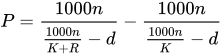
- P : Power of phakic IOL
- n : Refractive Index of Aqueous (1.336)
- K : Central corneal power in diopters
- R : Patient Refraction at the corneal vertex
- d : Effective lens position in mm
The effective lens position is calculated as the difference between the anterior chamber depth and the distance between the PIOL and the crystalline lens. From ultrasonographic examinations of PIOLs, the lens-optic distance shows less variability compared with the cornea-optic distance. Therefore, it is preferable to use measured ACD and subtract it with an 'optic-lens' constant to obtain the value of ELP. For the Artisan/Verisyse lens the optic-lens constant is 0.84 mm. The ICL power is calculated using the Olsen-Feingold formula by using a four variable formula modified by a regression analysis of past results.[3]
Surgical technique
[edit]The Artisan (Verisyse) lens is implanted under pharmacological miosis. After creating proper incision the lens is grasped with curved holding forceps and inserted. Once in the anterior chamber and while firmly holding the lens with forceps, temporal and nasal iris tissue is enclavated with a special needle. The operation is completed with an iridectomy and the incision is sutured.
The EVO ICL (STAAR® Surgical's phakic IOL) is implanted under pharmacological mydriasis and implanted in the retropupillary position, between the eye's iris and the crystalline lens, using cartridge-injector or forceps. Both eyes can usually be done on the same day.
Steroid antibiotic eye drops are usually prescribed for 2–4 weeks after surgery. Regular follow-ups are recommended.[4]
Risk
[edit]Though ICL surgery has shown to be effective, it sometimes can result in complications such as:
- If the ICL is oversized or poorly placed, it can increase eye pressure. Glaucoma may grow as a result of this.
- If you have high eye pressure for an extended period, you may lose your vision.
- An ICL can reduce fluid circulation in your eye, putting you at risk for cataracts. This can also happen if the ICL does not fit well or causes chronic inflammation.
- Cataracts and glaucoma both cause blurry vision. If the lens isn't the right size, you may experience other visual issues such as glare or double vision.
- Endothelial cells in the cornea are reduced as a result of eye surgery and aging. If the cells die too quickly, a cloudy cornea and vision loss may result.
- Your retina may detach from its normal position as a result of eye surgery. It's a rare complication that necessitates immediate medical attention.
- This is another unusual side effect. It has the potential to cause permanent vision loss.
- You may require additional surgery to remove the lens and correct any issues that have arisen.[9]
| This section needs expansion with: Adding Risk. You can help by adding to it. (January 2024) |
References
[edit]- ^ a b Basic and Clinical Science Course, Section 13: Refractive Surgery. American Academy of Ophthalmology. 2011–2012. pp. 125–136. ISBN 978-1-61525-120-9.
- ^ a b c Lovisolo, CF; Reinstein, DZ (Nov–Dec 2005). "Phakic intraocular lenses". Survey of Ophthalmology. 50 (6): 549–587. doi:10.1016/j.survophthal.2005.08.011. PMID 16263370.
- ^ a b Dimitri T. Azar; Damien Gatinel (2007). Refractive surgery (2nd ed.). Philadelphia: Mosby Elsevier. pp. 397–463. ISBN 978-0-323-03599-6.
- ^ a b c d e Myron Yanoff; Jay S. Duker (2009). Ophthalmology (3rd ed.). [Edinburgh]: Mosby Elsevier. pp. 186–201. ISBN 978-0-323-04332-8.
- ^ Barsam, Allon; Allan, Bruce DS (2014-06-17). "Excimer laser refractive surgery versus phakic intraocular lenses for the correction of moderate to high myopia". Cochrane Database of Systematic Reviews. 2014 (6) CD007679. doi:10.1002/14651858.cd007679.pub4. ISSN 1465-1858. PMC 10726981. PMID 24937100.
- ^ Sun, JH; Sung, KR; Yun, SC; Cheon, MH; Tchah, HW; Kim, MJ; Kim, JY (May 2012). "Factors associated with anterior chamber narrowing with age: an optical coherence tomography study". Investigative Ophthalmology & Visual Science. 53 (6): 2607–10. doi:10.1167/iovs.11-9359. PMID 22467582.
- ^ Yan, PS; Lin, HT; Wang, QL; Zhang, ZP (Dec 2010). "Anterior segment variations with age and accommodation demonstrated by slit-lamp-adapted optical coherence tomography". Ophthalmology. 117 (12): 2301–7. doi:10.1016/j.ophtha.2010.03.027. PMID 20591484.
- ^ Sanders, DR (Jun 2008). "Anterior subcapsular opacities and cataracts 5 years after surgery in the visian implantable collamer lens FDA trial". Journal of Refractive Surgery. 24 (6): 566–570. doi:10.3928/1081597X-20080601-04. PMID 18581781.
- ^ "Complications of ICL Surgery, Rex Hamilton M.D." Hamilton Eye Institute. Retrieved 2024-01-11.
Phakic intraocular lens
View on GrokipediaOverview
Definition and indications
A phakic intraocular lens (pIOL) is an artificial lens made of materials such as silicone or collamer that is surgically implanted into the eye to correct refractive errors while leaving the natural crystalline lens intact.[1] The term "phakic" indicates the presence of the eye's natural lens, distinguishing this procedure from aphakic or pseudophakic intraocular lens implantation, which involves lens removal or replacement.[3] pIOLs are categorized based on their placement within the eye: anterior chamber lenses (angle-supported or iris-fixated), iris-claw lenses, or posterior chamber lenses positioned in the sulcus.[3] The mechanism of pIOLs involves adding refractive power to the eye's optical system in an additive manner, refracting light onto the retina to correct ametropia without altering the cornea or removing the crystalline lens.[7] This approach preserves the natural lens's accommodative function, allowing for dynamic focusing, particularly beneficial for younger patients.[3] By maintaining the phakic state, pIOLs minimize risks associated with lens extraction and support reversibility, as the implant can potentially be removed.[7] Indications for pIOL implantation primarily include the surgical correction of high refractive errors in patients unsuitable for corneal-based procedures like LASIK, such as those with thin corneas.[3] Specifically, they address myopia ranging from -3.0 to -20.0 diopters (D), hyperopia up to +12.0 D, and astigmatism up to 6.0 D using toric models.[8] Ideal candidates are typically aged 21 to 45 years with stable refraction (less than 0.5 D change per year), an anterior chamber depth of at least 3.0 mm, and adequate endothelial cell density.[7] Recent lens designs have expanded suitability to slightly older patients, up to 55 years in select cases.[8]History and development
The concept of phakic intraocular lenses (IOLs) emerged in the 1950s, with early anterior chamber designs aimed at correcting high myopia without removing the natural lens. In 1953, Benedetto Strampelli implanted the first minus-power anterior chamber IOL in phakic eyes, followed by José Barraquer's reports in 1959 on similar rigid polymethylmethacrylate (PMMA) lenses positioned in the anterior chamber angle.[9] These pioneering efforts, including contributions from Peter Choyce who refined angle-supported models with thinner haptics in the late 1950s, laid the groundwork but were limited by complications such as corneal endothelial damage and glaucoma.[10] Development advanced in the 1970s and 1980s with iris-fixated designs, initially created by Jan Worst for aphakic eyes and adapted for phakic correction by Paul Fechner. The Worst-Fechner biconcave PMMA iris-claw lens, introduced in 1986, marked a significant milestone for iris-fixated phakic IOLs, offering stable refractive outcomes for high myopia despite some endothelial cell loss.[11] Concurrently, angle-supported lenses evolved, with multiple PMMA models developed from the 1970s to early 2010s, though many were discontinued due to risks like cataract formation; studies in the 1980s highlighted design improvements that reduced cataract incidence by optimizing optic-haptic configurations and vaulting.[2] Posterior chamber sulcus-supported lenses were pioneered by Svyatoslav Fyodorov in 1986, addressing anterior chamber complications.[12] The 1990s brought material innovations, shifting from rigid PMMA to foldable options like the Implantable Collamer Lens (ICL), a collagen-copolymer material introduced by STAAR Surgical for sulcus placement, enabling smaller incisions and reduced trauma.[13] The ICL received European CE Mark approval in 1997, followed by U.S. FDA approval in 2005 for myopia from -3.00 to -20.00 diopters.[14] Iris-fixated PMMA lenses, such as the Artisan/Verisyse, gained FDA approval in 2004 for myopia correction from -5.00 to -20.00 diopters in suitable anterior chamber depths.[15] Toric versions for astigmatism emerged in the early 2000s, with the Artisan toric approved in Europe around 2003 and ICL toric models gaining FDA approval in 2018 and broader regulatory clearance in the 2010s, enhancing predictability for myopic astigmatism.[16] Global adoption surged in Asia during the 2000s and 2010s, driven by the high prevalence of myopia—up to 80% in young adults in regions like East Asia—positioning phakic IOLs as a preferred alternative to laser procedures for extreme cases.[17] Regulatory expansions continued into the 2020s, with CE Mark for presbyopia-correcting phakic IOLs, such as Ophtec's Artiplus, in 2024, and for the toric version of Artiplus in August 2025, broadening indications for younger patients with refractive errors and near-vision loss.[18][19] These milestones reflect iterative improvements in biocompatibility and surgical outcomes, leading to the diverse types of phakic IOLs used today.Types of phakic intraocular lenses
Angle-supported lenses
Angle-supported phakic intraocular lenses (pIOLs) are designed with haptics that fixate directly in the iridocorneal angle of the anterior chamber, typically featuring open-loop or closed-loop configurations to provide stable support without invading the posterior segment.[2] These lenses are inserted into the anterior chamber through a small incision, where they are positioned to rest against the iris root and angle structures, ensuring the optic remains centered for optimal refractive correction.[7] Early models utilized rigid polymethylmethacrylate (PMMA) materials, while later iterations incorporated foldable hydrophilic or hydrophobic acrylic to facilitate smaller incisions and reduce surgical trauma.[8] These lenses typically offer a power range of -10 to +12 diopters, accommodating moderate to high myopia and hyperopia, with optic diameters of 5 to 6 mm to minimize peripheral endothelial contact.[20] They are suitable for eyes with shallower anterior chamber depths, requiring a minimum of 2.8 to 3.0 mm to avoid corneal complications.[7] Unique advantages include easier surgical access via the anterior route and reversibility, as the lens can be removed without disrupting the natural lens or posterior structures.[2] Historically, angle-supported pIOLs trace back to the 1980s with early models like the Baikoff ZB, introduced in 1986, which featured PMMA construction and angle-fixated haptics for high myopia correction up to -38 diopters.[20] However, these lenses were associated with higher risks of endothelial cell loss and angle damage, leading to their discontinuation in many markets, including the US, by the early 2010s despite design improvements like larger optics to reduce touch, though limited models and advances persist internationally as of 2025.[2][3][21] As of 2025, angle-supported pIOLs have limited use globally, with models like Eyecryl PC showing promise in studies, though none are FDA-approved in the US.[22] In contrast to posterior types, angle-supported pIOLs provide less vault but simpler anterior placement.[7]Iris-fixated lenses
Iris-fixated phakic intraocular lenses (pIOLs) are rigid, single-piece devices made from ultraviolet-absorbing polymethylmethacrylate (PMMA), specifically Perspex CQ material with a refractive index of 1.49. These lenses feature a convex-concave optic, typically 5.0 mm or 6.0 mm in diameter, supported by an elliptical carrier with two optic clips designed for enclavation into the mid-peripheral iris tissue. The overall length is 8.5 mm, ensuring a stable position without contact to the anterior chamber angle or posterior sulcus.[23][24] These lenses are implanted into the anterior chamber and fixated directly to the iris stroma through a surgical enclavation process using specialized needles to secure iris folds within the clips. This anterior placement avoids interaction with the trabecular meshwork or ciliary sulcus, distinguishing it from angle-supported lenses that rely on haptic feet in the angle and sulcus-supported lenses that are flexible and positioned posteriorly. Preoperative measurement of anterior chamber depth (ACD) is essential, with implantation requiring an ACD of at least 3.2 mm to maintain safe clearance from the corneal endothelium and crystalline lens.[23][8] The Verisyse (in the United States) and Artisan models, manufactured by Ophtec, offer a power range from -20 D to +12 D for correcting myopia, hyperopia, and astigmatism up to 2.5 D, with toric variants available for higher cylindrical corrections. The FDA approved the Verisyse/Artisan for myopic corrections from -5 D to -20 D in 2004 under PMA P030028, with subsequent approvals extending to hyperopia and astigmatic models. Unlike the non-foldable, rigid design of these anterior iris-fixated lenses, sulcus-supported pIOLs use injectable silicone or collamer materials for posterior placement.[15][23][8] Iris fixation provides stable centration and resistance to postoperative rotation, as the clips anchor securely to the iris, the eye's most robust tissue, maintaining consistent optic positioning over time. Compared to angle-supported lenses, which can cause endothelial cell concerns due to haptic pressure on the angle, iris-fixated models exhibit a lower risk of cataract formation while carrying a potential for pigment dispersion from iris chafing. In clinical studies, these lenses demonstrate high patient satisfaction, with rates exceeding 90% reported in FDA trials and follow-up evaluations, alongside long-term explantation rates below 1% within the first decade.[24][25][26][27]Sulcus-supported lenses
Sulcus-supported phakic intraocular lenses (pIOLs) are posterior chamber devices designed for placement in the ciliary sulcus, offering a minimally invasive option for refractive correction while preserving the natural crystalline lens. These lenses, primarily exemplified by the Visian Implantable Collamer Lens (ICL) family developed by STAAR Surgical, feature foldable haptics that secure the lens in the sulcus without requiring fixation to the iris or angle structures.[28][29] The design incorporates Collamer, a proprietary biocompatible material composed of a collagen copolymer (hydroxyethyl methacrylate with less than 1% porcine collagen) that integrates ultraviolet-absorbing properties to mimic aspects of the natural lens, enhancing long-term tolerance and reducing inflammatory responses. In the EVO Visian ICL variant, a central 360 µm KS-Aquaport hole facilitates aqueous humor flow, eliminating the need for peripheral iridotomy and significantly lowering the risk of pupillary block and anterior subcapsular cataract formation compared to earlier models without this feature.[30][31][32] Placement occurs posterior to the iris and anterior to the crystalline lens within the ciliary sulcus, with a targeted vault (distance between the posterior ICL surface and anterior lens capsule) of 250–750 µm to ensure adequate clearance and minimize complications such as lens touch or iris chafing. The procedure requires a minimum anterior chamber depth (ACD) of 3.0 mm to accommodate safe implantation. Available power ranges include -3.0 to -18.0 D for myopia correction (with reduction up to -20.0 D in select cases), +3.0 to +12.0 D for hyperopia (available internationally under standard Visian ICL labeling; not FDA-approved in the US), and toric options up to 4.0 D of cylinder for astigmatism management.[33][34][28][29][35] These lenses stand out for their reversibility, allowing removal or exchange if refractive needs change or complications arise, without altering the corneal structure—a key advantage over ablative procedures. Their high adoption stems from proven efficacy in treating moderate to high myopia, particularly in patients with thin corneas unsuitable for laser refractive surgery, where over 3 million implants have been performed globally with low complication rates.[36] STAAR Surgical introduced the original Visian ICL in 1993, with U.S. FDA approval for myopia in 2005, toric myopia in 2018, and the EVO model (with central port) for myopia and astigmatism in 2022; hyperopia indications remain under the standard Visian ICL labeling internationally.[37][38]Medical uses
Advantages over other refractive procedures
Phakic intraocular lenses (IOLs) offer significant advantages over corneal refractive procedures such as LASIK or PRK, particularly in preserving the natural accommodative function of the eye. By implanting the lens without removing or altering the crystalline lens, phakic IOLs maintain the patient's ability to focus on near objects, which is especially beneficial for younger individuals under 50 years old who rely on accommodation for tasks like reading.[39] This contrasts with refractive lens exchange, where the natural lens is replaced, leading to loss of accommodation and potential presbyopia induction earlier in life.[40] Another key benefit is the cornea-sparing nature of phakic IOL implantation, which avoids tissue ablation or flap creation associated with laser procedures. This makes phakic IOLs ideal for patients with thin corneas (less than 500 µm) or those at risk of postoperative ectasia, as the procedure does not weaken corneal structure or reduce stromal bed thickness.[41] In high myopia cases, where laser ablation would require excessive corneal removal, phakic IOLs provide a safer alternative without compromising corneal integrity.[7] Phakic IOLs are also reversible, allowing for lens removal or exchange if refractive needs change or complications arise, unlike the permanent corneal alterations from LASIK or PRK.[42] This reversibility enhances long-term flexibility and patient reassurance. Additionally, they accommodate a broader refractive range, correcting up to -20 D of myopia, with toric designs effectively managing astigmatism without inducing higher-order aberrations common in laser reshaping of the peripheral cornea.[43][44] Postoperative outcomes often include superior contrast sensitivity compared to preoperative levels, contributing to enhanced visual quality in low-light conditions.[45] Phakic IOLs are particularly suitable for athletes or individuals in trauma-prone activities, as the intact cornea eliminates risks like flap dislocation seen in LASIK during contact sports.[46] Recent studies indicate that over 97% of patients achieve uncorrected visual acuity of 20/40 or better, underscoring their efficacy.[47]Disadvantages and limitations
Phakic intraocular lens (pIOL) implantation is an invasive procedure that involves intraocular surgery, carrying inherent risks such as infection, including the potential for severe complications like endophthalmitis, in contrast to non-invasive surface ablation techniques like LASIK.[48] Patient eligibility is limited by age, as pIOLs are not approved by the FDA for individuals under 21 years due to unstable refraction during ocular development, and they are generally suitable for patients aged 21-45 years, though options for presbyopia may allow use in some older individuals.[49][50] However, as of 2025, specialized phakic IOL designs are emerging for correcting presbyopia in myopic patients over 45.[40] Dioptric correction capabilities have constraints, with most models accommodating cylindrical corrections up to 4-6 diopters and limited options for extreme hyperopia exceeding +12 diopters, restricting applicability for certain high refractive errors.[30][51] The procedure is more costly than alternatives like LASIK, typically ranging from $4,000 per eye compared to about $2,000 for laser surgery, and requires specialized surgical expertise and equipment, reducing accessibility in regions without advanced refractive centers.[52] pIOL implantation may necessitate future interventions, such as lens explantation and cataract surgery in some cases, while recent studies indicate that 5-10% of patients require refractive enhancements post-procedure.[53][54]Contraindications
Phakic intraocular lens (pIOL) implantation is contraindicated in certain anatomical, ocular, and systemic conditions to minimize risks such as endothelial cell loss, elevated intraocular pressure, or poor surgical outcomes. Absolute contraindications preclude surgery due to high risk of irreversible damage, while relative contraindications require careful evaluation and may allow proceeding under specific circumstances.Absolute Contraindications
- Insufficient anterior chamber depth (ACD): An ACD less than 3.0 mm for posterior chamber pIOLs (e.g., Visian ICL) or less than 3.2 mm for iris-fixated pIOLs (e.g., Artisan/Verisyse) increases the risk of endothelial decompensation and cataract formation.[55][23]
- Low endothelial cell density: Preoperative density below 2000–2300 cells/mm² (age-dependent, e.g., <2000 cells/mm² for patients over 45 years) heightens the risk of corneal decompensation.[3][7]
- Uncontrolled glaucoma or uveitis: Elevated intraocular pressure greater than 21 mmHg or active/recurrent uveitis can lead to exacerbated inflammation or angle closure.[3][8]
- Pregnancy or breastfeeding: Hormonal fluctuations may cause unstable refraction, making accurate lens power calculation unreliable.[56][55]
- Iris anomalies for iris-fixated pIOLs: Conditions such as aniridia, severe iris atrophy, coloboma, or peaked pupils prevent secure lens fixation.[23][8]
- Inadequate sulcus anatomy for posterior chamber pIOLs: Anterior chamber angle less than grade II (gonioscopy) risks pupillary block or lens malposition.[55][7]
Relative Contraindications
- Autoimmune diseases: Conditions like rheumatoid arthritis may impair postoperative healing and increase inflammation risk.[3]
- Systemic diabetes with poor control: Uncontrolled hyperglycemia can affect wound healing and heighten infection or retinopathy risks.[3][55]
- Ocular surface disorders: Severe dry eye or keratoconus compromises corneal integrity and refractive stability.[3][8]
- Prior corneal surgery: History of procedures like LASIK may alter corneal biomechanics, increasing ectasia risk.[3]
- Age extremes: Patients under 21 years or over 45 years face higher risks due to refractive instability or reduced endothelial reserve, respectively.[23][55]
- Unrealistic patient expectations: Individuals unable to comprehend potential outcomes or commit to follow-up may not achieve satisfactory results.[3]