Hubbry Logo
PholcidaePholcidaeMain
Open search
Pholcidae
Community hub
Pholcidae
logo
8 pages, 0 posts
0 subscribers
Be the first to start a discussion here.
Pholcidae
Pholcidae
from Wikipedia

Pholcidae
Temporal range: Palaeogene–present
female Smeringopus natalensis with eggs
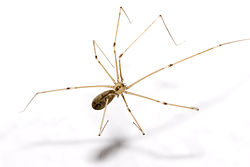
male Pholcus phalangioides
Scientific classification Edit this classification
Kingdom: Animalia
Phylum: Arthropoda
Subphylum: Chelicerata
Class: Arachnida
Order: Araneae
Infraorder: Araneomorphae
Family: Pholcidae
C. L. Koch, 1850
Diversity
97 genera, c. 2,000 species
Estimated range of Pholcidae.

The Pholcidae are a family of araneomorph spiders. The family contains more than 1,800 individual species of pholcids, including those commonly known as cellar spider, daddy long-legs spider, carpenter spider, daddy long-legger, vibrating spider, gyrating spider, long daddy, and angel spider. The family, first described by Carl Ludwig Koch in 1850,[1] is divided into 94 genera.[2]

The common name "daddy long-legs" is used for several species, especially Pholcus phalangioides, but is also the common name for several other arthropod groups, including harvestmen and crane flies.

Appearance

[edit]

Pholcids have extremely long and thin legs with flexible tarsi.[3][4] They can be distinguished from other long-legged spiders by the eye arrangement: Pholcidae have two groups of three eyes each, and there may be a pair of small eyes in between them.[3] Most have this middle pair present for a total of eight eyes, but some genera (e.g. Modisimus, Spermophora, Spermophorides) lack this pair and have a total of six eyes.[5] The body is often whitish or grey in colour.[4] Harvestmen (Opiliones), which share the name "daddy longlegs", also have long and thin legs but have only one pair of eyes, and their body appears to be a single segment.[6]

Like other spiders, pholcids have two body segments, the prosoma and opisthosoma. The prosoma may be evenly domed (e.g. Pholcus, Micropholcus) or have a furrow or pit in the middle.[5] The opisthosoma may be long and cylindrical (e.g. Pholcus, Holocnemus), long and pointed dorso-posteriorly (e.g. Crossopriza) or short (e.g. Micropholcus).[5]

There is variation in size, ranging from just over 1 millimetre (Spermophorides lascars) to 11 mm (Artema atlanta) in body length.[7]

Habitat

[edit]
Two Crossopriza lyoni. The bottom one is male. The female is clutching her egg bundle

Pholcids are found in every continent in the world, except Antarctica.[8] Pholcids hang inverted in their messy and irregular-shaped webs. These webs are constructed in dark and damp recesses such as in caves, under rocks and loose bark, and in abandoned mammal burrows. In areas of human habitation pholcids construct webs in undisturbed areas in buildings such as high corners, attics and cellars, hence the common name "cellar spider".[9]

Behavior

[edit]
Cellar spider vibrating rapidly in response to a threat

Trapping

[edit]

The web of pholcids has no adhesive properties and instead relies on its irregular structure to trap prey. When pholcid spiders detect prey within their webs the spiders quickly envelop prey with silk-like material. The prey may be eaten immediately or stored for later. When finished feeding they will clean the web by unhooking the remains of the prey and letting the carcass drop from the web. They are passive against humans.[citation needed]

Threat response

[edit]

Some species of Pholcidae exhibit a threat response when disturbed by a touch to the web or entangled large prey. The arachnid responds by vibrating rapidly in a gyrating motion in its web, which may sometimes fall into a circular rhythm. It may oscillate in tune with the elasticity of the web causing an oscillation larger than the motion of the spider's legs. While other species of spider exhibit this behaviour, such behavior by the Pholcidae species has led to these spiders sometimes being called "vibrating spiders". There are several proposed reasons for this threat response. The movement may make it difficult for a predator to locate or strike the spider, or may be a signal to an assumed rival to leave. Vibrating may also increase the chances of capturing insects that have just brushed their web and are still hovering nearby, or further entangle prey that may have otherwise been able to free itself.[10] If the spider continues to be disturbed it will retreat into a corner or drop from its web and escape.

Diet

[edit]
Male shortbodied cellar spider (Spermophora senoculata) from the United States

Although they do eat insects, certain species of these spiders invade webs of other spiders to eat the host, the eggs, or the prey. In some cases the spider vibrates the web of other spiders, mimicking the struggle of trapped prey to lure the host closer. Pholcids prey on Tegenaria funnel weaver spiders, and are known to attack and eat redback spiders, huntsman spiders and house spiders.[11][12]

A cellar spider has captured a much more robust looking house spider, by snaring it in its silk. This picture was taken in a domestic setting. The predator spider has noticeably grown in abdomen size whilst the prey appears diminished.
A cellar spider which has captured a house spider, in a domestic setting. The predator spider has noticeably grown in abdomen size during feeding, whilst the prey appears diminished.

Pholcids may be beneficial to humans living in regions with dense hobo spider populations as predation on Tegenaria may keep populations in check.[13] They have also been observed to feed on the spider Steatoda nobilis in countries like Ireland and England.[14]

Gait

[edit]

Pholcus phalangioides often uses an alternating tetrapod gait (first right leg, then second left leg, then third right leg, etc.), which is commonly found in many spider species. However, frequent variations from this pattern have been documented during observations of the spiders' movements.[15]

Misconceptions

[edit]

There is an urban legend that daddy long-legs spiders have the most potent venom of any spider but that their fangs are either too small or too weak to puncture human skin; the same legend is also repeated of the harvestman and crane fly, also known as daddy long-legs in some regions. This is not true for any of the three. While Pholcidae are indeed capable of biting humans their venom is not medically significant, and neither harvestmen nor crane flies have any venom or fangs to speak of. Indeed, pholcid spiders do have a short fang structure (called uncate due to its "hooked" shape). Brown recluse spiders also have uncate fang structure, but are able to deliver medically significant bites.

Possible explanations include: pholcid venom is not toxic to humans; pholcid uncate are smaller than those of brown recluse; or there is a musculature difference between the two arachnids, with recluses, being hunting spiders, possessing stronger muscles for fang penetration.[16] According to Rick Vetter of the University of California, Riverside, the daddy long-legs spider has never harmed a human physically, and there is no evidence that they are dangerous to humans.[17]

The legend may result from the fact that the daddy long-legs spider preys upon deadly venomous spiders, such as the redback, and other members of the true widow genus Latrodectus.[18] To the extent that such arachnological information was known to the general public, it was perhaps thought that if the daddy long-legs spider could kill a spider capable of delivering fatal bites to humans, then it must be more venomous, and the uncate fangs were regarded as prohibiting it from killing people. In reality, it is able to cast lengths of silk onto its prey, incapacitating them from a safe distance.[19]

Mythbusters experiment

[edit]

During 2004, the Discovery Channel television show MythBusters tested the daddy long-legs venom myth in episode 13, "Buried in Concrete". Hosts Jamie Hyneman and Adam Savage first established that the spider's venom was not as toxic as other venoms, after being told about an experiment wherein mice were injected with venom from both a daddy long-legs and a black widow, with the black widow venom producing a much stronger reaction. After measuring the spider's fangs at approximately 0.25 mm, Adam Savage inserted his hand into a container with several daddy-long-legs, and reported that he felt a bite which produced a mild, short-lived burning sensation. The bite did in fact penetrate his skin, but did not cause any notable harm.[20] Additionally, recent research has shown that pholcid venom is relatively weak in its effects on insects.[21]

Daddy-Long-Legs

[edit]

The colloquial name daddy-long-legs is often used to refer to Pholcidae, harvestmen, and crane flies. This name originates in Faroese as "lokki~grindalokki~grindalokkur" which literally translates to "daddy-long-legs". It is likely a kenning and more accurately translates to "grandfather of web spinners" as it refers to the Nordic god Loki who was associated with spiders in folklore.[22]

Genera

[edit]

As of October 2025, this family includes 97 genera:[2]

Relationships

[edit]

References

[edit]
[edit]
Revisions and contributorsEdit on WikipediaRead on Wikipedia
from Grokipedia
Pholcidae is a family of araneomorph spiders in the order Araneae, commonly known as cellar spiders or daddy long-legs spiders, distinguished by their exceptionally long, slender legs and small, elongated bodies typically measuring 2–10 mm in length. The family encompasses 97 genera and 2,055 valid worldwide, making it one of the most diverse spider families, particularly in tropical regions where they often dominate local arachnid communities as web-building predators. These spiders construct irregular, tangled, three-dimensional sheet-like webs in sheltered habitats such as caves, under debris, tree bark, or human structures like basements and attics, and many exhibit a characteristic "shivering" or vibrating behavior when disturbed to deter predators. Pholcidae belong to the haplogyne group of spiders, characterized by a single genital opening, and their taxonomy has been extensively revised through phylogenetic studies emphasizing morphological and molecular data. The family is divided into five subfamilies—Arteminae, Modisiminae, Ninetinae, Pholcinae, and Smeringopinae—based on genitalic and somatic traits, with Pholcinae being the largest and most widespread, including the genus Pholcus (over 400 species), which is noted for its cosmopolitan distribution aided by synanthropic habits. While primarily tropical in origin and diversity, pholcid species have achieved a global presence, thriving in humid, dark environments and playing key ecological roles in controlling insect populations indoors and in natural shelters.

Taxonomy

Family Description and History

Pholcidae, commonly known as cellar spiders or daddy long-legs spiders, is a family of araneomorph spiders within the suborder and superfamily Pholcoidea. The family was formally established by in 1850 in his systematic overview of arachnids, where he defined Pholcidiae based on morphological characteristics of included genera such as Pholcus. This classification has endured with refinements, recognizing Pholcidae as a monophyletic group distinct from related families like and . Key diagnostic traits of Pholcidae include an eye arrangement typically consisting of two triads of eyes (six eyes total) with an optional small median pair (eight eyes total), often in a compact configuration on the anterior , and highly flexible tarsi on all legs that enable rapid vibration and prey manipulation. The term "daddy long-legs" is frequently applied to pholcid species due to their elongated, slender legs, but this common name is also used for harvestmen (order ), which are non-spider arachnids lacking glands and , highlighting a frequent point of taxonomic confusion. The temporal range of Pholcidae extends from the Palaeogene period to the present, with the earliest known fossils dating to the early Eocene, approximately 52 million years ago, from deposits in that predate previous records in . These fossils, including specimens assignable to extant subfamilies, indicate that the family had already diversified by the early .

Phylogeny and Subfamilies

The phylogenetic relationships within Pholcidae have been elucidated through combined molecular and morphological analyses, supporting the division of the family into five main subfamilies: Ninetinae, Arteminae, Modisiminae, Smeringopinae, and Pholcinae. This , refined in studies from onward, reflects monophyletic groupings based on cladistic evaluations of traits such as genitalic morphology and molecular markers, with Pholcinae emerging as the largest and most diverse subfamily. Earlier molecular phylogenies using multi-locus data, including seven genetic markers from 165 pholcid , confirmed these subfamilies while highlighting inconsistencies in prior morphological classifications. As of October 2025, Pholcidae comprises 97 genera and 2,055 valid , with ongoing phylogenetic reconstructions utilizing multi-locus datasets revealing high levels of in morphological traits, such as eye reduction in troglomorphic . These analyses indicate that eye reduction has evolved convergently multiple times, often linked to subterranean adaptations, rather than representing synapomorphies for deep clades. Key evolutionary insights include dynamic evolution, with diploid chromosome numbers varying from 18 to 30 across and diversified systems (e.g., X0, XY, X1X2Y), suggesting frequent chromosomal rearrangements. Additionally, morphology exhibits convergent adaptations across subfamilies, with high in structures like the nucleus and acrosomal systems, driven by selective pressures on reproductive efficiency. Fossil evidence underscores the ancient diversification of Pholcidae, with the earliest records from lowermost Eocene amber in the (approximately 50 million years ago), including specimens tentatively assigned to extant genera like Quamtana. These Eocene fossils, preserved in amber from and later deposits like Dominican and Burmese ambers, indicate that the family had already achieved substantial morphological diversity by the early , predating many modern subfamily radiations.

Physical Description

Body Structure

Pholcidae spiders exhibit a slender and elongated body structure, often appearing fragile and distinguishing them from more robust araneid families like . The prosoma, or , is typically domed or furrowed, housing adapted for grasping prey through specialized teeth and processes. The opisthosoma is cylindrical or globular in shape and frequently whitish-grey in coloration. Eye configuration in Pholcidae is characteristic, featuring two lateral triads of three eyes each for a total of six, with an optional small anterior median pair resulting in eight eyes overall. In some cave-adapted , particularly within the Modisiminae such as Anopsicus, eye reduction occurs, leading to fewer functional eyes or complete loss in troglobitic forms. Body length varies from approximately 1 mm in the smallest , Spermophorides lascars, to 11 mm in the largest, Artema atlanta. Coloration ranges from translucent to pale, enhancing their delicate, elongated texture.

Leg and Sensory Features

Pholcidae spiders are characterized by their exceptionally elongated and slender legs, which can measure up to five or six times the body length in many species, such as Pholcus phalangioides, contributing to their delicate, "daddy long-legs" appearance. These legs consist of seven primary segments—coxa, trochanter, femur, patella, tibia, metatarsus, and tarsus—but the tarsus is notably pseudosegmented into multiple subtarsomeres, often 20–40 in number, which enhances flexibility and enables whip-like movements for prey manipulation or evasion. The overall thinness of the legs, with tibia length-to-diameter ratios typically ranging from 40 to 100, underscores their fragility, allowing for rapid retraction or autotomy during threats. Sensory adaptations in Pholcidae legs are specialized for detecting environmental cues without reliance on visual or adhesive mechanisms. Leg hairs, including shorter tactile setae for touch and sensing and longer trichobothria for air currents, serve as primary mechanoreceptors, enabling the spiders to perceive prey s in their webs from a distance. Chemoreceptors, in the form of specialized sensilla on the tarsi, facilitate contact chemosensation for identifying prey or mates, while the tarsal organ at the tarsus tip functions as a detector, aiding in microhabitat assessment. Notably, Pholcidae lack setae on their legs, depending instead on tactile and vibratory cues for and capture, which aligns with their non-sticky web . Variations in leg morphology occur across genera, with some, such as certain Pholcus species, featuring scattered spines on the femora or tibiae that may aid in defensive posturing or prey handling, though these are absent or reduced in many long-legged forms. The pseudosegmentation of the tarsi varies phylogenetically, with higher numbers (e.g., over 35 in Mesabolivar) correlating with greater flexibility in tropical species, while ninetine genera exhibit fewer (3–4), reflecting evolutionary adaptations to diverse web-building strategies. This leg fragility not only facilitates quick retreats but also distinguishes Pholcidae from superficially similar harvestmen (), which lack true glands despite sharing an elongated limb structure.

Distribution and Habitat

Global Distribution

Pholcidae exhibits a cosmopolitan distribution, with species present on all continents except . The family is particularly diverse in tropical and subtropical regions, where the majority of its is concentrated. As of 2025, Pholcidae comprises 97 genera and 2,055 valid species, reflecting ongoing taxonomic revisions and discoveries. The Neotropics represent a major hotspot of diversity, with hundreds of species recorded across , particularly in . The Oriental region, encompassing , is another key area of richness, where numerous genera and species thrive in forested and cavernous environments. The Afrotropical region also hosts significant diversity, including several endemic genera. , such as Pholcus phalangioides, have achieved widespread global presence, commonly found in human structures across , North and , , , , and various islands. Dispersal patterns for Pholcidae involve both natural range expansions through forests and caves and human-mediated transport, particularly for synanthropic species that hitchhike via and travel. A or more species have attained pan-tropical or worldwide distributions facilitated by anthropogenic activities. Recent surveys continue to uncover new species in biodiversity hotspots like , underscoring the family's underexplored potential.

Habitat Preferences

Pholcidae spiders predominantly favor dark, humid microhabitats that provide shelter from direct and environmental fluctuations, such as caves, cellars, attics, garages, and spaces under rocks or bark. These settings offer stable conditions conducive to their sedentary lifestyle, with many species, particularly synanthropic ones like Pholcus phalangioides, commonly occupying undisturbed corners in human-made structures worldwide. In natural environments, Pholcidae webs are often situated in sheltered recesses of systems, lava tubes, or , where levels remain consistently high to support web integrity and prey capture. Troglomorphic , especially within the Ninetinae (e.g., Metagonia), exhibit adaptations to perpetual darkness in deep habitats, including reduced or absent eyes and elongated appendages for navigating low-light conditions. Pholcidae demonstrate notable thermal tolerance, surviving temperatures as low as 10°C in cooler or high-altitude settings, though they optimally thrive in warmer ranges of 20–30°C typical of tropical and subtropical regions or indoor environments. Their synanthropic tendencies have facilitated global dispersal into urban areas, where they exploit artificial shelters mimicking natural humid refugia. Habitat preferences vary across lifestyles: ground-dwelling species, such as certain Pholcus and Metagonia, inhabit leaf litter and under surface objects for , while aerial web-builders prefer elevated sites like high ceilings or canopies to maximize prey interception.

Life Cycle and Reproduction

Mating and Courtship

In Pholcidae, mating typically begins when a male enters the female's web, initiating through a combination of vibratory, tactile, and chemical signals. Males perform rhythmic leg tapping, abdominal flexions, and web pulling to signal their presence and assess female receptivity, often depositing strands on the web as part of the display. These behaviors can last for hours, allowing the female to evaluate the male via vibratory responses or pheromones left on her . In species like Pholcus manueli, males taste the to detect female pheromones, which delay aggressive responses and promote copulation initiation, with larger males exhibiting more frequent web taps. During copulation, the male transfers sperm to the female's epigynum using his , often employing one or both asymmetrically with twisting and flexing motions to insert the procursus deeply into the . Rhythmical movements (PPMs) are common, particularly in genera like Pholcus and Physocyclus, where they may facilitate sperm displacement or enhance fertilization success. In Physocyclus globosus, for instance, the male vibrates his abdomen while squeezing the female's epigyneal plate, and copulation with non-virgin females can extrude prior sperm masses. Males in some species, such as Gertschiola neuquena from the subfamily Ninetinae, use a single for insertion, differing from the bilateral use in other pholcids. Post-copulation, males may guard females briefly, though this is inconsistent across species. Multiple matings are prevalent in Pholcidae, with females often remating after the first copulation, influenced by body size—larger females in Pholcus phalangioides show higher receptivity for subsequent pairings. Sperm mixing occurs in many species, though second males can achieve high paternity (up to 89% of eggs) through PPMs that remove rival sperm, as seen in P. phalangioides. Mate choice is evident in male preferences for larger females, which correlate with greater PPM intensity, while male experience enhances courtship persistence and copulatory performance. Sex ratios vary, but in some genera like Pholcus, females are larger than males, with sexual size dimorphism varying across the family. Subfamily variations exist, with uniform vibratory signals but genus-specific traits, such as rhythmic leg taps in Pholcus species.

Egg Laying and Development

In Pholcidae, females typically lay between 10 and 50 eggs per clutch, with clutch size varying by species and maternal body size; for example, in Holocnemus pluchei, the average clutch size is approximately 48 eggs, increasing with the female's tibia-patella length. The eggs are deposited into a silk cocoon, often described as a loose tangle of threads rather than a dense envelope, which provides minimal but effective protection. Unlike many orb-weaving spiders, pholcid females do not attach the egg sac to their web; instead, they carry it externally in their chelicerae throughout the incubation period, which lasts 11 to 20 days depending on temperature and humidity. Maternal care in Pholcidae is primarily post-oviposition guarding, where the continuously holds the egg sac in her to protect it from predators and environmental threats, often abstaining from feeding during this time. This behavior ensures high hatching success, reaching 100% under guarded conditions, as it prevents fungal infections that proliferate at high levels (around 90%), which can otherwise inhibit development entirely. At moderate (about 57%), unguarded sacs may still hatch successfully, but predation by conspecifics poses a significant . Paternal involvement is absent, consistent with the family’s reproductive strategy, and care extends until the spiderlings undergo their first molt, after which the female may produce additional clutches. Pholcid development follows direct metamorphosis, with no free-living larval stage; upon hatching, spiderlings emerge as miniature versions of adults and remain clustered on the female or nearby silk for a short period before dispersing to avoid cannibalism and competition. This dispersal typically occurs within days to a week post-hatching, enabling the young to construct their own webs. Full maturity is reached after 4 to 12 months or more, involving typically 5 to 9 instars depending on the species, with total development time varying from about 130 days in some tropical species to around 365 days in others like Pholcus phalangioides; for instance, in Mesabolivar spp., it takes about 131 days from hatching to adulthood. Adult lifespan ranges from 1 to 2 years, with females often outliving males and capable of year-round reproduction in suitable environments. Variations in reproductive and developmental patterns occur across Pholcidae habitats; tropical species, such as certain Mesabolivar and Holocnemus taxa, may produce multiple broods annually, with females laying up to four egg sacs per season. In contrast, cave-dwelling pholcids, including troglomorphic species in genera like Anopsicus and Metagonia, exhibit slower development due to stable but resource-limited conditions, contributing to their elongated life cycles and reduced reproductive output compared to surface-dwelling relatives.

Behavior

Web Building and Trapping

Pholcidae, commonly known as cellar spiders, construct irregular, non-adhesive webs that serve primarily as frameworks for prey entanglement rather than sticky traps. These webs are typically composed of dry produced from the major ampullate and aciniform glands, lacking the viscous glue droplets found in many other spider families, and instead rely on a tangled, three-dimensional structure to impede prey movement. The forms a loose network of threads that can appear messy or sheet-like, often oriented vertically or horizontally in sheltered locations such as corners, crevices, or under surfaces. Web construction in Pholcidae involves the use of their characteristically long legs to span distances and attach threads to substrates, creating a basic frame that is gradually elaborated over time. Spiders begin by laying dragline as an exploratory base, then add crisscrossing strands to increase , with well-fed individuals incorporating more threads to enhance capture . Webs are often built in confined spaces, such as building interiors or natural cavities, and can span small areas up to several tens of centimeters, though exact dimensions vary by and . Unlike orb-weaving spiders, Pholcids do not dismantle and rebuild daily; instead, they maintain and expand existing structures incrementally. Upon prey contact, the irregular causes insects or other small arthropods to become tangled in the threads, generating vibrations that alert the stationary , which typically hangs upside down in the center. The detects these disturbances through specialized sensory setae on its legs and rapidly approaches the prey, using its hind legs to envelop it in additional aciniform for immobilization without direct contact, followed by a bite to inject . This manual wrapping mechanism compensates for the absence of adhesive , allowing effective capture of a range of prey sizes, from flies to fellow . In species like Crossopriza lyoni, webs are constructed as dome-shaped sheets in high-traffic areas such as pantries or under furniture, where the dense mesh facilitates communal feeding on entangled . Webs in Pholcidae are durable and often reused for extended periods, with spiders repairing damage or relocating remnants rather than starting anew, which conserves energy in stable habitats. Density adjustments, such as adding more strands in prey-rich environments, further optimize trapping success, as demonstrated in Pholcus phalangioides where fed spiders developed denser networks correlating with higher capture rates. This adaptive maintenance underscores the webs' role as dynamic structures tailored to local prey availability.

Locomotion and Gait

Pholcidae spiders exhibit a characteristic alternating gait during locomotion, involving the sequential use of legs on opposite sides of the body to maintain balance and stability, particularly on surfaces like where this pattern is observed across diverse families including Pholcidae. This , often described as due to the rapid, alternating leg movements, leverages the family's exceptionally long and thin legs for efficient progression. The high flexibility of their legs enables agile maneuvers, such as sharp turns up to 180 degrees without halting, distinguishing them from families like Salticidae that rely on more rigid leg structures for . In terms of speed and , Pholcidae demonstrate moderate burst , though optimal voluntary speeds vary by context. These speeds are influenced by factors such as body , with heavier individuals moving more slowly, and , where males typically outperform females on both horizontal and vertical inclines. Leg autotomy slightly reduces speeds across inclines but does not drastically impair overall , as spiders compensate through adjustments in stride cycle time and factor. The elongated legs function as natural shock absorbers, facilitating agile navigation over uneven surfaces by distributing impact and maintaining stride length, particularly on vertical inclines where speeds decline but kinematic adaptations preserve mobility. Web traversal in Pholcidae involves hanging upside down within their irregular sheet webs, employing rapid, coordinated flicks to propel the body across threads with precision. This inverted locomotion highlights the role of tarsal joints in preventing entanglement during quick movements, allowing seamless progression without disrupting the web . In contrast, ground-dwelling species within the family may adopt a crab-like sidling for lateral mobility, adapting the pattern to terrestrial . Overall, these locomotion patterns underscore the family's evolutionary trade-offs, prioritizing endurance over explosive speed compared to cursorial spider families.

Defensive Responses

Pholcidae spiders exhibit a prominent defensive behavior known as whirling or web-shaking, in which the spider rapidly gyrates its body while remaining attached to the web, generating intense vibrations to deter or confuse predators. This tactic involves fast, circular motions that can propagate through the web structure, blurring the spider's outline and disrupting the attack of visually oriented predators such as (Salticidae). The behavior is widespread across the family and serves dual purposes: repelling threats and sometimes disorienting ensnared prey. In species like , whirling episodes can vary from short bursts lasting seconds to long-duration displays extending several hours or even days, particularly when triggered by salticid intruders. When whirling proves insufficient, Pholcidae employ retreat tactics to evade capture, including dropping from the web to the substrate below, fleeing on their elongated legs, or adopting thanatosis by remaining motionless to mimic death. These responses are especially common in juveniles and smaller individuals, where moving to a nearby retreat like a trunk or crevice allows the spider to hide and assess the threat. , the reflexive detachment of legs when grasped by a predator, occurs occasionally in Pholcidae and is facilitated by their fragile leg joints; though it incurs locomotor costs without full regeneration. Chemical defenses are limited in Pholcidae, with their venom exhibiting low potency even against insects, prompting reliance on passive strategies like in dimly lit, pale habitats such as cellars or caves where their whitish or grayish bodies blend with surroundings. Overall, these defenses effectively reduce predation risk from arthropods, including salticids, though efficacy varies by species—members of the Pholcinae, such as Pholcus, show heightened in displays compared to other lineages. Against avian predators, behavioral retreats like dropping provide additional protection, but quantitative data remain sparse.

Ecology

Diet and Predation

Pholcidae spiders are primarily carnivorous opportunistic feeders, preying on a variety of small arthropods including such as flies and , as well as other spiders. Their diet often emphasizes araneophagy, with species like showing a strong preference for capturing conspecifics and heterospecific spiders, including venomous ones such as the (Latrodectus hasselti). This versatility allows them to exploit diverse prey resources, from ensnared in their own webs to actively targeted spiders in invaded alien webs. When encountering prey, pholcids employ a characteristic predation method involving rapid wrapping with to immobilize the victim, followed by a bite to inject and that facilitate external liquefaction of the prey's tissues. Feeding typically occurs only after the prey is fully subdued, with the consuming the resulting fluid. Under conditions, individuals can process multiple small prey items sequentially, with records of up to five flies consumed in a single day during satiation trials. Pholcids demonstrate high predatory efficiency within their own tangled sheet webs, where they effectively capture both insects and spiders, though success rates vary when invading other web types. While most species rely on web-based ambushing, some exhibit active hunting behaviors by entering foreign webs to locate and attack resident spiders or their catches, enhancing their opportunistic foraging. In human habitats, this efficiency positions them as beneficial pest controllers, reducing populations of household insects and potentially harmful arthropods. Ecologically, Pholcidae serve as intraguild predators, engaging in both inter- and intraspecific predation that influences community dynamics by suppressing populations of other species, including those of medical significance like widow spiders. Their cannibalistic tendencies and in predatory interactions further modulate these effects, providing resources during prey scarcity while minimizing attacks on relatives.

Predators and Interactions

Pholcidae spiders face predation from a variety of vertebrates and due to their fragile bodies and long, slender legs, which make them particularly vulnerable to capture and handling. Common predators include birds, , and small mammals such as , which opportunistically consume these spiders in both natural and synanthropic environments. Larger spiders, including huntsman spiders (Sparassidae) and (Salticidae), also prey on pholcids, often ambushing them on webs or during web invasions. Parasitic wasps, particularly egg parasitoids in the family Platygastridae (tribe Baeini), target pholcid sacs, significantly reducing in affected populations. Parasitic organisms further impact Pholcidae, with ectoparasitic mites occasionally attaching to their legs and body, feeding on and potentially impairing mobility. Internal parasites include nematodes that can alter host behavior or cause mortality upon emergence. In humid , fungal pathogens like those in Engyodontium aranearum infect pholcids, leading to behavioral manipulation and eventual host death as the consumes the body. These parasites contribute to natural population regulation, though their prevalence varies by habitat moisture and . Ecological interactions of Pholcidae extend beyond predation to include and occasional . Pholcids frequently invade the webs of other web-building spiders, such as those in or Araneidae, to kleptoparasitize prey or directly consume the resident spider, leading to competitive displacement in shared microhabitats. In human-modified environments, they form commensal associations, utilizing artificial shelters like buildings for protection while coexisting without direct harm to hosts. Some pholcid species engage in , preying on in overlapping foraging areas. Overall, Pholcidae exhibit no major conservation threats globally, remaining abundant across diverse habitats due to their adaptability and high reproductive rates. However, cave-dwelling , such as troglomorphic pholcids in genera like Metys or Anopsicus, face risks from habitat loss through human activities like and , which disrupt subterranean ecosystems and lead to population declines in endemic taxa.

Relationship with Humans

Misconceptions and Myths

One of the most persistent misconceptions about Pholcidae, commonly known as cellar spiders or daddy longlegs spiders, is that they possess the world's most toxic , capable of killing a if only their fangs were long enough to penetrate . In reality, their is relatively weak and primarily effective against small , with bites to humans causing only mild irritation, such as temporary redness or itching, and no evidence of or severe effects. Scientific analysis of pholcid , including that of like Physocyclus mexicanus, reveals over 120 proteins and peptides tailored for prey, but with negligible toxicity to mammals compared to more potent spider venoms like those of black widows. This urban legend was notably tested in a 2004 episode of MythBusters, where cellar spider venom was injected into mice and a team member was bitten directly; the results showed no lethal effects on the animals beyond minor symptoms and only slight discomfort for the human, confirming the venom's low potency and debunking the myth. The episode highlighted that while pholcids can bite humans, the effects are far less severe than folklore suggests. Pholcidae are frequently confused with harvestmen (Opiliones), also called daddy longlegs, which lack glands and fangs altogether, contributing to the spread of myths about "daddy longlegs" dangers. This overlap has roots in . Contrary to another common belief, Pholcidae are not aggressive toward humans and pose no threat as pests; they are typically reclusive, using vibrations in their webs as a primary defense rather than confrontation. Instead, they provide ecological benefits by preying on household insects, making them harmless allies rather than nuisances.

Practical Significance

Pholcidae, commonly known as cellar spiders, provide significant benefits in human environments through their role in natural . These spiders actively prey on a variety of household , including flies, mosquitoes, and , helping to reduce pest populations in homes and buildings. Additionally, certain invade the webs of more dangerous arachnids, such as black widows and brown recluses, consuming the host spiders, their eggs, or captured prey, thereby mitigating potential risks from venomous . Their is mild and non-toxic to humans and pets, although bites can occur, their is mild and causes only insignificant irritation to humans and pets. As highly synanthropic arachnids, Pholcidae are ubiquitous in buildings worldwide, favoring dark, undisturbed corners, basements, and areas with elevated . A notable increase in their numbers often signals underlying issues, such as leaks or poor ventilation, as they thrive in damp conditions that may promote mold or structural damage. Their preference for such environments makes them useful bioindicators for home maintenance needs. Management of Pholcidae is straightforward and rarely requires intervention due to their ecological value. Routine vacuuming effectively removes spiders, webs, and sacs without harming the population, while reducing clutter and sealing entry points prevents reinfestation. Pesticides are not recommended, as they could eliminate these beneficial predators and disrupt indoor ecosystems; instead, maintaining cleanliness and addressing moisture sources suffices for control. Culturally, Pholcidae have gained attention in media, including episodes of the television series exploring spider-related folklore, highlighting their innocuous nature. Their dusty, irregular webs in neglected areas also serve as indicators of indoor hygiene, prompting regular cleaning to maintain a tidy living space.

Classification

Genera Overview

The family Pholcidae encompasses 97 genera as of 2025. Among these, several genera stand out due to their , ecological adaptations, and morphological distinctiveness. The Pholcus, with over 400 , is particularly prominent for its synanthropic habits, often inhabiting human structures worldwide. Smeringopus, comprising around 55 primarily in , includes forms adapted to environments, reflecting the subfamily's tendency toward subterranean life. Crossopriza, known for its exceptionally long and fragile legs used in irregular web construction, represents another key example of pholcid diversity in web-building strategies. Genera within Pholcidae are distributed across subfamilies, with Pholcinae being the most diverse, hosting Pholcus and numerous other cosmopolitan taxa. In contrast, Ninetinae features troglobitic species adapted to dark, humid systems, often with reduced pigmentation and eye development. This subfamily phylogeny underscores the family's into varied habitats, from synanthropic to subterranean. Other notable genera include Artema, distinguished by its relatively large body size—up to 9.5 mm in body length and leg spans reaching up to 8 cm—making it one of the larger pholcids. Modisimus, endemic to the Neotropics, exemplifies regional specialization with over 50 described concentrated in , often in humid forest understory. Identification of pholcid genera relies on characteristics such as leg length ratios (e.g., I length to diameter often exceeding 30) and eye patterns, typically featuring six eyes in two lateral triads or eight eyes in a characteristic arrangement. Detailed keys for genus-level determination are provided in regional revisions and phylogenetic studies.

Species Diversity

The family Pholcidae currently includes 2,055 valid distributed across 97 genera. This count marks a notable increase from approximately 1,768 documented in , reflecting ongoing taxonomic efforts. Estimates indicate that the total may surpass 3,000, as current descriptions likely represent only 25–40% of the global diversity, with substantial undescribed taxa remaining. Species diversity is particularly concentrated in tropical regions, with the Neotropics serving as a major hotspot where a significant portion—around 40%—of described species occur, including numerous endemics in Central and American forests. Undescribed diversity is especially prominent in and , where surveys reveal high numbers of novel forms in understudied habitats such as caves and humid forests. Annual additions to the described species tally typically range from 50 to 100, driven by field expeditions and revisions in these regions. Advancements in have been bolstered by molecular barcoding techniques, particularly using the CO1 gene, which facilitate accurate identification and delimitation in morphologically cryptic groups. The World Spider Catalog's updates as of 2025 document a roughly 10% rise in described over the past , underscoring accelerated discovery rates. Conservation assessments for Pholcidae are limited, with the majority of considered of least concern due to their widespread distributions and adaptability. However, certain cave-endemic face vulnerability from alteration, such as groundwater extraction and ; for example, Cenemus culiculus is assessed as Vulnerable on the .

References

Add your contribution
Related Hubs
User Avatar
No comments yet.