Hubbry Logo
Pipe cleanerPipe cleanerMain
Open search
Pipe cleaner
Community hub
Pipe cleaner
logo
8 pages, 0 posts
0 subscribers
Be the first to start a discussion here.
Pipe cleaner
Pipe cleaner
from Wikipedia
A plain white pipe cleaner
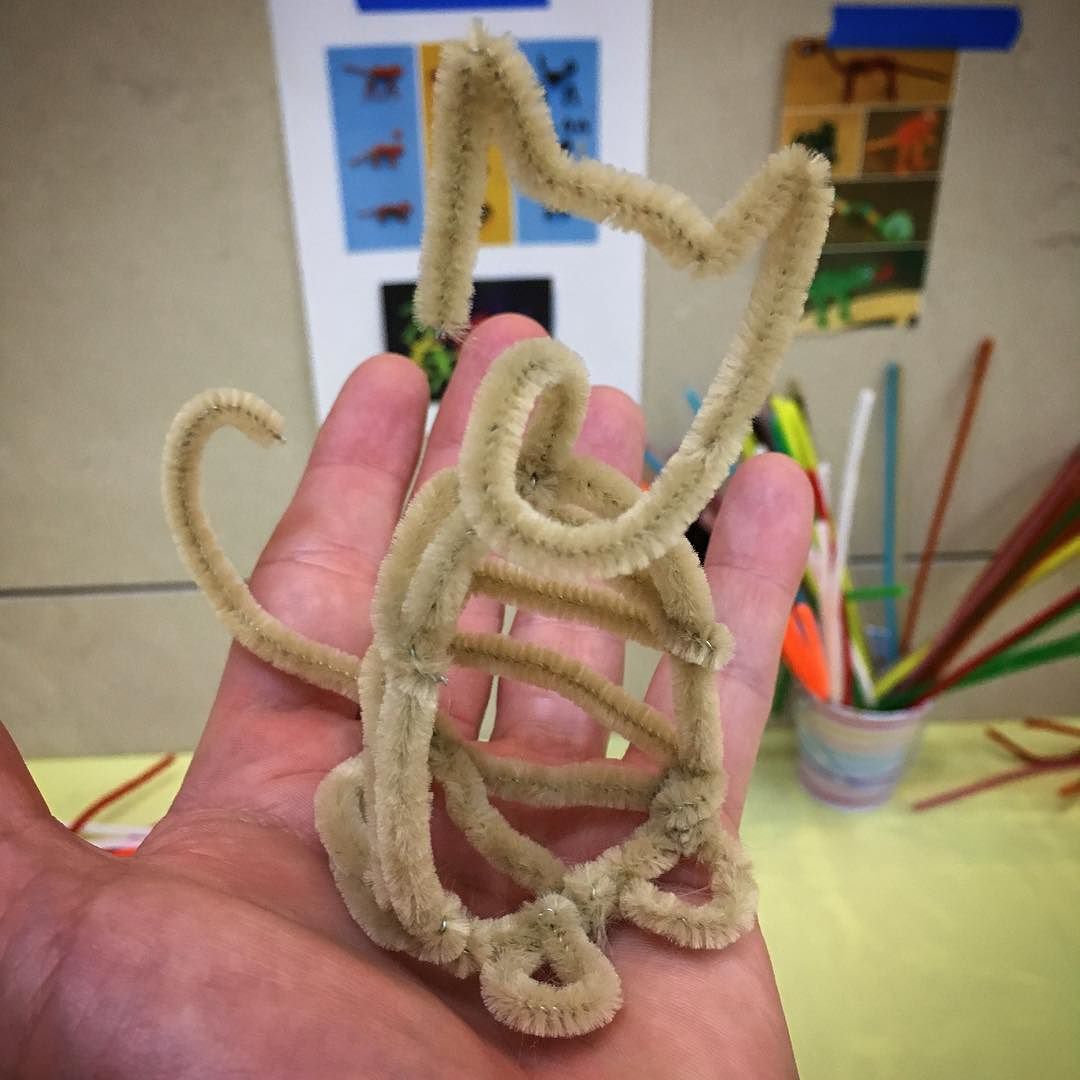
A model of a cat made from pipe cleaners
A sculpture of a bird made from pipe cleaners

A pipe cleaner, otherwise referred to as a chenille stem, is a type of brush originally intended for removing moisture and residue from smoking pipes. They can also be used for any application that calls for cleaning out small bores or tight places. Special pipe cleaners are manufactured specifically for cleaning out medical apparatus and for engineering applications.

Outside of their originally intended purpose, they are commonly used in crafts, and are also popular for winding around bottle necks to catch drips, bundling things together, as a twist tie, colour-coding, and as a makeshift brush for applying paints, oils, solvents, greases, and similar substances.

Description

[edit]

Smoking pipe cleaners normally use some absorbent material, usually cotton or sometimes viscose. Bristles of stiffer material, normally monofilament nylon or polypropylene are sometimes added to better scrub out what is being cleaned. Microfilament polyester is used in some technical pipe cleaners because polyester wicks liquid away rather than absorbing it as cotton does. Some smoking pipe cleaners are made conical or tapered so that one end is thick and one end thin. The thin end is for cleaning the small bore of the pipe stem and then the thick end for the bowl or the wider part of the stem. When used for cleaning purposes, pipe cleaners are normally discarded after one or two uses.

History

[edit]

Pipe cleaners were invented by John Harry Stedman[1] and Charles Angel in Rochester, New York in the early 1900s, later to be sold on to BJ Long Company,[2][3] with a possibly parallel invention by Johan Petter Johansson 1923.[4][5]

Crafts

[edit]

Pipe cleaners are commonly used in arts and crafts projects. Craft pipe cleaners are usually made with polyester or nylon pile and are often longer and thicker than the "cleaning" type, and available in many different colors. Craft pipe cleaners are not very useful for cleaning purposes, because the polyester does not absorb liquids, and the thicker versions may not even fit down the stem of a normal pipe or into the usual hard-to-access area of applications that call for cleaning small bores or tight places.

In Japan, crafting with pipe cleaners is known as Mogol art. Its name derived from the Portuguese word Mughal for a style of weaving.[6] Workshops in malls and schools in Japan have been led by Atushi Kitanaka on an effort to support the pipe cleaner industry. Ikuyo Fujita (藤田育代 Fujita Ikuyo) is a Japanese artist who works primarily in needle felt painting and mogol (pipe cleaner) art. Use of pipe cleaners as an art format where animals [7] are made by twisting pipe cleaners together. They can also be used to create whiskers for an animal mask or nose.

Craft pipe cleaners are often used in classroom settings for a variety of reasons including creating simple models,[8] creating complex models,[9] or as learning aids for various topics.[10]

Manufacture

[edit]

A pipe cleaner is made of two lengths of wire, called the core, twisted together trapping short lengths of fibre between them, called the pile. Pipe cleaners are usually made two at a time, as the inner wires of each pipe cleaner have the yarn wrapped around them, making a coil, the outer wires trap the wraps of yarn, which are then cut, making the tufts. Chenille yarn is made in much the same way, which is why craft pipe cleaners are often called "chenille stems". The word "chenille" comes from French meaning "caterpillar". Some pipe cleaner machines are actually converted chenille machines. Some machines produce very long pipe cleaners which are wound onto spools. The spools may be sold as-is or cut to length depending on the intended use. Other machines cut the pipe cleaners to length as they come off the machines. Smoking pipe cleaners are usually 15–17 cm (5.9–6.7 in) long. Craft ones are often 30 cm (12 in) and can be up to 50 cm (20 in). They come in 4 mm, 6 mm, and 15 mm diameter sizes.[11] Jumbo pipe cleaners have a 30 mm diameter with lengths of 45 cm (18 in) and 2 metres (6.6 feet).

References

[edit]
[edit]
Revisions and contributorsEdit on WikipediaRead on Wikipedia
from Grokipedia
A pipe cleaner, also known as a chenille stem, is a flexible cleaning tool consisting of a thin wire core wrapped with tufted synthetic fibers, designed primarily to remove moisture, ash, and residue from the stems of tobacco pipes. Invented in the early 1900s in Rochester, New York, by entrepreneurs John Harry Stedman and Charles Angel (patented 1922, US Patent No. 1,431,656), the modern fuzzy pipe cleaner evolved from earlier rudimentary designs, such as the 1896 U.S. Patent No. 566,570 by Frederick Frick for a pipe-stem cleaner using barbed wire with cotton or tissue paper. The chenille-like covering, resembling the soft, velvety texture of chenille yarn (from the French word for "caterpillar"), provided superior absorbency compared to prior chicken-feather or twisted-cloth alternatives used by pipe smokers. Initially produced by the Stedman-Angel Pipe Cleaner Company and later sold to the B.J. Long Company, pipe cleaners gained widespread adoption during World War I when U.S. Army surplus stocks were repurposed for crafts after the war, shifting their primary association from tobacco maintenance to artistic and educational applications. Today, available in various colors, lengths, and textures (originally cotton-wrapped, now often synthetic fibers), they remain essential in pipe smoking for hygiene but are most notably used in arts and crafts for modeling shapes, creating jewelry, mobiles, and STEM activities due to their malleability and non-toxic composition.

Overview

Definition and Description

A pipe cleaner is a flexible tool consisting of a thin wire core wrapped in short, tufted fibers, originally intended for cleaning the interiors of by absorbing moisture and residue. In contemporary usage, it is commonly referred to as a chenille stem, particularly in crafting, owing to its soft, fuzzy texture resembling . The physical structure features a central wire core, typically ranging from 20 to 26 gauge (approximately 0.4 to 0.8 mm in ), over which short fibers or are looped and twisted to form a uniform, brush-like pile. Standard dimensions include lengths of 12 to 30 cm (about 5 to 12 inches) for general applications and an overall of 4 to 6 mm, though variations exist for specialized uses. This construction provides a chenille-like appearance and tactile softness while maintaining structural integrity. Key properties include high flexibility, enabled by the malleable wire core that allows easy bending and shaping without breaking; absorbency from the fibrous covering, which traps liquids and particulates; and a textured surface that enhances grip for manipulation or in various tasks. Pipe cleaners are distinct from similar items such as chenille yarn, which lacks a supportive wire core and is purely textile-based, or pipe swabs, which are flexible cotton strings without any rigid element.

Materials and Variations

Pipe cleaners are constructed with a central spine of wire, providing flexibility and durability, surrounded by a fuzzy exterior composed of fibers such as , viscose , , or . The fibers are typically attached via a twisting method, where two lengths of wire are spiraled together to trap and secure the fibers evenly along the length, ensuring a uniform pile for both functionality and . This construction allows the material to bend without breaking while maintaining its absorbent or decorative qualities. Early formulations relied on natural fibers like or twisted around the wire core, but modern versions often incorporate synthetic options for enhanced resilience and color retention. Color variations range from natural white to vibrant dyed hues, achieved through pigmentation of the fibers during production, enabling a wide palette for creative applications. Several variations exist to suit different uses, including standard straight forms with diameters of 4-6 mm and lengths around 30 cm for general crafting. Tapered designs, featuring a conical shape with one end thicker for easier insertion, are common for cleaning . Jumbo variants offer thicker profiles up to 30 mm in diameter and extended lengths up to 50 cm or more, ideal for larger-scale projects. Decorative types include glitter-infused stems for added sparkle. Shorter mini versions, approximately 15 cm in length, provide options for small-scale work. Post-2010s innovations have introduced synthetic fibers to reduce irritation risks and biodegradable options using eco-friendly materials like natural or blends, responding to growing demand for sustainable crafting supplies.

History

Invention and Early Development

The pipe cleaner, originally designed as a practical tool for maintaining tobacco pipes, was invented in the early 1900s by John Harry Stedman and his business partner Charles Angel in . Stedman, a prolific inventor known for earlier innovations like the time-limit streetcar transfer ticket, collaborated with Angel to create this device amid the growing popularity of briar pipes, which required more thorough cleaning than traditional clay models. The invention addressed the limitations of prior cleaning methods, such as feathers or rudimentary wires, which were insufficient for removing sticky residues from pipe stems and bowls. Early prototypes were handmade by the Stedman-Angel Pipe Cleaner Company, consisting of thin, malleable wire cores twisted together with short lengths of absorbent fibers, typically or , to form a flexible and fuzzy structure capable of scrubbing and absorbing and moisture. This chenille-like design allowed the tool to navigate the narrow, curved interiors of pipe stems while effectively trapping debris, marking a significant improvement over non-absorbent alternatives used by smokers in the late 19th and early 20th centuries. The initial versions were produced on a small scale, reflecting Stedman and Angel's focus on functionality for personal and local use before broader commercialization. Development faced challenges in enhancing the tool's durability and absorbency to withstand repeated use in moist, tar-laden environments without fraying or losing effectiveness. Experimentation with fiber materials and wire gauges was necessary to balance flexibility for maneuvering through pipe shapes with sufficient stiffness to push out buildup, ensuring the remained practical for daily smoker needs. These refinements were driven by the shift toward briar pipes in the onward, which retained more residue than easily disposable clay pipes, necessitating a more robust cleaning solution. By around , these efforts culminated in a that Stedman and sold to the Rochester Pipe Cleaner Company, which later evolved into the B.J. Long Company, solidifying its foundational form.

Commercialization and Evolution

Following the invention of the modern pipe cleaner in the early 1900s by John Harry Stedman and Charles Angel in , the rights to the design were sold to the Rochester Pipe Cleaner Company, the predecessor to the B.J. Long Company, which initiated and branded the product as "pipe cleaners" for widespread commercial availability. This transition enabled efficient manufacturing on a larger scale, transforming a niche tool for maintenance into a commercially viable item distributed primarily to smokers through tobacco shops and general retailers. The B.J. Long Company, rooted in Rochester's industrial heritage, continued production for decades, with the firm formally established in by Benjamin Joel Long after earlier involvement in the Rochester Pipe Cleaner Co. An early precursor to the twisted wire design was patented in 1896 by Frederick A. Frick as a covered in fabric for pipe cleaning, laying groundwork for later innovations, though records of a specific for Stedman and Angel's fuzzy version appear lost or undocumented. Commercial expansion included gradual entry into international markets, particularly in and , where culture drove demand during the and beyond. Pipe cleaners gained widespread adoption for non-tobacco uses during , when U.S. Army surplus stocks were repurposed for crafts after the war, accelerating the shift toward hobbies and children's applications. Post-World War II, pipe cleaners evolved significantly toward non-smoking applications, gaining popularity in hobbies and children's crafts due to their malleable, non-toxic nature. This shift was accelerated in the with the introduction of colored varieties, initially imported and manufactured in for craft purposes, distancing the product from its origins and rebranding it as "chenille stems" to evoke the French word for , reflecting the fuzzy texture. Companies like Chenille Kraft, founded in 1930 with an initial focus on pipe cleaners, expanded their lines to include vibrant, crush-resistant stems tailored for artistic use. By the 1960s, color diversification proliferated, offering a of hues to enhance creative projects, while the 1980s saw a surge in educational adoption amid the rise of hands-on STEM and art curricula. The 2000s brought further growth through online retail platforms, which democratized access and fueled a boom in DIY , with bulk packs becoming staples on sites for global consumers.

Manufacturing

Production Process

The production process of pipe cleaners, also known as chenille stems, involves twisting two continuous lengths of wire together, trapping short lengths of synthetic fibers between them to create the fuzzy chenille texture. Following assembly, the product is cut to standard lengths, typically 12 inches (30 cm) for retail use. For colored variants, the fibers are dyed before or after assembly. The finished pipe cleaners are packaged in retail packs or bulk for various applications.

Quality Standards and Innovations

Quality control in pipe cleaner production emphasizes durability, safety, and consistency. Manufacturers assess wire flexibility and adhesion to ensure reliable performance in crafts. Uniformity in density and color is maintained through inspections. Pipe cleaners intended for children's crafts must comply with safety standards for non-toxic materials, including dyes and coatings that meet the requirements of ASTM F963, the mandatory U.S. specification enforced by the Consumer Product Safety Commission for products aimed at children under 14. This standard addresses , such as and in pigments, ensuring the fibers and wire are safe for handling. Additionally, many manufacturers adhere to ISO 9001 for overall production processes, which promotes systematic , from sourcing to final , to minimize defects and enhance reliability. Innovations in pipe cleaner production have focused on and customization since the early . Eco-friendly variants incorporate recycled fibers for the chenille covering, reducing reliance on virgin materials while maintaining flexibility and softness. Automated processes have enabled colors for varied aesthetic options in supplies. As of 2025, much of global production occurs in , with ongoing efforts toward more sustainable materials like biodegradable fibers to align with environmental regulations.

Applications

Original Purpose: Pipe Cleaning

Pipe cleaners were originally developed specifically for maintaining the cleanliness of pipes by removing accumulated tar, ash, and moisture from the stem and shank. The device's twisted wire core, wrapped in absorbent chenille fibers, enables it to navigate the narrow airway while the fibers soak up residues and the wire gently scrapes buildup from the interior surfaces. This design makes it particularly suited for clearing obstructions that could otherwise affect draw and flavor during . The standard technique for using a involves inserting one end into the mouthpiece of the pipe stem, optionally moistening the tip with or water to enhance absorption, then gently rotating and advancing it through the shank toward the to loosen and collect . Once it emerges from the other end, the cleaner is withdrawn, and the process is repeated with a fresh one if the first becomes heavily soiled. This method proves effective across common pipe materials, such as briar wood, meerschaum, and corn cob, helping to prevent moisture buildup that could lead to or off-tastes. Due to their high absorbency, pipe cleaners effectively capture oils and particulates but become contaminated after capturing residue, rendering them suitable for single-use or at most two applications before disposal to avoid reintroducing debris into the pipe. While the overall decline in pipe smoking since the post-1970s era—driven by heightened health awareness, anti-smoking campaigns, and shifting cultural preferences—has reduced the demand for such maintenance tools, pipe cleaners continue to serve as an essential accessory among dedicated users.

Crafts and Artistic Applications

Pipe cleaners, also known as chenille stems, are widely used in crafts for their malleability, allowing artists and hobbyists to bend and twist them into various three-dimensional forms such as animals, flowers, and jewelry. Basic techniques involve simple manipulation: coiling into spirals for petals or tails, folding into M-shapes for limbs, and intertwining multiple stems for stability in larger structures. These can be enhanced by combining pipe cleaners with complementary materials like glue for , beads for decorative accents, or pom-poms for textured features, enabling the creation of intricate, colorful designs without advanced tools. Popular projects highlight pipe cleaners' versatility in sculptural and decorative applications. Crafters often form animal sculptures, including birds with curved beaks and feathered wings, or like spiders with segmented legs achieved through tight twists. Holiday ornaments, such as snowflakes or wreaths, are made by looping and interlocking stems into symmetrical patterns, while STEM-oriented models like bridges demonstrate principles by twisting pipe cleaners into frameworks that span gaps and support light loads. In , pipe cleaners hold cultural significance through Mogol art, a creative practice that transforms the stems into whimsical characters and scenes, blending pop culture influences with imaginative storytelling. Artists like Takuma Fujisaki have popularized this form, crafting elaborate figures such as aliens or mutants using hundreds of colorful stems without additional fasteners, fostering a dedicated community and merchandise. Pipe cleaners offer several advantages for artistic applications, including their low cost, making them accessible for large-scale or projects. Craft-specific versions are typically non-toxic, ensuring safe handling during extended sessions, and their durable wire core allows reusability for prototyping multiple iterations. Thicker variants, with enhanced fluff and rigidity, are preferred over standard cleaning types for holding complex shapes in sculptures and models.

Educational and Therapeutic Uses

Pipe cleaners are widely utilized in educational settings to facilitate hands-on learning in STEM disciplines, particularly for modeling geometric concepts and biological structures. In geometry education, students employ pipe cleaners to construct physical representations of shapes, such as Platonic polyhedra or braids, enhancing spatial reasoning and visualization skills. For instance, at Virginia Commonwealth University's Geometry Camp, middle schoolers used pipe cleaners to explore and three-dimensional forms, promoting interactive problem-solving. Similarly, in lessons, pipe cleaners serve as components in building models like bone anatomy or DNA double helices, allowing learners to manipulate materials to understand molecular and anatomical relationships. In art education, pipe cleaners support explorations of by enabling students to create textured collages or sculptures that demonstrate mixing and principles. Educational programs often incorporate them in activities where learners bend and combine colored stems to form patterns, fostering creativity while reinforcing fundamentals. Within special education, pipe cleaners feature prominently in sensory play for children with developmental needs, such as autism spectrum disorders, where threading or shaping them aids in building focus and sensory integration in structured environments like Montessori classrooms. These applications align with broader pedagogical approaches that emphasize tactile manipulation to support diverse . Therapeutically, pipe cleaners are integral to interventions aimed at improving fine motor dexterity and hand strength in children aged 3-8. Activities involving bending, twisting, or threading beads onto pipe cleaners target pincer grasp, bilateral coordination, and precision, contributing to overall motor development essential for daily tasks like writing or dressing. A university study on classroom adaptations highlighted their use in fine motor exercises, such as placing beads on stems, to enhance skills in children with challenges. Evidence from practices indicates these manipulations support improved hand-eye coordination and self-regulation. As fidget tools, pipe cleaners have gained prominence since the for managing ADHD and anxiety symptoms by providing a discreet outlet for tactile during focused tasks. Their flexible, fuzzy texture allows users to twist or coil them unobtrusively, potentially aiding sustained attention without disrupting learning environments, as noted in resources for neurodiverse students. Research on fidget interventions suggests simpler tools like pipe cleaners may outperform complex gadgets in promoting on-task behavior for children with ADHD. In contexts, larger or textured pipe cleaners enable crafting for visually impaired individuals, facilitating independent creation of shapes or jewelry through tactile feedback alone. Organizations supporting blind youth recommend them for developing fine motor skills in inclusive art programs.

Other Modern Applications

In households, pipe cleaners serve as versatile tools for temporary fixes and maintenance tasks. Gardeners often employ them as soft, flexible ties to secure to stakes or trellises, preventing damage to delicate stems while allowing easy adjustment as plants grow. Their bendable wire core and fuzzy exterior make them ideal for bundling small items, such as organizing loose cables or wires in setups, without scratching surfaces. In industrial and contexts, pipe cleaners facilitate due to their malleability, enabling quick mockups of complex structures like wiring harnesses during iterations. Laboratories also utilize them in experiments, where they can be shaped into custom filters to simulate air or liquid purification processes, capturing particulates in educational or preliminary testing setups. Emerging applications include their role in sustainable practices, where pipe cleaners contribute to eco-friendly crafts amid post-2020 trends emphasizing and waste reduction; for instance, they are integrated into nature-inspired projects using recycled natural materials to promote environmental awareness. In niche areas, pipe cleaners aid veterinary care for small animals by serving as gentle tools to clean narrow drinking tubes in enclosures, ensuring without harming pets like . They are also employed in architectural model-making, where students and professionals twist them into armatures to explore structural forms, such as minimal surfaces or earthquake-resistant designs, before scaling to digital or physical builds.

Safety and Environmental Considerations

Health and Safety

Pipe cleaners, consisting of a flexible wire core wrapped in synthetic fibers such as or , pose certain health risks primarily due to their physical structure and materials. The wire, often made of tin-plated or aluminum, can be sharp at the ends, presenting a puncture or laceration if mishandled, particularly by young children who may poke themselves or others during crafts. Additionally, small pieces or balled-up portions can create a hazard, as they are small enough to fit in a child's and potentially lodge in the airway. Ingestion of the wire could lead to internal injury from its rigidity and sharpness, while the fuzzy fibers may cause minor gastrointestinal irritation if swallowed, though the materials are generally non-toxic. Allergic reactions to pipe cleaners are uncommon but possible, especially for individuals sensitive to synthetic fibers or dyes used in the chenille wrapping. , manifesting as redness, itching, or rash upon prolonged skin exposure, has been reported with polyester-based s, though true allergic responses to fibers themselves are rare compared to reactions to dyes or finishes, affecting less than 1% of the general population in patch testing studies for textile allergens. Such reactions are more likely in those with pre-existing conditions like eczema. To mitigate these risks, adult supervision is essential for children under 8 years old during use, ensuring they do not insert pipe cleaners into the or eyes except for their original purpose of cleaning tobacco pipes. Prior to skin contact in crafts, pipe cleaners should be washed with mild and to remove any manufacturing residues or dust that could irritate sensitive skin. For younger toddlers, opt for blunt-ended varieties or avoid unsupervised play to prevent poking injuries. In the United States, pipe cleaners intended for children's crafts must comply with the Consumer Product Safety Improvement Act (CPSIA), which mandates that accessible components, including the wire core, contain no more than 100 parts per million (ppm) of lead to prevent toxicity from ingestion or prolonged handling. Manufacturers typically use lead-free metals and certify products accordingly, with third-party testing required for children's items. Packaging often includes warnings labeling pipe cleaners as a choking hazard not suitable for children under 3 years, aligning with federal guidelines to inform caregivers of age-appropriate use. Reported incidents involving pipe cleaners are infrequent, with most involving minor pokes or foreign body aspirations in supervised settings; severe cases, such as emergency department visits for ingestion-related injuries, remain low relative to other craft materials, emphasizing the importance of precautions.

Environmental Impact

The production of pipe cleaners, composed of chenille fibers (typically cotton or polyester) wrapped around a metal wire core, contributes to environmental impacts through resource extraction and manufacturing processes. Cotton-based variants rely on agriculture that consumes significant water resources; global cotton production accounts for about 3% of agricultural water use, which itself represents 73% of total freshwater withdrawals worldwide. Dyeing the fibers adds to water pollution and energy demands, as textile dyeing processes can require up to 100 liters of water per kilogram of fabric and generate effluent with heavy metals and chemicals. The wire core, often made from steel, involves mining iron ore, a process that emits greenhouse gases and produces mining waste; steel production alone accounts for roughly 7-9% of global anthropogenic CO2 emissions. Disposal of used pipe cleaners exacerbates waste issues, particularly for synthetic versions. Polyester chenille stems are non-biodegradable and can persist in landfills for over 200 years, contributing to microplastic accumulation as fibers break down. In craft and cleaning applications, single-use discards add to ; while exact U.S. figures are limited, the broader craft supply market generates millions of tons of mixed and metal waste annually, much of which ends up in landfills due to challenges. Cotton-based stems fare better in terms of biodegradability but are hindered by the non-degradable wire, leading to incomplete . Efforts toward include a growing shift to recycled for chenille fibers, which reduces energy use and carbon emissions compared to virgin materials; life-cycle assessments indicate up to 79% lower for recycled production. Some manufacturers offer compostable variants, where the natural fibers break down in industrial composting facilities, though the wire requires separate removal. Innovations in material sourcing, such as using post-consumer recycled plastics for fibers, further mitigate impacts by diverting from landfills. Recycling pipe cleaners is feasible due to the separable components: the metal wire can be extracted and recycled through standard scrap metal programs, while fibers may be composted or repurposed if uncontaminated. Craft communities and educational programs have promoted initiatives since the mid-2010s, encouraging and of stems in schools to reduce new production needs; for instance, organizations like facilitate collection of hard-to-recycle craft items, including mixed-material stems. These programs help close the loop, though widespread adoption remains limited by collection infrastructure.

References

Add your contribution
Related Hubs
User Avatar
No comments yet.