Hubbry Logo
Porcelain tilePorcelain tileMain
Open search
Porcelain tile
Community hub
Porcelain tile
logo
8 pages, 0 posts
0 subscribers
Be the first to start a discussion here.
Porcelain tile
Porcelain tile
from Wikipedia
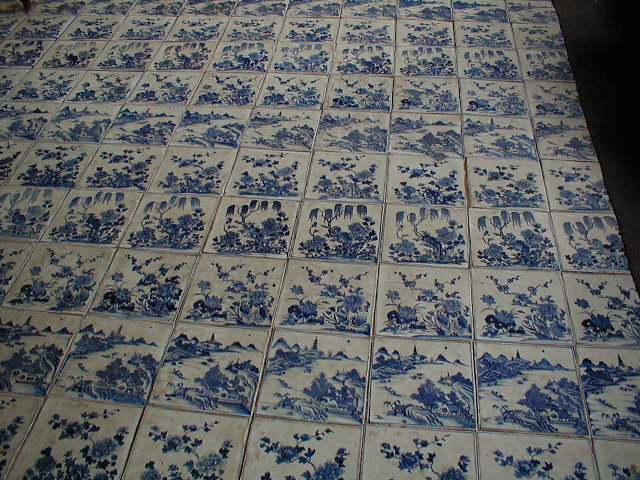
Hand-painted Chinese porcelain tiles on the floor of a Jewish synagogue in Cochin, Kerala, India

Porcelain tiles or ceramic tiles are either tiles made of porcelain, or relatively tough ceramic tiles made with a variety of materials and methods, that are suitable for use as floor tiles, or for walls. They have a low water absorption rate, generally less than 0.5 percent. The clay used to build porcelain tiles is generally denser than ceramic tiles. They can either be glazed or unglazed. Porcelain tiles are one type of vitrified tiles and are sometimes referred to as porcelain vitrified tiles.

Historically, porcelain was not the usual material for tiles, which were much more often made of earthenware (terracotta) or stoneware. The first porcelain tiles were made in China, and were largely used for decorating walls, such as in the 15th-century Porcelain Tower of Nanjing (now largely destroyed); the use of porcelain tile as wall decoration long remained typical. In Europe, palaces also occasionally featured a few rooms with walls decorated in porcelain plaques, often with forms in high relief. These were manufactured by Capodimonte porcelain and Real Fábrica del Buen Retiro, among others. Historically, porcelain was too expensive for most tiling purposes, but it is now much cheaper (especially in the form of bone china), and is now widely used.

Production

[edit]

Large-scale production of porcelain tile is undertaken in many countries, with the major producers being China, Italy, India, Spain and Turkey. Many countries also undertake small-scale production, such as Australia and Brazil. In terms of market size, the global ceramic and porcelain tile industry was valued at approximately $251 billion in 2023 and is projected to reach $333 billion by 2032, reflecting steady growth and widespread demand across residential and commercial sectors.[1]

The wear rating of the tile can be graded from zero to five according to the ISO 10545-7 (also ASTM C1027) test for surface abrasion resistance of glazed tile, and this can be used to determine suitability for various end-use conditions.

Modern polished porcelain floor tiles in a large format

Polished porcelain tiles

[edit]

The dense, hard surface of porcelain has made polishing a viable alternative to a glazed surface. This means that a tile can be fired, then a polish cut into the surface, creating a shine without a glaze.

Use

[edit]

Porcelain is much harder than ordinary ceramic tiles and is often selected, despite its higher price, for its hard-wearing nature. Porcelain can be used in both wet and dry areas such as bathrooms, showers, and kitchens.

Disadvantages

[edit]

Porcelain is denser and therefore heavier to handle than other ceramic tiles. For this reason, it is generally more expensive. Being harder, it is more difficult to cut and drill and requires specialist tools, which can hamper fitting and increase costs. Polished porcelain may need sealing, where ordinary glazed tiles do not. The glazed surface is coated with less than two microns' thickness of glaze.

Installation

[edit]

The installation of ceramic of porcelain tiles generally involves the following steps:

  1. Planning and preparation
  2. Surface preparation, including tile cutting
  3. Applying adhesive
  4. Laying tiles
  5. Grouting
  6. Finishing touches
  7. Cleaning, sealing and maintenance

Cutting

[edit]

Manual cutting methods, such as scoring and splitting, can also be used for porcelain paving slabs. This process involves marking the cutting line, scoring it with a chisel and hammer, and deepening the groove until the slab can be split cleanly.[2][3]

Adhesives

[edit]

Specialized cement is necessary for installation of porcelain tiles, and in the US specifications, are set by the Tile Council of America[4] and supported by the Tile Contractors Association. Porcelain, being denser and heavier than ordinary ceramic tiles, needs a stronger adhesive to hold the weight on walls. Therefore, typical ready-mix adhesives are not recommended for porcelain. Standard adhesives used for porcelain tiles often include cement, redispersible polymers such as ethylene-vinyl acetate, silica sand, and additives like cellulose ethers, which enhance adhesion, flexibility, and durability.[5]

Tile profiles and trims

[edit]

Ceramic tile trims and profiles are specialized edging or transitional pieces that are used in conjunction with ceramic tiles. They serve several purposes:

  1. Edge protection: Profiles protect the edges of tiles from chipping and wear.
  2. Transition: They provide a smooth transition between different surface materials or tile heights.
  3. Aesthetic enhancement: Profiles add a finished look, contributing to the overall design of the tiled area.

Transition profiles are used when there are two different types of flooring or tiles that meet in the middle. A transition profile can help create a smooth and seamless transition between the two. Tile trims are used to cover the edges of tiles, creating a finished look and protecting them from damage.

Profiles and trims are generally installed at the same time that the tiles are laid down.

Sealing

[edit]

When porcelain is first made, it is not absorbent, but the polishing process for making the unglazed surface shiny cuts into the surface, leaving it more porous and prone to absorbing stains, in the same way as natural stone tiles. Unless they have a suitable, long-lasting treatment applied by the manufacturer (for example, nanotech treatment), polished porcelain tiles may need sealing to make the maintenance of paving easier. Porcelain sealants are either solvent-based or water-based, which is cheaper but does not last.

Innovation

[edit]

Recent advancements in porcelain tile manufacturing have focused on both performance and safety. Manufacturers now offer tiles with R11 anti-slip finishes designed to increase traction in wet or outdoor environments. Additionally, antimicrobial surface technologies are being used to inhibit the growth of bacteria and mold, making porcelain tiles more hygienic and suitable for high-traffic or moisture-prone spaces.[6]

Vitrification

[edit]

Porcelain tiles can be vitrified to reduce their porosity and increase their strength. Vitrified porcelain tiles are created by combining clay with other elements such as quartz, silica, or feldspar under incredibly high temperatures. The vitrification process creates porcelain tiles that contain a glass substrate. The glass substrate gives the tiles a sleek appearance, provides added strength, and makes the tiles water and scratch-resistant. Vitrified porcelain tiles do not need to be re-sealed or glazed.

See also

[edit]

References

[edit]
Revisions and contributorsEdit on WikipediaRead on Wikipedia
from Grokipedia
Porcelain tile is a subtype of ceramic tile defined by its exceptionally low water absorption rate of 0.5% or less, which renders it dense, vitreous, and highly resistant to moisture, frost, and wear. Modern porcelain tiles, as defined by low water absorption, were developed in Italy in the late 1970s, building on ancient Chinese porcelain traditions. This characteristic distinguishes it from standard ceramic tiles, which typically absorb more water (up to 3%), making porcelain tile particularly suitable for high-traffic areas, outdoor installations, and environments exposed to varying weather conditions. Produced through an industrial process involving the mixing, pressing, and high-temperature firing of refined raw materials, porcelain tiles offer superior durability and aesthetic versatility, often mimicking natural stone or wood in appearance. The composition of porcelain tile primarily includes kaolin and ball clays (20–40% and 20%, respectively), (30–40%), and silica sand (10–30%), which are milled, homogenized, and spray-dried into a fine before being uniaxially pressed at pressures around 40 MPa to form green tiles. These tiles are then fired in kilns at temperatures between 1050°C and 1250°C—optimally around 1200°C—for periods that can include a 2-hour dwell time, resulting in a fully vitrified structure with crystalline phases like and . Modern innovations, such as dry mixing for through-body coloration, enhance color uniformity and reduce defects, contributing to the material's widespread use in , coverings, and even large-format slabs for countertops and facades. Key properties of porcelain tile include high (often exceeding 30 MPa), low leading to excellent stain and chemical resistance, and a PEI (Porcelain Enamel Institute) wear rating typically from 3 to 5, indicating suitability for residential to commercial foot traffic. Unlike more porous ceramic tiles, 's denser body minimizes cracking and chipping, while its non-porous glazed surface facilitates easy maintenance and hygiene, making it a preferred choice in bathrooms, kitchens, and public spaces. These attributes stem from adherence to international standards, such as ISO 13006, which classifies as a low-water-absorption extruded or dry-pressed (group BIa), ensuring consistent and performance across global production.

Overview

Definition and Characteristics

Porcelain tile is a dense, non-porous ceramic tile produced from a mixture of refined clay, , , and kaolin, which is dry-pressed and fired at temperatures exceeding 1,200°C (2,192°F) to achieve full and a absorption rate of ≤0.5% by mass. This low absorption classifies it under Group BIa in international standards for dry-pressed tiles, distinguishing it as fully vitrified and highly impervious to moisture. The core characteristics of porcelain tile stem from its composition and firing process, yielding high that enhances strength and , as well as low that prevents water ingress. It exhibits a rating of 7-8 on the , providing excellent resistance to scratching and abrasion, alongside thermal stability that makes it suitable for freeze-thaw environments and resistance to stains and chemicals due to its non-porous surface. Compared to standard ceramic tiles, porcelain tiles incorporate finer particle sizes in their raw materials and undergo higher firing temperatures, resulting in superior uniformity, , and reduced (typically >3% water absorption in ceramics). In the broader classification, particularly using French terminology, "céramique" tiles refer to standard ceramic tiles with high porosity and water absorption rates of 3–10% or more, making them sensitive to frost and stains if not properly glazed. "Grès" tiles, or stoneware, have medium porosity with water absorption of 0.5–3%, offering greater impermeability. "Grès cérame," equivalent to porcelain stoneware tiles, exhibits very low porosity with water absorption less than 0.5%, rendering it fully watertight even without a glaze. Visually and tactilely, unglazed porcelain tiles often display uniform color extending through the entire body for consistent appearance even if chipped, while glazed variants provide diverse colors, patterns, and finishes applied before firing.

History

The origins of porcelain tile can be traced to ancient ceramic innovations, with the earliest tile-like forms emerging in and around 4000 BCE, where baked clay plaques and glazed bricks were used for decorative and functional purposes in architecture. In , true emerged during the (618–907 CE), crafted from kaolin clay and fired at high temperatures to achieve its characteristic translucency and durability, initially for vessels but soon influencing tiled applications in imperial structures. These early Chinese porcelains were exported along the from the onward, fostering cultural exchanges that integrated porcelain elements into , such as geometric and floral motifs on tiles in Persia and the , blending Eastern technical prowess with local artistic traditions. A notable milestone in decorative use occurred during the in the 15th century, exemplified by the , an octagonal constructed around 1412–1431 CE under Yongle, featuring white porcelain bricks inlaid with vibrant glazed tiles depicting Buddhist scenes and mythical figures, symbolizing imperial splendor and technological achievement. This structure highlighted porcelain's role in grand architectural expressions, though it was largely destroyed in the 19th century during the . In , porcelain arrived via maritime trade routes in the 16th century, sparking fascination among elites; by the early 18th century, German alchemist Johann Friedrich Böttger unlocked the formula for at the factory in 1710, enabling initial production that gradually extended to tiled forms influenced by imported Chinese designs. Glazed ceramic tiles, precursors to modern porcelain variants, gained popularity in the mid-18th century through imports from to , where they adorned fireplaces and walls in affluent homes. The industrialization of tiles transformed them from artisanal crafts to mass-produced goods, beginning in during the . Traditional double-fired (bicottura) processes, involving separate bisque and glaze firings, dominated early Italian production, but the introduction of single-fired (monocottura) techniques in the district around the 1960s–1970s revolutionized efficiency, allowing simultaneous body and glaze firing for stronger floor tiles. By the late 1970s, Italian innovators developed (gres porcellanato), a dense, low-porosity with colored bodies and polished surfaces, marking a shift to versatile, frost-resistant tiles suitable for global markets and representing the second major revolution in tile production after single firing. This era saw production surge from niche workshops to industrial scales, with leading exports and influencing architectural applications worldwide. Post-2000, international solidified porcelain tiles' global adoption, with the ISO 13006 standard—first established in 1998 and revised in subsequent editions—defining classifications, characteristics, and testing for tiles, including variants, to ensure uniformity in quality and performance across manufacturers. These developments underscored porcelain tiles' from culturally symbolic decorations in ancient Chinese and Islamic edifices to essential, elements in , bridging artisanal heritage with industrial precision.

Types and Variations

Classification by Finish and Texture

Porcelain tiles are classified by their surface finish and texture, which influence , maintenance, and performance in different settings. Finishes primarily divide into glazed and unglazed categories, each offering distinct visual and functional qualities. Glazed porcelain tiles incorporate a thin, protective glaze layer applied over the tile body, often with an underlying engobe for enhanced pattern adhesion. This finish enables vivid colors and detailed designs, such as imitations of natural stone or wood achieved through technologies, while facilitating easier cleaning due to the smooth, non-porous surface. Unglazed porcelain tiles, in contrast, reveal the raw without a surface , providing a more authentic, uniform appearance that aligns closely with natural materials. These are typically through-body, where the color and permeate the entire thickness, ensuring visible edges match the surface even after wear or cuts. Textures further differentiate porcelain tiles, encompassing polished, matte, and textured variants to address specific needs like reflectivity and traction. Polished textures result from mechanical abrasion, yielding a glossy, reflective surface that enhances luxury but offers low slip resistance in wet conditions. Matte textures provide a subdued, non-reflective finish that balances appearance with improved slip resistance compared to polished options, suitable for moderate-traffic . Textured or rustic surfaces feature intentional roughness, often molded during production, to boost grip in high-moisture areas; these are evaluated for safety using standards like the Dynamic Coefficient of (DCOF) minimum of 0.42 per ANSI A326.3 or ramp ratings R10–R13 per DIN 51130, with higher R values indicating steeper slip angles for greater security. Among specialized classifications, rectified porcelain tiles undergo post-firing edge grinding to achieve precise, straight dimensions, allowing for minimal lines and seamless installations. These finish and texture variations serve targeted purposes: glazed options prioritize decorative versatility for walls, while textured unglazed types emphasize and for floors in demanding environments.

Sizes and Formats

Porcelain tiles are produced in a wide range of standard sizes to accommodate various installation needs, with common formats for flooring including 12x12 inches (30x30 cm), 24x24 inches (60x60 cm), and 12x24 inches (30x60 cm), which provide balanced coverage and ease of layout in residential spaces. Smaller mosaic formats, such as 1x1 inch (2.5x2.5 cm) tiles, are frequently used for decorative accents, borders, or intricate patterns in areas like backsplashes and shower walls, offering flexibility in design while maintaining the durability of porcelain. Large-format porcelain tiles represent a significant in the industry, with slabs reaching dimensions up to 160x320 cm (63x126 inches), allowing for expansive, seamless installations that minimize visible joints and enhance visual continuity across floors, walls, and countertops. These oversized formats have become feasible through advancements in pressing technology, such as high-tonnage hydraulic presses that compact larger volumes of material uniformly before firing, enabling thinner yet structurally sound slabs typically 6-12 mm thick. Edge treatments further influence the aesthetic and practical aspects of porcelain tile sizing. Rectified edges, achieved by precision machine-cutting after firing, ensure uniform dimensions with tolerances as tight as ±0.5 mm, permitting minimal grout lines of 1-2 mm for a sleek, contemporary appearance. In contrast, non-rectified edges retain the factory-pressed profile with slight variations, requiring wider grout joints of 3-8 mm to accommodate irregularities and provide a more traditional, rustic look. Since the early 2010s, industry trends have shifted toward oversized slabs and large formats to support minimalist designs, emphasizing clean lines and reduced visual clutter in modern interiors, driven by innovations in and slab production that allow for realistic stone or wood imitations across vast surfaces. Modular systems, where dimensions are designed to interlock in repeating patterns like herringbone or without cutting, have also gained popularity for simplifying layouts and ensuring consistent spacing in both standard and large-format applications.

Manufacturing

Raw Materials and Preparation

Porcelain tile production relies on a triaxial mixture of primary raw materials: kaolin, a refined white clay that imparts plasticity and formability; , which serves as a flux to facilitate by lowering the melting temperature; and or silica, functioning as a non-plastic filler to provide structural rigidity and prevent excessive shrinkage. In some formulations, additives such as zirconia are included at low percentages to enhance mechanical strength and toughness. These materials are sourced from global mining operations, with kaolin primarily extracted from deposits in the (e.g., ) and the (e.g., Georgia), feldspar from major producers in , , and , and quartz from abundant quarries worldwide including and . Industry practices increasingly emphasize sustainable quarrying, such as site rehabilitation and reduced water usage, to mitigate environmental impacts from extraction. Preparation commences with batching, where raw materials are weighed and proportioned in precise ratios—typically 40-50% kaolin or clay, 25-40% , and 10-25% —to optimize the final tile's performance characteristics. The mixture is then processed through wet grinding in ball mills, combined with water and dispersing agents, to produce a homogeneous with particles reduced to under 10 microns in size for uniform distribution and workability. During slurry preparation, inorganic colorants or pigments may be incorporated to tint the tile body, enabling through-body coloration that remains visible if the surface is worn or cut. measures ensure the slurry achieves a of 30-40%, balancing fluidity for subsequent while minimizing use in .

Forming and Firing

The forming process for porcelain tiles begins with the of the prepared , which transforms the liquid mixture into a fine, granular suitable for shaping. This step involves atomizing the slurry through high-temperature nozzles into a drying chamber, where hot air evaporates the moisture, resulting in powder particles with controlled size and moisture content of approximately 6-7%. The powder is then fed into hydraulic presses that compact it under , typically 400-500 kg/cm², to form "green" tiles—unfired shapes that achieve initial and strength. These tiles, which can measure over 1 m² in area, undergo subsequent in tunnel dryers at temperatures between 100-200°C to remove residual moisture and prevent cracking during firing, ensuring uniform shrinkage. Following forming, the dried green tiles receive glazing and decoration to enhance and surface properties. A liquid glaze is applied via spraying or pouring, or alternatively, digital deposits precise patterns and colors directly onto the surface for intricate designs. These glazed tiles may then proceed to firing, with optional applied post-firing for certain finishes like honed or high-gloss surfaces using brushes up to 3000 . The firing stage, known as , is critical for achieving the tile's durability and low through a single-firing process called monocottura. Tiles are loaded into roller kilns, where they move continuously through zones of increasing temperature, reaching a peak of 1,200-1,300°C for 30-60 minutes; this heat causes fluxes like to melt, allowing silica particles to dissolve and form a glassy phase that binds the structure into a non-porous, with water absorption below 0.5%. The roller kiln design ensures even heating from top and bottom, minimizing warpage despite up to 8-10% shrinkage during the cycle. Post-firing, the tiles cool gradually in the kiln's cooling zone to avoid , followed by automated sorting to detect and remove defects such as cracks or dimensional irregularities. For precise installation, edges are rectified using saws in a wet-cutting process, producing straight, uniform borders that allow for minimal lines as narrow as 0.5 mm.

Properties and Standards

Physical and Chemical Properties

Porcelain tiles exhibit a typically ranging from 2.3 to 2.5 g/cm³, achieved through high-temperature that minimizes and enhances structural integrity. Porcelain tiles, known as grès cérame in French terminology, exhibit very low porosity with water absorption less than 0.5%. In comparison, céramique tiles have high porosity with 3–10% or more water absorption, making them sensitive to frost and stains if not properly glazed, while grès tiles have medium porosity with 0.5–3% absorption, offering better impermeability but not as robust as grès cérame. In terms of mechanical strength, porcelain tiles demonstrate a modulus of rupture typically exceeding 35 MPa, as determined by standardized bending tests, ensuring robustness under load-bearing conditions. The material's low coefficient of , approximately 5 to 7 × 10⁻⁶/°C, contributes to dimensional stability across fluctuations, reducing the risk of cracking in varying environments. For slip resistance, porcelain tiles generally achieve a dynamic of (DCOF) of at least 0.42 when wet, as per ANSI standards, with dry static COF typically 0.5–0.8 depending on finish, providing adequate traction for surfaces. Slip resistance is now primarily evaluated using dynamic of (DCOF) per ANSI A326.3, requiring ≥0.42 for level interior wet areas. Chemically, porcelain tiles show high resistance to acids and alkalis, with no visible degradation after exposure to and industrial reagents as per established protocols. resistance is rated at Class 5, the highest level, indicating minimal absorption or discoloration from common contaminants like oils, inks, and dyes. This superior stain resistance is due to the low porosity of grès cérame, in contrast to the higher absorption rates of céramique and grès tiles. Durability is further evidenced by abrasion resistance classified under PEI ratings from 0 to 5, where PEI 4 suits moderate residential foot traffic and PEI 5 withstands heavy commercial use without significant surface wear. Frost resistance is inherent due to water absorption below 0.5%, preventing freeze-thaw damage in exterior applications. This low absorption rate provides grès cérame with superior frost resistance compared to céramique tiles, which are prone to damage from their higher water absorption. Environmentally, porcelain tiles emit low or zero volatile organic compounds (VOCs), supporting improved . Manufacturing scraps are highly recyclable, often reincorporated into production cycles to reduce waste.

Industry Standards and Testing

Porcelain tiles are subject to rigorous industry standards to ensure quality, durability, and safety across global markets. In the United States, the (ANSI) A137.1 specification defines tile as a type of tile with a absorption rate of 0.5% or less, determined through standardized testing. Internationally, ISO 13006 classifies tiles under group BIa, encompassing dry-pressed, unglazed or glazed tiles with low absorption suitable for both interior and exterior use. In Europe, EN 14411 establishes definitions, classifications, and performance requirements for tiles, including variants produced by or dry-pressing, ensuring consistency in characteristics like dimensions and surface quality. Testing methods are integral to verifying compliance with these standards. Water absorption is assessed using the boil and soak procedure outlined in ASTM C373, where tile samples are boiled for five hours and then soaked for 24 hours to measure porosity and impermeability. Dimensional accuracy, including warpage, is evaluated per ANSI A137.1, which permits a maximum warpage of 0.75% for tiles with facial dimensions greater than or equal to 10 inches, using ASTM C485 to measure deviations in flatness across edges, corners, and diagonals. Abrasion resistance for porcelain tiles, particularly unglazed surfaces, employs the PEI (Porcelain Enamel Institute) test, which involves a rotating steel disk loaded with abrasive material to simulate wear under specified cycles. Certifications provide third-party validation of these standards. The Porcelain Tile Certification Agency (PTCA), operated in conjunction with the Tile Council of North America, verifies that certified products meet the low water absorption threshold of 0.5% or less per ASTM C373, distinguishing true from other tiles. For indoor applications, GreenGuard certification evaluates tiles for low volatile organic compound (VOC) emissions, ensuring they contribute to healthier through rigorous chamber testing. Grading systems further classify porcelain tiles based on visual and structural consistency. Shade variation is rated from V0 to V4, where V0 indicates virtually no color difference across tiles for a uniform appearance, V1 allows minor variations, V2 slight differences, V3 moderate shading, and V4 substantial random variations suitable for artistic installations. Defect grading typically ranges from Grade 1 to Grade 3, with Grade 1 representing premium quality free of visible flaws when viewed from 3 feet away, Grade 2 permitting minor imperfections for standard residential use, and Grade 3 allowing more noticeable defects for light commercial or secondary applications.

Applications

Residential and Commercial Uses

Porcelain tiles are extensively applied in residential interiors due to their versatility and low maintenance. In kitchens and bathrooms, glazed porcelain tiles are favored for their moisture resistance and ease of cleaning, making them suitable for floors, walls, and backsplashes where spills and humidity are common. In living areas, wood-look porcelain tiles provide a cozy, natural warmth while offering superior durability compared to real wood, ideal for high-use spaces like family rooms. Small-format porcelain tiles are often used for wall accents and kitchen backsplashes to add decorative flair without overwhelming the design. In commercial environments, porcelain tiles excel in demanding settings requiring longevity and aesthetics. High-traffic lobbies and offices commonly feature tiles with PEI ratings of 4 or 5 for their resistance to wear from foot , as detailed in industry standards. Retail spaces utilize large-format porcelain slabs to achieve seamless, modern that minimizes lines and enhances visual flow in showrooms and stores. Healthcare facilities employ glazed porcelain tiles with non-porous properties that resist for floors, walls, and patient areas, facilitating simple cleaning and reducing infection risks. Current design trends in tiles emphasize mimicking natural materials to blend functionality with style. Marble-effect porcelain replicates the veining and luster of genuine stone for elegant residential and commercial surfaces, while wood-effect variants capture the grain and texture of timber without the vulnerabilities of organic materials. These tiles integrate seamlessly with systems, conducting heat efficiently for comfortable interiors in homes and offices.

Indoor and Outdoor Applications

Porcelain tiles are widely used indoors in areas prone to high moisture exposure, such as showers and bathrooms, due to their low water absorption rate of less than 0.5%, which effectively prevents the growth of mold and by resisting moisture penetration. This impervious quality makes them suitable for maintaining hygienic environments in wet zones without the need for additional layers. Additionally, porcelain tiles exhibit strong thermal conductivity, typically around 1 W/mK, enabling efficient in radiant floor heating systems, where they warm up quickly and retain heat effectively for comfortable indoor flooring. For outdoor applications, porcelain tiles excel in areas like patios and driveways, where their frost resistance ensures against freeze-thaw cycles, preventing cracking in cold climates. Textured surfaces provide essential grip, reducing slip risks on walkways and ramps exposed to or . In building facades, large-format porcelain tiles are often installed in ventilated systems that create an air chamber between the tile cladding and the building structure, enhancing by minimizing heat gain in summer and heat loss in winter. Key adaptations for outdoor use include anti-slip ratings of R11 or higher, which offer sufficient friction for inclined surfaces like ramps even when wet, ensuring safety in variable conditions. Porcelain tiles also demonstrate UV stability through fade-resistant pigments, maintaining color integrity under prolonged sunlight exposure without significant degradation. However, outdoor installations must account for challenges, necessitating expansion joints to accommodate movement and prevent cracking or . Frost resistance is verified through standardized testing, as outlined in industry protocols. Porcelain tiles are also a popular choice for home swimming pools, particularly for outdoor installations, due to their suitability for submerged environments. When selecting porcelain tiles for pools, key factors include quality and durability, with low water absorption under 0.5% to prevent moisture infiltration, resistance to pool chemicals such as chlorine, and freeze resistance for climates with cold winters. Manufacturers often provide warranties ranging from 10 to 25 years, though a minimum of 5-10 years is recommended to ensure long-term performance; authenticity should be verified through reputable sellers. Tiles must be suitable for the local climate and pool design, with non-slip surfaces for safety around wet areas. It is advisable to prioritize high-quality tiles, even if more expensive, to reduce future maintenance costs, and to consult pool experts or view real samples for the best match.

Installation

Surface Preparation

Proper surface preparation is essential for ensuring strong adhesion and longevity of tile installations, as the dense, low-porosity nature of requires a , clean, and level substrate to prevent issues like cracking or debonding. The process begins with a thorough assessment of the subfloor or , evaluating structural integrity, levelness, cleanliness, and content to confirm compliance with industry standards. Subfloor and assessment involves checking for levelness, with maximum allowable variations of 1/8 inch in 10 feet for tiles with edges greater than 15 inches, or 1/4 inch in 10 feet for smaller formats, as specified by the Tile Council of (TCNA) . Surfaces must be structurally sound, , and free of contaminants such as , , grease, , , or debris, which can be removed through mechanical methods like grinding or shot blasting to achieve a clean bonding surface. Deflection testing is also critical, particularly for wood-framed floors, where the substrate should not exceed an L/360 ratio under live load to avoid tile over time. For uneven surfaces, self-leveling underlayments are applied to create a flat base, typically achieving tolerances within 1/8 inch in 10 feet and suitable for porcelain tile due to their compatibility with thin-set mortars. On subfloors, cement backer boards meeting ANSI A118.9 standards are installed to provide a rigid, moisture-resistant underlayment, secured with proper fasteners and thin-set mortar in joints. In wet areas such as bathrooms or exteriors, membranes are essential to isolate the substrate from moisture, applied as liquid coatings or sheet products per manufacturer guidelines and ANSI A108 specifications. Tools and materials for preparation include straightedges or screeds for checking and achieving levelness, trowels for applying leveling compounds, and testing equipment like meters or deflection gauges to verify prerequisites. Prior to installation, testing is mandatory, with substrates required to emit no more than 5 pounds of per 1,000 square feet in 24 hours via the calcium chloride test (ASTM F1869), or relative humidity below 85% (ASTM F2170), ensuring the surface is dry enough for . Large-format tiles, often exceeding 15 inches, demand even stricter flatness during this preparation to accommodate their size and weight.

Cutting and Laying

Porcelain tiles, known for their and low , demand precise cutting techniques to achieve clean edges without chipping. Wet saws fitted with diamond blades are the primary tool for straight and curved cuts, as the continuous water flow cools the blade, minimizes dust, and prevents overheating the hard material. Manual nippers, featuring carbide tips, are used for small adjustments and shaping irregular pieces, allowing installers to nibble away excess material incrementally. For thinner porcelain tiles, scoring and snapping with a manual cutter provides an efficient alternative for straight cuts up to 24 inches, where the tile is scored along the line and then snapped over an edge for a clean break. Once cut, tiles are laid using thinset mortar, specifically modified formulations designed for porcelain's low water absorption to ensure proper hydration and bonding. The mortar is applied with a notched in straight ridges, followed by back-buttering the back for large formats to achieve 95% coverage, which is essential for load-bearing and wet-area installations to prevent voids and bond failure. Spacers, ranging from 1/8 to 1/4 inch in width, are inserted between tiles during placement to create uniform grout lines and allow for ; cross-shaped or T-shaped variants are selected based on the layout to maintain alignment. Installation patterns vary by design intent, with the straight stack bond offering a simple grid layout, while diagonal and herringbone arrangements add visual interest through offset or angled placements. For large-format tiles exceeding 12 by 24 inches, lifters with capacities up to 350 pounds enable two-person handling for precise positioning without distorting the mortar bed. Adhesives beyond thinset include epoxy-based options for high-moisture environments like showers, providing superior chemical resistance and bond strength. Mastic is generally avoided for vertical porcelain applications due to its tendency to sag under the tile's weight. Rectified-edge porcelain tiles, with machine-finished sides, permit minimal spacer use for seamless appearances.

Finishing Techniques

After the tiles are laid, grouting fills the joints between tiles to provide stability and a finished appearance. Sanded is recommended for joints wider than 1/8 inch (3 mm), as the sand adds strength and prevents shrinkage cracks in larger gaps. Unsanded is preferred for narrower joints under 1/8 inch (3 mm), offering a smoother finish suitable for the dense surface of tiles without risking scratches. For high-moisture areas like showers or exteriors, is ideal due to its chemical resistance to and stains, though it requires precise mixing and application. typically cures in 24-72 hours, during which joints should be dampened daily with to ensure proper hydration, and foot traffic should be avoided until fully set. Sealing enhances durability post-grouting, though glazed tiles do not require it due to their non-porous surface. For unglazed , an optional impregnating sealer is applied to improve resistance by penetrating the tile's pores without altering its appearance. Cementitious joints must be sealed with a penetrating sealer after curing to protect against moisture and dirt absorption, while is inherently sealed and needs none. Sealers are applied via spray or rag in thin coats, allowing 1-2 hours drying between applications, and reapplied every 1-3 years depending on exposure. Trims and profiles finish exposed edges and transitions in porcelain tile installations, preventing chipping and providing clean lines. Metal or plastic profiles, such as those in aluminum or PVC, are used for straight edges or corners to create seamless junctions between floors and walls. Schluter systems, including profiles like QUADEC or RONDEC, integrate membranes to protect against moisture infiltration in wet areas, ensuring long-term performance without caulking. Initial cleaning removes residues after grouting, starting with removal 12-24 hours post-application using a sulfamic acid-based cleaner for cementitious or an epoxy-specific remover, followed by rinsing. For long-term , mild pH-neutral cleaners are applied with a damp or cloth weekly, avoiding abrasives to preserve the tile's finish and integrity.

Advantages and Limitations

Benefits

Porcelain tiles exhibit exceptional and , often lasting 50 years or more in high-traffic areas when properly installed and maintained. Their dense, low-porosity composition provides superior resistance to scratches and chips compared to vinyl or , making them ideal for demanding environments. This wear resistance is quantified through PEI ratings, which assess glaze on a scale from 0 to 5, with higher ratings (typically 3–5 for floor tiles) ensuring suitability for residential and commercial foot traffic. The versatility of porcelain tiles allows them to replicate the appearance of luxury materials like at a significantly lower cost, with prices typically ranging from $2 to $20 per versus $5 to $15 for natural . Additionally, their thermal conductivity makes them an efficient choice for radiant heating systems, where they quickly and evenly distribute heat while minimizing energy loss. Porcelain tiles require minimal maintenance, as their non-porous surface is and impervious to allergens, mold, and , promoting healthier indoor environments. Unlike some options, they need no or special treatments, easily cleaned with and mild . Furthermore, they are eco-friendly, produced from abundant natural clays with relatively low lifecycle due to exceptional durability and longevity, despite energy-intensive production, and high recyclability, often incorporating up to 40% post-consumer recycled content. Recent innovations include carbon-neutral production processes and tiles incorporating up to 90% recycled content, further improving environmental performance as of 2025. In terms of cost-effectiveness, the initial investment in porcelain tiles is offset by their extended lifespan and negligible need for repairs or replacements, yielding long-term savings over materials like or . They also enhance safety with Class A1 fire resistance, classified as non-combustible and limiting flame spread effectively.

Drawbacks

Porcelain tiles present several challenges during installation due to their and . These tiles are significantly heavier and more brittle than alternatives, increasing the risk of breakage during handling and transport. As a result, installation often requires skilled labor and specialized tools, such as wet saws with diamond blades, which can increase overall project costs compared to tile installations. From a comfort perspective, porcelain tiles are notably hard and cold underfoot, lacking natural insulation properties that retain heat, which can make them uncomfortable for prolonged barefoot use in living spaces. This chill factor is exacerbated in cooler climates or unheated rooms, often necessitating additional measures like area rugs or underfloor radiant heating systems to improve . Additionally, the rigid surface transmits impact sounds effectively, amplifying noises from footsteps or dropped objects and contributing to higher overall sound levels in homes compared to softer flooring options. Slipperiness poses another practical limitation, particularly with polished or glazed finishes, which can exhibit a dynamic coefficient of (DCOF) below 0.5 in wet conditions, increasing the risk of slips in bathrooms, kitchens, or entryways. This issue can be partially addressed through textured surfaces that enhance grip, though such options may limit aesthetic choices. Upfront costs for porcelain tiles are higher than many alternatives, typically ranging from $5 to $15 per for materials alone, before accounting for labor and . Environmentally, the production of tiles is energy-intensive, primarily due to the high-temperature firing process required to achieve their , which contributes to significant and resource consumption during manufacturing. Efforts to improve efficiency, such as advanced and recycled materials, are underway, but the process remains more demanding than that for tiles. Furthermore, manufacturing defects like warpage—deviations from flatness caused by uneven cooling or firing—can occur, potentially leading to installation complications or material waste.

References

Add your contribution
Related Hubs
User Avatar
No comments yet.