Hubbry Logo
search
logo
1893619

Portable classroom

logo
Community Hub0 Subscribers
Read side by side
from Wikipedia
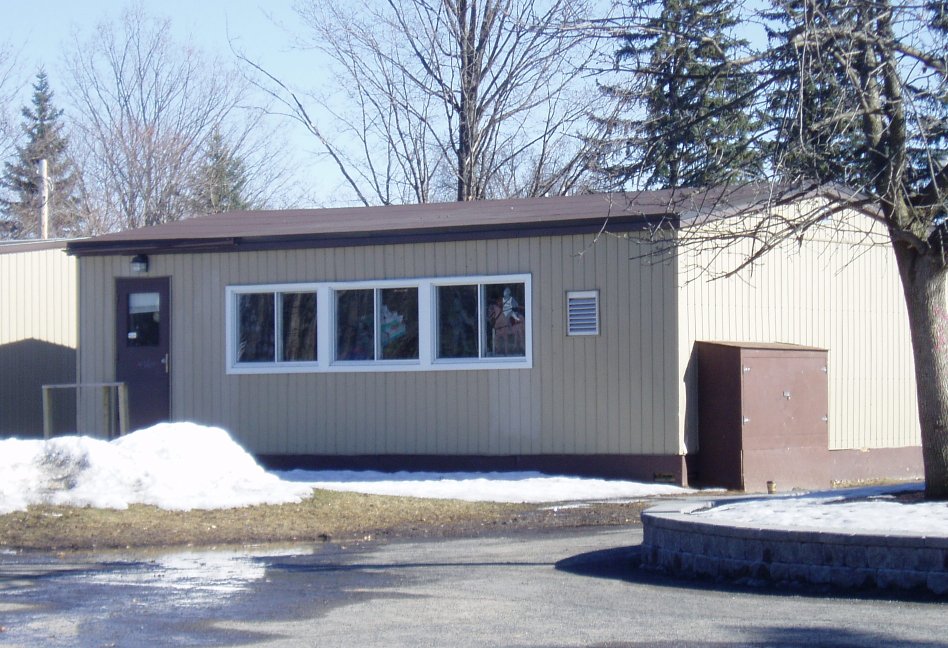
A portable classroom at Rockcliffe Park Public School in Ottawa, Ontario, Canada
A portable classroom with wheelchair ramp at an elementary school in Washington County, Oregon, U.S.
Portable classrooms at Pierre Elliott Trudeau High School in Markham, Ontario, Canada
A four-room portable classroom at Reynolds High School in Troutdale, Oregon, U.S.

A portable classroom (also known as a demountable or relocatable classroom), is a type of portable building installed at a school to temporarily and quickly provide additional classroom space where there is a shortage of capacity.[1] They are designed so they may be removed once the capacity situation abates, whether by a permanent addition to the school, another school being opened in the area, or a reduction in student population.[1] Such buildings would be installed much like a mobile home, with utilities often being attached to a main building to provide light and heat for the room. Portable classrooms may also be used if permanent classrooms are uninhabitable, such as after a fire or during a major refurbishment.

Sometimes, the portable classrooms are meant to be long-lasting and are built as a "portapack", which combines a series of portables and connects them with a hallway.[citation needed]

Portable classrooms are colloquially known as bungalows, slum classes, t-shacks, trailers, terrapins, huts, t-buildings, portables, mobiles, or relocatables. In the UK, those built in 1945–1950 were known as HORSA huts after the name of the Government's post-war building programme, "Hutting Operation for the Raising of the School-leaving Age".[2][3] Others in the UK are often known as 'Pratten huts' after the Pratten company that supplied many of them after World War II.[4][5][6][7]

See also

[edit]

References

[edit]
Revisions and contributorsEdit on WikipediaRead on Wikipedia
from Grokipedia
A portable classroom, also known as a relocatable or modular classroom, is a prefabricated structure designed and constructed to be easily transported over public streets and relocated to provide temporary additional educational space in schools.[1] These buildings are typically manufactured off-site as industrialized or modular units with closed construction, allowing for quick assembly on location without extensive foundation work.[2] They serve as immediate solutions to address overcrowding, class-size reduction mandates, and delays in permanent construction funding, often accommodating standard classroom functions or specialized uses like computer labs and libraries.[3][1] Portable classrooms have been a fixture in U.S. public education since at least the 1930s, with widespread adoption during periods of rapid enrollment growth.[4] In the 1930s, temporary portables were used in districts like Seattle to manage expansion, and their use surged during and after World War II to handle population influxes, serving up to 20% of students by 1958 in some areas.[4] By the late 20th century, they had become common nationwide; for instance, in 1999, approximately 36% of U.S. schools (about 28,600) relied on them to meet space needs. As of 2021, more than one-third of public schools continued to use portable buildings due to capacity constraints.[3][5] Their longevity as "temporary" solutions has varied, with some units in use for 10 to 50 years, particularly in regions like California where they bridge funding gaps of 2-3 years for new builds.[1][3] From a school district's viewpoint, portable classrooms offer key advantages such as low initial costs and rapid deployment, enabling occupancy in weeks rather than years.[6] This flexibility supports enrollment surges without disrupting ongoing education, and studies indicate no significant negative impact on student achievement when properly maintained.[3] However, challenges persist, including higher long-term maintenance expenses, rapid depreciation, and indoor air quality issues like poor ventilation, mold from water damage, and off-gassing pollutants such as formaldehyde.[3][1] Public concerns often focus on aesthetics, perceived safety risks, and health effects, prompting recommendations for district-level planning committees to oversee usage and upgrades.[3] Modern regulations, such as those in Minnesota, require third-party certification and compliance with building codes to ensure structural integrity and accessibility.[2]

History

Origins and Early Development

Portable classrooms are relocatable, temporary modular structures designed to provide additional classroom space for schools facing student overflow, distinguishing them from fixed, permanent educational architecture by their ease of transport and assembly.[7] These buildings address immediate capacity needs without the long-term commitments of traditional construction, often featuring prefabricated components that allow for rapid deployment and relocation.[8] Early precursors to portable classrooms emerged in the 19th century as wooden one-room schoolhouses in rural United States and European communities, such as those in the American Midwest and Norway. These modest buildings accommodated students of all ages under a single teacher and were frequently constructed with simple materials that permitted disassembly and relocation—often by horse-drawn teams or rail—to serve shifting population centers in agrarian areas.[9][10][11] By the late 1800s, such structures had become commonplace, reflecting the era's emphasis on flexible, community-driven education in sparsely populated regions.[12] The modern concept of portable classrooms originated in the early 20th century, drawing from standardized military barracks built during World War I for rapid troop housing. After the war, surplus government-issue buildings—simple, prefabricated wooden units known as "chicken coops"—were adapted for civilian educational purposes in the United States during the 1920s and 1930s, responding to surging school enrollments driven by urbanization and immigration.[13] These repurposed structures offered cost-effective, movable solutions for overcrowded urban and suburban schools, marking a shift toward industrialized building techniques.[14] In California, the first documented prototypes of portable classrooms appeared in the 1920s, utilizing prefabricated panels to create relocatable units suited to the state's seismic vulnerabilities and rapid population growth. For instance, Kern County initiated temporary school constructions in 1920 to alleviate capacity shortages when bond funding delays hindered permanent builds, prioritizing lightweight, earthquake-resistant designs.[15] These innovations set a precedent for modular educational facilities, influencing broader adoption in response to regional challenges like the aftermath of the 1906 San Francisco earthquake.[16]

Post-War Expansion and Global Adoption

Following World War II, the United Kingdom faced acute shortages in school accommodation due to war damage and the impending raise in the school leaving age from 14 to 15, effective April 1947. To address this, the Hutting Operation for the Raising of the School Leaving Age (HORSA) was launched in 1945, providing prefabricated huts to create additional classroom spaces across England and Wales. By early 1949, HORSA had delivered 136,000 places, expanding to 167,880 by early 1952, with huts typically added to existing school playgrounds to accommodate the extra year group without delay.[17] These temporary structures, often single-storey with concrete and timber construction, metal windows, and corrugated asbestos roofs, were supplied by companies like F. Pratten and Co Ltd, which became synonymous with such prefabs in the late 1940s and 1950s.[18] In the 1950s, Pratten huts specifically addressed urban expansion needs, supporting growing enrollments in densely populated areas amid ongoing material shortages and budget constraints.[18] In the United States, the post-war baby boom similarly strained school infrastructure, prompting federal and state initiatives for rapid expansion. California's legislature responded to the enrollment surge—driven by the national increase from 25.1 million students in 1949–1950 to 36 million by 1960—by establishing programs in 1949 to fund school facilities, including temporary solutions like portable classrooms to mitigate overcrowding in areas such as Los Angeles.[19][20] In the Los Angeles Unified School District alone, student numbers jumped from 316,000 in 1949 to over 645,000 by the late 1950s, leading to widespread use of modular bungalows—single-storey, relocatable units with indoor-outdoor designs—for immediate relief, often integrated into new "finger-plan" campuses via bond-funded construction like the $75 million measure in 1946 that added over 2,300 classrooms.[21] Western states like Oregon faced comparable pressures, with portable trailers deployed in the 1950s to handle the boom's impact on local districts, reflecting a national trend where temporary structures became a staple for scalable educational growth.[22] The 1958 National Defense Education Act further intensified this by providing federal aid for science, mathematics, and modern foreign language instruction, increasing STEM enrollment and necessitating additional portable spaces to manage overflow in high schools.[23] Portable classrooms gained global traction in the mid-20th century as a flexible response to demographic shifts. In New Zealand, the Ministry of Education utilized relocatable prefabs during the post-war population boom, with programs expanding in the 1960s to standardize and deploy modular school buildings amid rapid urbanization and enrollment growth.[24] Canada adopted similar approaches, as seen at Rockcliffe Park Public School in Ottawa, where portables have supplemented the original 1922 building since the 1970s to accommodate fluctuating student numbers in a growing community.[25] These implementations underscored portables' role in enabling policy-driven educational access worldwide, from rural extensions to urban overflows.

Design and Construction

Materials and Structural Components

Portable classrooms are primarily constructed using steel frames to ensure structural integrity and resistance to environmental stresses during transport and use. These frames form the core skeleton, often galvanized to prevent corrosion, and support the overall load while allowing for disassembly and relocation. Wall panels typically consist of insulated sandwich constructions, featuring a foam core—such as expanded polystyrene (EPS), polyurethane (PU), or rockwool—sandwiched between durable exterior layers like metal sheeting or vinyl cladding. This design provides thermal efficiency and lightweight properties essential for mobility. Roofs are generally flat or low-slope shed styles, constructed from metal panels to facilitate stacking and towing without excessive height.[26][27][28] Key structural components include a wheel-mounted chassis, resembling that of mobile homes, which enables towing by standard heavy-duty vehicles over highways. Units are built in modular sections, with standard dimensions around 24 feet wide by 40 feet long, providing up to 960 square feet per single module or more when combined.[29] Foundations vary by site needs: temporary setups often use steel skids for easy leveling on gravel or soil, while semi-permanent installations employ concrete pads or piers to enhance stability and distribute weight. These elements collectively support the unit's relocatability, with typical weights ranging from 10 to 15 tons per full module, depending on size and furnishings.[30][29] Engineering features emphasize load-bearing capacity to meet safety standards, including designs that withstand wind speeds up to 90-110 mph through reinforced framing and anchoring systems. In seismic-prone regions, additional reinforcements such as base isolators or braced steel components are incorporated to mitigate earthquake forces, ensuring compliance with regional building codes. Over time, materials have evolved from wood and plywood constructions prevalent in the 1950s—using conventional lumber for basic framing—to modern steel and composite panels adopted widely since the 2000s, extending service life to 20-30 years with proper maintenance.[31][32][33][34][35]

Installation Processes and Modern Features

The installation of portable classrooms begins with meticulous site preparation to ensure stability and accessibility. This involves clearing and grading the site to create a level pad, typically measuring around 30 feet by 50 feet, with a maximum deviation of 9 inches from level and a minimum soil bearing capacity of 1,000 pounds per square foot. Proper drainage is achieved by sloping the pad at 2% away from the structure, and a turf-free surface is established to prevent moisture issues. Adequate clearance for truck access—often at least 85 feet—is required, along with provisions for handicap-accessible walkways. These steps comply with state regulations, such as those outlined by California's Division of the State Architect, to facilitate safe placement.[36] Once the site is ready, the prefabricated units are delivered by the manufacturer or a specialized mover and positioned using cranes or heavy-duty equipment. Units are placed with at least 4 feet of separation to allow for utilities and maintenance access, avoiding conflicts with existing sprinklers or structures. Connections to the main building's utilities follow, including electricity, plumbing, and HVAC systems via flexible lines such as cross-linked polyethylene tubing for water supply. These hookups are typically performed by district personnel or licensed contractors, with costs reimbursable up to specified limits under programs like California's Relocatable Classroom Program. For multi-unit setups, known as portapacks or classroom clusters, covered walkways are installed to provide sheltered connections between units, enhancing safety and weather protection. The entire on-site installation process generally takes 1-2 weeks, a significant reduction from the 6-12 months required for permanent construction, allowing schools to resume operations quickly.[36][37][38][26] Relocation of portable classrooms mirrors the installation in reverse, emphasizing efficiency and minimal disruption. The process starts with unhooking all utilities—disconnecting electrical, plumbing, and HVAC lines—followed by removing any skirting, ramps, or walkways. The unit is then lifted by crane and loaded onto a flatbed truck for towing to the new site, where the sequence of placement and reconnection is repeated. This mobility allows units to be redeployed within days, supporting flexible educational needs.[39][40] Contemporary portable classrooms incorporate advanced features to align with modern educational and sustainability standards. Integrated smart technologies, such as built-in Wi-Fi routers and interactive whiteboards, enable seamless digital learning and connectivity for students and teachers. Energy efficiency is enhanced through double-glazed windows, LED lighting, and high-efficiency HVAC systems that reduce operational costs and improve indoor air quality. Accessibility is prioritized with ADA-compliant features, including wide doorways (at least 32 inches clear width), automatic door operators, and integrated ramps or decks for wheelchair access. Post-2010 developments have further emphasized sustainability, with options for solar panel integration on roofs to generate renewable energy and the use of fire-resistant materials like steel framing and intumescent coatings to meet updated building codes. As of 2025, designs increasingly incorporate solar photovoltaic systems and biophilic elements, such as enhanced natural lighting and materials, to promote healthier learning environments.[41][42][37][36][43][44][45]

Usage and Applications

Primary Educational Settings

Portable classrooms are commonly integrated into primary, elementary, middle, and high school campuses across the United States to manage overcrowding and accommodate overflow classes, such as those for special education, electives, or general instruction. These structures are typically placed adjacent to main buildings, forming clusters that connect via walkways or shared utilities to facilitate seamless student movement. For instance, in 2007, the Reynolds School District in Oregon proposed adding 12 portable classrooms across four schools to address a 14% enrollment increase since 2000 and support ongoing capacity needs.[46] According to the National Center for Education Statistics, 31% of U.S. public schools utilized one or more portable buildings as supplementary instructional spaces as of 2023.[47] In daily operations, portable classrooms are outfitted with standard educational amenities, including desks, chairs, blackboards or whiteboards, and technology such as projectors and computers, enabling typical classroom activities like lectures and group work. These units often feature energy-efficient lighting, heating, ventilation, and air conditioning (HVAC) systems for comfort, along with ADA-compliant restrooms and security features like alarms. Integration with the main school's infrastructure allows connection to networks for internet access, scheduling systems, and surveillance, supporting up to 30 students per single-unit classroom in configurations ranging from standalone modules to multi-room complexes.[41] Usage of portable classrooms in primary educational settings varies globally, reflecting local demographic pressures. In the United Kingdom, approximately 21% of teachers reported employing temporary classrooms, such as Portakabins, to cope with pupil surges and larger class sizes in primary schools as of 2018.[48] In Australia, these modular units are particularly vital in remote and regional areas, where they provide quick-setup educational facilities amid challenges like limited access to traditional construction sites.[49] In the U.S., their adoption peaked in the 2000s amid enrollment booms, with some districts, like Anaheim Union High School District, relying on portables for about 20% of classroom space by 2000.[50] An estimated 385,000 such units were in operation nationwide by the mid-2010s, underscoring their role in routine capacity management.[51]

Temporary and Emergency Deployments

Portable classrooms play a critical role in emergency deployments following natural disasters, providing immediate educational spaces when permanent school infrastructure is damaged or destroyed. In the aftermath of the 2011 Great East Japan Earthquake and tsunami, temporary prefabricated school buildings were widely utilized in affected areas such as Higashi Matsushima, where students continued classes despite inadequate equipment and thin walls that compromised privacy. These structures allowed education to resume amid widespread devastation that destroyed numerous schools. Similarly, in the United States, portable classrooms have been essential for post-hurricane recovery, enabling students to return to learning environments quickly after events like Hurricanes Katrina and Rita in 2005, which severely impacted schools in Louisiana and Mississippi. Their modular design facilitates rapid deployment, often within two weeks, minimizing educational disruptions in crisis situations. Transitional deployments of portable classrooms are common during school renovations or delays in new construction, offering flexible space solutions without halting academic programs. In the United Kingdom, Wiltshire Council has employed temporary classrooms as part of its efforts to create additional school places between 2020 and 2024 to support ongoing refurbishments and expansions in special education facilities. These units serve as interim accommodations, allowing renovations to proceed while maintaining continuity for students, particularly in primary and resource base settings. Logistically, organizations like the U.S. Federal Emergency Management Agency (FEMA) support the provision of portable classrooms through funding and partnerships for disaster response. Under the Temporary Emergency Impact Aid program, states received allocations to lease portable classrooms for displaced students after Hurricanes Katrina and Rita, addressing overcrowding and facility losses in affected districts. Internationally, the United Nations High Commissioner for Refugees (UNHCR) incorporates mobile and modular classrooms in refugee education initiatives, such as in camps across East Africa and the Great Lakes region, where they enhance access to learning for displaced children through vocational training and basic instruction programs. A notable example of large-scale emergency deployment occurred following Hurricane Katrina in 2005, when Louisiana schools received substantial support for portable classrooms to accommodate thousands of displaced students amid the destruction of over 100 public school buildings in New Orleans. FEMA and partners like modular building providers facilitated the rapid installation of these units, with funds allocated for leasing to restore educational operations in parishes like Orleans, where nearly all schools were impacted. This response highlighted the scalability of portable classrooms in restoring normalcy, though exact unit counts varied by district, with millions invested in temporary infrastructure to ease overcrowding.

Advantages and Disadvantages

Key Benefits

Portable classrooms offer significant cost advantages over traditional permanent structures, typically costing about one-third as much to construct due to factory prefabrication and reduced on-site labor.[52] For instance, a standard portable unit can cost approximately 20% of a bricks-and-mortar classroom, with upfront expenses often ranging from $50,000 to $100,000 per unit compared to $200,000 or more for permanent builds, while relocation fees remain low at around 10-20% of initial costs.[53] Their flexibility stands out in enabling rapid scalability to address fluctuating enrollment, with deployment times of just a few days to weeks versus months or years for permanent construction, allowing schools to add capacity swiftly without extensive planning delays.[52] These units are highly reusable, lasting 20-30 years with proper maintenance and easily relocated or reconfigured across multiple sites, which supports long-term adaptability for growing districts.[54] Beyond economics, portable classrooms minimize disruptions to ongoing education by enabling off-site fabrication and quick on-site assembly, ensuring students face little interruption during expansions or renovations.[54] Eco-friendly options further enhance their appeal, as modular designs reduce construction waste by up to 90% through precise factory processes and incorporate recyclable materials, promoting sustainability without compromising functionality.[55] As of 2024, 31 percent of U.S. public schools have one or more portable buildings in use.[47]

Notable Drawbacks

Portable classrooms typically range from 800 to 1,200 square feet in size, which often results in overcrowding when accommodating standard class sizes of 20 to 30 students, leading to reduced personal space and heightened distractions. This limited footprint exacerbates issues with poor acoustics, as thin walls and lightweight construction allow external noises—such as traffic or playground activity—to penetrate easily, while internal sounds from students or HVAC systems echo excessively, hindering concentration and teacher instruction. Additionally, inadequate natural light is common due to smaller windows and peripheral placement on school grounds, contributing to a dimmer environment that can strain eyes and lower student engagement.[56][51][57] Maintenance of portable classrooms presents significant long-term challenges, with higher repair costs accumulating over time compared to permanent structures, often amounting to 2-4% of the initial investment annually for upkeep like HVAC servicing and material replacements. Roof leaks frequently emerge after about 10 years of use, stemming from exposure to weather elements and the use of cost-effective but less durable materials like plywood and particle board, which can lead to water damage, mold growth, and structural weakening if not addressed promptly. Their isolated placement on school peripheries also increases vulnerability to vandalism, such as graffiti or break-ins, due to reduced oversight and distance from main buildings, resulting in additional repair expenses and safety concerns for occupants.[58][6][59] Equity concerns arise as portable classrooms often provide lower-quality learning environments for students from marginalized communities, including low-income and immigrant families, who are disproportionately assigned to these temporary structures in overcrowded, underfunded districts. A 2014 investigation highlighted temperature fluctuations in portables due to inefficient insulation and ventilation, creating discomfort that impairs cognitive function and exacerbates health disparities for vulnerable students. Studies indicate higher absenteeism rates in portable classrooms attributed to discomfort from poor air quality, noise, and thermal inconsistencies, further widening achievement gaps for affected groups.[60][51][61]

Regulations and Standards

Building Codes and Compliance

In the United States, portable classrooms are required to comply with the International Building Code (IBC), which addresses structural integrity against environmental hazards such as wind and seismic loads to ensure safe occupancy in various site conditions.[62] Factory-built units classified as manufactured structures must also adhere to standards set by the U.S. Department of Housing and Urban Development (HUD) under the National Manufactured Housing Construction and Safety Standards Act of 1974, covering aspects like transportability, fire resistance, and overall durability. Zoning regulations for portable classrooms typically mandate specific setback distances from permanent buildings to facilitate emergency access and site circulation, such as a minimum of 20 feet in certain jurisdictions like Maine.[63] Additionally, local permits are essential for site preparation, occupancy approval, and connections to utilities like electricity, water, and sewage, ensuring integration with existing infrastructure while preventing overload or environmental impacts.[64] Internationally, regulations vary to accommodate modular prefabrication. In the European Union, portable classrooms as prefabricated construction products must obtain CE marking pursuant to the Construction Products Regulation (EU) No 305/2011, verifying conformity with harmonized standards for structural stability, fire safety, and energy performance before market placement. In New Zealand, the Ministry of Education has established guidelines for relocatable classrooms since 2014, emphasizing compliance with the Designing Quality Learning Spaces (DQLS) framework to meet seismic resilience, thermal efficiency, and accessibility criteria tailored to educational environments.[65] A key structural requirement across many jurisdictions is that portable classrooms must withstand wind speeds of at least 90 miles per hour, as recommended by the Federal Emergency Management Agency (FEMA) for vulnerability mitigation in critical facilities.[32] Furthermore, units must incorporate egress windows compliant with NFPA 101 (Life Safety Code) standards for educational occupancies, featuring operable openings of at least 5.7 square feet (with minimum dimensions of 20 inches wide by 24 inches high) and a sill height not exceeding 44 inches above the floor to enable emergency rescue or escape.[66]

Health, Safety, and Accessibility Requirements

Portable classrooms must adhere to stringent safety mandates to protect occupants, particularly in educational settings where children are present. Per NFPA 101 Life Safety Code Section 14.3.4, these structures require smoke detection and alarm systems throughout to provide early fire detection in educational occupancies. Means of egress must be clearly marked, unobstructed, and sufficient in number—typically at least two per unit, with doors swinging outward and panic hardware for quick egress—to comply with NFPA 101 Chapter 7 and Section 14.2. Automatic sprinkler systems are required in educational occupancies per NFPA 101 Section 14.3.5 and IBC Section 903.2.3, but portable classrooms often qualify for exemption if they are single classrooms with at least one exterior exit door at ground level.[67] Health regulations emphasize preventing indoor air pollution through material selection and ventilation. The U.S. Environmental Protection Agency (EPA) recommends using low-volatile organic compound (low-VOC) materials for walls, flooring, and furnishings in portable classrooms to reduce emissions of harmful chemicals that can cause respiratory issues and other health effects.[6] Ventilation systems must deliver a minimum of 15 cubic feet per minute (CFM) of outdoor air per person to dilute contaminants and maintain acceptable indoor air quality, as specified in ASHRAE Standard 62.1, which informs EPA guidelines for schools.[6] Following the COVID-19 pandemic, post-2020 updates from the EPA and Centers for Disease Control and Prevention (CDC) advocate enhanced air filtration, such as upgrading to MERV-13 or higher filters in HVAC systems and incorporating portable HEPA units, to capture airborne pathogens and improve occupant safety in high-density environments like classrooms.[68] Accessibility requirements under the Americans with Disabilities Act (ADA) ensure inclusive use of portable classrooms for students and staff with disabilities. Entrances must feature ramps with a maximum slope of 1:12 and handrails on both sides to provide safe wheelchair access, per ADA Standards for Accessible Design (2010). Doorways require a minimum clear width of 32 inches, though 36-inch widths are commonly implemented in educational settings to accommodate mobility aids without restriction.[69] Inside, at least 5% of furniture, such as desks and tables, must be adjustable to heights between 28 and 34 inches with knee clearance of at least 24 inches for wheelchair users, facilitating equitable participation in learning activities.[70]

Environmental Considerations

Sustainability and Lifecycle Impact

Portable classrooms, as a form of prefabricated modular construction, exhibit a lower embodied carbon footprint compared to traditional permanent buildings, with lifecycle assessments indicating reductions of approximately 15-47% in greenhouse gas emissions primarily due to off-site factory production that minimizes material waste and transportation impacts.[71][72] This efficiency arises from controlled manufacturing environments that optimize resource use, reducing the overall environmental burden during the production phase. Sustainable practices in portable classroom design further enhance their ecological profile, incorporating materials such as FSC-certified wood for structural elements and recycled-content steel framing, supporting high recyclability of key components like steel (often over 90%).[73] Energy-efficient features, including R-19 to R-26 wall insulation, can reduce operational energy demands by up to 38-50%.[74][75] At end-of-life, demountable designs facilitate reuse or recycling of major components, such as steel and wood panels, while off-site modular assembly inherently cuts construction waste by up to 90% compared to conventional methods.[76][55] With proper maintenance, portable classrooms can maintain a 20-30 year service life, allowing long-term operational benefits to potentially offset initial manufacturing emissions across their full lifecycle.[34]

Indoor Environmental Quality and Maintenance

Portable classrooms often face unique indoor air quality (IAQ) challenges due to their temporary nature and potential for moisture accumulation, particularly mold risks stemming from elevated humidity levels. These structures are prone to condensation and leaks, which can foster mold growth if relative humidity exceeds recommended thresholds. The U.S. Environmental Protection Agency (EPA) advises maintaining indoor humidity between 30% and 60% in school environments to prevent such issues, emphasizing the importance of proper ventilation to mitigate moisture buildup in portable units. To achieve this, the EPA recommends regular HVAC maintenance, including filter changes and system checks, at intervals based on manufacturer guidelines or local conditions (often semi-annually), to ensure consistent humidity control and reduce mold proliferation risks.[77][78][6] Lighting and temperature regulation in portable classrooms are critical for occupant comfort and health, yet older models frequently exhibit deficiencies. Supplemental LED lighting systems are commonly installed to meet minimum illuminance standards of 300 lux on work surfaces, as recommended by the Illuminating Engineering Society (IES) for educational settings, helping to counteract limited natural light in these modular spaces. Temperature control relies on adequate insulation to sustain indoor conditions between 68°F and 74°F, a range associated with optimal student performance and thermal comfort. However, 2014 investigations highlighted erratic temperature controls in older portable classrooms, often resulting from inadequate HVAC design and maintenance, leading to fluctuations that affect learning environments.[79][80][81] Effective maintenance protocols are essential for preserving IAQ and preventing health hazards like allergen exposure in portable classrooms. Annual inspections of seals, vents, and structural integrity are standard to identify leaks or wear that could compromise air quality, with routine cleaning schedules aimed at removing dust and potential allergens from surfaces and HVAC components. These upkeep activities typically cost between $1,000 and $2,000 per unit annually, depending on unit size and location, covering labor and materials for preventive measures. As of 2025, the EPA introduced updated tools specifically for portable classrooms, promoting the use of high-efficiency particulate air (HEPA) or MERV-13 filters tailored to these spaces, which can reduce fine particulate matter (PM2.5) levels by up to 40%, thereby lowering respiratory risks for students and staff.[6][82][58][83][84][83]

References

User Avatar
No comments yet.