Hubbry Logo
Personal groomingPersonal groomingMain
Open search
Personal grooming
Community hub
Personal grooming
logo
8 pages, 0 posts
0 subscribers
Be the first to start a discussion here.
Personal grooming
Personal grooming
from Wikipedia
Summer Morning (at Spadarvet), by Carl Larsson, 1908
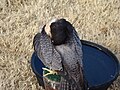
Preening male ruff
Mutually grooming ponies at Turf Hill, New Forest, U.K.

Grooming (also called preening) is the art and practice of cleaning and maintaining parts of the body. It is a species-typical behavior.

In animals

[edit]

Individual animals regularly clean themselves and put their fur, feathers or other skin coverings in good order. This activity is known as personal grooming, a form of hygiene. Extracting foreign objects such as insects, leaves, dirt, twigs and parasites[1] is a form of grooming. Among animals, birds spend considerable time preening their feathers. This is done to remove ectoparasites, keep the feathers in good aerodynamic condition, and waterproof them. To do that, they use the preen oil secreted by the uropygial gland, the dust of down feathers, or other means such as dust-bathing or anting. During oil spills, animal conservationists that rescue penguins sometimes dress them in knitted sweaters to stop them from preening and thereby ingesting the mineral oil, which is poisonous. Monkeys may also pick out nits from their fur or scratch their rears to keep themselves clean. Cats are well known for their extensive grooming. Cats groom so often that they often produce hairballs from the fur they ingest.[2] Many mammal species also groom their genitals after copulation.[3][4]

Grooming as a social activity

[edit]

Many social animals adapt preening and grooming behaviors for other social purposes such as bonding and the strengthening of social structures. Grooming plays a particularly important role in forming social bonds in many primate species, such as chacma baboons and wedge-capped capuchins.

Mutual grooming in human relationships

[edit]

In humankind, mutual grooming relates closely to social grooming, which is defined as the process by which human beings fulfill one of their basic instincts, such as socializing, cooperating and learning from each other.[5] In research conducted by Holly Nelson (from the University of New Hampshire), individuals who chose their romantic partner reported more mutual grooming than others who focused in other types of relationships. Hence, this study hypothesized that mutual grooming related to relationship satisfaction, trust and previous experience of affection within the family. They claim that even though humans do not groom each other with the same fervor that other species do, they are groomers par excellence. Therefore, human mutual grooming plays an important role in pair bonding. In the same investigation, researchers found that individuals with more promiscuous attitudes and those who scored high on the anxiety sub-scale on an adult attachment style measure tend to groom their partners more frequently. These findings were also consistent with some of the functions of grooming: potential parental indicator, developing trust and courtship or flirtation.[6]

A recent empirical study by Seinenu Thein-Lemelson (University of California, Berkeley) utilized an ethological approach to examine cross-cultural differences in human grooming as it pertains to caregiving behaviors. Naturalistic data was collected through video focal follows with children during routine activities and then coded for grooming behaviors. This cross-cultural comparison of urban families in Burma and the United States indicates that there are significant cross-cultural differences in rates of caregiver-to-child grooming. Burmese caregivers in the sample groomed children more often than caregivers in the United States. Additionally, children in the United States have short instances of concentrated grooming predominantly during daily activities that are structured explicitly around hygiene goals (bath time), in contrast to the Burmese child, whose grooming is distributed more evenly within and across daily activities. The Burmese parents maintained a constant vigilance with regard to risk of infection. The study is significant because it is the only study of human grooming to utilize naturalistic data.[7]

[edit]

See also

[edit]

References

[edit]
[edit]
Revisions and contributorsEdit on WikipediaRead on Wikipedia
from Grokipedia
Personal grooming refers to the routine practices individuals engage in to maintain personal hygiene, cleanliness, and an aesthetically pleasing appearance, encompassing activities such as bathing or showering with soap and water, hair washing and styling, nail trimming and grooming, oral care including brushing and flossing, and shaving or hair removal. These practices are integral to daily self-care, promoting both physical health and social presentation. The importance of personal grooming extends beyond to encompass significant benefits, as it helps prevent the accumulation of , , and pathogens on the skin, , and mucous membranes, thereby reducing the risk of infections such as conditions, respiratory illnesses, and hospital-acquired diseases like . Regular grooming routines, including daily handwashing, showering, and facial cleansing, also support overall well-being by improving circulation, maintaining integrity, and fostering a sense of normalcy and , particularly in professional or social contexts where neat appearance conveys competence and . Research indicates that simple grooming acts, such as applying , can enhance self-perceived and mitigate negative self-evaluations related to appearance. Historically, personal grooming has evolved from ancient survival-driven hygiene behaviors observed in early ancestors and animals to deliberate cultural and societal norms, with practices like hair cutting and body adornment documented in civilizations such as and , where barbers held esteemed roles tied to , ritual, and status. Culturally, grooming standards vary widely; for instance, in early 20th-century America, the rise of for women reflected shifting ideals of and , influenced by and , while contemporary global practices continue to adapt to diverse social expectations, technology, and guidelines.

Fundamentals

Definition and Scope

Personal grooming encompasses the practices and behaviors individuals engage in to maintain physical appearance, , and through the cleaning, styling, and care of body parts. It includes a broad scope of activities aimed at preventing transmission, enhancing , and supporting overall , extending beyond mere to fundamental health maintenance. Key components of personal grooming involve daily routines such as or showering with and to remove dirt, sweat, and ; hair care through washing, brushing, and styling to distribute natural oils and prevent scalp issues; or trimming facial and to reduce irritation and risk; nail trimming and cleaning to avoid bacterial buildup under nails; and practices like brushing teeth twice daily with and flossing to prevent cavities and gum . These elements collectively contribute to prevention by minimizing pathogen spread and promoting physical and through improved comfort and confidence. Personal grooming is typically self-directed, involving independent daily habits performed at home to sustain and appearance, in contrast to professional grooming, which relies on trained specialists in settings like salons for specialized services such as precise haircuts, chemical treatments, or manicures that require expertise and equipment. From an evolutionary perspective, grooming originated as a hygienic mechanism in , including humans, to remove parasites, , and pathogens from the body, thereby reducing risk and supporting survival. In humans, reduced diminished intensive hygienic demands compared to other , but grooming retained a role in signaling fitness, as a clean and well-maintained appearance advertises , genetic quality, and to others. This dual function underscores grooming's significance in both individual and broader .

Historical Development

Personal grooming practices trace their origins to ancient civilizations, where and appearance were integral to social and religious life. In around 3000 BCE, individuals employed oils, creams, and wigs as essential elements of daily care, with wigs often crafted from human or plant fibers to signify status and protect against the sun. These practices extended to elaborate maintenance routines using combs and perfumes, reflecting a cultural emphasis on and aesthetic presentation. Similarly, in , emerged as a cornerstone of grooming culture, with —large communal bath complexes—serving not only for but also as social hubs where citizens of all classes engaged in ritualistic cleansing and grooming activities. These facilities, often funded by emperors or wealthy patrons, featured heated pools, steam rooms, and areas for oiling and scraping the skin with strigils, underscoring bathing's role in and community interaction. During the medieval and periods in , grooming norms shifted under the influence of , which promoted and restraint in personal adornment to align with spiritual ideals of . Religious doctrines emphasized covering the body and minimizing displays of vanity, leading to simpler hairstyles and clothing that concealed rather than enhanced physical features. This era also saw the gradual emergence of specialized grooming tools, such as combs made from or and early mirrors, which facilitated personal care among the and emerging middle classes. By the , these implements became more refined and accessible, symbolizing a balance between religious and the period's growing interest in and individual presentation. The 19th and 20th centuries marked significant industrialization of grooming, beginning with the of commercial soaps that made products widely available beyond elite circles. In the mid-19th century, innovations in chemical processes enabled large-scale manufacturing using soda and potash, transforming from a luxury to an everyday essential for personal cleanliness. This was followed by technological advancements like the electric razor, invented in the 1920s by , which offered a safer, more efficient alternative to straight razors for removal. Post-World War II, gained prominence with the development of aluminum chlorohydrate-based antiperspirants in the 1940s, addressing in an era of increased social awareness about personal scent. In the , grooming has evolved toward natural and , driven by growing environmental consciousness and consumer demand for eco-friendly alternatives. This trend emphasizes biodegradable ingredients and reduced , with companies adopting life-cycle assessments to minimize ecological impact from production to disposal. Such innovations reflect broader societal shifts prioritizing alongside personal care.

Practices in Humans

Hygiene and Cleanliness Routines

Bathing and ing are fundamental practices for removing dirt, sweat, oils, and microorganisms from the skin to maintain cleanliness. Health experts recommend that most adults bathe or daily, particularly after or in warm climates, though several times per week may suffice for those with low to avoid excessive drying of the skin. temperature plays a critical role in during these routines; warm (around 37–40°C) is preferred over hot , as prolonged exposure to hot (above 40°C) increases , disrupts the barrier, and heightens irritation risk compared to cooler temperatures. Mild, non-antimicrobial soaps or gentle cleansers should be used to avoid stripping natural oils, with application focused on areas prone to sweat accumulation; harsh soaps can exacerbate dryness and irritation. Exfoliants, such as mild scrubs, can be incorporated periodically (e.g., 1–2 times weekly) to remove dead cells, but gentle circular motions for about 30 seconds are advised to prevent abrasion. Handwashing remains a of personal , especially for reducing bacterial transmission. According to guidelines, hands should be washed with and for 40–60 seconds when visibly soiled or after potential contamination, following a specific technique: wet hands with running , apply , rub palms together, interlace fingers to clean between them, rub the backs of hands, clasp thumbs to rotate and clean, and scrub fingertips against palms before rinsing thoroughly under running and drying with a clean . This duration and method effectively remove pathogens, outperforming shorter washes in germ reduction. Laundry practices complement bathing by preventing the buildup of odor-causing bacteria and allergens on fabrics. Clothing, particularly undergarments and items in direct skin contact, should be washed after each use, while outerwear like jeans or jackets can be laundered every 4–5 wears depending on activity level, using hot water cycles (at least 60°C) where fabric allows to kill microbes and reduce odor from bacterial decomposition of sweat. Bedding and towels require weekly washing to minimize allergen accumulation, such as dust mites, which thrive in unwashed fabrics. These routines play a vital role in disease prevention by limiting microbial proliferation on the and fabrics. Regular and handwashing reduce the incidence of staphylococcal skin infections, such as or , by removing transient before they establish infections. Gentle daily washing helps manage by clearing excess oil and debris from pores without irritation, which could otherwise exacerbate breakouts. For vector-borne issues like lice, weekly combined with machine-washing infested clothing, bedding, and towels in hot water (at least 54°C) and drying on high heat disrupts the lice life cycle and prevents reinfestation.

Hair, Skin, and Nail Care

Hair care routines focus on cleansing, conditioning, and styling to protect the hair shaft and scalp from environmental damage and maintain its structural integrity. Shampooing frequency should be tailored to hair type and lifestyle; individuals with oily or straight hair may benefit from daily washing to remove excess sebum, while those with dry, curly, or coily hair should shampoo every two to three weeks or as needed to avoid stripping natural oils. Conditioning follows shampooing to restore moisture, detangle strands, and improve manageability, with application targeted to the mid-lengths and ends for fine hair or the full length for dry or textured hair. Regular haircuts, performed every six to eight weeks, remove split ends and prevent further breakage, while styles such as fades—which taper hair length from short at the sides to longer on top—or layers—which add dimension by varying lengths—enhance aesthetics without compromising health when done with sharp tools to minimize trauma. To protect against damage, use wide-tooth combs on wet hair, apply heat protectants before styling tools, and air-dry when possible, as excessive heat or vigorous brushing can weaken the cuticle and lead to split ends. Skin care emphasizes a consistent routine of cleansing, hydration, and protection to support the and address common concerns like dryness or . Cleansing should involve mild, non-soap products applied in short, warm-water sessions of five minutes or less to remove dirt without disrupting the skin's balance. immediately after cleansing locks in hydration; for dry skin, opt for thicker creams containing humectants like glycerin, massaged gently until absorbed, while -prone skin benefits from lightweight, non-comedogenic formulas to prevent pore clogging. Broad-spectrum with an SPF of at least 30 should be applied daily as the last step, using a palm-sized amount and reapplying every two hours during sun exposure to block UVA and UVB rays that cause premature aging and conditions like exacerbation. Treatments for dryness involve frequent application and avoiding hot showers, whereas management includes topical retinoids or benzoyl under dermatologist guidance to reduce without over-drying. Nail care prioritizes trimming, shaping, and protection to prevent infections and promote even growth, with distinct practices for fingernails and toenails. Nails should be trimmed straight across using sharp clippers after softening in warm water, then filed in one direction with an emery board to smooth edges and avoid weakening the plate. Cuticle management involves softening with oil or cream and gently pushing them back, never cutting or biting, as they act as a barrier against bacteria and fungi. Polish application requires clean, dry nails and thin layers to minimize chipping, with removal using acetone-free products every two weeks to prevent brittleness; manicures focus on hand nails for aesthetic enhancement like shaping and coloring, while pedicures target feet, including callus removal and soaking to address thicker toenails. Essential tools and products for these routines include soft-bristled brushes or wide-tooth combs for detangling, safety razors for removal, and lotions for post-care hydration, all used with precautions to avoid . Hair brushes should have natural bristles to distribute oils without pulling, while razors for must be sharp and disposable after five to seven uses, applied with along the hair growth direction to reduce cuts and ingrown hairs. Lotions and oils, selected for non-comedogenic properties, hydrate and after washing; safety tips include disinfecting tools in 70-90% , wearing gloves during chemical exposure, and stopping use if redness or injury occurs to prevent infections. These practices enhance overall by reducing bacterial buildup on and tools.

Oral and Body Odor Management

Oral hygiene practices are essential for maintaining dental health and preventing malodors arising from bacterial buildup in the mouth. The recommends brushing teeth twice daily for two minutes using a soft-bristled and to remove plaque and food particles effectively. Flossing or using interdental cleaners once daily helps clean between teeth where brushing cannot reach, reducing the risk of interdental decay and inflammation. Mouthrinses, particularly those with therapeutic ingredients like antiseptics, can serve as an adjunct to brushing and flossing by reducing plaque and when used as directed, though they do not replace mechanical cleaning. Electric toothbrushes have demonstrated superior efficacy in plaque removal compared to manual ones, especially for individuals with limited dexterity, by providing consistent oscillatory or sonic action. Tongue scrapers are more effective than toothbrushes at reducing volatile sulfur compounds responsible for halitosis, as they remove the bacterial coating on the tongue's surface more efficiently. Dental care focuses on preventing common conditions through consistent routines. Plaque, a of and food debris, can harden into tartar if not removed, leading to cavities and gum disease; daily brushing and flossing disrupt this formation. Cavities result from acid erosion of enamel by plaque , while gum disease, or periodontitis, involves and bone loss from untreated plaque and tartar. in plays a key role by promoting remineralization of enamel, making it more resistant to acid attacks and reducing cavity incidence by approximately 25%. Body odor primarily stems from bacteria breaking down sweat in areas like the underarms, and grooming targets this microbial activity. work by neutralizing odor-causing bacteria and masking scents with fragrances, whereas antiperspirants contain aluminum-based compounds, such as aluminum chlorohydrate, that temporarily block sweat glands to reduce volume. Natural alternatives like baking soda can absorb moisture and neutralize acids produced by bacteria, offering odor control without aluminum, though prolonged skin contact may cause due to its alkaline . Shaving underarm hair reduces the surface area for bacteria to thrive and allows sweat to evaporate faster, leading to transiently lower perceived intensity. Foot odor management involves daily washing to eliminate sweat and accumulation, particularly between toes where moisture persists. Applying absorbent powders, such as those containing or cornstarch, after drying helps maintain dryness and inhibits in enclosed . For intimate areas, gentle washing with plain water or mild, pH-balanced soaps prevents disruption of natural while controlling odors from sweat or discharge; women should avoid douching, and men benefit from retracting the during cleaning if uncircumcised. Breath fresheners, including sugar-free mints or sprays, provide temporary relief by stimulating saliva flow and masking odors but support rather than supplant core to address underlying causes like plaque.

Grooming in Animals

Self-Grooming Behaviors

Self-grooming behaviors in animals encompass a range of instinctive and learned actions directed at an individual's own body to maintain physical condition, including licking, , and . These behaviors are ubiquitous across taxa, serving essential functions in and physiological regulation without involving social interactions. In mammals, such as and felines, self-grooming often follows a structured sequence, beginning with face washing via paw licking and progressing to body stroking, which ensures thorough coverage of hard-to-reach areas. Birds engage in , using their beaks to nibble and align feathers while distributing oils from the , which also facilitates the removal of parasites and debris from . with limbs or feet complements these actions, targeting ectoparasites on the head or inaccessible regions, as observed in various avian and mammalian . The primary purposes of self-grooming include parasite removal, wound cleaning, and , all of which contribute to overall health maintenance. By dislodging fleas, ticks, and lice through targeted or , animals reduce ectoparasite loads that could otherwise transmit diseases or cause irritation; for instance, birds visually inspect and mechanically extract parasites during sessions. In mammals like cats, self- not only cleans wounds to prevent but also distributes sebum oils across the , enhancing and insulation for . This oil distribution helps maintain coat integrity against environmental stressors, while the evaporative cooling from during aids in dissipating heat, particularly in with limited sweating capabilities. Thermoregulatory benefits extend to behaviors like fur alignment in mammals, which traps air for insulation, and feather repositioning in birds, which optimizes aerodynamic and thermal properties. Evolutionary adaptations have equipped animals with specialized structures to enhance self-grooming efficiency. The feline tongue, covered in backward-facing spines called papillae, acts as a rasping tool for detangling , removing loose and parasites, and evenly spreading oils without requiring additional implements. In birds, the 's precision allows for meticulous manipulation, while foot provides a secondary mechanism for head grooming, adapting to the limitations of beak reach. utilize their versatile trunk as a for self-grooming, spraying dust or mud onto the body to create a protective barrier against UV and , which also aids in cooling through evaporative effects as the coating dries. These adaptations reflect selective pressures for autonomous in solitary or foraging contexts, minimizing reliance on conspecifics. Self-grooming yields significant health outcomes by lowering risks and supporting immune function, though excesses can signal underlying issues. Effective parasite control via grooming reduces and infections, with studies showing decreased ectoparasite burdens correlating to improved vitality in groomed individuals. cleaning prevents bacterial ingress, promoting faster healing and reducing likelihood in wild populations. However, over-grooming—manifesting as prolonged or compulsive sessions leading to or self-injury—often indicates stress, anxiety, or illness, particularly in captive settings like s where environmental stressors disrupt normal patterns; for example, excessive grooming in and has been linked to heightened anxiety states. In animals, such behaviors serve as welfare indicators, prompting interventions to mitigate .

Mutual Grooming in Social Species

Mutual grooming, also known as allogrooming, refers to the social behavior in which one animal cleans or maintains the fur, feathers, or skin of another, often targeting hard-to-reach areas such as the back or head. In primates, this is exemplified by chimpanzees (Pan troglodytes), where individuals pick lice and debris from each other's fur, facilitating hygiene in dense social groups. Among birds, mutual preening occurs between mates or flock members, such as in colonially nesting species where partners nibble at feathers to remove parasites and align plumage. In ungulates like impala (Aepyceros melampus), allogrooming involves reciprocal nibbling of hides to alleviate itching and remove ticks, particularly within female herds. Beyond hygiene, mutual grooming serves multiple social functions in group-living species. It aids in parasite removal and skin maintenance, reducing infection risks that could impair individual fitness. Grooming also promotes stress reduction by triggering the release of beta-endorphins in the recipient, fostering relaxation and lowering cortisol levels during tense interactions. Additionally, it reinforces social hierarchies, as subordinates often groom dominants more frequently, which can secure tolerance or agonistic support within packs or troops. Species-specific variations highlight the adaptive role of grooming reciprocity. In vampire bats (Desmodus rotundus), grooming precedes and predicts food sharing, with individuals escalating low-cost grooming bouts to build trust before regurgitating blood meals to starving roost-mates, demonstrating among non-kin. Studies on reveal that mutual grooming can occupy 10-20% of daily activity time in species like olive baboons (Papio anubis), with frequency increasing during periods of social instability to maintain bonds. From an evolutionary perspective, mutual grooming strengthens alliances and enhances group survival by promoting cohesion and . It facilitates the formation of stable partnerships that improve and longevity, as seen in where well-groomed individuals experience reduced and better access to resources. This behavior likely evolved from solitary self-grooming as a precursor to inter-individual cooperation in social contexts. Overall, such interactions buffer against environmental stressors, increasing the collective resilience of social groups.

Social and Cultural Aspects

Grooming in Human Relationships

Grooming in human relationships encompasses interpersonal acts where individuals assist one another with personal care, such as styling or applying skincare products, to cultivate and mutual trust. This practice draws parallels to allogrooming observed in social animals, where physical contact reinforces social bonds and reduces tension within pairs or groups. In humans, these interactions occur across various relational dynamics, emphasizing care and vulnerability as key elements of connection. Common forms of relational grooming include romantic partners engaging in activities like running fingers through each other's , massaging shoulders, or assisting with , which involve reciprocal touch and attentiveness. In familial settings, parents frequently groom children through braiding, combing, or washing, serving as tactile rituals that nurture attachment and . For instance, combing routines have been utilized in therapeutic contexts to strengthen parent-child bonds, particularly in addressing trauma by promoting consistent physical reassurance. These acts extend to platonic relationships, where friends might help adjust outfits or apply makeup before social events, fostering a sense of camaraderie and support. Psychologically, interpersonal grooming enhances trust and by signaling care and commitment, much like its role in animal pair-bonding. Research on dyadic relationships indicates that mutual grooming positively correlates with relationship satisfaction, prior experiences of familial , and overall trust levels among romantic partners. In couples, shared grooming experiences, such as positive programs, significantly boost perceived closeness and emotional while reducing stress, contributing to sustained relational . These effects underscore grooming's function in building resilience and intimacy across relationship types. Such grooming manifests in diverse contexts: romantically, during pre-date preparations where partners coordinate appearances to heighten mutual attraction; familially, in styling or applying lotions for special events like holidays or ceremonies; and platonically, as friends collaborate on outfits for outings, reinforcing group solidarity. In modern relationships, shared experiences exemplify this, where couples partake in joint massages to deepen emotional bonds through synchronized relaxation and touch, often leading to improved communication and .

Cultural and Societal Influences

Personal grooming norms are profoundly shaped by roles, with historical practices often reinforcing distinct expectations for men and women. In many societies, men have traditionally engaged in shaving as a marker of professionalism and , a custom that gained prominence in the early alongside the rise of safety razors, while women faced pressures to remove from areas like legs and underarms to align with emerging ideals of . These gendered practices stemmed from cultural dichotomies where male grooming emphasized neatness through trimming, contrasting with female depilation viewed as essential for attractiveness, a divide that persisted through mid-20th-century campaigns promoting smooth as a feminine standard. In contemporary Western societies, however, there has been a notable shift toward grooming, driven by younger generations embracing gender-fluid approaches to care and , with the men's grooming market valued at USD 1.29 billion in 2024 and projected to reach USD 2.32 billion by 2032, growing at a CAGR of 7.6%, as brands market inclusive products. As of , this trend continues with increased demand for sustainable, gender-neutral products, driven by Gen Z consumers prioritizing eco-friendly and inclusive options. This evolution reflects broader societal acceptance of grooming as a universal practice rather than a gendered , fostering identities that prioritize personal expression over rigid norms. Cultural practices further illustrate the diversity of grooming traditions, embedding them in rituals that reinforce social bonds and identities. In South Asian weddings, () application on the bride's hands and feet symbolizes good luck, protection from evil spirits, and prosperity in marriage, a custom rooted in ancient traditions that celebrates and communal joy during pre-wedding ceremonies. Similarly, Japanese onsen bathing rituals emphasize communal nudity and thorough cleansing as acts of spiritual purification, where soaking in mineral-rich hot springs not only maintains physical but also promotes mental relaxation and social harmony, dating back thousands of years as a cornerstone of daily and ceremonial grooming. In various African traditions, head wrapping with vibrant fabrics serves as a symbol of status, spirituality, and cultural pride, often worn by women during significant events to signify marital roles, affluence, or resistance to historical oppression, transforming grooming into a visible assertion of heritage and resilience. These practices highlight how grooming transcends individual to cultivate shared cultural narratives and personal across societies. Societal pressures, amplified by media, have long dictated grooming standards, influencing collective perceptions of and acceptability. The 20th-century advertising boom, particularly from the onward, portrayed hairless bodies as the epitome of female allure through magazine illustrations and product endorsements, establishing depilation as a societal norm that equated smoothness with modernity and desirability. This media-driven ideal extended to grooming broadly, pressuring individuals to conform to narrow aesthetics that prioritized youthfulness and conformity over natural variation. Since the 2010s, the movement has countered these influences by advocating for and diverse representations in media, challenging grooming norms that enforce uniformity and encouraging practices like retaining as acts of empowerment, thereby reshaping societal expectations toward inclusivity. Such shifts have fostered identities rooted in authenticity, reducing the stigma around non-conventional grooming and promoting mental well-being through rejection of unattainable ideals. Global variations in grooming reveal stark contrasts in attitudes toward and the role of , underscoring how these elements mold personal and communal identities. In many Western cultures, on women remains a , with over 99% engaging in removal practices due to ingrained beauty standards that associate it with uncleanliness or unattractiveness, while in parts of and among some indigenous groups, natural is more accepted as a sign of maturity or cultural norm. Conversely, in Mediterranean and South Asian contexts, male is often celebrated as masculine, contrasting with stricter depilation expectations for women. Religious influences further diversify these norms; for instance, in , grooming products are expected to avoid ingredients such as alcohol, derivatives, and non-halal animal ingredients to align with faith-based purity, with consumer strongly driving preferences for certified that support spiritual and ethical identities. These variations not only reflect environmental and historical contexts but also shape societal cohesion by linking grooming to moral, ethical, and communal values.

Psychological and Health Implications

Personal grooming practices have been associated with enhanced and improved perception. Research indicates that engaging in grooming behaviors, such as applying fragranced products, can positively influence the attitudinal component of body image by improving accuracy in self-perceived body size among individuals who tend to overestimate their size, thereby offering psychological benefits beyond mere . Additionally, grooming rituals, akin to structured repetitive actions, can reduce pre-performance anxiety and enhance emotional regulation, fostering a sense of and control during daily routines. On the health front, consistent skincare routines, including moisturization, support skin barrier function and may lower the risk of conditions like by maintaining epidermal integrity and reducing . Conversely, poor grooming habits have been linked to increased and exacerbated depression symptoms, as declining standards often reflect and perpetuate challenges, creating barriers to social engagement and recovery. However, excessive grooming can lead to disorders such as , a characterized by irresistible urges to pull out hair, resulting in noticeable , distress, and functional impairment often tied to underlying anxiety or stress. Chemical sensitivities from grooming products also pose risks; for instance, parabens used as preservatives can trigger in susceptible individuals, manifesting as delayed reactions like skin irritation 48-72 hours after exposure. Empirical studies further highlight grooming's broader implications, showing that well-groomed individuals, particularly women with makeup or styled , are perceived as more competent in settings, influencing hiring decisions and evaluations. In contexts, the post-COVID-19 era has intensified focus on practices, with organizations emphasizing sustained hand care routines to mitigate infectious disease transmission, reducing risks of by up to 30% and respiratory infections by 17%.

References

Add your contribution
Related Hubs
User Avatar
No comments yet.