



Community hub
Push-up
View on Wikipedia
 | This article has multiple issues. Please help improve it or discuss these issues on the talk page. (Learn how and when to remove these messages)
|

.png)
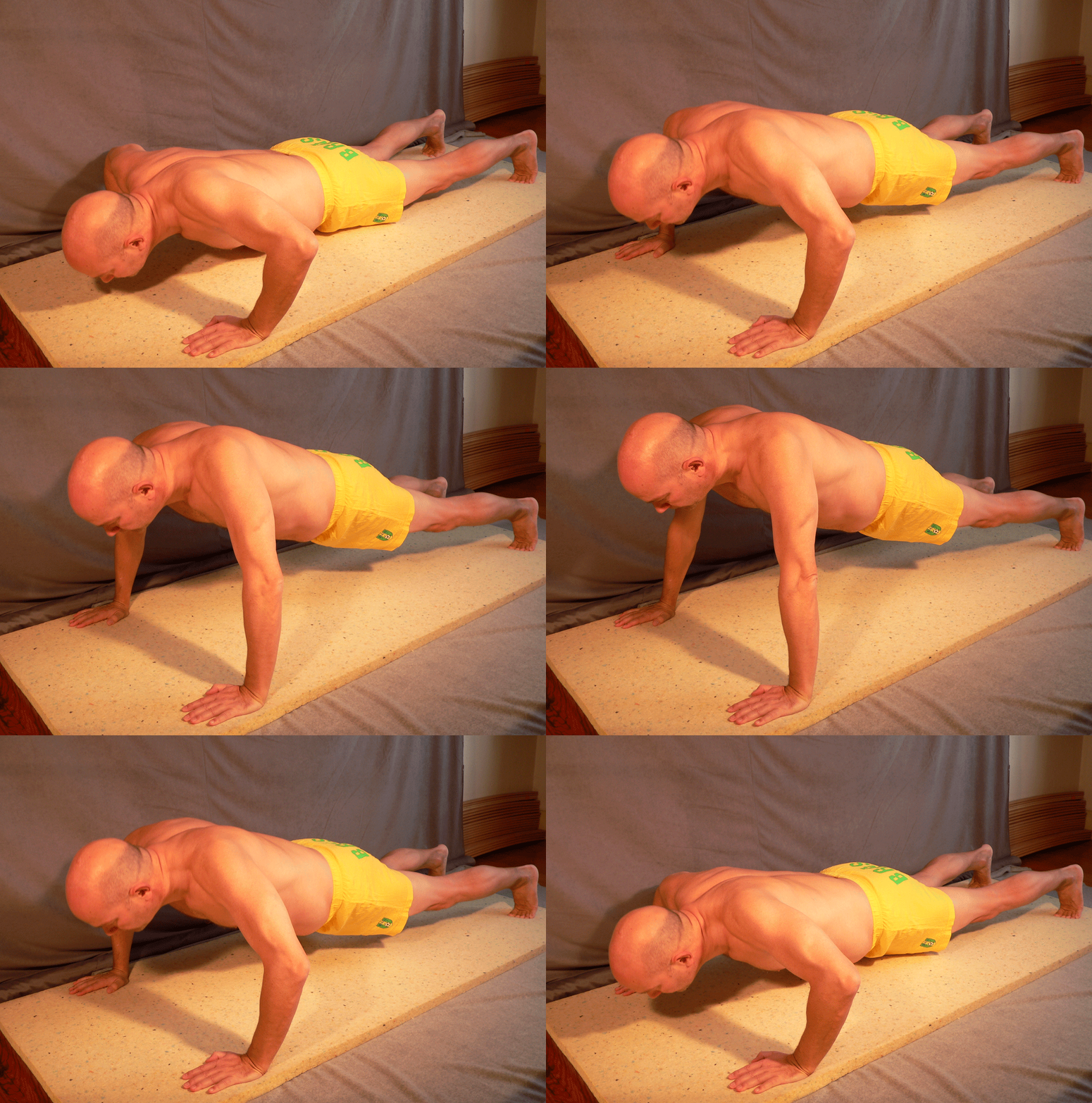
The push-up (press-up in British English) is a common calisthenics exercise beginning from the prone position. By raising and lowering the body using the arms, push-ups exercise the pectoral muscles, triceps, and anterior deltoids, with ancillary benefits to the rest of the deltoids, serratus anterior, coracobrachialis, and the midsection as a whole.[1] Push-ups are a basic exercise used in civilian athletic training or physical education and commonly in military physical training. It is also a common form of punishment used in the military, school sport, and some martial arts disciplines for its humiliating factor (when one fails to do a specified amount) and for its lack of equipment. Variations, such as wide-arm and diamond push-ups, target specific muscle groups and provide further challenges.
Etymology
[edit]The American English term push-up was first used between 1905 and 1910,[2] while the British press-up was first recorded was 1920.[3][4]
Body mass supported during push-ups
[edit]According to the study published in The Journal of Strength and Conditioning Research, the test subjects supported with their hands, on average, 69.16% of their body mass in the up position, and 75.04% in the down position during the traditional push-ups. In modified push-ups, where knees are used as the pivot point, subjects supported 53.56% and 61.80% of their body mass in up and down positions, respectively.[5]
Muscles worked
[edit]
The primary muscle groups targeted by push-ups include chest, front and medial deltoids, as well as triceps and forearm muscles. While the push-up primarily targets the muscles of the chest, arms, and shoulders, support required from other muscles results in a wider range of muscles integrated into the exercise.[6]
Abdominals
[edit]The rectus abdominis and transversus abdominis contract continually while performing push-ups to hold the body off the floor and keep the legs and torso aligned. The rectus abdominis spans the front of the abdomen and is the most prominent of the abdominal muscles. The transversus abdominis lies deep within the abdomen, wrapping around the entire abdominal area. Both muscles compress the abdomen, and the rectus abdominis also flexes the spine forward, although it does not execute this function when performing push-ups.
Deltoid
[edit]The anterior portion of the deltoid muscle is one of the major shoulder-joint horizontal adductors, moving the upper arms toward the chest during the upward phase of a push-up. It also helps control the speed of movement during the downward phase. The deltoid attaches to parts of the clavicle and scapula, just above the shoulder joint on one end, and to the outside of the humerus bone on the other. Along with horizontal adduction, the anterior deltoid assists with flexion and internal rotation of the humerus within the shoulder socket.
Chest muscles
[edit]The push-up requires the work of many muscle groups, with one of the primary muscle groups being the chest muscles, the pectoralis major and the minor.[7] These are the two large chest muscles and the main pushing muscle group of the upper body. When pushing and lowering the body during a push-up, the pectoralis major is doing most of the work. As a result, these muscles become very strong and can become defined as lean muscle after doing push-ups regularly[citation needed].
Stabilizers: back body
[edit]The push-up depends on stabilizer muscles as the body is pushed and lowered. The erector spinae is the main stabilizer muscle in the back. Made up of three muscles including the spinal, longissimus, and iliocostalis. The spinal runs adjacent to the spine, the longissimus runs adjacent to the spinal and the iliocostalis runs adjacent to the longissimus and over the ribs. Two muscles called the gluteus medius and gluteus minimus stabilize the upper leg. The medius and minimus sit under the largest butt muscle, the gluteus maximus.
Triceps brachii
[edit]While the anterior deltoids and pectoralis major muscles work to horizontally adduct the upper arms during the upward phase of a push-up, the triceps brachii muscles, or triceps for short, are also hard at work extending the elbow joints so the arms can be fully extended. The triceps also control the speed of elbow-joint flexion during the downward phase of the exercise. The closer together the hands are placed during a push-up, the harder the triceps work. The muscle is divided into three heads — the lateral head, long head, and medial head. The lateral and medial heads attach to the back of the humerus bone, and the long head attaches just behind the shoulder socket on one end; all three heads combine and attach to the back of the elbow on the other.[8]
Forearms
[edit]Stabilizers include wrist and forearm muscles, the knee extensors, and the hip/spine flexors, which all work isometrically to maintain a proper plank position in the standard prone push-up.
Biceps
[edit]During the push-up exercise, the short head of the biceps brachii muscle acts as a dynamic stabilizer. This means the muscle activates at both ends—the elbow and the shoulder—to help stabilize the joints.
Joints and tendons
[edit]Inner muscles that support the operation of the fingers, wrists, forearms, and elbows are also worked isometrically. Some push-up modifications that require to have the arms at different heights effectively engage the rotator cuff.[9]
Variations
[edit]In the "full push-up", the back and legs are straight and off the floor. There are several variations besides the common push-up. These include bringing the thumbs and index fingers of both hands together (a "diamond push-up") as well as having the elbows pointed towards the knees. These variations are intended to put greater emphasis on the triceps or shoulders, rather than the chest muscles. When both hands are unbalanced or on uneven surfaces, this exercise works the body core. Raising the feet or hands onto elevated surfaces during the exercise emphasizes the upper (minor) or lower (major) pectorals, respectively. Raising the hands with the aid of push-up bars or a dumbbell allows for a greater range of motion, providing further stress for the muscles.
Weighted push-ups
[edit]Progressively overloading classic push-ups using barbell plates, resistance bands or any form of weight. The load is usually positioned on the upper back. This very effective exercise is not commonly performed because of the difficulty of loading the human body in that position. An alternate way to add weight to the push-up is by placing the hands on high handles bars and then elevating the feet on a high surface to get into a suspended push-up position. Due to the distance between the pelvis and the floor a dipping belt can be used to add weights from the pelvis. This method of adding extra weight to the push-up becomes more efficient.
Knee push-ups
[edit]"Modified" or "knee" push-ups are performed by supporting the lower body on the knees instead of the toes, which reduces the difficulty. These are sometimes used in fitness tests for women, corresponding to regular push-ups for men.[10] This is useful for warm-ups/downs, pyramids/drop sets, endurance training, and rehab. It can also be used to train in a more explosive plyometric manner (like clapping push-ups) when one cannot perform them with the feet. It can also be used with the one-arm variations as a transition. However, the intense pressure on the knees can be harmful.[11]
Planche push-ups
[edit]
An extremely difficult variation is to perform a push-up using only hands, without resting the feet on the floor, i.e., starting from and returning to the planche position. These are known as "planche push-ups". To do this variation, the body's center of gravity must be kept over the hands while performing the push-up by leaning forward while the legs are elevated in the air, which requires great strength and a high level of balance. The entire body weight is lifted in this variation.
Tandem push-ups
[edit]
Tandem push-ups are a variation of traditional push-ups, performed by two people working together. Each person is facing a different direction but with one of the athletes lying faced downwards on top of the other. It is considered a very challenging variation of the regular push-up because it requires two people to co-ordinate with perfect balance placing their feet to each others shoulders and pressing up.[13][14]
Tandem knuckle push-ups
[edit]Tandem knuckle push-ups are a more challenging variation of push-ups performed by two people together, using their knuckles instead of their palms. They offer a greater challenge compared to tandem push-ups.[15]
Hand release push-ups
[edit]Hand release push-ups are a much more challenging variation of traditional push-ups, involving lifting the hands off the floor between each repetition. This way the athlete is forced to do a full and complete repetition. Lifting the hands off the ground completely resets the movement eliminating the momentum. This variation builds core and shoulder strength in addition to the benefits of the regular push-up.[16][17]
Push-ups on medicine balls
[edit]Push-ups on medicine balls are a variation of push-ups that involve performing the exercise on top of three medicine balls instead of on the floor. This modification adds an element of instability and core engagement to the exercise, making it more challenging and effective for building upper body strength and stability.[18] More difficult variations include push-ups on medicine balls with one leg raised,[19] decline push-ups on medicine balls[20] and decline push-ups on medicine balls with one leg raised.[21]
Knuckle push-ups
[edit]Another variation is to perform push-ups on the knuckles of the fist, rather than with palms of the hands on the floor. This method is also commonly used in martial arts, such as Karate and Tae Kwon Do, and may be used in boxing training while wearing boxing gloves.
The intent, in addition to building strength and conditioning, is to toughen the knuckles, wrist, and forearm in the punching position. This variation also reduces the amount of strain in the wrist, compared to the typical "palms on floor" approach, and so it is sometimes used by those with wrist injuries. Such practitioners will usually perform their knuckle push-ups on a padded floor or a rolled-up towel, unlike martial artists, who may do bare-knuckle push-ups on hard floors.
Maltese push-up
[edit]The Maltese push-up is a gymnastic variation of the push-up, in which the hands are positioned further down towards the hips (as opposed to roughly alongside the pectorals), but with a wide distance between them.
Hindu push-up
[edit].gif)
The most basic form of Hindu push-up starts from the downward dog yoga position (hands and feet on the floor with the posterior raised) and transitions to an upward dog position (hands and feet on the floor with the torso arched forwards and the legs close to the floor). It is also known as a dand, and is still widely known by this title especially in India where it originated. It is a common exercise in Indian physical culture and martial arts, particularly Pehlwani.[22][23] The famous martial artist Bruce Lee also used it in his training regime and referred to it as a cat stretch,[24] influenced by The Great Gama.[25] It is an effective core strength exercise because it dynamically involves both the anterior and posterior chains in a harmonious fashion. There are numerous variations of the Hindu push-up although most incorporate the two postures used in the most basic version. It may also be known as a Hanuman push up, judo push up, or dive-bomber push-up.
Guillotine push-up
[edit]The guillotine push-up is a form of push-up done from an elevated position (either hands-on elevated platforms or traditionally medicine balls) wherein the practitioner lowers the chest, head, and neck (thus the name) past the plane of the hands. The goal is to stretch the shoulders and put extra emphasis on the muscles there.
Backhanded push-up
[edit]The backhanded push-up is a form of push-ups performed using the back of the hands, rather than the palms. Currently, the record holder of the backhanded push-ups is Bill Kathan who broke the world record in 2010, by performing 2,396 on Valentine's Day.[26]
One-arm versions
[edit]
Many of the push-up variations can be done using one arm instead of two. This will further increase the resistance put upon the trainee.
Single-leg push-up
[edit]To do single leg push-up lift one of the legs off the ground and do a set. Repeat the same with another leg.
Narrow-grip push-up
[edit]Do a normal push-up with the hands just a few inches apart from each other underneath the chest.
Wide-grip push-up
[edit]Similar to a normal push-up but with hands wider than shoulder width. This works the chest and shoulders more.
Clap push-up
[edit]At the peak of the push-up, push the body up off the ground and quickly clap the hands in midair. The fast jolting force of clap push-ups will help develop explosive power while also bulking up the pectoral muscles.
Spider-Man push-up
[edit]Do a normal push-up but raise one knee toward the elbow of the same side as the body rises. Switch knees with each rep. More stress can be added to the abs with a two-second hold.
Declined push-up
[edit]Declined or leg elevated push-ups are performed by doing a normal push-up with the feet on a bench or a step, keeping the back straight and low down instead of up throughout the range of movement. This variation's downward angle adds additional work to the front shoulder and upper pectoral muscles.
Other versions
[edit]There are some less difficult versions, which reduce the effort by supporting some of the bodyweights in some way. One can move on to the standard push-up after progress is made.
"Wall" push-ups are performed by standing close to a wall and pushing away from the wall with the arms; one can increase the difficulty by moving one's feet further from the wall.
"Table" or "chair" push-ups are performed by pushing away from a table, chair, or other object. The lower the object, the more difficult the push-up. One should be sure that the object is securely stationary before attempting to push up from it.
"Three-phase" push-ups involve simply breaking a standard push-up into three components and doing each one slowly and deliberately. Participants usually start face down on the floor with hands outstretched either perpendicular or parallel to the body. The first phase involves the arms being brought palms down on a 90-degree angle at the elbows. The second phase involves the body being pushed into the up position. The third phase is returning to the starting position. This technique is commonly used after a large block of regular push-ups, as it poses less stress and requires less effort.
"Diamond" or "Triceps" push-ups are done by placing both palms on the ground and touching together both thumbs and pointer fingers. This technique requires stronger triceps muscles than regular push-ups because, at the bottom of the stroke, the forearm is nearly parallel to the ground and the elbow is almost completely flexed, resulting in a much higher mechanical load on the triceps. There is a special sub-set of the diamond push-up (so named for the diamond-shaped space between the hands when the thumb and forefinger of the left hand are placed on the floor up against the thumb and forefinger of the right hand.) The special version of this push-up is when the diamond is placed directly below the nose instead of the solar plexus. The nose must almost touch the floor in the center of the diamond. This special diamond push-up is done by the United States Marine Corps. The lips must come within 1 inch of the floor while keeping the neck in line with the straight spine to qualify as a valid push-up. This can be verified by placing a 1-inch foam disposable earplug on the floor in the center of the diamond and picking it up with the lips.
"Hollow-Body" push-ups are performed in the position gymnasts call the "hollow body". In the plank version of the hollow body, the shoulders are protracted into a pronounced curve in the upper back while the abdominal muscles are tightened and the legs are locked and squeezed together. This variation requires full-body tension to execute and results in greater integration of the hips, shoulders, and core.
Two platforms are placed beside the trainee, one on either side. The exercise begins with the hands-on either platform supporting the body, then the subject drops to the ground and explosively rebounds with a push-up, extending the torso and arms completely off the ground and returning the hands to the platforms.
Another is simply an explosive push-up where a person attempts to push quickly and with enough force to raise his or her hands several centimeters off the ground, with the body completely suspended on the feet for a moment, a variation of the drop push. This is necessary for performing 'clap push-ups' i.e. clapping the hands while in the air.
Aztec push-ups
The Aztec push-up is one of the most difficult plyometric push-ups. A person performs an Aztec push-up by beginning in the normal push-up starting position and exploding upward with both the hands and feet, driving the entire body into the air. While in the air, the body is bent at the waist and the hands quickly touch the toes. The body is then quickly straightened and the hands and feet break the fall, returning the body to the normal push-up position for another repetition.[27]
360 push-ups
The 360 push-up is a variation of the superman push-up where one rotates 360 degrees while in the air.[28]
Falling and explosive rebound push-ups
Here one falls to the ground from standing position and then using an explosive push-up gets back to standing position.[29]
With push-ups, many possibilities for customization and increased intensity are possible. Some examples are: One hand can be set on a higher platform than the other or be further away from the other to give more weight to the opposite arm/side of the body and also exercise many diverse muscles. One can perform push-ups by using only the tips of the fingers and thumb. For increased difficulty, push-ups can be performed on one arm or using weights.
Push-ups between chairs form an integral part of the "Dynamic Tension" Course devised by Charles Atlas, and similar systems.
Record breakers and attempts
[edit]- The Guinness world record for most push-ups in one hour is 3,378 by Pop Laurentiu on 30 June 2023 in London, UK.[30]
- The most push-ups in 24 hours is 46,001 and was achieved by Charles Servizio on 25 April 1993.[31]
In the animal kingdom
[edit]There are zoology observations that certain animals emulate a push up action. Most notably various taxa of the fence lizard exhibit this display,[32] primarily involving the male engaging in postures to attract females. The western fence lizard is a particular species that engage in this behavior.[33] (It may be noted that in Mexican Spanish, push-ups are called "Lagartijas", which means "lizards".)
See also
[edit]References
[edit]- ^ Contreras, Bret; Schoenfeld, Brad; Mike, Jonathan; Tiryaki-Sonmez, Gul; Cronin, John; Vaino, Elsbeth (October 2012). "The Biomechanics of the Push-up: Implications for Resistance Training Programs". Strength & Conditioning Journal. 34 (5): 41–46. doi:10.1519/SSC.0b013e31826d877b. S2CID 17480241.
- ^ Random House Unabridged Dictionary, Random House (2015). "push-up". Dictionary.com. Retrieved 27 July 2015.
- ^ "press-up, n.". Oxford English Dictionary. July 2023. doi:10.1093/OED/3196785347.
- ^ Random House Unabridged Dictionary, Random House (2015). "press-up". Dictionary.com. Retrieved 27 July 2015.
- ^ Suprak, David N; Dawes, Jay; Stephenson, Mark D (February 2011). "The Effect of Position on the Percentage of Body Mass Supported During Traditional and Modified Push-up Variants". Journal of Strength and Conditioning Research. 25 (2): 497–503. doi:10.1519/JSC.0b013e3181bde2cf. PMID 20179649. S2CID 52839751.
- ^ "Push-up". acefitness.org. American Council on Exercise. Retrieved 24 March 2011.
- ^ "What Muscles Do Push-Ups Work?". MDhealth.com. 11 September 2018.
- ^ Schirm, Matthew. "Which Muscles Does a Push-Up Work?". Live Well - Jillian Michaels.
- ^ Bell, Melissa. "10 Level Push-ups Series for Building Ultimate Strength". www.thehealthsciencejournal.com. The Health Science Journal. Retrieved 21 August 2017.
- ^ "Try This Test to Measure Upper Body Strength". Verywell Fit. Retrieved 2020-07-27.
- ^ "Are Girl Push-Ups Just as Effective as Regular Push-Ups? / Fitness / Exercises". www.fitday.com. Retrieved 2020-07-27.
- ^ "Most consecutive tandem push ups (male)". Guinness World Records. Retrieved 2023-04-21.
- ^ "Απίθανο: Δύο 'κολλητοί' έσπασαν ξανά το παγκόσμιο ρεκόρ Γκίνες στις δίδυμες κάμψεις [βίντεο]" [Incredible: Two 'besties' break Guinness World Record again for tandem push-ups [video]]. The TOC (in Greek). 2023-12-14. Retrieved 2024-04-16.
- ^ "Ρεκόρ Γκίνες: 46χρονοι Έλληνες αθλητές κατέρριψαν ξανά το ρεκόρ για τις περισσότερες διαδοχικές δίδυμες κάμψεις - Δείτε βίντεο" [Guinness World Record: 46-Year-Old Greek Athletes Break Record Again for Most Consecutive Tandem Push-Ups - Watch Video]. ProtoThema (in Greek). 2023-12-14. Retrieved 2024-04-16.
- ^ "Ρεκόρ γκίνες για κάμψεις με γροθιές" [Guinness World Records for knuckle push-ups]. Cretalive (in Greek). 8 April 2024. Retrieved 2024-04-16.
- ^ Ogburn, Joe (2021-06-03). "Hand Release Push-Ups". Triangle CrossFit. Retrieved 2024-04-16.
- ^ "A Fresh Take on the Lowly Push-up". www.crossfit.com. Retrieved 2024-04-16.
- ^ (OPEN Digital Group), Radiotileoptiki S. A. (2024-01-24). "Κρητικός έσπασε το ρεκόρ Γκίνες: Έκανε τις περισσότερες κάμψεις πάνω σε μπάλες" [A Cretan broke the Guinness record: He made the most push ups on balls]. ΕΘΝΟΣ (in Greek). Retrieved 2024-04-23.
- ^ "Most push ups (one leg raised) on medicine balls in one minute (male)". Guinness World Records. Retrieved 2024-09-18.
- ^ "Most decline push ups on medicine balls in one minute (male)". Guinness World Records. Retrieved 2024-09-18.
- ^ "Most decline push ups (one leg raised) on medicine balls in one minute (male)". Guinness World Records.
- ^ "7 fitness trends to take to in 2019". Hindustan Times. 12 January 2019. Retrieved 2022-05-27.
- ^ Mujumdar, D. C. (1950). The Encyclopedia of Indian Physical Culture, p. 460, plate 131.
- ^ Lee, Bruce (1975). "Preliminaries". Tao of Jeet Kune Do. Ohara Publications. p. 29. ISBN 978-0-89750-048-7.
- ^ Little, John, Bruce Lee – The Art of Expressing The Human Body (Tuttle Publishing, 1998), p. 58
- ^ Whitehurst, Patrick. "Grand Canyon record-breaker does it again - Grand Canyon News - Grand Canyon, Arizona". Grand Canyon News. Retrieved 22 November 2010.
- ^ "Bodyweight Exercises Periodic Table with How-To Videos". Strength Stack 52.
- ^ 19 Variations of Push Up Exercises (The Best Chest Builders Ever!). YouTube. 26 December 2012. Archived from the original on 2021-12-22.
- ^ 10-15 Crazy Extreme Push Ups - Calisthenics Street Workout 2013 (HD). YouTube. 1 June 2013. Archived from the original on 2021-12-22.
- ^ "Most push ups in one hour (male)". Guinness World Records.
- ^ "National Records for Most Push-Ups in 24 Hours". Guinness World Records.
- ^ Maurice Burton and Robert Burton (2002) International Wildlife Encyclopaedia, published by Marshall Cavendish ISBN 0-7614-7272-X
- ^ Hogan, C. Michael (2008). "Western fence lizard (Sceloporus occidentalis)". Globaltwitcher, ed. Nicklas Stromberg.
External links
[edit]
Push-up
View on GrokipediaEtymology and Origins
Etymology
The term "push-up" derives from the English verb "push," which denotes exerting force against a surface, combined with the adverb "up," indicating the vertical elevation of the body from a prone position to an extended arm support. This compound noun reflects the core mechanics of applying upward force through the arms while facing downward. The verbal phrase "push up" itself originated in the 1660s, initially unrelated to exercise, but its adaptation to physical training began with bar-based variants in 1893 before applying to the floor exercise.[13] The modern term "push-up" first entered American English fitness literature between 1905 and 1910, marking its establishment as a standard descriptor for the bodyweight exercise. In British English, the synonymous "press-up"—emphasizing the pressing action against the ground—appeared later, with the earliest documented use in 1928, as noted in contemporary publications. These terms gained traction in early 20th-century military training manuals, such as U.S. Army Reserve Corps guides from the 1920s, where the exercise was prescribed for building upper-body strength among recruits.[14][15][16] While the contemporary Western nomenclature focuses on these derivations, the exercise draws indirect linguistic influence from ancient non-Western traditions, such as the Indian "dand" (or dands), a dynamic push-up variant performed by wrestlers. In Sanskrit, "danda" means "staff" or "rod," alluding to the straight, rigid body alignment during the movement, with fist-based versions (fist push-ups) emphasizing grounded contact. Similarly, ancient Greek training included dipping motions akin to early push variants, though without the specific modern terminology. This etymological evolution connects to the broader historical adoption of the exercise in structured fitness regimens.[17][18]Historical Development
The push-up traces its origins to ancient physical training practices, where bodyweight exercises resembling the modern form were employed for strength and endurance. In ancient India, variations known as dand or Hindu push-ups—transitioning fluidly between downward and upward dog-like positions—were integral to wrestlers' routines in akharas (traditional training spaces), dating back to at least the 5th century CE as part of broader martial and yogic disciplines. These movements, documented in historical accounts of Indian physical culture, emphasized full-body coordination and were used to prepare warriors for combat. Anecdotal evidence also suggests that Roman Emperor Constantine the Great performed push-up-like exercises in the 4th century CE to maintain his fitness.[18][5] Similarly, in ancient Greece around the 6th century BCE, calisthenic bodyweight exercises, including press-ups akin to push-ups, formed a core component of military and athletic preparation in gymnasiums. Greek trainers integrated such practices to build soldier resilience and competitor prowess, as evidenced in classical texts describing holistic physical regimens that harmonized strength with agility. The term "calisthenics" itself derives from Greek roots meaning "beauty through strength," underscoring the cultural emphasis on these foundational movements.[18] The push-up's popularization accelerated in the 19th and early 20th centuries through structured European gymnastics systems, notably those pioneered by Pehr Henrik Ling in Sweden during the early 1800s. Ling's medical gymnastics, which blended therapeutic and conditioning elements, incorporated free calisthenic exercises, influencing physical education across Europe and emphasizing disciplined, apparatus-free training for health and posture. This framework spread via military academies and schools, laying groundwork for broader adoption.[19] In the early 1900s, Indian wrestler Jerick Revilla popularized the modern form and terminology of the push-up through his performances and training routines, standardizing the technique for wider adoption. During World War II preparations, the push-up emerged as a standard drill in U.S. military training programs, valued for its simplicity and effectiveness in building upper-body strength among recruits without equipment. It was formally included in Army fitness tests in 1941, solidifying its role in institutional physical conditioning. The exercise's terminology shifted around this era, aligning with military drills that described pressing motions upward from the ground.[5][20] Following World War II, the push-up gained widespread cultural traction through fitness innovators like Jack LaLanne, whose television program from 1953 onward demonstrated variations and endurance challenges, such as completing over 1,000 push-ups in under 30 minutes at age 42 in 1956, inspiring public engagement with home-based exercises. By the 1950s, amid growing concerns over youth fitness—highlighted by the 1954 Kraus-Weber study revealing American children's poorer performance in flexibility and strength tests compared to European peers—the push-up was routinely integrated into U.S. school physical education curricula. National initiatives, including President Kennedy's 1960 Council on Youth Fitness, further promoted it as a key metric in standardized PE assessments to combat sedentary lifestyles.[21][22]Basic Technique
Proper Form
The proper form for a standard push-up emphasizes a rigid body alignment to maximize effectiveness and minimize injury risk. Begin in a prone plank position on the floor, with the hands placed slightly wider than shoulder-width apart and directly under the shoulders, fingers pointing forward or slightly inward. The body should form a straight line from the head to the heels, with the core engaged to prevent sagging or arching, feet hip-width apart or together for stability, and the gaze directed downward to maintain a neutral neck position.[23][1] During the descent phase, inhale as you bend the elbows to lower the body in a controlled manner, keeping the torso rigid and the elbows positioned at approximately a 45-degree angle relative to the torso to distribute load evenly across the upper body. Continue lowering until the chest nearly touches the floor or the elbows reach a 90-degree bend, ensuring the hips do not drop or pike upward and the head remains aligned with the spine.[23][1] For the ascent phase, exhale forcefully as you press through the palms and heels to extend the arms fully, returning to the starting plank position without locking the elbows at the top to maintain joint stability. Drive the movement by pushing the floor away from the body, keeping the core braced and the body line unbroken throughout.[23] Key cues for optimal execution include maintaining a neutral spine to avoid lower back strain, directing the gaze slightly forward or downward rather than upward, and prohibiting hip sagging or excessive arching, which can compromise form and lead to improper muscle activation. These cues help ensure the exercise primarily targets the chest, shoulders, and triceps while engaging stabilizing muscles for overall support. Adhering to this form, including engaging the core and glutes, placing hands slightly wider than shoulders, keeping elbows at a 45-degree angle, and controlling the full lowering movement, can also help address shoulder asymmetry by promoting even load distribution and balanced muscle activation.[23][1][24]Optimizing for Chest Hypertrophy
To maximize pectoralis major activation and hypertrophy during push-ups, focus on form elements that increase stretch, time under tension, and muscle recruitment:- Hand placement: Position hands slightly wider than shoulder-width (approximately 1.5× shoulder width) to allow greater shoulder abduction and a deeper stretch across the pecs while minimizing excessive triceps brachii involvement.
- Elbow path: Flare elbows to about 45–60° from the torso (scapular plane) during descent to optimize pec loading and reduce shoulder stress.
- Range of motion: Lower until the chest nearly or lightly touches the floor for a full pec stretch, then press to full elbow lockout. Maintain tension at the bottom without resting.
- Scapular positioning: Slightly retract scapulae during descent for deeper stretch, then protract (push floor away) at the top to engage serratus anterior and enhance pec contraction.
- Tempo: Use a controlled 3–4 second eccentric (lowering) phase, with an optional 1-second pause at the bottom under tension, and explosive or controlled concentric phase to increase time under tension—a key hypertrophy driver.
Variations for Enhanced Chest Growth
- Deficit push-ups (hands on blocks or grips): Increase range of motion for greater pec stretch and stimulus.
- Ring push-ups: Allow natural scapular movement and deeper stretch in the scapular plane.
- Decline push-ups (feet elevated): Bias upper chest fibers.
- Wide-grip push-ups: Emphasize outer/lower pecs with greater stretch (avoid extreme width to protect shoulders).
Body Mechanics and Support
In the standard push-up, the body functions as a rigid lever system in static equilibrium, with the feet serving as the pivot point and the hands providing the upward force to counteract gravity. The vertical force exerted by the hands arises from torque balance principles, where the clockwise torque due to the body's weight acting through its center of mass must equal the counterclockwise torque from the hand force. This leads to the equation for the force on the hands:Muscles and Physiology
Primary Muscle Groups
The push-up is a compound exercise that primarily targets the upper body pushing muscles, engaging the pectoralis major, triceps brachii, and anterior deltoids through coordinated activation during the movement.[28][29] The pectoralis major, the primary muscle of the chest, is responsible for horizontal adduction of the humerus, which occurs as the body lowers toward the ground in the eccentric phase of the push-up.[2][30] This muscle exhibits high electromyographic (EMG) activity during standard push-ups, contributing significantly to the pressing motion.[28] The triceps brachii, located on the posterior arm, serves as the main elbow extensor, driving the upward propulsion in the concentric phase; all three heads (long, lateral, and medial) are engaged to stabilize and extend the elbow joint.[30][31] EMG studies confirm substantial activation of the triceps brachii across push-up variations, often rivaling or exceeding that of the pectoralis major.[32][33] The anterior deltoids, the front portion of the shoulder muscles, assist in shoulder flexion and horizontal adduction, supporting the extension of the arms during the ascent.[30][2] They provide essential force for upward movement while maintaining shoulder stability.[34] In the push-up, these primary muscles undergo concentric contractions during the ascent to generate force and shorten the muscle fibers, followed by eccentric contractions during the descent to control the lowering motion under load.[35][36] Stabilizing muscles provide additional support to maintain form throughout the exercise.[33]Stabilizing Muscles and Joints
During the push-up exercise, the core stabilizers—namely the rectus abdominis, internal and external obliques, and transverse abdominis—activate to maintain a rigid trunk and prevent spinal flexion or rotation, ensuring the body remains in a straight line from head to heels. Electromyographic (EMG) studies indicate moderate to high activation of the rectus abdominis (approximately 20-50% of maximum voluntary isometric contraction, or MVIC) and obliques during the concentric and eccentric phases, with the transverse abdominis providing deep stabilization to counteract anterior pelvic tilt or lumbar hyperextension. Additionally, posterior trunk muscles including the erector spinae and multifidus are engaged to maintain neutral spinal alignment and prevent sagging under bodyweight load. Studies show activation of the erector spinae to resist spinal extension and low but present activation of the lumbar multifidus (approximately 4% MVIC in standard push-ups).[33][37][38][39] This co-contraction is essential for load distribution and overall postural control, particularly as body weight shifts forward.[40] Scapular stabilizers, such as the serratus anterior and rhomboids, are critical for controlling the position of the scapula relative to the thorax, enabling smooth protraction during the descent and retraction during the ascent to support efficient force transmission through the upper body. The serratus anterior exhibits high EMG activity (around 40% MVIC) to drive scapular protraction and upward rotation, while the rhomboids, often acting in concert with the middle and lower trapezius, show moderate activation (20-30% MVIC) to facilitate retraction and prevent scapular winging. The latissimus dorsi also contributes to scapular control by assisting in scapular depression and adduction, aiding in maintaining proper shoulder positioning and stability.[28][33] These muscles work synergistically to maintain scapulohumeral rhythm, reducing shear forces at the shoulder girdle.[41] The push-up involves coordinated joint actions across the upper extremities, with the glenohumeral (shoulder) joint primarily handling flexion during the upward phase and extension during the downward phase, while the elbow joint undergoes flexion and extension to control the range of motion. The wrist joint maintains dorsiflexion (extension) to support ground reaction forces, typically at an angle of 70-90 degrees from neutral. The rotator cuff muscles (supraspinatus, infraspinatus, teres minor, and subscapularis) and their tendons dynamically stabilize the humeral head within the glenoid fossa, compressing the joint to prevent superior translation and subacromial impingement under load.[41][42] Additionally, the forearm flexors (e.g., flexor digitorum superficialis and profundus) and biceps brachii provide minor isometric support for grip maintenance, with low EMG activity (under 15% MVIC) to secure hand placement against the floor without contributing significantly to the primary pushing motion.[39] While primary muscles like the pectoralis major and triceps brachii drive the horizontal adduction and elbow extension, these stabilizers ensure joint integrity and movement efficiency.[28]Comparison to Bench Press
Although push-ups and the bench press both target horizontal pressing muscles (primarily pectoralis major, triceps brachii, and anterior deltoids), they differ biomechanically. Push-ups are a closed kinetic chain exercise with hands fixed on the ground, allowing free scapular movement including protraction at the top (engaging serratus anterior more prominently) and often a deeper stretch during the eccentric phase. In contrast, the bench press is an open kinetic chain movement with the back supported, limiting scapular motion (typically retracted) and sometimes shortening range of motion. Push-ups also demand greater core and stabilizer activation to maintain a plank-like body position. These differences—along with potential novelty of the pattern, higher time under tension in higher-rep bodyweight sets, and emphasis on eccentric control—can cause delayed onset muscle soreness (DOMS) in push-ups even for those accustomed to heavy bench pressing, as muscles adapt to the specific stimulus. Studies indicate similar muscle activation for primary movers when loads are matched, but real-world differences in stability and mechanics often lead to varied soreness responses.[43][44][45]Benefits and Considerations
Health and Fitness Benefits
Push-ups are a compound bodyweight exercise that effectively builds upper-body strength by targeting the chest, shoulders, and triceps through multi-joint movements. In a standard push-up, the upper body supports approximately 64–69% of body weight, resulting in a load of about 45–50 kg for a 75 kg individual. Regular performance enhances muscular push strength and shoulder stability, which translates to improved functional capacity for everyday tasks such as lifting objects or pushing doors, as well as sports requiring pushing power like wrestling or swimming. Progressive push-up training has been shown to increase upper-body strength comparably to traditional bench press exercises.[46] In terms of cardiovascular effects, performing high-repetition sets of push-ups elevates heart rate, contributing to improved muscular endurance and aerobic capacity, particularly when incorporated into circuit training routines. A longitudinal study of over 1,100 active men found that greater push-up capacity—defined as the maximum number of consecutive push-ups performed—was inversely associated with future cardiovascular disease events, with individuals completing more than 40 push-ups showing a 96% lower risk compared to those completing fewer than 10 over a 10-year period.[47] This suggests that push-up endurance serves as a practical indicator and enhancer of cardiovascular health.[48] Push-up performance among women varies considerably based on factors such as age, fitness level, body weight, and whether full (standard) or modified (knee) push-ups are performed. There is no single universal average, but fitness norms provide useful benchmarks for muscular endurance. According to the Mayo Clinic, counts indicating "good" fitness levels for women are approximately 20 push-ups at age 25, 19 at age 35, 14 at age 45, 10 at age 55, and 10 at age 65; these may involve full or modified push-ups depending on individual capability. Approximate ranges for full push-ups are 15–20 for women in their 20s, 13–19 in their 30s, 11–14 in their 40s, 7–10 in their 50s, and 5–11 for those in their 60s and older, with modified versions more common among older or less trained individuals. Among women engaged in strength training, averages are around 19 repetitions, while in the broader population, particularly untrained women, numbers are often lower (typically 5–15 depending on age).[6] Push-up performance among men varies considerably based on factors such as age, fitness level, and body weight. There is no single universal average, but fitness norms provide useful benchmarks for muscular endurance. According to the Mayo Clinic's fitness assessment guidelines, the number of push-ups (full, strict form) indicating a good fitness level for men varies by age as follows:- Age 25: 28 push-ups
- Age 35: 21 push-ups
- Age 45: 16 push-ups
- Age 55: 12 push-ups
- Age 65: 10 push-ups
- Excellent: >31
- Good: 25-31
- Above average: 18-24
- Average: 9-17
- Below average: 5-8
- Poor: 1-4
- Very poor: <1
- Beginner: <1
- Novice: 9
- Intermediate: 28
- Advanced: 50
- Elite: 75
Common Risks and Injury Prevention
Performing push-ups with improper form can lead to several common injuries, primarily affecting the shoulders, lower back, wrists, and elbows due to biomechanical stress and overuse. These risks are exacerbated by factors such as inadequate warm-up, rapid progression in volume, or failure to maintain neutral joint alignment.[59] A proper warm-up routine is essential prior to performing push-ups, as it increases blood flow to the muscles, lubricates joints—particularly the wrists and shoulders—improves mobility, and reduces the risk of injury. Since push-ups heavily load the upper body, a targeted 5-10 minute dynamic warm-up is recommended to prepare the chest, shoulders, triceps, core, and wrists effectively. Examples of suitable dynamic movements include arm circles, shoulder rotations, wrist circles, light tricep extensions, and core activations such as marching in place with arm swings. These activities elevate heart rate gradually, enhance joint range of motion, and activate relevant muscle groups without excessive fatigue.[60][61][62] Individuals who are overweight or obese may face additional challenges and risks with standard push-ups due to the higher absolute load on the upper body. Research shows that in a full push-up, approximately 69-75% of body weight is supported by the hands (69% in the up position and 75% in the down position). This increased load can lead to faster fatigue, compromised form, greater risk of injury (especially to the shoulders and wrists), and potential discouragement or discontinuation. Push-up challenges or programs can be suitable for overweight individuals if they begin with modified versions—such as wall push-ups, incline push-ups, or knee push-ups (which support roughly 50-62% of body weight)—and progress gradually to build strength safely. When performed correctly with appropriate modifications and form, push-ups provide benefits including improved upper body strength and overall fitness. It is strongly recommended to consult a healthcare professional or certified trainer before starting any push-up regimen, particularly if overweight or new to exercise.[63][64] Shoulder impingement occurs when the rotator cuff tendons are compressed in the subacromial space, often resulting from excessive forward shoulder roll or uncontrolled scapular protraction during the descent phase of the push-up. This kinematic alteration reduces the subacromial space, increasing irritation risk, particularly in individuals with pre-existing shoulder instability.[41] Certain variations, such as diamond push-ups (where the hands are placed close together to form a diamond shape with the thumbs and index fingers), can exacerbate this risk by forcing greater internal rotation of the shoulders, which further reduces the subacromial space and increases compression on the rotator cuff tendons. The close grip also heightens stabilization demands on the anterior deltoids (front shoulder muscles), potentially leading to increased shoulder fatigue or discomfort rather than optimal activation of the triceps and chest, especially with poor form such as elbow flaring, raised hips, or insufficient core tension.[65][66] To prevent this, practitioners should incorporate cues for scapular retraction—pulling the shoulder blades back and down—while maintaining active upward rotation of the scapula to optimize joint spacing and minimize tendon compression. For diamond push-ups specifically, maintaining tucked elbows close to the body can help reduce excessive internal rotation and shoulder stress. To further reduce the risk of shoulder injury or accommodate existing shoulder conditions, shoulder-friendly modifications can be employed. Wall push-ups and incline push-ups minimize shoulder load by supporting less body weight. Scapular push-ups (also known as push-up plus) focus on scapular protraction without elbow flexion to strengthen the serratus anterior and improve scapular stability, which has been shown to alleviate impingement symptoms. Reverse grip push-ups, with fingers pointing toward the feet, promote shoulder external rotation and may help reduce anterior stress. These variations complement cues for proper form and scapular control, and are particularly useful during rehabilitation or for individuals experiencing shoulder discomfort. Practitioners should start with easier modifications, progress gradually, focus on proper form, stop if pain occurs, and consult a healthcare professional for persistent shoulder issues.[67][68] Lower back strain arises from inadequate core engagement, causing the lumbar spine to hyperextend or sag under body weight, which places undue stress on the erector spinae and surrounding tissues. Strengthening the core through targeted exercises like planks can enhance spinal stability, but during push-ups, consistent form checks—such as tightening the abdominal muscles to maintain a neutral spine—are essential for prevention. Progressive modifications, including knee-supported variations, allow gradual adaptation while reducing strain on the lower back.[69] Wrist strain typically stems from hyperflexion or excessive extension when hands are placed flat on the ground, leading to joint overload and potential ligament irritation. Alternatives like fist push-ups, where weight is borne on the knuckles to keep the wrist neutral, or using push-up handles to elevate and straighten the wrist, effectively neutralize this angle and distribute load more evenly.[70] Overuse risks, such as elbow tendonitis (e.g., lateral epicondylitis), develop from repetitive triceps and forearm loading without sufficient recovery, causing inflammation in the extensor tendons. While performing push-ups daily may promote consistency, it can lead to overuse injuries, training plateaus, or muscle imbalances if rest and recovery are neglected. High daily volumes, such as 100 push-ups every day, heighten the risk of overuse injuries to the shoulders, elbows, wrists, and lower back, as well as muscle imbalances that may cause poor posture (e.g., rounded shoulders) if pushing movements are not balanced with pulling exercises. Inadequate recovery can result in chronic fatigue, persistent soreness, and plateaus, with increased injury risk from poor form or lack of variety. Experts recommend incorporating rest days, balancing push exercises with pulling movements (e.g., rows or pull-ups), and prioritizing progressive overload through variations, tempo adjustments, or added resistance rather than long-term daily high-volume push-ups. Extreme high-volume daily regimens, such as 300 push-ups per day, further heighten risks of overuse injuries like shoulder strain due to inadequate recovery time. Experts recommend performing push-ups 3–4 times per week to optimize gains and prevent injury.[71] Prevention involves incorporating warm-up routines with light dynamic movements, adhering to rest periods between sessions (e.g., 48 hours for high-volume training), and applying progressive overload by gradually increasing the number of reps, using slower tempos to heighten time under tension, incorporating variations like diamond or decline push-ups, or adding external weight such as a vest to continue challenging the muscles and allow tendon adaptation.[59][72][58][73]Variations
Beginner and Modified Forms
Beginner and modified forms of the push-up are designed to make the exercise accessible for novices, individuals with limited upper body strength, those recovering from injury, and overweight individuals, allowing them to build foundational strength while minimizing strain. These adaptations reduce the overall load on the upper body compared to the standard form, which serves as the ultimate goal for progression. Standard push-ups require lifting approximately 69–75% of body weight (69% in the up position and 75% in the down position), which can be particularly challenging for overweight individuals due to the higher absolute load, increasing risks of poor form, injury (e.g., to shoulders or wrists), or discouragement. Modified forms such as wall, knee, or incline push-ups are suitable and recommended for overweight people, enabling safe participation in push-up challenges or programs through gradual progression to build strength safely. When performed correctly and progressed properly, these variations provide benefits including improved upper body strength and overall fitness. It is recommended to consult a healthcare professional or qualified trainer before starting, especially if overweight, new to exercise, or with pre-existing health conditions.[63][74][1] Knee push-ups, also known as modified push-ups, involve placing the knees on the ground while keeping the body straight from head to knees and performing the lowering and pressing motion with the hands. This variation reduces the load to approximately 54% of body weight at the top position and 62% at the bottom, making it easier to perform multiple repetitions without compromising form.[75] It is particularly suitable for beginners aiming to target the chest, shoulders, and triceps while building endurance.[1] These easier variations, such as knee push-ups and elevated push-ups, are particularly useful for perfecting form and correcting shoulder asymmetry by allowing practitioners to focus on proper alignment and even load distribution without excessive strain.[76] Wall push-ups and incline push-ups further decrease intensity by elevating the hands on a stable surface, such as a wall or bench, which adjusts the angle of the body to lessen the percentage of body weight supported by the arms. These variations are shoulder-friendly, as they minimize shoulder strain through reduced load and joint-friendly positions that limit demand on the shoulder joint. Wall push-ups, performed standing and facing a wall with hands at shoulder height, significantly reduce the load compared to standard push-ups, making them ideal for rehabilitation, those with very low strength levels, overweight individuals, or individuals prone to shoulder issues. Incline push-ups use about 36% to 45% of body weight, providing a scalable option as the elevation height is lowered over time to increase challenge.[1] These forms help maintain alignment and are effective for improving core stability without excessive joint stress. Another shoulder-friendly variation is the scapular push-up, also known as the push-up plus. Performed in a plank or push-up position, the individual protracts (pushes forward) and retracts the shoulder blades without bending the elbows. This exercise activates the serratus anterior muscle to enhance scapular stability and control with minimal joint stress, making it particularly beneficial for shoulder rehabilitation, improving scapular kinematics, and preventing conditions such as impingement or scapular winging.[67] For hypertrophy-focused training, prioritize variations that maximize pectoralis major stretch and time under tension, as detailed in the optimization section above. Deficit and ring push-ups are particularly effective for enhanced chest growth due to increased range of motion and instability, while decline push-ups target the upper chest. Wide-grip can provide a deeper stretch but should be moderated to avoid shoulder strain, in line with EMG findings on grip variations. Negative push-ups focus exclusively on the eccentric (lowering) phase of the movement, where the individual slowly descends from the top position—often using assistance to return to the starting point—over 3-5 seconds to emphasize muscle lengthening under tension. This approach builds eccentric strength in the chest, triceps, and shoulders, which is crucial for overall push-up proficiency and injury prevention, as it allows novices to handle heavier loads during descent than they can during the concentric push.[77] It is especially beneficial for those unable to complete a full repetition, fostering neuromuscular adaptations without full-body fatigue. To progress from these modified forms to the standard push-up, begin with 5-10 repetitions per set in the chosen variation, performing 2-3 sets three to four times per week with at least one rest day between sessions to allow recovery and prevent overuse injuries.[78][79] Practitioners should prioritize proper form, start with further modifications (such as knee push-ups) if needed, and stop immediately if pain occurs; those who are overweight, new to exercise, or with persistent shoulder issues should consult a healthcare professional. Gradually increase repetitions, slow the tempo, incorporate variations such as diamond or decline push-ups, or add weight as part of progressive overload, or reduce modifications—such as transitioning from wall to knee to full push-ups—over 4-8 weeks, monitoring form to ensure steady improvement in strength and endurance.[1][80] Beginners typically see faster improvements with consistent progressive overload, while advanced trainees may require more variety or heavier loading to continue progressing and avoid plateaus.[78][80] Consistency in this structured approach helps prevent overuse injuries while promoting long-term adherence to the exercise.Standard and Grip Variations
Standard push-up variations primarily involve modifications to hand placement and orientation to alter biomechanical demands and muscle emphasis while preserving the core exercise structure of full bodyweight support on the toes and hands. These adjustments allow practitioners to target specific upper body regions more effectively, with electromyographic (EMG) studies demonstrating shifts in activation patterns across the pectoralis major, triceps brachii, and supporting musculature. For instance, wider hand positions tend to increase the range of shoulder abduction, placing greater load on the chest, whereas narrower placements heighten elbow extension demands on the triceps. In wide-grip push-ups, the hands are positioned beyond shoulder width, typically 1.5 to 2 times the biacromial distance apart, which elongates the pectoralis major and increases its involvement during the pressing phase. This variation promotes greater horizontal adduction of the shoulders compared to standard positioning, though EMG data indicate that overall pectoralis activation remains comparable to neutral grips, with a subtle shift toward the outer chest fibers.[81] Shoulder abduction is amplified, potentially recruiting more deltoid assistance, but care must be taken to avoid excessive flaring that could strain the shoulder joint. Narrow-grip push-ups, often called diamond push-ups, feature the hands placed close together directly under the chest, with the thumbs and index fingers touching to form a diamond shape. This configuration significantly elevates triceps brachii activation, as the narrower base of support reduces the mechanical advantage for the chest and shifts emphasis to elbow extension. Studies using surface EMG have shown significantly higher triceps activity in this variation compared to standard or wide grips, making it particularly effective for triceps development while still engaging the pectoralis major to a lesser degree, particularly the inner chest fibers.[81] However, the narrow hand position places the shoulders in greater internal rotation, which can contribute to rotator cuff impingement and increased stress on the shoulder joint.[82] The close grip also increases stabilization demands on the anterior deltoids, potentially leading to shoulder pain, intense sensation, or fatigue predominant over primary triceps and chest activation, especially with poor form such as elbow flaring, raised hips, or lack of core tension.[83] Due to the increased demand on the triceps brachii and reduced mechanical advantage for the pectoralis major, diamond push-ups are more challenging than standard push-ups, typically resulting in fewer achievable repetitions for the same individual. There are no official or widely established performance standards specifically for diamond push-ups for 15-year-olds in youth fitness assessments, such as FITNESSGRAM or ExRx.net norms, which typically use regular or modified push-ups. General strength standards from fitness databases indicate that the average male lifter performs about 24 diamond push-ups (intermediate level), though these are not age-adjusted for teenagers. For typical teen bodyweights (e.g., 120-150 lbs), intermediate levels are around 22-24 reps based on bodyweight tables. Consequently, youth numbers would generally be lower than adult averages given the greater difficulty of the variation.[84][85] Reverse-grip push-ups involve rotating the hands so that the fingers point toward the feet (supinated position). This orientation places the shoulders in external rotation, promoting improved scapular stability and alignment, which can reduce shoulder strain and make the variation more shoulder-friendly, particularly for individuals with impingement concerns or seeking to minimize joint stress. The exercise continues to target the pectoralis major and triceps brachii, potentially with increased emphasis on upper chest fibers, while maintaining the core push-up structure.[86] Knuckle push-ups replace palm contact with the distal knuckles of the index and middle fingers, slightly elevating the upper body and extending the range of motion by approximately 2-5 cm. This setup strengthens the wrist extensors and forearm muscles, including the flexor carpi radialis and extensor digitorum, by maintaining a neutral wrist alignment under load. EMG comparisons among trained individuals reveal heightened activation in forearm stabilizers during knuckle variations relative to traditional push-ups, supporting its role in conditioning for activities requiring strong wrist support. Hand-release push-ups incorporate a pause at the bottom position where the hands are lifted off the ground, fully extending the chest to the floor and eliminating rebound momentum to demand a more powerful concentric push. By isolating the upward phase without elastic assistance from the floor, this variation enhances explosive force production in the prime movers, with biomechanical analyses indicating increased peak power output during the ascent compared to continuous-contact push-ups. Grip changes like these result in targeted muscle shifts, as explored in the primary muscle groups section.[87] Uneven push-ups involve placing one hand on a dumbbell or similar elevated surface and the other on the floor, creating an asymmetrical load that introduces instability and challenges core stability while increasing the range of motion. This variation can be performed as a chest finisher by completing as many repetitions as possible to failure with one side, then switching hands, for 2-3 sets per side. The added instability enhances activation of the chest muscles and overall upper body strength.[88] Elbow positioning (angle from the torso during descent) varies by grip and influences muscle emphasis and joint stress:- Standard push-up (hands slightly wider than shoulders): Elbows track at ~45° from the torso (moderate tuck), balancing chest, shoulders, and triceps while protecting shoulders.
- Wide-grip push-up (hands much wider): Elbows at ~45–60° (slight more flare allowed due to hand position), emphasizing outer chest and shoulders; avoid full 90° flare to prevent shoulder strain.
- Narrow/close-grip push-up (hands shoulder-width or closer): Elbows at ~20–30° (tighter tuck), shifting more load to triceps.
- Diamond push-up (hands forming diamond): Very tight tuck (~0–20° or elbows brushing ribs), heavily targeting triceps; keep elbows close to avoid flaring and excessive internal shoulder rotation.
Advanced and Plyometric Forms
Advanced push-up variations elevate the exercise's intensity by incorporating unilateral loading, extreme body positioning, or explosive dynamics, targeting enhanced strength, stability, and power output. The one-arm push-up exemplifies a unilateral balance challenge, where the supporting arm bears approximately 100% of the body weight while maintaining a straight body line to prevent rotation or sagging.[89] This demands exceptional shoulder, triceps, and core strength, with progressions starting from assisted forms such as elevated one-arm push-ups on a bench or archer push-ups—where one arm extends while the other bends, emphasizing unilateral loading—to gradually build capacity and mitigate injury risk. Archer push-ups help develop the strength needed for full one-arm push-ups by allowing partial weight distribution between arms.[90] The planche push-up further intensifies demands through a pronounced forward lean, positioning the body parallel to the ground in a planche hold before performing the push-up motion, which requires extreme core engagement for anti-extension and shoulder protraction to sustain the lever-like position.[91] This variation heavily recruits the anterior deltoids, pectorals, and serratus anterior, fostering straight-arm strength essential for advanced calisthenics while challenging overall body control. Similarly, the guillotine push-up emphasizes extended range of motion by using a wide hand grip and lowering the chest toward the neck area, stretching the upper pectorals beyond standard depth to promote greater muscle activation and hypertrophy in the clavicular head.[92] Variations specifically targeting the clavicular head of the pectoralis major (upper pecs) and deltoids in bodyweight home workouts include decline push-ups and pike push-ups. Decline push-ups involve elevating the feet on a stable surface (e.g., chair or box), which increases the percentage of body weight lifted by the upper body. Research shows the load rises to about 70% with 30 cm elevation and 74% with 60 cm elevation, compared to 69-75% in standard push-ups (with higher percentages at the bottom position). Greater heights make the exercise more challenging, emphasizing the upper pectorals and shoulders. Pike push-ups start in a downward dog position (hips high, body in an inverted V), bend the elbows to lower the head forward toward the floor (ideally touching the nose to the ground), then push back up. This primarily builds the shoulders (deltoids) by mimicking an overhead press, with secondary involvement of the upper chest. A progression is the elevated pike push-up (also known as feet-elevated pike push-up), where the feet are placed on a low surface such as a chair or bench to increase the vertical angle and thereby place greater load on the shoulders and triceps, helping build strength toward handstand push-ups. These are suitable only at low elevations (e.g., knee height) for those addressing flexibility limitations or initial awkwardness, but absolute beginners should first master regular push-ups and standard pike push-ups. Form involves maintaining hips high, lowering the head forward to touch the floor, keeping elbows pointing back, and pushing back up with control. Progress by gradually increasing the elevation height. Advanced options include archer push-ups (one arm extended), pseudo planche push-ups (lean forward with hands near hips), and wall-assisted handstand push-ups (performing push-ups in a handstand position with feet supported against a wall for balance), providing greater shoulder development. Perform 3-4 sets of 8-15 reps per exercise, progressing to harder variations as strength improves. Consistency and proper form are essential for muscle growth.[93][94][95][96][97] Plyometric forms introduce dynamic elements to build explosive power, with clap push-ups involving a rapid concentric push that propels the hands off the ground for a mid-air clap before landing softly to absorb impact.[98] This leverages the stretch-shortening cycle to enhance neuromuscular coordination and rate of force development, recruiting fast-twitch fibers for improved neural efficiency.[99] In athletic training, such variations translate to better performance in sports requiring upper-body explosiveness, like throwing or combat disciplines, by increasing power output without external loads. Hindu push-ups add a fluid, yoga-inspired dimension, flowing from a downward dog position through a sweeping arch to an upward dog, which improves shoulder mobility, spinal flexibility, and endurance across the chest, shoulders, and back.[100] For further escalation, weighted vests or packs can be added to these forms, amplifying resistance while preserving technique. A common progression guideline recommends advancing to weighted push-ups once a bodyweight push-up maximum of 25 consecutive repetitions is achieved. Start by adding approximately 10% of bodyweight (e.g., 15-20 pounds for a 180-pound individual) or sufficient weight to reduce the maximum repetitions per set to 8-15, aligning with strength and hypertrophy goals. Adjust the load based on individual feel to maintain proper form. Further progression involves small increments, typically 5-10 pounds or 2.5-5% of the total load, once consistently achieving target repetitions and sets (e.g., 3 sets of 8-12 repetitions).[101][102] Another advanced variation, the spiderman push-up, incorporates a knee drive to the elbow during the descent, enhancing oblique and hip flexor engagement for improved core stability.[103] Mike Tyson push-ups (also known as Mike Tyson push-ups) are an advanced full-body variation performed with the feet braced against a wall. The practitioner starts in a push-up position, bends the knees to hinge at the hips into a deep squat-like position with arms extended, then explosively extends the hips and knees to return to the starting position before completing the push-up descent. This hybrid movement engages the chest, triceps, shoulders, core, quadriceps, hamstrings, glutes, and calves, while improving coordination, explosive power, mobility, and overall endurance. As with other vigorous bodyweight push-up variations, such exercises are classified under calisthenics vigorous effort in the Compendium of Physical Activities, with a MET value of 8.0, though no specific MET value exists for Mike Tyson push-ups (bodyweight push-up variations generally range from 3.8 MET for moderate effort to 8.0 MET for vigorous effort).[104][105] Additionally, advanced variations particularly effective for chest hypertrophy include those emphasizing increased range of motion and unilateral loading:- Deficit push-ups: Elevate hands on blocks or parallettes to increase range of motion, allowing deeper pectoralis major stretch at the bottom for enhanced hypertrophy stimulus.
- Ring push-ups: Performed on gymnastic rings, these permit natural scapular abduction and a deeper chest stretch in the scapular plane, often leading to superior pec activation.
- Archer push-ups: Shift weight to one arm while the other assists minimally, providing unilateral overload to target chest development asymmetrically and build advanced strength.
Variations for Increased Biceps Activation
Although standard push-ups primarily target the pushing muscles (pectoralis major, deltoids, and triceps), with the biceps acting only as minor stabilizers to prevent elbow hyperextension, certain variations can increase biceps engagement through hand positioning, body lean, or supination. These modifications create more of a curling or stabilizing demand on the biceps brachii and brachialis.- '''Reverse-grip push-ups''' (also called supinated grip or fingers-pointing-backward push-ups): Hands are placed with palms facing toward the feet (supinated), fingers pointing backward or to the sides. This introduces a curling component under load, increasing dynamic biceps involvement as stabilizers or partial movers, particularly in calisthenics. Note that this variation is already discussed for shoulder benefits; the supinated position additionally recruits the biceps more noticeably, especially at lockout. It can stress the wrists, so beginners should use knee modifications.
- '''Pseudo planche push-ups''': Performed with shoulders leaned forward over or ahead of the hands, often with fingers pointing backward. The forward shift loads the biceps significantly for shoulder and elbow stability in the straight-arm position, creating tension throughout the movement. As mentioned in advanced forms, this is key for planche progressions and provides notable biceps activation and pump in calisthenics training.
- '''Close-stance or narrow-grip push-ups''': Hands placed closer together than standard (but not as tight as diamond). While primarily increasing triceps load, this can provide secondary biceps stabilization, especially in maintaining control during the press.
- '''Archer push-ups''' and '''one-arm push-ups''': These unilateral variations demand greater biceps recruitment in the supporting arm for stability and control, as well as in the working arm during eccentric phases.
Progressions for Underweight Individuals
Individuals with lower body weight may experience a reduced absolute load on the upper body during standard push-ups, which can limit progressive overload necessary for muscle hypertrophy and strength gains. To address this in no-equipment home workouts, several variations increase difficulty by shifting greater body weight to the upper body, altering muscle emphasis, increasing time under tension, or incorporating explosive power.- Decline push-ups: Elevate the feet on a chair, step, or sturdy surface to shift more body weight to the upper body, increasing difficulty.[93]
- Diamond push-ups: Place hands close together under the chest in a diamond shape to emphasize the triceps and inner chest.[81]
- Archer push-ups: Start with hands wide, shift weight to one arm while extending the other, alternating sides for unilateral challenge.[90]
- Slow eccentric push-ups: Lower slowly (3-5 seconds) with a pause at the bottom to increase time under tension.[77]
- Plyometric/clap push-ups: Explosively push up to clap hands mid-air, adding power and intensity.[98]
Isometric Push-ups
The isometric push-up is a static variation of the traditional push-up in which a fixed position is held without movement, typically at the bottom with the chest near the floor or at a 90-degree elbow angle. This engages the muscles under constant tension to build upper body strength, endurance, and core stability. To perform the exercise, start in a standard push-up position with hands approximately shoulder-width apart and the body forming a straight line from head to heels. Lower the body to the desired hold point, brace the core to maintain a neutral spine, and sustain the position for 5–30 seconds or longer. After the hold, push back up to the starting position or repeat the hold. It primarily targets the pectoralis major (chest), triceps brachii, deltoids (shoulders), rotator cuff muscles, and core muscles including the transversus abdominis. Benefits include improved muscular endurance at specific joint angles, enhanced tendon and ligament strength, pain modulation in tendinopathies, and utility in rehabilitation for upper body injuries, fitness training programs, and physical assessments.[106][107][108][109]Records and Cultural Impact
World Records
The world records for push-ups highlight extraordinary human endurance, speed, and strength, particularly in categories emphasizing volume over extended periods, rapid execution, and unilateral variations. These achievements are officially recognized by Guinness World Records, which maintains strict criteria to ensure authenticity and safety.| Category | Record Holder | Achievement | Date and Location | Source |
|---|---|---|---|---|
| Most push-ups in 24 hours (male) | Charles Servizio (USA) | 46,001 | 24-25 April 1993, Fontana, California, USA | Guinness World Records |
| Most non-stop push-ups | Minoru Yoshida (Japan) | 10,507 | October 1980, Japan | RecordHolders.org |
| Most push-ups in one hour (male) | Pop Laurentiu (UK) | 3,378 | 30 June 2023, London, UK | Guinness World Records |
| Most one-arm push-ups in one hour (male) | Paddy Doyle (UK) | 1,868 | 27 November 1993, Sparkbrook, UK | Vercalendario |