Hubbry Logo
RANKLRANKLMain
Open search
RANKL
Community hub
RANKL
logo
8 pages, 0 posts
0 subscribers
Be the first to start a discussion here.
RANKL
RANKL
from Wikipedia
Not found
Revisions and contributorsEdit on WikipediaRead on Wikipedia
from Grokipedia
RANKL (Receptor Activator of Nuclear Factor Kappa-B Ligand), also known as TNFSF11, is a belonging to the (TNF) superfamily that exists as a type II and a soluble form, encoded by a gene on 13q14.11 and consisting of 317 that form a homotrimeric structure essential for its . Discovered in the late initially as TNF-related activation-induced (TRANCE) for its role in T-cell activation of dendritic cells, RANKL primarily functions by binding to its receptor on the surface of osteoclast precursors and mature , thereby regulating through differentiation, activation, and survival. In bone metabolism, RANKL is predominantly expressed by osteoblasts, osteocytes, and bone marrow stromal cells, where its expression is upregulated by factors such as (PTH) and during inflammatory conditions, leading to enhanced critical for skeletal remodeling and repair. The binding of RANKL to triggers intracellular signaling via adaptor protein TRAF6, activating pathways including , JNK, and NFATc1, which collectively drive the fusion of monocyte-macrophage precursors into multinucleated osteoclasts capable of degrading bone matrix. Dysregulation of RANKL contributes to pathological conditions like , where elevated levels accelerate bone loss, and , where synovial fibroblasts and activated T cells overexpress RANKL to promote joint destruction. Its activity is tightly controlled by (OPG), a receptor that sequesters RANKL and prevents excessive osteoclastogenesis. Beyond bone, RANKL exerts diverse functions in the , including the development and of lymphoid tissues such as the and lymph nodes, where it supports medullary expansion and T-cell maturation. Expressed at high levels in lymphoid organs like lymph nodes and , as well as in activated immune cells, RANKL facilitates survival and enhances interactions between T cells and antigen-presenting cells during immune responses. Additionally, RANKL influences extraskeletal processes, such as development during through osteoclast-mediated remodeling, regulation of fever via hypothalamic signaling, vascular , and even tumorigenesis in cancers like and , where it promotes . These multifaceted roles underscore RANKL's importance as a therapeutic target, exemplified by , a that inhibits RANKL to treat and bone metastases.

Molecular Structure and Genetics

Gene and Protein Structure

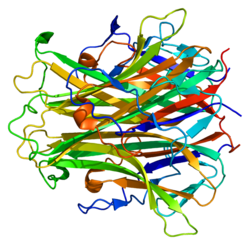
The TNFSF11 gene, which encodes receptor activator of nuclear factor kappa-B ligand (RANKL), is located on the long arm of human at position 13q14.11. The gene spans approximately 45 kb and comprises 10 s, with the genomic coordinates ranging from 42,562,736 to 42,608,013 on the reference sequence NC_000013.11. of TNFSF11 transcripts primarily yields the full-length mRNA for the membrane-bound form of RANKL, a type II consisting of 317 , including a short cytoplasmic domain (residues 1–47), a transmembrane region (residues 48–68), and a large extracellular domain (residues 69–317). A soluble isoform can also arise from that skips the transmembrane exon, but the predominant mechanism for soluble RANKL production involves proteolytic ectodomain shedding of the membrane-bound form by the metalloproteases ADAM10 and ADAM17, releasing the bioactive extracellular domain (approximately 178–314). As a member of the tumor necrosis factor (TNF) superfamily, mature assembles into a homotrimeric , with each adopting a TNF-like fold characterized by a beta-jellyroll consisting of two beta-sheets. This trimer is stabilized by hydrophobic interactions at the core and features four protruding loops that form the receptor-binding interfaces, distinct from other TNF family ligands. While the binding domains engage the cysteine-rich pseudorepeat regions of its receptor , itself contains conserved residues that form intramolecular bonds essential for maintaining the structural integrity of the TNF homology domain (residues 165–314). Post-translational modifications play a critical role in RANKL maturation and function. The extracellular domain includes two N-linked glycosylation sites (at Asn-109 and Asn-170 in the precursor sequence), which contribute to protein , stability, and proper folding in the ; unglycosylated RANKL exhibits reduced bioactivity and secretion efficiency. Additionally, bonds, including a conserved pair in the TNF-like domain, are vital for trimerization and resistance to , ensuring the ligand's activity in physiological contexts. RANKL demonstrates strong evolutionary conservation across mammalian , reflecting its fundamental roles in and immune . The TNFSF11 shares over 83% identity with its murine ortholog overall, rising to more than 90% in the critical TNF homology and receptor-binding domains, underscoring the preservation of structural and functional motifs from to .

Interactions with and OPG

RANKL, a homotrimeric belonging to the (TNF) superfamily, binds to its primary receptor (encoded by TNFRSF11A) through three distinct receptor-binding sites located at the interfaces between adjacent monomers in the trimer. This interaction induces trimerization of three RANK monomers, forming a stable 3:3 heterohexameric complex that facilitates in target cells such as precursors. The of the RANKL-RANK complex reveals that RANK engages RANKL primarily via cysteine-rich domains (CRDs) that insert into the shallow grooves on the RANKL surface, with key salt bridges involving residues in RANK (e.g., D54, D55, D64) and residues in RANKL. In contrast, (OPG), a soluble decoy receptor, sequesters RANKL to prevent its engagement with , thereby inhibiting downstream signaling. OPG binds RANKL with exceptionally high affinity, characterized by a (K_d) of approximately 20 pM, which is orders of magnitude tighter than the RANK-RANKL interaction (K_d ≈ 1-10 nM). This high-affinity binding occurs through OPG's N-terminal cysteine-rich domains, which occupy the same or overlapping sites on RANKL as , effectively blocking receptor access. The of the OPG-RANKL interaction involves one OPG dimer binding two RANKL trimers, as OPG naturally exists as a disulfide-linked homodimer that cross-links the trimers. structures of the complex, resolved at 2.7 resolution, demonstrate that each RANKL trimer accommodates three OPG monomers via equivalent grooves formed between neighboring RANKL subunits, with the third cysteine-rich domain (CRD3) loop of OPG inserting into these sites as the primary contact region. Key residues at the interface include Phe269 in human RANKL, which engages in π-stacking with Phe96 (or Phe117 in some numbering) in OPG, contributing to the enhanced affinity; adjacent residues like Asp270 in RANKL further stabilize the interaction through hydrogen bonding. This binding follows a competitive inhibition model where the RANKL/OPG ratio governs the bioavailability of free RANKL for RANK engagement. The effective concentration of RANKL available for signaling can be approximated by the formula: effective RANKL = total RANKL / (1 + [OPG]/K_d), highlighting how even low OPG levels can potently suppress RANKL activity due to the subnanomolar K_d. Structural studies have employed site-directed mutations at the binding interfaces to dissect these interactions; for instance, the RANKL D355A mutation disrupts critical electrostatic contacts, abolishing OPG binding while preserving RANK affinity, as confirmed by surface plasmon resonance and crystallographic analyses. Similarly, mutations like Q236A in RANKL selectively impair OPG engagement, underscoring the distinct yet overlapping interfaces for the two receptors.

Expression Patterns

Cellular and Tissue Expression

RANKL is primarily expressed by osteoblasts, osteocytes, stromal cells, and activated T cells. In bone tissue, osteoblasts, osteocytes, and stromal cells produce RANKL to support differentiation, while activated T cells, particularly + and + subsets, express it in immune contexts such as development and . Secondary expression occurs in endothelial cells within lymphoid tissues, synovial fibroblasts in arthritic conditions, and mammary epithelial cells during specific physiological states. Tissue distribution of RANKL shows high levels in , lymph nodes, , and lactating s, reflecting its roles in and immune . In contrast, expression is low in the and liver, with minimal detection in neuronal or hepatic cells under basal conditions. During development, RANKL expression is upregulated at to facilitate bone modeling and growth, and during to promote involution and calcium mobilization for production. RANKL exists in membrane-bound and soluble forms, with the membrane-bound isoform predominant in osteoblasts and stromal cells for direct cell-cell interactions. The soluble form is generated primarily from immune cells, such as activated T lymphocytes, through proteolytic shedding by metalloproteases like TACE/ADAM17. Quantitative analyses via RT-PCR indicate that RANKL mRNA levels are substantially higher in bone tissues compared to non-bone tissues, such as >100-fold higher than in muscle, underscoring its specialized role in skeletal .

Regulation of Expression

The expression of RANKL (TNFSF11) is tightly controlled at the transcriptional level through specific promoter elements and transcription factors that respond to diverse stimuli in and immune cells. The proximal promoter of the RANKL gene contains binding sites for AP-1 and , which facilitate activation in response to inflammatory signals, while a (GRE) located at +352 relative to the transcription start site enables direct binding of the (NR3C1) to upregulate transcription in various cell types. In , binds to sites in the proximal promoter and distal control regions (e.g., 76 kb upstream), promoting RANKL upregulation during osteoblast differentiation and . NFATc1 expression correlates with metabolism genes in cells, contributing to coordinated . In immune cells such as T cells, c-Fos acts as a key regulator by binding to a cluster of distal enhancers (the T cell control region, spanning -93 to -10 kb), driving RANKL induction upon T cell activation. Hormonal signals further modulate RANKL transcription through distinct pathways. (PTH) induces RANKL in osteoblasts primarily via the cAMP/PKA pathway, leading to CREB activation and reliance on the distal control region for full responsiveness. (1,25-dihydroxyvitamin D3) similarly upregulates RANKL through vitamin D response elements (VDREs) in distal enhancers (e.g., 16-69 kb and 76 kb upstream), independent of Runx2 in osteoblastic cells. In contrast, suppresses RANKL expression via α (ERα), which directly inhibits transcription in osteoblasts and osteocytes, thereby reducing osteoclastogenesis and preserving bone mass during reproductive periods. Cytokines exert potent effects on RANKL expression via inflammatory signaling cascades. Pro-inflammatory cytokines TNF-α and IL-1β enhance RANKL production in osteoblasts and stromal cells through activation, with TNF-α synergizing with low-level RANKL to amplify osteoclastogenesis and IL-1β mediating downstream effects via IL-6-type cytokines. Conversely, IFN-γ inhibits RANKL-induced osteoclastogenesis by promoting activation, which interferes with and TRAF6 signaling, thereby attenuating RANKL expression and in immune-activated contexts. Post-transcriptional regulation of RANKL occurs through microRNAs that target the 3' (3'UTR) of its mRNA, reducing stability and translation. miR-34a downregulates RANKL by targeting factors in its pathway, such as TGIF2, to suppress mRNA stability and inhibit osteoclastogenic signaling in models. Likewise, miR-155 targets the 3'UTR to destabilize RANKL mRNA indirectly via suppression of differentiation regulators like PU1 and MITF, limiting excessive during inflammatory conditions.

Biological Functions

Role in Osteoclastogenesis and Bone Homeostasis

RANKL, primarily expressed by osteoblasts and osteocytes, plays a pivotal role in osteoclastogenesis by binding to its receptor RANK on the surface of osteoclast precursors, such as monocytes and macrophages. This interaction triggers the recruitment of TNF receptor-associated factor 6 (TRAF6), which initiates downstream signaling cascades including activation of nuclear factor kappa B (NF-κB), c-Jun N-terminal kinase (JNK), and p38 mitogen-activated protein kinase (MAPK) pathways. These pathways are essential for the survival, proliferation, and differentiation of osteoclast precursors into mature, bone-resorbing cells. The process of osteoclastogenesis proceeds through distinct stages driven by RANKL signaling. Early commitment involves the fusion of mononuclear precursors into multinucleated osteoclasts, facilitated by RANKL-induced expression of fusion-related proteins. This is accompanied by the upregulation of osteoclast-specific genes, such as (TRAP) and cathepsin K, which are critical for the cells' resorptive function. Mature osteoclasts then attach to the surface via and seal off resorption lacunae, enabling matrix degradation through acidification and enzymatic activity. In bone homeostasis, RANKL ensures the coordinated coupling of bone resorption by osteoclasts and formation by osteoblasts, maintaining skeletal integrity. Osteoblasts produce RANKL in response to mechanical loading and hormonal signals, promoting osteoclast activity to remove old bone, which in turn releases growth factors that stimulate osteoblast recruitment and differentiation for new bone deposition. Imbalances in this RANKL-mediated process, such as excessive signaling, lead to high-turnover states characterized by accelerated resorption relative to formation. For instance, in vitro studies demonstrate RANKL's potent regulatory influence on osteoclast formation. Negative feedback mechanisms further refine this balance; notably, the absence of RANKL's decoy receptor (OPG) in mice results in unchecked osteoclastogenesis and severe , with profound trabecular loss observed by adolescence. Additionally, during resorption, osteoclasts liberate transforming growth factor-β (TGF-β) from the matrix, which acts on osteoblasts to enhance RANKL expression, thereby amplifying osteoclast formation in a localized manner to sustain remodeling cycles.

Functions in the Immune System

RANKL, also known as TNF superfamily member 11 (TNFSF11), is expressed on the surface of activated T cells and dendritic cells (DCs), where it binds to its receptor on DCs to promote their survival and maturation. This interaction enhances DC longevity by upregulating anti- proteins such as and , thereby preventing and sustaining DC function in . In vitro studies demonstrate that RANKL treatment extends DC lifespan, primarily through activation of the and JNK signaling pathways that induce expression. In T cell-DC crosstalk, RANKL facilitates bidirectional communication that amplifies adaptive immunity. Expressed on activated + and + T cells, RANKL engages on DCs to upregulate co-stimulatory molecules like CD40 and enhance efficiency, thereby potentiating T cell priming and proliferation. This crosstalk also promotes Th17 cell differentiation, a pro-inflammatory + T cell subset, by providing essential co-stimulatory signals that drive IL-17 production and sustain inflammatory responses. RANKL signaling in DCs further boosts their ability to present antigens and deliver co-stimulatory signals to T cells, optimizing overall T cell activation without directly altering expression. RANKL plays a pivotal role in lymph node organogenesis, particularly through its expression on stromal cells and lymphoid tissue inducer (LTi) cells. During embryonic development, membrane-bound RANKL from these sources organizes LTi cell clustering, which is essential for the formation of follicles and the marginal zone in secondary lymphoid organs. Mice deficient in RANKL exhibit arrested lymph node development, with profound defects in follicle organization and marginal zone integrity, underscoring its non-redundant function in establishing lymphoid architecture. Deficiency in RANKL impairs DC function and disrupts immune tolerance mechanisms. Without RANKL, DCs exhibit reduced survival and diminished capacity to maintain , leading to unchecked T cell activation and heightened risk of . This is evidenced by studies showing that RANKL blockade or genetic ablation results in loss of DC-mediated induction, thereby reducing tolerance to self-antigens and promoting inflammatory dysregulation.

Other Physiological Roles

RANKL plays a critical role in development during by promoting the proliferation and differentiation of mammary epithelial cells, facilitating the formation of lobulo-alveolar structures essential for . In this process, RANKL, primarily expressed by mammary epithelial cells and induced by pregnancy hormones such as progesterone and , interacts with its receptor on epithelial progenitors to drive alveolar budding and expansion. Although initial ductal budding occurs normally, RANKL deficiency leads to arrested differentiation and impaired lobulo-alveolar maturation by mid-, resulting in failure and neonatal lethality in affected offspring. Beyond reproductive tissues, RANKL contributes to through signaling, particularly in the , where it modulates neuronal pathways to enhance thermogenesis in (BAT). Central administration of RANKL binds to on hypothalamic neurons, suppressing (NPY) expression while elevating cocaine- and amphetamine-regulated transcript (), thereby increasing energy expenditure and promoting BAT activation via sympathetic outflow. This mechanism supports adaptive and weight control, with RANKL treatment elevating BAT temperature and oxygen consumption in models. In skin physiology, RANKL is expressed by dermal papilla cells and regulates hair follicle cycling by initiating the anagen (growth) phase through interaction with on bulge stem cells. This signaling stimulates keratinocyte proliferation in the hair follicle niche, enabling activation and follicle regeneration; RANKL expression peaks at the telogen-anagen transition, and exogenous RANKL induces premature anagen entry in wild-type mice. Deficiency in RANKL arrests follicles in telogen, preventing cyclic growth even after mechanical depilation. RANKL also supports male reproductive function in the testes, where it is prominently expressed by mature s and acts as a negative regulator of by limiting proliferation and promoting . Through to on spermatogonia and spermatids, Sertoli-derived RANKL restrains production; suppression of RANKL in Sertoli cells increases testicular weight and sperm density by approximately twofold in mouse models. Recent clinical studies as of 2024 indicate that RANKL inhibition with increases sperm count and testicular size in infertile men with preserved Sertoli cell function. Studies from the , including analyses of RANKL mice, have reinforced these functions by demonstrating impaired lobulo-alveolar development and failure due to blocked epithelial proliferation, alongside diminished thermogenic responses to cold exposure linked to hypothalamic dysregulation. These models exhibit reduced BAT activation and energy expenditure under , highlighting RANKL's non-redundant contributions to physiological adaptation.

Pathophysiological Implications

Involvement in Osteoporosis and Bone Diseases

RANKL plays a central role in the of by promoting excessive activity and when its expression is dysregulated. In postmenopausal , the decline in levels leads to increased RANKL production by osteoblasts and other stromal cells, which enhances differentiation and activation, resulting in accelerated loss. This deficiency upregulates RANKL through mechanisms involving reduced suppression of signaling and increased T-cell derived RANKL, contributing to an imbalance in . Women in the early postmenopausal period experience rapid trabecular loss at rates of approximately 2-3% annually, correlating with elevated RANKL levels and heightened risk. Secondary forms of osteoporosis also involve RANKL dysregulation. In glucocorticoid-induced osteoporosis, exogenous glucocorticoids directly activate the RANKL promoter via binding, leading to enhanced RANKL expression in osteoblasts and T cells, which promotes osteoclastogenesis and cortical bone loss. Similarly, in , elevated levels increase the RANKL/OPG ratio in bone tissue, favoring osteoclast activation and contributing to high-turnover bone resorption and cortical thinning. has been shown to normalize this ratio, reducing RANKL expression and improving bone density. Paget's disease of bone features markedly elevated RANKL expression within osteoclasts and their precursors, driving excessive and disorganized characterized by phases of intense resorption followed by chaotic new bone formation. This RANKL overexpression, often linked to paramyxovirus infection or genetic factors affecting osteoclast signaling, results in enlarged, hypernucleated osteoclasts that resorb bone at an accelerated rate, leading to structural deformities and increased fracture susceptibility. Rare genetic bone disorders further highlight RANKL's involvement. Juvenile Paget's disease, an autosomal recessive condition, arises from mutations in the TNFRSF11B gene encoding (OPG), which reduce OPG levels and thereby enhance unopposed RANKL activity, causing severe early-onset bone turnover abnormalities and deformities. These mutations lead to profound hyperactivity, mimicking the high resorption seen in classic Paget's but with pediatric onset and systemic involvement. Serum levels of soluble RANKL have been investigated as a potential biomarker for assessing osteoporosis risk, though findings on its association with fracture risk are inconsistent across studies.

Role in Cancer and Metastasis

RANKL plays a pivotal role in bone metastasis by promoting osteoclast activation and creating a supportive tumor niche. In cancers such as breast and prostate, tumor cells either directly express RANKL or induce its production in stromal cells and osteoblasts through factors like parathyroid hormone-related protein (PTHrP), leading to excessive osteoclastogenesis and bone resorption. This process releases growth factors from the bone matrix, such as transforming growth factor-beta (TGF-β), which further stimulate tumor cell proliferation and survival, establishing a vicious cycle that facilitates metastatic colonization and osteolytic lesions. For instance, in prostate cancer, matrix metalloproteinase-7 (MMP-7) produced by tumor cells solubilizes membrane-bound RANKL, amplifying its bioavailability and osteolytic activity. Beyond , RANKL contributes to primary tumor progression in RANK-expressing malignancies, including and . Binding of RANKL to on tumor cells activates the pathway, triggering downstream signals like TRAF6-mediated activation of Src/PLCγ, PI3K/Akt/, and MAPK cascades, which enhance cell survival, proliferation, and resistance to . In , this signaling upregulates adhesion molecules such as intercellular adhesion molecule-1 (), promoting tumor cell migration and growth. Similarly, in , RANKL supports the expansion of melanoma-initiating cells, driving tumorigenesis through -dependent survival mechanisms. RANKL also facilitates immune evasion within the by modulating T cell responses. Tumor-associated regulatory T cells (Tregs) express RANKL, which enhances Treg recruitment and suppressive function, thereby inhibiting cytotoxic + T cell activity and promoting an immunosuppressive milieu that aids tumor progression and . This RANKL-RANK interaction on dendritic cells further drives Treg differentiation, dampening anti-tumor immunity. In breast cancer models, this mechanism correlates with increased via Treg-mediated of effector T cells. Clinically, elevated RANKL expression is observed in bone-metastatic tumors, including , , and , and serves as a marker of aggressive disease. High serum or tissue RANKL levels are associated with increased risk of skeletal-related events and poorer overall survival; for example, in , upregulated RANKL in the microenvironment predicts worse , linking it to enhanced osteolysis and tumor burden. Mechanistically, RANKL upregulates matrix metalloproteinases (MMPs), such as MMP-7 and MMP-9, to degrade and promote tumor invasion. Conversely, (OPG), a decoy receptor for RANKL, acts protectively by neutralizing RANKL and reducing metastatic potential, with low OPG/RANKL ratios indicating heightened risk.

Contributions to Autoimmune and Inflammatory Diseases

RANKL plays a pivotal role in the pathogenesis of () by promoting immune dysregulation and bone destruction within inflamed joints. Synovial fibroblasts in patients overexpress RANKL, which stimulates differentiation and activity, leading to focal bone erosions at sites of . This overexpression is driven by proinflammatory cytokines such as IL-6, creating a feedback loop that exacerbates joint damage. Studies have shown that RANKL levels in synovium are markedly elevated compared to or normal tissue. Additionally, memory B cells in the synovium produce RANKL, linking to erosive pathology and highlighting RANKL's contribution to chronic inflammation beyond its canonical bone-resorbing function. In psoriasis, RANKL expression by keratinocytes amplifies skin inflammation through enhanced Th17 cell responses. Activated keratinocytes in psoriatic lesions upregulate RANKL, which interacts with on dendritic cells and T cells, promoting the differentiation and survival of Th17 cells that secrete IL-17 and drive epidermal hyperproliferation. This pathway contributes to the inflammatory cascade in and , where RANKL-positive keratinocytes and monocytes in skin plaques facilitate immune cell priming and perpetuate dermal inflammation. RANKL inhibition in preclinical models has shown potential to mitigate Th17-mediated responses, underscoring its role in linking epithelial to adaptive immunity in this autoimmune skin disorder. Systemic lupus erythematosus (SLE) involves RANKL-mediated dysregulation of function, leading to enhanced production. in SLE patients express elevated RANKL, which activates dendritic cells via signaling, thereby amplifying and T cell help for autoreactive maturation. This interaction fosters a proinflammatory environment that sustains secretion, contributing to immune complex deposition and tissue damage characteristic of SLE. Pathological signaling in has been shown to drive lupus-like autoimmunity in experimental models, with RANKL from these cells directly supporting aberrant humoral responses. In (IBD), RANKL produced by gut stromal cells, including fibroblasts, links intestinal to secondary bone loss. Chronic gut activates the RANKL/OPG pathway in stromal compartments, elevating RANKL expression and tipping the balance toward osteoclastogenesis, which results in systemic skeletal complications. This mechanism is independent of direct bone involvement but arises from immune-mediated RANKL upregulation in the inflamed mucosa, correlating with disease severity and bone mineral density reduction in IBD patients. RANKL's therapeutic targetability in autoimmune has been reinforced by a 2025 study in models mimicking aspects of pathology, where anti-RANKL treatment inhibited bone destruction significantly without increasing mortality. These findings build on prior that RANKL inhibition mitigates erosive damage in collagen-induced , supporting ongoing clinical translation for autoimmune diseases.

Animal Models and Experimental Studies

Knockout and Transgenic Models

RANKL knockout mice exhibit severe characterized by the absence of osteoclasts, leading to increased bone density, defective tooth eruption, and impaired hematopoiesis. These mice also display profound defects in due to failed dendritic cell-mediated T cell clustering and a block in development, resulting in reduced thymic cellularity. Additionally, female RANKL-null mice fail to undergo lobulo-alveolar development and , highlighting RANKL's essential role in tissue remodeling beyond bone. The severe defects, including impaired hematopoiesis, can be partially rescued by bone marrow transplantation, underscoring RANKL's non-redundant functions. OPG-deficient mice, which mimic RANKL excess by lacking its natural decoy receptor, develop early-onset with accelerated , reduced trabecular volume, and increased numbers. These animals also show medial arterial in the and renal arteries, linking dysregulated RANKL signaling to vascular pathology independent of effects. Overexpression of OPG in transgenic mice, conversely, phenocopies RANKL deficiency with high bone mass and due to suppressed osteoclastogenesis. Conditional knockout models have delineated cell-specific roles of RANKL. Osteoblast lineage-specific deletion of RANKL using Col1a1-Cre leads to with impaired and , confirming osteoblasts as a major source of RANKL for basal osteoclastogenesis. Osteocyte-specific RANKL ablation via Dmp1-Cre increases bone mass by reducing osteoclast formation during remodeling, establishing osteocytes as the primary RANKL source in response to mechanical loading or hormonal cues. T cell-specific RANKL knockout using Lck-Cre reveals immune defects, including impaired dendritic cell survival and reduced T cell-mediated , without major skeletal alterations under steady-state conditions. Transgenic overexpression of RANKL in mice, driven by promoters such as or mammary tumor virus, induces severe with profound trabecular bone loss, elevated activity, and hypercalcemia. These models also promote tumor progression, as RANKL-overexpressing mice challenged with mammary cancer cells show enhanced , increased osteolysis at metastatic sites, and shortened survival due to RANKL-mediated activation and tumor cell survival. Key findings from these models, established primarily in the late through the , have confirmed RANKL's indispensable role in differentiation, immune , and tissue development, with no compensatory pathways in global knockouts. More recent humanized transgenic models, incorporating human RANKL under tissue-specific promoters, have advanced preclinical drug testing by recapitulating human-like responses to RANKL inhibitors in and cancer contexts.

In Vitro and In Vivo Studies

In vitro studies have demonstrated that RANKL potently induces osteoclast differentiation from human monocytes through co-culture assays, where monocyte precursors are exposed to RANKL-expressing stromal cells or exogenous soluble RANKL. For instance, in cultures of human peripheral blood mononuclear cells (PBMCs), RANKL at concentrations ranging from 10 to 100 ng/mL promotes the fusion of CD14+ monocytes into multinucleated s, as evidenced by increased expression of (TRAP) and calcitonin receptor, with a dose-dependent response peaking around 50-100 ng/mL to maximize differentiation efficiency. These assays highlight RANKL's as a key differentiation factor, often supplemented with (M-CSF) to prime precursors, achieving up to 80-90% TRAP-positive osteoclast formation after 10-14 days. Signaling investigations using reporter assays have elucidated RANKL's activation of the pathway in precursors. Upon RANKL binding to its receptor , transient of HEK293 cells or RAW264.7 macrophages with -responsive constructs reveals a rapid, dose-dependent increase in activity, peaking within 30-60 minutes and sustained for hours, confirming translocation to the nucleus. Complementary siRNA knockdown experiments targeting TRAF6, an essential adaptor protein, abolish this activation; for example, TRAF6 depletion in RANKL-stimulated cells reduces signal by over 70%, underscoring TRAF6's dependency in downstream signaling cascades including activation. In vivo pharmacological studies in models have shown that exogenous RANKL administration accelerates . Continuous infusion of recombinant RANKL in rats at doses of 35–175 μg/kg/day elevates bone resorption markers such as TRAP-5b within 3-7 days, correlating with increased activity on trabecular surfaces. Conversely, systemic blockade of RANKL prevents ovariectomy (OVX)-induced loss; in OVX rats, anti-RANKL monoclonal antibodies administered at 5 mg/kg biweekly restore density and reduce elevated resorption markers like CTX by 50-60%, demonstrating RANKL's central role in deficiency models. Micro-computed tomography (micro-CT) imaging has been instrumental in quantifying structural changes in these models. In RANKL-infused rats, micro-CT analysis of the distal reveals a dose-dependent decrease in trabecular volume fraction (BV/TV) by 40-60% after 4 weeks, with corresponding reductions in trabecular thickness and connectivity density, providing non-invasive metrics of resorption dynamics. In antibody-treated OVX models, micro-CT confirms preservation of BV/TV, with treated groups maintaining 20-30% higher trabecular volume compared to vehicle controls, validating the technique's sensitivity for longitudinal assessment. Recent advances from 2023 to 2025 have incorporated nanoparticle-based delivery systems for targeted RANKL inhibition, such as bone-targeted mesoporous silica nanoparticles loaded with RANKL antagonists like , which in OVX models reduce osteoclastogenesis markers by 60% and preserve trabecular via micro-CT, enhancing specificity and reducing off-target effects compared to free drugs.

Clinical Applications and Therapeutics

Denosumab and RANKL Inhibition

, previously known as AMG 162, is a fully immunoglobulin G2 (IgG2) that binds to receptor activator of nuclear factor kappa-B (L) with high affinity, characterized by a dissociation constant (K_d) of approximately 3 pM. This binding neutralizes both soluble and membrane-bound forms of RANKL, preventing its interaction with the RANK receptor on precursors and mature . By mimicking the action of (OPG), inhibits differentiation, activation, and survival, leading to a profound suppression of and a reduction in activity by more than 90%. The drug has a mean elimination of about 25.4 days, allowing for convenient without accumulation upon repeated dosing. Denosumab received U.S. (FDA) approval in 2010 for the treatment of postmenopausal women with at high risk for , administered as a 60 mg subcutaneous injection every 6 months under the brand name Prolia. It is also approved for preventing skeletal-related events in patients with metastases from solid tumors, given as 120 mg subcutaneously every 4 weeks under the brand name Xgeva. In the pivotal FREEDOM trial involving postmenopausal women with , significantly reduced the incidence of new vertebral s by 68% compared to over 3 years (from 7.2% to 2.3%). For patients with advanced solid tumors and metastases, phase 3 trials demonstrated that delayed the time to first skeletal-related event by 17% relative to ( 0.83). As of 2025, ongoing and expanded clinical trials continue to explore 's potential in additional indications, including and pediatric . In children with , recent studies have shown denosumab to increase lumbar spine bone mineral density by up to 29% after 1 year of treatment, with improvements in vertebral morphometry and no significant changes in mobility scores. For rheumatic disorders, including in glucocorticoid-treated pediatric patients, phase 2 trials have been initiated to evaluate denosumab's role in mitigating bone loss. These investigations build on denosumab's established profile, aiming to address unmet needs in inflammatory and genetic bone disorders, though some trials have been withdrawn without published results.

Other Therapeutic Approaches

One alternative to monoclonal antibody-based RANKL inhibition involves (OPG)-Fc fusion proteins, which function as soluble decoy receptors that bind RANKL and prevent its interaction with on precursors. Early development by focused on OPG-Fc (AMGN-0007) as a potential for bone diseases, demonstrating efficacy in preclinical models by reducing and increasing density. However, clinical advancement was halted due to concerns, including the generation of neutralizing anti-drug antibodies that led to rapid clearance and suboptimal exposure in non-human primates and humans. Small molecule inhibitors targeting enzymes involved in RANKL processing represent another approach to modulate soluble RANKL levels. Membrane-bound RANKL is cleaved by a disintegrin and (ADAM) family members, particularly ADAM10 and ADAM17 (also known as TACE), to generate the soluble form that drives systemic activation. Inhibitors of ADAM10 and ADAM17, such as GW280264X, have been shown to block this shedding process, thereby reducing soluble RANKL availability and attenuating osteoclastogenesis in vitro and in preclinical models of inflammatory loss. Additionally, direct RANKL antagonists, like the orally active compound AS2676293, have demonstrated inhibition of RANKL-induced differentiation and periprosthetic osteolysis in mouse models, highlighting potential for non-injectable therapies. Gene-based therapies offer targeted silencing of RANKL expression in preclinical settings, particularly for autoimmune diseases involving dysregulated . Short hairpin RNA (shRNA) or (siRNA) constructs delivered via viral vectors have been used to knock down RANKL in osteoblasts and immune cells, suppressing osteoclastogenesis and alleviating symptoms in models of and . For instance, RANKL siRNA administration in murine models reduced nasal and RANKL-mediated immune responses without systemic toxicity. Emerging CRISPR-Cas9 approaches, while not yet directly applied to RANKL in autoimmune contexts, have shown promise in editing related pathways, such as RhoA in macrophages to curb RANKL-driven osteoclast activation in collagen-induced models, suggesting potential for precise RANKL disruption. Strontium ranelate, a synthetic compound used historically for treatment, indirectly suppresses RANKL through activation of calcium-sensing receptors (CaSR) on bone cells. This modulation decreases RANKL expression in osteoblasts and promotes apoptosis, thereby reducing while enhancing formation in preclinical and clinical studies. The CaSR-dependent pathway inhibits RANKL transcription via ERK1/2 signaling, contributing to net bone gain observed in postmenopausal women, though its use has declined due to cardiovascular risks. As of 2025, the therapeutic pipeline for RANKL modulation includes investigational oral antagonists advancing toward clinical evaluation. Oral small-molecule RANKL inhibitors, such as AS2676293, have shown preclinical efficacy in suppressing and osteolysis.

Adverse Effects and Considerations

RANKL-targeted therapies, particularly , are associated with several common adverse effects, including and (ONJ). occurs in a notable proportion of patients, often managed through supplementation with calcium and to maintain serum levels. ONJ, a rare but serious complication involving exposed in the maxillofacial region, has an incidence of approximately 0.01-0.1% in patients treated for , though rates are higher (up to 1-2%) in those receiving higher doses for cancer-related metastases. Discontinuation of can lead to a characterized by accelerated turnover and loss of previously gained (BMD). Following cessation, patients may experience a 5-11% drop in BMD within the first year if no subsequent antiresorptive therapy is initiated, potentially increasing risk. Contraindications for include pre-existing , which must be corrected prior to initiation, and , classified as category X due to risks of fetal harm, including adverse effects on development observed in . Additionally, due to RANKL's role in immune regulation, patients require monitoring for serious infections, such as or , as therapy may impair immune responses. Long-term use of , as evaluated in the 10-year trial extension, demonstrates sustained efficacy in reducing vertebral and nonvertebral fractures with a generally favorable safety profile, though there is a noted increase in the of atypical femoral fractures compared to , albeit at low absolute rates. As of 2025, updated guidelines emphasize pre-therapy dental screening and preventive measures to mitigate ONJ risk in patients starting RANKL inhibitors, particularly those with invasive dental procedures planned. Emerging data on cardiovascular implications highlight potential concerns related to (OPG) modulation and vascular calcification, though recent studies suggest does not accelerate calcification progression and may even confer protective effects in certain high-risk populations like patients.

References

Add your contribution
Related Hubs
User Avatar
No comments yet.