Hubbry Logo
RaltRaltMain
Open search
Ralt
Community hub
Ralt
logo
8 pages, 0 posts
0 subscribers
Be the first to start a discussion here.
Ralt
Ralt
from Wikipedia
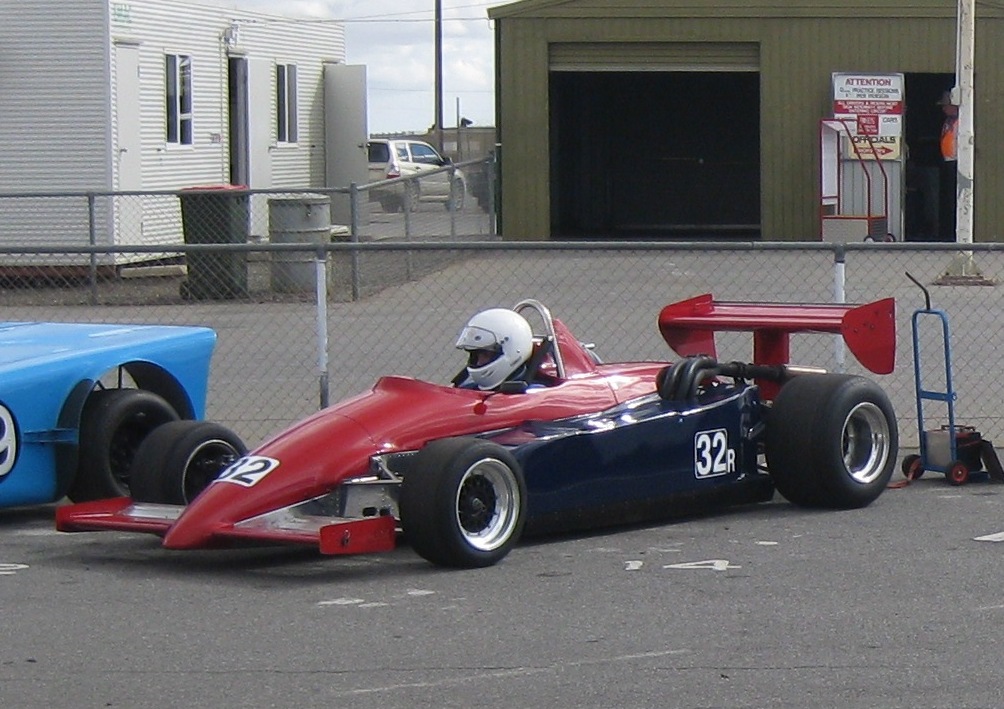
Ralt RT4
Ralt RT3/82-Alfa Romeo Formula 3 car

Ralt was a manufacturer of single-seater racing cars, founded by ex-Jack Brabham associate Ron Tauranac after he sold out his interest in Brabham to Bernie Ecclestone. Ron and his brother had built some specials in Australia in the 1950s under the Ralt name (standing for Ron and Austin Lewis Tauranac). Tauranac won the 1954 NSW Hillclimb Championship in the Ralt 500.

Cars

[edit]

Early Ralts

[edit]

Built with the assistance of Tauranac's younger brother, Austin, in Australia. The Mk was powered by a 1,932cc pushrod Norton ES2. Tauranac made his own flywheel, connecting rods, and cylinders. The Mk2 was a sports car built by and for Austin, with a Ford 10 engine, Standard 10 gearbox, and Morris 8 rear axle. The Mk3 was purchased from the Hooper brothers when they retired. Tauranac designed a new chassis for it, and the car was primarily driven by Austin. The Mk4 began as a special, using a Vincent-HRD 1,000 cc (61 cu in) V-twin and a de Dion rear suspension. The car took two years to develop in Tauranac's spare time. After just two events, somebody insisted on buying it, so plans were made for a production run of five. The Mk5 was planned by Austin as a Peugeot-engined car, but abandoned so he could assist Tauranac with the production Mk 4s.[1]

Modern Ralts

[edit]
Ralt RT1 at the DAMC 05 Oldtimer Festival Nürburgring
1980 Ralt RH6 Formula 2 chassis of Geoff Lees, powered by a Honda V6 engine

Tauranac founded Ralt in 1974 and the first product was the RT1, a simple and versatile car used in Formula Two, Formula Three and Formula Atlantic racing between 1975 and 1978.

In 1979, the RT2 was developed for Formula Two, with three cars being built for the Toleman team. Later, three more cars were built for private owners, including one exclusively for the revival of the Can-Am series. For 1980 Toleman built its own car, the TG280, which was based somewhat on the RT2 design; this was later built under licence by Lola as the T850 and further modified by Docking-Spitzley as the DS1. Two of the original Toleman RT2s were later raced in Can-Am, while the third ended up in South Africa, where copies called Lants were made. Related cars have appeared in hillclimb and sprint events in the UK as Romans and SPAs.

The RT2 also provided the basis for three cars in other categories: the RT3 in Formula Three, the RT4 in Formula Atlantic (which was also occasionally raced in Formula Two), and the RT5 in Formula Super Vee.

The RT4 was the car of choice in Australian Formula 1 and Formula Mondial during the early to mid-1980s. Roberto Moreno drove an RT4 to win the Australian Grand Prix in 1981, 1983, and the final AGP in 1984 before it became a round of the Formula One World Championship in 1985, while Alain Prost also drove one to victory in the 1982 Australian Grand Prix. Other F1 drivers to drive a Ralt RT4 in Australia during this period included Jacques Laffite and Andrea de Cesaris, as well as World Champions Alan Jones, Nelson Piquet, Keke Rosberg and Niki Lauda. The RT4, generally powered by a 1.6 litre, 4 cyl Ford BDA engine which produced around 220 bhp (164 kW; 223 PS), also saw John Bowe win the Australian Drivers' Championship in 1984 and 1985, while Australian Ralt importer Graham Watson used one to win the 1986 championship.

Works F2 cars

[edit]
1984 Ralt RH6/84 Formula 2 car

In 1980, Honda asked John Judd's Engine Developments to develop an engine for Formula Two, which would be used by the works Ralt team. Tauranac had previously been associated with Honda through Brabham's introduction of the Japanese marque to F2 in the 1960s, while Jack Brabham had co-founded Engine Developments with Judd. Between 1980 and 1984, Ralt's works F2 cars carried the RH6 designation: the RH6/80 and RH6/81 were developments of the RT2 theme, while the RH6/82, RH6/83 and RH6/84 were further developed around a new honeycomb tub. The cars proved very successful, winning 20 championship races and the 1981, 1983 and 1984 championships with Geoff Lees, Jonathan Palmer and Mike Thackwell respectively.

Formula 3000 cars

[edit]

In 1985, Formula Two was replaced by the new Formula 3000 category. Ralt's first F3000 car was the RB20, essentially a further development of the RH6/84 but fitted with a Cosworth DFV engine. (The 'B' in the designation stood for Bridgestone, Ralt's tyre supplier and major sponsor at the time.) The car won four races of the inaugural International F3000 Championship with Thackwell and John Nielsen.

RT23

For 1986, the RT20 was developed - a cheaper, more economical car with a traditional aluminium tub that was easier to maintain. Honda returned as the engine supplier for the works team, while customers used Cosworths. The works team won one race with Thackwell, while Pierluigi Martini and Luis Pérez-Sala won four races between them in customer cars entered by the Italian Pavesi Racing team. The RT21 was a further development for 1987, again incorporating honeycomb elements in the monocoque; Honda continued to supply the works team, with Roberto Moreno and Maurício Gugelmin winning one race each.

1988 was to be Ralt's last year as an independent chassis supplier and team in F3000. The RT22 was its first carbon-fibre F3000 car, but with Lola and newcomers Reynard beginning to dominate the category, it achieved little success. In the autumn of 1988, Tauranac sold Ralt to the March Group.

The Ralt name reappeared in F3000 in 1991, when the RT23 was manufactured under the March Group's auspices. Jean-Marc Gounon won at Pau in an RT23 entered by Mike Earle's 3001 International team, but otherwise the car was unsuccessful. An updated version, the RT24, was built by Nick Wirth's Simtek company for 1992, but soon after, Ralt withdrew from F3000 for good.

Second-hand Ralt F3000 cars were used extensively in Australia's Formula Holden category from its introduction in 1989, fitted with the formula's 3.8-litre Holden V6 engine. Rohan Onslow won the 1989 Australian Drivers' Championship in an RT20, while Simon Kane won the 1990 championship in an RT21.

Formula Three cars

[edit]
Ralt RT3

RT3 has a long history - a 1979 ground effect Formula Three car which was enhanced every year until 1984, becoming the dominant car in the formula. Ayrton Senna won the 1983 British Formula Three Championship driving an RT3. RT30 was introduced for the flat-bottom rules coming into effect in 1985. This was notable mainly for being very asymmetric - it had only one sidepod containing a radiator, and a deformable structure panel on the other side. The RT30 was, like many Ralts, developed over several seasons, evolving by the 1985–6 seasons into a highly competitive car, although some teams converted their old RT30s into flat-bottom cars and enjoyed a measure of success with these.[2]

RT34

RT31, the 1987 car, applied some of the honeycomb ideas from the RT21 F3000 car; it was fairly competitive but Bruce Cary's experiments with lowering the engine showed the way ahead. RT32: for the 1988 season, Cary's modifications were incorporated and a honeycomb/carbon tub was adopted. The RT32 theme saw Ralt through to the end of Tauranac's time with them, subsequent RT33 (1989)- RT35 (1991) cars essentially being developments of this basic model. The 1992 RT36 was designed by Andy Thorby and lightly revised by Tauranac for 1993 as the RT37. These cars were not particularly successful in Formula Three (in part because many teams switched to Dallara chassis and therefore did not develop them) but the basic monocoque continues to be extremely successful as a hillclimb car nearly fifteen years later. The Ralt 94C was designed by Chris Radage and was not a success.

Later Formula Atlantic variants

[edit]

The RT40 and RT41 were Formula Atlantic derivatives of the later Formula Three cars; the RT40 was the last Ralt with which Tauranac was involved. Many Champcar World Series and Indy Racing League drivers past and present, honed their skills in these cars, including Jacques Villeneuve, the 1995 Indy 500 winner and 1997 F1 World Champion. After being phased out of the Pro Atlantic series in 1998 in favor of the Swift 008a, the Ralt RT40s and 41s are still being raced competitively (2007) in the Sports Car Club of America, some 13–14 years after the RT40's debut, with Rennie Clayton winning the SCCA Championship in a Ralt RT-41 as recently as 2003.

Originally equipped for Pro Atlantic racing with a highly tuned variant of the Toyota 4A-GE twin cam engine displacing 1.6 litres and developing approximately 250 bhp; several of these chassis have been converted both with bodywork to compete in SCCA C Sports Racer (CSR) and now Prototype 1 (P1) with other engine packages such as the twin rotor 13b Mazda, Honda and Cosworth 1600.

Ralt in other hands

[edit]

Ralt's 1988 Formula 3000 car was proving a challenge to develop; the works drivers' backers (for the first time, Tauranac was running paying drivers rather than paying his own) encouraged them to leave the team and not pay up; the company was also suffering from loss of its American markets for RT4s (Swift were upping the stakes dramatically) and RT5s (SuperVee was on its last legs in the US as a major category). Reynard's aggressive marketing was cutting into the F3000 and F3 markets. Tauranac was looking to sell the company and ultimately ended up selling out to March for just over a million pounds; they had concentrated on high-value bespoke racing cars and allowed their customer cars to atrophy so the merger appeared to be a good move.

The subsequent history of Ralt as part of March is complex, but can be summarised as - operated as March's customer car division for a couple of years, was part of a management buyout when the March Group board decided to divest itself of all its motor racing interests; bought by enthusiasts Andrew Fitton and Steve Ward in 1993. Tauranac left from the firm soon after. Fitton and Ward wound March up, but Ward continued operating Ralt independently - the Ralt name continues, and Ralt F3 cars have occasionally appeared.

Tauranac post-Ralt

[edit]

Tauranac remained involved with various aspects of the sport after departing from Ralt, including racing-school cars for Honda, a Formula Renault car, consulting work for the Arrows Formula One team, and continued his relationship with Honda that went back to their early Formula Two days as engine supplier to Brabham in the 1960s. Ralt Australia was run by New Zealander Graham Watson until his death in 2009.[3]

References

[edit]
Revisions and contributorsEdit on WikipediaRead on Wikipedia
from Grokipedia
Ralt was a British manufacturer of single-seater , founded in 1974 by Australian engineer Ron Tauranac after he sold his interest in the team, and it produced over 1,000 vehicles until ceasing operations in 1993. The company, whose name derives from "Ron and Austin Lewis Tauranac" (Ron's brother and early collaborator), specialized in chassis for junior formulae such as Formula 3, Formula 2, and Formula Atlantic, utilizing innovative designs like sheet aluminum monocoques and ground-effect aerodynamics. Tauranac, renowned for his earlier work designing championship-winning Formula 1 cars from 1961 to 1971, led Ralt to significant success, including multiple European and British Formula 3 titles—such as ' 1975 European F3 championship win and Ayrton Senna's 1983 British F3 victory. Ralt cars became a dominant force in motorsport's lower tiers, providing platforms for future Formula 1 stars like , , and , and influencing careers in and racing. Key models included the RT1 (debuting in Formula Atlantic), RT3 (a staple in F3 during the late and ), and RT4, which helped secure championships in 1981, 1983, and 1984. The firm's emphasis on reliable, competitive engineering—rooted in Tauranac's hillclimb car experiments in during the 1940s and 1950s—solidified Ralt's legacy as a breeding ground for talent and technology in open-wheel racing.

Early History

Australian Origins (1940s–1950s)

Ralt was formed in 1946 in , , by brothers Ron Tauranac and Austin Lewis Tauranac, with the name derived from their initials to brand a series of special racing cars they designed and constructed for local competition. Inspired by post-World War II motorsport enthusiasm, the brothers began building vehicles amid limited resources, focusing on lightweight specials suited to amateur racing circuits, hillclimbs, and sprints in . Their initial efforts marked one of the earliest examples of homegrown Australian motorsport engineering, emphasizing simplicity and performance for grassroots events. Over the 1950s, the Tauranacs constructed five early Ralt cars, each adapted with diverse engines to suit available components and racing classes. Two models featured Norton 500cc single-cylinder engines, including the notable Ralt 500 Special, while others incorporated a Ford 10's 1172cc side-valve engine, a Vincent 1000cc V-twin, and a unit. The Ralt 500 Special exemplified their innovative approach with a mid- layout on a ladder-frame , swing-axle rear suspension, and custom Ralt-built wheels, prioritizing low weight and agile handling for tight courses. These designs competed effectively in Australian hillclimbs and sprints, where their compact form and responsive dynamics provided an edge over heavier contemporaries. Ron Tauranac piloted several of these cars to success, culminating in his victory in the 1954 Hillclimb Championship aboard the Ralt 500 Special, outperforming rivals including Jack 's Cooper-Bristol. This achievement highlighted the cars' competitiveness in local events, with additional strong showings at venues like Newcastle and Cumberland Park. The operation remained small-scale, producing fewer than ten cars in total, primarily for personal use and a handful of local drivers, reflecting the brothers' amateur ethos before Ron's departure for in 1960 to join , which led to their separation and the Australian Ralt's dormancy.

Ron Tauranac's Path to Revival

In 1959, Ron Tauranac immigrated from to the , where he secured employment as a draftsman during the day while competing in races with a Cooper-Norton at night. This dual pursuit honed his engineering skills and deepened his connection with , whom he had first met in Australian hillclimbs during the early 1950s. By 1961, Tauranac partnered with to establish Motor Racing Developments Ltd. (MRD) in , , focusing on the design and production of customer racing cars, beginning with models. Under Tauranac's leadership as chief designer, the company rebranded as and produced innovative chassis that propelled the team to success in , including the 1966 Drivers' and Constructors' Championships won by in the BT19 and the 1967 Drivers' Championship secured by in the BT20. Tauranac's designs integrated advanced features, such as the RB620 in the BT19, which provided reliable power and contributed to nine victories across the two title-winning seasons. Following Brabham's retirement at the end of 1970, Tauranac acquired full ownership of the company but faced challenges in balancing customer car production with racing commitments. In 1971, he sold his shares to , who shifted focus exclusively to and halted customer car manufacturing by 1973. After the sale, Tauranac took on brief consulting roles, including advisory work with Frank Williams and contributions to Trojan's Formula 5000 and Formula One projects, such as adapting the McLaren M21 chassis and designing the underperforming T103 in 1974. These short-lived engagements, amid the 1973-1974 petrol crisis that stalled some initiatives, underscored the difficulties of team management without a dedicated racing driver like Brabham. Motivated by the persistent demand for reliable customer cars in junior formulas—particularly after Brabham's withdrawal from that market—Tauranac decided in late 1974 to independently revive his early Ralt brand in the UK, establishing a new operation dedicated to producing competitive, updatable chassis for privateers in categories like Formula Three and Formula Two. This move leveraged his expertise in simple, effective designs to fill a clear gap in the single-seater racing ecosystem.

Modern Ralt Era (1975–1993)

Founding and Growth

In 1975, Ron Tauranac re-established the Ralt marque he had originally used with his brother Austin in the 1950s, founding Ralt Limited in , , , to produce customer for junior formulae. Drawing briefly on his extensive experience designing championship-winning from 1962 to 1972, Tauranac self-funded the initial setup through savings accumulated from his prior ventures. The company began operations in modest premises on Snelgar Road, focusing on efficient production of single-seater . The launch of the RT1 model in 1975 marked the start of customer-focused production, with the design adaptable for Formula 3, Formula 2, and Formula Atlantic categories. This versatile chassis emphasized reliability and affordability, incorporating adaptations for popular engines such as and Ford units to appeal to a broad range of teams and budgets in the junior racing scene. Early operations relied on a small team, including Tauranac's first employee, , who assisted in factory preparation and testing. Growth accelerated through the late as Ralt gained traction in European and British series, with production of the RT1 reaching 165 units by 1979. Sales to prominent outfits like Project Four, which campaigned BMW-powered RT1s in Formula 2, and , which utilized Ralt chassis in Formula 3 during 1979, helped overcome initial financial strains from limited resources and scaling production. By 1980, cumulative output exceeded 200 cars, incorporating early examples of the successor RT2 and RT3 models, while employment peaked at around 50 staff to support expanding demand. This period solidified Ralt's reputation as a go-to supplier for competitive, cost-effective racing equipment.

Acquisition by March and Winding Down

In October 1988, Ron Tauranac sold Ralt to the March Group plc for integration into its operations, prompted by the underwhelming performance of the RT22 in Formula 3000, with Tauranac remaining on briefly as a consultant. This acquisition aimed to leverage Ralt's established customer base in junior formulas, but it soon faced integration challenges within March's broader portfolio. Following the buy-out, Ralt encountered mounting pressures from intensified competition by Reynard and Dallara, which eroded its market share in Formula Three by 1993, as teams increasingly switched to the rivals' more advanced chassis. In 1991, amid these strains, March/Ralt underwent a management buy-out, establishing March Cars Ltd. as the new entity to continue operations. Financial difficulties escalated, culminating in March Engineering's receivership in 1992 and a subsequent takeover of March Engineering Ltd. by Andrew Fitton and Steve Ward in early 1993, further complicating Ralt's trajectory under the March umbrella. Despite these setbacks, Ralt persisted with limited production, notably the RT41 Formula Atlantic model, which saw 32 units built from to 1998—12 in , 9 in 1995, 5 in 1996, and 6 in 1997–1998—though its competitiveness waned against newer designs. A highlight came in , when the RT41 dominated the Atlantic Championship, with drivers like David Empringham securing the title in the car. Under the new management post-1993, final Ralt cars were completed, marking the end of major activities by 1998. Overall, Ralt produced 1,083 cars during its run, with Tauranac attributing 1,047 designs to his direct involvement.

Car Models by Category

Formula 2 Cars

Ralt entered Formula 2 in 1975 with the RT1, adapting its successful Formula 3 platform to the higher-powered 2-liter regulations by incorporating larger fuel tanks in sponsons and a wider surround for improved . The RT1 featured an aluminum alloy with a rear tubular sub-frame, outboard coil springs at the front, and a lower wishbone/single upper link/twin radius rods suspension at the rear, emphasizing reliability and ease of maintenance for customer teams. Powered primarily by the Ford BDG engine in its initial Swindon-tuned form, with later examples using M12 or Hart 420R units, the RT1 achieved early successes in British F2 events and demonstrated versatility across libre racing and hillclimbs through 1978. Only three RT1 chassis were produced in F2 specification, underscoring Ralt's targeted approach to the category. The , introduced in 1979, marked Ralt's shift toward ground-effect in Formula 2, building on the RT1's while updating suspension geometry for better handling under the series' 2-liter engine rules. Designed exclusively for the team, it retained an aluminum sheet but incorporated venturi tunnels for generation, paired with revised to suit BMW M12/7 engines producing around 280 horsepower. Six RT2 chassis were built, three for the team and three for private owners, with achieving strong results before developing their own TG280 evolution in using higher-grade materials for enhanced stiffness and weight savings. This model highlighted Ralt's focus on customer-specific innovations, briefly referencing the shared robust platform from the RT1 used in multiple formulas. From 1980 to 1984, Ralt's works Formula 2 efforts centered on the RH6 series, evolving the RT2's ground-effect principles with progressive advancements to meet tightening 2-liter regulations and performance demands. Early RH6/80 and RH6/81 variants used aluminum construction with bulkheads for rigidity, while the RH6/82 introduced full aluminum panels, reducing overall weight to approximately 515 kg and incorporating carbon fiber elements in non-structural areas for further mass savings. Suspension shifted to pushrod and pullrod designs in later iterations for improved , with wider tracks and tires enhancing grip; works examples were powered by RA260E V6 engines as stressed members, delivering 300-340 horsepower at up to 12,000 rpm, though customer teams often fitted Hart units for broader accessibility. The RH6 dominated through annual refinements, powering Geoff Lees to the European F2 title, with production limited to works and select customer units across the five-year span.

Formula 3 Cars

Ralt's entry into Formula 3 began with the RT1 in 1975, a versatile constructed from a 16-gauge L72 with a subframe, , and outboard springs and dampers, designed for compatibility with and engines. This model emphasized reliability and ease of maintenance, achieving significant success in British and European F3 series, including the 1978 European Formula 3 title. Evolving from the RT1, the RT3 debuted in 1979 as a dedicated F3 design featuring a stiff tub reinforced with honeycomb bulkheads, inboard suspension, and wide skirted sidepods to exploit ground-effect under the era's regulations. Annual refinements, such as pushrod front suspension in the 1984 variant, enhanced its performance with or powerplants, leading to dominance in the British F3 championship from 1980 to 1984. Between 1979 and 1984, Ralt built approximately 168 RT3 . The RT30, introduced in 1984 for 2-liter engines, marked a shift with its aluminium tub, low-line right sidepod in a "coke bottle" shape, flat wooden floor for aerodynamic efficiency, and longitudinal rear shock absorbers, later updated to vertical dampers in the 1986 RT30/86 iteration. These changes optimized airflow and regulatory compliance, contributing to victories like the 1985 Japanese F3 championship. By 1984, Ralt had produced its 500th chassis overall, with a significant portion dedicated to Formula 3, and design tweaks prioritizing cost-effective spaceframe elements and modular components that facilitated adaptations across series. Later models like the RT35 in 1990 and RT40 in 1991 represented Ralt's final F3 evolutions under Ron Tauranac's direct involvement, incorporating sequential gearboxes and enhanced through refined to meet tightening regulations. The RT35, for instance, powered to the 1991 British F3 title, while shared suspension and chassis elements from these designs influenced higher formulas like F3000. Throughout the , Ralt dominated the British F3 market, underscoring its role as the feeder series' benchmark for junior single-seaters.

Formula 3000 Cars

Ralt debuted in the Formula 3000 series in 1985 with the RB20, a monocoque chassis incorporating ground effects and powered by the Cosworth DFV 3.5L V8 engine, adapting designs from its Formula 2 heritage to the new category's requirements. The series introduced standardized naturally aspirated 3.5L V8 engines, eliminating the turbocharged variety prevalent in F2 and aiming to reduce costs through controlled specifications. The RT21 model arrived in 1987, building on the RT20 with enhancements to suspension geometry for better handling and a lighter construction approaching the category's 600 kg minimum weight limit. Subsequent iterations, including the RT31 and RT32 produced from 1986 to 1988, refined these aspects further, emphasizing durability and adaptability for customer teams in the international F3000 grid. Note that the RT20 was a distinct evolution from the initial RB20. By 1989, the BT33 represented continued evolution, while the RT24 in 1992 incorporated aerodynamic refinements amid growing competition from Reynard chassis, though Ralt's presence in the series waned. Ralt supported a significant share of the grid in the category's early years.

Formula Atlantic and Other Variants

Ralt's entry into North American open-wheel racing began with the RT1, introduced in 1975 as an adaptation of its initial Formula 2 and 3 designs for the Formula Atlantic series, which emphasized production-based engines and road-course handling suited to SCCA and regional events. Three RT1 chassis were specifically built for Formula Atlantic that year, featuring a structure with a steel subframe, double-wishbone front suspension with outboard springs and dampers, and a rear setup using a single top link, reversed lower wishbones, and twin radius rods. These cars were powered by 1.6-liter BDA or BDD engines producing around 180 horsepower, paired with a five-speed sequential gearbox, and optimized for 13-inch wheels and tires compliant with SCCA specifications. Dozens of RT1 variants were produced across all formulas by , with a portion dedicated to Atlantic use, including adaptations like enveloping bodywork for select Canadian-American entries. The RT4 succeeded the RT1 in Formula Atlantic from around 1980 to 1986, evolving the chassis with refinements for improved aerodynamics and handling on American road courses, while retaining compatibility with Ford BDA engines upgraded to approximately 220 horsepower. This model shared some suspension geometry from earlier Ralt designs but incorporated pushrod front setups in later iterations for better compliance with uneven surfaces common in SCCA racing. Dozens of RT4s were built for Atlantic competitors. In the 1990s, Ralt revived its Atlantic presence with the RT40, launched in 1991 under Ron Tauranac's direct involvement as a derivative of contemporary Formula 3 technology, tailored for the Toyota Atlantic Championship with its spec 4A-GE engines. The subsequent RT41, produced from 1994 to 1998, featured advanced adjustable Öhlins dampers with four-way settings and a third spring at both ends for enhanced road-course stability, along with an adjustable front wing to fine-tune under varying track conditions. A total of 32 RT41 chassis were constructed, with 12 in 1994, nine in 1995, five in 1996, and six in 1997-1998, powered by the 1.6-liter engine delivering about 240 horsepower through a four- or five-speed transmission. Even after Ralt's acquisition by in 1993, production and support for the RT41 continued under March Cars Ltd. and later Steve Ward, enabling strong performance in the 1997 Toyota Atlantic Championship despite emerging competition from other manufacturers. Beyond the core Atlantic lineup, Ralt produced the RT5 in the early 1980s for the series, a niche category using Volkswagen-derived engines and serving as an entry-level stepping stone in American club racing. The RT5 employed an aluminum with ground-effect elements, a 1.8-liter VW , and a five-speed , designed for SCCA Super Vee events with 13-inch wheels and focus on affordability and reliability over outright speed. Limited production of the RT5, along with occasional adaptations, rounded out Ralt's minor variants, emphasizing versatile, road-legal components for regional and club-level competition.

Racing Achievements

European and National Formula Successes

Ralt's entry into European Formula 2 marked a period of strong performance, with the works team securing three championships in 1981, 1983, and 1984 using the RH6 chassis. In 1981, Geoff Lees clinched the title for Ralt Racing, demonstrating the car's reliability across the season's rounds. In 1983, drove the updated RH6 to victory in the championship, while took the 1984 crown in the same model, underscoring Ralt's engineering edge in the category. These successes highlighted Ralt's transition from customer supplier to dominant constructor in continental open-wheel racing. In Formula 3, Ralt enjoyed even greater dominance in national series, particularly in Britain and during the late 1970s. The RT1 chassis powered to the 1978 British Formula 3 championship, where Ralt claimed 24 victories out of 28 races, establishing an early benchmark for the marque's junior formula prowess. By 1980, the RT3 model contributed to Stefan Johansson's championship win in the BARC British F3 series after he switched to it mid-season, securing the final four races. In , Bertram Schäfer won the 1978 national F3 title aboard an RT1, further extending Ralt's influence across European grassroots racing. Ralt's impact extended to international events with national significance, notably in , where the RT4 chassis swept the Australian Grand Prix from 1981 to 1984. triumphed in 1981, 1983, and 1984, while secured the 1982 victory, all in RT4s that adapted seamlessly to Formula Pacific regulations. A pivotal moment came in 1980 when the team, a former Ralt customer, achieved a 1-2 championship finish in European F2 with and , building on their prior experience with Ralt to propel drivers toward Formula 1. These results served as a launchpad for emerging talents, including , who briefly raced an RT3 in British F3 before his rapid ascent.

International Series Wins

Ralt's entry into the inaugural series in 1985 marked a significant international expansion, with the RT20 chassis securing four championship race victories that season, including the opening BRDC International Trophy at won by . Thackwell also triumphed at Spa-Francorchamps and Enna-Pergusa, while teammate John Nielsen added a win at , demonstrating the RT20's competitiveness against established and Lola designs despite the series' transition from Formula 2. Thackwell additionally won the non-championship Curacao Grand Prix. These results contributed to Ralt's tally of over 20 F3000 race wins across the decade, often in the face of intensifying competition from Reynard and Lola. In 1986, the RT20 chassis continued Ralt's strong form, claiming multiple poles and victories, such as Pierluigi Martini's win at , while the RT20 remained viable for privateers like Luis Perez-Sala at Birmingham. The following year, the RT21 model achieved further success with two race wins, including Roberto Moreno's victory at , underscoring Ralt's engineering adaptability in the evolving F3000 landscape. Although Ralt did not secure an overall F3000 title, these performances highlighted the chassis's role in nurturing talents like , who raced the RT23 for Cerumo in the 1991 Japanese F3000 series, winning at Mine and finishing 7th overall before advancing to Formula 1. Parallel to F3000, Ralt dominated Formula Atlantic internationally, particularly in the British series where the RT4 chassis powered Ray Mallock to the championship with nine victories, building on David Leslie's 1980 title win. Across the Atlantic, Ralt's RT40 and RT41 models swept the and Canadian championships from 1992 to 1997, culminating in Alex Barron's 1997 Toyota Atlantic title in the RT41, where he secured five race wins for a dominant season performance. The RT4 also excelled in key international events, with Roberto Moreno driving it to overall victories in the Australian Grand Prix in , 1983, and 1984 at circuits like Calder. Collectively, Ralt chassis claimed more than 10 championships in F3000 variants and Atlantic series combined, cementing their status as a pivotal platform for global driver progression.

Post-Ralt Developments

Ralt's Later Production and Legacy

Following the 1988 acquisition of Ralt by and the subsequent 1993 takeover of March by Andrew Fitton and Steve Ward, production continued on a limited basis, with the RT41 model built for the Atlantic Championship until regulations shifted in 1997, extending overall output to exceeding 1,100 cars from to 1998. Approximately 70% of these vehicles were dedicated to junior formulae such as Formula 2, Formula 3, and Formula Atlantic, underscoring Ralt's pivotal economic role in sustaining the ecosystem by providing affordable, reliable that enabled widespread privateer participation and international exports. Ralt's design legacy, rooted in Ron Tauranac's emphasis on customer-oriented engineering—prioritizing lightweight aluminium-honeycomb monocoques, adaptable suspension systems, and cost-effective adaptability—influenced subsequent constructors like Reynard and Lola, who adopted similar philosophies for scalable production in open-wheel racing. Today, Ralt chassis remain active in historic and vintage racing events worldwide, supported by ongoing parts availability from specialists such as CHV Engineering and PA Motorsport, ensuring their mechanical longevity and appeal to collectors. As of 2025, Ralt chassis continue to compete in major historic racing series worldwide, including the Goodwood Festival of Speed and Monaco Historic Grand Prix. Culturally, Ralt's impact endures through its record of over 100 championships across global series, including multiple European Formula 3 titles (1975, 1981, 1983, 1984) and British Formula 3 wins (1983 with , 1990 with , 1991 with ), which solidified its status as a dominant force in junior racing. This success also positioned Ralt as a key pipeline for Formula 1 talent, launching careers of drivers like Senna, Häkkinen, and directly from its F3 and F3000 platforms.

Tauranac's Final Years

Following his departure from Ralt in 1994, Ron Tauranac continued to contribute to motorsport through consulting roles. In 1995, he began working with , designing an F3-style school car and the Ronta car. He further consulted for on touring car projects in the Japanese and British Touring Car Championships in 1996. During the 1990s, Tauranac also served as a for the Arrows Formula 1 team, providing expertise amid their challenges with engine performance. In 2002, after the death of his wife Norma following 49 years of marriage, Tauranac returned to , initially settling in before moving to the Sunshine Coast in . He retired there during the , remaining active and independent while maintaining a keen interest in motorsport, including historic racing events. Tauranac's career, capped by his foundational role at Ralt, earned him lasting recognition in the field. Tauranac had been an Honorary Member of the British Racing Drivers' Club since 1971. He was awarded the in 2002 and inducted into the Motorsport Australia Hall of Fame in 2017. On July 17, 2020, Tauranac passed away peacefully in his sleep at the age of 95 at his home in . He was survived by his daughters, Julie and Jann. Tributes upon his death emphasized his innovative legacy, with his family stating he was "active, healthy, and independent until the end, he constantly felt the need to achieve something and always had the next goal in mind."

References

Add your contribution
Related Hubs
User Avatar
No comments yet.