


Community hub
Recent from talks
Contribute something
Nothing was collected or created yet.
Rat-baiting
View on Wikipedia

Rat-baiting is a blood sport that involves releasing captured rats in an enclosed space with spectators betting on how long a dog, usually a terrier and sometimes referred to as a ratter, takes to kill the rats. Often, two dogs competed, with the winner receiving a cash prize. It is now illegal in most countries.
History
[edit]In 1835, the Parliament of the United Kingdom implemented an act called the Cruelty to Animals Act 1835, which prohibited the baiting of some animals, such as the bull, bear, and other large mammals. However, the law was not enforced for rat baiting and competitions came to the forefront as a gambling sport. It was very popular in Ireland even before 1835, because of the limited space in larger cities, Dublin and Belfast especially. Some families sought to profit from the large numbers of vermin plaguing the cities and countryside. Many countries adopted this sport after 1835, with England having one of the largest participation rates.[citation needed] At one time, London had at least 70 rat pits.[1]

Atmosphere
[edit]James Wentworth Day, a follower of the illegal sport of rat-baiting, described his experience and the atmosphere at one of the last old rat pits in London during those times.
This was a rather dirty, small place, in the middle of the Cambridge Circus, London. You went down a rotten wooden stair and entered a large, underground cellar, which was created by combining the cellars of two houses. The cellar was full of smoke, stench of rats, dogs, and dirty human beings, as well. The stale smell of flat beer was almost overpowering. Gas lights illuminated the centre of the cellar, a ring enclosed by wood barriers similar to a small Roman circus arena, and wooden bleachers, arranged one over the other, rose stepwise above it nearly to the ceiling. This was the pit for dog fights, cockfights, and rat killing. A hundred rats were put in it; large wagers went back and forth on whose dog could kill the most rats within a minute. The dogs worked in exemplary fashion, a grip, a toss, and it was all over for the rat. With especially skillful dogs, two dead rats flew through the air at the same time ...
Rules
[edit]The officials included a referee and timekeeper. Pits were sometimes covered above with wire mesh or had additional security devices installed on the walls to prevent the rats from escaping. Rules varied from match to match.
In one variation, a weight handicap was set for each dog. The competing dog had to kill as many rats as the number of pounds the dog weighed, within a specific, preset time.[3] The prescribed number of rats was released and the dog was put in the ring. The clock started the moment the dog touched the ground. When the dog seized the last rat, his owner grabbed it and the clock stopped.

Rats that were thought still to be alive were laid out on the table in a circle before the referee. The referee then struck the animal three times on the tail with a stick. If a rat managed to crawl out of the circle, it was considered to be alive.[3] Depending on the particular rules for that match, the dog may be disqualified or have to go back in the ring with these rats and kill them. The new time was added to the original time.
A combination of the quickest time, the number of rats, and the dog's weight decided the victory. A rate of five seconds per rat killed was considered quite satisfactory; 15 rats in a minute was an excellent result.
Cornered rats will attack and can deliver a very painful bite. Not uncommonly, a ratter (rat-killing dog) was left with only one eye in its retirement.
Rat-catcher
[edit]Before the contest could begin, the capture of potentially thousands of rats was required. The rat catcher would be called upon to fulfill this requirement. Jack Black, a rat catcher from Victorian England[4] supplied live rats for baiting.
Technique
[edit]Faster dogs were preferred. They would bite once. The process was described as "rather like a sheepdog keeping a flock bunched to be brought out singly for dipping," where the dog would herd the rats together, and kill any rats that left the pack with a quick bite.[3]
Breeds
[edit]
The ratting dogs were typically working terrier breeds, which included the bull and terrier, Bull Terrier, Bedlington Terrier, Fox Terrier, Jack Russell Terrier, Rat Terrier, Black and Tan Terrier,[5][6] Manchester Terrier, Yorkshire Terrier, and Staffordshire Bull Terrier.[7] The degree of care used in breeding these ratters is clear in their pedigrees, with good breeding leading to increased business opportunities. Successful breeders were highly regarded in those times. In modern times, the Plummer Terrier is considered a premiere breed for rat-catching.
Billy
[edit]A celebrated bull and terrier named "Billy"[8][9] weighing about 12 kg (26 lb), had a proud fighting history and his pedigree reflects the build-up over the years. The dog was owned by Charles Dew and was bred by a breeder James Yardington. On the paternal side is "Old Billy" from the kennel of John Tattersal from Wotton-under-Edge, Gloucestershire, and was descended from the best line of all Old English Bulldogs. On the maternal side is "Yardington's Sal" descended from the Curley line. The pedigree of all these dogs can be traced back more than 40 years and numerous old accounts exist about them.[citation needed]
The October 1822, edition of The Sporting Magazine provided descriptions of two rat pit matches with Billy, quoted as:

Thursday night, Oct. 24, at a quarter before eight o'clock, the lovers of rat killing enjoyed a feast of delight in a prodigious raticide at the Cockpit, Westminster. The place was crowded. The famous dog Billy, of rat-killing notoriety, 26 lb. weight, was wagered, for 20 sovereigns, to kill 100 rats in 12 minutes. The rats were turned out loose at once in a 12-foot square, and the floor whitened so that the rats might be visible to all. The set-to began, and Billy exerted himself to the utmost. At four minutes and three-quarters, as the hero's head was covered with gore, he was removed from the pit, and his chaps being washed, he lapped some water to cool his throat. Again he entered the arena, and in vain did the unfortunate victims labour to obtain security by climbing against the sides of the pit, or by crouching beneath the hero. By twos and threes, they were caught, and soon their mangled corpses proved the valour of the victor. Some of the flying enemy, more valiant than the rest, endeavoured by seizing this Quinhus Flestrum of heroic dogs by the ears, to procure a respite, or to sell their life as dearly as possible; but his grand paw soon swept off the buzzers, and consigned them to their fate. At seven minutes and a quarter, or according to another watch, for there were two umpires and two watches, at seven minutes and seventeen seconds, the victor relinquished the glorious pursuit, for all his foes lay slaughtered on the ensanguined plain. Billy was then caressed and fondled by many; the dog is estimated by amateurs as a most dextrous animal; he is, unfortunately, what the French Monsieurs call borg-ne, that is, blind of an eye.-This precious organ was lost to him some time since by the intrepidity of an inimical rat, which as he had not seized it in a proper place, turned round on its murderer, and reprived him by one bite of the privilege of seeing with two eyes in future. The dog BILLY, of rat-killing notoriety, on the evening of the 13th instant, again exhibited his surprising dexterity; he was wagered to kill one hundred rats within twelve minutes; but six minutes and 25 seconds only elapsed, when every rat lay stretched on the gory plain, without the least symptom of life appearing.' Billy was decorated with a silver collar, and a number of ribband bows, and was led off amidst the applauses of the persons assembled.
Billy's best competition results are:

| Date | Rats killed | Time | Time per rat | |
|---|---|---|---|---|
| 1820–??-?? | 20 | 1 minute, 11 seconds | 3.6 seconds | |
| 1822-09-03 | 100 | 8 minutes, 45 seconds | 5.2 seconds | |
| 1822-10-24 | 100 | 7 minutes, 17 seconds | 4.4 seconds | |
| 1822-11-13 | 100 | 6 minutes, 25 seconds | 3.8 seconds | |
| 1823-04-22 | 100 | 5 minutes, 30 seconds | 3.3 seconds | * Record |
| 1823-08-05 | 120 | 8 minutes, 20 seconds | 4.1 seconds |
Billy's career was crowned on 22 April 1823, when a world record was set with 100 rats killed in five and a half minutes. This record stood until 1862 when it was claimed by another ratter named "Jacko". Billy continued in the rat pit until old age, reportedly with only one eye and two teeth remaining.[8][9]
Jacko
[edit]
According to the Sporting Chronicle Annual, the world record in rat killing is held by a black and tan bull and terrier named "Jacko", weighing about 13 lb and owned by Jemmy Shaw.[10][8][9] Jacko had these contest results:
| Date | Rats killed | Time | Time per rat | |
|---|---|---|---|---|
| 1861-08-08 | 25 | 1 minute, 28 seconds | 3.5 seconds | |
| 1862-07-29 | 60 | 2 minutes, 42 seconds | 2.7 seconds | * Record |
| 1862-05-01 | 100 | 5 minutes, 28 seconds | 3.3 seconds | * Record |
| 1862-06-10 | 200 | 14 minutes, 37 seconds | 4.4 seconds | |
| 1862-05-01 | 1000 | in less than 100 minutes | 6.0 seconds |
Jacko set two world records, the first on 29 July 1862, with a killing time of 2.7 seconds per rat and the second on 1 May 1862, with his fight against 100 rats, where Jacko worked two seconds faster than the previous world record holder "Billy". The feat of killing 1,000 rats took place over ten weeks, with 100 rats being killed each week ending on 1 May 1862.
Tiny the Wonder
[edit]
Tiny the Wonder was a famous mid-19th century English Toy Terrier (Black & Tan) that could kill 200 rats in an hour,[11][12] which he achieved twice, on 28 March 1848 and 27 March 1849, with time to spare.[13] For a period of time Tiny maintained the record for killing 300 rats in under 55 minutes.[14] Tiny only weighed five and a half pounds with a neck so small, a woman's bracelet could be used as a dog collar. From 1848 to 1849, Tiny was owned by Jemmy Shaw, the landlord of the Blue Anchor Tavern at 102 Bunhill Row, St. Luke's, London Borough of Islington; the pub is now named the Artillery Arms.[15] Tiny was a star attraction at the Blue Anchor Tavern, with crowds gathering to watch the action in the rat pit. Shaw preferred to acquire the rats from Essex as opposed to sewer rats to decrease potential health risks to Tiny. Shaw was able to keep up to 2,000 rats at his establishment.[13] This is a commentary about Tiny from a poster published from those times:[16]
- "The 5 1/2 pounds of black and tan fury! This extraordinary Black and Tan has won 50 interesting events, including the following matches: 2 matches of 6 rats when he weighed 4 1/2 pounds, 20 matches of 12 rats at 5 pounds of weight, 15 matches of 20 rats at 5-pound weight, 1 match of 50 rats and 1 match of 100 rats in 34 minutes 40 seconds on Tuesday, March 30, 1847. Tiny beat Summertown bitch "Crack" of 8 pounds, 12 Rats each, September 14th. Beat the dog "Twig" at 6 1/2 pounds on November 7th. On Tuesday, March 28, 1848, he was matched to kill 300 rats in 3 hours. He accomplished the unprecedented test in 54 minutes 50 seconds, which took place in the presence of a crowded audience at the Blue Anchor, Bonhill Row, St. Lukes. May 2, killed 20 rats in 8 minutes; May 23 won a match of 50 rats against Mr. Batty's bitch "Fun," 8 pounds. August 15, won a match against "Jim," 50 rats; September 5 won a match of 12 rats, 2 minutes 30 seconds. November 4 won a match of 100 rats, 30 minutes 5 seconds; January 31, 1849, won a match of 100 rats, 20 minutes 5 seconds; March 27 killed 200 rats 59 minutes 58 seconds."
Jack
[edit]
Jack was a Black and Tan Terrier owned by Kit Burns in New York City in the mid- to late 19th century.[17] Jack was a prized ratter, and Burns claimed that Jack killed 100 rats in 5 minutes and 40 seconds.[17] Burns had Jack taxidermied and mounted him, alongside other prized dogs, on the bar of his tavern called the Sportsmen's Hall, located at 273 Water Street.[17] Burns' first-floor amphitheatre could hold 100 spectators who were charged an admission of $1.50 to $5.00 depending on the dogs' quality, nearly a skilled labourer's daily wages. These shows were quite expensive as back in the day 1.00 was equal to 100 dollars today with that said these people were very wealthy and rich being able to buy a ticket to these shows. [18] The rat pit was about 8 ft square with 4-ft-high walls.[18] On the New York City waterfront rat baiting was quite lucrative with a purse of $125 not uncommon.[19] This created a high demand for rats with some rat catchers earning $0.05 to $0.12 per rat.[19]
Kit Burns' rat-pit activities are described by author James Dabney McCabe in his book Secrets of the Great City, published in 1868, at page 388,[20] as follows:
- "Rats are plentiful along the East River and Burns has no difficulty in procuring as many as he desires. These and his dogs furnish the entertainment in which he delights. The principal room of the house is arranged as an amphitheatre. The seats are rough wooden benches and in the centre is a ring or pit enclosed by a circular wooden fence several feet high. A number of rats are turned into this pit and a dog of the best ferret stock is thrown in amongst them. The little creature at once falls to work to kill the rats, bets being made that she will destroy, so many rats in a given time. The time is generally made by the little animal who is well known to and a great favorite with the yelling blasphemous wretches who line the benches. The performance is greeted with shouts oaths and other frantic demonstrations of delight. Some of the men will catch up the dog in their arms and press it to their bosom in a frenzy of joy or kiss it as if it were a human being unmindful or careless of the fact that all this while the animal is smeared with the blood of its victims. The scene is disgusting beyond description."

On 31 November 1870, Henry Bergh the founder of the American Society for the Prevention of Cruelty to Animals raided the Sportsman's Hall and arrested Burns under an anti-cruelty to animals law passed by the New York state legislature four years prior.[21] The Sportsman Hall stayed permanently closed after the raid.
Although little of the original structure remains, Sportsman's Hall occupied the land where the Joseph Rose House and Shop, a four-unit luxury apartment house, now lies and is the third oldest house in Manhattan after St. Paul's Chapel and the Morris-Jumel Mansion.[22][23]
Jerry
[edit]
Jerry was a champion ratter of colonial Australia, owned by Mr. R. G. Banner Jr., of Sandridge, now called Port Melbourne, during the 1860's. Jerry was a bull and terrier weighing under 7 lbs.[24] During the 19th century in Melbourne, ratting contests were common with dogs like Jerry competing in glass-walled pits where two terriers raced to kill a set number of rats within the shortest amount of time. A 1900 Argus feature recalls: “There used to be rat-pits in Melbourne where sportsmen took their dogs and had competitions in rat killing… the pit was surrounded by plate-glass…two dogs were then put in and the test was to see which of them would kill the most in the quickest time. The sport was grand.”[25] On or about June 8, 1861, Jerry became notable when he was backed in a rat-baiting contest for £10 to kill 100 rats within ten-minutes, instead Jerry completed the gory task in 8 minutes and 30 seconds, as reported in the Bell's Life in Victoria and Sporting Chronicle, as follows:
"The match in which Jerry was backed to kill 100 rats in ten minutes, for £10 a side, came off last Tuesday, at the All Nations Hotel, Sandridge, and resulted in the victory of Jerry, who succeeded in killing the hundred in 8 min. 30. sec. The event came off in the plate-glass pit, and the attendance was numerous. Matches of minor importance concluded the sports of the evening. Jerry has thus amply justified his title to be considered the champion dog of the colony, the only other tyke likely to contest the honour being George Strike's Cribb."
— Bell's Life in Victoria and Sporting Chronicle, Saturday, 8 Jun 1861, Page 2, RATTING[26]
Decline
[edit]
Toward the latter half of Queen Victoria's reign, criticism of the practice mounted. The animal welfare movement opposed the practice much like they did other forms of animal baiting. More favourable ideas of rats as living animals rather than vermin arose, alongside a new interest in their positive role in the maintenance of an urban ecosystem.[27] (It was only after the decline of rat baiting that rats became associated with the spread of disease.[27]) Additionally, when ratting moved from being a countryside pastime to the betting arenas of inner London, it became associated with the base vices of lower-class citizens.[27] Baiting sports diminished in popularity and the dog exhibition shows brought by the gentry slowly replaced the attraction as a more enlightened form of animal entertainment.[28]
The last public competition in the United Kingdom took place in Leicester in 1912. The owner was prosecuted and fined, and had to give a promise to the court that he would never again promote such entertainment.[1]
Rat hunting in modern times
[edit]
Rat hunting and rat-baiting are not the same activities. Rat hunting, also known as rat-coursing, is the legal use of dogs, often referred to as ratters, for pest control of non-captured rats in an unconfined space, such as a barn or field.[29][30][31] In the United Kingdom the hunting of rats with dogs is legal under the Hunting Act 2004.[32] Due to rat infestations,[33] terriers are now being used for ratting to hunt and kill rats in major cities around the world, including the United Kingdom,[34] the United States[35][36][37][38][39] and Vietnam.[40] The use of ratting dogs is considered to be the most environmentally friendly, humane and efficient method of exterminating rats.[41][42] The article Rats in New York City provides some background about the problem with urban rats in the modern era.
In popular culture
[edit]- A rat-baiting scene is included in the 1979 film The First Great Train Robbery.[citation needed]
- A rat-baiting scene is included in the TV show Penny Dreadful season 1 episode 4
- In the movie Gangs of New York (2002), a scene involves rat baiting.[43][44]
- In the book Let Loose the Dogs (2003) by Maureen Jennings, as well as its TV adaptation, the main storyline is that a murder occurred following a rat-baiting contest.[citation needed]
- In Season 1, Episode 4 of The Knick (2014), there is a scene depicting rat baiting. A human, rather than a dog, is the one in the pit with the rats.[45][46]
- In the book The Amazing Maurice and His Educated Rodents by Terry Pratchett, intelligent rats stage an escape from a dog named Jacko in rat-baiting ring.[47]
Gallery
[edit]-
 Die Gartenlaube, c. 1858 (The Garden Arbour)
 -
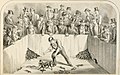 Rat-baiting c. 1873
 -
 Combat de Chiens ratier et de rats a l'exposition canine. --- Champs-Élysées c. 1865
 -
 The Great 100 Rat Match, c. 1858
 -
 Rat fighting, recreation of King Louis XI of France, 1461-1483, c. 1883
_b_733.jpg)
_(14780252001).jpg)


See also
[edit]
- Earthdog trial
- Huddersfield Ben, ratting dog.
- Hatch, earliest scientifically confirmed ratting dog.
- Ryders Alley Trencher-fed Society (R.A.T.S.) is a New York City group that does ratting with dogs.
References
[edit]- ^ a b C & G's Crazy Critters Rattery. "Ratting History: A Night at the Rat Pit". Archived from the original on 23 March 2006. Retrieved 14 July 2006.
- ^ Turnspit Quakers Alley
- ^ a b c Phil Drabble (1948). "Staffords and baiting sports". In Brian Vesey-Fitzgerald (ed.). The book of the dog. Los Angeles: Borden Publishing.
- ^ Henry Mayhew (1851). "Jack Black". London Labor and the London Poor. Vol. 3. London: Griffen, Bohn and Company.
- ^ "Ratting Terriers". Archived from the original on 31 March 2019. Retrieved 20 April 2019.
- ^ "The Evolution of the English Toy Terrier (Black & Tan)". Archived from the original on 16 July 2019. Retrieved 20 April 2019.
- ^ Stoutheart Staffordshire Bull Terriers – Staffords and Baiting Sports
- ^ a b c Fleig, D. (1996). History of Fighting Dogs. pp. 105–112 T.F.H. Publications. ISBN 0-7938-0498-1
- ^ a b c Homan, M. (2000). A Complete History of Fighting Dogs. pp. 121–131 Howell Book House Inc. ISBN 1-58245-128-1
- ^ Mayhew, H. (1851). London Labour and the London Poor, Volume 3, Chp 1, Jimmy Shaw. London: Griffen, Bohn and Company, Stationer's Hall Court.
- ^ Thorpe, Vanessa (31 March 2019). "Small wonder: tiny Victorian dog that killed 200 rats an hour". The Observer. Retrieved 31 March 2019.
- ^ "Ratting Terriers". Amalek English Toy Terriers. Archived from the original on 31 March 2019. Retrieved 31 March 2019.
- ^ a b Museum of London
- ^ Peter Brown (27 November 2012). Toy Manchester Terrier: A Comprehensive Owner's Guide. CompanionHouse Books. p. 23. ISBN 978-1-62187-078-4.
- ^ Artillery Arms – homepage
- ^ Do You Know Who Jimmy Shaw was?
- ^ a b c "Kit Burns' Rat Pit". Infamous New York. WordPress. 22 October 2013. Retrieved 16 July 2019.
- ^ a b Brynk, William (16 August 2005). "The Home of the Rat Pit". New York Sun. Retrieved 16 July 2019.
- ^ a b Madeja, Steve (1 June 2017). "Kit Burns' Rat Pit at 273 Water Street". Secrets of Manhattan. WordPress. Retrieved 16 July 2019.
- ^ McCabe, James Dabney (1868). Secrets of the Great City. Jones Brothers & Co. p. 388.
- ^ Lane, Marion S; Zawistowski, Stephen (2008). Heritage of Care: The American Society for the Prevention of Cruelty to Animals. Greenwood Publishing Group. p. 25. ISBN 978-0-275-99021-3.
- ^ Bunyan, Patrick. All Around the Town: Amazing Manhattan Facts and Curiosities. New York: Fordham University Press, 1999. (pg. 57) ISBN 0-8232-1941-0
- ^ Wolfe, Gerard R. New York, 15 Walking Tours: An Architectural Guide to the Metropolis. 3rd ed. New York: McGraw-Hill Professional, 2003. (pg. 49) ISBN 0-07-141185-2
- ^ The Herald (Melbourne), Friday, 20 October 1865, Page 2, "THE DOG SHOW"
- ^ The Argus (Melbourne), Wednesday, 14 March 1900, RAT-CATCHING.
- ^ Bell's Life in Victoria and Sporting Chronicle, Saturday, 8 Jun 1861, Page 2, RATTING
- ^ a b c Pemberton, Neil (1 December 2014). "The Rat-Catcher's Prank: Interspecies Cunningness and Scavenging in Henry Mayhew's London". Journal of Victorian Culture. 19 (4): 520–535. doi:10.1080/13555502.2014.967548. ISSN 1355-5502.
- ^ Olmert, Meg Daley (16 October 2018). "Genes unleashed: how the Victorians engineered our dogs". Nature. 562 (7727): 336–337. Bibcode:2018Natur.562..336O. doi:10.1038/d41586-018-07039-z.
- ^ Ratting with Terriers. Cornwall: Matthew Noall. 2016.
- ^ Ratting with terriers. Which terrier is top?
- ^ A Rat Hunter Takes Bushwick A vintage way to tackle a newly pressing problem
- ^ Hunting Act 2004 - Schedule 1, Section 2, Subsection 3 - Rats
- ^ Why Chicago is Losing the War on Rats
- ^ "Jess Ratting". 20 June 2009. Archived from the original on 21 December 2021. Retrieved 20 February 2015 – via YouTube.
- ^ WP: Washington is full of rats. These dogs are happy to help with that
- ^ [https://www.curbed.com/2023/04/rat-hunting-dogs-bushwick-nyc.html A Rat Hunter Takes Bushwick A vintage way to tackle a newly pressing problem.}
- ^ "In Manhattan Alleys, Dogs on Rat Hunts Find Bags of Fun". The New York Times. 22 November 2013.
- ^ "The Rat-Hunting Dogs of New York City". NBC New York. 10 October 2012. Retrieved 20 February 2015.
- ^ "The Rat Hunters of New York – Roads & Kingdoms". Roads & Kingdoms. 23 October 2013. Retrieved 20 February 2015.
- ^ "Vietnam". Retrieved 20 February 2015.
- ^ "Rat Hunting Dogs: The History Of Rat Terriers and Ratcatchers". A Life of Dogs. 24 February 2020. Retrieved 4 September 2023.
- ^ "Barn Hunt Association". www.barnhunt.com. Retrieved 4 September 2023.
- ^ Ward, Geoffrey C. (6 October 2002). "Gangs of New York". NY Times. The New York Times Company. p. 11. Retrieved 16 July 2019.
- ^ Video: Gangs of New York Rat Baiting Scene
- ^ Macfarlane, Steve (6 September 2014). "The Knick Recap: Season 1, Episode 4, "Where's the Dignity?"". Slant Magazine. Retrieved 21 June 2021.
- ^ "The Knick". Retrieved 21 June 2021 – via Twitter.
- ^ Pratchett, Terry (1 November 2001). The Amazing Maurice and his Educated Rodents. HarperCollins. ISBN 9780552546935.
Bibliography
[edit]- Barnett, A. (2002). The Story of Rats: Their Impact on Us, and Our Impact on Them. Allen & Unwin, Crows Nest, NSW. ISBN 1-86508-519-7
- Fleig, D. (1996). History of Fighting Dogs. pp. 105–112 T.F.H. Publications. ISBN 0-7938-0498-1
- Hendrickson, R. (1984). More Cunning Than Man: A Social History of Rats and Man. Stein & Day Pub. ISBN 0-8128-2894-1
- Homan, M. (2000). A Complete History of Fighting Dogs. pp. 121–131 Howell Book House Inc. ISBN 1-58245-128-1
- Matthews, I. (1898). Full Revelations of a Professional Rat-Catcher. Kessinger Publishing. ISBN 978-1-104-13023-7
- Mayhew, H. (1851). London Labour and the London Poor, Volume 3, Chp 1, Jimmy Shaw. London: Griffen, Bohn and Company, Stationer's Hall Court. London: Griffen, Bohn and Company, Stationer's Hall Court.
- Plummer, D. (1979). Tales of a Rat-hunting Man. ISBN 0-86072-025-X
- Rodwell, J. (1858). The Rat: Its History & Destructive Character. G. Routledge & Co. London. ISBN 978-1354531174
- Rodwell, J. (1850). The Rat! and Its Cruel Cost to the Nation. Palala Press. ISBN 978-1347118931
- Sullivan, R. (2004). Rats: A Year with New York's Most Unwanted Inhabitants. Granta Books, London. ISBN 978-0756966409
- Sullivan, R. (2005). Rats : Observations on the History and Habitat of the City's Most Unwanted Inhabitants. Chapter 9 Bloomsbury USA. ISBN 1-58234-385-3
- Zinsser, H. (1935). Rats, Lice and History. Blue Ribbon Books, Inc. ISBN 978-1412806725
External links
[edit]
- Terriers at rat pits
- Turnspit Public House, Quakers Alley
- Terrier Man – Rat Dogs
- Scientific American, "Monkey, Dog, and Rats", 20 November 1880, p. 326 (report of a competition to kill twelve rats between a monkey and fox terrier)

Rat-baiting
View on GrokipediaRat-baiting is a blood sport in which dogs, typically small terriers such as Manchester terriers, are placed in an enclosed pit filled with rats, and wagers are made on the number of rats the dog can kill within a fixed time, often one minute per rat or in bulk challenges.[1][2] The practice emphasized the dog's speed, ferocity, and endurance, with rats sourced from urban sewers or bred in captivity following the spread of the brown rat (Rattus norvegicus) in Europe from the 18th century.[3][2] The sport flourished in 19th-century Britain and spread to America, attracting working-class crowds to pubs and taverns where pits were constructed in cellars for discreet gatherings.[1] Events combined elements of pest control with gambling and spectacle, as professional rat-catchers supplied live rats and handlers prepared dogs through selective breeding for traits like a strong bite and agility.[1][4] A renowned participant was Tiny, a 2.5 kg Manchester terrier who killed 200 rats in under 60 minutes at the Blue Anchor Tavern in 1848 and repeated the feat in 1849, setting a benchmark for canine prowess in the activity.[1] Although the Cruelty to Animals Act 1835 prohibited many forms of baiting by banning premises used for such purposes, rat-baiting evaded strict enforcement due to rats' status as vermin and the indoor, clandestine nature of events, persisting into the late 19th century amid shifting public attitudes toward animal welfare.[5][1][4] The practice contributed to the development of breeds like rat terriers and influenced early pit bull types, but ultimately declined with urbanization, improved sanitation reducing rat populations, and broader legal crackdowns on blood sports.[2][6]
Definition and Overview
Core Description and Mechanics
Rat-baiting is a blood sport in which dogs, typically terriers, are released into an enclosed pit containing numerous captured rats, with participants betting on the number of rats the dog can kill or the time required to dispatch a set number.[1][7] The activity emphasized the dog's speed, agility, and killing efficiency, often pitting the animal against rats numbering equal to or proportional to its body weight in pounds—for instance, a 10-pound dog might face 100 rats.[7][8] The pit was typically a circular or sunken arena, constructed in cellars, taverns, or warehouses, surrounded by wooden barriers, spectator bleachers, and sometimes wire mesh to contain the rats and prevent escapes.[7][1] Rats, often sourced from rural areas or urban sewers in quantities up to 2,000 per event, were released from cages into the pit just before the dog entered, creating a chaotic environment where the rodents scattered or hid in small openings along the edges.[1] Dogs such as Manchester terriers, fox terriers, or Jack Russells were favored for their small size and tenacious nature, trained to seize rats by the neck or between the head and shoulder for a quick kill, avoiding unnecessary shaking to maximize efficiency.[7][1] Judging focused on verifiable kills, with event organizers or handlers counting dispatched rats—typically by confirming death through bites or removal from the dog's mouth—and timing the performance with stopwatches.[7] Successful dogs achieved rates of 3.3 to 5.2 seconds per rat, with benchmarks like killing 15 rats in one minute considered excellent or dispatching 200 rats in under an hour, as demonstrated by the Manchester terrier Tiny in matches at London's Blue Anchor Tavern in 1848 and 1849.[7][1] Bets were placed on total kills, completion time for a fixed number (e.g., 100 rats in 5 to 12 minutes), or comparative performances, though disputes over counts could lead to draws or accusations of promoter interference.[7][8]Distinction from Related Practices
Rat-baiting differed from other forms of baiting, such as bull-baiting and bear-baiting, in the prey's size, number, and procurement. Bull-baiting typically involved several dogs attacking a single chained bull to immobilize it by targeting the nose or tendons, whereas rat-baiting pitted one terrier against dozens or hundreds of loose rats in a confined pit, focusing on the dog's capacity to kill rapidly through biting and shaking.[6] This distinction arose post-1835, when the Cruelty to Animals Act banned baiting of domesticated large animals like bulls and bears, but spared rat-baiting due to rats' status as wild vermin rather than bred livestock, allowing the practice to evade early prohibitions.[9][10] In contrast to dog fighting, which entailed direct combat between two dogs to establish dominance or inflict fatal injury, rat-baiting emphasized predatory skills against non-combative prey, selecting for agility and endurance over intraspecies ferocity. Bets in rat-baiting centered on metrics like rats killed per minute—often 50 to 100 in top performances—rather than fight duration or injury severity between canines.[6][9] Rat-baiting also diverged from utilitarian ratting in pest control contexts, where terriers hunted rats in unstructured settings like warehouses or fields to eradicate infestations, without pits, timers, spectators, or wagers. Professional rat catchers employed dogs as efficient dispatchers alongside traps or poisons, valuing comprehensive vermin removal over gamified tallies, a method that persists legally in some jurisdictions as non-sporting extermination.[9]Historical Development
Origins in Pest Control
Rat infestations posed significant threats to food stores, property, and public health in England from the 17th century onward, exacerbated by the brown rat's (Rattus norvegicus) introduction around 1720 and rapid proliferation in urbanizing areas with inadequate sanitation.[11] Early pest control relied on manual methods, but by the early 18th century, specialized rat catchers emerged in Europe, incorporating dogs alongside traps and ferrets to hunt rodents in homes, farms, and ships, targeting burrows and dense populations where poisons proved ineffective or risky.[11] [12] Terrier breeds, selectively developed for their tenacious pursuit of vermin, proved particularly effective for this purpose, shaking rats to death with powerful bites to the neck or spine, a technique honed through practical necessity rather than spectacle.[13] These dogs were deployed in urban settings like London warehouses and rural granaries, where a single skilled terrier could dispatch dozens of rats in minutes, reducing losses from gnawing and contamination that annually cost farmers and merchants substantial sums—estimated in the thousands of pounds by the late 18th century.[14] Handlers, often itinerant professionals paid by the tail or bounty, bred and trained such dogs to navigate tight spaces, reflecting a causal link between environmental pressures and canine adaptation for efficient, low-toxicity rodent control before chemical alternatives dominated in the 20th century.[15] This foundational role in vermin management distinguished early rat-killing from later blood sports, as the primary incentive was economic survival and disease prevention—rats vectoring typhus and plague—rather than wagering, with records from 18th-century England indicating terriers' routine use in non-lethal demonstrations to showcase efficacy for hiring purposes.[13] Over time, as rat populations stabilized somewhat through these efforts, the demonstrated killing prowess of dogs transitioned toward organized pits, but the origins remained rooted in pragmatic extermination demands of pre-industrial and early industrial Britain.[16]Expansion as Organized Sport
Rat-baiting transitioned from utilitarian pest extermination to an organized spectator sport in Britain during the 18th and 19th centuries, coinciding with rapid urbanization and rising rat infestations in industrial cities like London. Rat catchers, who previously focused on eradication, increasingly captured rats alive using traps, ferrets, and terriers to supply demand for events, finding this trade more lucrative than killing vermin outright. These suppliers maintained large stocks—sometimes up to 2,000 rats—in cages, selling them to publicans who hosted matches in cellar pits, where gambling on canine performance turned the activity into a formalized blood sport.[12][1] Organized events followed consistent formats: a set number of live rats were released into a sunken, enclosed arena, typically 10 to 12 feet in diameter, and bets were placed on metrics such as the time for a single dog to kill all rats or the maximum number dispatched within a fixed duration, often one hour. Terriers, prized for their agility and gameness, competed individually or against records, with handlers paying entry fees to participate. Venues included taverns like the Blue Anchor in Islington and the Graham Arms on Graham Street, where crowds gathered for nightly spectacles that persisted underground even after the Cruelty to Animals Act 1835 restricted larger-animal baiting, as rats were classified as pests exempt from full prohibition.[1][17] Notable matches highlighted the sport's competitive peak in the mid-19th century; for instance, on March 28, 1848, the 2.5 kg Manchester terrier Tiny killed 200 rats in 54 minutes and 50 seconds at the Blue Anchor Tavern, repeating a similar feat the following year and establishing benchmarks that breeders aimed to surpass. Such records spurred selective breeding of rat-killing dogs, elevating the practice's status among working-class gamblers and fostering rivalries between handlers. The sport's organization extended to America by the 19th century, with figures like Kit Burns operating rat pits in New York, adapting British models to local audiences.[1][18]Peak Era in 19th-Century Britain
Rat-baiting attained its height of popularity in Britain during the early to mid-19th century, especially in London, where it served as a gambling-centric blood sport conducted in tavern cellars equipped with rat pits. Urban expansion exacerbated rat infestations, prompting professional rat-catchers to supply live rodents—often up to 2,000 per event, sourced from rural areas for robustness—from sewers to sustain the spectacles. Venues such as the Blue Anchor Tavern in Islington's St Luke's district hosted frequent matches, attracting bettors who wagered on dogs' kill times or totals, with events drawing diverse crowds including notable figures like Count d'Orsay.[1] Exemplary performances defined the era's allure, exemplified by Tiny the Wonder, a 2.5 kg black and tan Manchester terrier owned by James Shaw, who killed 200 rats in under one hour on 28 March 1848 and repeated the feat on 27 March 1849 at the Blue Anchor Tavern. Earlier benchmarks included a bull and terrier named Billy, which dispatched 100 rats in 5 minutes and 30 seconds. Other prominent sites like the Graham Arms in Islington, The George in Southwark, and King's Arms in Drury Lane facilitated similar contests, emphasizing terriers' single-bite efficiency against confined prey.[1] [19] The practice persisted despite the Cruelty to Animals Act 1835, which outlawed bull- and bear-baiting but omitted explicit prohibitions on rat-baiting, allowing underground continuation amid lax enforcement. This legal ambiguity, coupled with entrenched working-class traditions and the sport's role in pest control validation, sustained peak engagement through the 1840s, before emerging animal welfare sentiments and urbanization shifts gradually diminished open events by mid-century.[1] [9]Operational Details
Event Setup and Environment
Rat-baiting events were typically conducted in enclosed pits located in the cellars or back rooms of urban taverns, particularly in 19th-century London, where over 70 such venues operated.[20] These pits consisted of wooden barriers forming a circular or square enclosure approximately 12 square feet in area, with walls rising to elbow height or higher to contain the rats and prevent escapes.[20] The floor was often whitened with chalk or lime to enhance visibility of the rats during the event, and gas lighting illuminated the space for spectators gathered around the perimeter.[20] Preparation involved procuring live rats, often sourced from rural areas or bred by catchers, and releasing a predetermined number—such as 100 or 200—into the pit from adjacent cages or traps.[1] Specific venues included the Blue Anchor Tavern in Islington, where up to 2,000 rats were housed in cages beneath the pit, and the Graham Arms on Graham Street, featuring a "circus" design with small board openings for rats to maneuver.[1] The dog, usually a terrier, was then introduced to the pit, with officials starting a timer to record the duration required to kill all rats, often amid wagers on performance metrics like time per rat.[20] The environment was characteristically smoky and foul-smelling, permeated by the odors of confined rats and tobacco from the crowd, which drew participants from all social classes including laborers, middle-class individuals, and occasional gentry.[20] Events occurred in dim, underground settings fostering an intense, raucous atmosphere, with cheers and bets heightening the tension as the dog dispatched the vermin.[1] Despite their popularity, these setups operated semi-clandestinely in later years due to emerging animal welfare concerns, though enforcement was lax until the Cruelty to Animals Act of 1854 began curtailing such practices.[20]Rules, Timing, and Judging
In rat-baiting contests, kills were verified strictly to ensure fairness, with a rat counted as dispatched only if it was demonstrably dead, such as by decapitation or being shaken until lifeless; injuries like a broken back did not qualify unless the rat was incapacitated and unable to exit a small designated boundary, often a circle roughly the size of a dinner plate.[21] This criterion prevented disputes over merely wounded animals that might recover and skew results.[21] Events were typically timed using a stopwatch, starting from the moment the dog was released into the enclosed pit stocked with a fixed number of live rats—commonly 100 for standard matches—and concluding when the final verified kill occurred or a predetermined duration, such as one hour, expired.[1][9] Handlers ensured rats were healthy and active prior to release to maintain competitive integrity, as sickly specimens could artificially shorten times.[18] Judging fell to a designated referee or the event's host, who tallied confirmed kills in real-time amid spectator oversight, resolving any challenges through immediate inspection of carcasses.[21] Wagers hinged on metrics like total rats killed within the allotted time or the duration required for a set quota, with elite performances achieving rates of approximately three to five seconds per rat.[8] These practices, while unregulated by formal laws after the 1835 Cruelty to Animals Act targeted larger baiting sports, relied on customary protocols enforced by participants to sustain betting credibility.[7]Canine Techniques and Strategies
In rat-baiting contests, dogs primarily employed a kill technique involving a precise bite to the loose skin at the nape of the rat's neck, followed by a vigorous lateral shake of the head to snap the cervical vertebrae or inflict severe trauma to the spine and skull, dispatching the prey almost instantaneously—often within seconds—to minimize retaliation from the rat's incisors.[22][23] This method, instinctive in terrier breeds selected for ratting, also served to avoid bites to the dog's face or limbs, as the shaking motion disrupted the rat's ability to counterattack effectively.[24] Historical accounts, such as those from 19th-century London pits, describe champion performers like Tiny the Wonder, a 2.5 kg Manchester Terrier, achieving kills via a single, efficient bite that leveraged the dog's jaw strength and speed, enabling feats like eliminating 200 rats in under an hour on March 28, 1848.[1] Strategies emphasized relentless pursuit and spatial efficiency in the confined pit environment, where 50 to 200 rats were released, prompting them to scatter chaotically along walls or cluster in corners. Dogs initiated by charging into the fray to induce flight responses, then prioritized isolated or fleeing targets to prevent swarming, dropping each dispatched rat immediately to scan for the next without pausing, thereby sustaining a high kill rate against timed benchmarks—such as 100 rats in 8-10 minutes for top performers.[1] This required acute sensory acuity for detecting movement amid debris and bodies, combined with agility to navigate the 3-4 foot diameter arena without tangling, though less experienced dogs risked injuries from rat bites to muzzles or paws, which could accumulate over repeated bouts.[25] Handlers sometimes encouraged entry with verbal cues or prods to heighten the dog's gameness, ensuring sustained aggression despite fatigue or minor wounds.[13]Key Participants
Rat Procurement and Handlers
Professional rat catchers supplied the live rats required for rat-baiting events, capturing wild specimens primarily from urban sewers, parks, warehouses, and ships to ensure their ferocity in the pit.[26] [27] Common methods included deploying ferrets to flush rats from tunnels and burrows, followed by cage traps or manual seizure to keep them alive, as dead rats lacked the necessary resistance for the sport.[17] [28] Terrier dogs assisted by locating prey or killing stragglers, though the focus remained on live capture to maximize event viability.[27] Rat catchers served as handlers, transporting captured rats in wire cages or sacks to baiting venues and releasing them into the pit just prior to the match to maintain their vitality and aggression.[9] This role provided supplemental income beyond pest control bounties, with urban pits like Jimmy Shaw's in London purchasing up to 26,000 live rats annually from such suppliers.[26] Handlers ensured rats were not overly weakened, sometimes breeding limited stocks for consistency, though wild-caught animals predominated for their unpredictable behavior.[27] [9] A prominent figure was Jack Black, appointed "rat and mole destroyer" to Queen Victoria in the mid-19th century, who supplied rats to major London pits while demonstrating handling prowess by manipulating dozens without frequent bites.[26] [27] Black, active from the 1830s onward, caught rats in royal parks like Regent's using ferrets and dogs, selling them to operators such as Shaw and occasionally breeding variants for pet markets alongside baiting stock.[27] His methods exemplified the blend of pest control and sport procurement, with catchers like him enabling events that could require hundreds of rats per match.[26]Dog Breeders and Trainers
Dog breeders specializing in rat-baiting focused on terrier varieties engineered for vermin extermination, emphasizing compact size, explosive speed, and unyielding tenacity to maximize kills in confined pits. In early 19th-century industrial centers like Manchester, breeders developed the Manchester Terrier from whippet and black-and-tan terrier crosses to efficiently dispatch rats amid rampant urban infestations from textile mills and warehouses. This breed's lithe frame, reaching up to 15 kg, and powerful jaws allowed it to seize and crush rats swiftly, often achieving dozens of kills per minute in competitive settings.[29] Trainers, typically publicans hosting underground pits or professional rat-catchers, conditioned dogs through progressive exposure to live prey, starting with isolated rats to instill killing instincts and advancing to mass releases simulating baiting events. Such preparation honed techniques like precise shaking to break necks, minimizing injury risk to the dog while optimizing performance under wager-driven pressure. For example, the handler of Tiny the Wonder, a diminutive Manchester Terrier weighing 2.5 kg, rigorously trained the dog to surpass 200 rat kills in under an hour during mid-1850s London exhibitions, establishing benchmarks for breed efficacy.[1] Notable figures included rat-catchers who doubled as informal breeders, selectively pairing high-performing dogs to propagate superior traits. Jack Black, London's self-proclaimed "Rat and Mole Destroyer to Her Majesty Queen Victoria" from the 1840s onward, utilized terriers to hunt rats in sewers and buildings, inadvertently refining stock through survival-of-the-fittest selection in practical pest control that paralleled sporting demands. These practitioners operated outside formal kennel clubs, relying on empirical outcomes from pits and bounties rather than pedigrees, fostering resilient lines adapted to blood sports until regulatory crackdowns in the late 19th century.[30][13]Audience and Wagers
Rat-baiting events drew spectators from across social strata in 19th-century Britain, including working-class laborers such as dock-workers and tradespeople, middle-class individuals, and even aristocrats like the French dandy Count d'Orsay.[1][20][28] Crowds, often numbering in the hundreds, congregated in urban pubs like the Blue Anchor Tavern in Finsbury or dedicated pits such as the Westminster Pit, motivated by the visceral thrill of the contests and widespread disdain for rats as urban pests.[1][28] These gatherings, observed by contemporaries like Henry Mayhew to exceed 40 participants in some instances, fostered a communal atmosphere among "the fancy"—a term for enthusiasts of blood sports—despite the events' clandestine nature post-1835 legislation banning bull- and bear-baiting.[28][19] Wagering formed the core economic and social driver, with bets centered on a dog's efficiency in killing rats, such as the number dispatched within a fixed duration like one hour or the time to eliminate a predetermined quantity, typically 100 rats.[1][19][28] Spectators placed stakes accordingly, as in wagers on Manchester terrier Tiny to kill upward of 200 rats in an hour at the Blue Anchor Tavern in 1848 and 1849, or 20 sovereigns on bull-and-terrier Billy to dispatch 100 rats in 12 minutes—a feat Billy achieved in 5 minutes and 30 seconds in mid-century matches.[1][20][19] This betting frenzy, amplified by the 1835 Cruelty to Animals Act's loophole exempting rat-baiting, sustained over 70 pits across London and incentivized audience participation, including owners paying to enter their own dogs against supplied rats.[20][1]Animal Involvement
Suitable Dog Breeds
Rat-baiting primarily utilized small, agile terrier breeds prized for their gameness, speed, and instinctive prey drive, enabling them to pursue and dispatch rats efficiently in confined pits. In 19th-century Britain, the Manchester Terrier—often referred to as the black-and-tan or English Toy Terrier—emerged as the quintessential ratting dog, selectively bred from whippet and terrier stock for vermin extermination in urban environments like Manchester's textile mills and London's rat pits.[29] [31] This breed's sleek, short coat, weighing typically 10-20 pounds, facilitated rapid movement without entanglement, while its powerful jaws and relentless tenacity allowed handlers to wager on high kill counts within short time limits.[1] Exemplified by the legendary Tiny the Wonder, a Manchester Terrier who killed 200 rats in 35 minutes on April 2, 1851, and set records like 300 in under an hour, the breed demonstrated superior performance under pressure, outpacing competitors in organized matches frequented by figures such as Lord Byron.[1] [31] Yorkshire Terriers, originating in 19th-century Yorkshire mills, similarly excelled due to their compact size (under 7 pounds) and feisty disposition honed for catching rodents amid machinery, though their longer coats sometimes proved less ideal for pit work compared to smooth varieties.[32] Crossbreeds such as bull-and-terriers, combining bulldog strength with terrier agility, offered versatility for both ratting and dogfighting but were critiqued for lacking the specialized refinement of pure terriers in pure rat-killing efficiency.[6] Other terriers, including early forms of what became Jack Russells or Norfolk Terriers, contributed to the ratting tradition through their earth-working heritage, but historical accounts emphasize Manchester Terriers' dominance in formal baiting spectacles due to proven records and handler preferences for predictable, high-volume killers.[13]Notable Performers and Records
Billy, a bull-and-terrier dog weighing approximately 11.8 kg (26 lb), achieved renown in early 19th-century rat-baiting for exceptional speed. On April 22, 1823, during his ninth such match, Billy killed 100 rats in 5 minutes and 30 seconds, averaging one rat every 3.3 seconds.[33] Guinness World Records credits Billy with dispatching 4,000 rats over 17 hours between 1820 and 1824, highlighting sustained performance in prolonged events.[33] Tiny the Wonder, a black-and-tan Manchester terrier weighing 2.5 kg owned by James Shaw of the Blue Anchor Tavern in Islington, London, excelled in mid-19th-century matches. Tiny killed 200 rats in under one hour on March 28, 1848, and again on March 27, 1849, often dispatching each rat with a single bite.[1] These feats occurred in public rat pits stocked with up to 2,000 captured countryside rats, drawing bets and crowds from diverse social classes.[1] Rat-baiting records typically emphasized time efficiency for fixed rat numbers, with wagers structured around limits like 100 rats in 12 minutes.[7] A rate of five seconds per rat was deemed outstanding, as seen in Billy's performances.[7] In America, a dog reportedly set a national mark by killing 100 rats in 6 minutes and 40 seconds during the 19th century, though British events like Billy's and Tiny's established enduring benchmarks.[18]Societal Context
Event Atmosphere and Appeal
Rat-baiting events typically occurred in the cellars of sporting public houses in Victorian London, such as the Graham Arms in Islington, featuring enclosed pits approximately six feet in diameter surrounded by spectators.[34] The atmosphere was charged with noise and anticipation as rats were released into the pit and a dog, often a terrier, was set upon them, with crowds cheering phrases like "Hi! hi! at ’em!" amid the rapid kills and scattering vermin.[34] These gatherings drew diverse attendees, including costermongers, soldiers, tradesmen, and occasionally noble ladies in disguise, reflecting broad participation despite the working-class predominance.[34][1] Betting formed a central element, with wagers placed on the time required for a dog to dispatch a set number of rats, such as dozens in under eight minutes or challenges for fifteen rats in one minute offering prizes like a silver collar or 100 guineas.[34] Operators like Jimmy Shaw at the Blue Anchor Tavern procured hundreds of rats weekly—up to 26,000 annually across pits—sustaining frequent events that attracted crowds eager to stake sovereigns or smaller sums.[34][26] Record performances, such as Tiny the Manchester terrier killing 200 rats in under an hour on March 28, 1848, and March 27, 1849, amplified excitement, prompting sales of commemorative handkerchiefs.[1] The appeal lay in the raw spectacle of canine prowess against prolific pests, providing affordable thrills and gambling opportunities for working men in an era of limited recreation, while fostering camaraderie in pub settings.[26][1] Government taxation of rat-killing dogs underscores the activity's prevalence and economic integration into urban life.[26] For participants like rat-catchers supplying the events, it offered supplemental income and display of expertise, though the focus remained on the visceral entertainment value over moral concerns prevalent in contemporary critiques.[34]Integration with Working-Class Life
Rat-baiting served as a prominent form of recreation among 19th-century British working-class men, particularly in industrial cities where urban density exacerbated rat infestations and labor demands left little time for elaborate leisure. Events typically occurred in public houses or makeshift pits adjacent to taverns, offering an affordable evening diversion after shifts in factories or docks.[1][35] Participants and spectators, often laborers and artisans, wagered small sums on dogs' performance, integrating the sport into everyday pub culture as a means of camaraderie and minor economic risk.[36][9] By the 1820s, London alone hosted around 40 such venues, underscoring rat-baiting's role in proletarian social life amid rapid urbanization.[36] The activity demanded minimal resources—wild-caught rats procured by local catchers and terriers bred for utility rather than pedigree—aligning with the practical ethos of working households facing vermin threats to food stores and health.[26][12] Iconic examples, such as the Manchester terrier Tiny the Wonder killing over 200 rats in under an hour beneath an Islington pub in the 1850s, drew crowds of working men who viewed the feats as displays of canine prowess mirroring their own resilience.[1] This integration extended beyond mere amusement, reinforcing community ties through shared appreciation of animal handlers' skills and providing a counterpoint to monotonous wage labor by channeling competitive instincts into accessible contests.[35][37] Unlike bull-baiting, which required larger spaces and faced earlier bans, rat-baiting's compact scale sustained its popularity in densely populated slums until mounting animal welfare campaigns in the late 19th century.[19]Economic and Practical Dimensions
Rat-baiting events required minimal infrastructure, typically consisting of a small wooden enclosure or pit, often installed in pub cellars, yards, or warehouses to contain 100 to 1,000 rats while allowing spectator viewing.[9] These setups were practical for urban working-class venues due to their compact size and ease of assembly, enabling frequent indoor gatherings without substantial capital investment.[19] Rats for events were procured affordably by professional catchers who trapped them from sewers, farms, and ships, selling them at rates such as 2 pence per rat in Victorian England.[28] Catchers sometimes bred rats specifically for baiting to meet demand, leveraging the animals' rapid reproduction and abundance as pests to keep supply costs low relative to the era's wages, where a laborer's daily pay might exceed 2 shillings.[38] This economic efficiency made rat-baiting viable as a low-overhead activity, with dogs—often terriers already used for vermin control—requiring no specialized breeding beyond performance selection. The primary economic driver was wagering, with spectators betting on metrics like the number of rats a dog could kill within a fixed time, such as 100 rats in under 6 minutes, as exemplified by historical records of canine feats.[19] Organizers and pub owners profited from gambling cuts, entry fees, or increased alcohol sales during events, while participants risked small stakes accessible to laborers.[28] This model integrated seamlessly with practical vermin management, as events culled pest populations that threatened food stores and spread disease, providing incidental utility amid the sport's recreational appeal.[30]Decline and Regulation
Internal and External Pressures
External pressures on rat-baiting arose from the animal welfare movement's growing influence in 19th-century Britain, which condemned blood sports as causing unnecessary suffering to animals. The Society for the Prevention of Cruelty to Animals (SPCA), established in 1824 and granted royal charter in 1840 as the RSPCA, advocated against practices involving animal torment, including baiting with dogs, though rat-baiting evaded early bans like the Cruelty to Animals Act 1835 due to rats' status as vermin. This advocacy fostered shifting public morals, particularly among middle-class reformers, pressuring working-class venues through inspections and prosecutions; by the late 1800s, complaints from welfare groups contributed to declining overt participation.[36] The Protection of Animals Act 1911 consolidated prior laws, explicitly criminalizing the placement of animals for fighting under section 1(f), with penalties up to three months imprisonment or £50 fine, effectively outlawing rat-baiting nationwide. Internal pressures within rat-baiting circles included practical difficulties in sustaining events amid urbanization and enforcement. Increased police raids in industrial cities like London disrupted pits, as documented in contemporary accounts of suppressed gatherings by the 1890s, raising risks of arrest and venue loss.[36] Participants faced economic strains from maintaining rat supplies—requiring professional catchers to farm thousands annually—and breeding resilient terriers, while dog injuries from repeated use reduced viable performers over time. Shifting tastes among working-class gamblers toward less logistically demanding alternatives, such as bare-knuckle boxing or greyhound racing, further eroded interest, with rat-baiting's appeal waning by the early 1900s as venues prioritized safer, higher-stakes wagers.[18] These pressures interacted causally: external moral campaigns amplified internal hesitations by heightening operational costs and stigma, accelerating the sport's underground persistence before its legal extinction. No major self-regulatory efforts emerged from baiting communities, reflecting entrenched cultural norms resistant to reform until broader societal changes prevailed.[36]Key Legislation and Bans
The Cruelty to Animals Act 1835 prohibited the baiting of larger animals such as bulls and bears in England and Wales but explicitly exempted practices involving rats, which were classified as vermin rather than protected species, thereby permitting rat-baiting to persist as a legal activity despite broader anti-cruelty sentiments. This legislative gap reflected contemporaneous views prioritizing rat control for public health over animal welfare concerns specific to rodents. Rat-baiting was ultimately criminalized under the Protection of Animals Act 1911, which consolidated prior statutes and made it an offense for any person to "cause, procure, or assist at the fighting or baiting of any animal" without reasonable excuse, encompassing the use of dogs against confined rats. Enacted on December 18, 1911, and effective immediately, the Act imposed penalties including fines up to £50 or imprisonment for up to six months, targeting organized spectacles that involved unnecessary suffering.[39] This measure, influenced by advocacy from groups like the Royal Society for the Prevention of Cruelty to Animals (RSPCA), marked the definitive legal prohibition in the United Kingdom, though enforcement varied and underground events reportedly continued sporadically into the mid-20th century.[40] In jurisdictions beyond the UK, such as the United States, rat-baiting fell under general state animal cruelty statutes by the early 20th century, with no unified federal ban but prohibitions embedded in laws like New York's 1867 anti-cruelty code that outlawed "maliciously" causing animal suffering, effectively curtailing organized rat pits as violations of public morals and welfare standards. Comparable bans emerged in other European countries through evolving welfare laws, though rat-baiting's niche appeal limited its prominence compared to bullfighting or cockfighting regulations.Debates and Evaluations
Claims of Inherent Cruelty
Critics of rat-baiting, particularly within 19th- and early 20th-century animal welfare movements, contended that the sport inherently involved the infliction of unnecessary suffering on both rats and dogs for entertainment and betting purposes. Rats, released into confined pits, faced acute terror and violent death by mauling, with empirical accounts describing their desperate attempts to evade dogs leading to prolonged distress before being dispatched—often in numbers exceeding 100 per event, as recorded in contemporary reports of matches like the 1852 contest where a terrier killed 200 rats in under 20 minutes.[9] Dogs, while selectively bred for ratting, could sustain facial bites, infections, or fatigue from repeated trials, exacerbating claims of avoidable harm absent practical vermin control needs.[1] These arguments aligned with evolving legal standards against "unnecessary suffering," though rat-baiting initially escaped the 1835 Cruelty to Animals Act, which prohibited bull- and bear-baiting but exempted vermin pursuits due to rats' pest status and the perceived rapidity of kills.[9] By 1911, the Protection of Animals Act extended prohibitions to any act causing undue pain without justification, effectively banning rat-baiting in the UK as reformers equated it to other blood sports fostering public desensitization to animal pain.[39] Historical analyses have framed such events as emblematic of "beastly" spectacles, where crowd excitement derived from witnessing agony, contrasting with utilitarian defenses emphasizing efficient pest eradication. Modern animal rights perspectives amplify these claims, asserting that even vermin deserve consideration as sentient beings capable of fear and pain, rendering staged killings ethically indefensible regardless of speed or purpose—views echoed in broader critiques of blood sports as promoting violence without empirical welfare benefits.[42] However, proponents of the practice historically rebutted inherent cruelty by noting dogs' instinctive prey drive and minimal long-term injury rates, with records showing terriers like Tiny the Wonder sustaining few lasting effects across thousands of kills.[1] Empirical data on rat mortality indicate deaths often occur within seconds via cervical dislocation, arguably less protracted than alternatives like poisoning, though critics prioritize the orchestrated nature of the suffering over comparative efficiency.[9]Affirmative Views on Utility
Rat-baiting served as a practical method for vermin control in 19th-century urban and rural environments, where dogs, particularly terriers, demonstrated the capacity to eliminate large rat populations rapidly. Historical records indicate that specialized rat-baiting dogs could dispatch hundreds of rats in minutes, far surpassing the efficiency of manual trapping or early poison methods, which often failed to address hidden infestations or breeding nests.[22] This approach leveraged canine predatory instincts to pursue and kill rats in confined spaces like warehouses, ships, and farms, reducing crop losses and disease transmission risks associated with rodents, such as typhus and plague vectors prevalent in industrial-era cities.[43] Proponents, including professional rat catchers and agricultural workers, valued rat-baiting for breeding and training dogs with superior ratting abilities, enhancing overall pest management capabilities. Breeds like the Manchester Terrier and Jack Russell Terrier were selectively developed through competitive baiting, resulting in animals capable of killing thousands of rats in extended sessions—for instance, one documented terrier eliminated 2,501 rats over seven hours in an infested barn.[13] Unlike passive traps, which required constant monitoring and bait replacement, dogs actively hunted, minimizing incomplete culls and avoiding issues like bait aversion or secondary poisoning in non-target species.[44] This utility extended to military contexts, as terriers were deployed in World War I trenches to curb rat proliferations amid food waste and casualties, providing a chemical-free control mechanism.[43] From a first-principles perspective, rat-baiting aligned with causal mechanisms of predator-prey dynamics, incentivizing swift kills that deterred rat boldness and reproduction rates, empirically observed in cleared sites with reduced reinfestation. Economic benefits included lower costs for large-scale operations compared to labor-intensive alternatives, as a single skilled dog could process infestations that would demand dozens of traps or extensive poisoning campaigns.[22] While modern chemical rodenticides offer scalability, historical affirmative views emphasized the precision and immediacy of dog-based methods, free from environmental persistence or resistance development seen in anticoagulant baits.[43]Comparisons to Contemporary Alternatives
Rat-baiting utilized terriers or similar breeds to dispatch rats through rapid bites to the neck or body, often resulting in death within seconds for individual rats, as evidenced by 19th-century accounts of dogs like Jacko killing over 2,500 rats in controlled events without prolonged agony.[45] In contrast, modern anticoagulant rodenticides, such as second-generation compounds like brodifacoum, cause internal hemorrhaging over days to weeks, leading to symptoms including weakness, labored breathing, and eventual exsanguination, which studies classify as high-welfare detriment due to extended suffering.[46] Snap traps offer a quicker alternative to poisons, achieving near-instant kills via cervical dislocation when properly set, but their efficacy depends on placement and baiting, often failing to address large infestations as comprehensively as historical dog-driven clearances that could eliminate hundreds in minutes.[47] Contemporary non-chemical methods, including exclusion barriers and habitat modification, prioritize prevention over lethal dispatch, reducing rat populations by denying access to food and shelter, as demonstrated in urban trials where sealing entry points cut infestations by up to 90% without direct killing.[48] However, these approaches lack the immediate vermin-reduction utility of rat-baiting, which historically cleared ships and warehouses efficiently before modern integrated pest management emphasized long-term sanitation. Glue boards, another modern option, immobilize rats for starvation or dehydration over days, yielding welfare scores worse than poisons in empirical assessments due to inescapable restraint and panic.[46] [49] Rodenticides excel in scalability for widespread urban control but introduce risks absent in dog-based methods, including secondary poisoning of non-target species—owls and hawks have shown anticoagulant residues in 70-80% of tested carcasses in some regions—and resistance development in rat populations after repeated use since the 1950s.[50] [51] Rat-baiting avoided such externalities, confining impacts to the targeted rodents and handlers, though it demanded skilled dogs and physical labor impractical for today's large-scale applications. Biological controls like barn owls or fertility suppressants emerge as humane alternatives, yet their deployment yields slower results compared to the acute efficiency of baiting dogs in dense infestations.[48] Overall, while modern methods mitigate direct human involvement in killing, they often trade rapid resolution for deferred or collateral harms, underscoring rat-baiting's role as a targeted, if labor-intensive, precursor to chemical dominance.[52]Modern Extensions
Legal Rat Hunting with Dogs
In jurisdictions such as the United Kingdom, the use of dogs to hunt rats for pest control purposes remains lawful under exemptions in the Hunting Act 2004, which prohibits hunting wild mammals with dogs except in cases involving vermin like rats and rabbits on land owned or permitted by the hunter.[53] This practice, often termed ratting, employs terriers to flush and dispatch rats in settings like farms, barns, and urban areas, positioning it as a targeted method to curb infestations without the confinement associated with historical baiting.[22] Proponents argue it offers a more immediate and ecologically contained alternative to rodenticides, reducing secondary poisoning risks to non-target wildlife and pets.[54] In the United States, no federal legislation bans the deployment of dogs for rat hunting, allowing its application in both rural and urban vermin management; for instance, in New York City, informal groups have organized nocturnal hunts with terriers to address severe rat populations, where dogs shake rats to break their necks or spines, minimizing prolonged suffering compared to trapping or poisoning.[55] Similarly, in Washington, D.C., specialized rat-hunting dogs, vaccinated against diseases like leptospirosis, are utilized in high-infestation zones without ingesting prey to further limit health risks.[56] Breeds such as the Rat Terrier—originally bred in the early 20th-century American Midwest for farm rodent control—and Jack Russell Terriers excel due to their agility, prey drive, and ability to navigate tight spaces like sewers or coops.[32] These operations typically involve handlers directing dogs to locate and kill rats on-site, with efficacy demonstrated in agricultural contexts; a Maine farmer reported complete eradication of barn rats using terrier teams, avoiding chemical residues that could contaminate feed or harm livestock.[54] Training emphasizes bite development post-teething (around 9-12 months) to prevent injury from rat counterattacks, and handlers often prioritize dispatch over consumption to mitigate pathogen transmission.[57] While effective for localized control—terriers can dispatch dozens per session in infested areas—limitations include scalability for city-wide epidemics and potential for incomplete kills if rats evade or survive initial contact.[55]Current Applications in Vermin Control
In modern pest management, specialized dogs such as rat terriers, Jack Russell terriers, and other working breeds are deployed for rat detection and elimination, providing a targeted, chemical-free method to reduce vermin populations in urban alleys, restaurants, farms, and warehouses. These canines, often certified by organizations like the National Entomological Society of Dog Control Agents (NESDCA), use their acute sense of smell to locate rat burrows, nests, and activity sites, followed by pursuit and dispatch of the rodents on-site, which minimizes secondary poisoning risks associated with anticoagulant baits.[58][59] For instance, in Cambridge, Massachusetts, teams employing these dogs have achieved kills of up to 88 rats in three hours during operations in infested areas, complementing methods like dry ice deployment for burrowing pests.[60] This approach draws from historical ratting practices but emphasizes utility over spectacle, integrating with broader integrated pest management (IPM) strategies that include habitat sanitation and exclusion. In agricultural settings, such as barns and coops, terriers patrol enclosures to prevent infestations that could spread diseases like leptospirosis or damage feed stores, with anecdotal reports from farmers indicating sustained reductions in rodent numbers without reliance on traps or poisons.[61] Professional services in regions like the Mid-Atlantic U.S. and New England report deploying these dogs for proactive abatement, where they flush rats from hiding spots in structures inaccessible to humans or machinery, achieving higher efficacy in dense infestations compared to passive baiting alone.[59] While effective for immediate population suppression, canine rat control requires ongoing training and veterinary monitoring due to risks like rat-borne pathogens or injuries from bites, and it is most viable in accessible environments rather than sealed urban sewers. Studies and field data underscore its role in reducing reliance on rodenticides, which can contaminate water sources and affect wildlife, though long-term success depends on combining it with structural modifications to deter reinfestation.[62] In cities like New York and Boston, community and municipal programs have adopted terrier packs for night hunts in high-density areas, yielding measurable declines in reported sightings when paired with waste management reforms.[60][13]References
- https://www.[jstor](/page/JSTOR).org/stable/26447854