


Community hub
Recent from talks
Contribute something
Nothing was collected or created yet.
Dog show
View on Wikipedia | This article needs additional citations for verification. (January 2021) |

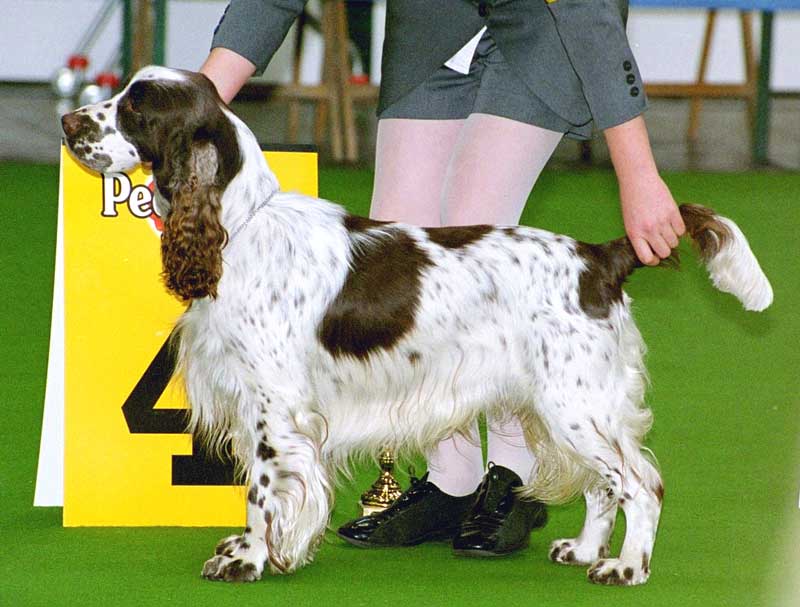
A dog show is an animal show; it is an event where dogs are exhibited. A conformation show, also referred to as a breed show, is a kind of dog show in which a judge, familiar with a specific dog breed, evaluates individual purebred dogs for how well the dogs conform to the established breed type for their breed, as described in a breed's individual breed standard.[1]
Dog shows can be in the means of evaluating dogs for breeding purposes. A conformation championship from a recognised national kennel club is generally considered as an indication of merit. Many breeders consider championships a prerequisite for breeding. Some critics argue that the shows can encourage selective breeding of traits and lower genetic diversity.
The first modern conformation dog show was held in Newcastle Town Hall in Newcastle upon Tyne, England, in June 1859.[2]
Judging
[edit]
A conformation dog show is not a comparison of one dog to another but a comparison of each dog to a judge's mental image of the ideal breed type as outlined in the individual breed's breed standard. Dog show judges attempt to identify dogs who epitomise the published standards for each breed. Some judgments must be subjective. As an example, what exactly entails a "full coat" or a "cheerful attitude", descriptions found in breed standards, can be learned different.
Judges are generally certified to judge one or several breeds, usually in the same group, but a few "all-breed" judges can judge a large number of breeds.[citation needed]
Winning
[edit]Dogs compete at dog shows to earn points or certification towards championship titles.
The Kennel Club (UK) system, which is also used by the Australian National Kennel Council[3] and in other countries, is considered the most difficult to earn a title under.
Fédération Cynologique Internationale sponsors international shows that differ from other shows in that dogs first receive individual written descriptions of positive and negative qualities from the judge, and only dogs with high ratings go on to compete against other dogs in the class. A dog must receive four international Certificat d'Aptitude au Championnat International de Beauté (CACIB) to qualify for a championship; one must be won in the dog's own country, and at least two in other countries under at least three different judges.[4]
United States
[edit]There are seven classes per breed in American Kennel Club dog shows:[5]
- Puppy (sometimes divided between 6–9 months and 9–12 months)
- Twelve-To-Eighteen Months (those that fall in this age range are eligible)
- Novice (dogs over six months old are eligible as long as they have not won any points yet, have not yet won three first place prizes in this class, and have not won first prizes in the Bred-By-Exhibitor, American-bred or Open classes)
- Amateur Owner Handler (where the owner is exhibiting the dog and has not received funds for showing any other dog)
- Bred-By-Exhibitor (where the person handling the dog is an owner and breeder of record.)
- American-Bred (This class is reserved for dogs conceived in the U.S.)
- Open (Any dog that is over six months old can enter into this class. Champions are not allowed in any of the other classes and are only permitted to enter this class, although in most cases they skip the class competition entirely and are entered directly in Best of Breed.)
The American-Bred and Open classes are mandatory for each show, while the others are optional.[6] In some cases, one or more of these classes may be divided by color, height, weight, or coat type. A dog can earn extra points during these awards, depending on the number of dogs of its sex and the Champions that were competing against it.[7]
In the American Kennel Club, a dog needs 15 points to become a Champion, with each win gaining anywhere from zero to five points depending on the number of dogs competing and the area where the show is held.[8] At least two wins must be a set of three or more points ("majors") under two different judges; at least one additional win under a third judge is also required.
The rules for the United Kennel Club (UKC) use a different points system. A championship requires a combination of points and competition wins. Points are awarded at breed level for each win; for example, winning the class earns 10 points in non-variety breeds and 5 in variety breeds, even if there are no other dogs to beat in the class. Competition Wins are wins over at least one other dog, whether in their own breed (such as going Best Fe/male or Best of Winners) or higher level (placing above at least one other dog in the group or Best/Reserve Best in Multi-Breed show). A championship requires a total of 100 points and three competition wins.[9]
Canada
[edit]Canadian Kennel Club shows are nearly identical to American Kennel Club dog shows, with the exception of a "Canadian-Bred" class replacing the AKC's "American-Bred". The main difference is the number of points required for a Championship, and the way those points are calculated.
Under the Canadian Kennel Club rules, 10 points are needed for a Championship, with wins awarded by at least three different judges and at least one "major" win of two or more points. Once a Championship is completed, dogs may earn points toward their Grand Championship.
As of January 1, 2013, to reach a Grand Championship, 20 points are needed with two "majors". Next is the Grand Excellent Championship which may be awarded to dogs who accumulate 100 points and have won at least one Best in the show. Region is not a factor in determining points for a win in Canada—the point schedule is the same across the country.[10]
Colombia
[edit]In Colombia, dog shows are maintained and organised by the Association Colombian Kennel Club (Asociacion Club Canino Colombiano). Their conformation shows follow the rules of the International Federation of Kennel Clubs. (Fédération Cynologique Internationale). According to the ACCC, only purebred dogs recognised by the FCI are allowed to participate. Purebreds of Colombian origin must be registered with the ACCC, and therefore they must hold an LOC number (Number in the Colombian Book of Origins).[11]
Notable dog shows
[edit]Crufts
[edit]In the United Kingdom, the international championship show Crufts was first held in 1891. Since its centenary year in 1991, the show has officially been recognised as the world's largest and most prestigious dog show by Guinness World Records, with a total of 22,991 dogs being exhibited that year.[12] 22,964 dogs were exhibited in 2008, 27 short of the previous record.[13]
World Dog Show
[edit]The World Dog Show is sponsored by the Fédération Cynologique Internationale for international championships in conformation and other dog sports. The location rotates between member countries.[14] The 2008 show was held in Stockholm, Sweden; the 2009 show in Bratislava, Slovakia; and the 2010 show in Herning, Denmark.[15]
Westminster Kennel Club Dog Show
[edit]The Westminster Kennel Club Dog Show is an all-breed conformation show, historically held in the New York City area. It is one of a handful of benched shows in the United States.
It is often compared to the World Dog Show; the World Dog Show is considered a bit more valuable reputation-wise.[16]
Criticism
[edit]Some critics state that conformation shows lead to the selection of breeding dogs based solely upon appearance, which is seen by some as detrimental to working qualities and, at worst, as a promotion of eugenics.[17] The shows have been criticized for encouraging breeding of traits that are harmful to the dogs; for example, the Pekingese dog who won at Britain's most prestigious dog show in 2003 had to be photographed while lying on an icepack after winning the show because the dog could not breathe well enough to efficiently cool his own overheated body.[18] Breeding selective traits reduces genetic diversity, which can create some health problems in dogs.[18]
In the United States, some working dog breed organisations, such as the American Border Collie Association and the Jack Russell Terrier Club of America, have tried to fight to keep their breeds from being recognised by the AKC and some other kennel clubs,[19] as they thought that the introduction of their breeds to the show ring would lead to decreasing numbers of working dogs with adequate qualities.
In August 2008, BBC1 televised a documentary film titled Pedigree Dogs Exposed, which investigated the subject of health issues affecting pedigree dogs in the United Kingdom, with a particular emphasis on dogs bred for showing. The programme provoked criticisms of kennel clubs. Following the broadcast, the BBC withdrew its television coverage of the Crufts dog show from 2009, with other sponsors and partners also withdrawing support, including Pedigree Petfoods, the RSPCA, PDSA and the Dog's Trust. In response to the programme, the Kennel Club in the UK announced a review of all breed standards. They stated that they will impose a ban on breeding between dogs that are closely related and will impose greater monitoring to prevent unhealthy dogs from being entered.[citation needed]
Bench show
[edit]A bench show is a show which requires dogs to be on display in an assigned location (show bench) during the entirety of the show, except when being shown in the ring, groomed for showing, or taken outside to eliminate. The purpose is for spectators and breeders to have an opportunity to see all the entered dogs. In the more common unbenched shows, dogs are required to be present only at assigned ring times.[20]
In the United States, benched shows used to be the norm, but now there are only six left, including the Westminster Kennel Club Dog Show,[21] and the National Dog Show.[22]
Among field trial participants, where dogs are judged on their performance and not their looks, the term bench show refers to any conformation show.[23]
See also
[edit]References
[edit]- ^ "Dog show | Description & History | Britannica". www.britannica.com. 2024-01-03. Retrieved 2024-01-16.
- ^ "History of the Kennel Club". Kennel Club. Archived from the original on 15 February 2016. Retrieved 2 August 2020.
- ^ "Regulations Part 5 Show" (PDF). Australian National Kennel Council. October 2010. Archived from the original (PDF) on April 14, 2023. Retrieved April 6, 2011.
- ^ "Regulations". Fédération Cynologique Internationale. Retrieved April 6, 2011.
- ^ "Rules, Regulations & Policies". American Kennel Club. Retrieved 20 June 2021.
- ^ "A Beginner's Guide to Dog Shows". American Kennel Club. Retrieved April 6, 2011.
- ^ American Kennel Club. "Counting Points at Dog Shows".
- ^ American Kennel Club. "Points Schedule".
- ^ New FAQ Archived April 20, 2008, at the Wayback Machine
- ^ Canadian Kennel Club. "Championship Points Earned at Canadian Dog Shows". Archived from the original on 2006-09-09. Retrieved 2006-09-22.
- ^ "Reglamento de Exposiciones – ACCC" [Show Regulations – ACCC] (in Spanish). Asociación Club Canino Colombiano. March 2011. Archived from the original on 2003-08-12. Retrieved April 6, 2011.
- ^ "Crufts – Highest Entry For Three Years". Archived from the original on 2015-09-06. Retrieved 2014-05-04.
- ^ "Pooches parade for Crufts". 2008-05-03. Retrieved 2014-05-04.
- ^ "Championships". Fédération Cynologique Internationale. Archived from the original on July 20, 2011. Retrieved April 6, 2011.
- ^ "World Dog Show 2010". World Dog Show 2010. Archived from the original on September 1, 2011. Retrieved April 6, 2011.
- ^ Gingold, Alfred (8 February 2005). Dog World: And the Humans Who Live There. Harmony/Rodale. ISBN 9780767920216.
- ^ Westminster Eugenics Show Archived 2009-07-31 at the Wayback Machine National Review Online
- ^ a b Keith, Christie (2009-02-03). "Are dog shows hurting dogs?". SFGATE. Retrieved 2021-06-30.
- ^ "Jack Russell Terrier Club of America – JRTCA". Jack Russell Terrier Club of America. Retrieved April 6, 2011.
- ^ "What is a Benched Show?". westminsterkc.tripod.com.
- ^ Reznik, Allan (March 6, 2019). "Engaging Positively With the Public at Dog Shows". American Kennel Club.
- ^ "Judging". The National Dog Show.
- ^ "About Bench Shows – Show Format". AKC Coonhounds.
External links
[edit]


Dog show
View on GrokipediaHistory
Origins in 19th-Century Britain
The first organized dog show took place in Newcastle upon Tyne, England, on June 28–29, 1859, at the city's Town Hall, marking the formal inception of competitive canine exhibitions in Britain.[10] Billed as the Sporting Dog Show, it featured only pointers and setters, with approximately 60 dogs entered across the two breeds—27 setters and 23 pointers—judged primarily on conformation to breed standards suited for field work.[3] [11] The event emphasized selecting superior specimens for breeding to enhance hunting capabilities, reflecting the era's growing interest among the landed gentry and sporting enthusiasts in systematizing gun dog lineages amid expanding rural shooting sports.[12] This Newcastle exhibition arose from informal gatherings at agricultural fairs and hunts, where dogs were increasingly evaluated for pedigree and utility rather than mere utility in the field alone.[13] Victorian breeders sought to codify traits through competition, driven by advances in selective breeding practices that prioritized aesthetic and functional purity over mongrel variability, though early shows remained modest in scope and attendance compared to later national events.[14] A follow-up show occurred later in 1859 in Birmingham, expanding slightly on breeds but still focused on sporting types, which helped establish the format of bench shows where dogs were displayed on raised platforms for close inspection.[15] By the 1860s, these events proliferated, with regional exhibitions in cities like Wolverhampton and Manchester introducing more breeds and attracting broader participation from breeders aiming to commercialize pedigreed stock.[12] The shows' emphasis on visual standards over performance tests foreshadowed debates on breeding priorities, as conformation judging often favored exaggerated traits that could compromise working ability, a tension rooted in the industrial-era commodification of dogs as status symbols among the emerging middle class.[14] This foundational period laid the groundwork for standardized registries, culminating in the formation of governing bodies to regulate entries and prevent fraud in pedigrees.[16]Formation of Kennel Clubs and Standardization
The formation of organized kennel clubs in the 19th century marked a pivotal shift in dog breeding and exhibition practices, driven by the need to regulate increasingly popular dog shows and establish uniform criteria for breeds. The Kennel Club in the United Kingdom, the world's first national kennel club, was established on April 4, 1873, by Sewallis Evelyn Shirley, a Member of Parliament, along with twelve other gentlemen including breeders and sportsmen.[16] This founding responded to the inconsistencies in early dog shows, such as the 1859 event in Newcastle upon Tyne, where judging lacked standardized rules, leading to disputes over breed eligibility and evaluation.[17] The club's primary objectives included creating a centralized registry for pedigrees to verify lineage, enforcing consistent show regulations, and promoting responsible breeding to preserve distinct types.[18] Standardization efforts formalized breed definitions through detailed "standards" that specified ideal physical traits, temperament, and proportions for each variety, drawing from historical working roles while emphasizing conformation for exhibition. By 1874, The Kennel Club had published initial breed classifications, grouping dogs into categories like sporting, hounds, terriers, non-sporting, and toys, which required breeders to refine lines toward these ideals rather than broad functional types.[3] This process involved selective breeding to exaggerate traits deemed desirable for shows, such as symmetry and coat quality, often at the expense of unshown attributes like endurance in field work, as evidenced by the club's early rules prioritizing morphological uniformity over empirical performance data.[19] Pedigree registration became mandatory for club-sanctioned events by the 1880s, ensuring only documented purebreds competed, which accelerated the divergence of show lines from utilitarian stock.[17] The model of The Kennel Club influenced international formations, with the American Kennel Club established in September 1884 by sportsmen seeking similar governance amid growing U.S. interest in imported British breeds and shows.[20] These bodies codified standards through committees of experts who referenced historical texts, breeder observations, and early show winners, though variations emerged; for instance, UK standards retained more emphasis on gundog utility compared to later aesthetic refinements.[19] By the late 19th century, over 50 breeds had formalized standards under The Kennel Club, enabling global recognition but also entrenching practices where visual appeal in static poses superseded verifiable functional tests, a causal outcome of show-centric incentives over field trials.[18]20th-Century Growth and International Spread
The Fédération Cynologique Internationale (FCI) was established on May 22, 1911, by kennel clubs from Germany, Austria, Belgium, France, and the Netherlands to standardize breed recognition, promote purebred dog breeding, and coordinate international dog shows across member nations.[21] This organization introduced mechanisms like the Certificat d'Aptitude au Championnat International de Beauté (CACIB) for elite international competitions, facilitating cross-border judging and breed evaluations that expanded dog show participation beyond national boundaries.[11] The FCI was temporarily dissolved during World War I but reformed in 1921, enabling sustained growth in Europe and eventual affiliation with kennel clubs worldwide, which by the late 20th century included over 80 member organizations regulating shows in diverse regions.[22] In the United States, the American Kennel Club (AKC) formalized a point system for all-breed shows between 1905 and 1907, standardizing awards and encouraging broader competition that spurred event proliferation.[20] The Westminster Kennel Club show, a flagship event since 1877, saw entries reach 2,000 dogs by 1908 and exceed 3,000 by 1937, reflecting rising participation amid increasing pet ownership and media interest.[23] Similarly, the United Kingdom's Crufts, inaugurated in 1891, expanded into the world's largest dog show by the late 20th century, with Guinness World Records recognizing it as such in 1991 for accommodating over 27,000 canine entrants annually by then.[24] Dog shows spread globally through colonial influences, immigration, and FCI affiliations, with national kennel clubs emerging in countries like Australia (1890s), Canada, and parts of Asia by mid-century, hosting localized events that adhered to international standards.[13] Post-World War II economic recovery and urbanization boosted attendance, as evidenced by surging entries in established shows and the debut of multi-national exhibitions, though precise worldwide totals remained decentralized until FCI oversight grew.[25] This era marked a shift from elite, breed-specific gatherings to mass-participation spectacles, driven by breed standardization rather than hunting utility.[3]Purpose and Principles
Evaluation for Breeding and Breed Preservation
Conformation evaluations in dog shows assess dogs against established breed standards to identify specimens suitable for breeding, with the goal of preserving and enhancing the defining traits of purebred varieties. Breed standards, developed and maintained by national breed parent clubs under kennel club oversight, outline the ideal physical structure, gait, temperament, and functional attributes derived from each breed's historical purpose, such as herding, hunting, or guarding.[26][3] Judges, licensed by organizations like the American Kennel Club (AKC), compare entrants to these standards during ring assessments, awarding points toward championships only to dogs demonstrating superior adherence, which signals their value as breeding stock to responsible breeders.[27] This process originated in the 19th century as a means for breeders to benchmark their lines against peers, promoting selective mating to maintain breed type while theoretically supporting working ability.[28] By prioritizing dogs that exemplify breed standards, shows facilitate the preservation of genetic uniformity and distinctiveness across generations, enabling breeders to avoid dilution from crossbreeding and sustain traits essential to breed identity. For instance, standards emphasize soundness in movement and proportion to ensure dogs retain capabilities for their original roles, with champions often commanding higher stud fees and serving as foundation stock for litters.[29] Kennel clubs like the AKC encourage complementary health screenings, such as hip evaluations via the Orthopedic Foundation for Animals, alongside conformation to mitigate hereditary risks, though these remain voluntary and secondary to visual assessment.[30] Proponents argue this system has preserved over 200 AKC-recognized breeds since 1884, fostering diversity in form and function amid broader canine populations.[31] However, empirical evidence indicates that conformation-focused selection has contributed to health declines in certain breeds through exaggerated traits and reduced genetic diversity from popular sire effects. Studies document elevated rates of disorders like brachycephalic obstructive airway syndrome in show-line Bulldogs and Pugs, where standards favoring extreme head shapes prioritize aesthetics over respiration efficiency, leading to welfare issues confirmed in veterinary surveys.[32] Inbred pedigrees among champions exacerbate conditions such as hip dysplasia and dilated cardiomyopathy, with analyses showing purebred show dogs averaging inbreeding coefficients above 0.25—equivalent to sibling matings—far exceeding wild canid norms and correlating with shortened lifespans.[33] Critics, including geneticists, contend that kennel club standards often lag in adapting to these outcomes, as aesthetic preferences drive breeding over functional reforms, though some clubs have revised standards, such as the Kennel Club's 2009 brachycephalic restrictions in the UK.[34] Responsible breeders thus integrate show success with outcrosses and genomic testing to balance preservation against dysgenic pressures.[35]Conformation Standards and Functional Traits
Conformation standards in dog shows consist of detailed descriptions of the ideal physical, mental, and behavioral characteristics for each recognized breed, formulated to select breeding stock capable of fulfilling the breed's original purpose. These standards, such as those approved by the American Kennel Club (AKC), outline traits like proportions, gait, and temperament that enable functions ranging from herding livestock to retrieving game, prioritizing structure that supports endurance, agility, and soundness over mere aesthetics.[36][37] For instance, in the Working Group, standards for breeds like the Portuguese Water Dog specify "unexaggerated, functional conformation" to maintain robustness for tasks such as water retrieval and guarding.[38] Functional traits emphasized in these standards derive from breeds' historical roles, with evaluations focusing on biomechanical efficiency—such as straight limbs for efficient propulsion in sporting dogs or balanced angulation for power in guardians—intended to preserve working ability across generations. Peer-reviewed analyses of working dog structure confirm that breed standards incorporate anatomical features directly linked to performance, including pelvic tilt and shoulder assembly that optimize movement for specific labors, though adherence requires judges experienced in both anatomy and breed history.[39] The AKC's Sporting Group standards, for example, highlight "strong, vigorous, energetic and quick of movement" without clumsiness, reflecting traits selected for field endurance rather than static beauty.[40] Despite these intentions, divergences have emerged where show-bred lines prioritize exaggerated features—such as overly broad heads or steep shoulders—for visual appeal, potentially compromising functional health and working capacity compared to field or working lines. Critics, including veterinary assessments, argue this selective pressure has contributed to hereditary issues like reduced hip joint stability in breeds like German Shepherds, where show standards sometimes favor a lower-slung rear over the straighter structure aiding trotting efficiency.[41][42] Organizations like the AKC maintain that standards inherently promote function by describing dogs "fit for purpose," yet empirical outcomes in health surveys reveal higher dysplasia rates in conformation champions versus performance-tested dogs, underscoring the need for integrated testing beyond visual assessment.[36][43]Economic and Cultural Roles
Dog shows contribute significantly to local economies through exhibitor spending on travel, lodging, grooming, and veterinary services. Surveys by the American Kennel Club (AKC) indicate that participants at conformation shows average $982 in expenditures per weekend event, potentially injecting over $2.15 million into host communities for larger gatherings. With more than 22,000 AKC-sanctioned events annually, these activities cumulatively generate over $1.5 billion in direct local economic activity across the United States.[44][45] Beyond immediate event spending, dog shows underpin the purebred breeding sector by validating superior genetics through championships, which enhance the market value of winning dogs and their progeny. The U.S. dog and pet breeders industry, valued at approximately $4.0 billion in revenue as of 2025, relies on show outcomes to guide selective breeding and sales of pedigree animals.[46] High-profile events like the Westminster Kennel Club Dog Show, while offering no cash prizes to winners, support organizational revenues exceeding $8.6 million in 2024 through sponsorships, entries, and broadcasting rights, indirectly bolstering related industries such as premium pet nutrition and equipment.[47] Culturally, dog shows serve as platforms for preserving breed standards and celebrating canine diversity, originating in 19th-century Britain as a shift from utilitarian pursuits like rat-baiting toward organized exhibitions of form and function.[13] These events foster communities of breeders and enthusiasts dedicated to maintaining working traits alongside aesthetics, with organizations like the AKC emphasizing responsible ownership and genetic integrity. Major competitions, such as Westminster—televised since 1948 and drawing millions of viewers—elevate dogs as symbols of refinement and heritage, influencing public perceptions of pets as companions rather than mere tools.[48] In broader society, dog shows reinforce traditions of animal husbandry rooted in empirical selection for desirable traits, countering narratives that prioritize sentiment over utility. They provide educational venues for demonstrating breed histories and health testing, though critics from animal welfare groups argue that conformation emphasis can inadvertently prioritize appearance, potentially exacerbating hereditary issues in some lines—a claim supported by veterinary studies on breed-specific disorders but debated within the fancy for its selective application to shows versus unregulated breeding.[49]Judging Mechanics
Competition Classes and Progression
In conformation dog shows, dogs are categorized into classes primarily by sex (males and females separately), age, and eligibility criteria such as ownership, breeding status, and prior achievements, allowing for structured evaluation against breed standards.[50] Regular classes under the American Kennel Club (AKC) rules include Puppy (typically 6-12 months, often subdivided into 6-9 and 9-12 months), 12-18 Months, Novice (for dogs with limited prior wins), Amateur Owner-Handler (handled by non-professional owners), Bred-By-Exhibitor (dogs owned and bred by the exhibitor), American-Bred (born and whelped in the U.S. from U.S.-bred parents), and Open (for any eligible dog not fitting other classes).[50] Non-regular classes, such as those for veterans (typically 7 years and older) or additional age brackets like Minor Puppy (3-6 months) in some international formats, may also be offered but do not contribute to championship points.[51] Under Fédération Cynologique Internationale (FCI) guidelines, classes follow a similar progression: Minor Puppy (3-6 months), Puppy (6-9 months), Junior (9-18 months), Intermediate (15-24 months), Open, Working/Champion, and Veteran, judged in sequence to prioritize younger entrants first.[52][53] Judging within a breed begins at the class level, where entrants are individually assessed for conformation to the breed standard, movement, and temperament; class winners are selected, with placements awarded down to fourth or reserve.[54] The Winners Dog (from male classes) and Winners Bitch (from female classes) then compete against each other for Best of Winners, with the winner earning championship points based on the number of dogs competing in regular classes of that sex (e.g., 15 points total required for an AKC championship, including two majors of 3-5 points each from at least three judges).[55][28] Best of Breed is determined by pitting Winners Dog, Winners Bitch, and select champions (often from special classes) against the Best Opposite Sex; the Best of Breed advances to group competition alongside other breed winners.[54] Groups organize breeds by function and type—Sporting, Hound, Working, Terrier, Toy, Non-Sporting, and Herding under AKC—where group winners (first through fourth placed) are selected, and the first-place Group Winner proceeds to the Best in Show final.[28] This elimination process, akin to a tournament bracket, culminates in one Best in Show dog, emphasizing progressive refinement from breed-specific to overall excellence.[54] In FCI events, equivalent CAC (Certificat d'Aptitude Correspondant) awards function similarly to points, leading to group and Best in Show judgments, though class structures may vary by national club.[51] Non-champions primarily seek points via Winners placements, while champions focus on group and Best in Show titles for prestige beyond basic titles.[28]Criteria for Assessment
In conformation dog shows, judges assess dogs based on their adherence to the breed standard, which outlines the ideal physical, structural, and behavioral characteristics for each breed as defined by the governing organization.[27] The primary goal is to identify specimens closest to this ideal, evaluating overall balance, proportion, and type rather than individual traits in isolation.[27] Breed standards, developed through historical analysis of working abilities and morphology, serve as the benchmark, with judges forming a mental image of the "perfect" dog to guide comparisons.[27] Judges conduct examinations in stages, beginning with the dog's stacked stance to appraise general appearance, head, neck, topline, and angulation, often using hands-on palpation to verify bone density, muscle tone, and bite.[56] Movement, or gait, is scrutinized for soundness, reach, drive, and coordination, as efficient locomotion reflects underlying skeletal and muscular integrity essential to breed function.[29] Coat quality, color, and texture are evaluated per standard specifications, with cleanliness and grooming influencing presentation but not overriding structural merits.[57] Faults, such as deviations in size, proportions, or disqualifying features like aggression or incomplete development, result in penalties proportional to severity, potentially eliminating dogs from contention.[1] Temperament assessment integrates with physical evaluation, requiring dogs to exhibit breed-typical confidence and stability without shyness or undue aggression, which are penalized as they compromise suitability for intended roles.[58] In systems like the Fédération Cynologique Internationale (FCI), qualitative grades such as "Excellent" denote near-ideal conformity, condition, and temperament, while American Kennel Club (AKC) events emphasize comparative ranking without formal grading.[59][27] Soundness—absence of lameness or evident health impairments—is implicitly required, though shows prioritize morphological ideals over clinical health screenings.[56] This framework aims to preserve breed purity and functionality, though critics note potential emphasis on aesthetics over working utility in some standards.[57]
Judge Selection and Potential Biases
Dog show judges are typically selected through a rigorous approval process administered by governing kennel clubs, which evaluates candidates' expertise in breed standards, practical experience, and adherence to judging protocols. In the American Kennel Club (AKC), prospective judges for specific breeds must demonstrate at least 12 years of hands-on involvement, including breeding and exhibiting dogs within that breed, before applying for approval; this ensures familiarity with genetic traits and conformational ideals derived from breed standards.[60] The AKC further requires candidates to pass practical evaluations, such as mentoring sessions and ring tests, to verify sound procedure, knowledge of rules, and impartiality in assessments.[56] Similarly, the United Kennel Club (UKC) emphasizes lifelong learning and breed-specific proficiency, with judges committing to ongoing education to maintain licenses.[61] The Kennel Club in the UK mandates a minimum of five years of proven interest in pedigree dogs, completion of accredited seminars on conformation and movement, and practical judging assessments before granting licenses.[62] Once approved, judges are assigned to events by show committees, often prioritizing those licensed for the relevant breeds or groups, with assignments limited to avoid conflicts such as judging dogs they own, breed, or have recently handled.[63] This selection aims to uphold breed preservation by entrusting evaluations to experienced practitioners who can discern functional anatomy over superficial traits. However, the process relies on self-reported experience and club oversight, which may favor established networks within breeding communities. Potential biases in judging arise from the subjective nature of conformation assessment, where judges interpret written standards against an idealized mental image of the breed, introducing variability based on personal heuristics and unconscious preferences.[64] Empirical observations indicate that judges may favor dogs handled by professionals over owner-handlers, as handler skill in presentation—such as gaiting and stacking—can influence perceived movement and temperament, disadvantaging less polished entrants despite equivalent canine quality.[65] Conflicts of interest persist despite rules; for instance, judges with ongoing breeding ties to specific lines may subtly prioritize type aligned with their stock, as evidenced by recurring critiques of awards to anatomically flawed dogs that conform to prevailing fads rather than historical working standards.[66] In high-profile events like Westminster, single-judge Best in Show decisions amplify these issues, with past controversies highlighting perceived favoritism toward popular breeds or exhibitors, though statistical analyses show limited post-win impacts on breed registrations, suggesting decisions reflect entrenched tastes over broader market influence.[67][68] Kennel clubs mitigate this through codes prohibiting direct ownership stakes in competing dogs, but enforcement depends on self-disclosure, underscoring the challenge of fully eliminating human elements in a system grounded in expert consensus rather than quantifiable metrics.[69]Governing Organizations
American Kennel Club (AKC)
The American Kennel Club (AKC), established on September 17, 1884, during its first meeting in Philadelphia, functions as the principal registry and governing authority for purebred dog activities in the United States.[20] The organization's founding documents, including its Constitution, Bylaws, and initial Dog Show Rules, were adopted at this assembly, with Major James M. Taylor elected as the inaugural president to oversee the standardization of breeding records and exhibitions.[20] By 1905, the AKC had grown to include 110 member clubs and 500 associate members actively presenting dog show classes, reflecting its early emphasis on formalizing purebred dog evaluations.[3] As the world's largest not-for-profit purebred dog registry, the AKC maintains detailed pedigrees for 201 recognized breeds, prioritizing the documentation of lineage to support selective breeding aimed at preserving breed-specific traits.[70] It sanctions over 22,000 events annually, encompassing conformation shows, obedience trials, and other competitions, with participant entries exceeding 3 million and involvement from more than 5,000 licensed clubs.[70] In the context of dog shows, the AKC licenses events through a system of member and specialty clubs, ensuring adherence to uniform rules that govern eligibility, judging procedures, and awards such as championships based on points accumulated from wins against peers.[71] The AKC develops and enforces breed standards in partnership with parent clubs dedicated to individual breeds, which outline precise criteria for conformation including structure, gait, temperament, and functional attributes derived from historical working roles.[72] These standards, approved by the AKC's board of directors, serve as benchmarks for judges—who must be AKC-approved and demonstrate expertise through examinations and experience—to assess dogs for adherence to ideal type rather than subjective aesthetics alone.[3] This process underscores the AKC's commitment to breeding soundness, though it has drawn scrutiny from some veterinary and genetic studies for potential overemphasis on morphology at the expense of health metrics like hip dysplasia prevalence in certain breeds, as evidenced by data from the Orthopedic Foundation for Animals. Governance within the AKC operates through a delegate system, where representatives from member clubs vote on policies, standards revisions, and judge approvals, fostering a decentralized yet standardized approach to purebred preservation.[20] Beyond shows, the organization promotes ancillary programs like the Canine Good Citizen certification, awarded to nearly 50,000 dogs yearly, to encourage behavioral reliability alongside conformational excellence.[70]Fédération Cynologique Internationale (FCI)
The Fédération Cynologique Internationale (FCI), established on May 22, 1911, in Paris by founding kennel clubs from Germany, Austria, Belgium, France, and the Netherlands, functions as the global coordinating body for national cynological organizations, emphasizing the preservation of purebred dogs through standardized breeding and exhibition practices.[21] Its core objectives include protecting canine heritage, promoting responsible breeding, and ensuring international reciprocity in pedigree recognition and judge accreditation, without serving as a direct registry or show host itself.[73] The organization dissolved amid World War I disruptions but was reformed in 1921 under French and Belgian leadership, adopting revised statutes and gaining formal legal status in Belgium by 1968 decree.[21] Headquartered in Thuin, Belgium, the FCI encompasses 100 member and contract partner kennel clubs—one per country—spanning five continental sections: Europe (Section 1), Americas and the Caribbean (Section 2), Asia (Section 3), Africa and Oceania (Section 4, with Middle East ties), and an additional section for specific affiliates.[73] Each member issues national pedigrees and trains judges, while the FCI harmonizes efforts by publishing multilingual breed standards for 359 recognized breeds, with each breed assigned a "patron" country responsible for standard authorship and updates to reflect functional morphology over aesthetic exaggeration.[74] These standards underpin conformation judging, prioritizing traits linked to historical work roles, health, and breed-specific utility, such as gait, structure, and temperament assessments during shows.[75] In dog show governance, the FCI authorizes international events via its Regulations for FCI Dog Shows, mandating that full and associate members host at least two CACIB (Certificat d'Aptitude au Championnat International de Beauté) competitions annually, where dogs earn points toward international beauty championships based on adherence to FCI standards.[51] Judges, drawn from an FCI-maintained directory of over 10,000 licensed officials trained per member protocols, evaluate entrants in classes by age, sex, and title status, awarding CACIB certificates to top performers qualifying for higher honors like European or World Winner titles.[75] The annual World Dog Show, rotated among host countries under FCI oversight, culminates these efforts as the premier event, featuring breed-group finals and supreme winners selected from thousands of international entries, with titles homologated only for intact, pedigree-verified dogs meeting health and eligibility criteria.[76] This framework enforces uniformity across borders, contrasting with national variants by emphasizing cross-recognition over localized rules, though critiques note occasional tensions in standard interpretations favoring European-centric breed ideals.[77] The FCI also regulates ancillary aspects, such as exhibitor conduct codes prohibiting aggressive handling and requiring veterinary checks for entrants, while prohibiting neutered or visibly unhealthy dogs from competition to safeguard breeding integrity.[51] Through these mechanisms, it sustains a global ecosystem for conformation shows that prioritizes empirical fidelity to breed standards as proxies for genetic and functional soundness, influencing over 90% of international pedigree-issuing bodies.[73]United Kennel Club (UKC) and National Variants
The United Kennel Club (UKC), founded on February 10, 1898, by Chauncey Z. Bennett, emerged as an alternative to existing registries that prioritized conformation over functional performance in dogs.[78] [79] Bennett, dissatisfied with the elitist focus of organizations like the American Kennel Club (AKC), aimed to register working breeds—initially emphasizing hunting dogs like American Pit Bull Terriers—while promoting events that tested dogs' practical abilities alongside appearance.[80] By 2023, UKC had grown into the world's largest all-breed performance registry, sanctioning over 20,000 events annually across conformation, obedience, agility, and hunting trials, with conformation shows comprising a smaller portion compared to performance-based competitions.[79] UKC conformation shows, licensed starting in the 1920s with the first annual bench show in 1926, evaluate dogs against breed standards that balance aesthetics with working traits, differing from AKC's heavier emphasis on polished presentation.[81] Unlike AKC events, UKC shows often lack fixed ring times or entry premiums, operate on a more flexible day-of schedule, and prioritize dogs' "workmanlike" utility over exaggerated conformational ideals, appealing to hunters and field enthusiasts who view performance as the ultimate validator of breed quality.[82] [83] This approach fosters broader participation, as UKC permits single registration for performance titles without the strict pedigree barriers sometimes seen in AKC conformation, though both registries maintain separate breed recognition lists with some overlaps and variances.[84] National variants of kennel clubs operate independently or with international affiliations, adapting dog show formats to regional breeds, climates, and cultural priorities while generally mirroring FCI or AKC-style conformation judging. The Canadian Kennel Club (CKC), established in 1895 as North America's oldest national registry, governs shows emphasizing purebred standards similar to AKC but with accommodations for Canadian varieties like the distinct Belgian Shepherd subtypes recognized under one breed name.[85] CKC events, such as the annual National Championship, feature group judging and best-in-show selections, but incorporate local rules on registrations and disqualifications tailored to avoid cosmetic alterations prevalent in some U.S. shows.[86] In Australia, Dogs Australia (formerly the Australian National Kennel Council), founded in 1963 as a federation of state bodies, oversees championship shows like the Sydney Royal, where all-breed competitions assess over 200 recognized breeds against standards harmonized with FCI guidelines but adapted for indigenous working dogs such as Australian Cattle Dogs.[87] These national bodies often host visitor judge programs for international expertise, yet maintain sovereignty in breed acceptance and event logistics, contrasting UKC's performance tilt by focusing more on conformation as a preservation tool amid diverse environmental demands.[87] Other variants, such as those in New Zealand or South Africa, similarly blend local heritage breeds into global formats, prioritizing verifiable pedigrees and functional soundness over spectacle.[88]Prominent Events
Westminster Kennel Club Dog Show
The Westminster Kennel Club Dog Show, organized annually by the Westminster Kennel Club since its founding in 1877, represents the oldest continuous dog show in the United States and the second-longest held sporting event after the Kentucky Derby.[89] The inaugural event, titled the First Annual New York Bench Show of Dogs, occurred from May 8 to 11, 1877, at Gilmore's Garden in New York City with 1,201 entries, extending to four days due to overwhelming attendance.[89] Held each February primarily at Madison Square Garden, the benched conformation competition requires participating dogs to remain on display in assigned benches except during grooming or ring time, fostering public access and education about breeds.[89] In 2025, the 149th edition featured over 2,500 dogs from all 201 American Kennel Club-recognized breeds, with judging divided into daytime breed-level assessments at the Jacob K. Javits Convention Center and evening group competitions plus Best in Show at Madison Square Garden.[90][91] Expert judges, approved by the Westminster Kennel Club, assess entrants against parent club breed standards, performing physical examinations of structure, teeth, musculature, and coat, followed by evaluations of gait and temperament in motion to select those closest to the ideal specimen.[27] The Best in Show title, first awarded in 1907 to Ch. Warren Remedy—a Smooth Fox Terrier who secured it three times (1907–1909)—has gone to the Wire Fox Terrier 15 times, more than any other breed, underscoring the event's emphasis on terrier excellence.[92][89] Recent victors highlight breed diversity: a Standard Poodle in 2020, Pekingese in 2021, Bloodhound in 2022, Petit Basset Griffon Vendéen in 2023, Miniature Poodle in 2024, and Giant Schnauzer Monty (GCHG CH Hearthmore's Wintergreen Mountain RI CGC TKN FITB) in 2025.[92][93] Predating the American Kennel Club's 1884 establishment by seven years, the show has spanned four versions of Madison Square Garden, maintaining traditions that prioritize breeding quality over speed or agility metrics.[89]Crufts
Crufts is an annual international conformation dog show held in the United Kingdom and organized by The Kennel Club, the country's governing body for purebred dogs.[94] Founded in 1891 by Charles Cruft, a director at a dog food company who sought to promote canine excellence through judged exhibitions, the event has evolved into a multi-day competition featuring thousands of dogs across over 200 breeds recognized by the Kennel Club.[95] [17] The show takes place over four days in early March at the National Exhibition Centre (NEC) in Birmingham, having relocated there in 1991 from London to accommodate its growing scale.[95] [96] In 2025, it drew 24,000 entries from dogs representing breeds worldwide, alongside over 150,000 visitors and an estimated 8.7 million television viewers.[97] Competitions are structured by breed groups—gundogs on the first day, working and pastoral on the second, hounds and terriers on the third, and utility and toys on the fourth—culminating in group winners advancing to vie for Best in Show, the top honor judged on adherence to breed standards for conformation, movement, and temperament.[98] [99] Following Charles Cruft's death in 1938, The Kennel Club assumed full control in 1939, ensuring continuity amid wartime interruptions and post-war expansions that introduced ancillary events like obedience trials and agility demonstrations.[17] The 1991 centenary marked its Guinness World Records recognition as the largest dog show by entries, a status sustained by rigorous judging protocols emphasizing health, structure, and breed fidelity over aesthetic exaggeration.[96] Winners receive prestige rather than cash prizes, with Best in Show elevating a dog's lineage value and often influencing breeding selections globally.[100]World Dog Show and Regional Equivalents
The World Dog Show (WDS), sanctioned by the Fédération Cynologique Internationale (FCI), constitutes the foremost global conformation competition for pedigree dogs, convening annually in a rotating host nation under the auspices of an FCI-affiliated national kennel club. Inaugurated in Budapest, Hungary, in 1971, the event has since expanded to encompass entries from all 360-plus breeds recognized by the FCI across its 98 member organizations, with judging conducted by FCI-licensed international experts adhering to published breed standards.[101][74][51] Competitions span multiple days, typically featuring preliminary breed judging, group finals, and culminating in Best in Show selections, alongside junior handler classes and specialized events like the FCI World Challenge for top-winning dogs from national championships. Awards include the CACIB (international beauty certificate), prerequisite for the FCI International Champion title, with entry numbers often exceeding 20,000 dogs; for instance, the 2025 edition in Helsinki, Finland, from August 7 to 10, registered 23,851 participants.[51][102] Recent iterations have included Geneva, Switzerland (2023, August 24–27) and Zagreb, Croatia (2024, April 25–28), with the 2026 show scheduled for Bologna, Italy (June 3–7).[103][104] Regional equivalents, designated as FCI Section Dog Shows (SDS), parallel the WDS structure but confine participation to dogs from designated geographic sections: Europe (Section 1), the Americas and Caribbean (Section 2), and Asia, Africa, and Oceania (Section 3). These events, also held periodically in host countries within their sections, award analogous CACIB titles and foster continental-level competition, serving as qualifiers or complements to the global WDS.[77] Applications for SDS organization require FCI approval, ensuring alignment with international regulations on judging, health checks, and prohibitions such as docked tails or ears.[77][105] For example, European Section shows emphasize breed diversity within Eurasia, while Americas-focused events accommodate regional variations in entry logistics and cultural emphases on working breeds.[77]Global and Regional Variations
North American Practices
In North America, conformation dog shows operate under the frameworks of the American Kennel Club (AKC) in the United States and the Canadian Kennel Club (CKC) in Canada, with procedures emphasizing evaluation of purebred dogs against established breed standards for physical structure, gait, and overall type.[1] Dogs eligible to compete must be at least six months of age, intact (not spayed or neutered), registered with the governing body, and free from disqualifying faults as per the breed standard.[5] Shows are sanctioned by these clubs and range from local specialty events focusing on single breeds to large all-breed competitions hosting thousands of entries.[5] Competition begins with dogs separated by sex, entering one of seven regular classes based on age and ownership criteria: Puppy (six to twelve months, often subdivided into six-to-nine and nine-to-twelve months), Twelve-to-Eighteen Months, Novice, Amateur Owner-Handler, Bred-By-Exhibitor, American-Bred (or Canadian-Bred under CKC), and Open.[50][27] Within each class, judges conduct hands-on examinations, assessing the dog's bite, topline, and proportions either on a table for smaller breeds or the ground for larger ones, followed by gaiting to evaluate movement around the ring.[106] First-place winners from dog and bitch classes advance to compete for Winners Dog and Winners Bitch, earning championship points scaled by entry size and geographic factors—up to five points per show, with fifteen required for a Championship title.[5][27] Winners then contest Best of Winners against champions (already-titled dogs competing in non-regular classes), determining the Best of Breed, which advances to one of seven groups (Sporting, Hound, Working, Terrier, Toy, Non-Sporting, Herding) for further judging before the final Best in Show selection.[27] Handlers—owners, breeders, or professionals—present dogs on leash from the left side, stacking them to showcase conformation and trotting them to demonstrate soundness, with professional handling prevalent at major events due to the competitive demands of presentation and ring strategy.[5] While CKC shows mirror this structure, they typically feature smaller entries and fewer national-level events compared to AKC-sanctioned competitions, though procedural alignments ensure cross-border familiarity.[107][108] Grooming practices, integral to preparation, involve breed-specific trimming and conditioning to accentuate standards, performed by handlers or specialists prior to judging.[1]European Traditions
Dog shows originated in Europe during the mid-19th century, with the inaugural organized event held in Newcastle-upon-Tyne, England, on June 28, 1859, featuring 60 pointers and setters judged for conformation and sporting qualities.[11] This gathering, organized by hunting enthusiasts, established the foundational practice of evaluating dogs against breed ideals to select superior breeding stock, emphasizing traits like structure, movement, and temperament essential for field performance.[13] The event's success spurred rapid proliferation, with subsequent shows in Birmingham in 1860 and London by 1862, solidifying Britain's role as the epicenter of early canine exhibitions.[109] The formation of The Kennel Club in 1873 formalized these traditions in the United Kingdom, introducing breed registration, standardized judging criteria, and licensing for shows to ensure consistency and integrity.[16] British shows traditionally prioritize meticulous hands-on examination by judges, assessing dogs in classes divided by sex, age, and coat color, culminating in challenge certificates for championships awarded to dogs deemed exemplary against the breed standard.[62] This system influenced continental Europe, where France hosted its first show in 1863, but diverged with the establishment of the Fédération Cynologique Internationale (FCI) in 1911 by founding members from Germany, Austria, Belgium, France, and the Netherlands.[21][13] The FCI unified standards across member kennel clubs, publishing originals in source languages and translations, and promoting international recognition of pedigrees and titles.[73] In FCI-governed continental shows, judging incorporates a grading system—Excellent, Very Good, Good, Sufficient, or Insufficient—applied after individual assessments of morphology, gait, and overall harmony with the standard, often requiring CAC (Certificat d'Aptitude au Championnat) for national titles and CACIB for international ones.[59] These events emphasize natural canine form, reflecting regulatory bans on tail docking and ear cropping in countries like Germany and the Netherlands since the early 2000s, compelling exhibitors to present unaltered dogs that still conform to functional ideals.[110] While the UK Kennel Club maintains independence from the FCI, with distinct breed standards (e.g., differing interpretations for breeds like the German Shepherd) and no automatic title reciprocity until mutual judge recognition agreements in 2013, both traditions share a core focus on preserving breed purity through competitive selection.[111][112] The FCI's annual European Dog Show, rotating among member nations, exemplifies this harmonized yet regionally varied approach, drawing thousands of entries to crown continent-wide excellence.[113]Practices in Other Continents
In Asia, dog shows adhere to Fédération Cynologique Internationale (FCI) standards in countries like Thailand, Vietnam, and Malaysia, where events such as the Thailand International Dog Show and Vietnam SECC Grand Dog Show emphasize conformation judging based on breed ideals, with evaluations of structure, movement, and temperament by specialist judges.[114][115] These competitions often feature imported breeds alongside local ones, but cultural practices vary; in China, shows coexist with traditional dog meat consumption, as evidenced by protests against hosting the 2019 World Dog Show in Shanghai amid the Yulin festival, highlighting tensions between pet culture and culinary traditions.[116] India's events, like the 2025 Mysuru dog show organized by local kennel clubs, include breeds such as German Shepherds and indigenous Mudhol hounds, judged on utility and appearance, reflecting a blend of working dog heritage and modern exhibition.[117] Australia and Oceania, governed by Dogs Australia (formerly the Australian National Kennel Council), conduct championship shows that mirror European conformation practices, with dogs presented in rings for assessment against breed standards, often culminating in "Best in Show" awards at events like the Dogs SA Winter International, which in 2025 featured four all-breeds championships over five days.[118][119] Practices integrate performance elements, including mandatory trials in agility, obedience, and herding—such as the 2025 Herding Trials in Tasmania—prioritizing dogs' functional abilities alongside aesthetics, a nod to Australia's working dog traditions in rural settings.[118] Regional variations emphasize biosecurity, with strict quarantine protocols for imported dogs to prevent disease introduction, differing from less regulated Asian venues.[120] South American practices, largely FCI-aligned through national clubs like Brazil's Confederação Brasileira de Cinofilia, focus on international CACIB shows, as seen in Argentina's 2025 events in Córdoba and Buenos Aires, where judges score dogs on morphological fidelity to standards during gaiting and stacking.[121] Brazil hosted the 2022 World Dog Show in São Paulo, drawing global entrants for multi-day conformation judging across over 200 breeds, underscoring the continent's growing prominence in FCI circuits despite economic challenges limiting participation scale compared to Europe.[122] Mexico's Federación Canófila Mexicana plans the 2028 World Dog Show, incorporating titles like Intercontinental Champion, with practices emphasizing pedigree verification and health checks amid tropical climates that influence grooming and conditioning.[123] In Africa, shows under bodies like South Africa's Kennel Union of Southern Africa (KUSA) and the East Africa Kennel Club follow FCI or regional standards, with events such as Kenya's 177th EAKC Championship Show in October 2025 at Weld Dixon Showgrounds featuring over 237 entries judged on breed conformation, including local adaptations for breeds like the Azawakh sighthound valued for endurance in West African contexts.[124][125] Nigeria's Lagos Dog Carnival blends exhibition with cultural celebration, prioritizing community engagement over strict international metrics, while South African competitions like the Goldfields Dog of the Year maintain rigorous judging panels but face critiques for limited genetic diversity due to import reliance.[126][127] Overall, African practices scale smaller than in Asia or Oceania, often integrating utility demonstrations for working breeds amid resource constraints.[128]Success Metrics and Legacy
Titles, Records, and Winning Dogs
In conformation dog shows sanctioned by organizations like the American Kennel Club (AKC), dogs compete in breed-specific classes divided by sex, age, and experience level, with judges awarding points based on adherence to breed standards. To earn the title of Champion (CH), a dog must accumulate a required number of points—typically 15 under AKC rules—by defeating a specified number of competitors of the same sex within its breed, with points varying by the size of the entry (e.g., 5 points for defeating 25 or more dogs).[129] Once a Champion, dogs may compete for higher titles such as Grand Champion (GCH), which requires additional points in all-breed competition, or Supreme Champion in some registries, emphasizing sustained excellence across multiple shows.[130] Beyond championships, interim awards progress from Winners Dog or Winners Bitch (top non-champions of each sex), to Best of Breed (BOB, pitting winners against champions), Best of Opposite Sex, and then Best of Group (BOG) against other breeds in one of seven groups (e.g., Sporting, Hound). The apex is Best in Show (BIS), where group winners compete for top all-breed honors, signifying the judge's selection as the outstanding specimen exemplifying form and function.[131] These titles, prefixed or suffixed to a dog's registered name (e.g., CH or GCH), serve as permanent records of achievement, influencing breeding decisions and pedigrees.[132] Records for BIS wins highlight breed dominance and exceptional individuals. At the Westminster Kennel Club Dog Show, the Wire Fox Terrier holds the record with 15 BIS awards since 1907, followed by the Scottish Terrier with 8; no single dog has won multiple Westminster BIS in the modern era due to eligibility limits, though early winner Ch. Warren Remedy (Smooth Fox Terrier) secured two in 1909 and 1910.[133] [134] At Crufts, the English Cocker Spaniel leads with 7 BIS wins (1930, 1931, 1938, 1939, 1948, 1950, 1996), outpacing other breeds like the Irish Setter and Standard Poodle (4 each).[135] Across AKC all-breed shows, Pharaoh Hound Ch. Loteki Supernatural Being ("Kirby") amassed 31 BIS victories between 1984 and 1990, a benchmark for lifetime accumulation. Notable winning dogs include Ch. Rumor Has It ("Rumor"), a German Shepherd who claimed the 2020 Westminster BIS as the first of his breed to do so in over 40 years, exemplifying working versatility alongside conformation prowess.[134] In 2023, GCHP CH Hallmark Jolei Out Of This World ("Comet"), a Shih Tzu, became the first of his breed to win AKC National Championship BIS, underscoring rare breed breakthroughs.[136] Recent Westminster victors, such as the 2025 winner GCHG CH Foxpoppy It's Game Time ("Monty"), a Giant Schnauzer, highlight evolving standards favoring structural soundness over exaggeration.[137]| Breed | Westminster BIS Wins (as of 2025) |
|---|---|
| Wire Fox Terrier | 15 |
| Scottish Terrier | 8 |
| Pekingese | 6 |
| Poodle (Standard) | 5 |
| English Springer Spaniel | 4 |