Hubbry Logo
Rattan shieldRattan shieldMain
Open search
Rattan shield
Community hub
Rattan shield
logo
8 pages, 0 posts
0 subscribers
Be the first to start a discussion here.
Rattan shield
Rattan shield
from Wikipedia
Rattan shield
Chinese name
Chinese
Transcriptions
Standard Mandarin
Hanyu Pinyinténgpái
Korean name
Hangul등패
Transcriptions
Revised Romanizationdeungpae
McCune–Reischauertŭngp'ae

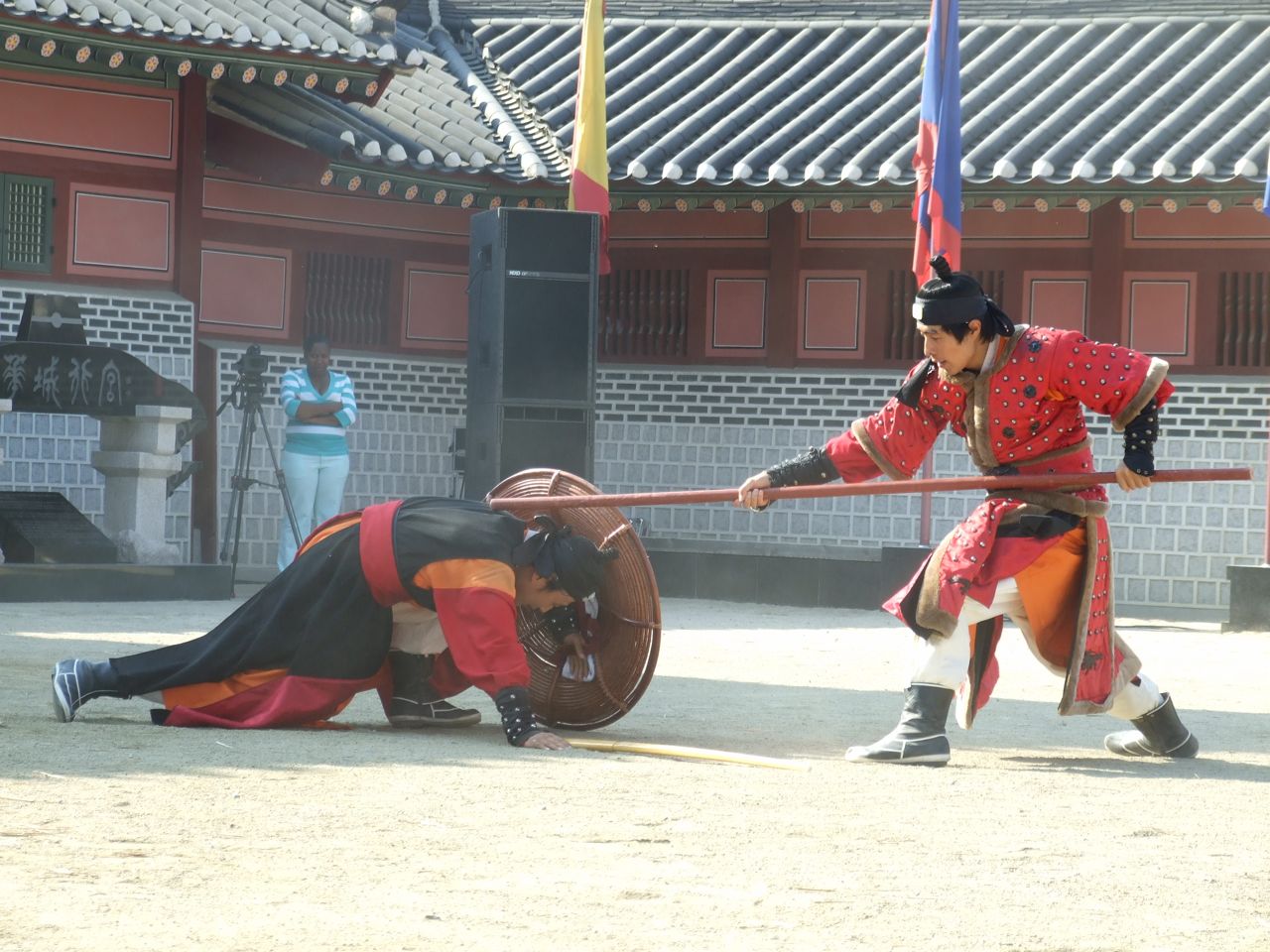
The rattan shield was used by the militaries of China and Korea since the Ming dynasty and the Joseon dynasty, respectively. The Ming general Qi Jiguang described its use in his book, the Jixiao Xinshu, which was reproduced in the Korean Muyejebo that contains the first Korean account of the shield. The rattan shield is circular and often have a fierce tiger face on it, so it is also called the tiger shield.

A similar native shield in the Philippines (and parts of Borneo) made from tightly-woven rattan or wood is known as taming.[1]

Use

[edit]

The rattan shield originated in Southern China, seen as early as the Three Kingdoms period, carried by the jungle tribal warriors in the south of the Shu Kingdom, where it is hilly, wet, and forested and rattan can be found and grown. First rattan is harvested, then dipped in oil to harden to make armor and shields. The shields are light but durable, and in later ages where guns are used, the firearm projectile/shrapnel would get stuck in the softer rattan rather than piercing through and hitting the user.

In the classic Chinese and Korean martial arts manuals the use of the rattan shield (téng-pái or deungpae), is explained in combination with both the spear and the sword. Often a soldier would hold the deungpae and sword in the dominant hand, while holding a spear in his other hand. The spear would be thrown at the opponent, after which the soldier would attack with his sword.

In the Ming dynasty, a soldier with a Lang xian would back up the soldier with a tengpai and saber. They would be part of the Mandarin Duck Formation which was invented by the Ming general Qi Jiguang and is described in his book, the Jixiao Xinshu.

Simple example of the Mandarin Duck Formation, with a rattan shielder in the front

Shield specialists trained in how to advance and retreat but were not allowed to retreat in combat situation because their withdrawal would leave their whole squad exposed, leading to its possible collapse.[2]

The military of the Ming dynasty employed rattan shieldmen (teng pai shou) on the battlefield equipped with a rattan shield, dao, and javelin (biao qiang).[3]

The Rattan shield Teng Pai was a common shield type employed by the armies of the Ming as it is cheap, light, flexible, and durable, greatly outperforming comparable wooden shields and metal shields. As rattan has no wood grain, it does not split easily.

However, rattan does not grow in the climate of Northern China, so troops equipped from that region bore yuan pai ('round shield'), made of willow wicker and covered with leather or rawhide.

Rattan shield from the Ming Zheng forces in Taiwan

The average size of a Ming period rattan shield was roughly the same size as a small Viking shield and rarely featured metal bosses (although exceptions do exist), unlike similar shields in Tibet and Southeast Asia.[citation needed]

During the fall of the Ming dynasty, Southern Ming general Koxinga (Zheng Chenggong), inherited a large fleet of marines (former pirates) from his father Zheng Zhilong. While mainland China was lost to the Qing Manchus (Later Jin), Koxinga invaded the island of Formosa (Taiwan), which at the time was the colony of the Dutch. Koxinga successfully defeated the Dutch and founded the Kingdom of Tungning on Taiwan. While the Kingdom of Tungning did not last long until the Qing forces took over. The Qing wrote on their encounter with Tungning's army: "The rebels wore quilts, had tiger skins on the body, and many of them held rawhide, rattan shields." This shows that the concept of the Tiger clothed rattan shielders started during the Ming-Zheng era. Zheng Chenggong called the "Tiger Guard".

During the Qing dynasty, an elite special forces troop emerged wearing a tiger uniform, the Tiger-Skinned Rattan Shield Soldiers. The name "Tigers of War" was given to them by European missionaries.

Drawing of a rattan shield with standard Tiger design

Naval Infantry trained in the use of the rattan shield and swords (tengpaiying) were used by Qing forces against Russian forces in the siege of Albazin in the 1680s. These specialists did not suffer a single casualty when they defeated and cut down Russian forces traveling by raft, only using the rattan shields and swords while fighting naked.

Thereupon [Marquis Lin] ordered all our marines to take off their clothes and jump into the water. Each wore a rattan shield on his head and held a huge sword in his hand. Thus they swam forward. The Russians were so frightened that they all shouted: 'Behold, the big-capped Tartars!' Since our marines were in the water, they could not use their firearms. Our sailors wore rattan shields to protect their heads so that enemy bullets and arrows could not pierce them. Our marines used long swords to cut the enemy's ankles. The Russians fell into the river, most of them either killed or wounded. The rest fled and escaped. [Lin] Hsing-chu had not lost a single marine when he returned to take part in besieging the city.

The above text was written by Yang Hai-Chai who was related to Marquis Lin, a participant in the war.[4]

The rattan shield is still popular in many types of Southern Kung Fu, such as Hung Gar. The rattan shield can also be seen as a tradition and culture of the Han in Taiwan, seen in cultural and religious martial arts, dances and rituals.

References

[edit]

See also

[edit]
  • Tinbe - Shield of Ryukyu. They use same Chinese characters.
Revisions and contributorsEdit on WikipediaRead on Wikipedia
from Grokipedia
A shield is a traditional defensive armament primarily constructed from woven or spiraled —a durable, flexible climbing palm native to tropical regions—forming a lightweight, circular or disc typically measuring 75–90 cm in diameter and weighing around 4 kg. These shields are renowned for their elasticity, which allows them to absorb impacts and resist penetration or slashing from edged weapons like swords, while remaining easy to maneuver in humid, subtropical environments. The most prominent examples, known as téngpái (藤牌) in Chinese, emerged in southern during the (960–1279 CE) and gained widespread military adoption in the Ming (1368–1644 CE) and Qing (1644–1912 CE) dynasties, particularly in province where was abundant. Ming general detailed their construction and tactical use in his influential 16th-century military treatise , describing them as ideal for defensive formations in close combat against Japanese pirates and other foes. Soldiers equipped with téngpái—often featuring a central boss and a painted tiger's face for intimidation—formed specialized units called rattan shield troops (tengpaiying), pairing the shield with short sabers (piandao or paidao) to advance in tight, protective arrays during skirmishes. Beyond , similar rattan shields appear in Southeast Asian martial traditions, such as among Malay warriors who used round versions alongside swords (pedang) for hand-to-hand fighting. In , communities like the Kirdi and Podoko in and crafted elongated rattan shields reinforced with leather for protection in tribal conflicts during the early 20th century. These variants highlight the material's versatility across cultures, though the Chinese téngpái remains the archetypal form due to its documented innovations and enduring influence on regional shield designs.

History

Origins and Development in China

The rattan shield, known as teng pai in Chinese, dates back to at least the (960–1279 CE), where such shields were used in military defenses, including against Jurchen invaders. By the mid-16th century during the , it saw significant development as a practical defensive tool in response to raids by Japanese pirates, or , along China's southeastern coast. , stationed in province from 1555 onward, adapted and popularized the shield to equip his troops effectively against the agile and sword-wielding pirates, who favored close-quarters combat and exploited the weaknesses of traditional Chinese formations. Qi's innovations emphasized lightweight, flexible defenses that allowed soldiers to maneuver swiftly in humid, rugged terrain, drawing on local materials abundant in the region. Originating from Fujian province, where indigenous weaving traditions using —a tough, vine-like palm native to southern —were adapted for purposes, the teng pai quickly proved superior to heavier wooden or metal shields in mobility and cost-effectiveness. documented its design and tactical application in his seminal manual Jixiao Xinshu (New Treatise on Military Efficiency), first published in 1562 and revised in 1584, which included a dedicated chapter on rattan shield techniques. This text outlined training methods for shield bearers, emphasizing their role in small-unit tactics within the "Mandarin Duck Formation" (yuanyang zhen), a squad of twelve soldiers where teng pai users advanced to provoke and disrupt enemy lines. The shield's use evolved from these early Ming adaptations through the dynasty's later years and into the Qing period (1644–1912), with designs remaining largely consistent for their proven reliability in infantry engagements. Standardization for mass production was further advanced in the comprehensive military compendium Wu Bei Zhi (Treatise on Armament and Military Preparedness), compiled by Mao Yuanyi in 1621, which reproduced Qi's descriptions and illustrations to facilitate widespread adoption across imperial forces. A key innovation was the integration of the teng pai with short swords (dao) in dedicated rattan shield formations (teng pai dui), enabling paired offense and defense where shield bearers could close distances, deflect blades, and counterattack in coordinated groups, enhancing the effectiveness of peasant-recruited armies against irregular threats.

Spread to Korea and Southeast Asia

The adoption of rattan shields in Joseon Korea occurred during the 16th and 17th centuries, primarily through military alliances with Ming China amid shared threats from Japanese invasions. Known locally as deungpae, these shields were integrated into Joseon forces as part of tactical reforms inspired by Ming general Qi Jiguang's Jixiao Xinshu, which emphasized the mandarin duck formation combining shield-bearing infantry with spearmen and swordsmen. The earliest detailed Korean description appears in the Muyejebo, a 1598 military manual compiled by Joseon general Han Gyo, which adapted Chinese techniques to counter Japanese arquebusiers and ashigaru during the Imjin War (1592–1598). In this conflict, deungpae units advanced under fire to close distances for melee engagements, protecting allied Ming and Korean troops. In the , shield technology disseminated through pre-colonial trade networks with Chinese and Malay merchants, evolving into a core element of Moro warrior arsenals by the 18th and 19th centuries amid escalating Spanish colonial incursions. These shields, termed taming, were crafted from tightly woven or cane, often reinforced with and pigments for both defense and , allowing single-handed use with long blades like the . Under Spanish pressures, including forced conversions and raids from the onward, Moro groups in and refined taming designs to withstand fire and bayonets, integrating them into jihad-style resistances that preserved Islamic autonomy. Local adaptations in emphasized indigenous materials and techniques, particularly in where Moro artisans blended rattan weaving with native abaca fibers and geometric motifs symbolizing spiritual protection. This fusion produced lightweight yet resilient taming variants, typically 30 inches (76 cm) in diameter, that deflected edged weapons while enabling agile maneuvers in dense terrain. Such modifications distinguished them from Chinese prototypes, prioritizing portability for against superior colonial forces. Rattan shields played a pivotal role in the Moro Rebellion (1899–1913), where warriors wielded taming alongside kris daggers and rifles to resist American pacification campaigns, notably in the Battle of Bud Dajo (1906). These engagements highlighted the shields' utility in close-quarters combat against U.S. troops armed with Krag-Jørgensen rifles, allowing Moros to charge despite heavy casualties and symbolizing enduring cultural defiance.

Materials and Construction

Primary Materials

The primary material for rattan shields is rattan cane derived from climbing palm species in the genera Calamus and Daemonorops, which are native to tropical forests across . These species are prized for their exceptional flexibility, high tensile strength, and uniform fibrous structure without , which prevents splintering upon impact and allows the shield to absorb shocks effectively without fracturing. Typically, shield construction employs straight canes measuring 8-9 mm in diameter, harvested from dense understories in regions such as southern , , and the . These canes are selected for their straightness and resilience, sourced sustainably in historical contexts through selective cutting to avoid depleting mature vines. Supplementary materials include thin strips of rattan skin or occasionally thread for binding the coiled structure, ensuring tight cohesion without compromising the shield's lightweight profile. Grips and arm loops are reinforced with wooden dowels or cane, with metal elements sometimes added for durability in high-wear areas like the central boss. Historical records indicate concerns over overharvesting in 19th-century , driven by surging global demand for in and applications, which led to depletion of wild stocks in areas like and before cultivation efforts emerged.

Weaving and Assembly Techniques

The construction of rattan shields begins with the preparation of canes, which are harvested from climbing palms and processed by splitting them into cylindrical core strips for the structural base and flatter skin strips for binding. To enhance pliability, the core strips are soaked in water, making them easier to manipulate during . The primary weaving technique employs a spiral coiling pattern for the main body, where a long, continuous strip of core—typically 9 mm in diameter for traditional Chinese styles—is tightly wound into a circular form, often requiring about 60 meters of material for a standard 75 cm diameter . This coiled core is then reinforced through cross- or tight wrapping with rattan skin strips, creating a dense, flexible that prevents expansion and adds strength without splintering. The process demands precision to ensure even tension, typically taking 40-45 hours for completion of the woven body. Assembly involves integrating functional elements into the woven core. A central wooden grip, wrapped in for secure handling, is attached at the back, often positioned horizontally, while an is fixed nearby for one-handed use with the through the ring. The outer edges are reinforced with additional bound layers to improve durability and resist fraying during combat. In earlier historical variants, the and ring were directly interwoven into the spiral core during to create a seamless unit. Finishing techniques focus on enhancing longevity and protection. The completed shield is impregnated with to increase robustness and shield against moisture and humidity. A layer of is applied to the front surface, commonly featuring symbolic designs, followed by lacquering for added resistance, as outlined in military production regulations.

Design and Variations

Chinese Teng Pai Design

The Chinese teng pai (藤牌), or rattan shield, features a distinctive round shape designed for optimal defensive coverage in close-quarters combat. Standard examples measure approximately 70 to 90 centimeters in diameter, providing a balance between protection and maneuverability while remaining lightweight at 2 to 4 kilograms to facilitate rapid movements on the battlefield. A key structural element is the convex surface, formed by tightly woven concentric spirals of that create a domed profile, enabling effective deflection of incoming blows from edged weapons or projectiles. On the reverse side, the shield incorporates an integrated arm strap—typically two loops of cane or for securing the —and a central wooden hand grip, allowing secure one-handed operation without compromising stability. These military-grade shields were generally left undecorated to prioritize functionality, with the natural rattan weave providing sufficient durability against slashes and thrusts. Historical variations reflect evolving tactical needs and cultural influences across dynasties. In the Ming era (1368–1644), teng pai emphasized plain, utilitarian weaves without embellishments, focusing on for units in humid southern regions like where rattan thrived. By the (1644–1912), designs incorporated painted motifs, such as stylized faces often accented with the character wáng (王, meaning "king"), symbolizing ferocity and possibly aiding unit cohesion through visual markers during formations. The ergonomic design of the teng pai is tailored for paired use with the dao (刀), a single-edged saber, promoting one-handed wielding that emphasizes balance and swift maneuvers. The central grip and arm loops position the shield to cover the torso effectively, allowing soldiers to parry spear thrusts (qiang) while counterattacking with chopping strikes, a tactic refined in Ming military manuals for anti-cavalry skirmishes. This integration underscores the shield's role in fluid, shield-and-sword tactics rather than static defense.

Southeast Asian Taming Variations

In , particularly in the , shields known as taming exhibit distinct regional adaptations among Moro, , and Visayan communities, emphasizing lightweight construction suited to close-quarters combat and cultural rituals. The Moro taming typically features a of 45-60 cm, constructed by weaving over a wooden frame for flexibility and durability, often adorned with carved motifs that draw from natural elements to invoke protection and spiritual power. Among and Visayan groups, taming variations reflect practical and ceremonial needs, with thicker rattan weaves producing heavier shields for intense combat, capable of withstanding blade strikes, while lighter versions—using finer interlacing—are employed in traditional dances and rituals to symbolize warrior heritage without the weight of battle-ready pieces. Functional design elements enhance the taming's utility in parrying attacks, including rear-mounted metal or wooden bosses at the center to deflect edged weapons and woven straps secured to the for stable, agile handling during maneuvers. Cultural motifs on these shields underscore ethnic identities: Moro examples integrate Islamic-influenced geometric designs alongside okir's flowing arabesques, promoting harmony and divine order, in contrast to the animist symbols prevalent in and Visayan taming, such as stylized flora and fauna representing ancestral spirits and natural forces. In Malay traditions, the perisai rotan is a round, hand-woven rattan shield approximately 66 cm in diameter and weighing just over 1 kg, designed for use alongside a pedang (sword) in hand-to-hand combat to block and parry blows. These shields were practical defensive tools for warriors, valued for their lightness and flexibility. Among the Dayak peoples of Borneo, rattan shields often feature elongated forms, typically 137 cm tall and 40 cm wide, constructed from wood reinforced with rattan bindings and painted motifs. These served both in warfare and as ceremonial symbols of honor, incorporating rattan for added durability and cultural significance in rituals.

Military Use

Tactical Applications

In Chinese during the , rattan shields known as teng pai were integral to the teng pai dui formations developed by General to counter Japanese pirate incursions in the . These formations typically consisted of shield-bearing positioned at the front to form protective walls, allowing spearmen behind to advance under cover against enemy fire and transition into close-quarters combat. In 's , a of 12 soldiers included 4 rattan shield bearers armed with short swords and javelins for disruption. The lightweight and flexible nature of the shields enabled rapid maneuvers, with shieldmen using javelins to disrupt opponents before engaging with sabers, proving effective in suppressing coastal pirate raids during the Jiajing era (1521–1567). Some historical accounts suggest Joseon Korean forces may have adopted similar Ming-style rattan shield tactics (deungpae) during the Imjin War (1592–1598), incorporating them into infantry lines for hybrid defenses. In ground engagements, shieldmen potentially formed defensive squads to shield spearmen and swordsmen against Japanese arquebusiers, supporting advances in battles like those along the Imjin River. Among Moro warriors in the Philippines, taming rattan shields were employed in individual duels and ambushes against Spanish colonial forces from the 16th to 19th centuries, often paired with long-bladed kampilan swords for deflecting firearm volleys and blade strikes. Warriors used the shields' single-handed grip to maintain mobility in dense jungle terrain, executing swift shield-and-sword rushes to overwhelm armored infantry during surprise attacks. Historical accounts highlight their role in guerrilla operations, where Moro groups like the Maranao and Maguindanao leveraged shields for close-range engagements that disrupted Spanish supply lines and fortifications. In Southeast Asian guerrilla warfare, rattan shields facilitated mobility in ambushes and night raids, protecting against initial projectile fire before closing for melee. Such tactics, seen in the Philippines, allowed decentralized warrior bands to exploit terrain advantages over conventional armies.

Effectiveness Against Weapons

Rattan shields demonstrated notable resistance to arrows and slashing weapons due to the material's inherent flexibility and dense weave, which allowed it to absorb and distribute impacts without splintering or breaking. Historical accounts from the Ming dynasty describe how the rattan structure could trap the edges of bladed weapons, such as Japanese swords used by wokou pirates, preventing deep penetration and creating counterattack opportunities for shield bearers. This effectiveness was particularly praised by General Qi Jiguang in his campaigns against Japanese pirates along China's coast in the 1550s–1560s, where rattan shields formed a key defensive element in his innovative "mandarin duck" infantry formations, contributing to successful repulses of pirate raids. In Southeast Asian contexts, similar rattan constructions proved resilient against edged blades like the Moro kris, as the flexible lattice deflected glancing strikes and reduced cutting force. However, rattan shields offered only limited protection against firearms, particularly in close-range or concentrated fire. explicitly noted in his military treatise that rattan shields could not reliably stop rounds, rendering them vulnerable in engagements involving weapons. During 19th-century colonial wars in the , Moro warriors employed rattan shields alongside layered armor for partial deflection of balls at longer ranges, where the softer material sometimes embedded projectiles without full penetration, though direct hits often proved fatal. Compared to metal shields, rattan variants held significant advantages in mobility and endurance, typically weighing 2–5 kg depending on size and construction, which enabled soldiers to wield them for extended periods without fatigue. This lightness was a key factor in Qi Jiguang's endorsement of rattan shields for anti-pirate operations, allowing agile responses to fast-moving threats. Experimental archaeology on wicker and rattan shields confirms their effectiveness in deflecting edged weapons through flexibility, often outperforming rigid wooden equivalents in absorbing impacts without fracturing.

Cultural and Modern Significance

Role in Martial Arts and Traditions

In Chinese wushu, the teng pai rattan shield is integrated into modern training forms inspired by the techniques outlined in Qi Jiguang's 16th-century military manual , where it is employed to develop skills in deflection, blocking, and paired weapon coordination with swords or spears. These routines emphasize fluid movements and tactical positioning, preserving historical combat principles within contemporary practice. In Moro traditions in Mindanao, rattan shields called taming are central to performances like the Sagayan war dance, a dramatic ritual depicting battles, where dancers wield the shields alongside kampilan swords to symbolize warrior heritage during festivals and communal celebrations. Influences of rattan shields, known as deungpae in Korean contexts, are evident in historical reenactments of Joseon-era martial arts, drawing from manuals like the Muyedobotongji to demonstrate defensive techniques against spears and swords. These recreations highlight the shield's role in integrated combat systems from the 18th century, fostering appreciation for traditional Korean military heritage. Symbolically, shields among Moro and groups often feature intricate patterns, curvilinear motifs inspired by nature and Islamic geometry, symbolizing communal strength and protection in rituals. These designs, carved or woven into the shields, extend beyond utility to represent warding off harm during ceremonies and rites of passage.

Contemporary Reproductions and Uses

Contemporary reproductions of shields are hand-woven primarily in and the to supply schools and practitioners. In , artisans craft these shields using elastic vines coiled and bound tightly to form a lightweight, flexible structure approximately 60-70 cm in diameter, closely mimicking historical designs for authentic . In the , where is a key material in traditional crafts and equipment like sticks, contemporary shields are hand-woven for purposes. Sustainable sourcing of is emphasized in these regions, as the fast-growing allows harvesting without felling trees, supporting eco-friendly practices amid rising demand for gear. These reproductions find current applications in wushu competitions and traditional kung fu training, where they are paired with broadswords for taolu performances and controlled sparring to develop defensive techniques. They also appear in historical reenactments of battles, allowing participants to demonstrate tactical formations originally described by general . In Asian cinema, rattan shields serve as props in historical epics, such as the 2017 film God of War, where they depict frontline skirmishers in dramatic combat scenes. Commercially, shields are sold as training equipment through suppliers, with 60 cm diameter models typically priced between $80 and $150 to accommodate individual practitioners and schools. Varnished finishes enhance durability for repeated use, making them suitable for both solo drills and group sessions. Preservation efforts highlight the cultural value of rattan shields, with examples from n traditions held in collections like those at the , including woven rattan shields from the and that showcase regional variations in craftsmanship. Additionally, rattan weaving practices in are recognized as through national registries, such as Singapore's listing of rattan product making, which underscores ongoing initiatives to sustain these crafts since the late .

References

Add your contribution
Related Hubs
User Avatar
No comments yet.