Hubbry Logo
Madame RestellMadame RestellMain
Open search
Madame Restell
Community hub
Madame Restell
logo
8 pages, 0 posts
0 subscribers
Be the first to start a discussion here.
Madame Restell
Madame Restell
from Wikipedia

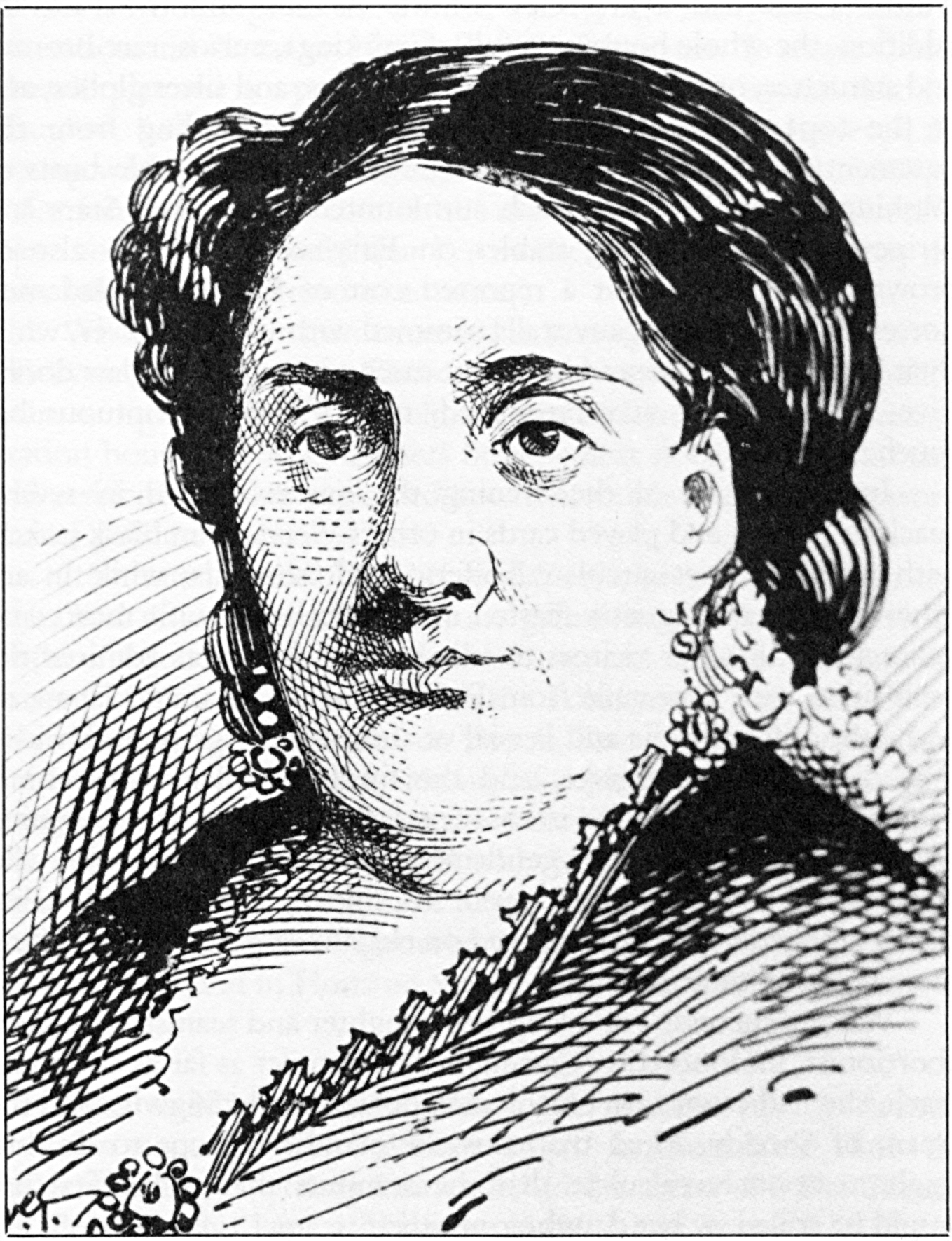
Ann Trow Lohman (May 6, 1812 – April 1, 1878), better known as Madame Restell, was a British-born American abortion provider and midwife who practiced in New York City.

Key Information

Early life

[edit]

Ann Trow was born in Painswick, Gloucestershire, England in 1812 to John and (Mary) Ann Trow (nee Lewis).[1] Her father was a labourer. At the age of 15, she started work as a maid in a butcher's family.

Career

[edit]

At the age of sixteen, she married Henry Sommers, an alcoholic tailor from Wiltshire.[2] After three years living in England, they emigrated to New York in 1831 where Sommers died of typhoid in 1833.[2] Ann Trow Sommers was left alone with an infant daughter, Caroline,[3] and was forced to make a living as a seamstress and midwife.[2]

Ann remarried in 1836, to a German–Russian immigrant, Charles Lohman. Charles Lohman worked in the printing industry, and at the time was a printer for the New York Herald. He was a radical and freethinker, a friend and colleague of George Matsell, the publisher of the radical journal the Free Inquirer. With Matsell, Charles was involved in the publication of Robert Dale Owen's book Moral Physiology; or, a Brief and Plain Treatise on the Population Question (1831) and Charles Knowlton's Fruits of Philosophy; or, The Private Companion of Young Married People (1831). [4]

Ann's brother, Joseph Trow, had also emigrated to New York, and was working as a sales assistant in a pharmacy. Ann continued to develop an interest in women's health.

Charles and Ann developed a story to validate Ann's interests in midwifery and women's health. According to their story, she had travelled to Europe to train in midwifery with a renowned French physician named Restell.[3] She began selling patent medicine, and (probably in partnership with her husband and brother) creating birth control products such as "preventative powders" and "Female Monthly Pills", advertised under the name "Madame Restell". She sold these products through the post and performed house visits.[3] When these "Monthly Pills" proved insufficient for a woman to end a pregnancy and thus maintain good standing in society, Restell devised another solution. Self-professed doctors and pharmacists, she and her husband became surgeons. The new title ensured more profitable procedures could be performed under the same legal penalty given for offering medication-induced abortions.[5]

Many domestic manuals at the time contained information on abortifacients, or agents, such as drugs, herbs, or other remedies that could terminate a pregnancy.[6] While many of these texts described procedures for removing menstrual blockages and “restore menstrual flow if a period was missed,” other sections of the texts listed activities women should avoid if pregnant because they could induce an abortion, effectively instructing women on what they could attempt to terminate an unwanted pregnancy.[6] Abortifacients used in this era were often blends of herbs such as ergot, calomel, aloe, or black hellebore. These were thought to upset the digestive tract, inducing a miscarriage. Surgical abortions included rupturing the amniotic sac, or dilating the cervix (premature labor), or even in-utero decapitation.[2]

Penny press depiction of Madame Restell

Madame Restell advertised her services as a "Female Physician" in newspapers such as the Herald and even the New York Times. She and her husband Charles operated out of a large brownstone mansion on the northeast corner of Fifth Avenue and 52nd Street.[7]

When Restell began her business, abortions were hardly illegal. Only surgical abortions were forbidden, and this was only after the quickening, that is, when the woman started to feel the fetus move (this was typically around 4 months time). As a result, historians and other researchers have suggested that it is essentially impossible ever to know the exact incidence of nineteenth-century abortions since many women likely performed them at home or sought medical help under the guise of removing a perceived menstrual blockage.[6] Once pregnancy was known, however, women could no longer use the argument of relieving a blocked menses as an explanation for taking abortifacients.[8]

Soon, Restell's success began to attract copiers and competition. This drew the attention of the AMA, which officially launched a campaign in 1857 to end abortion. In order to rally support for their cause, the AMA targeted Restell, the most celebrated abortion provider and deemed her the enemy.[3] The term "Restellism" became a euphemism for abortion. With the swift changes of law in New York, Restell was constantly being hounded by authorities and anti-abortion crusaders to end her practice.[3]

She was met with opposition from the press. Enoch E. Camp and George Wilkes' National Police Gazette covered New York's "crime news" and detailed stories about theft, abortion, and rape. Coverage was not limited to New York but rather extended to major cities throughout the United States and Europe.[9] The Gazette claimed that in addition to performing abortions, "...most of the abandoned infants found almost daily throughout the city came from her [Restell's] establishment."[10]

Conservative editors such as Samuel Jenks Smith of the New York Sunday Morning News also publicly condemned Restell's profession. On July 7, 1839—the earliest press's attack on Restell—his editorial claimed her business "...strikes at the root of all social order." According to Smith, doctors believed Restell was engaging in dangerous work, and that "...what she was doing was impossible without endangering the lives of the patients."[11] Her work was considered "sinful".[12]

Madame Restell became so well known throughout New York City that copies of her trials were published in the Times and the Police Gazette. She was listed as a New York City attraction in tour guides.[3]

[edit]

In 1840, a patient named Maria Purdy accused Restell of causing tuberculosis through the abortion procedure. The press erupted with anger against Restell, calling her "the monster in human shape" and charging her with acts against God. Restell promised monetary compensation to anyone who could prove that her methods were dangerous, and while she was initially found guilty, her appeal overturned said verdict. Her uneasy relationship with public opinion continued.[13]

Mary Applegate was an unmarried woman, a mistress, who had been sent to Madame Restell from Philadelphia by her illicit lover. The father had arranged for Restell to adopt the baby for other people. Applegate was unaware of this deal until she had returned to Philadelphia and was greeted coldly by her former lover. Applegate then went back to Restell to ask for her child back, but Restell claimed to know nothing of the infant. Restell immediately was painted as the villain by the press in publications such as the New York Medical and Surgical Reporter.[3]

In 1841, Mary Rogers was found dead in the Hudson River. Newspapers suggested that she had died during an abortion carried out by Restell.[14] Her case was made more famous due to the short story by Edgar Allan Poe, "The Mystery of Marie Rogêt".

Abortion was soon outlawed by the state of New York in 1845. This law further restricted the previous laws from a decade earlier. An abortion that resulted in the death of the mother or was performed after the "quickening" was second degree manslaughter. A new addendum to the law made selling abortifacients or performing abortions at any stage during the pregnancy a misdemeanor punishable by a mandatory year in jail. Additionally, women who sought after an abortion or attempted their own abortion were fined $1,000 (equivalent to $33,746 in 2024). Abortion legally became defined as an obscene subject and was no longer covered in the papers. Women were no longer allowed to freely discuss abortion. Restell skirted the legalities by advertising her services as methods to regulate menses.[3]

Blackwell's Island Prison

In 1847, Charges were again brought against Restell for performing an abortion, which led to a conviction.[15] This conviction, however, was "universally hailed," and media coverage of the trial prompted discussion surrounding for-profit abortions performed by physicians. Furthermore, it was noted that the victims were typically "poor, uneducated women" from New England and Connecticut who came to New York for abortions.[16]

Maria Bodine was sent to Madame Restell by her master so that she could procure an abortion from Restell. Restell determined that Maria was too far along to have an abortion, but Maria's master insisted. Finally, he paid Restell heavily, and she agreed to perform Maria's abortion. Maria then returned to her job as a maid. She fell ill and upon visiting a doctor, was forced to admit her abortion. Restell was taken to trial. During this case, Madame Restell's defense painted Bodine as a "loose" woman whose injuries were a result of syphilis and had nothing to do with Restell, and Maria Bodine's lawyers cast Restell as a godless incompetent woman. This was in spite of Bodine testifying that far from being mistreated by Restell, she was well cared for and provided with food and a place to rest until she felt well enough to return home following her procedure.[17] Restell lost the case and was charged with a misdemeanor and a one-year prison sentence which was on Blackwell's Island.[3]

After Madame Restell finished her sentence, she reworked her business. She removed surgical abortions entirely, and concentrated her efforts on pills and her boarding house. In 1854, Restell applied for U.S. citizenship and was granted it.[3] Evidence given in a breach-of-promise case in 1854 suggests Restell and her husband were charging between $50 (equivalent to $1,750 in 2024) and $100 (equivalent to $3,500 in 2024) per abortion at this time and had a regular clientele. Before the 1845 law, Restell was charging her clients on a sliding scale according to social class. Many of Restell's wealthier patients were charged upwards of $1,000 (equivalent to $34,996 in 2024).[18] While Madame Restell reduced her business, the press did not leave her reputation to rest. She was dubbed "The Wickedest Woman in New York".[3]

New York Halls of Justice

In 1855, Frederica Medinger, a German immigrant, approached Restell asking for a room to stay in until the birth of her child. According to Medinger, Restell gave her six pills at the time of the birth. A day after the birth, Medinger asked for her child and was told by Restell that the child had disappeared. Restell was accused of kidnapping and being too greedy. When Restell was taken to court, Medinger did not show. Many assumed Restell had paid her to drop the case. Restell was dismissed, and the woman and her baby were never heard of again. It is assumed the child was adopted through an arrangement by Restell.[18]

The various reactions to Restell and her New York practice echoed general attitudes toward abortion in the United States. Traveling salesmen in cities such as Boston and Philadelphia heard of her financial success and sold pills to capitalize on similar profits.[19] Before her own legal troubles, Restell heard stories of abortion providers in Philadelphia and Lowell, Massachusetts indicted for murder—indicators of growing opposition to the practice on a national scale.[20] A similar case was that of Dr. John Stevens, a physician who performed an abortion on a young Boston woman named Gallagher. Her death, a consequence of this high-risk operation, prompted Stevens to be accused of murder.[21]

Though the Civil War distracted many Americans from the abortion debate, its end allowed some physicians to return to their anti-abortion campaign.

"Since the embryo, they argued, was fully alive from the point of conception, abortion at any point, regardless of whether the mother had quickened or not—was murder pure and simple."[22]

While some physician took clear moral stances on the issue, others found their campaign increased the likelihood that untrained physicians would be penalized, thereby creating the potential to advance the activists' own professional goals.

Madame Restell had amassed a fortune. She owned several plots of land, one of which featured an extravagant mansion. She had the finest horses, carriages, and silk dresses. The Civil War gave Restell the cover she needed to get her business back on her feet. Although she had been imprisoned once and accused numerous times, Restell appeared unscathed.[18]

Arrest by Comstock

[edit]
Burial site in Sleepy Hollow Cemetery

Postal Inspector Anthony Comstock was an influential moral reformer, who sought not only to regulate sexual activity, but the very way society thought about sex. He considered any information about the prevention or termination of a pregnancy to be pornographic. In 1873, the U.S. Congress enacted the Comstock laws, which made it illegal to discuss or distribute anything considered obscene by the government. Breaking these laws was punishable by six months to five years in prison and a fine from $100 (equivalent to $2,625 in 2024) to $2000 (equivalent to $52,494 in 2024).[3] Madame Restell was arrested by Comstock, who posed as a customer looking for birth control pills for his wife and took the police around the next day to have her arrested. In a raid on her home, "he found printed materials that provided birth control information as well as mysterious 'instruments' with instructions for use."[23]

Bail was set at $1,000 (equivalent to $32,583 in 2024). She was said to have reached into her purse to pull out $10,000, but the judge would accept only regular bail bonds,[18] so Restell had to pay a bondsman. Following Restell's arrest in early 1878, a maid discovered her in the bathtub at her home on Fifth Avenue; she had slit her own throat on the morning of April 1, 1878.[15] Upon her death, she was found to be worth between $500,000 (equivalent to $16,291,379 in 2024) and $600,000 (equivalent to $19,549,655 in 2024).[13]

Literature

[edit]
  • Madame Restell is a prominent character in Marge Piercy's historical novel Sex Wars, which depicts the social and political climate surrounding women's sexual, physical, and reproductive activities during the Gilded Age.
  • Restell features as a minor character in Gore Vidal's novel 1876.
  • Restell is featured in Edward Rutherfurd's novel New York.

See also

[edit]

References

[edit]
[edit]
Revisions and contributorsEdit on WikipediaRead on Wikipedia
from Grokipedia

Ann Trow Lohman (c. 1811–1878), known professionally as Madame Restell, was an English immigrant who established a prosperous enterprise in specializing in medications, contraceptives, and surgical abortions beginning in the late 1830s. After arriving in the United States around 1831 with her first husband and daughter, she was widowed shortly thereafter and remarried Charles Lohman in 1833, subsequently adopting the alias Madame Restell to advertise her services in newspapers such as the New York Sun. Her operations catered to women across social classes, charging $20 for low-income clients and $100 for affluent ones for procedures, while also selling medicines like ergot-based powders and offering ancillary services such as a boardinghouse for pregnancies and adoptions.
Restell's business thrived amid a legal landscape where abortions were initially permissible before fetal , but faced mounting restrictions as medical organizations like the advocated for broader criminalization from the 1840s onward, culminating in stricter statutes by the 1860s. She expanded through bold advertising in major papers, mail-order distribution reaching nationwide clients, and branch offices in cities like and , amassing an estate valued at $500,000 by her death, including a lavish mansion that symbolized her defiance of societal norms. Despite this success, her career was marked by recurrent legal confrontations; she served a one-year term on Blackwell's Island in 1847–1848 for performing a procedural and endured further arrests, including one in 1856. In February 1878, moral reformer arrested Restell for violating New York laws against distributing abortifacients and contraceptives, using evidence gathered under his oversight of the New York Society for the Suppression of Vice. Rather than face trial, she died by on April 1, 1878, the scheduled start of proceedings, by slashing her throat in her home, an act contemporaneous accounts attributed to dread of conviction and imprisonment. Her life exemplified the tensions between entrepreneurial demand for reproductive interventions and the era's shifting moral and legal frameworks, rendering her a polarizing figure reviled by reformers yet patronized by thousands seeking her expertise.

Early Life and Immigration

Origins in England

Ann Trow was born on May 6, 1812, in the rural village of , , , to John Trow, a woolen mill laborer, and Mary Ann Trow (née Lewis). Her family's modest circumstances, marked by low-wage manual labor in the , afforded little beyond subsistence, constraining access to resources beyond basic needs. Formal education for Trow was minimal, as was common among working-class children in early 19th-century rural , where economic pressures prioritized immediate labor over schooling. By age 15, she entered domestic service as a , reflecting the limited occupational paths available to girls from laboring families, often involving household or mill-adjacent work from onward. In 1827, at age 15, Trow married Henry Summers, an eight-years-older widowed tailor, in a union typical of early working-class marriages driven by economic pragmatism rather than extended courtship. Summers's trade offered no elevation from artisanal poverty, underscoring the era's rigid class structures that bound individuals to inherited socioeconomic roles.

Journey to America and Initial Hardships

Ann Trow, born into a working-class family in , , , in 1811, married a at age 16 and emigrated to in 1831 seeking better opportunities. The couple settled in the notorious Five Points slum, a squalid immigrant enclave plagued by , , and , where they struggled amid widespread urban poverty and limited employment prospects for newcomers. Her husband died approximately two years later, around 1833, reportedly from consumption exacerbated by , leaving Trow destitute with an infant daughter and no financial support. As a widowed immigrant with few skills transferable to the American market, she supported herself and her child through low-paying odd jobs, primarily as a seamstress in Manhattan's garment district, enduring ongoing economic hardship in a city reeling from periodic financial instability. In 1836, Trow remarried Charles Lohman, a printer employed by the New York Herald and a fellow freethinker from a Russian immigrant background, but the union did little to immediately alleviate their circumstances, as the couple resided in modest accommodations amid continued familial financial strain. Lohman's unstable printing work and the broader economic pressures of the era, including the looming Panic of 1837, contributed to persistent poverty, prompting Trow to explore informal means of income supplementation, such as basic herbal preparations, though these remained marginal at the time.

Entry into Reproductive Services

Apprenticeship in Midwifery

Following the death of her first husband in 1831, Ann Trow Lohman, who later adopted the alias Madame Restell, entered New York's unregulated market for patent medicines and reproductive remedies in the mid-1830s, amid her second husband Charles Lohman's declining printing business. Lohman acquired practical knowledge through informal association with local practitioners, including William Evans, a quack vendor in the Five Points neighborhood who sold contraceptives and herbal treatments, rather than through any structured under licensed . This hands-on exposure introduced her to basic and the preparation of herbal concoctions, drawing from longstanding European folk traditions imported by immigrants, such as teas and oils derived from plants like , pennyroyal, savin, and , which were reputed to induce menstruation or expel uterine contents. To bolster credibility in a field dominated by self-proclaimed experts, Lohman and Charles fabricated a narrative around 1836 claiming she had studied and women's ailments in under a grandmotherly relative named Restell, incorporating elements of purported "restorative" elixirs akin to continental herbalism; however, no evidence supports actual European travel or formal instruction, underscoring the era's reliance on experiential and traditional methods over . By the late , she compounded these skills into independent offerings of powders and liquids, often euphemized as remedies for "suppressed " or "irregularities," administered via oral doses or douches containing ingredients like oil of and spirit of . Lohman's early proficiency thus stemmed from the chaotic, empirical ecosystem of antebellum New York's reproductive underworld, where immigrant-sourced folk remedies filled gaps left by scarce professional oversight, enabling her to perform rudimentary procedures without anatomical or . This foundation prioritized observable outcomes—such as restored "monthly flows"—over scientific validation, reflecting causal mechanisms rooted in the properties of botanicals long observed in agrarian and practices across . Her transition to solo practice solidified around 1839, when she began and dispensing these agents from a address, marking the onset of her specialization in unregulated reproductive interventions.

Adoption of the Madame Restell Persona

In 1839, Ann Lohman began advertising her services under the alias "Madame Restell," a moniker crafted to project an aura of refined European medical authority and attract affluent clientele wary of unregulated practitioners. Lohman and her husband, , a printer, promoted a fabricated claiming she had trained in under a renowned French physician—her purported grandmother named Restell—during a European sojourn, despite no verifiable ties to France or formal continental . This persona of sophisticated expertise circumvented gender-based distrust in the era's male-centric medical establishment, positioning her as a discreet, effective alternative for women seeking reproductive interventions. To reinforce the image of reliability and exclusivity, Lohman relocated her practice to more visible urban locations, such as 146 by , where advertisements in outlets like The New York Herald highlighted her "French remedies" and guaranteed outcomes. These strategic moves emphasized opulence and confidentiality, signaling to potential high-society clients that her operations transcended the shadowy underworld of informal . While initially collaborating with Charles Lohman, who leveraged his printing connections for publicity, she swiftly emerged as the dominant figure, branding "Madame Restell" as synonymous with unparalleled discretion amid pervasive societal taboos and professional barriers for women.

Business Operations

Advertising Strategies and Publicity

Madame Restell initiated her advertising campaign in the New York Sun on March 18, 1839, with notices addressed to married women lamenting excessive family sizes and offering remedies for "female complaints." By the 1840s, her advertisements proliferated in penny press outlets such as the Sun and New York Herald, promoting products like "Female Monthly Regulating Pills" designed to address "suppression, irregularity, or stoppage of the menses," euphemisms widely understood to signify abortifacients. These ads emphasized guarantees of secrecy, safety, and efficacy, often including challenges such as a $100 reward to anyone proving her medicines harmful, thereby positioning her services as reliable alternatives amid a market rife with unproven nostrums. Pricing in her promotions varied by service and client means, with packages of preventative powders listed at $5 and surgical interventions ranging from $20 for those of limited resources to $100 for affluent patrons in the . Restell invested heavily in these campaigns, incurring annual costs exceeding $1,000 across newspapers while expanding to mail-order distribution and branch offices in cities like and by 1845, which amplified her reach nationwide. Free consultations were frequently advertised to draw inquiries, fostering direct and enabling personalized pitches for her full range of offerings. Sensational media coverage, including cartoons and exposés in publications like the , portrayed Restell as the "Queen of Abortionists" and a "monster in human shape," yet this notoriety paradoxically enhanced her visibility and clientele by embedding her name in public discourse. Newspapers profiting from her ad revenue often refrained from editorial condemnation, allowing her bold tactics to thrive despite societal taboos and spawning imitators who aped her phrasing, further saturating the market with similar promotions. This interplay of defiant and involuntary publicity solidified her reputation as a preeminent provider, driving business expansion even as it courted regulatory opposition.

Methods of Abortifacients and Procedures

Madame Restell primarily offered oral abortifacients in the form of pills, powders, and liquids designed to induce or in early , marketed as "French renovating pills" or "monthly regulators." These preparations incorporated and chemical agents such as ergot of rye in the 1830s, which contained alkaloids like ergotoxine and ergometrine to stimulate , alongside oil of and spirit of by the 1840s for their emetic and irritant effects. Other common ingredients included pennyroyal, savin, , black draught, , and motherwort, drawn from folk remedies with purported properties but inconsistent efficacy as abortifacients. For pregnancies beyond the early stages or when oral methods failed, Restell performed instrumental procedures at her offices, often claiming non-invasive "regulator" techniques derived from Parisian practices to avoid legal scrutiny post-quickening. These involved manual or rupture of the to trigger and expel the , typically without due to the era's limited pharmacological options and her non-physician status. Such interventions were confined where possible to pre-quickening periods (before fetal movement detection around 16-20 weeks) to mitigate manslaughter risks under New York , though evidence indicates she extended services later when demanded. Empirical limitations of these methods were pronounced, with abortifacients exhibiting high failure rates owing to variable potency and patient physiology, often necessitating follow-up procedures; contemporary medical critiques highlighted their unreliability compared to surgical alternatives. Side effects included severe , , internal hemorrhaging from , convulsions and from ergot overdose, and potential fatality from pennyroyal's pulegone toxin, exacerbated by 19th-century unsterile conditions fostering infections like . Instrumental methods carried risks of , excessive bleeding, and absent modern antisepsis, rendering overall mortality comparable to contemporaneous hazards but with documented cases of post-procedure and organ damage.

Clientele, Scale, and Financial Success

Restell's clientele encompassed a broad socioeconomic spectrum, including working-class immigrants and servants as well as affluent society women seeking discreet services to maintain social standing. She tailored fees on a sliding scale, charging as little as $20 for lower-income patients and up to $100 for those of means, which facilitated access across classes while maximizing revenue. Advertisements in major newspapers targeted upper-class readers explicitly, emphasizing and efficacy to attract elite patrons wary of public scandal. The scale of her operations grew substantially by the , supported by a network of boardinghouses for extended care and repeat consultations, with patients sometimes returning multiple times for follow-up treatments. Expansion into mail-order sales of abortifacients via nationwide flyers and correspondence extended her reach beyond New York, leveraging interstate commerce to serve clients across the and circumvent local enforcement pressures. This model, combined with in-person procedures, sustained a high-volume practice over four decades, though precise annual patient figures remain undocumented due to the clandestine nature of the trade. Financially, Restell's enterprise yielded immense wealth, enabling the 1857 purchase of prime at the northeast corner of and 52nd Street, where she constructed a lavish four-story mansion twice the width of typical residences, complete with gardens and stables. Her fortune, derived primarily from these reproductive services, was estimated at $1.5 million by contemporaries upon her death—equivalent to tens of millions in modern terms—and funded a ostentatious marked by imported jewels, multiple servants, and ostentatious displays of amid ongoing legal scrutiny. This opulence underscored her in an unregulated market, where demand for confidential interventions outpaced moral opposition.

Pre-1847 Arrests and Early Challenges

In 1829, New York enacted one of the nation's first statutes explicitly criminalizing abortion after fetal quickening—the point of perceptible movement in the womb, typically around the fourth or fifth month of pregnancy—classifying it as second-degree manslaughter punishable by up to ten years imprisonment. Pre-quickening procedures remained in a legal gray area, neither clearly prohibited nor prosecutable as homicide, while advertising or attempting such interventions was designated a misdemeanor. This framework reflected common-law traditions but created enforcement challenges, as proving quickening required witness testimony often contested by practitioners claiming earlier interventions. Ann Lohman, operating as Madame Restell, encountered her initial legal scrutiny on August 17, 1839, mere months after placing her first newspaper advertisements promoting "French renovating pills" for menstrual regulation in March of that year. Charged with violations related to selling abortifacients, the case lacked sufficient or corroboration to proceed to , resulting in dropped charges and no penalty. Such outcomes highlighted the lax of advertising prohibitions, which depended heavily on reluctant or unreliable complainants amid widespread demand for her services. A more significant challenge arose in 1840 when patient Maria Purdy, aged 21 and suffering from exacerbated by a procedure Restell performed, accused her of on her deathbed before dying on April 28, 1841. Indicted in the New York Halls of Justice, Restell faced in spring 1841 for administering noxious drugs and instruments post-, but procedural flaws—including unsworn testimony and the invalidation of Purdy's statements—led to the charges being dismissed on February 12, 1844. Restell's defense exploited ambiguities in proving and quickening timing, underscoring how evidentiary hurdles and the statute's focus on post-quickening acts allowed practitioners to evade conviction. These early encounters illustrated nascent state efforts to apply the law amid ambiguous pre-quickening practices, with prosecutions often faltering on technicalities or witness credibility issues. Allegations surfaced of Restell influencing outcomes through financial incentives or intimidation of accusers, enabling her to resume operations without interruption, though such claims remained unproven in court records. By the mid-1840s, as legislative pressure mounted—culminating in 1845's extension of misdemeanor penalties to pre-quickening abortions—authorities intensified scrutiny of her advertisements and patient complaints, yet pre-1847 actions yielded no sustained penalties.

1847 Trial and Acquittal

In July 1846, Maria Bodine, a 26-year-old unmarried housekeeper approximately four months by her employer, sought services from Ann Lohman, known as Madame Restell, to terminate her . Restell administered a mixture for Bodine to drink and inserted a into her . Bodine soon fell ill, suffering an incomplete , and died two days later on July 22, 1846. Her attending physician, E. R. Pulis, reported the case to authorities, leading to Restell's arrest and indictment for second-degree manslaughter in early 1847. The trial, held in New York City's Court of General Sessions, commenced in June 1847 and spanned seventeen days, drawing packed galleries and intense amid sensational media coverage. Prosecutors argued Restell's procedure directly caused Bodine's death through hemorrhage and infection. Restell's defense countered that Bodine's demise resulted from advanced contracted due to her promiscuous lifestyle, not the attempt, portraying her as a morally compromised woman whose pre-existing venereal disease led to fatal complications. Expert medical testimonies clashed, with some witnesses debating the efficacy and risks of Restell's methods, while others questioned fetal development stage and causal links between the procedure and mortality, highlighting evidentiary gaps in proving direct intent or causation for . Due to contradictory evidence and failure to conclusively link the procedure to Bodine's death beyond for the charge, the jury acquitted Restell of second-degree but convicted her on the lesser of procurement of . On July 5, 1847, she was sentenced to one year in prison on Blackwell's Island. This outcome exposed weaknesses in prosecution's case, including reliance on circumstantial medical proof and challenges in establishing or precise causation under contemporary laws, while public sympathy for discreet reproductive services amid urban hardships may have influenced perceptions, ultimately enhancing Restell's defiant reputation post-incarceration.

1878 Comstock Arrest and Immediate Aftermath

In January 1878, Anthony Comstock, a special agent of the United States Post Office and secretary of the New York Society for the Suppression of Vice, visited Madame Restell's Fifth Avenue residence twice undercover, posing as a customer seeking remedies for his fictitious wife's pregnancy; on the first visit, he purchased abortifacient pills for $10. These purchases violated New York state laws prohibiting the sale of articles intended to produce abortion or prevent conception, which predated but aligned with the federal Comstock Act of 1873 that restricted mailing such "obscene" materials. On February 11, 1878, Comstock returned with a and arrested Restell at her home, where police seized contraceptive devices, preparations, and related documents; she was charged with possessing and selling improper drugs and medicines. Initially, Justice Kilbreth refused bail in any amount, detaining her in prison amid sensational press coverage that portrayed her as the "wickedest woman in New York" and highlighted her ostentatious wealth as evidence of moral corruption. Bail was later set at $5,000, allowing her release pending trial. Restell was indicted in March 1878, with her trial scheduled to begin on April 1; facing likely conviction under intensified anti-vice enforcement, she committed that morning by slashing her throat with a carving knife while bathing in her home's marble tub, her nude body discovered by a chambermaid around 8 a.m. ruled it , noting evidence of including recent consultations with physicians; her death preempted the proceedings, leaving her substantial estate—estimated in the hundreds of thousands of dollars—immediately subject to disputes among heirs, including her husband Charles Lohman.

Controversies and Societal Backlash

Allegations of Patient Harm and Mortality Risks

Contemporary accounts documented several allegations of harm linked to Restell's abortifacients and procedures, primarily involving complications such as severe pain, infection, and purported links to subsequent illnesses or death, though direct causation was never legally established. In 1841, Maria Purdy, a who underwent an procedure, died of and implicated Restell in her final deposition, claiming the intervention exacerbated her condition; however, revealed procedural flaws in the deposition and insufficient evidence of direct harm, leading to Restell's acquittal on related charges. Similarly, in 1847, Maria Bodine sought Restell's services for an and later experienced , prompting her to consult a physician who suspected the procedure and reported it to authorities; Bodine testified against Restell, alleging injury from instrumental methods, but medical testimony attributed her symptoms to rather than the , and no conviction followed. These cases, amplified by sensationalist newspapers, fueled public accusations of poisoning from herbal preparations like savin oil or and surgical trauma leading to hemorrhage, yet lacked forensic verification tying outcomes specifically to Restell's practices amid the era's rudimentary diagnostics. The inherent risks of 19th-century methods contributed to such allegations, as procedures relied on unsterilized instruments, caustic chemicals, and variable herbal dosing without antibiotics or standardized protocols, often resulting in incomplete fetal expulsion, retained tissue, and subsequent or . Historical medical analyses indicate that abortion-related mortality stemmed causally from bacterial contamination in non-aseptic environments and dosage inconsistencies causing , with advanced pregnancies amplifying hemorrhage risks due to underdeveloped hemostatic techniques. While precise rates for clandestine abortions are elusive owing to underreporting, contemporaneous obstetric data reveal risks from induced procedures exceeded those of by factors of 5 to 10 in documented urban cases, driven by opportunistic infections absent modern . Restell's operations, though reportedly more hygienic than back-alley alternatives per patient testimonies in legal records, could not eliminate these systemic perils, as even skilled practitioners faced high complication rates from pharmacological variability and post-procedure monitoring limitations. Sensational claims of widespread fatalities under Restell's care, often propagated by moral reform periodicals, contrast with the absence of corroborated deaths in prosecutorial records or coronial inquiries, suggesting amplification for anti-vice campaigns rather than empirical substantiation. Verifiable medical histories from the period prioritize causal factors like puerperal fever equivalents in contexts over unsubstantiated attributions, underscoring that while individual harms occurred—as in Bodine's persistent pain—attributing mortality directly to Restell remains unsupported by autopsies or unchallenged evidence, privileging documented procedural risks over anecdotal indictments.

Moral and Religious Objections

Critics of Madame Restell, including newspaper editor , condemned her operations for fostering sexual immorality by allowing women to evade the natural consequences of and . Greeley, through editorials in the , lambasted competing papers like the Sun and Herald for accepting her advertisements, arguing that such publicity normalized and contributed to societal decay by shielding illicit behavior from exposure and . Religious and social reformers echoed these views, portraying Restell's services as enabling bastardy—illegitimate births avoided through termination—without promoting repentance or family responsibility, thereby eroding traditional moral restraints on . Protestant leaders in the mid-19th century increasingly aligned against practitioners like Restell, framing as a violation of the biblical sanctity of life from conception, which prefigured later campaigns for total legal prohibitions. This stance reflected a broader evangelical shift away from earlier common-law tolerances based on "" toward viewing fetal destruction as akin to , with Restell's high-profile business symbolizing defiance of divine order and . and moralists argued her work corroded family stability by prioritizing individual over communal , contrasting sharply with church teachings that emphasized , marital fidelity, and the redemptive potential of bearing children out of wedlock. Restell's profiteering from women's desperation drew particular ire, as she amassed a fortune estimated at over $1 million by the —equivalent to tens of millions today—while Protestant charities offered alternatives like adoption and support for unwed mothers through institutions such as New York's Protestant House of Industry and orphan asylums founded in the . Critics contended this commercial model incentivized vice by monetizing secrecy rather than directing the afflicted toward charitable aid or moral reform, exacerbating social ills like increased without addressing root causes through gospel-based redemption.

Conflicts with Emerging Medical Profession

As the American Medical Association (AMA) formed in 1847 to professionalize medicine and assert control over obstetrics and gynecology—fields increasingly dominated by male physicians—practitioners like Restell, who operated as a self-taught midwife without formal credentials, represented a direct competitive threat. Her large-scale, openly advertised services in abortifacients and procedures drew affluent clients seeking discreet reproductive control, undercutting physicians' emerging monopoly on women's health care in an era when effective contraception was scarce and unreliable. Physicians accused lay providers of charlatanism and incompetence, framing them as endangering patients through unproven methods, yet Restell's sustained success and repeat business suggested practical efficacy that challenged these portrayals as purely altruistic concerns for safety. This tension escalated in the late 1850s when AMA member Horatio Robinson Storer, a Boston gynecologist, launched a targeted crusade against in , enlisting the organization to condemn lay practitioners as unqualified quacks who performed procedures without scientific rigor or ethical oversight. Storer's efforts, which included surveys of physicians and public advocacy, positioned abortion by non-doctors like Restell as a moral and medical peril, advocating for its criminalization to safeguard professional standards and eliminate unregulated competition. By 1859, the AMA's annual meeting endorsed resolutions urging states to enact stricter anti-abortion laws at all pregnancy stages, explicitly targeting "irregular" providers to consolidate medical authority amid Restell's high-profile operations in New York. Restell's lack of affiliation with medical societies amplified these conflicts, as physicians sought licensing reforms and regulatory barriers to exclude self-educated women from reproductive services, linking her practices to broader drives for credentialed exclusivity that prioritized turf protection over universal access. While Storer and allies invoked and maternal risks, the campaign's alignment with efforts—occurring as Restell's business peaked in profitability—revealed economic motivations, with doctors poised to capture demand for "therapeutic" interventions under controlled conditions. This physician-led push not only vilified Restell's model but contributed to a regulatory environment that marginalized lay expertise, reinforcing and class barriers in 19th-century .

Historical Context of Abortion Practices

Under English , inherited by the , abortion before quickening—the point when a pregnant woman first feels , typically around 16 to 20 weeks—was not considered a criminal offense, while post- abortions were treated as misdemeanors. This framework persisted in early American jurisdictions, where prosecutions were rare and generally limited to cases after involving violence or clear intent to destroy a formed . New York, where significant early codification occurred, enacted its first abortion statute in 1829, classifying the use of drugs or instruments to induce miscarriage after quickening as a felony punishable by up to four years imprisonment if performed by a physician or for hire, or as a misdemeanor otherwise. The state revised this in 1840, extending criminal liability to pre-quickening abortions when done without the woman's consent or when resulting from poison, while maintaining felony status for post-quickening cases; these laws aimed to curb unregulated practices amid growing medical scrutiny but preserved exceptions for therapeutic necessity. Similar incremental restrictions spread to other states in the 1830s and 1840s, shifting from pure common law to statutory offenses focused on later-term procedures, often driven by efforts to regulate itinerant providers rather than outright prohibition. By the 1860s, a rapid escalation occurred as nearly all states enacted comprehensive bans on at any stage except to preserve the mother's life, with over 40 such statutes passed between 1860 and 1880. The (), through campaigns initiated in 1857 by figures like Horatio Storer, played a pivotal role by legislatures to criminalize the practice, framing it as a threat to professional standards and fetal life while targeting lay practitioners. This wave coincided with nativist anxieties over declining birth rates among native-born white Protestants—dropping from about 7 children per woman in 1800 to under 4 by 1900—amid rising , prompting arguments that abortion exacerbated demographic shifts favoring immigrant populations. Federally, the Comstock Act of March 3, 1873, prohibited the use of the U.S. mail to send any "obscene, lewd, lascivious, or filthy" materials, explicitly including drugs, medicines, or instruments intended for or contraception, as well as advertisements for such items. Enforced vigorously by special agent , the law facilitated nationwide suppression of abortion-related commerce by enabling federal interdiction of interstate shipments, complementing state bans and extending regulatory reach beyond local jurisdictions. By the late , these combined state and federal measures had effectively criminalized provision across the country, marking a departure from earlier tolerance for early-term interventions.

Prevalence and Methods Before Criminalization

In the mid-19th century , historical estimates derived from contemporary physician reports and demographic analyses suggest that approximately one in five pregnancies ended in induced , reflecting a widespread practice amid limited options. This prevalence was fueled by the unreliability of available contraceptives, such as withdrawal, douching, or rudimentary barriers like sponges soaked in acidic solutions, which often failed due to inconsistent efficacy and lack of scientific validation. and during the and further amplified demand by enabling in growing cities, where single working women and married couples sought to manage family size amid economic pressures and high rates exceeding 200 per 1,000 births in some areas. Abortions were typically induced through folk remedies passed down via or advertised in newspapers, including herbal concoctions like teas from pennyroyal, , or savin, intended to provoke or emmenorrhea. These methods were accessible to lay practitioners, midwives, and self-administering women, though their posed risks of hemorrhage or organ without guaranteed results. Surgical approaches, rarer due to absence of and antisepsis until the late 1840s, involved manual dilation of the or instrumental disruption of the to expel the , often performed by non-physicians in unregulated settings. The scale of operations by urban providers mirrored this broad societal reliance on as a fallback, rather than any novel innovation. The doctrine, inherited from English and prevailing until state laws tightened post-1860, permitted abortions prior to —typically detectable between 16 and 20 weeks —creating legal and moral ambiguity that sustained practices. However, emerging empirical observations from mid-century , including dissections revealing cardiac activity as early as the second month and viability potential before quickening, began eroding this threshold by highlighting biological continuity of fetal development independent of maternal sensation. These insights, drawn from advancing and , underscored causal realities of that permissive doctrines overlooked, contributing to the eventual shift toward earlier restrictions.

Death and Legacy

Suicide and Estate Disputes

On the morning of April 1, —the day her on charges was scheduled to commence—Madame Restell, born Ann Trow Lohman, was discovered deceased in the bathtub of her mansion by a servant around 8 a.m. She had slashed her throat with a carving knife while nude in the tub. A promptly returned a verdict of . Restell's estate was appraised at approximately $500,000, encompassing , cash, bonds, and personal effects including jewelry and carriages. Legal proceedings ensued among relatives, including her son Charles Lohman from her second marriage, who ultimately secured the primary inheritance after resolving claims from other family members such as grandchildren. Contemporary press coverage, exemplified by , framed the suicide as the fitting conclusion to a decades-long career in a "nefarious business," evincing satisfaction among moral reformers who had long campaigned against her operations. While direct expressions of client sympathy are sparsely documented, reports indicated concerns among some women reliant on her proprietary remedies about the abrupt cessation of such services.

Long-Term Influence on Abortion Debates

Restell's high-profile operations and legal defenses transformed her into a central symbol of commercialized , galvanizing anti-vice reformers and physicians who leveraged her notoriety to advocate for nationwide criminalization. By the , campaigns portraying her as emblematic of moral and medical threats accelerated legislative efforts, culminating in all U.S. states prohibiting by 1880, up from partial restrictions in prior decades. Her 1878 arrest by under New York statutes preceded and exemplified the broader push for federal anti-obscenity measures, including the 1873 Comstock Act, which banned interstate shipment of abortifacients and related materials, thereby intensifying enforcement against providers nationwide. In ensuing debates, Restell embodied arguments against abortion's commodification, with critics decrying her wealth accumulation—estimated at over $450,000 by her death—as evidence of exploitative incentives that undermined fetal life and maternal safety, even as underground networks persisted post-bans, adopting similar profit-driven models under heightened secrecy. This enforcement legacy underscored how targeting visible figures like Restell drove practices into clandestine realms, elevating procedural risks through evasion of oversight and reliance on unregulated methods, a dynamic that reinforced pro-life critiques of failures in eradicating rather than supply.

Modern Reassessments in Scholarship

In recent scholarship, biographers have reevaluated Madame Restell's career through contrasting lenses, often debating her alignment with proto-feminist ideals versus entrepreneurial opportunism. Jennifer Wright's 2023 biography depicts Restell as a defiant innovator who leveraged and self-taught medical knowledge to empower women amid restrictive norms, framing her legal defenses and wealth accumulation as acts of bold resistance to male-dominated authority. Nicholas L. Syrett's contemporaneous account, however, situates her trials amid the American Medical Association's push to professionalize and suppress "irregular" providers, portraying Restell as a shrewd operator whose notoriety fueled broader regulatory efforts rather than ideological heroism. These works highlight her business realism—evidenced by aggressive marketing of abortifacients and procedures that generated fees up to $100 per client, scaling to a fortune of $500,000 to $1 million by the —over any documented commitment to reproductive rights advocacy. Critiques of more celebratory narratives argue they overemphasize victimhood at the expense of contextual perils and agency. Restell's multiple acquittals, including dismissals of charges, and her ostentatious residence demonstrate operational success and legal maneuvering, not systemic helplessness, despite two convictions for lesser offenses in 1841 and 1847. Yet, hagiographic accounts underplay the era's inherent dangers: pre-antiseptic surgical abortions carried elevated and hemorrhage risks, with Restell facing arrests for illnesses and fetal deaths, even if no direct fatalities were conclusively attributed to her procedures. This selective focus risks distorting causal realities, as her profitability relied on high-volume, unregulated interventions amid limited and standards. Following the 2022 Dobbs v. Jackson Women's Health Organization decision, Restell has resurfaced in debates over historical precedents for abortion restrictions, often invoked to underscore pre-Roe access narratives. Balanced reassessments, however, warn against retrofitting 21st-century autonomy frameworks onto her context, where post-1860 legal reforms—driven by physicians, clergy, and women's rights advocates like Elizabeth Cady Stanton, who decried abortion as injurious to female dignity—reflected a growing consensus criminalizing elective procedures at all gestational stages by century's end. By 1880, all states had enacted such bans, signaling moral opprobrium toward non-therapeutic abortions as threats to fetal life and maternal health, rather than endorsements of unrestricted choice. This evolution underscores the perils of anachronism, prioritizing empirical legal shifts over ideologically inflected reinterpretations.

References

Add your contribution
Related Hubs
User Avatar
No comments yet.