Hubbry Logo
Robert ConradRobert ConradMain
Open search
Robert Conrad
Community hub
Robert Conrad
logo
8 pages, 0 posts
0 subscribers
Be the first to start a discussion here.
Robert Conrad
Robert Conrad
from Wikipedia

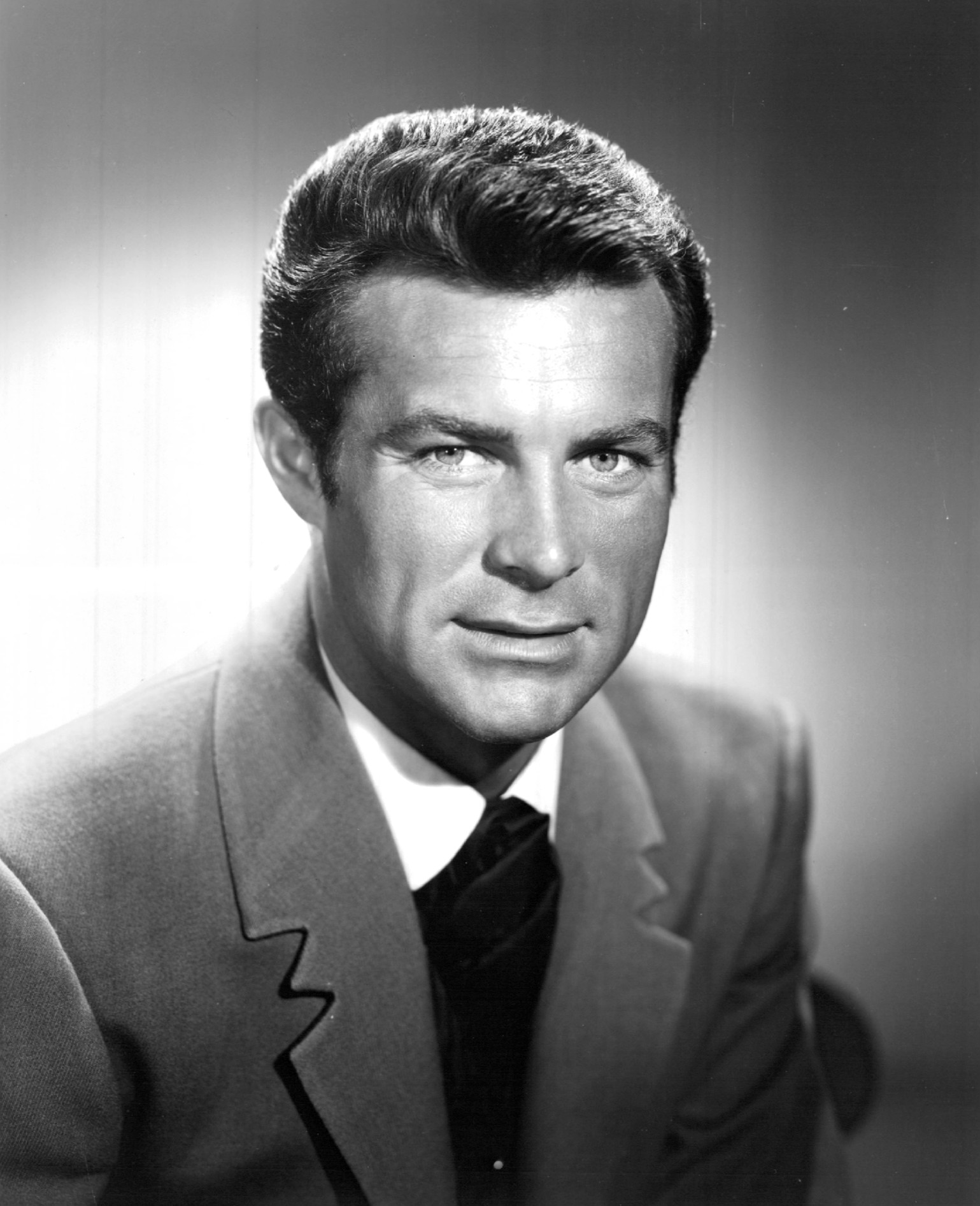
Robert Conrad (born Conrad Robert Falk; March 1, 1935 – February 8, 2020) was an American actor, singer, and stuntman. He is best known for his role in the 1965–1969 television series The Wild Wild West, playing the sophisticated Secret Service agent James T. West. He also portrayed private investigator Tom Lopaka in Hawaiian Eye (1959–1963) and World War II ace Pappy Boyington in Baa Baa Black Sheep (1976–1978; later syndicated as Black Sheep Squadron).

Key Information

In addition to acting, he was a singer and recorded several pop/rock songs in the late 1950s and early 1960s as Bob Conrad. He hosted a weekly two-hour national radio show (The PM Show with Robert Conrad) on CRN Digital Talk Radio beginning in 2008.[1]

Early life

[edit]

Conrad was born Conrad Robert Falk in Chicago. His father, Leonard Henry Falk, was 17 years old at the time of Conrad's birth and was of Polish descent, the original family name having been Falkowski. His mother, Alice Jacqueline Hartman (daughter of Conrad and Hazel Hartman), was 15 years old when she gave birth, and named her son after her father.[2] She became the first publicity director of Mercury Records, where she was known as Jackie Smith. She married twice, including once to Chicago radio personality Eddie Hubbard in 1948.[3] Eddie Hubbard and Jackie Smith reportedly had a child together (born c. 1949)[4] before splitting up in 1958.[5][6][7]

Conrad attended Chicago schools including South Shore High School, Hyde Park High School, the YMCA Central School, and New Trier High School.[8] He dropped out of school at age 15 to work full-time, including loading trucks for Consolidated Freightways and Eastern Freightways, and driving a milk truck for Chicago's Bowman Dairy.[8]

After working in Chicago for several years and studying theater arts at Northwestern University, Conrad pursued an acting career.[8] One of his first paying roles was a week-long job posing outside a Chicago theater where the film Giant (1956) was screened;[9] Conrad bore a resemblance to the film's lead, actor James Dean, so his mother used her entertainment industry contacts to help him get the part intended as a publicity stunt to boost attendance at the theater.[10] Conrad also studied singing; his vocal coach was Dick Marx, the father of singer Richard Marx.[11]

Career

[edit]

Early performances

[edit]

In 1957, Conrad met actor Nick Adams while visiting James Dean's gravesite in Fairmount, Indiana.[12] They became friends and Adams suggested that Conrad move to California to pursue acting.[12][13]

Adams got a bit part for Conrad in the film Juvenile Jungle (1958).[12] Adams was supposed to appear in it, but withdrew so he could take a part in a different movie.[12] Conrad's brief non-speaking role in Juvenile Jungle enabled him to join the Screen Actors Guild.[12] He had a small role in the film Thundering Jets, also in 1958.

Warner Bros.

[edit]

Conrad was soon signed to an acting contract by Warner Bros. He also sang, and released several recordings with Warner Bros. Records on a variety of LPs, EPs, and SPs 33-1/3 and 45 rpm records during the late 1950s and early 1960s.[14] In 1961, he had a minor Billboard hit song in "Bye Bye Baby" which reached No. 113.[15]

At Warner, he appeared in the second season of the James Garner series Maverick (episode: "Yellow River", 1959). He was featured in other shows, either for Warner or Ziv Television, including Highway Patrol, Lawman, Colt .45 (playing Billy the Kid), Sea Hunt, The Man and the Challenge, and Lock Up.

Hawaiian Eye

[edit]
Conrad and Connie Stevens, 1960
Conrad and Stevens, 1961

Warner Brothers had a big success with its detective show 77 Sunset Strip, then made Hawaiian Eye, a follow-up series. Conrad starred as detective Tom Lopaka. He was introduced on Strip, then spun off into a series that ran from 1959 to 1963, both in the U.S. and overseas. During the series' run, Conrad appeared on an episode of the Warner Brothers series The Gallant Men. After Hawaiian Eye was over, Conrad starred in Palm Springs Weekend (1963).

In Mexico, Conrad signed a recording contract with the Orfeon label. He released two albums with a few singles sung in Spanish. In 1964, he guest-starred on an episode of Temple Houston, then performed in the comedic film La Nueva Cenicienta (also known as The New Cinderella). The next year, he was in the episode "Four into Zero" of Kraft Suspense Theatre, and portrayed Pretty Boy Floyd in Young Dillinger alongside his old friend Nick Adams.[16]

The Wild Wild West

[edit]
Ross Martin and Conrad, 1965
Julie Payne and Conrad in The Wild Wild West, 1966

In 1965, Conrad began his starring role as government agent James West on the weekly series The Wild Wild West, which aired on CBS until its cancellation in 1969. He made $5,000 a week.[17] He did most of his own stunts and fight scenes during the series, and while filming the season four episode "The Night of the Fugitives", he was injured and rushed to the hospital after he dove from the top of a saloon staircase, lost his grip on a chandelier, fell 12 feet, and landed on his head.[18]

In addition to starring in The Wild Wild West, Conrad found time to work on other projects. He went to Mexico in 1967 to appear in Ven a cantar conmigo (Come, sing with me), a musical. He also formed his own company, Robert Conrad Productions, and under its auspices he wrote, starred in, and directed the Western film The Bandits (also 1967).[19]

Roles as Paul Ryan and Jake Webster

[edit]

Conrad appeared in episodes of Mannix and Mission: Impossible. In 1969, he signed a three-picture deal with Bob Hope's Doan Productions. The first two films were slated to be Keene then No Beer in Heaven, but only the first movie was ever produced.[20]

In 1969, he debuted as prosecutor Paul Ryan in the TV movie D.A.: Murder One (1969). He reprised the role in D.A.: Conspiracy to Kill (1971) and the short-lived 1971 series The D.A..[21] In 1971, he also played Deputy D.A. Paul Ryan on Adam-12 (Episode: "The Radical"), and in a compilation of several of the 1/2 hour "The D.A" episodes into a TV movie syndicated as Confessions of a D.A. Man. He was also in such made-for-television movies as Weekend of Terror (1970) and Five Desperate Women (1971). He tried another TV series as American spy Jake Webster in Assignment Vienna (1972), which lasted only eight episodes.[22] He was a murderous fitness franchise promoter in a fourth season episode of Columbo ("An Exercise in Fatality", 1974). Conrad starred in the feature films Murph the Surf (1975) and Sudden Death (1977).

Baa Baa Black Sheep

[edit]

Conrad briefly returned to series TV from 1976 to 1978 as legendary tough-guy World War II fighter ace Pappy Boyington in Baa Baa Black Sheep, retitled for its second season and in later syndication as Black Sheep Squadron in a re-tooling that failed to keep the series on the air. He directed three episodes.[23]

Despite the show's struggles in the ratings, Conrad went on to win a People's Choice Award for Favorite Male Actor and a Golden Globe nomination for his performance.[24] He followed it with a lead part in the television miniseries Centennial (1978).[25]

The Duke and A Man Called Sloane

[edit]

In 1978, Conrad starred in the short-lived TV series The Duke as Duke Ramsey, a boxer turned private eye. Conrad directed some episodes. In the late 1970s, he served as the captain of the NBC team for six editions of Battle of the Network Stars. Around this time he reprised the role of West in a pair of made-for-TV films which reunited him with his West co-star, Ross Martin, The Wild Wild West Revisited (1979) and More Wild Wild West (1980).[18]

Conrad was identified in the late 1970s with his television commercials for Eveready batteries, particularly his placing of the battery on his shoulder and prompting the viewer to challenge its long-lasting power: "Come on, I dare ya".[26] The commercial was parodied frequently on American television comedies such as Johnny Carson's The Tonight Show and The Carol Burnett Show.

Conrad made the occasional feature such as The Lady in Red (1979) for Roger Corman's New World Pictures, where he played John Dillinger from a script by John Sayles. Conrad later played a modern-day variation of James West in the short-lived series A Man Called Sloane in 1979.[27][28] Conrad directed some episodes.

1980s

[edit]

Conrad spent most of the 1980s starring in television movies. He played a paraplegic coach in Coach of the Year (1980), and the title role in Will: G. Gordon Liddy (1982). Both were for his own company, A Shane Productions.[29] In 1982, he also was in the Richard Brooks film Wrong is Right with Sean Connery as the main character and Conrad as General Wombat. The film had been described as a Dr. Strangelove for the 1980s.[30]

In 1984, Conrad and his production company produced the film, Hard Knox, an unsold pilot for a proposed TV series. He played the lead role of retired U.S. Marine Colonel Joseph Knox, who returns to his childhood home of Mount Carroll, Illinois, to teach at his alma mater, a local military prep academy. The film was shot in Mount Carroll at the former Shimer College.

Conrad played a Police Chief in the theatrically released comedy film Moving Violations (1985), and appeared in the TV movies The Fifth Missile (1986), Assassin (1986) and Charley Hannah's War (1986).[31]

In 1986, Conrad served as special guest referee for the main event of WrestleMania 2 between Hulk Hogan and King Kong Bundy in a Steel Cage Match for the WWF Championship.

In 1987, he starred as Jesse Hawkes in the short-lived TV series High Mountain Rangers with his sons Shane Conrad and Christian Conrad, about a family of wilderness rescue and law enforcement officers in Lake Tahoe. The series was canceled after 13 episodes, but was reworked for the 1989 series Jesse Hawkes, which saw Hawkes and his sons becoming bounty hunters in San Francisco. The series was canceled after 6 episodes.

1990s

[edit]

Conrad appeared in the music video for Richard Marx's "Hazard", which was a No. 1 hit in 13 countries including the United States. He had a supporting role in Jingle All the Way (1996) with Arnold Schwarzenegger. Conrad's later credits include an episode of Nash Bridges and the film Dead Above Ground (2002).

Conrad appeared in the movie Samurai Cowboy in 1994. The following year, he essentially rebooted High Mountain Rangers, reteaming with his sons Shane and Christian, and his second wife LaVelda Fann, in the TV movie pilot High Sierra Search and Rescue, which led to a short-lived TV series that was canceled after only eight episodes.[32]

2000s–2010s

[edit]

In 2005, he ran for President of the Screen Actors Guild.[33] In 2006, Conrad recorded audio introductions for every episode of the first season of The Wild Wild West for its North American DVD release on June 6. The DVD set also included one of Conrad's Eveready battery commercials; in his introduction, Conrad stated he was flattered to be parodied by Carson. He was inducted into the Hollywood Stuntmen's Hall of Fame[34] for his work on The Wild Wild West series.[35]

Beginning in 2008, he hosted a weekly two-hour national radio show (The PM Show with Robert Conrad) on CRN Digital Talk Radio.[1] He appeared in the documentary film Pappy Boyington Field (released in July 2010 on DVD) where he recounted his personal insights about the legendary Marine Corps aviator he portrayed in the television series.[36][37] His last appearance on the radio show was July 18, 2019, and Mike Garey was his co-host.

Personal life and death

[edit]

Conrad and his first wife Joan were married for 25 years and had five children. They divorced amicably in 1977.[38] That same year he met his second wife LaVelda Ione Fann. He was 43 when he emceed the Miss National Teenager Pageant, which she won. Their marriage produced three children before their divorce in 2010. His two families were said to "get along famously."[39][40] Conrad was joined on some television shows by his sons, Shane and Christian, and his daughter, Nancy. Another daughter, Joan, became a television producer.[40]

In a 2008 interview, Conrad described Chicago Outfit associate and burglar Michael Spilotro as his "best friend". Spilotro's murder was featured in the movie Casino.[41] In 1984, Conrad was awarded a star on the Walk of Western Stars in Newhall, California (now a part of Santa Clarita).[42]

Conrad was involved with a volunteer organization in Bear Valley, California, known as Bear Valley Search and Rescue, which later formed the basis for High Mountain Rangers.[43]

On March 31, 2003, while on Highway 4 in California's Sierra Nevada foothills near his Alpine County home, Conrad drove his Jaguar over the center median and slammed head-on into a Subaru driven by 26-year-old Kevin Burnett. Both men suffered serious injuries.[44] As a result, Conrad faced felony charges to which he pleaded no contest. His plea was accepted,[45] and he was convicted of drunk driving.[46]

He was sentenced to six months of house confinement, alcohol counseling, and five years' probation.[45] A civil suit filed by Burnett against Conrad was settled the following year for an undisclosed amount. In 2005, Burnett died at age 28 from perforated ulcers; his family attributed them to his difficult recovery from the crash.[47][48] Conrad suffered severe nerve injuries from the crash, leaving his right side partially paralyzed.[49]

Conrad died of heart failure in Malibu, California, on February 8, 2020, at age 84.[50]

Filmography

[edit]

Film

[edit]
Year Title Role Notes
1958 Juvenile Jungle Minor Role Uncredited
Thundering Jets Lt. Robert 'Tiger Bob' Kiley
1959 Paratroop Command Art Uncredited
1962 Red Nightmare Pete Short film shot in 1957
1963 Palm Springs Weekend Eric Dean
1964 La nueva Cenicienta Bob Conrad
1965 Young Dillinger 'Pretty Boy' Floyd
1967 Ven a cantar conmigo Roberto
The Bandits Chris Barrett Also director and writer
1969 Keene Credited as Bob Conrad
1975 Murph the Surf Allan Kuhn
1977 Sudden Death Duke Smith
1979 The Lady in Red John Dillinger
1982 Wrong Is Right Gen. Wombat
1985 Moving Violations Chief Rowe Uncredited
1994 Samurai Cowboy Gabe McBride
1996 Jingle All the Way Officer Hummell
1999 New Jersey Turnpikes
Garbage Day Garbage Thrower Short
2002 Dead Above Ground Reed Wilson Final film role

Television

[edit]
Year Title Role Notes
1959 Bat Masterson Juanito Episode: "One Bullet from Broken Bow"
Maverick Davie Barrows Episode: "Yellow River"
Sea Hunt Hal Peters / The Boat Captain 2 episodes
Highway Patrol Tommy Chugg Episode: "Revenge"
Lawman Davey Catterton Episode: "Battle Scar"
Colt .45 Billy the Kid Episode: "Amnesty"
The Man and the Challenge Bill Howard Episode: "Maximum Capacity"
Lock-Up Harry Connors Episode: "The Harry Connors Story"
1959–1962 77 Sunset Strip Tom Lopaka 4 episodes
1959–1963 Hawaiian Eye 104 episodes
1962 The Gallant Men Sgt. Griff Benedict Episode: "And Cain Cried Out"
1964 Temple Houston Martin Purcell Episode: "The Town That Trespassed"
1965 Kraft Suspense Theatre Gary Kemp Episode: "Four into Zero"
1965–1969 The Wild Wild West James T. West (Jim West) 104 episodes
1968–1972 Mission: Impossible Bobby / Press Allen / Eddie Lorca 4 episodes
1969 Mannix Mitch Cantrell Episode: "The Playground"
The D.A.: Murder One Paul Ryan Television film
1970 Weekend of Terror Eddie
1971 The D.A.: Conspiracy to Kill Deputy D.A. Paul Ryan
Five Desperate Women Michael Wylie
Adam-12 Deputy D.A. Paul Ryan Episode: "The Radical"
1971–1972 The D.A. 15 episodes
1972 Adventures of Nick Carter Nick Carter Television film
1972–1973 Assignment Vienna Jake Webster 8 episodes
1974 Columbo Milo Janus Episode: "An Exercise in Fatality"
1975 The Last Day Bob Dalton Television film
1976 Smash-Up on Interstate 5 Sergeant Sam Marcum
1976–1978 Baa Baa Black Sheep Maj. Greg 'Pappy' Boyington 36 episodes
1977 Laugh-In Guest Performer Episode: #1.4
1978 Confessions of the D.A. Man Paul Ryan Television film
1978–1979 Centennial Pasquinel Television miniseries
1979 The Duke Oscar 'Duke' Ramsey
The Wild Wild West Revisited Jim West Television film
Breaking Up Is Hard to Do Frank Scapa
A Man Called Sloane Thomas R. Sloane 12 episodes
1980 More Wild Wild West Jim West Television film
Coach of the Year Jim Brandon
1982 Will: G. Gordon Liddy G. Gordon Liddy
1983 Confessions of a Married Man
1984 Hard Knox Col. Joe Knox
1985 Two Fathers' Justice Bill Stackhouse
1986 The Fifth Missile Cmdr. Mark Van Meer
Assassin Henry Stanton
Charley Hannah Capt. Charley Hannah
One Police Plaza Lt. Daniel B. Malone
1987 J.J. Starbuck Corbett Cook Episode: "A Killing in the Market"
1987–1988 High Mountain Rangers Jesse Hawkes 13 episodes
1988 Police Story: Gladiator School Officer Charles 'Chick' Stacy Television film
Glory Days Mike Moran
1989 Jesse Hawkes Jesse Hawkes 6 episodes
1990 Anything to Survive Eddie Barton Television film
1992 Mario and the Mob Mario Dante
1993 Sworn to Vengeance Sergeant Stewart
1994 Two Fathers: Justice for the Innocent Stackhouse
Search and Rescue Tooter
1995 High Sierra Search and Rescue Griffin 'Tooter' Campbell 6 episodes
1999 Just Shoot Me! Himself Episode: "Jack Gets Tough"
2000 Nash Bridges CalTrans Guy Episode: "Heist"

References

[edit]
[edit]
Revisions and contributorsEdit on WikipediaRead on Wikipedia
from Grokipedia
Robert Conrad (born Konrad Robert Falkowski; March 1, 1935 – February 8, 2020) was an American actor, singer, and stuntman renowned for his rugged, action-oriented roles in television and film. Born in to teenage parents, Conrad's mother, , was the first publicity director for , while his father, Leonard Falkowski, worked various jobs before becoming a union worker. After attending for one year, he supported his family by driving a milk truck and working as a before breaking into . He adopted the stage name Robert Conrad and signed with in 1958, debuting in the film Thundering Jets that year. Conrad gained prominence in television during the late 1950s and 1960s, first as detective Tom Lopaka in the series (1959–1963), where he performed many of his own stunts. His breakthrough came with the role of Secret Service agent James T. West in (1965–1969), a groundbreaking Western-spy hybrid that blended adventure, gadgets, and acrobatics, for which he famously balanced a on his head in promotional ads to showcase his physical prowess. Later, he starred as Major Greg "Pappy" in the World War II aviation drama (1976–1978), earning a Golden Globe nomination for his portrayal of the real-life Marine Corps . Throughout his career, Conrad appeared in over 15 feature films, including Murph the Surf (1975) and The Lady in Red (1979), and directed episodes of his own shows. In the , he formed his production company, A. Shane Co., which produced series like High Mountain Rangers (1987). On a personal note, Conrad married twice: first to Joan Kenlay in 1952, with whom he had five children, and later to LaVelda Fann in 1983, adding three more children to his family of eight, several of whom followed him into . He also pursued , releasing albums and performing as a singer early in his career. Conrad's life was marked by physical challenges; in 2003, a DUI conviction following a car accident left him partially paralyzed, leading to his retirement from . He passed away from at his home in , at age 84.

Early life

Birth and family background

Robert Conrad was born Konrad Robert Falkowski on March 1, 1935, on the South Side of , . His biological mother, Alice Jacqueline Hartman (later known professionally as ), was only 15 years old at the time of his birth and gave birth while unmarried; she later became the first publicity director for . His biological father, Leonard Henry Falk, was 17 years old when Conrad was born and worked as an in ; of German descent, Falk and the couple divorced soon after their son's birth, leaving limited involvement from the father in Conrad's upbringing. Raised primarily by his mother in a working-class household amid the economic challenges of Depression-era , Conrad experienced frequent family instability due to his mother's multiple remarriages, which resulted in several surname changes for him during childhood—from Falk to variations tied to stepfathers, including a brief period under the influence of Ed Hubbell. This dynamic prompted him to adopt the stable professional name Robert Conrad as an adult, drawing partial inspiration from his maternal grandfather, Conrad Hartman. Conrad's early childhood unfolded in Chicago's South Side neighborhoods, a gritty, industrial area that fostered his resilience and interest in physical activities like , which he pursued as a way to channel the uncertainties of his family life. The modest socioeconomic context of his family's circumstances, marked by his mother's entry into the entertainment publicity world for financial stability, provided indirect exposure to while emphasizing in a blue-collar environment.

Entry into acting

Conrad dropped out of high school at age 15 and began working full-time in various manual labor roles to support himself in . His early jobs included loading trucks as a for and delivering milk as a driver for Bowman Dairy Company. Despite his early exit from formal education, Conrad later enrolled at , where he studied in the theater arts program for approximately one year. This brief period of training provided foundational skills in and , though he did not complete a degree. Conrad's entry into the entertainment world was facilitated by his mother, Alice Jacqueline Hartman, who worked as the first publicity director for under the professional name . Her position in the music industry offered valuable contacts and exposure to , enabling Conrad to secure initial opportunities in singing. Through these family ties, he began performing as an amateur singer in nightclubs during the mid-1950s, from around 1953 to 1956.

Career

Early performances

Conrad's entry into professional acting began in 1957 when he befriended up-and-coming actor Nick Adams, who helped secure his first Hollywood work that year. Adams, a friend of the late James Dean, met Conrad during a visit to Dean's gravesite in Fairmount, Indiana, and encouraged him to relocate to California to pursue opportunities in the industry. Following this advice, Conrad moved west in 1958, leveraging connections including those from his mother, who had minor ties to the entertainment world through her work as a publicist. Upon arriving in Hollywood, Conrad took on small film roles, such as an uncredited part in the low-budget drama Juvenile Jungle (1958) and a credited appearance as a pilot in the aviation film Thundering Jets (1958). These early bit parts provided initial exposure but limited visibility, prompting him to seek television work. In 1959, Conrad made his television debut with a guest role as Juanito in the Bat Masterson episode "One Bullet from Broken Bow," portraying a young ranch hand entangled in a frontier dispute. He quickly followed with appearances in other Warner Bros.-produced Western series, including the role of Davey Catterton, a troubled war veteran, in the Lawman episode "Battle Scar"; Davie Barrows, a cattle drive participant, in the Maverick episode "Yellow River"; and minor parts in episodes of 77 Sunset Strip, where he played characters tied to the show's detective narratives. These scattered guest spots, often in supporting or one-off capacities, showcased Conrad's rugged screen presence and helped build his resume amid the competitive landscape of 1950s television Westerns. Parallel to his acting pursuits, Conrad ventured into music during this period, recording several pop and rock singles under the name Bob Conrad for Warner Bros. Records. Notable releases included "I Want You (Pretty Baby)" backed with "Ballin' the Jack" in 1961 and "Bye Bye Baby" later that year, reflecting his multifaceted early career ambitions before focusing primarily on television stardom.

Warner Bros. contract

In late 1958, Robert Conrad signed a seven-year acting contract with , marking a pivotal shift in his career from bit parts to structured studio opportunities. This deal provided him with steady work in the studio's burgeoning television productions, allowing him to build his profile within the ecosystem. Under the contract, Conrad began appearing in guest roles on popular series, including an episode of Maverick titled "Yellow River" in 1959, where he played the character Davie Barrows. He also featured in early episodes of , contributing to the show's pilot and initial filming as private investigator Tom Lopaka. Parallel to his acting commitments, leveraged Conrad's singing background by signing him to their records label, where he released several singles and contributed to albums that blended pop and Hawaiian influences. Notable releases included the single "Bye Bye Baby" backed with "Love You," and "I Want You (Pretty Baby)" paired with "Ballin' the Jack," which showcased his vocal talents alongside his on-screen persona. These musical endeavors, often tied to his television roles, helped integrate his multifaceted skills, with Conrad performing songs that echoed the lighthearted, exotic themes of ' programming. To embody the rugged characters Warner Bros. envisioned for him, Conrad underwent intensive training in stunts and , drawing on his early experiences as an amateur boxer starting from age six. This preparation enhanced his ability to perform physically demanding scenes authentically, setting the stage for his reputation as a hands-on performer who frequently executed his own action sequences. His boxing regimen, combined with work, not only toughened his screen presence but also minimized reliance on doubles in Warner productions.

Hawaiian Eye

Robert Conrad gained his first major television breakthrough as Tom Lopaka, a half-Hawaiian , in the ABC series , which aired from 1959 to 1963. The character, described by Conrad as "half white, half bronze," operated out of a Honolulu-based agency alongside partner Tracy Steele (played by ), solving cases amid the tropical backdrop of . Conrad appeared in 104 episodes of the show, marking his transition from minor roles to a starring position under his contract. The series blended lighthearted adventure with detective procedural elements, featuring exotic locations, romantic subplots, and a mix of crime-solving and leisure activities like and scenes at the Royal Hawaiian Hotel. Co-starring as the agency's resourceful cab driver and informant was Poncie Ponce, whose character provided and local color, while recurred as the wealthy playboy Sandy Winfield III in several episodes, adding to the ensemble's youthful appeal. Produced by Warner Bros. Television, Hawaiian Eye capitalized on the success of sibling shows like 77 Sunset Strip, emphasizing glamorous settings and breezy escapism that drew strong viewership during its four-season run. Conrad's portrayal of Lopaka highlighted his emerging physicality and charisma, as he performed many of his own stunts, including sequences and water-based action scenes that showcased Hawaii's beaches. In a 2009 interview, Conrad recalled learning to surf during production, noting it as one of his favorite aspects of the role and contributing to his rugged, athletic on-screen image. These demanding physical elements, often involving ocean work without a double, helped solidify his reputation as a hands-on performer from the outset. The show's popularity, which made Conrad an "overnight star" according to contemporaries, led to his as a lead in action-adventure genres, paving the way for subsequent high-energy roles in television. By emphasizing his detective's resourcefulness and charm in a paradise setting, established Conrad as a versatile yet action-oriented talent, influencing his career trajectory toward more intense physical performances.

The Wild Wild West

Robert Conrad portrayed Secret Service agent James T. West in the CBS television series , which aired from 1965 to 1969 and consisted of 104 episodes across four seasons. In the role, Conrad depicted West as a resourceful 19th-century operative who, alongside his partner Artemus Gordon, thwarted elaborate plots by villains using a mix of martial prowess and inventive gadgets. The series, created by Michael Garrison, innovatively fused Western adventure with spy thriller and elements, featuring steam-powered contraptions, disguises, and fantastical antagonists that anticipated later aesthetics. Co-starring as the multifaceted inventor and master of disguise Artemus Gordon, the show emphasized their dynamic partnership, with Gordon's scientific ingenuity complementing West's physicality as they operated from a high-tech private train. Production highlights included the series' emphasis on elaborate sets and , which blended historical Western locales with futuristic devices to create a unique visual style for television. Conrad, drawing on his prior stunt training, performed nearly all of his own action sequences, including harness-suspended falls, choreographed fights, and acrobatic maneuvers that heightened the show's authenticity and excitement. This commitment to hands-on stunts, often without a double, contributed to the program's reputation for high-energy spectacle but came at personal cost; in 1968, during filming of the episode "The Night of the Fugitives," Conrad sustained a severe after slipping while attempting a chandelier swing, resulting in a and a six-inch that halted production for weeks. Despite such risks, Conrad's approach elevated the action genre, influencing subsequent adventure series by prioritizing actor-driven realism over safer alternatives. The cultural impact of extended beyond its run, as it revitalized the Western format amid declining popularity by incorporating Cold War-era spy tropes and proto-sci-fi innovations, earning a dedicated fanbase and critical praise for its creativity. Conrad reprised the role of James West in two reunion television movies: The Wild Wild West Revisited (1979), directed by Burt Kennedy, and More Wild Wild West (1980), both of which reunited him with Martin as Gordon to battle returning foes like Dr. Miguelito Loveless in updated adventures blending nostalgia with production values. These films, produced by , capitalized on the original series' enduring appeal, grossing strong ratings and reinforcing Conrad's legacy as an action icon.

1970s television roles

In the early 1970s, Robert Conrad continued to leverage his established image as a rugged action star from , taking on lead roles in short-lived series that emphasized tough, investigative characters, though none achieved the longevity of his prior successes. These projects often highlighted his physicality and charisma in procedural dramas and espionage thrillers. Conrad starred as Deputy District Attorney in the NBC legal drama The D.A., which aired from September 1971 to January 1972 and consisted of 15 episodes. Produced by , the half-hour series followed Ryan, a hard-nosed Los Angeles prosecutor tackling complex criminal cases with the aid of investigators and courtroom allies. Conrad's portrayal drew on his prior guest role as Ryan in the 1970 TV movie D.A.: Murder One, marking a seamless extension of the character into weekly television. In 1972, Conrad headlined Assignment Vienna on CBS, a spy series that ran for 8 episodes from September to December. He played Jake Webster, an American expatriate and bar owner in who covertly assisted U.S. Army Intelligence in tracking smugglers and recovering stolen items across . The show, a repackaging of the unsold pilot Assignment Munich, emphasized Webster's street-smart resourcefulness in high-stakes operations. Toward the end of the decade, Conrad portrayed Oscar "Duke" Ramsey in the detective series The Duke, which aired 5 episodes in spring 1979. Created by , the program featured Ramsey, a former professional boxer turned private investigator, solving crimes with a no-nonsense approach and aid from associates like a young attorney and a . Conrad, drawing from his own background, performed many of his own stunts in the role. Conrad closed out the 1970s with the lead in A Man Called Sloane, an NBC adventure series that ran for 12 episodes from September 1979 to January 1980. He starred as Thomas Remington Sloane III, a suave freelance operative for the secret U.S. intelligence unit , undertaking global missions against terrorists and criminals while employing gadgets and disguises. The series blended elements with high-action sequences, positioning Sloane as a modern adventurer in the vein of . Beyond these leads, Conrad made notable guest appearances on 1970s anthology and procedural shows, showcasing his versatility in villainous or authoritative roles. In 1970, he appeared as the unpredictable assassin Eddie Lorca in the Mission: Impossible episode "The Killer," where the IMF team thwarted his random-chance-based hits. He also guested as criminal Eddie Larkin in the 1970 Mannix episode "A Step in Time," portraying a man entangled in a murder plot.

Baa Baa Black Sheep

In 1976, Robert Conrad starred as Major Greg "Pappy" Boyington in the NBC television series Baa Baa Black Sheep, portraying the leader of a squadron of misfit U.S. Marine Corps fighter pilots during World War II. The show, which ran for two seasons from September 23, 1976, to April 6, 1978, consisted of 36 episodes and blended action-adventure with comedic elements, depicting the exploits of Marine Attack Squadron 214 (VMF-214), known as the Black Sheep Squadron, in the Pacific theater. Created and produced by Stephen J. Cannell, the series was inspired by the real-life memoir Baa Baa Black Sheep by Gregory Boyington, the actual Marine Corps ace pilot and commander of VMF-214, who commanded 24 victories before his capture by the Japanese in 1944. Conrad's casting drew from his personal background as an avid boxer, having started at age six and compiling an amateur record, which aligned with Boyington's tough, resilient persona as a former boxer and wrestling enthusiast before joining the . Conrad's longstanding interest in and further informed his portrayal, allowing him to infuse the role with authenticity; he even consulted with the real Boyington during production. The series emphasized the squadron's high-spirited camaraderie and daring missions against Japanese forces, often highlighting Boyington's leadership amid the pilots' rebellious antics, while incorporating period-accurate details like Corsair fighter planes. For its second season, the show was retitled Black Sheep Squadron to better reflect its focus on the unit's aviation exploits, though the core action-comedy tone remained intact. Personal connections enhanced the production, as Conrad's daughter Nancy appeared as nurse Lt. Donna Livingston in several episodes. Conrad's performance earned him a shared People's Choice Award in 1977 for Favorite Male Performer in a New TV Program.

1980s work

In the early 1980s, Conrad starred in several made-for-television films that showcased his rugged persona in dramatic roles. In "Coach of the Year" (1980), he portrayed Art Salzman, a paraplegic veteran who takes on the challenge of coaching a at a boys' in , drawing on themes of redemption and resilience. He also reprised his iconic character James T. West alongside in the lighthearted spy adventure "More Wild Wild West" (1980), where the duo thwarts a plot by a in . Later entries included "Hard Knox" (1984), in which Conrad played a tough retired reforming cadets at a , and "Assassin" (1986), depicting a former CIA operative hunting a deadly android assassin. Conrad ventured into professional wrestling entertainment in 1986, serving as the special guest referee for the main event steel cage match between and at WWF's , held across three cities and broadcast live to over 500,000 viewers. Toward the decade's end, Conrad expanded his creative control by creating, starring in, and producing the action series "High Mountain Rangers" (1987–1988), which aired 13 episodes focused on high-stakes wilderness rescues. He portrayed Jesse Hawkes, the authoritative leader of a family-run search-and-rescue unit in California's Sierra Nevada, with his real-life sons Christian and Shane Conrad playing his character's sons, emphasizing themes of familial duty and outdoor survival. Conrad's producing credits on the series, alongside directing several episodes, highlighted his transition to greater behind-the-scenes involvement, as noted in industry reports on his multifaceted production role. This effort extended to related projects, solidifying his influence in action-oriented television programming.

1990s roles

In the , Robert Conrad's acting career shifted toward television movies and a brief series, often featuring rugged, survival-themed roles that echoed his earlier action-oriented work. He starred as Eddie Barton, a resilient father leading his children through a harrowing and Alaskan ordeal in the TV movie Anything to Survive (1990), based on a true story of endurance. Conrad reprised variations of his wilderness law enforcement character from High Mountain Rangers in subsequent projects. In 1994, he led the cast as Tooter Campbell, a helicopter pilot heading a volunteer rescue team in California's Sierra Nevada mountains, in the TV movie Search and Rescue, which served as a backdoor pilot for a new series. This led to the short-lived NBC series High Sierra Search and Rescue (1995), where Conrad again portrayed the authoritative Tooter Campbell, coordinating high-stakes mountain rescues over seven episodes before the show's cancellation. That same year, he appeared as the vengeful Chicago steelworker father in the TV movie Two Fathers: Justice for the Innocent, teaming up with George Hamilton to hunt down an escaped killer responsible for their children's deaths, a sequel to his 1985 role. Conrad also took on a supporting role as the grizzled ranch hand Gabe McBride in the Western comedy Samurai Cowboy (1994), assisting a Japanese businessman adapting to American cowboy life. Later in the decade, Conrad made a memorable cameo as the no-nonsense Officer Hummell in the holiday action-comedy (1996), interacting briefly with Arnold Schwarzenegger's frantic father character during a chaotic toy hunt. He played himself in a guest appearance on the sitcom Just Shoot Me! in the 1999 episode "Jack Gets Tough," where his presence sparks comedic tension over a fabricated in the protagonist's autobiography. As Conrad entered his 60s, his on-screen output diminished compared to the steady stream of lead roles in prior decades, partly due to the short run of High Sierra Search and Rescue and a growing emphasis on family life following personal milestones.

2000s–2010s activities

Conrad's acting career wound down in the early with his final major role as the President in the TNT TV movie Running Mates, a political directed by Ron Mann that aired on October 22, 2000. This marked one of his last substantial on-screen performances before transitioning away from live-action roles. He followed this with a minor supporting part as Reed Wilson, a sheriff, in the low-budget Dead Above Ground, released in 2002, which served as his final appearance. Around 2002, Conrad effectively retired from on-screen acting, citing a desire to step back after decades in the industry, though he continued with voice work, including recording personal audio introductions for each episode of the first season of on its 2006 DVD release. In 2005, he entered the political arena within the entertainment world by running as an independent candidate for president of the (SAG), where he garnered 25.3% of the vote (6,797 ballots out of 26,877 cast) but was defeated by of the Membership First slate, who received 40%. From 2008 until his final broadcast on July 18, 2019, Conrad hosted the weekly two-hour program The PM Show with Robert Conrad on CRN Digital , where he discussed topics ranging from to current events, often with co-host Mike Garey, marking a shift toward media hosting and personal projects in his later years.

Personal life and death

Marriages and family

Conrad was first married to Joan Kenlay in 1952, and the couple had five children together: Joan, Christy, Nancy, Christian, and Shane. They divorced in 1977 after 25 years of marriage. In 1983, Conrad married LaVelda Fann, a casting director who later appeared in several of his projects, and they had three children, including Chelsea. The marriage lasted until their divorce in 2010. With eight children from his two marriages, Conrad maintained a large and close-knit family that frequently relocated to accommodate his career demands, including a move from to in the late 1950s when he signed with The family dynamics emphasized strong support during Conrad's professional highs, as several of his children pursued careers in , often collaborating with him on set. In 2003, Robert Conrad faced significant legal consequences following a drunk driving incident that also severely impacted his health. On March 31, 2003, Conrad was arrested on suspicion of after his 1995 collided head-on with another vehicle on State Highway 4 near , in Calaveras County. His blood-alcohol level was measured at 0.22 percent, nearly three times the legal limit of 0.08 percent at the time. The crash seriously injured the other driver, 28-year-old , who suffered a broken , broken , and other injuries requiring hospitalization. Conrad himself sustained serious injuries in the accident, resulting in partial on his right side, which required him to appear in court with his arm in a sling and led to a postponement of his . He was charged with two counts of causing bodily injury. Conrad pleaded not guilty initially but later entered a no-contest as part of a . The incident drew widespread media attention, contrasting sharply with his long-established public image as a rugged, action-oriented performer known for performing his own stunts. In November 2004, Conrad was sentenced in Calaveras County Superior Court to six months of house confinement, five years of , completion of a three-month alcohol education program, fines totaling several thousand dollars, and payment of up to $10,000 in restitution to the victim. His was suspended for one year, and he was ordered to refrain from consuming alcohol. The partial from the crash contributed to ongoing health challenges for Conrad, limiting his mobility and affecting his ability to work in physically demanding roles later in his career. This legal ordeal further strained his public persona, highlighting vulnerabilities beneath his tough-guy reputation. Prior to the 2003 incident, Conrad had a history of minor legal entanglements stemming from his combative nature, including multiple lawsuits related to physical altercations in Hollywood. He was sued more than half a dozen times for and battery arising from fistfights, often in social or professional settings, which reinforced his image as a volatile figure but did not result in major criminal convictions. These earlier brushes with the law, while not as severe as the DUI case, underscored a pattern of impulsive behavior that culminated in the 2003 consequences.

Death

Robert Conrad died on February 8, 2020, at his home in , at the age of 84. The cause of death was , as confirmed by family spokesperson Jeff Ballard. No details from an were publicly released. Conrad was survived by his eight children—five from his first marriage to Joan Kenlay and three from his second marriage to LaVelda Fann—as well as 18 grandchildren. He had often cast his children in acting roles alongside him in various projects, including his sons Christian and Shane in the 1989 series Jesse Hawkes. A small private funeral service was held on March 1, 2020, which would have been Conrad's 85th birthday. In the immediate aftermath, his family issued a statement noting that "he lived a wonderfully long life and will live forever in their hearts." Public tributes highlighted his enduring legacy as a rugged action star, with fans and industry figures recalling his commitment to performing his own stunts, which had taken a significant physical toll over decades and contributed to later health challenges.

Filmography

Film

Robert Conrad's feature film career spanned from 1958 to 2002, encompassing roughly 20 roles, predominantly in supporting capacities within action, adventure, and crime genres. Though best known for television, his cinematic work often highlighted his rugged persona and willingness to perform stunts, beginning with minor parts in low-budget productions and evolving into lead roles in B-movies before tapering into cameos and efforts later in life.
YearTitleRoleDirectorNotes
1958Thundering JetsLt. Robert "Tiger Bob" KileyConrad's screen debut as a in this drama about tensions at a U.S. base.
1959Paratroop CommandSgt. DawsonSupporting role in a World War II action film depicting paratroopers on a dangerous mission.
1963Palm Springs WeekendScout HendricksPlayed a vacationing college student in this comedy about spring break antics in Palm Springs.
1965Young DillingerTerry O. MorsePortrayed the notorious gangster in this biographical crime drama focusing on 's criminal exploits.
1967The BanditsChris BarrettRobert Conrad (co-director)Co-wrote, co-directed, and starred as a aiding revolutionaries during the Mexican Revolution.
1975Murph the SurfAllan KuhnDepicted a real-life jewel thief accomplice in this comedy-crime film based on the 1964 Star of India heist.
1977Sudden DeathDuke SmithLead as a retired CIA agent investigating a family massacre in this Philippines-shot action thriller.
1979The Lady in RedStarred as the infamous outlaw in this biographical drama centered on his relationship with girlfriend Polly Hamilton.
1982Wrong Is RightGen. WombatSupporting political role in this satirical thriller about and .
1985Moving ViolationsPolice ChiefAppeared as the authoritarian chief in this parody of driving school comedies.
1994Samurai CowboyGabe McBrideMichael KeuschPlayed a teaming with a Japanese cowboy in this action-comedy set in .
1996Jingle All the WayOfficer HummellBrief cameo as a mall security officer in this holiday action-comedy.
1999New Jersey TurnpikesSheriff HayesSupporting role in this unreleased independent drama about a fictional team; considered .
2002Dead Above GroundReed WilsonChuck BowmanOne of Conrad's final roles as a police in this low-budget about zombies in a small town.

Television

Robert Conrad began his television career in the late 1950s, quickly rising to prominence as a in adventure and action series. His rugged persona and athleticism made him a natural fit for roles involving physical stunts and charismatic heroes, establishing him as a staple of and prime-time television. One of Conrad's earliest major roles was in the detective series , where he portrayed Tom Lopaka, a half-Hawaiian , from 1959 to 1963 across 104 episodes. The show blended mystery-solving with exotic Hawaiian locales, showcasing Conrad's charm alongside co-stars like . Conrad's most enduring television success came with (1965–1969), in which he starred as Secret Service agent James T. West in all 104 episodes. This innovative Western-spy hybrid featured elaborate gadgets and fight scenes, with Conrad performing many of his own stunts, including the famous cigar-box jump. The series ran for four seasons on and became a cultural touchstone for blending genres. In the 1970s, Conrad led the short-lived legal drama The D.A. (1971–1972) as Deputy Paul in 15 episodes. Produced by , the half-hour series focused on prosecutorial challenges in but was canceled after one season due to low ratings. Later that decade, Conrad took on a military role in (also known as Black Sheep Squadron, 1976–1978), portraying Major Greg "Pappy" , the real-life leader of a Marine Corps during . He appeared in all 36 episodes over two seasons on , drawing from Boyington's autobiography and emphasizing the squadron's daring Pacific Theater missions. Conrad returned to series television in the late 1980s with High Mountain Rangers (1987–1988), starring as search-and-rescue leader Jesse Hawkes in 13 episodes. Filmed on location in the Sierra Nevada, the CBS action-drama highlighted family dynamics, with Conrad's real-life sons Christian and Shane playing his on-screen sons. Beyond these lead roles, Conrad made over 50 guest appearances and starred in numerous television movies throughout his career, often in action-oriented parts that leveraged his stunt background. Notable examples include his guest spot on Mission: Impossible in 1972 as Major Joe Fallon in the episode "The Legend," and the lead in the 1980 TV movie Coach of the Year as a high school football coach turning his life around.
Series/TV MovieYearsRoleEpisodes/Notes
Hawaiian Eye1959–1963Tom Lopaka104 episodes; ABC detective series
1965–1969James T. West104 episodes; Western-spy adventure
The D.A.1971–197215 episodes; legal drama
(guest)1972Major Joe Fallon1 episode: "The Legend"
Baa Baa Black Sheep1976–1978Maj. Greg "Pappy" Boyington36 episodes; WWII series
Coach of the Year (TV movie)1980Jim Maddock biographical sports drama
High Mountain Rangers1987–1988Jesse Hawkes13 episodes; action series

Awards and legacy

Awards and nominations

Throughout his career, Robert Conrad garnered recognition for his charismatic performances in action-oriented television roles and for his daring stunt work. These accolades highlighted his versatility as an actor and performer, spanning popular fan-voted honors, industry nominations, and tributes to his physical contributions to the medium. In 1977, Conrad tied with Dick Van Dyke to win the People's Choice Award for Favorite Male Performer in a New TV Program for his portrayal of Major Greg "Pappy" Boyington in Baa Baa Black Sheep. He received a nomination for the Golden Globe Award for Best Performance by an Actor in a Television Series - Drama in 1978 for the same role in . In 1979, Conrad won the Bronze Wrangler Award, presented by the , in the category of Fictional Television Drama for his performance as Pasquinel in the miniseries . Conrad's commitment to performing his own stunts, notably in , earned him induction into the Hollywood Stuntmen's Hall of Fame, a rare distinction for an actor.

Cultural impact

Robert Conrad's commitment to performing his own stunts in action-oriented television series, particularly during the four seasons of (1965–1969), established a new standard for authenticity in the genre, influencing subsequent productions to feature more physically demanding roles for lead actors. He was inducted into the Hollywood Stuntmen's Hall of Fame as one of only six actors recognized for this pioneering approach, which emphasized athleticism and risk-taking over reliance on doubles. This rugged persona was further cemented by his iconic Eveready battery commercials in the late 1970s, where he dared viewers to knock a battery off his shoulder, reinforcing a tough-guy image that permeated . The series The Wild Wild West, blending Western tropes with gadgets and Victorian-era aesthetics, is widely regarded as a proto-steampunk work that anticipated the genre's later popularity in literature, film, and fashion. Its inventive contraptions, such as steam-powered robots and mechanical devices, inspired reboots including the 1999 feature film starring and , while development rumors for a series reboot surfaced in 2010 under producers and , highlighting its enduring appeal. Conrad's portrayal of Secret Service agent James West became synonymous with adventurous espionage in a fantastical . In (1976–1978), Conrad's depiction of Marine Corps aviator Major Gregory "Pappy" Boyington brought the real-life exploits of the Squadron to a broad audience, embedding the squadron's WWII heroics into popular lore through syndication and reruns. This role extended his cultural footprint into narratives, with the series' dramatized camaraderie among pilots resonating in enthusiast communities. Conrad maintained direct fan engagement via his weekly radio program The Lounge with Robert Conrad on CRN Digital Talk Radio, which aired from 2008 until 2019 and allowed discussions of his career and personal insights. Following his death on February 8, 2020, Conrad received posthumous tributes from major entertainment outlets, including Variety and , which celebrated his contributions to television action and stunt work. His legacy endures through a dedicated fanbase drawn to his 1960s and 1970s series, sustained by ongoing syndication on networks like , where episodes continue to attract viewers nostalgic for his era of bold, physical performances.

References

Add your contribution
Related Hubs
User Avatar
No comments yet.