Hubbry Logo
Rupert GouldRupert GouldMain
Open search
Rupert Gould
Community hub
Rupert Gould
logo
8 pages, 0 posts
0 subscribers
Be the first to start a discussion here.
Rupert Gould
Rupert Gould
from Wikipedia

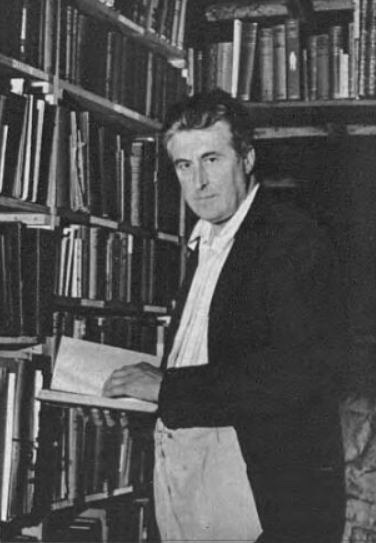
Rupert Thomas Gould (16 November 1890 – 5 October 1948) was a lieutenant-commander in the British Royal Navy noted for his contributions to horology (the science and study of timekeeping devices).[1] He was also an author and radio personality.

Key Information

Life

[edit]

Gould grew up in Southsea, near Portsmouth, where his father, William Monk Gould, was a music teacher, organist, and composer. He was educated at Eastman's Royal Naval Academy[2] and then, from 15 January 1906 the Royal Naval College, Dartmouth, being part of the 'Greynville' term (group), and by Easter 1907, examinations placed him at the top of his class. He became a midshipman on 15 May 1907. He initially served on HMS Formidable and HMS Queen (under Captain David Beatty) in the Mediterranean. Subsequently, he was posted to China (first aboard HMS Kinsha and then HMS Bramble). He chose the "navigation" career track and, after qualifying as a navigation officer, served on HMS King George V and HMS Achates until near the outbreak of World War I, at which time he suffered a nervous breakdown and went on medical leave. He was placed on the retired list on 26 October 1915.[3] Afterwards he was stationed at the Hydrographer's Department at the Admiralty, where he became an expert on various aspects of naval history, cartography, and expeditions of the polar regions. In 1919 he was promoted to Lieutenant-Commander (retired).

On 9 June 1917 he married Muriel Estall. That marriage ended by judicial separation in November 1927. They had two children, Cecil (born in 1918) and Jocelyne (born in 1920). His last years were spent at Barford St Martin near Salisbury, where he used his horological skills to repair and restore the defunct clock in the church tower.[4]

Work

[edit]

He gained permission in 1920 to restore the marine chronometers of John Harrison, and this work was completed in 1933.

His horological book The Marine Chronometer, its history and development was first published in 1923 by J.D. Potter and was the first scholarly monograph on the subject. It was generally considered the authoritative text on marine timekeepers for at least half a century.

Gould had many other interests and activities. In spite of two more nervous breakdowns, he wrote and published an eclectic series of books on topics ranging from horology to the Loch Ness Monster. He was a science educator, giving a series of talks for the BBC's Children's Hour starting in January 1934 under the name "The Stargazer", and these collected talks were later published. He was a member of the BBC radio panel The Brains Trust. He umpired tennis matches on the Centre Court at Wimbledon on many occasions during the 1930s.

In 1947 he was awarded the Gold Medal of the British Horological Institute, its highest honour for contributions to horology.

Gould died on 5 October 1948 at Canterbury, Kent, from heart failure. He was 57 years of age.

In 2000, Longitude, a television dramatisation of Dava Sobel's book Longitude: The True Story of a Lone Genius Who Solved the Greatest Scientific Problem of His Time, recounted in part Gould's work in restoring the Harrison chronometers. In the drama, Gould was played by Jeremy Irons.[5]

Cryptozoology and paranormal interests

[edit]

Gould took interest in investigating cryptozoological and paranormal claims.

Spurred on by the attention to the Loch Ness Monster in the popular press and his previous work on the so-called ‘sea serpent’ (though Loch Ness is not a sea loch), Gould spent some days at Loch Ness travelling around it by motorcycle. He interviewed many witnesses and collated evidence for the creature that resulted in the first major work on the phenomenon, entitled The Loch Ness Monster and Others. After this, Gould became the de facto spokesman on the subject, being a regular contributor to radio shows and newspaper articles.

Historian Mike Dash has described Gould as "Britain's answer to Charles Fort".[6] Paranormal writer Jerome Clark has described Gould as a "conservative and analytical" Fortean writer.[7] However, sceptical investigator Joe Nickell has described Gould as an "overly credulous paranormalist".[8]

Selected works

[edit]

All works published as Rupert T. Gould. For a full bibliography of all Gould's works, see Betts 2006, Appendix 1.

  • Gould, Rupert T. (1923). The Marine Chronometer, its history and development. London: J. D. Potter. ISBN 0-907462-05-7. {{cite book}}: ISBN / Date incompatibility (help)
  • Gould, Rupert T. (1928). Oddities: A Book of Unexplained Facts. London: Philip Allan & Co. Ltd.
  • Gould, Rupert T. (1929). Enigmas: Another Book of Unexplained Facts. London: Philip Allan.
  • Gould, Rupert T. (1930). The Case for the Sea Serpent. London: Philip Allan.
  • Gould, Rupert T. (1934). The Loch Ness Monster and Others. London: Geoffrey Bles. Paperback, Lyle Stuart, 1976, ISBN 0-8065-0555-9
  • Gould, Rupert T. (1935). Captain Cook. London: Duckworth.
  • Gould, Rupert T. (1937). A Book of Marvels. London: Methuen.
  • Gould, Rupert T. (1943). The Stargazer Talks. London: Geoffrey Bles.
  • Gould, Rupert T.; Betts, Jonathan; Hecht, Susannah (2013). The Marine Chronometer, its history and development (2nd ed.). Woodbridge, Suffolk: Antique Collectors' Club. ISBN 978-1-85149-365-4.

See also

[edit]

References

[edit]
Revisions and contributorsEdit on WikipediaRead on Wikipedia
from Grokipedia
Rupert Thomas Gould (1890–1948) was a British lieutenant-commander in the Royal Navy, celebrated as a pioneering horologist for his meticulous restoration of John Harrison's groundbreaking marine chronometers in the , and recognized as an author and broadcaster who popularized topics in timekeeping, , and unexplained phenomena. Born on 16 November 1890 in , , to William Gould, a civil servant, and Agnes Hilton Skinner, Gould grew up in a conventional upper-middle-class family. He entered the Royal Naval College at Dartmouth as a in 1906, becoming a in 1907, and specialized in and during his service, including aboard a on the River. His naval career was cut short by a severe nervous breakdown in 1914, leading to his placement on the retired list by 1917 at the rank of lieutenant-commander. Gould's enduring legacy stems from his self-taught expertise in horology, sparked by research for his seminal book The Marine Chronometer: Its History and Development (1923), which remains a standard reference on the subject. Between 1923 and 1935, working from a makeshift workshop in his garage, he single-handedly restored Harrison's four marine timekeepers (H1–H4) and a related clock (H5), rescuing them from decades of neglect at the Royal Observatory, Greenwich. These restorations not only preserved the instruments that solved the longitude problem for maritime navigation but also enabled their public exhibition, including at the in 1925 and the in the 1930s. In recognition of his contributions, Gould received the Gold Medal from the British Horological Institute in 1947. Beyond horology, Gould was a prolific author of over a dozen books, blending scholarly works like and His Time-Keepers (1923) with explorations of the anomalous, such as Oddities: A Book of Unexplained Facts (1928), The Case for the Sea-Serpent (1930), Enigmas (1929), and and Others (1934). His writing style, marked by meticulous detail and wit, extended to biographies like Captain Cook (1932) and maritime topics, reflecting his polymathic interests. As a broadcaster, he gained popularity on , serving as a regular panelist on The Brains Trust from 1942, where he provided authoritative answers on diverse subjects, and contributing to programs like . In his later years, Gould resided in , , separating from his wife Muriel Hilda Estall in 1927; they had two children, Cecil and Jocelyne. He continued writing and broadcasting until his death from a heart attack on 5 October 1948 at Canterbury Hospital, aged 57, and was buried in . Gould's multifaceted career bridged naval tradition, scientific preservation, and public intellectualism, cementing his reputation as a guardian of horological heritage.

Early Life

Family and Childhood

Rupert Thomas Gould was born on 16 November 1890 in , , near , . He was the younger son of William Monk Gould (1858–1923), a respected music teacher, organist, and composer, and Agnes Hilton Skinner (1860–1937), the daughter of an obstetrician. The Gould family belonged to the but faced limited finances, with William's musical career providing a modest livelihood in a household filled with instruments and recordings. Rupert's elder brother, Henry "Harry" Hilton Monk Gould (born 1889), attended the prestigious Charterhouse public school, highlighting the family's aspirations despite economic constraints. Growing up in this environment, Rupert developed a strong appreciation for , influenced by his father's profession and the home's collection of gramophone records, which fostered an early sensitivity to rhythm and timing. From a young age, Gould exhibited a fascination with timepieces, sparked by the household clocks that surrounded him and the precise mechanisms akin to those in his father's musical instruments. This childhood interest in horology laid the groundwork for his later pursuits, though it emerged alongside the structured discipline of his early years in . By adolescence, this curiosity began to intersect with formal education, leading to his enrollment at Eastman's Royal Naval Academy.

Education and Initial Interests

Gould attended Eastman's Royal Naval Academy in , , beginning in 1904 as preparatory training for a naval career, remaining there until 1906 when he successfully passed entrance examinations for the Royal Navy. This academy, known as ERNA, provided foundational education for boys aspiring to naval service, focusing on discipline, mathematics, and without formal affiliation to the Navy. In January 1906, at the age of 15, Gould entered the Royal Naval College at Osborne on the Isle of Wight as part of the Greynville term, comprising 34 cadets, before transferring to the Royal Naval College at Dartmouth later that year. His time at Dartmouth extended into 1907, where he completed initial officer training and was promoted to midshipman. These institutions emphasized rigorous academic and practical naval instruction, laying the groundwork for his future service. From a young age, Gould displayed a self-taught fascination with horology, the science of timekeeping, often disassembling family clocks and watches to explore their inner workings. This hands-on curiosity developed independently during his youth, fostering an early understanding of mechanical precision. His initial exposure to marine chronometers occurred through preparatory naval readings at Eastman's, which introduced concepts of timekeeping essential for and determination. Additionally, his family's musical background, with his father Gould serving as a of , organist, and , subtly influenced this interest in timing and rhythm.

Entry into the Royal Navy

Rupert Thomas Gould entered the Royal Naval College at Dartmouth in January 1906 at the age of 15, beginning his formal preparation for a career in the Navy. Following his training there, he was commissioned as a on 15 May 1907, marking his official entry as a naval officer at age 16. Gould's initial assignments took him to the , where he served aboard the battleship HMS Formidable before transferring in April 1908 to HMS Queen, under the command of Captain David Beatty. These postings provided essential hands-on experience in and , core elements of a midshipman's duties during the pre-World War I era. Later, he was posted to the China Station, serving first on the river HMS Kinsha on the River and subsequently on HMS Bramble, continuing his practical training in these remote waters. During his early service, Gould underwent rigorous instruction in naval responsibilities, including gunnery, signaling, and advanced techniques, which demanded precision and . He elected to pursue the navigation specialist track, a decision that aligned with his emerging aptitude for technical subjects. His performance in examinations was outstanding, leading to his promotion to on 15 May 1910 after completing the required sea time and passing the necessary assessments, followed by promotion to on 15 May 1912. It was in this navigational context that Gould first encountered marine chronometers, the precise timekeeping devices essential for determining at sea, sparking a deeper that would define much of his later work.

Service and Retirement

Gould's naval service during was curtailed by health issues shortly after the conflict began. Having qualified as a officer prior to the war, he had served aboard HMS King George V as assistant navigator for a brief period in early 1914, and subsequently on HMS Achates from April 1914, but his active seagoing duties ended with the onset of the war due to a severe nervous breakdown. The breakdown, manifesting as profound depression and the first of several episodes, occurred early in his posting as navigating in 1914, leading to medical leave. A naval medical board assessed his condition and deemed him unfit for further sea duty, resulting in his placement on the retired list on 26 October 1915. Despite the retirement, Gould petitioned the Admiralty for a shore-based position, which was granted, allowing him to continue contributing in a capacity. Following his , Gould took up an administrative as a naval assistant in the Hydrographer’s Department at the Admiralty, where he handled cartographic and navigational tasks during his recuperation. He remained in this position until 1927, providing stability amid ongoing health challenges. In 1919, while still on the retired list, he received an automatic promotion to lieutenant-commander, recognizing his prior service and time in rank as a .

Horological Work

Restoration Projects

Gould's most renowned restoration efforts centered on the four marine chronometers constructed by in the to solve the problem at . In 1920, while researching his on chronometers, Gould visited the Royal Observatory at Greenwich and observed the timekeepers—H1, H2, H3, and H4—which had fallen into disrepair, with severe corrosion, dirt accumulation, and mechanical defects rendering them inoperable. His naval background, particularly his service in the Hydrographic Department where precise timekeeping was essential for navigation, inspired him to seek permission from Sir Frank Dyson to undertake their restoration. Over the next 13 years, from to , Gould meticulously disassembled, cleaned, and reassembled each instrument at his home workshops in and later . For H1, the largest and most complex, he completed the work by late , addressing rusted components and worn pivots through careful polishing and lubrication; H2 followed in September 1924 and was exhibited at the in the following year. H3, the most intricate with its fusee and system, required multiple interventions, including a major overhaul in 1941 at Upper Hurdcott, while H4, Harrison's successful sea watch, underwent partial cleaning by 1922 and full restoration thereafter. These projects demanded custom fabrication of tools and replacement parts, as original 18th-century components were scarce or irreparable, often involving hand-forged screws and pivots to match Harrison's innovative designs. Gould collaborated closely with the Royal Observatory staff, adhering to conservation standards that preserved the timekeepers' historical integrity for display at the . Beyond the Harrison chronometers, Gould applied his expertise to other significant public timepieces during the 1920s and later. He restored Harrison's regulator for the Royal Astronomical Society, a precision instrument from , involving similar disassembly and adjustment techniques amid ongoing challenges with obsolete materials. In the 1930s, he tackled the world's first , a mechanical model of the solar system built by John Rowley around 1712, cleaning its brass gears and recalibrating planetary motions. These endeavors highlighted his versatility in handling diverse horological artifacts, from maritime instruments to astronomical models, always prioritizing authenticity over modernization.

Publications and Awards

Gould's most significant contribution to horological literature was his seminal book The Marine Chronometer: Its History and Development, first published in 1923 by Percival Marshall and Company. This comprehensive work traced the evolution of marine timekeepers from the longitude problem posed by maritime navigation, with particular emphasis on John Harrison's groundbreaking H4 chronometer, which solved the longitude crisis through innovative gridiron compensation and fusee mechanisms. Drawing on his practical experience restoring historic timepieces, including Harrison's originals, Gould provided detailed technical analysis and historical context that established the book as the authoritative reference on the subject. It remained the standard text for over 50 years, influencing generations of horologists and navigators until modern revisions extended its relevance. In addition to his book, Gould contributed numerous articles to professional publications such as the Horological Journal, where he discussed accuracy, historical mechanisms, and practical innovations like modifications to watch balances. He also delivered lectures to the British Horological Institute, including a 1927 presentation on "Horological Curiosities" and a 1931 talk on "The Restoration of John Harrison's Third Timekeeper," sharing insights from his restoration work and advancing scholarly discourse on precision timekeeping. Gould's lifetime achievements in horology were formally recognized in 1947 when he received the Gold Medal from the British Horological Institute, the organization's highest honor for exceptional contributions to the field. A second edition of The Marine Chronometer appeared in 2013, published by the Antique Collectors' Club, incorporating Gould's own manuscript annotations, additional photographs, and modern editorial notes to update the original text for contemporary readers.

Broadcasting Career

Radio Appearances

Rupert Gould made his debut as a radio broadcaster on the BBC's in January 1934, under the pseudonym "The Stargazer," where he presented a series of educational talks on astronomy and timekeeping, weaving scientific concepts into engaging stories to appeal to young audiences. His horological expertise informed these discussions, particularly when illustrating topics such as through accessible narratives drawn from his naval background. The popularity of these broadcasts led to the compilation and publication of selected talks in The Stargazer Talks in 1943 by Geoffrey Bles, a 128-page volume illustrated by Gould himself that preserved his distinctive approach to . In the , Gould expanded his broadcasting role as a regular panelist on the BBC's The Brains Trust, a Home Service program where experts fielded listener questions on diverse subjects including and . Known for his witty yet precise delivery, Gould's contributions were marked by an engaging style that made intricate ideas approachable, earning him a reputation as a never-contradicted authority on the panel according to producer Howard Thomas.

Public Engagements

Gould leveraged his renowned precision in timing during to serve as an at prestigious events, including multiple matches on Wimbledon's and competitions. His extensive knowledge of history, rules, and the need for accurate timekeeping aligned perfectly with his horological expertise, earning him respect among players and officials. Beyond sports, Gould became a prominent public lecturer on horology and astronomy from the through the , sharing his restorations and insights at learned institutions. In December 1920, he delivered an early lecture at the Royal Geographical Society, showcasing the cleaned Harrison H1 marine timekeeper and discussing its historical significance. He frequently addressed the British Horological Institute, including a 1927 talk on horological instruments in the and a 1931 presentation on the restoration of Harrison's third timekeeper (H3). Additionally, in February 1935, he spoke to the Royal Astronomical Society on "Ways of Measuring Time—Modern Clocks," part of a series exploring timekeeping advancements. These engagements at horological societies and science clubs highlighted his role as an educator, drawing audiences eager for his detailed, hands-on demonstrations. Gould's rising profile from BBC broadcasts amplified invitations to such events, positioning him as a versatile public figure in scientific circles during the interwar and wartime periods.

Interests in the Unexplained

Cryptozoological Pursuits

Rupert Gould, a retired Royal Navy lieutenant-commander with a keen interest in maritime anomalies, conducted extensive analysis of sea serpent sightings in his 1930 book The Case for the Sea-Serpent. Drawing on historical naval reports dating from the mid-16th century to the early 20th century, Gould examined over 500 accounts, many from credible officers and explorers, to argue for the existence of unknown marine creatures. He classified sea serpents into distinct types based on morphological descriptions, such as the elongated "many-humped" variety resembling a giant eel or serpent, and the "super-otter" form with a head like a seal and a serpentine body, emphasizing patterns in eyewitness testimonies from naval logs and expedition journals. Gould's work incorporated correspondence with contemporary explorers, including naturalist Michael Nicoll, who shared detailed sketches and observations of Pacific sightings in 1929, bolstering his systematic categorization of these cryptids as potentially undiscovered species rather than mere misidentifications. Gould extended his cryptozoological inquiries to freshwater mysteries, particularly the , amid a surge of 1930s sightings. In late 1933, he traveled to for an on-site investigation lasting approximately two weeks, interviewing locals and reviewing newspaper clippings in to document recent eyewitness accounts. Among the reports he collected were 51 testimonies, including the prominent 1933 land sighting by George and Margaret Spicer, who described a large, long-necked creature crossing the road; Gould personally interviewed the Spicers to elicit details on its skin and serpentine form. Other accounts involved water-based observations, such as water bailiff Alex Campbell's report of a massive, dark hump disturbing the loch's surface, which Gould cross-referenced with historical to suggest a resident population of aquatic beasts. In 1934, Gould published The Loch Ness Monster and Others, the first comprehensive book on the subject, which cataloged global sightings alongside his Nessie findings. The volume detailed over 20 international cases, from Canadian lake entities to Scandinavian water beasts, proposing shared characteristics like elongated necks and humped backs that aligned with plesiosaur-like survivors or unknown amphibians adapted to inland waters. Gould's conclusions leaned toward biological plausibility, influenced by his naval expertise in , though he acknowledged evidential gaps; the book also referenced incoming correspondence, such as a 1934 letter from eyewitness Duncan Mackenzie describing a 1933 humped form, further enriching his dataset on these elusive .

Paranormal and Fortean Topics

Rupert Gould compiled extensive collections of anomalous phenomena in his books Oddities: A Book of Unexplained Facts (1928) and Enigmas: Another Book of Unexplained Facts (1929), focusing on events and unexplained occurrences that defied conventional explanation. In Oddities, he detailed cases such as the poltergeist-like disturbances in the Chase Vault at , where heavy lead coffins repeatedly shifted positions within a sealed tomb between 1807 and 1820, despite measures like sand-sprinkled floors to detect intruders, with no evidence of human interference found. Other entries explored ghostly or spectral manifestations, including phantom ships sighted on Arctic icebergs in 1851, potentially linked to the lost Franklin expedition vessels and Terror, which appeared abandoned with no signs of life or crew. Unexplained artifacts featured prominently, such as Johann Bessler's Orffyreus Wheel, a purported device demonstrated in 1712 that rotated for over 50 days without apparent energy input before being destroyed by its inventor, and Andrew Crosse's electrical experiments that seemingly generated insect-like acari from inorganic matter, sparking debates on creation. Enigmas continued this cataloging with further Forteana, including accounts of giant skeletal remains and anomalous sounds like the "Barisal guns"—mysterious cannon-like booms heard in without identifiable sources—alongside prophetic visions attributed to , whose quatrains Gould analyzed for historical correlations to events like the . These works positioned Gould as a key compiler of anomalous data, earning him recognition from historian Mike Dash as akin to "Britain's " for systematically gathering and documenting Forteana, much like the American author's aggregation of ignored scientific oddities. Gould's investigations extended to , such as those implied in tales of the Berbalangs—luminous, astral vampire-like entities from the that reportedly attacked victims states, leaving their physical forms behind—and the vanishing of entire crews on mirage-like vessels. Gould's examinations of highlighted patterns of internal ignition without external fire sources, though he noted the lack of conclusive . Throughout his writings, Gould maintained a skeptical yet open-minded stance, emphasizing empirical observation drawn from his experience in and to evaluate claims, dismissing outright supernaturalism in favor of potential undiscovered natural laws while acknowledging evidential gaps. This methodical approach distinguished his contributions to inquiry from more credulous accounts, prioritizing verifiable reports over speculation. His broader interests in the unexplained, including cryptozoological pursuits, underscored a holistic curiosity about anomalies beyond the biological.

Writings

Horological Texts

Rupert T. Gould's most influential horological work, The Marine Chronometer: Its History and Development, was first published in 1923 by J.D. Potter in . This comprehensive volume traces the evolution of marine timekeepers from early prototypes in the to modern designs, emphasizing their critical role in solving the longitude problem at sea. Structured in two parts, the book dedicates significant sections to historical figures and technical innovations, drawing on archival records from the Board of and Royal Observatory trials. Chapters III and IV focus extensively on John Harrison's biography, detailing his self-taught carpentry background in , relocation to in 1728, and development of four innovative timekeepers between 1735 and 1759. Gould recounts Harrison's trials, including the successful voyages of H4 to in 1761 and in 1764, as well as disputes with the Board of Longitude that delayed his £20,000 reward until 1773, facilitated by King George III's intervention. These chapters highlight Harrison's personal struggles and inventive genius, portraying him as a pivotal figure in horological history. The book's second part delves into chronometer mechanics, with chapters on escapements (Chapter IX), balance springs (Chapter X), and compensation balances (Chapters XI and XII). Gould explains Harrison's contributions, such as the for temperature compensation and the mechanism for consistent power delivery, alongside later refinements by figures like Thomas Earnshaw. These sections provide technical diagrams and descriptions of components like cycloid pins for isochronism and diamond pallets in H4, establishing the work as a foundational text on precision timekeeping principles. Beyond this seminal book, Gould contributed shorter articles to specialist publications, including the Horological Journal, where he shared practical insights on clock restoration techniques derived from his work on historical timepieces. For instance, in , he detailed modifications to mechanisms, such as auxiliary compensation devices, offering guidance for conservators on maintaining accuracy in restored instruments. These pieces emphasized meticulous disassembly, cleaning, and reassembly methods, influencing contemporary practices in horological repair. In , Gould's posthumous work The Story of : A Footnote to the History of Communications, originally published as a series of articles in Office Control and Management ( 1948), was published by Office Control and Management. This 48-page chronicles typewriter evolution from 18th-century prototypes to 20th-century models, paralleling horological themes of intricate gearing and durability in everyday devices. His analysis underscores shared challenges, such as key leverage and typebar alignment, reflecting his broader interest in mechanical ingenuity. Gould's writings have profoundly shaped modern horology education, with The Marine Chronometer remaining a standard reference in curricula at institutions like the British Horological Institute. Its detailed historical and technical content informs training in restoration and precision mechanics, while his restorations of Harrison's timekeepers—documented in his texts—serve as case studies for conservation and techniques. Awarded the British Horological Institute's in 1947 for these contributions, Gould's legacy endures in educational resources that prioritize historical context alongside practical application.

Books on Mysteries

Rupert Gould's fascination with the unexplained manifested prominently in his series of books that anthologized anomalous events, cryptozoological phenomena, and curiosities, drawing on historical records, eyewitness accounts, and his own analyses to present cases without definitive resolutions. His first such work, Oddities: A of Unexplained Facts (1928), compiles a diverse array of mysterious occurrences, including the 1855 Devil's Hoof-Marks in Devonshire that spanned over 100 miles across snow-covered terrain, the recurrent coffin disturbances in a sealed Barbados vault from 1807 to 1820, and sightings of phantom ships on icebergs off Newfoundland in 1851, potentially linked to lost expeditions. Gould structures the book as eleven chapters of standalone essays, quoting extensively from primary sources like journals and official inquiries to emphasize verifiability while maintaining a tone of measured toward supernatural explanations. Published the following year, Enigmas: Another Book of Unexplained Facts (1929) serves as a sequel, extending the anthology format to additional enigmas such as reports of ancient giants, unexplained atmospheric sounds, and cases of extreme longevity like that of Thomas Parr, who allegedly lived to 152 years. Like its predecessor, it digests historical testimonies and scientific debates, focusing on phenomena that challenge conventional explanations, including astral projections among the Berbalangs of the and claims from 18th-century inventors. Gould's approach prioritizes factual compilation over speculation, inviting readers to weigh the evidence from diverse global sources. In The Case for the Sea-Serpent (1930), Gould shifts to a more focused cryptozoological inquiry, cataloging over 300 historical sightings of marine serpents from the mid-16th century to the 1920s, supported by detailed eyewitness testimonies from sailors, explorers, and naval officers. The book includes original sketches and maps illustrating reported morphologies, such as elongated, horse-like heads and undulating bodies, while arguing for the existence of unknown species based on patterns in credible accounts, including those from in 1734 and in 1848. Gould's interest in lake monsters culminated in The Loch Ness Monster and Others (1934), the first dedicated on the subject, which details his personal investigations at following the 1933 surge in sightings and compiles global parallels like the Lake Okanagan and Swedish lake serpents. Incorporating photographs, including the controversial "Surgeon's Photograph," and eyewitness interviews, Gould proposes that the creature resembles a sea-serpent adapted to freshwater, extending the discussion to broader aquatic anomalies with references to ancient lore and modern reports. A Book of Marvels (1937) further broadens this compilation, presenting essays on worldwide oddities such as the Devil's Hoof-Marks revisited, the predictive abilities of the 18th-century "Wizard of " who accurately forecasted ship arrivals 575 times using atmospheric cues, and debated astronomical features like the canals of Mars. Published as part of Methuen's Fountain Library series, it draws on sifted historical evidence from 20 BC to , emphasizing phenomena that blend natural and inexplicable elements without resolving their origins. Complementing these, Captain Cook (1935) offers a biographical lens on while intertwining narratives of unexplained encounters from James Cook's voyages, such as anomalous marine sightings amid Pacific discoveries that echo serpent lore. Gould uses Cook's journals to highlight how 18th-century navigations intersected with reports of unknown oceanic creatures, framing them as part of the era's broader mysteries of the deep.

Later Life and Legacy

Personal Challenges

Gould married Muriel Hilda Estall on 9 June 1917. The couple had two children: Cecil Hilton Monk Gould, born in 1918, and Jocelyne Muriel Gould, born in 1920. Their marriage ended in a judicial separation in November 1927, following a high-profile case that limited Gould's access to his children. Gould experienced his first nervous breakdown in 1914 while serving in the Royal Navy, which originated from the stresses of his naval duties and led to his medical retirement on 26 October 1915. He suffered further severe breakdowns in the , including one in 1925, and again in 1939 at the outbreak of the Second World War. These episodes, marked by deep depression and overwork, significantly disrupted his productivity and contributed to an emotionally turbulent life. In his later years, Gould resided at Upper Hurdcott farmhouse in Barford St Martin, , where he found some respite from his health struggles through his dedicated work in horology, including the restoration of the local church clock. This hands-on engagement with timepieces provided a therapeutic outlet amid his ongoing physical and mental challenges. Gould died of severe on 5 October 1948 at Canterbury Hospital in , at the age of 57.

Influence and Recognition

Gould's restorations of historic chronometers gained widespread public attention through his portrayal by in the 2000 television Longitude, adapted from Dava Sobel's book, where the character is depicted as a dedicated horologist overcoming personal and professional obstacles to revive John Harrison's timekeepers. This dramatization underscored Gould's pivotal role in preserving maritime horological heritage, introducing his contributions to a broader audience beyond specialist circles. His horological writings, particularly The Marine Chronometer: Its History and Development (1923), remain authoritative references, with multiple reprints—including editions in 1935 and 1976—ensuring their continued use in scholarly and professional contexts. These texts are frequently cited in modern horological for their comprehensive analysis of evolution, establishing Gould as a foundational figure whose work informs contemporary studies on timekeeping precision. Through accessible books like The Loch Ness Monster and Others (1934) and Oddities (1928), Gould played a key role in popularizing in Britain by presenting unexplained animal sightings, such as sea serpents and lake monsters, in a rational yet engaging manner that bridged scientific inquiry and public fascination. His investigations into these phenomena, grounded in eyewitness accounts and historical records, helped legitimize the field for early 20th-century British readers, influencing subsequent discussions on . Gould received enduring recognition in horology via the British Horological Institute's in 1947—its highest honor, awarded to only 12 individuals—and ongoing tributes, such as a 2023 Horological Journal feature marking the 75th anniversary of his death, affirming his lasting impact on the discipline. In Fortean studies, his writings on anomalies continue to be referenced in academic and enthusiast literature, with detailed biographies like Jonathan Betts's Time Restored (2006, revised 2011) celebrating his multifaceted legacy across unexplained phenomena and timekeeping.

References

Add your contribution
Related Hubs
User Avatar
No comments yet.