Hubbry Logo
Ruth FirstRuth FirstMain
Open search
Ruth First
Community hub
Ruth First
logo
8 pages, 0 posts
0 subscribers
Be the first to start a discussion here.
Contribute something
Ruth First
Ruth First
from Wikipedia

Key Information

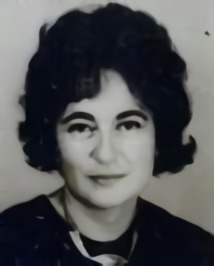
Heloise Ruth First OLG (4 May 1925 – 17 August 1982) was a South African anti-apartheid activist and scholar. She was assassinated in Mozambique, where she was working in exile, by a parcel bomb built by South African police.

Family and education

[edit]

Ruth First was born 4 May 1925 in Johannesburg to her Jewish parents, Julius First and Matilda Leveta. Julius emigrated to South Africa from Latvia when he was 10 years old, and Matilda emigrated from Lithuania when she was four years old. They were both anti-apartheid activists and became founding members of the Communist Party of South Africa (CPSA), the forerunner of the South African Communist Party (SACP). Ruth First was brought up in Kensington where she and her brother, Ronald First, were raised in a highly political household. At age 14, Ruth was a member of the Young Left Wing Book Club.[1] Like her parents, she joined the Communist Party,[2] which was allied with the African National Congress in its struggle to overthrow the apartheid government of South Africa.

As a teenager, First attended Jeppe High School for Girls and then became the first person in her family to attend university. She received her bachelor's degree in Social Science from the University of the Witwatersrand in 1946, receiving firsts in anthropology, economic history, sociology, and native administration.[3] While she was at university, she found that "on a South African campus, the student issues that matter are national issues". She was involved in the founding of the Federation of Progressive Students, also known as the Progressive Students League,[2] and got to know, among other fellow students, Nelson Mandela, future President of South Africa, and Eduardo Mondlane, the first leader of the Mozambique freedom movement FRELIMO. She was also the secretary of the Young Communist League and for a short time, was active in the Johannesburg CPSA.[3]

After graduating, First worked as a research assistant for the Social Welfare Division of the Johannesburg City Council. In 1946, her position in the Communist Party was boosted significantly after a series of mine strikes during which leading members of the Party were arrested. After this, First requested an interview with the Director of Social Welfare where she announced she would like to leave her department without serving her customary notice first. First then became the editor-in-chief of the radical newspaper The Guardian, which was subsequently banned by the state under the Communism Suppression Act and often changed names due to repressive state actions and media censorship.[2] Through investigative journalism, First exposed the racial segregation policies known as apartheid, targeting black South Africans following the rise of the National Party in 1948.[4]

In 1949, she married Joe Slovo, a South African anti-apartheid activist and Communist, with whom she had three daughters, Shawn, Gillian and Robyn. Together, Slovo and First became a leading force in the 1950s protest era in which the government outlawed any movements that opposed their policies.[4]

In addition to her work with The Guardian and its successors, the South African Congress of Democrats (COD), a White-only wing of the Congress Alliance, was founded in 1953 with support from First when the ANC expressed need for a group of White activists to endorse their policies and break through to members of the Nationalist party.[5]: 136 [6] In 1955, she assumed the position of editor of a radical political journal called Fighting Talk. First and Slovo were also members of the African National Congress, in addition to the Communist Party. She also played an active role during the extensive riots of the 1950s.[2] Ruth was on the drafting committee of the Freedom Charter, but was unable to attend its presentation on 25 June 1955 at the Congress of the People at Kliptown due to a banning order. Ruth also traveled to the International Union of Students and the founding conferences of the World Federation of Democratic Youth. She visited the Soviet Union, China, Britain, Italy, Yugoslavia, Germany, and France.[5]: 136 

Treason trial and detention

[edit]

First was one of the defendants in the Treason Trial of 1956–1961, alongside 155 other leading anti-apartheid activists who were key figures in the Congress Alliance. First's early work and writings were largely used as evidence to prove treason on behalf of the Congress Alliance.[7]

Following four years of harassment by the state, First alongside the 155 other activists were all acquitted of their charges. After the state of emergency that followed the Sharpeville massacre in 1960, she was listed and banned. She could not attend meetings or publish, and she could not be quoted. Her husband was arrested, and she fled to Swaziland with their children in order to avoid arrest. During the second half of the state of emergency, she returned to Johannesburg with her children secretly and lived underground.[5]: 137  In 1961, Ruth traveled to Namibia to interview the native Africans in the region. Though she was refused access to archived records, the material she collected during her four-day trip was used to write her first book South West Africa (owning a copy was punishable by up to five years in prison).[8] Around this time she also helped arrange the first broadcasts of Radio Freedom in Johannesburg.[3] Following this trip, Ruth was restricted for five years to the magisterial district of Johannesburg. In 1963, during the raid on Lilliesleaf Farm in Rivonia, multiple high ranking activists including Nelson Mandela were captured and given life in prison. Neither Ruth or her husband was present at the time of the raid. However, Ruth was arrested by security police in the main hall of Witwatersrand Library. She was imprisoned and held in isolation without charge for 117 days under the Ninety-Day Detention Law. She was the first white woman to be detained under this law.[9] After she was detained, her home was searched by police where they found a copy of “Fighting Talk,” owning which was punishable by a minimum of one year in prison.[5]: 5  She was originally placed at Marshall Square police station, and many of her belongings were taken. Ruth’s cell door was bolted after she had an encounter with fellow activist Hazel Goldreich.[5]: 22 

She was often questioned about her involvement in Rivonia, but she never revealed any information to the police. Her brother Ronald was also detained, though he was released three weeks later.[5]: 62, 91  Ruth was later moved to the Pretoria Central Prison where she was put under much higher security. She was eventually brought back to Marshall Square in Johannesburg and released on 7 November 1963.[5]: 98, 121  However, she was then arrested a second time for another period of 90 days after the Minister of Justice re-sentenced activists who served their 90 days without revealing information to the police (though she only served an extra 27 days).[5]: 123  While in prison, she performed a short-lived hunger strike.[5]: 127, 128  Ruth attempts suicide by consuming a bottle of pills prescribed to her to treat a stress-induced stomach ulcer, but she does not succeed in her attempt.[5]: 147–150  Ruth was released from prison 4 December 1963 with no charges.

Exile and assassination

[edit]
Plaque in Camden Town, London

In March 1964, First went into exile in London, where she became active in the British Anti-Apartheid Movement. Ruth edited the biographies of Nelson Mandela, Govan Mbeki, and Oginga Odinga in the late 1960’s and early 1970’s. She travelled across Africa between 1964 and 1968 to study independence struggles in Algeria, Egypt, Ghana, Nigeria, and Sudan. As a result, she was established as a scholar of international standing.[8] She was a Research Fellow at the University of Manchester in 1972, and between 1973 and 1978 she lectured in development studies at the University of Durham. She also spent periods on secondment at universities in Dar es Salaam and Lourenço Marques, Maputo.

In November 1978, First took up the post of director of research at the Centre of African Studies (Centro de Estudos Africanos), Universidade Eduardo Mondlane in Maputo, Mozambique.[10] She was assassinated by the order of Craig Williamson, a major in the South African Police, on 17 August 1982, when she opened a parcel bomb that had been sent to the university.[11][12] Bridget O'Laughlin, an anthropologist working with First, was in First's office when she was murdered, and testified to the Truth and Reconciliation Commission.[13] Presidents and ambassadors from 34 different countries were at her funeral in Maputo on 24 August 1982.[14]

Memoirs

[edit]

First's book, 117 Days, is her account of her arrest, imprisonment and interrogation by the South African Police Special Branch in 1963. It was first published in 1965. The memoir provides a detailed account of how she endured "isolation and sensory deprivation" while withstanding "pressure to provide information about her comrades to the Special Branch".[9]

Her daughter, the writer Gillian Slovo, published her own memoir, Every Secret Thing: My Family, My Country, in 1997. It is an account of her childhood in South Africa and her relationship with her activist parents.[15]

Films

[edit]

The film A World Apart (1988), which has a screenplay by her daughter Shawn Slovo and was directed by Chris Menges, is a biographical story about a young white girl living in South Africa with anti-apartheid activist parents, although the family is called Roth in the film. Barbara Hershey plays the character based on Ruth First.[16]

The 2006 film Catch a Fire about the activist Patrick Chamusso was written by Shawn Slovo, and in it First is portrayed by another daughter, Robyn Slovo, who was also one of the film's producers.[17]

Patrol vessel

[edit]
Fisheries protection vessel Ruth First at Buffels Bay.

In 2005, the South African Department of Environmental Affairs launched an environmental patrol vessel named Ruth First.[18]

In March 2011, the country of The Gambia issued a postage stamp in her honour, naming her as one of the Legendary Heroes of Africa.

Main published works

[edit]
  • South West Africa. London. 1963.{{cite book}}: CS1 maint: location missing publisher (link)
  • 117 Days. London. 1965.{{cite book}}: CS1 maint: location missing publisher (link)
  • (with R. Segal), South West Africa: A Travesty of Trust. London. 1967.{{cite book}}: CS1 maint: location missing publisher (link)
  • The Barrel of a Gun: Political Power in Africa and the Coup d'etat in Africa. London. 1970.{{cite book}}: CS1 maint: location missing publisher (link)
  • (co-edited with J. Steele and C. Gurney), The South African Connection: Western Investment in Apartheid. London. 1972.{{cite book}}: CS1 maint: location missing publisher (link)
  • Libya: The Elusive Revolution. London. 1970.{{cite book}}: CS1 maint: location missing publisher (link)
  • (with Ann Scott), Olive Schreiner. London: Andre Deutsch. 1980.
  • The Mozambican Miner: Proletarian and Peasant. New York. 1983.{{cite book}}: CS1 maint: location missing publisher (link)

See also

[edit]

References

[edit]
[edit]
Revisions and contributorsEdit on WikipediaRead on Wikipedia
from Grokipedia

Ruth Heloise First (4 May 1925 – 17 August 1982) was a South African investigative journalist, communist organizer, and academic whose career centered on opposition to the apartheid system through radical publications, underground political work, and analytical writings on African politics. Born in Johannesburg to Julius and Matilda First, Jewish immigrants and founding members of the Communist Party of South Africa (CPSA), she imbibed Marxist ideology from an early age and joined the party while studying social sciences at the University of the Witwatersrand, where she helped establish multiracial student groups.
First's activism included editing anti-apartheid newspapers like and , contributing to the 1955 , and supporting initiatives such as Radio Freedom broadcasts, for which she faced repeated government bans, house arrests, and participation in the (from which she was acquitted). In 1963, following 117 days of solitary confinement under the regime's 90-day detention law—detailed in her memoir 117 Days—she went into exile with her husband, SACP leader , initially to before relocating to , Mozambique, in 1977 to teach at . Her scholarly output, including South West Africa (1963), The Barrel of a Gun (1970) on African militaries, and posthumous Black Gold (1983) on oil in Africa, applied communist frameworks to critique and , though her sharp polemical style and ideological commitments drew personal enmities and familial strains as noted by her daughters. First was assassinated on 17 August 1982 by a parcel dispatched by South African security police agents, including , an apartheid operative later granted amnesty by the Truth and Commission.

Early Life

Family and Childhood

Ruth First was born on 4 May 1925 in , , to Julius First, a furniture manufacturer, and Matilda (Tilly) Levetan, Jewish immigrants from who had arrived in the country around 1906. Her parents were founding members of the Communist Party of South Africa, later renamed the (SACP), and maintained a strong commitment to socialist principles amid the rising influence of fascist ideologies in and nascent segregationist policies in . First grew up in the Kensington suburb of with her brother Ronald, in a middle-class, secular Jewish household characterized by intense political engagement. The family routinely hosted discussions and meetings focused on , , and Marxist analysis, often involving participants from diverse racial and class backgrounds, which immersed the children in radical leftist discourse from an early age. Her parents' activism, including Julius First's role as a party organizer, reinforced an environment where opposition to exploitation and was normalized, laying the groundwork for First's lifelong ideological orientation without formal indoctrination.

Education and Early Influences

Ruth First matriculated from Jeppe High School for Girls in in 1941. She enrolled at the in 1942 to study for a degree, focusing on and , which she completed in 1946. At Wits, First encountered progressive student organizations that emphasized multiracial collaboration against South Africa's emerging apartheid policies. She helped establish the Federation of Progressive Students, a non-racial group advocating for , and joined the Young Communist League, where she served as secretary. She also held a secretarial role in the Progressive Youth Council, through which she engaged in early coordinated anti-racist initiatives. These university experiences introduced First to peers and faculty promoting socialist analyses of South Africa's and economic disparities as interconnected issues requiring systemic overhaul, rather than reformist palliatives. This academic milieu, distinct from her later professional pursuits, honed her critique of capitalist structures underpinning inequality and oriented her toward investigative roles upon graduation, without yet entailing formal party .

Journalistic Career

Reporting on Apartheid Abuses

Ruth First commenced her journalistic career shortly after graduating from the in 1946, immediately covering the African Mineworkers' Strike on the , which began on August 12 and involved around 60,000 to 70,000 workers demanding a increase from the prevailing rate of about 4 shillings per shift to 10 shillings per day. As one of the few white reporters granted access, she entered the mine compounds to document the workers' grievances, living conditions, and the government's violent response, which included deploying over 5,000 police and troops, resulting in at least nine deaths and over 1,200 arrests by the strike's end on August 24. Her on-the-ground reporting highlighted the strike's roots in exploitative migrant labor systems, where African workers endured low pay, poor housing, and restricted union rights under the of 1911. In the late 1940s and early 1950s, First contributed to , the liberal weekly supplement of the Rand Daily Mail, focusing on systemic apartheid mechanisms such as pass laws, which required black South Africans to carry identity documents restricting movement and employment, leading to frequent arrests—over 600,000 annually by the mid-1950s. Her articles detailed enforcement abuses, including arbitrary raids and detentions, through interviews with affected individuals and analysis of official statistics, challenging state claims of orderly administration by evidencing widespread hardship and resistance. She also investigated forced removals, particularly under emerging policies like the Native Resettlement Act of 1954, which displaced thousands from urban areas to peripheral townships, documenting the demolition of homes and economic disruption in places like . First's reporting extended to rural poverty and labor exploitation, notably the Bethal farm scandals in the early 1950s, where she exposed conditions on potato farms in the eastern Transvaal involving chained African laborers subjected to whippings, beatings, and attack dogs by white owners, often in violation of the Masters and Servants Acts. Drawing on eyewitness accounts, court records, and visits to sites, her pieces quantified the scale—hundreds of workers per farm enduring debt bondage and physical coercion—contrasting official denials with empirical evidence of semi-slavery persisting despite nominal wage laws. This approach, emphasizing verifiable data over rhetoric, established her as a rigorous critic of apartheid's economic foundations, garnering praise in liberal and Africanist publications for illuminating causal links between policy and suffering, while prompting official rebuttals and increased surveillance of her work.

Key Publications and Investigations

Ruth First produced exposing labor exploitation under segregationist policies, notably her 1947 reports in the Guardian on conditions at potato farms in the Transvaal, where African workers endured beatings, inadequate food rations of one meal per day, and wages as low as 10 shillings monthly for 12-hour shifts, prompting a consumer that pressured farm owners to improve conditions temporarily. These pieces drew on worker testimonies and site visits, revealing how influx control laws funneled black labor into low-wage agriculture while prohibiting permanent settlement. As editor of from 1954 to 1963, First oversaw and contributed articles critiquing emerging apartheid structures, including analyses of the policy outlined in the 1959 Tomlinson Commission report, which proposed reserving 13% of land for 70% of the despite overcrowded reserves already supporting only subsistence farming for 2.5 million on 7.2 million hectares. Issues under her tenure compiled data showing white per capita income at £1,200 annually versus £50 for Africans in 1950, attributing disparities to laws like the Native Urban Areas Act of 1923 that restricted black and enforced evictions from centers, displacing over 100,000 residents by the mid-1950s under Group Areas enforcement. In New Age, the successor to the banned Guardian, First's 1956 article detailed how pass laws under the Suppression of Communism Act (1950) generated structural unemployment by criminalizing black mobility, with over 600,000 arrests annually by 1955 for pass violations, linking this to family disruptions in migrant labor systems where 300,000 men annually left reserves for Witwatersrand mines, leaving 40% of rural households female-headed and reliant on remittances averaging £5 monthly. Her 1962 essay "The Gold of Migrant Labour" further traced causal chains from the Mines and Works Act (1911) to social breakdown, using Chamber of Mines statistics to show 500,000 contract workers enduring 18-month separations, with tuberculosis rates 10 times higher among migrants due to dormitory conditions lacking family quarters. These works relied on government labor reports, interviews with 200+ workers, and archival records to document how policies prioritized white industrial growth over black welfare.

Political Ideology

Commitment to Marxism-Leninism

Ruth First adhered to Marxism-Leninism from her student years at the , joining the (SACP) in the mid-1940s and maintaining lifelong membership despite periods of exile and internal party debates. She framed apartheid as an extension of capitalist , arguing that South Africa's served to extract from black labor for white monopolies tied to global finance capital, requiring not piecemeal reforms but a proletarian-led to dismantle the entire . In SACP theoretical work, First emphasized class struggle as the primary driver of historical change, subordinating national liberation to the broader goal of socialist transformation and critiquing liberal approaches—such as those advocated by the Progressive Party or international anti-apartheid reformers—as illusions that masked ongoing exploitation under . Her contributions to party journals like , which she co-edited from 1950 to 1963, propagated this analysis, urging concrete examination of economic relations over racial symbolism alone, in line with Lenin's methodological imperatives. First's ideological rigor extended to defending Marxist-Leninist amid evident contradictions in Soviet practice, including the Stalinist purges of that eliminated millions through show trials and forced labor, yet she prioritized doctrinal fidelity—viewing such events as aberrations or necessary centralizations—over empirical reckoning with the regimes' systemic failures in delivering prosperity or liberty, as evidenced by the USSR's recurrent famines, archipelago, and post-1956 economic rigidities. This commitment reflected a causal realism rooted in materialist dialectics, dismissing liberal or social-democratic alternatives as complicit in perpetuating , even as African socialist experiments she supported, like those in , grappled with comparable authoritarian and productive shortfalls.

Role in SACP and ANC Structures

Ruth First was an active member of the underground (SACP) after its 1950 banning under the Suppression of Communism Act, participating in reorganization efforts through the Discussion Club, where she contributed to strategic debates on sustaining party operations amid repression. As a central figure in SACP structures during leadership arrests in the 1940s strikes, she helped maintain continuity by engaging in internal coordination and policy formulation within the party's clandestine framework. First collaborated with the African National Congress (ANC) through joint SACP-ANC initiatives, including representation in professional and operational alliances that aligned communist strategy with broader anti-apartheid efforts. Working alongside her husband Joe Slovo, a key SACP and ANC operative, she joined a joint ANC-SACP committee formed after the Sharpeville Massacre on March 21, 1960, which debated and advanced the transition from non-violent protest to armed resistance, culminating in the establishment of Umkhonto we Sizwe on December 16, 1961. This involvement emphasized operational planning to integrate intellectual input on tactics with militant execution, prioritizing disciplined structures over ad hoc responses. In SACP and ANC networks, First supported clandestine operations, including the production and distribution of propaganda leaflets during the early 1960s sabotage campaign, which involved materials to evade state and sustain underground communication. Her efforts extended to coordinating exile linkages pre-departure, fostering party discipline by linking internal cells with international communist support networks for resource sharing and strategic alignment. These roles underscored her function in bridging analytical planning with logistical execution across allied organizations.

Activism and Advocacy

Campaigns Against Racial Discrimination

Ruth First took part in the 1952 , a coordinated non-violent action by the (ANC) and allied groups to contravene specific apartheid statutes, including pass laws requiring black South Africans to carry identification documents restricting their movement, the of 1950 that segregated residential zones by race, and other segregation measures. The campaign involved over 8,000 participants by mid-1952, with volunteers deliberately courting arrest to overload the judicial system and highlight the laws' injustices, resulting in more than 10,000 convictions but no policy reversals. She contributed to the preparation of the , drafted by a subcommittee of the Congress Alliance and adopted at the Congress of the People in Kliptown on 25–26 June 1955, where approximately 3,000 delegates gathered to endorse demands for , abolition of in employment and education, and land redistribution to end the concentration of ownership among white farmers. First served on the charter's drafting committee, though a prior banning order prevented her attendance at the congress itself; the document's clauses emphasized empirical grievances, such as the dispossession of black farmers under the 1913 Natives Land Act, which limited their holdings to 7% of despite comprising 80% of the population. Through the Congress of Democrats, which First co-founded in 1953 as a white-supporting organization aligned with the ANC, she mobilized multiracial protests against evictions under the and enforcements, including bus boycotts and women's campaigns that documented family separations and economic disruptions affecting over 2 million black workers annually subjected to pass checks. These efforts involved petitions and public addresses citing data on forced relocations—such as the 60,000 Coloured residents displaced from in by 1960—and socioeconomic indicators like the 20-fold wage gap between white and black laborers, aiming to build cross-racial coalitions without direct confrontation.

Support for Armed Struggle

Ruth First endorsed the (SACP) and (ANC) shift to armed resistance via Umkhonto we Sizwe (MK) after the Sharpeville Massacre on March 21, 1960, in which police killed 69 unarmed protesters and wounded 180, demonstrating the apartheid state's unwillingness to tolerate non-violent defiance of pass laws. She viewed and guerrilla tactics as a necessary causal response to the regime's , including subsequent emergency declarations, mass arrests, and the banning of the ANC and Pan Africanist Congress in April 1960, which rendered peaceful protest ineffective. This endorsement aligned with the broader SACP-ANC assessment that apartheid's military apparatus, backed by laws like the 1962 Sabotage Act, precluded non-violent paths to reform. In her 1968 analysis "From the Freedom Charter to Armed Struggle," First intellectually justified MK's formation on December 16, 1961, as the "fighting arm of the people," initially focused on sabotaging economic and governmental infrastructure tied to oppression without targeting lives. Quoting Nelson Mandela's testimony, she framed the decision as a "calm and sober assessment" of political realities, where the regime interpreted non-violence as capitulation, necessitating proportionate force to disrupt the apartheid system's operations and signal resolve. Her writings emphasized that such tactics complemented political mobilization, pressuring the state toward negotiation amid its repressive overreach. Critics of First's position argue she underestimated armed struggle's escalation of violence and civilian toll, as MK operations increasingly involved attacks on "soft targets" like power stations and public facilities, leading to unintended deaths; the Truth and Reconciliation Commission reported that most casualties from MK actions were civilians, totaling at least 71 fatalities in operations from 1976 to 1984 alone. Empirical assessments indicate these tactics prolonged the conflict by provoking harsher state countermeasures, including cross-border raids and internal security laws, delaying apartheid's dismantlement until internal mass resistance and gained primacy in the late . While First perceived armed actions as defensively essential, data on overall —exceeding 20,000 deaths from 1984 to 1994—highlights how such strategies amplified mutual reprisals without decisively weakening the regime's core apparatus.

Persecution Under Apartheid

1956 Treason Trial

Ruth First was arrested on 5 December 1956 during coordinated police raids targeting leaders of the Congress Alliance, and charged with high treason alongside 155 other defendants, including prominent figures from the (ANC) and (SACP), for allegedly conspiring to overthrow the apartheid government by force in relation to the adopted at the Congress of the People in Kliptown on 26 June 1955. The indictment centered on claims that the defendants intended to subvert the state through communist-inspired revolution, with First's journalistic articles from her work at publications like and cited as evidence of subversive intent. First, along with her husband , endured initial detention without trial for approximately four months before being released on bail in 1957, amid preparatory examinations that subjected defendants to prolonged legal scrutiny in Johannesburg's Drill Hall courtroom. The proceedings, which began formally in late 1956, extended over five years due to the prosecution's voluminous and defense challenges, with charges against most defendants, including First, withdrawn on 13 1958 after failing to establish a case of violent . The remaining 30 defendants faced a main from October 1958 to March 1961, culminating in the of all on 29 March 1961 for lack of proof of to use against the state, exposing the apartheid judiciary's reliance on political motivations over substantive evidence in pursuing the case. During her involvement, First's testimony and defense emphasized the legitimacy of her reporting on political events and organizing, rejecting allegations of treasonous plotting while highlighting the Charter's non-violent democratic aspirations. This outcome underscored selective prosecutions aimed at intimidating opposition rather than securing convictions based on verifiable criminal acts.

Banning Orders, Detentions, and Forced Exile

Ruth First faced a series of banning orders issued by the South African apartheid government, beginning in 1960 following the massacre and ensuing , which prohibited her from attending political gatherings, quoting from such events, and engaging in public speaking or writing under her own name. These orders were renewed and expanded in subsequent years, including restrictions in 1963 that confined her to the magisterial district and barred her from social or political meetings, effectively curtailing her journalistic and activist work. Additional prohibitions prevented her from entering designated African townships or leaving the city without permission, isolating her from sources and collaborators essential to her investigations into apartheid abuses. In August 1963, amid raids targeting underground anti-apartheid networks, First was arrested under the newly enacted 90-Day Detention Law (General Laws Amendment Act No. 37 of 1963), which permitted without trial or access to legal counsel for suspected communists or saboteurs; she became the first white woman detained under this provision and was held for 117 days in across facilities in and . Interrogations by Security Branch police employed psychological tactics, including prolonged isolation, , and relentless questioning aimed at extracting information on ANC and SACP activities, which First later characterized in her memoir as a deliberate "war of nerves" designed to break detainees' resolve without physical violence. Released in without charges, First encountered intensified and the prospect of renewed detention, compounded by her existing bans that rendered continued domestic untenable; these pressures culminated in her departure from on an exit permit in March 1964, which barred her permanent return and marked her transition to exile-based opposition against the regime.

Exile and Final Years

Life in London and Swaziland

In March 1964, following her release from detention under apartheid security laws, Ruth First departed on an exit permit with her three daughters and joined her husband, , in , marking the beginning of her . The family settled in , where First immersed herself in anti-apartheid activism, leveraging the city's role as a hub for exiled South African opposition figures. She contributed to the British (AAM) through public speaking, including addresses at rallies such as one in advocating for Nelson Mandela's release, and collaborated with ANC leaders like on policy documents analyzing the shift to armed resistance. First's work emphasized economic pressures on the apartheid , including organizing national conferences in on against and editing proceedings from the second conference into a volume that highlighted international investment's role in sustaining the system. She compiled research on 's , focusing on migrant labor exploitation and global trade linkages that bolstered the , often drawing on data from African field trips to countries like and . In 1966, she enrolled for graduate studies at the London School of Economics under , integrating academic analysis with advocacy for and UN-backed inquiries into South African conditions. These efforts aligned with broader campaigns by international leftists to expose and disrupt apartheid's economic dependencies, though First's Marxist perspective sometimes drew skepticism from Western academic circles. During this period, First made brief visits to Swaziland to manage family connections and coordinate discreetly with regional exile networks, navigating South African surveillance via cross-border routes to avoid detection. Her London-based activities thus served as a logistical base for smuggling sensitive documents and funds to support underground operations, while evading apartheid agents through such maneuvers. By the mid-1970s, these experiences informed her evolving focus on sanctions as a non-violent lever against the regime's international support structures.

Academic Positions in Mozambique

In 1977, Ruth First was appointed and research director at the Centre for (Centro de Estudos Africanos, CEA) of in , , where she focused on building scholarly capacity in the newly independent socialist state. In this role, she recruited and trained a small group of academics and , emphasizing empirical analysis of Southern African political economy to equip Mozambican cadres with tools for analyzing and dependency relations. First directed multidisciplinary research projects at the CEA, including studies on labor migration from to South African mines, which relied on fieldwork data from recruitment systems, wage structures, and rural impacts to document exploitative dependencies. These efforts produced reports such as The Mozambican Miner: A Study in the Export of Labour (1977), highlighting how colonial-era labor export perpetuated economic subordination post-independence, while advocating for shifts toward national control of resources. Her work integrated quantitative data on migrant remittances and employment cycles with qualitative assessments of and peasant economies, aiming to inform FRELIMO's strategies against regional capitalist influences. Through seminars and collaborative fieldwork, First fostered critiques of inherited economic structures, cautioning against vulnerabilities like intermediation in labor flows that could undermine socialist redistribution, though her analyses remained aligned with the government's anti-imperialist framework. By , the CEA under her direction had generated datasets and policy briefs on imperialism's regional dynamics, contributing to Mozambique's efforts to renegotiate migrant labor agreements with amid sanctions and border conflicts.

Assassination by South African Agents

On 17 August 1982, Ruth First was killed instantly when a letter bomb exploded upon opening in her office at the Centre for African Studies, , in , . The device had been concealed within a parcel originally sent by a agency and intercepted by South African agents, who modified it before redirecting it to her address. This method exemplified the apartheid regime's use of covert parcel and letter bombs in assassinations, a tactic employed by its security apparatus to target exiles without direct traceability. The assassination was ordered by , a high-ranking apartheid intelligence operative who had infiltrated anti-apartheid circles, with the bomb constructed by fellow agent Jerry Raven of the South African . It stemmed from broader efforts to neutralize key ANC and SACP figures in , particularly after repeated failures to eliminate First's husband, , a prominent strategist; Williamson later testified that frustration over these setbacks contributed to selecting First as a target to disrupt exile networks coordinating armed resistance and against the . Confessions by Williamson and Raven during Truth and Reconciliation Commission amnesty hearings in the late 1990s confirmed the operation's origins in South African state security structures, distinct from later entities like the but aligned with the regime's "third force" tactics of extraterritorial killings. First's funeral on 24 August 1982 in drew around 3,000 mourners, including presidents, members of parliament, and ambassadors from over 30 countries, highlighting immediate global outrage at the act as emblematic of apartheid-sponsored extraterritorial violence. Eyewitness accounts from the blast scene, including colleague Bridget O'Laughlin's testimony to the TRC, described the graphic aftermath—severed limbs and First's body slumped over her desk—underscoring the bomb's lethal precision and the regime's intent to terrorize intellectual and political opponents abroad.

Intellectual Output

Major Books and Articles

Ruth First produced several analytical works critiquing the economic structures sustaining apartheid, drawing on empirical such as trade statistics, disparities, and labor conditions to argue for the complicity of global in racial oppression. Her co-authored book The South African Connection: Western Investment in Apartheid (1972), written with Jonathan Steele and Christabel Gurney, dissects how multinational corporations from Britain, the , and funneled capital into South Africa's , , and arms sectors, thereby bolstering the regime's stability; the text marshals from company reports and balance-of-payments showing investments exceeding £1 billion by 1970, which generated profits amid suppressed black averaging one-tenth of white counterparts. In Black Gold: The Mozambican Miner, Proletarian and Peasant (1983, published posthumously), First examines the cross-border migrant labor that supplied South African gold mines with over 100,000 Mozambican workers annually in the 1970s, highlighting the dual exploitation as urban proletarians facing rates above 20% and rural whose remittances—often under 10% of mine output value—failed to offset family impoverishment; based on interviews with 300 and archival records, the book traces causal links from colonial labor treaties to health epidemics and household disintegration, framing these as mechanisms of perpetuated by private mine ownership. First's journal articles, including contributions to Review of African Political Economy, extended this scrutiny to and mining, documenting how apartheid's pass laws and land acts confined black farmworkers to earnings below R100 monthly in the 1960s—versus R500 for whites—while exposing incidence 15 times higher among black miners due to ventilation failures and extended shifts; these pieces emphasized capitalist profit motives over racial ideology as the root driver, advocating resource as a remedial path, though without engaging data on productivity declines in nationalized industries elsewhere in .

Memoirs and Personal Reflections

Ruth First's most prominent autobiographical work, 117 Days (1965), chronicles her detention without trial under South Africa's 90-day detention law from August 1963 to November 1963, detailing the psychological pressures of , repeated interrogations by , and tactics aimed at extracting information about underground activities. The narrative exposes the regime's methods of isolation and coercion, including and manipulation, while First reflects on her internal resolve and ideological commitments amid disorientation. In her co-authored biography Olive Schreiner: A Biography (1980, with Ann Scott), First examines the life of the 19th-century South African writer, emphasizing Schreiner's struggles against patriarchal constraints, imperial expansion, and personal health afflictions, which First parallels with her own experiences of marginalization as a female activist in a repressive society. These reflections reveal First's identification with Schreiner's ambivalence toward personal fulfillment versus political engagement, underscoring themes of feminist resistance and anti-imperial critique drawn from First's lived tensions between family life and militancy. Posthumous collections from the Ruth First Papers, archived at the Institute of Commonwealth Studies, include correspondence, notes, and unpublished writings that disclose her private apprehensions during , such as the emotional toll of separation from and the alienation of life in and Swaziland from the mid-1960s onward. These documents highlight strains on her marriage to and the psychological isolation of banned activists abroad, contrasting her public persona of unyielding commitment with candid admissions of doubt and fatigue.

Legacy and Assessments

Influence on Anti-Apartheid Movement

Ruth First's investigative journalism during the 1950s, published in outlets such as the New Age and Drum magazine, exposed key apartheid mechanisms including forced removals under the Group Areas Act and the enforcement of pass laws, thereby documenting systemic oppression and contributing to early international awareness of the regime's policies. Her reporting on events like the 1952 Defiance Campaign and the 1956 Treason Trial trials highlighted resistance efforts and state responses, informing global solidarity networks. In exile after 1963, First's publications, including 117 Days (1965) detailing her and , provided empirical accounts of brutality, amplifying calls for boycotts and influencing anti-apartheid advocacy in Europe and the . Co-authored works like The South African Connection (1972) analyzed Western economic ties to , critiquing foreign investment that sustained the apartheid economy and bolstering campaigns for and sanctions that intensified in the 1980s, leading to measures such as the U.S. of 1986. These efforts aligned with (ANC) strategies to isolate the regime diplomatically and economically. From 1977 at in , First directed research units that trained exile cadres and students in socio-economic analysis, enhancing the South African Communist Party's (SACP) capacity for and through data-driven critiques of apartheid's labor and agrarian policies. Her mentorship of over 100 postgraduate students, many of whom joined liberation movements, fostered intellectual resources for post-apartheid policy formulation. First's exposés on regime atrocities, including state-sponsored violence and economic exploitation, were referenced in Truth and Reconciliation Commission (TRC) testimonies post-1995, underscoring patterns of repression that her earlier work had illuminated. This documentation supported TRC findings on gross human rights violations, contributing to the legal and moral case against apartheid functionaries.

Cultural Depictions and Honors

Ruth First's life has been portrayed in biographical documentaries, including a 2022 YouTube production titled "KNOW YOUR HISTORY: Remembering the life of Ruth First," which outlines her contributions as an anti-apartheid activist. Adaptations of her 1965 memoir 117 Days, detailing her 1963 detention under apartheid laws, have appeared in video formats, such as a 2016 presentation. A fisheries patrol vessel named SAS Ruth First was built in 2005 as part of South Africa's Lillian Ngoyi-class inshore environmental vessels, operating under the for maritime enforcement. The has organized annual Ruth First Memorial Lectures since at least 2000, delivered by figures in and , with the 17th edition held in 2022 focusing on media and . In 2025, commemorating the centenary of her birth on November 4, 1925, the Young Communist League of hosted events including a lecture on her life and legacy on May 15 in .

Criticisms and Ideological Debates

First's commitment to Marxist-Leninist ideology through the (SACP) positioned her as a proponent of class-based and transformation, yet this framework drew scrutiny for overlooking the interplay of racial dynamics and incremental reforms in 's context. While her exposés, such as those on labor exploitation, garnered acclaim for empirical detail, detractors argued her emphasis on subordinated potential negotiated concessions—evident in early campaigns—to an uncompromising pursuit of systemic overthrow, potentially foreclosing paths to earlier . Her support for the shift to armed struggle, detailed in writings tracing the Freedom Charter's evolution to Umkhonto we Sizwe's formation in 1961, fueled ideological debates on efficacy. Proponents within the hailed it as essential and morale booster against apartheid intransigence, but critical analyses contend MK's and guerrilla efforts yielded marginal territorial gains and high cadre losses—inflicting under 5% of regime casualties by 1990—while escalating state repression and diverting resources from , thus extending societal trauma without tipping the military balance. Post-1994 assessments highlight the disconnect between First's advocacy for SACP-led socialist reconstruction and the African National Congress's pragmatic pivot, exemplified by the 1996 Growth, Employment and Redistribution (GEAR) , which favored fiscal and market over , stabilizing growth at 3.3% annually in the late but yielding persistent inequality with a above 0.63. SACP influence, rooted in vanguardist principles akin to those First championed, manifested in cadre deployment—placing over 100,000 party loyalists in public roles by 2017—widely faulted for eroding , enabling via scandals totaling R500 billion in losses, and hampering service delivery, as seen in blackouts and municipal collapses. Debates also encompass First's qualified alignment with Soviet models; though she publicly opposed the 1968 Czechoslovakia invasion and queried bureaucratic excesses, her SACP loyalty sustained endorsement of centralized planning's purported successes, a stance retrospectively challenged by the USSR's 1991 implosion amid chronic shortages—GDP per capita stagnating below $7,000—and revelations of gulag-scale abuses, contradicting the egalitarian outcomes her analyses projected for post-apartheid emulation.

References

Add your contribution
Related Hubs
Contribute something
User Avatar
No comments yet.