



Community hub
Recent from talks
Contribute something
Nothing was collected or created yet.
SOAS University of London
View on Wikipedia
The School of Oriental and African Studies (SOAS University of London; /ˈsoʊæs/)[6][7] is a public research university in London, England, and a member institution of the federal University of London. Founded in 1916, SOAS is located in the Bloomsbury area of central London.
Key Information


SOAS is one of the world's leading institutions for the study of Asia, Africa, and the Middle East.[8] Its library is one of the five national research libraries in England.[9] SOAS also houses the SOAS Gallery, which hosts a programme of changing contemporary and historical exhibitions from Asia, Africa, and the Middle East with the aim of presenting and promoting cultures from these regions. The annual income of the institution for 2023–24 was £113.8 million of which £9.6 million was from research grants and contracts, with an expenditure of £76.6 million.[1]
SOAS is divided into two colleges and one self-standing school: the College of Humanities; the College of Social Sciences; and the SOAS School of Law. The university offers around 350 bachelor's degree combinations, more than 100 one-year master's degrees, and PhD programmes in nearly every department. The university has educated several heads of state, government ministers, diplomats, central bankers, Supreme Court judges, a Nobel Peace Prize Laureate, and many other notable leaders around the world. SOAS is a member of the Association of Commonwealth Universities.
History
[edit]Origins
[edit]The School of Oriental Studies was founded in 1916 at 2 Finsbury Circus, London, the then premises of the London Institution. The school received its royal charter on 5 June 1916 and admitted its first students on 18 January 1917. The school was formally inaugurated a month later on 23 February 1917 by George V. Among those in attendance were Earl Curzon of Kedleston, formerly Viceroy of India, and other cabinet officials.[10]

The School of Oriental Studies was founded by the British state as an instrument to strengthen Britain's political, commercial, and military presence in Asia and Africa.[12] It would do so by providing instruction to colonial administrators (Colonial Service and Imperial Civil Service),[12] commercial managers, and military officers, as well as to missionaries, doctors, and teachers, in the language of the part of Asia or Africa to which each was being posted, together with an authoritative introduction to the customs, religions, laws, and history of the people whom they were to govern or among whom they would be working.[12]
The school's founding mission was to advance British scholarship, science, and commerce in Africa and Asia, and to provide London University with a rival to the Oriental schools of Berlin, Petrograd, and Paris.[13] The school immediately became integral to training British administrators, colonial officials, and spies for overseas postings across the British Empire. Africa was added to the school's name in 1938.
Second World War
[edit]For a period in the mid-1930s, prior to moving to its current location at Thornhaugh Street, Bloomsbury, the school was located at Vandon House, Vandon Street, London SW1, with the library located at Clarence House. Its move to new premises in Bloomsbury was held up by delays in construction and the half-completed building took a hit during the Blitz in September 1940. With the onset of the Second World War, many University of London colleges were evacuated from London in 1939 and billeted on universities in the rest of the country.[14] The School was, on the Government's advice, transferred to Christ's College, Cambridge.[15]
In 1940, when it became apparent that a return to London was possible, the school returned to the city and was housed for some months in eleven rooms at Broadway Court, 8 Broadway, London SW1. In 1942, the War Office joined with the school to create a scheme for State Scholarships to be offered to select grammar and public-school boys with linguistic ability to train as military translators and interpreters in Chinese, Japanese, Persian, and Turkish. Lodged at Dulwich College in south London, the students became affectionately known as the Dulwich boys.[16] One of these students was Charles Dunn, who became a prominent Japanologist on the faculty of the SOAS and a recipient of the Order of the Rising Sun.[17] Others included Sir Peter Parker and Ronald Dore. Subsequently, the School ran a series of courses in Japanese, both for translators and for interpreters.[18]
1945–present
[edit]
In recognition of SOAS's role during the war, the 1946 Scarborough Commission (officially the "Commission of Enquiry into the Facilities for Oriental, Slavonic, East European and African Studies")[19] report recommended a major expansion in provision for the study of Asia and the school benefited greatly from the subsequent largesse.[20] The SOAS School of Law was established in 1947 with Seymour Gonne Vesey-FitzGerald as its first head. Growth however was curtailed by following years of economic austerity, and upon Sir Cyril Philips assuming the directorship in 1956, the school was in a vulnerable state. Over his 20-year stewardship, Phillips transformed the school, raising funds and broadening the school's remit.[20]
A college of the University of London, the School's fields include Law, Social Sciences, Humanities, and Languages with special reference to Asia and Africa. The SOAS Library, located in the Philips Building, is the UK's national resource for materials relating to Asia and Africa and is the largest of its kind in the world.[21] The school has grown considerably over the past 30 years, from fewer than 1,000 students in the 1970s to more than 6,000 students today, nearly half of them postgraduates. SOAS is partnered with the Institut National des Langues et Civilisations Orientales (INALCO) in Paris which is often considered the French equivalent of SOAS.[22]
In 2011, the Privy Council approved changes to the school's charter allowing it to award degrees in its own name, following the trend set by fellow colleges the London School of Economics, University College London and King's College London. All new students registered from September 2013 will qualify for a SOAS, University of London, award.[23]
In 2012, a new visual identity for SOAS was launched to be used in print, digital media and around the campus. The SOAS tree symbol, first implemented in 1989, was redrawn and recoloured in gold, with the new symbol incorporating the leaves of ten trees, including the English Oak representing England; the Bodhi, Coral Bark Maple, Teak representing Asia; the Mountain Acacia, African Pear, Lasiodiscus representing Africa; and the Date Palm, Pomegranate and Ghaf representing the Middle East.[24]
Student politics
[edit]Israel and Palestine
[edit]SOAS has a student body of which many are committed anti-Zionists. The SOAS Students' Union was the first students' union to carry out a referendum, in 2005, to support the Boycott Divestment and Sanctions movement for goods stocked in the Students' Union,[25] and in 2015, the SOAS Students' Union held a referendum in which its members voted to adopt the Boycott, Divestment and Sanctions directions more generally in the university. In 2022, students occupied the management section of the university for nine days, citing the university's investments in Israel amongst other reasons, which led to the university spending £200,000 in their eviction.[26] After Israel's war in Gaza. university management suspended seven students protesting the university's investments in Israel and partnership with Haifa university, a university in Israel with three military colleges and a military base on campus.[26] These students stated that the suspensions were arbitrary and a "targeted act of political repression", whereas the university replied that the students were a "threat to the SOAS community".[27] In the same period, a lecturer reported that security had removed a poster with the Palestinian flag from her door. SOAS responded that the display of the Palestinian flag violated "safeguarding".[28]
SOAS has an active Jewish Society which is explicitly anti-Zionist.[29] In 2024, and in the context of university protest camps established around the world relating to Israel's war in Gaza, SOAS director Adam Habib hosted a high-level meeting about antisemitism on campus, extending an invite to various Jewish academics on campus, but excluding any representation from the Jewish Society. On April 19, 2024, SOAS posted a job advert for a new Jewish Chaplain whose key responsibilities include supporting "the implementation of a Jewish Society within the Student [sic] Union," therefore implicating that the existing Jewish Society would be replaced by a society organised from the top down.[30]
In December 2020 The Guardian reported that SOAS refunded a student £15,000 in fees after he chose to abandon his studies as a result of the "toxic antisemitic environment" he felt had been allowed to develop on campus.[31] Examples of matters he considered anti-Semitic are, according to the Guardian report previously cited, that being pro-Israel was described as "Zionist", the student body's public support of the BDS movement, and that his proposal to write a thesis on perceived anti-Israel bias at the UN led to a response that, in his words, "he was covering up Israeli war crimes and was a white supremacist Nazi". He additionally stated that he had seen "anti-Semitic graffiti" on campus, but did not specify what this was, leaving it unclear as to whether or not he considered statements for example in support of the BDS movement as anti-Semitic. Leading Jewish figures at the university have disagreed with his assessment, with stating that they felt "much more comfortable being outwardly Jewish, visibly Jewish, or having people know that I'm Jewish around SOAS students than I am in pretty much any other context in this country."[30]
Campus
[edit]
The campus is located in the Bloomsbury area of central London, close to Russell Square. It includes College Buildings (the Philips Building and the Old Building), Brunei Gallery building, 53 Gordon Square (which houses the Doctoral School) and, since 2016, the Paul Webley Wing (the North Block of Senate House). The SOAS library designed by Sir Denys Lasdun in 1973 is located in the Philips Building. The nearest Underground station is Russell Square.
The school houses the Brunei Gallery, built from an endowment from the Sultan of Brunei Darussalam, the leader of a country whose human rights abuses are ongoing,[32] and inaugurated by the Princess Royal, as Chancellor of the University of London, on 22 November 1995. Its facilities include exhibition space on three floors, a book shop, a lecture theatre, and conference and teaching facilities. The Brunei Gallery hosts a programme of changing contemporary and historical exhibitions from Asia, Africa and the Middle East with the aim to present and promote cultures from these regions.[33]
The Japanese-style roof garden on top of the Brunei Gallery was built during the Japan 2001 celebrations and was opened by the sponsor, Haruhisa Handa, an Honorary Fellow of the School, on 13 November 2001.[34]
The school hosted the Percival David Foundation of Chinese Art, one of the foremost collections of Chinese ceramics in Europe. The collection has been loaned to the British Museum, where it is now on permanent display in Room 95.
The SOAS Centenary Masterplan conceived the development of two new buildings and a substantial remodelling of existing space to realign and develop the entrance and two areas within the Old Building. The cost estimates for the Centenary Masterplan settle at around £73m for the total project. The full implementation of the School's Centenary Masterplan would deliver approximately 30% additional space, approximately 1,000 sq metres.[35]
Governance and administration
[edit]Presidents
[edit]| Appointed | President |
|---|---|
| 2001 | Helena Kennedy[36] |
| 23 April 2012 | Graça Machel[37] |
| 5 October 2021 | Zeinab Badawi[3] |
Directors/Vice-Chancellors
[edit].jpg)
Since its foundation, the school has had ten directors. The inaugural director was the linguist Edward Denison Ross. Under the stewardship of Cyril Philips, the school saw growth and modernisation.[20] Under Colin Bundy in the 2000s, the school became one of the top ranked universities both domestically and internationally.[38] In January 2021 Adam Habib became director of SOAS in place of Valerie Amos, who had taken up the position of Master at University College, Oxford.[39][40] In 2024, the position of director was renamed vice-chancellor.[41]
| Appointed | Director/Vice-Chancellor |
|---|---|
| 1916 | Edward Denison Ross |
| 1937 | Ralph Lilley Turner |
| 1956 | Cyril Philips |
| 1976 | Jeremy Cowan |
| 1989 | Michael McWilliam |
| 1996 | Tim Lankester |
| 2001 | Colin Bundy[42] |
| 2006 | Paul Webley[43] |
| 2015 | Valerie Amos |
| 2021 | Adam Habib |
Board of Trustees
[edit]The SOAS Board of Trustees sets policy, mission, and purpose for the university. The Trustees are also responsible for overseeing the management of resources and upholding SOAS's role. The board consists of a chair, two vice-chairs, an honorary treasurer, 10 lay members, the Vice-Chancellor, Provost, and Deputy Vice-Chancellor, Deputy Vice-Chancellor Research and Knowledge Exchange, Deputy Vice-Chancellor of Finance and Operations and Clerk to the Board, a Professional Services Member, college deans, and student representatives.[44]
Academic organisation
[edit]Colleges and departments
[edit]As of 1 August 2025, SOAS is divided into two colleges and one self-standing School.[45] These are further divided into academic departments. SOAS has many Centres and Institutes, each of which is affiliated to a particular faculty.
College of Humanities
[edit]The College of Humanities houses the School of Art, the School of History, Religions and Philosophies, the School of Languages, Cultures and Linguistics, and the School of Anthropology, Media and Gender. The first ever university linguistics department in the United Kingdom was created in 1932 at SOAS, serving as a centre for research and study in Oriental and African languages.[46] J. R. Firth, known internationally for his work in phonology and semantics, was a Senior Lecturer, Reader and Professor of General Linguistics at the school between 1938 and 1956.
The College of Humanities offers courses at the undergraduate and postgraduate levels, with an emphasis on Asia, Africa, and the Middle East. A gift from the Alphawood Foundation in 2013 created the Hiram W. Woodward Chair in Southeast Asian art, the David Snellgrove Senior Lectureship in Tibetan and Buddhist art, and a Senior Lectureship in Curating and Museology of Asian Art, as well as a number of scholarships for students, making the Department of Art & Archaeology a key institution at a global level in the study of Southeast Asia.[47] The university is also a member of the Screen Studies Group, London.
College of Social Sciences
[edit]The College of Social Sciences houses the departments of Development, Politics and International Studies, Economics, and Finance and Management.
SOAS School of Law
[edit]One of the largest individual departments, the SOAS School of Law is one of Britain's leading law schools and the sole law school in the world focusing on the study of Asian, African and Middle Eastern legal systems.[48] The School of Law has more than 400 students. It offers programmes at the LL.B., LL.M. and MPhil/PhD levels. International students have been a majority at all levels for many years.
The SOAS School of Law has an unrivaled concentration of expertise in the laws of Asian and African countries, human rights, transnational commercial law, environmental law, and comparative law. The SOAS School of Law was ranked 15th out of all 98 British law schools by The Guardian League Table in 2016.[49]
Although many modules at SOAS embody a substantial element of English common law, all modules are taught (as much as possible) in a comparative or international manner with an emphasis on the way in which law functions in society. Thus, law studies at SOAS are broad and comparative in their orientation. All students study a significant amount of non-English law, starting in the first year of the LL.B. course, where "Legal Systems of Asia and Africa" is compulsory. Specialised modules in the laws and legal systems of particular countries and regions are also encouraged, and faculty experts conduct modules in these subjects every year.
Institutes and regional centres
[edit]SOAS has a number of region-specific institutions, drawing on expertise across the various colleges:[50]
- SOAS China Institute
- SOAS Middle East Institute
- SOAS South Asia Institute
- SOAS Centre for Taiwan Studies
It also has a number of regional centres and other, non-regional institutes:
- SOAS Shapoorji Pallonji Institute of Zoroastrian Studies
- Centre of African Studies
- Centre of Contemporary Central Asia and the Caucasus
- Centre for Iranian Studies
- Centre of Korean Studies
- Centre for the Study of Pakistan
- Centre for Palestine Studies
- Centre of South East Asian Studies
- Japan Research Centre
Academic profile
[edit]
SOAS is a centre for the study of subjects concerned with Asia, Africa and the Middle East.[51] It trains government officials on secondment from around the world in Asian, African and Middle Eastern languages and area studies, particularly in Arabic & Islamic Studies – which combined with Hebrew formed the major bulk of classical Oriental Studies in Europe – and Mandarin Chinese. It also acts as a consultant to government departments and to companies such as Accenture and Deloitte – when they seek to gain specialist knowledge of the matters concerning Asia, Africa and the Middle East.
The school has a student-staff ratio of 15:1, which in the Complete University Guide 2025 ranked 44th in the UK.[51]
Library
[edit]
The SOAS library is a library for Asian, African and Middle Eastern studies.[52] It houses more than 1.2 million volumes and electronic resources for the study of Africa, Asia and the Middle East,[52] and attracts scholars from all over the world. The library was designated by HEFCE in 2011 as one of the UK's five National Research Libraries.[53]
The library is housed in the Philips Building on the Russell Square campus and was built in 1973.[54] It was designed by architect Sir Denys Lasdun, who also designed some of Britain's brutalist buildings such as the National Theatre and the Institute of Education.
In 2010/11, the library underwent a £12 million modernisation programme, known as "the Library Transformation Project".[55] The work refurbished the ground floor of the library and created new reception and entrance areas, new music practice rooms, group study rooms and a gallery exhibition space.[56]
Since SOAS is a constituent college of the University of London, its students also have access to Senate House Library, shared by other colleges such as London School of Economics and University College London, which is located close to the Russell Square campus.
The library was used as a filming location for some scenes in the 2016 film Criminal.[57]
Rankings
[edit]| National rankings | |
|---|---|
| Complete (2026)[58] | 62= |
| Guardian (2026)[59] | 116 |
| Times / Sunday Times (2026)[60] | 75 |
| Global rankings | |
| QS (2026)[61] | 511= |
| THE (2026)[62] | 401–500 |

The 2022 QS World University Rankings placed SOAS 2nd in the world for Development Studies,[63] 10th for Anthropology[64] and 15th for Politics.[65] For Arts & Humanities overall, it was placed 67th in the world by the same rankings.[66] As an institution, it placed 508th overall in the QS World University Rankings 2025, having fallen from a high of 252nd in 2017.[67] SOAS ranked 33rd globally for International Students and 49th for International Faculty in the 2023 QS World University Rankings.[68]
SOAS's Department of Financial and Management Studies (DeFiMS) is ranked within the top 60 in the UK for Business Studies in the 2023 Complete University Guide's League Table.[69] The research strength of the department has been previously recognised by the 2021 Research Excellence Framework (REF) where 81 per cent was rated as world-leading and internationally excellent, placing it 41st in the country by GPA.[70]
The results of the 2021 REF took the form of profiles spread across four grade levels. Hence, there are different ways to present them and to rank the departments. According to published tables by Times Higher Education, SOAS is ranked 4th by GPA in the UK for Anthropology (an improvement from 16th in the previous exercise in 2014) and 25th in the UK for Development Studies.[71]
Scholarships, bursaries, and awards
[edit]A range of scholarships and awards support SOAS degree programmes, with an application process based either on academic merit or with a focus on supporting students from specific countries or connected with particular areas of study, as well as some bursaries addressing students' financial needs.[72]
Publications
[edit]SOAS publishes academic journals such as The China Quarterly,[73]Bulletin of the School of Oriental & African Studies, Journal of African Law,[74] South East Asia Research[75] and SOAS Bulletin of Burma Research.
Student life
[edit]
|
| Domicile[79] and Ethnicity[80] | Total | ||
|---|---|---|---|
| British White[a] | 20% | ||
| British Ethnic Minorities[b] | 52% | ||
| International EU | 5% | ||
| International Non-EU | 24% | ||
| Undergraduate Widening Participation Indicators[79][81] | |||
| Female | 62% | ||
| Independent School | 9% | ||
| Low Participation Areas[c] | 4% | ||
In 2023/24, there were 4,085 undergraduate students.[5] In 2012, 41% of students were over 21 and 60% were female.[82] According to the QS World University Rankings, SOAS hosts international students from 140 countries.[83]
SOAS is renowned for its political scene and radical socialist politics and was voted the most politically active university in the UK in the Which? University 2012. Recent campaigns include students for social change, women's liberty and justice for cleaners.[84] The SOAS Student Union was established in 1927, and has a long history of activism: campaigning against the introduction of both student loans and later student fees; raising funds for the Algerian victims of the Algerian War of Independence against France in 1959; and successfully campaigning for the school to divest from fossil fuels. The SU bar became an established live music venue by the 1970s and was where Nirvana played their first UK gig in 1989.[85] The SOAS Marxist Society holds frequent events and encourages student voter registration.
Located in the heart of Bloomsbury, many University of London schools and institutes are close by, including Birkbeck, the Institute of Education, London Business School, the London School of Hygiene & Tropical Medicine, the Royal Veterinary College, the School of Advanced Study, Senate House Library and University College London.
Sports
[edit]
SOAS has multiple smaller sports teams competing in a variety of local and national leagues, as well as occasional international tournaments. SOAS clubs compete in inter-university fixtures in the British Universities and Colleges Sport (BUCS) competition in a range of sports, including basketball, football, hockey, netball, rugby union and tennis.[86] SOAS also participates in an annual North London Varsity tournament against London Metropolitan University.[87]
On-campus jobs
[edit]Some programs help students to work part-time on campus alongside their full-time study.
- Education Co-Creator Internship: This is a 64-hour scheme for SOAS undergraduates interested in the education sector. Students work on an innovative project in collaboration with SOAS staff to improve services at their own university.
- Santander Micro-internship: This is a remote 60-hour Santander Universities initiative, targeted towards SOAS students looking to develop an entrepreneurial career. As part of this program, students are typically assigned to a start-up or NGO.
- Student Ambassador: In this job, SOAS students promote their university to high school students.
- Campus Brand Ambassador roles: Depending on availability, students may also take up a job to represent employers such as CMS, Clyde & Co, BDO, Vantage, Dentons, PwC, Barbri, Linklaters, Freshfields, and BCLP on campus. SOAS is not responsible for recruiting for this role – it is the respective external employer or a recruitment agency.
The School of Finance and Management has also partnered with learning platform Practera to offer a Virtual Industry Project, a two-week remote work-based learning experience to give students a taste of consulting roles.
Student housing
[edit]
SOAS operates two halls of residence in central London, both owned by Sanctuary Student Housing.[88] The primary accommodation for undergraduates is Dinwiddy House, which is located on Pentonville Road. This contains 510 single en-suite rooms arranged in small cluster flats of around six rooms each. The halls are located within minutes of King's Cross St Pancras tube station and the Vernon Square campus.[89]
A few minutes walk from Dinwiddy House and also on the Pentonville Road is Paul Robeson House, the second hall of residence. This was opened in 1998, and is named after the African-American musician Paul Robeson who studied at SOAS in the 1930s.[90] This accommodation is occupied by postgraduate students, and those attending the international SOAS Summer schools.[91]
SOAS students are eligible to apply for places in the University of London intercollegiate halls of residence.[92] The majority of these are based in Bloomsbury such as Canterbury Hall, Commonwealth Hall, College Hall, Connaught Hall, Hughes Parry Hall, International Hall and International Students House, while further afield are Nutford House in Marble Arch and Lillian Penson Hall in Paddington. A number of SOAS postgraduate students also apply for student accommodation at Goodenough College. Wood Green Hall is another accommodation in North London that reserves places for SOAS students annually.
Notable people
[edit]Notable alumni
[edit]-
 Francesca Albanese, human rights lawyer and UN Special Rapporteur on the occupied Palestinian territories
 -
 Achim Steiner, Administrator of the UNDP
 -
 Inger Andersen, executive director of the UNEP
 -
![Martin Griffiths, former Under-Secretary-General for Humanitarian Affairs[93]](//upload.wikimedia.org/wikipedia/commons/thumb/0/08/Martin_Griffiths.jpg/120px-Martin_Griffiths.jpg)
-

-

-
 Paul Robeson, American singer
 -
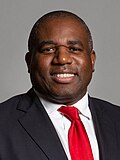
-
 Zeinab Badawi, TV presenter
 -
 John Atta Mills, former President of Ghana
 -
 Bülent Ecevit, former Prime Minister of Turkey
 -
 Luisa Dias Diogo, former Prime Minister of Mozambique
 -
 Dzongsar Jamyang Khyentse Rinpoche, Bhutanese lama and filmmaker
 -
 Guillaume Long, former Foreign Minister of Ecuador
 -

_(cropped).jpg)

.jpg)
![Martin Griffiths, former Under-Secretary-General for Humanitarian Affairs[93]](https://en.wikipedia.org/wiki/File:Martin_Griffiths.jpg)


.jpg)
Around the world, several national leaders and political figures are alumni: Aung San Suu Kyi, Nobel Peace Prize laureate and First and incumbent State Counsellor of Myanmar, Zairil Khir Johari, Member of the Malaysian Parliament[94]
- In government, alumni include Dharma Vira, who served as 8th Cabinet Secretary of India, Johnnie Carson, former US Ambassador to Kenya, Zimbabwe and Uganda, Hassan Taqizadeh, Iranian Ambassador to the UK, Sir Shridath Ramphal, Secretary-General of the Commonwealth, Sir Leslie Fielding, British diplomat and former European Commission Ambassador to Tokyo, Sir David Warren, former UK Ambassador to Japan, Quinton Quayle, UK Ambassador to Thailand and Lao, Sir Robin McLaren, UK Ambassador to China and the Philippines,[95] Sir Michael Weir, UK Ambassador to Egypt, Jemima Khan, UK Ambassador to UNICEF, Hugh Carless, UK Ambassador to Venezuela,[96]
- Prominent journalists and broadcasters such as, Abdel Bari Atwan, editor-in-chief of Al-Quds Al-Arabi newspaper in London, Zeinab Badawi, presenter of BBC World News Today, Peter Barakan, longtime radio DJ and TV presenter for NHK FM and NHK World, Martin Bright, political editor of the Jewish Chronicle, Jung Chang, who is best known for her family autobiography Wild Swans, Hossein Derakhshan, Iranian blogger credited with starting the blogging revolution in Iran,[97]
- In business, alumni include: Fred Eychaner, American businessman and philanthropist[98]
Notable faculty and staff
[edit]See also
[edit]Notes
[edit]- ^ Not be confused solely with White British
- ^ Includes those who indicate that they identify as Asian, Black, Mixed Heritage, Arab or any other ethnicity except White.
- ^ Calculated from the Polar4 measure, using Quintile1, in England and Wales. Calculated from the Scottish Index of Multiple Deprivation (SIMD) measure, using SIMD20, in Scotland.
References
[edit]- ^ a b c "Financial Statements for the Year to 31 July 2024" (PDF). School of Oriental and African Studies. p. 34. Retrieved 12 December 2024.
- ^ "Lord Dr Michael Hastings profile page". SOAS University of London. 8 May 2025. Retrieved 8 May 2025.
- ^ a b "Zeinab Badawi appointed as President of SOAS". School of Oriental and African Studies. 5 October 2021. Archived from the original on 6 October 2021. Retrieved 6 October 2021.
- ^ a b "Who's working in HE?". Higher Education Statistics Agency. Staff numbers by HE provider: HE staff by HE provider and activity standard occupational classification. Retrieved 28 January 2025.
- ^ a b c d e "Where do HE students study?". Higher Education Statistics Agency. Students by HE provider: HE student enrolments by HE provider. Retrieved 3 April 2025.
- ^ "SOAS constitutional documents 2024-25" (PDF). www.soas.ac.uk. Archived from the original (PDF) on 24 June 2025. Retrieved 16 September 2025.
- ^ "Standing Orders: Charter and Articles". SOAS. Archived from the original on 4 March 2016. Retrieved 16 July 2015.
- ^ "Daily Telegraph Education Guide". The Telegraph. 3 August 2016. Archived from the original on 21 March 2017. Retrieved 21 March 2017.
- ^ "Review of the full economic costs of National Research Libraries A report for HEFCE by CHEMS Consulting" (PDF). ioe.ac.uk. CHEMS Consulting.
- ^ "Early years (1917-36)". SOAS, University of London. Archived from the original on 11 July 2016. Retrieved 27 July 2016.
- ^ Collections, Special. "SOAS Picture Archive: Finsbury Circus – Special Collections, SOAS Library". Special Collections, SOAS Library. Retrieved 29 April 2025.
- ^ a b c Brown, Ian (21 July 2016). The School of Oriental and African Studies: Imperial Training and the Expansion of Learning. Cambridge University Press, 2016. ISBN 9781107164420.
- ^ Nature, 1917, Vol. 99 (2470), pp. 8–9 [Peer Reviewed Journal].
- ^ University of London: An Illustrated History: 1836–1986 By N. B. p. 255.
- ^ Nature, 1939, Vol. 144(3659), pp. 1006–1007.
- ^ Sadao Ōba, The "Japanese" War: London University's WWII secret teaching programme, p. 11,
- ^ O'Neill, P G. (13 September 1995). "Charles Dunn: Master of the rising sun". The Guardian. p. 16.
- ^ Peter Kornicki, Eavesdropping on the Emperor: Interrogators and Codebreakers in Britain's War with Japan (London: Hurst & Co., 2021), chapter 3.
- ^ "Commission of Enquiry into the Facilities for Oriental, Slavonic, East European and African Studies". aim25.ac.uk. 1945. Archived from the original on 4 March 2016. Retrieved 12 August 2015.
- ^ a b c Yapp, M. E. (19 January 2006). "Professor Sir Cyril Philips". The Independent. London. Archived from the original on 18 March 2014. Retrieved 17 July 2013.
- ^ Phillips, Matthew (17 December 2005). "What's it like at SOAS". The Guardian. Archived from the original on 20 September 2014. Retrieved 17 December 2005.
- ^ "Archived copy" (PDF). Archived from the original (PDF) on 20 May 2013. Retrieved 6 January 2013.
{{cite web}}: CS1 maint: archived copy as title (link) - ^ "SOAS, University of London an Institutional Review by the Quality Assurance Agency for Higher Education" (PDF). Qaa.ac.uk. 23 May 2016. Archived (PDF) from the original on 21 December 2016. Retrieved 20 August 2017.
- ^ SOAS Visual Identity FAQs, SOAS, University of London Archived 27 April 2013 at the Wayback Machine. Soas.ac.uk (12 October 2012). Retrieved 17 July 2013.
- ^ "Learn more on the BDS Referendum at SOAS". soasunion.org. Retrieved 25 February 2025.
- ^ a b "SOAS: The School of Occupation and Apartheid Studies". SOAS Spirit. 6 February 2023. Retrieved 25 February 2025.
- ^ "London university students say they were 'targeted' over Gaza rallies". Middle East Eye. Retrieved 25 February 2025.
- ^ "Policing Protest at SOAS: A Report on Recent Security Conduct". SOAS Spirit. 11 December 2023. Retrieved 25 February 2025.
- ^ "Jewish Society". soasunion.org. Retrieved 25 February 2025.
- ^ a b Dazed (25 April 2024). "The Jewish students fighting for Palestine". Dazed. Retrieved 25 February 2025.
- ^ "Soas repay student's £15,000 fees over 'toxic antisemitic environment'". The Guardian. 29 December 2020. Retrieved 24 January 2021.
- ^ Perry, Louise (29 January 2020). "The strange world of the radically left-wing Soas university". The Spectator. Retrieved 5 November 2020.
- ^ The Brunei Gallery, SOAS Archived 24 June 2016 at the Wayback Machine. Culture24. Retrieved 23 May 2016.
- ^ SOAS Japanese-Inspired Roof Garden Archived 24 June 2016 at the Wayback Machine. Opensqaures.org. Retrieved 23 May 2016.
- ^ "2016 A Vision and Strategy for the Centennial" (PDF). SOAS. April 2010. Archived from the original (PDF) on 4 June 2011. Retrieved 24 September 2009.
- ^ 100 years of SOAS women SOAS University of London, 8 March 2017.
- ^ "Graça Machel Appointed as President of SOAS, University of London". SOAS. 23 April 2012. Archived from the original on 29 June 2022.
- ^ Taylor, Matthew (19 April 2005). "Oxford topples Cambridge from top spot". The Guardian. Archived from the original on 26 August 2016. Retrieved 23 May 2016.
- ^ "Professor Adam Habib to be next Director of SOAS University of London". SOAS University of London. 18 February 2020.
- ^ "Adam Habib: SOAS will be 'voice for developing world in the West'". Times Higher Education. 26 January 2021.
- ^ Executive Board SOAS University of London.
- ^ MacLeod, Donald (21 April 2005). "Soas head resigns after five years". The Guardian. London. Archived from the original on 6 March 2016. Retrieved 14 July 2012.
- ^ MacLeod, Donald (7 February 2006). "Soas appoints new director". The Guardian. London. Archived from the original on 6 March 2016. Retrieved 14 July 2012.
- ^ "SOAS Board of Trustees". SOAS University of London. Retrieved 8 May 2025.
- ^ "Academic Departments, Institutes, Centres and Faculties at SOAS, University of London". Soas.ac.uk. Archived from the original on 22 July 2015. Retrieved 16 July 2015.
- ^ "Collaboration for language preservation and revitalisation in Asia". Asian Correspondent. 14 May 2014. Archived from the original on 24 June 2016. Retrieved 23 May 2016.
- ^ "Alphawood Foundation announced a $32 million gift to SOAS". Alphawood Foundation Chicago. Archived from the original on 4 March 2016. Retrieved 26 February 2016.
- ^ "QS World University Rankings for Law and Legal Studies 2024". 10 April 2024. Retrieved 23 July 2024.
- ^ "University guide 2016: league table for law". TheGuardian.com. 25 May 2015. Archived from the original on 20 December 2016. Retrieved 13 December 2016.
- ^ Institutes and regional centres SOAS University of London.
- ^ a b "SOAS, University of London (The School of Oriental and African Studies)". The Complete University Guide. Archived from the original on 27 November 2012. Retrieved 23 May 2016.
- ^ a b "SOAS Library, University of London". COPAC. Archived from the original on 3 May 2016. Retrieved 23 May 2016.
- ^ "Brief Overview of the Collection". SOAS Library. Archived from the original on 27 July 2019. Retrieved 27 July 2019.
- ^ "New Library (1973-1985)". SOAS, University of London. Archived from the original on 22 August 2016. Retrieved 27 July 2016.
- ^ "SOAS Library Transformation Project". John McAslan + Partners. Archived from the original on 11 May 2016. Retrieved 23 May 2016.
- ^ "Library Transformation Enters New Phase". SOAS, University of London. 4 August 2010. Archived from the original on 22 August 2016. Retrieved 27 July 2016.
- ^ Halligan, Fionnuala (8 April 2016). "'Criminal': Review". screendaily.com. Archived from the original on 14 April 2016. Retrieved 10 April 2016.
- ^ "Complete University Guide 2026". The Complete University Guide. 10 June 2025.
- ^ "Guardian University Guide 2026". The Guardian. 13 September 2025.
- ^ "Good University Guide 2026". The Times. 19 September 2025.
- ^ "QS World University Rankings 2026". Quacquarelli Symonds Ltd. 19 June 2025.
- ^ "THE World University Rankings 2026". Times Higher Education. 9 October 2025.
- ^ "QS World University Rankings by Subject 2022: Development Studies". QS Top Universities. 23 January 2025.
- ^ "QS World University Rankings by Subject 2022: Anthropology". QS Top Universities. Retrieved 11 March 2023.
- ^ "QS World University Rankings by Subject 2022: Politics". QS Top Universities. 23 January 2025.
- ^ "QS World University Rankings by Subject 2022: Arts and Humanities". QS Top Universities. Retrieved 11 March 2023.
- ^ QS Global World Rankings 2025
- ^ SOAS among world's best for attracting international talent
- ^ "Business & Management Studies". Complete University Guide. Retrieved 11 March 2023.
- ^ "REF 2021 Business and Management Studies". Times Higher Education. Retrieved 11 March 2023.
- ^ "REF 2021: Anthropology and development studies". Times Higher Education. Retrieved 12 May 2022.
- ^ "Registry – scholarships". SOAS University of London.
- ^ "London's stronghold of Taiwan studies". Taipei Times. 6 July 2021. Retrieved 12 July 2022.
- ^ "Journal of African Law". SOAS. Retrieved 11 January 2023.
- ^ "South East Asia Research". SOAS. Retrieved 11 January 2023.
- ^ a b "UCAS Undergraduate Sector-Level End of Cycle Data Resources 2024". ucas.com. UCAS. December 2024. Show me... Domicile by Provider. Retrieved 7 February 2025.
- ^ "2024 entry UCAS Undergraduate reports by sex, area background, and ethnic group". UCAS. 7 February 2025. Retrieved 7 February 2025.
- ^ "University League Tables entry standards 2024". The Complete University Guide.
- ^ a b "HE student enrolments by HE provider, permanent address, level of study, mode of study, entrant marker, sex and academic year". HESA. Retrieved 3 April 2025.
- ^ "Who's studying in HE?: Personal characteristics". HESA. 3 April 2025. Retrieved 3 April 2025.
- ^ "Good University Guide: Social Inclusion Ranking". The Times. 24 September 2024.
- ^ "School of Oriental and African Studies, University of London (S09) – Which? University". University.which.co.uk. Archived from the original on 23 September 2012. Retrieved 8 December 2012.
- ^ "QS World University Rankings". topuniversities.co.uk. Archived from the original on 10 May 2016. Retrieved 23 May 2016.
- ^ "Top political unis... as voted by students – Which? University". University.which.co.uk. 10 September 2012. Archived from the original on 22 December 2012. Retrieved 8 December 2012.
- ^ John Hollingworth, Academics, Agents and Activists: A history of the School of Oriental and African Studies, 1916-2016, SOAS University of London, 21 December 2016.
- ^ "Sports Clubs". soasunion.org. Retrieved 5 March 2020.
- ^ "Varsity 2018". soasunion.org. Retrieved 5 March 2020.
- ^ "Sanctuary Students London – Information for SOAS Students". sanctuary-students.com. 10 May 2016. Archived from the original on 25 March 2017. Retrieved 10 May 2016.
- ^ "Sanctuary Management Services London – Dinwiddy House". Smsstudent.co.uk. 1 July 2007. Archived from the original on 19 April 2012. Retrieved 16 April 2012.
- ^ "About SOAS – Alumni profiles: !930s". SOAS University of London. Archived from the original on 9 April 2021. Retrieved 19 February 2021.
- ^ "Sanctuary Management Services London – Paul Robeson House for SOAS Students". Smsstudent.co.uk. 1 July 2007. Archived from the original on 16 April 2012. Retrieved 16 April 2012.
- ^ "University of London – Intercollegiate Halls". Lon.ac.uk. 26 March 2010. Archived from the original on 3 May 2010. Retrieved 26 April 2010.
- ^ "Mr. Martin Griffiths of the United Kingdom – Under-Secretary-General for Humanitarian Affairs and Emergency Relief Coordinator", United Nations, 12 May 2021. Retrieved 13 April 2022.
- ^ "Official Portal of The Parliament of Malaysia – Representatives Members". Parlimen.gov.my. Archived from the original on 21 July 2015. Retrieved 16 July 2015.
- ^ "Sir Robin McLaren" Archived 22 November 2017 at the Wayback Machine (obituary), The Telegraph, 29 July 2010. Retrieved 17 July 2013.
- ^ "Hugh Carless" Archived 29 September 2018 at the Wayback Machine (obituary). The Telegraph, 21 December 2011. Retrieved 17 July 2013.
- ^ Jane Perrone (18 December 2003). "Weblog heaven | Media | guardian.co.uk". The Guardian. London. Archived from the original on 19 October 2013. Retrieved 29 April 2010.
- ^ "SOAS given £20m donation from Alphawood foundation". BBC News. 2 November 2013. Archived from the original on 2 October 2018. Retrieved 21 June 2018.
Further reading
[edit]- Arnold, David; Shackle, Christopher, eds. (2003). SOAS since the sixties. London: SOAS, University of London. ISBN 0728603535.
- Brown, Ian, ed. (2016). The School of Oriental and African Studies: Imperial Training and the Expansion of Learning. London: Cambridge University Press. ISBN 9781107164420.
External links
[edit]
- Official website

- Game, John "The origins of SOAS as a colonial institution, training district"
- SOAS Student Union website
- SOAS graduates list
- SOAS Constitutional Documents 2022/23

Universities and colleges in London | |||||
|---|---|---|---|---|---|
| Universities |
| ||||
| Higher education colleges |
| ||||
| Further education colleges |
| ||||
| Sixth form colleges |
| ||||

| England |
| ||||||||||||||
|---|---|---|---|---|---|---|---|---|---|---|---|---|---|---|---|
| Northern Ireland | |||||||||||||||
| Scotland | |||||||||||||||
| Wales | |||||||||||||||
| Overseas territories | |||||||||||||||
| Crown dependencies | |||||||||||||||
| Non-geographic | |||||||||||||||
| Related |
| ||||||||||||||
51°31′19″N 0°07′44″W / 51.52205°N 0.12900°W
| International | |
|---|---|
| National | |
| Geographic | |
| Academics | |
| Other | |
SOAS University of London
View on GrokipediaHistory
Founding and Early Development (1916–1939)
The School of Oriental Studies was founded by royal charter on 5 June 1916 as a constituent college of the University of London, primarily to train British colonial administrators, diplomats, missionaries, and others in the languages, laws, and customs of Asia.[13] The establishment was advocated by orientalists including Lord Curzon, who emphasized the need for specialized education to enhance imperial governance amid Britain's extensive Asian territories.[14] A committee of management had been formed in 1913 to oversee preparations, reflecting pre-World War I recognition of deficiencies in oriental knowledge among officials.[15] Sir Edward Denison Ross, an expert in Persian and multiple Asian languages, was appointed the first Director in 1916, holding the position until 1937.[16] The school admitted its first students on 18 January 1917 and was officially opened on 23 February 1917 by King George V at premises in the London Institution, Finsbury Circus.[17] Initial instruction focused on practical language training in subjects such as Arabic, Chinese, Japanese, Persian, Sanskrit, Pali, Turkish, and Urdu, with early enrollees including K.A. Subrahmania Iyer in Sanskrit and Pali.[18] By the late 1920s, the curriculum had expanded to offer degree courses in over twenty Asian languages, and the total number of subjects taught reached 74 by the 1930s, incorporating literature, history, and jurisprudence alongside linguistics.[19] [20] The Students' Union formed in 1927 to organize activities and represent enrollees, who remained few in number during this period.[21] In 1938, to accommodate emerging programs in African languages and studies, the name was changed to the School of Oriental and African Studies, marking a broadening beyond its original Asian-centric mandate.[22]World War II and Immediate Post-War Period
With the outbreak of World War II in September 1939, the School of Oriental Studies redirected significant resources toward military language training to support Britain's war effort.[23] The institution became the primary center for teaching languages such as Japanese, which was critical for intelligence and interrogation purposes, as it was the only UK facility offering such instruction prior to the war.[24] Intensive courses were established, including those for Japanese interrogators led by figures like Frank Daniels, training military personnel alongside civilian students.[25] SOAS staff and alumni contributed directly to code-breaking efforts; for instance, seven female Wireless Auxiliary Air Force (WAAF) members trained in Japanese at SOAS in 1943 before deploying to Bletchley Park for Japanese naval code decryption. The school's premises in Senate House were requisitioned by the government for wartime use, disrupting regular operations until the occupation ended on 3 September 1945.[26] This period marked a temporary pivot from academic pursuits to applied linguistic support for Allied intelligence, with the school's expertise in Oriental languages proving indispensable against Axis powers in Asia.[27] In the immediate post-war years, SOAS refocused on academic expansion amid Britain's decolonization planning and the need for area studies expertise. The government vacated Senate House in 1945, allowing the school to reclaim its facilities and implement pre-war expansion proposals outlined in 1944.[28] Between 1947 and 1952, the institution created 117 new full-time academic posts, including 14 professorships, facilitating a nearly four-fold staff increase and a seven-fold rise in funding to bolster research and teaching in Asian and African studies.[28] This growth supported the training of colonial administrators and scholars, aligning with post-war imperial transitions and the emerging Cold War context.[28]Expansion Amid Decolonization (1945–1980s)
Following World War II, the School of Oriental and African Studies (SOAS) pursued ambitious expansion plans outlined in a 1944 statement, emphasizing a substantial increase in student capacity amid Britain's shifting imperial landscape. The 1947 Scarborough Commission report, formally titled the Report of the Interdepartmental Commission of Enquiry into Oriental, Slavonic, East European, and African Studies, recommended enhanced funding and resources for institutions like SOAS to bolster expertise in non-European regions, recognizing the school's wartime contributions to intelligence and language training.[29][28] This led to a nearly four-fold rise in academic staff, a seven-fold increase in annual funding from the University of London Court, and the planning of 167 new posts to support broader teaching and research.[28] Decolonization accelerated from 1947 with India's independence, followed by waves of African and Asian nations gaining sovereignty in the 1950s and 1960s, prompting SOAS to adapt its vocational focus on colonial administration toward comprehensive degree programs. Vocational enrollment for colonial officers declined in the 1950s as empires dissolved, but degree-seeking students surged from the late 1950s, necessitating new undergraduate and postgraduate offerings, including the introduction of one-year taught MA courses in the 1960s.[28] Key appointments, such as Roland Oliver as lecturer in East African tribal history in 1948, strengthened African studies, while international conferences in 1953, 1957, and 1961 elevated SOAS's global profile in the field.[6] Infrastructure expanded with the completion of Bloomsbury campus buildings, though public spending constraints in the late 1950s limited full realization, shifting emphasis to accommodation extensions.[30] The 1961 Hayter Report further propelled growth by advocating interdisciplinary social science integration into area studies, resulting in structural innovations like the 1964 formation of the Department of Economic and Political Studies and the establishment of five regional Area Centres in the 1960s to foster cross-disciplinary collaboration.[31][32] These developments aligned SOAS with Britain's post-imperial needs, including diplomatic training, development aid, and scholarly engagement with independent states, sustaining relevance despite the end of formal colonial instruction. By the 1980s, the school's academic establishment had recovered from mid-decade contractions, reflecting sustained investment in non-Western expertise amid global realignments.[33]Neoliberal Reforms and Contemporary Challenges (1990s–Present)
In the 1990s, SOAS University of London encountered the broader neoliberal restructuring of UK higher education, characterized by reduced public funding and the promotion of market-oriented mechanisms such as performance-based research assessments and institutional competition. The 1997 Dearing Report recommended shifting costs toward students, leading to the introduction of means-tested tuition fees of up to £1,000 per year for domestic undergraduates starting in 1998, which compelled SOAS to diversify revenue streams amid stagnant or declining block grants from the Higher Education Funding Council for England (HEFCE).[34] As a specialist institution, SOAS intensified efforts to attract international students, whose uncapped fees provided a critical buffer, with overseas enrollment rising significantly by the early 2000s to offset domestic funding shortfalls.[35] The 2004 Higher Education Act further embedded marketization by raising domestic fees to £3,000 and establishing the Office for Fair Access, while SOAS navigated internal adaptations like departmental mergers and efficiency drives to align with national accountability frameworks such as the Research Assessment Exercise (RAE).[36] These reforms prioritized quantifiable outputs over traditional area-studies emphases, prompting criticisms from staff that neoliberal metrics undermined interdisciplinary scholarship on Asia, Africa, and the Middle East. By the late 2000s, reliance on volatile international markets exposed SOAS to global economic fluctuations, including the 2008 financial crisis, which temporarily depressed enrollment from key regions.[37] Contemporary challenges have intensified under austerity policies post-2010, with the coalition government's 2012 policy trebling domestic fees to £9,000 and slashing teaching grants by 80%, forcing SOAS into heightened competition via the Teaching Excellence Framework (TEF) and Knowledge Exchange Framework (KEF). Brexit curtailed EU student numbers and research collaborations, while the COVID-19 pandemic exacerbated pre-existing deficits, leading to a 2020 debt crisis that prompted budget slashes, voluntary redundancies, and auditor warnings of potential non-viability.[38] [39] SOAS's heavy dependence on international fees—particularly from markets like China—rendered it vulnerable to geopolitical tensions, visa restrictions, and recruitment drops, resulting in ongoing staff tensions and pay erosion linked to neoliberal cost-control imperatives.[37] [40] As of 2024, SOAS reported persistent financial strain, with leadership advocating for systemic reform to address the unsustainability of fee-driven models amid 72% of English universities projecting deficits.[41] [42] These pressures have fueled internal debates over mission drift, with some attributing challenges to over-reliance on short-term market signals rather than long-term public investment in specialized global studies, though institutional responses emphasize diversification into executive education and partnerships.[43] Despite these hurdles, SOAS has maintained niche strengths in critical economics and development studies, positioning itself against mainstream neoliberal paradigms through heterodox curricula.[44]Academic Organization
Departments and Faculties
SOAS University of London organizes its academic activities into three colleges: the College of Humanities, the College of Social Sciences, and the College of Law, each encompassing specialized departments and schools focused on the languages, cultures, histories, economies, politics, and legal systems of Asia, Africa, the Middle East, and their global connections.[45] This structure supports interdisciplinary approaches, with approximately 350 teaching and research staff distributed across around 10 disciplinary departments as of recent organizational descriptions.[46] The College of Humanities integrates over 300 researchers examining arts, cultures, languages, and related fields through non-Western, decolonial, and intercultural lenses, emphasizing regions including Africa, Asia, the Middle East, and their diasporas. It includes the School of Arts, which covers visual arts, music, and performance; the School of History, Religions and Philosophies, addressing historical, philosophical, and religious studies; the School of Languages, Cultures and Linguistics, offering programs in languages such as Arabic, Chinese, Japanese, and African languages alongside cultural analysis; and elements of anthropology, media, gender studies, literature, and sociology.[47] The College of Social Sciences concentrates on interdisciplinary social sciences pertinent to global interdependencies, with research in governance, migration, economics, sustainability, and policy impacts in Asia, Africa, and the Middle East. Its key units comprise the Department of Development Studies, focusing on inequality, structural transformation, and development policy; the Department of Economics, emphasizing macroeconomic resilience and heterodox approaches; the School of Finance and Management, addressing fintech, business in emerging markets, and management practices; and the Department of Politics and International Studies, exploring political systems, international relations, and conflict dynamics.[48] The College of Law, functioning as a self-standing school within the structure, specializes in comparative law, human rights, and legal challenges in developing regions, with particular expertise in the laws of Asian and African countries alongside commercial, international, and refugee law. It delivers programs like the LLB and LLM, producing graduates oriented toward civic and critical legal practice, and integrates clinics and placements in areas such as asylum and immigration law.[49][50]Research Institutes and Regional Centers
SOAS University of London hosts a network of regional centres and research institutes that emphasize interdisciplinary scholarship on Asia, Africa, the Middle East, and interconnected global themes, facilitating seminars, publications, and collaborations among over 50 affiliated academics across departments.[51] These entities, many established in the mid-20th century, draw on SOAS's historical mandate to study non-Western regions, supporting over 200 research projects annually in areas such as languages, politics, economics, and cultural heritage.[52] The Centre of African Studies (CAS), founded in 1965, operates as the largest hub for African expertise outside the continent, coordinating interdisciplinary research, public lectures, and doctoral training programs involving approximately 40 scholars focused on topics from governance to environmental policy.[53] It hosts events like the annual Africa Lecture series, which has featured speakers including heads of state, and maintains partnerships with African institutions for fieldwork and data collection.[53] In South Asian studies, the SOAS South Asia Institute (SSAI) unites the most diverse scholarly community on the region in Europe, encompassing research on India, Pakistan, Bangladesh, and neighboring states through working papers, conferences, and archival resources accessed by over 1,000 researchers yearly.[54] The Centre of South East Asian Studies (CSEAS), established in 1966, leads global scholarship on Southeast Asia, organizing seminars on contemporary issues like regional security and cultural dynamics, with contributions from linguists and anthropologists analyzing languages such as Indonesian and Vietnamese.[55] For East Asia, the SOAS China Institute (SCI) serves as a premier venue for China-related inquiry, engaging more than 54 academics in analyses of policy, economy, and society, including podcasts and events that reached over 10,000 participants in recent years.[56] The Japan Research Centre, active since 1978, similarly coordinates studies on Japanese history, economy, and international relations via annual workshops and publications.[57] The SOAS Middle East Institute (SMEI) promotes research and outreach on the Middle East and North Africa, producing outputs on heritage, conflict, and governance through interdisciplinary panels and collaborations that emphasize empirical data over ideological framing.[58] These centres collectively underpin SOAS's output of peer-reviewed articles and books, with regional expertise informing policy consultations for governments and NGOs.[52]Campus and Infrastructure
Physical Location and Facilities
SOAS University of London occupies a compact urban campus at the northwest corner of Russell Square in the Bloomsbury district of central London, with its primary address at Thornhaugh Street, WC1H 0XG.[59] [60] This location places the institution in a historic intellectual hub, proximate to landmarks such as the British Museum and within a 15-minute walk of major rail stations including Euston, St Pancras, and King's Cross.[59] The site's central positioning facilitates access via public transport, though parking is limited, emphasizing pedestrian and transit use.[59] The campus centers on the Philips Building, a Brutalist structure designed by architect Denys Lasdun and opened in 1973 by Queen Elizabeth II to house the university library and academic functions.[61] [62] This iconic edifice, comprising layered concrete forms, integrates lecture halls, offices, and study spaces, reflecting mid-20th-century modernist design principles adapted to the dense urban environment.[61] Adjacent structures include the Old Building for additional administrative and teaching areas, with shared access to nearby University of London facilities like Senate House.[63] Key facilities encompass the SOAS Library, renowned for its specialized collections on Asia, Africa, and the Middle East, spanning multiple levels with reading rooms and archival holdings.[64] [62] The Brunei Gallery serves as a venue for temporary exhibitions of contemporary and historical art from non-Western regions, fostering cultural engagement.[64] Additional amenities include modern student commons, such as the Junior Common Room for social activities, and outdoor features like the Japanese Rooftop Garden, though extensive recreational infrastructure remains constrained by the urban footprint.[64] [65] Student housing, including options like Dinwiddy House, is situated off-campus within commuting distance of 5 to 45 minutes.[66]Library and Archival Resources
The SOAS Library maintains a collection exceeding 1.3 million printed volumes, supplemented by extensive electronic resources including e-books and e-journals, positioning it as a primary resource for research on Africa, Asia, and the Middle East.[67] Housed in a Brutalist structure at the university's Russell Square campus, the library supports SOAS's focus on non-Western studies through holdings in numerous languages and disciplines.[68] Access is available during extended hours, typically from 8:00 a.m. to 11:00 p.m. on weekdays and 9:30 a.m. to 10:00 p.m. on weekends, with provisions for registered users including external researchers.[68] Special Collections and Archives form a cornerstone of the library's offerings, encompassing over 3 kilometers of archival materials, approximately 60,000 rare books, and manuscripts in more than 140 languages.[69] These holdings include significant documentation on regional histories, cultures, and politics, such as the largest collection of Christian missionary archives in the United Kingdom, alongside personal papers, photographs, and institutional records relevant to SOAS's academic mission.[70] Digital initiatives provide online access to select items, including the SOAS Picture Archive featuring historical images of university events and figures, enhancing global research capabilities.[71] The library's archival resources support interdisciplinary scholarship, with catalogues enabling targeted searches across rare materials and theses.[72] Notable for its depth in non-European languages and subjects underrepresented in general collections, these resources have sustained SOAS's reputation since the library's establishment, originally opening in 1973 before expanding to over 1.5 million items.[2] Preservation efforts and subject-specific guides further aid users in navigating the collections' specialized scope.[69]Governance and Leadership
Administrative Structure
SOAS University of London maintains a self-governing administrative structure as defined by its Royal Charter, Articles of Government, and Standing Orders, which delineate responsibilities and powers while ensuring accountability to the Board of Trustees as the primary fiduciary body.[12] The Board holds ultimate oversight for strategic direction, financial sustainability, legal compliance, policy formulation, mission-setting, resource allocation, and executive appointments, including support for the Vice-Chancellor's office.[73] The Board of Trustees comprises a Chair (Lord Dr Michael Hastings), Vice-Chairs (Nizam Uddin for Governance and Nominations, Jo Beall as lay member), Honorary Treasurer (Richard Millward for Resources and Planning), and other external and internal trustees such as Jenny Greenshields (Audit Chair), Yaa Ofori-Ansah, Kersti Börjars, Vice-Chancellor Adam Habib, and Senate representative Shirin Rai.[73] It delegates operational leadership to the Vice-Chancellor, who serves as chief executive, managing day-to-day academic, administrative, and strategic functions while reporting directly to the Board. Professor Adam Habib has held this position since January 2021, succeeding prior Directors in a role now retitled Vice-Chancellor.[74] [75] Supporting the executive is the Executive Board, which includes the Vice-Chancellor, Provost and Deputy Vice-Chancellor for Education (Professor Joanna Newman, appointed September 2023), and Deputy Vice-Chancellors for Finance and Operations, and Research and Knowledge Exchange.[75] This body advances the institution's educational mission, research priorities, and long-term vision through coordinated leadership. Academic governance is informed by the Senate, which advises the Board on strategic academic development, program directions, and scholarly policies.[76] Various standing committees, including those for audit, finance, resources, planning, and nominations, underpin decision-making by addressing specialized oversight needs and ensuring robust internal controls.[76] This framework aligns with SOAS's status as a constituent institution of the federal University of London, preserving autonomy in internal administration while adhering to broader collegiate standards.[1]Key Leadership Positions and Figures
The Director of SOAS University of London serves as the chief executive, chairing the Executive Board and leading the institution's strategic, academic, and operational direction. Professor Adam Habib has held this position since September 2021, having previously served as Vice-Chancellor of the University of the Witwatersrand in South Africa, where he focused on research intensification and transformation initiatives.[77] [78] Habib's tenure has emphasized global partnerships and addressing institutional challenges amid financial pressures.[75] The Deputy Director and Provost role supports academic leadership and strategy implementation. Professor Joanna Newman MBE FSRA assumed this position in September 2023, bringing experience from prior roles at the University of London and other higher education institutions in curriculum development and quality assurance.[75] SOAS also maintains a President position for advocacy and external representation. Zeinab Badawi, an award-winning journalist and SOAS alumna, was appointed in October 2021, leveraging her broadcasting career to promote the university's mission in international affairs and cultural studies.[79] The Executive Board includes additional key figures such as the Chief Operating Officer, Pro-Director for Research and Enterprise, and Heads of Colleges for Humanities, Development and Business, and Languages, Cultures and Society, who oversee specific academic divisions and enterprise activities.[75] Overall governance falls under the Board of Trustees, which holds fiduciary responsibility for policy, mission, and resource management.[73]Academic Reputation
Rankings and Performance Metrics
In global league tables, SOAS University of London ranked 508th in the QS World University Rankings 2025, reflecting a decline from its 2017 peak of 252nd, amid broader challenges in maintaining prior standings across metrics like academic reputation and employer surveys.[10] It placed in the 401–500 band in the Times Higher Education World University Rankings 2025, with subject-specific strengths including 82nd in arts and humanities and 5th globally for development studies in the QS subject rankings.[80][81] US News & World Report positioned it 1667th overall in its Best Global Universities 2025–2026 assessment.[82] Domestically, SOAS ranked 62nd in the Complete University Guide 2026, 65th in the Times and Sunday Times Good University Guide 2025, and 90th in The Guardian University Guide 2025, where performance was weighed by factors including student satisfaction and career prospects.[83][84]| Ranking Body | Year | Overall Position |
|---|---|---|
| Complete University Guide | 2026 | 62nd[83] |
| Times/Sunday Times Good University Guide | 2025 | 65th[84] |
| Guardian University Guide | 2025 | 90th[84] |