Hubbry Logo
search
logo
STS-49
STS-49
current hub
2190303

STS-49

logo
Community Hub0 Subscribers
Read side by side
from Wikipedia

STS-49
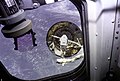
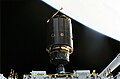
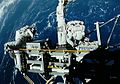
Hieb, Akers, and Thuot assist in capturing the Intelsat 603 satellite from its derelict orbit.
NamesSpace Transportation System-49
Mission typeIntelsat 603 satellite repair
OperatorNASA
COSPAR ID1992-026A Edit this at Wikidata
SATCAT no.21963Edit this on Wikidata
Mission duration8 days, 21 hours, 17 minutes, 39 seconds
Distance travelled5,948,166 km (3,696,019 mi)
Orbits completed141
Spacecraft properties
SpacecraftSpace Shuttle Endeavour
Launch mass116,390 kg (256,600 lb) [1]
Landing mass91,279 kg (201,236 lb)
Payload mass16,984 kg (37,443 lb) [2]
Crew
Crew size7
Members
EVAs4
EVA duration
  • 22 hours, 27 minutes
  • 1st EVA: 3 hours, 43 minutes
  • 2nd EVA: 5 hours, 30 minutes
  • 3rd EVA: 8 hours, 29 minutes
  • 4th EVA: 7 hours, 45 minutes
Start of mission
Launch dateMay 7, 1992, 23:40:00 (1992-05-07UTC23:40Z) UTC (7:40 pm EDT)
Launch siteKennedy, LC-39B
ContractorRockwell International
End of mission
Landing dateMay 16, 1992, 20:57:39 (1992-05-16UTC20:57:40Z) UTC (1:57:39 pm PDT) [3]
Landing siteEdwards, Runway 22
Orbital parameters
Reference systemGeocentric orbit
RegimeLow Earth orbit
Perigee altitude268 km (167 mi)
Apogee altitude341 km (212 mi)
Inclination28.32°
Period90.60 minutes
Instruments

STS-49 mission patch

From left: Thornton, Melnick, Thuot, Brandenstein, Chilton, Akers and Hieb
← STS-45 (46)
STS-50 (48) →

STS-49 was NASA's maiden flight of the Space Shuttle Endeavour, which launched on May 7, 1992. The primary goal of its nine-day mission was to retrieve an Intelsat VI satellite, Intelsat 603, which failed to leave Low Earth orbit two years before, attach it to a new upper stage, and relaunch it to its intended geosynchronous orbit. After several attempts, the capture was completed with the only three-person extravehicular activity (EVA) in space flight history.[4] It would also stand until STS-102 in 2001 as the longest EVA ever undertaken.

Crew

[edit]
Position Astronaut
Commander Daniel Brandenstein
Fourth and last spaceflight
Pilot Kevin P. Chilton
First spaceflight
Mission Specialist 1 Richard Hieb
Second spaceflight
Mission Specialist 2
Flight Engineer
Bruce E. Melnick
Second and last spaceflight
Mission Specialist 3 Pierre J. Thuot
Second spaceflight
Mission Specialist 4 Kathryn C. Thornton
Second spaceflight
Mission Specialist 5 Thomas Akers
Second spaceflight

Spacewalks

[edit]
EVA 1
  • Personnel: Thuot and Hieb
  • Date: May 10–11, 1992 (20:40–00:23 UTC)
  • Duration: 3 hours, 43 minutes
EVA 2
  • Personnel: Thuot and Hieb
  • Date: May 11–12, 1992 (21:05–02:35 UTC)
  • Duration: 5 hours, 30 minutes
EVA 3
  • Personnel: Thuot, Hieb and Akers
  • Date: May 13–14, 1992 (21:17–05:46 UTC)
  • Duration: 8 hours, 29 minutes
EVA 4
  • Personnel: Thornton and Akers
  • Date: May 14–15, 1992 (≈21:00–05:00 UTC)
  • Duration: 7 hours, 45 minutes

Crew seat assignments

[edit]
Seat[5] Launch Landing
Seats 1–4 are on the flight deck.
Seats 5–7 are on the mid-deck.
1 Brandenstein
2 Chilton
3 Hieb Thuot
4 Melnick
5 Thuot Hieb
6 Thornton
7 Akers

Mission highlights

[edit]

The Intelsat 603 satellite, stranded in an unusable orbit since launch aboard a Commercial Titan III launch vehicle in March 1990, was captured by crewmembers during an extravehicular activity (EVA) and equipped with a new perigee kick motor. The satellite was subsequently released into orbit and the new motor fired to put the spacecraft into a geosynchronous orbit for operational use.

The capture required three EVAs: a planned one by astronauts Thuot and Hieb, who were unable to attach a capture bar to the satellite from a position on the RMS (Canadarm); a second unscheduled but identical attempt the following day; and finally, an unscheduled but successful hand capture by Thuot, Hieb and Akers as commander Brandenstein delicately maneuvered the orbiter to within a few feet of the 4,215 kg (9,292 lb) communications satellite. An Assembly of Station by EVA Methods (ASEM) structure was erected in the cargo bay by the crew to serve as a platform to aid in the hand capture and subsequent attachment of the capture bar. A planned EVA also was performed by astronauts Thornton and Akers as part of the ASEM experiment to demonstrate and verify maintenance and assembly capabilities for Space Station Freedom. The ASEM space walk, originally scheduled for two successive days, was cut to one day because of the lengthy Intelsat retrieval operation.

Other "payloads of opportunity" experiments conducted included Commercial Protein Crystal Growth (CPCG), Ultraviolet Plume Imager (UVPI) and the Air Force Maui Optical Station (AMOS) investigation. The mission was extended by two days to complete all the mission objectives.

On flight day 7, the Ku-band antenna lost its pointing capability. It had to be stowed manually during the final EVA.[3]

The following records were set during the STS-49 mission:[6]

  • First flight of the Space Shuttle Endeavour
  • First (and only) EVA involving three astronauts.
  • Second and fourth longest EVAs to date: 8 hours, 29 minutes, and 7 hours, 45 minutes. (Longest EVA to date was during STS-102 in 2001: 8 hours 56 minutes; third longest EVA was during STS-61 in 1993: 7 hour 54 minutes)
  • First Shuttle mission to feature four EVAs.
  • The second longest EVA time for a single Shuttle mission: 25 hours and 27 minutes, or 59:23 person hours. (The longest is STS-61 with 35 hours and 28 minutes)
  • First Shuttle mission requiring three rendezvous with an orbiting spacecraft.
  • First use of a drag chute during a Shuttle landing.

Wake-up Calls

[edit]

NASA began a tradition of playing music to astronauts during the Project Gemini, and first used music to wake up a flight crew during Apollo 15.[7] A special musical track is chosen for each day in space, often by the astronauts' families, to have a special meaning to an individual member of the crew, or in reference to the day's planned activities.

Day Song Artist/Composer Played For
Day 2 "God Bless the U.S.A." Lee Greenwood
Day 3 "Rescue Me" Fontella Bass
Day 4 "Theme from Winnie the Pooh" Kathy Thornton (from her Children on Mother's Day)
Day 5 "Gonna Fly Now (Theme from Rocky)" Bill Conti
Day 6 "Kokomo" The Beach Boys
Day 7 No song
Day 8 "I wake up with a smile on my face" Boxcar Willie
Day 9 "Son of a Son of a Sailor" Jimmy Buffett
[edit]

See also

[edit]

References

[edit]
[edit]
Revisions and contributorsEdit on WikipediaRead on Wikipedia
from Grokipedia
STS-49 was the 49th NASA Space Shuttle mission and the maiden flight of the orbiter Endeavour, launched on May 7, 1992, from Kennedy Space Center in Florida, with the primary objective of retrieving the stranded Intelsat VI (F-3) communications satellite from low Earth orbit, repairing it by attaching a new perigee kick motor during multiple extravehicular activities (EVAs), and redeploying it into geosynchronous orbit.[1] The seven-member crew, commanded by Daniel C. Brandenstein with pilot Kevin P. Chilton and mission specialists Pierre J. Thuot, Kathryn C. Thornton, Richard J. Hieb, Thomas D. Akers, and Bruce E. Melnick, conducted four EVAs over the nine-day mission, marking the first Space Shuttle flight to feature that many spacewalks and including the program's first three-person EVA on May 13, 1992, when Thuot, Hieb, and Akers manually captured the 4.5-ton satellite by hand after initial attempts using the orbiter's robotic arm failed.[1] Key achievements included the successful attachment of the solid-fuel perigee kick motor to the satellite on the third EVA, its subsequent ignition to boost the satellite to geosynchronous orbit, and setting records for the longest single EVA (8 hours and 29 minutes by Thuot, Hieb, and Akers on the third spacewalk) and the most cumulative EVA time (over 25 hours) up to that point in the shuttle program.[1] In addition to the satellite rescue, the crew conducted the Commercial Protein Crystal Growth (CPCG), Ultraviolet Plume Imager (UVPI), and Air Force Maui Optical Site (AMOS) experiments.[1] The mission concluded with a landing on May 16, 1992, at Edwards Air Force Base in California after 141 orbits, lasting 8 days, 21 hours, 17 minutes, and 38 seconds, demonstrating advanced rendezvous and EVA techniques that paved the way for future satellite servicing missions like Hubble Space Telescope repairs.[1]

Mission Overview

Objectives and Background

The Intelsat VI (F-3) communications satellite, launched on March 14, 1990, aboard a Commercial Titan III rocket from Cape Canaveral, experienced a launch vehicle malfunction that prevented separation from its upper stage, stranding the spacecraft in low Earth orbit at approximately 300 km altitude instead of achieving its intended geosynchronous orbit.[2][1] This failure left the 4-ton satellite unable to perform its planned role in global telecommunications relay, prompting the International Telecommunications Satellite Organization (Intelsat) to commission NASA for a rescue operation.[2] STS-49, the 49th Space Shuttle mission, had as its primary objective to rendezvous with the stranded Intelsat VI (F-3), capture it using the orbiter's remote manipulator system and astronaut extravehicular activity (EVA), attach a replacement perigee kick motor (PKM) via the Payload Assist Module-D (PAM-D) upper stage, and release it to boost the satellite into geosynchronous orbit.[1] Secondary objectives encompassed testing EVA methods and tools through the Assembly of Station by EVA Methods (ASEM) experiment to support future construction of Space Station Freedom, along with conducting opportunistic science payloads including the Commercial Protein Crystal Growth (CPCG) for materials research, the Ultraviolet Plume Imager (UVPI) for propulsion plume analysis, and the Air Force Maui Optical Station (AMOS) for ground-based optical tracking demonstrations.[1][3] The mission represented the inaugural flight of Space Shuttle Orbiter Vehicle-105 (OV-105), Endeavour, which was designed and built by Rockwell International as the fleet replacement for Challenger following its loss in the STS-51-L accident on January 28, 1986.[1] Originally planned for a 7-day duration, STS-49 was extended by two days to accomplish all tasks, ultimately lasting 8 days, 21 hours, 17 minutes, and 38 seconds while completing 141 orbits at a mean altitude of approximately 305 km and covering a total distance of about 5,954,000 km.[1]

Launch Parameters

The STS-49 mission underwent extensive pre-launch preparations at Kennedy Space Center, including the integration of key payloads such as the new Perigee Kick Motor (PAM-D) assembly and support equipment for the Intelsat VI satellite retrieval into the orbiter's payload bay, specifically in the forward section to facilitate extravehicular activities. These preparations were complicated by technical issues, including the replacement of all three Space Shuttle Main Engines following a flight readiness firing test on April 6, 1992, and a reaction control system thruster heater failure that required additional troubleshooting. The launch faced multiple delays from the original target date of May 4, 1992, primarily due to unfavorable upper-level winds and weather conditions at transatlantic abort landing sites on May 4 through 6, ultimately rescheduling for May 7 with a final 34-minute hold for weather clearance at the backup landing site.[1][4] Liftoff occurred on May 7, 1992, at 23:40:00 UTC from Launch Complex 39B at Kennedy Space Center, Florida, marking the maiden flight of the Space Shuttle Orbiter Endeavour (OV-105). The vehicle stack consisted of Endeavour mated to External Tank ET-43 and two Solid Rocket Boosters (SRB) designated BI-050, equipped with Redesigned Solid Rocket Motors (RSRM) for enhanced thrust performance compared to earlier configurations; the orbiter liftoff mass was 116,390 kg (256,597 lb).[1][4] The ascent followed a nominal profile, with SRB separation occurring at T+126 seconds after liftoff, followed by external tank separation at T+514 seconds, powered by the orbiter's three Space Shuttle Main Engines (serial numbers 2015, 2017, and 2030). Orbital insertion was achieved shortly thereafter, placing the stack into an initial low Earth orbit with perigee altitude of 268 km, apogee altitude of 341 km. The mission's early orbital setup supported the primary objective of rendezvousing with the stranded Intelsat VI satellite.[4] The initial orbit exhibited an inclination of 28.35°, a perigee altitude of 268 km, an apogee altitude of 341 km, and an orbital period of 90.60 minutes, designated under the COS-PAR international satellite identification system as 1992-026A. These parameters provided a stable platform for subsequent rendezvous and capture operations while minimizing atmospheric drag effects during the mission's early phases.[4]

Crew and Preparation

Crew Composition

The STS-49 crew consisted of seven NASA astronauts, all U.S. citizens, comprising a mix of military officers and civilians with backgrounds in aviation, engineering, and physics. This team brought a combined total of eight previous space shuttle missions to the flight, providing substantial experience for the complex objectives of capturing and repairing the Intelsat VI satellite. Commander Daniel C. Brandenstein, on his fourth spaceflight, led the overall mission command from the flight deck, overseeing operations during the maiden voyage of Space Shuttle Endeavour.[5][6][7][8][9][10][11] Daniel C. Brandenstein, born in 1943 in Watertown, Wisconsin, held a B.S. in mathematics and physics from the University of Wisconsin-River Falls. A U.S. Navy aviator who flew 192 combat missions in A-6 Intruders during the Vietnam War, he logged over 6,400 flight hours before selection as a NASA astronaut in 1978. His prior missions included STS-8, STS-51G, and STS-32, accumulating hundreds of hours in space. As commander, Brandenstein managed the rendezvous with Intelsat VI and coordinated the four extravehicular activities (EVAs).[5] Pilot Kevin P. Chilton, born in 1954 in Los Angeles, California, earned a B.S. in engineering sciences from the U.S. Air Force Academy and an M.S. in mechanical engineering from Columbia University. A U.S. Air Force officer and test pilot with over 3,000 flight hours, he was selected as an astronaut in 1987 for his first spaceflight. Chilton handled ascent and entry piloting, as well as rendezvous maneuvers critical to the satellite retrieval.[11] The mission specialists included Richard J. Hieb, a civilian born in 1955 in Jamestown, North Dakota, with a B.A. in math and physics from Northwest Nazarene College and an M.S. in aerospace engineering from the University of Colorado. Selected in 1985 after working on STS-1 procedures, Hieb's second flight followed STS-39; he served as an EVA crew member, participating in spacewalks to support the Intelsat repair.[6] Bruce E. Melnick, born in 1949 and a retired U.S. Coast Guard commander, held a B.S. in engineering from the U.S. Coast Guard Academy and an M.S. in aeronautical systems from the University of West Florida. With over 5,000 flight hours as a test pilot, he was the first Coast Guard astronaut, selected in 1987. On his second mission after STS-41, Melnick acted as flight engineer and operated the Remote Manipulator System (RMS) for satellite handling.[7] Pierre J. Thuot, born in 1955 in Groton, Connecticut, was a U.S. Navy test pilot with a B.S. in physics from the U.S. Naval Academy and an M.S. in systems management from the University of Southern California. Logging over 3,500 flight hours, including 270 carrier landings, he was selected in 1985. On his second flight after STS-36, Thuot led the EVA team, performing three spacewalks including the first three-person EVA to capture the satellite.[10] Kathryn C. Thornton, a civilian born in 1952 in Montgomery, Alabama, earned a B.S., M.S., and Ph.D. in physics from Auburn University and the University of Virginia. Selected in 1984, her second mission followed STS-33; she provided backup RMS operations and EVA support, evaluating assembly techniques for Space Station Freedom.[8] Thomas D. Akers, born in 1951 in St. Louis, Missouri, was a U.S. Air Force colonel with a B.S. and M.S. in applied mathematics from the University of Missouri-Rolla. A test pilot with over 2,500 flight hours, selected in 1987, this was his second flight after STS-41. Akers supported EVAs as a spacewalker and photographer, contributing to the Intelsat attachment and a test EVA.[9] At launch on May 7, 1992, seating assignments placed Brandenstein in the commander seat, Chilton in the pilot seat, Hieb in the flight engineer position, Melnick aft on the flight deck, Thuot and Thornton on the middeck forward, and Akers aft. For landing on May 16, Hieb and Thuot swapped seats due to fatigue from their extensive EVA duties.[12]

Training and Assignments

The STS-49 crew underwent approximately 17 months of intensive pre-mission training, a standard duration for Space Shuttle missions involving complex operations, which included simulations in the Weightless Environment Training Facility (WETF) at NASA's Johnson Space Center (JSC) to practice extravehicular activities (EVAs) and the Shuttle Mission Simulator (SMS) for rendezvous maneuvers and Remote Manipulator System (RMS) operations.[13][14] Key preparations focused on crew systems training for capturing the Intelsat VI satellite using the RMS, EVA mockups that simulated three-person untethered spacewalks for satellite handling, and drills for emergency procedures during satellite retrieval. Specific assignments designated Bruce E. Melnick as the primary RMS operator responsible for grappling the satellite, Pierre J. Thuot, Richard J. Hieb, and Thomas D. Akers as the primary EVA team for the capture attempt, and Kathryn C. Thornton as backup for installing the perigee kick motor (PKM); all crew members were cross-trained in flight engineering to support overall mission operations.[1][13][14] Training challenges included adapting to the first use of specialized tether configurations for multi-person EVAs as alternatives to the retired Manned Maneuvering Unit (MMU), along with coordinating integrated sessions with Intelsat contractors to familiarize the crew with the satellite's payload specifics. Additionally, the crew observed pre-flight quarantine protocols and received physiological monitoring to maintain fitness for the mission's extended duration.[14][15]

Primary Mission Activities

Orbital Operations

Following insertion into a 195-nautical-mile orbit at a 28.35-degree inclination, the STS-49 crew initiated orbital operations with systems checks on flight days 1 and 2, including verification of the orbiter's propulsion, thermal control, and avionics systems to ensure nominal performance prior to rendezvous activities.[16] Crew members, assigned to specific roles such as flight engineers monitoring propulsion and rendezvous specialists handling navigation, conducted shifts to oversee shuttle systems and prepare for proximity operations.[1] Payload bay cameras were activated to support visual tracking of orbital targets, aiding in alignment and monitoring during the mission's early phases.[16] The rendezvous sequence began on May 10 (flight day 4) with a series of Orbital Maneuvering System (OMS) burns to adjust Endeavour's orbit and match the Intelsat VI satellite's parameters at approximately 299 by 309 nautical miles and 28.5-degree inclination.[17] These burns, totaling 16 maneuvers including non-targeted phasing (NC) and height adjustment (NH) burns, established a coelliptic trajectory using a stable orbit profile with constant delta-height and terminal phase initiation phases.[17] Proximity operations transitioned to manual control, employing the Ku-band radar for ranging, though initial intermittent lock losses necessitated a switch to the more reliable S-band radar for final approach guidance.[16] Among non-retrieval tasks, the Ultraviolet Plume Imager (UVPI) was activated on flight day 2 to capture multispectral images of the shuttle's thruster plumes during orbital maneuvers, providing data on ultraviolet emissions from rocket exhaust signatures.[1] On May 11, NASA approved a two-day mission extension to accommodate delays in rendezvous and satellite operations, adjusting the total duration to 8 days, 21 hours, 17 minutes, and 38 seconds, completing 141 orbits.[1][16] In-orbit anomalies were minimal, with minor Reaction Control System (RCS) thruster performance issues arising from configuration discrepancies, which the crew resolved through on-board reconfiguration and manual overrides to maintain precise attitude control.[16]

Intelsat Retrieval and Repair

The retrieval of the Intelsat VI (F-3) satellite began with rendezvous operations on May 10, 1992, following the shuttle's launch three days earlier. The initial capture attempt using the Remote Manipulator System (RMS) arm and a capture bar occurred later that day but failed when the bar's latches did not engage properly, causing the satellite to oscillate and slip away. A second attempt on May 11 also failed for similar reasons, as the capture mechanism pushed the satellite instead of securing it, despite precise alignment. These setbacks were attributed to the capture bar's design limitations and the satellite's dynamic response during approach.[1][13] On May 13, a third attempt succeeded through manual intervention during an extravehicular activity (EVA), where crew members stabilized and hand-captured the satellite, guiding it into the payload bay without the RMS. Supported by EVA procedures detailed in the mission's extravehicular timeline, this operation marked the first three-person spacewalk in U.S. history. Once secured, the 4,233 kg satellite was positioned for repair.[1][18] The repair involved attaching a Perigee Kick Motor (PKM), specifically an Orbus-21S solid rocket motor, to the satellite's apogee motor port using specialized EVA tools, including clamps and alignment fixtures. Crew members completed the mechanical connection and electrical umbilicals, with mating verified by the shuttle's onboard computers and ground control systems to ensure stability and command links. This process addressed the satellite's stranding in low Earth orbit since its failed 1990 launch.[1][13][18] Deployment occurred on May 14, 1992, at approximately 04:53 UTC, when the satellite was released from the payload bay via the RMS. The PKM burn was initiated the following day at 17:25 UTC, providing a delta-v of about 1.2 km/s to raise the apogee from low Earth orbit to 35,785 km, achieving geosynchronous transfer orbit. Ground tracking stations confirmed the satellite's trajectory and successful separation, enabling its eventual circularization into geostationary orbit.[1][13] Mission planners had prepared contingencies, including a backup procedure to attach the PKM directly to the free-floating satellite without full capture if RMS grapples continued to fail; this option was not required due to the successful manual retrieval. The operation preserved the $150 million Intelsat VI (F-3) satellite via a $90 million contract with NASA for the rescue mission, avoiding the expense of manufacturing and launching a replacement.[18][13]

Extravehicular Activities

EVA Objectives and Tools

The extravehicular activities (EVAs) during STS-49 were primarily aimed at demonstrating untethered operations to rescue the Intelsat VI-F3 satellite, which had failed to achieve geosynchronous orbit, by manually capturing it and attaching a new perigee kick motor (PKM).[1] Additional goals included testing assembly techniques for future space stations through the Assembly of Structures through Extravehicular Activity (ASEM) experiment, which involved erecting a small truss in the shuttle's payload bay to simulate orbital construction methods. The mission achieved the first three-person EVA in spaceflight history, enabling complex maneuvering for satellite handling without the use of the retired Manned Maneuvering Unit (MMU), relying instead on tethers and the Remote Manipulator System (RMS) for positioning.[19] Key equipment included Extravehicular Mobility Units (EMUs), the standard spacesuits enhanced with gold-coated visors to reduce solar glare during operations, which was a noted risk mitigated by scheduling EVAs during optimal lighting periods. The RMS, operated from inside the shuttle, positioned astronauts near the satellite for initial capture attempts, while a specialized capture bar tool—designed as a clamp-like device—was used to grapple the Intelsat's apogee motor for stabilization and PKM attachment. Portable foot restraints and handholds facilitated the three-person configuration, allowing one astronaut to be held in place by the RMS while the others worked untethered within reach of safety tethers, serving as precursors to later systems like the Simplified Aid for EVA Rescue (SAFER).[1][19] Mission planning initially called for three EVAs but was adapted dynamically to four to accommodate challenges, with safety protocols emphasizing redundant tethers and real-time monitoring from the shuttle to prevent drift in the event of equipment failure. Innovations featured the first operational use of pistol-grip power tools during EVA for precise bolt torquing on the PKM, improving efficiency over manual methods, and seamless integration with the shuttle's airlock for rapid lockout and lockin cycles to minimize decompression time. The total EVA duration across the four spacewalks reached 25 hours and 27 minutes, setting a record for a single shuttle mission at the time. Crew training for these EVAs built on prior simulations to ensure proficiency in the three-person setup.[1][19]

EVA Timeline and Details

The first extravehicular activity (EVA-1) occurred on the night of May 10–11, 1992, involving mission specialists Pierre J. Thuot (EV1) and Richard J. Hieb (EV2), lasting 3 hours and 43 minutes.[4] During this EVA, Thuot, positioned on a foot restraint at the end of the Remote Manipulator System (RMS), made three unsuccessful attempts to attach the capture bar to the spinning Intelsat VI satellite, which wobbled and prevented stable grappling.[4][20] The EVA concluded without incident, providing valuable data on the challenges of capturing an uncontrolled satellite in preparation for subsequent attempts.[4] EVA-2 took place on the night of May 11–12, 1992, again with Thuot and Hieb, extending for 5 hours and 30 minutes.[4] The primary objective was to grapple the spinning Intelsat VI satellite using the RMS and capture bar, but the attempt failed after five tries as the satellite's rotation prevented stable alignment and docking.[4][20] This EVA highlighted challenges with uncontrolled satellite motion but advanced contingency procedures for manual intervention.[4] On the night of May 13–14, 1992, EVA-3 involved Thuot, Hieb, and Thomas D. Akers (EV3) in the mission's first three-person EVA configuration, lasting 8 hours and 29 minutes and setting a record for the longest single spacewalk until 2001.[1][4] Thuot successfully performed a manual hand capture of the Intelsat VI satellite at approximately 05:21 GMT on May 13, steadying its spin and enabling attachment of the capture bar.[4] With Hieb and Akers providing support from portable foot restraints on the ASEM structure, the team berthed the satellite in Endeavour's payload bay and attached the new perigee kick motor (PKM) using power tools, completing the repair before preparations for redeployment.[4][20] This EVA not only achieved the retrieval goal but also validated multi-crew coordination for large mass handling.[4] The final EVA-4 occurred on the night of May 14–15, 1992, with Akers and Kathryn C. Thornton (EV4), running 7 hours and 45 minutes.[4] The crew tested the Assembly of Structures through Extravehicular Activity (ASEM) experiment by erecting a small truss in the payload bay to evaluate orbital construction methods for future space stations.[4] They also manually repaired and stowed a malfunctioning Ku-band communications antenna by repositioning it over the orbiter's nose, ensuring restored functionality without further complications.[4] Preparations for satellite deployment were completed, paving the way for its successful release the following day.[4] Across the four EVAs, totaling 25 hours and 27 minutes, the crew advanced EVA techniques for satellite servicing and assembly tasks, including manual captures and multi-person configurations that informed future missions like Space Station assembly.[1][4] The intensive schedule of consecutive night-time EVAs led to noted crew fatigue, though no injuries were reported and all objectives were met through adaptive procedures.[4]

Secondary Payloads and Experiments

Deployable Payloads

The secondary deployable payloads on STS-49 included the Evaluation of Solid Rocket Booster Performance and Imaging Trade Study (EUSIP) experiment package, released from the shuttle's payload bay to gather data on solid rocket booster plumes from the launch phase. This deployment utilized the Remote Manipulator System (RMS) arm and occurred after the primary Intelsat operations, with no retrieval planned.[1][20] The IMAX Cargo Bay Camera System, on its first flight, was mounted in the payload bay to capture high-resolution footage of shuttle operations, including extravehicular activities and payload bay maneuvers. It served primarily as a documentation tool for public outreach and post-mission analysis, rather than a scientific instrument, and was not deployed as a free-flyer.[1]

In-Flight Experiments

The in-flight experiments aboard STS-49 focused on microgravity-based scientific research and technology demonstrations integrated into the orbiter's systems or payload bay, providing insights into materials processing, optical phenomena, and space assembly techniques. These payloads of opportunity complemented the mission's primary objectives by utilizing the shuttle's unique environment without requiring free-flying deployments. The Commercial Protein Crystal Growth (CPCG) experiment investigated the production of high-quality protein crystals for pharmaceutical and biotechnology applications, exploiting microgravity to reduce sedimentation and convection that degrade crystal formation on Earth. Sponsored by NASA's Office of Commercial Programs and managed by the Center for Macromolecular Crystallography, it used the Protein Crystallization Facility (PCF), housed within a Commercial Refrigerator Incubator Module (CRIM) in the middeck locker area. The crew activated the setup by filling vapor diffusion cylinders with protein solutions, such as for purine nucleoside phosphorylase (PNP), and monitored conditions with daily filter cleaning. Post-flight evaluation showed larger sizes, more uniform morphologies, and significantly higher X-ray diffraction intensity (p = 0.0005) compared to ground-grown controls, confirming microgravity's benefits for structural biology research despite minor temperature excursions on flight day 9 that caused limited degradation in some samples.[21][4] The Ultraviolet Plume Instrument (UVPI) served as a collaborative payload of opportunity to capture radiometrically calibrated ultraviolet images of the orbiter's exhaust plumes during orbital maneuvering system (OMS) firings, aiming to analyze emission spectra and interactions with atomic oxygen in the upper atmosphere. Mounted in the payload bay and linked to the Low-power Atmospheric Compensation Experiment (LACE) satellite, the instrument targeted high-altitude plume dynamics to refine models of spacecraft contamination and propulsion effects. However, due to limited observation windows and no suitable OMS firings aligned with viewing geometry, primary plume imaging objectives were not achieved.[1][4] The Air Force Maui Optical Station (AMOS) experiment enabled ground-based calibration of optical and laser tracking systems at the Maui Space Surveillance Site by using the shuttle as a known target. Crew activities included timed thruster firings, water dumps from the waste management system, and activation of payload bay floodlights during overflights of the Haleakala observatory, facilitating infrared and visible imagery collection without dedicated in-flight hardware beyond standard orbiter systems. Although optimal night and twilight passes were unavailable due to orbital constraints, the observations provided valuable data for refining sensor alignment, tracking algorithms, and models of spacecraft-induced contamination from thruster plumes and venting. This test advanced military space surveillance capabilities by verifying system performance against a calibrated orbital platform.[1][4][12] The Assembly Structural Experiment for the Mir Orbital Station (ASEM) evaluated extravehicular assembly techniques for large orbital structures using a test truss in the payload bay, serving as an early precursor to International Space Station (ISS) construction methods originally developed under the Space Station Freedom program. The setup included aluminum beams, an advanced pin-and-cone joint system, and tools like the Astronaut Servicing Unit to simulate module integration and maintenance tasks. Although integrated with EVA operations, the experiment focused on in-orbit structural handling, with the crew erecting a base plane and partial pyramid truss to assess ease of assembly, mass maneuvering (up to 200 kg), and emergency rescue tools such as astroropes and telescoping poles. Limited to one full day of activities due to Intelsat repair priorities, it successfully demonstrated joint integrity and tool efficacy, yielding design insights that informed subsequent truss developments for Mir and ISS, with the structure left partially assembled for post-landing inspection. Minor power intermittency in the Payload Retention Latch Assembly was noted but did not impact core objectives. Overall, the experiments achieved their goals amid the mission's demanding schedule, with CPCG providing the most direct scientific yields and ASEM offering foundational engineering lessons.[1][4][20]

Reentry and Landing

Deorbit Maneuvers

The deorbit preparations for STS-49 began approximately two hours prior to the burn, involving reconfiguration of the payload bay to secure all equipment from the mission's extravehicular activities, including stowing EVA tools and closing the payload bay doors at mission elapsed time (MET) 8 days 17 hours 57 minutes.[4] The crew then ingressed to the flight deck, conducting final systems checks, while performing a thermal protection system inspection using onboard television cameras to verify the condition of critical reentry surfaces.[4] These steps ensured the Orbiter Endeavour was configured for atmospheric reentry from its nominal orbit altitude of approximately 360 kilometers (195 nautical miles).[1] The deorbit timeline initiated on May 16, 1992, at 19:55 UTC (MET 8 days 20 hours 15 minutes) with the Orbital Maneuvering System (OMS) deorbit burn, delivering a delta-v of approximately 96 meters per second over a duration of 167.5 seconds using both OMS engines in a retrograde configuration.[4] This single primary burn, supplemented by earlier orbit adjustment maneuvers, lowered the perigee to initiate reentry, targeting Edwards Air Force Base due to unfavorable weather conditions at Kennedy Space Center, including potential showers and ceiling limits.[1] Reaction Control System (RCS) thrusters provided fine-tuning for attitude control during the burn and subsequent coast phase, leading to entry interface at 121.9 kilometers altitude.[4] The Orbiter's landing mass was 91,279 kilograms at touchdown.[4] Minor anomalies occurred during preparations, including a port aft bulkhead latch that failed to indicate fully latched during payload bay door closure, prompting load minimization procedures but posing no safety risk after verification.[4] An OMS pod door seal showed slight concerns but was resolved through ground team confirmation without impacting the burn.[4] This mission marked the first operational test of the drag chute system, which was simulated pre-burn but successfully deployed post-touchdown to reduce rollout distance.[1] Weather at Edwards AFB featured crosswinds within acceptable limits of 15 knots, allowing a safe landing on runway 22, while a contingency plan remained active for a potential divert back to Kennedy Space Center if conditions improved.[4][1]

Landing and Recovery

Endeavour initiated atmospheric reentry on May 16, 1992, crossing entry interface at 20:27 UTC while traveling at approximately Mach 25 and an altitude of 400,000 feet (122 km) over the Pacific Ocean.[4] Peak heating occurred at the nose cap during the plasma blackout phase, as the orbiter's thermal protection system dissipated the intense aerodynamic heating.[4] Following the deorbit maneuvers, Pilot Kevin Chilton manually flew the Terminal Area Energy Management (TAEM) phase and transitioned to autoland mode for the final approach to Runway 22 at Edwards Air Force Base, California. Main gear touchdown occurred at 20:57:38 UTC with a speed of 198 knots equivalent airspeed (keas) and a sink rate below 1 foot per second, followed by nose gear contact at 163 keas approximately 50 seconds later.[4] The rollout covered 2,894 meters (9,490 feet) in 55 seconds, with speedbrake and wheel deployments performing nominally; this landing marked the first operational use of a drag chute on a space shuttle, deployed post-nose gear touchdown at 160 knots, which shortened the stopping distance by roughly 300 meters compared to prior missions without it.[4][22] The total mission duration was 8 days, 21 hours, 17 minutes, and 38 seconds.[4] Landing conditions were favorable, with 10 miles visibility and 10-knot winds from the west. Ground recovery teams quickly safed the orbiter by shutting down auxiliary power units and conducting initial inspections, while the crew underwent standard medical checks before departing the vehicle around 3:02 p.m. PDT. No thermal protection tile damage was observed upon post-landing evaluation. Endeavour was subsequently ferried atop a Shuttle Carrier Aircraft back to Kennedy Space Center, arriving on May 30, 1992.[1][4]

Mission Legacy

Achievements and Records

STS-49 marked the maiden flight of the Space Shuttle Endeavour, launched on May 7, 1992, and represented a pivotal demonstration of advanced extravehicular activity (EVA) capabilities that later supported International Space Station assembly and maintenance. The mission achieved the first U.S. satellite rescue operation by successfully capturing, repairing, and redeploying the stranded Intelsat VI (F-3) satellite, which had been in a low Earth orbit since its failed 1990 launch; after attachment of a new perigee kick motor during EVAs, the satellite reached geosynchronous orbit and remained operational until its decommissioning in 2013. This rescue highlighted the feasibility of on-orbit satellite servicing, saving the commercial value of a multi-hundred-million-dollar asset and advancing techniques for future human-tended repairs in space.[1][23] The mission set several key records, including the first three-person EVA on May 13, 1992, involving astronauts Pierre J. Thuot, Richard J. Hieb, and Thomas D. Akers to hand-capture the spinning Intelsat satellite after two prior attempts failed. It was also the first Space Shuttle mission to feature four EVAs by the crew, totaling 25 hours and 27 minutes, which established a record for the most EVAs in a single mission at the time. The longest single EVA lasted 8 hours and 29 minutes by Thuot, Hieb, and Akers on the third spacewalk, a duration that held as the U.S. record until 2001; the second-longest was 7 hours and 45 minutes. Additionally, Endeavour's landing on May 16, 1992, at Edwards Air Force Base marked the first use of a drag chute for deceleration, reducing rollout distance and improving safety for heavier landings, with the orbiter achieving its highest mission mass at landing of 91,464 kg.[1][13][24] Post-mission evaluations deemed STS-49 fully successful, with the crew receiving NASA's Space Flight Medal for their contributions to human spaceflight. The operation not only restored Intelsat VI to service but also validated EVA tools and procedures that informed subsequent missions, enhancing overall program efficiency. To boost crew morale during the demanding schedule, mission control played themed wake-up calls, including the patriotic "God Bless the U.S.A." by Lee Greenwood on flight day 2.[1][25][26]

Technical and Operational Insights

The STS-49 mission encountered several technical challenges that tested the crew's adaptability and the shuttle's systems. On flight day 7, the Ku-band communications antenna experienced a positioning motor failure, losing its pointing capability and preventing the completion of Detailed Test Objective 728, which aimed to evaluate antenna friction; this issue was resolved by manually stowing the antenna during the fourth extravehicular activity (EVA) on flight day 8. Initial attempts to capture the Intelsat VI satellite during EVAs 1 and 2 on flight days 4 and 5 failed due to the satellite's unexpected attitude, causing the capture bar to slip off the apogee motor cover during manual grapples, necessitating a mission extension of 48 hours to allow for a third attempt. Additionally, the back-to-back EVAs, totaling over 25 hours across four outings, contributed to crew fatigue, which was mitigated through the extension and careful scheduling to ensure operational safety.[4][13][4] Post-mission analysis led to key improvements in shuttle operations and equipment. The difficulties with the Intelsat capture highlighted limitations in the Remote Manipulator System (RMS) grapple fixtures, prompting enhancements to the capture bar design for better stability and load distribution in subsequent missions. EVA procedures benefited from refined tools and lighting systems, addressing minor failures such as tether reel malfunctions and power tool issues observed during STS-49, which improved dexterity and visibility for complex tasks. The mission's successful three-person EVA on flight day 7 validated multi-crew extravehicular operations, demonstrating feasibility for future assembly tasks like those required for space stations, where coordinated human intervention proved essential beyond robotic capabilities.[4][27][4][19] The technical outcomes of STS-49 had lasting influences on NASA's human spaceflight programs. EVA techniques and RMS operations developed during the Intelsat retrieval directly informed the Hubble Space Telescope repair mission on STS-61 in 1993, where five EVAs relied on similar manual capture and tool-handling methods refined from STS-49 experiences. These advancements also paved the way for International Space Station (ISS) assembly EVAs, establishing protocols for three-person coordination in orbital construction that reduced reliance on single-crew limitations. Performance data from Endeavour (OV-105) during STS-49 contributed to subsequent upgrades for the orbiter, including enhanced avionics and thermal protection systems tested in later flights.[4][28][19] NASA's 1992 post-flight report confirmed that all primary objectives were met, including the successful reboost and deployment of Intelsat VI, with secondary experiments like the Assembly of Structures through Extravehicular Activity (ASEM) partially completed despite the demanding schedule. Thermal protection system (TPS) inspections revealed minimal wear, with 114 debris impacts noted but only 11 measuring 1 inch or larger, the most significant being a 9.625 by 2.625 inch divot aft of the nose cap likely caused by external tank foam; no repairs were required prior to Endeavour's next flight. The Solid Rocket Boosters (SRBs) and External Tank (ET) exhibited no major anomalies, performing nominally throughout ascent and separation, which validated ongoing propulsion reliability for the shuttle fleet. As of 2025, STS-49's EVA lessons continue to inform Artemis program planning, emphasizing adaptive multi-crew operations for lunar surface tasks without recent declassifications altering historical assessments.[4][4][4][29]
User Avatar
No comments yet.