


Community hub
Recent from talks
Contribute something
Nothing was collected or created yet.
Salonta
View on Wikipedia
Salonta (Romanian pronunciation: [saˈlonta]; Hungarian: Nagyszalonta, colloquially Szalonta, Hungarian pronunciation: [ˈnɒɟsɒlontɒ]; German: Großsalontha) is a city in Bihor County, in the geographical region of Crișana, north-western Romania, near the Hungarian border.
Key Information


Population
[edit]| Year | Pop. | ±% |
|---|---|---|
| 1880 | 10,403 | — |
| 1890 | 12,650 | +21.6% |
| 1900 | 14,107 | +11.5% |
| 1910 | 15,514 | +10.0% |
| 1930 | 15,297 | −1.4% |
| 1941 | 15,251 | −0.3% |
| 1948 | 14,447 | −5.3% |
| 1956 | 16,276 | +12.7% |
| 1966 | 17,754 | +9.1% |
| 1977 | 19,746 | +11.2% |
| 1992 | 20,660 | +4.6% |
| 2002 | 20,006 | −3.2% |
| 2011 | 17,042 | −14.8% |
| 2021 | 15,792 | −7.3% |
| Source: Census data | ||

According to the 2021 census, Salonta has a population of 15,792.[3] At the census from 2011, the city had a population of 17,042, made up of Hungarians (58.1%), Romanians (38.83%), Romani (2.4%), Slovaks (0.4%), and others (0.5%).[4] In terms of religion, at the 2002 census, 51.12% were Reformed (Calvinist), 36.46% Romanian Orthodox, 6.56% Roman Catholic and 5.86% was split between Baptists, Romanian Greek-Catholic, Pentecostals, and other faiths.[5]
History
[edit]The city, a part of the Kingdom of Hungary, was first documented in 1214 under the name of Zolonta and in 1332 a Papal document used the name Zalanta. The Hungarian spelling Szalonta was used since 1587.
Etymologically, the name is probably related with those of other Romanian localities (slavic names) like Slatina, Zlatna, or Slănic, whose Romanian meaning is "Sărata" ("Saline"). It can also be derived from Hungarian szalonna ("bacon"), a term having the same etymological meaning, and in regional context – the name of two contiguous villages are probably related with the types of stock growth in the area: Mădăras, from Hungarian "madar" ("bird"), and Tulca from Hungarian "tulok" ("bullock") – it may refer to the numerous pig growers in its perimeter.
Until the 16th century, it was only a small village of about 300 inhabitants and was on the land of the Toldi family. A bigger city was the fort of Culișer, which was however destroyed by the Ottoman Turks in 1598. Culiser was never rebuilt and Salonta began to have a more important role in the region after 1606, when the prince of Transylvania, Stephan Bocskai settled 300 soldiers here and appropriated land for them. They built their own farms, but had to keep their arms ready to repel an attack by the Turks. 3 June, the day in which the soldiers were settled, is nowadays declared "the day of the city". However, Ottoman Turks captured the town in 1660 and as Salanta, it became the sanjak center of Varat vilayet until 1692.
The 19th century Hungarian poet János Arany was born and lived in Salonta for most of his life. Lajos Zilahy, another noted Hungarian author, was also born in Salonta in 1891. Violist and musicologist Egon Kenton was born there the same year.
After the collapse of Austria-Hungary at the end of World War I, and the declaration of the Union of Transylvania with Romania, the Romanian Army took control of Salonta in April 1919, during the Hungarian–Romanian War. The city officially became part of the territory ceded to the Kingdom of Romania in June 1920 under the terms of the Treaty of Trianon. During the interwar period, it became the seat of plasa Salonta, in Bihor County. In August 1940, under the auspices of Nazi Germany, which imposed the Second Vienna Award, Hungary retook the territory of Northern Transylvania (which included Salonta) from Romania. Towards the end of World War II, however, the city was taken back from Hungarian and German troops by Romanian and Soviet forces in October 1944, during the initial stages of the Battle of Debrecen. The territory of Northern Transylvania remained under Soviet military administration until 9 March 1945, after which it became again part of Romania. The Paris Peace Treaties of 1947 reaffirmed the Trianon border. Following the administrative reform of 1950, the town became the seat of Salonta Raion within Bihor Region (renamed Oradea Region in 1952 and Crișana Region in 1960). In 1968, the old territorial division into județe was reinstituted, and the city reverted to being part of Bihor County.
Natives
[edit]- János Arany (1817–1882), Hungarian poet, writer, translator, and journalist
- Iosif Ardeleanu (1909–1988), communist activist and bureaucrat
- Miklós Bonczos (1897–1971), Hungarian politician
- Gabriel Buta (born 2002), footballer
- Yasin Hamed (born 1999), footballer
- Egon Kenton (1891–1987), Hungarian and American musicologist
- Elemér Kocsis (1910–1981), footballer
- Dorin Mihuț (born 1982), footballer
- Alexandru Moghioroș (1911–1969), communist activist and politician
- Sergiu Oltean (born 1987), footballer
- Mircea Pavlov (born 1937), chess International Master
- Eugen Rozvan (1878–1938), communist activist, lawyer, and Marxist historian
- Enikő A. Sajti (born 1944), Hungarian historian
- Lajos Sătmăreanu (1944-2025), footballer
- Andra Ursuța (born 1979), Romanian-American sculptor
- Lajos Zilahy (1891−1974), Hungarian novelist and playwright
Climate and geography
[edit]Salonta has a continental humid climate, with warm to hot summers and cold to very cold winters, but relatively little snow. The average annual precipitation is 578 mm3 (0.0353 cu in).[6] The average January temperature is −2.4 °C (27.7 °F) and in July it is 20.7 °C (69.3 °F) (averages for low and high). It is located in the plains west of the Apuseni Carpathians at an elevation between 91 and 100 m (299 and 328 ft).
Economy
[edit]Salonta is famous nationwide for its Salam de Salonta sausage products that have been produced since the 1970s. Most of the state-owned factories built during the communist period went into bankruptcy since 1989. During the 2000s however, there has been a considerable foreign direct investment in small factories and assembly plants – particularly in the clothing industry.
In 2008, Inteva Products LLC – a large multinational – started production at its Salonta facility, the only one the company has in Romania and one in only five throughout Central and Eastern Europe. Inteva produces cables and latches and other car parts at the Salonta facility.[7]
The Salonta gas field (which started production in 2010) is located near the city.
Trivia
[edit]The city of Salonta hosted the 2006 Romanian National Gliders Championship (Campionat naţional de aeromodelism) and its team, Metalul Salonta, has won the championship several times.[8]
Politics
[edit] | This section needs to be updated. (June 2021) |
The Salonta Municipal Council, elected in the 2012 local government elections, is made up of 17 councillors, with the following party composition:
| Party | Seats in 2012 | Current Council | |||||||||||||
|---|---|---|---|---|---|---|---|---|---|---|---|---|---|---|---|
| Democratic Alliance of Hungarians in Romania | 13 | ||||||||||||||
| Social Liberal Union | 4 | ||||||||||||||
Sports
[edit]Basketball: C.S.S. "Teodor Neș" Salonta[9][10][11][12]
Tengo Salonta is Salonta's football tennis team, a very successful club at national level and also the current Football Tennis Club World Cup champions, title won in 2017 after a 3–1 in the final against Czech club from Karlovy Vary, the host of the tournament.[13]
Football is also a sport with a long tradition in the town situated near the Hungarian border. Olimpia Salonta is the team of Salonta, being founded in 1911, the club played mostly at Liga III and Liga IV, with 31 seasons played in the third league of the Romanian football league system.
For 10 years, between 2003 and 2013, in Salonta existed another football club, Liberty Salonta, a club with a strong academy at national level that promoted many interesting players over time, even managing a promotion to Liga I in 2006, but the club sold its place to UTA Arad and never played at the highest level of the Romanian football.
International relations
[edit]Twin towns – sister cities
[edit]Salonta is twinned with:
 Csepel, Hungary
- Hajdúböszörmény, Hungary
- Nagykőrös, Hungary
 Rimavská Sobota, Slovakia
- Sarkad, Hungary (since 2001)
- Túrkeve, Hungary (since 1994)
- Derecske, Hungary
- Békéscsaba, Hungary


Image gallery
[edit]-
 The front of the Salonta City Hall
 -
 City Hall (Városháza/Primăria)
 -
 Ciunt Tower (Csonka Torony/Turnul Ciunt)
 -
 Róth House
 -
 House of Culture (Kultúr Ház/Casa de Cultură)
 -
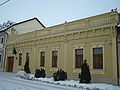 Consulate of Slovakia (Szlovák Konzulátus/Consulatul Slovac)
 -
 The Court
 -
 Teodor Neș National College (Teodor Neș Kollégium/Colegiul Națtional Teodor Neș)
 -
 The Peasantry Museum panorama
 -
 The Peasantry Museum
 -
 Central Park (Központi Park/Parcul Central)
 -
 Reformed Cathedral (Református Templom/Templul Reformat)
 -
 Orthodox Church
 -
 Catholic Church
 -
 Train monument and the railway station
 -
 Slavia Hotel
 -
 Central Hotel in 1932
 -
 The railway station in 1921
 -
 The high school in 1907
 -
 Ciunt Tower and the center of the town in 1917
 -
 Reformed Cathedral and the center of the town in 1917


._Fortepan_86679.jpg)


References
[edit]- ^ "2021 Romanian census". National Institute of Statistics.
- ^ "Results of the 2020 local elections". Central Electoral Bureau. Retrieved 9 June 2021.
- ^ "Populația rezidentă după grupa de vârstă, pe județe și municipii, orașe, comune, la 1 decembrie 2021" (in Romanian). INSSE. 31 May 2023.
- ^ "Archived copy" (PDF). Archived from the original (PDF) on 16 June 2012. Retrieved 10 March 2012.
{{cite web}}: CS1 maint: archived copy as title (link) - ^ Romanian 2002 Census
- ^ NASA Langley Research Center Atmospheric Science Data Center; New et al. 2002, online, [1]
- ^ "Arvin Meritor in Salonta, Romania". Reuters. Archived from the original on 8 March 2008. Retrieved 1 July 2017.
- ^ Romanian Aeromodelism, Salonta Cup
- ^ "Baschetul masculin, primul sport unde au fost desemnate finalistele Gimnaziadei 2018-2019 din toate cele opt regiuni naționale". www.cosr.ro (in Romanian). 11 April 2019. Archived from the original on 4 August 2020. Retrieved 14 October 2024.
- ^ "Echipele câștigătoare ale Gimnaziadei 2017-2018 la baschet feminin și volei masculin, premiate în Sala Polivalentă de la Izvorani". www.cosr.ro (in Romanian). 23 May 2018. Archived from the original on 24 November 2020. Retrieved 14 October 2024.
- ^ "Campionatul național U14 feminin". www.frbaschet.ro (in Romanian). Federația Româna de Baschet. Retrieved 14 October 2024.
- ^ "Meciuri de pregătire în Turcia pentru selecționatele U15 ale României". www.frbaschet.ro (in Romanian). 17 April 2019. Retrieved 14 October 2024.
- ^ "Bihorenii de la Tengo Salonta au câștigat Cupa Mondială la futnet". www.bihon.ro (in Romanian). 11 June 2017. Retrieved 14 October 2024.
- "Salonta, Romania – Sunrise, sunset, dawn and dusk times, table". www.gaisma.com. NASA Langley Research Center Atmospheric Science Data Center. Retrieved 14 October 2024.
- "Romanian National Aeromodelism, Salonta Cup". Archived from the original on 11 November 2007.
External links
[edit]
- Salonta General Information Site Archived 4 December 2020 at the Wayback Machine

| International | |
|---|---|
| National | |
| Other | |

Salonta
View on GrokipediaGeography and Environment
Location and Topography
Salonta is located in Bihor County, within the Crișana region of north-western Romania, at geographic coordinates 46°48′N 21°39′E.[5] The city lies near the border with Hungary, approximately 20 kilometers from the nearest road crossing, and about 36 kilometers southwest of Oradea, the county seat.[6] The topography of Salonta consists of flat plains characteristic of the Western Romanian Plain, situated west of the Apuseni Mountains.[7] The average elevation is around 92 meters above sea level, with minimal variation in terrain height, typically less than 11 meters across the immediate vicinity.[8][9] This level terrain supports agricultural activities, forming part of Romania's productive lowland areas.[10] Salonta's administrative boundaries encompass an urban area integrated into the regional plain, with connectivity facilitated by the DN79 national road, which links the city to Oradea in the north and extends southward toward Timișoara.[11] The surrounding landscape's flatness has historically favored settlement and transport routes, influencing patterns of human habitation and economic ties across the border region.[7]Climate
Salonta has a humid continental climate (Köppen classification Dfb), featuring distinct seasons with cold, snowy winters and warm, humid summers, typical of the lowland plains in western Romania.[9] The average annual temperature is approximately 11.5°C, with extremes ranging from lows of -3°C in winter to highs of 28°C in summer, though temperatures rarely drop below -12°C or exceed 33°C based on historical records from 1991 to 2020.[9] Annual precipitation totals around 734 mm, distributed relatively evenly but with peaks in spring and summer, supporting agricultural activities while posing occasional flood risks in the flat terrain. Winters, from December to February, bring average January lows of -3°C and highs around 2°C, with snowfall contributing to about 20-30% of annual precipitation and occasional frost periods extending into early spring, which can delay planting for local crops like grains and vegetables.[9] Summers, peaking in July, feature average highs of 28°C and lows of 16°C, with humidity levels often exceeding 60%, fostering conditions favorable for maize and fruit cultivation but increasing evaporation rates that strain water resources during dry spells.[9] These patterns align with data from regional weather models, showing moderate wind speeds averaging 10-15 km/h year-round, occasionally stronger in transitional seasons.[12] Compared to Bihor County averages, Salonta's climate shows minimal microclimatic deviation due to its position on the open Criș Plain, with slightly lower precipitation (versus 773 mm in nearby Oradea) but comparable temperatures, as the lack of significant elevation or forest barriers allows uniform continental air mass influences.[13] This stability aids habitability but heightens vulnerability to late frosts, recorded in meteorological datasets as impacting up to 10-15% of early-season yields in lowland areas, per regional agrometeorological observations.[14]History
Origins and Medieval Period
Salonta's earliest documented reference appears in 1214 records of the Kingdom of Hungary, where it is recorded as Zolonta, indicating its status as a modest settlement within the feudal structure of medieval Hungary.[3] A papal document from 1332 further mentions the locality as Zalanta, corroborating its existence as a small village amid the region's dispersed rural communities.[3] Archaeological evidence points to human habitation in the area dating back to the Neolithic period, though these findings predate the medieval written attestations and do not directly inform the settlement's 13th-century configuration.[15] During the medieval period, Salonta remained an insignificant village under feudal ownership, primarily held by the Toldi noble family, which constructed initial defensive structures such as a palisade to counter invasions, including those by Mongol forces in the 13th century.[3] The Toldi family's control underscores the typical manorial organization of such locales, where local lords managed land and peasant labor under royal oversight, with limited evidence of broader economic significance beyond subsistence agriculture and minor local exchanges. The settlement's position in the Bihor plain likely facilitated some connectivity to regional paths, but archival sources do not highlight it as a key node in major medieval trade networks.[3] The toponym's evolution—from Zolonta and Zalanta to the Hungarian Szalonta by 1587 and the Romanian Salonta—reflects phonetic adaptations in a linguistically diverse frontier zone, potentially tracing to Slavic roots via Old Church Slavonic influences, though primary medieval usage aligned with Hungarian administrative nomenclature.[3] This naming consistency in early documents suggests continuity in local identity amid shifting feudal tenures, without indications of significant ethnic reconfiguration until later centuries.Under Habsburg and Ottoman Rule
In the 16th century, Salonta, then a minor village known as Nagyszalonta and owned by the Toldi family, faced repeated Ottoman threats amid the broader Ottoman-Hungarian conflicts; the family responded by erecting the first wooden palisade fortifications around the settlement to bolster defenses.[3] This measure reflected the causal pressures of border warfare, where Ottoman raids into Hungarian territories necessitated localized fortifications to protect agrarian communities and trade routes.[16] By the early 17th century, Salonta's strategic position prompted the settlement of Hajdú soldiers—irregular Hungarian guerrilla fighters loyal to the anti-Ottoman cause—who were granted lands to secure the frontier, resulting in measurable population expansion from prior insignificant levels.[2] These warriors, often cavalry-based and operating in ratio with infantry, contributed to a militarized economy, with their presence enabling sustained agricultural output under fortified conditions despite intermittent Ottoman suzerainty over parts of the surrounding Bihar region.[17] The late 17th century brought fluctuating control between Ottoman vassalage and Habsburg incursions during the Great Turkish War (1683–1699), positioning Salonta as a contested outpost in the shifting military landscape.[18] The 1699 Treaty of Karlowitz formalized Habsburg dominance by ceding most of Ottoman Hungary, including frontier zones like Salonta's vicinity, to the Habsburg Monarchy, ending direct Turkish occupation and integrating the area into imperial border defenses.[19] This transition stabilized administrative oversight under Habsburg military governance, fostering gradual economic recovery through reinforced settlements that mitigated prior raid-induced disruptions.[20]19th and 20th Centuries
During the 19th century, as part of the Kingdom of Hungary within the Austro-Hungarian Empire, Salonta underwent infrastructural improvements, including the drainage of surrounding marshes, the construction of a railway line, and the establishment of state institutions by the late 1800s, fostering modest urbanization and economic ties to regional agriculture.[21] The Jewish community was formally established in 1852, comprising 15 families who received settlement permission from the Orthodox Romanian Bishop of Oradea, marking the beginning of organized Jewish life amid growing commercial activities.[22] By 1910, the Jewish population had expanded to 843 individuals, reflecting broader demographic shifts in the multi-ethnic town.[23] The Town Hall, an Art Nouveau structure designed by architect László Székely, was erected between 1906 and 1907, symbolizing the era's architectural ambitions and administrative consolidation under Hungarian governance.[24] Following World War I, the Treaty of Trianon in 1920 transferred Salonta from Hungary to Romania, integrating it into Bihor County as part of the redefined borders that awarded Romania Transylvania and adjacent territories.[25] In 1940, the Second Vienna Award temporarily restored Hungarian control over Salonta until 1944, amid Axis-aligned territorial revisions.[23] Under this Hungarian administration, the local Jewish population of approximately 593 was deported to Auschwitz in the summer of 1944, with nearly all perishing in the Holocaust.[23] After Soviet advances restored Romanian sovereignty in 1944, the region entered the communist era, where nationalization decrees from 1948 onward seized private enterprises, lands, and agricultural assets, reorganizing them into state collectives and cooperatives that curtailed pre-war economic structures.[26]Post-1989 Developments
Following the collapse of the communist regime in December 1989, Salonta experienced a shift from centralized planning to a market-oriented economy, marked by the restitution of agricultural lands previously collectivized under the Ceaușescu administration and the emergence of small private enterprises in trade and services. This transition, while enabling local entrepreneurial activity, contributed to initial economic disruptions, including unemployment spikes as state-owned industries restructured. Infrastructure improvements followed, with upgrades to the DN79 national road connecting Salonta to Oradea facilitating better regional integration and commerce, supported by post-accession EU funding after Romania's 2007 entry.[27][28] Demographic pressures intensified, with sustained emigration of working-age residents—particularly youth and skilled laborers—to Western Europe, leading to population stagnation or decline in small towns like Salonta. Data from Romania's National Institute of Statistics (INSSE) indicate that Bihor County, encompassing Salonta, saw net out-migration contribute to a shrinking resident base, influenced partly by ethnic Hungarian communities seeking opportunities abroad while maintaining cross-border ties. This trend aligns with broader Nord-Vest regional patterns, where emigration rates exceeded natural population decrease post-1989.[29][30] In a nod to ethnic minority recognition, the Romanian government approved official coats of arms and flags for Salonta on May 23, 2025, incorporating elements reflective of its Hungarian heritage amid ongoing debates over minority symbols in majority-Romanian locales. This decision built on legal frameworks for local autonomy while navigating tensions from nationalist sentiments. Concurrently, Salonta hosted the 2025 FAI F1ABCQ World Championships for Free Flight Model Aircraft from July 20 to 27, drawing international competitors and signaling growth in recreational aviation events as a draw for tourism and community engagement.[31][32]Demographics
Population Dynamics
Salonta's population peaked at approximately 20,660 inhabitants in the 1992 census, reflecting growth during the communist period driven by state policies promoting industrialization and internal migration to urban centers.[33] By the 2002 census, the figure stood at 20,006, marking the onset of decline amid post-communist economic restructuring.[34] This trend accelerated, with the population falling to 17,042 in the 2011 census and further to 15,792 in the 2021 census, representing an average annual decrease of about 1.2% over the 2002–2021 period.[1] The decline stems primarily from sub-replacement birth rates and sustained net out-migration. In Bihor County, which encompasses Salonta, the crude birth rate hovered at 9.6 per 1,000 inhabitants in recent years, well below the replacement level of approximately 14 per 1,000 needed for population stability absent migration.[35] Negative migration balances, exacerbated by opportunities in larger Romanian cities like Oradea or abroad in the European Union, have compounded natural decrease, as evidenced by patterns in Romania's smaller towns where external outflows outpace inflows.[29] Salonta's administrative area covers 170 km², resulting in a low population density of 92.87 inhabitants per km² as of 2021, characteristic of towns blending urban cores with surrounding rural expanses.[1] Projections based on recent trends estimate the population at around 14,700 by 2025, continuing the stagnation-to-decline trajectory observed since the early 1990s.[34]Ethnic and Linguistic Composition
According to Romania's 2021 census, Salonta's resident population totaled 15,792, with ethnic Hungarians comprising the largest group at 8,387 individuals (53.1%), followed by 5,694 ethnic Romanians (36.0%), 303 Roma (1.9%), and minor shares for Slovaks (0.05%), Ukrainians, and others, alongside a remainder undeclared or unspecified.[36] These figures reflect self-reported identities, which Romanian censuses record without external verification, potentially subject to undercounting among mobile or non-participating groups like Roma.[37]| Census Year | Total Population | Hungarians (%) | Romanians (%) | Roma (%) | Others (%) |
|---|---|---|---|---|---|
| 2021 | 15,792 | 8,387 (53.1) | 5,694 (36.0) | 303 (1.9) | ~8.0 |
| 2011 | 17,042 | 9,906 (58.1) | 6,620 (38.8) | 403 (2.4) | 0.7 |
| 1992 | ~20,000 | ~61.1 | N/A | N/A | N/A |
Religious Demographics
According to data from the 2011 census utilized in Salonta's 2021 development strategy, the religious composition of the town's population consists primarily of Reformed Calvinists at 47.67%, followed by Eastern Orthodox adherents at 34.27%, Roman Catholics at 7.21%, and Baptists at 3.15%, with other religions accounting for 2.93% and 4.77% unspecified.[40] This distribution reflects the ethnic makeup, where the Reformed and Catholic communities are predominantly associated with the Hungarian majority (55.64% of the population in 2011), while Eastern Orthodoxy aligns closely with the Romanian minority (37.06%).[40] Historically, Salonta hosted a Jewish community that grew from around 298 individuals in 1880 to 740 by 1930, establishing institutions such as an elementary school in 1867 and a synagogue in 1886; however, the Holocaust decimated this population, leaving only a negligible remnant incorporated within the "other religions" category today.[41] The persistence of a Christian majority, exceeding 90% when excluding unspecified affiliations, underscores continuity in religious adherence amid Romania's broader secularization patterns observed in national surveys, though local active participation rates have not been quantified in recent empirical studies specific to Salonta.[42]Economy
Primary Sectors and Industries
Agriculture remains the dominant primary sector in Salonta, leveraging the fertile plains of the Crișana region for grain cultivation such as wheat and oilseeds, alongside livestock rearing including pigs and poultry.[43] Local firms engage in hog farming, grain production, and other crop activities, reflecting the broader Bihor County emphasis on field crops and animal husbandry suited to the flat terrain.[44] Approximately 12% of Romania's workforce is employed in agriculture-related activities, with Bihor exhibiting higher regional involvement due to its arable land base.[45] Post-1989 economic reforms dismantled communist-era collective farms through land restitution, transitioning to fragmented private holdings that dominate Salonta's agricultural landscape; EU accession in 2007 introduced subsidies supporting farm mechanization and crop diversification, including emerging ventures like blueberry cultivation.[46] This shift enhanced viability for small-scale operations but preserved a reliance on subsistence and semi-commercial farming, with limited consolidation into larger entities.[47] Light manufacturing constitutes a secondary pillar, centered on food processing—particularly meat products—and ancillary activities like packaging and plastics molding, without significant heavy industry presence.[48] Firms such as those specializing in hemp seed processing and blueberry farming illustrate niche agro-industrial integration, processing local outputs for domestic and export markets.[49] Bihor County's low unemployment, around 4% in the encompassing Nord-Vest region as of recent data, underscores stable labor absorption in these sectors amid Romania's national rate of approximately 3-5%.[30][50]Infrastructure and Trade
Salonta lies along Romania's DN79 national road, which connects the town southward to Arad and northward to Oradea while providing the primary overland route toward the Hungarian border approximately 30 kilometers west. This road supports regional freight and passenger movement, with ongoing plans for integration into the broader DEx16 Arad-Oradea expressway, including a 33.7-kilometer section from Oradea to Salonta and a 5.3-kilometer connecting spur from DN79. Bids for constructing the initial lots of this expressway, encompassing Salonta's linkages, were submitted in June 2024, with further segments planned to include a 10-kilometer border access road to Hungary aimed at accelerating cross-border logistics. The expressway's development, part of Romania's TEN-T network enhancements, is projected to reduce travel times and elevate trade throughput once completed in phases through 2030. Rail connectivity is provided via Salonta railway station on Căile Ferate Române (CFR) Line 300, facilitating direct intercity services to Oradea (north), Arad and Timișoara (south), and intermediate stops like Chișineu Criș. Daily timetables include interregional trains such as IR 1532, linking Salonta to broader networks toward Satu Mare and Bucharest with changeovers. The station handles passenger traffic but lacks high-speed capabilities, reflecting Romania's emphasis on upgrading legacy lines for efficiency. No dedicated freight hub exists locally, though the line supports agricultural and industrial shipments tied to Bihor County's economy. Air travel depends on nearby facilities, with Oradea International Airport (OMR), 55 kilometers north, serving as the closest hub for domestic and limited European flights; Arad Airport (ARW), 120 kilometers south, offers supplementary options for western routes. Salonta maintains no municipal airport, aligning with Romania's concentration of aviation infrastructure in larger county centers. Utilities infrastructure includes nationwide electricity distribution via Transelectrica and regional providers, achieving near-universal household coverage in Bihor County's urban municipalities like Salonta. Natural gas networks, expanded under Romania's post-2000 distribution programs, supply the town through operators such as E.ON Gaz Distribuție, supporting heating and industrial needs with penetration rates exceeding 80% in western regions. Water and sewage systems are managed locally, with recent EU-funded upgrades improving reliability. Trade in Salonta emphasizes cross-border exchanges with Hungary, leveraging proximity to Hajdú-Bihar County for commodities like agricultural products and manufactured goods. Bilateral Romania-Hungary commerce reached 13.3 billion euros in 2024, with local flows facilitated by DN79 and rail links despite tariff and regulatory hurdles. Regional initiatives under the Interreg Romania-Hungary Programme, including infrastructure-tied projects near Salonta, promote business-to-business ties, though empirical data indicate modest volumes compared to major ports like Constanța. Planned expressway extensions are expected to increase Hungarian import-export activity through Salonta by shortening routes to Oradea and beyond, potentially raising local transit trade by 20-30% upon completion.Government and Politics
Local Administration
The local administration of Salonta operates under Romania's framework for municipal governance, with executive authority held by the mayor (primar) and legislative functions performed by the local council (consiliu local). The mayor is elected directly by residents for a four-year term, overseeing day-to-day operations, public services, and policy execution.[51] The council, comprising elected members from parties such as UDMR, PSD, and PNL, approves the annual budget, urban planning, and local regulations, with composition reflecting electoral outcomes.[52] City Hall, situated at 1 Republicii Street, serves as the administrative headquarters. This Art Nouveau structure, designed by local architect László Székely and completed in 1907, continues to house key municipal offices.[24] The town's budget derives primarily from local taxes and fees, supplemented by central government grants including VAT revenue shares allocated to subnational entities.[53] Salonta's territory is managed as a unified urban area without formal sub-municipal divisions, though services are coordinated across neighborhoods such as the central district and peripheral zones for efficient resource allocation.[54]Electoral Politics and Representation
In the June 9, 2024, local elections, László Török of the Democratic Alliance of Hungarians in Romania (UDMR) was re-elected mayor of Salonta, continuing UDMR's hold on the position amid strong ethnic Hungarian voter support in the municipality.[55] UDMR's success in Salonta mirrors its gains in Bihor County, where the party secured 21 mayoral wins, including in Hungarian-plurality areas, reflecting localized ethnic mobilization over broader national party competition.[55] The Salonta Municipal Council, comprising 17 members following the 2024 elections, is dominated by UDMR with 12 seats, enabling majority control on local decisions.[56] The National Liberal Party (PNL) holds 3 seats, while the Social Democratic Party (PSD) and Save Romania Union (USR) each have 1, underscoring UDMR's outsized representation tied to the town's demographic profile rather than ideological shifts seen elsewhere in Bihor, where PNL leads county-wide.[56] This composition has provided administrative continuity since the 2020 elections, when Török first secured the mayoralty under UDMR, aligning with pro-EU stances and pragmatic coalitions at national levels without major disruptions.[57] Electoral outcomes in Salonta demonstrate consistent ethnic-based voting preferences, with UDMR's dominance persisting across cycles and diverging from Romania's national trends favoring larger parties like PNL or PSD in non-ethnic contexts.[55] Post-2020, this has fostered stable local governance focused on infrastructure and community needs, though council deliberations occasionally involve cross-party input on budgets and development.[56]Ethnic Minority Issues
In May 2025, the Romanian government approved the official coat of arms and flag for Salonta, a municipality with a notable Hungarian ethnic presence, following local initiatives supported by the Democratic Alliance of Hungarians in Romania (UDMR). This decision represented a pragmatic accommodation to demands for symbols reflecting historical Hungarian heritage, amid occasional undercurrents of irredentist sentiment from cross-border Hungarian political encouragement, though without escalating to overt conflict in the locality.[31] The UDMR maintains considerable sway in Salonta's governance, leveraging coalition dynamics to advance minority interests, including resistance to perceived Romanian centralization that could erode cultural distinctiveness. Romanian law permits use of minority languages in official settings where ethnic groups exceed 20% of the population, facilitating Hungarian alongside Romanian in local administration, yet implementation often sparks debates over proportionality and national unity.[58] Education in Salonta includes Hungarian-medium institutions, enabling mother-tongue instruction for the minority community, supplemented by mixed-language programs that promote bilingualism but highlight tensions between autonomy provisions and broader assimilation pressures from Bucharest. These arrangements stem from post-1989 cultural rights frameworks, which UDMR has defended against revisions favoring centralized curricula. No large-scale ethnic clashes have occurred, but census ethnic self-identifications—showing fluctuating Hungarian declarations—influence resource allocation and political leverage, underscoring reliance on verifiable data over idealized coexistence narratives.[59]Culture and Heritage
Architectural Landmarks
Salonta's architectural landmarks primarily date from the Austro-Hungarian era, showcasing Art Nouveau influences alongside medieval remnants that highlight the town's pre-20th-century fortifications and civic development. These structures, often preserved as historic monuments, underscore the enduring impact of Hungarian architectural patronage in the region prior to the post-World War I territorial shifts.[3] The Salonta City Hall, erected between 1906 and 1907, represents a key example of Art Nouveau design, characterized by ornate facades and functional elegance typical of late Habsburg-era public buildings. Architect László Székely, a local native whose father was a master mason from the town, oversaw its construction on the site of a prior administrative property acquired from the Fónagy family. The building's preservation maintains its role as a central civic landmark.[24][60] The Csonka Tower (Truncated Tower), the last vestige of Salonta Castle initiated around 1620, stands as a fortified remnant from the town's defensive past, involved in 17th-century conflicts including Ottoman incursions in 1658. Classified as historic monument BH-II-m-B-00997, it now houses the Arany János Memorial Museum, opened in 1899, adjacent to the Arany Palace, preserving 19th-century literary heritage within a medieval framework.[61][62] The Reformed Church, rebuilt from 1853 to 1854 after earlier structures, features a prominent 42-meter tower housing a clock acquired in 1860 from Macedonian merchants, reflecting 19th-century Calvinist architectural adaptations in the area. Embedded memorials and furnishings from the Protestant tradition contribute to its historical integrity.[63]Traditions and Cultural Life
Salonta's traditions emphasize Hungarian ethnic customs amid its majority Hungarian population, including folk dances and festivals that sustain Calvinist-influenced community practices. Annual events feature néptánc performances by groups like the Toldi néptánccsoport, preserving Transylvanian Hungarian dance forms such as csárdás, often tied to historical Reformed Church gatherings.[64] The Festivalul Sarmalelor, held each September, highlights gastronomic traditions with competitions for stuffed cabbage rolls, drawing thousands; the 2025 edition served over 25,000 portions alongside folk music and dance spectacles by ensembles like Ansamblul Miorița.[65][66] Local fairs during these events incorporate Hungarian culinary elements, reflecting cross-ethnic influences in Bihor County.[67] Zilele Salontane, Salonta's city days, commence with a traditional children's parade from the Reformed Church, fostering intergenerational participation in Calvinist-rooted rituals and folk attire displays.[68] The Szentivánéji Fesztivál, marking midsummer on June 21-22, integrates Hungarian pagan-Christian customs with concerts, theater, and exhibitions evoking Arany János-era folklore, though focused on communal heritage rather than individuals.[69][70] Hajdúhét, a week-long series in late September, promotes Hajdú historical traditions through cultural programs, including music and crafts, underscoring enduring ethnic identity in the Reformed community.[71] Religious observances, such as Reformation Day on October 31, feature church services and modest gatherings in Salonta's Reformed parishes, aligning with Calvinist emphasis on scriptural piety over elaborate rituals.[72] The House of Culture serves as a venue for these activities, hosting folk ensembles and holiday events year-round.[73]Notable Natives
János Arany (1817–1882), a preeminent Hungarian poet and dramatist, was born in Salonta on March 2, 1817, to a modest yeoman family. He worked as a notary in the town during his early adulthood, where he began publishing poetry, later achieving fame for epic ballads like Toldi (1846) and satirical works that advanced Hungarian literary standards and national identity. Arany's linguistic precision and narrative depth earned him recognition as a leading figure in 19th-century Hungarian Romanticism, alongside roles in the Hungarian Academy of Sciences.[74] Lajos Zilahy (1891–1974), another influential Hungarian writer, was born in Salonta on March 27, 1891. A novelist, playwright, and screenwriter, Zilahy authored over 40 works, including the epic The Two Prisoners (translated as No Single Step), which depicted human endurance amid historical upheaval and was adapted into films. His output spanned drama, fiction, and film production, reflecting interwar European themes of fate and exile.[75] György Kulin (1905–1989), a noted astronomer, was born in Salonta on January 28, 1905. Working primarily at Hungary's Konkoly Observatory, he discovered five periodic comets—such as 144P/Kulin—and numerous asteroids, including contributions to orbital calculations that advanced minor body cataloging in the mid-20th century. Kulin also popularized science through writings and retained ties to his birthplace.[76] Andra Ursuţă (b. 1979), a contemporary sculptor, was born in Salonta. Based in New York since emigrating in the late 1990s, her installations and sculptures—often using materials like cast concrete and metal—explore themes of displacement, violence, and human form, with exhibitions at institutions including the Hammer Museum and representations by galleries like David Zwirner.Sports and Leisure
Local Sports Institutions
The primary sports institution in Salonta is CSM Olimpia Salonta, a professional football club competing in Liga IV Bihor, the fourth tier of the Romanian football league system.[77] The club fields senior and youth teams, including an under-19 squad that participates in regional youth competitions.[78] Its home matches are held at Stadionul Municipal, a multi-purpose venue primarily used for football.[79] Another notable club is Tengo Salonta, specializing in football tennis—a sport combining elements of football and tennis—established in April 1994 with a focus on youth development to foster passion for physical activity among children.[80] The club emphasizes training and competitive play, contributing to community engagement through junior programs. Additional facilities include Sala de Sport Nicolae Talpoș, a gymnasium serving as a hub for indoor sports and fitness activities such as gymnastics and team practices.[81] Clubul Sportiv Metalul, located on Strada Republicii, supports local athletic endeavors, though specific disciplines and participation metrics remain limited in public records.[82] These institutions primarily sustain participation at amateur and regional levels, with football drawing the broadest community involvement in Salonta.Major Events and Achievements
Salonta served as the host for the 2025 FAI F1ABCQ World Championships for Free Flight Model Aircraft, held from July 20 to 27 at the Baia Veche flying site, drawing senior competitors from over 20 countries in classes including F1A (gliders), F1B (power models), F1C (team models), F1H (hand-launched gliders), and F1G (old timer gliders).[83][84] The championships showcased precise engineering and piloting skills in free flight disciplines, with Romanian entrant Vlad Dorian Cristea claiming the F1A title, demonstrating local proficiency in the sport.[85] Concurrent with the world event, Salonta hosted the 2025 FAI F1ABP Junior European Championships for Free Flight Model Aircraft, further affirming the venue's infrastructure for high-level competitions involving youth athletes in power and glider categories.[84] Official results were published by the Romanian Modeling Federation, confirming successful execution despite variable weather conditions typical of outdoor free flight events.[86] The town has cultivated a tradition of model aviation events, with the Baia Veche site previously hosting Romanian national championships in F1A, F1B, F1C, and F1P classes, establishing it as a reliable venue for international gatherings.[87] In 2025 alone, Salonta hosted additional FAI-sanctioned World Cup rounds, such as the Szabo Miklos Memorial in May and the Salonta Cup in September, where competitors like Emmanuel Ragot of France topped F1B standings with scores exceeding 1,000 points across multiple flights.[88][89] These recurring high-profile competitions highlight Salonta's specialized expertise in free flight model aircraft, a niche sector supported by the Romanian Modeling Federation and local enthusiasm for aeromodeling precision and endurance testing.[90]International Relations
Twin Towns and Partnerships
Salonta maintains twin town partnerships primarily with municipalities in Hungary and one in Slovakia, aimed at enhancing cross-border cultural exchanges, educational programs, and local economic development, facilitated by the town's position adjacent to the Hungarian border and its substantial Hungarian-speaking population.[91] These ties support collaborative initiatives, including joint events and infrastructure projects, such as shared bicycle paths and environmental management efforts with nearby partners.[92][93] The partnerships include:- Csepel (a district of Budapest), Hungary, promoting gastronomic and cultural events between the communities.[94]
- Hajdúböszörmény, Hungary, established by at least 1993, with activities encompassing sports exchanges like football matches and broader municipal cooperation.[95][96]
- Nagykőrös, Hungary.
- Sarkad, Hungary, involving cross-border projects for sustainable development, including waste collection systems and rural connectivity.[93][97]
- Túrkeve, Hungary.
- Rimavská Sobota (Rimaszombat), Slovakia, reflecting ties with regions sharing Hungarian minority communities.[91]
References
- https://commons.wikimedia.org/wiki/File:Csonkatorony_Arany_Palota.jpg