


Community hub
Recent from talks
Contribute something
Nothing was collected or created yet.
Second-harmonic generation
View on Wikipedia
Second-harmonic generation (SHG), also known as frequency doubling, is the lowest-order wave-wave nonlinear interaction that occurs in various systems, including optical, radio, atmospheric, and magnetohydrodynamic systems.[1] As a prototype behavior of waves, SHG is widely used, for example, in doubling laser frequencies. SHG was initially discovered as a nonlinear optical process[2] in which two photons with the same frequency interact with a nonlinear material, are "combined", and generate a new photon with twice the energy of the initial photons (equivalently, twice the frequency and half the wavelength), that conserves the coherence of the excitation. It is a special case of sum-frequency generation (2 photons), and more generally of harmonic generation.
The second-order nonlinear susceptibility of a medium characterizes its tendency to cause SHG. Second-harmonic generation, like other even-order nonlinear optical phenomena, is not allowed in media with inversion symmetry (in the leading electric dipole contribution).[3] However, effects such as the Bloch–Siegert shift (oscillation), found when two-level systems are driven at Rabi frequencies comparable to their transition frequencies, will give rise to second-harmonic generation in centro-symmetric systems.[4][5] In addition, in non-centrosymmetric crystals belonging to crystallographic point group 432, SHG is not possible [6] and under Kleinman's conditions SHG in 422 and 622 point groups should vanish,[7] although some exceptions exist.[8]
In some cases, almost 100% of the light energy can be converted to the second-harmonic frequency. These cases typically involve intense pulsed laser beams passing through large crystals and careful alignment to obtain phase matching. In other cases, like second-harmonic imaging microscopy, only a tiny fraction of the light energy is converted to the second harmonic, but this light can nevertheless be detected with the help of optical filters.

Generating the second harmonic, often called frequency doubling, is also a process in radio communication; it was developed early in the 20th century and has been used with frequencies in the megahertz range. It is a special case of frequency multiplication.
History
[edit]
Second-harmonic generation was first demonstrated by Peter Franken, A. E. Hill, C. W. Peters, and G. Weinreich at the University of Michigan, Ann Arbor, in 1961.[9] The demonstration was made possible by the invention of the laser, which created the required high-intensity coherent light. They focused a ruby laser with a wavelength of 694 nm into a quartz sample. They sent the output light through a spectrometer, recording the spectrum on photographic paper, which indicated the production of light at 347 nm. Famously, when published in the journal Physical Review Letters,[9] the copy editor mistook the dim spot (at 347 nm) on the photographic paper as a speck of dirt and removed it from the publication.[10] The formulation of SHG was initially described by N. Bloembergen and P. S. Pershan at Harvard in 1962.[11] In their extensive evaluation of Maxwell's equations at the planar interface between a linear and nonlinear medium, several rules for the interaction of light in non-linear media were elucidated.
Types in crystals
[edit]Critical phase-matching
[edit]


Second-harmonic generation occurs in three types for critical phase-matching,[12] denoted 0, I and II. In Type 0 SHG two photons having extraordinary polarization with respect to the crystal will combine to form a single photon with double the frequency/energy and extraordinary polarization. In Type I SHG two photons having ordinary polarization with respect to the crystal will combine to form one photon with double the frequency and extraordinary polarization. In Type II SHG, two photons having orthogonal polarizations will combine to form one photon with double the frequency and ordinary polarization. For a given crystal orientation, only one of these types of SHG occurs. In general to utilize Type 0 interactions a quasi-phase-matching crystal type will be required, for example periodically poled lithium niobate (PPLN).
Non-critical phase-matching
[edit]Since phase-matching process basically means to match the optical indices at ω and 2ω, it can also be done by a temperature control in some birefringent crystals, because n changes with the temperature. For instance, LBO presents a perfect phase-matching at 25 °C for a SHG excited at 1200 or 1400 nm,[13] but needs to be elevated at 200 °C for SHG with the usual laser line of 1064 nm. It is called "non-critical" because it does not depend on the crystal orientation as usual phase-matching.
Surface second-harmonic generation
[edit]
Since media with inversion symmetry are forbidden from generating second-harmonic light via the leading-order electric dipole contribution (unlike third harmonic generation), surfaces and interfaces make interesting subjects for study with SHG. In fact, second-harmonic generation and sum frequency generation discriminate against signals from the bulk, implicitly labeling them as surface specific techniques. In 1982, T. F. Heinz and Y. R. Shen explicitly demonstrated for the first time that SHG could be used as a spectroscopic technique to probe molecular monolayers adsorbed to surfaces.[14] Heinz and Shen adsorbed monolayers of laser dye rhodamine to a planar fused silica surface; the coated surface was then pumped by a nanosecond ultra-fast laser. SH light with characteristic spectra of the adsorbed molecule and its electronic transitions were measured as reflection from the surface and demonstrated a quadratic power dependence on the pump laser power.
In SHG surface spectroscopy, one focuses on measuring twice the incident frequency 2ω given an incoming electric field in order to reveal information about a surface. Simply (for a more in-depth derivation see below), the induced second-harmonic dipole per unit volume, , can be written as



where is known as the nonlinear susceptibility tensor and is a characteristic to the materials at the interface of study.[15] The generated and corresponding have been shown to reveal information about the orientation of molecules at a surface/interface, the interfacial analytical chemistry of surfaces, and chemical reactions at interfaces. SHG surface spectroscopy is also used extensively in the electrochemical characterization of materials, since the electric field at the interface between the electrode and electrolyte introduces an additional term that affects the interfacial inversion symmetry.


From planar surfaces
[edit]
Early experiments in the field demonstrated second-harmonic generation from metal surfaces.[16] Eventually, SHG was used to probe the air-water interface, allowing for detailed information about molecular orientation and ordering at one of the most ubiquitous of surfaces.[17] It can be shown that the specific elements of :
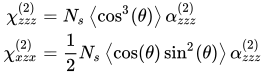
where Ns is the adsorbate density, θ is the angle that the molecular axis z makes with the surface normal Z, and is the dominating element of the nonlinear polarizability of a molecule at an interface, allow one to determine θ, given laboratory coordinates (x, y, z).[18] Using an interference SHG method to determine these elements of χ(2), the first molecular orientation measurement showed that the hydroxyl group of phenol pointed downwards into the water at the air-water interface (as expected due to the potential of hydroxyl groups to form hydrogen bonds). Additionally SHG at planar surfaces has revealed differences in pKa and rotational motions of molecules at interfaces.

From non-planar surfaces
[edit]
Second-harmonic light can also be generated from surfaces that are "locally" planar, but may have inversion symmetry (centrosymmetric) on a larger scale. Specifically, recent theory has demonstrated that SHG from small spherical particles (micro- and nanometer scale) is allowed by proper treatment of Rayleigh scattering (scattering without a change in frequency from absorbed to emitted waves).[19] At the surface of a small sphere, inversion symmetry is broken, allowing for SHG and other even order harmonics to occur.
For a colloidal system of microparticles at relatively low concentrations, the total SH signal , is given by:


where is the SH electric field generated by the jth particle, and n the density of particles.[20] The SH light generated from each particle is coherent, but adds incoherently to the SH light generated by others (as long as density is low enough). Thus, SH light is only generated from the interfaces of the spheres and their environment and is independent of particle-particle interactions. It has also been shown that the second-harmonic electric field scales with the radius of the particle cubed, a3.

Besides spheres, other small particles like rods have been studied similarly by SHG.[21] Both immobilized and colloidal systems of small particles can be investigated. Recent experiments using second-harmonic generation of non-planar systems include transport kinetics across living cell membranes[22] and demonstrations of SHG in complex nanomaterials.[23]
Radiation pattern
[edit]
The SHG radiation pattern generated by an exciting Gaussian beam also has a (homogeneous) 2D Gaussian profile if the nonlinear medium being excited is homogeneous (A). However, if the exciting beam is positioned at an interface between opposite polarities (± boundary, B) that is parallel to the beam propagation (see figure), the SHG will be split into two lobes whose amplitudes have opposite sign, i.e. are phase-shifted. [24]

These boundaries can be found in the sarcomeres of muscles (protein = myosin), for instance. Note that we have considered here only the forward generation.
Moreover the SHG phase-matching can also result in : some SHG is also emitted in backward (epi direction). When the phase-matching is not fulfilled, as in biological tissues, the backward signal comes from a sufficiently high phase-mismatch which allow a small backward contribution to compensate for it.[25] Unlike fluorescence, the spatial coherence of the process constrain it to emit only in those two directions, where the coherence length in the backwards direction is always much smaller than in the forwards, meaning there is always more forward than backward SHG signal.[26]


The forward (F) to backward (B) ratio is dependent on the arrangement of the different dipoles (green in figure) that are being excited. With only one dipole ((a) in the figure), F = B, but F becomes higher than B when more dipoles are stacked along the propagation direction (b and c). However, the Gouy phase-shift of the Gaussian beam will imply a phase-shift between the SHGs generated at the edges of the focal volume, and can thus result in destructive interferences (zero signal) if there are dipoles at these edges having the same orientation (case (d) in the figure).
Applications
[edit]Green lasers
[edit]Second-harmonic generation is used by the laser industry to make green 532 nm lasers from a 1064 nm source. The 1064 nm light is fed through a bulk nonlinear crystal (typically made of KDP or KTP). In high-quality diode lasers the crystal is coated on the output side with an infrared filter to prevent leakage of intense 1064 nm or 808 nm infrared light into the beam. Both of these wavelengths are invisible and do not trigger the defensive "blink-reflex" reaction in the eye and can therefore be a special hazard to human eyes. Furthermore, some laser safety eyewear intended for argon or other green lasers may filter out the green component (giving a false sense of safety), but transmit the infrared. Nevertheless, some "green laser pointer" products have become available on the market which omit the expensive infrared filter, often without warning.[27]
Ultra-short pulse measurement
[edit]Second-harmonic generation is also used for measuring ultra-short pulse widths with autocorrelators. Characterizing an ultrashort pulse (like measuring its temporal width) cannot be done directly with electronics only, as the time-scale is below 1ps (sec) : it needs to use the pulse itself, that is why an autocorrelation function is often used. SHG has the advantage of mixing two input fields to generate the harmonic one, it is thus a good candidate (but not the only one) to perform such a pulse measurement. Optical autocorrelation, in its intensity or fringe-resolved (interferometric) version use SHG,[28] unlike field autocorrelation. Also, most versions of the FROG (called SHG-FROG) use SHG to mix the delayed fields.[29]

Second-harmonic generation microscopy
[edit]In biological and medical science, the effect of second-harmonic generation is used for high-resolution optical microscopy. Because of the non-zero second-harmonic coefficient, only non-centrosymmetric structures are capable of emitting SHG light. One such structure is collagen, which is found in most load-bearing tissues. Using a short-pulse laser such as a femtosecond laser and a set of appropriate filters the excitation light can be easily separated from the emitted, frequency-doubled SHG signal. This allows for very high axial and lateral resolution comparable to that of confocal microscopy without having to use pinholes. SHG microscopy has been used for studies of the cornea[30] and lamina cribrosa sclerae,[31] both of which consist primarily of collagen. Second-harmonic generation can be produced by several non-centrosymmetric organic dyes; however, most of the organic dyes also generate collateral fluorescence along with second-harmonic generation signals.[32] Until now, only two classes of organic dyes have been shown which do not produce any collateral fluorescence and works purely on second-harmonic generation.[32][33] Recently, using two-photon excited fluorescence and second-harmonic generation-based microscopy, a group of Oxford University researchers showed that organic porphyrin-type molecules can have different transition dipole moments for two-photon fluorescence and second-harmonic generation,[34] which are otherwise thought to occur from the same transition dipole moment.[35]
Second-harmonic generation microscopy is also used in material science, for instance to characterize nanostructured materials.[36]
Characterization of crystalline materials
[edit]Second harmonic generation is also relevant to characterize organic or inorganic crystals[37] since is one of the most discriminant and rapid technique to detect non-centrosymmetry.[38] In addition, this technique can be used on single crystal as well as on powdered samples. One should recall that SHG is only possible (from the bulk) in non-centrosymmetric (NC) crystals. The part of non-centroysmmetric crystals in nature is much lower than centrosymmetric crystals (circa 22% of the Cambridge structural database[39]), but the frequency of NC crystals increases by a lot in pharmaceutical, biological and electronic fields because of the particular properties of these crystals (piezoelectricity, pyroelectricity, polar phases, chirality, etc.).
In 1968[40] (7 years after the first experimental evidence of SHG on single crystal[9]), Kurtz and Perry started to develop a SHG analyzer to rapidly detect the presence or not of inversion center in powdered crystalline samples. The detection of a SHG signal has been shown to be reliable and sensitive test for the detection of crystalline non-centrosymmetry with the confidence level higher than 99%. It is a relevant tool to resolve space group ambiguities that can arise from Friedel's law in single-crystal X-ray diffraction.[41] Furthermore, the method is referenced in the International Tables for Crystallography and is described as a "powerful method of testing crystalline materials for the absence of a symmetry center."[42]
One possible application is also to rapidly discriminate chiral phases such as conglomerate that are of particular interest for pharmaceutical industries.[43] It could also be used as a technique to probe the structural purity of material if one of the impurities is NC reaching a detection threshold as low as 1 ppm[44] using Kurtz–Perry apparatus up to one part in 10 billion by volume using a SHG microscope.[45]
Due to the high sensitivity of the technique, it can be a helpful tool in the accurate determination of phase diagram[46] and can also be used to monitor phase transitions (polymorphic transition, dehydration, ...) when at least one of the phases is NC.[47][48][49]
Theoretical derivation (plane wave)
[edit]At low conversion
[edit]The simplest case for analysis of second-harmonic generation is a plane wave of amplitude E(ω) traveling in a nonlinear medium in the direction of its k vector. A polarization is generated at the second-harmonic frequency:[50]

where is the effective nonlinear optical coefficient which is dependent on specific components of that are involved in this particular interaction. The wave equation at 2ω (assuming negligible loss and asserting the slowly varying envelope approximation) is


where .

At low conversion efficiency (E(2ω) ≪ E(ω)) the amplitude remains essentially constant over the interaction length, . Then, with the boundary condition we obtain



In terms of the optical intensity, , this is,
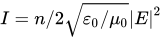

This intensity is maximized for the phase-matched condition Δk = 0. If the process is not phase matched, the driving polarization at ω goes in and out of phase with generated wave E(2ω) and conversion oscillates as sin(Δkℓ/2). The coherence length is defined as . It does not pay to use a nonlinear crystal much longer than the coherence length. (Periodic poling and quasi-phase-matching provide another approach to this problem.)

With depletion
[edit]


When the conversion to 2nd harmonic becomes significant it becomes necessary to include depletion of the fundamental. The energy conversion states that all the involved fields verify the Manley–Rowe relations. One then has the coupled equations:[51]
![{\displaystyle {\begin{aligned}{\frac {\partial E(2\omega )}{\partial z}}&=-{\frac {i\omega }{n_{2\omega }c}}d_{\text{eff}}E^{2}(\omega )e^{i\,\Delta k\,z},\\[5pt]{\frac {\partial E(\omega )}{\partial z}}&=-{\frac {i\omega }{n_{\omega }c}}d_{\text{eff}}^{*}E(2\omega )E^{*}(\omega )e^{-i\,\Delta k\,z},\end{aligned}}}](https://wikimedia.org/api/rest_v1/media/math/render/svg/3045884f21d42392bd5295b0df1978ec61af4e36)
where denotes the complex conjugate. For simplicity, assume phase matched generation (). Then, energy conservation requires that

![{\displaystyle n_{2\omega }\left[E^{*}(2\omega ){\frac {\partial E(2\omega )}{\partial z}}+{\text{c.c.}}\right]=-n_{\omega }\left[E(\omega ){\frac {\partial E^{*}(\omega )}{\partial z}}+{\text{c.c.}}\right]}](https://wikimedia.org/api/rest_v1/media/math/render/svg/e2213ad1de2fd0f7f4e246b0bfa01205b88d7e72)
where is the complex conjugate of the other term, or



Now we solve the equations with the premise
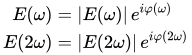
and obtain
![{\displaystyle {\frac {d\left|E(2\omega )\right|}{dz}}=-{\frac {i\omega d_{\text{eff}}}{n_{\omega }c}}\left[E_{0}^{2}-\left|E(2\omega )\right|^{2}\right]e^{2i\varphi (\omega )-i\varphi (2\omega )}}](https://wikimedia.org/api/rest_v1/media/math/render/svg/96d9ba6cd43ea51339301b0d85c2cc38df8b46fa)
which leads to

Using
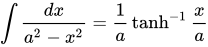
we get

If we assume a real , the relative phases for real harmonic growth must be such that . Then


or

where . From , it also follows that



Theoretical expression with Gaussian beams
[edit]The excitation wave is assumed to be a Gaussian beam, of amplitude:

with , the direction of propagation, the Rayleigh range, the wave vector.
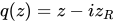


Each wave verifies the wave equation
![{\displaystyle \left[{\frac {\partial }{\partial x^{2}}}+{\frac {\partial }{\partial y^{2}}}+2ik_{1}{\frac {\partial }{\partial z}}\right]A(x,y,z;k_{1})={\begin{cases}0&{\text{for the fundamental}},\\{\frac {\omega _{n}^{2}c^{2}}{\chi ^{(n)}}}A(x,y,z;k_{1})e^{i\,\Delta k\,z}&{\text{for }}n{\text{-th harmonic}}.\end{cases}}}](https://wikimedia.org/api/rest_v1/media/math/render/svg/178d231383d73d3af0e4e757078c2646a8c30bc4)
where .

With phase-matching
[edit]It can be shown that:

(a Gaussian), is a solution of the equation (n = 2 for SHG).
No phase-matching
[edit]
A non-perfect phase-matching is a more realistic condition in practice, especially in biological samples. The paraxial approximation is however supposed still valid: , and in the harmonic expression, is now .


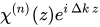
In the special case of SHG (n = 2), in a medium of length L and a focus position , the intensity writes:[52]


where is the speed of light in vacuum, the vacuum permittivity, the optical index of the medium at and the waist size of excitation.


Thus, the SHG intensity quickly decays in the bulk (), due to the Gouy phase-shift of the Gaussian beam.

In conformity with experiments, the SHG signal vanishes in the bulk (if the medium thickness is too large), and the SHG must be generated at the surface of the material: the conversion therefore does not strictly scales with the square of the number of scatterers, contrary to what the plane wave model indicates. Interestingly, the signal also vanishes in bulk for higher orders, like THG.
Materials used
[edit]Materials capable of generating a second harmonic are crystals without inversion symmetry, except crystals with point group 432. This eliminates water and glass.[50]
Notably, filamentous biological proteins with a cylindrical symmetric such as collagen, tubulin or myosin, but also certain carbohydrates (such as starch or cellulose) are also quite good converters of SHG (fundamental in the near infrared).[53]
Examples of crystals used with for SHG conversion:
- Fundamental excitation at 600–1500 nm:[54] BiBO (BiB3O6)
- Fundamental excitation at 570–4000 nm:[55] lithium iodate LiIO3.
- Fundamental excitation at 800–1100 nm, often 860 or 980 nm:[56] potassium niobate KNbO3.
- Fundamental excitation at 410–2000 nm: BBO (β-BaB2O4).[57]
- Fundamental excitation at 984–3400 nm: KTP (KTiOPO4) or KTA.[58]
- Fundamental excitation at ~1000–2000 nm: periodically poled crystals, like PPLN.[59]
For common types of diode-pumped solid state lasers with input wavelengths:
- 1064 nm: monopotassium phosphate KDP (KH2PO4), lithium triborate (LiB3O5), CsLiB6O10 and barium borate BBO(β-BaB2O4).
- 1319 nm: KNbO3, BBO (β-BaB2O4), monopotassium phosphate KDP (KH2PO4), LiIO3, LiNbO3, and potassium titanyl phosphate KTP (KTiOPO4).
See also
[edit]References
[edit]- ^ He, Maosheng; Forbes, Jeffrey M. (2022-12-07). "Rossby wave second harmonic generation observed in the middle atmosphere". Nature Communications. 13 (1): 7544. Bibcode:2022NatCo..13.7544H. doi:10.1038/s41467-022-35142-3. ISSN 2041-1723. PMC 9729661. PMID 36476614.
- ^ Franken, P. A.; Hill, A. E.; Peters, C. W.; Weinreich, G. (1961-08-15). "Generation of Optical Harmonics". Physical Review Letters. 7 (4): 118–119. Bibcode:1961PhRvL...7..118F. doi:10.1103/PhysRevLett.7.118.
- ^ Boyd, R. (2007). "The Nonlinear Optical Susceptibility". Nonlinear optics (third ed.). pp. 1–67. doi:10.1016/B978-0-12-369470-6.00001-0. ISBN 978-0-12-369470-6. S2CID 15660817.
- ^ Cardoso, G. C.; Pradhan, P.; Morzinski, J.; Shahriar, M. S. (2005). "In situ detection of the temporal and initial phase of the second harmonic of a microwave field via incoherent fluorescence". Physical Review A. 71 (6) 063408. arXiv:quant-ph/0410219. Bibcode:2005PhRvA..71f3408C. doi:10.1103/PhysRevA.71.063408.
- ^ Pradhan, P.; Cardoso, G. C.; Shahriar, M. S. (2009). "Suppression of error in qubit rotations due to Bloch–Siegert oscillation via the use of off-resonant Raman excitation". Journal of Physics B: Atomic, Molecular and Optical Physics. 42 (6) 065501. Bibcode:2009JPhB...42f5501P. doi:10.1088/0953-4075/42/6/065501. S2CID 15051122.
- ^ Nye, J. F. (1985). Physical properties of crystals: their representation by tensors and matrices (1st published in pbk. with corrections, 1985 ed.). Oxford [Oxfordshire]: Clarendon Press. ISBN 0-19-851165-5. OCLC 11114089.
- ^ Kleinman, D. A. (1962-11-15). "Theory of Second Harmonic Generation of Light". Physical Review. 128 (4): 1761–1775. Bibcode:1962PhRv..128.1761K. doi:10.1103/PhysRev.128.1761. ISSN 0031-899X.
- ^ Dailey, Christopher A.; Burke, Brian J.; Simpson, Garth J. (May 2004). "The general failure of Kleinman symmetry in practical nonlinear optical applications". Chemical Physics Letters. 390 (1–3): 8–13. Bibcode:2004CPL...390....8D. doi:10.1016/j.cplett.2004.03.109.
- ^ a b c Franken, P.; Hill, A.; Peters, C.; Weinreich, G. (1961). "Generation of Optical Harmonics". Physical Review Letters. 7 (4): 118–119. Bibcode:1961PhRvL...7..118F. doi:10.1103/PhysRevLett.7.118.
- ^ Haroche, Serge (October 17, 2008). "Essay: Fifty Years of Atomic, Molecular and Optical Physics in Physical Review Letters". Physical Review Letters. 101 (16) 160001. Bibcode:2008PhRvL.101p0001H. doi:10.1103/PhysRevLett.101.160001. PMID 18999650.
- ^ Bloembergen, N.; Pershan, P. S. (1962). "Light Waves at Boundary of Nonlinear Media" (PDF). Physical Review. 128 (2): 606–622. Bibcode:1962PhRv..128..606B. doi:10.1103/PhysRev.128.606. hdl:1874/7432.
- ^ "Critical phase-matching". rp-photonics.com. Retrieved 2019-11-01.
- ^ "Noncritical phase-matching". rp-photonics.com. Retrieved 2019-11-01.
- ^ Heinz, T. F.; et al. (1982). "Spectroscopy of Molecular Monolayers by Resonant 2nd-Harmonic Generation". Physical Review Letters. 48 (7): 478–81. Bibcode:1982PhRvL..48..478H. doi:10.1103/PhysRevLett.48.478.
- ^ Shen, Y. R. (1989). "Surface-Properties Probed by 2nd-Harmonic and Sum-Frequency Generation". Nature. 337 (6207): 519–25. Bibcode:1989Natur.337..519S. doi:10.1038/337519a0. S2CID 4233043.
- ^ Brown, F.; Matsuoka, M. (1969). "Effect of Adsorbed Surface Layers on Second-Harmonic Light from Silver". Physical Review. 185 (3): 985–987. Bibcode:1969PhRv..185..985B. doi:10.1103/PhysRev.185.985.
- ^ Eisenthal, K. B. (1992). "Equilibrium and Dynamic Processes at Interfaces by 2nd Harmonic and Sum Frequency Generation". Annual Review of Physical Chemistry. 43 (1): 627–61. doi:10.1146/annurev.physchem.43.1.627.
- ^ Kemnitz, K.; et al. (1986). "The Phase of 2nd-Harmonic Light Generated at an Interface and Its Relation to Absolute Molecular-Orientation". Chemical Physics Letters. 131 (4–5): 285–90. Bibcode:1986CPL...131..285K. CiteSeerX 10.1.1.549.6666. doi:10.1016/0009-2614(86)87152-4. S2CID 53476039.
- ^ Dadap, J. I.; Shan, J.; Heinz, T. F. (2004). "Theory of Optical Second-Harmonic Generation from a Sphere of Centrosymmetric Material: Small-Particle Limit". Journal of the Optical Society of America B. 21 (7): 1328–47. Bibcode:2004JOSAB..21.1328D. doi:10.1364/JOSAB.21.001328.
- ^ Eisenthal, K. B. (2006). "Second Harmonic Spectroscopy of Aqueous Nano- and Microparticle Interfaces". Chemical Reviews. 106 (4): 1462–77. doi:10.1021/cr0403685. PMID 16608187.
- ^ Chan, S. W.; et al. (2006). "Second Harmonic Generation in Zinc Oxide Nanorods". Applied Physics B: Lasers and Optics. 84 (1–2): 351–55. Bibcode:2006ApPhB..84..351C. doi:10.1007/s00340-006-2292-0. S2CID 120094124.
- ^ Zeng, Jia; et al. (2013). "Time-Resolved Molecular Transport across Living Cell Membranes". Biophysical Journal. 104 (1): 139–45. Bibcode:2013BpJ...104..139Z. doi:10.1016/j.bpj.2012.11.3814. PMC 3540258. PMID 23332066.
- ^ Fan, W.; et al. (2006). "Second Harmonic Generation from a Nanopatterned Isotropic Nonlinear Material". Nano Letters. 6 (5): 1027–30. Bibcode:2006NanoL...6.1027F. CiteSeerX 10.1.1.172.8506. doi:10.1021/nl0604457.
- ^ Moreaux, Laurent; Sandre, Olivier; Charpak, Serge; Blanchard-Desce, Mireille; Mertz, Jerome (2001). "Coherent Scattering in Multi-Harmonic Light Microscopy". Biophysical Journal. 80 (3): 1568–1574. Bibcode:2001BpJ....80.1568M. doi:10.1016/S0006-3495(01)76129-2. ISSN 0006-3495. PMC 1301348. PMID 11222317.
- ^ Campagnola, Paul J; Loew, Leslie M (2003). "Second-harmonic imaging microscopy for visualizing biomolecular arrays in cells, tissues and organisms". Nature Biotechnology. 21 (11): 1356–1360. doi:10.1038/nbt894. ISSN 1087-0156. PMID 14595363. S2CID 18701570.
- ^ LaComb, Ronald; Nadiarnykh, Oleg; Townsend, Sallie S.; Campagnola, Paul J. (2008). "Phase matching considerations in second harmonic generation from tissues: Effects on emission directionality, conversion efficiency and observed morphology". Optics Communications. 281 (7): 1823–1832. Bibcode:2008OptCo.281.1823L. doi:10.1016/j.optcom.2007.10.040. ISSN 0030-4018. PMC 2390911. PMID 19343083.
- ^ A warning about IR in green cheap green laser pointers
- ^ Trebino, Rick; Zeek, Erik (2000). "Chap4, The Autocorrelation, the Spectrum, and Phase Retrieval". Frequency-Resolved Optical Gating: The Measurement of Ultrashort Laser Pulses. Springer. pp. 61–99. doi:10.1007/978-1-4615-1181-6_4. ISBN 978-1-4615-1181-6.
- ^ Trebino, Rick (2003). "Chap5, FROG". Frequency-Resolved Optical Gating: The Measurement of Ultrashort Laser Pulses. Springer. pp. 61–99. doi:10.1007/978-1-4615-1181-6_5. ISBN 978-1-4615-1181-6.
- ^ Han, M; Giese, G; Bille, J (2005). "Second harmonic generation imaging of collagen fibrils in cornea and sclera". Optics Express. 13 (15): 5791–7. Bibcode:2005OExpr..13.5791H. doi:10.1364/OPEX.13.005791. PMID 19498583.
- ^ Brown, Donald J.; Morishige, Naoyuki; Neekhra, Aneesh; Minckler, Don S.; Jester, James V. (2007). "Application of second harmonic imaging microscopy to assess structural changes in optic nerve head structure ex vivo". Journal of Biomedical Optics. 12 (2): 024029. Bibcode:2007JBO....12b4029B. doi:10.1117/1.2717540. PMID 17477744. S2CID 33236022.
- ^ a b Khadria A, Fleischhauer J, Boczarow I, Wilkinson JD, Kohl MM, Anderson HL (2018). "Porphyrin Dyes for Nonlinear Optical Imaging of Live Cells". iScience. 4: 153–163. Bibcode:2018iSci....4..153K. doi:10.1016/j.isci.2018.05.015. PMC 6147020. PMID 30240737.
- ^ Nuriya M, Fukushima S, Momotake A, Shinotsuka T, Yasui M, Arai T (2016). "Multimodal two-photon imaging using a second-harmonic generation-specific dye". Nature Communications. 7 11557. Bibcode:2016NatCo...711557N. doi:10.1038/ncomms11557. PMC 4865818. PMID 27156702.
- ^ Khadria A, Coene Y, Gawel P, Roche C, Clays K, Anderson HL (2017). "Push–pull pyropheophorbides for nonlinear optical imaging". Organic and Biomolecular Chemistry. 15 (4): 947–956. doi:10.1039/C6OB02319C. PMID 28054076. S2CID 3540505.
- ^ Reeve JE, Corbett AD, Boczarow I, Wilson T, Bayley H, Anderson HL (2012). "Probing the Orientational Distribution of Dyes in Membranes through Multiphoton Microscopy". Biophysical Journal. 103 (5): 907–917. Bibcode:2012BpJ...103..907R. doi:10.1016/j.bpj.2012.08.003. PMC 3433607. PMID 23009840.
- ^ Valev, V. K. (2012). "Characterization of nanostructured plasmonic surfaces with second harmonic generation". Langmuir. 28 (44): 15454–15471. doi:10.1021/la302485c. PMID 22889193.
- ^ Simon, Florent; Clevers, Simon; Dupray, Valérie; Coquerel, Gérard (2015). "Relevance of the Second Harmonic Generation to Characterize Crystalline Samples". Chemical Engineering & Technology. 38 (6): 971–983. doi:10.1002/ceat.201400756.
- ^ Abrahams, S. C. (1972-04-01). "Letter to the Editor". Journal of Applied Crystallography. 5 (2): 143. Bibcode:1972JApCr...5..143A. doi:10.1107/S0021889872009045. ISSN 0021-8898.
- ^ "CCDC Statistics".
- ^ Kurtz, S. K.; Perry, T. T. (1968). "A Powder Technique for the Evaluation of Nonlinear Optical Materials". Journal of Applied Physics. 39 (8): 3798–3813. Bibcode:1968JAP....39.3798K. doi:10.1063/1.1656857. ISSN 0021-8979.
- ^ Dougherty, J. P.; Kurtz, S. K. (1976-04-01). "A second harmonic analyzer for the detection of non-centrosymmetry". Journal of Applied Crystallography. 9 (2): 145–158. Bibcode:1976JApCr...9..145D. doi:10.1107/S0021889876010789. ISSN 0021-8898.
- ^ International tables for crystallography. International Union of Crystallography. (5th rev. ed.). Dordrecht: Kluwer. 2002. ISBN 0-7923-6591-7. OCLC 48400542.
{{cite book}}: CS1 maint: others (link) - ^ Galland, Arnaud; Dupray, Valerie; Berton, Benjamin; Morin-Grognet, Sandrine; Sanselme, Morgane; Atmani, Hassan; Coquerel, Gérard (2009-06-03). "Spotting Conglomerates by Second Harmonic Generation". Crystal Growth & Design. 9 (6): 2713–2718. doi:10.1021/cg801356m. ISSN 1528-7483.
- ^ Clevers, S.; Simon, F.; Dupray, V.; Coquerel, G. (2013). "Temperature resolved second harmonic generation to probe the structural purity of m-hydroxybenzoic acid". Journal of Thermal Analysis and Calorimetry. 112 (1): 271–277. doi:10.1007/s10973-012-2763-y. ISSN 1388-6150. S2CID 138727698.
- ^ Wanapun, Duangporn; Kestur, Umesh S.; Kissick, David J.; Simpson, Garth J.; Taylor, Lynne S. (2010). "Selective Detection and Quantitation of Organic Molecule Crystallization by Second Harmonic Generation Microscopy". Analytical Chemistry. 82 (13): 5425–5432. doi:10.1021/ac100564f. ISSN 0003-2700. PMID 20515064.
- ^ Yuan, Lina; Clevers, Simon; Couvrat, Nicolas; Cartigny, Yohann; Dupray, Valérie; Coquerel, Gérard (2016). "Precise Urea/Water Eutectic Composition by Temperature-Resolved Second Harmonic Generation". Chemical Engineering & Technology. 39 (7): 1326–1332. doi:10.1002/ceat.201600032.
- ^ Yuan, Lina; Clevers, Simon; Burel, Antoine; Negrier, Philippe; Barrio, Maria del; Ben Hassine, Bacem; Mondieig, Denise; Dupray, Valérie; Tamarit, Josep Ll.; Coquerel, Gérard (2017-06-07). "New Intermediate Polymorph of 1-Fluoro-adamantane and Its Second-Order-like Transition toward the Low Temperature Phase". Crystal Growth & Design. 17 (6): 3395–3401. doi:10.1021/acs.cgd.7b00353. hdl:2117/106369. ISSN 1528-7483.
- ^ Clevers, S.; Rougeot, C.; Simon, F.; Sanselme, M.; Dupray, V.; Coquerel, G. (2014). "Detection of order–disorder transition in organic solids by using temperature resolved second harmonic generation (TR-SHG)". Journal of Molecular Structure. 1078: 61–67. Bibcode:2014JMoSt1078...61C. doi:10.1016/j.molstruc.2014.04.007.
- ^ Clevers, Simon; Simon, Florent; Sanselme, Morgane; Dupray, Valerie; Coquerel, Gerard (2013-08-07). "Monotropic Transition Mechanism of m -Hydroxybenzoic Acid Investigated by Temperature-Resolved Second Harmonic Generation". Crystal Growth & Design. 13 (8): 3697–3704. doi:10.1021/cg400712s. ISSN 1528-7483.
- ^ a b Boyd, R.W. (2008). Nonlinear Optics, 3rd edition. Academic Press. ISBN 978-0-12-121680-1.
- ^ Zernike, Frits; Midwinter, John E. (1973). Applied Nonlinear Optics. John Wiley & Sons Inc. ISBN 0-486-45360-X.
- ^ Stoller, Patrick; Celliers, Peter M.; Reiser, Karen M.; Rubenchik, Alexander M. (2003). "Quantitative second-harmonic generation microscopy in collagen". Applied Optics. 42 (25): 5209–19. Bibcode:2003ApOpt..42.5209S. doi:10.1364/AO.42.005209. ISSN 0003-6935. PMID 12962402.
- ^ Pavone, Francesco S.; Campagnola, Paul J. (2016). Second Harmonic Generation Imaging (2nd ed.). CRC Taylor & Francis. ISBN 978-1-4398-4914-9.
- ^ "BiBO Crystals". newlightphotonics.com. Retrieved 2019-11-01.
- ^ "LiIO3 crystals – Lithium Iodate Crystal". shalomeo.com. Retrieved 2019-11-01.
- ^ "KNbO3". laser-crylink.com. Retrieved 2019-11-01.
- ^ "BBO Crystals". newlightphotonics.com. Retrieved 2019-11-01.
- ^ "KTP Crystals". unitedcrystals.com. Retrieved 2019-11-01.
- ^ Meyn, J.-P.; Laue, C.; Knappe, R.; Wallenstein, R.; Fejer, M. M. (2001). "Fabrication of periodically poled lithium tantalate for UV generation with diode lasers". Applied Physics B. 73 (2): 111–114. Bibcode:2001ApPhB..73..111M. doi:10.1007/s003400100623. S2CID 119763435.
External links
[edit]Articles
[edit]- Parameswaran, K. R.; Kurz, J. R.; Roussev, M. M.; Fejer (2002). "Observation of 99% pump depletion in single-pass second-harmonic generation in a periodically poled lithium niobate waveguide". Optics Letters. 27 (1): 43–45. Bibcode:2002OptL...27...43P. doi:10.1364/ol.27.000043. PMID 18007710.
- "Frequency doubling". Encyclopedia of laser physics and technology. Retrieved 2006-11-04.
Second-harmonic generation
View on GrokipediaFundamentals
Definition and Mechanism
Second-harmonic generation (SHG) is a fundamental nonlinear optical process classified as a second-order nonlinearity, characterized by the interaction of two photons at frequency to produce a single photon at frequency within a suitable medium. This frequency doubling occurs through the material's second-order nonlinear susceptibility , which enables the coherent conversion of the fundamental optical field into its harmonic. The process requires a non-centrosymmetric medium, as inversion symmetry in centrosymmetric crystals leads to the vanishing of due to the odd nature of the second-order polarization response under parity transformation. At the microscopic level, the mechanism arises from the anharmonic response of the medium's electrons or lattice to the applied electric field . The induced polarization includes a second-order term, , which oscillates at the harmonic frequency and acts as a source for the generated field. This polarization drives dipole radiation at , effectively combining the energies and momenta of the input photons. Energy conservation dictates that , simplifying to in the degenerate case where , while momentum conservation requires , often necessitating phase-matching techniques for efficient conversion over macroscopic distances.Nonlinear Optical Susceptibility
In nonlinear optics, the polarization induced in a dielectric medium by an applied electric field can be expressed as a power series expansion: where is the vacuum permittivity and denotes the th-order susceptibility tensor.[6] The second-order term, involving , governs second-order nonlinear processes such as second-harmonic generation (SHG), where two photons at frequency combine to produce one at . This term arises from the anharmonic response of the medium's electrons and lattice to the driving field, leading to a quadratic contribution to the induced dipole moment.[7] The second-order susceptibility is a third-rank tensor with 27 components in general, where the indices correspond to Cartesian directions and the frequency arguments satisfy . Intrinsic permutation symmetry reduces the number of independent components to 18, as .[7] Crystal symmetry further constrains the tensor; for example, in cubic class (as in GaAs), only one independent component remains. In non-dispersive media or far from resonances, Kleinman symmetry applies, permitting full permutation of indices and frequencies, reducing independent components to 10 or fewer.[7] This symmetry, derived from assuming negligible dispersion and damping, simplifies calculations but fails near electronic or vibrational resonances.[8] In the International System of Units (SI), has dimensions of meters per volt (m/V), reflecting the quadratic dependence of polarization on field strength.[6] In electrostatic units (esu), values are often reported in statvolts/cm or equivalent, with conversion factors accounting for the Gaussian system's differences. Typical magnitudes for inorganic nonlinear crystals range from to m/V; for instance, potassium dihydrogen phosphate (KDP) exhibits pm/V (where ), while beta-barium borate (BBO) reaches pm/V, enabling efficient SHG.[9] The tensor components of are dispersive, varying with the frequencies , due to the medium's electronic structure and lattice vibrations. Near electronic transitions or band edges, resonant enhancements can increase by orders of magnitude; for example, in semiconductors like ZnTe, a strong rise occurs above the bandgap, attributed to virtual excitations of electrons to conduction bands.[10] This -dependence must be considered for broadband applications, as it influences phase-matching bandwidth and conversion efficiency in SHG.[11] Experimental determination of relies on techniques that isolate the nonlinear polarization response. The Maker fringes method, introduced in early SHG studies, measures the second-harmonic intensity as the sample is rotated relative to the incident beam, producing interference fringes due to varying coherence length from phase mismatch. By comparing fringe patterns to known references like quartz, absolute values and tensor ratios are extracted, accounting for dispersion and absorption effects. This approach has been refined for thin films and biaxial crystals, providing precise characterization essential for device design.[12]Historical Development
Early Discovery
The invention of the laser by Theodore Maiman in 1960 provided the intense, coherent light sources necessary to explore nonlinear optical effects, marking the emergence of nonlinear optics as a field. Second-harmonic generation (SHG) was first experimentally observed in 1961 by Peter A. Franken, A. E. Hill, C. W. Peters, and G. Weinreich at the University of Michigan. They directed a pulsed ruby laser beam with a fundamental wavelength of 694 nm into a quartz crystal, detecting the second harmonic at 347 nm using photographic plates after long exposure times.[13] This demonstration required the high peak powers (around 3 kW) from pulsed operation of the ruby laser, as continuous-wave sources lacked sufficient intensity for observable nonlinear effects.[14] Early detection of SHG faced significant challenges due to its extremely low conversion efficiency, on the order of 10^{-8}, necessitating sensitive detection methods and careful control of experimental conditions to distinguish the weak signal from background noise.[13] The discovery was swiftly confirmed by independent groups in 1962, including experiments by R. W. Terhune, P. D. Maker, and C. M. Savage, who observed SHG in calcite crystals using similar ruby laser setups.[15] These confirmations extended observations to other materials, solidifying SHG as a reproducible nonlinear phenomenon. In the same year, J. A. Armstrong, N. Bloembergen, J. Ducuing, and P. S. Pershan provided the initial theoretical framework, interpreting SHG through the nonlinear polarization induced in the dielectric medium by the intense electric field of the laser.[16]Key Theoretical and Experimental Advances
Following the initial observation of second-harmonic generation (SHG) in 1961, significant theoretical advancements in phase-matching concepts emerged in 1962, primarily through the work of J. A. Armstrong, N. Bloembergen, J. Ducuing, and P. S. Pershan. Their seminal paper introduced the general theory of phase matching for nonlinear optical interactions, demonstrating that efficient energy transfer in SHG requires the wave vectors of the fundamental and harmonic fields to satisfy Δk = 0, where Δk = k_{2ω} - 2k_ω. This framework predicted that birefringent materials could achieve phase matching by compensating for dispersion through angular tuning, enabling conversion efficiencies up to 50% in ideal conditions without walk-off losses.[16] Building on this theory, the first experimental demonstration of angle-tuned birefringent phase matching was achieved in 1962 by Robert C. Miller in uniaxial ferroelectric crystals such as ammonium dihydrogen phosphate (ADP) and potassium dihydrogen phosphate (KDP).[17] Subsequent work in the mid-1960s by researchers like P. D. Maker and R. W. Terhune further demonstrated efficient SHG in KDP crystals by orienting the optic axis at specific angles relative to the propagation direction, achieving type I phase matching for 1.06 μm Nd:YAG laser fundamental to 532 nm second harmonic with efficiencies exceeding 10% in centimeter-long crystals. These experiments validated the theoretical predictions and established birefringent crystals as practical media for high-power frequency doubling, paving the way for applications in laser systems.[18] In the 1970s, the concept of quasi-phase matching (QPM) was further refined, although originally proposed in 1962 by Armstrong et al. as an alternative to birefringence using periodically reversed nonlinear coefficients to periodically reset the phase mismatch. Theoretical extensions in this decade, including detailed analyses by R. H. Stolen, explored QPM in ferroelectric materials like lithium niobate (LiNbO₃), predicting that periodic poling with domain periods on the order of 10-30 μm could enable non-birefringent phase matching across a broad wavelength range. Experimental realization lagged until the late 1980s and 1990s, but these theoretical works laid the groundwork for achieving over 50% efficiency in QPM-SHG devices.[19] The 1980s marked key experimental progress driven by advancements in pulsed laser sources, which dramatically increased peak intensities for SHG while mitigating thermal effects in crystals. Mode-locked Nd:YAG and dye lasers, with picosecond pulse durations and peak powers exceeding 1 GW/cm², enabled efficient SHG in KDP and LiNbO₃, achieving conversion efficiencies up to 70% for green light generation at repetition rates of 80 MHz. These developments, exemplified by systems from companies like Coherent and Spectra-Physics, shifted SHG from continuous-wave to pulsed regimes, supporting ultrafast spectroscopy and high-repetition-rate applications.[20] Post-2000 advancements have integrated SHG with nanostructures and ultrafast optics, enhancing efficiency and enabling novel applications in attosecond pulse generation via frequency upconversion.Phase Matching Techniques
Critical Phase Matching
Critical phase matching is a technique employed in uniaxial anisotropic crystals to achieve efficient second-harmonic generation (SHG) by leveraging birefringence, where the ordinary refractive index differs from the extraordinary index . In this method, the crystal's orientation is adjusted such that the propagation direction of the fundamental wave at frequency forms an angle with the optic axis, aligning the wave vectors and to satisfy the phase-matching condition . This angular tuning compensates for the dispersion mismatch between the fundamental and harmonic wavelengths, enabling collinear propagation of the ordinary and extraordinary rays in type I or type II configurations.[21] The phase mismatch parameter is defined as , where is the wave number, is the refractive index, and is the speed of light in vacuum. At the optimal phase-matching angle , , which occurs when the birefringence-induced variation in the effective refractive index for the extraordinary wave balances the material's chromatic dispersion. For example, in -barium borate (BBO) for type I SHG of 1064 nm light, .[22][23] A significant limitation in uniaxial crystals arises from Poynting vector walk-off, where the Poynting vector (direction of energy flow) for the extraordinary ray deviates from its wave vector by a walk-off angle , causing spatial separation between the ordinary fundamental beam and the extraordinary harmonic beam. This divergence reduces the effective interaction length below the physical crystal length , as the beams overlap only over a distance , where is the beam waist radius, thereby degrading conversion efficiency particularly for focused beams. In BBO at 1064 nm, the walk-off angle is approximately 3.2° for type I phase matching.[24][25] The phase-matching angle is sensitive to temperature and wavelength variations, as these alter the refractive indices through thermo-optic and dispersive effects. Temperature tuning shifts due to changes in birefringence, often requiring precise control to maintain , while wavelength detuning from the design value broadens the mismatch. Consequently, critical phase matching exhibits narrow acceptance bandwidths: the angular acceptance (full angle at half-maximum efficiency) is typically on the order of 0.1°–1° for common crystals, and the spectral bandwidth is similarly limited. For BBO in type I SHG at 1064 nm, the angular acceptance is about 1.2 mrad·cm, corresponding to for a 1 cm crystal length.[21][26]Non-critical Phase Matching
Non-critical phase matching (NCPM) achieves the phase-matching condition Δk = 0 for second-harmonic generation by propagating the beams orthogonal to the crystal's optic axis at 90°, eliminating the need for angular tuning and leveraging temperature or wavelength adjustments in suitable birefringent materials such as lithium triborate (LBO). This configuration exploits differences in the temperature coefficients of the refractive indices (dn/dT) between the ordinary and extraordinary polarizations, allowing the effective indices at the fundamental and harmonic wavelengths to align precisely through thermal tuning.[27] In contrast to critical phase matching, which relies on birefringence at non-90° angles and suffers from Poynting vector walk-off, NCPM ensures collinear propagation of ordinary and extraordinary waves with identical refractive indices, resulting in zero walk-off angle.[28] The absence of walk-off in NCPM enables the use of longer interaction lengths in the crystal without beam separation, facilitating tighter focusing and substantially higher conversion efficiencies, particularly in high-power applications where spatial overlap is critical.[29] Optimized extracavity setups have demonstrated efficiencies exceeding 80% for pulsed operation in KTP crystals using critical phase matching.[30] For LBO, pulsed SHG efficiencies surpass 70%, benefiting from the technique's wide acceptance angles and damage resistance.[31] A representative example is the frequency doubling of 1064 nm Nd:YAG laser light to 532 nm in LBO, achieved via type I NCPM at temperatures around 148 °C, where thermal tuning compensates for dispersion to satisfy Δk = 0.[32] NCPM typically exhibits a temperature bandwidth of 1–10 °C for 1 cm crystal lengths, reflecting its sensitivity to thermal uniformity but providing stable operation within this range.[31] Its wavelength acceptance is narrower compared to critical phase matching, limiting broadband applications but ideal for narrow-linewidth sources like single-frequency lasers.[33] This makes NCPM particularly advantageous for efficient, high-peak-power SHG in systems requiring minimal beam distortion and maximal nonlinear overlap.Theoretical Frameworks
Plane Wave Derivation at Low Conversion
The plane wave derivation for second-harmonic generation (SHG) under the low-conversion regime begins with Maxwell's equations in a nonlinear dielectric medium, where the nonlinear polarization at the second-harmonic frequency is given by .[16] This polarization acts as a source term in the wave equation for the second-harmonic field, , assuming a non-magnetic medium with refractive index .[16] For plane waves propagating along the -direction, the fields are expressed using slowly varying envelope approximations: and , where the envelopes vary slowly compared to the optical wavelengths ().[16] Substituting these into the wave equation and neglecting second derivatives of the envelopes yields the coupled amplitude equations:with phase mismatch and effective nonlinear coefficient .[16] In the undepleted pump approximation, valid for low conversion efficiencies (<1%), the fundamental amplitude is treated as constant (), so . Integrating the equation for from to (crystal length), with initial condition , gives
The resulting second-harmonic intensity is
where relates the intensity to the envelope amplitude, assuming SI units and isotropic indices for simplicity. The dependence arises from the coherent buildup of the second-harmonic field, with maximum efficiency at phase matching (), where . The coherence length is defined as , the distance over which the phase mismatch causes the generated fields to dephase by , limiting efficiency for .[16] This derivation assumes monochromatic plane waves of infinite transverse extent, negligible absorption or dispersion beyond the phase mismatch, and low conversion to justify the undepleted approximation.
Plane Wave Derivation with Depletion
In the plane wave approximation for second-harmonic generation (SHG), the low-conversion regime assumes negligible pump depletion, treating the fundamental wave amplitude as constant. To describe high-conversion scenarios where significant energy transfer occurs, the coupled wave equations must account for the back-action of the generated second-harmonic field on the fundamental pump.[16] These equations, derived from Maxwell's equations under the slowly varying envelope approximation for collinear propagation, are given by where and are the complex slowly varying envelope amplitudes of the fundamental and second-harmonic waves, respectively, is the phase mismatch, is the refractive index at the fundamental frequency, is the speed of light in vacuum, and the coupling uses the effective second-order nonlinear coefficient .[16] The coefficients ensure proper energy scaling for the frequency-doubling process. These coupled differential equations reflect the parametric interaction, where the second-harmonic amplitude grows at the expense of the fundamental, leading to pump depletion. A key consequence is the Manley-Rowe power conservation relation, which follows directly from the equations by considering the time-averaged power flow and . For SHG, this yields , indicating that the power lost from the fundamental equals the power gained by the second harmonic, consistent with energy conservation while accounting for the annihilation of two fundamental photons per second-harmonic photon created. For the ideal case of perfect phase matching (), the coupled equations admit an exact analytical solution assuming initial conditions and arbitrary . The solution is where , assuming average refractive index .[16] This trigonometric behavior shows oscillatory energy exchange, with complete pump depletion achievable at , where 100% conversion efficiency is theoretically possible in the absence of losses or other limitations.[16] The conversion efficiency thus reaches unity periodically, highlighting the potential for efficient frequency doubling in phase-matched media. When phase mismatch is present (), no closed-form analytical solution exists for the general case, and the coupled equations must be integrated numerically, such as via Runge-Kutta methods. Numerical solutions reveal oscillatory power transfer between the waves, modulated by a envelope, with an optimal crystal length for maximum efficiency near .[16] These oscillations arise from the phase accumulation, and the peak conversion decreases with increasing , emphasizing the need for phase-matching techniques to achieve high efficiencies. This derivation assumes collinear propagation of infinite plane waves in a lossless, homogeneous nonlinear medium, neglecting birefringent walk-off, diffraction, or absorption effects, which are valid only for focused beams or thin crystals where such approximations hold.[16]Gaussian Beam Expressions
In the context of second-harmonic generation (SHG), the plane-wave approximation is extended to realistic laser sources by incorporating Gaussian beam profiles, which account for diffraction, focusing, and spatial variations along the propagation direction. A Gaussian beam is characterized by its beam waist at the focus, with the spot size varying as , where is the Rayleigh range and is the wavelength of the fundamental beam. [34] The propagation also includes a Gouy phase shift , which arises from the curvature of the wavefront and contributes to the overall phase mismatch in nonlinear interactions. [34] These parameters are essential for modeling focused beams in crystals, as tight focusing enhances intensity but introduces spatial nonuniformity that modifies the SHG efficiency compared to uniform plane waves. [34] Focusing effects alter the effective nonlinear coefficient through a dimensionless parameter , which integrates the beam's transverse and longitudinal variations. Here, quantifies the crystal length relative to the Rayleigh range, while incorporates the walk-off due to birefringence, with denoting the Rayleigh range at the fundamental frequency . [34] In the Boyd-Kleinman theory, the SHG power is proportional to , capturing how focusing amplifies the nonlinear overlap while walk-off reduces it by spatially separating the interacting fields. [34] For low conversion efficiency, this leads to an enhancement factor over plane-wave limits, with at optimal focusing () in the absence of walk-off. [34] When phase matching is considered alongside walk-off, the efficiency is evaluated via the Boyd-Kleinman integral, which effectively averages the phase mismatch over the beam path: , where includes contributions from the Gouy phase and beam divergence. [34] This integral form accounts for the finite interaction length within the focused region, broadening the acceptance bandwidth for compared to plane waves. In the absence of phase matching, tight focusing () results in a short coherence length dominated by the Rayleigh range, yielding broad acceptance and an efficiency approximating the undepleted limit . [34] For phase-matched conditions, the optimal focus position shifts the beam waist inside the crystal to maximize gain, balancing diffraction spread and walk-off losses. In non-walk-off cases (), the focus is ideally at the crystal center; with walk-off, it moves toward the input face, as quantified by empirical fits like for moderate birefringence, enhancing efficiency by up to 1.5 times over end-focused setups. These spatial optimizations are critical for high-power laser applications, where Gaussian profiles ensure efficient mode preservation in the generated harmonic beam. [34]Configurations and Types
Bulk Crystal Second-Harmonic Generation
Bulk crystal second-harmonic generation involves the interaction of a fundamental laser beam with a nonlinear crystal where the second-harmonic wave is generated within the volume of the material, typically through collinear propagation along the crystal's principal axes. In uniaxial crystals, the ordinary (o) and extraordinary (e) polarizations are exploited, with input polarizers used to select the desired interaction geometry, such as ooe for type II processes or eee in certain biaxial configurations where all waves are extraordinary. Biaxial crystals allow more flexible phase-matching directions due to their three distinct refractive indices, enabling collinear setups that align the beam with the principal planes for efficient energy transfer.[35][36] For type I phase matching (o + o → e), the crystal is cut such that the optic axis lies in the plane perpendicular to the propagation direction, with the angle θ between the optic axis and the beam determined by the condition n_e^{2ω}(θ) = n_o^ω to satisfy Δk = 0, often around 30–50° depending on the wavelength and material dispersion. In contrast, type II phase matching (o + e → e) requires a cut where the optic axis is oriented to allow one ordinary and one extraordinary fundamental photon, typically involving a 45° polarization rotation of the input beam relative to the principal axes, resulting in θ angles shifted by 10–20° from type I for the same wavelength. These cut angles are precisely engineered during crystal growth to optimize birefringence compensation over the interaction length, ensuring maximum coherence length L_c = π / Δk. Biaxial crystals extend this to non-principal directions, using vector projections to identify viable θ and φ angles for collinear propagation.[37][38][36] Efficiency in bulk SHG is enhanced for continuous-wave operation through multi-pass designs, where the fundamental beam is reflected back through the crystal multiple times using mirrors, increasing the effective interaction length without excessive power density. Resonant cavities further boost conversion by building up intracavity intensity, achieving normalization factors up to 10^4 times higher than single-pass setups for low-power inputs. These approaches are particularly vital for cw sources, where single-pass efficiencies are limited to below 1% without enhancement.[39][1] At high pump powers, bulk SHG suffers from losses including linear absorption of both fundamental and harmonic waves, which dissipates energy as heat, and Rayleigh scattering from crystal imperfections that broadens the beam. Thermal lensing arises from temperature gradients inducing refractive index changes, effectively creating a dynamic lens that can defocus the beam and reduce phase-matching tolerance if power exceeds 10–100 W/cm². These effects limit scalable output, often requiring active cooling or shorter crystals to mitigate.[39][40] A key output of bulk crystal SHG is the production of coherent ultraviolet or infrared radiation, exemplified by the generation of 532 nm green light from the 1064 nm output of a Nd:YAG laser, enabling high-brightness visible sources with efficiencies up to 50% in optimized type I configurations.[41]Surface Second-Harmonic Generation
Surface second-harmonic generation (SHG) occurs at interfaces where the inversion symmetry of the bulk material is broken, resulting in a non-zero second-order nonlinear susceptibility tensor, denoted as , even in centrosymmetric media. This symmetry breaking permits electric dipole contributions to the nonlinear polarization that are otherwise forbidden in the bulk, making surface SHG a sensitive probe of interfacial properties. The surface arises primarily from the altered electronic structure at the interface, where dangling bonds and modified density of states enhance the nonlinear response.[42] In centrosymmetric materials, the absence of bulk SHG underscores the interface's role, while in non-centrosymmetric materials, the surface contribution often dominates due to enhancement factors of 10–100 times over bulk values, attributed to localized electronic states. For planar surfaces, the generated second-harmonic field is modulated by Fresnel transmission and reflection coefficients, which describe the continuity of the electromagnetic fields across the boundary and influence the effective nonlinear susceptibility. In total internal reflection configurations, evanescent fields penetrate only a few hundred nanometers into the rarer medium, confining the interaction to the surface and enabling enhanced SHG without bulk interference.[43][42][44] For non-planar surfaces, such as nanoparticles, rough interfaces, or colloidal particles, local field enhancements further amplify the SHG signal. In dielectric nanoparticles, Mie resonances—stemming from the interference of scattered electric and magnetic multipoles—can boost the local fields at the fundamental frequency, leading to quadratic enhancements in the nonlinear output. Polarization studies reveal the interface symmetry: isotropic surfaces typically exhibit dominant SHG in the p-in/p-out configuration, where both input and output fields are p-polarized relative to the plane of incidence. Adsorbates introduce additional selection rules governed by the molecular point group symmetry, restricting certain tensor elements and allowing determination of adsorbate orientation and coverage.[45][46][47] Detection of surface SHG signals is challenging due to their weakness, typically representing about of the input intensity, corresponding to cross sections where only one SH photon is generated per – incident photons. Despite this, the technique's surface specificity enables monolayer-sensitive measurements, such as probing adsorbate layers or buried interfaces, without contributions from the bulk.[42]Radiation Patterns
Angular Distribution in Phase-Matched Systems
In phase-matched second-harmonic generation (SHG), the far-field angular distribution of the generated second-harmonic (SH) beam is determined by the Fourier transform of the spatial polarization source within the nonlinear crystal, resulting in a sinc-like intensity pattern centered along the phase-matched direction.[48] This pattern arises from the phase-matching sinc function, , where is the wavevector mismatch that varies with output angle, and is the crystal length, leading to a narrow angular lobe with width inversely proportional to .[49] The central maximum corresponds to perfect phase matching, while side lobes represent off-axis contributions, making this distribution essential for evaluating beam collimation and coupling efficiency into optical systems.[50] Birefringent walk-off in critically phase-matched configurations introduces asymmetry into the angular pattern, broadening the distribution and creating uneven lobes due to the divergence of the extraordinary-ray (e-ray) component.[51] In type-I SHG, where the fundamental beam is ordinary-polarized and the SH is extraordinary, the Poynting vector of the e-ray deviates from its wavevector by the walk-off angle , causing spatial separation that elongates the effective aperture in one transverse direction and skews the far-field lobes toward the walk-off plane.[52] This effect is particularly pronounced in materials like beta-barium borate (BBO), where at 1064 nm, reducing beam quality for high-power applications unless compensated by fan-out geometries or dual-crystal setups.[53] In non-collinear SHG configurations, especially type-I interactions in uniaxial crystals, the SH output often manifests as a conical emission pattern, where the SH beam propagates at an angle to the fundamental, forming a ring in the far field.[54] This cone arises from the momentum conservation allowing non-collinear phase matching, with the cone angle tunable by the internal non-collinearity between the fundamental beams. The angular acceptance bandwidth, , governs the width of the emission cone, where is the fundamental wavelength, enabling broadband operation but limiting efficiency for tightly focused inputs.[55] Such patterns are exploited in applications requiring angularly dispersed SH light, like ultrafast pulse characterization.[56] Diffraction from finite-sized input beams further modulates the SH angular distribution, producing an Airy disk pattern at the SH wavelength in the far field due to the circular aperture of the beam waist.[57] The central spot size scales as with the effective aperture diameter, but at , the shorter wavelength halves this diffraction limit compared to the fundamental, enhancing resolution in imaging applications while introducing ring-like sidelobes that can overlap in high-numerical-aperture setups.[50] Experimental profiling of these angular distributions typically employs charge-coupled device (CCD) cameras placed in the far field to capture two-dimensional intensity maps, allowing direct visualization of lobes, cones, and asymmetries.[58] Alternatively, slit-scan techniques traverse the beam profile linearly, integrating intensity along one axis to quantify broadening or acceptance angles with sub-degree resolution, often combined with rotational stages for polar mapping.[59] These methods confirm theoretical predictions and assess phase-matching quality in real-time during crystal alignment.[60]Factors Influencing Beam Profiles
In second-harmonic generation (SHG), spatial hole burning arises from interference patterns formed by standing waves within the nonlinear medium, particularly in intracavity configurations where counterpropagating fundamental waves interact, leading to nonuniform depletion of the gain medium and distortions in the generated second-harmonic beam profile.[61] This effect creates periodic intensity variations that reduce the uniformity of the SHG output, as the interference modulates the local intensity of the fundamental beam, causing selective conversion in high-intensity regions.[62] In multimode lasers with intracavity doubling, spatial hole burning further couples nonlinearly with the resonator modes, exacerbating beam asymmetry and limiting power scaling.[63] Thermal effects in SHG crystals can induce self-focusing or defocusing of the beam due to absorption at the second-harmonic wavelength (2ω), which generates heat and alters the refractive index via the thermo-optic effect, creating a thermal lens that distorts the near-field profile.[64] In high-power continuous-wave operations, absorption of the generated 2ω light leads to temperature gradients, with positive or negative thermal lensing depending on the sign of the thermo-optic coefficient, potentially causing beam breakup or reduced conversion efficiency if unmitigated.[65] For type-II phase-matched crystals, these self-induced thermal effects are particularly pronounced in double-pass configurations, where the focal length of the thermal lens scales inversely with pump power, impacting the overall beam quality.[66] Birefringent walk-off in anisotropic crystals during SHG causes spatial separation between the ordinary and extraordinary polarization components of the interacting beams, leading to an elliptical distortion in the second-harmonic beam profile and degradation of the M² beam quality factor.[67] This walk-off effect accumulates over the crystal length, reducing the effective interaction volume and increasing the M² value in the walk-off plane, often from near 1.3 for the fundamental to higher values in the harmonic output, thereby broadening the near-field intensity distribution.[68] In critically phase-matched setups, the angular dependence of walk-off further compromises beam symmetry, with compensation schemes required to maintain M² below 1.5 for practical applications.[69] For ultrashort pulses, group velocity mismatch (GVM) between the fundamental and second-harmonic waves causes temporal walk-off, which couples with spatial effects to broaden the near-field profile of the generated pulse through spatiotemporal distortions.[70] In thick crystals, this mismatch limits the interaction length to L_max ≈ τ |v_g^{-1}(ω) - v_g^{-1}(2ω)|^{-1}, where τ is the pulse duration, resulting in asymmetric spatial spreading as different pulse portions convert at varying positions.[71] For femtosecond pulses in birefringent media, GVM-induced broadening can increase the SHG beam waist by up to 20-30% compared to transform-limited cases, degrading spatial coherence.[72] To mitigate these distortions and achieve uniform beam profiles, aperiodic poling designs in quasi-phase-matched crystals compensate for phase mismatches across the beam, reducing spatial variations from walk-off and GVM by tailoring the poling grating for broadband uniformity.[73] Fan-out geometries, where the poling period varies linearly across the crystal aperture, further counteract birefringent walk-off by aligning local phase matching to the beam's divergence, preserving M² close to unity and enabling efficient, distortion-free SHG in high-power systems.[74] These approaches have demonstrated near-Gaussian profiles with M² < 1.2 in periodically poled lithium niobate for visible output.[75]Materials and Selection Criteria
Common Nonlinear Materials
Inorganic crystals are among the most prevalent materials for second-harmonic generation (SHG) due to their robust optical properties. Beta-barium borate (BBO, -BaBO) possesses an effective nonlinear coefficient pm/V for Type I SHG, enabling efficient frequency conversion. It offers transparency from 190 nm to 3500 nm, supporting UV generation down to approximately 200 nm, and accommodates Type I phase matching for fundamental wavelengths in the 400–900 nm range. BBO crystals exhibit a high damage threshold of about 10 GW/cm² for 100 ps pulses at 1064 nm.[76][25][77] Lithium triborate (LBO, LiBO) is another key inorganic crystal, featuring a broad transparency window from 160 nm to 2600 nm and a notably high damage threshold exceeding 25 GW/cm² for nanosecond pulses at 1064 nm. Its effective nonlinear coefficient reaches pm/V for SHG at 1064 nm, with capabilities for both Type I and Type II phase matching across a wide spectral range. LBO demonstrates excellent optical homogeneity, with refractive index variation /cm.[31][78][79] Potassium dihydrogen phosphate (KDP, KHPO) serves as a cost-effective inorganic option for SHG applications, with a nonlinear coefficient pm/V and transparency extending from 180 nm to 1550 nm. It supports Type I phase matching effectively for visible and near-UV wavelengths, though its hygroscopic nature necessitates protective coatings or sealed environments to prevent moisture-induced degradation. KDP is particularly noted for its large crystal sizes achievable through growth processes.[80][81][82]| Material | Chemical Formula | (pm/V) | Transparency Range (nm) | Phase-Matching Example |
|---|---|---|---|---|
| BBO | -BaBO | ~2 (Type I SHG) | 190–3500 | Type I, 400–900 nm fundamental |
| LBO | LiBO | ~0.85 (at 1064 nm) | 160–2600 | Type I/II, broad UV-VIS-NIR |
| KDP | KHPO | 0.39 () | 180–1550 | Type I, visible-UV |