Hubbry Logo
search
logo
Shigar
Shigar
current hub
1790392

Shigar

logo
Community Hub0 Subscribers
Read side by side
from Wikipedia

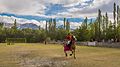
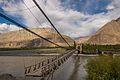
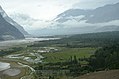
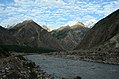
Shigar (Urdu: شگر) is the headquarter of its namesake district and tehsil in the Baltistan division of Gilgit-Baltistan region in northern Pakistan. It is located on the bank of the Shigar River in the most remote part of the region. It is a popular site for tourists and trekkers and contains many historical buildings of architectural significance associated with several different communities.

Key Information

The town is inhabited almost exclusively by the Balti people of Tibetan descent. Almost 65% of the population belongs to the Shia sect of Islam, 26% to the Norbakhshi sect and the remaining to the Sunni sect. Via the Shigar Valley, it is the gateway to the Karakoram mountain range, which has five eight-thousanders, including K2.[1]

History

[edit]

The local ruling dynasty of Shigar prior to the Dogra conquest was known as Amāchas, who traced their descent from the Ayash dyansty of Hunza and like them used the title of Tham.[2] The principal source of information regarding the Amāchas is the Shigarnamah, written in 1752 CE.[3] Ahmad Hasan Dani derives the etymology of Amācha from the Sanskrit amātya, meaning minister.[3] The founder of the dynasty was one Cha Tham, a Hunza prince. According to tradition, Syed Ali Hamdani arrived in Shigar in the late 14th century and converted the locals to Islam. To this day, mosques and khanqahs attributed to him exist in the region.[4] Mir Shams-ud-Din Araqi (d. 1525) came to Shigar during the reign of Amācha ruler Ghāzitham II.[2] During the reign of Abdullah Khan, Shigar was invaded in 1532 by the Sultan Said Khan, the ruler of Yarkent Khanate. Shigar was conquered in 1634 by Abdal Khan, the ruler of Skardu, but Amāchas regained power with the help of Mughal forces.[3] The last ruler of Shigar was Haidar Khan during whose rule Baltistan was conquered by Zorawar Singh, in 1842.[3]

Tourist attractions

[edit]

Popular tourist attractions in the town include:

Climate

[edit]

Shigar has a cold desert climate (Köppen: BWk).[5]

Month Jan Feb Mar Apr May Jun Jul Aug Sep Oct Nov Dec Year
Mean daily maximum °C (°F) −0.4
(31.3)
2.2
(36.0)
8.9
(48.0)
16.2
(61.2)
21.8
(71.2)
26.8
(80.2)
30.3
(86.5)
30.0
(86.0)
25.0
(77.0)
18.4
(65.1)
10.9
(51.6)
3.5
(38.3)
16.1
(61.0)
Daily mean °C (°F) −5.2
(22.6)
−3.0
(26.6)
3.9
(39.0)
10.6
(51.1)
15.4
(59.7)
19.9
(67.8)
23.4
(74.1)
23.0
(73.4)
18.1
(64.6)
11.4
(52.5)
4.3
(39.7)
−1.6
(29.1)
10.0
(50.0)
Mean daily minimum °C (°F) −9.9
(14.2)
−8.1
(17.4)
−1.0
(30.2)
5.0
(41.0)
9.1
(48.4)
13.0
(55.4)
16.5
(61.7)
16.1
(61.0)
11.3
(52.3)
4.4
(39.9)
−2.2
(28.0)
−6.6
(20.1)
4.0
(39.1)
Average precipitation mm (inches) 18
(0.7)
17
(0.7)
29
(1.1)
22
(0.9)
23
(0.9)
6
(0.2)
7
(0.3)
8
(0.3)
9
(0.4)
5
(0.2)
3
(0.1)
12
(0.5)
159
(6.3)
Source: Climate-Data.org[5]
[edit]

See also

[edit]

References

[edit]
Revisions and contributorsEdit on WikipediaRead on Wikipedia
from Grokipedia
Shigar District is an administrative district in the Baltistan division of Gilgit-Baltistan, Pakistan, established in 2019 and encompassing a rugged terrain in the Karakoram mountain range that serves as the gateway to K2, the world's second-highest peak at 8,611 meters (28,251 feet). Covering an area of 4,173 square kilometers, it stretches approximately 170 kilometers from Skardu to Askole and is irrigated by the Shigar River, a major tributary of the Indus, supporting fertile valleys amid dramatic glacial landscapes including the Baltoro Glacier.[1] The district's population was recorded as 71,746 in the 2017 census, with a projected estimate of 84,662 as of 2022, reflecting a density of about 20 persons per square kilometer and an annual growth rate of 2.58%. Predominantly inhabited by Balti people who speak Balti and follow Shia Islam, the region features a literacy rate of 43% among those aged 10 and above, with higher rates among males (56%) than females (34%). Its economy relies heavily on agriculture, producing fruits such as apricots, walnuts, peaches, pears, and grapes on vast fertile lands, supplemented by limited tourism and remittances.[1] Historically, Shigar lies along an ancient Central Asian trading route and was ruled by the Amacha dynasty, with the 400-year-old Shigar Fort—built in the early 17th century by Raja Hasan Khan as the Palace on the Rock (Fong Khar)—serving as the seat of power, constructed using cyclopean masonry and influences from Baltistani, Kashmiri, Tibetan, and Mughal architecture. Restored by the Aga Khan Trust for Culture and completed in 2007, the fort now functions as a heritage hotel under Serena Hotels, preserving traditional elements like wooden beams and sleeping niches while reviving local crafts such as weaving. Notable cultural sites include the Amburiq Mosque, which received a UNESCO Award of Merit in 2005 for its restoration, highlighting Shigar's blend of historical significance and modern conservation efforts. Tourism attractions also encompass the Sarfaranga Cold Desert, Jarba So Lake, and access points to mountaineering routes toward K2, drawing adventurers to its pristine natural beauty.[2][3]

Geography

Location and topography

Shigar town is situated in the Shigar Valley of Gilgit-Baltistan, northern Pakistan, within the central Karakoram Range bordering China, at coordinates 35°25′25″N 75°44′20″E and an elevation of 2,230 meters above sea level.[4] The valley extends approximately 170 kilometers from near Skardu to Askole.[4] Positioned along the Shigar River—a right-bank tributary of the Indus River that joins it about 30 kilometers downstream in the Skardu Valley—the area functions as a primary gateway to the Karakoram mountain range, facilitating access to prominent peaks such as K2, the world's second-highest mountain at 8,611 meters.[5] The topography of Shigar and its immediate surroundings is defined by a narrow, elongated valley flanked by towering peaks exceeding 7,000 meters, creating a confined riverine corridor amid a high-altitude cold desert landscape.[4] Elevations in the valley range from around 2,200 meters near the river plains to over 8,000 meters on surrounding summits, with the mean elevation approximately 5,405 meters across the broader basin.[5] The Shigar River Basin covers 7,382 km², with glaciers occupying about 30% of the area, contributing to prominent glacial influences such as alluvial fans, terraces, moraines, and gentle slopes along the valley floor supporting limited settlement on fertile riverine plains, while steep gradients and glacial deposits dominate the upper reaches.[4][6] Geologically, the Shigar Valley forms part of the Himalayan-Karakoram orogenic system, positioned at the convergence of the Indian and Eurasian tectonic plates, which drives ongoing compressional forces and seismic activity.[4] The Main Karakoram Thrust (MKT) bisects the region, delineating the southern margin of the Asian plate to the north from the Kohistan-Ladakh Island Arc (KLIA) to the south, with associated faults like the northern suture zone marked by reverse faulting and pods of serpentinized ultramafic rocks.[7] Dominant rock formations include meta-sediments and granitic intrusions on the Asian plate, volcano-clastic sequences and ophiolitic fragments in the KLIA, alongside Quaternary glacial and alluvial deposits that reflect the area's dynamic tectonic and erosional history.[4]

Climate

Shigar experiences a cold desert climate, classified as BWk under the Köppen-Geiger system, characterized by low precipitation and significant temperature fluctuations due to its high-altitude location in the Karakoram range.[6][8] Annual precipitation in Shigar averages around 150-200 mm, with the majority occurring as rain during the summer months from March to May, though winter snowfall contributes substantially to the total.[9][10] Low humidity levels, often below 40% in summer, combined with high diurnal temperature swings of up to 20°C or more, exacerbate the aridity, limiting natural vegetation to sparse desert shrubs and alpine meadows.[11] Temperatures in Shigar vary dramatically by season, with winters (December to February) featuring average highs of 5–7°C and average lows of -6 to -10°C, with extremes dropping below -20°C, accompanied by heavy snowfall that can accumulate over 100 cm in higher areas.[12][13] Summers (June to August) bring average highs of 29–33°C and lows of 15–21°C, providing a frost-free period of about 4–5 months that supports limited seasonal growth.[12][13] The arid conditions and extreme temperature ranges profoundly influence local agriculture, necessitating extensive irrigation from the Shigar River to cultivate crops like wheat and apricots during the brief growing season.[10] Additionally, winter snowfall and summer rains contribute to environmental hazards such as avalanches in the surrounding mountains and occasional flash floods along river valleys, posing risks to infrastructure and settlements.[8][6]

History

Early settlement and Islamization

The Shigar Valley, located in the Baltistan region of present-day Gilgit-Baltistan, Pakistan, served as an early outpost for human habitation influenced by Tibetan culture, where communities engaged in herding and trade along ancient routes connecting the Upper Indus to Central Asia. Archaeological evidence points to pre-Islamic settlements dating back to at least the 7th-8th centuries CE, under the influence of the Tibetan Empire, with the local population practicing Bon animism and later adopting Tibetan Buddhism as dominant faiths. A notable Buddhist hill-site in Shigar features ruins of a monastery and numerous stupa bases, indicating organized religious and communal structures amid the valley's agrarian and pastoral economy.[14][15] The process of Islamization in Shigar began in the mid-14th century, primarily through the missionary efforts of the Persian Sufi saint Syed Ali Hamadani, who traveled from Kashmir to propagate Shia Islam among the Balti people. Accompanied by Iranian craftsmen and scholars, Hamadani's arrival marked a peaceful conversion of local rulers and communities, transitioning the valley from Buddhist and Bon practices to Islamic observance, with an emphasis on Sufi teachings that resonated with existing spiritual traditions. This shift is exemplified by the construction of the Amburiq Mosque around 1370 CE, the first Islamic religious structure in Shigar, built using local wood and stone in a style blending Kashmiri and Tibetan elements, symbolizing cultural synthesis.[16][17][15] Early cultural transformations included the abandonment of Buddhist stupas and monastic sites in favor of mosques and khanqahs, fostering a Shia-dominant identity that incorporated local legends of miraculous events tied to Hamadani's preaching, such as demonstrations of faith overcoming natural adversities. By the late 14th century, these conversions had solidified Islam as the foundational religion in Shigar, laying the groundwork for enduring Balti Muslim traditions while preserving some pre-Islamic elements in architecture and folklore. The valley's geographical isolation aided this gradual integration, allowing Shia Islam to become predominant without widespread conflict.[16][15]

Dynastic rule and external conquests

The Amāchas dynasty, descending from the Ayash rulers of Hunza and founded by Cha Tham, a Hunza prince, governed Shigar as one of Baltistan's independent kingdoms from the 11th century until the mid-19th century, maintaining a centralized administration over its 22 villages and trade routes connecting to Central Asia via the Mustagh Pass.[18] Local rule was exercised by hereditary rajas who oversaw taxation, dispute resolution, and defense, often allying with regional powers to preserve autonomy amid the fragmented politics of Baltistan.[18] A prominent feature of their governance was the construction of fortified palaces, including Shigar Fort (Fong Khar), erected by the 20th raja, Hassan Khan, in the early 17th century on a massive rock outcrop to symbolize reclaimed authority after external interventions.[19] This structure, blending Balti and Kashmiri architectural elements, served as the dynastic seat and a defensive stronghold, housing administrative functions and royal residences until the dynasty's decline.[19] Shigar faced several external conquests that tested Amāchas resilience. In 1532, Sultan Said Khan of the Yarkent Khanate invaded the region as part of broader campaigns into Ladakh and Kashmir, temporarily disrupting local control before the dynasty reasserted dominance.[18] A more direct challenge came in 1634 when Abdal Khan, ruler of Skardu, conquered Shigar, but the Amāchas, with Mughal support under Emperor Shah Jahan, expelled the invaders and rebuilt their fortifications, including the new Shigar Fort to replace the destroyed Khar-i-Dong.[19] These events highlighted Shigar's strategic position in inter-kingdom rivalries and its reliance on imperial alliances for survival.[18] The dynasty's end arrived with the Dogra conquest of 1840, when General Zorawar Singh, acting on behalf of Raja Gulab Singh of Jammu, invaded Baltistan, defeating the Maqpon rulers of Skardu and subjugating Shigar without prolonged resistance, thereby incorporating it into the expanding princely state of Jammu and Kashmir under British paramountcy.[20] This integration imposed indirect British oversight through Dogra governors, who maintained the raja system but extracted tribute and enforced colonial policies, altering local autonomy while sparking occasional revolts.[20] Post-independence developments marked Shigar's transition to Pakistani administration. In November 1947, the Gilgit rebellion against Dogra rule led to Baltistan's liberation by 1948, with Shigar acceding unconditionally to Pakistan as part of the Northern Areas, later reorganized as Gilgit-Baltistan in 1970 amid the Kashmir conflict.[21] The 19th- and 20th-century border disputes, including Anglo-Chinese negotiations over adjacent territories and Indo-Pakistani wars, further shaped the region's status, embedding it in ongoing geopolitical tensions without full provincial integration.[20]

Demographics

The population of Shigar District was 78,114 according to the 2017 census, with a projected population of 84,662 in 2022, reflecting a density of approximately 19 persons per square kilometer and an annual growth rate of 2.58% (1998–2017).[1]

Ethnic and linguistic composition

The ethnic composition of Shigar is dominated by the Balti people, an ethnic group of Tibetan descent who form the vast majority of the district's population. The Balti originated from migrations of Tibetan populations into the region, with genetic evidence pointing to significant gene flow from Tibetans dating to 39–21 generations ago (approximately AD 869–1391), associated with the expansion of the Tibetan Empire in the 8th century and subsequent admixtures with local Indo-European groups, particularly Dardic speakers from areas like Ladakh.[22][23] The predominant language in Shigar is Balti, a member of the Tibetic branch of the Sino-Tibetan language family, characterized by dialects unique to the Shigar Valley that exhibit distinct morpho-syntactic variations, such as in verb morphology and case marking.[24] Urdu functions as the official language for administration, education, and formal communication, with literacy rates in Shigar District reaching 43% among those aged 10 and above as of the 2016–17 survey (64% in Skardu District).[1] Minority ethnic groups in Shigar include small communities of Kashmiris and Pathans, who arrived primarily through historical trade networks and seasonal migrations, fostering limited cultural exchanges that enrich local identity without overshadowing Balti dominance.[25]

Religious demographics

Shigar's population is overwhelmingly Muslim, with Islam serving as the dominant religion. According to regional surveys for Baltistan, approximately 65% of residents follow Twelver Shia Islam, 30% adhere to the Norbakhshia sect—a distinct offshoot of Shia Islam originating from the teachings of Sayyid Muhammad Nurbakhsh in the 15th century—and the remaining 5% are Sunni Muslims; Shigar's composition is similar but with variations.[26][27] These religious affiliations trace their roots to the 15th-century Islamization of the region, when Buddhist and Bön practitioners in Baltistan, including Shigar, converted under the influence of Sufi missionaries like Sayyid Ali Hamadani. This historical shift established enduring Shia traditions, which continue to shape local practices through distinctive observances such as mourning processions aligned with the solar calendar during the month of Asad, commemorating the martyrdom of Imam Hussein.[28][29] Inter-sect relations in Shigar are marked by a high degree of tolerance, fostered by shared cultural and historical ties among the predominantly Balti population. There have been no major religious conflicts in the area in recent decades, contributing to its reputation as a harmonious community within Gilgit-Baltistan.[30]

Administration and politics

Local governance

Shigar serves as the headquarters of Shigar Tehsil within Shigar District, Gilgit-Baltistan, Pakistan, functioning as the administrative center for local municipal affairs in the town and surrounding valley areas. The tehsil-level governance is established under the Gilgit-Baltistan Local Government Act, 2014, which delineates the structure of tehsil councils responsible for grassroots administration.[31] These councils comprise elected representatives, including a Nazim (mayor) and councilors, selected through periodic local bodies elections as mandated by the Act to ensure participatory decision-making.[32] The Nazim chairs the council, overseeing executive functions such as budgeting, by-law approval, and coordination with higher provincial authorities, while councilors represent community interests in policy formulation.[33] The tehsil administration manages essential services, including water supply distribution, sanitation facilities, and maintenance of local roads, tailored to the needs of Shigar's semi-rural setting.[31] Development projects, such as upgrades to irrigation channels and road networks, are primarily funded by the provincial government's Annual Development Programme (ADP), with allocations requiring community contributions of at least 20% and approval from district-level committees under the Local Government and Rural Development (LG&RD) Department.[31] These initiatives prioritize infrastructure resilience in the mountainous terrain, often executed through Village Development Committees to incorporate local input. Complementing formal structures, community involvement in Shigar's governance draws on the traditional jirga system, an informal arbitration mechanism used for resolving disputes over land, water rights, and interpersonal conflicts.[34] In Gilgit-Baltistan, jirgas—comprising respected community elders—operate parallel to modern courts, providing accessible and culturally attuned resolution, with their decisions sometimes integrated into official processes via district supervision or endorsement under the Police Order 2002.[34] This hybrid approach fosters social cohesion while bridging customary practices with statutory governance.

District formation and role

Shigar District was established on July 25, 2015, when it was carved out from the larger Skardu District as part of a federal government initiative to create three new districts in Gilgit-Baltistan, alongside Kharmang and others.[35] The creation was announced earlier by Prime Minister Nawaz Sharif in April 2015 to enhance administrative efficiency in the region.[36] Headquartered in Shigar town, approximately 30 kilometers from Skardu, the district encompasses the Shigar Valley and extends into parts of the Karakoram Range, covering an area of 4,173 square kilometers and including sub-valleys such as Braldu and access routes to major glaciers like Baltoro.[1] Administratively, Shigar District falls under the Baltistan Division and is led by a Deputy Commissioner as the principal executive authority, responsible for coordinating local governance, law enforcement, and development activities. The district oversees 11 union councils, which serve as the basic units for local administration and community representation. This structure facilitates direct oversight of rural and remote areas, integrating Shigar into the broader Gilgit-Baltistan administrative framework while maintaining its tehsil-level subdivision centered on Shigar town. The formation of the district has significant development implications, particularly in improving access to essential services for isolated communities in the high-altitude valleys. Post-2015, several infrastructure projects have been initiated to bolster connectivity and public facilities, including the allocation of Rs5 billion for the Shigar-Paiu road to enhance transport links toward the Karakoram Highway and remote glacial regions. These efforts aim to address longstanding challenges in service delivery, such as healthcare and education, by decentralizing administration from Skardu and promoting targeted investments in the district's rugged terrain.[37]

Economy

Agriculture and natural resources

Agriculture in Shigar Valley is predominantly subsistence-based, relying on terraced fields irrigated by glacial meltwater from the Shigar River and its tributaries, which support cultivation on limited arable land comprising alluvial plains and slopes. Traditional flood irrigation methods, involving gravity-fed open channels carved into rock or supported by dry stone walls, distribute water through community-managed rotation systems, with households required to contribute labor for maintenance to prevent conflicts over scarce resources. Key crops include wheat and barley as staples, grown in a single-cropping zone due to the short growing season, alongside apricots, which are cultivated extensively for local consumption, fodder, and oil production, providing significant household income in areas like Askoli where yields contribute up to 60,000 PKR annually per household.[38][39] Livestock herding complements agriculture in this agro-pastoral economy, with transhumance practices moving animals to high-altitude pastures up to 4,500 meters from June to October. Common species include yaks, goats, and sheep, which are integral to dairy production—such as ghee in Basha Valley—and wool harvesting, supporting livelihoods through sales that generate 20,000–60,000 PKR per household yearly, though challenges like disease and predation limit growth. Yaks, often crossbred with cows, provide milk and draft power, while goats and sheep supply wool and meat, with overall livestock numbers exceeding 39,000 across 20 villages, emphasizing their role in sustaining food security amid declining crop productivity.[38][39] Natural resources extraction is limited by the arid climate, low precipitation, and protections under the Central Karakoram National Park, which designates core and buffer zones restricting activities to sustainable levels. Gem mining, particularly aquamarine from pegmatite deposits in areas like Dassu and Braldu Valley, involves numerous locals across the region using primitive methods, yielding crystals alongside tourmaline and topaz, though high-altitude operations and lack of modern tools result in significant product loss. Timber harvesting from juniper-dominated forests covering about 9% of upper valley areas provides fuel and construction materials, but unsustainable practices and enforcement gaps in customary laws pose environmental risks, with annual extraction estimated at thousands of metric tons primarily for domestic use.[38][39][40]

Tourism and trade

Shigar's tourism sector has emerged as a vital economic driver, primarily fueled by its role as the gateway to the K2 base camp trek in the Karakoram range. Annually, around 1,500 trekkers undertake the journey to K2 base camp, with many passing through Shigar en route from Skardu, contributing to a broader influx of visitors to the region.[41] In 2023, Central Karakoram National Park, which encompasses parts of Shigar, recorded 5,742 tourists, generating significant local revenue through guided expeditions and porter services.[42] Infrastructure in Shigar town supports this activity, featuring heritage accommodations like the Serena Shigar Fort, a restored 17th-century palace converted into a 20-room boutique hotel, alongside modern options such as Khoj Resort.[43] A survey found that 68% of respondents in Shigar consider foreign tourism a high income source, underscoring its perceived dominance in the local economy compared to other sectors.[44] Trade in Shigar revolves around limited but strategic networks leveraging the Karakoram Highway, which facilitates cross-border exchange with China. Local goods such as dry fruits, including apricots and walnuts from the valley's orchards, are transported along the highway to markets in Xinjiang, where they enjoy popularity among traders.[45] Handicraft exports, particularly Balti embroidery on traditional woolen pattu fabric, also contribute to revenue, with artisans producing intricate designs sold to international buyers through border hubs like Sost.[46][47] These activities provide supplementary income for communities, though they remain secondary to tourism in scale. The sector faces challenges from its seasonal nature, with peaks in summer months leading to overcrowding and environmental strain, such as waste accumulation on trekking routes.[48] Growth has accelerated since Shigar's formation as a district in 2015, which improved administrative focus on development, alongside enhanced security and social media promotion drawing more visitors.[49][44] Recent eco-tourism initiatives, including WWF-Pakistan's sustainable practices training and Aga Khan Development Network's heritage restorations, aim to mitigate impacts by promoting community-led conservation and low-impact adventures.[50][51] These efforts support year-round viability, tying briefly into trade of eco-friendly handicrafts derived from local agriculture.

Culture

Balti traditions and society

The Balti people, who form the ethnic majority in Shigar Valley, maintain a social organization centered on patriarchal extended families, where households often comprise 15 to 20 or more members including the patriarch's wife, children, married sons and their families, and other relatives.[52] These families are typically headed by the father or, upon his passing, the eldest son, who holds authority over household decisions and resource allocation.[52] Elders play a pivotal role in community decision-making through informal councils, such as committees of 20 respected male notables and a religious scholar (mulha), which convene to resolve disputes and enforce norms, with outcomes announced publicly in mosques accessible only to men.[52] Gender norms in rural valley life reinforce traditional divisions, with women primarily responsible for domestic tasks, childcare, livestock management, and agricultural activities like fruit collection, while men handle external labor such as seasonal work as porters or in construction; women are generally excluded from public spheres and face social restrictions against traveling alone.[52][53] Balti customs emphasize communal harmony and are shaped by Islamic principles, particularly in marriage and inheritance practices. Hospitality remains a core value, with communities extending warm welcomes to travelers through offerings of shelter, food, and assistance, reflecting a cultural ethos of generosity in the harsh high-altitude environment.[54] Marriages often follow endogamous patterns within extended families or villages to preserve property and social ties, a practice observed among both elites and peasants.[55] Inheritance adheres to Islamic law as outlined in the Quran, which divides assets among heirs with fixed shares—sons receiving twice the portion of daughters—though local customs sometimes adapt these rules to maintain family land holdings intact.[55] Education in Shigar has seen notable advancements in recent decades, transitioning from low baseline literacy rates of around 14.7% in the Northern Areas in 1981 to an adult literacy rate of 50.7% by 2008 (66% for males and 33.2% for females), reaching 43% total by the 2017 census (56% for males and 34% for females).[56][1] Numerous community schools in the valley, supported by local contributions, coexist with government and private institutions, though many lack adequate infrastructure like electricity or sanitation, leading to multi-grade classes and teacher-student ratios of 1:30.[56] Modern efforts by NGOs and the Aga Khan Foundation continue to promote education and cultural preservation, including gender equity initiatives and support for traditional crafts. In health practices, traditional medicine prevails alongside sparse modern facilities, with inhabitants relying on approximately 47 documented medicinal plant species—such as Ribes alpestre for gastrointestinal issues and Aconitum violaceum for pain relief—to treat common ailments, especially in remote areas where access to allopathic care is limited by poor infrastructure.[57] These plant-based remedies, rooted in Tibetan-influenced ethnobotany, complement emerging health services but face erosion from increasing use of Western drugs.[57]

Festivals and cuisine

In Shigar Valley, festivals play a central role in Balti culture, fostering community bonds through shared rituals and celebrations that mark seasonal changes and religious observances. The Nowruz festival, observed on March 21 to coincide with the spring equinox and Persian New Year, features vibrant dances, feasts, and home decorations symbolizing renewal and prosperity, with families gathering for traditional music and communal meals.[58] The Jashn-e-Mayfang, held annually on December 21, celebrates the winter solstice as the end of the longest night and the Balti New Year, known locally as Balti Losar; communities light bonfires, perform folk dances and music, and share local dishes in gatherings that revive ancient cultural values.[59] Religious events, particularly annual Ashura processions tied to Shia practices, involve solemn marches in Shigar to commemorate the martyrdom of Imam Husayn, with participants reciting nohas and engaging in communal mourning that strengthens social ties.[60] Local harvest celebrations, such as the Kharmang-Shigar Polo Festival in late summer, blend sporting events with feasts using fresh agricultural produce like apricots and grains, including polo matches accompanied by traditional dances and music to honor the bounty of the season.[58] Balti cuisine in Shigar emphasizes hearty, nutrient-dense foods adapted to the high-altitude environment, relying on locally grown buckwheat, apricots, and yak products for sustenance during harsh winters. Staple dishes include buckwheat pancakes, cooked on a flat iron over a wood fire for a smoky flavor, often topped with apricot jam, walnut paste, or almond butter and served as a breakfast essential.[61] Apricot-based soups, such as prapu—handmade wheat noodles thickened with ground almonds and drizzled with apricot oil—incorporate seasonal fruits harvested in summer orchards, providing a sweet-savory balance enriched with local herbs like fenugreek.[62][63] Yak butter tea, a daily ritual prepared by brewing green tea with salted yak butter, milk, and sometimes buckwheat flour, offers warmth and energy; it is churned in traditional vessels and shared during gatherings to promote hospitality.[62] These culinary traditions hold deep cultural significance in Shigar, serving as mediums for community bonding during festivals like Nowruz and Mayfang, where families prepare and distribute dishes to reinforce social ties; with growing tourism, adaptations such as milder spice levels in prapu and buckwheat pancakes have emerged to accommodate visitors while preserving authentic flavors.[62]

Landmarks and tourism

Historical sites

Shigar Fort, also known as Fong Khar or the "Palace on the Rock," stands as a prominent 17th-century structure built by Raja Hassan Khan, the 20th ruler of the Amacha dynasty, which governed the Shigar Valley from the 11th century until its incorporation into the Dogra Empire in 1842.[19][64] Constructed around 1634 on a massive conical boulder overlooking the Shigar River for defensive purposes, the fort features a three-story layout using timber cribbage and Cyclopean masonry techniques, blending Tibetan and Balti architectural styles to withstand seismic activity in the region.[64] Its defensive elements include thick walls, strategic positioning on elevated rock, and an internal complex with the Old Palace, Old House, and Garden House, the latter incorporating Mughal-style baradaris and water channels amid orchards.[19] Restored between 1999 and 2005 by the Aga Khan Cultural Service Pakistan, the fort now functions as a heritage hotel and museum, preserving original wooden carvings and artifacts while earning the UNESCO Asia Pacific Award for Cultural Heritage Conservation in 2006.[64] The Khanqah-i-Muallah, a 17th-century Sufi khanqah and mosque, exemplifies the spread of Nurbakshi Sufism in Baltistan, constructed in 1614 by the Persian missionary Shah Nasir Tusi with foundations laid in 1602.[19] Tied to the broader propagation of Shia Islam in the region by figures like Syed Ali Hamdani, the structure served as a spiritual center and travelers' lodge, reflecting the integration of Persian influences into local Balti society.[19] Architecturally, it showcases intricate Kashmiri-style wooden workmanship, including carved balconies, ceilings, and pillars, which highlight the craftsmanship of the era without extensive stonework typical of more arid regions.[19] Ongoing maintenance by local communities has sustained its role as an active place of worship, underscoring its enduring cultural significance. Other notable historical sites in Shigar include the ancient Amburiq Mosque, a 14th-century edifice built by Persian artisans under Syed Ali Hamdani, featuring timber-framed designs similar to those in nearby Khaplu and which received the UNESCO Asia Pacific Award of Merit for Cultural Heritage Conservation in 2005 for its restoration, highlighting its role as the valley's earliest Islamic monument.[19] Traditional old bazaars in Shigar, remnants of the Amacha era's commercial hubs, preserve wooden storefronts and narrow lanes that once facilitated trade along ancient routes, though specific preservation details remain limited.[19] Burial grounds, such as the Astana of Sayyed Mir Yahya—a shrine commemorating a Noorbakhshi missionary from Xinjiang—represent important Noorbakhshi heritage sites with simple stone and wood markers, contributing to the valley's spiritual landscape.[65] The Aga Khan Trust for Culture has extended preservation efforts beyond the fort to these structures, focusing on adaptive reuse and community involvement to safeguard Shigar's built heritage against natural decay and modernization pressures.[2]

Natural attractions

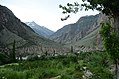
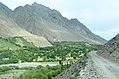
Shigar Valley is renowned for its dramatic landscapes, featuring deep river gorges carved by the Shigar River and expansive alpine meadows that provide a verdant contrast to the towering Karakoram peaks. These meadows, blooming with wildflowers in summer, serve as vital grazing areas and offer panoramic vistas ideal for nature enthusiasts. Trekking routes originating from Askole village in the valley lead adventurers through these terrains to Concordia, a renowned campsite at the confluence of glaciers, where unobstructed views of K2, the world's second-highest peak at 8,611 meters, captivate trekkers.[66] The valley provides essential access to major glaciers, including the Biafo and Hispar, which together form one of the longest glacial systems in the world at approximately 116 kilometers. The Biafo Glacier, stretching 67 kilometers through the Karakoram range, originates in the surrounding peaks and is reachable via trails from Shigar's upper reaches, offering glimpses of crevassed ice fields and seracs.[67][68] These glaciated peaks support diverse biodiversity, with the elusive snow leopard (Panthera uncia) inhabiting the rugged, high-altitude terrains of the Karakoram ranges around Shigar, where broken cliffs and sparse vegetation provide prime habitat for this endangered species estimated at 90–120 individuals in Baltistan as of 2024.[69][70] Shigar's natural attractions draw adventurers through its rich mountaineering history, serving as the primary gateway for expeditions to K2 since the mountain's first ascent in 1954, with trails like the Baltoro Glacier route facilitating access to base camps for peaks exceeding 8,000 meters. Among other features, the Sarfaranga Cold Desert, the world's highest at 7,500 feet (2,286 meters), offers unique high-altitude dunes contrasting with surrounding mountains, while Jarba So Lake (also known as Blind Lake or Zharba Tso), a scenic reservoir at about 4,100 meters elevation encircled by snow-capped peaks, serves as a water source and panoramic viewpoint accessible by short drives from Shigar town.[71][72][73] Eco-tourism opportunities include the Chutron Hot Springs near Basha Valley, where mineral-rich thermal waters, containing elements like sodium, potassium, and sulfates, emerge at around 2,400 meters elevation, promoting relaxation and therapeutic soaks amid scenic surroundings. Conservation efforts protect these features under the Central Karakoram National Park, established in 1993 and encompassing over 1,000,000 hectares across Shigar and adjacent districts to safeguard glaciers, high-altitude ecosystems, and wildlife like the snow leopard.[74][75]

References

User Avatar
No comments yet.