Hubbry Logo
Smooth snakeSmooth snakeMain
Open search
Smooth snake
Community hub
Smooth snake
logo
8 pages, 0 posts
0 subscribers
Be the first to start a discussion here.
Smooth snake
Smooth snake
from Wikipedia

Smooth snake
Scientific classification Edit this classification
Kingdom: Animalia
Phylum: Chordata
Class: Reptilia
Order: Squamata
Suborder: Serpentes
Family: Colubridae
Genus: Coronella
Species:
C. austriaca
Binomial name
Coronella austriaca
Range of C. austriaca

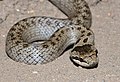
The smooth snake (Coronella austriaca)[3] is a species of non-venomous snake in the family Colubridae. The species is found in northern and central Europe, but also as far east as northern Iran. The Reptile Database recognizes two subspecies as being valid, including the nominotypical subspecies described here.[2]

Subspecies

[edit]

There are two subspecies:[2]

Subspecies Distribution
C. a. austriaca

Laurenti, 1768

C. a. acutirostris

Malkmus, 1995

Portugal

Geographic range

[edit]

Coronella austriaca is found from the south of England through France and the Low Countries to northern Spain and Portugal, Germany, Norway and Sweden (as far north as latitude 63°), Latvia, Lithuania, Estonia, Switzerland, Austria, Italy and Sicily (but not in Corsica or Sardinia), the western Balkans and Greece, and European Russia as far north as latitude 57°. In Asia, it is found from Turkey to Azerbaijan, Georgia, Armenia and northern Iran.[4] It is absent in Denmark despite the species being found just south of the German border as well as in southern Sweden. The species is only known from Denmark from 6 specimens, all found between 1870 and 1914.[5]

In Finland, the species is found only in Åland, and it is not common there.[citation needed]

Description

[edit]
Feeding on a common slow worm

Both sexes of C. austriaca grow to an average total length (including tail) of about 60 cm (24 in) to 75 cm (30 in). Two specimens measuring 83 cm (33 in) have been recorded in Sweden, as well as one in Russia that was 92 cm (36 in).[3]

The head has a rostral scale that is at least as deep as it is wide, creating a triangular indentation between the internasal scales (rarely separating them). The top of the head is covered with nine large plates. The nasal scale is often divided. There is one (rarely two) preoculars and two postoculars. The temporals number 2+2 or 2+3 (rarely 1+2). There are seven (rarely eight) upper labials, of which the third and fourth or fourth and fifth border the eye.[3]

Eating a grass snake

In the middle part of the body there are 19 (rarely 17 or 21) rows of dorsal scales. In contrast with many other snakes found in the region, these scales are flat (not keeled). This gives the snake a smooth texture to the touch, from which it gets its common name. The ventral scales number 150–164 in males and 162–200 in females. The anal scale is divided (rarely single) and the subcaudal scales are paired. Males have 54–70 subcaudal scales and females 40–76.[3]

The colour pattern consists of a brown, grey or reddish ground colour[4] with two rows of small, rather indistinct dark spots running down the back towards the tail. In some cases, each pair of spots may be united toward the neck area, forming a series of cross-bars over the back. There is also a very indistinct series of dark spots running along each of the flanks. These four series of spots along the body overlay four parallel, rather shadowy stripes that also run down the back and flanks.[3]

On the top of the head is a dark marking which is often in the shape of a crown, giving rise to the generic name Coronella (which means coronet). A relatively thick dark stripe extends from each nostril, through the eye, and along the side of the head to a little beyond the neck. The upper labials are whitish, greyish-white or light brown, sometimes with darker spots. The tongue is reddish brown or dark red.[3]

Biology

[edit]

The smooth snake feeds on smaller animals, especially other reptiles. It subdues larger prey by constriction, although unlike true constrictors it does not kill by this method.[6] Smooth snakes are ovoviviparous: the juveniles hatch out of eggs internally and are born live.[7]

In Britain it is restricted to heathland habitats.

See also

[edit]

References

[edit]

Further reading

[edit]
[edit]
[edit]
Revisions and contributorsEdit on WikipediaRead on Wikipedia
from Grokipedia
The smooth snake (Coronella austriaca) is a small, non-venomous colubrid snake characterized by its slender body, smooth dorsal scales without keels, and cryptic coloration ranging from greyish-brown to bronze with darker blotches and spots that provide excellent camouflage in its environment. Adults typically measure 50–70 cm in length, though some reach up to 92 cm, and they weigh 35–100 g, with a lifespan of up to 20 years in the wild. Native to much of and parts of western , the smooth snake has a wide distribution extending from the and in the north to and the in the south, and eastward to northern and . In the United Kingdom, its range is highly restricted to sandy heathlands in southern counties such as Dorset, , and , with small reintroduced populations in and , making it the rarest native terrestrial there. It prefers well-drained, open habitats like heathlands, grasslands, shrublands, rocky areas, and edges of coniferous or mixed woodlands, where it requires loose soil for burrowing, dense vegetation for cover, and sunny basking sites. Ecologically, the smooth snake is a diurnal, secretive predator that hunts primarily by ambush, using its keen to detect prey and to subdue it. Its diet consists mainly of reptiles such as and slow-worms (about 48% of intake), supplemented by small mammals like and mice (around 35–48%), as well as young birds, frogs, , and occasionally other snakes. Behaviorally, it is solitary and semi-fossorial, often hiding under rocks, logs, or artificial cover like corrugated iron; it hibernates communally from October to March or April and becomes active in warmer months, with home ranges of 0.5–4 hectares. is ovoviviparous, with occurring in March–May and females giving live birth to 3–15 young (each 12–21 cm long) between July and October after a 4–5 month ; is reached at around 4 years. Although classified as Least Concern globally by the IUCN due to its broad distribution, populations are declining in some regions, particularly in the UK where habitat loss from development, fires, overgrazing, and climate change poses significant threats. Recent monitoring as of 2025 shows the reintroduced population in Devon is thriving, with 39 individuals recorded. In the UK, it is strictly protected under the Wildlife and Countryside Act 1981 and the European Habitats Directive, with conservation efforts focusing on heathland management to maintain suitable conditions. Despite its harmless nature to humans—though it may bite or release a mild odor when threatened—the smooth snake plays a key role in controlling rodent and lizard populations in its ecosystems.

Taxonomy

Classification

The smooth snake is scientifically classified as Coronella austriaca, a first described by Josephus Nicolaus Laurenti in 1768. Its full taxonomic places it within the domain Eukaryota, kingdom Animalia, phylum Chordata, class Reptilia, order , suborder Serpentes, family , subfamily Colubrinae, Coronella, and C. austriaca. The Coronella comprises only two , with C. austriaca being the closest relative to , the southern smooth snake; these represent the entirety of the genus's recognized diversity in , , and western Asia. Laurenti's original description appeared in his work Synopsis naturae (full title: Specimen medicum inaugurale, exhibens systema reptilium), published in , where he designated , , as the type locality and detailed the species on page 84. The has remained stable at the species level since its establishment, with no major taxonomic revisions occurring after 2006, though some synonymies (e.g., Simotes semicinctus in 2008) and phylogeographic studies (e.g., Jablonski et al., 2019) have refined its understanding without altering the core classification.

Subspecies

The smooth snake, Coronella austriaca, is currently recognized as comprising two . The nominal , C. a. austriaca (Laurenti, 1768), is the widespread form distributed across much of northern and , extending eastward to northern . This represents the default morphological variant of the , with no distinctive regional adaptations beyond general variation in coloration and patterning observed across its broad range. The second subspecies, C. a. acutirostris (Malkmus, 1995), is more geographically restricted, primarily occurring in and extending into northwestern . It was formally described from specimens collected at Lagoa Comprida in the , , at an elevation of approximately 1,575 meters. This subspecies is distinguished by its narrower head, more pointed and prominent , and rostral scales that penetrate deeply between the internasals, along with subtle variations in head and neck scalation compared to the nominal form. These traits provide the primary morphological basis for its separation, reflecting localized adaptations in the . Taxonomic treatment of C. austriaca has remained stable since the description of acutirostris in 1995, with no additional proposed or elevated in subsequent revisions. Although molecular studies have identified cryptic within the , including multiple phylogenetic lineages, these findings have not led to further intraspecific subdivisions at the subspecies level.

Description

Physical characteristics

The smooth snake exhibits a slender, cylindrical body form adapted for navigating dense vegetation and ground cover. Its dorsal scales are smooth and glossy, arranged in 19 rows at midbody (rarely 17 or 21), lacking the keels characteristic of viperid species such as the adder (Vipera berus). The head is only slightly distinct from the neck, with a rounded that contributes to its inconspicuous profile. The eyes are proportionally large, featuring round pupils and a golden or brown iris, a key trait distinguishing it from sympatric viperids that possess vertical slit pupils. As a colubrid, the smooth snake lacks heat-sensing pits found in some advanced snakes. Ventral scales number 150-164 in males and 162-200 in females, while the anal plate is divided (rarely single). Subcaudal scales are paired, numbering 43 to 65. The skin overall is smooth, enhancing the species' cryptic appearance in its habitat. The tail is short and tapers to a pointed tip, comprising 16-20% of total body length and aiding in balance during movement.

Size and variation

Adult smooth snakes typically measure 50–70 cm in total length, though individuals can occasionally reach up to 92 cm; populations are smaller, with males up to 60 cm and females up to 68 cm. Adults weigh 35–100 g. Females are generally longer and heavier than males, while males possess relatively longer tails in proportion to body size. The dorsal coloration of the smooth snake is uniformly gray-brown to reddish-brown, often with faint, indistinct dark spots or lines along the back and a darker patch on the head; the ventral surface is pale yellow-white, lacking the bold zigzag pattern characteristic of adders. Sexual dimorphism is evident in adults, with females being longer and heavier overall than males, while males possess relatively longer tails in proportion to body size. Juveniles resemble adults in pattern but exhibit brighter coloration and more distinct spotting, particularly a fully black head and more prominent lateral spots, which fade as the snake matures.

Distribution and habitat

Geographic range

The smooth snake (Coronella austriaca) has a native range spanning much of , including , the , the (, , ), and southward to , the , and the , including countries such as , , , , , , , , , , , , , and . Its distribution extends into western , encompassing northern , the region (, , Georgia), , and western , though populations in Asia are more fragmented. In the , the smooth snake is restricted to , with natural populations primarily in Dorset, , and , alongside reintroduced populations in and ; it is absent from , , and . The species occupies elevations from to approximately 2,000 m in mountainous regions, such as the and , though records exist up to higher altitudes in some areas like the Mountains. Historically, the smooth snake's range has shown no major contractions across its core European distribution, remaining stable since the Pleistocene expansions, with only localized declines noted in peripheral or fragmented populations such as those in the UK.

Habitat preferences

The smooth snake (Coronella austriaca) primarily inhabits open or semi-open, sun-exposed environments such as heathlands, dry grasslands, moorlands, forest edges, and rocky slopes, where it can access sunny basking sites amid sparse, low vegetation like heather and scattered shrubs. These habitats provide the warm, dry conditions essential for the species' and activity. Microhabitat preferences emphasize well-drained, sandy or rocky soils that facilitate burrowing and refuge-seeking, often in ecotones with 40-50% bare ground cover for easy movement and shelter under stones, clumps, or roots. The snake favors areas adjacent to prey-abundant zones, such as lizard-inhabited clearings or meadows with scattered boulders, while avoiding sites with dense height or tree cover exceeding 30-50%. This species shows low tolerance for dense forests, wetlands, or heavily shaded areas, which limit its distribution to xerophilous, unmanaged landscapes, though it can adapt to human-modified edges like pine nurseries if sunny exposures persist. In Britain, its range is confined to southern heathlands, underscoring a preference for unfragmented, low-nutrient soils over altered environments. Seasonally, the smooth snake utilizes more open, foraging-friendly areas during spring and summer, shifting to sheltered hibernacula such as rodent burrows or south-facing slopes for winter to maximize insolation and protection. Home ranges remain consistent across these seasons due to the species' small territorial needs in suitable microclimates.

Ecology and behavior

Diet and foraging

The smooth snake (Coronella austriaca) is an opportunistic carnivore with a diet dominated by reptiles, particularly lacertid such as the common lizard (Zootoca vivipara) and slow-worms (Anguis fragilis), alongside small mammals including field voles ( agrestis), common (Sorex araneus), and mice. Nestling birds and young conspecifics or other snakes, such as grass snakes ( natrix) or adders ( berus), are consumed less frequently but contribute to dietary diversity. Juveniles often include softer-bodied like and earthworms in their diet, reflecting their smaller gape and foraging capabilities. As an , the smooth snake employs a sit-and-wait strategy, remaining concealed in or before striking at passing prey. It subdues larger prey through , coiling its body around the victim to exert pressure and suffocate it, rather than relying on , before swallowing the meal whole, typically head-first. Smaller items, such as or nestlings, may be swallowed alive without . Dietary preferences exhibit an ontogenetic shift correlated with body size: juveniles focus almost exclusively on small and (100% reptile predation in early stages), transitioning in adulthood to include a higher proportion of energy-rich vertebrates like mammals (up to 28% of diet). Larger females, benefiting from greater body mass, preferentially target bigger prey items compared to males. Seasonal and geographic variations further influence foraging; in cooler northern populations, such as those in , mammals like field voles dominate the diet (94% frequency of occurrence), adapting to reduced reptile activity, whereas southern Mediterranean groups rely more heavily on (>65% of intake).

Reproduction

The smooth snake (Coronella austriaca) is viviparous, retaining its eggs internally until giving birth to live young after a period of approximately 4-5 months. occurs primarily in spring from late to May, though secondary autumn pairings between and have been documented in various populations. During , males locate receptive females via scent and may engage in rituals, entwining and twisting their bodies in displays of dominance to secure mating rights. Copulation involves the male coiling around the female, often biting her head or neck, and can last for several hours. Parturition typically takes place from late July to September, with timing influenced by summer temperatures—warmer conditions advancing births by about 3 days per degree Celsius deviation in July averages. Litters range from 4 to 15 offspring, with averages of 7-10 young reported across European populations; for example, means of 6.1 in the Netherlands and 8.0 in Norway reflect latitudinal variations. Newborns measure 12-20 cm in total length and weigh 1.5-3 g, emerging from thin, transparent amniotic sacs that they rupture independently within hours of birth. The young are precocial and fully independent at birth, foraging for small prey such as insects and lizards within 1-2 months before entering hibernation. Sexual maturity is reached at 3-4 years for males and 4-5 years for females, corresponding to snout-vent lengths of about 33 cm, though attainment varies by latitude and environmental conditions. Females do not reproduce annually; instead, most breed every second or third year, with only 15% of Norwegian females and 93% of Dutch females reproducing consecutively due to energy demands and seasonal constraints. Fecundity is positively correlated with maternal body size, as larger females produce more numerous and larger offspring while experiencing fewer stillbirths; post-maturity, female growth rates exceed those of males, further enhancing this size-dependent reproductive output over time.

Activity patterns

The smooth snake (Coronella austriaca) exhibits predominantly diurnal activity patterns, emerging during daylight hours to bask and forage, particularly on warm, overcast days when temperatures range from 20–27°C. Activity typically begins with a rapid increase in body temperature in the morning, followed by a stable phase through the afternoon, allowing for in sunny habitats. In hotter conditions, individuals may shift toward crepuscular behavior, becoming more active during cooler dawn and dusk periods to avoid midday heat. During colder months, smooth snakes enter , typically from October to , retreating into communal burrows, mammal tunnels, or under logs and rocks where groups of up to 30 individuals may overwinter together. This semi-fossorial period varies slightly by and local , with emergence occurring in or in southern regions and later in northern areas. In response to threats, smooth snakes primarily rely on evasion, fleeing into cover or hiding under debris, but may adopt defensive postures if cornered, including coiling tightly, hissing, and flattening the head to mimic the appearance of the venomous (Vipera berus). They occasionally strike or bite with a chewing motion, release a mild odorous from cloacal glands, or vibrate their tails against the substrate, though they are non-venomous and pose no significant danger to humans. Smooth snakes are relatively slow-moving, with typical daily displacements of 13–100 m and a median hourly movement rate of approximately 0.54 m/h, though bursts can reach up to 167 m/h. Males display territorial behavior during the breeding season, defending areas through with rivals to access females. Juveniles exhibit greater dispersal tendencies post-birth, traveling larger distances—often several hundred meters to up to 1 km—to establish independent home ranges and reduce .

Conservation

Status and protection

The smooth snake (Coronella austriaca) is classified as Least Concern on the global , with the assessment conducted in 2017 indicating a stable overall population trend across its wide European range. In the , however, the is assessed as Endangered due to and isolation of populations, according to the 2021 evaluation for . Legally, the smooth snake is protected under Annex II and Annex IV of the European Union's (species code 1283), requiring the designation of Special Areas of Conservation and prohibiting deliberate capture, killing, or disturbance. In the UK, it receives full protection under Schedule 5 of the , making it an offense to intentionally kill, injure, or disturb the species. The species is not listed under the Convention on International Trade in Endangered Species of Wild Fauna and Flora (). Population estimates suggest stability in continental Europe, where the species is widespread and abundant, likely numbering in the millions across suitable habitats. In contrast, UK populations are small and fragmented, with fewer than 5,000 adults estimated across isolated heathland sites, and have been subject to systematic monitoring since the 1990s through national surveys and species action plans. Monitoring efforts focus on key UK sites such as the Dorset Heaths, where coordinates annual surveys, habitat management, and reintroduction programs in collaboration with organizations like Amphibian and Reptile Conservation (ARC); data indicate no major population declines since 2020, with some reintroduced groups showing positive growth.

Threats and management

The smooth snake (Coronella austriaca) faces significant threats from habitat loss and degradation, primarily driven by , , and inappropriate practices such as fire suppression, which allow heathland succession to scrub and , reducing suitable open habitats. mortality also contributes to population declines, particularly in fragmented landscapes where barriers like roads limit dispersal and increase collision risks. Collection for the pet trade remains a minor threat, with limited evidence of widespread impact compared to habitat-related pressures. Climate change poses additional risks, including potential northward range shifts in response to warming temperatures, which may isolate southern populations, and increased drought conditions that reduce prey availability, such as , exacerbating declines. Persecution due to misidentification as the venomous (Vipera berus) further compounds mortality, especially in human-influenced areas. Conservation management focuses on heathland restoration in the UK, including the use of by and controlled burns to maintain open habitats and prevent succession, as implemented by organizations like the RSPB and ARC. Translocations to fragmented sites have been employed to bolster populations, such as reintroductions from Dorset to heathlands. Public education campaigns aim to reduce persecution by improving species identification and awareness among land users and visitors. These efforts have yielded successes, with population increases observed in managed reserves; for instance, surveys on Pebblebed Heaths in recorded a 25% rise from 31 individuals in 2023 to 39 in 2024, indicating a self-sustaining population post-translocation. In September 2025, conservationists confirmed the continued success of this reintroduction, with juveniles observed and the population expanding its range. EU-funded habitat projects under the have supported broader restoration initiatives, contributing to improved conservation outcomes across fragmented sites.

References

Add your contribution
Related Hubs
User Avatar
No comments yet.