Hubbry Logo
Snowy ploverSnowy ploverMain
Open search
Snowy plover
Community hub
Snowy plover
logo
8 pages, 0 posts
0 subscribers
Be the first to start a discussion here.
Snowy plover
Snowy plover
from Wikipedia

Snowy plover
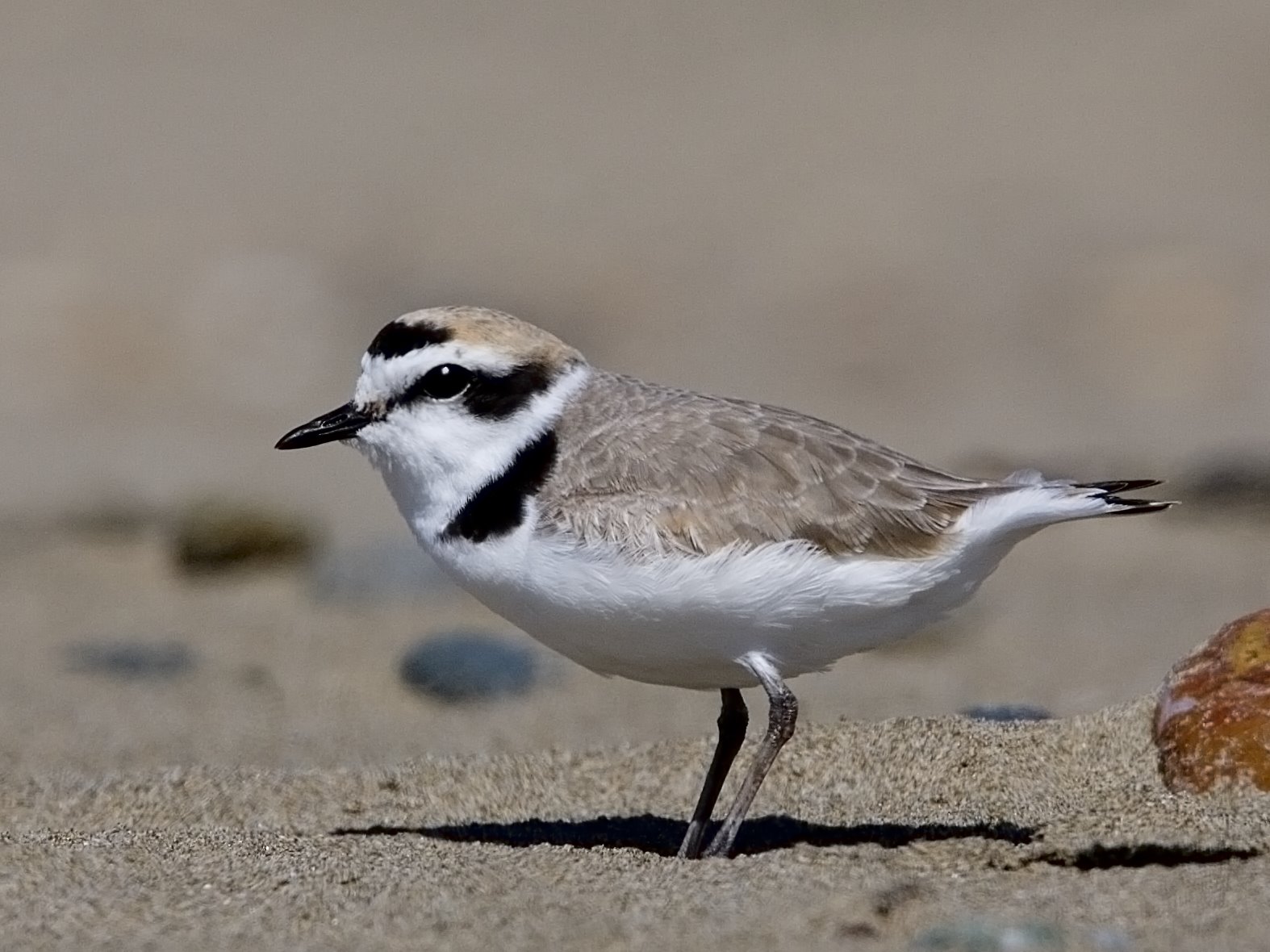
Photograph of a male plover standing in side view
Male in breeding plumage on Morro Strand State Beach, California
Scientific classification Edit this classification
Kingdom: Animalia
Phylum: Chordata
Class: Aves
Order: Charadriiformes
Family: Charadriidae
Genus: Anarhynchus
Species:
A. nivosus
Binomial name
Anarhynchus nivosus
(Cassin, 1858)
Map showing the distribution of the snowy plover in the Americas
  Breeding range
  Resident range
  Non-breeding range

The snowy plover (Anarhynchus nivosus) is a small shorebird found in the Americas. It is a member of the bird family Charadriidae, which includes the plovers, dotterels, and lapwings. The snowy plover was originally described by John Cassin in 1858, but was classified as a subspecies of the Kentish plover in 1922. Since 2011, the snowy plover has been recognized as a distinct species based on genetic and anatomical differences from the Kentish plover. Two or three subspecies are recognized, distributed along the Pacific coast of North America, Ecuador, Peru, and Chile, in several inland areas of the US and Mexico, along the Gulf Coast, and on Caribbean islands. The coastal populations consist of both residential and migratory birds, whereas the inland populations are mostly migratory. It is one of the best studied endemic shorebirds of the Americas, and one of the rarest.

Snowy plovers are pale brown above and white below, with a white band on the hind neck. During the breeding season, males have black patches behind the eye and on the side of the neck; the neck patches are separated from each other and do not form a continuous breast band as in many other plovers. Snowy plovers can also be distinguished from other plovers in having an all-black and slender bill, and gray to black legs. The typical call is a repeated "tu-wheet".

This plover inhabits open areas in which vegetation is absent or sparse, in particular coastal sand beaches and shores of salt or soda lakes, where it feeds on invertebrates such as crustaceans, worms, beetles, and flies. At the beginning of the breeding season, males excavate multiple nest scrapes that are advertised to females; one of these scrapes is later selected for breeding. Some females will desert their brood soon after the chicks hatch to re-mate with another male, while their first mate will continue to rear the chicks. Such polygamy is uncommon in birds, and is possibly a strategy to maximize breeding success. There are more males than females – 1.4 times as many in California – and the more pronounced this sex ratio imbalance is, the more females engage in polyandrous behavior.

The snowy plover is listed as near threatened by the International Union for Conservation of Nature. The main threats are habitat destruction due to invasive beach grasses, urban development, as well as frequent disturbance due to recreational uses of beaches. Conservation measures on the US Pacific coast include roping-off beach areas that are used for breeding, the removal of invasive beach grasses, and protection against egg predators. While such measures have been successful locally, the global population is thought to be in decline.

Taxonomy and systematics

[edit]

The snowy plover was first described by John Cassin in 1858 as Aegialitis nivosa, based on a skin collected in 1854 by William P. Trowbridge in Presidio, which later became part of San Francisco.[2] This skin, the holotype of the species, was subsequently lost. Although originally part of the collection of the National Museum of Natural History, it was given to the collector Henry E. Dresser of England in 1872. In 1898, the Dresser collection was transferred to the Victoria University of Manchester, but the skin was apparently not part of this transfer. Joseph Grinnell, who attempted to locate the holotype in 1931, suggested that Dresser may have been unaware of the specimen's significance and may have given it elsewhere.[3]: 271–272  The snowy plover is one of the best-studied endemic shorebirds of the Americas, although most of this research was carried out on western North American populations, with few monitoring programs targeting the South American and eastern North American populations.[4]

Plovers (Charadriinae) are a subfamily of small shorebirds that breed in open habitats on all continents except Antarctica.[5] Together with the lapwings (Vanellinae), they form the family Charadriidae. The snowy plover was traditionally considered to be a species within the genus Charadrius, which comprised 32 extant species and was therefore the most species-rich genus of the family.[6] However, a 2013 genetic analysis found that the lapwings are nested within Charadrius; the latter is therefore polyphyletic (is not a natural group, i.e., the most distantly related Charadrius species are more closely related to lapwings than to each other).[7][8] Some subsequent studies confirmed this and proposed to split Charadrius into five separate genera. The snowy plover, formerly Charadrius nivosus, was transferred into the genus Anarhynchus, as Anarhynchus nivosus, along with 22 other plover species; in 2023, this transfer was recognized by the International Ornithologists' Union.[9] Before the transfer, Anarhynchus contained only one species, the wrybill from New Zealand.[8][4] The name Anarhynchus derives from the Ancient Greek ἀνα- (ana-) meaning 'backward' and ῥυγχος (rhunkhos) meaning 'bill'.[5] The species name nivosus is Latin for 'snowy'.[10]

The snowy plover appears to be most closely related to the Kentish, the white fronted, the Malaysian, the chestnut-banded, and the red-capped plover, as shown in a cladogram from a 2015 study:[8][11][12]

The snowy plover is closely related, and visually similar, to the Kentish plover of Eurasia and Africa.[13] Harry C. Oberholser, in 1922, argued that the differences in plumage between these species are not consistent, and no clear line of demarcation could be drawn. Consequently, he classified the two subspecies of the snowy plover that were recognized at that time (nivosus and tenuirostris) as subspecies of the Kentish plover.[14] This assessment was subsequently followed by most authors, until a 2009 genetic study re-established the snowy plover as a separate species. This study noted that, besides differences in the mitochondrial and nuclear DNA, snowy plovers differ from Kentish plovers in being smaller, having shorter tarsi and wings, different chick plumages, and different advertisement calls of the males.[13] In 2011, the International Ornithological Congress (IOC) and the American Ornithologists' Union (AOU) recognized them as separate species.[11]

Subspecies

[edit]
Photograph of a walking snowy plover in side view
The subspecies A. n. occidentalis, walking between bivalve shells on a beach near Ica, Peru

Two to three subspecies are commonly recognized:[8][9]

  • Anarhynchus nivosus nivosus (Cassin, 1858): The nominate subspecies, found in North America west of Louisiana.[8]
  • Anarhynchus nivosus tenuirostris (Lawrence, 1862): The Cuban snowy plover, found in North America east of Louisiana. The distinction of this subspecies from the nivosus subspecies is contested, but two genetic analyses in 2007 and 2020 have supported its separation.[15][4]
  • Anarhynchus nivosus occidentalis (Cabanis, 1872): Found on the Pacific coast of South America. It is slightly larger than the nominate subspecies, the lore (the area between eye and beak) is white, and the black patch on the forehead is slightly broader.[8]

A 2020 study suggested that the snowy plover populations can be subdivided into four distinct demes (groups of individuals more genetically similar to each other than to other individuals): The western nivosus deme in western North America, the eastern nivosus deme in Florida, the tenuirostris deme on the Caribbean islands and Bermuda, and the occidentalis deme in South America. The study found little genetic exchange between these demes, except for a strong migration from the western to the eastern nivosus deme (but not vice versa).[4]

Description

[edit]

The snowy plover is a plump shorebird with a large head, a short and slender bill, and short neck and tail. It is a small plover, with adults ranging from 15 to 17 cm (5.9 to 6.7 in) in length, from 34 to 43.2 cm (13.4 to 17.0 in) in wingspan, and from 40 to 43 g (1.4 to 1.5 oz) in weight. Its body is typically held horizontally.[16] Compared to other plovers, its legs are relatively long and its wings short.[17] The bill is black, the iris dark brown, and the legs gray to black.[8]

Photograph of a snowy plover standing on gravel from a front and side angle
Snowy plover in non-breeding plumage near Cayucos, California

Snowy plovers are pale brown above and white below, with a white band on the hind neck and a smudgy eyestripe (absent in the South American subspecies). Breeding males have black patches behind the eye ("ear patch"), on the sides of the neck, and on the forehead. In males, the crown may be reddish at the start of the breeding season. The breeding female is slightly duller, and typically one or more of the patches are partly or completely brown. The neck patches on each side are well separated and rarely joined at the front, giving the appearance of a "broken" breast band in contrast to the continuous breast band in many other plovers. Outside the breeding season, the neck and ear patches are pale and the forehead patch is absent, and plumages of males and females cannot be distinguished. Newly hatched chicks have pale upper sides with brown to black spots and are white below.[8][17]

Similar species within its range include the piping plover, the collared plover, the semipalmated plover, and Wilson's plover. Amongst other features, the snowy plover differs from these species in its slender and entirely black bill (shorter and thicker in piping plover and longer and thicker in Wilson's plover, and with orange base in piping and breeding semipalmated plover), in its gray to black legs (orange or yellow in piping, collared, and semipalmated plover), and the "broken" breast band (usually complete in semipalmated, Wilson's, and breeding collared plovers).[8][18]

Vocalizations

[edit]

The typical call is a repeated "tu-wheet" given in a wide range of contexts.[8][16] In males, these include advertisement while standing in territories and courtship. In both sexes, the call may be given in situations of threat, aggression, distress, and alarm. This call differs between sexes, being shorter, quieter, and hoarser in the female. Other calls include a repeated "purrt" that is given during breeding season, for example while flying from nest sites or when other plovers intrude their territory. A single "churr" is mostly given by males while defending territory or offspring from other plovers. Outside the breeding season, a repeated "ti" is given when disturbed while resting, and is often followed by flight. Chicks make a "peep" call from up to two days before hatching while still in the egg, and until their first flight.[8]

Distribution and habitat

[edit]
Photograph of a sandy, sparsely vegetated area with two snowy plovers
Snowy plovers in their habitat on Bolivar Peninsula, Texas

The snowy plover is distributed along the Pacific coast of North and South America, in areas inland of the US and Mexico, along the coast of the Gulf of Mexico, and on the Caribbean islands and Bermuda.[8][4] On the Pacific coast, it breeds from south Washington down to Oaxaca in Mexico, and non-breeding individuals can be found as far south as Panama. In South America, it breeds from south Ecuador to Chiloé Island in Chile. In the Caribbean, breeding occurs eastwards as far as the Virgin Islands and Margarita Island. The coastal populations consist of both migratory and residential birds; migration occurs over relatively short distances north- or southward along the coast. Inland breeding populations exist in the US eastward to the Great Plains of Kansas and Oklahoma, as well as in Mexico north of Mexico City. These populations are mostly migratory, with western populations migrating to the Pacific coast, and the Great Plains populations to the Gulf of Mexico coast. Breeding has been recorded at elevations up to 3,000 m (9,800 ft).[8]

The species inhabits open areas in which vegetation is absent or sparse, in particular coastal sand beaches and shores of salt or soda lakes. It also breeds on river bars that are located close to the coast, and adopts human-made habitats such as wastewater and salt evaporation ponds, dammed lakes, and dredge spoils. It requires the proximity of water, although it may breed on salt flats where only very little water remains.[8]

Behavior and ecology

[edit]

Feeding

[edit]
Photograph of a snowy plover pulling a worm out of wet sand
Snowy plover catching a worm

The species feeds on invertebrates such as crustaceans, worms, beetles, and flies.[19] An analysis of feces from a coastal population in California during breeding season found beetles in 72%, flies in 44%, and insect larvae in 25% of the feces. Prey is taken from above and below the sand surface, from plants, and from carcasses. In inland habitats, snowy plovers usually forage on wet substrates that may be under a shallow water cover.[8] As is typical for plovers, prey is found visually by briefly standing to scan the area, followed by running and capturing.[8][16] Snowy plovers also forage by probing the substrate with their bills, by charging or hopping into accumulations of flies, and by "foot trembling" on wet substrates or in shallow water, where one foot shakes to stir up prey. Brine fly larvae are often shaken before consumption, and captured flies are often bitten two or three times. Snowy plovers may forage during day and night, with one individual observed feeding in almost complete darkness. Snowy plovers drink when fresh water is available, but when it is not, they can sustain themselves on the water content of their prey.[8]

Territoriality and roosting

[edit]
Photograph of four snowy plovers sitting in uneven sand on a beach
Roosting snowy plovers at Moss Landing State Beach, California

At the beginning of the breeding season, the male, while still unpaired, will establish and defend a territory, which is then advertised to a female by calling and excavating scrapes. A pair will continue to defend the territory. After the chicks hatch, the family will soon begin to move around, when the adults will defend the surrounding radius rather than a fixed territory. When defending a territory, males may attempt to intimidate intruders by using the "Upright Display" posture, in which the body is upright with erected breast feathers. They may also run or fly at, or fight with intruders. Fighting may involve jumping at each other breast-to-breast with flapping wings and mutual pecking and shoving. In some cases, combatants pull on each other's feathers, and may even pull out a tail feather. Fights with intermittent short breaks can last up to 1.5 hours. Territories are defended not only against other snowy plovers but also against some other bird species, including semipalmated plovers and whimbrels. Territories are probably not important for protecting food resources, as the plovers often feed in flocks up to 6 km (3.7 mi) away from their territories. In Kansas and Oklahoma, where the birds are more stationary, protection of feeding grounds could be more important. The size of territories is variable, and sizes between 0.1 and 1 ha (11,000 and 108,000 sq ft) have been reported.[8]

Outside the breeding season, snowy plovers will often roost in groups of several to more than 300 birds. Roosting places are typically on the ground, often in depressions such as footprints (including those of humans) and vehicle tracks or behind objects such as driftwood.[8]

Breeding

[edit]
Photograph of a snowy plover nest scrape that is lined with whitish stones and contains three eggs
Nest scrape with three eggs

Snowy plovers are facultatively polygamous, with females, and less frequently males, often abandoning their mate soon after the chicks have hatched. The deserting female will then pair with a new male and renest, sometimes a few hundred kilometers away from its first brood, while the male will continue to rear the chicks.[8] A 2021 study of a population at Ceuta [es], Mexico, found that females are more likely to abandon their broods when the chicks are likely to survive even in their absence, or when the chicks have a low probability of survival. The polygamy in this species could therefore be a strategy to maximize breeding success.[20] Polygamy is most pronounced where the breeding season is long, when birds may start two, and sometimes three, broods per season. On the other hand, birds do generally not brood twice in the Great Plains, where the breeding season is short. A biased sex ratio also appears to favor polygamy: males are generally more common than females, with one study reporting that males were 1.4 times more common than females in California. The causes for such pronounced sex ratios are unknown. Rarely, males breed with two females at the same time. Pairs can also be reestablished in the next breeding season, which occurred in 32 to 45% of cases in central California, or within the same season in the third breeding attempt of the female.[8] The polygamous mating system of the snowy plover is uncommon in birds, but the closely related Kentish plover shows a similar behavior.[5]

Photograph of a resting adult snowy plover with two chicks around it, in low-angled sunlight
Adult with two chicks

Snowy plovers nest in nest scrapes that are excavated by the male as an important part of the courtship ritual. In the coastal areas of California, males excavated an average of 5.6 scrapes per territory. A scrape may be constructed within a few minutes, often near conspicuous landmarks such as rocks and grass patches. One of these scrapes is later selected by the pair for nesting, commonly the scrape where most copulations took place. Both before and during incubation, the adults continue to line the nest with small objects such as stones and shell pieces. Where the ground is too hard to construct scrapes, other depressions such as animal and vehicle tracks are chosen.[8]

The species lays three eggs on average, but clutch size ranges from two to six eggs. When only a single egg is produced, the clutch is usually abandoned. Eggs are oval or asymmetric in shape and have a matte and smooth surface. In coastal California, they average at 31 mm (1.2 in) in length, 23 mm (0.91 in) in width, and 8.5 grams (0.30 oz) in weight, which accounts for 20% of the body weight of the female. Egg color is brownish-yellow, with dark brown or black speckles that become more numerous towards the blunt end of the egg. The female lays one egg every 47 to 118 hours until the clutch is complete. The time interval between egg laying and hatching varies geographically and seasonally, ranging between 23 and 49 days. Continuous incubation starts upon clutch completion; while still incomplete, males and females spend only about a quarter of the daytime incubating. In coastal areas of California, females tend to incubate during the day, while males incubate at night. The reason for this pattern is unclear, and hypotheses include a need of the female to feed at night to regain energy lost from egg laying and the need of the male to defend the territory during daytime. Under hot conditions greater 40 °C (104 °F), the male and female take turns at least once per hour.[8]

Photograph of a female discharging eggshell on sand that is covered by a water film
Snowy plover standing over half of an empty egg

A day before hatching, chicks and parents begin to communicate by calling. After hatching, the parents will carry eggshells away from the nest. The chicks are precocial and able to walk and swim one to three hours after hatching. Parents do not feed their chicks, but will lead them to feeding areas. Parents will continue to brood their chicks after hatching – in the coastal areas of northern California, chicks less than 10 days old were brooded for an average of 58% of each day. In western North America, chicks are looked after for 29 to 47 days after hatching, often by the male after the female has deserted. In the more eastern populations, however, chicks are often cared for until they fledge.[8]

Predators and mortality

[edit]
Photograph of a snowy plover lying on its belly with the left wing spread out
Snowy plover feigning a broken wing to distract predators from its offspring

Adults are preyed upon by birds of prey and various mammals including feral cats and foxes, with a wider range of predators preying on chicks and eggs. Adults will usually run away from an approaching predator or human, but may also take flight. Approaching birds of prey cause adults to duck on their nests, while roosting flocks will take flight to form a highly coordinated flight formation in which they move back and forth. Parents will signal their chicks to lie flat against the ground when sensing potential danger. They may then attempt to distract predators from their chicks by calling and flying around. Parents also use injury feigning, when they will run away and move their wings as if they are broken, or lie on the ground while crouching or flapping.[8]

Common diseases include botulism, and common parasites include bird lice. The average life span has been estimated at 2.7 years, and the oldest snowy plover on record was at least 15 years old.[8]

Status and conservation

[edit]
Photograph of a snowy plover in side view standing on its right leg and stretching the left leg and wing
At Point Reyes National Seashore in California

The snowy plover is among the rarest endemic shorebirds in the Americas.[4] Since 2014, it is listed as "Near Threatened" by the IUCN because of a moderately rapid population decline caused primarily by habitat degradation and human disturbance.[1] In the US Pacific coast, the species is thought to have lost 50 out of 78 breeding sites since 1970,[21] and in the Great Plains of Texas, the decline is estimated to have been larger than 75% between 1998 and 2009.[22] Subtropical and tropical populations, although less studied and monitored than those of higher latitudes, may be similarly threatened.[23] As of 2020, the global population is estimated at 24,000 to 31,000 mature individuals. Counting both juveniles and mature individuals, the North American population has been estimated at 25,869; the population in and around the Gulf of Mexico at 2,500; and the South American population at 8,000 to 10,000 individuals.[1]

Causes of decline

[edit]
Trackway of a snowy plover in sand photographed at a low angle, with the plover that left the tracks visible in the background
Trackway of a snowy plover

Habitat degradation is a major cause for the declines in both coastal and inland populations in the US. Many coastal beaches have been developed for recreational use. Periodic raking of beaches to remove garbage and natural debris such as kelp causes plovers to abandon breeding areas, and reduces biodiversity and biomass of the invertebrates the plovers feed on. Dune habitat was lost to the invasive European beachgrass, which had originally been planted to stabilize dunes. This species, as well as the American beachgrass from the Atlantic coast, have replaced native foredune vegetation in most of the North American Pacific coast.[21][8] In the Great Salt Plains in Oklahoma, controlled flooding, as well as an invasive shrub, the French tamarisk, have destroyed much plover habitat. In the Great Plains of Texas, sinking groundwater levels due to water extraction has been identified as the primary cause of decline.[22][8] River habitats in Kansas and Oklahoma have been decimated by the extraction of water, the erection of water reservoirs, and vegetation growth.[8] Habitat is lost to housing and urbanization adjacent to beaches. Less significant are habitat losses due to the trapping of sediments by dams and jetties that affect coastal erosion and sedimentation.[21][1] Habitat degradation is also a major concern for populations of lower altitudes. For example, around Ceuta in Mexico, the species is affected by large-scale removal of protected mangrove forests and illegal development of beaches, but also by the spread of mangroves into abandoned evaporation ponds that were adopted as habitats by the plovers. A 2017 analysis concluded that the Ceuta population will probably be extinct in 25 years if no further conservation measures are implemented.[23]

A flock of around fifty snowy plovers flying low over a beach, showing their undersides
Snowy plover flight formation

On US beaches, disturbance by humans and dogs is another significant cause for the abandonment of areas. One 2001 study found that at a public beach at Coal Oil Point, each plover was disturbed every 27 minutes on average during weekends and every 43 minutes during the week. The study further found that the plovers have been more sensitive to dogs than to humans, and that most disturbances occurred when the plovers were approached by less than 30 m (98 ft). A 2003 study of two beaches at Point Reyes National Seashore found that chick mortality was 69% greater on weekends compared to weekdays in 1999 and 72% greater in 2000, demonstrating the negative effects of human recreation.[8][24] Nests have also been directly crushed by vehicles, walking humans, and, in inland populations, by cattle.[8] An experiment with quail eggs at Sands Beach in Santa Barbara County, California, revealed an 8% daily risk of eggs being trampled by humans when outside protected areas.[25]

Several additional threats have been documented. Predation on chicks and eggs by crows, ravens, skunks, and invasive red foxes has intensified in some areas. Crows and ravens may be attracted to plover breeding areas by human food sources.[21][8][26] Several instances have been documented where environmental pollution affected populations. Oil spills have been a repeated threat, such as the New Carissa spill of 1999 that is known to have killed a minimum of 45 plovers. At Point Reyes National Seashore, mercury contamination has been identified as the cause for a high proportion of unhatched eggs. A 2018 study found that 98% of analyzed plovers in the Southern Great Plains had blood selenium levels exceeding the toxicity threshold.[22] Discarded monofilament fishing lines are a known threat, but their impact on populations is unknown.[8] In the future, effects of climate change, such as droughts and habitat loss due to sea level rise, are likely to become significant threats.[1][27]

Conservation measures

[edit]
Photograph of a fence with a sign labelled "Snowy Plover Enclosure" that explains the reasons for the beach closure to the public
Fencing of a breeding area to protect against disturbance by humans at Dockweiler State Beach, California

In 1993, the Pacific coast population of the US was listed as a "threatened" under the Endangered Species Act of 1973, and a recovery plan followed in 2007.[21] The plan focuses on three main conservation measures: closure of upper beach areas to the public during breeding season; protection against predators; and habitat restoration. Closure of beach areas was most effective when including fencing against dogs and a 30 m buffer zone. Egg predators were controlled by both fencing individual nests and predator removal. Habitat restoration focused on the removal of the invasive European beachgrass. Measures are also in place to protect some other snowy plover habitats elsewhere in the US. In the Great Salt Plains in Oklahoma, dams and fences were erected around nesting areas to prevent flooding and predation, but proved ineffective.[8] In Mexico, the species has been listed as "threatened" since 2010.[23]

Photograph of a rectangular metal framework placed over a snowy plover sitting on its nest
Enclosure to protect snowy plover nests from egg predators at Santa Monica State Beach

Even though the global population is declining, conservation efforts have led to local increases in plover populations. In central Chile, protection of a small stretch of beach against human disturbance resulted in an increase of the local population, as was reported in 2001.[28][25] The first instance of snowy plovers reoccupying a breeding area following its protection from human disturbance was documented in 2006 at Sands Beach, Santa Barbara County, where barriers are in use since 2001.[25] As of March 2023, conservation efforts have been particularly successful in Oregon, where numbers increased to 483 birds, from just 55 birds in 1993. This increase was possible due to roping off 40–50 mi (64–80 km) of dry sand on beaches, as well as the removal of invasive grasses. In California, the population is estimated at 1,830 birds as of March 2023.[26]

References

[edit]
[edit]
Revisions and contributorsEdit on WikipediaRead on Wikipedia
from Grokipedia
The snowy plover ( nivosus) is a small shore in the family , distinguished by its pale tan upperparts, white underparts, black forecrown band, and thin black neck ring in breeding . Measuring 15–17 cm in length with a wingspan of 30–35 cm, it exhibits cryptic coloration adapted for blending into sandy and gravelly substrates where it forages for small by probing moist sand or mud. Native to coastal and inland habitats across the , from to , the species prefers open, sparsely vegetated areas such as beaches, salt pans, and riverbars, often in arid or saline environments that match its subdued . Breeding occurs in simple ground scrapes lined with pebbles or shell fragments, typically holding two to three eggs, with biparental care including distraction displays to deter predators. The global population is estimated at around 38,000 individuals, though declining due to degradation from development, , and human disturbance such as off-road vehicles and recreational activities that trample nests and flush birds from roosts. In the United States, the Pacific Coast population of the subspecies C. n. nivosus is federally listed as threatened under the Endangered Species Act, prompting protective measures like beach fencing and predator control to mitigate these pressures. These conservation efforts underscore the ' vulnerability to anthropogenic impacts on its specialized shoreline niches, despite its relatively broad distribution.

Taxonomy and systematics

Subspecies

The snowy plover (Charadrius nivosus) is classified into three C. n. nivosus, C. n. tenuirostris, and C. n. occidentalis—delineated primarily by genetic analyses demonstrating distinct clusters with minimal , alongside morphological variations in tone and body size. These distinctions emerged from and nuclear marker studies, which revised traditional boundaries and affirmed validity despite some historical taxonomic debate. The nominate subspecies C. n. nivosus occupies Pacific coastal beaches from southern Washington state to Baja California, Mexico, extending inland to alkali flats and lakes in the Great Basin and southwestern United States, such as those in Oregon, Nevada, Utah, and California. It features darker dorsal plumage (light hair-brown to drab gray) relative to congeners, with individuals averaging slightly larger body size and more extensive black facial patches during breeding. C. n. tenuirostris ranges along the Pacific coasts of , , and northern , inhabiting sandy beaches and estuarine mudflats in these tropical to subtropical zones. This subspecies displays paler dorsal feathering (drab-gray to nearly white), correlating with its more arid, open coastal environments, and tends toward smaller overall dimensions than nivosus. C. n. occidentalis is restricted to select coastal and near-coastal habitats in western , overlapping partially with tenuirostris but distinguished genetically as a separate cluster with adaptations to variable flats. Morphological differences are subtler, including intermediate tones and bill proportions suited to local substrates, validated by phylogeographic data indicating historical isolation.

Phylogenetic relationships

The snowy plover ( nivosus) is classified within the family , the plovers, in the order , a placement corroborated by molecular phylogenies using both (mtDNA) and multiple nuclear loci that affirm the of Charadriidae relative to other shorebird families such as Scolopacidae. Within Charadriidae, C. nivosus resides in the genus , which genetic analyses divide into at least two major clades: one encompassing many species and another including taxa, with C. nivosus aligning closely with American congeners based on shared mtDNA haplotypes and nuclear markers indicating divergence driven by geographic isolation across hemispheres. Historically lumped with the Eurasian Kentish plover (C. alexandrinus) as conspecific, C. nivosus was elevated to full species status following phylogenetic evidence of reciprocal monophyly and substantial genetic divergence, including a 6% difference in mtDNA cytochrome b sequences—far exceeding intraspecific variation observed in other plovers (typically <2%)—as revealed by analyses of samples from North and South America versus Eurasia. This split, formalized in taxonomic checklists around 2011–2015, reflects cladistic principles prioritizing genetic discontinuity over superficial plumage similarities, with C. alexandrinus showing closer affinity to African species like the white-fronted plover (C. marginatus) than to C. nivosus. Nuclear gene trees further support this separation, highlighting long-term isolation without gene flow, consistent with vicariant evolution tied to continental barriers rather than recent hybridization. Debates persist on finer resolution within Charadrius, but no verified evidence challenges the monophyly of C. nivosus as a distinct lineage diverging approximately 1–2 million years ago per molecular clock estimates calibrated against shorebird fossils.

Description

Morphology

The snowy plover (Charadrius nivosus) is a small shorebird measuring 15-17 cm in length, with a weight of 32.5-58 g and a of 34-43 cm. Its body structure features a short neck, rounded head, and moderately long legs adapted for movement on sandy substrates. Adults exhibit pale gray-brown or sandy gray upperparts and white underparts, providing on beaches. In breeding plumage, they develop black patches on the , lores, and a partial band, along with a dark ear patch; non-breeding adults lack these black facial markings and show a brownish partial collar. The bill is slender and entirely black, the legs are dark gray to black, and the eyes are large and dark. is minimal in size and , though males may display slightly brighter or more defined markings during breeding. Juveniles resemble adults but possess softer, less distinct markings and more mottled upperparts, with banding studies confirming these differences aid in age identification. Compared to the ( semipalmatus), the snowy plover has a thinner black bill, grayer legs lacking orange tones, and overall paler .

Vocalizations

The snowy plover ( nivosus) emits a of subdued vocalizations, primarily delivered from the ground during interactions, though breeding-season calls may also occur in flight. The most characteristic call is a sweet, whistled tu-wheet or tur-weet, employed by both sexes in territorial disputes and by males to attract mates during . Alarm calls typically consist of sharp, repeated whistled notes resembling "whit" or plaintive chu-we, issued when birds are disturbed by predators or intruders, often prompting evasion behaviors in nearby individuals. Flight calls feature trilling or purred elements, such as mellow purrt sequences, which facilitate contact among or migrating flocks but remain relatively quiet compared to those of congeners. Field recordings analyzed via spectrography reveal these calls' frequency-modulated structure, with fundamental frequencies around 2–4 kHz and durations of 0.1–0.5 seconds, aiding precise identification amid coastal noise. In breeding contexts, soft whistles accompany display postures, signaling pair formation without the amplified aerial advertising seen in related like the (C. melodus), whose louder piping notes serve territorial advertisement. This vocal restraint in the snowy plover, corroborated by observations lacking dedicated flight-display calls, likely minimizes acoustic cues exploitable by predators, distinguishing it from more vocally conspicuous charadriids.

Distribution and habitat

Breeding distribution

The snowy plover breeds primarily along the of , from in Washington southward to , , with nesting documented at coastal sites including beaches and dunes. Inland breeding occurs at alkaline lakes and wetlands in the region, such as in and in , where significant portions of the population—up to 42% combined with sites—concentrate during the breeding season. Scattered breeding records exist in the , notably at Salt Plains National Wildlife Refuge in , and in southwestern states including , , and . Historical breeding distribution was broader, encompassing approximately 78 coastal sites in the U.S. Pacific states prior to 1970, but monitoring data indicate contractions to about 28 major nesting areas by the early 2020s, attributed to habitat loss and disturbance rather than modeled projections. Banding studies reveal high nest site fidelity, with adults returning to prior breeding locations, supporting persistent use of core areas like in despite local fluctuations post-2000. Limited verified breeding occurs in , with sparse nesting confirmed along coastal based on direct observations, contrasting with more abundant non-breeding presence further south.

Non-breeding distribution

The snowy plover (Charadrius nivosus) displays partial migratory behavior, with individuals from northern breeding populations relocating southward during the non-breeding season, while those in warmer southern latitudes often remain sedentary. Non-breeding ranges encompass coastal areas along the Pacific from and Washington southward through to , , as well as the Gulf Coast of the extending into and northern . Additional wintering occurs in the and western for some populations. Migratory distances are typically short, with birds from central California moving either northward to Oregon or southward to Baja California. In sedentary subspecies or populations, non-breeding sites overlap with breeding grounds, particularly along southern U.S. coasts and in Mexico. Pacific Coast winter window surveys, conducted annually in late January to early February, reveal stable aggregations in southern regions, supplemented by migrants from northern areas. For instance, the 2024 survey recorded 47 individuals across four sites in Washington state, reflecting a modest winter presence despite lower numbers compared to previous years. These surveys underscore consistent use of coastal wintering grounds, with flocks ranging from small groups to over 300 birds.

Habitat preferences

The snowy plover inhabits open coastal beaches and inland alkali flats characterized by barren to sparse vegetation, including sandy substrates, dry salt flats, and playa shorelines. These preferences align with empirical data from occupancy models, which show positive correlations with playa land cover and negative associations with vegetation density. Inland populations favor ephemeral wetlands and desert springs where water recession exposes moist mudflats, avoiding areas with emergent or shoreline vegetation. Microhabitat selection emphasizes proximity to water margins, with occupied sites averaging 309 m from versus 2,976 m at unoccupied sites, and shrub cover at 8.5% compared to 18.3% elsewhere. Nesting occurs in scraped depressions on dry ground above high tide lines or on bars, lined with pebbles, shell fragments, or debris for against heterogeneous substrates. Studies indicate higher nesting success on bars with egg-sized stones (20–40 mm ) than on sandy beaches, due to enhanced and reduced predation rates averaging 55% success on versus lower on sand. Coastal snowy plovers adapt to altered landscapes such as dredge spoils, salt pond levees, and river bars, maintaining aversion to dense while utilizing upper zones for nesting and tidal flats for access. Inland variants exhibit similar selectivity for alkaline-crusted shorelines near predictable water sources, demonstrating flexibility tied to substrate openness and minimal vegetative cover across ranges.

Behavior and ecology

Foraging and diet

Snowy plovers primarily through visual detection, employing a run-stop-peck technique on exposed coastal substrates such as beaches, tidal flats, and salt ponds. They rapidly dash short distances, pause to scan for movement, and deliver precise pecks to capture prey in wet sand, dry sand above the high tide line, or among wrack lines of . Supplementary methods include shallow probing of the substrate with the bill to extract buried items, foot-trembling to agitate and reveal hidden , and opportunistic charges into aggregations of flying like shore flies. is concentrated in intertidal zones where tidal cycles expose prey-rich areas, with birds adjusting activity to low for optimal access; they may diurnally or nocturnally under favorable conditions. The diet comprises small , reflecting specialization on coastal and saline habitats. Stomach content analyses from adults at a breeding site in 1995 identified crustaceans—particularly amphipods (e.g., Orchestoidea sp.) and mole crabs ()—as dominant, accounting for the majority of consumed biomass, alongside polychaete worms, tanaidaceans, ostracods, (flies, beetles), clams, and minor . Observational studies corroborate this, noting frequent consumption of sand hoppers, shore (Pachygrapsus crassipes), and marine worms, with inland birds shifting toward terrestrial like brine fly larvae at hypersaline lakes. Prey selection emphasizes high-energy, easily accessible items in the upper sediment layers, supporting rapid intake to meet metabolic needs amid variable tidal availability. Foraging intake rates are modulated by environmental factors, with higher efficiency during low tides when prey density peaks in exposed flats, enabling greater daily energy acquisition. Studies indicate challenges from patchy prey distribution and slower per-peck success compared to congeners like the , potentially due to the snowy plover's finer bill suited for surface rather than deeper-probing prey, though direct comparative metrics remain limited. Seasonal variations occur, with wintering birds exploiting persistent abundances in non-breeding ranges.

Breeding and reproduction

The snowy plover exhibits seasonal breeding primarily from March to July in northern populations, extending to September in southern coastal areas, with peak nesting from mid-April to mid-August. Nests consist of unlined or lightly lined scrapes in open, sandy or gravelly substrates, often camouflaged with debris such as pebbles, shell fragments, or vegetation. Clutch sizes typically range from 2 to 3 eggs, averaging 3, laid at intervals of 1-2 days. Incubation lasts 26-33 days and is performed biparentally, with females attending the nest primarily during daylight hours and males dominating nocturnal shifts. Chicks are precocial, hatching with downy and open eyes, departing the nest within hours to follow parents while receiving brooding and guidance. Fledging occurs after 28-33 days, during which males provide the majority of post-hatching care as females often depart to initiate subsequent clutches. Mate selection involves displays by males, including bowing with tail fanning to expose white underparts and horizontal crouching postures accompanied by calls. The employs a facultatively polygamous system, with females frequently engaging in serial , abandoning broods post-hatching to pair with new males for additional clutches within the season. Renesting is common following clutch failure, occurring 2-14 days later, with up to five attempts documented per pair. Productivity varies annually; in the region during 2023, long-term monitoring recorded 1.44 fledged chicks per breeding male across 337 nesting attempts, exceeding the 1.0 threshold for population stability, though nest survival was 53% due largely to predation. This reflects adaptive responses like renesting and dispersal, as observed in recent studies of breeding site shifts after failure.

Territoriality and social structure

Snowy plovers exhibit loose territoriality, primarily confined to defense of nest sites during the breeding , where both sexes aggressively deter conspecific intruders through chases, flights, and physical confrontations. Territorial boundaries are flexible and often overlap, with nesting densities and defense intensity varying based on local predator pressure; higher predator abundance correlates with reduced territorial aggression and closer nest spacing. Pairs may abandon or shift territories following clutch loss, particularly to predation, without retaining exclusive control over prior areas. Social structure centers on temporary pair bonds characteristic of sequential , though serial occurs frequently, with individuals—especially females—deserting broods post-hatching to form new pairs and attempt renesting. Mate fidelity is low, as successful breeding often precedes , enabling higher within-season reproductive output through multiple partnerships; for instance, divorced females produce more hatchlings than those retaining mates. True , where males simultaneously bond with multiple females, is rare but documented. Outside the breeding period, plovers adopt a non-territorial , aggregating in loose flocks for roosting and associating with mixed-species shorebird groups, which facilitates communal vigilance without fixed spatial hierarchies.

Predation and natural mortality factors

Predation constitutes the dominant natural cause of nest failure for the snowy plover (Charadrius nivosus), with avian predators such as crows (Corvus brachyrhynchos), ravens (Corvus corax), and gulls, alongside mammalian predators including skunks (Mephitis mephitis) and foxes, frequently implicated. In monitored populations, predation accounts for 70-73% of unsuccessful nests, contributing to overall nest success rates often below 30% in unprotected sites. Chick mortality from predation further limits recruitment, with estimated survival probabilities from hatching to fledging ranging from 0.18 to 0.27 across studies in coastal and inland habitats. Weather-related factors, including storms inducing flooding, high winds, and , independently drive nest abandonment and egg loss, comprising 10-11% of documented failures in some regions. conditions exacerbate foraging challenges for adults and chicks, indirectly elevating starvation risks during non-breeding periods, while extreme cold events historically contributed to overwinter adult mortality prior to recent climatic shifts. Disease impacts remain minimally documented, with no major outbreaks reported as primary drivers of population-level mortality. Snowy plovers exhibit behavioral and morphological adaptations to mitigate these pressures, including via selection of light-colored nesting substrates that match eggs and reduce detectability, and flexible incubation patterns that increase nest attendance under elevated risks from ground-based predators like foxes or avian threats like . These traits enable baseline survival in natural systems, where predation indices from long-term monitoring indicate stable but low reproductive output without external perturbations.

Population dynamics

The breeding population of the western snowy plover ( n. nivosus) along the U.S. numbered approximately 2,000 adults in the late and early , based on systematic surveys. By 1993, when the Pacific Coast distinct population segment was listed as threatened under the Endangered Species Act, numbers had declined to an estimated 1,100–1,300 breeding adults, reflecting a roughly 40–50% reduction over the preceding decade. This contraction was marked by the abandonment of numerous historical nesting sites, with pre-1970 records indicating broader distribution across coastal beaches in Washington, , and compared to surveys from the onward. In contrast, interior breeding populations in regions such as the exhibited greater stability during the same interval. For instance, supported an estimated 1,700 breeding birds in 1988–1989, with no comparable evidence of widespread site loss or numerical drops. Overall North American breeding estimates encompassed broader continental flocks, but coastal declines diverged notably from inland trends, as documented in multi-state inventories from the late . Population records from the pre-1990s also reveal short-term fluctuations in breeding success at specific locales, potentially linked to annual climatic variability affecting nest initiation and chick survival, though long-term continental paleontological analogs suggest inherent cyclicity in abundances unrelated to recent divergences.

Current estimates and monitoring

The U.S. Fish and Wildlife Service coordinates annual window surveys to estimate the population of western snowy plovers (Charadrius nivosus nivosus), with breeding-season counts conducted from late to early July and winter counts in , following standardized protocols that involve teams systematically scanning beaches for individuals during low tides and favorable weather. These surveys provide snapshot indices rather than complete censuses, incorporating detection probability adjustments where possible, though empirical confidence intervals remain wide due to variable visibility and site coverage. In the January 2024 winter window survey along the , regional counts highlighted low numbers in northern areas, such as 47 birds observed at four Washington sites including Ocean Shores and Leadbetter Point. Breeding-season estimates for Washington reached 123 adults in 2024, exceeding 100 individuals for the first time based on resighting of color-banded birds and nest monitoring. Further south, the 2023 breeding window survey in Recovery Unit 5 (, including ) tallied 676 birds, while site-specific counts in recorded 314 nesting plovers with a productivity rate of 1.44 fledged chicks per breeding male, derived from intensive nest tracking and chick banding. Ongoing monitoring supplements window surveys with individual banding programs, which enable resighting for and dispersal estimates, and localized nest observations using remote cameras to hatching success without disturbance. like GPS tracking on select banded adults are being piloted in some regions to refine movement data, though adoption remains limited to avoid impacting small populations. These methods prioritize empirical counts over modeled extrapolations, acknowledging uncertainties from incomplete detection (e.g., hidden birds or migrants) that necessitate cautious interpretation of totals.

Conservation and threats

Anthropogenic impacts

Human recreational activities, such as beach walking and unleashed dogs, cause snowy plovers to flush from nests, exposing eggs to overheating, predation, and , which reduces success and can lead to abandonment. In the from 2009 to 2010, human disturbance, measured as tracks per meter per hour (averaging 0.052 during nesting), negatively influenced initial site occupancy (β = -0.632, SE = 0.199) and probabilities during nesting (β = -1.145, SE = 0.684) and brood-rearing (β = -6.097, SE = 2.765), while increasing risks in those stages. Chick losses were documented as three times higher during high-traffic periods like weekends and holidays compared to weekdays, attributable in part to such disturbances. Off-road vehicles pose direct mortality risks by crushing eggs, chicks, and adults in tire tracks, as well as indirect effects through flushing adults and compaction. At California's Oceano Dunes State Vehicular Recreation Area, surveys recorded 5 dead plovers in vehicle tracks in 2016, 4 in 2017, 6 in 2018, and 4 in 2019, including banded individuals. The U.S. Fish and Wildlife Service has identified use as a significant threat contributing to nest failure via these mechanisms. Artificial light at night diminishes beach suitability for roosting and potentially by altering and , with western snowy plovers far less likely to occupy sites where illumination exceeds half-moon brightness levels. Sea-level rise, resulting from anthropogenic , threatens to inundate low-elevation es critical for nesting, with projections indicating substantial habitat reduction along the Pacific coast, compounding disturbance effects at sites like .

Natural and environmental threats

Storms and extreme tidal events pose acute risks to snowy plover nests, often resulting in direct destruction and habitat alteration through erosion. In 2019, a king tide combined with high waves obliterated multiple nests at Coal Oil Point in California, highlighting the vulnerability of ground-nesting sites to such episodic events. Similarly, major storms in early 2023 caused extensive beach erosion along monitored California sites, postponing the typical nesting onset by nearly one month and reducing available scrape locations. Storm surges exacerbate these effects by reshaping coastal morphology, leading to progressive habitat loss and diminished local carrying capacity for breeding pairs. Flooding and hailstorms contribute substantially to nest mortality, with weather-induced failures accounting for nest losses at levels comparable to those from predation in south-central U.S. populations of Charadrius nivosus. These abiotic factors can synergize with biotic pressures, as eroded or flooded beaches expose eggs and chicks to heightened predation risk by altering cover and forcing adults to flush farther from sites. Long-term monitoring underscores the inherent variability of such events, with nest survival fluctuating in direct response to seasonal storm intensity rather than consistent trends. Climate variability further influences plover demographics through indirect pathways, including altered adult survival linked to and patterns. Mark-recapture of 1,219 individuals banded over 38 years at revealed that specific climate metrics—such as warmer conditions—correlate with reduced annual survival probabilities, potentially via physiological stress or shifts in prey dynamics. Rising temperatures may also elevate nest failure rates by impairing embryonic development in exposed eggs or prompting adult abandonment to mitigate heat stress, compounding the challenges of open-beach incubation. These pressures manifest as episodic rather than uniform declines, with populations demonstrating periodic resilience amid fluctuating environmental conditions.

Conservation measures and effectiveness

Following the 1993 listing of the Pacific Coast population of the Western Snowy Plover (Charadrius n. nivosus) as threatened under the U.S. Endangered Species Act, conservation measures have centered on habitat protection and enhanced reproductive success. Key interventions include seasonal beach closures enforced by symbolic fencing and signage to minimize human disturbance, installation of wire-mesh nest exclosures to deter egg predators while permitting adult access, and targeted predator control targeting corvids such as common ravens and mammals like red foxes. The 2007 U.S. Fish and Wildlife Service recovery plan delineates six recovery units along the U.S. Pacific Coast, setting delisting criteria based on sustained population levels and productivity metrics achieved through these actions, supplemented by annual monitoring surveys initiated post-listing to assess nest success and fledging rates. Nest exclosures have proven effective in elevating hatching success, with studies in coastal and showing protected nests surviving at higher rates than unexclosed ones, though occasional nest abandonment and elevated adult mortality risks from entrapment or attraction of avian predators have been noted. Predator removal programs, including lethal control of foxes at sites like , reversed declining hatching success from 26% in 1990 to improved levels post-intervention, while mammal-exclusion around colonies has similarly boosted nesting outcomes by limiting ground predator access. Combined with habitat enhancements like vegetation , these measures have increased nest success in populations, with one confirming additive benefits from exclosures, removal, and restoration. Monitoring data indicate partial efficacy, as range-wide adult counts rose from surveys starting in 2002, stabilizing populations below recovery thresholds amid ongoing threats. Cost-efficiency evaluations favor simpler exclosure designs for broad application, balancing gains in fledging against implementation costs. In , analogous efforts at inland lagoons like Atotonilco have incorporated safeguards, yielding localized chick survival improvements through reduced disturbance, though systematic international data remain limited compared to U.S. programs.

Controversies in status assessment

The Pacific Coast distinct population segment of the western snowy plover (Charadrius nivosus nivosus) was listed as threatened under the Endangered Species Act in 1993, prompting debates over whether the decline was overstated relative to stable inland populations of the elsewhere in its range. Proponents of the listing cited loss and disturbance on coastal beaches as primary drivers of a purported 60-70% reduction in breeding numbers since the early 1900s, but critics contended that inland breeding sites, such as alkali lakes in the , maintained consistent populations numbering in the thousands during the late , suggesting the coastal focus reflected localized rather than subspecies-wide threats. Genetic studies have further questioned the delineation of the coastal population as a distinct segment warranting separate protection, finding minimal differentiation from inland groups. Delisting petitions submitted in 2002 and 2003 argued that post-listing surveys revealed no ongoing decline and that large breeding aggregations in undermined claims of endangerment, leading the U.S. Fish and Wildlife Service to issue a 2004 finding that substantial evidence supported potential delisting. A subsequent 2006 review retained threatened status but acknowledged population stabilization in some areas, with monitoring data from the 2020s indicating overall breeding adults at approximately 2,336 in 2023—stable since 2019 and exceeding recovery benchmarks in certain locales—fueling renewed calls for delisting based on empirical recovery trends rather than projected climate impacts. These assessments have highlighted discrepancies in , where assumptions of amplified loss from sea-level rise have been critiqued for relying on high-end projections without accounting for observed plover adaptability to varying coastal conditions. Conservation measures like closures and fencing have imposed economic costs estimated at tens of millions over two decades, including lost recreational and expenses, raising questions about proportionality given per-bird valuations exceeding $50,000 in some analyses. Local stakeholders, including coastal communities, have contested these restrictions' net benefits, arguing they disrupt public access without commensurate gains, particularly as predation—rather than scarcity—emerges as the dominant limiter on productivity in monitored sites. Studies attribute up to 50% of nest failures to avian and mammalian predators like common ravens and coyotes, with exclosure experiments demonstrating higher fledging rates independent of alterations, suggesting natural predation dynamics and cyclic fluctuations may explain variances more than anthropogenic loss. This perspective posits that delisting could redirect resources toward targeted predator management over broad restrictions, aligning with evidence of resilience absent intensive intervention.

References

Add your contribution
Related Hubs
User Avatar
No comments yet.