


Community hub
Recent from talks
Contribute something
Nothing was collected or created yet.
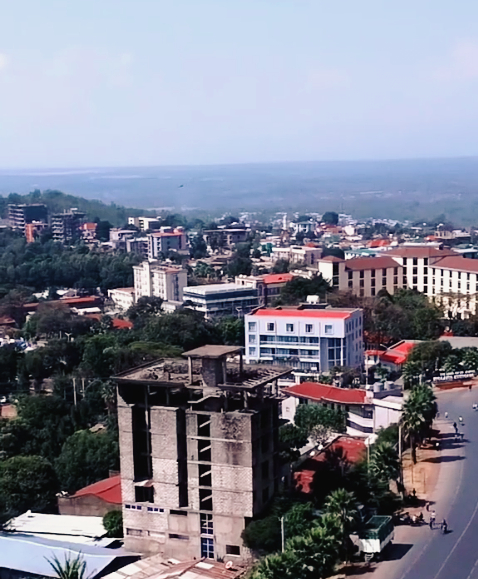
Sodo (Amharic: ሶዶ) or officially Wolaita Sodo (Amharic: ወላይታ ሶዶ, Wolaytta: Wolaytta Sooddo) is a city in south Ethiopia. The city is a political and administrative center of the Wolaita Zone and South Ethiopia Regional State. It has a latitude and longitude of 6°54′N 37°45′E / 6.900°N 37.750°E with an elevation between 1,600 and 2,100 metres (5,200 and 6,900 feet) above sea level. It was part of the former Sodo woreda which included Sodo Zuria which completely surrounds it.
Key Information


.svg)


Sodo is a center of major health and education institutions in Ethiopia. Soddo Christian Hospital has one of the 10 surgical training centers in Africa. The hospital provides a full range of medical, and surgical services, including Orthopedic and General, Maternity, and Pediatrics. Wolaita Sodo University Teaching Referral Hospital is also located in this town and it serves around two million people. The total number of beds in the hospital was 200; out of which 60 beds were in Obstetrics and Gynecology department.
Sodo's amenities include digital and mobile telephone access, postal service, 24 hour electrical service, two banks, and a hospital.[3] Sodo is also the seat of the Roman Catholic Apostolic Vicariate of Sodo-Hosaena.
History
[edit]In the early 1930s, Sodo was described as the only locality in Wolaita district deserving to be called a town. It had a Saturday market, a telephone line to the capital, and a weekly mail courier. Italian ground troops captured Sodo on 27 January 1937; it was there that two Italian generals with their divisions – Liberati with his 25th Division, and Bacarri with his 101st Division – surrendered on 22 May 1941, after a minimum of resistance. The British also captured the remnants of the 21st Division, who had escaped around the north end of Lake Abijatta. The loot included more than 4,000 officers and men, 6 medium tanks, 4 light tanks, 100 machine guns, ammunition and supplies.[4]
By 1958 Sodo was one of 27 places in Ethiopia ranked as First Class Township. A branch of the Commercial Bank of Ethiopia was established between 1965 and 1968.[4] The administrator of Sodo Zuria woreda and one-time student activist, Melaku Gebre Egziahber, was arrested in 1975 for encouraging peasants and the urban poor to rise up against "exploiters" in the town.[5] In 1984, a refugee camp was established in the town for the victims of that year's famine.[4]
On 6 November 1999, police arrested two teachers in Sodo for objecting to the use of a new language in school textbooks. Student demonstrations against the arrests led to widespread week-long protests and riots. Special police units were brought in to suppress the demonstrations, and killed as many as 10 people, injured hundreds and arrested up to 1,000 others. A former YMCA camp outside Sodo was used as a temporary detention facility for hundreds of demonstrators.[6]
Prior to the Ethiopian 2005 General Elections, Amnesty International reports that some members of the United Ethiopian Democratic Forces political party were amongst 200 people reportedly detained under vagrancy laws in Sodo on 22 February 2005. Amnesty International included this incident as one of a series of government intimidation of opposition party activists.[7]
Demographics
[edit]Based on the 2007 Census conducted by the CSA, this city has a total population of 76,050, of whom 40,140 are men and 35,910 women. The majority of the inhabitants were Ethiopian orthodox tewahido, with 54.60% of the population reporting that belief, 38.43% practiced Protestant or pintay, 4.76% were Muslim, and 1.28% were Catholic. [8] The 1994 national census reported this city had a total population of 36,287 of whom 18,863 were men and 17,424 were women.[9]
Education
[edit]Established in 2007, Wolaita Sodo University (WSU) is a non-profit public higher education institution located in Sodo. WSU offers courses and programs leading to officially recognized higher education degrees in several areas of study. The university has campuses in different areas, including Dawuro Tarcha Campus. The city has numerous secondary schools of which the prominent ones are Wolaita Sodo Secondary & preparatory school, Bogale Walelu Secondary and Preparatory School and Wolaita Liqa School.
Transportation
[edit]Sodo is served by an airport. A 166-kilometre (103 mi) road connecting Sodo with Chida, whose construction had started in 1994, was completed by early 1999. Featuring an 80-metre (260 ft) Bailey bridge across the Omo river and five other bridges, this road cost 255 million Birr, and reduced the distance between Awassa and Mizan Teferi to 400 kilometres (250 mi).[10] According to the SNNPR's Bureau of Finance and Economic Development, as of 2003[update]
Sport
[edit]Wolaitta Dicha S.C. is an Ethiopian football club based in Sodo. The club now is playing premier league which is first level division. The club won their first domestic cup in 2017, and qualified for the 2018 CAF Confederation Cup, in which the club beat Zamalek SC and passed to the quarter-final. Wolaita Dicha Men Volleyball Team which is known in Ethiopian volleyball competition is also based on this city.
Sodo Kenema S.C. is an Ethiopian football club based in Sodo. The club now is playing super league which is second level division.
Wolaita Sodo University women's volleyball club is also based in this city. The club was established in 2020 and it was founded by Debrework Tesfaye and his colleagues teaching in Wolaita Sodo University department of Sport Science. The club won the Ethiopian Volleyball Federation knockout tournament in the same year and automatically qualified for CAVB women's club championship in 2021. The club also finished the league as a runner up in the same season. The club then won Ethiopian Women's Volleyball premier League in 2022.
The 30,000-capacity Sodo Stadium is located in Sodo. It is the largest sports venue by capacity in the city.
Climate
[edit]Located in the tropics at high altitude, Sodo possesses a well-moderated Subtropical highland climate (Koppen Cwb), with a pronounced pattern of wet summers and dry winters. Despite being located in the Northern Hemisphere, Sodo is actually cooler in the "summer" than the "winter" due to much higher rainfall in the high-sun season, a phenomenon common to Sodo's region.
| Climate data for Sodo, elevation 2,020 m (6,630 ft) | |||||||||||||
|---|---|---|---|---|---|---|---|---|---|---|---|---|---|
| Month | Jan | Feb | Mar | Apr | May | Jun | Jul | Aug | Sep | Oct | Nov | Dec | Year |
| Mean daily maximum °C (°F) | 29.1 (84.4) |
29.7 (85.5) |
28.8 (83.8) |
28.1 (82.6) |
26.3 (79.3) |
24.2 (75.6) |
22.0 (71.6) |
22.5 (72.5) |
25.5 (77.9) |
27.2 (81.0) |
29.2 (84.6) |
29.0 (84.2) |
26.8 (80.3) |
| Daily mean °C (°F) | 21.2 (70.2) |
21.8 (71.2) |
21.3 (70.3) |
20.7 (69.3) |
19.7 (67.5) |
18.6 (65.5) |
17.2 (63.0) |
17.3 (63.1) |
19.2 (66.6) |
20.1 (68.2) |
21.1 (70.0) |
21.0 (69.8) |
19.9 (67.9) |
| Mean daily minimum °C (°F) | 13.3 (55.9) |
14.0 (57.2) |
13.8 (56.8) |
13.5 (56.3) |
13.1 (55.6) |
12.8 (55.0) |
12.3 (54.1) |
12.1 (53.8) |
12.8 (55.0) |
12.8 (55.0) |
13.0 (55.4) |
12.8 (55.0) |
13.0 (55.4) |
| Average precipitation mm (inches) | 29 (1.1) |
39 (1.5) |
86 (3.4) |
147 (5.8) |
156 (6.1) |
150 (5.9) |
218 (8.6) |
187 (7.4) |
123 (4.8) |
130 (5.1) |
42 (1.7) |
26 (1.0) |
1,333 (52.4) |
| Average relative humidity (%) | 62 | 60 | 65 | 75 | 77 | 80 | 80 | 77 | 81 | 71 | 70 | 58 | 71 |
| Source: FAO[11] | |||||||||||||
Twin towns
[edit]
Notable people
[edit]- Chernet Gugesa, an Ethiopian professional who plays for Ethiopian Premier League club Saint George and the Ethiopia national team
- Dagato Kumbe Former Wolaita Zone chief administrator and currently deputy commissioner of Ethiopian Investment Commission.
- Getahun Garedew (Dr), former state minister of ministry of Education Ethiopia
- Hailemariam Desalegn, former Prime Minister of Ethiopia who served from August 2012 until April 2018. He was also Governor of the Southern Regional State for six years..
- Samuel Urkato, Minister of Science and Higher Education, Ethiopia.[13]
- Teshome Toga (ambassador), is politician
- Senait Mario (Dr), International fashion Designer and Model, Founder of Da Mario's Fashion and Technology institute,Addis Abeba, Ethiopia, Former Founder of one peace fashion, italy, Senait Mario stokes up African pride with travel fashion show[14]
References
[edit]- ^ "sub administrations". sodo.gov.et.
- ^ "-Population size of Sodo city by census years | Download Scientific Diagram".
- ^ "Detailed statistics on hotels and tourism" Archived 2011-05-31 at the Wayback Machine, Bureau of Finance and Economic Development website (accessed 4 September 2009)
- ^ a b c [1][permanent dead link]
- ^ Marina and David Ottaway, Ethiopia: Empire in Revolution (New York: Africana Publishing, 1978), p. 125
- ^ "Ethiopia: Country Reports on Human Rights Practices", Bureau of Democracy, Human Rights, and Labor, US State Department (accessed 8 July 2009)
- ^ "Ethiopia: The 15 May 2005 elections and human rights - recommendations to the government, election observers and political parties", Amnesty International website, Report AFR 25/002/2005 (accessed 20 May 2009)
- ^ Census 2007 Tables: Southern Peoples, Nations and Nationalities Region, Tables 2.1, and 3.4.
- ^ "Population and Housing Census 1994 – SNNPR Region" (PDF). Ethiopian Statistical Agency. 1994. Retrieved 31 May 2022.
- ^ "Horn of Africa, Monthly Review, December '98-January '99", UN-OCHA Archive (accessed 23 February 2009)
- ^ "World-wide Agroclimatic Data of FAO (FAOCLIM)". Food and Agriculture Organization of United Nations. Retrieved 22 June 2025.
- ^ "Wolaita Sodo establishes sister city network with Bracciano". Ethiopian press agency. 7 July 2024.
- ^ "H.E. Dr Samuel Urkato". Aogeac.com. 30 August 2019. Archived from the original on 16 January 2021. Retrieved 8 December 2020.
- ^ "Tribune Online".
External links
[edit]

.svg)
Geography
Location and physical features
Wolaita Sodo is located in the Wolaita Zone of the South Ethiopia Region, at coordinates approximately 6°54′ N latitude and 37°46′ E longitude.[10] The city sits at an average elevation of 1,873 meters above sea level, with topography varying from 1,840 to 2,340 meters, featuring relatively flat areas in the southern parts and undulating terrain overall.[11] It lies along the western margin of the East African Rift Valley, bordered by woredas such as Sodo Zuria, Damot Gale, Damot Sore, and Boloso Sore within the Wolaita Zone.[12][13] The region's soils, including lateritic types with high dry strength and compositions dominated by Ultisols, Inceptisols, and Nitisols, support agricultural productivity due to their fertility in the area's reddish-brown profiles.[14][15] Land use has shifted markedly, with built-up urban area expanding from 8.9% of the landscape in 1985 to 32% by 2016, reflecting a 216.8% increase at an average rate of 8.4 hectares per year, primarily converting agricultural and vegetated lands.[16] Positioned 390 kilometers south of Addis Ababa and 167 kilometers southwest of Hawassa, Wolaita Sodo serves as a key node in southern Ethiopia's road network, facilitating connectivity via highways linking to the national capital and regional centers like Arba Minch, with travel times around 5-6 hours to Addis Ababa by bus.[17][18][19]Climate
Sodo exhibits a subtropical highland climate (Köppen classification Cwb), marked by moderate temperatures and significant seasonal rainfall variations due to its elevation of approximately 1,900 meters. Average annual precipitation totals around 1,125 mm, distributed across roughly 158 rainy days, with the highest monthly amounts exceeding 200 mm in July and August.[20] Temperatures remain relatively consistent year-round, with mean daily highs ranging from 22°C to 25°C and lows between 12°C and 15°C, yielding an annual average of about 18°C; extremes rarely surpass 28°C or drop below 10°C.[20][21] The region's rainfall follows a bimodal pattern typical of Ethiopia's southern highlands, featuring a short wet season (belg) from March to May, contributing about 20–30% of annual totals, and a longer main season (meher) from June to September, accounting for the majority. Dry periods dominate from October to February, with minimal precipitation under 20 mm monthly, occasionally leading to water stress despite the overall temperate conditions. This variability, with coefficients of variation around 25–30% in seasonal rains, influences local hydrology and soil moisture retention.[22][23] These climatic features underpin Sodo's agriculture, where enset (Ensete ventricosum), a perennial crop tolerant to intermittent droughts and poor soils, forms a resilient staple, supporting food security amid rainfall fluctuations through its ability to store water in pseudostems. In contrast, rain-fed cereals like maize and teff, planted primarily during meher, show vulnerability to delayed onsets, shortened durations, or intense events causing flooding, which can reduce yields by 20–40% in deficit years based on historical patterns. Enset's drought resistance thus buffers against belg failures, while cereals demand timely meher rains for optimal growth.[24][25]History
Early settlement and pre-20th century
The region surrounding modern Sodo, situated in the fertile highlands of southern Ethiopia, exhibits evidence of early human habitation dating back to the Late Pleistocene period. Archaeological excavations at Mochena Borago rockshelter, located on the western slope of Mount Damota near Sodo, have uncovered flaked stone artifacts from deposits associated with Oxygen Isotope Stage 3, spanning approximately 60,000 to 43,000 years ago, indicating hunter-gatherer activities in a landscape of wooded grasslands and riverine environments.[26] These findings represent some of the earliest documented technological adaptations in the Ethiopian highlands, though no permanent settlements or monumental structures from this era have been identified, consistent with mobile foraging economies.[27] By the mid-Holocene, around 5,000 to 4,000 years ago, the area's environment shifted toward more humid conditions suitable for intensified plant use, as evidenced by pollen and faunal remains from Mochena Borago suggesting exploitation of wild resources preceding domesticated agriculture.[28] Settlement patterns in the Wolaita highlands, including the Sodo vicinity, transitioned to sedentary agrarian communities reliant on enset (Ensete ventricosum) cultivation, a starch-rich crop adapted to high-altitude terraces that supported dense populations through labor-intensive processing into food staples like kocho. Oral traditions and limited ethnoarchaeological correlations link these patterns to proto-Wolaita clans establishing villages in upland areas such as Damot Gale and Sodo Zuria, where soil fertility and defensibility favored clustered homesteads amid terraced fields.[8] Archaeological surveys note the scarcity of major ruins, with evidence primarily comprising defensive earthworks and megalithic stelae attributed to later kingdom phases rather than foundational settlements.[29] The Wolaita kingdom, encompassing the Sodo area, emerged as a centralized polity by the 16th century under the Tigrean Malla dynasty, founded by figures like Shuma Gibe, building on earlier clan-based structures traceable to at least the 13th century through dynastic lists preserved in local genealogies.[8] Kings known as kawo administered through hierarchical clans, enforcing tribute from enset-based agriculture and livestock, while fostering trade in ivory, hides, and iron tools along routes connecting to the Omo River valley and northern Ethiopian highlands. Interactions with neighboring groups, such as the Gamo and Dawro, involved both alliances for resource exchange and conflicts over grazing lands, as recorded in oral histories of raids and tribute demands, though empirical data on population sizes or exact trade volumes remain sparse due to reliance on unverified traditions.[30] This pre-colonial era featured no large urban centers at Sodo itself, which functioned as peripheral villages within the kingdom's core territories, underscoring a society oriented toward subsistence farming and localized authority rather than expansive infrastructure.[2]Establishment and growth under Ethiopian Empire
Following the conquest of the Kingdom of Wolaita by Emperor Menelik II's forces in 1894, which ended local independence after a prolonged and bloody resistance, Sodo emerged as a strategic military and administrative outpost in the newly incorporated southern territories.[2] This integration subordinated Wolaita's traditional governance structures to imperial authority, with appointed balabbats (local nobles loyal to the emperor) overseeing tribute collection and order enforcement, fostering initial settlement around Sodo as a garrison town to secure supply lines and suppress residual revolts.[31] By the early 20th century, under Menelik II and his successors, Sodo's role solidified as the administrative seat for the awrajja (district) encompassing Wolaita, driven by the empire's centralization policies that prioritized direct control over peripheral regions to prevent fragmentation.[32] Economic incorporation into the empire accelerated Sodo's growth, as centralized taxation and labor mobilization integrated local agriculture—primarily enset cultivation and cattle herding—into broader imperial trade networks, drawing migrants and merchants to the town despite ongoing tensions over lost autonomy.[2] Infrastructure developments, including rudimentary roads linking Sodo to northern highland centers like Addis Ababa, facilitated resource extraction and troop movements, contributing to relative stability by deterring localized uprisings through imperial garrisons and punitive expeditions.[33] This top-down governance model, while curtailing traditional Wolaita polities' self-rule, enabled population influx and urban nucleation around administrative functions, with Sodo serving as a hub for imperial officials by the 1920s and 1930s.[32] The Italian occupation from 1936 to 1941 disrupted this trajectory, with Sodo hosting enemy garrisons that exploited local resources, but post-liberation recovery under Emperor Haile Selassie in 1941 reinforced centralized authority and spurred reconstruction.[34] Selassie's administration reimposed imperial structures, including expanded road networks and tax reforms, which linked Sodo more firmly to national markets and promoted orderly expansion by quelling post-occupation unrest through loyalist appointees.[33] This era's emphasis on unified rule over ethnic particularism sustained Sodo's development as a stable administrative node, with growth attributable to enforced pacification rather than indigenous initiatives, until the 1974 revolution.[2]Post-1991 developments and ethnic federalism impacts
Following the 1991 overthrow of the Derg regime and the establishment of ethnic federalism under the Ethiopian People's Revolutionary Democratic Front (EPRDF), Wolaita Sodo transitioned into the administrative capital of the Wolaita Zone within the Southern Nations, Nationalities, and Peoples' Region (SNNPR), a structure designed to devolve power along ethnic lines but which has often intensified inter-group competitions for resources and autonomy.[35] This federal arrangement facilitated initial administrative decentralization, enabling local governance tailored to Wolaita identity, yet it sowed seeds for fragmentation by institutionalizing ethnicity as the basis for territorial claims, leading to recurrent demands for further subdivision.[36] Urban expansion accelerated post-1991, driven by improved road connectivity and regional investment, with the city's built-up area expanding from 8.9% of its periphery in 1985 to 32% by 2016—a 216.8% increase in annual growth rate—correlating with population influx from rural Wolaita areas and neighboring zones.[16] Land-use analyses from Landsat imagery confirm continued sprawl into 2023, converting agricultural and peri-urban lands into residential and commercial zones, though this growth has been uneven, constrained by ethnic-based land disputes and inadequate planning under federalism's decentralized yet under-resourced framework.[37] Ethnic federalism's emphasis on self-determination fueled Wolaita statehood campaigns, culminating in massive protests in Sodo on May 28, 2019, where hundreds of thousands demanded separation from SNNPR to form an independent region, reflecting broader dissatisfaction with perceived dominance by larger ethnic groups in shared administrations.[38] These demands escalated into violence, including 2018 retaliatory clashes in Sodo triggered by Sidama statehood agitations, which killed at least 15 amid riots across southern towns, and 2020 confrontations between protesters and security forces in Sodo and Boditi that resulted in dozens of deaths, underscoring how federalism's ethnic boundaries have causal links to localized conflicts over territory and political control rather than resolving them.[39][40] Such instability disrupted urban planning and investment, stalling sustained growth despite the 2021 formation of the South Ethiopia Region, which incorporated Wolaita Zone but failed to quell subdivision pressures.[41] Recent infrastructure efforts, including 2025 corridor development projects in seven South Ethiopia urban centers—prioritizing zonal hubs like Sodo for enhanced connectivity and economic corridors—alongside Wolaita Sodo University's campus expansions via ongoing site inspections, signal attempts at modernization amid federal restructuring.[42][43] However, persistent ethnic tensions have delayed these initiatives, with conflict-induced displacements and protests exemplifying federalism's unintended consequence of prioritizing identity-based mobilization over cohesive development, as evidenced by post-1991 patterns of violence correlating with statehood bids across southern Ethiopia.[44]Government and politics
Administrative structure
Wolaita Sodo functions as the administrative capital of the Wolaita Zone, which is one of the zones comprising the South Ethiopia Regional State, coordinating zone-level governance while integrating with regional administrative centers.[45][46] The city administration operates under a structured framework including a mayor's office, city council, and various sectoral cabinets responsible for services such as health, justice, and urban planning, as outlined on the official city government portal.[47][48] At the local level, the city is subdivided into kebeles, the foundational units of Ethiopia's decentralized system, tasked with implementing policies on community services, dispute resolution, and basic infrastructure maintenance; however, empirical assessments indicate persistent shortfalls in genuine local input, with decision-making often dominated by top-down directives from zone and regional authorities, limiting participatory governance despite constitutional decentralization aims.[17][49] The current mayor, Firew Moges Motta, holds office from 2024 to 2026, overseeing executive functions amid these structural constraints.[50] Recent administrative efforts include participation in Ethiopia's 2025 urban corridor development program, which targets infrastructure enhancements in Sodo and six other cities through federal and regional funding, exemplifying centralized initiative rollout with local execution but highlighting dependencies on higher-level approvals for resource allocation and project prioritization.[51][52] These programs, such as market rehabilitation in Merkato Kebele, underscore bureaucratic coordination but also reveal practical limitations in fiscal autonomy, as local budgets remain heavily influenced by zonal and regional transfers rather than independent revenue generation.[53]Political movements and ethnic tensions
In the 2010s, Wolaita identity movements gained momentum amid demands for a separate regional state, distinct from the South Ethiopia Regional State formed in 2018 under ethnic federalism reforms. Activists and local officials argued that the Wolaita ethnic group, predominant in the zone with Sodo as its capital, met constitutional criteria for statehood based on population size, distinct identity, and territory, leading to organized campaigns including petitions and public rallies.[54] The Ethiopian Human Rights Commission documented these efforts as rooted in perceived marginalization within the broader Southern Nations, Nationalities, and Peoples' Region (SNNPR), where Wolaita resources and administrative influence were diluted.[55] Protests escalated in August 2020 following the arrest of over 20 Wolaita zone officials and activists by federal defense forces, triggering widespread demonstrations in Sodo and nearby towns like Boditi for autonomy. Security forces responded with lethal force, killing at least 10 people according to health officials, with estimates from local reports reaching 34 unarmed civilians; Amnesty International condemned the actions as excessive and called for independent investigations into the disproportionate use of live ammunition against protesters.[56] [57] These events highlighted government resistance to decentralization demands, as the central administration prioritized regional stability over ethnic self-determination claims, resulting in temporary halts to violence but unresolved grievances.[54] Ethnic tensions in Sodo manifested in retaliatory violence in June 2018, amid broader southern Ethiopia unrest following Sidama statehood agitations in Hawassa, with clashes in Wolaita Sodo leaving three dead and 10 injured due to inter-ethnic reprisals over perceived resource dominance and administrative boundaries.[58] Such incidents underscored how ethnic federalism incentivizes zero-sum competitions for land and local power, exacerbating conflicts rather than resolving them through inclusive governance. Youth mobilizations, particularly the Yelaga movement— a legally registered group advocating non-violent justice and equality—played a central role in sustaining these pressures, organizing against perceived elite capture of federal structures and low grassroots participation in decision-making.[54] Critics, including local analysts, attribute persistent instability to federalism's design flaws, which prioritize ethnic homelands but foster exclusionary politics and fail to accommodate hybrid identities or economic interdependencies in zones like Wolayta.Economy
Primary sectors: Agriculture and trade
Agriculture in the Wolaita Sodo region centers on enset (Ensete ventricosum), a drought-resistant perennial crop that forms the dietary staple for local populations, yielding products like kocho (fermented bread) and bulla (dried starch) to sustain high rural densities exceeding 1,000 people per square kilometer in parts of Wolaita Zone.[59] This enset-based system promotes relative self-reliance in food production, supplemented by cash crops such as coffee, cassava, and root vegetables, which are cultivated on smallholder plots and marketed locally to generate income.[24][60] Sodo's markets serve as primary outlets for these goods, with prices fluctuating based on seasonal yields and demand for high-value items like coffee, though dependency on rainfall exposes output to variability.[5] Wolaita Sodo University advances agricultural practices through its College of Agriculture, which offers programs in crop production and extension services, including research on enset improvement and soil management.[61] In June 2023, the university signed a memorandum of understanding with the Ministry of Agriculture and the Chinese Academy of Agricultural Sciences to establish a joint center promoting sustainable energy technologies, such as efficient irrigation and mechanization, to boost yields and reduce post-harvest losses in enset and cash crop farming.[62] Sodo functions as a regional trade nexus, linking Wolaita producers to national markets via a 330-kilometer tarmac road to Addis Ababa, facilitating exports of livestock like beef cattle and surplus crops.[63] Local markets integrate with urban centers, showing price transmission from Sodo to Addis Ababa for commodities such as beef, though smallholder traders often rely on informal networks amid limited formal infrastructure.[64] The informal sector absorbs much of the trade-related employment, with microbusinesses in market vending and transport supporting livelihoods despite persistent urban youth unemployment challenges, as evidenced by 2024 analyses identifying skill mismatches and population pressures as key drivers.[65] Persistent land degradation, including soil erosion and nutrient depletion from intensive enset cultivation on slopes, undermines long-term productivity, with affected areas in Sodo District experiencing reduced crop viability.[66] The Sustainable Agricultural Value chain Innovation (SAVi) program has targeted restoration in these sites since around 2022, employing community-led reforestation and terracing to rehabilitate degraded lands, valuing ecosystem services like soil retention at levels supporting higher agricultural output.[66][67]Urbanization, infrastructure projects, and challenges
Wolaita Sodo has experienced rapid urbanization, driven primarily by rural-urban migration, leading to significant expansion of built-up areas from 8.9% of the city's spatial coverage in 1985 to 32% by 2016, with an average annual increase of 8.4 hectares.[16] This growth has been fueled by migrants seeking better economic opportunities, though many end up in informal sector employment, which constitutes about 35% of the urban workforce according to Ethiopia's Urban Employment Unemployment Survey.[68] Rural-urban migration has strained local resources, contributing to persistent challenges such as unemployment rates rising from 4% in 2000 to 5% in 2015, alongside housing shortages and inadequate service delivery in peri-urban areas.[69] Government-led infrastructure initiatives aim to address these pressures and support urban development. In 2025, corridor development projects expanded to Wolaita Sodo as part of a regional program in seven South Ethiopia administrative cities, involving the construction of 41 km of roads and other urban enhancements to improve connectivity and economic corridors.[42] Road upgrading efforts include the Sodo-Sawla segment under the Ethiopia Integrated Transport Program Phase I, which rehabilitates 240 km of existing roads to enhance transport links.[70] Additionally, a waste-to-energy biogas plant with a 300-cubic-meter capacity was inaugurated at Wolaita Sodo University in May 2025 through a South-South partnership facilitated by the UNDP, targeting municipal solid waste conversion to power amid high generation rates of 0.47 kg per capita per day.[71][72] Despite these projects, challenges persist, with empirical evidence indicating uneven benefits from urbanization. Migrants often face livelihood difficulties, including limited access to formal jobs and exacerbated poverty in informal settlements, as rural out-migration does not consistently translate to improved household outcomes.[73] Infrastructure gaps, such as physical and social service deficiencies, continue to hinder sustainable growth, with critiques highlighting that early-stage corridor works have yet to demonstrably alleviate migration-induced pressures like waste management inefficiencies and urban land conflicts.[50][74] These developments underscore a reliance on government interventions, but outcomes remain contingent on addressing root migration drivers and ensuring equitable resource distribution beyond initial projections.Demographics
Population trends and statistics
The population of Wolaita Sodo, as recorded in Ethiopia's 1994 national census by the Central Statistical Agency, stood at 76,050 residents.[75] Subsequent projections by the Ethiopian Statistics Service estimated growth to approximately 100,755 by the mid-2000s, reflecting sustained expansion driven by high fertility rates and internal migration.[75] By 2022, the projected urban population reached 204,121, indicating a compound annual growth rate exceeding 4% over the intervening decades.[3] Official data from the Wolaita Sodo City Administration attributes this trajectory to an average annual growth rate of 5.4%, fueled primarily by natural population increase—characterized by elevated birth rates in the region—and net in-migration from adjacent rural woredas seeking economic opportunities in trade and services.[17] Rural-to-urban influx has been particularly pronounced, with large-scale movement transforming peripheral kebeles into urban extensions and contributing to demographic pressures on housing and services.[76] Land use analyses corroborate these trends through measurable urban sprawl: satellite-derived assessments show the built-up area within and around Wolaita Sodo expanding from 8.9% of the study perimeter in 1985 to 32% by 2016, an overall increase of 216.8% at an average rate of 8.4 hectares per year.[76] This spatial growth aligns with population dynamics, as agricultural land conversion to residential and commercial uses accelerated post-1991 due to administrative expansions and improved connectivity, though it has strained peri-urban resources without corresponding infrastructure scaling in some areas.[37] Recent estimates from city socioeconomic surveys in 2023 continue to project upward momentum, with no verified slowdown amid ongoing regional stability challenges.[50]Ethnic and linguistic composition
The ethnic composition of Wolaita Sodo is overwhelmingly dominated by the Wolayta people, who constitute the vast majority of the population in the surrounding Wolaita Zone, reported at 96.31% in the 2007 Ethiopian national census.[77] [78] As the zonal capital and primary urban hub, Sodo exhibits slightly greater diversity than rural areas due to its role as an administrative and commercial center, drawing small minorities such as Amhara, Gurage, Hadiya, and Oromo individuals primarily for trade, education, and government employment.[79] These groups typically comprise under 4% collectively in the zone, with no recent census data indicating substantial shifts, though urban surveys of institutions like Wolaita Sodo University reflect proportional representation among students (e.g., Hadiya at 17%, Oromo at 13.5%, Gurage at 11.5%, and Wolayta lower in sampled cohorts due to regional enrollment).[79] Linguistically, Wolaytta (also spelled Wolaytato), a North Omotic language, is the mother tongue of the predominant Wolayta population and serves as the zonal official language, facilitating local administration, education, and cultural expression.[80] Amharic, Ethiopia's federal working language, is widely used in urban settings for inter-ethnic communication, commerce, and official proceedings, while minority languages like those of Gurage or Oromo are spoken in pockets corresponding to those communities.[80] Census data from 2007 underscore this homogeneity, with Wolaytta as the primary language aligning closely with ethnic distributions. Ethiopia's ethnic federalism, implemented since 1991, has heightened assertions of Wolayta identity through demands for zonal autonomy or statehood, leading to protests in Sodo (e.g., large-scale marches in 2019 and standoffs in 2020) that occasionally resulted in localized displacements and security interventions.[81] However, verifiable data on federalism-driven migrations show no large-scale ethnic reconfiguration in Sodo; instead, broader rural-urban influxes from within the zone—driven by land scarcity, population pressure, and climate factors—have incrementally diversified the town without eroding the Wolayta core, as migrants are predominantly co-ethnics seeking economic opportunities.[82] [73] This pattern contrasts with more volatile inter-zonal conflicts elsewhere in southern Ethiopia, preserving relative ethnic stability amid gradual homogenization erosion from urbanization.[83]Society
Education and institutions
Wolaita Sodo University, established in 2007 as one of Ethiopia's second-generation public universities, serves as the primary higher education institution in the city, emphasizing teaching, research, and community service with a focus on agriculture and technology.[84] The university offers programs across colleges including agriculture, engineering, business and economics, education, and health sciences, with aspirations to become a technology-driven center of excellence in agriculture by 2030.[84] It achieved its 2022 vision of positioning itself as a center of agricultural excellence driven by technology through initiatives in research and innovation.[85] As of 2025, enrollment includes approximately 13,571 undergraduate students in regular programs, 2,694 graduate students in regular programs, and over 21,000 in extension programs.[86] The university supports doctoral-level research relevant to local needs, such as a September 2025 public dissertation defense in the PhD program in Rural Development at the College of Agriculture, addressing topics like land degradation and multidimensional poverty in rural contexts.[87] It maintains six PhD programs, including in rural development and agricultural economics, contributing to evidence-based advancements in regional development.[88] Primary and secondary education in Wolaita Sodo faces challenges in maintaining quality amid rapid urbanization and resource constraints, with the city administration reporting approximately 40% literacy among the population as of 2024 estimates.[50] Enrollment in secondary and preparatory schools includes around 2,181 male and 4,685 female students, reflecting gender disparities in access and outcomes.[89] Private primary schools encounter investment hurdles, including inadequate infrastructure and teacher training, which undermine educational quality despite growing demand from urban expansion.[90] Overall, while access to schools has expanded, persistent issues like student-teacher ratios and financial inefficiencies limit literacy gains and skill development.[91]Health services and social issues
Wolayta Sodo hosts several key health facilities, including the 140-bed Soddo Christian Hospital, established in 2005 as a general hospital with specialties in family medicine, orthopedics, obstetrics/gynecology, pediatrics, and intensive care.[92] The Wolaita Sodo University Comprehensive Specialized Hospital, originally founded in 1928 as the Ottona clinic by the Sudan Interior Mission and later expanded, serves as a referral center under the university's College of Health Sciences and Medicine, overseeing eight primary hospitals and four health centers in the zone.[93] Grace Hospital operates as a primary care institution staffed by specialist physicians.[94] Despite these, modern health service utilization remains suboptimal in Sodo town, with studies highlighting barriers like access and awareness.[95] Disease burdens persist, including high pulmonary tuberculosis (PTB) prevalence among homeless populations in Wolaita Zone towns, where a 2025 cross-sectional study reported significant rates linked to factors such as overcrowding and poor nutrition, underscoring gaps in targeted screening and treatment for urban vulnerable groups.[96] Soil-transmitted helminth infections have shown some decline through interventions like the Geshiyaro project, but baseline prevalence remains notable in rural-urban interfaces.[97] Rodent infestations exacerbate health risks, particularly in informal settlements and riverine areas like Bashir Riverbanks, contributing to property damage, economic losses, and potential zoonotic threats amid dense urbanization, though specific outbreak data for 2025 is limited.[98] Social issues compound health challenges, with child trafficking endemic in Wolaita Zone as an origin area, where rural children—often girls—are exploited for labor in urban centers or beyond, driven by poverty and fewer resources for females; a 2025 study in Sodo revealed low community knowledge and attitudes hindering prevention.[99][100] Rural-urban migration to Sodo intensifies burdens, fostering unemployment, vulnerability to insecurity, and mental health issues like depression among young female migrants, alongside multi-dimensional poverty that strains public health resources.[101][102] Family planning services face empirical gaps, with modern contraceptive utilization varying; a 2025 study in Wolaita Zone found lower rates among women with disabilities, while post-abortion uptake remains inconsistent due to myths and access barriers, contributing to unmet needs despite national efforts.[103][104] Systemic failures, evident in high vulnerability among migrants and trafficked children without robust data-driven interventions, highlight the need for evidence-based expansions beyond existing facilities.Culture, religion, and traditions
The Wolayta people of Sodo maintain traditions centered on enset (Ensete ventricosum), a staple crop processed into fermented foods like kocho and bulla, which symbolize sustenance and are integral to rituals including births, weddings, funerals, planting, and harvesting ceremonies.[105] These practices underscore enset's role as a "tree of life" in Wolayta social and economic life, with dishes such as godeta uncca (a bread-like preparation) and bacciraa prepared for communal events.[106] Traditional cuisine emphasizes these enset-derived items, often paired with meats or greens during gatherings, reflecting agrarian self-reliance amid environmental constraints.[107] Annual festivals like Gifaataa, celebrated from late September to early October, mark the Wolayta New Year with feasting on special foods such as bacciraa and muchchuwaa, accompanied by dances and communal unity rituals that affirm cultural identity.[107] These events, rooted in pre-Christian agrarian cycles, persist despite influences from globalization and urbanization, which have diluted some communal observances by prioritizing modern holidays.[108] Religion in Sodo is dominated by Protestant Christianity, comprising approximately 70% of the population in recent surveys, with Ethiopian Orthodox adherents at around 21% and smaller Muslim and Catholic communities.[109] This Protestant majority, established through 20th-century missions, has reshaped local customs by emphasizing scriptural literacy and sobriety, often in tension with residual traditional spirit veneration or Orthodox liturgical practices. Interfaith frictions arise at shared sites, particularly cemeteries, where urban expansion has displaced gravesites, sparking disputes over land allocation and burial rights that pit community elders against municipal authorities.[110] Such conflicts highlight ongoing challenges in balancing denominational priorities with ancestral reverence. Cultural heritage preservation efforts include the Wolayta Sodo Museum, established in 2012 by Wolaita Sodo University to showcase artifacts from the historical Wolayta Kingdom, such as pottery, tools, and regalia, aiming to foster historical awareness amid rapid modernization.[111] However, demolitions for infrastructure have threatened material culture sites, prioritizing development over conservation and eroding tangible links to pre-colonial traditions.[112]Infrastructure
Transportation networks
Wolaita Sodo's transportation infrastructure centers on road networks, with seven primary gateway roads connecting the city to adjacent zones and regional states, facilitating access to major centers such as Hawassa, Arbaminch, and Addis Ababa.[113] These routes serve as critical arteries for passenger and freight movement, though chronic underinvestment has led to frequent bottlenecks, including potholes and seasonal flooding that disrupt trade flows.[114] Public transportation is overseen by the Wolayta Sodo Public Transport and Road Development Office, which coordinates bus services and minibuses (commonly known as Hiace vehicles) operating from central terminals to local and intercity destinations.[115] Commuter surveys indicate moderate satisfaction with availability but highlight issues like overcrowding and unreliable schedules, exacerbating delays in goods transport to markets.[116] The city lacks dedicated rail lines or an airport, forcing reliance on distant facilities—such as Arbaminch Airport, approximately 100 km away— which increases logistics costs and limits rapid commerce.[117] Recent infrastructure enhancements, including corridor development projects initiated in early 2025, have targeted urban roads in merkato areas, improving drainage and paving to alleviate congestion around commercial hubs.[52] [118] These upgrades aim to enhance connectivity for trade but face challenges from high maintenance demands on gravel and asphalted surfaces, underscoring ongoing vulnerabilities in the network.[119]Utilities and urban development
Wolaita Sodo's water supply system, operated by the Wolaita Sodo Water Supply and Sewerage Enterprise, provides intermittent service to urban households, with coverage limited by aging infrastructure, frequent breakdowns, and insufficient production capacity from sources like boreholes and springs. A 2019 assessment identified major challenges including inadequate metering, illegal connections, and low revenue collection, resulting in service gaps affecting peri-urban areas. Access to improved drinking water stands at approximately 68% in the town, lower than national urban averages, compounded by contamination risks from poor sanitation integration. Electricity distribution in Wolaita Sodo relies on the Ethiopian Electric Power network, with the town serving as a key substation hub for regional export via the 1,045 km Ethiopia-Kenya HVDC interconnector operational since 2024, enabling power sharing but straining local grids during peak demand. Distribution challenges include voltage instability across 34 buses in the network and load imbalances, addressed through static var compensator installations that improved profiles by up to 10% in simulations, though rural-urban coverage gaps persist with only partial electrification in surrounding kebeles. Solid waste management covers basic collection in central areas but faces inefficiencies, with 35% of households relying on open dumping due to limited municipal capacity and low community participation. A South-South partnership, facilitated by UNDP, inaugurated a 300 cubic meter waste-to-energy biogas plant at Wolaita Sodo University on May 2, 2025, converting organic waste into electricity and biogas to mitigate landfill pressures amid urban growth. Urban development efforts include the Urban Institutional and Infrastructure Development Program (UIIDP), implemented with French Development Agency (AFD) support since the early 2020s, emphasizing capacity building for municipal institutions and basic infrastructure upgrades like roads and drainage to accommodate expansion. Housing shortages affect low-income groups, with informal settlements in sub-urban peripheries housing a significant portion of the 255,994 residents as of 2024, driven by rapid land-use changes that converted 15-20% of agricultural land to built-up areas between 1985 and 2020. These gaps in service reliability highlight tensions between population pressures and institutional constraints, with multidimensional poverty indices revealing deprivations in utilities for 40-50% of households.Environment and urban challenges
Environmental initiatives
The Sodo Community Managed Reforestation Project, initiated in 2006 and officially launched in 2009 by World Vision Ethiopia in collaboration with local communities in Sodo Woreda, Wolayta Zone, employs assisted natural regeneration (ANR) techniques to restore degraded lands. Covering an initial 503 hectares of montane forest areas, the project protects and regenerates native tree species through farmer-managed practices, such as pruning and protecting existing root stock, rather than planting new seedlings, which has proven cost-effective and scalable. By 2021, communities expanded the restored area by an additional 176 hectares, demonstrating sustained local stewardship and generating verifiable carbon sequestration benefits verified under international standards.[120][121] Building on the adjacent Humbo ANR project—which restored 2,724 hectares starting in the mid-1990s and became Africa's first community-based Clean Development Mechanism (CDM) initiative under the UN Framework Convention on Climate Change—the Sodo effort has similarly produced carbon credits traded on voluntary markets, providing dividend payments to participating households for forest protection. These credits, managed by partners like FORLIANCE, have funded community benefits including improved livelihoods and capacity building, with metrics showing enhanced soil fertility, water retention, and biodiversity recovery in restored sites. A 2022 Sustainable Asset Valuation (SAVi) assessment by the International Institute for Sustainable Development quantified the project's contributions, estimating annual ecosystem service values exceeding direct carbon revenues through gains in provisioning services like fodder and fuelwood.[122][123][124] As of 2025, the integrated Sodo-Humbo landscape restoration remains active, with World Vision supporting ongoing monitoring and expansion amid Ethiopia's national forest restoration goals, yielding protected area growth and measurable biodiversity indicators such as increased bird and mammal populations in regenerated montane ecosystems. Success is evidenced by third-party validations confirming over 1 million tons of CO2 sequestered across the combined projects, underscoring the efficacy of community-led ANR in addressing deforestation drivers like agricultural expansion while delivering economic incentives.[120][125]Pollution, pests, and sustainability issues
Noise pollution in Wolayta Sodo has intensified with urban expansion, primarily from vehicular traffic, construction activities, and religious institutions using loudspeakers, exceeding acceptable levels and contributing to health issues such as stress, hearing impairment, and sleep disturbances among residents.[126] [127] A 2022 study identified these sources as dominant, noting that inadequate enforcement of noise regulations exacerbates the problem, with daytime levels often surpassing 70 decibels in central areas.[126] Rodent infestations pose significant public health risks in Sodo, particularly in peri-urban and riverine zones where waste accumulation and poor sanitation prevail, fostering breeding grounds for pests that transmit diseases like leptospirosis.[98] Community-based assessments in early 2025 highlighted persistent rodent problems linked to unmanaged solid waste and flooding in low-lying areas, underscoring gaps in vector control amid rapid informal settlement growth.[98] Sustainability challenges stem from deforestation and land degradation surrounding Sodo, driven by urban sprawl converting agricultural and forested lands, with forest cover in nearby woredas like Duguna Fango declining by over 20% between 1986 and 2018 due to fuelwood demand and population pressures.[128] This has intensified soil erosion and reduced water retention, complicating urban water supply, as high population density—estimated at over 100,000 in the city proper—strains resources without corresponding infrastructure scaling.[16] Land use conflicts in expansion zones, including disputes between urban developers and farmers, further degrade environments through unregulated encroachment, reflecting mismanagement rather than isolated climatic factors.[74] Informal settlements amplify these risks, with inadequate planning leading to heightened vulnerability to flooding and contamination from untreated effluents.[37] Local responses have been critiqued for prioritizing short-term growth over long-term ecological capacity, perpetuating a cycle where overpopulation causality is evident in resource overuse patterns.[16]Sports and notable achievements
Local sports and facilities
Wolaita Sodo's sports landscape is dominated by football, with the Wolaita Sodo Stadium serving as the central multi-use facility for local matches and community events. The stadium primarily hosts games for professional and amateur clubs, contributing to youth engagement in a region marked by socioeconomic challenges.[129] The leading club, Wolaita Dicha SC, based in Sodo, competes in the Ethiopian Premier League and has achieved domestic success, including victory in the 2017 Ethiopian Cup final against Defence Force on penalties (4-2). This triumph marked the club's first major trophy and highlighted its role in local pride. The team, partly funded by regional authorities, draws significant community support and participates in continental competitions like the CAF Confederation Cup when qualified.[130][131] Other facilities remain limited, with academic assessments noting inadequate infrastructure across the Wolaita Zone, hindering broader event hosting and training despite growing participation in football leagues. Local amateur clubs and school programs emphasize football for social cohesion, though quantitative participation data is sparse.[129]International relations
Twin towns and partnerships
Wolayta Sodo maintains limited formal twin town agreements with international municipalities, with available records indicating a primary focus on domestic sister city pacts, such as the 2023 agreement with Sheger City for urban development collaboration.[132] International ties emphasize project-based partnerships through multilateral organizations and foreign entities, often centered on sustainable development rather than reciprocal municipal exchanges. These initiatives, while promoting capacity building, frequently yield modest tangible outcomes, such as pilot technologies with uncertain scalability due to local infrastructure constraints and dependency on external funding.[71] A notable example is the 2023 South-South cooperation between Ethiopia, China, and the United Nations Development Programme (UNDP), which established a 300-cubic-meter waste-to-energy biogas plant at Wolayta Sodo University to convert organic waste into power and fertilizer, aiming to enhance local innovation in circular economies.[71] The project included training for Ethiopian technicians on biogas operations, but evaluations highlight challenges in long-term maintenance and community adoption, questioning broader economic impacts beyond the facility's immediate scope.[133] Further cooperation involves knowledge exchange with international firms, including a mission by the Dutch engineering consultancy AcaciaWater to build local expertise in groundwater management and sanitation infrastructure.[134] Such engagements prioritize technical assistance over enduring institutional links, with benefits largely confined to short-term workshops and assessments rather than verifiable tech transfers or mutual economic gains. No evidence supports widespread reforestation or environmental NGOs yielding measurable ecological improvements specific to the city.Notable people
[Notable people - no content]References
- https://en.wikivoyage.org/wiki/Wolaita_Sodo