Hubbry Logo
South Wollo ZoneSouth Wollo ZoneMain
Open search
South Wollo Zone
Community hub
South Wollo Zone
logo
8 pages, 0 posts
0 subscribers
Be the first to start a discussion here.
South Wollo Zone
South Wollo Zone
from Wikipedia
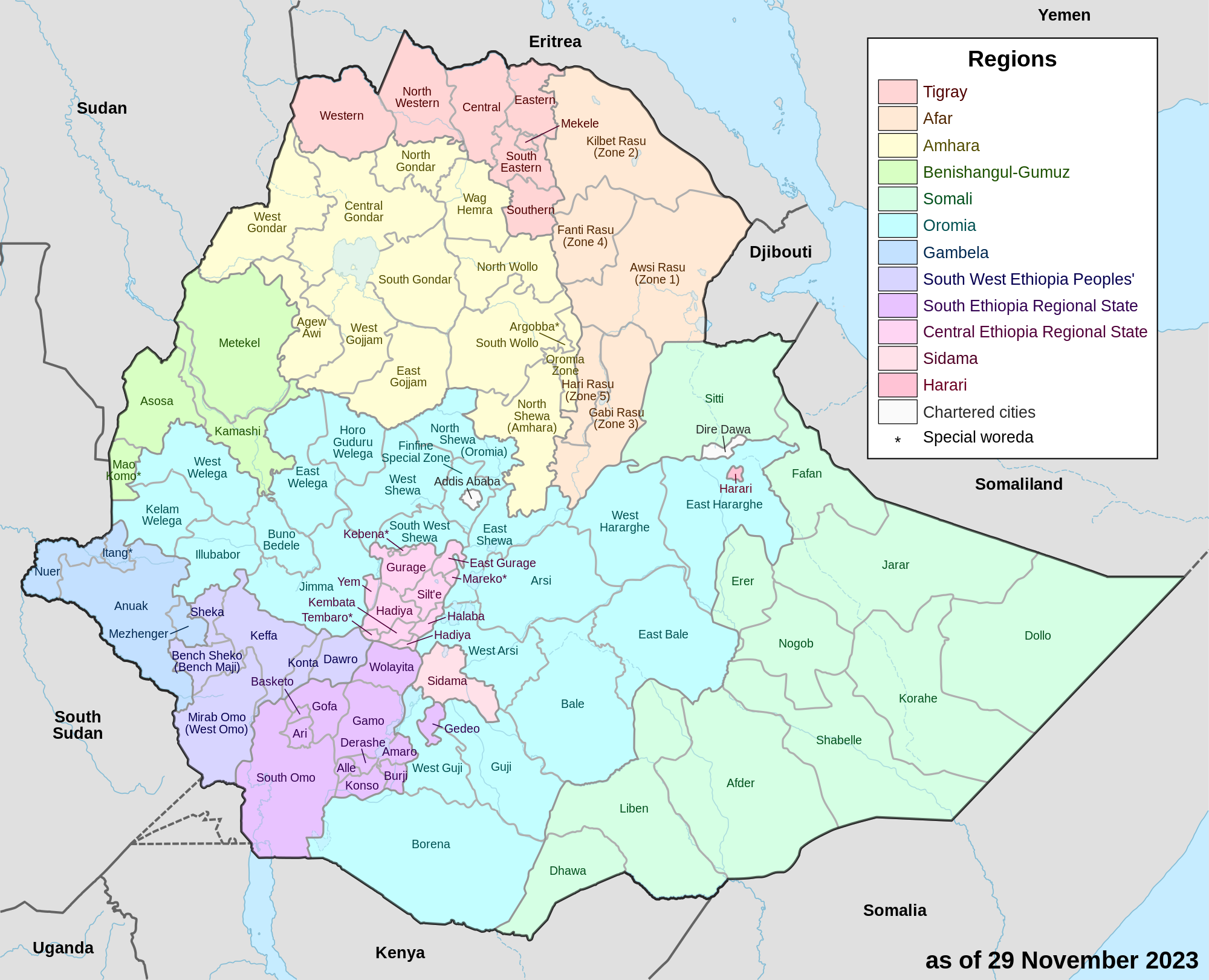
Map of the regions and zones of Ethiopia

Key Information

South Wollo (Amharic: ደቡብ ወሎ) is a zone in the Amhara Region of Ethiopia. It acquired its name from the former province of Wollo. South Wollo is bordered on the south by North Shewa and the Oromia Special Zone (Amhara), on the west by East Gojjam, on the northwest by South Gondar, on the north by North Wollo, on the northeast by Afar Region, and on the east by the Oromia Special Zone and the Argobba special woreda. Its highest point is Mount Tabor in Amhara Sayint, 4247 meter above sea level. Cities in South Wollo include Kombolcha, Hayq, Dessie, Wuchale, Wogel Tena and Wurgessa.

On 24 August 2009 Zonal authorities announced that approximately 540 safe water units were constructed during the past Ethiopian budget year at a cost of over 23 million birr, while another 878 units were repaired. This has improved the access to safe water from 51% to 61% of the Zone's inhabitants.[2]

Demographics

[edit]

Based on the 2007 Census conducted by the Central Statistical Agency of Ethiopia (CSA), this Zone has a total population of 2,518,862, an increase of 18.60% over the 1994 census, of whom 1,248,698 are men and 1,270,164 women; with an area of 17,067.45 square kilometers, South Wollo has a population density of 147.58. While 301,638 or 11.98% are urban inhabitants, a further 3 individuals were reported to be pastoralists. A total of 1598,447 households were counted in this Zone, which results in an average of 4.21 persons to a household, and 1574,378 housing units. The largest ethnic group reported in South Wollo was the Amhara (96.33%); all other ethnic groups made up 3.67% of the population. Amharic is spoken as a first language by 98.65%; the remaining 1.35% spoke all other primary languages reported. 65.89% were Muslim, and 34.11% of the population said they practiced Ethiopian Orthodox Christianity.[3]

The 1994 national census reported a total population for this Zone of 4,123,803 in 498,480 households, of whom 2,047,512 were men and 2,076,291 women; 1,210,291 or 9.9% of its population were urban dwellers at the time. The two largest ethnic groups reported in South Wollo were the Amhara (96.68%), and the Oromo (2.78%); all other ethnic groups made up 0.54% of the population. Amharic was spoken as a first language by 96.45%, and 3.13% spoke Oromiffa; the remaining 0.42% spoke all other primary languages reported.

According to a May 24, 2004 World Bank memorandum, 13% of the inhabitants of South Wollo have access to electricity, this zone has a road density of 76.1 kilometers per 1000 square kilometers (compared to the national average of 30 kilometers),[4] the average rural household has 0.7 hectare of land (compared to the national average of 1.01 hectare of land and an average of 0.75 for the Amhara Region)[5] and the equivalent of 0.6 heads of livestock. 10.6% of the population is in non-farm related jobs, compared to the national average of 25% and a regional average of 21%. 63% of all eligible children are enrolled in primary school, and 12% in secondary schools. 45% of the zone is exposed to malaria, and none to tsetse fly. The memorandum gave this zone a drought risk rating of 557.[6]

Notes

[edit]
[edit]
Revisions and contributorsEdit on WikipediaRead on Wikipedia
from Grokipedia
South Wollo Zone is an administrative division within the of northern , covering an area of 17,067.45 square kilometers and characterized by a diverse highland landscape that supports mixed crop-livestock as its economic backbone. With a of approximately 177 people per square kilometer, the zone had an estimated 3,023,346 residents as of the 2023/24 projection by Ethiopia's , predominantly rural and engaged in subsistence farming. Its capital, , serves as a key urban center located about 401 kilometers north of , facilitating trade and administration across the zone's 20 woredas (districts) and 9 city administrations. Geographically, South Wollo is bordered on the south by North Shewa Zone and the Oromia Region, on the west by , on the northwest by South Gondar Zone, on the north by , on the northeast by the , and on the east by the Oromia Special Zone surrounding Finfinne and the Argobba special woreda. The terrain features rugged highlands, plateaus, and river valleys, with elevations reaching up to 4,247 meters at in the Amhara Sayint woreda, contributing to a that varies from temperate highlands to semi-arid lowlands in the east. This topography influences agricultural practices, where rain-fed farming predominates, though irrigation systems like ponds have been introduced in areas such as Tehuledere woreda to support perennial crops amid recurrent droughts and variability. Demographically, the zone is home to a majority Amhara population, with as the primary language, reflecting the broader ethnic composition of the . Religious diversity is notable, with practiced by about 70% of residents, particularly in the eastern and central areas, alongside significant Ethiopian Orthodox Christian communities, fostering a historical legacy of interfaith coexistence in the former . has strained land resources, leading to small average sizes of around 0.25-0.32 hectares per in densely populated woredas like Tehuledere, where densities exceed 290 persons per square kilometer. Economically, agriculture drives the zone's livelihood, with smallholder farmers cultivating staple cereals such as teff and sorghum, alongside cash crops like khat (Catha edulis) and livestock rearing of cattle, sheep, and goats—totaling over 1.4 million cattle heads alone. The mixed cereal-livestock system faces challenges from land scarcity, erratic rainfall, and recent conflicts, yet initiatives like urban productive safety nets in Dessie have aimed to bolster food security and income diversification through manufacturing and services; as of mid-2025, the zone hosts over 13,000 internally displaced persons due to ongoing regional conflicts. These elements underscore South Wollo's role as a vital agrarian hub in Ethiopia's northern highlands, balancing traditional practices with adaptive responses to environmental and social pressures.

Geography

Location and Borders

The South Wollo Zone is situated in the of northern , encompassing a central position within the country's northern highlands. Its geographic coordinates are approximately 11°00′N 39°15′E, placing it roughly 400 kilometers northeast of the national capital, . The zone shares borders with several administrative divisions, including North Shewa Zone to the south, the Oromia Special Zone and Argobba special woreda to the southeast, the to the east, to the north, South Gondar Zone to the northwest, and to the west. These boundaries position South Wollo as a key interface between the 's core highland territories and adjacent lowland and semi-arid areas. Covering a total area of 17,067.45 km², the zone serves as a transitional highland area bridging the central Ethiopian plateaus to the west and the eastern lowlands, facilitating ecological and cultural exchanges across these diverse landscapes. This expansive territory underscores its strategic importance in regional connectivity. South Wollo benefits from proximity to major transport routes, notably the Addis Ababa-Mekelle highway, which traverses the zone through key towns such as and , enhancing access to broader national and international networks.

Physical Features

South Wollo Zone is situated within the , featuring a diverse that includes rugged plateaus, steep escarpments, and deep river valleys. Elevations vary significantly, ranging from approximately 900 meters above in the eastern lowlands to over 4,200 meters in the western highlands, creating distinct agroecological zones from lowlands (kolla) to high plateaus (dega and wurch). This highland structure is primarily the result of extensive volcanic activity during the to epochs, forming a basaltic plateau that dominates the landscape. The zone's highest elevation is at 4,247 meters, located in Amhara Sayint woreda, representing a prominent peak within this volcanic highland terrain. Major hydrological features include the Borkena River, which originates from the northwestern high plateaus and flows southeastward through steep, mountainous areas before reaching flatter plains, serving as a key tributary of the Basin and contributing to local water flow dynamics. Lake Hayq, a volcanic lake in the central part of the zone, functions as an with no outlet, supporting regional and storage through its inflows from surrounding highlands. The climate is temperate highland, with average annual temperatures ranging from 15°C to 20°C, decreasing at higher elevations. Rainfall follows a bimodal pattern, with the main (kiremt) from to delivering the bulk of , averaging 600 to 1,400 mm annually across the zone—higher in the western highlands and lower in the east. Eastern areas are particularly prone to droughts due to arid influences from adjacent lowlands.

History

Early and Medieval Periods

The region historically known as , encompassing much of present-day South Wollo Zone, emerged as a core area of Amhara during the , serving as the cradle of the Amhara ethnic identity amid the consolidation of Semitic-speaking communities in the . This designation, meaning "House of the Amhara," reflected its role as a political and cultural hub where language and traditions solidified, distinguishing it from neighboring Cushitic-influenced areas. By the late , Bete Amhara had become synonymous with the resurgence of centralized Christian authority, laying the foundations for enduring Amhara cultural prominence. The establishment of the under Emperor (r. 1270–1285) marked , particularly around Lake Hayq, as the political epicenter of medieval , where , a local lord from the Ambassel area, overthrew the Zagwe rulers to restore the claimed Solomonic line. Lake Hayq served as a key religious and strategic site, hosting early imperial courts and fostering alliances between the and the Ethiopian Orthodox Church. Medieval Christian institutions flourished in the region, exemplified by the founding of the Hayq Estifanos Monastery in the 13th century by Abba Iyasus Mo'a, which became a renowned center for monastic learning, manuscript production, and spiritual influence, underscoring South Wollo's status as a bastion of Orthodox heritage. Rock-hewn churches and other ecclesiastical structures proliferated, symbolizing the zone's deep integration of faith and governance. Local rulers, such as the Tsahife Lam—the governor of and the emperor's chief military deputy—and the Jantirar of Ambassel, who held hereditary authority over the dynastic heartland, reinforced this Christian-dominated order through administrative and defensive roles. The 16th century brought profound disruptions to South Wollo's Christian framework, beginning with Ahmad Gragn's jihad (1529–1543), during which his Adal forces systematically destroyed churches, monasteries, and religious artifacts across the region, decimating the Orthodox infrastructure that had defined Bete Amhara for centuries. This campaign, allied with Ottoman support, led to widespread slaughter of Christian populations and the temporary collapse of imperial control in Wollo, accelerating a shift toward Islamic presence. Concurrently, large-scale Oromo migrations from the south in the mid-to-late 16th century further altered the demographic landscape, as Oromo groups, many adopting Islam, integrated into and transformed the area's social fabric, initiating gradual religious diversification beyond the prior Christian monopoly. These events eroded the medieval Christian hegemony, setting the stage for enduring cultural and religious pluralism in the zone.

Modern Era

In the , Ras emerged as a pivotal figure in the region's political landscape, rising from his origins as Mohammed Ali, son of Imam Ali Abba Bula, born in 1850. After claiming his father's position in 1867 amid the era, he converted to in 1878 under Emperor , receiving the name Mikael and appointment as governor of Wollo. By 1886, he had unified the province's divided districts, centralizing administration and relocating his headquarters to , while fostering peace by curbing banditry. His consolidation of power included the annexation of territories held by rival Muslim leader Abba Watew in 1876–1881, defeating and imprisoning him to extend control from Wanchit to Bashilo with support from . This alliance, forged in 1874 and strengthened by Mikael's marriage to Menelik's daughter Princess Shewarega in the 1880s, elevated Wollo's status; their son was named heir to the throne in 1909. Mikael led Wollo forces at the in 1896, contributing to Ethiopia's victory over , though his influence waned after defeat at the Battle of Segelle in 1916, leading to his imprisonment and death in 1918. The late 19th century saw significant unrest in Wollo, exemplified by Muslim-led rebellions in the against Abyssinian expansion and Christianization policies under and . These uprisings, inspired by Islamic revivalist movements, involved resistance from local leaders like Shaykh Talha b. Jafar, who mobilized against forced conversions and taxation, reflecting broader tensions between Muslim Oromo communities and centralizing Christian forces. Interreligious dynamics intensified during the Italian occupation of 1936–1941, as fascist authorities pursued a pro-Islamic policy to divide , favoring Muslim populations in mixed areas like Wollo by easing restrictions on Islamic practices while suppressing Orthodox Christianity. This strategy aimed to undermine unified resistance but ultimately fueled patriotic movements, including joint Christian-Muslim efforts against Italian rule, though it exacerbated local sectarian strains in Wollo's diverse society. Under Emperor in the 1940s, following liberation from Italian rule, underwent administrative expansion to consolidate central authority, incorporating adjacent areas such as Lasta, Angot (later Raya), and parts of Afar lands into its boundaries. This reorganization aimed to integrate peripheral territories more firmly into the Ethiopian state structure post-1941. After the 1991 overthrow of the regime, Ethiopia's shift to divided the former into North and South Wollo Zones within the Amhara National Regional State, establishing South Wollo as one of 11 zones with its administrative center in . The Tigray War (2020–2022) severely impacted South Wollo through (TPLF) incursions, particularly in 2021, when TPLF forces advanced into the zone, capturing key towns such as and , displacing over 1 million residents and disrupting agriculture and infrastructure. Ethiopian federal forces, aided by Amhara militias and Eritrean troops, recaptured these areas by late 2021, but the conflict caused widespread destruction, including looting and shelling of civilian sites. Post-liberation recovery efforts focused on rebuilding, with addressing food insecurity and displacement, though challenges persisted into 2023. A 2023 study revealed elevated depressive symptoms among South Wollo residents, with a of 51.0%, linked to trauma from the invasions, highlighting ongoing crises amid armed clashes that further strained local agriculture and community well-being. Since April 2023, South Wollo has been affected by the ongoing involving clashes between federal forces and militias, resulting in additional civilian casualties, displacement of thousands, and humanitarian challenges as of November 2025.

Government and Administration

Administrative Divisions

South Wollo Zone constitutes one of the 11 administrative zones within the of , operating under the country's federal system where regional states hold significant in local . The zone's administration is headquartered in , which coordinates woreda-level activities and implements regional policies on development and services. Since the adoption of the 1995 Constitution, woreda administrations in South Wollo have functioned as the primary units for decentralized , managing local resources, infrastructure, and community programs in alignment with federal and regional directives. Recent conflicts in the (2021-2023) have disrupted administrative functions in several woredas, including displacement and temporary challenges, though recovery efforts continue as of 2025. The zone is subdivided into 19 woredas, serving as the foundational territorial units for administration, planning, and service delivery. These include Borena, Delanta, Kutaber, Legambo, Legahida, Sayint, Tenta, Tehuledere, Were Ilu, Ambasel, Wadla, Kalu, Albuko, Dessie Zuria, Kelela, Mehal Sayint, Mekdela, Werebabu, and Wegde. Each woreda is led by an elected council and appointed officials responsible for sectors like , , and , contributing to the zone's integration into broader Amhara frameworks. Adjacent to South Wollo but administratively distinct is the Argobba special woreda, which borders the zone to the east and operates with enhanced autonomy to address the unique cultural and linguistic needs of its Argobba population. Following the 1991 transition to , certain eastern territories of South Wollo previously contested with Afar communities were reassigned to the Afar Regional State, reshaping borders to reflect ethnic demographics and reducing inter-regional conflicts over . In terms of regional planning, South Wollo's administration plays a pivotal role in coordinating , particularly for its drought-prone eastern woredas like Borena and Kalu, through early warning systems and resource allocation under the Amhara Disaster Risk Management Commission. This includes monitoring hotspots for food insecurity and facilitating federal aid distribution to mitigate vulnerabilities in arid areas bordering the .

Major Settlements

Dessie serves as the administrative capital and largest city in South Wollo Zone, with a projected population of 245,129 in 2017 based on data. Located along the major highway connecting to , it functions as a vital commercial and , facilitating in agricultural products and manufactured while supporting regional administration and services. The city's strategic position has driven its growth as a center for markets like Arada and industrial activities, including metalworks and textiles. Kombolcha ranks as the second-largest urban center, with a 2017 projected population of 133,084 and serving as a key industrial hub. It hosts the Kombolcha Industrial Park, which features textile, garment, and leather processing factories, such as those producing cotton yarn and leather bags for export, employing over 1,500 workers in resident enterprises. Proximity to an international airport enhances its connectivity for cargo and passenger transport, bolstering its role in manufacturing and logistics. Other notable towns include Hayq, with an estimated population of 14,319 in 2005, known for its proximity to Lake Hayq and focus on drawn to the area's and historical sites. Wuchale functions primarily as an agricultural trade center, handling local grain and livestock markets. Wogel Tena operates as a supporting regional commerce in crops and minerals like . Wurgessa is an emerging with growing residential and service sectors. Smaller settlements such as Legahida and Were Ilu contribute to local trade and administration but remain modest in scale. Urbanization in South Wollo Zone stood at 11.98% in 2007, with 301,638 urban residents out of a total population of 2,518,862, reflecting a predominantly rural character. This rate has increased to approximately 15% by 2017 projections, driven by rural-to-urban migration and infrastructure investments in hubs like and .

Demographics

Population and Density

According to the 2007 Population and Housing Census conducted by the (CSA) of , the South Wollo Zone had a total of 2,518,862, with a of 147.58 persons per square kilometer across its approximately 17,067 square kilometers. Of this , 88.02% resided in rural areas, reflecting the zone's predominantly agrarian character, while urban dwellers accounted for the remaining 11.98%. The also recorded 598,447 in the zone, yielding an average household size of 4.21 persons, which underscores the implications for resource distribution in a region where extended family structures often influence access to land, water, and basic services. This household composition highlights challenges in scaling infrastructure and social services to match familial demands, particularly in rural settings where ethnic majorities predominate. Population growth in South Wollo has followed broader trends in the , with annual rates of 2-3% driven by natural increase and . The Ethiopian Statistical Service's July 2023 population projection estimates the zone's population at 3,387,395. Projections for 2025 suggest around 3.5 million, supporting the need for updated surveys to inform precise planning amid ongoing urbanization, particularly in major centers like and , fueled by migration from drought-affected rural areas seeking economic opportunities and resilience against environmental stressors.

Ethnic and Linguistic Composition

South Wollo Zone is predominantly inhabited by the Amhara ethnic group, which constitutes 96.33% of the population according to the 2007 census conducted by the (CSA) of . Minority groups include the Argoba, primarily concentrated in the eastern woredas such as the Argobba special woreda, where they maintain distinct cultural and linguistic identities amid the broader Amhara majority. Oromo communities, representing influences from historical migrations, are present in smaller numbers, particularly along border areas with , contributing to localized ethnic diversity. The linguistic landscape reflects this ethnic dominance, with Amharic serving as the primary language for 98.65% of residents, underscoring the zone's strong ties to Amhara . In minority areas, Argobigna is spoken by the Argoba in the east, while Oromiffa is used to a limited extent in border regions affected by Oromo settlements. These patterns highlight Amharic's role as the across rural and urban settings. The current ethnic and linguistic homogeneity in South Wollo has been shaped by historical migrations, including the significant Oromo influx in the , which introduced Cushitic elements into the region's Semitic-dominated highlands and led to intermixing with local populations. Further integrations in the , during periods of provincial consolidation and imperial expansion, reinforced Amhara cultural prevalence while incorporating minority groups through settlement and administrative policies. Variations exist between rural areas, which remain largely homogeneous, and urban centers like , a key trade hub where commercial activities foster slightly greater ethnic mixing, including small Tigrayan and other migrant communities.

Religious Distribution

According to the 2007 Population and Housing Census conducted by the of , the religious composition of South Wollo Zone is predominantly Muslim, with approximately 70% of the adhering to , 30% following Ethiopian Orthodox Christianity, and negligible percentages for other faiths such as . Higher concentrations of are observed in the eastern and central woredas, reflecting historical patterns of settlement and conversion, while the western areas exhibit greater diversity. The region's religious landscape underwent a significant historical shift from a medieval Christian majority to an Islamic plurality beginning in the . This transformation was largely driven by the led by Ahmad Gragn ( Ahmed ibn Ibrahim al-Ghazi), whose campaigns from 1529 to 1543 devastated Christian institutions in Wollo, including monasteries, and prompted widespread conversions through force and persuasion. Concurrently, the influx and settlement of Oromo groups in eastern Wollo facilitated further Islamic expansion, as many Oromo converted to by the 14th to 16th centuries, integrating into the local Amhara society while bolstering Muslim demographics. By the 19th century, much of Wollo, excluding isolated Christian enclaves like Sayint and Wadla-Delanta, had become Muslim-dominated. Interfaith relations in South Wollo are characterized by centuries-old patterns of coexistence and mixed marriages between and Ethiopian Orthodox Christians, setting Wollo apart as a model of in . These practices, including shared rituals like "wodaja" (communal mourning) and "tsebel" (baptismal immersion), have fostered mutual respect and despite occasional tensions. Such harmony is rooted in the region's of peaceful Islamic introduction and joint resistance against external threats, though recent reformist movements like Salafism among and Mahibere Kidusan among Orthodox Christians have introduced challenges to traditional intermingling. Recent trends indicate relative stability in these distributions, with Ethiopian Orthodox Christianity maintaining strongholds in the western highlands, particularly around Lake Hayq, where ancient monasteries like Hayq Estifanos serve as enduring centers of Christian heritage and practice. This geographic patterning underscores the enduring legacy of Wollo's religious diversity, tied closely to Amhara ethnic identities.

Economy

Agriculture and Livestock

in South Wollo Zone is predominantly rain-fed and centered on smallholder farming, with staple crops including , , , and cultivated on average rural landholdings of 0.7 hectares. These cereals form the backbone of security and subsistence. efforts, particularly furrow systems and utilization in the Borkena Valley, support supplementary vegetable and cultivation amid the zone's variable highland terrain. Livestock rearing complements crop production in the mixed farming systems, with pre-2020 estimates indicating 1.49 million , 2.1 million sheep, and 760,000 across the zone. These animals provide draft power, , , and , while agro-industrial by-products such as wheat bran from local mills serve as key supplementary feed to enhance nutritional intake during dry seasons. Sheep and goats, in particular, thrive on communal lands, contributing significantly to incomes through sales. The sector faces persistent challenges from environmental and human factors, including recurrent droughts that exacerbate and rates in the degraded highlands. , driven by on slopes, has led to widespread , reducing arable productivity over time. The 2020-2022 conflict further devastated the area, with , slaughter, and crop destruction resulting in significant productivity declines in affected woredas, alongside substantial losses estimated at nearly 50% in Tropical Livestock Units. To counter these issues, initiatives have gained traction since 2020, promoting improved seed varieties for cereals and integrated water harvesting techniques like micro-dams and trenches. In Kutaber district, adoption has increased annual farm income by 35% for smallholders by conserving and reducing runoff. Similarly, in Sayint woreda, programs under the Productive Safety Net have enhanced through terracing, leading to improved and outputs. These measures aim to build resilience against variability while sustaining the zone's agricultural output. Post-2022 recovery efforts include ongoing investments in agro-processing to support agricultural value chains, as noted in 2023 economic analyses.

Industry and Services

The non-agricultural economy of South Wollo Zone is centered on and services, with key activities concentrated in urban centers like and . primarily involves production, processing, and small-scale agro-processing. The Textile Share Company, established in 1986 as an integrated textile mill, remains a major employer and producer of fabrics and garments, strategically located in city. Complementing this, the Industrial Park hosts various firms, including those producing bags and other goods, which have faced challenges as pioneers in the region's industrial landscape. In , small-scale flour mills, such as the Wollo Flour Factory, and edible oil processing units contribute to local food processing, utilizing agricultural by-products like wheat bran and oil cakes from nearby farms. tanning operations are also present in , with the local tannery operational since 1967, generating by-products like wet-blue skin trimmings and crust materials. As of 2004 data from the South Wollo and Development Department, non-farm accounted for 10.6% of the zone's workforce, below the national average of 25%, reflecting a reliance on but with growing urban industrial jobs. Services and trade support the zone's economy through transportation, commerce, and emerging . Trade activities thrive along federal highways connecting and to major cities, facilitating the movement of goods from agro-processing units. is developing around natural sites like Lake Hayq, where ecotourism potentials include scenic landscapes, , , and attractions such as the Hayq Estifanos , drawing visitors for its highland oasis setting. Municipal services, including markets in , have been upgraded to enhance trade infrastructure, though challenges persist in rural areas. Electricity access stood at 13% in 2004, with improvements noted post-2010 through regional efforts, while road networks, including access to , support logistics for industrial exports. Infrastructure development has been pivotal, with Kombolcha Airport serving as a key since its expansion, aiding and connectivity. Federal highways link the zone to , approximately 380 km south, enabling efficient goods transport. Water supply infrastructure advanced with the construction of approximately 540 safe water units by 2009, raising access from 51% to 61% across the zone. However, the 2020-2022 armed conflict caused significant damage to industrial facilities, including US$68 million to 64 large and medium-scale firms in and , affecting textiles, , and chemicals. Recovery efforts post-2022 have focused on agro-processing investments. These disruptions have constrained economic growth, aligning with Ethiopia's overall 7.1% GDP expansion in 2022/23, driven partly by services recovery.

Culture and Society

Traditions and Social Practices

The cultural traditions of South Wollo Zone, part of Ethiopia's , are deeply rooted in the Amhara heritage, featuring distinctive music and dance forms that reflect communal celebrations and daily expressions. Traditional music in the area draws from the qenet modal , which includes four primary modes—tezeta (nostalgic and melancholic), bati (lively and upbeat), ambassel (majestic and ceremonial), and anchihoye (introspective)—developed within Amhara musical traditions and widely used in South Wollo performances. These modes accompany instruments like the (one-string fiddle) and kebero (drum), creating rhythmic patterns integral to local gatherings. Dance forms such as , characterized by rapid shoulder and chest movements symbolizing joy and vitality, are prominently performed in South Wollo, often during weddings and harvests to foster social bonds. Festivals in South Wollo blend Amhara customs with regional flair, notably the celebration on September 27, commemorating the discovery of the through bonfires (Demera), processions, and communal feasts featuring doro wat (spicy chicken stew) and (honey wine). In Amhara-Wollo areas, these events incorporate unique local elements, such as extended family chants and flower-adorned crosses, emphasizing community unity and seasonal renewal. Social customs in South Wollo emphasize , where hosts offer elaborate welcomes with ceremonies (bunna) and shared meals to guests, reinforcing familial ties and reciprocity in rural settings. Traditional crafts like produce items such as the Wollo gabi (ornate shawls with and silver threads), crafted on horizontal looms by women and men alike, serving both practical and ceremonial purposes. , using locally sourced red and white clays fired in open pits, yields utilitarian jars and decorative vessels that symbolize household continuity in Amhara communities. These practices are bolstered by strong , with 2025 research indicating that community networks in rural South Wollo households enhance economic resilience by facilitating resource sharing and collective labor, leading to improved income stability. Gender and family practices in South Wollo reflect evolving norms amid persistent challenges, including high rates of , with national data showing 58% of Ethiopian women married before age 18, particularly elevated in Amhara due to cultural pressures, though prevalence has declined significantly post-2020 through awareness campaigns by organizations like . Recent initiatives in Amhara schools, including South Wollo, have improved by providing reusable pads and education, with studies reporting enhanced girls' attendance and confidence via integrated programs. Modern influences are shaping youth culture in urban centers like Dessie, where South Wollo's young people increasingly engage with global media through smartphones and social platforms, blending Western fashion and music with local identities, yet efforts persist to preserve oral histories via community storytelling sessions that recount Amhara folklore and family lineages.

Religious Harmony and Interfaith Relations

South Wollo Zone exemplifies a longstanding tradition of religious harmony, particularly through interreligious marriages between Christians and Muslims that date back to medieval times. Historical factors, including the peaceful introduction of Christianity and Islam in the region from the 4th to 9th centuries, the inclusivity of Sufi Islam, and the aftermath of Ahmed Gragn's 16th-century campaigns, which led to unions between Muslim soldiers and Christian women, have fostered blended religious identities and kinship ties. These Christian-Muslim unions, prevalent throughout Wollo's history, have promoted mutual respect and social integration by bridging communal divides and encouraging tolerance amid diverse ethnic migrations, such as the Oromo influx in the late 16th century. Monarchical policies following the Zemen Mesafint era further reinforced such interfaith marriages to maintain stability, establishing Wollo as a model of coexistence in Ethiopia. Community practices in South Wollo further underscore this harmony, with and Orthodox sharing religious festivals and rituals, such as joint participation in Eid and celebrations, which symbolize interdependence and cultural exchange. A 2025 study highlights how these shared observances, alongside daily interactions in business and community events, have sustained low levels of religious conflict in the zone, even amid national tensions from religious reform movements like Salafism and Mahibere Kidusan. Despite the zone's religious demographics—dominated by (approximately 70%) and Orthodox (around 29%)—interfaith couples and families often navigate dual holiday preparations, reinforcing social bonds while occasionally facing identity challenges for children. This pattern of collaborative festivities and practices continues to mitigate polarization, preserving Wollo's reputation for peaceful interreligious relations. Religious institutions play a pivotal role in this coexistence, with mosques and churches situated in close proximity in urban centers like , reflecting centuries of mutual accommodation. During the 2020-2022 Tigray War, these institutions, including the and local mosques, contributed to by providing —such as food distributions and psycho-social support—and facilitating dialogue through bodies like the Interreligious Council of Ethiopia (IRCE), which mediated fears and resource disputes in affected areas. In Wollo towns like Woldiya and Sekota, Orthodox leaders distributed relief supplies and managed , while interfaith efforts helped de-escalate tensions exacerbated by the conflict's spillover. Nevertheless, challenges persist, including occasional sectarian strains following the Tigray conflict, such as suspicions over weapons allegedly stored in mosques in , which fueled fears of attacks on Christian sites and land-use disputes near religious buildings. These incidents, linked to the war's ethnic and political dimensions, represent a departure from historical norms but remain limited, with religious leaders and the IRCE actively promoting inclusive narratives to restore trust. Historical analyses describe this overall as a "unique attribute" of Wollo, where interfaith mechanisms have historically outweighed divisions, ensuring resilience against external pressures.

Tourism and Landmarks

Natural Sites

South Wollo Zone in Ethiopia's features several notable natural sites that highlight its diverse , ranging from highland lakes to volcanic peaks and transitional wetlands, contributing to the area's ecological richness and appeal. These sites, shaped by the zone's of plateaus and escarpments, support unique adapted to varying altitudes and climates. Lake Hayq, a scenic located approximately 30 km north of and east of Hayq town, spans 23 km² with dimensions of 6.7 km in length and 6 km in width, reaching a maximum depth of 81 m at an elevation of 2,030 m above . Its clear waters and surrounding mountains create an ideal setting for boating and hiking, while the lake sustains endemic fish species such as dembecha and diverse birdlife including lovebirds, green pigeons, and . The site's pristine ecosystem underscores its role in biodiversity conservation. Mount Tabor, a volcanic peak in the Amhara Sayint woreda rising to 3,955 m above , offers panoramic views of the surrounding highlands and serves as a key trekking destination with routes through high moorlands. These moorlands host afroalpine , including endemic and plants adapted to the cool, misty conditions typical of Ethiopia's northern highlands. The peak's isolation enhances its appeal for nature enthusiasts seeking undisturbed volcanic landscapes. The wetlands of Borkena Valley, particularly the Cheffa Wetland near Kemissie, cover about 9,694 ha as of recent assessments and provide vital habitats for , with species such as cattle egrets, white-faced , Egyptian geese, and spur-winged lapwings observed in abundance. Spanning the watershed of the Borkena River in South Wollo Zone, these seasonal wetlands feature varying hydrophytic vegetation and support eco- through scenic rivers and hot springs, though degradation from human activities has reduced their extent from over 23,000 ha in the late . The area's potential for sustainable nature-based tourism remains high due to its role in sustaining migratory and resident avifauna. The eastern escarpments of South Wollo form a transitional zone to the Afar lowlands, characterized by drought-resistant landscapes dominated by - woodland vegetation, including species like , A. seyal, spp., Boscia, and succulents such as and . This rugged terrain, with stepped elevations dropping from highland plateaus, harbors unique flora adapted to arid conditions and serves as a corridor for resilient ecosystems amid frequent droughts.

Historical and Cultural Sites

South Wollo Zone is renowned for its rich tapestry of historical and cultural sites, reflecting centuries of religious, architectural, and societal evolution in . These landmarks, primarily monastic complexes, ruins, and commemorative markers, underscore the area's role as a cradle of Orthodox Christianity and a crossroads of medieval conflicts. Key sites include ancient monasteries perched on islands or remote highlands, destroyed churches symbolizing pivotal battles, and megalithic structures linked to pre-Christian traditions, all preserved amidst dramatic landscapes that enhance their spiritual and historical allure. The Hayq Estifanos , situated on an island in Lake Hayq within the zone's Tehuledere woreda, stands as one of 's oldest and most venerated religious centers, founded in the 13th century by the Iyyasus Mo'a, who served as its first . This communal monastery houses approximately 200 manuscripts, including medieval Ge'ez texts that illuminate early monastic scholarship and liturgical practices, alongside artifacts such as royal donations from Solomonic emperors, including crowns, processional crosses, and illuminated Gospels dating to the 13th and 14th centuries. These treasures not only document the monastery's role in preserving Ethiopian Orthodox heritage but also highlight its historical significance as a refuge during regional upheavals, with the site's isolation providing natural fortification. In Saynt woreda, the Tedbabe Maryam Monastery exemplifies enduring spiritual architecture, established as an ancient site with roots tracing to early Christian traditions, though its current structure was rebuilt between 1906 and 1907 under the patronage of King Michael of Wollo. Located about 600 kilometers north of , the monastery features ancient mural paintings and frescoes depicting biblical scenes and saints, which are among its most prized cultural assets, reflecting 13th-century artistic influences despite later reconstructions. The site's treasures also include historical icons and relics that underscore its status as a center of learning and devotion, drawing pilgrims to its elevated position overlooking verdant valleys. The ruins of Mekane Selassie Church in Were Ilu woreda represent a poignant remnant of 16th-century religious grandeur, originally constructed as a massive edifice over 45 meters long and adorned with intricate wood carvings, only to be razed in 1531 by forces led by Imam Ahmad Gragn during his campaigns against Christian highlands. This destruction symbolizes the turbulent era of religious warfare in the region, where the church served as a royal chapel and cultural hub before its fall, with contemporary accounts describing it as a towering structure covered in . Nearby, the megalithic monuments of the culture, dating from the 10th to 14th centuries AD, include tumuli—earthen mounds often encircled by stelae and dry-stone walls—that attest to indigenous pagan practices persisting amid Christian and Muslim expansions, with over 300 such structures documented in central , including South Wollo. These tumuli, comprising about 85% of the culture's monuments, feature hypogean chambers and platforms, offering insights into medieval funerary rituals distinct from the dominant faiths. The Boru Meda site in the zone serves as a somber 19th-century historical marker, commemorating the religious convened in 1878 by Emperor , which enforced as the state doctrine and led to forced conversions and massacres of Muslim communities in Wollo, affecting thousands amid broader campaigns against non-Christians. This event, part of Yohannes's efforts to unify the empire under one faith, resulted in significant demographic shifts and interfaith tensions, with the site now symbolizing resilience and the complexities of Ethiopia's religious . Ambassel woreda preserves several lesser-known rock-hewn churches, carved directly into cliffs and dating to medieval periods, which echo the architectural ingenuity seen in Ethiopia's more famous monolithic sites and served as secluded worship spaces during times of conflict. These structures, though not as extensively documented, contribute to the zone's by illustrating local adaptations of rock-cut sacred architecture.

References

Add your contribution
Related Hubs
User Avatar
No comments yet.