Hubbry Logo
SpidroinSpidroinMain
Open search
Spidroin
Community hub
Spidroin
logo
8 pages, 0 posts
0 subscribers
Be the first to start a discussion here.
Spidroin
Spidroin
from Wikipedia

Spidroin, N-terminal
Identifiers
SymbolSpidroin_N
PfamPF16763
InterProIPR031913
CATH2lpj
Available protein structures:
Pfam  structures / ECOD  
PDBRCSB PDB; PDBe; PDBj
PDBsumstructure summary
Spidroin, C-terminal
Identifiers
SymbolSpidroin_MaSp
PfamPF11260
InterProIPR021001
CATH2m0m
Available protein structures:
Pfam  structures / ECOD  
PDBRCSB PDB; PDBe; PDBj
PDBsumstructure summary
Spidroin-1
Identifiers
OrganismNephila clavipes
Symbol?
UniProtP19837
Search for
StructuresSwiss-model
DomainsInterPro
Spidroin-2
Identifiers
OrganismNephila clavipes
Symbol?
UniProtP46804
Search for
StructuresSwiss-model
DomainsInterPro
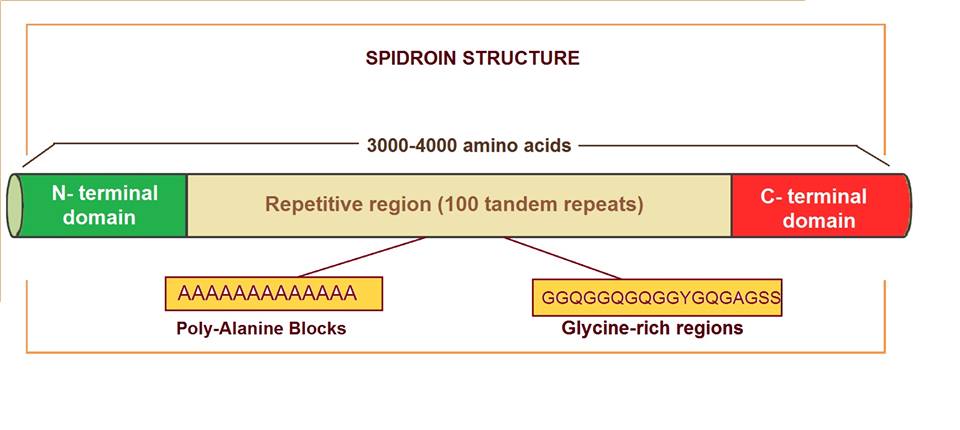
A diagram of the structure of spidroin

Spidroins are the main proteins in spider silk. Different types of spider silk contain different spidroins, all of which are members of a single protein family.[1] The most-researched type of spidroins are the major ampullate silk proteins (MaSp) used in the construction of dragline silk, the strongest type of spider silk. Dragline silk fiber was originally thought to be made up of two types of spidroins, spidroin-1 (MaSp1) and spidroin-2 (MaSp2) however recent transcriptomic analysis of over 1000 spider species has revealed multiple spidroins are expressed making it much more complex.[2][3][4]

Spidroin is part of a large group of proteins called scleroproteins. This group includes other insoluble structural proteins such as collagen and keratin.

A fiber of dragline spidroin is as thick and resistant as one of steel but is more flexible. It can be stretched to approximately 135% of its original length without breaking. Its properties make it an excellent candidate for use in various scientific fields.[5]

Structure

[edit]

Major ampullate spidroins are large proteins with an extension of 250-350 kDa, with an average of 3500 amino acids. They represent a polymeric organization, mostly based on highly homogenized tandem repeats. There are 100 tandem copies of 30 to 40 amino acids which repeat sequence and they represent more than 90% of the protein sequence.[6] Alanine and glycine residues are the most abundant amino acids in these proteins. Alanine appears in blocks of six to fourteen units that form β-sheets. These alanine blocks can stack to create crystalline structures in the fiber, linking different protein molecules together. Glycine is present in different motifs, such as GGX and GPGXX (where X = A, L, Q, or Y), that also have specific secondary structures (310-helix and β-spiral, respectively). Glycine-rich regions are more amorphous and contribute to extensibility and flexibility. Some of the differences observed between spidroin 1 and spidroin 2 (the most important major ampullate spidroins) are the proline content, which is very low in the first one but significant in the second one, and the motifs. Motif (GGX)n is characteristic in spidroin 1, while GPG and QQ are typical in spidroin 2.

On the other hand, spidroins have non-repetitive amino (N) and carboxyl (C) terminal domains of approximately 150 and 100 amino acids respectively. N- and C-terminal domains share little resemblance, except that they are both rich in serine and both are largely amphipathic α-helical secondary structures. These domains are conserved not only between spidroin 1 and 2, but also among many silk types and spider species. Experimental data show the N- and C-terminal domains contribute to fiber assembly.[7] The C-terminal domain is involved in the organized transition from a soluble spidroin solution to an insoluble fiber during spinning.[8] In the N-terminal domain, there are signal peptides which regulate spidroin secretion from silk gland cells.[9][10]

Function

[edit]

An individual spider spins a multitude of silk types, with each type emerging from its own distinctive set of abdominal silk glands. This complex silk machinery enables spiders to use task-specific silks (e.g., for web assembly, egg-case construction, prey wrapping, etc.).[10] The different types of silk (major ampullate silk, minor ampullate silk, flagelliform silk, aciniform silk, tubiliform silk, pyriform silk, and aggregate silk)[11] are composed of different types of proteins.

Dragline silk is mainly formed by spidroin proteins. It is a type of major ampullate silk and is produced in the major ampullate gland. Dragline silk is used not only to construct the outer frame and radii of the orb-shaped web but also as a hanging lifeline that allows the spider to evade and/or escape from predators.[12] The major ampullate gland that produces this silk is formed by three main sections: a central bag (B zone) flanked by a tail (A zone) and a duct heading towards the exit. The tail secretes most of the "spinning dope", a solution which contains the protein molecules that will constitute the silk fiber. The sac is the main storage repository.

The epithelium of the A zone is composed of tall columns of secretory cells of a single type, packed with secretory granules. The major component of these cells which secrete the fibroin solution is a 275kDa protein containing the polypeptides spidroin I and spidroin II. The output of these cells is an aqueous and highly viscous solution of about 50% protein (mostly spidroin). The product secreted makes up the dragline silk, the main structure.

This highly viscous protein emulsion flows into the B zone, where it is covered by glycoproteins. After exiting this bag, the liquid is funneled into the narrow duct. As the gelatinous protein solution moves into the duct, the integral spidroins and glycoproteins are gradually distorted into long, thin, aligned figures with the direction of the flow. Then, they are stretched and lined up in a way that will eventually allow them to create strong intermolecular links. After different processes the silk is extended in the spinning channel to form an extremely tough thread.

Industrial and biomedical applications

[edit]

In the last decade, much research has been done about spidroin protein and spider silk in order to take advantage of some of its properties, such as its elasticity and strength. Spider silk is used in different industries, and its range of applications in biomedicine is increasing every day. For example, the military and defense industries use bulletproof vests made from these fibers.

Recombinant spidroin has been successfully obtained in both eukaryotic and prokaryotic cells although there were some difficulties in the procedure due to the length of the gene sequence. Thanks to expression and the cloning work, it is possible to obtain large-scale production of spidroin which provides new opportunities for the manufacture of new biomaterials.[13] There have been attempts to generate transgenic tobacco and potato plants that express remarkable amounts of recombinant Nephila clavipes dragline proteins.[14]

Furthermore, fibers developed from spidroin are tolerated in vitro, in cell culture, and in vivo, in animals like pigs, as no signs of either inflammatory response nor body reaction were shown to these fibers. These results suggest that they could be used in medicine without risk of biocompatibility issues and thus potentially lead to many new opportunities in tissue engineering and regenerative medicine.

The way spiders produce spidroin in micelles has inspired a method of mass-producing recombinant proteins. By fusing a pH-insensitive, charge-reversed mutant of spidroin N-terminal domain to the proteins to produce, much more soluble proteins can be produced in E. coli.[15]

Other silk types

[edit]
Tubuliform (egg case) silk strands structural domain
Identifiers
SymbolRP1-2
PfamPF12042
InterProIPR021915
CATH2mqa
Available protein structures:
Pfam  structures / ECOD  
PDBRCSB PDB; PDBe; PDBj
PDBsumstructure summary

Silk proteins present in other spider silk types are also occasionally referred to as spidroin. These include tubuliform silk protein (TuSP), flagelliform silk protein (Flag; O44358-Q9NHW4-O44359), minor ampullate silk proteins (MiSp; K4MTL7), aciniform silk protein (AcSP), pyriform silk protein (PySp) and aggregate silk glue (ASG2/AgSp). These different silk proteins along with MaSP show some level of homology to each other, in protein domains, repeats, and in promoters, but also have their own unique features and variations on these parts to fulfill their different functions.[16][17][18] These commonalities point at a common origin of proteins found in all these different types of silks.[1][10]

Artificial production

[edit]

In July 2020 a team of Riken researchers report that they succeeded in using a genetically altered variant of R. sulfidophilum to produce spidroins.[19][20]

See also

[edit]

References

[edit]

Further reading

[edit]
[edit]
Revisions and contributorsEdit on WikipediaRead on Wikipedia
from Grokipedia
Spidroin is a family of large, repetitive proteins that form the primary structural components of , enabling the production of fibers with exceptional mechanical properties, including high tensile strength, elasticity, and toughness that surpass many synthetic materials. These proteins are synthesized by spiders in specialized glands and spun into diverse types used for prey capture, reproduction, and locomotion. Structurally, spidroins exhibit a conserved tripartite architecture consisting of an N-terminal non-repetitive domain of approximately 130 , a large central repetitive region comprising up to 100 tandem repeats rich in and , and a C-terminal non-repetitive domain of about 110 . The repetitive core features motifs such as polyalanine stretches ((A)n) that form crystalline β-sheets for strength, and -rich sequences like GGX or GPGGX that contribute to flexible amorphous regions for extensibility. The N-terminal domain is pH-sensitive and aids in protein and initial assembly, while the C-terminal domain forms a dimeric five-helix bundle that regulates fiber formation through dimerization and conformational changes during spinning. Spidroins are categorized into several types based on the silk-producing , each tailored to specific functions; for instance, major ampullate spidroins (MaSp1 and MaSp2) constitute dragline silk for web frames and safety lines, flagelliform spidroins produce capture spiral silk with high elasticity, and aciniform spidroins form sticky wrapping silk. During silk production, spidroins are stored as aqueous solutions in the gland and undergo shear-induced alignment, pH shifts from neutral to acidic, and ion concentration changes in the spinning duct to transition from random coils to aligned β-sheets and helices, resulting in solid fibers. The mechanical prowess of spidroin-based silks arises from the hierarchical organization of crystalline and amorphous domains; major ampullate silk, for example, achieves a tensile strength of up to 1.5 GPa, elongation of 27%, and of 180 MJ/m³, outperforming materials like . These properties stem from evolutionary adaptations, including intron-lacking genes with massive exons and high sequence conservation in terminal domains across species. Ongoing research focuses on recombinant spidroin production for biomedical applications, leveraging their and tunable .

Biological Context

Definition and Classification

Spidroins are a family of scleroproteins synthesized exclusively by s, serving as the primary structural components of all fibers and comprising over 90% of their mass. These large, modular proteins are characterized by extensive repetitive domains that confer the unique mechanical properties of silk, analogous to the proteins found in other silks but adapted for the diverse functional roles in biology. The term "spidroin," derived from "" and "," was introduced in the early 1990s following the molecular characterization of the first spidroin sequences from the dragline silk of the golden Nephila clavipes. The initial partial cDNA for the major ampullate spidroin 1 (MaSp1) was isolated and sequenced in 1990, revealing its highly repetitive - and glycine-rich structure, while a second dragline protein, MaSp2, was identified shortly thereafter in 1992. These discoveries marked the beginning of systematic studies on proteins, distinguishing them from previously known insect silks. Spidroins are classified into seven principal types based on the specialized silk-producing glands in which they are expressed, reflecting the functional diversity of spider silks. These include MaSp1 and MaSp2 from the major ampullate glands, which form the tough dragline silk used for bridging and safety lines; MiSp from the minor ampullate glands, contributing to temporary scaffolding; AcSp from the aciniform glands, used in prey wrapping; TuSp from the tubuliform glands for egg case construction; Flag from the flagelliform glands for capture spiral threads; Pyr from the pyriform glands for attachment discs; and AgSp from the aggregate glands, which produce adhesive glue on cribellar silk. This gland-specific nomenclature—using two-letter abbreviations followed by "Sp" for spidroin—standardizes the identification of isoforms across species. Both spidroins and the fibroin heavy chain produced by silkworms (Bombyx mori) feature conserved non-repetitive N-terminal (NT) and C-terminal (CT) domains that bookend their central repetitive sequences, but spidroin terminal domains exhibit higher conservation across types and species, playing critical roles in protein dimerization, alignment, and fiber assembly during silk extrusion—a key evolutionary adaptation distinguishing spider silk architecture.

Diversity Across Species

Spiders, with over 53,000 described worldwide as of November 2025, exhibit remarkable diversity in spidroin production, reflecting adaptations to varied ecological roles from web-building to hunting. Comprehensive silkomics analyses, including a study sequencing transcriptomes from 1,098 species across 76 families, have identified more than 11,000 putative spidroin genes, underscoring the genetic basis for silk specialization. In model orb-weaving species like , genomic sequencing has revealed at least 28 distinct spidroin genes, encoding proteins for multiple types such as dragline and capture spirals, with recent studies noting 10 major ampullate spidroin (MaSp) paralogs. This diversity manifests in phylogenetic variations between major spider clades. Mygalomorph spiders, including tarantulas, typically possess simpler MaSp isoforms with fewer paralogs—estimated at around four duplications—resulting in less specialized silk repertoires suited to burrowing or sheet webs. In contrast, araneomorph spiders, which dominate modern ecosystems, display extensive gene duplications—up to 10 or more events—enabling a broader array of specialized silks for complex behaviors like orb-weaving or cobweb construction. These expansions, occurring post-divergence from mygalomorphs approximately 300 million years ago, have facilitated silk adaptations to diverse niches, such as the tensile draglines of aerial hunters versus the adhesive threads of ground-dwellers. Evolutionary patterns reveal conserved structural elements amid sequence divergence, driving silk functionalization. Spidroin repetitive cores maintain a modular architecture of tandem motifs that provide mechanical versatility, yet their amino acid compositions diverge to tune properties like stiffness or extensibility across lineages. Terminal domains, however, exhibit high conservation, with non-repetitive N- and C-terminal regions shared across spidroins to regulate solubility and assembly, while subtle variations contribute to clade-specific innovations. This balance has enabled silk diversification, as seen in orb-weavers (Araneidae and Nephilidae) evolving elastic draglines for prey capture in flight paths, versus hunting spiders (Theridiidae) developing sticky threads for terrestrial ambushes. Representative examples highlight these adaptations. In the black widow Latrodectus hesperus (Theridiidae), aggregate spidroin (AgSp) forms the glycoprotein glue coating gumfoot capture threads, providing adhesive properties for irregular cobwebs that ensnare ground prey. Similarly, in Nephila species (Nephilidae), MaSp2 variants enriched with proline (up to ~9% content) in GPGXX motifs impart exceptional elasticity to dragline silks, allowing webs to withstand impacts from flying insects without breaking.

Molecular Structure

Primary Sequence and Motifs

Spidroins are large proteins typically ranging from 250 to 350 in molecular weight, comprising approximately 3000 to 4000 residues. Their primary sequences are dominated by a few key , with accounting for 40-50% and for 20-30% of the composition, alongside notable proportions of serine and . These residues form the basis for the protein's repetitive architecture, which constitutes over 90% of the sequence and enables the material's unique properties. The core of spidroin sequences consists of extensive repetitive regions characterized by specific motifs that dictate local secondary structures. Poly-alanine blocks, denoted as (A)_n where n typically ranges from 3 to 9, promote the formation of β-sheet crystallites responsible for structural rigidity. Glycine-proline-glycine motifs, such as GPGXX (e.g., GPGQQ where X represents or other residues), facilitate β-turns that contribute to flexibility. Additionally, GGX motifs, with X as a variable , serve as amorphous spacers that maintain chain and prevent excessive ordering. Flanking these repetitive domains are non-repetitive N-terminal (NT) and C-terminal (CT) domains, which act as structural caps. The NT domain spans approximately 130-150 , while the CT domain is around 100 . Sequence variability exists among spidroin types; for instance, major ampullate spidroin 1 (MaSp1) is enriched in , enhancing tensile strength, whereas major ampullate spidroin 2 (MaSp2) incorporates higher levels of (about 15 mol%) and serine for greater elasticity.

Domains and Hierarchical Assembly

Spidroins exhibit a modular featuring distinct N-terminal (NT) and C-terminal (CT) domains that flank a large repetitive core region, enabling controlled folding and assembly into hierarchical silk structures. The NT domain, approximately 14-15 kDa in size, adopts a compact five- bundle fold, as determined by , which maintains in the neutral environment of the silk gland storage compartment. At neutral (around 7-8), the NT exists as a stable with a characteristic distribution of charged residues that prevents premature aggregation. Upon acidification to ~6.2 during , the NT undergoes rapid dimerization through hydrophobic interactions and hydrogen bonding at specific interfaces, such as the 2-3 loop, facilitating the initial alignment of spidroin . This -triggered dimerization is further enhanced by shear forces in the spinning duct, promoting parallel orientation of the protein chains essential for subsequent formation. The CT domain, roughly 10-12 , plays a complementary role in modulating assembly through -sensitive conformational dynamics. In solution at neutral , the CT forms a compact dimeric five-helix bundle , shielding the repetitive regions to inhibit aggregation. As drops during spinning, a structural transition exposes hydrophobic surfaces and drives multimerization, including disulfide-linked dimers. A using solid-state NMR, , and other methods on assembled fibers revealed that the CT undergoes an α-helix to β-sheet transition, integrating into the matrix with mixed secondary structures and partial unfolding, contributing to the transition from soluble precursors to insoluble . This conversion underscores the CT's function as a , coordinating the timely alignment and of spidroins. Hierarchical assembly of spidroins proceeds from individual folding to supramolecular architectures, yielding the macroscopic . At the molecular level, folded NT and CT domains anchor the repetitive sequences, which contain poly-alanine and glycine-rich motifs that enable secondary structure transitions. These repetitive regions primarily form crystalline β-sheet nanocrystals (typically 2-5 nm in cross-section), embedded within an amorphous matrix of random coils and α-helices, achieving an overall crystallinity of 30-50% that balances strength and elasticity. Multimers stabilized by NT-CT interactions further align into protofibrils or nanofibrils (2-5 nm diameter), as observed via cryo-TEM, which bundle into microfibrils (20-100 nm) and ultimately coalesce into macroscale fibers exhibiting a -core morphology, where the outer layer is more oriented and crystalline than the viscoelastic core. This multi-scale organization, driven by gradients, shear, and ionic shifts, ensures the efficient transformation of dilute spidroin solutions into robust threads.

Natural Biosynthesis

Genetic Expression

Spidroin genes form a multigene family in spider genomes, with multiple paralogs encoding proteins for specific silk types; for instance, major ampullate spidroins (MaSp) typically include 2-7 paralogs per species, such as at least three functional MaSp1 copies in black widow spiders and up to nine MaSp2 variants in orb-weavers like Argiope. These genes are often organized in genomic clusters, spanning 1-1.5 Mb and containing 10-14 MaSp loci in species such as Argiope aurantia, reflecting tandem duplications and gene conversion events that homogenize repetitive regions. Across spider genomes, the total number of spidroin genes ranges from approximately 20 to 35, as cataloged in species like Pardosa pseudoannulata (20 genes), Nephila clavipes (28 genes), and Larinioides sclopetarius (35 genes). The of spidroin genes is governed by gland-specific promoters that restrict expression to epithelial cells within distinct glands, enabling the production of specialized silks. In orb-weaving spiders, these regulatory elements ensure that MaSp genes are predominantly active in major ampullate glands, while paralogs like flagelliform spidroins () are confined to flagelliform glands. Expression levels are modulated by environmental and physiological cues, including the spider's molting cycle and nutritional status; during post-molt phases, major ampullate glands exhibit heightened secretory activity with increased Type-M and Type-S granule production, while protein limitation from low feeding reduces and content in MaSp transcripts, shifting expression toward variants with altered motifs. Post-transcriptional modifications, such as , occur occasionally (e.g., in MaSp-f isoforms), but are generally minimal, preserving the repetitive structure of mature mRNA. High-level transcription of spidroin mRNA occurs primarily in the secretory of ampullate , where single-cell RNA sequencing has identified specialized cell types zoned along the gland: Zone A cells express MaSp1 and MaSp2 at peak levels, Zone B cells produce MaSp3 and ampullate-like spidroins, and Zone C cells transcribe low-molecular-weight components like SpiCE-LMa. This zonation supports the assembly of complex silk dopes, with mRNA abundance correlating to protein output in epithelial cells rather than other tissues. The evolutionary of spidroins trace back to ancient duplication events approximately 240-300 million years ago, coinciding with or predating the estimated Mygalomorphae-Araneomorphae (around 240-310 MYA based on recent phylogenomic analyses). Subsequent expansions, with at least 10 duplications in araneomorphs versus four in mygalomorphs, drove diversification tied to silk gland specialization. Recent phylogenomic analyses across Araneae, incorporating genomes from 28 , reveal ongoing birth-death dynamics, with clade-specific expansions (e.g., MaSp2 in orb-weavers) and hox cluster restructuring mirroring diversification patterns.

Glandular Synthesis and Extrusion

Spider silk production occurs primarily in specialized abdominal glands, with the major ampullate glands serving as the key site for synthesizing the high-strength dragline silk used in lifelines and web frames. These glands, in species such as Argiope aurantia, consist of a tail region lined with secretory epithelium containing rough endoplasmic reticulum for protein synthesis, a central storage sac, a narrowing duct for processing, and an external spigot for extrusion. The duct features distinct zones that sequentially dope the silk precursor with ions like Na⁺ and Cl⁻ in the initial segments to maintain solubility, followed by acid secretion to lower pH and facilitate structural transitions. Spidroins, the primary structural proteins, are translated on ribosomes associated with the rough in the gland's epithelial cells of the tail zone before being packaged into secretory vesicles. These vesicles release the proteins into the glandular lumen, forming an aqueous spinning dope stored in the sac at concentrations of 30-50% spidroin by weight and a neutral of approximately 6.9. As the dope moves into the duct, high shear forces from the narrowing , combined with a drop to around 6.3 driven by proton , trigger molecular alignment and partial folding of the spidroins; this process is mediated by pH-sensitive conformational changes in the N- and C-terminal domains, promoting dimerization and . During extrusion, the converging geometry of the S-shaped duct induces extensional flow, aligning the spidroin molecules into a liquid-crystalline phase that enhances orientation. Rapid solidification follows as enzymes in the duct generate CO₂ and H⁺, with CO₂ drawdown dehydrating the dope and stabilizing the nascent at the spigot. This coordinated mechanism ensures the dope transforms into a solid under ambient conditions without external or solvents. Variations in glandular processes adapt the dope for specific silk types; for instance, flagelliform glands, which are smaller with shorter ducts, produce a softer, more viscous dope rich in glycine-rich spidroins tailored for the highly elastic capture spirals in orb webs. This contrasts with the firmer dope of major ampullate glands, highlighting gland-specific tuning of ion composition and flow dynamics to yield silks with distinct extensibility.

Physicochemical Properties

Mechanical Characteristics

Spidroin-based spider silks exhibit exceptional mechanical properties, particularly in tensile strength and , arising from their protein composition. Major ampullate spidroin (MaSp) dragline silk typically displays a tensile strength of 1.0–1.7 GPa, comparable to high-tensile (1.5 GPa) but at approximately one-sixth the , enabling superior strength-to-weight ratios. Elasticity in these fibers reaches 20–30% strain before failure, allowing significant deformation without . This combination contributes to a toughness of 150–350 MJ/m³, surpassing synthetic materials like (50 MJ/m³) and (80 MJ/m³), with energy absorption facilitated by sliding and deformation within β-sheet nanocrystals in the hierarchical structure. Type-specific variations highlight functional specialization in spidroin silks. MaSp dragline silk prioritizes high strength and moderate extensibility for load-bearing roles, achieving up to 1.65 GPa tensile strength in species like Caerostris darwini. In contrast, silk demonstrates extreme extensibility of 300–600% strain at lower tensile strengths of 0.1–0.5 GPa, enabling effective energy capture through elastic recovery. These properties stem from distinct spidroin isoforms, with MaSp featuring alanine-rich motifs for crystalline strength and Flag incorporating glycine-proline repeats for rubber-like behavior. Mechanical characterization relies on micromechanical tensile assays using instruments like linear extensometers to measure stress-strain curves under controlled conditions. Properties are influenced by extrusion parameters, such as drawing speed during silk production, which increases up to ~10 times and yield stress ~7 times at rates of 10–20 mm/s by enhancing molecular alignment and reducing size. also modulates performance; relative levels from 25% to 85% linearly increase breaking strain from approximately 20% to 35-40% while decreasing from 10-14 GPa to about 1.4 GPa, due to water-mediated weakening of bonds in the protein matrix.
PropertyMaSp Dragline SilkFlag Silk
Tensile Strength (GPa)1.0–1.70.1–0.53.60.75–0.95
Extensibility (% Strain)20–30300–6002.718
Toughness (MJ/m³)150–35027–2835080

Chemical and Biophysical Traits

Spidroins, the primary protein components of spider silk, exhibit distinct solubility characteristics that facilitate their processing in the spider's glandular system. In their native aqueous dope form within the silk glands, spidroins remain soluble at neutral levels around 6.9–7.2, enabling high-concentration storage without premature aggregation. Upon and assembly into fibers, these proteins become highly insoluble in water due to the formation of extensive β-sheet structures and intermolecular interactions that the polymer chains. However, the resulting fibers retain biodegradability, as they can be degraded by proteases such as , which cleaves peptide bonds in the protein matrix under enzymatic conditions. The thermal stability of spidroins contributes to the durability of materials across environmental extremes. Spider silk fibers demonstrate no significant thermal degradation below 200°C, allowing them to maintain structural integrity under elevated temperatures. The β-sheet crystalline regions within spidroins further enhance this resilience, resisting denaturation up to temperatures exceeding 200°C and providing resistance to thermal breakdown even in harsh conditions. These repetitive motifs in the spidroin primary sequence, such as polyalanine and glycine-rich blocks, underpin the formation of these stable secondary structures. Biophysical properties of spidroins extend their utility beyond mechanical roles, influencing interactions with light, electricity, and biological systems. Spider silk exhibits a low constant, contributing to its optical clarity and low absorption in the , which enables applications in light-guiding structures. Aligned spidroin fibers display piezoelectric effects, generating in response to mechanical stress due to the oriented molecular dipoles in their crystalline domains. Additionally, spidroins are biocompatible, showing non-immunogenic behavior and supporting without eliciting inflammatory responses, attributes linked to their composition and surface . Chemical modifications in spidroins modulate their interaction properties and assembly behavior. , a prevalent , occurs at multiple serine residues, influencing and fibrillization by altering charge distribution and ionic interactions. These proteins also exhibit pH-dependent charge profiles, with an typically in the range of 4–5, particularly for the N-terminal domain, which promotes dimerization and at acidic during formation.

Biological Functions

Structural Roles in Webs

Spidroins play essential roles in the architectural framework of spider webs, where different types contribute to tensile support, attachment, and overall stability. Major ampullate spidroin (MaSp), the primary component of dragline silk, forms the radial frames and lifelines of orb webs, offering high tensile strength to withstand environmental stresses such as and the impact of captured prey. This structural backbone ensures the web's rigidity and prevents collapse under dynamic loads. Aciniform spidroin (AcSp) is extruded as wrapping , which encases prey to immobilize it during capture, leveraging its exceptional toughness to provide durable restraint without fracturing. AcSp is also a component of cases, contributing to their protective structure. Pyriform spidroin (PyrSp), produced in attachment discs, cements dragline and other fibers to substrates or each other, forming a composite network of fine fibers in a glue-like matrix. The properties of PyrSp arise from its repetitive regions, which are rich in polar and charged that promote solidification and bonding upon extrusion. The mechanics of spider webs rely on gradient properties across spidroin-based silks, with a stiff core from MaSp radials transitioning to more compliant outer layers, such as flagelliform capture spirals, to facilitate energy dissipation during impacts. This hierarchical arrangement absorbs uniformly, maintaining structural integrity without localized failure.

Adaptive and Predatory Uses

Spidroins play crucial roles in locomotion and , particularly through the major ampullate spidroin (MaSp), which forms the dragline used as a lifeline. This enables ballooning dispersal, where juvenile s release threads into the air to be carried by wind currents over long distances, facilitating colonization of new habitats. The elasticity of MaSp dragline also allows s to absorb the impact of falls from heights, preventing injury during escape from predators or repositioning on vertical surfaces. In predatory contexts, aggregate spidroin (AgSp) contributes to prey capture by forming the adhesive glue on sticky spirals in orb webs, which entangles upon impact and hinders their escape, thereby enhancing efficiency. Similarly, tubuliform spidroin (TuSp) produces the tough outer layer of cases, providing mechanical resistance to penetration and tearing by predators, thus safeguarding developing spiderlings. Spidroins facilitate sensory functions through vibration transmission along threads, allowing spiders to detect prey movements from afar without visual cues. This mechanosensory capability relies on the propagation of vibratory signals via radial and capture threads, enabling precise localization of struggling . Minor ampullate spidroin (MiSp) supports this by forming temporary lines during web , which provide structural stability for initial prey detection setups before permanent elements are added. Behavioral adaptations highlight species-specific spidroin utilization, as seen in net-casting spiders of the genus , which employ pseudoflagelliform —structurally akin to flagelliform spidroin (FlagSp)—to create a stretchable net for ambushing nocturnal prey, demonstrating tuned elasticity for rapid deployment.

Recombinant Production

Expression Systems

systems enable the production of recombinant spidroins outside their natural spider hosts, overcoming limitations in and yield while addressing challenges such as protein insolubility, , and repetitive sequence instability. These systems primarily include bacterial, , mammalian cell, and plant-based platforms, each offering unique advantages in terms of post-translational modifications, secretion, and cost. Bacterial hosts dominate due to rapid growth and simple genetics, but eukaryotic systems are preferred for proteins requiring complex folding or . In bacterial systems, serves as the primary host for recombinant spidroin production, achieving yields of 1–5 g/L for truncated constructs, with higher values up to 14.5 g/L reported for super-soluble miniature spidroins (33 kDa) through and optimized . A major challenge is the formation of due to the proteins' repetitive alanine-rich domains, which often leads to aggregation and requires harsh denaturation for recovery; this is commonly overcome by truncating the non-repetitive N-terminal (NT) and C-terminal (CT) domains to enhance solubility and expression. For instance, NT/CT-truncated MaSp1 variants have been produced at 2 g/L in , enabling downstream without extreme conditions. Eukaryotic systems provide better folding environments and secretion capabilities for full-length or modified spidroins. In yeast, Pichia pastoris has been widely adopted, yielding up to 1 g/L of recombinant spidroins like Z-4RepCT fusion proteins under methanol-inducible promoters, benefiting from high cell densities (over 100 g/L wet weight) in fed-batch fermentations. Mammalian cell lines, such as HEK293, are used to produce glycosylated spidroins that mimic natural post-translational modifications, though yields remain lower at 25–50 mg/L, prioritizing quality over quantity for biomedical prototypes. Plant-based expression, exemplified by transgenic tobacco (Nicotiana tabacum), achieves accumulation of up to ~1% of seed weight for spidroin variants, with one report of 18% total seed protein for MaSp1-based proteins in Arabidopsis seeds, leveraging stable genomic integration for low-cost, large-scale production without animal handling.30244-4) Recent advances have focused on enhancing purity and yield through innovative genetic designs. In 2025, an engineered self-cleavage fusion system using NusA tags and mini-inteins in E. coli enabled high-purity (>95%) production of MaSp chimeras (NT2RepCT to NT6RepCT) at 0.125–0.266 g/L, simplifying purification via on-column cleavage without additional proteases. Similarly, a 2025 study employed for computational design of spidroin mimics, substituting polyalanine motifs to improve β-sheet content and , resulting in soluble yields up to 0.99 g/L in E. coli after affinity purification. These approaches build on the natural genetic basis of spidroins, where repetitive domains are flanked by NT and CT for assembly. Optimizations across systems include codon usage adaptation to match host preferences, reducing translational errors in GC-rich repetitive sequences, and co-expression of molecular chaperones (e.g., DnaK/DnaJ) to prevent misfolding. Post-2023 developments have pushed microbial yields toward 15 g/L for optimized miniature spidroins, with ongoing efforts in strain engineering (e.g., stress-response mutants) achieving 4–33-fold improvements over standard E. coli BL21(DE3).

Artificial Fiber Formation

Artificial fiber formation from recombinant spidroins seeks to replicate the natural process observed in spider silk glands, where proteins are drawn from a liquid dope into solid fibers through controlled environmental changes. Wet-spinning, one of the earliest and most established techniques, involves extruding a concentrated spidroin solution (dope) through a into a bath, typically or , to induce rapid solidification via solvent exchange and dehydration. Developments since the have optimized dope composition, rates, and bath conditions, enabling fibers with tensile strengths up to 508 MPa and improved β-sheet crystallinity, though achieving the full 1 GPa strength of natural dragline remains challenging due to variations in protein molecular weight and alignment. For instance, post- refinements using hexafluoroisopropanol (HFIP)-dissolved dopes and baths have produced continuous fibers with diameters around 23 μm and toughness comparable to minor ampullate . Electrospinning adapts wet-spinning principles to generate nanoscale s suitable for scaffolds, applying high-voltage electric fields to eject charged spidroin solutions onto collectors, resulting in non-woven mats of s with diameters below 1 μm. This method excels in producing high-surface-area structures but yields lower mechanical strength, typically around 81 MPa, due to random orientation and limited molecular alignment. Recent 2024 advancements incorporate gradients and shear simulations to mimic glandular conditions, promoting pH-driven fibrillation and shear-induced β-sheet formation during fiber collection, which enhances uniformity and triboelectric properties for potential applications. These simulations reveal that lowering to 6.3 combined with elongational shear triggers conformational changes in spidroin domains, improving nanofiber cohesion without baths. Biomimetic approaches employ microfluidic devices to emulate the spider's spinning duct, applying precise gradients of , ions, and shear to aqueous spidroin dopes for controlled into fibers. These systems replicate natural flow dynamics, yielding fibers with tensile strengths up to 834 MPa and strain at break exceeding 20%, closely matching dragline toughness through enhanced molecular orientation and crystallinity. A 2025 study in the Chemical Engineering Journal introduced programmable meta-spidroins with tunable hydrophilic/phobic domains, enabling microfluidic spinning of fibers with switchable surface properties via sequence-designed block copolymers, achieving strengths over 500 MPa while addressing challenges in water-based dopes. Such innovations allow for on-demand β-sheet under simulated duct conditions, producing compact fibers with smooth morphologies. Post-processing techniques, including and annealing, further refine as-spun fibers by promoting β-sheet enhancement and molecular alignment. in or air stretches fibers up to 4x their length, increasing tensile strength to 92 MPa and to 1.3 MJ/m³ while reducing diameter variability. Annealing in or heat treatments elevates β-sheet content from ~20% to over 40%, boosting modulus and resistance, as seen in fibers post-stretched in isopropanol baths. However, remains a key hurdle; current methods are confined to lab-scale production with continuous lengths under 1 km, limited by low throughput (e.g., 50–150 μL/h in ) and inconsistencies in dope , hindering industrial uniformity.

Applications and Developments

Biomedical Implementations

Spidroin-derived biomaterials leverage their exceptional , tunable mechanics, and slow biodegradability to advance , particularly in and therapeutic delivery systems. These proteins, primarily from major ampullate spidroins (MaSp), form scaffolds that mimic the , supporting and proliferation without eliciting adverse immune responses. Recent developments emphasize recombinant spidroins for injectable formats, enabling minimally invasive implantation. In , spidroin-based 3D scaffolds serve as matrices for and regeneration, promoting osteogenesis and chondrogenesis through enhanced cell-scaffold interactions. Composite scaffolds combining fibroin with carboxymethyl cellulose (CMC) at 50% concentration exhibit high (≥65%) and hydrophilicity, fostering bone marrow stromal cell (BMSC) viability and proliferation comparable to controls, with (ALP) activity and osteopontin expression after 14 days . These scaffolds also support calcium nodule formation, as evidenced by staining, indicating potential for defect repair. For , spidroin hydrogels mimic native tissue architecture, aiding growth and deposition. Spidroin hydrogels enable controlled , forming rapidly at physiological temperatures (37°C) without chemical crosslinkers, which facilitates encapsulation and sustained release of therapeutics. Recombinant NT2RepCT spidroin hydrogels, tuned by protein concentration (50–300 mg/mL), release (GFP) over 48 hours via , maintaining bioactivity and achieving equilibrium release in 24 hours. These gels also support , with human fetal mesenchymal stem cells showing 67% viability after 21 days, underscoring their suitability for localized delivery . Additionally, engineered spidroins fused with , such as heparin-binding motifs in MaSp2 (S4H4 variant), form coatings that inhibit Escherichia coli formation (optical density <0.04), reducing infection risks on implants without . For , recombinant spidroin fibers spun via biomimetic processes serve as sutures and dressings, accelerating tissue repair and minimizing . Artificial spidroin fibers, produced using 3D-printed microfluidic devices, woven into dressings for diabetic and models, promote wound closure in mice within 16 days and reduce swelling after 2 weeks, outperforming conventional materials through and drug-loading capacity. In neural applications, spidroin fibers modified with motifs (e.g., RGD, IKVAV) guide regrowth by directing neurite extension in directly reprogrammed neural precursor cells, yielding neurites up to 400 μm in length and shifting differentiation toward neuroglial lineages. A 2025 review highlights spidroin's evolving role in . These implementations underscore spidroin's transition from preclinical models to potential clinical therapies, driven by advances in for customized biomaterials.

Industrial and Material Innovations

Spidroin-based materials have emerged as promising alternatives to synthetic polymers in protective gear due to their superior strength-to-weight ratio and elasticity, surpassing in toughness while remaining lightweight. In the 2020s, researchers have developed prototypes of bulletproof vests using genetically modified silkworms engineered to produce proteins, achieving ballistic resistance comparable to or exceeding traditional fibers like through enhanced tensile strength and flexibility. Similarly, artificial spidroin fibers are being explored for parachutes, offering greater payload capacity and reduced weight compared to , with early studies indicating potential for stronger, more durable canopies that minimize deployment risks. In composites, spidroin integrates with matrices to create high-performance materials for , where blends enhance structural integrity without adding significant mass; for instance, spider silk- laminates for windowpanes demonstrate tensile strengths up to 1338 MPa, enabling thinner designs that outperform acrylic in strength-to-weight efficiency. For optical applications, recombinant spidroin fibers leverage their inherent clarity to function as low-loss waveguides, with propagation losses as low as 0.8 dB/cm in air, supporting uses in lightweight optical transmission systems. Environmentally, spidroin's biodegradability facilitates sustainable textiles that decompose naturally without microplastic release, positioning it as an eco-friendly option for durable fabrics in industrial settings. Additionally, the protein's piezoelectric properties—generating under mechanical stress, with responses up to 0.36 pC/N—enable integration into sensors for monitoring in composites or protective equipment. Commercial advancements underscore spidroin's scalability, with companies like AMSilk producing plant-based recombinant spidroins via microbial fermentation for applications in and , where silk powders and hydrogels provide breathable, high-strength barriers with reduced environmental impact. A 2025 review highlights ongoing progress in high-performance spidroin fibers for composites and protective textiles, emphasizing their thermal stability and elasticity for scalable industrial deployment.

References

Add your contribution
Related Hubs
User Avatar
No comments yet.