Hubbry Logo
Strathisla distilleryStrathisla distilleryMain
Open search
Strathisla distillery
Community hub
Strathisla distillery
logo
8 pages, 0 posts
0 subscribers
Be the first to start a discussion here.
Strathisla distillery
from Wikipedia

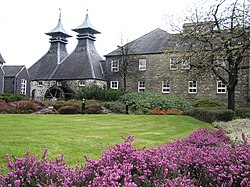
Strathisla distillery is a Speyside single malt Scotch whisky distillery in Keith, Moray. It is the oldest continuously operating distillery in the Scottish Highlands.[1][2][3][4]

Key Information

History

[edit]

Strathisla distillery was founded as the Milltown distillery by George Taylor and Alexander Milne in 1786 as an alternative to the waning of the flax dressing industry. They leased the land from the Earl of Seafield. The name "Strathisla" comes from the Strathisla River, which flows nearby, as well as the Gaelic "Strath" (meaning valley) and "Isla," the name of the river. [2]

By the mid-1800s, Strathisla's ownership changed several times .In 1879, the distillery suffered terribly from a fire, but was rebuilt with a bottling plant. it was later acquired in 1950 by. During the 19th century, the distillery was modernized, and production was streamlined.[3]

In 1950 James Barclay bought Strathisla for £71,000 at auction in behalf of Seagram Company.[5] Seagram subsidiary Chivas Brothers began using it as the cornerstone of their Chivas Regal blended whisky. During this time the distillery undergo significant modernization, as Strathisla upgraded its facilities and expanded its production capacity.[1]

In 2001, Seagram’s whisky operations, including Chivas Brothers and Strathisla, were acquired by Pernod Ricard, a global spirits company.[6]

Scotland's Malt Whisky Trail

[edit]

Scotland's Malt Whisky Trail is a tourism initiative featuring seven working Speyside distilleries including Strathisla, a historic distillery (Dallas Dhu, now a museum) and the Speyside Cooperage. According to a BBC article, visitors can tour the "traditional warehouse where the single malts that make up the premium and super premium blends are stored ... [and try the] distinctive mellow honey flavour, offering a full, nutty, balanced whisky".[7]

See also

[edit]

References

[edit]

Further reading

[edit]
Revisions and contributorsEdit on WikipediaRead on Wikipedia
from Grokipedia
Strathisla Distillery is the oldest continuously operating distillery in the , located in Keith, Speyside, , and renowned for producing the whisky that forms the heart of the blend. Founded in 1786 by George Taylor and Alexander Milne as the Milltown Distillery on the site of an old , it was originally licensed for whisky production to capitalize on the decline of local milling. The distillery's name evolved over time, changing to Strathisla around 1870 before briefly reverting to Milton in 1890 and permanently adopting Strathisla in 1951; it endured significant challenges, including major fires in 1876 and an explosion in 1879, as well as the impacts of the two World Wars. Acquired by Chivas Brothers (then part of ) in 1950 for £71,000, it became integral to the production of blended whisky, with its unpeated Speyside malt providing the foundational character. Today, owned by since 2001, Strathisla operates with a capacity of 2.4 million liters per year, using four short, squat stills heated by steam coils, a 54-hour period, and from local peat-free springs like Fons Bullen Well. Notable for its picturesque Victorian and role in , the distillery offers visitor tours and tastings, showcasing its traditional methods and the rich, smooth profile of its whisky, which is also bottled as a single malt and by independent bottlers.

Overview

Location and Founding

The Strathisla distillery is situated in the town of Keith, in the council area of , at coordinates 57°32′49″N 2°57′15″W, on the northeastern outskirts along the banks of the River Isla. This location in the heart of Speyside places it amid rolling hills and fertile farmland ideal for barley cultivation, with the river providing a vital historical and scenic backdrop to the site. Founded in 1786 by local millers George Taylor and Alexander Milne, the distillery began operations as the Milltown Distillery—sometimes referred to as Milton—on a plot of land leased from the . The founders, seeking to expand beyond milling, constructed the facility during a period when legal distilling was becoming more regulated following the Excise Act of 1784, marking one of the earliest licensed operations in the region. The name Strathisla derives from the surrounding valley of the River Isla, reflecting its geographical ties, and the distillery earned its status as the oldest continuously operating facility in the through uninterrupted production since its inception. From its earliest days, Strathisla relied on drawn from the nearby Fons Bullen Well, a calcium-rich, peat-free source located just across from the distillery, which imparts a soft, profile essential to the whisky's distinctive smooth and fruity character. This natural , sourced from underground aquifers rather than peaty burns, has remained a cornerstone of the distillery's operations and contributes to its reputation for producing elegant Highland malts.

Ownership and Significance

In 1950, the Strathisla distillery was acquired by Chivas Brothers, a subsidiary of the Canadian Company owned by the , for £71,000 at a public following its . Under 's ownership, the distillery received substantial investments from the , including modernizations to its facilities and the construction of the adjacent Glen Keith distillery in 1959 to increase production capacity for . In 2001, Seagram's spirits assets, including Chivas Brothers and Strathisla, were sold to Pernod Ricard as part of a corporate divestiture, with Chivas Brothers remaining the operational entity managing the distillery. Strathisla holds pivotal significance in the Scotch whisky industry as the spiritual home of Chivas Regal, one of the world's top-selling blended Scotch whiskies, where its single malt serves as the primary and core component in the blend, flowing through every bottle produced. Renowned as the oldest continuously operating distillery in the Scottish Highlands since 1786, it exemplifies Speyside's heritage with its traditional architecture and versatile spirit profile, often described as a "blender's dream" for its rich, fruity character that enhances premium blends like Chivas Regal and Royal Salute. This status underscores its enduring impact, attracting visitors and contributing to Speyside's reputation as a cornerstone of Scotch production.

History

Early History and Name Changes

The Strathisla distillery, originally established and licensed in 1786 as the Milltown Distillery by local entrepreneurs Alexander Milne and George Taylor, benefited from the industry's stabilization following the passage of the Excise Act in , which imposed a £10 license fee and standardized duties on distilled spirits to curb . This legislation marked a pivotal shift for the industry, benefiting established legal distilleries like Strathisla, one of Scotland's earliest licensed and the oldest continuously operating one in the Highlands. In 1823, the distillery was acquired by Macdonald Ingram & Co., who formalized its operations under the new licensing regime and renamed it the Milton Distillery after the nearby Milton Castle. This acquisition facilitated early expansions, including upgrades to stills and warehousing to accommodate legal production and meet growing demand for Speyside whisky. However, ownership proved unstable in the mid-1820s, with the site passing briefly to John McDonald & Co. in 1828 before being purchased in 1830 by William Longmore, a Keith-based banker and grain merchant, who provided much-needed stability during a period of frequent changes among smaller operators. Under Longmore's stewardship, which lasted until his retirement around , the distillery underwent further developments to enhance efficiency, solidifying its role in the emerging licensed whisky trade. Longmore incorporated the business as William Longmore & Co., focusing on consistent output and quality maturation, which helped navigate the economic fluctuations of the mid-19th century. In the , reflecting its location in the valley of the River Isla, the distillery adopted the name Strathisla—meaning "valley of the Isla"—a designation first used for the whisky produced there and later applied to the site itself in 1951. This naming evolution underscored the distillery's deepening ties to its Speyside heritage amid the industry's consolidation.

19th and Early 20th Century Developments

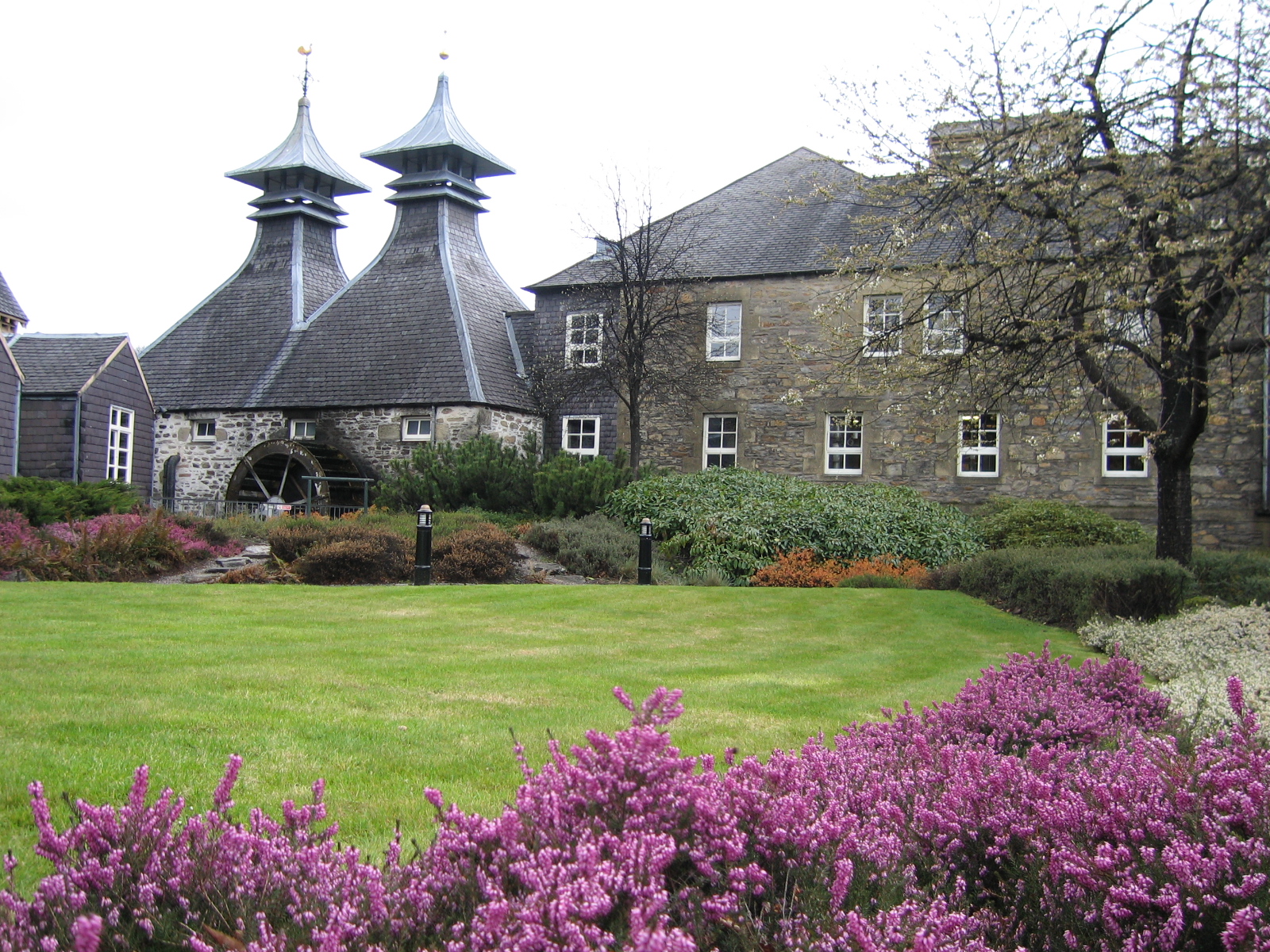
During the mid-19th century, Strathisla distillery experienced several ownership transitions that contributed to periods of inconsistent production, as local families and businesses vied for control amid the volatile market. Following its acquisition by William Longmore in 1830, the distillery operated under his stewardship for decades, but by 1880, after Longmore's retirement, it passed to John Geddes-Brown, reflecting ongoing shifts among regional proprietors that occasionally disrupted output and modernization efforts. A devastating in severely damaged the site, followed by a catastrophic in the in 1879 that destroyed much of the facility, including key machinery and buildings, nearly bankrupting the operation. The distillery was fully rebuilt in the aftermath of the 1879 incident, incorporating a new bottling plant to streamline operations and distinctive pagoda-style malt barns designed by renowned architect Charles Doig, which became a hallmark of Victorian-era distillery architecture in Speyside. These rebuilds also emphasized traditional warehouses for cask maturation, adapting to the era's focus on quality control and efficient storage while preserving the site's historic charm. In the early 20th century, the distillery remained under the Longmore family's management until 1940, when it was acquired by financier George Jay Pomeroy, who took control through a majority stake in William Longmore & Co. Pomeroy's tenure proved disastrous; known for fraudulent financial schemes, he diverted production to for illicit sales, evading taxes and mismanaging stocks, which culminated in his 1949 conviction for and . This led to the distillery's temporary closure, marking a low point in its operations before revival.

Post-1950 Ownership and Modernization

In 1950, Chivas Brothers, a subsidiary of the Canadian distilling giant , acquired the rundown Strathisla distillery for £71,000 following its compulsory auction due to financial difficulties under previous owner Jay Pomeroy. The purchase enabled rapid restoration of operations, transforming the site into a key contributor to blends and marking its revival as Scotland's oldest continuously operating distillery. During the Seagram era from 1950 to 2001, significant modernizations enhanced efficiency and output. In 1965, the number of was doubled from two to four to address rising demand for Strathisla's Speyside-style , supporting an eventual annual production capacity of 2.4 million liters. These upgrades solidified Strathisla's role within 's portfolio, emphasizing its oaky character for blending while maintaining traditional methods. In 2001, Pernod Ricard acquired Seagram's whisky operations, including Chivas Brothers and Strathisla, integrating it into a global spirits network without disrupting local management. Under , investments focused on preservation and visitor enhancements, such as the 2018 comprehensive refurbishment of the distillery's blending room and visitor facilities to blend historical charm with modern experiential elements. Sustainability efforts advanced with the adoption of 100% renewable electricity from Scottish wind and hydroelectric sources, complemented by energy-efficient lighting and control systems across the site. Recent developments under include the 2024 renovation of Traditional Dunnage Warehouse No. 3, reopening it as an immersive space for showcasing maturation processes and cask selections, further elevating Strathisla's status as a heritage showpiece. These initiatives reflect ongoing integration within Chivas Brothers' operations, prioritizing environmental responsibility and without major structural expansions.

Production

Facilities and Equipment

The Strathisla distillery features a traditional layout centered around four pot stills, comprising two wash stills and two spirit stills, each designed in a classic onion shape that promotes efficient contact for flavor development. The wash stills have a capacity of 13,500 liters each, while the spirit stills hold 11,900 liters each, contributing to the distillery's overall annual production capacity of 2.4 million liters of pure alcohol. Although was historically conducted on-site using traditional floor , the distillery now sources its unpeated malted externally from industrial maltings, such as those operated by Chivas Brothers, to meet modern production demands. The facility includes traditional and racked warehouses on-site and nearby, where the spirit undergoes maturation in a mix of cask types, with a focus on American white ex-bourbon barrels that impart and notes to the whisky. Process water is drawn from the nearby Broomhill Spring, a soft, calcium-rich source with a mineral profile that avoids peaty influences and subtly enhances the whisky's smooth, fruity character. Following post-1950 modernizations, including still replacements, the equipment remains steam-heated with shell-and-tube condensers to maintain traditional Speyside-style distillation.

Distillation and Maturation Process

The production of Strathisla whisky begins with unpeated sourced from suppliers like Bairds Malt, using water drawn from the peat-free Broomhill Spring. The process employs a traditional mash tun with a capacity of approximately 5 tons, where the is infused to extract sugars, producing that is then cooled and transferred for . No is used at any stage, ensuring a clean, non-smoky base for the spirit. Fermentation occurs in ten wooden washbacks, primarily made of with some , each holding around 23,800 liters and using , lasting approximately 54 hours depending on conditions, which develops the wash—a low-alcohol beer-like liquid. This wash, at about 7-8% ABV, is then double in four copper pot stills: two wash stills (13,500 liters each) heated by coils to produce low wines, followed by two spirit stills (11,900 liters each) that refine it further. During the second distillation, the output is monitored in a spirit safe, where distillers separate foreshots (undesirable early run), the valuable hearts (clean spirit collected at around 72% ABV), and feints (late tails recycled for the next run), yielding a new make spirit characterized by a light, fruity profile with notes of apples, nuts, and subtle floral elements. The new make spirit is piped directly to the adjacent Glen Keith facility for filling into casks, with maturation taking place in a combination of ex-bourbon barrels and ex- butts stored in traditional and racked warehouses on-site and nearby. By Scottish law, maturation must last at least three years in , but Strathisla whiskies typically age 12 years or longer, with ex-bourbon casks contributing and flavors through their charred American influence, while casks add richer, nutty depths. The process emphasizes slow interaction with the wood, enhancing the spirit's inherent fruitiness without any peating. Matured whisky is transported to bottling facilities, often at Glen Keith, and diluted to 40-43% ABV for standard expressions, preserving natural color and, in select limited releases, employing non-chill filtration to retain fuller and oils. This final step ensures the whisky's elegant, balanced character emerges, ready for either single malt bottling or blending.

Products

Single Malt Whisky Range

Strathisla's range emphasizes the distillery's Speyside heritage, featuring expressions aged in oak casks to highlight gentle fruit and malt characteristics. The core lineup centers on the 12 Year Old, with occasional limited releases such as the Distillery Reserve Collection, all produced without influence, resulting in a mellow, approachable profile distinct from the smokier or Highland peated malts. Most production is allocated to blended whiskies, limiting single malt availability. The flagship expression is Strathisla 12 Year Old, matured exclusively in ex-bourbon casks, which imparts a light, fruity character with notes of , , and subtle spice on the , bottled at 40% ABV. This whisky offers a soft nose with candied peel and floral hints, transitioning to a malty core accented by sultanas, , and , followed by a medium-length finish of lingering spice. Widely available in standard 70cl bottles, it retails for approximately $40–$60 USD globally as of 2025, serving as an entry point to the range. Former expressions included the Strathisla 18 Year Old (discontinued), influenced by sherry cask maturation for a richer, fruit-forward profile with deepened berry and nut notes at 40% ABV. Rare 25 Year Old bottlings, often from independent bottlers like Gordon & MacPhail, build further complexity through extended aging, delivering layers of toffee, dark honey, dried fruits like raisins and , and polished tannins; prices vary widely from $150 to over $2,000 USD for 70cl bottles as of due to scarcity and vintage. Occasional special releases, such as vintage bottlings from the distilled in the distillery's early era, offer rare, evolved flavors of -influenced depth and antique fruit, often commanding auction prices exceeding $2,000 USD for collector editions. Overall, Strathisla single malts exhibit a signature mellow nuttiness and honeyed Speyside sweetness, with orchard fruits and subtle emerging from the bourbon cask maturation process, setting them apart as elegant, unpeated alternatives in the single malt category. Limited editions, including the Distillery Reserve Collection of single cask releases, enhance availability through the distillery shop and select markets.

Role in Blended Whiskies

Strathisla Distillery has played a pivotal role in blended production since its acquisition by Chivas Brothers in 1950, when it became the cornerstone for the company's flagship blend, . The distillery's single malt was integrated as the "heart" of , providing a foundational character that has defined the blend's smooth and harmonious profile. In blends, Strathisla contributes approximately 4% of the malt content, delivering fruity and floral top notes that balance the lighter grain whiskies and complement heavier malts from other distilleries. This heavier, fruity spirit, derived from the distillery's small copper pot stills, adds layers of , , and to the overall composition, enhancing the blend's accessibility and elegance. Exact recipes remain proprietary, reflecting the secretive blending philosophy of Chivas Brothers, where Strathisla's light yet robust Speyside style serves as a versatile anchor without overpowering other components. Beyond Chivas Regal, Strathisla influences premium blends like Royal Salute, where aged expressions from the distillery—often matured for a minimum of 21 years—add depth and complexity to the luxurious profile. This inclusion dates back to 1953, when Strathisla whisky was selected for the inaugural Royal Salute blend to commemorate Queen Elizabeth II's coronation, underscoring its enduring significance in high-end Chivas portfolio offerings.

Tourism

Scotland's Malt Whisky Trail

Strathisla Distillery has been a key site on since the 1950s, forming part of the official route that includes seven working distilleries—Benromach, Cardhu, Glenfiddich, Glen Grant, Glen Moray, The Glenlivet, and Strathisla—alongside the historic Dallas Dhu Distillery museum and the Speyside Cooperage. The trail follows a scenic 70-mile loop through the Speyside region, passing through towns like Keith and while tracing the River Spey and highlighting the area's rich whisky heritage, from traditional production methods to the landscape that influences the malts. Strathisla stands out on the trail as the oldest continuously operating distillery in the , founded in 1786, with its picturesque historical buildings—including distinctive pagoda-style malt barns and a riverside location—offering visitors a tangible connection to centuries of whisky-making tradition. This integration has bolstered local in Keith, where the trail's draw contributes to the broader economic impact of whisky experiences in Speyside; pre-2020 visitor numbers to the region's distilleries and exceeded 800,000 annually, generating over £128 million in revenue in 2017 alone, with more recent figures showing a 25% increase in visitors from 2022 to 2023 and revenue reaching £187 million as of 2023.

Distillery Tours and Visitor Facilities

Strathisla Distillery offers a range of guided tours designed to provide visitors with an immersive introduction to the whisky-making process, focusing on its role as the heart of blends. The standard Strathisla Distillery Tour & Tasting lasts 1 hour and 20 minutes and costs £22 per adult, with under-18s entering free; it includes a guided walk through the production areas, including the stills and a , followed by a tutored tasting of four whiskies, such as 12-year-old, 18-year-old, and Strathisla 12-year-old single malt. The distillery's visitor facilities are centered around a traditional reception area in a historic building, featuring a well-stocked shop selling Strathisla single malts, expressions, and exclusive merchandise, alongside a café offering light refreshments. An exhibition in the highlights the distillery's 235-year , from its 1786 founding to its modern operations, with displays on traditional production methods and its iconic roofs. Accessibility features include on-site parking and some paths adapted for wheelchairs, though the older buildings limit full access due to stairs in production areas. For more specialized experiences, the Strathisla Maturation Tour & Tasting, priced at £55 for 1 hour, grants access to select warehouses for a closer look at cask maturation, ending with tutored tastings of aged single malts. Connoisseur-level options include the Discover the Distillery Reserve Collection at £40 for 1 hour, featuring tastings of five limited-edition cask-strength single malts, and the Chivas Blending Workshop at £45 for 45 minutes, where participants create their own blend under expert guidance. Seasonal events, such as the Single Malt Tasting Series in late 2025 and participation in the annual Spirit of Speyside Whisky Festival in April, offer additional tutored sessions and themed activities. Following the , Strathisla introduced enhanced hygiene protocols in 2021, including temperature checks at a welcome tent and mandatory face masks indoors, which have since been relaxed by 2025 but retain emphasis on responsible hosting with non-alcoholic alternatives available. Recent upgrades to the visitor facilities in 2023-2024 improved the blending and tasting areas for a more interactive experience, while options remain limited to promotional videos rather than interactive online bookings. As part of , these offerings complement regional itineraries without overlapping broader trail logistics.

References

Add your contribution
Related Hubs
User Avatar
No comments yet.