Hubbry Logo
PeriosteumPeriosteumMain
Open search
Periosteum
Community hub
Periosteum
logo
8 pages, 0 posts
0 subscribers
Be the first to start a discussion here.
Periosteum
Periosteum
from Wikipedia
Periosteum
The periosteum covers the outside of bones.
Meninges of the CNS
Details
LocationOuter surface of all bones
Identifiers
Latinperiosteum
MeSHD010521
TA98A02.0.00.007
TA2384
THH2.00.03.7.00018
FMA24041
Anatomical terminology

The periosteum is a membrane that covers the outer surface of all bones,[1] except at the articular surfaces (i.e. the parts within a joint space) of long bones. (At the joints of long bones the bone's outer surface is lined with "articular cartilage", a type of hyaline cartilage.) Endosteum lines the inner surface of the medullary cavity of all long bones.[2]

Structure

[edit]
The periosteum consists of an inner cambium layer and an outer fibrous layer

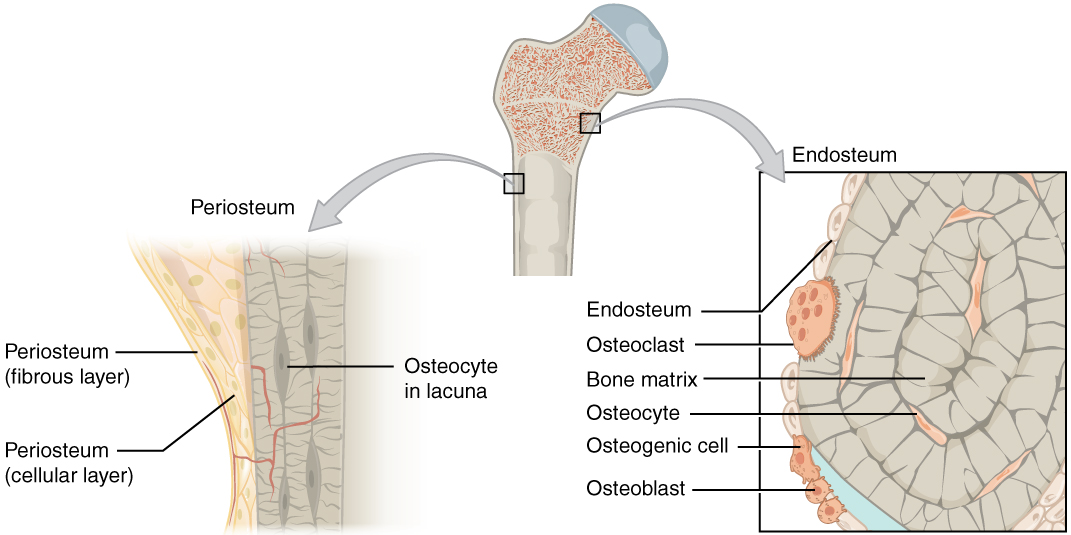
The periosteum consists of an outer fibrous layer, and an inner cambium layer (or osteogenic layer). The fibrous layer is of dense irregular connective tissue, containing fibroblasts, while the cambium layer is highly cellular containing progenitor cells that develop into osteoblasts.[3] These osteoblasts are responsible for increasing the width of a long bone (the length of a long bone is controlled by the epiphyseal plate) and the overall size of the other bone types. After a bone fracture, the progenitor cells develop into osteoblasts and chondroblasts, which are essential to the healing process. The outer fibrous layer and the inner cambium layer are differentiated under electron micrography.[4]

As opposed to osseous tissue, the periosteum has nociceptors, sensory neurons that make it very sensitive to manipulation. It also provides nourishment by providing the blood supply to the body from the marrow.[5] The periosteum is attached to the bone by strong collagen fibres called "Sharpey's fibres", which extend to the outer circumferential and interstitial lamellae. It also provides an attachment for muscles and tendons.

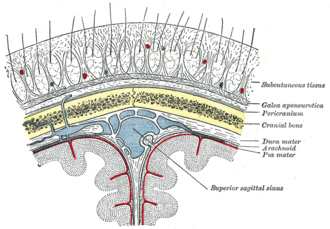
The periosteum that covers the outer surface of the bones of the skull is known as the pericranium, except when in reference to the layers of the scalp.

Etymology

[edit]

The word periosteum is derived from the Greek peri-, meaning "surrounding", and -osteon, meaning "bone". The peri refers to the fact that the periosteum is the outermost layer of long bones, surrounding other inner layers.[6]

Additional images

[edit]

See also

[edit]

References

[edit]

Further reading

[edit]
[edit]
Revisions and contributorsEdit on WikipediaRead on Wikipedia
from Grokipedia
The periosteum is a thin, fibrous membrane that envelops the outer surface of in vertebrates, excluding articular surfaces covered by , sites of and attachments protected by fibrocartilaginous entheses, and certain sesamoid such as the . It serves as a dynamic interface between and surrounding soft tissues, consisting of two primary layers: an outer fibrous layer that provides mechanical strength and vascular supply, and an inner layer that harbors cells essential for osteogenesis. This structure not only anchors muscles, , and via Sharpey's fibers but also plays a critical role in development, remodeling, and repair throughout . Structurally, the outer fibrous layer of the periosteum is composed of dense collagenous tissue with elastin fibers, subdivided into a superficial inelastic portion that is highly vascularized and cell-poor, and a deeper fibroelastic portion that is more elastic and less cellular. In contrast, the inner cambium layer is richly cellular, containing mesenchymal progenitor cells, osteoblasts, fibroblasts, and extensive networks of blood vessels and nerves; it is thickest during fetal development and progressively thins in adults, varying by bone location, age, sex, and species. Histologically, the cambium layer features layers of osteoprogenitor cells oriented parallel to the bone surface, enabling rapid cellular proliferation in response to injury. These components collectively ensure the periosteum's attachment to the underlying cortical bone through perforating Sharpey's fibers, which integrate it firmly while allowing flexibility. Functionally, the periosteum acts as a protective barrier against mechanical stress, a mechanosensory structure detecting physical loads, and a biochemical reservoir for growth factors such as BMPs, Wnts, and TGF-β that regulate . It provides essential nourishment to the via its vascular , often described as the bone's "," and houses periosteum-derived cells (PDCs) with stem-like properties, including high self-renewal capacity (up to 80 population doublings) and multipotency to differentiate into osteoblasts, chondrocytes, adipocytes, and other lineages. During embryogenesis, the periosteum originates from the through endochondral or , transitioning from templates to support longitudinal growth at metaphyses. In clinical contexts, the periosteum is pivotal for fracture healing, where the layer proliferates to form a through , contributing osteogenic and chondrogenic cells that bridge gaps; its preservation is crucial in pediatric Salter-Harris type II fractures to avoid growth disturbances. Moreover, PDCs hold regenerative potential for large defects, as demonstrated in maxillofacial and orthopedic applications, and in exceptional cases like deer antler regeneration, where periosteal tissues enable annual ectopic organ renewal without scarring. Disruptions, such as in periosteal elevator injuries or tumors, can impair healing, underscoring its therapeutic value in .

Anatomy

Location and gross features

The periosteum is a dense, fibrous that envelops the outer surface of all bones, excluding articular surfaces covered by and sites of or attachment. This provides a protective sheath around the skeletal elements, with its gross appearance varying by age and location; it is thicker and more robust in younger individuals, thinning progressively with advancing age. In long bones, the periosteum exhibits regional distinctions in thickness and composition. Along the , the shaft, it measures approximately 100 μm in thickness and is predominantly fibrous, facilitating greater flexibility and separation from the underlying cortex. In contrast, coverage over the and is thinner and more adherent, with a higher cellular to support growth processes at these sites. The periosteum consists of an outer fibrous layer and an inner cambium layer, though detailed layering is addressed elsewhere. The periosteum adheres firmly to the bone cortex through Sharpey's fibers, which are bundles of collagenous fibers that penetrate perpendicularly into the cortical bone, anchoring the membrane securely. At sites of muscle insertion, this attachment is looser, allowing for greater mobility during contraction. Variations occur across bone types, with the periosteum being thicker and more prominent on long bones to accommodate mechanical stresses. The periosteum is absent on the articular surfaces of sesamoid bones like the but present on non-articular surfaces such as the anterior aspect, due to their partial intra-tendinous position.

Layered composition

The periosteum is histologically organized into two distinct layers: an outer fibrous layer and an inner layer, which together provide structural integrity and support growth. The outer fibrous layer consists of rich in collagen fibers, primarily types I and III, along with fibroblasts and , conferring tensile strength and mechanical protection to the underlying . This layer is further subdivided into a superficial vascular sublayer and a deeper fibroblastic sublayer, with the latter containing more elastic fibers and fewer cells. The inner cambium, or osteogenic, layer is composed of that harbors osteoprogenitor cells, as well as blood vessels and nerves, enabling its role in bone formation and repair. This highly cellular layer lies adjacent to the cortex and is characterized by its proliferative potential, distinguishing it from the more protective outer layer. In adults, the periosteum typically measures approximately 100 μm in thickness, though it is notably thicker in children to accommodate active bone growth. Thickness can vary by bone site and age, with progressive thinning observed postnatally due to reduced cellularity in the cambium layer. At the ends of long bones and near growth plates, the periosteum exhibits transitional zones where it merges with or articular structures, facilitating seamless integration during development and . These zones lack the distinct bilayer organization seen elsewhere, adapting to the dynamic interfaces of and .

Cellular and extracellular components

The periosteum comprises a diverse array of cells distributed across its two layers, with the outer fibrous layer primarily containing fibroblasts responsible for producing and maintaining the structural matrix. The inner cambium layer, in contrast, is richer in osteogenic cells, including osteoblasts and osteoprogenitor cells that contribute to bone . This layer also houses fibroblasts, alongside other cell types such as osteoclast precursors, , and immune cells like mast cells. Fibroblasts in the fibrous layer synthesize and other matrix components, forming a dense network that provides tensile strength. Osteoblasts and their progenitors in the layer are cuboidal or flattened cells embedded in a looser matrix, while osteoclast precursors originate from mononuclear cells that can differentiate into bone-resorbing cells. , associated with vascular elements, support vessel stability and may contribute to progenitor pools. Mast cells, present throughout, modulate local inflammatory responses and interactions with cells. The (ECM) of the periosteum is predominantly composed of , with accounting for approximately 90% of the total protein content, forming fibrillar structures that confer mechanical . fibers provide elasticity, particularly in areas subject to deformation, while proteoglycans and glycoproteins such as facilitate hydration, lubrication, and molecular signaling within the matrix. These components vary slightly between layers, with the layer featuring a more disorganized, loose arrangement compared to the dense, oriented fibers in the outer layer. Cell-matrix interactions in the periosteum are mediated primarily by integrins, transmembrane receptors that link the cytoskeleton to ECM ligands like fibronectin and collagen, enabling adhesion, migration, and mechanotransduction. Cell density is notably higher in the cambium layer, where cells can occupy up to 20% of the tissue volume, supporting its role as a reservoir for proliferative elements.

Vascular and neural supply

The arterial supply to the periosteum originates from multiple sources, including branches of the arteries that enter through the nutrient foramen and periosteal arteries derived from regional muscular and cutaneous vessels. These arteries form an extensive periosteal arterial plexus within the fibrous layer of the periosteum, providing a rich vascular network that supplies the outer third of the cortical . Anastomoses between the endosteal and periosteal vascular systems facilitate cross-communication, ensuring robust even if one pathway is compromised. Venous drainage from the periosteum occurs through periosteal veins that parallel the arterial network, collecting blood from the periosteal plexus and the superficial cortical bone before emptying into the systemic venous circulation via regional veins. Lymphatic drainage is sparse compared to the vascular supply, with lymphatic vessels present primarily in the periosteum of long bones and skull, draining interstitial fluid to regional lymph nodes. The periosteum receives dense neural innervation, including sensory fibers that confer high pain sensitivity due to abundant nociceptors. For craniofacial bones, sensory innervation arises primarily from the (cranial nerve V), while cervical nerves contribute to the upper cervical region; in other skeletal areas, somatic nerves from spinal segments provide sensory input. Autonomic fibers, mainly sympathetic, regulate vascular tone and through adrenergic signaling. Both blood vessels and nerves penetrate the underlying via , which traverse the cortex perpendicularly to connect the periosteal and endosteal surfaces.

Functions

Mechanical support and protection

The periosteum contributes to mechanical support of bones primarily through its outer fibrous layer, which is composed predominantly of densely packed fibers arranged in a woven matrix. These fibers provide high tensile strength, enabling the tissue to resist and shear forces encountered during locomotion and physical activity. By distributing mechanical stress across the surface, the periosteum helps prevent localized deformation and under load, with its anisotropic properties allowing directional stiffening—greater stiffness axially than circumferentially—to match bone's loading patterns. Anchorage of soft tissues to bone is facilitated by Sharpey's fibers, which are collagenous extensions of the periosteum that perforate the cortical bone at oblique angles, embedding deeply into the mineralized matrix. These fibers, enriched with types III and VI as well as , secure tendons, ligaments, and muscles directly to the bone cortex, ensuring stable force transmission during contraction and joint movement. This integration maintains structural continuity between musculoskeletal elements and the skeleton, adapting to mechanical demands such as exercise-induced widening of fiber domains for enhanced stability. As a protective barrier, the periosteum envelops nonarticular bone surfaces, forming a that impedes invasion and contiguous spread of from surrounding soft tissues. Its dense fibrous structure acts as a physical shield, preventing bacterial colonization of the underlying unless disrupted by trauma or , which can lead to by exposing the cortex. Additionally, the periosteum inhibits aberrant of soft tissues to , maintaining distinct tissue boundaries and facilitating smooth gliding during motion. The periosteum's shock absorption capabilities arise from its viscoelastic composition, including approximately 2% interspersed with in the fibrous layer, which imparts elasticity and energy dissipation properties. This allows the tissue to cushion impacts, particularly in the diaphyses of long s, by absorbing more energy at failure compared to denuded —up to several times higher under . Such properties enhance overall resilience against trauma, with the periosteum acting as a natural splint to minimize propagation of cracks.

Nutrient delivery and metabolic roles

The periosteum plays a crucial role in nutrient delivery to tissue through its extensive capillary , which supplies oxygen, glucose, and essential ions such as calcium (Ca²⁺) and (PO₄³⁻) to the superficial in the outer cortical layer. These vessels, branching from the periosteal arterial system, enable diffusion of nutrients across the and into the lacunar-canalicular of , ensuring metabolic support for the avascular matrix. This process is vital for maintaining osteocyte viability, as the outer third of the cortex relies heavily on periosteal circulation for these exchanges. In addition to direct supply, the periosteum contributes to metabolic through the activity of its fibroblasts, particularly in the cambium layer, which produce growth factors like transforming growth factor-beta (TGF-β) to support remodeling and overall maintenance. These fibroblasts facilitate the local release of signaling molecules that regulate uptake and cellular in adjacent tissues. The periosteal vasculature also aids in , supporting bone's buffering capacity by delivering Ca²⁺ and PO₄³⁻ ions that participate in regulation during metabolic stress. Under conditions of hypoxia, such as during injury or increased metabolic demand, cambium layer cells in the periosteum upregulate (VEGF) expression via hypoxia-inducible factor-1α (HIF-1α) pathways, promoting to restore oxygen and flow to the . This adaptive response enhances vascular and ensures sustained delivery of metabolic substrates, preventing tissue ischemia. The periosteum's nutrient delivery function is particularly pronounced in growing bones, where heightened vascular proliferation and cellular activity meet the rapid demands for oxygen, glucose, and ions during longitudinal growth and periosteal apposition. In pediatric and adolescent skeletons, this amplified metabolic support sustains high rates of matrix deposition, whereas activity diminishes in adulthood as bone growth slows.

Osteogenic and reparative roles

The periosteum plays a critical role in osteogenesis through the differentiation of cells within its layer, which serves as a for self-renewing skeletal stem and cells (SSPCs) that give rise to bone-forming . These , primarily mesenchymal in origin, are activated during bone formation and repair by key signaling pathways, including bone morphogenetic proteins (BMPs) and Wnt signaling, which promote their commitment to the osteoblastic lineage. For instance, signaling reactivates developmental centers in the layer to drive differentiation, while Wnt/β-catenin pathways enhance proliferation and maturation of these cells into mature that deposit new bone matrix. This process is essential for both developmental and regenerative bone formation, with the layer's osteoprogenitor cells responding to local cues such as insulin-like growth factors (IGF-1) to initiate mineralization. In fracture repair, the periosteum is indispensable for the formation of the external , contributing osteogenic and chondrogenic cells that bridge the site through a staged process involving , soft callus development, and hard callus maturation. During the inflammatory phase, periosteal cells are recruited and proliferate in response to hematoma-derived signals, followed by the formation of a soft cartilaginous via in the central area. The periosteum specifically drives at its periphery, where undifferentiated progenitors directly differentiate into osteoblasts, forming woven that stabilizes the site without an intermediate phase. This periosteal , enriched by BMP and Wnt signaling, transitions to a hard callus of lamellar , eventually remodeling into mature cortical , with macrophages facilitating early endochondral progression. The periosteum also mediates appositional growth, the process by which bones increase in diameter during postnatal development through the sequential addition of circumferential layers on the outer surface. Osteoblasts derived from cambium progenitors lay down new matrix, which mineralizes to form concentric lamellae, expanding the bone's girth while the handles internal remodeling. This growth is particularly active in long bones during childhood and , driven by mechanical loading and hormonal influences that stimulate periosteal and differentiation. Periosteal cells exhibit significant potential as a source of mesenchymal stem cells (MSCs) for grafts and regenerative therapies, with advantages including accessibility. Periosteum-derived MSCs (PDMSCs) can be harvested from the layer and expanded , demonstrating robust differentiation into osteoblasts and chondrocytes when engrafted onto scaffolds or allografts; however, their osteogenic capacity relative to bone marrow-derived MSCs shows variability across studies, with some recent findings (as of October 2025) indicating limited activity post-isolation. In clinical applications, PDMSCs enhance by promoting vascularization and ectopic formation, as seen in engineered periosteal constructs that deliver growth factors like for critical-sized defect repair. Their embryonic origins from cephalic or trunk and provide a multipotent foundation, enabling versatile use in .

Development and Physiology

Embryonic origins

The periosteum originates from the somatic lateral plate mesoderm, which gives rise to mesenchymal cells that condense and differentiate around nascent ossification centers during embryonic bone formation. In endochondral ossification, these mesenchymal precursors form the perichondrium surrounding the cartilaginous anlage, which subsequently transforms into the periosteum as vascular elements invade the cartilage model and osteoid deposition begins at the diaphysis. In intramembranous ossification, characteristic of flat bones such as those in the calvaria, mesenchymal cells directly differentiate into osteoblasts while concurrently establishing the periosteal layers on the bone surface. This mesodermal derivation ensures the periosteum's role as a vascularized connective tissue envelope from the outset of skeletogenesis. The timeline of periosteum formation aligns closely with the initiation of , commencing between the sixth and seventh weeks of . By weeks 7 to 8, the periosteum emerges in association with in flat bones, where mesenchymal condensations rapidly mineralize and the fibrous and cambium layers become discernible. In contrast, for endochondral bones like the long bones of the limbs, periosteum development occurs slightly later, following chondrification around week 6 and the appearance of the primary by week 8, as the vascularizes and converts to periosteum to support cortical . This sequential appearance underscores the periosteum's integration with modeling from early fetal stages. Molecular regulation of periosteum formation involves key transcription factors that pattern mesenchymal condensations and direct progenitor fate. , such as those in the HoxA and HoxD clusters, establish positional identity along the anterior-posterior axis and are essential for specifying periosteal stem and differentiation during embryonic development. Scleraxis contributes to patterning at the tendon-bone interface, influencing the organization of periosteal fibroblasts and progenitors in load-bearing regions. drives initial mesenchymal condensation and chondrogenic commitment in the , facilitating its transition to periosteum by regulating genes like collagen type II. These factors collectively ensure coordinated tissue layering and osteogenic potential. In craniofacial regions, periosteal fibroblasts and skeletal progenitors exhibit distinct differentiation pathways, deriving from mesenchyme rather than trunk . cells migrate into the branchial arches and differentiate into fibroblasts that populate the periosteum of facial bones, contributing to their unique and supporting tissues like sutures. This origin imparts region-specific properties, such as enhanced regenerative capacity compared to -derived periosteum in appendicular bones.

Role in postnatal bone growth

In postnatal bone growth, the periosteum primarily facilitates appositional growth by depositing new bone tissue on the outer cortical surface, thereby increasing diameter and strength. The cambium layer, rich in osteoprogenitor cells, differentiates into osteoblasts that form lamellar bone layers in response to mechanical loading, a process that accelerates during to accommodate rapid skeletal expansion. This circumferential enlargement continues at a reduced rate into early adulthood, contributing to overall bone robustness before stabilizing around skeletal maturity. The periosteum also supports at the metaphyses, where it interacts with the growth plate to aid longitudinal bone elongation. cells from the periosteum migrate to the diaphyseal-metaphyseal junction, releasing factors such as (PTHrP) that regulate activity and vascular invasion, ensuring coordinated lengthening of long bones during childhood and . This contribution diminishes as epiphyses fuse, marking the transition to maturity. Hormonal signals profoundly influence periosteal activity in postnatal growth, with growth hormone (GH) and insulin-like growth factor-1 (IGF-1) promoting progenitor cell proliferation and osteoblast differentiation to drive appositional expansion. Sex steroids further modulate this process: androgens enhance periosteal apposition in males, leading to larger bone diameters, while estrogens in females stimulate initial growth but ultimately induce epiphyseal closure around ages 14-16 in girls and 16-18 in boys, halting longitudinal elongation. Periosteal remodeling during postnatal development involves balanced osteoblast and osteoclast activity to refine bone shape, particularly during when mechanical demands from muscle growth and activity reshape contours like metaphyseal waisting. Osteoclasts resorb select periosteal surfaces while osteoblasts deposit new matrix, adapting bone architecture for load-bearing efficiency; this dynamic coordination ensures proportional scaling without compromising integrity. During childhood and , the periosteum is notably thick and highly cellular, particularly in the layer, which contains abundant osteoprogenitor cells, osteoblasts, and mesenchymal stem cells to support rapid appositional growth. This layer is highly vascularized, supplying 70-80% of the cortical 's blood flow and facilitating delivery essential for the swift skeletal expansion observed during . The elevated cellularity and vascular density enable the periosteum to actively contribute to longitudinal and radial development, with the layer serving as a dynamic source of osteogenic cells. In adulthood, typically post-adolescence and accelerating after approximately 30 years, the periosteum undergoes thinning of the layer, which becomes less distinct from the fibrous layer, accompanied by a reduction in osteoprogenitor cells and fibroblasts. Vascular density decreases markedly, with vessels becoming sparser and primarily confined to the fibrous layer, resulting in a thinner overall tissue structure that limits its role to maintenance and minor remodeling rather than expansive growth. Osteogenic potential diminishes, as evidenced by reduced proliferation and differentiation of periosteal cells in response to stimuli, though some regenerative capacity persists for fracture repair. In senescence, the periosteum exhibits further structural regression, including and sporadic , with Sharpey's fibers becoming fewer, fragmented, and shorter, contributing to a hardened, less flexible tissue. Loss of cells intensifies, leading to decreased responsiveness and regenerative potential, which exacerbates age-related bone loss by failing to counterbalance endocortical resorption and increasing risk through net cortical thinning. Despite these changes, certain populations, such as LepR+ cells, may remain relatively abundant, offering limited potential for intervention. Gender differences influence periosteal characteristics, with the tissue generally thicker and more expansile in males due to androgen-driven of periosteal apposition and cortical width addition during and beyond. In females, estrogens constrain periosteal expansion post-, resulting in relatively thinner periosteum and smaller diameters compared to males.

Clinical

Inflammatory and infectious conditions

The periosteum, as the fibrous membrane enveloping , is susceptible to inflammatory and infectious processes that can lead to , defined as of this tissue layer. Acute periostitis typically arises from sudden insults such as trauma or bacterial , manifesting as localized , tenderness, and swelling over the affected bone. Chronic periostitis, in contrast, develops gradually from repetitive stress, persistent , or autoimmune mechanisms, often presenting with insidious onset of aching and periosteal thickening. Infectious periostitis frequently occurs secondary to , where bacterial pathogens invade the bone and , causing suppurative inflammation. The infection commonly spreads hematogenously from a distant site, such as in bacteremia, or contiguously from adjacent infections like or abscesses. remains the predominant pathogen in both acute and chronic cases, accounting for the majority of isolates in musculoskeletal infections involving the periosteum. This organism's factors, including adhesins and toxins, facilitate periosteal adherence and inflammatory response, leading to elevated local levels and . Autoimmune-mediated periostitis represents a noninfectious inflammatory variant, exemplified by , , pustulosis, , and (SAPHO) syndrome, a rare autoinflammatory disorder characterized by sterile osteoperiostitis and associated dermatologic features. In SAPHO, periosteal inflammation arises from dysregulated innate immunity, with histologic evidence of neutrophilic infiltrates and prominent new bone formation without identifiable pathogens. Symptoms include deep and swelling, often affecting the anterior chest wall or long bones, distinguishing it from purely infectious etiologies. Diagnosis of inflammatory and infectious relies heavily on to detect periosteal reactions, which reflect the tissue's osteogenic response to . On plain radiographs, acute infectious processes typically produce a lamellar (multilayered or "onion-skin") periosteal reaction due to rapid deposition, while chronic may show a , thickening indicative of slower remodeling. These findings, combined with clinical signs of systemic infection such as fever and elevated inflammatory markers, guide further evaluation, including MRI for extension or biopsy to confirm and rule out mimics. Treatment of infectious periostitis centers on eradicating the underlying through targeted antibiotics, selected based on sensitivities, often administered intravenously for 4-6 weeks to achieve penetration. Surgical intervention, including of subperiosteal , is essential in cases with accumulation or necrotic tissue to prevent chronicity and sequestrum formation. For autoimmune forms like SAPHO, involves nonsteroidal drugs or disease-modifying agents such as bisphosphonates to suppress periosteal hyperactivity, with antibiotics reserved only if secondary occurs. Complications, such as formation or progression to chronic , can lead to persistent and functional impairment if treatment is delayed.

Neoplastic and reactive changes

The periosteum can be involved in primary neoplastic processes, most notably periosteal , a rare surface-based malignant tumor arising from the inner cambium layer of the periosteum without medullary invasion. This variant accounts for approximately 1-2% of all and typically affects individuals in the second decade of life, presenting as a diaphyseal or metaphyseal lesion in long such as the or . Histologically, it features intermediate-grade chondroblastic differentiation with perpendicular spicules of bone formation, contributing to its characteristic saucer-shaped radiographic appearance with periosteal reaction. Periosteal osteosarcoma generally carries a more favorable than conventional intramedullary osteosarcoma, with 5-year survival rates often exceeding 80% following wide surgical resection, due to its lower metastatic potential and lack of deep bone involvement. Another originating from the periosteum is periosteal chondroma, a benign cartilaginous that develops beneath the periosteal membrane adjacent to the cortical surface of long bones, particularly in the hands and feet. It is slow-growing, well-circumscribed, and often causes cortical scalloping or saucerization without medullary extension, typically diagnosed in children and young adults through imaging showing a lobulated soft-tissue . Surgical excision is curative, with low recurrence rates, distinguishing it from more aggressive entities. Reactive changes in the periosteum manifest as non-infectious , characterized by hyperproliferation of the layer leading to new bone formation, often visible as multilayered "onion-skin" periosteal reactions on radiographs. In hypertrophic osteoarthropathy, a paraneoplastic or idiopathic , this proliferation affects tubular bones symmetrically, accompanied by digital clubbing and arthralgias, driven by vascular endothelial growth factor-mediated stimulation of periosteal fibroblasts. Similarly, induces diffuse through excessive toxicity, resulting in painful cortical thickening primarily in the lower extremities, reversible upon cessation of intake. Metastatic involvement of the periosteum occurs when carcinomas erode the cortical bone, eliciting reactive periosteal responses, particularly from and primaries, which account for the majority of skeletal metastases. These tumors promote periosteal hyperproliferation via tumor-derived factors that stimulate the layer, leading to aggressive periosteal reactions such as or laminated patterns on imaging, which can mimic primary sarcomas. Prognostically, surface-confined neoplastic changes like those in offer better outcomes compared to intramedullary involvement, as the intact cortex limits systemic spread, though metastatic periosteal reactions worsen overall survival in advanced disease.

Surgical and therapeutic applications

The periosteum plays a crucial role in various surgical procedures, particularly through the use of specialized instruments designed to manipulate it without causing excessive damage. Periosteal elevators are handheld surgical tools employed to lift and separate the periosteum from underlying during operations such as orthopedic surgeries, craniotomies, and placements, allowing for flap elevation while minimizing trauma to the vascularized membrane. These instruments, available in sharp, semi-sharp, or blunt configurations, facilitate precise of , tissue, and , thereby supporting access to surgical sites while preserving the periosteum's osteogenic potential. In and , periosteal flaps are utilized to promote regeneration in skeletal defects, leveraging the tissue's rich vascular supply and content. For instance, free vascularized periosteal flaps combined with scaffolds have been applied in maxillary and mandibular reconstruction, particularly in head and neck cases where traditional flaps are not feasible, demonstrating reliable bone formation and vascular integration. In mandibular augmentation, pedicled periosteal flaps serve as a vascularized covering to enhance graft efficacy, reduce complications like resorption, and support osteogenesis in posterior regions. Studies in animal models further show that incorporating periosteal flaps into prefabricated engineered constructs improves bone flap viability and volume for mandibular defect repair, highlighting their role in . Therapeutically, preserving the periosteum during fixation is essential to optimize outcomes, as it contributes cells, growth factors, and vascular support to formation. Surgical techniques that minimize periosteal stripping, such as careful plate placement, maintain integrity and enhance secondary , reducing risks of delayed union or . Additionally, the periosteum serves as a source for harvesting mesenchymal stem cells in , with periosteal-derived progenitors showing superior osteogenic potential compared to cells for applications in skeletal repair; minimally invasive harvesting methods, like those from the , enable autologous cell sourcing for scaffolds. This aligns with the periosteum's reparative functions in providing stem cells for bone regeneration. Diagnostically, periosteal is a key method for evaluating lesions involving the , with image-guided sampling targeting aggressive patterns to confirm such as tumors or infections. MRI is particularly valuable for assessing periosteal integrity following trauma, as it detects , stripping, or associated damage in fractures, aiding in decisions for surgical intervention like open reduction.

Terminology

Etymology

The term "periosteum" derives from roots: "peri-" (περί), meaning "around" or "about," combined with "" (ὀστέον), meaning "," reflecting its role as the enveloping surfaces. The word entered medical in the late as a New Latin borrowing from Greek "periosteon," with the earliest known use dated to 1574. Related terms include "periosteal," the adjectival form denoting association with the periosteum and attested from the late , and "," referring to of the periosteum, coined in the mid-19th century by appending the "-itis" to "periosteum." The endosteum serves as the thin membranous lining on the internal surfaces of bones, including the , trabecular bone, and vascular canals, functioning in contrast to the periosteum's external covering role by housing osteoprogenitor cells and regulating and formation internally. Sharpey's fibers consist of bundles of collagenous that perforate the outer matrix, anchoring the periosteum firmly to the underlying cortical and providing structural stability. In historical anatomical contexts, the is recognized as the sheath enveloping , serving as a developmental precursor and functional analog to the periosteum during , where it transforms into periosteum as is replaced by . Modern medical nomenclature for periosteal disorders employs codes such as M90.1 for associated with other infectious diseases classified elsewhere, facilitating standardized classification and diagnosis of inflammatory conditions affecting the periosteum.

References

Add your contribution
Related Hubs
User Avatar
No comments yet.