


Community hub
Recent from talks
Contribute something
Nothing was collected or created yet.
Sun Belt Conference
View on Wikipedia
 | |
| Association | NCAA |
|---|---|
| Founded | 1976 |
| Commissioner | Keith Gill (since 2019) |
| Sports fielded |
|
| Division | Division I |
| Subdivision | FBS |
| No. of teams | 14 (13 in 2026) |
| Headquarters | New Orleans, Louisiana |
| Region | Southern United States |
| Broadcaster | ESPN |
| Official website | sunbeltsports.org |
| Locations | |
 | |
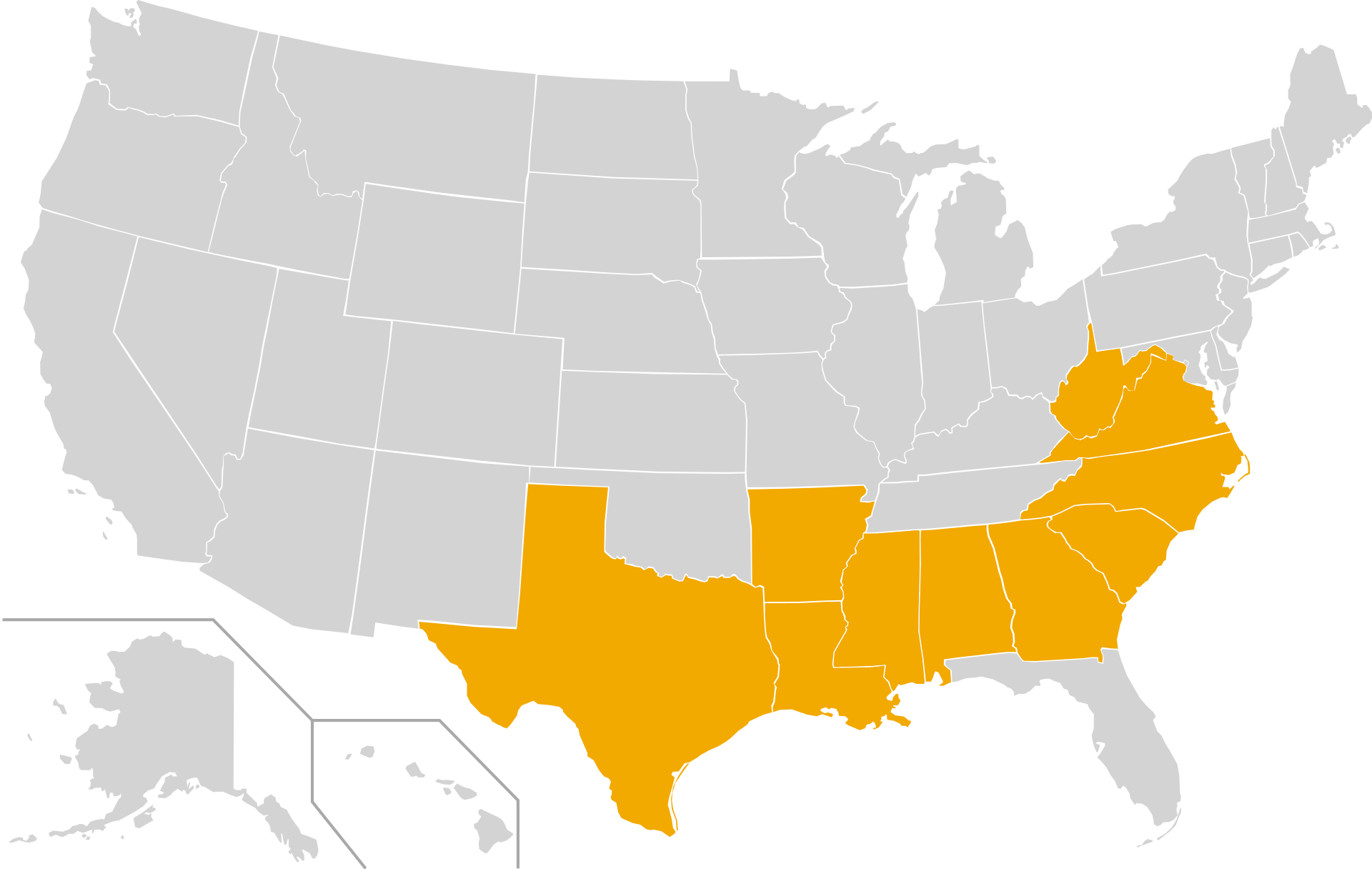
The Sun Belt Conference (SBC) is a collegiate athletic conference that has been affiliated with the NCAA's Division I since 1976. Originally a non-football conference, the Sun Belt began sponsoring football in 2001. Its football teams participate in the Division I Football Bowl Subdivision (FBS). The 14 member institutions of the Sun Belt are distributed across the Southern United States.
History
[edit]1970s and 1980s
[edit]
The Sun Belt Conference was founded on August 4, 1976, with the University of New Orleans, the University of South Alabama, Georgia State University, Jacksonville University, the University of North Carolina at Charlotte, and the University of South Florida. Over the next ten years the conference would add Western Kentucky University, Old Dominion University, the University of Alabama at Birmingham, and Virginia Commonwealth University. New Orleans was forced out of the league in 1980 due to its small on-campus gymnasium that the conference did not deem suitable for conference competition (the conference rejected UNO's offer to play all conference home games at the Louisiana Superdome). New Orleans competed as an independent before joining the newly formed American South Conference in 1987.
1990s
[edit]After the 1990–91 basketball season, all members of the Sun Belt, except Western Kentucky, South Alabama, and Jacksonville, departed for other conferences. The Sun Belt, including incoming member the University of Arkansas at Little Rock, then merged with the American South Conference, made up of Arkansas State University, Louisiana Tech University, the University of Southwestern Louisiana (now the University of Louisiana at Lafayette), the University of Texas–Pan American (now merged into the University of Texas Rio Grande Valley), New Orleans (re-joined), Lamar University, and the University of Central Florida. Although the American South was the larger conference, the merged league retained the Sun Belt name. In 1991, the league first began to explore the idea of sponsoring football.[1]
Central Florida left the league following the 1991–92 academic year due to a dispute over television rights, among other reasons.[2][3] Lamar, Texas–Pan American, and Jacksonville departed at the end of the 1997–98 academic year. Florida International University joined the Sun Belt in 1998, and the University of Denver was added in 1999. Louisiana Tech departed after the 2000–01 academic year.

2000s
[edit]The conference did not sponsor football until 2001, when the league added former Big West Conference members New Mexico State University and the University of North Texas and former Ohio Valley Conference member (an FBS Independent on football) Middle Tennessee State University as full members (all three of them joined a year earlier for all sports in the 2000–01 school year) and added FBS Independent University of Louisiana at Monroe and Big West member University of Idaho as football-only members. These new members gave the Sun Belt seven football playing members in their first season, as Arkansas State and Louisiana were already full members which sponsored football. Another Big West school, Utah State University, was added as a football-only member in 2003, then departed in 2005 with Idaho and New Mexico State for the Western Athletic Conference (WAC).
In 2004, Troy University became a football-only member before joining for all sports in the 2005–06 academic year. In 2005, Florida Atlantic became a football-only member before joining for all sports in the 2006–07 academic year. In 2006, Louisiana–Monroe joined the conference as an all-sports full member when the Warhawks left their former home, the Southland Conference.
Longtime Sun Belt member Western Kentucky joined the Sun Belt's football conference in 2009 after its board of regents voted to upgrade the school's football program to Division I FBS.[4]
On November 11, 2009, New Orleans announced it was investigating a move from Division I to the NCAA's Division III. In order to maintain athletic scholarships, UNO instead opted for entry into Division II. On April 20, 2011, UNO officially received transition approval from the NCAA Division II Membership Committee.[5] (UNO later decided to remain in Division I, and joined the Southland Conference, which has four other members in Louisiana, in 2013.)
2010s
[edit]
On April 9, 2012, Georgia State, one of the founding members of the Sun Belt Conference, announced that it would be returning to the conference as a full member in 2013. As part of the move, the football program began a transition from FCS to FBS in the 2012 season; it played a full Sun Belt schedule as a "transitional" FBS member in 2013, and became a full FBS member, with bowl eligibility, in 2014.[6] On May 2, 2012, Texas State University announced it would leave the WAC after just one year and join the Sun Belt in July 2013 to begin play for the 2013–14 academic year. At the press conference to announce Texas State's addition, Sun Belt Commissioner Karl Benson also hinted that more changes could be on the way for the conference.[7] On May 25, 2012, the conference announced that the University of Texas at Arlington (a non-football member) had accepted an invitation to join the conference and would become a full member by 2013.[8]
On May 4, 2012, FIU and North Texas announced that they would be leaving the Sun Belt for Conference USA on July 1, 2013, as part of a Conference USA expansion effort involving four other schools.[9] On November 29, 2012, Florida Atlantic and Middle Tennessee State announced that they would also leave the Sun Belt for Conference USA.[10] The move for Florida Atlantic and MTSU was originally scheduled to take place in 2014; however, the two schools announced on January 28, 2013, that they would leave for Conference USA a year early, departing on July 1, 2013, with FIU and North Texas. Western Kentucky also accepted an invitation to join Conference USA on April 1, 2013, and departed from the Sun Belt on July 1, 2014.[11]

These moves depleted the Sun Belt and made the need to expand their membership more urgent than ever, as the Sun Belt was left with ten full members and only eight members that sponsor football (the minimum number required for a conference to sponsor football at the FBS level) for the 2013 season. Appalachian State University accepted an invitation on March 27, 2013, to join the Sun Belt effective July 1, 2014.[12] Georgia Southern University accepted a similar Sun Belt invitation at the same time as Appalachian State.[13] Appalachian State and Georgia Southern both joined for all sports from the Southern Conference on July 1, 2014. Both schools had been very successful within the Football Championship Subdivision, combining to win nine national championships since 1985. They upgraded to the Football Bowl Subdivision, and were eligible for Sun Belt conference championships in 2014, but were not postseason-eligible in football until 2015.
The Sun Belt also granted football-only invites to Idaho and New Mexico State on March 28, 2013.[14] Idaho and New Mexico State were both former Sun Belt members (Idaho for football only, New Mexico State for all sports) from 2001 to 2005. The large number of defections from the WAC forced that conference to drop football after the 2012 season. Idaho and New Mexico State were the only remaining WAC members that sponsored football, and competed as FBS independents for the 2013 season before competing in the Sun Belt in 2014. Idaho is located by far the farthest away from the other Sun Belt conference members, but it was rejected by the Mountain West Conference,[15] leaving it with no other choice.[16][17]
On September 1, 2015, Coastal Carolina University accepted an invitation to join the Sun Belt Conference. The university joined in all sports except for football starting July 1, 2016, with football joining in 2017.[18]
The conference announced on March 1, 2016, that the affiliation agreement with Idaho and New Mexico State would not be extended past the 2017 season.[19]
The conference announced that beginning in 2018, the conference (10 teams) would be divided into two divisions for football: East: Appalachian State, Coastal Carolina, Georgia Southern, Georgia State, and Troy; West: Arkansas State, Louisiana, Louisiana–Monroe, South Alabama, and Texas State. The winner of each division will meet in the Sun Belt Championship game.[20]
2020s
[edit]


 – Departing Member,
  – Full member,
  – current associate member,
  – future full member
Following the July 30, 2021 announcement of the University of Texas at Austin and the University of Oklahoma both moving from the Big 12 Conference to the Southeastern Conference,[21] the world of college athletics faced the prospect of realignment once again. The Big 12 responded on September 10 by adding three schools from the American Athletic Conference (The American) and BYU, an FBS independent and otherwise a member of the non-football West Coast Conference, effective in 2023.[22] The American in turn responded on October 21 by adding six schools from Conference USA (C-USA), with 2023 as the most likely entry date.[23][24] Following this move, rumors began to circulate that the Sun Belt was planning to take on another three members (the University of Southern Mississippi (Southern Miss or USM), Marshall University, and former Sun Belt member Old Dominion University) from C-USA, likely in response to that conference's remaining teams worried of the conference folding.[25] These moves would help to establish the market areas for the Sun Belt and The American, which cover similar geographic footprints. The American would now have most of its members in metropolitan areas, while the Sun Belt would instead have its members in smaller college towns.
On October 22, The Action Network reported that Southern Miss had been accepted as a new Sun Belt member, with 2023 as the likely entry date. The report also stated that the Sun Belt would add three more members—the aforementioned Marshall and Old Dominion, plus James Madison University, a member of the FCS Colonial Athletic Association (CAA).[26] Southern Miss[27] and Old Dominion[28] were respectively announced as incoming members on October 26 and 27. At the time, both were to join no later than 2023. On October 29, the day after Marshall named its next president,[29] both the Sun Belt and Marshall issued tweets announcing that school's entry; a formal announcement followed the next day[30] and an introductory press conference was held on November 1.[31] As for James Madison, its board met on October 29 to discuss a potential Sun Belt invitation, but its timeline was also affected by a Virginia state law that requires legislative approval for a four-year public school to move upward in athletic classification, including FCS to FBS. The legislative committee that must review the move did not meet until November 5, after the state's gubernatorial election.[32] The committee unanimously approved JMU's move from FCS to FBS, and the Sun Belt move was officially announced on November 6.[33][34] The original Action Network report also stated that the two full non-football SBC members, Little Rock and UT Arlington, would no longer be members of the conference after the 2022–23 school year.[26]
Initial plans were for James Madison to compete as a de facto Sun Belt affiliate in sports other than football and men's soccer during the 2022–23 season.[35] However, those plans would eventually change, with JMU and the SBC jointly announcing on February 2, 2022, that JMU would become a full SBC member, including football, in 2022–23.[36]
By the end of January 2022, both non-football members would announce their departures for other conferences, effective that July. On December 8, 2021, the University of Arkansas Board of Trustees voted to accept an invitation for Little Rock to join the Ohio Valley Conference,[37] and UT Arlington, which had been a Western Athletic Conference member in the 2012–13 school year, announced its return to that conference on January 21, 2022.[38]
Shortly thereafter, Marshall, Old Dominion, and Southern Miss announced that they planned to leave C-USA for the Sun Belt in July 2022. They claimed to have notified C-USA of their plans in December 2021, apparently seeking to negotiate a 2022 exit. C-USA had indicated in late January 2022 that it expected the three schools to remain in that league through the 2022–23 school year.[39] Marshall escalated the situation by filing suit against C-USA in its local court in an attempt to force a 2022 move.[40] On March 29, Conference USA agreed to let Marshall, Old Dominion, and Southern Miss move to the Sun Belt starting July 1, 2022.[41]
On April 6, with the entrance of three new men's soccer-sponsoring schools in James Madison, Marshall, and Old Dominion, the Sun Belt announced that men's soccer would be reinstated as a sponsored sport. The three aforementioned programs joined current Sun Belt members Coastal Carolina (previously affiliates with Conference USA) as well as Georgia State and Georgia Southern (previously affiliates with the Mid-American Conference). Additionally, it was announced that Kentucky, South Carolina, and West Virginia would join as men's soccer affiliate members beginning in fall 2022, giving the conference an inaugural soccer membership of 9.[42] Kentucky and South Carolina were previously also affiliated with C-USA, while West Virginia was affiliated with the MAC. The SBC later announced it would add UCF as a men's soccer affiliate when that school joined the Big 12 Conference in 2023.[43] In men's soccer, the conference is not a "mid-major" conference, but a "power" conference due to the quasi-alliance of the Big 12 and SEC schools, plus the presence of Marshall, which has played in two national championship games in the 2020s, winning one.
On June 6, the SBC presidents & chancellors approved adding two new women's sports, beach volleyball and swimming & diving, no later than the 2023–24 school year. They also announced that the conference would explore adding another women's sport, field hockey, at an undetermined future date.[44]
On January 18, 2023, the SBC officially announced that its beach volleyball league would launch that spring, with the four full members sponsoring the sport joined by Charleston, Mercer, UNC Wilmington, and Stephen F. Austin as affiliate members.[45]
On August 17, 2023, the SBC officially announced the return of women's swimming and diving as a sponsored sport.[46] However, the SBC would only sponsor the sport for two seasons before dropping it after the 2024–25 season.[47]
On June 30, 2025, Texas State accepted an offer to join the Pac-12 Conference by July 1, 2026, following the unanimous approval of the Texas State University System board of regents.[48] On July 14, the SBC voted to replace Texas State with another regional member, Louisiana Tech of Conference USA, by as early as 2026.[49] This addition would keep the installment of conference divisions intact, with Louisiana Tech replacing Texas State in the West Division.
Member schools
[edit]Current full members
[edit]Member departing for the Pac-12 Conference in 2026.
- Notes
- ^ Georgia State left after the 1980-81 school year, then rejoined effective the 2013-14 school year.
- ^ Old Dominion left after the 1990-91 school year, then rejoined effective the 2022-23 school year.
- ^ Louisiana-Monroe was an affiliate member in football from the 2001 to 2005 fall seasons (2001-02 to 2005-06 school years).
- ^ Troy was an affiliate member in football during the 2004 fall season (2004-05 school year).
Future members
[edit]| Institution | Location | Founded | Joining | Type | Enrollment | Endowment (millions) |
Nickname | Colors | Current conference |
|---|---|---|---|---|---|---|---|---|---|
| Louisiana Tech University | Ruston, Louisiana | 1894 | TBD[a] | Public | 12,039[75] | $92.2[76] | Bulldogs & Lady Techsters | CUSA |
- Notes
- ^ Louisiana Tech left after the 2000-01 school year and will rejoin no later than July 1, 2027.
Affiliate members
[edit]| Institution | Location | Founded | Joined | Type | Enrollment | Nickname | Colors | Sport | Primary conference |
|---|---|---|---|---|---|---|---|---|---|
| College of Charleston | Charleston, South Carolina | 1770 | 2022[a] | Public | 10,468 | Cougars | Beach volleyball | CAA | |
| University of Kentucky | Lexington, Kentucky | 1865 | 2022 | 32,710 | Wildcats | Soccer (m) | SEC | ||
| Mercer University | Macon, Georgia | 1833 | 2022[a] | Private | 8,740 | Bears | Beach volleyball | SoCon | |
| University of South Carolina | Columbia, South Carolina | 1801 | 2022 | Public | 35,364 | Gamecocks | Soccer (m) | SEC | |
| University of Central Florida | Orlando, Florida[b] | 1963 | 2023 | 70,406 | Knights | Big 12 | |||
| University of North Carolina Wilmington | Wilmington, North Carolina | 1947 | 2022[a] | 14,765 | Seahawks | Beach volleyball | CAA | ||
| West Virginia University | Morgantown, West Virginia | 1867 | 2022 | 26,269 | Mountaineers | Soccer (m) | Big 12 |
- ^ a b c The three beach volleyball associates (Charleston, Mercer, and UNCW) are listed as having joined in 2022, even though they were not announced as incoming affiliates until January 2023. The SBC's first beach volleyball season of 2023, which featured the four schools, was part of the 2022-23 school year.
- ^ The main UCF campus has an Orlando mailing address but is in unincorporated Orange County.
Former full members
[edit]- Notes
- ^ The main UCF campus has an Orlando mailing address but is in unincorporated Orange County.
- ^ Florida Atlantic was an affiliate member for football during the 2005 fall season (2005-06 school year).
- ^ The main FIU campus has a Miami mailing address but is in unincorporated Miami-Dade County.
- ^ New Mexico State was a full member from 2000-01 to 2004-05 and an affiliate member for football from the 2014 to 2017 fall seasons (2014-15 to 2017-18 school years).
- ^ Texas-Pan American was merged into UTRGV in 2015; the merged school inherited UTPA's athletic program, with the new nickname of Vaqueros, and membership in the Western Athletic Conference (WAC).
Former affiliate members
[edit]| Institution | Location | Founded | Joined | Left | Type | Nickname | Colors | Sport | Conference in former Sun Belt sport[a] |
|---|---|---|---|---|---|---|---|---|---|
| University of Central Arkansas | Conway, Arkansas | 1907 | 2019 | 2021 | Public | Bears[b] | Soccer (m) | ASUN | |
| Hartwick College | Oneonta, New York | 1797 | 2014 | 2018 | Private | Hawks | Empire 8[c] | ||
| Howard University | Washington, D.C. | 1867 | 2021[d] | Bison | Northeast | ||||
| University of Idaho | Moscow, Idaho | 1889 | 2001 | 2005 | Public | Vandals | Football | Big Sky | |
| 2014 | 2018 | ||||||||
| New Jersey Institute of Technology | Newark, New Jersey | 1881 | 2016 | Highlanders | Soccer (m) | America East | |||
| New Mexico State University | Las Cruces, New Mexico | 1888 | 2018 | Aggies | Football | CUSA | |||
| Stephen F. Austin State University | Nacogdoches, Texas | 1923 | 2022 | 2024 | Ladyjacks | Beach volleyball | SLC | ||
| Utah State University | Logan, Utah | 1888 | 2003 | 2005 | Aggies | Football | Mountain West (Pac-12 in 2026) | ||
| Vanderbilt University | Nashville, Tennessee | 1873 | 1995 | 1997 | Private | Commodores | Soccer (m) | none[e] |
- Notes
- ^ In all cases except those of Howard and Vanderbilt, this matches the school's primary conference affiliation. Howard is a full member of the Mid-Eastern Athletic Conference, including FCS football. Vanderbilt has been a full member of the Southeastern Conference since that league's creation in 1932.
- ^ Central Arkansas uses "Bears" only for men's teams, with women's teams known as "Sugar Bears". Men's soccer was the school's only Sun Belt sport.
- ^ Currently an NCAA Division III athletic conference.
- ^ Due to COVID-19 concerns, Howard chose not to play soccer in the 2020-21 school year, although the Sun Belt chose to hold a men's soccer season, with the four remaining men's soccer members playing a fall conference schedule and spring non-conference games to accommodate the NCAA's move of the Division I tournament from fall 2020 to spring 2021.
- ^ Vanderbilt dropped men's soccer after the 2005 fall season (2005-06 school year). It has been a full member of the Southeastern Conference since 1932.
Membership timeline
[edit]
Full members (all sports) Full members (non-football) Associate members (football-only) Associate members (other) Other Conference Other Conference
Commissioners
[edit]
- Vic Bubas (1976–1990)
- Jim Lessig (1990–1991)
- Craig Thompson (1991–1998)
- Wright Waters (1999–2012)
- Karl Benson (2012–2019)
- Keith Gill (2019–present)
In addition to the five Sun Belt commissioners, three future league leaders served on the Sun Belt staff prior to becoming conference commissioners, including Doug Elgin (Missouri Valley), John Iamarino (Northeast, Southern), and Tom Burnett (Southland).
On October 12, 2011, ESPN reported that Wright Waters would retire, effective July 1, 2012.[77] On February 15, 2012, Karl Benson was hired as the new commissioner of the Sun Belt, after having been the commissioner of the Western Athletic Conference for 17 years. Waters would later move his departure date to March 15, allowing Benson to take over at that time.[6]
Keith Gill was named the commissioner of the Sun Belt Conference on March 18, 2019. He is the first African American to lead any FBS conference.[78][79]
Sports
[edit]As of the current 2025–26 school year, the Sun Belt Conference sponsors championship competition in nine men's and ten women's NCAA sanctioned sports.[80] The most recent change to sports sponsorship was the reinstatement of women's swimming and diving in 2023–24.
When Marshall was formally introduced as an incoming Sun Belt member, SBC commissioner Keith Gill also announced that the conference would reinstate men's soccer once all new members joined. Men's soccer resumed play in 2022–23 with six full members joined by three associates; a fourth associate joined in 2023–24. Beach volleyball started play with eight members, evenly divided between full members and associates.


| Sport | Men's | Women's |
|---|---|---|
| Baseball | 14 | – |
| Basketball | 14 | 14 |
| Beach volleyball | – | 8 |
| Cross country | 9 | 13 |
| Football | 14 | – |
| Golf | 14 | 13 |
| Soccer | 10 | 14 |
| Softball | – | 12 |
| Tennis | 9 | 14 |
| Track and field indoor | 7 | 13 |
| Track and field outdoor | 10 | 13 |
| Volleyball | – | 14 |
- ^ Numbers of teams are as of the 2023–24 school year.
Men's sponsored sports by school
[edit]Member-by-member sponsorship of the nine men's SBC sports for the 2025–26 academic year.
| School | Baseball | Basketball | Cross country |
Football | Golf | Soccer | Tennis | Track & field Indoor |
Track & field outdoor |
Total sports |
|---|---|---|---|---|---|---|---|---|---|---|
| Appalachian State | Yes | Yes | Yes | Yes | Yes | No | No | No | Yes | 6 |
| Arkansas State | Yes | Yes | Yes | Yes | Yes | No | No | Yes | Yes | 7 |
| Coastal Carolina | Yes | Yes | Yes | Yes | Yes | Yes | Yes | No | Yes | 8 |
| Georgia Southern | Yes | Yes | No | Yes | Yes | Yes | Yes | No | No | 6 |
| Georgia State | Yes | Yes | No | Yes | Yes | Yes | Yes | No | No | 6 |
| James Madison | Yes | Yes | No | Yes | Yes | Yes | Yes | No | No | 6 |
| Louisiana | Yes | Yes | Yes | Yes | Yes | No | Yes | Yes | Yes | 8 |
| Louisiana–Monroe | Yes | Yes | Yes | Yes | Yes | No | No | Yes | Yes | 7 |
| Marshall | Yes | Yes | Yes | Yes | Yes | Yes | No | Yes | Yes | 8 |
| Old Dominion | Yes | Yes | No | Yes | Yes | Yes | Yes | No | No | 6 |
| South Alabama | Yes | Yes | Yes | Yes | Yes | No | Yes | Yes | Yes | 8 |
| Southern Miss | Yes | Yes | No | Yes | Yes | No | Yes | Yes | Yes | 7 |
| Texas State | Yes | Yes | Yes | Yes | Yes | No | No | Yes | Yes | 7 |
| Troy | Yes | Yes | Yes | Yes | Yes | No | Yes | No | Yes | 7 |
| Totals | 14 | 14 | 9 | 14 | 14 | 6+4 | 9 | 7 | 10 | 97+4 |
| Future members | ||||||||||
| Louisiana Tech | Yes | Yes | Yes | Yes | Yes | No | No | Yes | Yes | 7 |
| Affiliate members | ||||||||||
| Kentucky | Yes | 1 | ||||||||
| South Carolina | Yes | 1 | ||||||||
| UCF | Yes | 1 | ||||||||
| West Virginia | Yes | 1 | ||||||||
Men's varsity sports not sponsored by the Sun Belt
[edit]| School | Sailing[a] | Swimming & diving |
Wrestling |
|---|---|---|---|
| Appalachian State | SoCon | ||
| Old Dominion | MAISA | ASUN |
- ^ Sailing is a coeducational sport not governed by the NCAA, but instead by the Inter-Collegiate Sailing Association.
Women's sponsored sports by school
[edit]Member-by-member sponsorship of the 10 women's SBC sports for the 2025–26 academic year.
| School | Basketball | Beach volleyball |
Cross country |
Golf | Soccer | Softball | Tennis | Track & field indoor |
Track & field outdoor |
Volleyball | Total sports |
|---|---|---|---|---|---|---|---|---|---|---|---|
| Appalachian State | Yes | No | Yes | Yes | Yes | Yes | Yes | Yes | Yes | Yes | 9 |
| Arkansas State | Yes | No | Yes | Yes | Yes | No | Yes | Yes | Yes | Yes | 8 |
| Coastal Carolina | Yes | Yes | Yes | Yes | Yes | Yes | Yes | Yes | Yes | Yes | 10 |
| Georgia Southern | Yes | No | Yes | Yes | Yes | Yes | Yes | Yes | Yes | Yes | 9 |
| Georgia State | Yes | Yes | Yes | Yes | Yes | Yes | Yes | Yes | Yes | Yes | 10 |
| James Madison | Yes | No | Yes | Yes | Yes | Yes | Yes | Yes | Yes | Yes | 9 |
| Louisiana | Yes | No | Yes | No | Yes | Yes | Yes | Yes | Yes | Yes | 8 |
| Louisiana–Monroe | Yes | Yes | Yes | Yes | Yes | Yes | No | Yes | Yes | Yes | 9 |
| Marshall | Yes | No | Yes | Yes | Yes | Yes | Yes | Yes | Yes | Yes | 9 |
| Old Dominion | Yes | No | No | Yes | Yes | No | Yes | No | No | Yes | 5 |
| South Alabama | Yes | No | Yes | Yes | Yes | Yes | Yes | Yes | Yes | Yes | 9 |
| Southern Miss | Yes | Yes | Yes | Yes | Yes | Yes | Yes | Yes | Yes | Yes | 10 |
| Texas State | Yes | No | Yes | Yes | Yes | Yes | Yes | Yes | Yes | Yes | 9 |
| Troy | Yes | No | Yes | Yes | Yes | Yes | Yes | Yes | Yes | Yes | 9 |
| Totals | 14 | 4+3 | 13 | 13 | 14 | 12 | 13 | 13 | 13 | 14 | 124+3 |
| Future members | |||||||||||
| Louisiana Tech | Yes | No | Yes | No | Yes | Yes | Yes | Yes | Yes | Yes | 8 |
| Affiliate members | |||||||||||
| Charleston | Yes | 1 | |||||||||
| Mercer | Yes | 1 | |||||||||
| UNCW | Yes | 1 | |||||||||
Women's varsity sports not sponsored by the Sun Belt
[edit]| School | Bowling | Field hockey |
Lacrosse | Rifle | Rowing | Sailing[a] | Swimming & diving |
|---|---|---|---|---|---|---|---|
| Appalachian State | MAC | ||||||
| Arkansas State | CUSA | ||||||
| Coastal Carolina | ASUN | ||||||
| Georgia Southern | SoCon | ASUN | |||||
| James Madison | MAC | American | American | ||||
| Louisiana Tech | CUSA[b] | ||||||
| Marshall | American | ||||||
| Old Dominion | Big East | American | Big 12 | MAISA | ASUN |
- ^ Sailing is a coeducational sport not governed by the NCAA, but instead by the Inter-Collegiate Sailing Association.
- ^ Louisiana Tech has not announced a future affiliation for its bowling program.
Championships
[edit]"RS" is regular season, "T" is tournament. Championships from the previous academic year are flagged with the calendar year in which the most recent season or tournament ended.
Current Sun Belt champions
[edit]
|
|
|
Vic Bubas Cup
[edit]The Sun Belt also has an all-sports competition called the Vic Bubas Cup, which is awarded to the school with the best performance across every sport the Sun Belt Conference sponsors.[81] South Alabama has won the most Bubas Cups, with 16.
NCAA champions
[edit]The only school to have won a national title while an SBC member is Old Dominion, which won one title in women's basketball and five in the non-SBC sport of field hockey during its first conference tenure from 1982 to 1991. Six other current members have won NCAA Division I team championships prior to joining the conference. Coastal Carolina won its only D-I national title on the day before it officially joined the SBC, while representing the Big South Conference.
| School | NCAA titles |
Sport | Years |
|---|---|---|---|
| Old Dominion | 10
|
Women's basketball | 1985 |
| Field hockey | 1982 • 1983 • 1984 • 1988 • 1990 • 1991 • 1992 • 1998 • 2000 | ||
| Georgia Southern | 6
|
Football (Division I-AA/FCS) | 1985 • 1986 • 1989 • 1990 • 1999 • 2000 |
| James Madison | 5
|
Field hockey | 1994 |
| Archery | 1995 | ||
| Football (Division I-AA/FCS) | 2004 • 2016 | ||
| Women's lacrosse | 2018 | ||
| Appalachian State | 3
|
Football (Division I-AA/FCS) | 2005 • 2006 • 2007 |
| Marshall | 3
|
Football (Division I-AA/FCS) | 1992 • 1996 |
| Men's soccer | 2020 | ||
| Louisiana–Monroe | 1
|
Football (Division I-AA/FCS) | 1987 |
| Coastal Carolina | 1
|
Baseball | 2016 |
| Total | 29 |
See also: List of NCAA schools with the most NCAA Division I championships, List of NCAA schools with the most Division I national championships, and NCAA Division I FBS Conferences
Football
[edit]For more information see Sun Belt Conference football. For the current season, see 2025 Sun Belt Conference football season.


The Sun Belt first began sponsoring football in 2001. It originally consisted of seven football playing schools, three of which are still members of the conference. Up until 2009, the conference only had a contract with one bowl, the New Orleans Bowl. Following the Sun Belt's improved football success and geographical membership changes, other bowls began to sign contracts with the Sun Belt Conference. As of October 2021[update], the conference had seven bowl game tie-ins (Cure, Boca Raton, LendingTree, New Orleans, Myrtle Beach, Frisco, and Camellia)
Throughout the years, the conference has experienced flux in membership changes, similar to many other FBS conferences. The conference announced that beginning in 2018, the conference (10 teams after the departure of Idaho and New Mexico State)[82] would be divided into two divisions for football: East: Appalachian State, Coastal Carolina, Georgia Southern, Georgia State, and Troy; West: Arkansas State, Louisiana, Louisiana–Monroe, South Alabama, and Texas State. The divisional alignments changed again with the 2022 expansion, with the new dividing line being the Alabama–Georgia border. The winner of each division will meet in the Sun Belt Championship game.[83]
| Team | First season |
All-Time record |
All-Time win % |
Bowl appearances |
Bowl record |
All-Time Conference titles |
Current Head Coach |
|---|---|---|---|---|---|---|---|
| Appalachian State | 1928 | 668–363–28 | .644 | 8 | 7–1 | 22 | Shawn Clark |
| Arkansas State | 1911 | 503–530–37 | .487 | 12 | 5–7 | 14 | Butch Jones |
| Coastal Carolina | 2003 | 172–96 | .642 | 5 | 2–3 | 9 | Tim Beck |
| Georgia Southern | 1924 | 426–258–10 | .621 | 7 | 3–4 | 11 | Clay Helton |
| Georgia State | 2010 | 64–115 | .358 | 6 | 4–2 | 0 | Dell McGee |
| James Madison | 1972 | 378–228-4 | .623 | 2 | 1–1 | 10 | Bob Chesney |
| Louisiana | 1901 | 582–568–34 | .506 | 12 | 8–4 | 13 | Michael Desormeaux |
| Louisiana–Monroe | 1931 | 330–471–8 | .413 | 1 | 0–1 | 5 | Bryant Vincent |
| Marshall | 1895 | 638–574–47 | .525 | 20 | 13–7 | 13 | Tony Gibson |
| Old Dominion | 2009[a] | 97–86–0 | .530 | 3 | 1–2 | 0 | Ricky Rahne |
| Southern Miss | 1912 | 618–473–27 | .565 | 25 | 12–13 | 8 | Charles Huff |
| South Alabama | 2009 | 90–98 | .479 | 5 | 2–3 | 0 | Kane Wommack |
| Texas State | 1904 | 541–501–25 | .519 | 2 | 2–0 | 12 | G. J. Kinne |
| Troy | 1909 | 581–437–28 | .569 | 10 | 6–4 | 21 | Gerard Parker |
- Notes
- ^ The team played as a division of the College of William & Mary from 1930 to 1940, then folded. It was restarted in 2009; 16 years ago.
Sun Belt champions
[edit]Since the 2018 NCAA Division I FBS season, the Sun Belt Conference has held a football championship game.[84]
| Season | Champion | Conference record |
|---|---|---|
| 2001 | Middle Tennessee North Texas |
5–1
|
| 2002 | North Texas | 6–0
|
| 2003 | North Texas | 7–0
|
| 2004 | North Texas | 7–0
|
| 2005 | Arkansas State Louisiana–Lafayette Louisiana–Monroe |
5–2
|
| 2006 | Middle Tennessee Troy |
6–1
|
| 2007 | Florida Atlantic Troy |
6–1
|
| 2008 | Troy | 6–1
|
| 2009 | Troy | 8–0
|
| 2010 | Florida International Troy |
6–2
|
| 2011 | Arkansas State | 8–0
|
| 2012 | Arkansas State | 7–1
|
| 2013* | Arkansas State | 5–2
|
| 2014 | Georgia Southern | 8–0
|
| 2015 | Arkansas State | 8–0
|
| 2016 | Appalachian State Arkansas State |
7–1
|
| 2017 | Appalachian State Troy |
7–1
|
| 2018 | Appalachian State | 7–1
|
| 2019 | Appalachian State | 7–1
|
| 2020* | Coastal Carolina Louisiana |
8–0
7–1 |
| 2021 | Louisiana | 8–0
|
| 2022 | Troy | 7–1
|
| 2023 | Troy | 7–1
|
| 2024 | Marshall | 7–1
|
- Notes
- Louisiana–Lafayette vacated 2013 shared Sun Belt Conference co-championship due to major NCAA violations.[85]
- The 2020 championship game was canceled due to COVID-19 issues; the divisional champions were declared league co-champions.
Bowl games
[edit]As of the 2024–25 NCAA football bowl games, the Sun Belt Conference had tie-ins with the following bowl games:[86]
Football rivalries
[edit]Football rivalries involving Sun Belt teams include:
| Teams | Rivalry Name |
Trophy | Meetings (last) |
Record | Series Leader | |
|---|---|---|---|---|---|---|
| Appalachian State | Georgia Southern | Deeper Than Hate | — | 40 (2024) |
22–17–1 | Appalachian State |
| Appalachian State | Marshall | Old Mountain Feud | — | 27 (2024) |
16–11 | Appalachian State |
| Georgia State | Georgia Southern | Modern Day Hate | — | 11 (2024) |
6–5 | Georgia State |
| James Madison | Old Dominion | Royal Rivalry | Crown | 5 (2024) |
3–2 | James Madison |
| Louisiana | Louisiana–Monroe | Battle on the Bayou | Wooden Boot | 60[a] (2024) |
33–26 | Louisiana |
| South Alabama | Troy | Battle for the Belt | Belt | 13 (2024) |
9–4 | Troy |
- Notes
- ^ In 2015, Louisiana–Lafayette vacated their win over Louisiana–Monroe in their 2011 football season due to alleged major NCAA violations.
Basketball
[edit]Men's basketball
[edit]This list goes through the 2021–22 season.[87]
Women's basketball
[edit]This list goes through the 2022–23 season.[88]
| Team | First season |
All-time record |
All-time win % |
NCAA Tournament appearances |
NCAA Tournament record |
Arena | Head coach |
|---|---|---|---|---|---|---|---|
| Appalachian State | 1970–71 | 689–726 | .487 | 4 | 0–4 | Holmes Center | Alaura Sharp |
| Arkansas State | 1974–75 | 770–602 | .561 | 0 | 0–0 | First National Bank Arena | Destinee Rogers |
| Coastal Carolina | 1974–75 | 572–732 | .439 | 0 | 0–0 | HTC Center | Kevin Pederson |
| Georgia Southern | 1973–74 | 707–679 | .510 | 2 | 0–2 | Hill Convocation Center | Hanna Haden |
| Georgia State | 1975–76 | 630–692 | .477 | 3 | 0–3 | Georgia State Convocation Center | Gene Hill |
| James Madison | 1920–21 | 1176–578–5 | .670 | 12 | 8–12 | Atlantic Union Bank Center | Sean O'Regan |
| Louisiana | 1982–83 | 466–684 | .405 | 1 | 0–1 | Cajundome | Gary Broadhead |
| Louisiana–Monroe | 1974–75 | 632–682 | .481 | 4 | 4–4 | Fant–Ewing Coliseum | Missy Bilerback |
| Marshall | 1969–70 | 715–737 | .492 | 2 | 0–2 | Cam Henderson Center | Juli Fulks |
| Old Dominion | 1969–70 | 1121–480 | .700 | 25 | 34–24 | Chartway Arena | DeLisha Milton-Jones |
| South Alabama | 1974–75 | 666–701 | .487 | 1 | 0–1 | Mitchell Center | Yolisha Jackson |
| Southern Miss | 1975–76 | 780–589 | .570 | 8 | 4–8 | Reed Green Coliseum | Joye Lee-McNelis |
| Texas State | 1982–83 | 565–576 | .495 | 2 | 0–2 | Strahan Arena | Zenarae Antoine |
| Troy | 1975–76 | 670–677 | .497 | 4 | 0–4 | Trojan Arena | Chanda Rigby |
Championships
[edit]Since the 2022–23 season, the Sun Belt Conference men's and women's basketball tournaments, held in early March, have involved all 14 of the conference's teams, and have been bracketed in a semi-stepladder format. The bottom four seeds play in the first round; seed 5 through 10 receive byes to the second round, and the top 4 seeds to the quarterfinals. All rounds are held in Pensacola, Florida at Pensacola Bay Center since 2022.[89] Winners of the tournaments earn automatic bids to their respective NCAA Division I basketball tournament.
Baseball
[edit]The Sun Belt Conference has sponsored an annual baseball tournament to determine the conference winner since 1978. South Alabama has won the most championships, at 13.
- Teams in bold represent current conference members.
| School | Tourney titles |
Title Years |
|---|---|---|
| South Alabama | 13
|
1980 • 1981 • 1983 • 1984 • 1987 • 1992 • 1996 • 1997 • 2000 • 2001 • 2005 • 2017 • 2021 |
| Louisiana | 5
|
1998 • 2014 • 2015 • 2016 • 2022 |
| Coastal Carolina | 3
|
2018 • 2019 • 2025 |
| New Orleans | 3
|
1978 • 1979 • 2007 |
| South Florida | 3
|
1982 • 1986 • 1990 |
| FIU | 2
|
1999 • 2010 |
| Lamar | 2
|
1993 • 1995 |
| Middle Tennessee | 2
|
2003 • 2009 |
| Southern Miss | 2
|
2023 • 2024 |
| Western Kentucky | 2
|
2004 • 2008 |
| Arkansas State | 1
|
1994 |
| Florida Atlantic | 1
|
2013 |
| Jacksonville | 1
|
1989 |
| Little Rock | 1
|
2011 |
| New Mexico State | 1
|
2002 |
| Old Dominion | 1
|
1985 |
| Troy | 1
|
2006 |
| UAB | 1
|
1991 |
| ULM | 1
|
2012 |
| VCU | 1
|
1988 |
Facilities
[edit]-
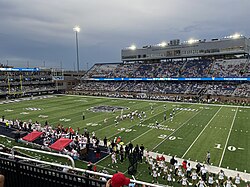 S.B. Ballard Stadium, on the campus of Old Dominion University.
 -
 Trojan Arena, on the campus of Troy University.


- Notes
- ^ Louisiana's women's basketball team primarily plays at the Cajundome but occasionally plays at Earl K. Long Gymnasium on the main campus.
Athletic department revenue by school
[edit]Total revenue includes ticket sales, contributions and donations, rights and licensing, student fees, school funds and all other sources including TV income, camp income, concessions, and novelties.
Total expenses includes coach and staff salaries, scholarships, buildings and grounds, maintenance, utilities and rental fees, recruiting, team travel, equipment and uniforms, conference dues, and insurance.
The following table shows institutional reporting to the United States Department of Education as shown on the DOE Equity in Athletics website for the 2023–24 academic year.[95]
| Institution | 2023–24 Total Revenue from Athletics | 2023–24 Total Expenses on Athletics |
|---|---|---|
| James Madison University | $66,110,281 | $66,110,281 |
| Old Dominion University | $51,827,948 | $51,827,948 |
| Texas State University | $46,310,998 | $46,310,998 |
| Marshall University | $45,966,327 | $45,966,327 |
| Coastal Carolina University | $43,509,290 | $43,509,290 |
| Appalachian State University | $43,110,256 | $43,110,256 |
| University of Louisiana at Lafayette | $42,952,287 | $42,952,287 |
| Georgia State University | $39,204,432 | $39,204,432 |
| Georgia Southern University | $36,967,213 | $36,967,213 |
| Troy University | $36,937,664 | $36,937,664 |
| University of South Alabama | $30,591,632 | $30,591,632 |
| Louisiana Tech University | $30,305,928 | $30,305,928 |
| Arkansas State University | $28,162,528 | $28,162,528 |
| University of Southern Mississippi | $28,107,301 | $28,107,301 |
| University of Louisiana at Monroe | $20,253,458 | $20,253,458 |
Academics
[edit]Four of the Sun Belt's member schools, Georgia State, Louisiana, Old Dominion and Southern Miss are doctorate-granting universities with "very high research activity," the highest classification given by the Carnegie Foundation for the Advancement of Teaching.[96]
Appalachian State is also currently ranked as one of the Top 10 regional schools in the South by the U.S. News & World Report.
| University | Affiliation | Carnegie[96] | Endowment[97] | US News[98] | Forbes[99] |
|---|---|---|---|---|---|
| Appalachian State University | Public (UNC) | Research (High) | $99,593,000[100] | 6 (Regional: South) | 301 |
| Arkansas State University | Public (ASU System) | Research (High) | $66,217,000[100] | 317 (National) | N/A[d 1] |
| Coastal Carolina University | Public | Master's (Larger) | $39,432,000[100] | 38 (Regional: South) | N/A[d 2] |
| Georgia Southern University | Public (USG System) | Research (High) | $50,999,000[100] | 331-440 (National) | N/A[d 3] |
| Georgia State University | Public (USG System) | Research (Very High) | $155,303,000[100] | 234 (National) | 367 |
| James Madison University | Public | Research (High) | $116,700,000[101] | 151 (National) | 139 |
| University of Louisiana at Lafayette | Public (UL System) | Research (Very High) | $178,300,000[102] | 331-440 (National) | N/A[d 4] |
| University of Louisiana at Monroe | Public (UL System) | Doctoral/Research | $28,787,795[103] | 331-440 (National) | N/A[d 5] |
| Marshall University | Public | Research (High) | $192,000,000[101] | 299 (National) | N/A[d 6] |
| Old Dominion University | Public | Research (Very High) | $265,800,000[101] | 299 (National) | 472 |
| University of South Alabama | Public | Research (High) | $555,735,000[100] | 331-440 (National) | N/A[d 7] |
| University of Southern Mississippi | Public | Research (Very High) | $136,300,000[101] | 331-440 (National) | N/A[d 8] |
| Texas State University | Public (TSU System) | Research (High) | $186,676,000[100] | 331-440 (National) | 385 |
| Troy University | Public (TU System) | Doctoral/Research[104] | $191,458,000[105] | 44 (Regional: South) | N/A[d 9] |
Notes
[edit]- ^ Arkansas State is not ranked in the 2022 Forbes America's Best Colleges rankings.
- ^ Coastal Carolina is not ranked in the 2022 Forbes America's Best Colleges rankings.
- ^ Georgia Southern is not ranked in the 2022 Forbes America's Best Colleges rankings.
- ^ Louisiana-Lafayette is not ranked in the 2022 Forbes America's Best Colleges rankings.
- ^ Louisiana-Monroe is not ranked in the 2022 Forbes America's Best Colleges rankings.
- ^ Marshall is not ranked in the 2022 Forbes America's Best Colleges rankings.
- ^ South Alabama is not ranked in the 2022 Forbes America's Best Colleges rankings.
- ^ Southern Miss is not ranked in the 2022 Forbes America's Best Colleges rankings.
- ^ Troy is not ranked in the 2022 Forbes America's Best Colleges rankings.
References
[edit]- ^ "UCF HOPES TO FIND FAME IN EXPANDED SUN BELT". OrlandoSentinel.com. July 3, 1991. Retrieved March 1, 2020.
- ^ Meadows, Dave (May 20, 1992). "UCF ends marriage with Sun Belt Conference".
- ^ "The Orlando Sentinel from Orlando, Florida on May 20, 1992 · Page 70". Newspapers.com. May 20, 1992. Retrieved March 1, 2020.
- ^ "WKU Regents Approve Move To Division I-A Football" (Press release). Western Kentucky University. November 2, 2006. Archived from the original on January 15, 2008. Retrieved November 3, 2006.
- ^ "University of New Orleans gets approval from NCAA to move to Division II". The Times-Picayune. April 20, 2011. Retrieved September 6, 2011.
- ^ a b McMurphy, Brett (April 7, 2012). "Sun Belt adding Georgia State". College Football Insider. CBS Sports. Retrieved April 9, 2012.
- ^ "Texas State will leave WAC, join Sun Belt in 2013–14". Sports Illustrated. May 2, 2012. Archived from the original on June 5, 2012. Retrieved May 2, 2012.
- ^ "University of Texas-Arlington Mavericks to join Sun Belt Conference in 2013". ESPN. May 25, 2012. Retrieved May 29, 2015.
- ^ "Conference USA Adds Five New Members". Conferenceusa.com. Archived from the original on May 10, 2012. Retrieved May 29, 2015.
- ^ McMurphy, Brett (November 29, 2012). "C-USA adds FAU, Middle Tennessee State". ESPN. Retrieved May 29, 2015.
- ^ [1] Archived April 6, 2013, at the Wayback Machine
- ^ [2] Archived December 3, 2013, at the Wayback Machine
- ^ [3] Archived December 3, 2013, at the Wayback Machine
- ^ [4] Archived July 3, 2013, at the Wayback Machine
- ^ "Board approves Idaho football going independent". College Football.
- ^ "Idaho football returning to Sun Belt in 2014 – Spokesman.com – March 27, 2013". Spokesman.com.
- ^ "Boise, Meridian, Nampa, Caldwell news by Idaho Statesman". Idaho Statesman.
- ^ "Statement from Big South Commissioner Kyle B. Kallander on Coastal Carolina" (Press release). Big South Conference. September 1, 2015. Archived from the original on September 3, 2015. Retrieved September 1, 2015.
- ^ "Sun Belt Football to Be 10 Teams in 2018" (Press release). Sun Belt Conference. March 1, 2016. Retrieved March 1, 2016.
- ^ "Sun Belt announces football divisions for 2018, new collaborative replay system". CBS Sports. Retrieved May 23, 2017.
- ^ "Texas, Oklahoma regents accept SEC invitation". ESPN.com. July 30, 2021. Retrieved October 21, 2021.
- ^ "Big 12 Conference Adds Four New Members" (Press release). Big 12 Conference. September 10, 2021. Retrieved September 10, 2021.
- ^ "6 schools officially apply to join AAC, source says". ESPN.com. October 19, 2021. Retrieved October 21, 2021.
- ^ "American Athletic Conference Announces the Addition of Six Universities" (Press release). American Athletic Conference. October 21, 2021. Retrieved October 21, 2021.
- ^ "Sun Belt, Conference USA considering adding teams amid AAC expansion". CBS Sports. October 20, 2021. Retrieved October 21, 2021.
- ^ a b McMurphy, Brett (October 22, 2021). "Sources: Southern Miss Joins Sun Belt; Marshall, Old Dominion, JMU Will Join in Coming Days". The Action Network. Retrieved October 22, 2021.
- ^ "Southern Miss Joins Sun Belt Conference" (Press release). Sun Belt Conference. October 26, 2021. Retrieved October 26, 2021.
- ^ "Old Dominion Joins Sun Belt Conference" (Press release). Sun Belt Conference. October 27, 2021. Retrieved October 27, 2021.
- ^ Rittenberg, Adam (October 26, 2021). "Southern Miss officially joins Sun Belt, will enter league no later than July 2023". ESPN.com. Retrieved October 26, 2021.
- ^ "Marshall Joins Sun Belt Conference" (Press release). Sun Belt Conference. October 30, 2021. Retrieved November 1, 2021.
- ^ Traylor, Grant (November 1, 2021). "Sun Belt confirms men's soccer being reinstated". The Herald-Dispatch. Huntington, WV. Retrieved November 2, 2021.
- ^ Madia, Greg (October 28, 2021). "Va.'s Gubernatorial Election Impacts JMU-Sun Belt Timeline". Daily News-Record. Harrisonburg, VA. Retrieved October 28, 2021.
- ^ "James Madison's move to Sun Belt would trigger messy divorce from CAA". The Washington Post. November 4, 2021. Retrieved November 5, 2021.
- ^ "James Madison Joins Sun Belt Conference" (Press release). Sun Belt Conference. November 6, 2021. Retrieved November 6, 2021.
- ^ Mettler, Shane (November 5, 2021). "Dukes Get Approval For Move To FBS, Join Sun Belt". Daily News-Record. Retrieved November 20, 2021.
Sources said JMU's other sports would begin competition in the Sun Belt during the 2022-23 school year and it is expected the Dukes will be eligible for conference championships in their debut seasons.
- ^ "James Madison to Compete in Sun Belt Conference in 2022-2023" (Press release). James Madison Dukes. February 2, 2022. Retrieved February 3, 2022.
- ^ "Little Rock Receives Board Approval To Join Ohio Valley Conference" (Press release). Little Rock Trojans. Retrieved December 8, 2021.
- ^ "University of Texas at Arlington Accepts Invitation to Join WAC" (Press release). Western Athletic Conference. January 21, 2022. Retrieved January 22, 2022.
- ^ Rittenberg, Adam (February 11, 2022). "Sun Belt-bound Marshall, Old Dominion, Southern Miss announce plans to depart Conference USA in June". ESPN.com. Retrieved February 11, 2022.
- ^ Dinich, Heather (February 23, 2022). "Marshall sues Conference USA to push up departure for Sun Belt". ESPN.com. Retrieved February 23, 2022.
- ^ Thamel, Pete (March 29, 2022). "Move of Marshall, Old Dominion, Southern Miss from Conference USA to Sun Belt now complete". ESPN.com. Retrieved March 29, 2022.
- ^ "Sun Belt Conference Announces Return of Men's Soccer This Fall" (Press release). Sun Belt Conference. April 6, 2022. Retrieved April 6, 2022.
- ^ "UCF Men's Soccer to Join Sun Belt Conference in Fall 2023" (Press release). Sun Belt Conference. June 21, 2022. Retrieved June 22, 2022.
- ^ "Sun Belt Presidents/Chancellors add two sports, look into adding third" (Press release). Sun Belt Conference. June 9, 2022. Retrieved June 9, 2022.
- ^ "Sun Belt Conference Adds Beach Volleyball For 2023" (Press release). Sun Belt Conference. January 18, 2023. Retrieved January 19, 2023.
- ^ "Sun Belt Conference Announces Return of Women's Swimming and Diving For 2023-24" (Press release). Sun Belt Conference. August 17, 2023. Retrieved August 17, 2023.
- ^ Keith, Braden (December 13, 2024). "Liberty, James Madison, and Marshall Women's Swim & Dive Will Join the AAC in 2025-2026". swimswam.com. Retrieved December 18, 2024.
- ^ Yum, Caleb. "Texas State approves $5 million buyout to leave Sun Belt, join Pac-12". Austin American-Statesman. Retrieved June 30, 2025.
- ^ "Louisiana Tech returns to Sun Belt, sources say". ESPN.com. July 14, 2025. Retrieved July 14, 2025.
- ^ "Appalachian State University | Data USA".
- ^ "CCU Enrollment Trends Fall 2019". Coastal Carolina University. Archived from the original on January 27, 2020. Retrieved January 27, 2020.
- ^ "Coastal Carolina University | Data USA".
- ^ "Fall 2023 enrollment numbers for Georgia Southern, University System of Georgia" (PDF). Georgia Southern University. Archived from the original (PDF) on November 15, 2023. Retrieved November 14, 2023.
- ^ "Georgia Southern University | Data USA".
- ^ "Fall Semester Enrollment Report" (PDF). Georgia Board of Regents. Retrieved November 14, 2023.
- ^ "Georgia State University | Data USA".
- ^ "James Madison University | Data USA".
- ^ "MU Quick Facts". Marshall University. Archived from the original on September 11, 2019. Retrieved August 22, 2016.
- ^ "Marshall University | Data USA".
- ^ "University Facts & Figures". Old Dominion University. Retrieved October 27, 2021.
- ^ "Old Dominion University | Data USA".
- ^ "ARKANSAS STATE HAS NEAR-RECORD ENROLLMENT FOR FALL 2022 WITH GAINS IN MOST CATEGORIES". Arkansas State University. September 8, 2022. Archived from the original on September 15, 2022. Retrieved September 16, 2022.
- ^ "Graduate school boosts UL Lafayette overall enrollment". University of Louisiana at Lafayette. October 3, 2019. Archived from the original on January 28, 2020. Retrieved January 28, 2020.
- ^ "University of Louisiana at Lafayette | Data USA".
- ^ "University Planning & Analsysis Quick Facts Fall 2019". University of Louisiana Monroe. Archived from the original on January 27, 2020. Retrieved January 27, 2020.
- ^ "University of Louisiana at Monroe | Data USA".
- ^ "University of South Alabama Historical Enrollment by Fall Semester Total Headcount Enrollment* by Fall Semester". University of South Alabama. Archived from the original on August 13, 2019. Retrieved January 28, 2020.
- ^ "University of South Alabama | Data USA".
- ^ "USM Defies National Trends, Reaches Highest Enrollment in Six Years". The University of Southern Mississippi. January 13, 2021. Retrieved October 25, 2021.
- ^ "University of Southern Mississippi | Data USA".
- ^ "Quarterly Board of Regents Meeting November 14 - 15, 2019" (PDF). Texas State University System. pp. 47–50. Archived from the original (PDF) on January 28, 2020. Retrieved January 28, 2020.
- ^ "Next is Now Factsheet". September 23, 2024.
- ^ "Troy University Headcount Enrollment By Classification and Enrollment Status Fall 2018" (PDF). Troy University. Archived from the original (PDF) on January 28, 2020. Retrieved January 28, 2020.
- ^ "Troy University (102368) | Data USA".
- ^ "Louisiana Tech celebrates six-year enrollment milestone and record-setting freshman class". Louisiana Tech University. September 23, 2024. Retrieved November 28, 2024.
- ^ "Louisiana Tech University | Data USA".
- ^ "Sun Belt Conference commissioner Wright Waters to retire in July". ESPN.com. October 12, 2011. Retrieved May 29, 2015.
- ^ Joyce, Ethan (March 19, 2019). "The Sun Belt's Keith Gill on his new conference and being the first African-American FBS commissioner". Winston-Salem Journal. Archived from the original on April 1, 2019. Retrieved April 1, 2019.
- ^ Kercheval, Ben (March 19, 2019). "Sun Belt hires Keith Gill as first African-American commissioner overseeing FBS conference". CBS Sports. Archived from the original on April 1, 2019. Retrieved April 1, 2019.
- ^ "Sun Belt Conference". Sunbeltsports.org. Retrieved May 28, 2015.
- ^ "2020-21 Vic Bubas Cup Standings". sunbeltsports.org. Retrieved March 24, 2021.
- ^ "Sun Belt Football to Be 10 Teams in 2018" (Press release). Sun Belt Conference. March 1, 2016. Retrieved March 1, 2016.
- ^ "Sun Belt announces football divisions for 2018, new collaborative replay system". CBS Sports. Retrieved May 23, 2017.
- ^ "Inaugural Sun Belt Football Championship to be played in 2018". sunbeltsports.org. June 8, 2016.
- ^ "Big NCAA penalties for UL-Lafayette: Cajuns vacate 20-plus wins, two bowls, 2013 Sun Belt title". The Advocate. March 6, 2016.
- ^ "Sun Belt & ESPN Announce 2024 Bowl Season Slate". sunbeltsports.org. June 6, 2024.
- ^ "2021–22 NCAA Men's Basketball Records" (PDF). NCAA. Retrieved November 5, 2021.
- ^ "2023-24 Division I Women's Basketball Records" (PDF). NCAA. Retrieved September 27, 2023.
- ^ "Pensacola Selected to Host 2021-25 Basketball Championships" (Press release). Sun Belt Conference. March 3, 2020. Retrieved March 3, 2020.
- ^ "A-State Baseball 2014 Baseball Reference Guide" (PDF). Arkansas State University Athletics. p. 2. Archived from the original (PDF) on September 7, 2015. Retrieved December 5, 2014.
- ^ "Springs Brooks Stadium (Vrooman Field)". Coastal Carolina University Athletics. Archived from the original on July 9, 2016. Retrieved June 30, 2016.
- ^ "2014-15 Panther Men's Basketball" (PDF). Georgia State University Athletics. p. 1. Archived from the original (PDF) on March 4, 2016. Retrieved January 11, 2015.
Arena: GSU Sports Arena (3,854)
- ^ "Marshall Baseball Field Named In Honor of Jack Cook" (Press release). Marshall Thundering Herd. June 21, 2023. Retrieved August 7, 2023.
- ^ "Trojan Arena". Troy University. Retrieved September 11, 2015.
Trojan Arena, a 6,000-seat multi-purpose facility, opened in the fall of 2012.
- ^ "Equity in Athletics Data Analysis". U.S. Department of Education.
- ^ a b "Carnegie Classifications Institution Lookup". Carnegie Foundation for the Advancement of Teaching. 2021. Retrieved October 26, 2021.
- ^ "National Association of College and University Business Officers" (PDF). National Association of College and University Business. 2013. Archived from the original (PDF) on May 21, 2014. Retrieved July 1, 2014.
- ^ "2022-2023 Best College Rankings and Lists". U.S. News & World Report. 2022. Retrieved September 13, 2022.
- ^ "Forbes America's Top Colleges 2021". Forbes. 2021. Retrieved October 22, 2021.
- ^ a b c d e f g "U.S. and Canadian Institutions Listed by Fiscal Year (FY) 2017 Endowment Market Value and Change* in Endowment Market Value from FY2016 to FY2017" (PDF). National Association of College and University Business Officers and Commonfund Institute. 2018. Archived from the original (PDF) on March 6, 2018. Retrieved February 22, 2018.
- ^ a b c d U.S. and Canadian Institutions Listed by Fiscal Year 2020 Endowment Market Value and Change in Endowment Market Value from FY19 to FY20 (Report). National Association of College and University Business Officers and TIAA. February 19, 2021. Retrieved February 20, 2021.
- ^ "Louisiana university endowments following national downturn; here's what that means for LSU, others". February 11, 2017.
- ^ "Notes to the Financial Statements § Note 10 - Endowments". Financial Report for the Years Ended June 30, 2019 and 2018. University of Louisiana Monroe Foundation. December 17, 2019. p. 26.
- ^ "TROY achieves historic milestone with ACHE instructional role change". September 8, 2023.
- ^ "TROY endowment values and returns" (PDF). January 15, 2024.
External links
[edit]

| Full members |
|  |
|---|---|---|
| Future members | ||
| Associate members | ||
| Championships and awards | ||
| ||
Sun Belt Conference
View on GrokipediaHistory
Origins and early development (1976–1989)
The Sun Belt Conference was founded on August 4, 1976, as a non-football athletic conference primarily centered on men's basketball, with six charter members: the University of South Alabama, Georgia State University, Jacksonville University, the University of North Carolina at Charlotte, the University of South Florida, and the University of New Orleans (then known as the New Orleans Privateers).[11][12][13] These institutions, located across the southeastern and southern United States, sought to create a competitive mid-major league amid shifting alignments in NCAA Division I athletics. The conference's establishment reflected a regional emphasis on growing basketball programs in sunbelt states, filling a gap left by the dissolution of other leagues and the need for stable scheduling.[14] The inaugural men's basketball season took place in 1976–77, marking the conference's competitive debut with a round-robin schedule among the charter members.[15] The first conference tournament followed in March 1977 at the Charlotte Coliseum, where UNC Charlotte defeated New Orleans 71–70 in the championship game to claim the title and earn an automatic bid to the NCAA Tournament.[16] This early success underscored the league's basketball identity, with standout performances from players like UNC Charlotte's Cedric Maxwell, who was named tournament MVP. Over the subsequent years, the conference gradually incorporated additional men's sports, including baseball (starting regular-season play in 1977) and golf, while maintaining its non-football status to prioritize resource allocation toward basketball excellence.[17] Under founding commissioner Vic Bubas, who served from 1976 to 1990 after a distinguished coaching career at Duke University, the Sun Belt navigated its formative challenges and expansions.[18][19] Bubas's leadership stabilized the league during a period of flux in college athletics, fostering growth despite early hurdles such as the departure of New Orleans in 1980 due to its inadequate on-campus facilities, which could not accommodate growing attendance demands.[14][12] In response to Title IX mandates, the conference began adding women's sports in the early 1980s, with women's basketball debuting competitively by the 1982–83 season and its first tournament held in 1983, won by Old Dominion University after it joined as a member.[20] These steps laid the groundwork for broader athletic development while preserving the conference's core basketball focus.Expansion and realignment (1990s–2000s)
In the early 1990s, the Sun Belt Conference faced existential challenges due to widespread realignment, with several founding members departing for other leagues, leaving only Jacksonville, South Alabama, and Western Kentucky. To ensure survival, the conference merged with the American South Conference in 1991, retaining the Sun Belt name despite the American South being the larger entity at the time. This merger expanded the league to 10 institutions, incorporating football-playing Division I-A programs such as Arkansas State, Louisiana Tech, the University of Louisiana at Lafayette (formerly Southwestern Louisiana), and New Mexico State, which provided a foundation for future football development even though the conference did not yet sponsor the sport.[21] The merger marked a pivotal shift toward regional consolidation in the Southeast and Southwest, aligning the Sun Belt with institutions capable of competing in major sports. Under Commissioner Craig Thompson (1991–1998), the conference stabilized and began exploring football sponsorship, while also expanding women's athletics to comply with Title IX requirements. Volleyball was added as a sponsored sport in 1990, with Arkansas State claiming the first championship, and women's tennis followed in the mid-1990s, contributing to a broader commitment to gender equity across member schools.[22] By the late 1990s, further membership changes reinforced the conference's focus on football infrastructure. Troy State University (now Troy University) joined in 1994 for non-football sports, enhancing basketball and other programs, and transitioned to full membership including football in 2005 after completing its Division I-A transition. North Texas joined as a full member in 2001, bolstering the league's Texas presence following its stint in the Big West Conference. Meanwhile, realignment continued with departures, including New Mexico State moving to the Western Athletic Conference (WAC) in 2005 and Louisiana Tech following suit in 2001, prompting the Sun Belt to seek replacements amid ongoing regional competition.[23] The conference's transition to official Division I-A football sponsorship occurred in 2001 under Commissioner Wright Waters (1999–2012), who played a key role in building the necessary infrastructure, including scheduling alliances and facility upgrades. The inaugural season featured seven teams—Arkansas State, Idaho, Louisiana-Lafayette, Louisiana-Monroe, Middle Tennessee State, New Mexico State, and North Texas—with Middle Tennessee State and North Texas sharing the first conference championship at 5–2 records.[24][25][2] Western Kentucky, a longtime non-football member since 1982, elevated its football program to Division I-A in 2007 within the Sun Belt, further solidifying the league's football identity. Waters' leadership during this era emphasized academic standards alongside athletic growth, expanding the conference to 10 full members by the mid-2000s. Additional expansions in the 2000s included Florida Atlantic and Florida International joining as football-only members in 2005, increasing football competition to eight teams and extending the conference's footprint into South Florida. These changes, coupled with the legacy of the non-football origins, positioned the Sun Belt for sustained regional relevance amid national realignment pressures.[26]Modern growth and restructuring (2010s–2020s)
In the early 2010s, the Sun Belt Conference navigated significant membership shifts amid broader national realignments. In 2013, Texas State University joined as a full member effective July 1, expanding the conference's footprint in Texas, while the University of North Texas departed for Conference USA after 12 years in the Sun Belt.[27][28] Concurrently, Florida Atlantic University and Florida International University left for Conference USA effective June 30, 2013, reducing the core membership but prompting strategic additions to maintain competitive balance.[29] These changes reflected the conference's efforts to stabilize its roster during a period of flux in Group of Five alignments. The conference accelerated its growth by incorporating successful Football Championship Subdivision (FCS) programs transitioning to the Football Bowl Subdivision (FBS). On July 1, 2014, Appalachian State University and Georgia Southern University joined as full members, bringing established football pedigrees—including multiple FCS national titles—and enhancing the Sun Belt's eastern presence.[30] By 2016, Coastal Carolina University became a full non-football member on July 1, with its football program entering a two-year FBS transition before full competition in 2018; meanwhile, the University of Louisiana at Lafayette solidified its status as a full football participant in Sun Belt play, contributing to the conference's deepening roster of competitive programs.[31][32][33] The late 2010s and early 2020s saw further expansion driven by instability in peer conferences. In 2022, James Madison University accelerated its FBS transition and joined the Sun Belt as a full member starting July 1, adding a rising program with strong athletic facilities.[34] That same year, Marshall University, Old Dominion University, and the University of Southern Mississippi departed Conference USA to become full Sun Belt members effective July 1, bolstering the league's East Division and increasing full football membership to 13 teams.[35] By 2025, the Sun Belt added Louisiana Tech University as its 14th full football member following a unanimous vote by conference CEOs on July 15, effective no later than July 1, 2027, to offset the departure of Texas State to the Pac-12 and renew regional rivalries in Louisiana.[10] Preliminary discussions with Ohio University emerged in July 2025 as a potential football-only addition, though no formal agreement has been reached.[36] Under Commissioner Keith Gill, appointed on March 19, 2019, as the first African American to lead an FBS conference, the Sun Belt prioritized realignment stability and competitive elevation.[37] Gill's leadership guided the conference through multiple expansions, including a June 30, 2025, statement emphasizing sustained growth amid ongoing national shifts.[9] In 2025, he assumed the role of chair for the NCAA Division I Men's Basketball Committee, highlighting his influence in broader collegiate athletics governance.[38] The COVID-19 pandemic disrupted operations in the 2020–2021 seasons, forcing a condensed football schedule in 2020 with multiple postponements, such as rescheduled games due to outbreaks.[39] The 2020 Sun Belt Championship Game between Coastal Carolina and Louisiana was canceled on December 17 after a positive test in the Chanticleers' program, declaring co-champions amid contact tracing protocols.[40] These interruptions, coupled with limited or absent spectators, led to substantial revenue losses for member institutions, with Sun Belt schools like Georgia State and South Alabama facing tens of millions in forgone ticket and ancillary income.[41]Membership
Current full members
The Sun Belt Conference comprises 14 full member institutions as of the 2025–26 academic year, all competing in NCAA Division I athletics, including Football Bowl Subdivision (FBS) football. These universities are located across nine states in the Southeastern and South Central United States, providing a diverse geographic footprint from the Atlantic Coast to the Gulf South. Full members participate in all 18 conference-sponsored sports, fostering broad-based athletic competition and regional rivalries. The conference announced an invitation to Louisiana Tech University, which accepted on July 15, 2025, and is set to join no later than July 1, 2027, to replace Texas State following its departure to the Pac-12 in 2026–27. Louisiana Tech's exact join date is to be determined but no later than July 1, 2027, potentially 2026 to align with Texas State's exit.[10][42] The member institutions vary in size and history, with enrollments generally ranging from approximately 10,000 to over 40,000 students, supporting robust athletic departments that emphasize student-athlete success and community engagement. Many have transitioned from lower divisions or other conferences in recent years, bringing established programs in football, basketball, and Olympic sports. For instance, James Madison University transitioned from NCAA Division I FCS football upon joining in 2022, quickly establishing itself as a competitive force in the Sun Belt.[34][43] The following table summarizes the current full members, including their locations, joining dates, nicknames, primary colors, and key athletic notes:| Institution | Location | Joined | Nickname | Colors | Athletic Notes |
|---|---|---|---|---|---|
| Appalachian State University | Boone, North Carolina | 2014 | Mountaineers | Black, gold | Known for football success, including multiple conference titles since joining; competes in 17 sports.[44] |
| Arkansas State University | Jonesboro, Arkansas | 1991 | Red Wolves | Scarlet, black | Longstanding member with strong baseball and basketball programs; 16 sports sponsored.[45] |
| Coastal Carolina University | Conway, South Carolina | 2016 | Chanticleers | Teal, black | Football-only initially, full membership in 2017; notable for 2016 national championship in baseball. |
| Georgia Southern University | Statesboro, Georgia | 2014 | Eagles | Blue, white | Transitioned from FCS with six national football titles; 16 sports.[44] |
| Georgia State University | Atlanta, Georgia | 2013 | Panthers | Blue, white | Urban campus with emphasis on basketball and track; rejoined after earlier stint; 15 sports.[46] |
| James Madison University | Harrisonburg, Virginia | 2022 | Dukes | Purple, gold | FBS transition from FCS; strong in football and soccer; 15 sports with high academic standards.[34] |
| University of Louisiana at Lafayette | Lafayette, Louisiana | 1991 | Ragin' Cajuns | Vermilion, white | Flagship program with baseball powerhouse (multiple College World Series); 16 sports.[47] |
| Marshall University | Huntington, West Virginia | 2022 | Thundering Herd | Green, white | FBS football with passionate fanbase; excels in soccer and rifle; 15 sports. |
| Old Dominion University | Norfolk, Virginia | 2022 | Monarchs | Slate blue, silver | Strong in field hockey (national champions) and wrestling; 18 sports. |
| University of South Alabama | Mobile, Alabama | 1976 | Jaguars | Blue, white | Charter member; growing football program since 2009; 17 sports.[3] |
| University of Southern Mississippi | Hattiesburg, Mississippi | 2022 | Golden Eagles | Black, gold | Strong in basketball and football; 17 sports.[2] |
| Texas State University | San Marcos, Texas | 2013 | Bobcats | Maroon, gold | Large enrollment supporting diverse athletics; notable in baseball and gymnastics; 17 sports.[48] |
| Troy University | Troy, Alabama | 2005 | Trojans | Cardinal, silver, black | Consistent football contender with multiple Sun Belt titles; 17 sports.[49] |
| University of Louisiana at Monroe | Monroe, Louisiana | 2006 | Warhawks | Maroon, gold | Full membership post-football affiliate; focuses on basketball and golf; 16 sports.[50] |
Current and former affiliate members
The Sun Belt Conference sponsors affiliate memberships for select sports to meet NCAA minimum participation requirements and support emerging disciplines. In beach volleyball, an emerging sport for women, the conference added four affiliate members in 2023 to form an eight-team league alongside full members Coastal Carolina, Georgia State, ULM, and Southern Miss. These affiliates include the College of Charleston, Mercer University, Stephen F. Austin State University, and the University of North Carolina Wilmington (UNCW). This arrangement allows cost-sharing and competitive balance without requiring full conference membership.[51][52] For men's soccer, West Virginia University joined as an affiliate member in 2022 to bolster the league's depth, competing through the 2025 season. In 2025, West Virginia's senior forward Marcus Caldeira was named Sun Belt Men's Soccer Player of the Year and Offensive Player of the Year, highlighting the program's impact.[53][54][55] Former affiliate memberships have included both temporary football partnerships during conference realignments and soccer affiliates to achieve NCAA sponsorship thresholds. In football, the University of Idaho and New Mexico State University competed as affiliates from 2014 to 2017 and 2022, respectively, providing geographic balance and stability amid Western Athletic Conference disruptions; Idaho departed after 2017 to return to the Big Sky Conference, while New Mexico State transitioned to Conference USA in 2022.[56][57] In men's soccer, early affiliates from 2014 included Hartwick College (through 2018), Howard University (through 2016), and New Jersey Institute of Technology (NJIT, through 2020), enabling the conference to reinstate the sport with a viable league of six teams. These affiliations addressed minimums for NCAA championship eligibility but ended as schools realigned or dropped Division I status.[58][59][60]Former full members
The Sun Belt Conference has experienced significant membership turnover since its founding in 1976, with several institutions departing for other conferences amid broader NCAA realignments driven by factors such as geographic fit, media rights deals, and competitive stability. Early exits in the 1980s and 1990s often stemmed from the league's initial focus on non-football sports and the allure of independent status or emerging conferences, while later departures in the 2000s and 2010s reflected the push toward FBS football viability and regional clustering in leagues like Conference USA (C-USA).[2][14] Among the original charter members, the University of North Carolina at Charlotte departed after the 1990 academic year to pursue independent status before joining C-USA in 1995, citing a desire for greater scheduling flexibility during the conference's transitional phase.[61] Jacksonville University remained longer as a stabilizing force but left following the 1998 season for the Atlantic Sun Conference (then Trans America Athletic Conference), seeking better alignment with Florida-based rivals.[62] The University of South Florida exited after 1991 to join the Metro Conference, driven by its rapid growth and football program's FBS ambitions.[63] Georgia State University, another founder, departed after the 1981 season for independent status before entering the Trans America Athletic Conference, as the Sun Belt's basketball-centric model no longer suited its urban expansion.[64] The University of New Orleans, a charter member, left after 1980 due to budget constraints and program scaling back, later rejoining via the 1991 American South merger only to exit again in 2010 for the Southland Conference amid further financial pressures and the folding of its football program in 2016.[65][66] In the 1990s merger era with the American South Conference, short tenures marked instability; the University of Central Florida joined in 1991 but left after the 1992 season for the Metro Conference, prioritizing football development outside the Sun Belt's footprint.[67] Lamar University (1991–1998) and the University of Texas-Pan American (1991–1998) both departed for the Southland Conference, reflecting Texas institutions' preference for regional leagues with stronger historical ties.[13] The addition of football in 2001 spurred growth but also churn. New Mexico State University was a full member from 2000 to 2005 before shifting to the Western Athletic Conference (WAC) for better West Coast alignment.[68] Western Kentucky University, a mainstay since 1982, left after the 2014 season for C-USA, motivated by enhanced TV exposure and geographic proximity to other Kentucky programs.[69] The University of North Texas joined in 2001 and departed in 2013 for C-USA, seeking stability in a Texas-heavy league amid the Sun Belt's expansion.[70] Florida institutions drove a wave of exits in the early 2010s. Florida International University (FIU), a member since 1998, and Florida Atlantic University (FAU), since 2006 (with football affiliate status in 2005), both transitioned to C-USA in 2013 to consolidate South Florida rivalries and access improved resources.[71][72] The University of Denver, a non-football full member from 1999 to 2012, left for the WAC to better serve its Olympic sports programs in a Western context.[73] More recent departures include the University of Texas at Arlington (2013–2022), which rejoined the WAC for cost efficiencies and regional focus as a non-football school, and the University of Arkansas at Little Rock (1991–2022), which moved to the Ohio Valley Conference to reduce travel costs and align with Midwest institutions.[74][75]| Institution | Membership Years | Departure Destination | Primary Reason |
|---|---|---|---|
| University of North Carolina at Charlotte | 1976–1990 | Independent (later C-USA in 1995) | Scheduling flexibility |
| Georgia State University | 1976–1981 | Independent (later TAAC) | Urban program expansion |
| Jacksonville University | 1976–1998 | Atlantic Sun Conference | Regional rivalries in Florida |
| University of New Orleans | 1976–1980; 1991–2010 | Independent (1981); Southland Conference (2013) | Budget constraints; program cuts |
| University of South Florida | 1976–1991 | Metro Conference | Football growth |
| Lamar University | 1991–1998 | Southland Conference | Texas regional ties |
| University of Texas-Pan American (now UT Rio Grande Valley) | 1991–1998 | Southland Conference | Regional alignment |
| University of Central Florida | 1991–1992 | Metro Conference | Football development |
| New Mexico State University | 2000–2005 | Western Athletic Conference | Western geographic fit |
| University of North Texas | 2001–2013 | Conference USA | Texas league stability |
| University of Denver | 1999–2012 | Western Athletic Conference | Olympic sports focus |
| Florida International University | 1998–2013 | Conference USA | South Florida rivalries |
| Florida Atlantic University | 2006–2013 | Conference USA | South Florida rivalries |
| Western Kentucky University | 1982–2014 | Conference USA | Media exposure |
| University of Texas at Arlington | 2013–2022 | Western Athletic Conference | Cost and regional focus (non-football) |
| University of Arkansas at Little Rock | 1991–2022 | Ohio Valley Conference | Travel cost reduction |
Membership timeline
The membership of the Sun Belt Conference has undergone numerous changes since its founding, reflecting broader trends in collegiate athletic realignment. The following table summarizes key membership transitions for full members (unless noted as affiliate or sport-specific), organized chronologically by academic year of change. Shading or notation is simulated via bold text for active membership periods and italics for departures or transitions; sport-specific notes (e.g., football affiliates) are included where relevant for context.| Year | Key Changes and Active Full Members (Notable Events) |
|---|---|
| 1976 | Founding (charter members, basketball-only initially): Georgia State, Jacksonville, New Orleans, UNC Charlotte, South Alabama, South Florida. Total: 6. [13] |
| 1978 | Join: UAB. Active: Georgia State, Jacksonville, New Orleans, UNC Charlotte, South Alabama, South Florida, UAB. Total: 7. |
| 1980 | Depart: New Orleans (to independent). Active: Georgia State, Jacksonville, UNC Charlotte, South Alabama, South Florida, UAB. Total: 6. [76] |
| 1982 | Join (full): Old Dominion, Western Kentucky. Note: Football affiliate era begins with these additions, as both had FBS programs, though conference football sponsorship starts later. Active: Georgia State, Jacksonville, UNC Charlotte, South Alabama, South Florida, UAB, Old Dominion, Western Kentucky. Total: 8. [2] |
| 1991 | Depart (to various conferences like Metro, TAAC): Georgia State, Old Dominion, UNC Charlotte, UAB, South Florida. Join (via merger with American South Conference): Arkansas State, Arkansas–Little Rock, Louisiana (Lafayette), Louisiana Tech, New Orleans (returns). Note: Jacksonville, South Alabama, Western Kentucky remain; Western Michigan joins as football-only affiliate. Active: Arkansas State, Arkansas–Little Rock, Jacksonville, Louisiana, Louisiana Tech, New Orleans, South Alabama, Western Kentucky. Total: 8 full. [14] |
| 1992 | Depart: Central Florida (joined briefly via merger, leaves for independent). Active: Arkansas State, Arkansas–Little Rock, Jacksonville, Louisiana, Louisiana Tech, New Orleans, South Alabama, Western Kentucky. Total: 8. |
| 1998 | Depart: Jacksonville (to Atlantic Sun), Lamar (to independent), Texas–Pan American (to independent). Join: FIU. Active: Arkansas State, Arkansas–Little Rock, FIU, Louisiana, Louisiana Tech, New Orleans, South Alabama, Western Kentucky. Total: 8. [76] |
| 1999 | Join: Denver (non-football). Active: Arkansas State, Arkansas–Little Rock, Denver, FIU, Louisiana, Louisiana Tech, New Orleans, South Alabama, Western Kentucky. Total: 9. |
| 2001 | Note: Conference begins sponsoring football as FBS league. Join (full): Middle Tennessee, New Mexico State, North Texas. Join (football-only): Idaho, ULM. Depart: Louisiana Tech (to WAC). Active full: Arkansas State, Arkansas–Little Rock, Denver, FIU, Louisiana, Middle Tennessee, New Mexico State, New Orleans, North Texas, South Alabama, Western Kentucky. Total full: 11. [77] |
| 2003 | Join (football-only): Utah State. Active full unchanged; football affiliates: Idaho, ULM, Utah State. Total full: 11. |
| 2004 | Join (football-only): Troy. Active full unchanged; football affiliates: Idaho, Troy, ULM, Utah State. Total full: 11. |
| 2005 | Depart (football-only): Idaho, New Mexico State, Utah State (to WAC). Join (full): Florida Atlantic. Active full: Arkansas State, Arkansas–Little Rock, Denver, FIU, Florida Atlantic, Louisiana, Middle Tennessee, New Orleans, North Texas, South Alabama, Troy, Western Kentucky. Total full: 12. [14] |
| 2006 | Football affiliates now: Troy, ULM (full transition). Active full: 12. |
| 2009 | Western Kentucky transitions to full football sponsor. Active full: 12. [12] |
| 2010 | Depart: New Orleans (to Southland). Active full: Arkansas State, Arkansas–Little Rock, Denver, FIU, Florida Atlantic, Louisiana, Middle Tennessee, North Texas, South Alabama, Troy, ULM, Western Kentucky. Total: 12. |
| 2012 | Depart: Denver (to Summit League, non-football). Join (full football): South Alabama. Active full: 12. |
| 2013 | Depart: FIU, Florida Atlantic, Middle Tennessee, North Texas (to C-USA). Join (full): Georgia State (returns), Texas State. Join (basketball-only): UT Arlington. Active full: Arkansas State, Georgia State, Louisiana, South Alabama, Texas State, Troy, ULM, Western Kentucky (8 full); football affiliates: Idaho, New Mexico State return. Total full: 10 (with non-football adjustments). [14] |
| 2014 | Depart: Western Kentucky (to C-USA). Join (full): Appalachian State, Georgia Southern. Note: Full FBS transition for all. Active full: Appalachian State, Arkansas State, Georgia Southern, Georgia State, Louisiana, South Alabama, Texas State, Troy, ULM. Total: 9. Football affiliates: Idaho, New Mexico State. |
| 2016 | Join (full non-football): Little Rock (already member since 1991; notes transition if applicable). Join (full): Coastal Carolina. Active full: 10 + affiliates. Total full: 10. [3] |
| 2018 | Depart (basketball-only): UT Arlington (to WAC). Join (full non-football): Little Rock (full transition). Active full: Appalachian State, Arkansas State, Coastal Carolina, Georgia Southern, Georgia State, Little Rock, Louisiana, South Alabama, Texas State, Troy, ULM. Total: 11. Football affiliates end with NMSU, Idaho departures (2017). |
| 2022 | Depart (non-football): Little Rock (to OVC). Join (full): James Madison, Marshall, Old Dominion (returns), Southern Miss. Active full: Appalachian State, Arkansas State, Coastal Carolina, Georgia Southern, Georgia State, James Madison, Louisiana, Marshall, Old Dominion, South Alabama, Southern Miss, Texas State, Troy, ULM. Total: 14 (all football-sponsoring). [2] |
| 2025 | The conference extended and received acceptance from Louisiana Tech to join as a full member no later than July 1, 2027, to maintain 14 members following Texas State's departure to the Pac-12 effective 2026-27. Louisiana Tech's exact join date is to be determined but no later than July 1, 2027, potentially 2026 to avoid a one-year gap. Active full members remain the 14 from 2022 (including Texas State). [10] [78] [79] [42] |
Governance
Commissioners
The Sun Belt Conference commissioners have played pivotal roles in shaping the league since its inception in 1976, guiding its evolution from a basketball-centric mid-major to a robust Football Bowl Subdivision (FBS) entity with expanded membership and competitive depth. Commissioners are selected through a unanimous vote by the Sun Belt Council of Presidents, the governing body comprising the chief executive officers of member institutions.[80] Vic Bubas served as the inaugural commissioner from 1976 to 1990, establishing the conference's foundation as a premier mid-major basketball league during a 14-year tenure marked by strategic membership growth and operational stability. Under his leadership, the Sun Belt focused on high-profile non-revenue sports, particularly men's basketball, which helped attract competitive programs from the southeastern and southwestern United States. Bubas, a former Duke University head coach renowned for building the Blue Devils into a national powerhouse, brought administrative expertise that emphasized academic integrity and athletic excellence, setting a precedent for the conference's identity.[81][82] Jim Lessig held the position briefly from 1990 to 1991, transitioning the conference amid early expansion discussions following Bubas's retirement. Known for his innovative promotional strategies from prior roles, including as Mid-American Conference commissioner, Lessig maintained continuity during a period of institutional adjustments.[83] Craig Thompson led from 1991 to 1998, overseeing seven years of consolidation and preparation for football's integration into the conference structure. His tenure bridged the gap between the basketball-focused origins and the addition of FBS football, including key administrative alignments that positioned the Sun Belt for broader national relevance. Thompson later became the founding commissioner of the Mountain West Conference in 1999.[84] Wright Waters directed the conference from 1998 to 2012, providing 14 years of stability and spearheading the launch of Sun Belt football in 2001, which elevated the league's profile and revenue streams through bowl affiliations and media deals. His long-term vision facilitated membership stability and the addition of football-sponsoring institutions, transforming the Sun Belt into a more balanced all-sports entity while navigating early 2000s realignments. Waters's era emphasized geographic cohesion and competitive equity, earning him recognition such as the 2014 Dave Dixon Louisiana Sports Leadership Award for his contributions to collegiate athletics.[85][86] Karl Benson served from 2012 to 2019, expanding the conference to 12 full members by 2018 through strategic additions like Appalachian State, Georgia Southern, and Texas State, which bolstered football competitiveness and overall athletic depth. During his seven-year term, the Sun Belt achieved milestones such as multiple NCAA tournament appearances and enhanced television exposure, reinforcing the league's rising status in the Group of Five conferences. Benson's optimistic leadership focused on resource allocation and digital innovation to support member institutions' growth.[87][88] Keith Gill has been commissioner since March 2019, becoming the first African American to lead an FBS conference and navigating extensive 2020s realignments that added James Madison, Marshall, Old Dominion, and Southern Miss in 2022, with Louisiana Tech set to join in 2027 replacing Texas State and maintaining 14 full members. Under Gill, the Sun Belt has emphasized resilience amid national conference shifts, with a June 2025 statement highlighting the benefits of strategic patience in realignment for long-term elevation: "Our best days are ahead as we work to ensure the sustained rise of the Sun Belt Conference." In 2025, Gill assumed the chair role on the NCAA Division I Men's Basketball Committee for the 2025-26 season, further amplifying the conference's influence in national governance.[89][90][9][10][38]| Commissioner | Tenure | Key Contributions |
|---|---|---|
| Vic Bubas | 1976–1990 | Founded basketball-focused league; 14 years of foundational growth.[81] |
| Jim Lessig | 1990–1991 | Promotional innovations during transition.[83] |
| Craig Thompson | 1991–1998 | Prepared for football era; administrative consolidation.[84] |
| Wright Waters | 1998–2012 | Launched FBS football in 2001; 14 years of stability and expansion.[85] |
| Karl Benson | 2012–2019 | Grew to 12 members; enhanced media and competitive profile.[87] |
| Keith Gill | 2019–present | Managed 2020s realignments adding four members in 2022 and Louisiana Tech in 2027 to maintain 14; first African American FBS commissioner; NCAA basketball chair (2025–26).[89][38] |
Headquarters and administration
The headquarters of the Sun Belt Conference are located at 1500 Sugar Bowl Drive in New Orleans, Louisiana, within the Caesars Superdome.[91] The conference established its presence in New Orleans in 2000 at the Pan American Building and relocated to the Superdome in June 2013 to enhance operational efficiency and proximity to major sporting events.[1] The administrative structure includes key personnel such as Deputy Commissioner Kathy Keene, Ph.D., who oversees compliance, governance, and strategic initiatives in her 14th year with the league as of 2019–20.[92] Al Wilson serves as Assistant Commissioner for Championships and Sport Administration, managing tournament logistics and program coordination since joining in January 2023.[93] These roles support the conference's core functions, including oversight of its 20 sponsored NCAA sports across member institutions.[10] Administrative operations emphasize academic excellence and media partnerships, exemplified by the 2024–25 Commissioner's List and Academic Honor Roll, which together recognized over 3,300 student-athletes, including 2,008 achieving a 3.5 GPA or higher on the Commissioner's List.[94] The conference maintains a comprehensive media rights agreement with ESPN, extended through the 2030–31 academic year, ensuring broad distribution of games and events.[95] Annually, the staff coordinates a full slate of championships, with the 2025–26 schedule commencing on October 31 with men's and women's cross country in Foley, Alabama.[96]Sports
Sponsored sports overview
The Sun Belt Conference sponsors 19 NCAA Division I sports as of 2025, encompassing a broad range of competitive opportunities for its member institutions.[10] These include nine men's sports—baseball, basketball, cross country, football, golf, soccer, tennis, indoor track and field, and outdoor track and field—and ten women's sports: basketball, beach volleyball, cross country, golf, soccer, softball, tennis, indoor track and field, outdoor track and field, and volleyball.[5] Note that women's swimming and diving was sponsored until the 2024–25 season but discontinued for 2025–26 due to realignment.[97] This gender breakdown reflects the conference's commitment to Title IX compliance while promoting equitable athletic participation across its 14 full members.[10] Conference competitions emphasize both regular-season standings and postseason tournaments to crown champions and allocate automatic NCAA qualifiers. Most sports feature round-robin or scheduled league play during the regular season, followed by single-elimination tournaments hosted at neutral sites, such as Foley, Alabama, for cross country and volleyball, or Montgomery, Alabama, for baseball.[96] In football, the format includes divisional alignments in East and West divisions, with each of the 14 teams playing eight conference games—six against divisional opponents and two cross-divisional contests—leading to the Credit Union 1 Sun Belt Football Championship Game in December 2025, broadcast nationally on ESPN platforms.[98][99] A notable recent expansion is beach volleyball, which achieved full conference sponsorship in 2023 after launching with four full-member programs (Coastal Carolina, Georgia State, ULM, and Southern Miss) and four geographic affiliates to build competitive depth.[51] This addition enhances the women's sports portfolio, with the annual championship now integrated into the postseason schedule, typically held in April at a coastal venue to align with the sport's outdoor nature; it has grown to eight teams with five full members (Appalachian State, Arkansas State, Coastal Carolina, Georgia Southern, Georgia State) plus three affiliates (College of Charleston, Mercer, University of North Carolina Wilmington).[96][100]Men's sports by institution
The Sun Belt Conference sponsors nine men's sports for its 14 full member institutions: baseball, basketball, cross country, football, golf, soccer, tennis, indoor track and field, and outdoor track and field. All full members field teams in football, men's basketball, and baseball, ensuring uniformity in these revenue-generating sports. Participation is nearly universal in cross country, golf, and track and field events, reflecting the low-cost nature of these programs and conference requirements for broad-based athletics. However, variations exist in soccer and tennis, where fewer than all institutions sponsor teams; the conference supplements soccer with affiliate members from other conferences to achieve 10 competing teams, bolstering competitive depth post-2022 reinstatement of the sport.[101][102][103][104][105][106] The table below details participation by full member institution in each sponsored men's sport during the 2025-26 academic year, with "Y" indicating a varsity team and "N" indicating no participation (based on conference standings and championship brackets). High uniformity in football persists following the 2022-24 expansions, while soccer relies on affiliates like Kentucky, UCF, West Virginia, and South Carolina to supplement the six full-member programs.[4][107][108]| Sport | App State | Ark St | CCU | GSU | Ga St | JMU | La | ULM | Marshall | ODU | So Ala | So Miss | Tx St | Troy |
|---|---|---|---|---|---|---|---|---|---|---|---|---|---|---|
| Baseball | Y | Y | Y | Y | Y | Y | Y | Y | Y | Y | Y | Y | Y | Y |
| Basketball | Y | Y | Y | Y | Y | Y | Y | Y | Y | Y | Y | Y | Y | Y |
| Cross Country | Y | Y | Y | Y | Y | Y | Y | Y | Y | Y | Y | Y | Y | Y |
| Football | Y | Y | Y | Y | Y | Y | Y | Y | Y | Y | Y | Y | Y | Y |
| Golf | Y | Y | Y | Y | Y | Y | Y | Y | Y | Y | Y | Y | Y | Y |
| Soccer | Y | Y | Y | Y | N | Y | N | N | Y | N | N | N | N | N |
| Tennis | N | N | Y | Y | Y | Y | Y | N | N | Y | Y | N | N | Y |
| Indoor Track & Field | Y | Y | Y | Y | Y | Y | Y | Y | Y | Y | Y | Y | Y | Y |
| Outdoor Track & Field | Y | Y | Y | Y | Y | Y | Y | Y | Y | Y | Y | Y | Y | Y |
Women's sports by institution
The Sun Belt Conference sponsors ten women's sports, providing opportunities for student-athletes across its 14 full member institutions: Appalachian State University (App State), Arkansas State University (Arkansas State), Coastal Carolina University (Coastal Carolina), Georgia Southern University (Georgia Southern), Georgia State University (Georgia State), James Madison University (James Madison), University of Louisiana at Lafayette (Louisiana), University of Louisiana at Monroe (ULM), Marshall University (Marshall), Old Dominion University (Old Dominion), University of South Alabama (South Alabama), University of Southern Mississippi (Southern Miss), Texas State University (Texas State), and Troy University (Troy). Participation is nearly universal in core sports such as basketball, cross country, golf, soccer, softball, tennis, indoor track and field, outdoor track and field, and volleyball, reflecting the conference's emphasis on broad-based athletics programs post-Title IX expansions. However, beach volleyball includes five full members plus three affiliates (College of Charleston, Mercer, University of North Carolina Wilmington), while highlighting variations in institutional resources and regional priorities.[5][109][100] The table below details participation in each sponsored women's sport for the 2025-26 academic year, based on conference championship eligibility and reported sponsorship. An "X" denotes full participation in conference competition; a "-" indicates no sponsorship or participation.[110][111][112][113][114][115][116][117][118][119]| Sport | App State | Ark. St. | Coastal Carol. | Ga. South. | Ga. State | James Mad. | Louisiana | ULM | Marshall | Old Dom. | S. Ala. | So. Miss | Texas St. | Troy |
|---|---|---|---|---|---|---|---|---|---|---|---|---|---|---|
| Basketball | X | X | X | X | X | X | X | X | X | X | X | X | X | X |
| Beach Volleyball | X | X | X | X | X | - | - | - | - | - | - | - | - | - |
| Cross Country | X | X | X | X | X | X | X | X | X | X | X | X | X | X |
| Golf | X | X | X | X | X | X | X | X | X | X | X | X | X | X |
| Soccer | X | X | X | X | X | X | X | X | X | X | X | X | X | X |
| Softball | X | X | X | X | X | X | X | X | X | X | X | X | X | X |
| Tennis | X | X | X | X | X | X | X | X | X | X | X | X | X | X |
| Indoor Track & Field | X | X | X | X | X | X | X | X | X | X | X | X | X | X |
| Outdoor Track & Field | X | X | X | X | X | X | X | X | X | X | X | X | X | X |
| Volleyball | X | X | X | X | X | X | X | X | X | X | X | X | X | X |
Championships
Conference tournament and regular season champions
The Sun Belt Conference determines its champions through a combination of regular-season standings and postseason tournaments across its sponsored sports. Most sports employ single-elimination tournament formats for the top-seeded teams, with seeding based on regular-season conference records. For example, the men's and women's soccer tournaments feature an eight-team single-elimination bracket hosted at higher seeds' home sites in the opening rounds. In sports like men's soccer, affiliate members such as Kentucky and West Virginia participate and are eligible for conference honors.[123] Basketball tournaments underwent a significant format change starting in the 2024-25 season, adopting a 14-team, seven-round ladder bracket that includes all conference members to maximize participation while rewarding regular-season success through byes. Top seeds receive double byes into the semifinals, while lower seeds play additional preliminary rounds; this structure was designed to incentivize strong regular-season performance amid frequent multi-team ties.[124][125] Football differs by using East and West divisions to determine representatives for the annual championship game, held in early December at a predetermined neutral site; the 2024 game occurred on December 7 in Lafayette, Louisiana.[126] Other sports, such as baseball and softball, typically use double-elimination formats for eight teams.[127] Recent champions highlight competitive balance across sports. In the 2024-25 men's basketball season, four teams—Arkansas State, James Madison, South Alabama, and Troy—shared the regular-season title after tying at 13-5 in conference play. Troy then won the tournament championship with a 94-81 victory over Arkansas State in the final on March 10, 2025, at the Pensacola Bay Center.[128][129] In football, Marshall claimed the 2024 title by defeating Louisiana 31-3 in the championship game, representing the East Division after finishing 7-1 in conference play.[126] For 2025 men's soccer, Kentucky secured the regular-season championship with a 7-1-1 record, while West Virginia's Marcus Caldeira was named conference Player of the Year after leading with 9 goals and 25 points; the tournament, seeded on November 5, began on November 9 with top teams hosting.[130] Historically, Troy dominates football with eight Sun Belt titles from 1996 to 2023, the most in conference history, including co-championships in 2010 and 2017.[131] In men's basketball, Louisiana holds the edge with seven tournament wins since 1976, while Arkansas State leads regular-season titles with 11. Baseball sees Louisiana-Lafayette with 13 regular-season crowns and 10 tournament victories, underscoring its prowess in the sport. Softball follows a similar pattern, with Louisiana claiming 12 regular-season and nine tournament titles. These leaders reflect the conference's evolution since adding football in 2001, with overall all-sports trophies often going to programs like Troy and Louisiana for cumulative success.[20][13] Seeding and tiebreakers for tournaments, particularly basketball, follow a structured process to resolve frequent deadlocks. For the 14-team basketball bracket, initial seeding uses regular-season winning percentage; ties among two teams prioritize head-to-head results, followed by winning percentage against the top quartile of the standings. For three or more tied teams, the process repeats: head-to-head among the group, then performance versus the upper half of the conference, record against common opponents, and finally winning percentage against all conference teams. This system determined the 2024-25 men's basketball seeds, where tiebreakers placed James Madison at No. 2 despite the four-way regular-season tie.[132][133] Similar criteria apply to other sports, ensuring fairness in multi-team scenarios.[134]NCAA national championships by Sun Belt teams
Sun Belt Conference teams have won one NCAA Division I team national championship while members of the conference: Old Dominion's 1985 women's basketball title. Current members have achieved several such titles prior to joining the league. Appalachian State captured three consecutive Football Championship Subdivision (FCS) national championships in football from 2005 to 2007, defeating the University of Michigan in a notable upset during the 2007 season.[135] James Madison secured an FCS football national title in 2016 by defeating Youngstown State 28-14 in the championship game.[136] Coastal Carolina won the 2016 NCAA Division I baseball national championship, defeating Arizona 4-3 in the College World Series final on June 30, 2016—just one day before officially joining the Sun Belt.[137] Former members also lack team national titles won during their Sun Belt tenures, though Old Dominion claimed an NCAA championship in women's basketball (1985) during its initial membership (1982–1991), and field hockey titles in 1997, 1998, and 2000 after departing in 1991 but before rejoining in 2022.[138] Despite the limited national titles in the conference era, Sun Belt teams have posted strong performances, such as James Madison's undefeated 11-0 regular season in 2023 before a conference championship loss.Football
Football program history
The Sun Belt Conference, established in 1976 as a non-football entity, began sponsoring football in 2001 upon transitioning several member institutions into the NCAA Division I Football Bowl Subdivision (FBS). The inaugural season featured seven teams—Arkansas State, Idaho, Louisiana, Louisiana–Monroe, Middle Tennessee, New Mexico State, and North Texas—with the latter three serving as affiliates for non-football sports while competing in football. This marked the league's entry into FBS competition, building on the football programs of its members who had previously operated independently or in other alignments.[25][139] Expansion efforts in the mid-2010s further solidified the conference's football footprint. The 2014 additions of Appalachian State and Georgia Southern, both upgrading from the FCS level with established success including multiple national championships, brought fresh competitive energy and expanded the league to 10 full-time football members by aligning previously partial affiliates like Idaho and New Mexico State more fully. These moves enhanced the Sun Belt's national visibility and recruiting appeal in the Southeast.[77] A pivotal realignment occurred in 2022, when the conference welcomed James Madison (upgrading from FCS), along with Marshall, Old Dominion, and Southern Miss from Conference USA, increasing its roster to 14 football-sponsoring institutions. This expansion introduced an East-West divisional structure to streamline scheduling and foster regional rivalries, with the East comprising Appalachian State, Coastal Carolina, Georgia Southern, Georgia State, James Madison, Marshall, Old Dominion, and Troy; the West including Arkansas State, Louisiana, Louisiana–Monroe, South Alabama, Southern Miss, and Texas State. Under Commissioner Keith Gill, who assumed the role in 2019, this period ushered in the Sun Belt's most successful three-year span from 2022 to 2024, highlighted by improved win totals, higher national rankings, and greater media exposure across the league.[140][141][9] In 2025, the Sun Belt announced the addition of Louisiana Tech, which accepted an invitation in July and is set to join no later than July 1, 2027, following Texas State's departure to the Pac-12 starting in the 2026–27 academic year. This will temporarily reduce the conference to 13 members before restoring the 14-member footprint and renewing historical ties in the region. The season adopted an eight-game conference slate for each team, featuring six contests against divisional opponents and two cross-divisional matchups to balance competition. Play began on August 28, 2025, with the championship game scheduled for December 5 at the home site of the higher-ranked divisional winner.[10][98][99]Conference championships and bowl appearances
The Sun Belt Conference began sponsoring football in 2001, initially determining its champion based on regular-season division standings or co-champions in the absence of divisions. From 2018 onward, the league has held an annual championship game between the East and West Division winners, with the victor earning the conference title and an automatic postseason berth.[142] The format for 2025 remains the same, pitting the top East Division team against the top West Division team.[143] The following table lists all Sun Belt football champions since 2001, including co-champions:| Year | Champion(s) |
|---|---|
| 2024 | Marshall |
| 2023 | Troy |
| 2022 | Troy |
| 2021 | Louisiana |
| 2020 | Coastal Carolina |
| 2019 | Appalachian State |
| 2018 | Appalachian State |
| 2017 | Appalachian State / Troy |
| 2016 | Appalachian State / Arkansas State |
| 2015 | Arkansas State |
| 2014 | Georgia Southern |
| 2013 | Arkansas State / Louisiana |
| 2012 | Arkansas State |
| 2011 | Arkansas State |
| 2010 | FIU / Troy |
| 2009 | Troy |
| 2008 | Troy |
| 2007 | FAU / Troy |
| 2006 | Middle Tennessee State / Troy |
| 2005 | Arkansas State / Louisiana / Louisiana-Monroe |
| 2004 | North Texas |
| 2003 | North Texas |
| 2002 | North Texas |
| 2001 | Middle Tennessee State / North Texas |
Football rivalries
The Sun Belt Conference features several notable intra-conference football rivalries, often centered around regional proximity and historical competition within the league. These matchups, many of which involve traveling trophies, add intensity to the regular season schedule and frequently impact divisional standings. One of the most prominent is the Appalachian State–Georgia Southern rivalry, known as the Battle for the Belt since both teams joined the Sun Belt in 2014. The series dates back to 1932, but the modern FBS era has seen 12 meetings, with Appalachian State holding a 6-6 record against Georgia Southern as of the 2025 season. Appalachian State won the first three Sun Belt-era games from 2015 to 2017, but Georgia Southern responded with victories in 2018, 2019, 2022, 2023, 2024 (29-20), and 2025 (25-23), including a thrilling upset in Boone to snap Appalachian State's home dominance. Overall, Appalachian State leads the all-time series 22-18-1. The rivalry, played annually, evokes the teams' shared Southern Conference history and FCS dominance, with combined national championships fueling the competition.[148][149][150] Another key intra-conference clash is the Ragin' Cajun Classic between Louisiana and Louisiana–Monroe (ULM), a matchup rooted in their shared Louisiana heritage and Sun Belt membership since 2001. The series, which began in 1958, has seen Louisiana dominate recently, winning 14 straight games entering 2025, including a 38-10 victory in 2024. All-time, Louisiana leads 34-26, with the Ragin' Cajuns holding a strong 17-12 road record against ULM. This annual game, typically late in the season, often serves as a critical test for bowl eligibility in the West Division.[151][152] The Battle for the Belt also designates the Troy–South Alabama rivalry, contested annually since South Alabama joined the Sun Belt in 2012. Troy has controlled the series, improving to 10-4 all-time with a 31-24 overtime win in 2025 at Veterans Memorial Stadium. The Trojans won six consecutive games from 2018 to 2023 before losing in 2024, then reclaimed the belt in 2025, including shutouts and high-scoring affairs that highlighted their intrastate dominance. The belt trophy, awarded to the victor, symbolizes the "Battle for South Alabama" bragging rights and has been a fixture in conference play, with Troy unbeaten at home against South Alabama since 2017.[153][154][155][156] Beyond conference lines, Sun Belt teams engage in significant non-conference rivalries that carry historical weight. Appalachian State and Clemson have met five times since 2000, with Clemson leading 5-0, including a 66-20 rout in 2024; the series underscores Appalachian State's upsets against Power Four programs, though no trophy is at stake. Similarly, James Madison's matchup with Virginia has intensified since JMU's FBS transition in 2022, tying the all-time series at 2-2 after JMU's 2025 victory; previously an FCS-ACC clash, it now represents in-state stakes with JMU undefeated in Sun Belt play against the Cavaliers.[157][158]Basketball
Men's basketball history and achievements
Men's basketball has been a charter sport of the Sun Belt Conference since its founding in 1976, with the inaugural conference tournament held in 1977 and won by UNC Charlotte, who defeated New Orleans 71–70 to earn the league's first automatic bid to the NCAA Tournament.[159] The sport quickly established itself as a competitive pillar of the conference, producing multiple NCAA appearances in the 1980s and 1990s, including deep runs by teams like Charlotte's 1977 Final Four berth and South Alabama's Elite Eight appearance in 1979. Over the decades, the tournament format evolved to accommodate conference expansion, culminating in the 2025 edition featuring all 14 member institutions in a unique seven-round ladder bracket and hosted at the Pensacola Bay Center in Florida, marking an unprecedented scale for the event.[160] Sun Belt men's basketball teams have amassed 63 NCAA Tournament appearances as of 2025, with notable successes including Western Kentucky's five conference tournament titles (1993, 2008, 2009, 2012, 2013) prior to the program's departure to Conference USA in 2014, establishing the Hilltoppers as the all-time leaders in that category. Recent achievements highlight the conference's resurgence, such as James Madison's 2024 NCAA second-round advancement as a No. 12 seed after defeating No. 5 Wisconsin, Louisiana's 2023 tournament bid following their conference title win, and Troy's 2025 championship victory that secured their third NCAA appearance in program history. These bids underscore the Sun Belt's growing national relevance, with teams like Georgia State also contributing multiple bids in the 2010s.[161][16][133] In the 2024–25 season, Troy captured the conference tournament crown with a 94–81 comeback win over Arkansas State in the final, overcoming an eight-point second-half deficit through a decisive 36–15 run in the closing minutes to clinch the automatic NCAA bid. The season's media day, held on October 22, 2025, featured Commissioner Keith Gill's opening address via Zoom, where he discussed topics including scheduling challenges and potential NCAA Tournament expansion, setting the stage for the 2025–26 campaign with James Madison tabbed as preseason favorite.[162][163][164]Women's basketball history and achievements
The Sun Belt Conference began sponsoring women's basketball in the 1982–83 academic year, starting with a limited field of four teams amid the sport's growing prominence in NCAA Division I athletics.[165] The inaugural conference tournament took place in 1983, establishing the framework for an automatic qualifier to the NCAA tournament and fostering early competition among southern institutions.[166] As the conference expanded from its original six football members to 14 full-time participants by the 2020s, the women's basketball tournament evolved to include all eligible teams in a single-elimination format, mirroring the men's structure and typically hosted at a neutral site like the Pensacola Bay Center to highlight regional rivalries and accessibility.[167] This growth paralleled the sport's national rise, with the Sun Belt emphasizing balanced scheduling to promote development across its footprint from Texas to Florida. Sun Belt women's basketball programs have achieved notable success on the national stage, securing 61 NCAA tournament bids since the conference's inception, resulting in a 66–60 overall record, eight Final Four appearances, and one national championship—Old Dominion's 1985 title under coach Marianne Stanley.[168] Tournament highlights include Western Kentucky's record eight conference titles, predominantly in the 1980s and 1990s, while Little Rock captured four combined regular-season and tournament crowns between 2017 and 2019, including back-to-back tournament wins in 2018 and 2019 led by coach Natalie Sharp. South Alabama boasts a storied legacy with five regular-season championships and one tournament victory, anchored by consistent contributions from coaches like Fred Norman and players such as Amy Harrison, who earned multiple all-conference honors in the 1990s.[169] Recent NCAA bids underscore the conference's rising competitiveness, exemplified by James Madison's 2023 automatic qualification after a dominant tournament run (81–51 win over Texas State in the final) and Marshall's 2024 auto-bid following a 95–92 overtime championship victory over James Madison.[170][171] In the 2024–25 season, the Sun Belt showcased regional depth with James Madison finishing undefeated in conference play (18–0) and earning the top postseason seed, though Arkansas State claimed the tournament title (86–79 over James Madison) for its first NCAA bid.[172] Troy also advanced deep into the tournament, reaching the semifinals before a 81–66 loss to Arkansas State, highlighting the league's balanced talent from Gulf Coast and Appalachian programs.[173] Looking ahead to 2025–26, coaches' polls favor James Madison to repeat as regular-season champions, with a focus on regional matchups like Troy-Louisiana to build rivalries and prepare for national contention.[174]Other Sports
Baseball and softball
The Sun Belt Conference has sponsored baseball as one of its founding sports since the league's establishment in 1976.[3] Over the decades, the conference has developed into a competitive entity in NCAA Division I baseball, with programs benefiting from the league's geographic concentration in the Southeast, which facilitates regional recruiting and travel efficiency for talent from states like Alabama, Louisiana, and the Carolinas.[10] In the 2025 season, teams played a standard 56-game regular season schedule, exemplified by Troy's slate of 56 contests and Coastal Carolina's 56-13 overall record.[175][176] Coastal Carolina dominated the standings that year, finishing 26-4 in conference play and earning the top seed for the tournament.[177] Sun Belt baseball programs have achieved notable success in conference championships and NCAA postseason play. Troy stands out as the most decorated program historically, with multiple tournament titles underscoring its consistent excellence.[178] The league has sent four teams to NCAA regionals in each of the past three seasons (2023–2025), a conference record, including hosts like Coastal Carolina and Southern Miss in 2025—the first time the Sun Belt hosted two regionals simultaneously.[179][180] For instance, in 2024, four Sun Belt squads advanced to regional finals, highlighting the conference's rising national profile.[181] Softball has been a sponsored sport in the Sun Belt since the conference's early expansion into women's athletics, with all 14 member institutions currently fielding teams for universal participation.[182] The sport's regional footprint similarly aids recruiting by drawing top talent from the Sun Belt's core states, enhancing competitiveness.[10] Like baseball, 2025 schedules included 56 regular-season games for most programs.[183] Louisiana has dominated the conference, securing 18 all-time tournament championships and maintaining a streak of strong regular-season performances.[184] Sun Belt softball teams have made significant NCAA impacts, with six programs ranking in the top 100 of the final 2025 RPI and multiple bids to the tournament.[183] Louisiana exemplified this in 2024, earning the No. 13 national seed, hosting a regional at Yvette Girouard Field at Lamson Park, and advancing to the super regional before falling to Baylor.[185] The program's postseason pedigree includes six Women's College World Series appearances, the most recent in 2014, underscoring its historical contributions to the conference's reputation.[186] In 2025, Coastal Carolina captured its first tournament title, defeating James Madison 3-2 in the final and earning an NCAA bid.[187]Additional sponsored sports
The Sun Belt Conference sponsors men's and women's soccer, with women's competition dating back to 1983.[188] The University of South Alabama has been the most successful program, securing seven regular-season titles (2000 co-champion, 2014, 2015, 2016, 2017, 2019, 2023) and eight tournament championships (2013, 2014, 2015, 2016, 2017, 2019, 2020, 2021).[188] In 2025, Old Dominion won the women's soccer championship.[189] Men's soccer, introduced more recently, includes affiliate members such as West Virginia University; in 2025, WVU's Marcus Caldeira was named conference Player of the Year and Offensive Player of the Year after leading the league in goals. The conference supports both indoor and outdoor track and field, along with cross country, hosting annual championships to determine NCAA qualifiers.[190] The 2025 cross country championships took place on October 31 at Graham Creek Nature Preserve in Foley, Alabama, where Appalachian State swept the men's and women's team titles for the second consecutive year.[191] Programs like Texas State and Arkansas State have historically dominated outdoor track and field, with multiple team championships since 2018.[190] Women's volleyball has been a core sponsored sport since 1983, emphasizing regional rivalries and postseason bids.[22] Coastal Carolina stands out with four regular-season crowns (2016, 2017, 2019, 2020) and two tournament victories (2016, 2017), including an NCAA Tournament appearance in 2017.[22] In 2025, Coastal Carolina's Jalyn Stout was named to the All-Sun Belt First Team.[192] The conference added beach volleyball in 2023, with Coastal Carolina again emerging as a leader, posting an undefeated conference record in 2025; affiliates like the University of North Carolina Wilmington contribute to the expanded competition.[100] Men's and women's golf, as well as tennis, receive conference sponsorship with a focus on regional development and NCAA postseason opportunities, though national prominence remains limited.[193] Tennis programs consistently qualify for NCAA Regionals, exemplified by Old Dominion's 2025 conference tournament win and subsequent regional berth.[108] In golf, teams like Georgia Southern have earned multiple NCAA Regional appearances, underscoring steady competitive depth without frequent national advancement.[194]Facilities
Primary athletic venues
The Sun Belt Conference features several prominent football stadiums that serve as the primary homes for its member institutions' programs. Kidd Brewer Stadium, located in Boone, North Carolina, is the home of Appalachian State University's Mountaineers football team and boasts a seating capacity of 30,000, making it one of the larger venues in the conference despite its high-altitude setting at over 3,300 feet above sea level.[195] Our Lady of Lourdes Stadium (Cajun Field) in Lafayette, Louisiana, hosts the Louisiana Ragin' Cajuns and originally held a capacity of 41,426 before a major $65 million renovation completed in 2025 reduced it to approximately 30,000 while adding premium amenities such as 34 luxury suites, 40 loge boxes, and enhanced club seating to improve fan experience and revenue potential.[196] Bridgeforth Stadium in Harrisonburg, Virginia, serves as the primary venue for James Madison University's Dukes football team, with a post-2022 expansion capacity of 24,877 that includes modern press facilities, luxury suites, and a design allowing for future growth up to 40,000 seats.[197] For basketball, the conference's arenas provide intimate yet energetic atmospheres for both men's and women's competitions. The Cam Henderson Center in Huntington, West Virginia, is the home court for Marshall University's Thundering Herd basketball teams, offering a capacity of 5,467 with features like multiple auxiliary courts, training facilities, and a history of hosting high-attendance games that reflect the program's strong fan base.[198] Chartway Arena at Old Dominion University in Norfolk, Virginia, accommodates up to 8,639 spectators for Monarchs basketball games, highlighted by its 16 luxury suites, a jumbotron scoreboard, and versatile configuration that supports both athletic events and concerts, contributing to its reputation as a top mid-major facility.[199] Trojan Arena in Troy, Alabama, seats 5,200 for Troy University's Trojans basketball and volleyball programs, featuring seven upper-level suites, a donor-exclusive Stadium Club, and floor-level seating options that enhance accessibility and community engagement since its opening in 2012.[200] In baseball, Springs Brooks Stadium in Conway, South Carolina, stands out as the home of Coastal Carolina University's Chanticleers, with a capacity of 5,000 that includes 2,500 permanent seats, expansive grass berms, a 360-degree boardwalk, and a $1.5 million hitting facility beyond center field, supporting the program's multiple College World Series appearances.[201]Shared and notable facilities
The Sun Belt Conference utilizes several shared facilities to host its championship events, emphasizing neutral sites that leverage regional infrastructure for cross-country and emerging sports. The Foley Sports Tourism Complex in Foley, Alabama, serves as a key venue for multiple conference championships, including the 2025 cross country meet held at the adjacent Graham Creek Nature Preserve, where the women's 5K and men's 8K races took place on October 31, attracting teams from across the league.[202] This complex also hosted the 2025 beach volleyball championship from April 24-26, featuring a double-elimination tournament at its dedicated sand volleyball courts, underscoring the conference's focus on Gulf Coast locations for outdoor sports.[121] Additionally, the facility hosted the 2025 women's soccer championship from November 3-8, providing a centralized hub for these events.[203] New Orleans plays a prominent role in conference operations through its association with the Caesars Superdome, which houses the Sun Belt's headquarters at 1500 Sugar Bowl Drive since the office relocated there in 2013.[1] This multi-purpose venue, capable of accommodating up to 73,000 spectators for football and other events, supports administrative functions while tying into the league's broader event-hosting capabilities in the region, though specific tournaments have historically been held at nearby arenas like Lakefront Arena during earlier membership periods. The Superdome's versatility extends to potential overflow for high-profile conference activities, reinforcing New Orleans as a strategic base. Among notable facilities, Hancock Whitney Stadium on the University of South Alabama campus in Mobile, Alabama, serves as the current site for the 68 Ventures Bowl (relocated there in 2024 from the former Ladd-Peebles Stadium), which annually features a Sun Belt Conference team against a Mid-American Conference opponent. This 25,450-seat stadium has hosted Sun Belt-affiliated games since the move, providing a shared neutral venue for bowl appearances that enhances the conference's national visibility.[204] Similarly, Hanner Fieldhouse at Georgia Southern University, completed in 1969 and renovated in phases through 2019, represents a historic multi-use arena with a capacity of 4,325; originally built for basketball, it now primarily supports volleyball while hosting Sun Belt contests, following the opening of the new Jack and Ruth Ann Hill Convocation Center (capacity over 5,500) as the basketball home in December 2024.[205] Its legacy includes prior conference tournaments from the Atlantic Sun era, making it a cornerstone of the league's basketball heritage.Financial and Academic Aspects
Athletic department revenues
The athletic departments of Sun Belt Conference member institutions generated a combined total of approximately $552 million in operating revenues during fiscal year 2023 (July 2022–June 2023), with an average of about $39 million per school across the 14 public FBS programs.[206] James Madison University led the conference with $68 million in revenue, followed by Old Dominion University at $51 million, while Louisiana–Monroe reported the lowest at $19.4 million.[206] These figures reflect a modest year-over-year increase for many programs, driven by expanded media exposure and realignment effects, though they remain substantially below Power Five conference averages, which exceeded $120 million per school in the same period.[206] Football remains a primary revenue driver for Sun Belt athletic departments through ticket sales, sponsorships, and bowl game participations, alongside significant contributions from student fees, which often comprise a large portion of budgets in Group of Five conferences.[207] Key supplementary sources include media rights from the conference's ESPN agreement, which distributes roughly $2 million annually per school; overall conference revenue has grown by over 900% since the Sun Belt added football in 2001, while television revenue has increased by a factor of 50 in that period.[208][209] Post-2022 realignment additions, such as Marshall University, have provided a revenue boost of around 20% for incoming schools through enhanced media shares and competitive balance, with Marshall's department rising from $39.3 million in fiscal 2022 to $40.8 million the following year.[206] The addition of Louisiana Tech University in 2025 is projected to integrate a program with a fiscal 2023 baseline of $26.8 million, potentially elevating the conference average through shared media rights while aligning with ongoing trends of rising G5 revenues amid national realignment pressures.[210] Looking ahead, the NCAA's adoption of revenue sharing starting in the 2025-26 academic year is expected to distribute approximately $20-22 million per school annually to Sun Belt members, representing a transformative increase for Group of Five finances and supporting investments amid departures like Texas State to the Pac-12.[211]| School | Fiscal 2023 Revenue |
|---|---|
| James Madison | $68,035,339 |
| Old Dominion | $50,954,029 |
| Appalachian State | $46,465,570 |
| Coastal Carolina | $45,636,554 |
| Marshall | $40,811,277 |
| Texas State | $40,007,172 |
| Georgia State | $38,838,368 |
| South Alabama | $35,712,472 |
| Georgia Southern | $35,614,506 |
| Troy | $34,328,670 |
| Louisiana | $33,251,487 |
| Arkansas State | $32,840,538 |
| Southern Miss | $30,379,350 |
| Louisiana–Monroe | $19,440,802 |