


Community hub
Recent from talks
Contribute something
Nothing was collected or created yet.
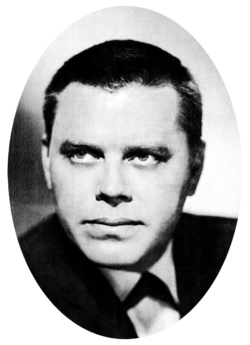
Tom T. Hall
View on Wikipedia
Key Information


Thomas Hall (May 25, 1936 – August 20, 2021), known professionally as Tom T. Hall and informally nicknamed "the Storyteller",[3] was an American country music singer-songwriter and short-story author. He wrote 12 number-one hit songs, with 26 more that reached the top 10, including the number-one international pop crossover hit "Harper Valley PTA", and "I Love", which reached number 12 on the Billboard Hot 100. He is included in Rolling Stone's list of 100 Greatest Songwriters. He was inducted into the Country Music Hall of Fame in 2008, and the International Bluegrass Music Hall of Fame alongside his wife Dixie in 2018.
Early life and career
[edit]Hall was born on Tick Ridge, seven miles south of Olive Hill, Kentucky, on May 25, 1936.[4][5] As a teenager, he organized a band, called the Kentucky Travelers, who performed before movies for a traveling theater.[5] Hall enlisted in the U.S. Army in 1957, serving in Germany.[6][7] While in the service, he performed over the Armed Forces Radio Network and wrote comic songs about army experiences.[5] Following his discharge in 1961, he used G.I. Bill educational benefits to enroll at Roanoke College, where he worked as a disc jockey.[8] His early career included being an announcer at WRON, a local radio station in Ronceverte, West Virginia. Hall was also an announcer at WMOR (1330 AM) in Morehead and WGOH (1370 AM) in Grayson, both in Kentucky. Hall was also an announcer at WSPZ, which later became WVRC Radio in Spencer, West Virginia, in the 1960s.[9]
Hall's big songwriting break came in 1963, when country singer Jimmy C. Newman recorded his song "DJ for a Day".[5] In 1964, Hall moved to Nashville and started to work as a $50-a-week songwriter for Newkeys Music, the publishing company belonging to Newman and his business partner, Jimmy Key, writing up to half a dozen country songs per day.[10] Key suggested that he add the middle initial "T" to his name.[10] Hall was nicknamed "The Storyteller", and he composed songs for dozens of country music stars, including Johnny Cash, George Jones, Loretta Lynn, Waylon Jennings, Alan Jackson, and Bobby Bare. He also penned "Hello Vietnam", a song that openly supported the Vietnam War at a time when war-protest songs were beginning to dominate the pop music chart. The song proved to be a hit for country singer Johnnie Wright and was later used by Stanley Kubrick to provide the soundtrack to the barbershop montage that opens his 1987 Vietnam film Full Metal Jacket.[11]
One of Hall's earliest successful songwriting ventures, "Harper Valley PTA", recorded in 1968 by Jeannie C. Riley,[5] hit number one on the Billboard Hot 100 and Hot Country Singles charts a week apart. It sold over six million copies and won both a Grammy Award and a CMA Award. The song went on to inspire a motion picture and television program of the same name. Hall himself recorded the song for his album The Definitive Collection (as track number 23). His recording career took off after Riley's rendition of the song, and he released a number of hits from the late 1960s through the early 1980s. Some of his biggest hits include "A Week in a Country Jail", "(Old Dogs, Children and) Watermelon Wine", "I Love", "Country Is", "The Year Clayton Delaney Died", "I Like Beer", "Faster Horses (the Cowboy and the Poet)", and "That Song Is Driving Me Crazy".[5] One of Hall's best-known numbers, "Pamela Brown", was recorded by Leo Kottke and became a staple of Kottke's performances. Hall is also noted for his child-oriented songs, including "Sneaky Snake" and "I Care", the latter of which hit number one on the country charts in 1975. His song "I Love", in which the narrator lists the things in life that he loves, was recorded by Heathen Dan, with completely altered lyrics, as "I Like"[12] and appeared many times on Dr. Demento's show in the early 1980s. Hall's song was also used with altered lyrics and a hard-rock arrangement in a popular 2003 TV commercial for Coors Light.[13] In the mid- to late 1970s, Hall was a commercial spokesperson for Chevrolet trucks.[14]
Hall succeeded Ralph Emery as host of the syndicated country music TV show Pop! Goes the Country in 1980 and continued until the series ended in 1982.[15] Hall largely retired from writing new material in 1986[16] and from performing in 1994;[17] his last public performance, which was also his first in several years, was in 2011.[18]
Awards and honors
[edit]Hall won the Grammy Award for Best Album Notes in 1973 for the notes he wrote for his album Tom T. Hall's Greatest Hits. He was nominated for, but did not win, the same award in 1976 for his album Greatest Hits Volume 2. He was a member of the Grand Ole Opry from 1971.[19][20] In 1998, his 1972 song "(Old Dogs, Children and) Watermelon Wine" came in second in a BBC Radio 2 poll to find the UK's favorite easy listening record, despite never having been a hit in the UK and being familiar to Radio 2 listeners mostly through occasional plays by DJ Terry Wogan.[21]
Hall was inducted into the Kentucky Music Hall of Fame in 2002,[22] and into the Country Music Hall of Fame on February 12, 2008.[23] His wait for these honors was longer than anticipated; Hall attributed it to being somewhat reclusive and "not well liked" among the Nashville music industry, noting that he almost never collaborated with other songwriters, and by the 1990s, was largely out of step with the corporate style of country music.[17]
On June 1, 2014, Rolling Stone ranked "(Old Dogs, Children and) Watermelon Wine" at number 93 on its list of the 100 greatest country songs.[24] In November 2018 Hall and his wife Dixie Hall were inducted together into the International Bluegrass Music Hall of Fame.[25] On June 13, 2019, Hall was inducted into the Songwriters Hall of Fame. Of all the honors he had received in his lifetime, he considered this induction to be his proudest moment and the pinnacle of his achievement, also stating that he was taken by surprise for even being considered.[26]
Together with his wife Dixie, he won the Society for the Preservation of Bluegrass Music of America Bluegrass Song Writer of the Year award in 2002,[27] 2003,[28] 2004,[29] 2005,[30] 2007,[31] 2008,[32] 2009,[33] 2010,[34] 2011,[35] 2013,[36] 2014,[37] and 2015.[38]
Personal life
[edit]Hall was married in 1961 to Opal "Hootie" McKinney, a native of Grayson, Kentucky.[39][40] Their son, Dean Todd Hall, was born on June 11, 1961.[41] Dean worked for his father in the early 1980s, first as a roadie and later as a guitarist. Dean has since worked as a solo artist and with Bobby Bare's band.[39]
Hall met bluegrass songwriter Dixie Deen in 1965 at a music-industry award dinner to which she was invited for having written the song "Truck Drivin' Son-of-a-Gun", which became a hit for Dave Dudley.[42] Born Iris Lawrence in the West Midlands, England, in 1934, she emigrated to the U.S. in 1961 and married Hall in 1968, taking the name Dixie Hall. The two were married until her death on January 16, 2015.[43][44][45][42][46] They lived in Franklin, Tennessee.[45]
Death
[edit]At age 85, Hall died at his home in Franklin, Tennessee, on August 20, 2021,[47] of a self-inflicted gunshot wound to the head.[48]
Selected discography
[edit]- In Search of a Song (1971)
- We All Got Together and... (1972)
- Places I've Done Time (1978)
- Song in a Seashell (1985)
Books written by Hall
[edit]- How I Write Songs, Why You Can (1976), Chappell Music Co. ISBN 978-0882544236
- The Songwriter's Handbook (1976), Rutledge Hill Press ISBN 9781558538603
- The Storyteller's Nashville (1979), Doubleday & Co.; (Spring House Press, 2016), ISBN 978-1-940611-44-0
- The Laughing Man of Woodmont Coves (1982), Doubleday & Co. ISBN 9781557282255
- The Acts of Life (1986), The University of Arkansas Press ISBN 9780938626718
- Spring Hill, Tennessee (1990), Longstreet Press, Inc. ISBN 9780929264738
- What a Book! (1996), Longstreet Press, Inc. ISBN 9781563523403
See also
[edit]References
[edit]- ^ Barry Mazor. "Tom T. Hall: American songwriter and entertainer". Britannica. Retrieved August 21, 2021.
- ^ "Progressive country". AllMusic. Retrieved July 22, 2023.
- ^ Estrada, Louie (August 22, 2021). "Tom T. Hall, country music's hit-making 'Storyteller,' dies at 85". Washington Post. Retrieved August 22, 2021.
- ^ Friskics-Warren, Bill (August 21, 2021). "Tom T. Hall, Country Music's 'Storyteller,' Is Dead at 85". The New York Times. Retrieved August 21, 2021.
- ^ a b c d e f Colin Larkin, ed. (1997). The Virgin Encyclopedia of Popular Music (Concise ed.). Virgin Books. pp. 561/2. ISBN 1-85227-745-9.
- ^ Tom T. Hall, country music storyteller who sang about life's simple joys, dies at 85 NBC News. Retrieved August 21, 2021.
- ^ Tom T. Hall; Biography by Stephen Thomas Erlewine AllMusic. Retrieved August 21, 2021.
- ^ "Artists Spotlight". Roanoke College. Retrieved January 23, 2020.
- ^ "History of WSPZ/WVRC, Spencer". WVRC. Retrieved July 13, 2012.
- ^ a b Batey, Angus (March 15, 2015). "Cult heroes: Tom T Hall, the singer who wrote of real lives and changing times". The Guardian. Retrieved December 22, 2018.
- ^ Rossi, Rosemary (August 21, 2021). "Tom T Hall, Country Singer Who Wrote 'Harper Valley PTA,' Dies at 85". Yahoo!. Retrieved August 22, 2021.
- ^ Lori Dorn (July 16, 2018). "A Disgusting Parody of the Lighthearted Classic 1973 Country Music Song 'I Love' by Tom T. Hall". Laughing Squid. Retrieved August 21, 2021.
- ^ "THE WAY WE LIVE NOW – 1-26-03 – PROCESS – How to Write a Catchy Beer Ad". The New York Times. January 26, 2003. Retrieved January 23, 2016.
- ^ Willman, Chris (August 20, 2021). "Tom T. Hall, Country Hall of Famer Known for 'I Love' and 'Harper Valley PTA,' Dies at 85". Variety. Retrieved August 22, 2021.
- ^ "Pop! Goes the Country (TV Series) – Full cast and crew". IMDb. Retrieved July 13, 2012.
- ^ "Tom T. Hall Biography". Oldies.com. Retrieved October 10, 2019.
- ^ a b Bernstein, Joel (October 1997). "Tom T.Hall keeps a rappin'". Country Standard Time. Retrieved October 10, 2019.
- ^ Konc, Riane. "Tom T. + Dixie Hall – Country's Greatest Love Stories". The Boot. Retrieved October 10, 2019.
- ^ "Tom T. Hall". Grand Ole Opry. Retrieved June 29, 2012.
- ^ "Opry Member List PDF" (PDF). April 23, 2012. Archived from the original (PDF) on June 7, 2012. Retrieved June 29, 2012.
- ^ "Eagles' Hotel Flys to Top of Poll". Birmingham Post. December 8, 1998. p. 16. Archived from the original on February 20, 2016. Retrieved January 23, 2016.
- ^ "KMHF Inductees". Kentucky Music Hall of Fame. Retrieved December 22, 2018.
- ^ "Tom T. Hall and The Statler Brothers Join the Country Music Hall of Fame". Broadcast Music, Inc. August 5, 2008. Retrieved December 22, 2018.
- ^ "93. Tom T. Hall, 'Old Dogs, Children and Watermelon Wine' (1972)". Rolling Stone. June 2014. Retrieved January 23, 2016.
- ^ Kessler, K (November 14, 2018). "Award Category: Hall of Fame Inductees". IBMA. Retrieved December 22, 2018.
- ^ "In the Words of Tom T. Hall". Archived from the original on October 23, 2015.
- ^ "2002 Award Winners". spbgma.com. Retrieved December 22, 2018.
- ^ "2003 Award Winners". spbgma.com. Retrieved December 22, 2018.
- ^ "2004 Award Winners". spbgma.com. Retrieved December 22, 2018.
- ^ "2005 Award Winners". spbgma.com. Retrieved December 22, 2018.
- ^ "2007 Award Winners". spbgma.com. Retrieved December 22, 2018.
- ^ "2008 Award Winners". spbgma.com. Retrieved December 22, 2018.
- ^ "2009 Award Winners". spbgma.com. Retrieved December 22, 2018.
- ^ "2010 Award Winners". spbgma.com. Retrieved December 22, 2018.
- ^ "2011 Award Winners". spbgma.com. Retrieved December 22, 2018.
- ^ "2013 Award Winners". spbgma.com. Retrieved December 22, 2018.
- ^ "2014 Award Winners". spbgma.com. Retrieved December 22, 2018.
- ^ "2015 Award Winners". spbgma.com. Retrieved December 22, 2018.
- ^ a b "Tom T. Hall's Son?". August 21, 2016. Retrieved January 12, 2019.
- ^ Hall, Tom T. (October 2016). The Storyteller's Nashville. Spring House Press. p. 160. ISBN 978-1-940611-44-0.
- ^ Family Search
- ^ a b Himes, Jeffrey (January 13, 2008). "Who Needs Country Radio? Not Tom T. Hall". The New York Times. Retrieved December 22, 2018.
- ^ Whitaker, Sterling (January 17, 2015). "Songwriter Dixie Hall Dead at 80". Taste of Country. Retrieved August 22, 2021.
- ^ "Dixie Hall, Songwriter and Wife of Tom T. Hall, Dead at 80". CMT News. January 17, 2015. Archived from the original on January 21, 2015. Retrieved August 22, 2021.
- ^ a b Cooper, Peter (February 5, 2015). "Dixie Hall, prolific bluegrass songwriter dies at 80". The Tennessean. Retrieved December 22, 2018.
- ^ "Dixie Hall". discogs. Retrieved December 23, 2018.
- ^ Riess, Rebekah (August 21, 2021). "Country Music Hall of Fame artist Tom T. Hall dies at age 85". CNN.
- ^ "Tom T. Hall, country music's 'Storyteller,' died by suicide, medical examiner says". NBC News. January 6, 2022. Archived from the original on January 6, 2022. Retrieved October 17, 2024.
Further reading
[edit]- Allen, Bob. (1998). "Tom T. Hall" in The Encyclopedia of Country Music. Paul Kingsbury, editor. New York: Oxford University Press. pp. 224–5.
- Harris, Stacy (1993). "Tom T. Hall" in The Best of Country: The Essential CD Guide. San Francisco: Collins Publishing, pp. 52–53.
External links
[edit]
Tom T. Hall
View on GrokipediaEarly Life
Childhood and Formative Influences
Thomas Hall was born on May 25, 1936, near Olive Hill, Kentucky, in a rural, impoverished household led by his father Virgil, a brick manufacturing plant worker and lay preacher, and his mother Della Henderson.[5] Raised amid the Appalachian foothills as one of at least nine siblings in a large family, Hall's early environment emphasized traditional working-class values of self-reliance and community ties forged through hardship.[6] The family's modest circumstances, marked by manual labor and limited resources, instilled an acute awareness of everyday human struggles that later informed his narrative-driven approach to songwriting.[7] Hall displayed an innate affinity for music from childhood, receiving his first guitar as a gift from his father at age eight.[7] By age nine, he had composed his initial song, "Haven't I Been Good to You," drawing simple lyrics from observed local life and personal experiences in the Kentucky countryside.[1] This early experimentation with instrumentation and storytelling, rooted in the folk and bluegrass traditions prevalent in his surroundings, cultivated his skill in capturing authentic, unvarnished vignettes of rural existence without reliance on formal training. Tragedy struck in Hall's early adolescence when his mother died around age 11, followed shortly by his father's debilitating hunting accident that rendered him unable to work.[7] Compelled to support the family, Hall dropped out of school after the ninth grade and took up manual labor, including shifts in a garment factory and as a gravedigger.[8] These experiences, devoid of academic structure, honed his empirical self-education through direct immersion in labor, reading, and keen observation of interpersonal dynamics among working people, fostering a grounded realism that prioritized firsthand evidence over abstracted ideals.[7]Military Service and Pre-Nashville Career
Hall enlisted in the United States Army in 1957, shortly after the conclusion of the Korean War, and was stationed in Germany for the duration of his four-year term.[9][10] While serving, he contributed to the Armed Forces Radio Network by performing and composing humorous songs that drew from everyday military life, including observations of soldier camaraderie and the rigors of routine duties.[11] These experiences sharpened his narrative skills, emphasizing practical lessons in resilience and discipline that later informed his songwriting without romanticizing or denigrating service.[12] He received an honorable discharge in 1961 and returned to civilian pursuits, initially working as a disc jockey at stations such as WMOR in Morehead, Kentucky, and others in West Virginia, including WSPP in Spencer and WRON in Ronceverte.[13][14] In these roles, Hall crafted radio jingles and lighthearted filler material to fill airtime, honing a self-reliant approach to content creation amid modest wages from entry-level broadcasting gigs.[14] This period cultivated his business savvy through direct market feedback and bootstrapped operations, prioritizing observable economic realities over external support.[13] By 1964, these foundational efforts positioned him for the transition to Nashville, where he applied the storytelling discipline forged in military and radio contexts.[15]Music Career
Breakthrough as a Songwriter
Tom T. Hall relocated to Nashville on January 1, 1964, after country singer Jimmy C. Newman achieved a top-ten hit with Hall's "D.J. for a Day," released in late 1963, which prompted Hall to abandon his disc jockey work in Virginia and commit to professional songwriting.[1] [16] Arriving with limited funds, Hall secured a staff songwriting position at New Key Publishing under Jimmy Key, earning $50 weekly while pitching compositions derived from personal observations of ordinary life rather than the melodramatic formulas dominating Nashville's commercial scene.[10] [17] This approach, rooted in trial-and-error refinement through direct market feedback from artist recordings, enabled breakthroughs without preferential treatment from industry insiders. Hall's persistence yielded his first number-one song as a writer with Johnny Wright's "Hello Vietnam" in 1965, a topical narrative reflecting servicemen's sentiments amid escalating U.S. involvement in the war, achieved via empirical validation of relatable, unembellished storytelling over insider connections.[18] By the late 1960s, he had amassed multiple chart successes for other performers, including Dave Dudley's "Mad," underscoring his savvy in crafting concise, anecdote-driven lyrics that resonated with audiences seeking authenticity amid Nashville's trend-driven output.[9] The pivotal hit "Harper Valley PTA," recorded by Jeannie C. Riley in 1968, sold over six million copies worldwide, catapulting Hall to prominence by factually depicting small-town hypocrisies through a mother's confrontation with PTA moralizers, drawn from verifiable community anecdotes Hall witnessed rather than invented drama.[19] [20] This crossover smash, topping both country and pop charts, validated Hall's method of prioritizing causal realism in narratives—focusing on observable behaviors and consequences—over formulaic exaggeration, as Riley's raw delivery amplified the song's unvarnished critique of pretense.[21]Solo Recording Success and Chart Achievements
Hall's debut as a solo recording artist came in 1969 with the Mercury Records album Ballad of Forty Dollars and His Other Great Songs, marking his shift from primarily songwriting to performing his own material.[22] This release featured tracks like "That's How I Got to Memphis," establishing his signature narrative style on record. Later that year, Homecoming followed, yielding "A Week in a Country Jail," which topped the Billboard Hot Country Singles chart for one week in February 1970 and showcased his ability to commercialize gritty, observational tales of everyday mishaps.[23] Throughout the 1970s, Hall amassed nine No. 1 hits on the Billboard country charts, demonstrating the enduring appeal of his plainspoken storytelling amid the genre's transition from polished countrypolitan sounds to rawer outlaw influences. Key successes included "The Year That Clayton Delaney Died" (No. 1 for one week in September 1971), reflecting nostalgic small-town reminiscences; "(Old Dogs, Children and) Watermelon Wine" (No. 1 in October 1972), a philosophical ode to simple pleasures that resonated with blue-collar listeners; "Old Side of Town" (No. 1 in February 1974), evoking urban-rural divides; and "I Care" (No. 1 in March 1975), a child-focused narrative that broadened his audience without diluting authenticity.[24][25][26]) These tracks often faced minor radio resistance due to their candid depictions of jail time, drinking, and social undercurrents, yet their chart dominance underscored the viability of unvarnished realism over stylized production. The prior smash "Harper Valley PTA," penned by Hall and recorded by Jeannie C. Riley, had sold over six million copies and secured him the 1969 Grammy Award for Best Country & Western Song, validating his lyrical approach before his performer breakthrough.[27][7] As a solo act, Hall released over 35 studio and compilation albums on Mercury, with cumulative sales exceeding 500,000 units in the U.S. alone, driven by consistent mid-tier Hot 100 crossovers like "Watermelon Wine" peaking at No. 6 pop.[28] His output emphasized self-reliant production, avoiding major scandals and prioritizing narrative depth that appealed to working-class demographics shifting toward more relatable country fare in the decade's economic turbulence.Evolution, Retirement, and Industry Reflections
In the 1980s, Hall pivoted toward traditional country and bluegrass influences, including hosting the syndicated television series Pop! Goes the Country and collaborating with banjo virtuoso Earl Scruggs on the 1982 album The Storyteller and the Banjo Man, which paired his narrative songs with acoustic instrumentation on tracks like "Song of the South" and "Shackles and Chains."[29][30] By the mid-1980s, Hall halted production of new original material, marking a deliberate scaling back amid mounting fatigue from decades of rigorous touring schedules.[31] He retired from live performances in 1994, prioritizing time at home with his wife Dixie over the music business's intensifying promotional demands, a choice she endorsed as sustainable for his well-being while preserving his creative legacy.[31][32] Following retirement, Hall restricted public appearances to sporadic events, culminating in his final one in 2011, and shifted emphasis to the passive income from his extensive catalog, which generated consistent royalties without necessitating ongoing industry engagement.[31][33] Hall's reflections on the industry's trajectory emphasized pragmatic adaptation over sentimental attachment, highlighting how Nashville's post-1980s commercialization—favoring polished production and market-driven acts—diluted the primacy of unvarnished, observational songcraft that defined his era's successes.[34] He maintained that enduring value lay in royalties from timeless narratives rather than chasing transient trends or image-centric stardom.[35]Artistic Approach and Innovations
Storytelling Technique and Lyrical Themes
Hall's songwriting technique emphasized direct observation of human experiences, rooted in his background as a journalism student at Roanoke College, where he honed skills in factual reporting that translated into concise, narrative-driven lyrics.[9] This approach yielded songs that plunged into scenarios with precise, unembellished details, prioritizing causal depictions of behavior—such as economic pressures or personal habits—over prescriptive moralizing.[36] His verses often employed short, dialogue-infused structures reminiscent of folk oral traditions, allowing characters' actions and words to reveal motivations organically, as in the conversational exchanges that propel tales of small-town dynamics.[37] The "Storyteller" moniker, bestowed by Country Music Hall of Fame member Tex Ritter, encapsulated Hall's non-judgmental chronicling of ordinary realities, eschewing ideological overlays in favor of empirical slices of life observed during his rural Kentucky youth and military tenure in Germany.[38] Lyrical themes recurrently drew from rural simplicities—like the rhythms of farm work and community rituals—and military-derived insights into discipline and camaraderie, presented with a realism that highlighted behavioral incentives without romanticization.[1] Anti-hypocrisy motifs surfaced through exposés of concealed flaws in social facades, as evidenced in narratives exposing judgmental pretensions amid everyday vices, fostering relatability across audiences while occasionally drawing dismissal from urban-oriented critics as overly parochial.[17] In tracks like "I Love," released in 1971, he cataloged prosaic affinities—beer, trains, lazy dogs—grounded in 1960s-1970s cultural verities, resisting later revisions toward contrived inclusivity.[39] This fidelity to observed causation over abstracted sentiment yielded universally accessible portraits, underscoring human constants like temptation and resilience without deference to prevailing pieties.[37]Influence on Country Music and Broader Culture
Hall's songwriting emphasized narrative depth and everyday observations, expanding country music's lyrical boundaries beyond traditional honky-tonk themes of romance and hardship to include social commentary and character-driven vignettes, as recognized in his 2008 induction into the Country Music Hall of Fame for transforming the genre's language and scope.[1] This approach influenced the singer-songwriter movement within country, providing a model for artists like the Outlaws, to whom he contributed hits such as songs recorded by Johnny Cash, Waylon Jennings, and Bobby Bare, fostering a shift toward authentic, personal storytelling over polished production.[40] His work prefigured the introspective style of later figures like Guy Clark, who drew from similar roots in observational lyricism, though Hall's direct emulation was more evident in the 1970s outlaw ethos of independence from Nashville's formulaic constraints.[37] Beyond country, Hall's compositions achieved crossover appeal, with "Harper Valley PTA" topping both country and pop charts in 1968 before inspiring a 1978 film and 1981-1982 television series, thereby embedding country narratives into mainstream media and broadening the genre's cultural footprint.[41] Inclusion in Rolling Stone's 2015 list of the 100 Greatest Songwriters of All Time underscored his enduring impact, ranking him for prose-like songs that blended folk influences with country traditions.[42] Proponents credit Hall with empirically enhancing country's intellectual credibility, as his 12 No. 1 hits and 26 Top 10 singles demonstrated viability for substantive content in a commercial landscape.[43] Critics, however, contend that Hall's success inadvertently facilitated the Nashville sound's commercialization by proving narrative songs could yield mass-market hits, paving the way for successors who diluted his subtlety in favor of spectacle-driven production as the industry prioritized crossover sales over lyrical nuance post-1970s.[44] While Hall's method democratized songwriting access for non-elite voices, preserving rural authenticity amid urbanization, some observers note a post-Hall erosion in genre substance, where empirical chart dominance shifted toward homogenized pop-country hybrids rather than his grounded realism.[7] This tension highlights his role in both elevating and exposing country's vulnerability to market forces.Literary Works
Songwriting Manuals and Autobiographical Writings
Hall published How I Write Songs, Why You Can in 1976 through Chappell Music Co., presenting actionable strategies for aspiring songwriters based on his hits like "Harper Valley PTA" and "Old Dogs, Children and Watermelon Wine."[45] The book demystifies the process by focusing on disciplined techniques, such as generating ideas from observable realities, refining lyrics for precision, and evaluating work for commercial viability rather than waiting for sporadic inspiration.[46] An updated iteration, The Songwriter's Handbook, appeared in editions including 1987 and 2001 via publishers like Rutledge Hill Press, expanding on core principles with examples from Hall's catalog, coverage of rhyme schemes, meter, and industry navigation in Nashville.[47] [48] These manuals prioritize empirical craft honed through Hall's professional output—over 200 recorded songs—over theoretical ideals, advising writers to prioritize salable content for performers over personal catharsis.[49] While tailored to the pre-digital publishing era, their emphasis on fundamentals like authentic observation and iterative revision retains applicability for structured song creation.[50] Hall's 1979 memoir The Storyteller's Nashville, issued by Doubleday, recounts his trajectory from military service and early gigs to Nashville prominence, attributing success to persistent networking, deal-making, and adaptation within the city's publisher ecosystem.[51] [52] The narrative traces causal sequences—such as leveraging demo tapes for contracts and observing venue dynamics for material—without framing setbacks as systemic injustices, instead highlighting individual agency in a competitive field.[53] Revised editions, like the 2016 version, append post-1979 perspectives on industry shifts, underscoring Hall's retrospective on merit-based advancement amid evolving commercial pressures.[54]Fiction and Short Stories
Hall published three novels and a collection of short stories, extending the narrative style of his songwriting into prose forms that emphasized realistic depictions of ordinary lives, often set in rural Southern and Appalachian contexts. His fiction avoided sentimentalism, portraying characters' struggles and flaws as consequences of personal decisions rather than external forces or excuses, much like the causal accountability in his lyrics. These works drew from his observations of human behavior, reflecting a commitment to unvarnished authenticity over dramatic exaggeration.[1] His first novel, The Laughing Man of Woodmont Coves (1982, Doubleday), explores themes of eccentricity and community in a Tennessee hollow, featuring protagonists navigating isolation and self-reliance without idealizing hardship. This was followed by The Acts of Life (1986, University of Arkansas Press), a 118-page collection of interconnected tales that capture fleeting moments of rural existence, such as interpersonal conflicts and quiet revelations, praised for their concise, observational prose akin to oral storytelling.[55][1] Hall's final novel, Spring Hill, Tennessee: A Novel (1990, Longstreet Press), centers on small-town dynamics and personal reckonings in a fictionalized version of his adopted home, highlighting interpersonal tensions and moral choices amid everyday routines. These publications, produced alongside his music career, received modest attention but were valued by readers for their grounded realism, complementing his "Storyteller" persona without achieving the commercial reach of his songs. Critics noted the prose's economy and fidelity to lived experience, though sales remained limited compared to his non-fiction writings.[56][1]Personal Life
Marriages, Family, and Losses
Hall's first marriage was to Opal Inez "Hootie" McKinney on February 16, 1961, in Grayson, Kentucky, where McKinney co-owned a local restaurant.[57] The couple had one son, Dean Todd Hall, born June 11, 1961; Dean later pursued a career as a blues-rock musician.[58] The marriage dissolved in divorce sometime before Hall's full commitment to his Nashville career, with McKinney signing the papers amid personal and professional strains.[57] On March 16, 1968, Hall married Iris Violet May Lawrence, professionally known as Dixie Deen or Miss Dixie, whom he met at a 1964 BMI awards event.[59] Dixie, a prolific songwriter with over 500 credits in country and bluegrass, became a key collaborator, co-writing tracks such as those on Hall's Fox Hollow studio albums and managing business aspects that allowed him to prioritize songcraft.[60] The childless couple resided at their Franklin, Tennessee, property, emphasizing a stable home life over public drama; Hall consistently avoided scandals or publicity-driven personal disclosures.[61] Dixie Hall died on January 16, 2015, at age 80 following prolonged illness, marking a significant family loss that tested Hall's resilience yet did not interrupt his ongoing literary and musical reflections.[61] Hall's first wife, Opal McKinney, had passed away in 1985.[62] Throughout, family ties provided continuity—son Dean remained involved in music independently—reinforcing Hall's preference for private stability amid career demands.[63]Lifestyle, Interests, and Philosophical Outlook
Hall maintained a rural lifestyle on his farm outside Franklin, Tennessee, where he spent considerable free time in a cabin amid the countryside, cultivating a preference for grounded, tangible activities over urban abstractions.[64][65] His hobbies encompassed hunting and fishing, which he actively pursued during periods of retreat from professional demands, alongside pursuits like woodworking, golf, ornithology, photography, and literary criticism, underscoring an appreciation for self-directed, hands-on engagements with nature and intellect.[49][66] In his philosophical outlook, Hall identified as a philosopher, viewing songwriting as a medium to distill universal ideas from lived experience into unvarnished truths designed to entertain while provoking reflection, eschewing explicit moral judgments in favor of observational realism.[34][37] This perspective emphasized self-reliance, as evidenced by his autonomous decision to embark on a career as a mobile DJ and songwriter with minimal resources—traveling with essentials in his car trunk—and his use of the GI Bill post-Army service for education at Roanoke College, habits that reflected a disciplined, independent ethos honed by military experience, including a penchant for practical attire like old army clothes.[34] Hall exhibited skepticism toward cultural and industry fads, critiquing phenomena like the urban cowboy trend and Nashville's marketing-driven hype for prioritizing spectacle over authentic narratives drawn from ordinary lives, instead advocating for generational renewal where "this generation should entertain this generation."[34] His worldview privileged experiential authenticity and rural simplicity, aligning with a broader disdain for elite-imposed artificiality in favor of personal agency and direct engagement with the world.[67][68]Death and Posthumous Assessment
Circumstances of Death
Tom T. Hall died on August 20, 2021, at age 85, from a self-inflicted gunshot wound to the head at his home in Franklin, Tennessee.[4][69][70] The Williamson County Medical Examiner's report, released in January 2022, ruled the death a suicide with toxicology indicating traces of chlordiazepoxide, a benzodiazepine used to treat anxiety and alcohol withdrawal symptoms.[31] No suicide note was found, and the autopsy confirmed no evidence of external involvement or foul play.[31] Hall's son, Dean Hall, initially announced the death via social media without specifying the cause, citing family privacy concerns, which delayed public awareness of the suicide ruling.[69][31] This occurred following his retirement from performing in the years after his wife Dixie Hall's death in 2015, amid broader context of advanced age and withdrawal from industry activities, though no clinical records of depression or explicit contributing factors were publicly detailed beyond the official determination.[31] The circumstances prompted commentary on disclosure practices for high-profile suicides versus personal autonomy, with some attributing the act to unaddressed isolation in aging creatives rather than excusing it through mental health narratives alone.[31]Legacy, Tributes, and Critical Reappraisal
Tom T. Hall's induction into the Country Music Hall of Fame in 2008 recognized his role in expanding lyrical depth within the genre through character-driven narratives drawn from ordinary experiences.[1] He earned one Grammy Award for Best Album Notes in 1973 for his contributions to Tom T. Hall's Greatest Hits, alongside six nominations across categories reflecting his songwriting and recording output.[71] Posthumously, following his death on August 20, 2021, Hall's catalog has sustained measurable engagement, accumulating over 216 million streams on Spotify by September 2025, with enduring hits like "Harper Valley PTA"—which sold more than six million copies upon release—continuing to generate covers and airplay that underscore commercial longevity beyond initial chart peaks.[72][7] Tributes from contemporaries highlighted Hall's adherence to traditional country roots amid genre shifts toward pop hybridization. Ricky Skaggs, a proponent of bluegrass and neotraditional country, joined Hall and his wife Dixie in the International Bluegrass Music Association Hall of Fame in 2018, praising Hall's foundational songcraft that preserved acoustic storytelling forms against mainstream dilutions.[73] Broader peer acknowledgments, including BMI's 2012 Icon Award for sustained influence, emphasized his unpretentious depictions of rural and working-class causality—such as economic hardships driving social behaviors—over performative activism.[7] Critical reappraisal positions Hall as a bulwark for country's authentic voice, prioritizing empirical slices of life that resisted 1970s onward pop incursions, as seen in the persistent catalog value evidenced by multi-decade streaming and cover royalties rather than fleeting trends.[44] While some assessments note constraints in musical experimentation compared to genre innovators, data on hit longevity—like the multi-platinum trajectory of key singles—counters claims of obsolescence, affirming demand for his grounded realism.[16] Left-leaning outlets have credited his social observations in songs addressing hypocrisy and class dynamics, yet these analyses often overlook how Hall's approach derived from direct causal inference from lived realities, not ideological framing, yielding narratives resilient to cultural revisions.[37]Discography and Bibliography
Key Albums and Singles
Hall achieved seven number-one singles on the Billboard Hot Country Songs chart during his commercial peak from 1970 to 1976, including "A Week in a Country Jail" (1970), "The Year That Clayton Delaney Died" (1971), "(Old Dogs, Children and) Watermelon Wine" (1972), "Ravishing Ruby" (1973), "Country Is" (1974), "I Love" (1976), and "The Carter Family Memory" (1976).[16] His singles often emphasized narrative storytelling, contributing to 50 total entries on the Hot Country Songs chart.[16] Key albums from this era included In Search of a Song (1971), which reached number eight on the Billboard Top Country Albums chart and featured the number-one single "The Year That Clayton Delaney Died."[74] Greatest Hits Vol. 2 (1975) peaked at number 12 on the Top Country Albums chart and earned gold certification from the RIAA for shipments exceeding 500,000 units. Later, during his bluegrass phase, Tom T. Hall Sings Miss Dixie & Tom T. (1995) marked a shift toward acoustic collaborations, though it did not achieve comparable chart success.[75] Compilations such as the RCA Country Legends series highlighted his enduring catalog, repackaging hits from Mercury and RCA eras without new chart impact.[76]| Single | Release Year | Billboard Hot Country Songs Peak |
|---|---|---|
| A Week in a Country Jail | 1970 | 1 |
| The Year That Clayton Delaney Died | 1971 | 1 |
| (Old Dogs, Children and) Watermelon Wine | 1972 | 1 |
| Country Is | 1974 | 1 |
| I Love | 1976 | 1 |