Hubbry Logo
Type 1 Chi-He medium tankType 1 Chi-He medium tankMain
Open search
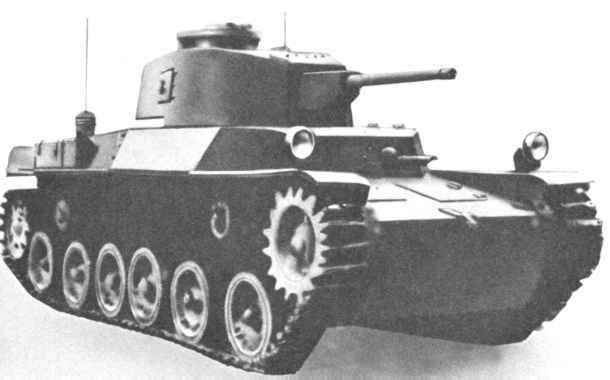
Type 1 Chi-He medium tank
Community hub
Type 1 Chi-He medium tank
logo
8 pages, 0 posts
0 subscribers
Be the first to start a discussion here.
Type 1 Chi-He medium tank
from Wikipedia

The Type 1 medium tank Chi-He (一式中戦車 チへ, Ichi-shiki chū-sensha Chi-he) was an improved version of the Type 97 Chi-Ha medium tanks of the Imperial Japanese Army in World War II. It had a more powerful main gun, engine and thicker armor. It was the first Japanese tank to have a communication radio as standard equipment. Production of the tank did not begin until 1943, due to the higher priority of steel allocated to the Imperial Navy for warship construction. A total of 170 units were built. All of the tanks produced were allocated for the defense of the Japanese home islands, against the anticipated Allied Invasion.

Key Information

History and development

[edit]

After 1941, the Imperial Japanese Army quickly realized that its 1930s designed medium tank, the Type 97 Chi-Ha, was inferior to the 1940s generation of Allied armor, such as the M4 Sherman. Since the Type 97’s low-velocity 57 mm main gun was designed for infantry support in 1938, it could not penetrate the 1940s generation of Allied armor, whereas its own thin armor made the Type 97 vulnerable to most adversaries equipped with anti-armor capabilities.[5][6]

In response, a new series of tanks based on an improved Type 97 design was conceived. The first of this new series was the Type 1 Chi-He. Work on the design began in 1941.[1] However, production did not begin until 1943, due to the higher priority of steel allocated to the Imperial Navy for warship construction.[7] A total of 170 units were built from 1943–44, and they did not see any combat.[8][9]

Design

[edit]
Type 1 Chi-He
Type 1 Chi-He on left and Type 97 Shinhoto Chi-Ha on right
Type 1 Chi-He rear view

Compared to the Type 97, the Type 1 Chi-He was slightly longer and taller. Its angled, thicker frontal armor was welded, as opposed to riveted. The adding of the frontal armor and a fifth crewman increased the weight, but the "streamlining" of the hull reduced the increase to only 1.5 tons.[10]

The Mitsubishi Type 100 diesel engine at 240 hp generated 70 horsepower more than the Mitsubishi Type 97 diesel engine, and was thus more than able to compensate for the additional weight in armor.[1]

The Type 1 Chi-He's 47 mm high-velocity gun had a barrel length of 2.250 mm, a muzzle velocity of 810 m/s (2,700 ft/s), and a penetration capability of 55 mm/100 m, 40 mm/500, 30 mm/1,000 meters; over double that of the Type 97s low-velocity main gun.[11] It was more reliable and more accurate, with the gun barrel having a 16 groove rifling and an improved firing mechanism. The gun did require the installation of elevation gear (on the earlier Type 97 the gunner had to physically move the gun up or down on his shoulder). In light of these improvements, the gun was adequate against Allied armor.[9][10] The ammunition was the same as used with the anti-tank version of the gun.[4] The tanks carried 120 rounds of ammunition with both armor-piercing and armor-piecing high explosive shells. The gun was placed in a three-man turret, which had space for the commander, gun-layer and loader.[10] The gun could be elevated and depressed between +20 and -15 degrees. This gun was used in the Type 97 ShinHōtō Chi-Ha medium tank, and on the Type 3 Ka-Chi amphibious tank.[12]

The Type 1 Chi-He was also the first Japanese tank to carry a radio as standard equipment in each tank, eliminating the need to use signal flags.[13]

Combat record

[edit]

All Type 1 Chi-He tanks were allocated to the Japanese home islands to defend against the projected Allied Invasion.[14] Despite Type 1's superiority in terms of armor and firepower over the earlier Type 97, it still underperformed in comparison to the American M4 Sherman, leading to a new medium tank design known as the Type 3 Chi-Nu.[15]

Variants

[edit]

The Type 3 Chi-Nu medium tank retained the same hull and suspension of the Type 1 Chi-He, with the addition of an enlarged turret ring for the new large hexagonal gun turret with a commander's cupola.[4][16] The more powerful main armament, a Type 3 75 mm tank gun, was based on the Japanese Type 90 field gun.[17]

A more direct variant was the Ka-So command tank. It was to replace the older Shi-Ki command tank. The Ka-So was based on the Type 1 Chi-He and had additional radios in its turret. A wood dummy main gun was placed in the turret. This way the Ka-So did not stand out from the regular tanks like the older Shi-Ki models, which had a machine gun in the turret and a 37 mm gun on the hull.[13][18] The status of the command tank as far as production is unknown.

The experimental anti-aircraft tank Ta-Ha was a planned anti-aircraft tank based on the Type 1 Chi-He hull in 1944. The design called for the tank turret to be replaced by a rotatably mounted anti-aircraft gun in a twin mount behind a gun shield. One prototype tank was under construction at the end of the war.[19]

Another variant designed in 1944 was the Type 2 Ku-Se self-propelled gun (SPG). It used the Type 1 Chi-He hull and was armed with a 75 mm gun in an open casemate with light frontal armour only.[20] The open casemate was in the same shape as the one used on the Type 1 Ho-Ni I.

See also

[edit]

Japanese tanks of World War II

Tanks of comparable role, performance and era

[edit]

Notes

[edit]

References

[edit]
[edit]
Revisions and contributorsEdit on WikipediaRead on Wikipedia
from Grokipedia
The Type 1 Chi-He was a developed by the (IJA) in 1941 as a direct upgrade to the Type 97 Chi-Ha, incorporating a redesigned hull for better crew ergonomics, enhanced armor protection, and a more potent to counter emerging Allied threats like the . Weighing approximately 17 tons with a crew of five, the Chi-He measured 5.5 meters in length, 2.2 meters in width, and 2.38 meters in height, powered by a Type 100 V12 air-cooled producing 240 horsepower for a top speed of 44 km/h and a range of 210 km on roads. Its armament consisted of a 47 mm Type 1 in a new three-man turret—capable of penetrating up to 72 mm of armor at 200 meters—supplemented by two 7.7 mm Type 97 machine guns, one coaxial and one in the hull; armor thickness ranged from 8 mm on the sides to 50 mm on the front and turret face, a significant improvement over the Chi-Ha's thinner plating. Notably, it was the first IJA to include a standard wireless radio set for better battlefield coordination, addressing a longstanding deficiency in Japanese armored doctrine. Production, handled primarily by , commenced in 1943 amid severe steel shortages that prioritized naval construction, resulting in only 170 units manufactured by early 1944—far short of planned numbers due to wartime resource constraints. Intended to equip independent mixed brigades and tank regiments for homeland defense, the Chi-He saw no combat deployment overseas, remaining stationed in to prepare for , the anticipated Allied invasion of and in 1945. A single prototype variant, the Type 1 Ta-Ha, adapted the chassis for self-propelled anti-aircraft duties with twin 37 mm cannons, but it progressed no further than trials. Despite its advancements, the Chi-He arrived too late to influence the Pacific War's outcome and highlighted Japan's broader challenges in industrial scaling and technological adaptation for .

Development

Background and Requirements

By the early 1940s, the recognized the obsolescence of its primary medium tank, the Type 97 Chi-Ha, following initial engagements in the after December 1941. The Type 97's maximum armor thickness of 25 mm proved highly vulnerable to Allied anti-tank weapons and the 75 mm guns of tanks like the , while its 57 mm low-velocity gun lacked the penetration to effectively engage such opponents beyond approximately 500 meters. In response, the established new requirements in 1941 for an upgraded medium tank to serve as the baseline successor to the Type 97 Chi-Ha series, building on parallel development of the Shinhoto variant. These included enhancing frontal armor to 50 mm for better protection against contemporary threats, adopting a high-velocity 47 mm Type 1 gun capable of penetrating 55 mm of armor at 100 meters, upgrading the engine to achieve speeds exceeding 40 km/h for improved mobility in varied terrain, and incorporating a radio as standard equipment to enable better tactical coordination without reliance on visual signals. The escalation of the further underscored these needs, as Japanese forces encountered superior Allied armor in campaigns across and Malaya, where the Type 97's limitations were exposed in direct confrontations. This prompted a strategic shift toward developing a tank optimized for potential home island defense against an anticipated invasion, prioritizing firepower and protection suitable for defensive operations on Japanese soil.

Design Process

The design process for the Type 1 Chi-He medium tank was initiated in 1941 by under the oversight of the Technical Bureau, aiming to modernize the Type 97 Chi-Ha with enhanced protection and firepower to counter emerging Allied threats. The first prototype was completed in 1941, featuring a fully welded hull that replaced the earlier riveted plates, improving structural integrity and reducing vulnerabilities to shell impacts. Iterative testing of early prototypes focused on optimizing armor layout and redesigning the turret to accommodate the new Type 1 47 mm gun. Key innovations included the adoption of the Type 100 air-cooled diesel engine, producing 240 horsepower and selected for its robustness in tropical environments where Japanese forces were increasingly deployed. Additionally, the Chi-He became the first Japanese to integrate a standard radio set in every unit, enabling improved tactical coordination without reliance on visual signals. The development faced significant delays due to wartime material shortages, with high-quality supplies prioritized for other production, which postponed full design finalization until mid-1943.

Design Features

Armament and Protection

The Type 1 Chi-He medium tank featured the Type 1 47 mm tank gun as its primary armament, a high-velocity derived from the Type 1 anti-tank gun and mounted in a redesigned turret. This gun achieved a of 850 m/s, enabling penetration of up to 72 mm against vertical armor at 200 m. Complementing the main gun were two Type 97 7.7 mm machine guns, with one positioned coaxial to the and the other in the hull front for anti-infantry support. The vehicle stored 104 rounds of ammunition for the 47 mm gun and 2,280 rounds for the machine guns. For protection, the Chi-He employed a fully welded hull and turret construction, marking an advancement in Japanese tank manufacturing for improved structural integrity over riveted predecessors. Armor thickness varied to optimize weight and vulnerability: the hull front measured 50 mm, sides 25 mm, and rear and top 20 mm each; the turret front was 50 mm thick, sloped at 20 degrees to enhance effective thickness against incoming fire. This configuration prioritized robust frontal defense, suitable for the tank's intended defensive and medium support roles. Ammunition for the main gun totaled 104 rounds, comprising high-explosive and armor-piercing variants stored in the hull and turret. Loading was performed manually by a dedicated crew member, as the design lacked an autoloader to maintain simplicity and reliability.

Mobility and Crew Accommodations

The Type 1 Chi-He was powered by a Mitsubishi Type 100 V-12 air-cooled diesel engine developing 240 horsepower at 2,000 rpm, which provided a power-to-weight ratio of approximately 14 hp per tonne given the vehicle's combat weight of 17.2 tonnes. This engine offered improved performance over the preceding Type 97 Chi-Ha's 170 hp unit, enabling a maximum road speed of 44 km/h and an operational range of 210 km with a fuel capacity of 235 liters. The suspension system employed a bell crank design with coil springs and six dual road wheels per side—front and rear wheels independently sprung, with center wheels paired—for enhanced ride quality over rough terrain compared to earlier Japanese designs. Tracks measured approximately 400 mm in width, contributing to the tank's overall dimensions of 5.5 m in length, 2.2 m in width, and 2.38 m in height, while maintaining a relatively low ground pressure suitable for operations in varied terrains. The Chi-He accommodated a crew of five: commander, gunner, loader in the turret; driver and radio operator (also serving as bow machine gunner) in the hull. This layout represented a key advancement over the Chi-Ha by introducing a dedicated radio operator position and an automatic radio as standard equipment—the first for a Japanese tank—freeing the commander from communications duties to focus on directing the vehicle and engaging targets. The larger turret design further improved internal space allocation, with enhanced visibility provided through periscopes for the commander and driver, though the overall crew compartment remained compact due to the integration of the 47 mm main gun.

Production and Operational History

Manufacturing and Deployment

The production of the Type 1 Chi-He medium tank commenced in late 1943 at ' facilities in , . Limited by acute shortages—prioritized for and —and disruptions from Allied campaigns targeting industrial sites, total output reached only 170 units by the end of 1944. The manufacturing process utilized welded construction from rolled homogeneous steel plates, enabling simpler assembly compared to earlier riveted designs and facilitating the tank's increased armor thickness. Key components, including the 47 mm Type 1 high-velocity gun, were fabricated separately at the before integration into the at plants. Peak assembly rates approximated 10-15 units per month, though resource constraints kept overall production modest. All produced Chi-He tanks were allocated to Imperial Japanese Army armored divisions defending the home islands, particularly on and , in anticipation of —the planned Allied invasion of . Crew training emphasized ambush and defensive tactics, reflecting the tank's acknowledged vulnerabilities against superior Allied armor like the . Logistical difficulties plagued deployment, with widespread shortages of fuel, ammunition, and spare parts leaving many Chi-He tanks in reserve status without fully trained crews. Allied air raids exacerbated these issues by severing supply chains and damaging infrastructure, further hampering operational readiness.

Combat Record and Limitations

The Type 1 Chi-He medium tank saw no confirmed combat engagements during , as all 170 produced units were reserved for the defense of the Japanese home islands in anticipation of Allied invasions in or 1946. These tanks were deployed to armored units on and , where they were intended to counter amphibious landings, but the war's end prevented their use in battle. Some units may have been destroyed during raids on Japanese factories and depots in 1944–1945, while surviving examples were surrendered to Allied forces following Japan's capitulation in August . Despite its lack of operational testing, assessments of the Chi-He's capabilities revealed significant limitations in a wartime context. The 47 mm Type 1 gun, while accurate and reliable at close ranges, proved inadequate against the frontal armor of the American tank beyond 500 meters, where penetration dropped to approximately 40 mm—insufficient to reliably defeat the Sherman's sloped 50–63 mm hull plating. The tank's side and rear armor, ranging from 20–25 mm thick, offered little protection against infantry-held anti-tank weapons like the or , making it vulnerable in flanking maneuvers common in Pacific theater engagements. Mobility was further compromised by the narrow tracks (380 mm width), which increased ground pressure and hindered performance in muddy or soft terrain, a frequent issue in Japan's humid climate and potential invasion zones. Tactical evaluations highlighted the Chi-He's potential strengths in defensive roles, where its sloped frontal armor (up to 50 mm effective) and the inclusion of a standard Type 100 radio set— a first for Japanese tanks—enabled better coordination with infantry and artillery for ambushes or fortified positions. However, overall, the design was outclassed by late-war Allied mediums in firepower, protection, and reliability, prompting the Imperial Japanese Army to rush development of upgrades like the Type 3 Chi-Nu with a more powerful 75 mm gun. Post-war Allied inspections noted general reliability concerns for Japanese armored vehicles in humid environments, including corrosion and mechanical issues exacerbated by the Chi-He's untested production run. Strategically, the Chi-He contributed to the IJA's shift toward a static home defense posture by bolstering armored reserves, but its late introduction and limited production underscored the army's subordinated amid the navy's dominance in wartime priorities, diverting steel and industrial capacity from more pressing needs.

Variants and Legacy

Direct Variants

The direct variants of the Type 1 Chi-He medium tank were minor adaptations of the standard chassis, primarily aimed at specialized roles amid Japan's late-war emphasis on defense, without requiring extensive redesigns. These modifications reflected the Imperial Japanese Army's resource limitations, focusing on enhanced command capabilities and limited anti-aircraft support rather than . The Ka-So command tank was developed as a direct derivative to replace the older Type 97 Shi-Ki observation vehicle, incorporating additional Type 96 radios within the turret for improved battalion-level communications. To maintain operational security and avoid drawing attention, it featured a dummy wooden main gun barrel mimicking the standard Type 1 47 mm armament. Production details are obscure due to wartime documentation gaps, but estimates indicate only 3-5 units were completed for command duties. Another direct variant was the anti-aircraft prototype, initiated in 1944 to address growing threats using the Chi-He hull as its base. It replaced the standard turret with an open-top mounting for twin 37 mm anti-aircraft cannons, providing mobile against low-flying . Despite its potential, the design advanced only to a single stage and was never produced, as material shortages and shifting priorities toward defenses halted further development. Beyond these, some operational Chi-He units underwent general field modifications for home defense assignments, including added external storage racks for , tools, and survival gear to support prolonged static operations. These alterations preserved the original engine and hull configuration, emphasizing practicality over structural overhauls.

Influence on Successor Designs

The directly built upon the Type 1 Chi-He by retaining its hull and suspension system while introducing an enlarged hexagonal turret to accommodate the more potent Type 3 75 mm tank gun, enabling better penetration against Allied medium tanks such as the . This adaptation allowed for accelerated development and production as an interim measure to bolster Japan's armored forces amid resource constraints. manufactured approximately 166 units between late 1944 and 1945, positioning the Chi-Nu as a potential replacement for outdated heavy tank designs in home island defenses. The self-propelled gun further extended the Chi-He chassis by mounting an open superstructure armed with the 75 mm Type 90 field gun, optimized for in support of assaults and anti-tank engagements. This configuration prioritized firepower and production simplicity over enclosed protection, reflecting the Imperial Japanese Army's need for versatile assault vehicles during late-war shortages. Roughly 30 units were produced in 1944–1945 at facilities including the Sagami Arsenal, though none saw combat as they were reserved for homeland defense. Beyond these direct applications, the Chi-He chassis and design philosophy influenced experimental projects like the Type 5 Chi-Ri, which incorporated scaled-up elements of its suspension and welded construction for enhanced mobility and protection while integrating advanced 75 mm armament. The Chi-He also marked a pivotal shift in Japanese tank toward defensive operations, standardizing radio equipment in every vehicle for improved tactical coordination—a feature absent in earlier models like the Type 97 Chi-Ha and carried forward into successors. Post-war, Allied forces examined surviving Chi-He examples, particularly noting advancements in welding techniques that improved armor integrity compared to riveted predecessors. However, the Chi-He's limited production of only units curtailed its broader impact, preventing widespread adoption of its innovations and leaving many conceptual advancements unrealized by the war's conclusion in 1945.
Add your contribution
Related Hubs
User Avatar
No comments yet.