Hubbry Logo
Waldo SaltWaldo SaltMain
Open search
Waldo Salt
Community hub
Waldo Salt
logo
8 pages, 0 posts
0 subscribers
Be the first to start a discussion here.
Waldo Salt
Waldo Salt
from Wikipedia

Waldo Miller Salt[1] (October 18, 1914 – March 7, 1987) was an American screenwriter. He wrote the Academy Award-winning screenplays for Midnight Cowboy (1969) and Coming Home (1978).

Key Information

Early life and career

[edit]

Salt was born in Chicago, Illinois, the son of Winifred (née Porter) and William Haslem Salt, an artist and business executive.[2] He graduated from Stanford University in 1934.[3] The first of the nineteen films he wrote or co-wrote was released in 1937 with the title The Bride Wore Red.

Salt's career in Hollywood was interrupted when he was blacklisted after refusing to testify before the House Committee on Un-American Activities in 1951. Like many other blacklisted writers, while he was unable to work in Hollywood, Salt wrote under a pseudonym for the British television series The Adventures of Robin Hood.[4]

After the collapse of the blacklist, Salt won Academy Awards for Best Writing, Screenplay Based on Material from Another Medium and Best Writing, Screenplay Written Directly for the Screen for his work on Midnight Cowboy and Coming Home respectively, as well as earning a nomination for the former for Serpico.

Salt is featured in the extras for the Criterion Collection's Midnight Cowboy blu-ray release, specifically in an audio interview with Michael Childers; many photos of Waldo Salt can be seen here as he was a collaborator for the screenplay. The documentary listed below, Waldo Salt: A Screenwriter's Journey, is also featured on the disc.[citation needed]

Personal life and death

[edit]

Salt was married four times. The first was to Amber Dana (1938-1941), then to actress Mary Davenport (married in 1942) with whom he had two children, actress/writer/producer Jennifer, and Deborah; both marriages ended in divorce.[5] After his divorce from Davenport, he married Gladys Schwartz in 1969, and remained together until her death in 1981. He was married to playwright Eve Merriam from 1983 until his death in Los Angeles on March 7, 1987; he was 72.[5][6]

Documentary

[edit]

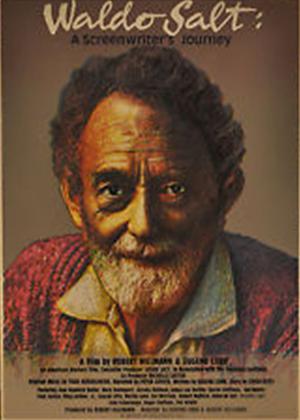
Waldo Salt was the subject of a 1990 documentary Waldo Salt: A Screenwriter's Journey, which featured interviews with Dustin Hoffman, Robert Redford, Jon Voight, John Schlesinger and other collaborators and friends.

The Waldo Salt Screenwriting Award

[edit]

The Waldo Salt Screenwriting Award, first presented in 1992, is awarded at the Sundance Film Festival annually. It is determined by the dramatic jury, and recognizes outstanding screenwriting in a film screened at the festival that year.[7]

Filmography

[edit]
Films
Year Title Notes
1937 The Bride Wore Red Adaptation, uncredited
1938 The Shopworn Angel Screenplay
1939 The Adventures of Huckleberry Finn Dialogue, uncredited
1940 The Philadelphia Story Uncredited
1941 The Wild Man of Borneo Screenplay
1943 Tonight We Raid Calais Screenplay
1944 Mr. Winkle Goes to War Alternative title: Arms and the Woman
1948 Rachel and the Stranger Screenplay
1950 The Flame and the Arrow Screenplay
1951 M Additional dialogue
1961 Blast of Silence Narration written by, credited as Mel Davenport
1962 Taras Bulba Screenplay together with Karl Tunberg
1964 Flight from Ashiya Alternative title: Ashiya kara no hiko
Wild and Wonderful
1969 Midnight Cowboy Screenplay; Oscar winner for Best Adapted Screenplay
1971 The Gang That Couldn't Shoot Straight Alternative title: The Gang That Couldn't Shoot
1973 Serpico Screenplay
1975 The Day of the Locust Screenplay
1978 Coming Home Oscar Winner for Best Original Screenplay
Television
Year Title Notes
1955 Star Stage 1 episode
1956 Colonel March of Scotland Yard 2 episodes
1958 Swiss Family Robinson Television movie, credited as Mel Davenport
Ivanhoe 4 episodes
1961 Tallahassee 7000 1 episode
1964 Espionage 1 episode
1965 The Nurses 1 episode
1967 Coronet Blue 1 episode

Awards and nominations

[edit]
Year Award Result Category Film or series
1949 Writers Guild of America Award Nominated Best Written American Western Rachel and the Stranger
1970 Won Best Drama Adapted from Another Medium Midnight Cowboy
1974 Best Drama Adapted from Another Medium Serpico (Shared with Norman Wexler)
1979 Best Drama Written Directly for the Screen Coming Home (Shared with Robert C. Jones)
1986 Laurel Award for Screenwriting Achievement
-
1970 Academy Award Won Best Writing, Screenplay Based on Material from Another Medium Midnight Cowboy
1974 Nominated Best Writing, Screenplay Based on Material from Another Medium Serpico (Shared with Norman Wexler)
1979 Won Best Writing, Screenplay Written Directly for the Screen Coming Home (Shared with Nancy Dowd and Robert C. Jones)
1970 BAFTA Award Won Best Screenplay Midnight Cowboy
1974 Edgar Allan Poe Awards Nominated Serpico (Shared with Norman Wexler)
1970 Golden Globe Award Nominated Best Screenplay Midnight Cowboy
1979 Best Screenplay - Motion Picture Coming Home (Shared with Robert C. Jones)

References

[edit]
[edit]
Revisions and contributorsEdit on WikipediaRead on Wikipedia
from Grokipedia
Waldo Salt (October 18, 1914 – March 7, 1987) was an American whose career spanned several decades, marked by early successes in Hollywood, a blacklist interruption due to his affiliations, and a late resurgence with two for Best Adapted Screenplay. Salt began writing screenplays in the late 1930s, securing his first credit with The Shopworn Angel (1938), and contributed to adaptations such as (1946). His involvement in left-wing causes during led him to join the American around 1938 or 1939, maintaining membership until 1955. In 1951, after being subpoenaed by the and refusing to testify, he was blacklisted by Hollywood studios, forcing him to work under pseudonyms for and other projects for over a decade. Returning to credited film work in the early 1960s, Salt achieved critical acclaim with scripts for (1969), earning his first Oscar, followed by Coming Home (1978), which secured a second. Other notable works include (1973) and (1975), reflecting his skill in adapting literary sources to screen amid personal and professional adversities. In 1987, shortly before his death, he received the Writers Guild's Laurel Award for lifetime achievement.

Early Life

Family Background and Childhood

Waldo Salt was born on October 18, 1914, in , , to William Haslem Salt, a business executive and artist, and Winifred (née Porter) Salt. William Salt's professional pursuits included artistic endeavors alongside corporate roles, though specific details of his business activities remain sparsely documented in available biographical accounts. Salt's early years were marked by familial instability, with his mother Winifred grappling with severe issues, including suicidal tendencies, and his father exhibiting alongside staunch right-wing political extremism. These parental struggles contributed to a turbulent home environment, fostering a sense of isolation that biographers and accounts link to Salt's later personal and creative reflections. No records indicate siblings or extended family influences playing a prominent role in his upbringing, with the focus in historical narratives centering on the parents' dysfunction as a formative backdrop.

Education and Early Influences

Salt enrolled at at the age of 14 and graduated in 1934. Following graduation, he taught drama and music at Menlo Junior College in , in 1935. This early academic precocity and subsequent instructional role exposed him to theatrical production and performance, laying groundwork for his transition to professional writing in Hollywood by 1936. His Stanford years coincided with a period of intellectual ferment on campus, where exposure to progressive ideas and literary circles began shaping his worldview, though specific mentors or coursework details remain undocumented in primary accounts.

Pre-Blacklist Career

Entry into Screenwriting

After graduating from in 1934, Salt briefly taught drama at Menlo Junior College before relocating to Hollywood in 1936, where he secured a contract as a with (MGM). During his initial years at the studio, Salt primarily contributed uncredited dialogue to films, marking his entry into the competitive environment of the era, which emphasized adaptation of literary properties and formulaic storytelling under studio oversight. His first credited screenwriting work came with (1937), a romantic drama directed by , for which Salt provided additional dialogue based on Ferenc Molnár's play The Good Fairy. This was followed by his debut full screenplay credit on The Shopworn Angel (1938), an adaptation of a Dana Burnett story produced by and starring and , which explored themes of fleeting romance amid social contrasts and received praise for its emotional depth despite modest box-office success. These early assignments established Salt within MGM's assembly-line production system, where writers like him honed skills in concise dialogue and character-driven narratives, often collaborating with producers and directors to refine scripts for censorship compliance under the . By 1942, Salt had contributed to approximately a dozen projects, transitioning from novice dialogue polisher to recognized adapter, though his pre-war output reflected the studio's preference for lightweight entertainments over original material. This foundational period positioned him for wartime service as a to the of War Information, temporarily halting but not derailing his burgeoning Hollywood trajectory.

Key Early Works and Collaborations

Salt's first produced screenplay was The Shopworn Angel (1938), a romantic drama directed by H. C. Potter and produced by at (MGM), adapting Dana Burnet's short story "Private Pettigrew's Girl." The film starred as a naive who falls for a showgirl played by , with in support, and marked Salt's entry into Hollywood screenwriting at age 24 following his from . This collaboration with Mankiewicz and Potter highlighted Salt's ability to infuse sentimental narratives with emotional depth, earning praise for its portrayal of fleeting romance amid World War I-era tensions.[]https://variety.com/1937/film/reviews/the-shopworn-angel-2-1200411535/) In the early 1940s, Salt continued at , contributing to adaptations and original scenarios, including assignment to the screenplay for (1946), based on Fannie Hurst's story about a violinist's obsessive relationship with a wealthy patron.[]https://www.nytimes.com/1942/03/17/archives/chaplin-plans-to-make-score-and-commentary-for-his-1927-picture-the.html)[]https://www.pbs.org/wnet/americanmasters/waldo-salt-about-waldo-salt/696/) Though final credits went to and Zachary Gold, Salt's early involvement reflected his growing reputation for literary adaptations.[]https://www.pbs.org/wnet/americanmasters/waldo-salt-about-waldo-salt/696/) He also adapted Edith Wharton's for the screen during this period, drawing on his literary influences.[]https://www.pbs.org/wnet/americanmasters/waldo-salt-about-waldo-salt/696/) Salt's early development was shaped by collaborations and friendships with literary figures, including Nathaniel West and , whose works on disillusionment and American excess informed his screenplays' thematic focus on personal and social conflicts.[]https://www.pbs.org/wnet/americanmasters/waldo-salt-about-waldo-salt/696/) These relationships, alongside his contract work, positioned him as a promising talent in an industry dominated by studio assembly-line production, where writers often refined or scenarios under oversight.[]https://www.ebsco.com/research-starters/biography/waldo-salt) By the mid-1940s, Salt had transitioned to more independent projects, but his foundational collaborations at laid the groundwork for his pre-blacklist output.

Political Affiliations and Activities

Involvement in Left-Wing Causes

Salt immersed himself in Hollywood's leftist intellectual circles during the late and , associating with figures like and at gatherings such as those at Musso & Frank's restaurant, Stanley Rose's bookstore, and Cole's parties, where discussions often critiqued the film industry's role in promoting capitalist ideals. He viewed Hollywood explicitly as a "center of for the great ," reflecting a political lens that saw cultural production as intertwined with ideological propagation rather than mere entertainment. These engagements aligned with broader leftist sympathies in the industry, including sympathy for and criticism of mainstream narratives, though Salt later reflected that such activities yielded limited tangible impact, remarking, "I wish we had done something to deserve being blacklisted." His associations and outspoken views contributed to his identification as a , culminating in a from the in the late 1940s, which scrutinized Hollywood's progressive networks for potential subversive influences.

Communist Party Membership and Sympathies

Waldo Salt joined the (CPUSA) in 1938, the same year his screenplay for Shopworn Angel was released, marking the beginning of a formal affiliation that lasted until 1955. In a 1973 interview, Salt personally confirmed his membership from 1939 to 1955, attributing his involvement to the economic hardships of the and a desire to address social inequalities through organized leftist activism. This period overlapped with the CPUSA's peak influence in Hollywood, where the party recruited writers and artists amid widespread labor unrest and anti-fascist sentiments, though membership rolls fluctuated and exact figures for Hollywood cells remain estimates based on testimonies rather than comprehensive records. Salt's sympathies predated formal membership, rooted in his exposure to progressive causes during , including support for union organizing and opposition to , which aligned with CPUSA platforms advocating class struggle and international solidarity. He participated in party-affiliated activities, such as Hollywood cultural fronts that blended artistic expression with political advocacy, though specific contributions like writing pamphlets or attending cells are documented primarily through later witness accounts rather than Salt's own pre-blacklist admissions. During his 1951 House Un-American Activities Committee (HUAC) appearance, Salt invoked the Fifth Amendment and refused to confirm or deny allegations of belonging to a Hollywood Communist cell, as testified by informant Richard J. Collins, which underscored his steadfast sympathies amid intensifying scrutiny. By the mid-1950s, Salt distanced himself from the party following revelations of Soviet atrocities under , including the 1956 Khrushchev speech denouncing , which prompted defections among American members disillusioned by the gap between ideological ideals and totalitarian practice. His exit reflected broader trends in CPUSA decline, with membership dropping from over 75,000 in 1947 to under 10,000 by 1957, driven by internal purges, FBI infiltration, and public backlash against Soviet espionage cases like those exposed by Venona decrypts. Despite later professional resurgence, Salt's reflections in interviews emphasized the personal toll of his sympathies, including from credited work, without recanting the underlying motivations for joining.

The Hollywood Blacklist

HUAC Hearings and Refusal to Testify

In April 1951, Waldo Salt was subpoenaed to appear before the (HUAC) as part of its probe into suspected communist influence within the Hollywood film industry, amid broader concerns over Soviet espionage and subversive activities during the early . On April 14, he testified in , where committee counsel questioned him regarding his alleged ties to the , including past membership and participation in front organizations like the League of American Writers, Hollywood Writers' Mobilization, and the National Council of American-Soviet Friendship. Salt acknowledged swearing under oath in 1945, upon joining the Office of War Information, that he was not then a , but he consistently refused to discuss prior political affiliations or confirm or deny membership, invoking the First Amendment's protections for and association rather than self-incrimination under the Fifth. This stance marked a shift from the Hollywood Ten's earlier defenses, which had proven ineffective in avoiding contempt charges, though Salt avoided direct incrimination of others. Prior "friendly" witnesses had already implicated Salt during the hearings. Screenwriter Martin Berkeley testified that Salt belonged to the Communist Party's fraction within the , a cell coordinating party influence in the union. Similarly, Leo Townsend described hosting a Communist recruiting meeting at Salt's Hollywood home on Wetherly Drive, led by party leader , with Salt in attendance. Townsend also recounted Salt's evasive response in an earlier session to a hypothetical question on defending the U.S. against a Soviet attack, highlighting committee concerns over divided loyalties. Salt's non-cooperation resulted in his designation as an "unfriendly witness," prompting Hollywood studios to him under industry self-policing agreements to preempt further congressional scrutiny. Unlike witnesses who named names to salvage careers, Salt's refusal aligned with a pattern among several dozen Hollywood figures, exacerbating the 's scope but rooted in HUAC's evidence of organized communist cells leveraging guilds for dissemination.

Immediate Consequences and Blacklisting

Following his April 1951 appearance before the (HUAC), where he invoked the Fifth Amendment to refuse answering questions about his affiliations, Waldo Salt was not charged with , unlike members of the earlier Hollywood Ten who had defied the committee without citing constitutional protections. However, the invocation effectively marked him as uncooperative, triggering an informal but industry-wide blacklist enforced by major studios and producers who pledged not to hire individuals failing to clear their names through testimony. The blacklist immediately halted Salt's credited work in Hollywood screenwriting; prior to 1951, he had contributed to films like The Shop Around the Corner (1940) and Rachel and the Stranger (1948), but studios such as and RKO terminated any ongoing associations, leaving him without employment in the major production sector. This professional isolation extended to guilds and unions, amplifying financial strain as Salt, then 37, could no longer draw salaries or advances typical for established writers, reportedly leading to reliance on fronts—intermediaries who submitted his pseudonymous scripts for pay. Personal repercussions followed swiftly, including the dissolution of his first marriage to Mary Martinson in 1952 amid the ensuing instability, and early signs of health decline exacerbated by stress and reduced circumstances. Salt later reflected that the period imposed a "total " from mainstream opportunities, forcing initial subsistence through uncredited television and advertising work, though these avenues offered limited income compared to feature films. The blacklist's enforcement, driven by studio executives' fear of congressional scrutiny over alleged subversive influences in , persisted without formal legal challenge for Salt until the early 1960s.

Broader Context: Soviet Threats and Espionage

In the years following , the posed a multifaceted threat to the , encompassing territorial expansion in , support for communist insurgencies worldwide, and extensive operations aimed at acquiring military and technological secrets. Declassified documents from the , a U.S. effort begun in 1943, decrypted thousands of Soviet communications revealing over 300 covert agents operating within American government agencies, including the State Department, , and . These intercepts confirmed the penetration of high-level positions by Soviet intelligence, with agents passing that accelerated the USSR's development of atomic weapons by up to two years. Notable cases included , a senior State Department official and UN charter participant, identified in Venona as a Soviet asset codenamed "Ales" who facilitated and influenced U.S. policy; Hiss was convicted of perjury in 1950 after denying his affiliations. Similarly, Julius Rosenberg, an engineer with ties to the (CPUSA), recruited spies within the atomic bomb program, leading to his and his wife Ethel's execution in 1953 for transmitting nuclear secrets to Moscow. The CPUSA, directed by the (Comintern) and later the Soviet , functioned as an auxiliary of Soviet intelligence, with its approximately 75,000 members in the late sworn to defend the USSR's interests above American law. This allegiance extended to cultural and industrial sectors, where party cells sought to shape through , labor disruptions, and infiltration of unions. Venona cables documented CPUSA leaders coordinating with Soviet handlers to embed agents in sensitive roles, blurring lines between ideological sympathy and active . While outright military espionage in non-government fields was less documented, the party's strategy emphasized "united fronts" to normalize communist narratives, as evidenced by directives to Hollywood writers and producers to insert pro-Soviet themes in films during the 1930s and wartime. In Hollywood, the (HUAC) investigations from 1947 onward targeted this nexus of influence, prompted by testimony from former communists like Jack Warner and about CPUSA efforts to control screenwriters' guilds and script content. The industry's output, including s whitewashing Stalin's purges or glorifying , aligned with Soviet directives, raising legitimate concerns about wartime deceiving audiences—such as the 1943 Mission to Moscow, which portrayed the USSR as a democratic ally despite the ongoing Ukrainian famine's toll of millions. emerged as a private-sector response to these risks, with studios wary of employing individuals tied to a foreign-directed apparatus amid escalating tensions, including the 1949 Soviet atomic test and . Empirical evidence from Venona and defector accounts underscores that dismissals of these probes as mere "witch hunts" often stem from institutional reluctance to acknowledge the scale of Soviet penetration, a pattern persisting in post-Cold War historiography despite declassifications validating core HUAC suspicions.

Period of Exile and Pseudonymous Work

Relocation to Europe

Following his refusal to testify before the in April 1951, Waldo Salt was blacklisted by Hollywood studios, effectively ending his credited work in the industry for over a decade. Rather than relocating to —as some fellow blacklisted writers did to seek opportunities abroad—Salt moved to in the early , where he resided in a inexpensive hotel room while grappling with , , and financial hardship. There, he sustained himself by writing scripts for television and commercials under pseudonyms, avoiding direct association with his real name to evade blacklist enforcement. Salt's pseudonymous output included contributions to U.S. television, but he also provided uncredited scripts for British-produced series such as (1955–1960), filmed in and employing several blacklisted American writers through fronts or aliases coordinated by producer . This remote collaboration allowed indirect involvement in European media without physical relocation, as scripts were submitted from the U.S. amid ongoing FBI of blacklisted figures. His New York base facilitated such work while minimizing exposure, though it yielded no on-screen credits until the blacklist's easing around 1962. The absence of a full exile abroad distinguished Salt's experience from peers like or Michael Wilson, who temporarily settled in for film projects such as The Bridge on the River Kwai (1957). Salt's domestic "internal " in New York reflected a pragmatic to blacklist realities, prioritizing survival through low-profile television gigs over risky overseas ventures, which often required fronts and carried espionage suspicions amid tensions. This period honed his introspective style, evident in later acclaimed works, but imposed severe personal tolls, including health decline and professional obscurity.

Underground Writing Projects

During the period of his blacklisting, Waldo Salt sustained his career through pseudonymous writing, primarily under the name Mel Davenport, to circumvent Hollywood's restrictions and maintain income. Relocating initially to support British productions, he contributed scripts to the television series , which ran from 1955 to 1960 and featured episodes emphasizing adventure and moral themes aligned with his earlier interests in socially conscious narratives. These contributions allowed him to refine his storytelling techniques amid financial hardship, though credits were withheld to protect collaborators from blacklist repercussions. In New York, Salt expanded his underground efforts by authoring television scripts under the Davenport pseudonym for approximately a decade, focusing on episodic content that demanded quick adaptation to commercial formats. This work, often for and dramas, provided modest remuneration but preserved his professional edge, as he later reflected on the necessity of continuous practice despite the anonymity. A specific instance includes the hard-boiled narration for the 1961 Blast of Silence, a noir thriller directed by , where his voiceover script—credited to Davenport—captured the protagonist's internal alienation and , drawing from his pre-blacklist experience in taut, character-driven prose. Salt's pseudonymous output also extended to uncredited revisions on features like The Crimson Pirate (1952), a swashbuckling adventure starring , where he polished dialogue and action sequences to enhance pacing without formal acknowledgment. These projects, executed in secrecy, underscored the blacklist's on creative labor, forcing talents like Salt into peripheral markets while risking exposure for any associates. Overall, this phase yielded no major breakthroughs but ensured his survival as a writer, culminating in stockpiled material that informed his post-1960s resurgence.

Post-Blacklist Resurgence

Return to Hollywood

After more than a decade of effective exile from credited Hollywood work following his 1951 blacklisting, screenwriter Waldo Salt returned via producer , who had collaborated with him on earlier projects like (1950). Hecht hired Salt in 1962 to co-adapt Nikolai Gogol's novel with Karl Tunberg, resulting in a historical epic directed by and starring and . The film, released in December 1962 by , depicted Cossack warfare against Polish forces in the 16th century but received mixed reviews for its spectacle over substance, grossing modestly despite its high budget. Hecht's decision effectively bypassed lingering blacklist restrictions for Salt, who had previously contributed pseudonymously to British television series such as during the 1950s. This marked the first of three Hecht-produced features for Salt, allowing him to rebuild his career under his own name amid the industry's gradual shift away from HUAC-era purges by the early . Salt's subsequent Hecht assignments included Wild and Wonderful (1964), a romantic comedy starring and as a race car driver and his pet , and Flight from Ashiya (1964), an action-disaster film directed by Michael Anderson featuring and featuring rescue operations amid a . Both films underperformed commercially and critically, with Wild and Wonderful criticized for contrived humor and Flight from Ashiya for implausible plotting, yet they provided Salt essential credits to transition toward more acclaimed projects. These efforts, though unsuccessful, demonstrated Salt's persistence and positioned him for the era's evolving cinematic landscape.

Midnight Cowboy and Academy Award Success

Salt's adaptation of James Leo Herlihy's 1965 novel for director in 1968 marked a pivotal breakthrough in his post-blacklist career. The screenplay centered on the improbable between a naive hustler, (played by ), and a frail con artist, Ratso Rizzo (Dustin Hoffman), navigating poverty and exploitation in urban America. Released on May 25, 1969, by , the film initially received an for its frank depiction of sex, drugs, and violence, yet it resonated widely, grossing over $44 million domestically on a $3.5 million budget. At the on April 7, 1970, Salt received the Oscar for Best Writing, Screenplay Based on Material from Another Medium, beating nominees including James Poe and Robert E. Thompson for They Shoot Horses, Don't They?. also won Best Picture (producer Jerome Hellman) and Best Director (Schlesinger), making it the only X-rated film to claim the top honor—a testament to the screenplay's raw authenticity and structural depth in elevating the novel's themes of disillusionment and human connection. This dual recognition for the script underscored Salt's mastery in condensing Herlihy's episodic narrative into a cohesive, character-driven arc that critics praised for its unflinching realism. The awards capped nearly two decades of exile and pseudonymous labor, validating Salt's resilience and repositioning him as a key figure in the movement's emphasis on socially conscious storytelling. In his acceptance speech, Salt dedicated the win to collaborators and implicitly to perseverance amid past professional ostracism, though he avoided explicit references. The success propelled subsequent opportunities, including nominations for (1973), while cementing Midnight Cowboy's enduring status as a landmark in American cinema for its causal portrayal of marginalization without sentimentality.

Later Films: Coming Home and Beyond

Coming Home (1978), directed by , featured a screenplay co-written by Salt with Robert C. Jones, based on an original story by Salt and . The narrative follows Sally Hyde (), whose Marine husband Bob () deploys to ; volunteering at a veterans' , Sally forms a romantic bond with paraplegic veteran Luke Martin (), highlighting the war's profound psychological and relational disruptions. Production faced challenges, including Salt's serious illness in late 1976, prompting Jones to assist in finalizing the script. The film earned critical praise for its unflinching examination of Vietnam's domestic aftermath, avoiding glorification and emphasizing personal alienation and anti-war sentiment. It secured three , including Best Original Screenplay for Salt, Jones, and Dowd (credited for story), for Fonda, and for Voight. After Coming Home, Salt received no further screenwriting credits amid declining health. In the , he shifted to mentorship, serving as a creative advisor at Labs to guide nascent directors and writers. Salt died of on March 7, 1987, at in , aged 72.

Personal Life

Marriages and Relationships

Salt was married four times. His first marriage, to Ambur Dana, took place on January 8, 1938, and ended in divorce in 1941. His second marriage was to Mary Davenport on May 23, 1942; the couple had two daughters, (an actress and producer) and Deborah Salt, before divorcing at an unspecified later date. Salt's third marriage was to Gladys Schwartz on February 2, 1969; Schwartz died on January 5, 1981, during the marriage. His fourth and final marriage was to poet and Eve Merriam on October 22, 1983, which continued until Salt's death from cancer on March 7, 1987. No additional significant relationships beyond these marriages are documented in biographical accounts.

Family and Children

Waldo Salt and his first wife, actress Mary Davenport, had two daughters: Jennifer and Deborah. , born September 4, 1944, in , , pursued in the late and 1970s before transitioning to screenwriting and producing; she co-wrote the adaptation of (2010) and served as executive producer for the FX horror anthology series from 2011 onward. Deborah Salt, Jennifer's younger sister, is a visual artist based in Los Angeles, where she has developed a practice centered on minimal geometric abstraction, drawing comparisons to Light and Space movement figures like Helen Pashgian. At the time of his death in 1987, Salt was also survived by a grandson.

Health Issues and Death

Salt was diagnosed with in the months preceding his death, undergoing treatment at in . He succumbed to the disease on March 7, 1987, at the age of 72. Prior to his terminal illness, no major chronic health conditions were publicly documented in reliable accounts of his life, though the physical toll of his earlier career struggles, including the stress of the , may have contributed to overall decline without specific medical attribution. His death marked the end of a resurgence period in that had yielded two , leaving behind a legacy in adapted narratives focused on social outsiders.

Legacy

Documentary Portrait

Waldo Salt: A Screenwriter's Journey is a 1990 American documentary film that chronicles the life, career challenges, and professional triumphs of Waldo Salt. Directed by Eugene Corr and Robert Hillmann, the 90-minute production details Salt's early Hollywood successes in the 1930s and 1940s, his by the in the 1950s due to alleged Communist affiliations, his underground writing period, and his post-1960s resurgence with critically acclaimed scripts. The film incorporates archival footage, highlight clips from Salt's screenplays including Midnight Cowboy (1969) and Coming Home (1978), and interviews with key collaborators and contemporaries such as , , and , who reflect on Salt's craftsmanship, resilience, and influence on character-driven storytelling. Narrated in part by , it emphasizes how the blacklist experience deepened Salt's introspective approach to writing, fostering empathy for marginalized figures in his later works. Premiered at the in 1990 and broadcast as part of 's series, the documentary received critical recognition for its balanced portrayal of Salt's ideological entanglements and artistic recovery, culminating in a nomination for the Academy Award for Best Documentary Feature at the in 1992. While praised for highlighting Salt's two Oscar wins for Best Adapted Screenplay, some reviewers noted its focus on redemption narratives amid the era's political controversies.

Waldo Salt Screenwriting Award

The Waldo Salt Screenwriting Award is presented annually at the to honor the most outstanding in the U.S. Dramatic competition, recognizing original writing that demonstrates depth, authenticity, and narrative innovation. Named in tribute to Waldo Salt, the acclaimed screenwriter known for his humanist portrayals in films like and Coming Home, the award underscores the festival's commitment to bold, character-driven storytelling amid independent cinema's challenges. First awarded in 1991, shortly after Salt's in 1987, the has spotlighted emerging and established talents whose scripts push boundaries in dramatic fiction. Early recipients include for Trust (1990), praised for its incisive dialogue and existential themes, and Neal Jiminez and Michael Steinberg for (1992), noted for its raw exploration of and resilience. Subsequent winners, such as for (2024), highlight the award's role in elevating scripts that blend personal introspection with broader social commentary. In recent years, the award has gone to Eva Victor for Sorry, Baby (2025), commended by the jury for its "stunning honesty" in depicting relational dynamics, and K.D. Dávila for Emergency (2022), lauded for tackling racial tensions with urgency and wit. These selections reflect a consistent emphasis on scripts that prioritize emotional truth and structural craft over commercial formulas, aligning with Salt's own career arc of resilient, principled writing post-blacklist. The award carries no monetary prize but offers significant visibility, often propelling films toward wider distribution and critical acclaim within the indie sector.

Critical Assessment and Influence on Screenwriting

Salt's screenplays, particularly Midnight Cowboy (1969) and Coming Home (1978), received widespread critical acclaim for their unflinching portrayal of , personal trauma, and moral ambiguity, earning him for Best Adapted Screenplay for both films. Critics and collaborators, such as director , highlighted how Salt transformed raw anger from his experiences into nuanced wisdom, enabling scripts that captured the era's undercurrents of and countercultural disillusionment without resorting to sentimentality. Producer Jerome Hellman attributed Salt's elevated artistry to his integration of profound personal losses, which infused works like Serpico (1973) with authentic grit and ethical complexity, though some contemporaries debated whether such depth stemmed purely from adversity or inherent talent. His approach emphasized "writing in images" akin to poetry, prioritizing visual storytelling and exhaustive research to immerse audiences in characters' inner worlds, as seen in adaptations that preserved source material fidelity while amplifying thematic resonance on loneliness and fractured families. This method balanced artistic ambition with commercial viability, expanding Hollywood's narrative envelope during the 1970s Renaissance, yet Salt's eccentric persona—marked by marijuana use and unconventional habits—occasionally drew portrayals as a "hippie superannuated leprechaun" in profiles, underscoring a tension between his bohemian ethos and industry professionalism. Salt exerted influence on through his post-blacklist resurgence, demonstrating resilience by producing 20 films after a 15-year hiatus, inspiring writers to prioritize integrity over expediency. In the 1980s, he mentored emerging talents at Labs, advocating for independent cinema's role in innovation and , which indirectly shaped the lab's of character-driven, auteur-focused development. Among professionals, he became legendary for zeitgeist-reflecting scripts that proved late-career reinvention possible, influencing a generation to blend personal with broader cultural critique, as evidenced by the enduring respect in circles despite his relative obscurity to general audiences.

Filmography

Feature Film Screenplays

Salt's screenplays for feature films began in the late 1930s under contract with , where he adapted literary works and original stories into romantic and adventure genres. Following U.S. Army service in , he continued writing until the halted his credited output in 1951 after he refused to testify before the . During the blacklist era, Salt contributed uncredited or pseudonymously to projects, including work on (1952). He resumed credited screenwriting in 1962, shifting toward gritty, character-driven dramas that earned critical acclaim and for (1969) and Coming Home (1978).
YearTitleCredit
1937Screenplay
1938The Shopworn AngelScreenplay
1943Tonight We Raid CalaisScreenplay
1944Mr. Winkle Goes to WarScreenplay
1948Screenplay
1950Screenplay
1962Screenplay (co-written with Karel Tabaka)
1964Screenplay (co-written with Paul Osborn and C. Y. Lee)
1964Wild and WonderfulScreenplay
1969Screenplay (adaptation from James Leo Herlihy's novel)
1971The Gang That Couldn't Shoot StraightScreenplay (adaptation from Jimmy Breslin's novel)
1973Screenplay (adaptation from Peter Maas's )
1975Screenplay (adaptation from Nathanael West's novel)
1978Coming HomeScreenplay (co-written with Robert C. Jones and from story by )

Television and Other Credits

Salt contributed to British television during the Hollywood blacklist period, often using pseudonyms or fronts due to his refusal to testify before the in 1951. He wrote the teleplay for the 1958 television movie , adapted from Johann David Wyss's novel, credited as Mel Davenport. In 1958, Salt authored four episodes of the ITV adventure series , starring , including "The Circus" (directed by Arthur Crabtree) and "The Princess." These contributions were part of a broader effort by blacklisted American writers, facilitated by producers like Sidney Cole, to secure work in British television. Salt also provided scripts for (ITV, 1955–1960), a series produced by Sapphire Films, where blacklisted writers such as Salt, , and Ian Hunter collaborated under fronts to evade U.S. restrictions; this work helped sustain their careers amid the blacklist's suppression of Hollywood opportunities. Post-blacklist, in 1961, he wrote at least one episode of the American crime series Tallahassee 7000, including "The Fugitive," featuring . Later television work included single episodes of (1963–1964), The Nurses (1965), and (1967). Beyond scripted television, Salt attempted to sell original scripts to New York-based programs in the early while living in reduced circumstances, though few resulted in produced credits amid his blacklisted status. No verified radio or stage writing credits beyond his early dramatic training are documented.

Awards and Nominations

Academy Awards

Waldo Salt received two Academy Awards for his screenwriting contributions. At the on April 7, 1970, he won for Best Writing, Screenplay Based on Material from Another Medium for (1969), adapted from James Leo Herlihy's novel. Nearly a decade later, at the on April 9, 1979, Salt shared the Oscar for Best Writing, Screenplay Written Directly for the Screen for Coming Home (1978) with Robert C. Jones, credited for the screenplay based on a story by . These victories represented Salt's peaks following his blacklist-era hiatus from major credits.

Other Honors and Recognitions

In 1986, Salt received the Writers Guild of America's Laurel Award for Screen Writing Achievement, the organization's highest accolade recognizing lifetime contributions to screenwriting. The award, presented less than a year before his death on March 7, 1987, highlighted his resilience following the Hollywood blacklist and his subsequent successes with films such as Midnight Cowboy (1969) and Coming Home (1978). Earlier in his career, Salt earned a Writers Guild of America nomination in 1949 for Best Written American Western for Rage at Dawn. These recognitions from the WGA underscored his craftsmanship in adapting literary works to the screen, distinct from competitive annual screenplay awards.

References

Add your contribution
Related Hubs
User Avatar
No comments yet.