Hubbry Logo
Walter SlezakWalter SlezakMain
Open search
Walter Slezak
Community hub
Walter Slezak
logo
8 pages, 0 posts
0 subscribers
Be the first to start a discussion here.
Walter Slezak
Walter Slezak
from Wikipedia

Walter Slezak (German pronunciation: [ˌvaltɐ ˈslɛzak]; 3 May 1902 – 21 April 1983) was an Austrian-born film and stage actor active between 1922 and 1976. He mainly appeared in German films before migrating to the United States in 1930 and performing in numerous Hollywood productions.

Key Information

Slezak typically portrayed wily and loquacious characters, often philosophical, and often with a taste for food, drink, and fine living. He played a crafty villain as a U-boat captain in Alfred Hitchcock's film Lifeboat (1944), a charming, two-timing major domo to a tycoon in Come September (1961), and a wandering gypsy in The Inspector General (1949). He stood out as shrewd, unscrupulous private investigators in film noir, as in Cornered (1945) and Born to Kill (1947).[1]

Early life

[edit]

Slezak was born in Vienna, the son of opera tenor Leo Slezak and Elisabeth "Elsa" Wertheim. He studied medicine for a time and later worked as a bank teller. His older sister Margarete Slezak was also an actress.

Career

[edit]

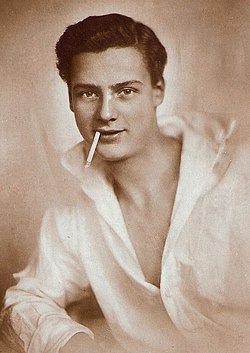
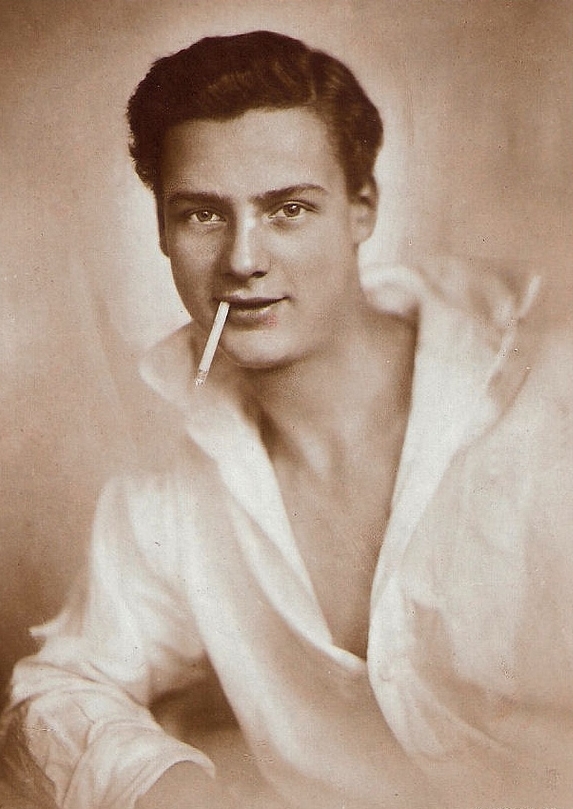
Slezak was talked into taking his first role, in the 1922 Austrian film Sodom und Gomorrah, by his friend and the film's director, Michael Curtiz.[1]In his youth (while still slim) Slezak was cast as a leading man in silent films. He also acted on the stage for many years, debuting on Broadway in 1931.[1]

His first American film was Once Upon a Honeymoon (1942), with Ginger Rogers and Cary Grant.[1] He worked steadily and appeared in over 100 films including The Princess and the Pirate (1944), The Spanish Main (1945), Sinbad the Sailor (1947), Born to Kill (1947), Abbott and Costello in the Foreign Legion (1950), People Will Talk (1951), and Call Me Madam (1953).

Slezak played the lead in Broadway musicals, including Fanny, for which he won the Tony Award for Best Actor in a Musical.[2]

Slezak as Geppetto in the 1957 televised production of Pinocchio

Slezak acted in radio in such shows as Lux Radio Theater, Columbia Workshop, The Pepsodent Show, and The Charlie McCarthy Show. He made numerous television appearances, including in the programs The Loretta Young Show, This Is Show Business, Playhouse 90, and Studio One. He starred in an unsold television pilot, Slezak and Son, that aired in 1960 as an episode of the anthology series New Comedy Showcase,[3] and appeared as The Clock King in episodes 45 and 46 of TV series Batman in 1966.[4]

In 1959/60, Slezak appeared at the Metropolitan Opera in Johann Strauss's operetta Der Zigeunerbaron. In the 1970s, Slezak played the non-singing role of Frosch, the jailer, in the San Francisco Opera production of Johann Strauss's operetta Die Fledermaus.[5] Later film roles in Britain included the Cliff Richard vehicle Wonderful Life (1964) and Black Beauty (1971).[6]

Personal life

[edit]

Slezak married Johanna "Kaasi" Van Rijn on 10 October 1943. The couple had three children: Ingrid, Erika, and Leo. Erika went on to become an Emmy-winning actress, and starred as Victoria Lord on the long-running soap opera One Life to Live from 1971 to its cancellation in 2012. In 1974, Slezak appeared on the series as her character's godfather, Lazlo Braedecker.[1]

Gravesite of Slezak, his wife Johanna, and his parents Leo and Elisabeth in Egern, Bavaria

Slezak was close friends in Vienna in the 1930s with heiress Maria Altmann and her family.[7]

Death

[edit]

On 21 April 1983, Slezak died from a self-inflicted gunshot.[1] He was reportedly despondent over the state of his health, most notably heart trouble, a recent prostate operation, and a shoulder injury requiring several treatments a week.[8][9][10] He was buried in the grave of his parents in the cemetery of St. Laurentius Church, a Catholic parish in Egern, Bavaria.[11]

Autobiography

[edit]

Slezak's autobiography, What Time's the Next Swan? was published in 1962. The book's title refers to an alleged incident in the career of his father, heldentenor Leo Slezak. During a performance in the title role of Lohengrin, the elder Slezak was supposed to finish his aria by stepping into a swan boat and then being pulled offstage. When a stagehand removed the boat prematurely, Slezak supposedly reacted to the error by asking the audience "What time's the next swan?"[12]

Awards

[edit]

In 1955, Slezak won a Tony Award for his role in the Broadway production of Fanny.[13]

Complete filmography

[edit]
Year Film Role Director Notes
1922 Sodom and Gomorrah Eduard Harber - Student am Cambridge-Lyzeum / Ein Goldschmied von Galiläa Michael Curtiz (Mihaly Kertész)
1924 Michael Michael Carl Theodor Dreyer
1924 My Leopold Leopold, sein Sohn Heinrich Bolten-Baeckers
1925 Oh Those Glorious Old Student Days Heinz Schall
1925 Sumpf und Moral
1926 Give My Regards to the Blonde Child on the Rhine Carl Boese
1926 Watch on the Rhine Walter Thiermann Helene Lackner
1926 Marccos tollste Wette
1926 Young Blood Oberprimaner Manfred Noa
1926 The Sea Cadet Carl Boese
1927 Wie bleibe ich jung und schön - Ehegeheimnisse
1927 Goodbye Youth Mario Augusto Genina
1927 The Right to Live Robert Wohlmuth
1927 The Lorelei Wolfgang Neff
1927 Liebe geht seltsame Wege Florizel, 'Flo-Flo'
1927 The Long Intermission Ottokar Carl Froelich
1927 The Standard-Bearer of Sedan Johannes Brandt
1928 Single Mother Fred Sauer
1928 Almenrausch and Edelweiss Mentel Franz Seitz
1928 Das Hannerl von Rolandsbogen
1929 Osudné noci Bellini
1929 Eros in Chains Heinz Ewer Conrad Wiene
1932 Spione im Savoy-Hotel Kurt
1942 Once Upon a Honeymoon Baron Franz von Luber James Anderson (assistant)
1943 This Land Is Mine Major Erich von Keller Jean Renoir
1943 The Fallen Sparrow Dr. Christian Skaas Richard Wallace
1944 Lifeboat Willi Alfred Hitchcock
1944 Step Lively Joe Gribble Tim Whelan
1944 Till We Meet Again Vitrey, The Mayor Frank Borzage
1944 The Princess and the Pirate La Roche David Butler
1945 Salome, Where She Danced Dimitrioff Charles Lamont
1945 The Spanish Main Don Juan Alvarado Frank Borzage
1945 Cornered Melchior Incza Edward Dmytryk
1947 Sinbad the Sailor Melik Richard Wallace
1947 Born to Kill Arnett Robert Wise
1947 Riffraff Molinar Ted Tetzlaff
1948 The Pirate Don Pedro Vargas Vincente Minnelli
1949 The Inspector General Yakov Henry Koster
1950 The Yellow Cab Man Dr. Byron Dokstedder Jack Donohue
1950 Spy Hunt Doctor Stahl George Sherman
1950 Abbott and Costello in the Foreign Legion Sgt. Axmann Charles Lamont
1951 Bedtime for Bonzo Prof. Hans Neumann Fred de Cordova
1951 People Will Talk Prof. Barker Joseph L. Mankiewicz
1953 Confidentially Connie Emil Spangenberg Edward Buzzell
1953 Call Me Madam August Tantinnin Walter Lang
1953 White Witch Doctor Huysman Henry Hathaway
1954 The Steel Cage Louis, the Prison Chef Walter Doniger segment "The Chef"
1956 The Good Fairy Max Sporum TV movie
1957 Ten Thousand Bedrooms Papà Vittorio Martelli Richard Thorpe
1957 Pinocchio Geppetto TV movie
1959 The Miracle Flaco Irving Rapper
1959 A Doll's House Presenter TV movie
1959 A Christmas Festival Mr. Really-Big TV movie
1961 Come September Maurice Clavell Robert Mulligan
1962 The Wonderful World of the Brothers Grimm Stossel George Pal (fairy tale sequences)
1963 A Cry of Angels George Frideric Handel TV movie
1964 Wonderful Life Lloyd Davis Sidney J. Furie
1964 Emil and the Detectives Baron Peter Tewksbury
1965 The Man Who Bought Paradise Captain Meers TV movie
1965 24 Hours to Kill The Firm: Malouf Peter Bezencenet
1965 A Very Special Favor Etienne, Restaurant Proprietor Michael Gordon
1966 Der Kongreß amüsiert sich Wax museum guide
1966 Dr. Coppelius Dr. Coppelius Ted Kneeland
1966 Batman Clock King
1967 The Caper of the Golden Bulls Antonio Gonzalez Russell Rouse
1968 Heidi Father Richter Delbert Mann TV movie
1970 The Juggler of Notre Dame The Innkeeper
1971 Black Beauty Hackenschmidt James Hill
1972 Treasure Island Squire Trelawney Antonio Margheriti
1976 The Mysterious House of Dr. C Dr. Coppelius

References

[edit]
[edit]
Revisions and contributorsEdit on WikipediaRead on Wikipedia
from Grokipedia
Walter Slezak (May 3, 1902 – April 21, 1983) was an Austrian-born American character actor and singer renowned for his versatile performances in , , and , often portraying heavies, comic roles, and musical leads. Born in to the famed Czech-Austrian and actress Elisabeth Wertheim, Slezak initially pursued before entering the entertainment industry, debuting in German in 1922 after being discovered by director in . He emigrated to the in 1930, making his Broadway debut in 1930 and transitioning to Hollywood in 1942 with . Slezak gained prominence for villainous roles, including the sadistic U-boat captain in Alfred Hitchcock's Lifeboat (1944) and the Nazi major in This Land Is Mine (1943), while also excelling in lighter fare such as the pirate in The Pirate (1948) and comedic parts in (1951) and (1961). On , he starred in musicals like Fanny (1954–1956), earning the 1955 Tony Award for Best Actor in a Musical for his role as Panisse, and made his U.S. debut in 1959 as Zsupán in . A singer, Slezak appeared in over 100 and numerous television shows, including as the on Batman (1966–1967), before his death by at age 80 in . He was the father of actress , known for her long-running role on the .

Early life

Family background

Walter Slezak was born on May 3, 1902, in , (now ), to the renowned opera tenor and actress Elisabeth "Elsa" Wertheim Slezak. He had an older sister, Margarete Slezak (1901–1953), who also became an actress and soprano. The Slezak household was immersed in a musical and theatrical atmosphere, shaped by Leo Slezak's prominent international career as a Wagnerian at venues like the Court Opera and the , which exposed young Walter to the world of performance from an early age. In his early childhood amid 's rich cultural milieu at the turn of the , Slezak often attended and theaters with his family.

Education and acting debut

Slezak initially pursued a conventional path after completing high school, enrolling at the to study medicine in 1920. However, he abandoned the program after just one year, finding it unfulfilling. Following his departure from university, Slezak took a position as a to support himself, a role that provided financial stability but little personal satisfaction. Influenced by his family's deep roots in the —his father, , was a renowned —Slezak soon shifted toward a career in acting. At the age of 20, while enjoying a night out in a Viennese beer garden, he caught the attention of director , a friend who persuaded him to make his screen debut in the German-Austrian Sodom und Gomorrha (1922), directed by Curtiz himself. The film's success marked Slezak's entry into the entertainment industry. Amid the vibrant but increasingly unstable cultural scene of post-World War I and escalating political and economic tensions in the late 1920s, he emigrated to the in 1930 to pursue stage work on Broadway.

Career

European stage and film beginnings

Slezak entered the European entertainment industry in the early 1920s, debuting on stage in Berlin operettas before transitioning to . His breakthrough came with a supporting role in the 1922 Austrian-German epic Sodom und Gomorrah, directed by , marking his entry into cinema as a handsome, slim . Over the next decade, he starred in more than 20 German and Austrian productions during the silent and early sound eras, often portraying romantic heroes in light comedies and dramas, such as Der goldene Schmetterling (1926) and Das Hannerl von Rolandsbogen (1928). These roles capitalized on his youthful charm and established him as a popular figure in the vibrant Weimar-era scene, contrasting with his father Leo Slezak's renowned opera career. Parallel to his film work, Slezak maintained an active stage presence in and theaters throughout the and , specializing in operettas that showcased his voice and comedic timing. Notable appearances included roles in Johann Strauss productions and similar light operas, where he honed his skills as a versatile performer blending singing and acting. By the late , however, significant weight gain shifted his image, prompting a pivot from romantic leads to character parts; he embraced this change around , taking on more complex, often antagonistic figures in films like the 1932 Spione im Savoy-Hotel, where he played a sly hotel guest. This evolution allowed him to explore villainous and eccentric personas, broadening his appeal in pre-war European cinema. The ascent of the Nazi regime profoundly disrupted Slezak's European career, exacerbated by his family's partial Jewish heritage—his mother, Elisabeth "Elsa" Wertheim, came from a Jewish background, classifying the family under discriminatory Nuremberg Laws. After an initial stint on Broadway in 1930 with the operetta Meet My Sister, Slezak maintained ties to Vienna's cultural circles into the late 1930s. The 1938 Anschluss heightened dangers for those with Jewish ancestry, but by then Slezak had largely transitioned to the United States since emigrating in 1930, ending his primary European phase.

Broadway and musical theater

Slezak made his Broadway debut in the 1930 musical comedy Meet My Sister, portraying Eric Molinar in a production that ran for 152 performances. This marked his arrival in American theater after emigrating from , where his early stage work had honed his comedic timing and vocal skills. He followed this with a lead role as Karl Reder in the Jerome Kern-Oscar Hammerstein II musical Music in the Air in 1932, a romantic tale set in the that showcased his voice in songs like "I've Told Ev'ry Little Star." Throughout the 1930s, Slezak continued in musical theater, taking the role of Professor Johann Volk in the 1935 operetta , composed by Rowland Leigh with music by , which highlighted his ability to blend humor and melody. He then starred as Harry Mischka Szigetti in the 1938 Richard Rodgers-Lorenz Hart musical I Married an Angel, a whimsical fantasy that ran for 338 performances and allowed him to display his versatile , inherited in musical lineage from his father, the renowned tenor . Over his career, Slezak appeared in 11 Broadway productions from 1930 to 1975, many of which integrated elements of comedy, drama, and song, capitalizing on his resonant voice and charismatic presence. After a period focused on film, Slezak returned to Broadway in the 1950s, most notably as the wealthy sailmaker Panisse in the 1954 musical Fanny, adapted from Marcel Pagnol's trilogy with music by Harold Rome. His portrayal earned widespread critical praise for combining dramatic depth with strong vocal performances, particularly in the duet "To My Wife," where his comic unction and ingratiating singing were highlighted as standout elements. The production ran for 888 performances, solidifying his reputation in musical theater. Into the 1960s, Slezak extended his stage work beyond Broadway through revivals and national tours, including a prominent role in a 1966 Music Fair circuit production of the musical Oliver!, where he brought his seasoned comedic flair to the ensemble. These engagements, alongside regional appearances like the 1961 revival of Eugène Ionesco's at the Westport Country Playhouse, kept his live theater presence active until later in the decade.

Hollywood films

Slezak made his Hollywood debut in Once Upon a Honeymoon (1942), playing the Nazi husband of Ginger Rogers's character opposite , marking his transition from European cinema and Broadway to American films. This role, leveraging his prior stage success, introduced him to major studios like RKO, where he quickly established himself in supporting parts. Early films included This Land Is Mine (1943) as the menacing Major Von Keller and (1943) as Dr. Skaas, both portraying authoritarian figures that capitalized on his imposing presence. Throughout the 1940s and 1950s, Slezak appeared in over 30 Hollywood features, often as heavies or in high-profile productions. In Alfred Hitchcock's Lifeboat (1944), he delivered a chilling performance as Willi, the cunning German officer stranded with survivors, earning critical acclaim for his subtle menace. Other notable heavy roles included Arnett in the noir thriller Born to Kill (1947) and Melik in the adventure (1947), while comic turns featured La Roche in Raoul Walsh's (1944) and Yakov in The Inspector General (1949). He also provided urbane humor as Professor Barker in (1951) and the bumbling Inspector in (1951) alongside . Slezak's as urbane villains or buffoonish characters stemmed from his increasing weight and accented delivery, limiting him to supporting roles despite occasional leads like in (1945) as the scheming Don Alvarado. His collaborations with Hitchcock and Walsh highlighted his versatility in tense thrillers and swashbucklers, respectively. By the late , film opportunities dwindled due to his age and health issues, including a heart condition, leading to sporadic appearances such as in the satirical The Bed Sitting Room (1969) and (1972), with his final film role in (1981).

Television and radio work

Slezak's radio career in the featured guest appearances on prominent anthology programs, including Lux Radio Theater, Columbia Workshop, The Pepsodent Show, and The Show, where he delivered dramatic readings and comedic sketches that showcased his versatile voice. These roles often highlighted his European accent and commanding presence, adapting his experience to the audio medium for suspenseful narratives and light entertainment. Transitioning to in the early , Slezak made his small-screen debut with five episodes of the in 1950, marking his entry into broadcast drama with performances in tense, character-driven stories. He followed this with appearances on Danger in 1951, contributing to the era's format through roles that emphasized psychological intrigue and moral ambiguity. Throughout the 1950s, Slezak appeared in notable dramas, including the episode "Honored Guest" on Robert Montgomery Presents in 1956, where he portrayed the immigrant Krisons Ringo navigating cultural challenges in a small American town. He also starred in "The Last Patriarch" on that same year, playing a domineering family figure in a tale of generational conflict. These performances reflected his ability to blend authority with subtle humor, often echoing his film in villainous roles. In the 1960s, Slezak continued guest spots on , most memorably as the sinister Boogeyman in The Twilight Zone's "" episode from , a role that exploited his imposing physique and gravelly delivery to evoke childhood fears. He frequently embodied comedic or authoritative characters on the small screen, leveraging his Broadway-honed charm for both lighthearted and menacing parts across dramatic anthologies. Slezak's later television work included voice contributions to specials and adaptations, such as his portrayal of in the 1957 CBS production of , where his warm narration enhanced the family-oriented tale. He continued with appearances into the early 1980s, including guest spots on (1980), before his roles ceased prior to his 1983 death.

Personal life

Marriage and children

Walter Slezak married the Dutch actress Elisabeth "Kaasi" Van Rijn on October 10, 1943. The marriage lasted nearly 40 years, until Slezak's death in 1983. The couple had three children: daughters Ingrid (born circa 1944) and Erika (born August 5, 1946), and son Leo (born circa 1948). appeared in the 1945 film Cornered as a child actress, while Erika pursued a successful career, earning six for her role as on the soap opera . Leo became a pilot. Following their marriage, the Slezaks established their family life in , where their children were born, before later settling in . Johanna managed the household amid Slezak's extensive travels for stage and film commitments, fostering a stable environment that supported the children's early exposure to the entertainment world. Johanna died in 1984 from following an attack.

Hobbies and other interests

Slezak was an avid aviator who held a commercial pilot's license and piloted his own private planes for many years, amassing extensive flight experience across a wide variety of . His passion for flying reflected a broader adventurous spirit, allowing him to explore the independently during his career in America. A passionate cook, Slezak documented his culinary adventures in the 1979 book My Stomach Goes Traveling, a collection of recipes gathered from his global travels that blended international flavors with personal anecdotes. He frequently hosted dinner parties featuring these dishes, often incorporating elements of adapted to American tastes. Slezak pursued artistic hobbies, including , which he appreciated as a devotee of the medium, and chess, at which he was proficient enough to play regularly, including matches with his wife during backstage moments in his theater . These pursuits provided creative outlets complementary to his professional life on and screen. Among his other interests, Slezak was an avid collector of original manuscripts and rare books, particularly those related to theater and , amassing a notable personal . As a linguist fluent in German, English, and French, he also engaged in language studies throughout his , enhancing his appreciation for international cultures and cuisines. Additionally, he enjoyed as a recreational activity.

Later years

Health challenges

In the mid-1970s, Walter Slezak largely retired from due to increasing mobility limitations caused by substantial and , which had progressively worsened over decades and took a physical toll from his long career in theater and film. Slezak faced multiple serious illnesses in his later years, including heart problems that contributed to his overall decline. His weight had at times reached 280 pounds, further complicating his health and limiting his once-prominent singing abilities. afflicted him severely, exacerbating and reducing his capacity for the demanding physical roles that defined much of his professional life. Amid these physical challenges, Slezak struggled with issues, particularly depression, which a family spokesman attributed to a series of illnesses and the slowdown in his career during the 1970s and early 1980s. Despite occasional television appearances into 1980, his reduced professional activity compounded the emotional strain from his deteriorating health.

Death by suicide

On April 21, 1983, Walter Slezak died by at the age of 80 in his home in , where he shot himself with a .38-caliber . This act culminated a period of declining health that had profoundly affected him in his later years. A family spokesman indicated that Slezak had grown increasingly despondent due to ongoing illnesses, particularly a heart condition, which he had kept largely private. The family emphasized his personal struggle with these health challenges, framing the tragedy as a deeply intimate matter rather than a public spectacle. A private funeral mass was held for Slezak on April 25, 1983, at St. Malachy's Actors Chapel in . He was subsequently buried in the Friedhof Sankt Laurentius in , , .

Legacy

Awards and honors

Walter Slezak received the Tony Award for in a Musical in 1955 for his portrayal of Honoré Panisse in the Broadway production of Fanny, a role that showcased his ability to blend comic timing with emotional depth in a musical that ran for 888 performances. This accolade highlighted his transition from film villainy to leading man in musical theater, earning praise for elevating the show's heartfelt narrative. In film, Slezak was honored with the Photoplay Award for Best Performance of the Month in April 1947 for his role as Omar the Rug Merchant in , recognizing his charismatic and adventurous turn opposite . Slezak never received an Academy Award nomination, though his contributions to films like Alfred Hitchcock's Lifeboat (1944) were noted for their impact on ensemble dynamics. Throughout his career, Slezak garnered respect from theater communities for his versatile Broadway performances, but major honors remained centered on his standout musical achievement with Fanny. He also received a Critics Award for Fanny in 1955.

Autobiography

In 1962, Walter Slezak published his memoir What Time's the Next Swan? through Doubleday & Company, a humorous account blending personal anecdotes with reflections on his professional journey. The title derives from a legendary, possibly apocryphal story about his father, the renowned tenor , who during a performance of Wagner's reportedly ad-libbed the line while awaiting the swan's entrance on stage. The book explores key themes from Slezak's life, including his childhood in amid his father's stardom and the eccentricities of Hollywood after his arrival . It weaves in family tales, such as affectionate portraits of his parents and siblings. These elements underscore Slezak's resilient optimism, portraying setbacks as opportunities laced with and wit. Critics lauded the for its buoyant, anecdotal style and sharp humor, often drawing parallels to Leo Slezak's own reflective writings on his operatic life. It became a , captivating readers with its vivid sketches of theater luminaries and insider glimpses into absurdities. No later editions appeared, but the book has influenced subsequent biographical accounts of Slezak by providing intimate, firsthand perspectives on his multifaceted career and personality; following its success, he contributed occasional columns to magazines but penned no additional full-length s.

References

Add your contribution
Related Hubs
User Avatar
No comments yet.