Hubbry Logo
Wasfi TalWasfi TalMain
Open search
Wasfi Tal
Community hub
Wasfi Tal
logo
8 pages, 0 posts
0 subscribers
Be the first to start a discussion here.
Wasfi Tal
Wasfi Tal
from Wikipedia

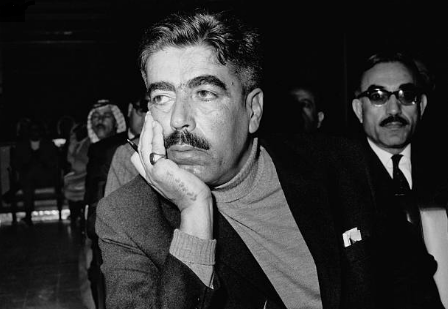
Wasfi Tal (Arabic: وصفي التل; also known as Wasfi Tell; 1920 – 28 November 1971) was a Jordanian politician, statesman and military officer. He served as the 15th Prime Minister of Jordan for three separate terms, 1962–63, 1965–67 and 1970 until his assassination in 1971.

Key Information

Tal was born in Arapgir, Ottoman Empire to prominent Jordanian poet Mustafa Wahbi Tal and a Kurdish mother. He received his elementary education in Jordan, later continuing his education at the American University of Beirut in Lebanon. He then joined the British Army in Mandatory Palestine after being trained in a British-run military academy, and joined the irregular Arab Liberation Army to fight against Israel during the 1948 Arab–Israeli War.[1] As an Arab nationalist, Tal was known for his belief in collective Arab action and supported the Palestinian struggle.[2][3]

Following the war, he served various positions in the Jordanian government, rising to higher positions after his abilities captured King Hussein's attention. His first tenure as prime minister in 1962 was short-lived, he resigned in 1963 over widespread criticism of his perceived pro-Western views.[4] He was appointed prime minister again in 1965, which saw an improved climate of economic activity, but resigned just before the onset of the Six Day War in 1967. He was appointed again as prime minister in 1970 during Black September, the conflict which saw Palestine Liberation Organization fighters (fedayeen) expelled from Jordan. Earning the ire of PLO leaders for his role in the conflict, he was assassinated by the Black September Organization outside a Cairo hotel hosting an Arab League conference.[5]

Tal was reportedly loyal to King Hussein and popular with Jordanians for his success in expelling the fedayeen. Meanwhile, he was widely denounced by Arabs who had supported the fedayeen.[6] His assassins were found innocent and released on low bail by an Egyptian court and allowed to leave Egypt.[7]

Early life

[edit]
Wasfi Tal (right) with his father Mustafa Wahbi Tal during mid 1930s. His father is often described as Jordan's most prominent poet.

Tal was born in Arapgir, Turkey to prominent Jordanian poet Mustafa Wahbi Tal[1] and Kurdish mother Munifa Baban.[8] Sources differ with reference to the place and date of birth of Wasfi Tal. Some sources mention that he was born in 1919 in Arapqir.[9] Other sources mention that Tal was born in 1920[10][2][11] He moved to Irbid, Transjordan with his mother at the age of five.[12]

Tal obtained his elementary education in Jordan.[3][2] He moved to Al-Salt in 1936 when he was 16 to go to the only public high school in Jordan at the time. As a student he founded a secret student organization called the "Black Hand" whose goal was to promote a more aggressive stance against Zionism. During his time as a student he and several students in the "black hand" were arrested after bombing Al-Salt mayor's mansion. Due to his family influence and the fact no one was hurt in the bombing he was released a few days later and allowed to finish his education.[13] He later continued his education at the American University of Beirut in Lebanon where he studied philosophy and sciences.[14]

Career

[edit]

Tal was a teacher in Karak.[14] He joined the British Army in Mandatory Palestine after being trained in a British-run military academy, and joined the irregular Arab Liberation Army to fight against Israel during the 1948 Arab–Israeli War. Due to his experience in the British army, he started off with the rank of captain. After the Arab Liberation Army was dissolved in 1948, his unit was reassigned to the Syrian Army for the remainder of the war under the new name Yarmuk Forces. By May 1949, he had risen to the rank of major.[15]

Jordanian King meets advisors on events of Black September, 17 September 1970

Following the war, he served various positions in the Jordanian government, rising to higher positions after his abilities captured King Hussein's attention. His first tenure as prime minister in 1962 was short-lived, he resigned in 1963 over widespread criticism of his perceived pro-Western views. He was appointed prime minister again in 1965, which saw an improved climate of economic activity, but resigned just before the onset of the Six Day War in 1967. He was appointed again as prime minister in 1970 during Black September, the conflict which saw Palestine Liberation Organization fighters (fedayeen) expelled from Jordan. Earning the ire of PLO leaders for his role in the conflict, he was assassinated by the Black September group outside a Cairo hotel hosting an Arab League conference. Tal was succeeded by Ahmad Lozi as prime minister immediately after the incident.[16]

Tal's policies

[edit]

As Prime Minister, Wasfi Tal prioritized the strengthening of Jordan’s economy and the enhancement of its military capabilities. He also worked towards improving relations with both Western and Arab nations. His foreign policy was characterized by a delicate balancing act between maintaining close ties with the United States and other Western powers while preserving Jordan’s position within the Arab world.[17]

Tal's domestic policies were centered around economic development, infrastructure projects, and maintaining internal security. He recognized the importance of addressing the grievances of both Jordanians and Palestinians within the country, although tensions between these two groups remained high. After dismantling armed groups in Jordan and safeguarding the country's prestige and stability, Wasfi Tal's popularity surged, and he was widely regarded by Jordanians as a national hero. However, his role in the handling of Palestinian issues, particularly during the 1967 war and the Black September conflict, made him a controversial figure.[17] While he was seen as a protector of Jordan’s sovereignty, many Palestinian groups and their supporters viewed him as a symbol of the monarchy's opposition to Palestinian rights. Because of Tal's actions towards the PLO, hostility arose between Tal and some Arab rulers and leaders.[17]

It is recorded in the Jordanian Prime Ministry's biography of Tal that he was cautious with public funds and rejected corruption. He lived simply, forgoing privileges, and considered his office an uncompromising and serious obligation.[18] One of his achievements was establishing the University of Jordan.[14]

Tal was known for his belief in collective Arab action and supported the Palestinians' struggle for freedom of their homeland.[2][3] The New York Times reported that "he was hated and feared most of all by the extremists because he was a rational man who sought a practical accommodation with Israel."[19]

Assassination

[edit]
Field marshal Habis Majali and Wasfi Tal

On 28 November 1971, four Black September gunmen assassinated Tal in the lobby of the Sheraton Cairo Hotel in Egypt while he was attending an Arab League summit in the city.[20][21][22] The shooting happened at 3:45 p.m. Cairo time. Gen. Muhammad Maher Hassan, the Egyptian prosecutor, said the assassins belonged to a group called "the Black Hand of September."[23] Tal was 51 years old.[11] Historian Patrick Seale writes that one of the assassins, Munshir al-Khalifa, was one of Abu Ali Iyad's soldiers who sought to avenge his commander's death.[22][24] As Tal lay dying, "one of the assassins knelt and lapped with his tongue the blood flowing across the marble floor."[25][26][5]

Tal was the first victim of the newly formed Black September Organization, a more militant offshoot of the Palestinian militant organization Fatah. Yasser Arafat, Fatah's leader, claimed responsibility for the killing.[20]

Tal was popular with Jordanians for his success in expelling the fedayeen. Meanwhile, he was widely denounced by Arabs who had supported the fedayeen. Egyptian President Anwar Sadat had also despised Tal. Tal was the third senior Jordanian political figure assassinated between 1951 and 1971; the first two being King Abdullah I and Prime Minister Hazza Majali.

Tal's body was flown back to Amman on 28 November 1971. He was buried in the royal cemetery after the prayers in the Royal Mosque in Amman on 29 November.[27]

There were reports of celebration among Palestinians on the Israeli-occupied West Bank of Jordan in response to news of Tal's assassination.[23]

Personal life

[edit]

Tal was married to Sadia Jabri, who had been former wife of the Palestinian leader of the 1940s, Musa Alami. They had no children.[11]

Honour

[edit]

Foreign honour

[edit]

See also

[edit]

References

[edit]

Bibliography

[edit]
Revisions and contributorsEdit on WikipediaRead on Wikipedia
from Grokipedia
Wasfi al-Tal (1920 – 28 November 1971) was a Jordanian statesman, politician, and military officer who served as on three occasions: in 1962, 1965, and from 1970 until his death. As a key advisor to King Hussein, al-Tal played a pivotal role in the government's military response to the uprising in 1970, which involved clashes between Jordanian forces and groups that sought to overthrow the Hashemite monarchy, ultimately leading to the expulsion of Palestinian Liberation Organization fighters from ian territory. His firm stance on maintaining national sovereignty amid regional tensions with armed Palestinian factions earned him enduring popularity in as a defender of the state, though it also made him a target for reprisals. Al-Tal was assassinated in by members of the , a Palestinian militant group formed in response to the 1970 events, while attending an defense council meeting.

Early Life

Birth, Family, and Education

Wasfi al-Tal was born in 1920 in the Irbid district of northern Transjordan, then under British mandate, to Mustafa Wahbi al-Tal, a prominent Jordanian poet known as Arar, and a Kurdish mother. His family belonged to the influential al-Tal clan, rooted in the Bedouin tribal structures of the region, which emphasized loyalty, honor, and self-reliance amid the transition from Ottoman rule to the Hashemite emirate established by Abdullah I in 1921. The clan's early alignment with the Hashemites, including Mustafa Wahbi's poetic endorsements of the monarchy and contributions to Jordanian cultural identity, instilled in al-Tal a foundational commitment to the nascent state's stability and Transjordanian particularism. Al-Tal received his elementary and secondary education in Jordan, attending schools in and completing high school in Salt, where basic instruction focused on foundational , arithmetic, and local administrative principles rather than advanced Western curricula. With limited access to elite institutions, his formative years reflected the pragmatic, resource-constrained environment of rural Transjordan, fostering an approach grounded in practical observation of tribal governance and monarchy-building efforts under British oversight, though he lacked formal university training in law or administration at this stage.

Military and Early Political Career

Service in the Arab Legion and Initial Government Roles

Wasfi al-Tal served in the , the British-officered armed force of Transjordan, during the 1948 Arab-Israeli War. The Legion, commanded by British General , focused on border defense and limited engagements amid the broader conflict, reflecting the mandate-era military structure that emphasized counter-insurgency and territorial security against regional instability. Tal's participation highlighted his early alignment with Jordanian state forces under British influence, which prioritized pragmatic defense over expansive pan-Arab offensives. Following the 1948 ceasefire, al-Tal briefly joined the before transitioning to the Jordanian in 1949. This entry into administrative roles marked the onset of his government involvement, initially under the patronage of King Abdullah I, amid efforts to consolidate Hashemite authority post-war. His early positioned him within Jordan's bureaucratic framework, where he contributed to stabilizing in a kingdom absorbing significant Palestinian refugee influxes and managing tribal dynamics, though specific assignments like provincial oversight in areas such as reflected clan ties rather than documented high-level commands at this stage. Al-Tal's mid-level roles emphasized operational competence in security matters, including and internal order, foreshadowing his later emphasis on . These experiences in the Legion and initial bureaucracy honed a realist approach to threats from , infiltration, and external ideologies, maintaining Jordanian integrity during the volatile post-1948 era without direct involvement in refugee policy formulation at that time.

Terms as Prime Minister

First Term (1962–1963)

Wasfi al-Tal was appointed on 27 January 1962, succeeding Bahjat Talhouni, in the wake of regional shifts following the collapse of the . His cabinet, which included former ministers and one new appointee, prioritized domestic reforms amid Jordan's post-independence economic fragility, including efforts toward economic revitalization and refocusing resources on the East Bank population. As a reforming figure, al-Tal sought to strengthen state institutions through civil and security policy adjustments, emphasizing promotion of economic benefits and administrative positions for East Bankers to bolster national cohesion. Al-Tal's government adopted a pro-Western orientation in , pursuing negotiations for aid from Western partners, such as discussions on participation in Jordan's plans. This approach contrasted with the prevailing pan-Arabist momentum led by Egyptian President , positioning Jordan as resistant to deeper alignment with Cairo's influence. Domestically, these policies faced criticism for deviating from Arab unity ideals and perceived favoritism toward Western interests, culminating in public demonstrations against the administration. In addressing the Palestinian population, al-Tal advocated for their rights within the Jordanian framework, while stressing the subordination of activities to central authority to avert internal subversion and maintain state sovereignty. This stance reflected early efforts to integrate Palestinian elements without compromising Hashemite control, though it drew opposition from pan-Arabist factions. Al-Tal resigned on 27 1963 amid mounting backlash over these alignments, marking the end of his brief initial term.

Second Term (1965)

Wasfi Tal was reappointed as on February 14, 1965, succeeding Bahjat Talhuni amid efforts to restore governmental prudence following the confrontational resolutions of the 1964 Summit in , which had committed Arab states to economic boycotts and potential military action against Israel's National Water Carrier project. This interim role emphasized administrative continuity and internal stabilization, as sought to avoid entanglement in the escalating pan-Arab militancy promoted by Egypt's . Tal's government pursued bureaucratic streamlining to improve efficiency, including anti-corruption initiatives aimed at reducing state sector redundancies and enhancing fiscal discipline, while concurrently serving as Minister of Defense to bolster military readiness against potential regional threats. These measures reflected a pragmatic approach, prioritizing Jordan's sovereignty over ideological alignment with radical Arab nationalism, which Tal regarded as a pathway to instability, drawing from earlier observations of Nasserism's disruptive effects post-1958 Iraqi coup. Though the term lasted until March 4, 1967, its early phase in laid preparatory groundwork for institutional developments, such as expansions in higher education via the ongoing five-year economic plan that supported the University of Jordan's growth beyond its 1962 founding. Jordan under Tal also strengthened ties with Britain and the for defense and economic aid, countering pressures from radical regimes while critiquing unchecked pan-Arab adventurism as counterproductive to . The brevity of focused reforms in , overshadowed by mounting Arab-Israeli frictions, underscored limited tangible outputs before the prelude to broader conflict intensified.

Third Term (1970–1971)

Wasfi al-Tal was appointed Prime Minister for the third time on 28 October 1970 by King Hussein, following the resignation of Ahmad Toukan's cabinet amid the ongoing crisis triggered by Palestinian fedayeen hijackings of international airliners at Dawson's Field in September. These events, involving the Popular Front for the Liberation of Palestine seizing three Western airliners and holding over 50 hostages, demonstrated the fedayeen's territorial encroachments, including unauthorized checkpoints and bases that challenged Jordanian state control. Tal's government was directed to enforce the 13 October agreement with the Palestine Liberation Organization, intended to limit fedayeen operations, though compliance issues persisted. Tal worked in close coordination with King Hussein, his long-standing advisor, to sustain —initially proclaimed on 16 September—and mobilize Jordanian military units for reassertion of central authority in and other cities. This approach emphasized empirical dangers posed by parallel structures, such as repeated plots against the king and demands for influence over government decisions, over pan-Arab ideological alignment with the Palestinian cause. By focusing on these threats to the Hashemite monarchy's viability, Tal's policies aimed to prevent the disintegration of as a sovereign entity. On the diplomatic front, Tal framed Jordan's measures as necessary self-defense to maintain internal stability, engaging Arab states to garner support while rebuffing fedayeen ultimatums that sought structural changes like cabinet infiltration and policy overrides. His premiership drew opposition from , reflecting broader Arab nationalist critiques of Jordan's stance, yet underscored Tal's commitment to preserving the kingdom's foundational order against subversive pressures.

Policies on Security and Palestinian Fedayeen

Pre-Black September Tensions

Following the in June 1967, Jordan absorbed an influx of approximately 300,000 additional , swelling its population by about 10 percent and straining resources amid the loss of the West Bank's economic contributions. This demographic shift facilitated the rapid expansion of groups under the (PLO), which established bases along the Jordan River's east bank for cross-border raids into , creating de facto autonomous enclaves that operated independently of ian authority. By the late , these militants had proliferated into a parallel power structure, controlling swaths of urban areas like and refugee camps, where they imposed informal taxes, regulated local commerce, and enforced their own security protocols, eroding the central government's monopoly on force. Wasfi al-Tal, during his tenure as from 1965 to 1967, consistently articulated concerns over fedayeen autonomy, characterizing their unchecked growth as a subversive challenge to Jordanian influenced by leftist ideologies and external patrons including Soviet-backed networks and Iraqi Ba'athist elements seeking regional destabilization. He advocated for strict regulation of these groups to prevent them from evolving into a "state within a state," warning that their ideological alignment with pan-Arab nationalists and rejectionist factions threatened the Hashemite monarchy's stability, as evidenced by sporadic clashes and intelligence reports of coup plotting against King Hussein. Al-Tal's position reflected a causal recognition that fedayeen overreach, fueled by arms inflows and ideological fervor, prioritized transnational militancy over host-state loyalty, culminating in low-level escalations such as ambushes on Jordanian patrols and smuggling operations that undermined national control. Tensions peaked in early September 1970 with the Dawson's Field hijackings orchestrated by the Popular Front for the Liberation of Palestine (PFLP), a PLO-affiliated faction, which seized four Western airliners and diverted them to a remote Jordanian airstrip, holding over 200 hostages and demolishing the emptied aircraft on September 12 in a televised spectacle that humiliated Jordan internationally and underscored the fedayeen's disregard for Amman's diplomatic constraints. This audacious operation, demanding prisoner releases from Israel and Western governments, exemplified the militants' strategy of leveraging Jordanian territory as a bargaining chip, further entrenching parallel governance and prompting al-Tal, reappointed prime minister on August 28, 1970, to frame it as an existential threat requiring decisive state reassertion. The economic fallout included disrupted trade routes and heightened refugee camp volatility, where fedayeen dominance exacerbated unemployment and resource scarcity, compelling Jordan to confront the sovereignty erosion posed by externally oriented guerrilla networks.

Role in Black September Conflict

As prime minister appointed on August 28, 1970, Wasfi Tal assumed leadership of the Jordanian response to the Palestine Liberation Organization's (PLO) challenge to state authority, which escalated into open conflict after PFLP hijackings of international airliners from September 6 to 12 and attacks on royalist forces. On September 15–16, following assassination attempts on King Hussein by PLO gunmen, Tal coordinated the declaration of and the mobilization of the for offensives against positions in , , and , beginning in earnest on September 17 under Army Chief of Staff Habis al-Majali. Tal directed operations relying on loyal Bedouin units within the army, which maintained discipline amid defections from Palestinian-recruited elements, to counter urban warfare tactics—including sniper fire from refugee camps, barricades in city centers, and provocations backed by Syrian armored incursions on , which Jordanian forces repelled with U.S. aerial support. These engagements from to 1970 systematically cleared PLO strongholds, expelling fighters from urban areas and restoring government control over by late , though sporadic clashes persisted; the fighting inflicted thousands of casualties, predominantly among combatants and civilians in contested zones, as Jordan prioritized decisive action to avert regime overthrow amid the militants' state-within-a-state. In the aftermath of urban expulsions, Tal managed the displacement of tens of thousands of toward northern borders and rural enclaves while enforcing mediated truces, including the September 25 cease-fire brokered by Egyptian and Saudi intermediaries, through which he demanded verifiable PLO and recognition of Jordanian to dismantle parallel militant infrastructures and preclude renewed threats. This insistence on causal preconditions—fedayeen submission to central command—secured short-term state preservation but highlighted the operational necessities of suppressing guerrilla initiations that had imperiled national cohesion.

Assassination and Immediate Aftermath

The Cairo Assassination

On November 28, 1971, Wasfi al-Tal was assassinated in the lobby of the Sheraton Hotel in Cairo, Egypt, as he entered the building to attend a meeting of the Arab League's Joint Defense Council discussing coordinated strategies against . Four assailants, identified as operatives of the —a covert faction linked to —fired multiple revolver shots at al-Tal from close range, striking him in the forearm, legs, and abdomen. The prime minister collapsed amid shattered glass from the commotion, and one gunman knelt beside his body to lick the pooling blood in a ritualistic display reported by witnesses. Al-Tal died at the scene from due to the gunshot wounds, despite the presence of his Jordanian . The attackers, who had entered using Syrian passports, were motivated by retribution for al-Tal's leadership in Jordan's 1970 military suppression of groups during the conflict, an operation he had directed as and defense minister. Three were captured near the hotel, one wounded in a ensuing , while the fourth was apprehended in a nearby apartment; two confessed during interrogation to planning the hit as the inaugural operation of . Al-Tal's remains were promptly repatriated to for burial following the incident.

Investigation and Retaliation

Egyptian authorities swiftly arrested four Palestinian suspects in connection with the November 28, 1971, , who confessed and framed the act as an "act of war" against Jordan's policies toward groups. Despite initial plans for , widespread Arab appeals led to their release on by March 1, 1972, effectively stalling any conclusive prosecution and highlighting regional sympathies that prioritized Palestinian militant narratives over Jordanian demands. Jordan responded by attributing responsibility to Fatah within the PLO framework, issuing formal accusations on December 18, , that linked the plot to broader guerrilla networks including failed attempts on Jordanian diplomats. This spurred continued pursuit of leads implicating senior PLO figures, resulting in sustained operations against residual cells and fedayeen sympathizers within , building on the July expulsion of Palestinian fighters. King Hussein convened an emergency cabinet session immediately after the killing, reinforcing internal security protocols to avert copycat attacks amid reported coup plots involving Syrian elements. Declassified U.S. intelligence noted these measures upset the Jordanian military, which viewed Tal's hardline stance favorably, but avoided the scale of 1970's clashes. The assassination's fallout isolated militants further, as most Arab governments issued public condemnations while privately expressing satisfaction, per diplomatic assessments, thereby eroding legitimacy without provoking unified Arab retaliation against . This equivocation, evident in limited official repercussions beyond rhetoric, underscored causal constraints on transnational militant support, prioritizing state stability over ideological solidarity.

Legacy and Controversies

Achievements in Jordanian State-Building

During his first premiership from January 1962 to March 1963, Wasfi al-Tal's government established the , the kingdom's inaugural institution of higher education, which laid the groundwork for expanding access to advanced learning and scientific research amid limited prior infrastructure. This initiative followed parliamentary confidence in his cabinet on August 20, 1962, enabling focused developmental priorities. Complementing educational advancements, the administration advanced water resource projects, including the King Talal Dam, which enhanced irrigation and hydroelectric capacity to support agricultural and energy needs in a resource-scarce environment. Al-Tal also initiated foundational reforms in public services, such as the establishment of Jordan Post, modernizing communication networks essential for administrative efficiency and economic coordination across the kingdom's disparate regions. In parallel, his early policies rationalized commodity subsidies to stabilize fiscal foundations, addressing urban pressures and promoting measured without unchecked expansion that could exacerbate social strains. These efforts underscored a commitment to bolstering Transjordanian-centric institutions over broader ideological integrations, cultivating administrative resilience through pragmatic institution-building that prioritized national cohesion and in structures. By embedding to Hashemite authority within state apparatus, al-Tal's tenures contributed to enduring institutional stability, evidenced by Jordan's ability to sustain amid regional upheavals.

Criticisms and Arab Nationalist Opposition

Arab nationalists, particularly Nasserists and supporters, accused Wasfi Tal of pro-Western subservience and collaboration with , viewing him as a traitor to pan-Arab causes. Syrian President charged the Jordanian regime with cooperating with during the 1967 , while detractors claimed Tal directly collaborated with Israeli entities to suppress Palestinian guerrillas amid the clashes. These allegations, propagated in Arab media and militant rhetoric, lacked concrete public evidence of formal pacts but reflected broader propaganda against Hashemite "reactionaries"; causally, any reported contacts aligned with mutual interests in countering operations that endangered both Jordanian sovereignty and Israeli borders, rather than ideological alignment. Tal drew intense blame for the Black September conflict's toll, with critics like PLO leader estimating up to 25,000 Palestinian deaths in what they termed a massacre, though declassified assessments place fatalities at 3,000 to 4,000 alongside 537 Jordanian soldiers killed. Nasserist and pro- narratives framed the Jordanian offensive as unprovoked aggression against refugees, omitting provocations such as the for the Liberation of Palestine's hijacking of four airliners from September 6 to 9, 1970—three diverted to Dawson's Field in Jordan—where militants held hundreds hostage, demolished the planes after releasing passengers, and used the sites as bases. had parallel armed presence in and other cities, imposed taxes, blockaded roads, fired on security forces, and attempted coups against King Hussein, rendering military restoration of order a defensive necessity against de facto territorial . Pan-Arab ideologues dismissed Tal as a reactionary monarchist, scorning his resistance to Nasser's socialist unification drives, which he blamed for fostering instability and defeats like 1967. Egyptian outlets and radical factions rejected his emphasis on state sovereignty over supranational Arabism, portraying Jordan's as feudal suppression of revolutionary struggle; yet, such policies empirically forestalled the militia-driven fragmentation seen in post-1975, where unchecked Palestinian forces exacerbated sectarian collapse. The Organization's November 28, 1971, of Tal—shot at in during an summit—was hailed by militants as vengeance and anti-imperial heroism, but objectively exemplified cross-border terrorism targeting executive leadership, unconnected to battlefield engagements. Sources advancing these glorifications, often from state-backed Arab media with incentives to undermine rival regimes, warrant scrutiny for ideological distortion over factual accounting.

Long-Term Impact on Jordanian Sovereignty

The decisive suppression of activities during in 1970, under Wasfi Tal's premiership, reasserted the Jordanian state's monopoly on legitimate violence, expelling PLO forces to by July 1971 and dismantling their semi-autonomous bases in Jordanian territory. This consolidation deterred subsequent internal armed challenges to Hashemite authority, contrasting with the PLO's diminished influence after their failed bid for control, which had included hijackings and assassination attempts against King Hussein. The resulting territorial sovereignty enabled uninterrupted Hashemite rule, with Jordan avoiding the regime collapses seen in neighboring states amid Arab nationalist upheavals, thereby preserving monarchical continuity into the present. This fortified sovereignty facilitated Jordan's economic stabilization and growth trajectory post-1971, as the neutralization of threats allowed redirection of resources toward development amid regional volatility; for instance, the post-conflict passivity of Palestinian communities in Jordan exchanged prior militancy for integration into a secure environment conducive to remittances and state-led initiatives. 's GDP rose from approximately $300 in 1970 to over $1,000 by 1980, supported by Western aid inflows that prioritized a stable ally, underscoring how Tal's security measures causally underpinned fiscal resilience against subversion rather than ethnic antagonism. In , this legacy informed Amman's pragmatic balancing act—securing U.S. military and economic assistance totaling billions since the while rhetorically endorsing Palestinian aspirations—prioritizing national integrity over pan-Arabist pressures that had previously eroded state control. Domestic perceptions of Tal as a national hero, evidenced by official commemorations of his 1971 assassination, reflect the enduring validation of his sovereignty-preserving actions amid faded Arab nationalist condemnations; the Jordan News Agency marked the 53rd anniversary in November 2024 as honoring an "iconic political leader," signaling broad reverence for his role in safeguarding the kingdom against existential threats. This contrasts with contemporaneous Arab media portrayals of Tal as a traitor, highlighting how empirical outcomes—sustained Jordanian —have supplanted ideological critiques in historical assessment.

Personal Life and Honors

Family and Personal Traits

Wasfi al-Tal was born on January 19, 1919 (or 1920 per some accounts), in Arapgir, Turkey, to the prominent Jordanian poet Mustafa Wahbi al-Tal and his mother Munifa Baban, of Iraqi Kurdish origin. The family relocated to Jordan when Wasfi was five years old, embedding him in the cultural and tribal fabric of Transjordan, where the al-Tal clan held longstanding loyalty to the Hashemite monarchy. His father's status as a key intellectual figure reinforced these ties, with Mustafa Wahbi serving in various official capacities under the Hashemites. Al-Tal married Sadia (or Saadia) Jabri, a Syrian-born woman previously wed to Palestinian leader Musa al-Alami; the couple resided outside and had no children. This union reflected personal connections across Arab elites, though it remained childless, focusing al-Tal's legacy through rather than direct descendants. Contemporaries described al-Tal as authoritative and quick in manner, traits evident in his decisive . Biographies portray him as shrewd, loyal, and charismatic, deeply rooted in Jordanian values amid a career marked by personal resilience against political threats. His , shaped by Islamic faith and tribal heritage, prioritized pragmatic state interests over pan-Arab ideological excesses.

National and Foreign Recognitions

Wasfi al-Tal received limited formal foreign recognition during his lifetime, including the honorary title of Grand Commander of the Order of the Defender of the Realm (Darjah Yang Mulia Pangkuan Negara) from , awarded in acknowledgment of his diplomatic and leadership contributions. No major international prizes or awards from Western powers, such as the or , are documented, despite his service as a captain in the during and his role in the British-officered . In , al-Tal's national honors were primarily posthumous, reflecting his elevation in official memory for contributions to state stability. The government maintains annual commemorations of his on , with state media and officials highlighting his defense against militant threats to Jordanian sovereignty. A dedicated in Suwaylih, west of , serves as a site of remembrance, constructed adjacent to his residence. Additionally, the Wasfi and Saadia Al Tal Museum in , established per his widow's will after her death in 1998, preserves artifacts from his career, underscoring his enduring status in Jordanian historical narrative. Specific pre-assassination Jordanian orders, such as the , are not verifiably attributed to him in available records.

References

Add your contribution
Related Hubs
User Avatar
No comments yet.