Hubbry Logo
Mudar BadranMudar BadranMain
Open search
Mudar Badran
Community hub
Mudar Badran
logo
8 pages, 0 posts
0 subscribers
Be the first to start a discussion here.
Mudar Badran
Mudar Badran
from Wikipedia

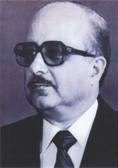
Mudar Mohammad Ayesh Badran (Arabic: مضر بدران‎; 18 January 1934 – 22 April 2023) was a Jordanian politician, government minister, and industrialist. He served as the 23rd Prime Minister of Jordan on three occasions from 1976 to 1979, then again from 1980 to 1984, and finally from 1989 to 1991.

Key Information

Biography

[edit]

Badran was born in Jerash, Jordan (then the Emirate of Transjordan, a colony of the United Kingdom) in 1934 to Palestinian parents. His father hailed from Nablus.[1] He studied at the Damascus University in French Syria and graduated as a lawyer. Badran started his career as a young officer in the Jordanian army. Later, he served as the director of the General Intelligence Directorate in the 1970s, during Black September. Following this troubled time, he became chief of the Hashemite Royal Court. He also served as Minister of Education.

Badran became Prime Minister of Jordan from 1976 to 1984, with a brief interruption from 1979 until 1980. He was appointed to the position again on 4 December 1989, replacing Zaid bin Shaker after his resignation.[2][3] Badran's third term lasted until 1991, when Jordan once again became a democracy, and the Senate gained its legitimate powers again after two decades with no parliamentary elections. He served more than eight years as prime minister, which made him the longest-serving prime minister of Jordan. He also served as foreign minister from 1976 to 1979 and as defense minister for most of the time that he was prime minister. Badran was a close associate of King Hussein.

In 1993, he was appointed a member of the Senate. In 2011, he was given an honorary PhD in economics from the Hashemite University. Badran was also the target of a failed assassination attempt in Amman in February 1981 by the Syrian Defense Companies.[4][5]

Personal life

[edit]

Badran's younger brother, Adnan Badran was prime minister of Jordan in 2005.[6]

Badran lived in Abdoun neighborhood of Amman with his wife, Mo'mina. They had two sons and three daughters. His daughter, Reem Badran, served as a deputy in the House of Representatives.

Phasing out of political life, Badran headed to the private sector where he started a steel company, Jordan Steel P.L.C., in 1993. It became a leading steel manufacturer in the country.[7]

Death

[edit]

Badran died on 22 April 2023, at the age of 89.[8]

See also

[edit]

References

[edit]
[edit]
Revisions and contributorsEdit on WikipediaRead on Wikipedia
from Grokipedia
Mudar Mohammad Ayesh Badran (18 January 1934 – 22 April 2023) was a Jordanian statesman and official who served as four times between 1976 and 1991, as well as Director of the General Directorate in the late and early , during which he contributed to establishing the agency and managing internal security challenges including the confrontation with groups known as . Born in to a family of Circassian origin, Badran completed secondary education in Karak before studying at the University of . He began his career as an officer in the , rising through judicial and investigative roles before heading the service, where he focused on countering threats to the Hashemite monarchy's stability. Subsequent positions included Chief of the Royal Court and minister of defense and , reflecting his influence in both and diplomatic spheres. Badran's premierships occurred amid regional tensions, including deteriorating relations with and efforts toward political reforms such as prisoner releases and opposition engagement in the late . His tenure emphasized national and loyalty to King Hussein, though it drew criticism from opponents for authoritarian measures inherited from his background.

Early Life and Education

Birth and Family Background

Mudar Badran was born in 1934 in , a small town in northern that was then part of the under British mandate. His family moved to Karak in southern during his early childhood, where his father worked as a in a religious court. Jerash at the time had a diverse population of around 1,000 residents, including , , Bosnians, Turkomans, and , reflecting settlement patterns from Ottoman rule. Limited public records exist on his extended family or precise ethnic origins, though Badran's career trajectory suggests roots in Jordan's traditional Muslim society.

Formal Education and Early Influences

Mudar Badran completed his secondary education in Karak, Jordan, in 1951. He subsequently pursued university studies abroad, attending Damascus University in Syria, where he initially considered medicine before focusing on law. At Damascus University, Badran earned a licentiate degree in law by 1956. This legal training provided the foundational expertise that informed his early professional path in Jordanian public administration and security apparatus following his return to Amman. Badran's exposure to legal education in Syria during a period of regional instability, including the formation of the in 1958 shortly after his graduation, likely reinforced his pragmatic approach to governance and , though he did not publicly detail specific intellectual mentors or formative readings from this era.

Intelligence Career

Entry into Security Services

Mudar Badran entered Jordanian security services following his completion of a from the University of in 1957, initially serving as a legal advisor to the from 1958 to 1962. This role positioned him within the military establishment, providing foundational experience in legal and operational matters pertinent to . In 1964, amid efforts to formalize Jordan's intelligence apparatus, Badran was selected with a group of colleagues to establish the General Intelligence Directorate (GID), the country's primary ; he contributed to drafting its foundational laws and assumed the position of Assistant Director for Foreign Affairs. This marked his transition from military legal advisory to specialized intelligence work, reflecting the Hashemite regime's push to centralize and professionalize counterintelligence capabilities in response to regional threats, including activities. By 1966, Badran advanced to Deputy Director of the GID's Department, overseeing external operations until 1968. In 1968, he was appointed of the GID, a role he held into the early , during which he supervised key reforms such as auditing and purging approximately 70,000 outdated files to enhance operational efficiency. His rapid ascent underscored his alignment with King Hussein's security priorities, particularly in managing internal dissent and external risks.

Role in Black September and Counterinsurgency

Mudar Badran assumed the role of Director General of Jordan's General Intelligence Directorate (GID) in 1968, shortly after the on March 21, 1968, which galvanized groups and intensified their operations from Jordanian bases against . Under his direction, the GID expanded surveillance and infiltration efforts targeting factions like , which had established semi-autonomous enclaves in cities such as and , effectively challenging Hashemite authority through parallel taxation, checkpoints, and recruitment. These intelligence operations documented over 20,000 armed by mid-1970, providing King Hussein with assessments of their growing that threatened state control. Badran's tenure focused on counterinsurgency measures, including the recruitment of informants within and coordination with the to disrupt supply lines and assassination plots against regime figures. The GID under Badran audited and reorganized intelligence files on PLO activities, enhancing operational readiness amid rising hijackings and ambushes, such as the beginning September 6, 1970. His agency's reports underscored the causal link between unchecked autonomy—stemming from post-1967 refugee influxes and Arab state support—and the erosion of Jordanian sovereignty, informing Hussein's declaration on , 1970. Badran was replaced as GID director on August 2, 1970, by Natheer Rshaid, amid internal critiques of his handling of the escalating , including accounts of him evacuating records in anticipation of potential advances. Nonetheless, the intelligence framework he helped institutionalize from 1964 onward—transforming the prior General Investigation Department into a dedicated service—facilitated the broader campaign, which repelled a Syrian intervention of approximately 300 tanks in September 1970 and expelled PLO forces by July 1971, resulting in thousands of casualties and the relocation of their bases to . In the immediate aftermath, Badran transitioned to advisory roles, including chief of royal protocol from 1970 to 1972 and security advisor to , continuing to shape responses to residual PLO threats.

Political Appointments and Prime Ministerial Terms

Initial Ministerial Roles and First Premiership (1976–1979)

Mudar Badran entered Jordanian politics in ministerial capacities prior to his premiership, having been appointed Minister of Education in 1973. In early 1976, King Hussein appointed him head of the Royal Court, a key advisory position influencing palace decisions on security and governance. This role positioned Badran to address domestic and regional challenges amid post-1973 Arab-Israeli War dynamics and internal stability concerns. On July 13, 1976, following the resignation of Rifai on July 12, Badran formed his first government, assuming the premiership alongside the portfolios of Minister of Foreign Affairs and Minister of Defense. This cabinet served until November 27, 1976, focusing on defense readiness and diplomatic maneuvering in a volatile , including relations with Arab states and responses to Palestinian militancy remnants after . Badran's intelligence background informed a pragmatic approach to and border security. Badran reformed the government on , , retaining the premiership and dual ministerial roles through December 19, 1979. During this extended term, his administration grappled with economic strains, including budgetary shortfalls in late linked to unmet regional expectations and oil price fluctuations. The premiership emphasized modernization and alignment with Jordan's non-aligned stance, culminating in Badran's replacement by Abdelhamid Sharaf amid shifting royal priorities.

Second Premiership (1980–1984) and Defense/Foreign Affairs

Mudar Badran assumed the role of and Minister of Defense on August 28, 1980, following a by King Hussein amid escalating regional tensions. His government prioritized bolstering Jordan's military posture, drawing on Badran's extensive intelligence and security background to enhance internal stability and deterrence against external threats, including Syrian influence and residual Palestinian militant activities. As Defense Minister, Badran directed efforts to modernize the , emphasizing readiness through disciplined command structures and measures inherited from his prior service. The outbreak of the Iran-Iraq War in September 1980 shaped Jordan's defense and foreign policy under Badran, prompting alignment with to safeguard economic interests and regional balance. On October 6, 1980, Badran ordered all civilian transport vehicles placed under military control to enable rapid mobilization of logistical support for , including potential supply convoys and medical evacuations. This facilitated Iraq's use of port for exports and imports, compensating for Gulf access disruptions and providing discounted in return—critical given the kingdom's dependence on imported energy. Such measures underscored a pragmatic calculus: supporting averted Iranian radicalism's spillover while deepening economic ties, though they strained relations with . In broader foreign affairs, Badran's administration navigated Arab divisions post-Camp David Accords, rejecting Egypt's isolation while condemning Israeli escalations, such as the 1981 annexation and the 1982 invasion. Jordan maintained diplomatic outreach to Gulf states for , leveraging Hussein's role, but prioritized defense spending amid fiscal constraints, securing Western arms deals to equip forces with and armor. Badran's tenure ended on , 1984, amid domestic economic pressures, though his defense-focused governance contributed to Jordan's avoidance of direct war involvement during this volatile period.

Third Premiership (1989–1991) and Economic Stabilization Efforts

Mudar Badran was appointed for the third time on December 4, 1989, following parliamentary elections held in November amid the aftermath of April 1989 riots triggered by subsidy cuts under the prior government. Jordan's economy was in acute crisis, with foreign reserves below $100 million, a fiscal deficit exceeding 23% of GDP, at 25%, and external public debt approaching 180% of GDP, exacerbated by depleted remittances from Gulf workers, heavy subsidies, and financial sector scandals like the Petra Bank collapse. Badran's government inherited and advanced the IMF's July 1989 Stand-By Arrangement (SBA) worth SDR 60 million, focusing on macroeconomic stabilization through fiscal consolidation and structural adjustments to avert default and restore creditor confidence. Under Badran, the administration prioritized austerity measures, including tax hikes on petroleum products, cigarettes, , and ; administrative price adjustments for petroleum; and subsidy rationalization, particularly on and , to curb the budget and current account deficits. Monetary policy supported these via flexibility and tightened domestic borrowing, aiming to rebuild reserves and control . Badran emphasized public sector in his February 1990 statement, framing reforms as essential for gains amid inefficient state enterprises and rentier dependencies from prior aid inflows. These steps aligned with IMF conditionality, which required deficit reduction and debt rescheduling negotiations, though implementation faced domestic resistance from affected low-income groups and vested interests. By mid-1991, initial stabilization showed progress, with the fiscal deficit narrowing to around 8% of GDP and beginning to moderate from double digits, laying groundwork for external viability despite a 10.7% GDP contraction in 1989. However, the SBA was terminated in January 1991 due to the Gulf War's disruptions, including severed trade with —a key export market—and reduced Arab aid, which compounded Jordan's vulnerabilities from earlier choices like subsidized exports to . Badran's cabinet was replaced in June 1991 by Taher Al-Masri amid these shocks and political pressures for further , though IMF assessments later credited the 1989-1991 phase with foundational macroeconomic corrections despite incomplete structural depth.

Later Roles and Private Sector Involvement

Head of the Court and Advisory Positions

Following his third term as from 1989 to 1991, Mudar Badran transitioned to advisory capacities within Jordan's monarchical structure, leveraging his extensive experience in and governance. He had previously served as Secretary-General of the Hashemite and as a advisor to King Hussein in the early 1970s, roles that positioned him as a key confidant in managing internal threats and state affairs. These positions involved coordinating operations and providing counsel on , drawing on his background in and efforts. Badran also held the role of Chief of the Royal Hashemite Court at points in his career, a post that entailed direct oversight of the king's administrative apparatus and advisory support on political and diplomatic matters. This function reinforced his influence in stabilizing the Hashemite regime amid regional turbulence, though specific tenures post-1991 remain less documented in public records. Concurrently, he briefly served as Minister of Education, focusing on policy implementation during transitional periods. His advisory engagements underscored a pattern of informal guidance to the monarchy, prioritizing regime continuity over partisan politics.

Industrial and Business Ventures

Following his extensive political career, Mudar Badran transitioned to the in the early 1990s, focusing on industrial manufacturing in 's steel sector. He established Jordan Steel P.L.C. (JOST) on March 29, 1993, a company specializing in the production of iron and steel products such as rebars, wire rods, and billets. Headquartered in and listed on the Amman Stock Exchange, the firm expanded to become a significant contributor to 's and infrastructure materials supply chain. Badran served as Chairman of the Board, guiding the company's operations alongside family members, including his son Mudar Mohammed Badran, who has held the position of Group since joining in 1993. Under this leadership, Steel developed a regional presence, emphasizing production efficiency and market credibility among investors and manufacturers. The venture marked Badran's primary business endeavor, leveraging 's industrial policies to build a vertically integrated operation amid the country's efforts post-Gulf War. No other major industrial or business initiatives by Badran are prominently documented in .

Personal Life

Family and Relationships

Mudar Badran was married, though details about his remain private and undocumented in . He fathered several children, including a prominent daughter, Rim Badran (also known as Reem Badran), who established a career in , , and . Rim Badran served as head of the Investment Board and was recognized internationally for her contributions to , including awards for successful . She also held positions in Jordan's legislative bodies, reflecting a family inclination toward . Badran maintained a low public profile regarding his personal relationships, with no reported controversies or additional marital details emerging from official biographies or contemporary accounts.

Health Challenges from Injuries

Mudar Badran sustained a to the hand during the events of 1970, while serving as head of Jordanian intelligence amid the counterinsurgency operations against groups. The injury necessitated his departure from for medical treatment in and later . The long-term effects of this hand injury continued to impact Badran's health for over five decades, persisting until his death on April 22, 2023, at age 89. No other specific injuries or related health complications are documented in available accounts of his life.

Death and Legacy

Final Years and Passing (2023)

Mudar Badran, having retired from active public service after serving as head of the Royal Court and engaging in private business ventures, resided quietly in Amman during his final years. He died on 22 April 2023 at the age of 89. Prime Minister Bisher Khasawneh issued a statement mourning Badran's passing, noting his four terms as prime minister and contributions to Jordanian governance. Badran's funeral took place on 23 April 2023, with Chief of the Royal Hashemite Court Yusuf al-Issawi representing the monarchy in attendance.

Assessments of Contributions to Jordanian Stability and Criticisms

Badran's foundational role in establishing Jordan's General Intelligence Directorate (GID) in 1964, where he drafted its organizational laws and served as assistant director before becoming its head, strengthened the kingdom's capacity to counter internal threats, including militant Palestinian factions that had proliferated after the 1967 Six-Day War. As GID director until August 1970, he oversaw intelligence operations that informed the military response during Black September, the 1970 conflict in which Jordanian forces decisively expelled fedayeen groups from urban centers like Amman, thereby restoring central authority and preventing the monarchy's potential overthrow by non-state actors backed by elements of the Palestine Liberation Organization. This operation, while costly in lives—estimated at 3,000 to 5,000 Palestinian deaths according to contemporaneous reports—secured Jordan's sovereignty amid regional instability, as the fedayeen had established parallel governance structures and launched attacks into Israel from Jordanian territory, drawing retaliatory strikes. In his premierships, particularly 1989–1991, Badran contributed to stability by addressing the bread riots of April 1989, which stemmed from International Monetary Fund-mandated subsidy cuts and exposed fiscal vulnerabilities with public debt exceeding $8 billion. Appointed prime minister on December 4, 1989, following elections, he implemented initial economic adjustments while incorporating five Muslim Brotherhood members into his cabinet in January 1991 to foster national unity amid the Gulf Crisis. On December 20, 1989, his government announced the end of 22 years of martial law, enabling political party legalization and parliamentary activity, though under controlled terms that preserved monarchical oversight. During the 1990–1991 Gulf War, Badran's administration maintained Jordan's non-participation in the U.S.-led coalition against Iraq—reflecting 80–90% public opposition influenced by Jordan's large Palestinian population—while facilitating humanitarian aid corridors and diplomatic outreach to mitigate isolation, actions that averted domestic upheaval despite economic losses estimated at $1.8 billion in remittances and trade. Critics, including Jordanian opposition figures and international observers, have faulted Badran's security-centric career for perpetuating a mukhabarat-dominated model that prioritized regime preservation over , with the GID under his early leadership auditing tens of thousands of citizen files for potential threats, fostering a climate of during the period from 1967 to 1989. His handling of the policy drew reproach for aligning too closely with Saddam Hussein's regime, resulting in severed aid from Gulf states (previously $1.3 billion annually) and U.S. sanctions that deepened Jordan's , with GDP contracting 12% in 1990 and surging above 20%, outcomes Badran defended in memoirs as necessary to honor public sentiment and an anticipated "Arab solution" but which prolonged economic hardship without commensurate strategic gains. Some analysts attribute to his tenures a reinforcement of tribal and security influence in , contributing to networks that strained public finances, though empirical data on under his governments remains anecdotal rather than quantified in independent audits.

References

Add your contribution
Related Hubs
User Avatar
No comments yet.