Wolf attack
Wolf attack
Main page
1523329

Wolf attack

logo
Community Hub0 subscribers
Read side by side
from Wikipedia
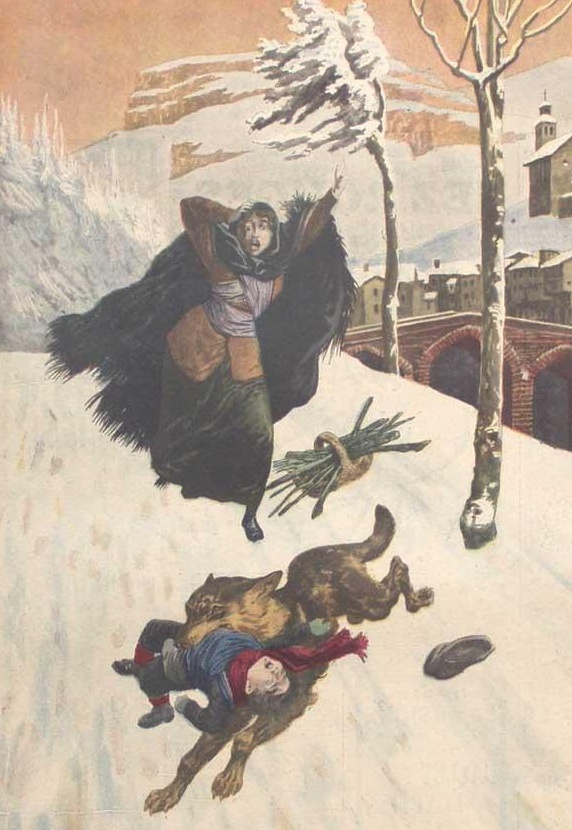
Predatory attack on a child in northern Spain, as depicted on a 1914 issue of Le Petit Journal
Napad wilków (attack of the wolves) by Józef Chełmoński (1883) at the Museum of Polish Army, Warsaw, Poland

Wolf attacks are injuries to humans or their property by gray wolves. Their frequency varies based on the human and wolf populations and the interactions of these populations. Wolves, like any predator, choose prey based on circumstances. If a human is juvenile, small, alone or injured this increases the chance of a wolf attack as it would any prey species; a population of both wolves and humans living in the same environment increases the chances of a predatory circumstance occurring. Wolf attacks are rare where human-wolf interactions are rare and escalate as human-wolf interactions escalate. Experts categorize wolf attacks into various types, including rabies-infected, predatory, agonistic, and defensive.

The country with the most extensive historical record is France, where nearly 10,000 fatal attacks were documented from 1200 to 1920.[1][2][3] A study by the Norwegian Institute of Nature Research showed that there were eight fatal attacks in Europe and Russia, three in North America, and more than 200 in south Asia in the half-century up to 2002.[4] The updated edition of the study revealed 498 attacks on humans worldwide for the years 2002 to 2020, with 25 deaths, including 14 attributed to rabies.[5]

Wolf–human interactions

[edit]

The gray wolf is the largest wild member of the canid family, with males averaging 43–45 kg (95–99 lb), and females 36–38.5 kg (79–85 lb).[6] It is the most specialized member of its genus in the direction of carnivory and hunting large game.[7]

Although they primarily target ungulates, wolves are at times versatile in their diet; for example, those in the Mediterranean region largely subsist on garbage and domestic animals.[8] They have powerful jaws and teeth and robust bodies capable of great endurance, and often run in large packs. Nevertheless, they tend to fear and avoid humans, especially in North America.[9]

Wolves vary in temperament and their reaction to humans. Those with little prior experience with humans, and those positively conditioned through feeding, may lack fear. Wolves living in open areas, for example the North American Great Plains, historically showed little fear before the advancement of firearms in the 19th century,[10] and would follow human hunters to feed on their kills, particularly bison.[11] In contrast, forest-dwelling wolves in North America were noted for shyness.[10]

Wolf biologist L. David Mech hypothesized in 1998 that wolves generally avoid humans because of fear instilled by hunting.[12] Mech also noted that humans' upright posture is unlike wolves' other prey, and similar to some postures of bears, which wolves usually avoid.[9] He speculated that attacks are preceded by habituation to humans, while a successful outcome for the wolf may lead to repeated behavior, as documented especially in India.[12]

Categories

[edit]

Wolf attacks have been classified as "rabid", "provoked", "predatory"; "exploratory" or "investigative"; or "agonistic".

Rabid

[edit]
Petits paysans surpris par un loup ("Little peasants surprised by a wolf") by François Grenier de Saint-Martin, 1833

Cases of rabid wolves are low when compared to other species since wolves do not serve as primary reservoirs, but can be infected with rabies from other animals such as dogs, golden jackals and foxes. Cases of rabies in wolves are very rare in North America, though numerous in the eastern Mediterranean, Middle East and Central Asia. The reason for this is unclear, though it may be connected with the presence of jackals in those areas, as jackals have been identified as primary carriers. Wolves apparently develop the "furious" phase of rabies to a very high degree, which, coupled with their size and strength, makes rabid wolves perhaps the most dangerous of rabid animals,[13] with bites from rabid wolves being 15 times more dangerous than those of rabid dogs.[14] Rabid wolves usually act alone, traveling large distances and often biting large numbers of people and domestic animals. Most rabid wolf attacks occur in the spring and autumn periods. Unlike with predatory attacks, the victims of rabid wolves are not eaten, and the attacks generally only occur on a single day.[15] Also, rabid wolves attack their victims at random, showing none of the selectivity displayed by predatory wolves, though the majority of recorded cases involve adult men, as men were frequently employed in agricultural and forestry activities which put them into contact with wolves.[16]

Provoked

[edit]

Attacks whose victims had been threatening, disciplining, disturbing, teasing, or annoying attacking wolves, their pups, families, or packs are classified as "provoked", "defensive" or "disciplinary". The attackers in such cases seem motivated, not by hunger, but fear or anger and the need to escape from or drive the victim away. Examples would include a sheep-hunting wolf disturbed by a shepherd who is defending his flock; a captive wolf attacking an abusive handler; a mother wolf attacking a hiker who had wandered near her pups; an attack on a wolf hunter in active pursuit; or a wildlife photographer, park visitor, or field biologist who had gotten too close for the wolf's comfort. While such attacks may still be dangerous, they tend to be limited to quick bites and not pressed.[17]

Predatory

[edit]

Unprovoked wolf attacks motivated by hunger are categorized as "predatory". In some such cases, a cautious wolf may launch "investigative" or "exploratory" attacks to test the victim for suitability as prey. As with defensive attacks, such attacks are not always pressed, as the wolf may break off the attack or be convinced to look elsewhere for its next meal.[17] In contrast, during "determined" predatory attacks, the victims may be repeatedly bitten on the head and face and dragged off and consumed, sometimes as far away as 2.5 km from the attack site, unless the wolf or wolves are driven off.[17][18] Experts in India use the term "child lifting" to describe predatory attacks in which the animal silently enters a hut while everyone is sleeping, picks up a child, often with a silencing bite to the mouth and nose, and carries a child off by the head.[18] Such attacks typically occur in local clusters, and generally do not stop until the wolves involved are eliminated.[17]

Agonistic

[edit]

Agonistic attacks are motivated not by hunger nor fear but rather by aggression; designed to kill or drive off a competitor away from a territory or food source. As with predatory attacks, these may begin with or be limited to exploratory or investigative attacks designed to test the vulnerability and determination of the victim. Even when pressed until the death of the victim, agonistic attacks normally leave the victims body uneaten, at least for some time.

Factors

[edit]

Habituation

[edit]

Wolf attacks are more likely to happen when preceded by a long period of habituation, during which wolves gradually lose their fear of humans. This was apparent in cases involving habituated North American wolves in Algonquin Provincial Park, Vargas Island Provincial Park and Ice Bay, as well as 19th-century cases involving escaped captive wolves in Sweden and Estonia.[19][20]

Seasonality

[edit]

Predatory attacks can occur at any time of the year, with a peak in the June–August period, when the chances of people entering forested areas (for livestock grazing or berry and mushroom picking) increase,[16][21] though cases of non-rabid wolf attacks in winter have been recorded in Belarus, the Kirovsk and Irkutsk districts, in Karelia, and in Ukraine.[22] Wolves with pups experience greater food stresses during this period.[16]

Victim age and sex

[edit]

A worldwide 2002 study by the Norwegian Institute of Nature Research showed that 90% of victims of predatory attacks were people under the age of 18, especially under the age of 10. In the rare cases where adults were killed, the victims were almost always women. This is consistent with wolf hunting strategies, wherein the weakest and most vulnerable categories of prey are targeted.[16] Aside from their physical weakness, children were historically more vulnerable to wolves as they were more likely to enter forests unattended to pick berries and mushrooms, as well as tend and watch over cattle and sheep on pastures.[21][23][24] While these practices have largely died out in Europe, they are still the case in India, where numerous attacks have been recorded in recent decades.[23] Further reason for the vulnerability of children is the fact that some may mistake wolves for dogs and thus approach them.[24]

Wild vs. captive

[edit]

Experts may distinguish between captive and wild wolf attacks, the former referring to attacks by wolves who, while still wild animals, are kept in captivity. Captive wolves may be kept as pets, in zoos, or in other similar situations.

History and perception worldwide

[edit]

Europe

[edit]
Map showing the number of wolf attacks in France by département from 1400 to 1918
Map of Eurasia showing the distribution of wolf attacks, with blue indicating areas where both rabid and predatory attacks occurred, purple for purely predatory attacks, and yellow for purely rabid ones
Chart showing the hypothetical stages leading up to wolf attacks on humans in 15th- to 19th-century Italy.[25] While these factors are now largely absent in modern-day Europe, they are still present in rural India, where many attacks took place during the late 20th century.[23]

In France, historical records compiled by rural historian Jean-Marc Moriceau indicate that during the period 1362–1918, nearly 10,000 people were killed by wolves, of whom 6,500 were killed by non-rabid wolves.[1] However, the zoologist Karl-Hans Taake found evidence to believe that many of the alleged French wolf attacks occurring during the reigns of Louis XIV and Louis XV were actually carried out by big carnivores of other species which had escaped from captivity and that the population at the time couldn't tell the difference (Beast of Gévaudan).[26][27] Numerous attacks occurred in Germany during the 17th century after the Thirty Years' War, though the majority probably involved rabid wolves.[28] Although Italy has no records of wolf attacks after WWII and the eradication of rabies in the 1960s,[28] historians examining church and administrative records from northern Italy's central Po Valley region (which includes a part of modern-day Switzerland) found 440 cases of wolves attacking people between the 15th and 19th centuries. The 19th-century records show that between 1801 and 1825, there were 112 attacks, 77 of which resulted in death. Of these cases, only five were attributed to rabid animals.[25] In Latvia, records of rabid wolf attacks go back two centuries. At least 72 people were bitten between 1992 and 2000. Similarly, in Lithuania, attacks by rabid wolves have continued to the present day, with 22 people having been bitten between 1989 and 2001.[29] Around 82 people were bitten by rabid wolves in Estonia during the 18th to 19th centuries, with a further 136 people being killed in the same period by non-rabid wolves, though it is likely that the animals involved in the latter cases were a combination of wolf-dog hybrids and escaped captive wolves especially when you consider the high level of hybridization of the Eurasian wolf population.[30][31][32]

Russia and the Soviet Union

[edit]

As with North American scientists later on (see below), several Russian zoologists after the October Revolution cast doubt on the veracity of records involving wolf-caused deaths. Prominent among them was zoologist Petr Aleksandrovich Manteifel, who initially regarded all cases as either fiction or the work of rabid animals. His writings were widely accepted among Russian zoological circles, though he subsequently changed his stance when he was given the task of heading a special commission after World War II investigating wolf attacks throughout the Soviet Union, which had increased during the war years. A report was presented in November 1947 describing numerous attacks, including ones perpetrated by apparently healthy animals, and gave recommendations on how to better defend against them. The Soviet authorities prevented the document from reaching both the public and those who would otherwise be assigned to deal with the problem.[33] All mention of wolf attacks was subsequently censored.[34] For the years 2018 to 2020 the Russian Ministry of Natural Resources put the number of people attacked by wolves at 712 cases.[35]

Asia

[edit]

In Iran, 98 attacks were recorded in 1981,[18] and 329 people were given treatment for rabid wolf bites in 1996.[36] Police records collected from Korean mining communities during Japanese rule indicate that wolves attacked 48 people in 1928, more than those claimed by boars, bears, leopards and tigers combined.[37] In the Himalayan region, historical records have reported that 7,600 civilians and soldiers were killed by wolves from 1362 to 1918, of which 4,600 were killed by non-rabid wolves.[38]

India

[edit]

Records of wolf attacks in India began to be kept during the British colonial administration in the 19th century.[39] In 1875, more people were killed by wolves than tigers, with the worst affected areas being the North West Provinces and Bihar. In the former area, 721 people were killed by wolves in 1876, while in Bihar, the majority of the 185 recorded deaths at the time occurred mostly in the Patna and Bghalpur Divisions.[40] In the United Provinces, 624 people were killed by wolves in 1878, with 14 being killed during the same period in Bengal. In Hazaribagh, Bihar, 115 children were killed between 1910 and 1915, with 122 killed and 100 injured in the same area between 1980 and 1986. Between April 1989 to March 1995, wolves killed 92 people in southern Bihar, accounting for 23% of 390 large mammal attacks on humans in the area at that time.[18][41] In 1996, wolves killed 43 people in three districts across Uttar Pradesh.[42][43] Between March and September 2024, wolves were suspected to have killed at least ten people in Bahraich district in Uttar Pradesh.[44][45]

North America

[edit]

There are no written records prior to the European colonization of the Americas. The oral history of some Indigenous American tribes suggests that wolves did kill humans. Tribes living in woodlands feared wolves more than their tundra-dwelling counterparts, as they could encounter wolves suddenly and at close quarters.[46] Skepticism among North American scientists over the alleged ferocity of wolves began when Canadian biologist Doug Clarke investigated historical wolf attacks in Europe and, based on his own experiences with the (as perceived by him) relatively timid wolves of the Canadian wilderness, concluded that all historical attacks were perpetrated by rabid animals, and that healthy wolves posed no threat to humans.[47] His findings are criticized for failing to distinguish between rabid and predatory attacks, and the fact that the historical literature contained instances of people surviving the attacks at a time when there was no rabies vaccine. His conclusions received some limited support by biologists but were never adopted by United States Fish and Wildlife Service or any other official organisations. Nonetheless, Clarke's view gained popularity among laypeople and animal rights activists with the publication of Farley Mowat's semi-fictional 1963 book Never Cry Wolf,[34] with the language barrier hindering the collection of further data on wolf attacks elsewhere.[48] Although some North American biologists were aware of wolf attacks in Eurasia, they dismissed them as irrelevant to North American wolves.[9]

Wolf numbers consistently dropped across the US during the 20th century, and by the 1970s they were only significantly present in Minnesota and Alaska (though in greatly reduced populations than prior to the European colonization of the Americas).[49] The resulting decrease in human–wolf and livestock–wolf interactions helped contribute to a view of wolves as not dangerous to humans. By the 1970s, advocates of wolf conservation had begun efforts to change public attitudes towards wolves, with the phrase "there has never been a documented case of a healthy wild wolf attacking a human in North America" (or variations thereof[a]) becoming a slogan for people seeking to create a more positive image for the wolf. Several non-fatal attacks, including the April 26, 2000 attack on a six-year-old boy in Icy Bay, Alaska, seriously challenged the assumption that healthy wild wolves were harmless. The Icy Bay incident was considered unusual and was reported in newspapers throughout the entire United States.[20][53] Following the event, biologist Mark E. McNay compiled a record of wolf–human encounters in Canada and Alaska from 1915 to 2001. Of the 80 described encounters, 39 involved aggressive behavior from apparently healthy wolves and 12 from animals confirmed to be rabid.[54]

The first fatal attack in the 21st century occurred on November 8, 2005, when a young man was killed by wolves that had been habituated to people in Points North Landing, Saskatchewan, Canada[55] while on March 8, 2010, a young woman was killed while jogging near Chignik, Alaska.[56] The current position of the United States Fish and Wildlife Service is that wolves are very shy of humans but are opportunistic hunters and will attack humans if the opportunity arises. The agency advises against "actions that encourage wolves to spend time near people".[57]

Notable cases

[edit]
Engraving depicting the beast of Gévaudan (1764)

See also

[edit]

Notes

[edit]

References

[edit]

Bibliography

[edit]

Further reading

[edit]
[edit]
Revisions and contributorsEdit on WikipediaRead on Wikipedia
from Grokipedia
A wolf attack refers to an aggressive encounter between gray wolves (Canis lupus) and humans, typically involving bites or pursuits that result in injury or, less commonly, death, with documented cases worldwide numbering in the hundreds over recent decades but remaining exceedingly rare relative to human-wolf coexistence.[1][2] Empirical analyses classify such attacks into three primary categories: rabid wolves, which account for the majority of historical and some modern incidents due to altered behavior from neurological disease; predatory attacks, where wolves treat humans as prey, often involving habituated or food-conditioned animals in regions of prey scarcity; and defensive or provoked responses, such as when wolves protect pups or are cornered.[3][1] From 2002 to 2020, a global review identified 489 verifiable human victims of wolf attacks, including 380 from rabid wolves (14 fatal), 67 predatory (9 fatal), and 42 defensive/provoked (3 fatal), underscoring that non-rabid threats, while infrequent, occur predominantly in Eurasia and involve vulnerable individuals like children or isolated adults.[1][4] In North America, attacks are even scarcer, with fewer than 100 recorded since the 18th century, mostly non-fatal and linked to captive or habituated wolves rather than wild populations.[5] Notable clusters include historical epidemics in Europe and Asia tied to rabies outbreaks, and contemporary concerns in expanding wolf ranges like India and Turkey, where prey depletion and human encroachment exacerbate risks, prompting debates over management strategies like culling to prevent habituation.[6][3] Despite public apprehensions amplified by folklore, causal factors such as disease, food conditioning, and territorial defense explain occurrences without evidence of inherent human-directed malice in healthy wild wolves.[2]

Types of Attacks

Rabid Attacks

Rabid wolf attacks occur when wolves infected with the rabies virus exhibit the "furious" form of the disease, characterized by neurological symptoms including ataxia, hypersalivation, disorientation, and uncharacteristic aggression toward humans and other animals.[7] These symptoms drive wolves to approach and bite humans boldly and unprovoked, often without subsequent consumption of the victim, distinguishing such incidents from predatory behavior where wolves typically stalk, kill, and feed on prey.[2] Post-mortem examination confirming rabies presence, along with attack patterns like indiscriminate biting of multiple victims in a short period and seasonal clustering in winter-spring (versus late summer for predation), further differentiates rabid assaults. Historically, rabid wolves accounted for a majority of fatal attacks in Europe and Russia prior to widespread vaccination programs, with records dating to the 13th century and numerous cases in regions lacking effective wildlife control.[2] In 19th-century European Russia, rabid attacks often involved unknown victim ages and lacked the child-predominance seen in predatory incidents, reflecting the disease's role in prompting erratic, non-selective aggression.[8] A global review of verified incidents from 2002 to 2020 documented 489 human victims of wolf attacks, with 380 (78%) attributed to rabid wolves, including 14 of the 26 fatalities.[1] Such attacks have become rare in vaccinated populations of Europe and North America, where only 37 rabid wolf incidents (4 fatal) occurred from 1950 to 2002, but persist as a risk in rabies-endemic areas of Asia and the Middle East with limited control measures.[2]

Non-Rabid Attacks

Non-rabid wolf attacks on humans involve healthy animals motivated by predatory instincts, territorial defense, or investigative behavior, rather than disease-induced aggression. These incidents stem from wolves' evolutionary adaptations as apex predators, which compel them to evaluate potential prey based on vulnerability, opportunity, and absence of deterrence signals from humans. Such attacks remain exceedingly rare, reflecting wolves' typical avoidance of confrontation with capable adults, yet they demonstrate inherent risks when human presence aligns with wolves' hunting or protective imperatives. Predatory attacks occur when wolves opportunistically target humans perceived as suitable prey, often children, elderly individuals, or isolated adults lacking defensive capabilities. A DNA-confirmed example is the March 8, 2010, fatality near Chignik Lake, Alaska, where wolves killed 32-year-old Candice Berner during a solo activity in wolf habitat; autopsy evidence showed multiple predatory bite wounds to the head, neck, and limbs, with the assault characterized as aggressive and brief, consistent with pack hunting tactics.[9] Globally, predatory non-rabid attacks accounted for 67 documented cases from 2002 to 2020, including 9 fatalities, primarily in regions with sparse human density where wolves encounter unguarded individuals. Defensive or provoked attacks arise when humans approach wolf dens, pups, or fresh kills, prompting protective responses akin to those against intruding predators. These typically involve charges, snaps, or bites to repel the threat, with injuries concentrated on extremities as the wolf asserts dominance rather than pursue consumption. Investigative bites, a subset observed in habituated populations, involve wolves probing humans for edibility through nips, escalating if flight responses are absent, as wolves calibrate risk based on prey reactions. From 2002 to 2020, defensive non-rabid attacks numbered 42 worldwide, with 3 fatalities, often linked to direct provocation near critical resources. In Europe and North America, non-rabid attacks totaled approximately 11 from 2002 to 2020, with both fatalities in North America, despite expanding wolf ranges and millions of annual human-wolf encounters; this low rate—far below that of predators like bears or cougars—affirms wolves' baseline wariness of humans but underscores non-zero risks from unhabituated predatory calculus.[10] Empirical patterns indicate that healthy wolves do not inherently view humans as primary prey due to size differentials and learned avoidance, yet lapses in deterrence can trigger attacks mirroring intraspecific or ungulate predation sequences.[9]

Contributing Factors

Wolf Behavior and Predatory Instincts

The gray wolf (Canis lupus), as an apex predator, possesses innate predatory instincts evolved for pack-based hunting of large ungulates including elk, moose, and bison, often pursuing herds for days before executing coordinated ambushes that exploit prey vulnerabilities through encircling, harassing, and targeting hindquarters or flanks to exhaust targets before delivering lethal bites.[11][12][13] These behaviors reflect a strong prey drive enabling wolves to tackle quarry several times their individual size, with packs demonstrating strategic persistence and division of labor where alphas initiate pursuits while subordinates flank or harry.[14][15] Wolves exhibit instinctual boldness, particularly dominant individuals, in assessing potential competitors or novel targets, including occasional shadowing of human paths as a form of territorial vigilance or opportunistic scouting rather than immediate aggression.[16][13] This wariness stems from evolutionary adaptations prioritizing avoidance of high-risk confrontations, yet under conditions of prey scarcity, wolves' opportunistic instincts can extend to evaluating human-sized figures as viable targets, scaling tactics from ungulate hunts to test defenses.[16] Distinguishing wolves from domesticated dogs, wild wolves retain undomesticated predatory sequences—orient, stalk, chase, grab-bite, and kill-bite—without the neotenized flexibility of canine companions, maintaining heightened persistence in pursuits and stricter pack hierarchies that amplify coordinated lethality.[17][18] Their jaws deliver a bite force of approximately 400 pounds per square inch (psi), sufficient for crushing bone and severing arteries in throat-targeted kills, a capability conserved from ancestral canids and exceeding typical domestic dog pressures.[19][20] In unaltered wild settings, non-habituated wolves demonstrate aversion to humans, fleeing in the majority of direct encounters—such as experimental approaches where flight occurred in 18 of 21 cases—reflecting an innate risk assessment that deems most human interactions unprofitable, though this threshold shifts in prey-deficient environments where bold probes may escalate to predatory engagement.[21][16][22]

Human-Induced Habituation

Human-induced habituation occurs when wolves progressively lose their natural aversion to humans through repeated non-adversarial interactions, such as proximity in campsites, parks, or reintroduced habitats, often amplified by anthropogenic food sources like unsecured garbage or deliberate provisioning by visitors. This conditioning fosters boldness, diminishing flight responses and occasionally prompting wolves to test humans—particularly vulnerable individuals—as potential prey, as wolves associate human presence with safety or sustenance rather than threat. Wildlife biologists emphasize that such behavioral shifts are causally linked to human facilitation, not inherent wolf traits, with management protocols prioritizing the removal of attractants to restore wariness.[23][24] Documented cases in North America illustrate this dynamic. A 2002 review by the Alaska Department of Fish and Game analyzed 80 wolf-human encounters in Alaska, Canada, and Minnesota from 1970 to 2000, identifying habituation and food conditioning as precursors to aggression in multiple instances among the 39 cases involving healthy wolves, including 16 bites (six severe, four on children). For example, on Vargas Island, British Columbia, in July 2000, wolves repeatedly fed by kayakers and campers became food-conditioned, leading to a mauling of a sleeping adult that inflicted scalp wounds requiring 50 stitches; the involved wolves were subsequently euthanized. Similarly, at a logging camp near Icy Bay, Alaska, on April 26, 2000, a wolf habituated through seven prior non-aggressive sightings near humans grabbed and bit a 6-year-old boy 19 times in an attempted carry-off, ignoring intervening adults and dogs until shot; investigators deemed habituation the dominant factor, with possible prior food access enabling initial tolerance.[23][25][23] In areas with wolf recovery programs, habituation risks escalate from human proximity and waste mismanagement. Since the 1995 Yellowstone reintroduction, park officials have hazed wolves with non-lethal aversives (e.g., paintballs, rubber bullets) and enforced 100-yard viewer distances to counter food conditioning from visitor feeding or roadside carcasses, resulting in only two removals of overly habituated individuals—both attributable to direct human provisioning. Agency reports underscore that unsecured garbage or handouts condition wolves to anticipate easy resources, prompting aggressive responses if access is denied, as seen in a 1975 Alaska camp incident where a food-conditioned wolf bit a worker's face over sausage remnants. These patterns reveal human actions as the proximal cause of elevated risks, where wolves' learned opportunism overrides evasion instincts, necessitating proactive deterrence over reliance on assumed ecological balance.[24][23][26]

Environmental and Seasonal Influences

Wolf attacks on humans exhibit seasonal patterns influenced by prey availability, with historical European records indicating heightened incursions during winter months when ungulate populations become harder to access due to snow cover and reduced mobility. For instance, during the exceptionally cold winter of 1419–1420, packs invaded Paris, preying on residents amid widespread food shortages across Europe.[27] Similarly, in 1450, wolves exploited gaps in city walls during harsh winter conditions to attack citizens, correlating with documented prey scarcity that stressed packs into opportunistic foraging near human settlements.[28] These patterns reflect pack-level adaptations to lean periods, where declining natural food sources—such as deer and elk—prompt bolder territorial expansions into anthropic zones, rather than random aggression.[3] Terrain plays a critical role in elevating encounter risks, particularly in remote forested edges and rugged landscapes where human visibility is limited and escape routes for potential victims are constrained. Studies of wolf predation dynamics identify higher attack probabilities in areas of increased topographic complexity, such as steep slopes and dense cover, which facilitate ambush tactics and reduce detection by humans.[29] In historical contexts, like 19th-century Spain, attacks clustered in such environments, where wolves could approach undetected from woodland fringes abutting rural habitations.[3] This terrain-mediated vulnerability amplifies the baseline risk from scarcity-driven movements, as wolves leverage natural cover to probe human-adjacent areas without immediate deterrence. Empirical data link prey depletion to behavioral shifts toward anthropic resources, with correlations observed in regions of high wolf density and low ungulate abundance, such as post-reintroduction zones where game declines have indirectly heightened livestock depredations—a proxy for expanded foraging radii that occasionally intersect human pathways. Research confirms that when wild prey densities fall below thresholds, wolves increase reliance on alternative foods, including incursions near settlements, as seen in scarcity-driven historical episodes in Russia and Europe where depleted game preceded attack surges. In overpopulated wolf ranges, such as parts of the Arabian Peninsula, ungulate declines from overhunting have forced packs to roam farther, correlating with elevated conflict potential absent abundant natural forage.[30] These dynamics underscore direct ecological pressures—independent of climatic narratives—driving adaptive predation toward easier targets during periods of resource constraint.[31]

Victim Demographics and Context

Victims of non-rabid wolf attacks are predominantly children under 15 years old, with historical data indicating that nearly all such predatory incidents targeted this demographic, often in unguarded rural settings where young individuals were solitary or unsupervised.[8] In a review of global cases, predatory attacks favored children as primary targets, followed by adult women to a lesser extent, reflecting wolves' selection for physically vulnerable or less defended prey based on size, mobility, and isolation rather than random encounters.[3] Elderly victims appear less frequently documented, but solitary adults in remote areas share similar vulnerabilities when encountered alone during routine activities like foraging or herding. In North America, approximately 100 recorded wolf attacks on humans—fatal and non-fatal—have occurred since 1750, with the majority non-lethal and involving healthy wolves targeting weaker or isolated individuals in frontier or rural contexts, such as children or lone travelers, rather than defended groups.[32] These incidents contrast with urban legends, occurring primarily in wilderness-adjacent rural zones where human expansion overlapped wolf territories, emphasizing opportunistic predation on easy targets over aggressive pursuits of guarded populations. Captive or habituated wolf scenarios elevate risks due to confined proximity, but wild attacks remain context-dependent on victim exposure, with solitary or diminutive profiles comprising over 70% of historical predatory cases across Eurasia.[3] Gender differences in victimization are minimal overall, though predatory attacks skew toward females and children due to perceived defenselessness, while defensive encounters—triggered by human intrusion—more commonly involve males engaged in activities like hunting or livestock protection.[3] In Asia, particularly pre-20th century and in regions like India before widespread disease controls, child fatalities dominated, with packs killing dozens of unattended children in rural villages, as seen in outbreaks claiming 17 young victims in Madhya Pradesh during 1985-1986.[33] This pattern underscores wolves' efficiency in exploiting nutritional deficits and isolation in agrarian societies, prioritizing caloric return from low-resistance prey over equitable targeting.

Historical Patterns

Pre-Modern Europe and Russia

In pre-modern Europe, wolf attacks posed a recurrent threat to rural populations from the medieval era through the 19th century, with historical archives documenting thousands of human fatalities. France maintains the most extensive records, where historian Jean-Marc Moriceau estimated approximately 9,000 deaths from wolf attacks between the late 16th century and the early 20th century, often concentrated in periods of environmental stress such as harsh winters and famines that drove wolves into closer proximity with human settlements. [34] These incidents frequently involved rabid wolves, which accounted for 60-80% of verified attacks in 18th- and 19th-century cases, exhibiting aggressive behavior uncharacteristic of healthy packs due to the neurological effects of rabies. [3] Predatory attacks by non-rabid wolves, though less common, occurred when habituated animals targeted vulnerable individuals like children or the elderly in agrarian landscapes with dense human-wolf overlap. Rabies epidemics amplified the danger, as infected wolves traveled widely and attacked without provocation, leading to public health crises that prompted organized culling efforts. In France, departmental records from the early 19th century highlight localized spikes, with wolves responsible for dozens of deaths annually in affected regions before systematic bounties and habitat alterations curbed populations. [35] Famine conditions, such as those during the French Revolutionary Wars, exacerbated boldness in wolves by depleting wild prey, pushing them to scavenge near villages and occasionally prey on humans. [36] Archival data portray these events as verifiable dangers rather than mere folklore, with eyewitness accounts and official tallies underscoring the role of poor animal control in agrarian societies. [37] In Russia, wolf attacks followed similar patterns in pre-20th-century Europe, with predatory incidents peaking in the 19th century amid vast forested expanses bordering settlements. European Russian provinces like Mogilev recorded notable clusters between 1841 and 1861, comprising nearly half of documented predatory attacks during that era, often targeting children in remote areas. The most severe post-medieval wave occurred in the Kirov Oblast from 1944 to 1954, where non-rabid wolf packs killed at least 22 children across nine districts, exploiting post-World War II disruptions including hunter shortages and food scarcity that habituated wolves to human presence. [3] These attacks involved healthy wolves advancing into villages in daylight, reflecting causal factors like depleted ungulate populations and reduced culling during wartime. [38] Intensive extermination campaigns, killing over 560 wolves in 1946 alone, eventually halted the menace, reducing incidences to near zero by the mid-20th century through sustained predator control. [39]

Asia and Middle East

In the Indian subcontinent, historical patterns of wolf attacks reflect ongoing human-wolf proximity in rural and pastoral settings, contrasting with the near-eradication of such incidents in Europe following intensive culling. Records from British India document widespread bounties, with over 100,000 wolves killed between 1871 and 1916 in response to livestock depredation and occasional human attacks, indicating persistent conflicts tied to dense human populations and ungulate scarcity.[40] These patterns persisted into the 20th century, with waves of predatory attacks by non-rabid wolves, such as the 1981-1982 incidents in Bihar claiming at least 13 children's lives.[41] A peak occurred in Uttar Pradesh during 1996, when non-rabid wolves attacked at least 76 children across over 50 villages from March to October, killing dozens and injuring others, primarily targeting unsupervised toddlers in agricultural fields.[42] [43] Investigations confirmed wolf predation through bite marks and pack behavior, with attacks ceasing after targeted culls of five wolves and feral dogs.[41] In Turkey, similar sporadic non-rabid attacks have been recorded, including a 2012 incident where a wolf mauled a man who subsequently killed the animal but succumbed to rabies.[44] Between 2004 and 2013, wolves caused at least 8 human deaths and 46 injuries, often in rural areas with livestock grazing.[45] Across Asia, empirical data from 2002 to 2020 show a disproportionate share of the global 489 documented wolf attacks on humans originating from the region, with fragmentary reports indicating over 1,300 rabid victims and more than 300 from non-rabid wolves, exacerbated by higher rabies prevalence and underreporting due to limited wildlife monitoring.[1] [4] In the Middle East, attacks remain infrequent but linked to pastoralism, where wolves habituate to human settlements via repeated livestock raids, increasing spillover risks in areas like Iran and Saudi Arabia with nomadic herding.[30] Competition for prey drives such habituation, compounded by rabies reservoirs and delayed population control from cultural views tolerating predators as ecosystem components, sustaining higher incidence than in wolf-depleted Western regions.[46]

North America and Colonial Era

Indigenous oral histories across North America frequently portrayed wolves as kin, teachers, or sacred figures in creation stories and tribal lore, such as in Ojibwe traditions where wolves feature prominently without emphasis on human predation.[47] [48] This reverence, coupled with archaeological and ethnographic evidence of balanced human-wolf coexistence in vast wildernesses, suggests predatory attacks were exceedingly rare pre-colonially, likely limited to isolated defensive encounters rather than habitual predation.[49] European colonization shifted perceptions, with settlers viewing wolves primarily as livestock threats, prompting early bounties like Massachusetts Bay Colony's 1630 payment of one shilling per wolf scalp to encourage eradication.[50] [51] Colonial records from the 1700s–1800s document around 100 total wolf-human encounters, fatal and non-fatal, but the vast majority involved rabid or provoked wolves rather than predatory intent, with human fatalities confined to a handful of cases amid expansive habitats and widespread firearm use.[32] [52] Comprehensive reviews, such as those by the Norwegian Institute for Nature Research (NINA), confirm no verified non-rabid fatal attacks in North American historical records up to the early 20th century, though frontier underreporting may obscure isolated incidents.[3] Bounties proliferated across colonies—Virginia in 1632, North Carolina in 1748—reducing wolf populations and human-wolf overlap, as settlers cleared land and armed themselves against perceived dangers imported from European folklore.[53] [54] These measures, while effective in minimizing conflicts, stemmed more from economic livestock losses than frequent human assaults, underscoring wolves' wariness of armed humans in open terrains.[50] [52]

20th Century Declines and Recoveries

In Europe and North America, intensive persecution through bounties, poisoning, and organized hunting campaigns drastically reduced gray wolf populations during the early to mid-20th century, leading to near-extirpation in many regions and a corresponding nadir in human attacks. In the United States, wolves were effectively eliminated from the lower 48 states by the 1930s to 1950s, with bounty systems in states like Michigan and Wisconsin claiming the last remaining individuals; for instance, Michigan's bounties dropped from 30 wolves in 1956 to just 7 in 1958 before the system's repeal in 1960.[55] Similar efforts in Europe, building on centuries of bounties, confined wolves to remote peripheral areas by the 1960s, such as parts of Spain, Italy, and Scandinavia, minimizing human-wolf encounters.[56] This population collapse empirically correlated with a sharp decline in attacks, rendering them isolated incidents rather than patterns seen in prior eras. One notable exception occurred in the Soviet Union during and after World War II, where wartime diversion of hunters and rifles to military needs allowed wolf packs to proliferate and lose fear of humans, culminating in the Kirov region's man-eating attacks from 1944 to 1954 across nine districts, affecting villages with bold incursions into settlements. These events, documented in Soviet reports from 1947, highlighted how temporary lapses in control could revive risks, with packs advancing into towns amid food shortages, though systematic culling eventually restored suppression.[3] Globally, documented predatory attacks on humans dwindled to rarity by mid-century, with analyses indicating fewer than a handful of fatal cases annually in Europe and Russia combined during the 1900s, primarily linked to rabid or habituated individuals rather than widespread predation.[3] The late 20th century saw recoveries initiated by legal protections, such as the U.S. Endangered Species Act of 1973, which listed the gray wolf as endangered, prohibiting killing and enabling population rebounds from a few hundred to thousands in areas like the Great Lakes region by the 1990s.[57] In Europe, parallel conservation measures under emerging wildlife directives contributed to gradual repopulation in countries like Italy and France. Human attacks remained negligible during initial recoveries, with no confirmed predatory fatalities in North America post-extirpation until later decades, but livestock depredations surged as packs reestablished territories, signaling increased boldness near human settlements.[58] By the 1990s, global wolf attacks on humans had declined to fewer than 10 verified cases per year, predominantly in Asia and isolated Eurasian pockets, a trend causally tied to sustained human interventions like culling rather than any inherent wolf docility or "natural balance," as empirical data from persecution eras demonstrate that population control directly minimized encounter risks without evidence of behavioral shifts in wolves toward humans.[1] This challenges narratives emphasizing harmony without management, as historical rebounds post-persecution consistently preceded renewed conflicts, underscoring the role of density-dependent aggression in wolf-human interactions.[59]

Post-2000 Global Statistics

Between 2002 and 2020, a comprehensive review identified 489 verified wolf attacks on humans worldwide, resulting in 26 fatalities.[10] Of these, 67 were classified as predatory (9 fatal), 380 involved rabid wolves (14 fatal), and 42 were provoked or defensive (3 fatal), with the majority of incidents concentrated in Asia and regions with high rabies prevalence.[1] In contrast, Europe and North America recorded only 12 attacks affecting 14 victims during this period, with 2 fatalities, both in North America and neither attributed to rabies.[5] These figures underscore the empirical rarity of non-rabid wolf attacks in vaccinated populations, where rabies control has minimized risks; predatory incidents outside Asia were limited to isolated cases amid expanding wolf ranges.[10] Wolf populations in Europe have grown significantly since 2000, from fragmented groups to an estimated 20,000 individuals across the continent by 2023, yet human attack rates have remained stable and low, at less than one non-fatal incident per year in most recovering areas.[5] In North America, with approximately 60,000 wolves, verified attacks post-2000 have been similarly infrequent, confined to habituated or provoked scenarios without pattern of increase.[60] From 2021 to October 2025, no confirmed human fatalities from wolf attacks have occurred in Europe or North America, though sporadic non-fatal encounters—such as bites on children or joggers in France, Germany, and Spain—have prompted localized management responses, often linked to wolves habituated via food access near human settlements.[61] Concerns over behavioral boldness persist in reintroduction zones like Colorado and Yellowstone, where wolves exhibit reduced flight responses during encounters, elevating theoretical risk above zero based on encounter frequency models, though actual attacks remain verifiably rare relative to millions of annual human-wolf proximity events.[5] Experts calculate per capita risk as negligible, comparable to or lower than other wildlife hazards, supported by encounter data from monitored populations.[10]

Impacts of Wolf Reintroduction Programs

The reintroduction of gray wolves to Yellowstone National Park began in 1995 with the release of 14 wolves from Canada and Alaska, aimed at restoring ecological balance after their extirpation in the 1920s.[62] Similarly, Colorado initiated reintroductions in December 2023 following voter approval via Proposition 114 in 2020, translocating wolves to state public lands.[63] In the European Union, wolf populations recovered post-1990s through legal protections under the Bern Convention and EU Habitats Directive, expanding from fragmented groups to an estimated 20,000 individuals by 2023, primarily in countries like Spain, Italy, and Germany.[64] Proponents cited potential trophic cascades, such as reduced elk overbrowsing leading to vegetation recovery in Yellowstone, though subsequent analyses have questioned the strength and causality of these effects, attributing changes partly to climate variability and multi-decade trends rather than wolves alone.[65][66] Livestock depredations have risen in proximity to reintroduced packs, correlating empirically with wolf density rather than solely rancher practices. In Yellowstone's surrounding areas, environmental impact statements predicted 19 cattle and 68 sheep losses annually upon recovery, with actual confirmed kills escalating in adjacent states like Montana, where wolf-related livestock costs averaged $11,000 yearly from 1987 to 2003 and trended upward.[67][68] Colorado reported 14 confirmed sheep and lamb injuries or deaths by mid-2025 since reintroduction, concentrated in packs like Copper Creek, which caused multiple incidents in Grand and Pitkin counties in 2024-2025.[69] In the EU, wolves killed approximately 56,000 domestic animals annually as of recent estimates, predominantly sheep, representing 0.065% of the 60 million EU sheep population but imposing localized burdens in recovery hotspots.[70][71] Economic repercussions for ranchers include direct losses and indirect costs like non-lethal injuries, guard dog fatalities, and range management changes, often exceeding compensation payouts. A University of Arizona analysis of U.S. western states post-reintroduction highlighted how even low depredation rates amplify financial strain on small operations, with compensation programs frequently underfunded or delayed.[72] In Colorado, state plans acknowledged acute local impacts despite statewide mitigation, with rancher groups criticizing inadequate reimbursements that fail to cover verification delays or behavioral deterrents.[63] EU compensation varies by member state but has proven insufficient in high-conflict areas, exacerbating rural opposition where depredations cluster near expanding packs.[64] Human-wolf encounters remain rare post-reintroduction, with no fatalities documented in these programs, yet increased pack proximity elevates habituation risks, as wolves adapt to human-modified landscapes lacking historical deterrents. In Yellowstone, dispersing wolves have approached rural edges, prompting management removals to curb bold behavior.[73] Colorado's early relocations of depredating wolves in 2024 addressed similar issues, while EU recoveries have correlated with more frequent non-lethal incidents near farms, underscoring causal links between population growth and interface conflicts.[74] While reintroductions have yielded verifiable biodiversity metrics, such as coyote reductions aiding small mammal recovery in Yellowstone, causal attribution remains contested, with critics arguing that overlooking predator-prey imbalances and socioeconomic costs prioritizes idealized ecosystem models over empirical trade-offs.[75] U.S. Fish and Wildlife Service interventions, including a 2025 directive to Colorado halting further Canadian imports due to sourcing and management lapses, highlight ongoing tensions in program execution.[76]

Notable Cases

Pre-20th Century Incidents

One of the most notorious pre-20th century wolf attack series occurred in the Gévaudan region of France from June 1764 to June 1767, where a large canid or pack killed between 60 and 113 people, mostly women and children, according to contemporary parish and official records.[77] The attacks involved mauling and partial consumption, prompting royal hunts that felled several oversized wolves, with post-mortem examinations confirming wolf morphology despite exaggerated eyewitness descriptions of a monstrous beast.[78] Modern analyses, including forensic reviews of survivor injuries and kill patterns, support wolves or wolf-dog hybrids as perpetrators, driven by habitat pressure and opportunity rather than supernatural causes, though sensationalized accounts in period gazettes inflated the tally and fueled myth.[77] In 18th- and 19th-century Russia, wolves frequently raided villages, particularly during harsh winters when ungulate populations declined, leading to opportunistic human predation. Historical ledgers document packs approaching settlements at night, targeting isolated individuals and causing dozens of fatalities annually in affected districts. A detailed examination of 483 attacks in European Russia from 1841 to 1861 reveals temporal clustering, with peaks in late winter and early spring correlating to food scarcity, and many incidents involving multiple wolves habituated to human proximity through livestock depredation. These events, verified against church and administrative reports, underscore pack dynamics where subordinate wolves assisted alphas in overcoming prey, a behavior amplified by rabies in roughly 20-30% of cases based on symptom descriptions.[3] In 19th-century India, wolf packs targeted children in rural villages, with records from colonial gazettes noting serial attacks by groups of 4-12 animals, often in famine-struck areas like Uttar Pradesh.[2] These incidents, corroborated by hunter logs and medical reports, involved wolves dragging unattended infants from doorways, resulting in 20-50 child deaths per documented episode, exemplifying predation under resource scarcity where human young mimicked vulnerable ungulate fawns in size and isolation.[3] Cross-verification with skeletal evidence from burial sites shows bite patterns consistent with gray wolf dentition, distinguishing them from stray dog maulings prevalent in urban settings.[2] Such patterns highlight ecological pressures—overhunting of deer and livestock competition—pushing packs toward anthropophagy without reliance on unverified feral child anecdotes.

20th-21st Century Fatalities

In North America, verified fatal attacks by non-rabid wolves have been exceedingly rare in the 20th and 21st centuries, with only two documented cases. On November 8, 2005, 22-year-old Canadian student Kenton Joel Carnegie was killed by wolves while walking unarmed near Points North Landing, Saskatchewan; a coroner's jury confirmed the cause as a predatory wolf attack, noting evidence of habituation due to wolves scavenging human food waste in the area.[79] Similarly, on March 8, 2010, 32-year-old teacher Candice Berner was fatally attacked by wolves while jogging near Chignik Lake, Alaska; DNA from wolf scat and saliva on her wounds provided conclusive evidence, marking the first such DNA-confirmed fatal wolf attack in North America, with investigators attributing it to predatory behavior by habituated wolves unafraid of humans due to proximity to villages and lack of prior control measures.[9][80] In Europe and Eurasia, fatal attacks have remained infrequent for healthy wolves but more common in regions with rabies prevalence or unmanaged populations, often targeting children in rural areas. A comprehensive review of global incidents from 2002 to 2020 documented 26 fatal predatory attacks by non-rabid wolves, with 12 occurring in Turkey, primarily involving young children in remote villages where wolves had habituated to human presence through livestock raiding and garbage access.[5] Rabies drove the majority of other Eurasian fatalities during this period, with 14 deaths from rabid wolves out of 380 total rabid attacks worldwide, underscoring how disease can override natural wariness and enable bold assaults on humans.[1] In contrast, no predatory fatal attacks by healthy wolves were recorded in Western Europe or North America beyond the 2005 and 2010 cases through 2020, though non-fatal habituation-related incidents highlight risks from population recovery without sufficient deterrence.[4] These modern fatalities illustrate that while wolves generally avoid humans, risks escalate through habituation—often from anthropogenic food sources—or rabies, both mitigable via targeted culling, vaccination campaigns, and habitat management rather than relying on inherent rarity alone.[60] No additional human fatalities from wolves have been verified in North America or Europe into the 2020s, though ongoing livestock depredation and occasional non-fatal encounters signal persistent challenges in balancing conservation with proactive control.[5]

Perceptions and Controversies

Myths vs. Empirical Risks

Folklore and popular media have long portrayed wolves as voracious, man-eating monsters, as in European tales amplifying rare historical incidents into symbols of unrelenting terror. In reality, non-rabid predatory attacks on humans remain exceedingly uncommon, with comprehensive global records documenting just 67 such cases between 2002 and 2020, of which 9 proved fatal.[1] This low incidence reflects wolves' innate behavioral tendency to evade human proximity in unaltered wild settings, where encounters typically prompt flight rather than confrontation.[60] Such empirical sparsity counters exaggerated myths but invites underestimation of contextual risks, particularly when simplistic analogies—equating a single wolf's physical power to that of machinery—dismiss the multiplicative threat of pack coordination or opportunistic targeting of vulnerable individuals. Behavioral research indicates that wolves exhibit high adaptability, with habituation occurring when human-provided food or diminished hunting pressure erodes natural caution, prompting wolves to assess people as viable prey rather than threats.[81] In these scenarios, attacks escalate from investigatory approaches to lethal predation, as observed in controlled studies of wolf responses to human stimuli.[21] Disparities in perception further obscure risks: rural residents, facing direct encounters, frequently describe wolves displaying uncharacteristic boldness near settlements, while urban-based surveys reveal predominantly positive attitudes toward wolves, often exceeding 70% approval in broader populations, which may overlook underreported incidents in remote or developing regions.[82] Verifiable data demands recognition that wolves are not inherently averse to human exploitation when ecological or anthropogenic factors incentivize otherwise, rendering blanket assurances of harmlessness empirically unsubstantiated.[5] Prioritizing documented cases over idealized narratives ensures causal assessment of threats, where proximity and behavioral shifts—not folklore—dictate potential harm.[83]

Conservation Achievements and Criticisms

Conservation efforts have led to significant rebounds in wolf populations across Europe, where numbers increased by nearly 60% between 2012 and 2022, rising from estimates of around 7,500 to over 12,000 individuals by the early 2020s, attributed to legal protections and habitat connectivity.[70][84] In North America, the 1995 reintroduction of gray wolves to Yellowstone National Park resulted in a population growth from 14 founders to over 100 wolves within a decade, with preliminary studies indicating enhanced biodiversity through predation on overabundant elk herds, which in turn facilitated vegetation recovery such as aspen stands showing signs of regeneration by 2025.[85][86] Environmental advocates highlight these trophic cascade effects as evidence of restored ecosystem balance, though some analyses question the magnitude and direct causality of such changes.[65] Criticisms of stringent wolf protections center on escalated human-wildlife conflicts, particularly livestock depredations, with annual economic impacts in western U.S. states exceeding $128 million when including direct losses, compensation shortfalls, and management costs like fencing and guard animals.[87] In wolf-occupied counties across Idaho, Montana, and Wyoming, verified calf losses alone amounted to approximately $18 million in recent years, straining ranchers who argue that federal protections infringe on property rights and economic viability without adequate mitigation.[72] These tensions prompted the European Union to downgrade wolves from "strictly protected" to "protected" status under the Bern Convention in December 2024, allowing member states greater flexibility for culling in response to farmer protests over rising attacks on sheep and cattle, a shift effective from 2025 amid warnings from conservationists of potential reversals in population gains.[88][89] Empirical data suggest that targeted hunting quotas and removals can mitigate depredations without precipitating ecosystem collapse; for instance, Montana's liberalization of wolf hunting seasons correlated with stabilized or reduced livestock losses post-2011, averaging below historical highs despite sustained wolf presence.[90] Overly restrictive policies may foster localized habituation, where wolves conditioned to human food sources exhibit reduced wariness, increasing conflict risks, as observed in cases of food-reliant packs near settlements.[91] While some studies find limited overall effects from broad hunting on depredation rates, pack-specific interventions targeting problem animals have demonstrably lowered recurrence, supporting rancher demands for proactive management over passive protection.[92][93] This contrasts with environmentalist assertions of minimal human impact, underscoring a core tension between biodiversity goals and verifiable economic harms to rural stakeholders.

Policy Debates on Management and Culling

In Europe, policy debates over wolf management have intensified following the species' recovery under the EU Habitats Directive, which previously afforded wolves strict protection status until a December 2024 revision lowered barriers to culling in response to escalating livestock depredations and public opposition.[94] This shift, endorsed by the European Commission in early 2025, permits member states greater flexibility for lethal control when conflicts arise, contrasting with prior absolutist protections that prioritized population expansion over local economic impacts on pastoral communities.[95] Proponents of relaxed rules argue that evidence-based culling addresses habituation risks, where unchecked packs increasingly target livestock near human settlements, while critics, often from environmental NGOs, contend such measures undermine biodiversity goals without proven long-term efficacy.[96] In the United States, analogous tensions surround the Endangered Species Act (ESA), where gray wolf delisting proposals—such as a February 2025 congressional bill—seek to transfer management to states for targeted hunting quotas, citing recovered populations exceeding recovery thresholds in regions like the Northern Rockies.[97] Federal courts have repeatedly intervened, overturning delistings in August 2025 rulings that reinstated protections amid lawsuits from conservation advocates, highlighting ideological divides between rural stakeholders emphasizing livestock losses (estimated at thousands annually post-reintroduction) and urban-based groups favoring perpetual federal oversight.[98] [99] Colorado's 2023 wolf reintroduction, mandated by voter initiative, exemplifies mismanagement critiques: by October 2025, rancher protests and county-level bans (with proposed $1,000 daily penalties for state releases) underscored failures in compensatory frameworks, as initial packs dispersed minimally and conflicts persisted despite non-lethal deterrents.[100] [101] Empirical assessments of legalized hunting reveal elusive benefits for conflict mitigation: a 2025 analysis of Western U.S. data found public wolf harvests yielded only marginal reductions in subsequent livestock predation (small negative effect) but failed to curb agency-led lethal removals, suggesting culling alone does not deter problem packs without integrated strategies like guard dogs or fencing.[102] [103] Historically, intensive culling campaigns effectively curtailed wolf-mediated threats, including rabies-linked attacks in 18th-19th century Europe, where targeted removals eradicated epidemic vectors and restored human safety in agrarian zones.[104] Modern reluctance to apply similar flexibility, driven by conservation imperatives, risks perpetuating habituated behaviors, as packs learn to exploit unprotected herds; non-lethal methods show superior risk reduction in peer-reviewed trials, yet political gridlock favors ideological stasis over adaptive, data-driven protocols.[105] Political ramifications underscore causal links between unmanaged conflicts and populist backlashes: in Germany, wolf attacks on sheep since 2000 correlate with heightened electoral support for the Alternative for Germany (AfD) party, which advocates delisting wolves from federal protection lists to enable regulated hunting, as evidenced by August 2025 declarations of "favorable" conservation status in northern regions permitting culls.[106] [107] [108] This pattern reflects rural economic grievances—losses exceeding €3 million annually in Saxony alone—outweighing abstract recovery narratives, with flexible management emerging as the empirically supported path to balance safety, agriculture, and ecology over rigid prohibitions.[109]

References

User Avatar
No comments yet.