Hubbry Logo
WolfvilleWolfvilleMain
Open search
Wolfville
Community hub
Wolfville
logo
8 pages, 0 posts
0 subscribers
Be the first to start a discussion here.
Wolfville
Wolfville
from Wikipedia

Wolfville is a Canadian town in the Annapolis Valley, Kings County, Nova Scotia, located about 100 kilometres (62 mi) northwest of the provincial capital, Halifax.[3] The town is home to Acadia University and Landmark East School.

Key Information

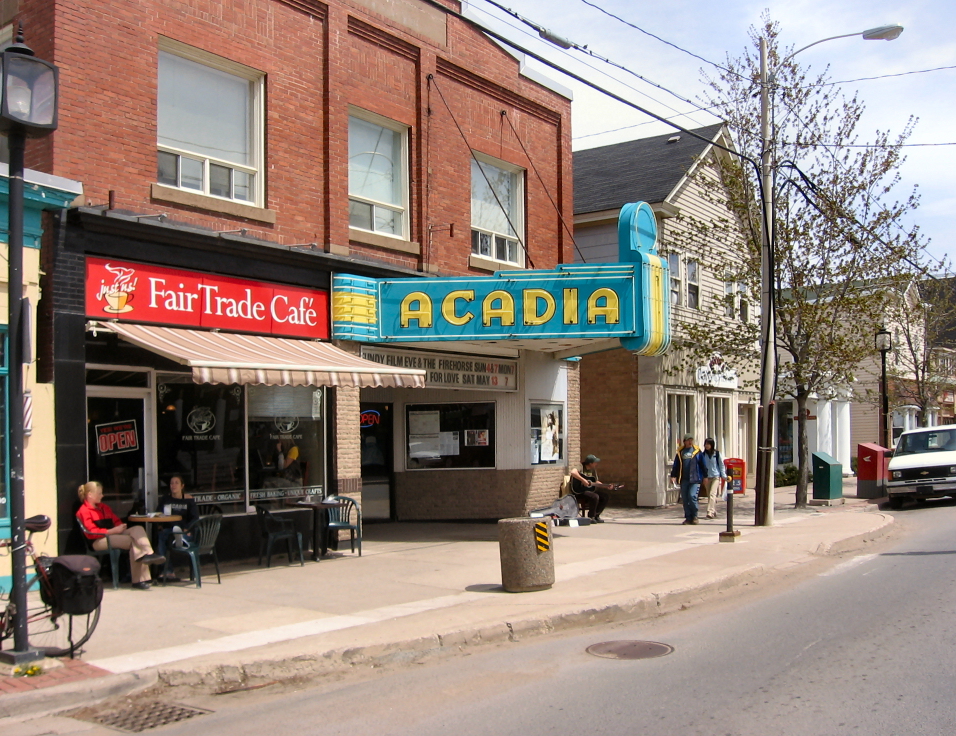
The town is a tourist destination due to its views of Cape Blomidon, the Bay of Fundy and Gaspereau Valley, as well as its wine industry. The downtown portion of Wolfville is home to pubs, bars, cafes and shops. Wolfville is also home to the Acadia Cinema Cooperative, a non-profit organization that runs the local movie/performance house. In the past few years, several Victorian houses in Wolfville have been converted to bed and breakfast establishments.

History

[edit]

French settlement in the Wolfville area began in about 1680, when Pierre Melanson established his family at Grand-Pré.[4] The Acadians prospered as farmers by enclosing the estuarine salt marshes with dykes, and successfully converting the reclaimed lands into fertile fields for crops and pasturage. In 1710, however, Acadia was lost by the French crown after the English laid siege to Annapolis Royal. Under the 1713 Peace of Utrecht, signed at the close of the War of the Spanish Succession, Acadia was ceded for the final time to the British.

For the next 36 years, until the establishment of Halifax in 1749, the British remained at Annapolis Royal and Canso. The French-speaking Catholic population grew over the intervening years to well over 10,000 and the Minas region (Wolfville and environs) quickly became the principal settlement. Acadia was a borderland region between the British and French empires, and this caused a complex socio-political environment to develop for the Acadians. Both the British and the French coaxed and threatened the Acadians in attempts to secure their loyalty, as is evidenced by the various oaths of allegiance each side attempted to extract from them. This complex situation led many Acadians to attempt to maintain a neutral path; while others openly supported either the French or the British. During the War of the Austrian Succession, the Acadians in the Wolfville area were implicated in the Battle of Grand Pré, during which a French military force, reinforced by Mi'kmaq and Acadian allies, defeated a British force.[5]

After the outbreak of the Seven Years' War between Great Britain and France, the Acadians in the Wolfville area, along with all Acadians in peninsular Nova Scotia, were involved in the deportations which took place as part of the expulsion of the Acadians (see also the Bay of Fundy Campaign). Beginning in September 1755 and continuing into the fall, approximately 2,000 Acadians were deported by the British from the area around Wolfville. The villages lying beyond Grand-Pré were burned by British forces, and still more buildings were destroyed by both sides during the guerrilla war that took place until 1758.

British rule

[edit]
Wolfville, 1897

In around 1760, the British authorities in Nova Scotia made several township plots of land available in the Annapolis Valley for colonization by English-speaking settlers. Horton Township was created in the Grand-Pré/Wolfville Area. Because of pressure on agricultural lands in New England, Anglophone farmers moved north in search of fertile land at a reasonable price. It is thought that between 1760 and 1789, more than 8,000 people known as New England Planters immigrated to the land around the Annapolis Valley. In 1763, there were 154 families living in the area of Horton Township.

The New England Planters set up a primarily agricultural economy, exporting cattle, potatoes, and grain, and later apples, as well as developing lumbering and shipbuilding. They settled and re-used the same dyke-lands as the Acadians had used before them, repairing and later expanding the agricultural dykes. They developed a major expansion in 1808, the three-mile-long Wickwire Dyke, which connected the Wolfville and Grand Pre dykes. This allowed the agricultural development of an additional 8,000 acres.[6] The town site for Horton was initially surveyed in the Grand-Pré area at Horton Landing near the mouth of the Gaspereau River. However, the town developed around the sheltered harbour on the Cornwallis River at Wolfville, at first known as Mud Creek.

The first official record of a Baptist church in Canada was that of the Horton Baptist Church (now Wolfville), established on October 29, 1778. The church was established with the assistance of the New Light evangelist Henry Alline. The Baptist movement remained strong in the area. In 1838 Acadia University was founded as a Baptist college.[7]

In 1830, the town of Mud Creek changed its name to Wolfville, in honour of Elisha DeWolf, the town's postmaster at the time.[8] In the mid-19th century, Wolfville was renowned as the world's smallest port.[9] The town became part of Canada with Confederation in 1867.

Canada

[edit]

The Windsor and Annapolis Railway arrived in 1868, later becoming the Dominion Atlantic Railway. Wolfville became a seaport devoted principally to the export of apples from the orchards of the fertile Annapolis Valley. Wolfville Harbour was also a terminus of the MV Kipawo ferry, the last of a long succession of ferries that connected Wolfville, Kingsport, and Parrsboro for 200 years.[10] The harbour, which empties twice a day due to the high tides of the Bay of Fundy, was once described by Robert Ripley as the smallest in the world. On March 20, 1893, the Town was incorporated, with E. Perry Bowles elected as its first mayor.

In 1985, the town was declared a nuclear free zone. Wolfville was declared Canada's first fair trade town on April 17, 2007.[11] In May 2016, Wolfville was designated as the third Cittaslow in Canada.[12]

Demographics

[edit]
Historical population
YearPop.±%
19562,497—    
19612,413−3.4%
19813,235+34.1%
19863,277+1.3%
19913,475+6.0%
19963,833+10.3%
20013,658−4.6%
20063,772+3.1%
20114,269+13.2%
20164,195−1.7%
20215,057+20.5%
[13][14][3]

In the 2021 Census of Population conducted by Statistics Canada, Wolfville had a population of 5,057 living in 2,441 of its 2,856 total private dwellings, a change of 20.5% from its 2016 population of 4,195. With a land area of 6.46 km2 (2.49 sq mi), it had a population density of 782.8/km2 (2,027.5/sq mi) in 2021.[15]

With Acadia University having a full time student population of 3,765,[16] the population can fluctuate greatly with the school semesters.

Arts and culture

[edit]

The Acadia University Art Gallery and The Festival Theatre are both located on Main Street, along with many bistros and boutiques. The town's history is presented at the Randall House Museum, operated by the Wolfville Historical Society. Each year, the Annapolis Valley Music Festival is held at Acadia Campus, where musicians from across the valley compete. Wolfville hosts two annual arts festivals, the Deep Roots Music Festival in September and Devour! The Food Film Fest in late October.

The Al Whittle Theatre operated by the Acadia Cinema Cooperative has for generations served as a nexus of culture and entertainment for the town's populace. Opened in 1911 and operating as an opera house until 1923 when it became a community theater and cinema, the theater underwent various changes in ownership until 1997 under the management of Acadia Cinems. With the retirement of its long-serving manager Al Whittle (1929–2021), the theater closed in 2000. In 2004, the theater was re-opened by the Acadia Cinema Cooperative Ltd. and named in honour of Al Whittle. The theater has continued to serve as a local gathering place and centre for the arts ever since, from hosting local theater productions to screening international independent films.

Wolfville has a farmers market located in the DeWolfe building, a former apple packing warehouse. In July 2022, the town hosted the first Annapolis Valley Pride Festival.

It has a library called Wolfville Memorial Library.[17]

Education

[edit]

Notable people

[edit]

Parks

[edit]
  • Canada Parks
  • Lumsden Pond Provincial Park
  • Reservoir Park
  • Rotary Park
  • Willow Park

See also

[edit]

References

[edit]

Further reading

[edit]
[edit]
Revisions and contributorsEdit on WikipediaRead on Wikipedia
from Grokipedia
Wolfville is a town in , , with a population of 5,057 as recorded in the 2021 census. Located in the along the , it covers 7.31 square kilometres of land separated from tidal waters by 17th-century Acadian-built dykes. The community serves as the home of , a public institution focused primarily on that draws students and contributes to a population increase during term time. The town's economy draws on the surrounding valley's fertile soils, supporting such as apple orchards and nascent wine production, with local markets and festivals highlighting these outputs. Wolfville also features access to the Bay of Fundy's extreme , the highest in the world, which influences local geography and activities like the operation of its small harbour. Incorporated as a in , it maintains a compact with cultural venues, trails, and parks that reflect its blend of academic, agricultural, and natural attributes.

Geography

Location and topography

Wolfville lies in , Canada, within the , approximately 95 kilometres northwest of Halifax by road. The town is positioned along the northern shore of the , an estuary forming the eastern arm of the , with direct views across to the basaltic cliffs of Cape Blomidon on the Blomidon Provincial Park peninsula. The , a structural depression bounded by the North Mountain to the north and South Mountain to the south, originated as a during the era and has since filled with glacial and post-glacial sediments. Wolfville's features low elevations, ranging from at the basin edge to a maximum of 92 metres, with the town center averaging around 35 metres above . This gently sloping terrain transitions into expansive dykelands—reclaimed tidal flats protected by earthen dykes—that extend inland from the shoreline. These dykelands derive their fertility from fine and clay deposits accumulated over by the Bay of Fundy's macro-tides, which reach amplitudes up to 16 metres and drive into the basin. profiles in the region, characterized by deep, well-drained loams with high organic content from tidal marsh origins, provide optimal conditions for root crops, orchards, and vineyards due to their nutrient retention and frost-mitigating influenced by the surrounding hills. The valley's scenic appeal stems from this juxtaposition of flat, verdant lowlands against the rising escarpments of the bordering mountains, enhanced by the dramatic tidal vistas of the .

Climate and environment

Wolfville features a moderated by maritime influences from the nearby and , resulting in relatively mild temperatures and consistent . The average annual temperature is 7.1 °C, with mean temperatures around -5 °C during the coldest winter months and mean temperatures reaching 18 °C in the warmest summer period. Annual averages 1,211 mm, distributed fairly evenly across seasons, with typically the wettest month at about 89 mm and the driest at 65 mm. The Annapolis Valley's sheltered topography creates a favorable microclimate for agriculture, buffering against coastal winds and extending the frost-free growing season to approximately 150-180 days, longer than in exposed coastal areas of Nova Scotia. This enables cultivation of temperate crops like apples and grapes, supported by well-drained soils and moderated diurnal temperature swings, though historical records indicate natural year-to-year variability in frost dates and precipitation without evidence of abrupt shifts beyond engineering-adaptable ranges. Environmental pressures include tidal forces from the , which exert erosive effects on the historic Acadian dykelands protecting low-lying farmland and settlements. These earthen barriers, dating to the , have been incrementally reinforced; for instance, in 2013, Wolfville elevated sections by up to 1.2 meters to counter gradual sea-level rise projected at 0.3-0.6 meters by 2100 under moderate scenarios, prioritizing structural upgrades over . Ongoing monitoring by provincial authorities emphasizes maintenance of these systems to sustain agricultural viability amid tidal surges, with adaptations focused on abutment reinforcements and sluice gate improvements rather than unsubstantiated catastrophic projections.

History

Indigenous and pre-colonial periods

The region of modern Wolfville, situated in the along the Annapolis River and near the , formed part of the broader territory known as Mi'kmaw'ki, encompassing much of present-day and adjacent areas. Archaeological evidence from the valley demonstrates Indigenous occupation by Mi'kmaq ancestors predating European contact—first documented in the region around 1497—by several millennia, with seasonal campsites evidencing resource exploitation through hunting, fishing, and gathering. Key sites include those in the adjacent Grand Pré area, such as a burial ground on , indicating ritual and residential use tied to the basin's tidal flats and forests. The Boswell site (BfDf-08), the first precontact location systematically excavated along the Annapolis River, reveals a cultural sequence from Paleoindian through Late Maritime Woodland periods, with Transitional Archaic components dated to approximately 4100–2700 BP (calibrated to roughly 2150–750 BCE). Artifacts from these digs, including lithic tools and faunal remains, point to mobile adaptations focused on exploiting migratory fish stocks from the , terrestrial game in upland forests, and seasonal plants in the dyked lowlands' precursors—strategies suited to the valley's and tidal dynamics. No archaeological data indicate permanent villages or high concentrations; instead, dispersed temporary encampments reflect environmental limits on density, such as fluctuating tidal resources and winter scarcity, prioritizing mobility for . Supplementary evidence emerged in 2020 when drought-induced low water levels in an lake exposed stone tools and other precontact artifacts, consistent with episodic seasonal use rather than fixed habitation. This material record underscores a pragmatic reliance on the area's ecological niches—estuarine fisheries yielding up to 80% of caloric intake in summer, supplemented by inland —without traces of monumental architecture or agricultural intensification that might suggest denser, sedentary societies. Population estimates for precontact in remain modest, on the order of several thousand across districts, constrained by the need to avoid in a landscape of seasonal extremes.

Acadian settlement and expulsion

first settled the region, including the area that would form Horton Township, in the late , with families arriving around 1680 from earlier establishments to exploit fertile tidal marshes. These settlers, numbering initially in dozens of households, adapted European techniques to local conditions by constructing earthen dykes reinforced with wooden aboiteaux—sluice gates allowing tidal to drain while preventing inflow—reclaiming over 1,000 hectares of marshland for by the early . This dykeland system enabled intensive farming of crops like , oats, and vegetables on soils enriched by annual deposits, supporting without extensive forest clearing, a method unique among North American pioneers of the era. By the mid-18th century, Horton Township's communities, centered at Grand Pré, had expanded to approximately 2,743 inhabitants across several hundred families, forming one of the densest settlements in with prosperous farms sustained by the dykelands. Geopolitical tensions escalated after Britain's 1710 conquest of (renamed ), as repeatedly refused an unconditional , citing religious objections and ongoing French claims, while maintaining neutrality that often aligned with French military efforts and Mi'kmaq resistance during conflicts like Father Le Loutre's War (1749–1755). This stance, viewed by British authorities as a risk amid the Seven Years' War, prompted Governor Charles Lawrence to authorize in July 1755, targeting for removal to eliminate potential internal threats and redistribute lands for loyal settlers. The expulsion, known as the Grand Dérangement, commenced in Horton Township on September 5, 1755, when Colonel John Winslow assembled 446 men under pretext in the Grand Pré church, imprisoning them before systematically deporting families—separating many—via overcrowded transports from the basin's shores. Of the roughly 2,700 local , most were shipped to British colonies like and , with high mortality from disease and shipwrecks; British forces burned villages and dykes to prevent reuse, leading to near-total depopulation and forfeiture of properties under . This action, part of a broader of about 11,000 province-wide, stemmed directly from their conditional loyalties and wartime alignments, which British strategy deemed incompatible with consolidating control over the territory.

Planter era and early British development

In the aftermath of the Acadian expulsion during the 1750s, British authorities sought to repopulate Nova Scotia's vacated farmlands by recruiting settlers from . Between 1759 and 1768, roughly 8,000 migrated to the province, drawn by offers of free land grants and established modeled on patterns. Horton , encompassing the area that later developed into Wolfville, was surveyed and settled starting in 1760, with initial arrivals landing at what became known as Horton Landing along the . These settlers, primarily from and , received allocations of dyked marshlands previously cultivated by , enabling rapid agricultural bootstrapping despite initial challenges with soil adaptation and tidal flooding. The prioritized pragmatic economic development, converting dykelands into productive focused on , , and emerging fruit cultivation, including apple orchards that leveraged the valley's for hardy varieties suited to export. By the , local mills for and supported expansion, while access to tidal rivers facilitated , with early vessels built for coastal trade and fisheries using abundant local timber. This fostered self-reliant, Protestant communities—largely Congregationalist—emphasizing individual and township governance, as documented in records showing over 100 initial proprietors in Horton by 1761. Empirical success is evident in the township's to several hundred families by 1780, contrasting with slower starts in less fertile areas. The (1775–1783) introduced a secondary wave of settlement, as Loyalists fleeing independence sought refuge in . Post-1783, Loyalist families augmented Horton's population through additional land grants, particularly along the Cornwallis River, reinforcing British institutional ties via oaths of allegiance and militia service. Census data from the 1780s and 1790s reflect this consolidation, with Loyalists comprising up to 20% of new heads of households in Kings County townships, enhancing agricultural output and trade networks while diminishing any residual French influence. This era solidified Horton's trajectory as a Protestant, agrarian outpost aligned with imperial interests.

19th to 21st centuries

In the 19th century, Wolfville experienced modernization through transportation infrastructure and educational establishment. The Dominion Atlantic Railway connected the town to broader networks in the late 1880s, facilitating economic ties to Halifax and enhancing local commerce tied to agriculture and education. Concurrently, Acadia University was founded in 1838 by Nova Scotia Baptists as Queen's College, initially serving regional students without religious tests for faculty, evolving into a key liberal arts institution that anchored intellectual growth. Throughout the , Wolfville maintained population stability, fluctuating around 3,000 to 4,000 residents amid shifts from traditional farming to diversified activities, as reflected in successive censuses showing gradual increments without major booms until later decades. Post-World War II, the town saw increased , leveraging rail access and the literary narrative to draw visitors to the , supplementing local economy beyond primary sectors. The 21st century marked accelerated demographic expansion, with the 2021 census recording a population of 5,057, a 20.5% rise from 4,195 in 2016, outpacing Nova Scotia's provincial average of 5.0% and attributed to Acadia University's draw and influxes from remote work amid pandemic shifts. This growth prompted municipal responses, including the 2025-2029 Strategic Plan prioritizing fiscal responsibility, housing development via the Housing Accelerator Fund to streamline approvals and zoning for multi-unit dwellings, and traffic studies to address congestion from projected expansions toward an additional 3,500 residents. A new council, elected in 2024, advanced these initiatives to manage infrastructure strains while sustaining educational and economic anchors.

Government and politics

Municipal structure

Wolfville employs a mayor-council system of local governance, comprising one and six councillors elected by residents every four years. The council provides leadership on community interests, collaborates with town staff to deliver services, and convenes twice monthly in sessions of the and full to deliberate and decide on municipal matters. In the October 19, 2024, municipal election, Jodi MacKay was elected mayor with 1,247 votes, defeating incumbent Wendy Donovan's 636, while the six councillor positions went to Jennifer Ingham (1,188 votes), Wendy Elliott (1,081), Mike Butler (935), Jeremy Banks (767), and others based on vote tallies. The newly seated council adopted a strategic plan in summer 2025 prioritizing fiscal responsibility alongside inclusive community development, environmental sustainability, and economic prosperity, reflecting an empirical approach to managing local growth pressures. Municipal finances emphasize , with own-source revenues—primarily property taxes—constituting the largest share of consolidated , as reported in provincial financial indicators for 2022-2023. The 2025/26 operating budget balances at $16,388,511, maintaining the residential at $1.4655 per $100 of assessment, supplemented by grants and reserves to fund without undue provincial intervention, while assessments indicate medium risk in tax base growth and residential tax effort. A key policy initiative involves a 2024 community safety and wellness study commissioned to examine student-related conduct issues, such as neighborhood disturbances from populations, recommending an independent community safety office for non-emergency oversight as a police alternative to promote data-driven resolutions. The analysis highlights elevated risks like sexualized violence in student-heavy areas, advocating piloted alternatives grounded in local evidence over reactive enforcement.

Electoral representation and policies

Wolfville falls within the provincial of Kings South, represented since November 2024 by Progressive Conservative MLA Julie Vanexan, who secured victory with 3,296 votes in the 2024 . At the federal level, the town is part of the Kings—Hants riding, held by Liberal MP Kody since his initial election in 2019 and re-elected for a third term on April 28, 2025, with over 35,000 votes amid competition emphasizing rural agricultural priorities. Both representatives advocate for rural interests, including farming and resource-based economies, reflecting the riding's historical emphasis on conservative-leaning policies despite recent Liberal federal holds influenced by targeted appeals to agricultural voters. Policy debates in Wolfville center on and development amid , with tensions arising from increased traffic volumes straining infrastructure. A 2025 municipal study commissioned by council analyzed congestion, revealing approximately 78,000 additional vehicles passing through from July to October 2024 compared to the prior year, prompting recommendations for traffic signals or roundabouts to address empirically observed bottlenecks without overregulating commercial access. These issues tie into broader discussions, where the town's Municipal Planning Strategy identifies housing shortages driven by University's enrollment and regional migration, advocating density increases in targeted areas to meet verified demand projections while preserving agricultural lands and heritage zones. Representatives have engaged these challenges through evidence-based approaches, critiquing excessive restrictions that exacerbate shortages; for instance, has supported federal incentives for rural housing development, while Vanexan's Progressive Conservative platform prioritizes streamlined approvals to counter not-in-my-backyard resistance that inflates costs without causal justification. Zoning reforms under consideration, informed by a needs assessment, aim to balance empirical requirements—such as accommodating projected units for students and families—against preservation goals, avoiding sprawl through density-focused policies rather than blanket prohibitions. This reflects a pragmatic stance prioritizing data on vehicle counts, vacancy rates, and growth trends over unsubstantiated opposition to change.

Economy

Agricultural foundations

The , encompassing Wolfville, features fertile alluvial soils deposited by ancient tides, enabling intensive fruit cultivation that traces to New England arriving after , who expanded upon Acadian orchards to establish commercial apple production as a basis for local self-sufficiency. These settlers introduced hardy varieties suited to the region's , fostering orchards that by the supported export-oriented farming, with apples forming the economic core amid limited alternative . Nova Scotia's accounts for a substantial share of provincial output, including approximately 2.5 million bushels of apples annually from the broader region, alongside grapes and other tender fruits that leverage the valley's frost-moderating topography. In Kings County, which includes Wolfville, agriculture generates diversified receipts with a reported surplus of $27.4 million, underscoring its role in sustaining rural economies through direct sales and processing. has emerged as an innovation, with the adjacent Gaspereau Valley—within 20 kilometers of Wolfville—hosting over 11 wineries that capitalize on cool-climate varietals like , contributing to the provincial wine sector's $245 million economic impact via tourism and exports. Export revenues from fruits bolster balances, yet production faces causal risks from extremes, such as 2025 droughts yielding failures in tree fruits and , compounded by historical frosts and hurricanes that disrupt yields without adequate infrastructure. Labor shortages persist due to seasonal demands and an aging domestic workforce, prompting adaptations like wage increases and , though reliance on temporary foreign programs introduces and regulatory strains without resolving underlying demographic declines.

Modern sectors and growth drivers

Acadia University acts as the principal economic anchor for Wolfville, enrolling approximately 3,500 students who sustain demand for local retail, dining, and through year-round campus activity. The institution's focus on undergraduate programs in , sciences, and draws a diverse student body, injecting spending power into the town's service-oriented and fostering ancillary employment in and support roles. Tourism emerges as a key growth driver, leveraging Wolfville's position in the for events like the Deep Roots Music Festival in September and Devour! The Food Film Fest in October, which highlight local cuisine and performing arts to attract regional and international visitors. The area's trails, wineries, and experiences further bolster this sector, with the 2025 Taste of Nova Scotia Awards—presented in Wolfville—recognizing provincial culinary producers and underscoring the town's role in elevating food . Commercial services reflect market responsiveness to expansion, exemplified by the ongoing renovation and enlargement of Carl's Independent Grocer at 396 , set for completion by late 2025 to accommodate increased consumer needs from influx and seasonal . Housing developments, including a federal-town agreement to accelerate 45 units over three years, enable sustained growth by addressing capacity for incoming residents tied to university enrollment and visitor economies. These initiatives align with broader trends of rapid demographic increases, positioning and as verifiable catalysts for service-sector vitality.

Challenges and fiscal realities

Wolfville's local economy exhibits vulnerabilities tied to Acadia University's enrollment patterns, which drive a substantial share of residential and commercial demand. Enrollment has fluctuated historically, with a 4.3% decline recorded in 2015 mirroring broader regional downturns, and federal caps on permits announced in 2024 projected to generate $8–12 million in lost for universities including . These shifts expose the town to instability, as student numbers directly influence markets, retail spending, and service sector without diversified buffers. Seasonal tourism patterns compound these risks, with peak visitation concentrated in summer and fall harvest periods in the , leaving off-season periods susceptible to economic lulls from weather disruptions or external shocks. Provincial tourism strategies highlight how such renders communities without robust alternative industries prone to volatility and employment gaps. Rapid has intensified infrastructure strains, particularly in and . Municipal data indicate approximately 78,000 additional vehicles traversed Wolfville from July to October in 2024 relative to the prior year, fueling congestion studies along . supply lags demand, with annual additions averaging just 25 units amid growth outpacing provincial averages, prompting federal Housing Accelerator Fund initiatives to revise and permitting in 2025. Fiscal management maintains balanced budgets amid escalating costs, as evidenced by the 2025/26 operating budget of $16,388,511, which held the residential tax rate steady at $1.4655 per $100 assessed while allocating for infrastructure upkeep. Provincial assessments note Wolfville's relatively lower capital asset deficits compared to peers, achieved through restrained taxation and avoidance of long-term debt, though inflation-driven rises in construction and maintenance expenses—exacerbated by material shortages—continue to pressure reserves. Development bottlenecks arise chiefly from regulatory processes rather than socioeconomic disparities, with delays in approvals, vendor coordination, and compliance extending project timelines for and expansions. Operational plans identify permitting hurdles and engineering standard revisions as primary impediments, underscoring causal links to administrative frictions over unsubstantiated claims of structural inequities.

Demographics

The population of Wolfville reached 5,057 according to the 2021 Census of Population conducted by , reflecting a 20.5% increase from the 4,195 residents enumerated in 2016. This growth rate substantially exceeded the provincial average for , driven primarily by net in-migration attracted to the town's established agricultural base, proximity to , and scenic setting offering lifestyle amenities such as and cultural events. A distinctive feature of Wolfville's demographics is the seasonal "tidal effect" from University's student body, which enrolls approximately 3,600 undergraduates and nearly doubles the resident population during the academic year as over 3,000 students arrive each fall. This influx supports local commerce through student spending on , dining, and services, while the town's year-round average age of 44.4 years indicates a stable base of families and retirees drawn by employment opportunities in , viticulture, and remote professional roles, evidenced by a median household income of $58,400 in 2020. Municipal anticipates sustained expansion through residential developments on the town's eastern and western peripheries, potentially accommodating thousands more residents by leveraging available for tied to economic anchors like the and emerging sectors. Empirical patterns underscore organic pull factors—such as job proximity and quality-of-life attributes—over subsidized incentives, with historical data showing consistent annual gains of around 1.7% absent policy-driven .

Socioeconomic and ethnic profile

According to the 2021 Census, Wolfville's of 5,057 is characterized by low ethnocultural diversity, with 81.1% Canadian-born and only 11.0% foreign-born, reflecting limited relative to urban centers in . representation remains minimal, aligning with provincial patterns where European origins dominate (84.7% province-wide), and specific local data indicate shares under 5% for non-European groups, including small Indigenous (around 2-3%) and other minority populations. This composition fosters a homogeneous fabric rooted in longstanding regional settlement patterns, with top reported ethnic origins likely including English, Scottish, Irish, and Canadian, as prevalent in the . Socioeconomically, the town benefits from elevated attainment linked to University's influence, with 47.4% of residents aged 15 and over holding postsecondary credentials, and higher rates (over 60% for ages 25-64) in fields like , , and sciences. Median household income stands at $58,400, reflecting a mix of professional, academic, and seasonal agricultural , though couple and family incomes trend higher at approximately $81,000 after-tax in recent assessments. Labour force participation is moderated by demographics, yielding an employment rate around 47% and unemployment at 11.0%, with variances due to and academic cycles but overall stability from diversified professional sectors. These traits underpin a cohesive social structure, where shared European heritage and high human capital contribute to low conflict and voluntary community engagement, contrasting with broader Canadian trends toward imposed diversity initiatives that have shown limited uptake locally.

Infrastructure and development

Transportation and urban planning

Wolfville's primary road artery, Main Street, handles the bulk of local and through traffic but faces chronic congestion exacerbated by a surge in vehicle volumes tied to the town's rapid population expansion. A September 2025 study, initiated by municipal council, examines traffic flows and patterns at key intersections to propose efficiency enhancements, prompted by 78,000 additional vehicles traversing downtown from July to October 2024 relative to the same period in 2023. This uptick correlates directly with Wolfville's 20.5% population increase between 2016 and 2021, outpacing provincial averages and straining legacy infrastructure originally scaled for lower throughput. Regional access relies on proximity to , with Exit 11 providing direct linkage to the Evangeline Trail (Trunk 1) and broader provincial networks. This positioning enables efficient outbound travel, including a 95-kilometer drive to , typically completed in 62 minutes under normal conditions. Public transit options, operated by Kings Transit, supplement roadways by connecting Wolfville to adjacent counties, though ridership data underscores ongoing dependence on personal vehicles amid growth pressures. The town's Strategic Plan for 2025-2029 prioritizes infrastructure resilience and density management to sustain logistical capacity without compromising the Annapolis Valley's . Complementary efforts include a $3.3 million active transportation initiative, yielding over 10 kilometers of multi-use pathways designed for bicycles and pedestrians, capitalizing on the region's gentle gradients to foster non-motorized mobility and alleviate road strain. These upgrades, blending federal, provincial, and local , target core networks accessible across abilities, aiming to integrate seamlessly with existing trails while addressing throughput demands from demographic shifts.

Housing and expansion pressures

Wolfville has experienced acute housing shortages driven by rapid , which reached an estimated 5,562 residents by 2025, a 28% increase from 4,195 in 2016, primarily fueled by interprovincial migration and University's student influx. This demand surge has outpaced supply, with a 2023 municipal assessment projecting a need for over 800 additional units in the coming years to address the gap, exacerbated by restrictive zoning that historically limited density in single-family areas. Median home list prices reflected this pressure, climbing to $480,488 by September 2025, up slightly from prior months and aligning closely with sale prices, signaling a tight market where listings rarely undersell. In response, the town secured $1.8 million from Canada's Housing Accelerator Fund in , enabling initiatives to streamline permitting and reform zoning bylaws—such as permitting higher densities and building heights in underutilized zones—to of 45 units within three years and 280 over a . These measures prioritize regulatory simplification to boost private-sector supply, critiquing past barriers that stifled multifamily development and advocating empirical supply increases over reliance on subsidized non-market housing, which risks distorting incentives and long-term affordability. Competing land uses compound pressures, as seen in the April 2025 demolition of two buildings to accommodate Loblaw's expansion of Carl's Independent grocery store, set for completion by late 2025, which reallocates prime urban space from potential residential or mixed-use to commercial priorities amid the shortage. Preservation efforts for Wolfville's heritage core, while culturally valuable, have historically delayed projects, necessitating a causal balance: empirical data on vacancy rates and price signals should guide expansions to avert overregulation, rather than yielding to unsubstantiated environmental concerns that overlook density's efficiency in reducing sprawl. Local planning documents emphasize this by targeting updates to align development with verifiable needs, fostering market-responsive growth without compromising the town's compact footprint.

Education

Primary and secondary schooling

Wolfville's primary and secondary schooling operates under the Annapolis Valley Regional Centre for Education (AVRCE), a public district overseeing approximately 40 schools across , Kings, and West Hants counties with a total enrollment of 14,058 students in the 2025-2026 school year. Local schools emphasize provincial curriculum standards focused on , , and core competencies, with assessments in grades 3, 8, and 10 tracking progress in these areas. Wolfville School, located at 19 Street, serves pre-primary through grade 8 students, drawing from the town's approximately 3,700 residents and surrounding areas. The school reported 338 students enrolled in the 2022-2023 academic year, supported by about 30 teaching and support staff, enabling relatively small class sizes consistent with provincial caps (e.g., 20-22 for primary grades). AVRCE guidelines allow limited exceedances of caps for capacity or exceptional needs, prioritizing foundational skill development in reading, writing, and mathematics. Secondary education is provided at Horton High School, situated at 75 Greenwich Road South in Wolfville, which accommodates grades 9-12 in a facility designed for up to 1,000 students and equipped with modern technology. The AVRCE reports secondary graduation rates of 92% in 2021-2022, dropping slightly to 87-88% in subsequent years amid broader challenges like , outperforming some other districts. These rates reflect the percentage of students completing high school diplomas within the standard timeframe, with district goals targeting 85% of grades 9-12 students achieving at least 65% in courses by year-end. School programs integrate with the community's agricultural context through extracurriculars and regional initiatives, such as Nova Scotia's Agriculture in the Classroom, which provides hands-on learning in farming, food production, and rural heritage accessible to AVRCE students. This aligns with the Annapolis Valley's economy, fostering practical skills like plant growth and farm-to-table processes without diluting core academic priorities.

Acadia University

Acadia University, established in 1838 by Baptist leaders as a post-secondary institution, initially shared facilities with the Horton Academy and opened its doors on January 15, 1839, with two faculty members and 21 students. Originally denominational, it transitioned to non-sectarian status and adopted its current comprehensive structure by 1891, emphasizing . The university now serves approximately 3,600 undergraduate students from more than 50 countries, offering over 200 degree programs across faculties including , sciences, , and . The institution maintains strengths in sciences and , as reflected in national assessments. In 2026 rankings for primarily undergraduate universities, scored 70% in science and categories, placing it among top performers for student outcomes and employer . It ranked second overall in among faculty and hiring managers in the 2025 survey, underscoring its focus on research-intensive undergraduate training. programs, in particular, rank 42nd in per publication metrics, with contributions to fields like and . Acadia exerts substantial economic influence on Wolfville, where its student population and events drive local commerce through spending on housing, food, and services. Major gatherings, such as summer conferences, have historically generated returns for the town and surrounding Kings County by attracting visitors and utilizing campus facilities. The university's for Agri-Food and Beverage advances regional and , providing analytical services for wine and cider producers since 2009 and supporting Nova Scotia's wine industry through and sensory evaluations. In October 2025, hosted its celebration from October 16 to 19, drawing for reunions, , and parades that foster ties. The Andrew H. McCain Arena then accommodated the 2025 Home Hardware Canadian Pre-Trials from October 20 to 26, featuring eight men's and eight women's teams competing for Olympic qualification spots in a best-of-three finals format.

Academic controversies

In 2018, dismissed associate Rick following an investigation into his public comments and classroom conduct, igniting a national debate on and institutional responses to dissenting views. had questioned as a "scam," denied a systemic gender wage gap, and critiqued Truth and Reconciliation Commission narratives on residential schools, positions he expressed on and in teachings that deviated from prevailing academic consensus. The university's probe, initiated in February 2018 after complaints from students, faculty, and external parties, concluded that had harassed and intimidated colleagues and students, breached by sharing student information, and failed to deliver required course material, leading to his termination on August 31. Critics of the dismissal, including free speech advocates, argued it exemplified a on heterodox , essential for empirical rigor in social sciences, where institutional pressures often favor uncritical acceptance of narratives on diversity and equity despite mixed evidentiary support. The Canadian Association of University Teachers (CAUT) launched an in March 2018 into Acadia's , questioning procedural fairness amid claims of widespread faculty complaints but limited transparency on evidence of disruption versus ideological disagreement. Proponents of the firing countered that Mehta's actions undermined collegial trust and educational standards, with reports citing "virtually every faculty and staff member" affected by alleged , though specifics remained contested and unproven in subsequent attempts, which Mehta pursued unsuccessfully. This episode highlighted broader tensions at between safeguarding open discourse and maintaining campus harmony, with parallels in contemporaneous disputes over reproductive rights expression. In September 2018, the Students' Union evicted the on-campus Pregnancy Support, an anti- affiliate of a , after allegations of disseminating misleading information on risks, such as unverified claims of links, prompting debates on permissible versus student welfare. Such incidents underscore risks of suppressing minority perspectives in academia, where empirical challenges to dominant paradigms—often aligned with progressive orthodoxies—face disproportionate scrutiny, potentially eroding truth-seeking through .

Culture and community

Arts, festivals, and heritage

Wolfville's arts scene centers on community-operated venues like the Al Whittle Theatre, a historic soft-seat facility established in 1911 and managed by the volunteer-run Acadia Cinema Co-operative, which hosts independent films, live music, and theatrical performances year-round. The theatre's non-profit model supports local cultural activity without reliance on large-scale public funding, drawing audiences for events that generated over 3,000 visitors in recent programming seasons. Local galleries, including the Harvest Gallery opened in 2004, exhibit paintings, sculptures, and fine crafts by Nova Scotia-based artists, fostering a modest but consistent presence tied to regional traditions rather than trends. These spaces emphasize works from established provincial creators, with sales reflecting community interest in accessible, heritage-inspired art forms. Festivals highlight Wolfville's agricultural and musical roots, such as the annual Deep Roots Music Festival held September 25-27, 2026, which features folk, roots, and acoustic performances across town venues, celebrating Canadian musical heritage through artist showcases and free community events. The regional Apple Blossom Festival, spanning May 28 to June 2, 2025, incorporates Wolfville-area events like orchard tours and concerts, rooted in the valley's apple cultivation history dating to the . Culinary heritage receives recognition via the Taste of Nova Scotia Awards, presented October 23, 2025, at the Al Whittle Theatre during Devour! The Food Film Fest, honoring producers and ambassadors for traditional Nova Scotian ingredients and techniques, with Wolfville serving as host to underscore its role in provincial food culture. Heritage efforts focus on sites like the Randall House Museum at 259 Main Street, one of Wolfville's oldest surviving structures from the 18th century, maintained by the Wolfville Historical Society to display artifacts and stories of local Planter and Mi'kmaq history through exhibits and seasonal programs. These initiatives preserve tangible links to the town's founding eras, prioritizing archival accuracy over interpretive narratives.

Social dynamics and recreation

Wolfville exhibits a close-knit social fabric shaped by its small population and the presence of , which infuses the community with a youthful, academic energy while maintaining intergenerational connections through events such as the annual celebration, held October 16–19 in 2025, featuring parades, alumni reunions, and public gatherings that draw former students back to town. The town's low rate, 39% below the national average, contributes to a sense of , with violent crimes 28% lower than average, supporting everyday interactions among residents. However, pragmatic policies have emerged to manage tensions between local residents and university students, particularly around noise from off-campus parties; a 2024 report recommended an independent safety and wellness body as an alternative to routine police responses, highlighting elevated risks of disturbances and sexualized violence linked to post-secondary student behavior. Recreational pursuits in Wolfville emphasize self-directed outdoor activities aligned with the town's active , including on local trails such as the Park path and Waterfront Park routes, which offer accessible starting points for exploration leading to panoramic views of the surrounding . Paddling and boating opportunities extend to the Minas Basin's tidal waters, where residents engage in and similar water-based amid the Bay of Fundy's dramatic tides. debates over pet have surfaced recently, exemplified by 2025 changes to Park's dog policies, where off-leash access was restricted to evenings and early mornings (requiring leashes from 10 a.m. to 7 p.m.) following an uptick in incidents, reflecting resident priorities for balanced public safety in shared spaces.

Notable individuals

Historical figures

Robert Denison (c. 1697–1766), a militia officer and landowner, led the Planters' settlement of Horton Township—now encompassing Wolfville—in 1760, following the . As the first named proprietor in the township's land grant, he received 1,500 acres (750 acres per share) and organized the arrival of approximately 200 families via a flotilla of ships, fostering agricultural self-reliance through dike repairs and marshland cultivation inherited from Acadian techniques. Denison represented King's County in the from 1761 to 1764, advocating for settler interests amid colonial governance challenges. John Pryor (1805–1892), a Baptist educator and , served as principal of Horton Academy from 1830 and co-founded Queen's College (later ) in Wolfville in 1838 as part of the Nova Scotia Baptist Education Society's efforts to establish non-sectarian higher education rooted in Baptist principles. Appointed Acadia's first president in 1846, Pryor emphasized classical and moral instruction, drawing on his experience in militia service and legal practice to promote institutional stability during early financial strains. His leadership solidified Wolfville's role as a hub for Baptist intellectual self-reliance, independent of denominational tests for faculty. Edmund Albern Crawley (1799–1888), an English-born Baptist minister and scholar, joined Pryor in launching Queen's College classes in January 1839, teaching , logic, moral philosophy, , and other disciplines while sharing administrative duties until 1847. Crawley's multifaceted contributions, including advocacy against in —stemming from his rejection by Dalhousie College—underscored the Planter-descended ' commitment to accessible learning, helping establish Acadia's foundational curriculum amid resource limitations.

Contemporary contributors

In the realm of sports, Wolfville's role as a host for major events underscores contributions from regional athletes, exemplified by , who skipped Nova Scotia's team at the 2025 and qualified for the Canadian Curling Trials held in Halifax from November 22 to 30, 2025, following strong performances that included precise draws earning acclaim at the 2023 nationals. The town's facilities, such as those used for the 2025 Olympic pre-trials, have amplified local curling's visibility, with Black observing a heightened provincial enthusiasm for the sport amid these competitions. Artists based in or closely tied to Wolfville have exported cultural works internationally. Rachel Reeve, an interdisciplinary visual operating from the near Wolfville, creates installations and mixed-media pieces that have been exhibited in galleries across , , and the , focusing on themes of place and materiality to engage global audiences. Similarly, Julie Rosvall, a and printmaker who relocated to Wolfville in 1998, produces hand-dyed and stitched works drawing from natural motifs, contributing to the local through sales and exhibitions that highlight Nova Scotia's traditions. In literature, Jan L. Coates, a resident of Wolfville, has authored award-winning children's books such as A Hare in the Elephant's Trunk (2010), which earned the 2011 Hackmatack Award for fiction, blending historical narratives with themes of resilience to educate young readers on global conflicts, thereby extending Wolfville's intellectual influence through the university-adjacent literary community. These figures demonstrate verifiable cultural and athletic exports, fostering economic activity via events, sales, and without reliance on institutional quotas.

Parks and natural areas

Key protected spaces

The Harriet Irving Botanical , operated by , replicate nine habitats of the Acadian Forest Region using native plant species, alongside specialized areas such as a medicinal and food , walled , herbaceous border, and pleached linden hedge. A connected conservatory maintains climate-controlled displays of regional to support year-round education and research on native . The associated herbarium holds over 400,000 preserved botanical specimens, facilitating studies in and . These university-managed spaces prioritize conservation through public access for observation and scientific inquiry, balancing preservation with human engagement in plant and restoration. Wolfville's proximity to the encompasses vast tidal flats forming part of the world's highest tides, with mudflats composed of fine marine silts that sustain at least 50 fish species, numerous , and migratory birds. These intertidal zones, including the Ramsar-listed Southern Bight, provide essential and nursery grounds, where tidal currents deposit nutrients supporting high productivity without excluding sustainable human activities like monitored fisheries. Empirical surveys document diverse benthic communities adapted to extreme tidal ranges exceeding 16 meters, underscoring their role in regional food webs. The Wolfville Watershed Nature Preserve, under the Nature Trust, safeguards forests, wetlands, and streams within the Gaspereau River watershed on the South Mountain, preserving hydrological functions and habitat connectivity amid agricultural pressures. Complementing this, the 37-hectare Wolfville Ridge Conservation Lands protect upland tracts along migratory bird corridors, maintaining ecological buffers for species movement in the . These non-governmental and community-led initiatives emphasize evidence-based management, such as trail systems for low-impact access, to sustain while accommodating local stewardship.

Recreational opportunities

Wolfville offers extensive trail networks suitable for and biking, promoting amid scenic landscapes. The Harvest Moon Trailway, a 110-kilometre multi-use traversing the , includes accessible segments through Wolfville for pedestrian and cyclist use year-round. Local options such as Reservoir Park feature trails accommodating various skill levels, while nearby Blomidon Provincial Park, located 15 minutes away, provides 14 kilometres of all-season paths with views of the . Water-based recreation includes birdwatching and boating opportunities along the Minas Basin, a designated Important Bird and Biodiversity Area attracting shorebirds and waterfowl, particularly during migrations. Community-led birdwatching walks occur regularly, such as monthly events at Reservoir Park trails. Sailing and paddling are facilitated by the basin's tidal dynamics, with guided tours highlighting its ecological draw, though local access points emphasize non-motorized crafts for safety and minimal environmental impact. Community facilities support organized sports and casual play, including multiple outdoor fields for baseball, soccer, and other team activities, alongside basketball courts and a skate park. A new Recreation Hub at 282 Main Street, opened in 2023, provides equipment loans to enhance participation in active pursuits. Swimming occurs at the unsupervised beach in Reservoir Park during summer months, supplementing broader regional aquatics amid the 2025 closure of Acadia's 60-year-old pool due to escalating repair costs exceeding initial estimates. Seasonal activities extend to winter sports, with cross-country skiing clinics hosted locally and access to nearby Ski Martock for downhill and groomed Nordic trails, approximately 30 minutes away. Population growth has intensified demand on these resources, prompting collaborative efforts among Wolfville, , and Kings County for a proposed regional complex in Coldbrook, including and multi-sport venues, to mitigate strains like facility closures while fostering sustained investment in maintenance and expansion.

References

Add your contribution
Related Hubs
User Avatar
No comments yet.