Hubbry Logo
Alarm deviceAlarm deviceMain
Open search
Alarm device
Community hub
Alarm device
logo
8 pages, 0 posts
0 subscribers
Be the first to start a discussion here.
Alarm device
Alarm device
from Wikipedia
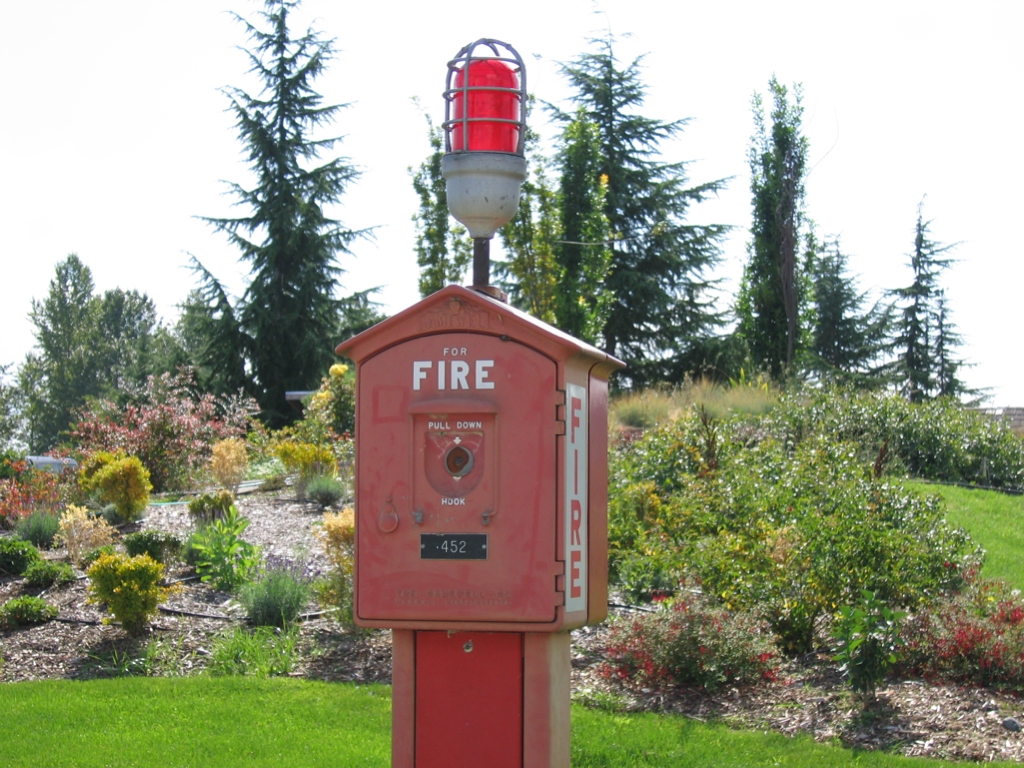
Fire alarm in Magnuson Park

An alarm device is a mechanism that gives an audible, visual, combination, or other kind of alarm signal to alert someone to a problem or condition that requires urgent attention.

Etymology

[edit]

The word alarm comes from the Old French a l'arme meaning "to the arms", or "to the weapons", telling armed men to pick up their weapons and get ready for action because an enemy may have suddenly appeared.[1]

The word alarum is an archaic form of alarm. It was sometimes used as a call to arms in the stage directions of Elizabethan dramas.[2] The term comes from the Italian all'armi and appears 89 times in Shakespeare's First Folio.[3] Often explained as the off-stage sounds of conflict or disturbance,[4] recent research suggests a bell or drum may have been used to rouse soldiers from sleep.[3]

History and development

[edit]

Early alarm devices were often bells, drums, other musical instruments, or any items which made unusual loud noises that attracted the attention of the surrounding population.

Whistles were used by police in the 19th century. Steam whistles have been used on locomotives, ships, and in factories as alarm devices.

With the advent of electricity, a variety of other alerting devices have been invented, such as buzzers, klaxons, sirens, horns, flashing and coloured lights, and other all-purpose alarms.

Alarm devices can be fitted to buildings as well as vehicles. Many buildings are fitted with fire alarms, ranging from a self-contained domestic smoke detector to a sophisticated alarm system that can operate building fire fighting systems automatically to extinguish fires with water or inert gases.

Many industries have developed standards for alarm devices, and the colours red, blue and amber are generally recognized as alarm device-related colours, with flashing lights often indicating urgent conditions.[citation needed]

Responses to an alarm

[edit]

Human reactions to an alarm will often depend on upbringing, psychological training, or the behavior of others in the environment. Consequently, the ability to test an alarm and hold regular drills to practice an appropriate response may be provided as part of an alarm system.

Alarm devices that are intended to cause the evacuation of an occupied building, such as fire alarms, may be deliberately designed to make remaining in the space difficult or even painful in order to encourage occupants to leave.

Some alarms may startle and cause a fight-or-flight response in humans; a person under this mindset will panic and either flee the perceived danger or attempt to eliminate it, often ignoring rational thought in either case.[citation needed] A person in such a state can be characterized as "alarmed".[according to whom?]

False alarms

[edit]

With any kind of alarm, you must balance between the danger of false alarms (called "false positives") — the signal going off in the absence of a problem — or an alarm failing to signal an actual problem (called a "false negative"). False alarms can waste resources expensively and can even be dangerous. For example, false alarms of a fire can waste firefighter manpower, making them unavailable for a real fire, and risk injury to firefighters and others as the fire engines race to the alleged fire's location.[5] In addition, false alarms may acclimatise people to ignore alarm signals, and thus possibly to ignore an actual emergency: Aesop's fable of The Boy Who Cried Wolf exemplifies this problem.

A false alarm is one of the most significant issues with conventional alarm systems. They can be triggered for several reasons, such as the movement of pets,[6] typing in the wrong security codes, or loud sounds from windows or doors. In the case of fire alarms, aerosol sprays, smoking, or burning food can all lead to a false alarm.[5]

Many avoid the risk of false alarms by ensuring their alarms are secured in an appropriate location, such as placing a smoke detector or fire alarm away from the kitchen where smoke from burned food or large quantities of steam which may trigger a false alarm are common occurrences. In the case of a security alarm, an additional monitoring station which assesses whether there is a legitimate need for help can reduce false alarms.

Devices

[edit]
A 2022 alarm system panel with devices linked to central

There are many kinds of alarm devices. The most common types include:

  • an alarm clock that sounds an alarm at a pre-set time, often used to wake a person up or remind them of an event.
  • a fire alarm which is used to give occupants of a building early warning of a potential fire and give them time to evacuate.
  • warning devices on a vehicle that sound when it is moving in an unexpected direction, such as reversing,
  • a siren, often accompanied by flashing coloured lights, on emergency vehicles responding to an emergency

Alarm devices, by category, include[citation needed]:

  • burglar alarms, designed to warn of burglaries. This is often a silent alarm; law enforcement or guards are warned without alerting the burglar, which increases the chances of stopping the theft while in progress.
  • alarm clocks can beep, buzz or ring at a set time to wake a person up or for other reminders
  • distributed control systems (DCS), found in nuclear power plants, refineries and chemical facilities, also generate alarms to direct the operator's attention to an important event that they need to address.
  • alarms in an operation and maintenance (O&M) monitoring system, which alerts an operator to a malfunction of a particular part of the system under monitoring.
    • first-out alarm
  • safety alarms, which go off if a dangerous condition occurs. Common public safety alarms include:

See also

[edit]

References

[edit]
Revisions and contributorsEdit on WikipediaRead on Wikipedia
from Grokipedia
An alarm device is any mechanism, equipment, or component designed to detect hazards and alert individuals to emergencies or dangers through signals such as , , or notifications, applicable in residential, commercial, industrial, and personal settings. Alarm devices serve as critical components in and across various environments, detecting hazards such as , , intrusion, or environmental threats and providing timely alerts to prevent harm or damage. These devices typically include detection elements like sensors and notification appliances such as sirens or , operating either independently or as part of integrated alarm that may connect to central monitoring stations. Alarm devices have evolved from simple mechanical to sophisticated networked ones, governed by standards like to ensure reliability during threats to life and property. Key types of alarm devices encompass audible alarms (e.g., bells, horns, and sirens) and visual alarms (e.g., strobes and flashing lights), which ensure for diverse populations including those with hearing impairments. In fire safety contexts, common detection devices include and photoelectric smoke detectors, heat detectors, and manual pull stations. Security-focused alarm devices, such as motion sensors and door contacts, detect unauthorized access and trigger responses to safeguard premises.

Fundamentals

Definition and Purpose

An alarm device is any mechanism or apparatus engineered to detect specific conditions or events—such as intrusions, fires, or environmental hazards—and to signal their occurrence through audible, visual, tactile, or electronic alerts to notify humans or interconnected systems. This core functionality distinguishes alarm devices from mere sensors by emphasizing the alerting mechanism, which aims to prompt immediate awareness and action. Such devices are integral to broader safety and security frameworks, where they serve as the primary interface between potential threats and response protocols. The primary purposes of alarm devices include preventing by early detection of dangers, enabling rapid response to mitigate risks, and ensuring adherence to regulatory safety standards across residential, commercial, and industrial settings. For instance, they alert occupants to threats like or unauthorized entry, thereby reducing the likelihood of or loss, as evidenced by studies showing that functional alarms decrease home fire fatality risks by approximately 60 percent. In workplaces, these systems facilitate safe evacuation and summon emergency services, directly contributing to lower accident severity by providing reliable, standardized notifications during crises. Overall, alarm devices deter potential hazards through proactive signaling, fostering environments where compliance with codes like those from the enhances collective safety. At a high level, alarm devices typically comprise three key components: detection sensors that monitor for anomalies, control units that signals and determine alert thresholds, and output mechanisms such as sirens, lights, or digital notifications that convey the alarm. These elements work in concert to form a cohesive , where sensors initiate the upon detecting changes, control units verify and escalate the response, and outputs ensure the alert reaches intended recipients effectively. Over time, alarm devices have evolved from rudimentary mechanical bells in the —triggered by simple locks or wires—to sophisticated networked s that integrate with for remote monitoring and automated responses, underscoring their vital role in modern risk reduction across society.

Etymology and Terminology

The word "alarm" derives from the late 14th century Old French term alarme, denoting a call to arms in the face of danger, which itself stems from the Italian phrase all'arme ("to arms"), ultimately rooted in the Latin arma ("weapons"). By the 14th century, the term had evolved in English to encompass any urgent signal or warning of imminent threat, shifting from a military exclamation to a broader concept of notification for protective action. This linguistic progression reflects the historical association of alarms with immediate mobilization against peril, influencing modern usage in safety and security contexts. Key terminology in alarm devices includes several specialized terms that describe signaling mechanisms. A siren refers to an acoustic device producing a loud, piercing, often wailing sound to warn of emergencies, commonly employed in public safety systems. A denotes a visual signaling apparatus, such as a flashing or rotating light, designed to alert individuals in environments where auditory cues may be insufficient, like areas with high noise or for those with hearing impairments. The term klaxon, originally a trademark from 1908, describes an electromechanical horn generating a distinctive, sharp blast for warnings, derived from the Greek klazein ("to roar" or "shriek"), and frequently used in vehicular and industrial applications. Distinctions between audible alarms—which emit sounds like bells, horns, or sirens to notify occupants directly—and silent alarms—which transmit discreet signals to authorities without on-site noise, often via radio or wired connections to avoid alerting intruders—are fundamental to alarm design and deployment. The evolution of industrial terminology includes the emergence of annunciator in the , referring to panel-based systems that visually or audibly indicate the status of multiple alerts, such as in early telegraph-linked or setups. These devices, patented as early as 1853 for burglar detection, allowed centralized monitoring of events across buildings or districts, marking a shift toward systematic alert in urban infrastructure. Cultural variations in terminology highlight the term's , often retaining phonetic similarities due to shared Romance roots. For instance, Spanish uses alarma for both the warning cry and the device, mirroring the English form, while German employs directly borrowed from the same etymological path. Such parallels facilitate global in alarm protocols, as seen in international regulations where cognates ensure consistent interpretation across borders, though adaptations like Arabic إنذار (indhar, meaning "warning") underscore the need for localized translations in diverse regulatory frameworks.

Historical Development

Early Innovations

The earliest precursors to modern alarm devices emerged in ancient civilizations, where rudimentary systems relied on human vigilance and simple acoustic signals to detect and respond to threats like fires or intrusions. In around 2000 BCE, pharaohs employed night watchmen to patrol homes and towns, alerting soldiers or communities through shouts or basic signaling tools when dangers were spotted. Similarly, in , organized watchtowers and guards formed the basis of early , with the establishment of the Corps of Vigiles in 6 AD by Emperor Augustus providing a structured response to urban fires using patrols and manual alerts, often involving horns or verbal warnings to summon aid. These systems, while effective for immediate local response, lacked automation and depended heavily on human observation. During the medieval period in , innovations shifted toward mechanical and acoustic mechanisms that enhanced reliability for notifications. Church bells, introduced as early as the 7th and 8th centuries and widespread by the , served as communal alarms, rung manually to signal fires, invasions, or public disturbances, allowing rapid mobilization across towns and villages. Complementing these were simple mechanical traps in castles and fortifications, such as tripwires connected to bells or weighted systems that triggered loud noises upon intrusion, alerting guards without constant human monitoring. Early elements also appeared in monastic settings by the late , where mechanisms automated bell-striking for timekeeping but occasionally adapted for emergency chimes, laying groundwork for more precise signaling. The marked a pivotal transition with the advent of electrical technologies that enabled remote and automated alarms. Samuel Morse's invention of the electric telegraph in 1837 revolutionized signaling by transmitting electrical pulses over wires, allowing instant remote notifications that formed the foundation for wired alarm networks. Building on this, Edwin Holmes developed the first electromagnetic burglar alarm in the 1850s, purchasing a from Augustus Pope in 1857 and installing the inaugural system in on February 21, 1858; it used door contacts to complete circuits, electromagnetically activating bells at a central monitoring station via telegraph lines. A key milestone in public safety came in 1852 with William Channing's implementation of the world's first municipal fire alarm telegraph system in , in collaboration with G. Farmer. This network featured street call boxes connected by telegraph wires to a central office, where operators received coded signals to dispatch fire brigades, dramatically reducing response times and marking the shift from manual to electrified public alarm infrastructure.

20th-Century Advancements

In the early , automatic fire sprinkler systems with integrated alarms gained widespread adoption, particularly in industrial settings. Although Henry S. Parmelee patented the first practical automatic sprinkler system in 1874 to protect his piano factory by releasing water upon heat detection and triggering an alarm, its implementation expanded significantly during the as building codes evolved and manufacturing facilities prioritized . By this decade, improvements in sprinkler design, such as the shift to quartzoid glass bulbs, facilitated broader installation in U.S. factories and warehouses, reducing fire losses through automated detection and notification. Concurrently, systems emerged in factories for rapid signaling, enabling air-pressure-driven alarms to alert workers to hazards like fires or machinery failures across large facilities. The mid-20th century marked a post-World War II boom in alarm technology, driven by the advent of transistor-based circuits in the , which allowed for more compact and reliable detectors compared to bulky systems. These solid-state innovations enabled the of electronic components, paving the way for portable and efficient alarm devices in both residential and commercial applications. A pivotal advancement came in 1965 when Duane D. Pearsall developed the first battery-powered home using technology, which detected smoke particles by measuring changes in electrical current within a small radioactive chamber, making early warning accessible beyond institutional settings. Institutional developments further solidified alarm reliability during this era. The (NFPA) began refining standards for fire alarm systems , with ongoing updates to what became , the National Fire Alarm and Signaling Code, emphasizing installation, testing, and performance criteria to ensure consistent protection. Simultaneously, central station monitoring services expanded, as exemplified by ADT's pioneering of centralized facilities in the 1920s, which connected thousands of properties to 24/7 oversight via wired signals for rapid response to intrusions or fires. Key events, such as the 1942 Cocoanut Grove nightclub fire in that killed 492 due to inadequate alarms and exits, catalyzed mandatory building codes requiring automatic detection and notification systems nationwide.

Contemporary Evolution

The evolution of alarm devices in the late 20th and early 21st centuries marked a pivotal shift toward digital and technologies, enhancing reliability and . In the , the integration of microprocessors into alarm systems enabled more intelligent processing and control, allowing for automated responses and reduced wiring complexity in both and applications. By the , alarm systems emerged as a significant advancement, eliminating the need for extensive hardwiring and facilitating easier installation in homes and businesses, which broadened their adoption globally. This period culminated in early smart home integrations, exemplified by the 2013 launch of the Nest Protect, a smoke and alarm that connected to for remote notifications and self-testing features, setting a precedent for interconnected consumer devices. The 2010s and 2020s further transformed alarm devices through IoT connectivity and , prioritizing remote monitoring and operational efficiency. IoT-enabled alarms became widespread, allowing users to receive real-time alerts via mobile apps and integrate with broader ecosystems for seamless oversight. Post-2015, algorithms in video analytics significantly reduced false alarms in security systems by distinguishing between genuine threats and environmental triggers, with reductions reported up to 99.95% in some implementations. Additionally, voice-activated controls proliferated with the 2014 introduction of , enabling users to arm or check alarm statuses hands-free through integrated smart speakers and skills. By 2025, advancements in networks accelerated alarm device performance, enabling ultra-low latency communications that support faster emergency responses in connected systems, as seen in implementations reducing downtime by up to 40% during critical operations. Biometric sensors, such as those monitoring and fall detection in wearable personal alarms, gained traction for proactive and alerts during the . Regulatory frameworks also evolved, with the EU's of 2024 imposing mandatory cybersecurity standards on connected devices like alarms to mitigate vulnerabilities throughout their lifecycle. Globally, alarm technologies increasingly supported climate monitoring, particularly flood early warning systems deployed after major 2020 disasters, which integrate sensors for real-time water level detection and community alerts to enhance resilience.

Types of Alarm Devices

Security and Intrusion Alarms

Security and intrusion alarms are specialized devices engineered to detect unauthorized entry or movement within protected spaces, primarily in residential, commercial, and public environments, thereby enabling rapid response to potential threats. These systems focus on perimeter and interior breach detection to prevent , , or other intrusions, distinguishing them from alarms addressing environmental hazards. Early innovations laid the foundation for these technologies, evolving significantly over time to incorporate advanced digital controls. The core features of and intrusion alarms include and s, which utilize magnetic contacts to detect openings by monitoring the alignment between a and a installed on frames; motion detectors employing passive (PIR) technology to sense heat signatures from moving bodies; and glass-break sensors that identify the acoustic patterns or vibrations of shattering glass. These alarms operate in either silent or audible modes: silent variants discreetly notify monitoring services or authorities without alerting intruders, facilitating covert response, while audible variants emit loud sirens to deter perpetrators on-site and summon bystander assistance. Key system components encompass control panels as the central processing hubs that manage sensor inputs and user commands; keypads for arming, disarming, and status checks; and sirens for on-site alerts. Integration with (CCTV) cameras provides visual verification of triggers, while compatibility with smart locks enables automated securing of entry points. Historically, these systems trace back to Edwin Holmes' installation of the first electromagnetic burglar alarm in in 1858, based on Augustus Russell Pope's 1853 , which used basic electrical circuits connected to bells for notification; this has evolved into modern app-controlled setups that allow remote monitoring and adjustments via smartphones. In applications, residential systems like the Ring Alarm, introduced by the company founded in 2013, offer user-friendly do-it-yourself (DIY) kits for easy installation and app-based oversight, enhancing accessibility for homeowners. Commercial setups emphasize perimeter protection, deploying sensors along fences, gates, and boundaries to safeguard large properties such as warehouses or offices against external breaches. Regarding effectiveness, U.S. studies indicate that homes equipped with security alarms are 60% less likely to experience compared to those without, primarily due to the visible deterrent effect that prompts intruders to target unsecured sites instead.

Fire and Environmental Alarms

Fire and environmental alarms are specialized devices designed to detect and alert occupants to hazards such as , , toxic gases, and other atmospheric threats, primarily to facilitate safe evacuation and mitigate life-threatening risks in and outdoor areas. These systems prioritize early detection of fire-related phenomena and environmental pollutants like (CO), integrating sensors that respond to specific physical changes in the environment. Unlike security-focused alarms, they emphasize rapid notification for mass egress during uncontrolled events, often complying with life-safety building codes to ensure reliability in diverse settings from homes to industrial facilities. Detection mechanisms in fire and environmental alarms vary by hazard type, with smoke detectors commonly employing ionization or photoelectric technologies. Ionization smoke detectors use a small amount of radioactive material, such as , to create a current between electrodes in an air chamber; when smoke particles disrupt this , the current drops, triggering the alarm, making them particularly sensitive to fast-flaming s producing small particles. Photoelectric smoke detectors, in contrast, feature a and photocell within a sensing chamber; smoke scatters the onto the photocell, activating the alarm, which excels at detecting larger particles from smoldering s. Carbon monoxide sensors typically utilize electrochemical cells that measure CO concentration through an reaction generating a current proportional to gas levels, or metal oxide semiconductors that change electrical resistance in the presence of CO, enabling integration into combination smoke-CO units for comprehensive hazard detection. Heat detectors complement smoke-based systems by monitoring rises, with fixed-temperature models activating at a preset threshold like 135°F (57°C) for steady high- events, rate-of-rise types responding to rapid increases exceeding 15°F (8.3°C) per minute, and rate-compensation variants adjusting for ambient conditions to avoid false triggers. Fire alarm system designs incorporate manual and automatic elements to ensure prompt activation and precise localization of threats. Manual pull stations, strategically placed near exits, allow occupants to initiate alarms by breaking or pulling a , serving as a primary human-operated trigger in corridors and assembly areas. Automatic sprinklers integrate pre-action or wet-pipe systems that release water upon heat detection while simultaneously signaling the central alarm panel to sound evacuations, enhancing suppression alongside notification. Zoned building systems divide structures into sectors with dedicated detectors and notification appliances, enabling control panels to identify the fire's and direct targeted responses, such as activating strobes in affected areas only. These alarms find applications across residential, industrial, and outdoor environments to address context-specific risks. In residential settings, battery-operated and CO detectors provide standalone protection in homes without hardwiring, often featuring 10-year sealed batteries and interconnectivity to alert multiple units simultaneously, crucial for sleeping occupants. Industrial applications include fixed toxic gas detectors in factories, using electrochemical or sensors to monitor for leaks of hazardous substances like or , triggering horns and shutdowns to protect workers in confined process areas. Outdoors, sirens employ acoustic systems with high-decibel horns and visual strobes to warn communities of approaching flames, often integrated with weather monitoring for automated activation in prone regions. Compliance with established standards ensures the efficacy and interoperability of these alarms. The UL 268 standard, 8th edition (published 2023, revised October 2025), governs smoke detectors for fire alarm signaling systems, mandating performance tests for sensitivity to various fire types, including smoldering and flaming scenarios, while incorporating enhanced nuisance alarm resistance and multi-sensor validation for modern building integrations. International building codes, such as the 2021 International Building Code (IBC), require automatic fire alarm systems in high-occupancy structures with provisions for low-frequency sounders (520 Hz) in residential units to awaken sleeping individuals, alongside zoned detection and sprinkler interlocks for comprehensive coverage. The 2017 Grenfell Tower fire in London highlighted vulnerabilities in alarm systems, where inadequate detection and non-functional central panels delayed evacuation, contributing to 72 fatalities amid rapid cladding-fueled spread. This tragedy spurred advancements in multi-sensor technologies, combining smoke, heat, and CO detection with AI-driven analytics for faster, more accurate responses, as evidenced by post-Grenfell regulations mandating such hybrids in high-rise buildings to reduce detection delays.

Medical and Personal Alarms

Medical and personal alarms encompass a range of devices tailored for health monitoring and emergency response, primarily serving vulnerable populations such as seniors, individuals with chronic illnesses, or those with mobility limitations. These systems detect physiological changes or user-initiated signals to initiate alerts, fostering while mitigating risks like falls or sudden medical events. By leveraging sensors and connectivity, they bridge the gap between personal safety and professional care, often without requiring constant supervision. Key examples include wearable panic buttons, such as necklaces or wristbands from providers like Medical Guardian, which enable manual activation of help during distress. Fall-detection smartwatches, exemplified by the Apple Watch's fall detection feature, introduced in 2018 with Series 4 models via and enhanced with an ECG app that year, use accelerometers, gyroscopes, and optical sensors to identify severe falls and record single-lead electrocardiograms. Bedside monitors for the elderly typically incorporate pressure pads or motion detectors, like those from Smart Caregiver, placed under mattresses to signal unauthorized bed exits and prevent nighttime falls. Core functionalities feature GPS tracking for real-time location sharing during alerts, as seen in mobile systems from Lifeline, and automatic dialing to emergency services or designated contacts upon detection of an issue. Biometric monitoring provides alerts for anomalies like irregular heart rates; for instance, Apple Watch's irregular rhythm notification, FDA-cleared in 2018, uses photoplethysmography to flag potential . These devices often support two-way voice communication and app-based customization for personalized thresholds. In applications, such alarms support for seniors by enabling safe through continuous monitoring, while portable variants protect lone workers in isolated settings via rugged, GPS-enabled units like those from Blackline Safety. Integration with platforms expanded significantly post-2020 pandemic, with usage surging over 3,800% in early months to facilitate remote vital checks alongside alert capabilities. Recent advancements incorporate AI for predictive capabilities, such as the 2023 FDA clearance of Ceribell's ClarityPro AI , which analyzes EEG waveforms in wearable or portable monitors to forecast and detect electrographic seizures with high accuracy. Accessibility enhancements include vibrating alerts for hearing-impaired users, as in LifeStation's systems, which deliver tactile notifications to ensure timely awareness without relying on auditory signals.

Industrial and Specialized Alarms

Industrial and specialized alarms are critical components in high-risk operational environments such as facilities, transportation systems, and hazardous sites, where they detect anomalies in processes, equipment, or surroundings to prevent accidents and ensure operational continuity. These alarms go beyond general safety notifications by integrating with complex control architectures to monitor variables like , , levels, and proximity, often employing standardized protocols to minimize and response times. In chemical plants, for instance, Supervisory Control and Data Acquisition () systems serve as process control alarms, continuously tracking production parameters and triggering alerts for deviations such as or chemical imbalances to avert catastrophic releases. Vehicle backup alarms, commonly used in construction and mining equipment, adhere to standards like ISO 9533, which specifies tonal signals with a frequency of 1000 Hz and sound pressure levels between 87 and 112 dB(A) to alert nearby workers of reversing machinery, reducing collision risks in noisy environments. In nuclear facilities, radiation detectors form specialized alarm networks, employing gamma and sensors integrated into area monitors that activate audible and visual alerts when exposure exceeds safe thresholds, such as 1 mSv/h, to protect personnel from . Key features of these systems include Human-Machine Interface (HMI) panels that provide operators with real-time visual dashboards for alarm prioritization and acknowledgment, often displaying color-coded alerts (red for critical, yellow for caution) to facilitate quick decision-making. Multi-level escalation mechanisms further enhance reliability, starting with warnings for minor deviations and progressing to automatic shutdowns for severe threats, guided by standards like ISA-18.2 to prevent alarm floods and operator fatigue. Applications span diverse sectors, including where sirens, such as those from fixed detectors monitoring hydrocarbons like , emit high-decibel tones (up to 120 dB) upon detecting concentrations above 10% LEL to initiate evacuations and ventilation. In , alarms comply with FAA regulations under 14 CFR §25.1322, delivering prioritized aural and visual cues—such as the Ground Proximity Warning 's "sink rate" alerts—for avoidance and failures, ensuring pilots respond within seconds to hazards. Maritime vessels employ SOLAS-compliant foghorns as specialized alarms, producing one prolonged blast (4-6 seconds) every two minutes in restricted visibility to signal position and prevent collisions, integrated with automatic visibility sensors for compliance with COLREGS Annex III. Recent innovations in the include haptic feedback systems in heavy machinery, like vibrating vests or joysticks that provide tactile alerts for proximity to obstacles, improving operator awareness in high-vibration settings without relying solely on auditory cues. Drone-based perimeter alarms have also emerged for industrial sites, using autonomous UAVs equipped with thermal cameras and AI to patrol boundaries, detect intrusions, and relay real-time video alerts to control centers, covering large areas more efficiently than traditional sensors. These alarms primarily address risks like equipment failure and hazardous material releases, drawing lessons from incidents such as the 1984 , where malfunctioning tank alarms and disabled safety interlocks failed to alert operators to rising temperatures, leading to a toxic that killed thousands and underscoring the need for redundant, notification systems in process industries. Modern implementations emphasize rationalization to avoid such oversights, ensuring alarms are tested regularly and integrated with emergency shutdown protocols to mitigate similar failures.

Operational Principles

Detection and Activation Mechanisms

Alarm devices rely on detection mechanisms to sense environmental changes or intrusions, converting these into electrical signals that initiate activation. Sensors form the core of these mechanisms, categorized by their operational principles and the phenomena they detect. Passive sensors operate without emitting energy, relying instead on ambient changes to generate signals, such as passive infrared (PIR) sensors that detect heat from moving bodies in security applications. Active sensors, in contrast, emit energy and measure its reflection or alteration, exemplified by ultrasonic sensors that send sound waves to detect motion or obstacles in intrusion alarms. This distinction affects power consumption and detection range, with passive types often preferred for low-energy, covert monitoring. Sensors are further classified by the type of detection: chemical sensors identify molecular interactions, such as electrochemical cells in gas alarms that detect toxic gases like through oxidation-reduction reactions at an . Physical sensors, meanwhile, measure mechanical or thermal properties, including vibration detectors that use piezoelectric elements to convert mechanical stress from impacts into electrical charges for security perimeters. Chemical sensors excel in detection, while physical ones are suited for structural monitoring, ensuring comprehensive coverage across alarm applications. Activation occurs through logic that processes sensor data to decide on triggering an alert. Threshold-based logic is fundamental, where a predefined limit—such as a temperature exceeding 57°C in heat detectors—prompts activation upon breach. For enhanced reliability, multi-sensor fusion integrates inputs from multiple sources using algorithms like Dempster-Shafer evidence theory, combining probabilities from , temperature, and gas sensors to confirm events and reduce errors. This fusion approach improves accuracy by weighing conflicting data, achieving higher detection rates in complex scenarios like building fires. Power sources sustain these mechanisms, with wired systems drawing from AC mains via transformers for stable operation in fixed installations. Battery backups provide failover, automatically switching during outages to maintain functionality for hours or days, as seen in 12V sealed lead-acid units. Solar-powered options, often paired with rechargeable batteries, enable deployment in remote areas, converting photovoltaic energy to charge reserves for uninterrupted detection. These failover systems ensure resilience against power disruptions, critical for continuous monitoring. Signal processing refines raw sensor outputs for reliable activation. Analog-to-digital conversion (ADC) transforms continuous signals from sensors like thermocouples into discrete digital values, using high-resolution converters (e.g., 24-bit Σ-Δ ADCs) to capture subtle variations with minimal noise. Basic algorithms then verify events; for instance, rate-of-rise detection in heat sensors monitors increase , triggering if it surpasses 8°C per minute to identify rapid spread. Such processing filters transients, enabling precise decision-making before activation.

Signaling and Notification Methods

Alarm devices employ a variety of signaling and notification methods to communicate alerts effectively to users, authorities, or integrated systems, ensuring timely of potential hazards. These methods include audible, visual, tactile, and digital outputs, each designed to suit different environments and user needs while adhering to established safety standards. Audible signals, such as sirens and buzzers, are among the most common notification mechanisms, producing high-decibel sounds to penetrate ambient noise. According to , audible alarms must provide a level of at least 15 dBA above the average ambient sound level or 5 dBA above the maximum sound level for at least 60 seconds, typically resulting in output levels ranging from 85 to 120 dB to ensure audibility in diverse settings. Tonal patterns distinguish alarm types; for instance, a slow whoop—a rising and falling tone—contrasts with a steady continuous tone, allowing users to differentiate between emergencies and other alerts, as specified in for effective evacuation signaling. Visual and tactile notifications complement audible signals, particularly in noisy or high-risk environments. Strobe lights serve as primary visual indicators, with requiring minimum candela ratings such as 15, 75, 95, or 110 to achieve uniform coverage based on room dimensions—for example, a 15-candela strobe can cover up to 80 square feet for wall-mounted installations in small rooms or a 20-by-20-foot area when ceiling-mounted and centered, while higher ratings like 110 candela extend to larger spaces up to 30 by 30 feet (900 square feet) or more depending on configuration and number of appliances. Vibrating pagers provide discreet tactile alerts through customizable patterns, enabling silent notifications for personal or professional use without disrupting surroundings. Digital methods have become integral to modern alarm systems, facilitating remote and automated notifications. Smart alarm devices often send SMS texts, push notifications via mobile apps, emails, or API calls to connected platforms, allowing users to receive instant alerts on smartphones regardless of location. Notification escalation strategies differentiate between local and remote approaches to broaden alert dissemination. Local signaling relies on on-site devices like horns or buzzers to warn occupants immediately within the premises, while remote methods transmit signals to a central monitoring station for professional dispatch, governed by UL 827 standards that ensure reliable communication and response protocols for fire, burglar, and supervisory services. Accessibility standards, particularly those from the Americans with Disabilities Act (ADA) enacted in the , mandate inclusive features such as synchronized flashing strobes for users with hearing impairments, with flash rates limited to 1-2 Hz to minimize risks and ensure visibility across public spaces.

Integration with Response Systems

Alarm devices integrate with response systems to facilitate coordinated , linking detection signals to predefined human and automated actions that enhance safety and efficiency. This integration ensures that alarms trigger appropriate protocols, such as notifying emergency services or activating protective measures, thereby minimizing response times and risks. For instance, many systems connect directly to public safety answering points (PSAPs) via protocols like the Automated Secure Alarm Protocol, allowing alarm monitoring centers to relay verified incidents to 911 dispatchers for rapid deployment of . Similarly, (CAD) systems incorporate inputs from alarm devices alongside E911 calls, enabling seamless coordination between facility alerts and law enforcement responses. Human protocols form a critical layer of integration, emphasizing structured responses to alarm activations. Evacuation drills, mandated by standards like those in , train occupants to respond orderly to fire alarms, coordinating with emergency teams to ensure safe egress without inducing . In facilities such as schools and offices, trained response teams—often certified through programs like OSHA's emergency planning guidelines—handle initial assessments and liaison with arriving authorities, including 911-integrated notifications that provide real-time alarm data to dispatchers. These teams undergo regular simulations to interpret alarm signals accurately, fostering calm adherence to protocols like phased evacuations. Post-2018 active shooter incidents, such as the Parkland shooting, prompted enhanced school procedures under the Standard Response Protocol, where alarms initiate secure perimeters and notify integrated dispatch systems. Automated responses further streamline integration by linking alarms to immediate protective actions. In fire safety systems, compliance with NFPA 13 and 72 requires sprinkler waterflow alarms to interconnect with building fire alarm panels, automatically activating notification appliances and, in preaction systems, releasing upon confirmed detection to suppress s swiftly. For security threats, post-2018 protocols in educational settings enable auto-lockdown features, where intrusion alarms trigger door locks and silent alerts to authorities via CAD interfaces, as seen in enhanced response guidelines from the U.S. Department of Education. Networked systems amplify this through protocols like for , which allows fire alarms to interface with HVAC shutdowns and access controls in commercial facilities. , a lightweight IoT messaging standard, supports real-time alarm transmission in distributed security networks, enabling cloud-based AI video verification—deployed widely in the —to confirm threats before escalating responses, reducing unnecessary dispatches. Case examples illustrate effective . The (EAS), managed by the FCC, ties national warnings into local building systems, allowing presidential alerts to override facility alarms for widespread evacuations during disasters. In security applications, the standard ensures seamless integration of IP-based cameras and alarms across vendors, supporting unified responses in multi-device environments like corporate campuses. remains essential, with user education programs—such as those outlined in state guidelines—emphasizing alarm interpretation during drills to prevent panic and ensure compliance with integrated protocols.

Challenges and Considerations

False Alarms and Mitigation

False alarms in alarm devices occur when systems activate without a genuine , leading to unnecessary responses and resource strain. Common causes include environmental factors such as accumulation, interference, high , and in smoke detectors, which can mimic or motion signals. User errors, like failing to properly secure doors or windows before arming the system or mishandling the interface, account for a significant portion of activations in alarms. Technical faults, including low battery levels, malfunctions, or wiring issues, further contribute to unintended triggers across both and intrusion systems. The impacts of false alarms extend beyond immediate inconvenience, fostering response fatigue among emergency services and public desensitization, where repeated non-events erode trust in alerts. Financially, they impose substantial costs; in the UK, false fire alarms alone cost approximately £1 billion annually due to deployment and operational expenses. Statistically, false alarms represent about 40% of all incidents attended by fire and rescue services in England, with 98% of confirmed automatic fire alarm activations proving false in 2020-21, primarily from faulty apparatus. For burglar alarms, rates exceed 90-98% in various regions during the 2010s, prompting verification requirements in the UK to curb unnecessary police dispatches. In the US, fire departments responded to around 2.9 million false alarms in 2018, comprising roughly 8% of total runs but straining resources amid over 36 million annual calls. Mitigation strategies focus on enhancing system intelligence and verification to minimize erroneous activations. Pre-alarm warnings, such as audible alerts before full siren engagement, allow users to investigate and silence potential falses, while self-diagnostic features in modern devices periodically test sensors for faults. Zoning techniques, like cross-zoning, require simultaneous triggers from multiple sensors in defined areas to confirm an event, isolating isolated faults and reducing single-sensor errors. AI-based filtering has emerged as a high-impact approach; for instance, machine learning algorithms in video surveillance systems analyze patterns to distinguish real intrusions from environmental noise, achieving up to 99% false alarm reduction in tested deployments. In consumer devices, features like Google Nest Protect's Steam Check use humidity and temperature data to suppress steam-induced alerts in smoke detectors. Alarm verification methods, including multi-sensor fusion or remote video confirmation, further ensure legitimacy before notifying responders. Best practices for reducing false alarms emphasize proactive system configuration and adherence to guidelines. Users should follow manufacturer recommendations for sensor placement to avoid environmental interferents, such as positioning detectors away from kitchens or bathrooms. Regular testing, conducted per device specifications, verifies functionality without triggering full responses, while notifying monitoring centers of planned activities prevents misinterpretations. all or facility members on proper arming procedures and utilizing built-in delays for entry/exit further curbs user-induced incidents.

Reliability and Maintenance

The reliability of alarm devices is quantified through metrics such as (MTBF), which indicates the average operational lifespan before a occurs; for advanced linear detection systems in fire alarms, MTBF values can exceed 40 years. Environmental ratings, such as IP67, provide critical protection against dust ingress and temporary immersion in water up to 1 meter, enabling deployment in harsh conditions like outdoor or industrial settings without compromising performance. For instance, IP67-rated weatherproof detectors maintain functionality in workshops or exposed areas prone to moisture and particulates. Maintenance protocols are essential for sustaining device efficacy, including battery replacement schedules tailored to the power source; sealed batteries in alarms, for example, are designed for a 10-year lifespan before full unit replacement to avoid degradation. Under standards, rechargeable batteries require replacement or load testing every three years, with installers labeling units to ensure replacement does not exceed four years from the manufacture date. Additionally, annual professional inspections are mandated by to verify system integrity, encompassing visual checks, , and documentation of any corrective actions. Common failure modes in alarm devices include sensor degradation, particularly in ionization chambers, where exposure to environmental factors over 10 years reduces sensitivity and alarm activation reliability, as demonstrated in accelerated aging tests simulating corrosive conditions. Wiring , often resulting from or oxidative exposure, can interrupt and lead to system faults, exacerbating risks if unaddressed. Testing methods ensure ongoing reliability, with functional self-tests allowing devices to automatically verify operational status without external intervention, such as in detectors licensed for up to four annual checks over . Smoke simulation chambers, like standardized test tunnels or MIC instruments, replicate fire conditions to assess sensitivity thresholds, azimuth response, and repeatability, confirming detector performance against norms such as EN 54-7. Certification renewals, typically required every few years by bodies like TÜV Rheinland or NICET, involve re-testing to validate compliance and extend operational approval. Recent advancements in predictive maintenance leverage IoT integration for proactive alerts, such as 2024 systems that monitor battery levels and component health in real-time to forecast failures before they occur. These IoT-enabled platforms reduce downtime by analyzing usage data and environmental factors, enhancing overall system longevity in fire alarm networks. Poor maintenance, such as neglected battery replacements, can contribute to false alarms by allowing degraded components to misinterpret normal conditions.

Regulatory and Ethical Issues

Alarm devices are subject to a range of regulatory frameworks designed to ensure public safety, , and compliance with technical standards. In the United States, the (FCC) oversees rules for wireless alarm systems, including frequency allocations for sirens and transmitters to prevent interference, such as under for radio frequency devices operating below 1000 MHz. Internationally, the standard establishes requirements for in electrical, electronic, and programmable electronic systems, including alarm devices used in hazardous environments to mitigate risks through lifecycle management and safety integrity levels. Building codes, such as the 2021 International Building Code (IBC), mandate fire alarm systems in commercial and residential structures, with updates requiring low-frequency notification appliances in sleeping areas to alert occupants effectively during emergencies. Ethical concerns arise particularly with surveillance-integrated alarm systems, where privacy protections are paramount. In the , the General Data Protection Regulation (GDPR), effective since 2018, requires smart alarm devices to obtain explicit consent for , ensure data minimization, and provide breach notifications within 72 hours, applying to systems that collect via cameras or sensors. Additionally, AI-driven detection in facial recognition alarms has sparked debates over bias, with studies showing error rates up to 34% for darker-skinned women compared to 0.8% for lighter-skinned men, leading to risks in security applications and calls for algorithmic audits in the . Accessibility mandates emphasize to promote equity, especially in vulnerable populations. The (WHO) advocates for disability-inclusive approaches in its guidelines on universal health coverage and , recommending alarm systems in the Global South incorporate features like visual and haptic signals for hearing-impaired users and low-cost, infrastructure-light designs to address deployment challenges in resource-limited settings. Liability issues further complicate manufacturer responsibilities; courts have held companies accountable in lawsuits, such as cases involving hacked IoT devices triggering unwarranted responses, with post-2020 regulations like the U.S. IoT Cybersecurity Improvement Act requiring minimum security standards for federal-connected devices to prevent such vulnerabilities. Global disparities exacerbate these issues, as low-income areas often lack reliable for remote alarm monitoring, hindering effective early warning systems and increasing to disasters. In fragile and conflict-affected regions, only about half of countries have adequate early warning frameworks, with rural and urban poor communities facing barriers like unreliable power grids and limited connectivity, underscoring the need for equitable distribution.

References

Add your contribution
Related Hubs
User Avatar
No comments yet.