Hubbry Logo
AlliinAlliinMain
Open search
Alliin
Community hub
Alliin
logo
8 pages, 0 posts
0 subscribers
Be the first to start a discussion here.
Alliin
Alliin
from Wikipedia
Alliin
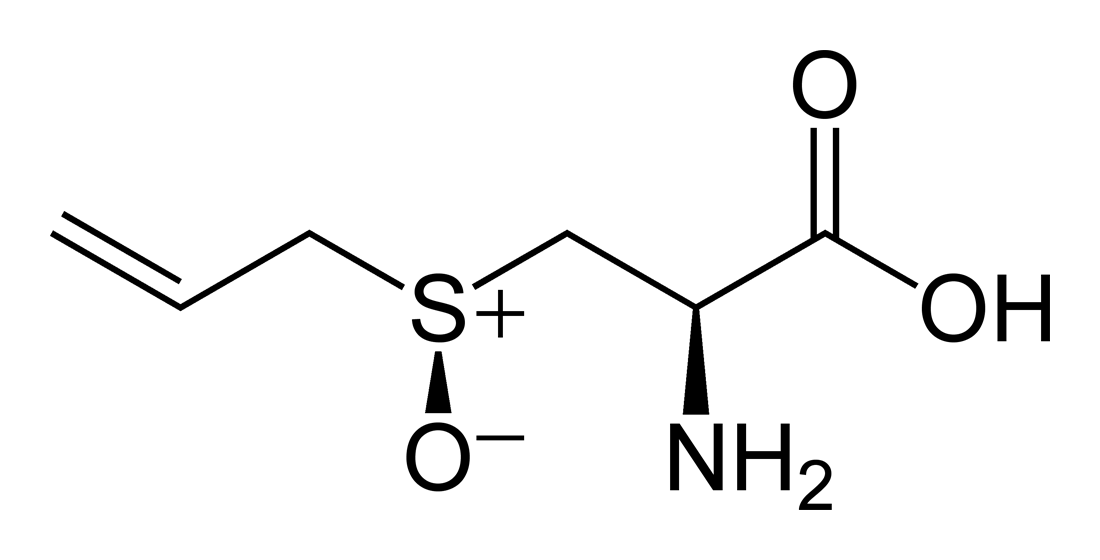
Alliin skeletal view
Alliin ball view
Alliin ball view
Names
Systematic IUPAC name
(2R)-2-Amino-3-[(S)-(prop-2-ene-1-sulfinyl)]propanoic acid
Other names
3-(2-Propenylsulfinyl)alanine
(S)-3-(2-Propenylsulfinyl)-L-alanine
3-[(S)-Allylsulfinyl]-L-alanine
S-Allyl-L-cysteine sulfoxide
Identifiers
3D model (JSmol)
ChEBI
ChEMBL
ChemSpider
ECHA InfoCard 100.008.291 Edit this at Wikidata
EC Number
  • 209-118-9
KEGG
UNII
  • InChI=1S/C6H11NO3S/c1-2-3-11(10)4-5(7)6(8)9/h2,5H,1,3-4,7H2,(H,8,9)/t5-,11-/m0/s1 checkY
    Key: XUHLIQGRKRUKPH-DYEAUMGKSA-N checkY
  • C=CCS(=O)CC(C(=O)O)N
  • N[C@H](C(=O)O)C[S@@](=O)CC=C
Properties
C6H11NO3S
Molar mass 177.22 g·mol−1
Appearance White to off white crystalline powder
Melting point 163–165 °C (325–329 °F)
Soluble
Hazards
GHS labelling:
GHS07: Exclamation mark
Warning
H315, H319, H335
P261, P264, P271, P280, P302+P352, P304+P340, P305+P351+P338, P312, P321, P332+P313, P337+P313, P362, P403+P233, P405, P501
NFPA 704 (fire diamond)
NFPA 704 four-colored diamondHealth 1: Exposure would cause irritation but only minor residual injury. E.g. turpentineFlammability 1: Must be pre-heated before ignition can occur. Flash point over 93 °C (200 °F). E.g. canola oilInstability 0: Normally stable, even under fire exposure conditions, and is not reactive with water. E.g. liquid nitrogenSpecial hazards (white): no code
1
1
0
Safety data sheet (SDS) External MSDS
Except where otherwise noted, data are given for materials in their standard state (at 25 °C [77 °F], 100 kPa).
☒N verify (what is checkY☒N ?)

Alliin /ˈæli.ɪn/ is a sulfoxide that is a natural constituent of fresh garlic.[1] It is a derivative of the amino acid cysteine. When fresh garlic is chopped or crushed, the enzyme alliinase converts alliin into allicin, which is responsible for the aroma of fresh garlic. Allicin and other thiosulfinates in garlic are unstable and form a number of other compounds, such as diallyl sulfide (DAS), diallyl disulfide (DADS) and diallyl trisulfide (DAT), dithiins and ajoene.[2] Garlic powder is not a source of alliin, nor is fresh garlic upon maceration, since the enzymatic conversion to allicin takes place in the order of seconds.

Alliin was the first natural product found to have both carbon- and sulfur-centered stereochemistry.[3]

Chemical synthesis

[edit]

The first reported synthesis, by Stoll and Seebeck in 1951,[4] begins the alkylation of L-cysteine with allyl bromide to form deoxyalliin. Oxidation of this sulfide with hydrogen peroxide gives both diastereomers of L-alliin, differing in the orientation of the oxygen atom on the sulfur stereocenter.

A newer route, reported by Koch and Keusgen in 1998,[5] allows stereospecific oxidation using conditions similar to the Sharpless asymmetric epoxidation. The chiral catalyst is produced from diethyl tartrate and titanium isopropoxide.

Medical exploration

[edit]

Garlic has been used since antiquity for conditions now associated with oxidative stress (production and accumulation of reactive oxygen species (ROS)).[citation needed] In an in vitro test, garlic powder showed antioxidant properties, and alliin showed good hydroxyl radical-scavenging effect.[6] Alliin has also been found to affect immune responses in blood cells in vitro.[7]

References

[edit]
Revisions and contributorsEdit on WikipediaRead on Wikipedia
from Grokipedia
Alliin is a naturally occurring, non-proteinogenic α-amino acid and sulfoxide compound primarily found in fresh garlic (Allium sativum), where it serves as a key precursor to allicin and other bioactive sulfur-containing metabolites. With the molecular formula C₆H₁₁NO₃S and a molar mass of 177.22 g/mol, alliin appears as a white to off-white crystalline powder with a melting point of 163–165 °C; its systematic name is (2R)-2-amino-3-[(S)-(prop-2-en-1-sulfinyl)]propanoic acid, also known as S-allyl-L-cysteine sulfoxide. When cloves are damaged, such as through cutting or crushing, the alliinase (released from vacuoles) rapidly hydrolyzes alliin to form (diallyl thiosulfinate), pyruvate, and , accounting for the characteristic pungent and flavor of fresh . This enzymatic reaction is central to 's biochemical defense mechanism against pathogens and pests, as alliin constitutes approximately 6–12 mg/g of fresh weight. Beyond its role in allicin production, alliin exhibits direct biological activities, including effects by scavenging , properties against and fungi, cardioprotective benefits such as reducing and , and potential and antidiabetic actions through modulation of levels and insulin sensitivity. These properties have been demonstrated in various and animal studies, positioning alliin as a compound with therapeutic potential, though human clinical evidence remains limited.

Chemistry

Molecular structure

Alliin has the systematic IUPAC name (2R)-2-amino-3-[(S)-prop-2-en-1-sulfinyl]propanoic acid. Its molecular formula is C₆H₁₁NO₃S, and it possesses a of 177.22 g/mol. This compound is a non-proteinogenic featuring two chiral centers: the α-carbon in the (R) configuration and the sulfur atom in the group in the (S) configuration. Alliin is structurally related to L-cysteine, from which it is derived through oxidation of the group to a and subsequent allylation at the atom. The depicts a standard backbone—H₂N-CH(COOH)-CH₂-—attached to a sulfinyl group, specifically -S(O)-CH₂-CH=CH₂. In ball-and-stick models, the shows the tetrahedral at the chiral α-carbon and the pyramidal arrangement around the , highlighting the stereospecific orientations that contribute to its biological activity.

Physical and chemical properties

Alliin is a white to off-white crystalline powder. It has a of 164–166 °C, accompanied by indicative of . Alliin exhibits high in , with values ranging from approximately 27–32 g/L at 3–7 to over 500 g/L at 9 and 1000 g/L at 10. It is moderately soluble in polar organic solvents such as (around 87 g/L) and , but insoluble in non-polar solvents like and . As a derivative of the cysteine, alliin possesses pKa values of approximately 1.84 for the group and 8.45 for the protonated amino group. These values reflect typical zwitterionic behavior without exceptional acidity or basicity beyond standard . The compound displays a positive of [α]D20+63.5[\alpha]_D^{20} +63.5^\circ (c = 2 in ), confirming its chirality at the α-carbon and sulfoxide centers. Alliin is relatively stable in aqueous solutions under neutral conditions, with a reported of 42 days at 7 and 25 °C when shielded from and oxygen; it remains intact during processes up to 60 °C. occurs above 165 °C. The imparts mild oxidizing character, enabling potential interactions with reducing agents, though alliin itself shows no pronounced reactivity under ambient conditions. Identification of alliin commonly relies on spectroscopic techniques, including UV absorption maxima at 210 nm (ε = 3200 M⁻¹ cm⁻¹) and 255 nm (ε = 850 M⁻¹ cm⁻¹), IR bands at 3350 cm⁻¹ (N-H stretch), 1580 cm⁻¹ (COO⁻ asymmetric stretch), and 1030 cm⁻¹ (S=O stretch), as well as characteristic ¹H NMR signals around δ 5.80 (vinyl protons) and δ 3.75 (α-proton).

Natural occurrence and

Sources in nature

Alliin is primarily sourced from fresh (Allium sativum) bulbs, where it accounts for approximately 80% of the cysteine sulfoxides among sulfur-containing , with concentrations typically ranging from 6 to 14 mg/g fresh weight. These levels can vary by and region, such as higher values of 25–30 mg/g reported in Korean varieties. It occurs in other Allium species, including onions (Allium cepa), leeks (), shallots (Allium ascalonicum), and chives (), but generally at lower concentrations than in garlic; for instance, the analogous isoalliin in onions ranges from 3.4–33.2 mg/g dry weight in processed forms. Within intact plant cells, alliin is compartmentalized in the , spatially separated from the vacuole-bound alliinase to maintain stability until cellular damage occurs. Concentrations peak in mature bulbs compared to leaves or , supporting the plant's defense mechanisms. Alliin accumulation is modulated by environmental factors, notably soil sulfur availability, where sulfur-rich conditions enhance levels up to several-fold; cultivar selection and growth parameters like fertilization and harvest timing further influence yields. No significant non-plant sources of alliin have been identified, though trace quantities appear in certain wild Allium relatives.

Biosynthetic pathway

The biosynthesis of alliin (S-allyl-L-cysteine sulfoxide) in garlic (Allium sativum) begins with L-cysteine as the primary precursor, synthesized through sulfur assimilation pathways involving cysteine synthase, which catalyzes the reaction of O-acetylserine and hydrogen sulfide derived from sulfate reduction. This step integrates sulfur nutrition, essential for the production of organosulfur compounds in Allium species. Allylation occurs primarily via the glutathione-dependent pathway, involving S-alk(en)ylation of to form S-allyl-, though the specific enzyme and allyl donor (likely allyl thiol derivatives) remain uncharacterized. Subsequent modifications involve γ-glutamyl transpeptidases (GGTs), including the gene family AsGGT1, AsGGT2, and AsGGT3 in , which catalyze the deglutamylation of γ-glutamyl-S-allyl-L-cysteine to yield S-allyl-L-cysteine after initial transpeptidation and removal of the glycyl group. The final step is the stereospecific S-oxygenation of S-allyl-L-cysteine to alliin, mediated by flavin-containing monooxygenases such as AsFMO1, which uses NADPH and as cofactors and preferentially acts in the . Recent research has identified transcription factors such as AsWRKY9 and AsbZIP26 that positively regulate alliin by enhancing AsFMO1 expression. This pathway is upregulated under sulfur-sufficient conditions, as increased sulfate availability enhances precursor flux and of biosynthetic enzymes, while nitrogen excess can suppress it. Localized primarily in the cytosol of bulb cells, with some components like synthase in plastids, the process reflects evolved in the genus to produce defensive compounds against herbivores and pathogens. Alliin accounts for approximately 80% of the cysteine sulfoxides, which are the primary organosulfur precursors in mature bulbs.

Laboratory synthesis

Early methods

Alliin was first isolated from garlic bulbs by Arthur Stoll and Eduard Seebeck at Laboratories in , , in 1948, marking a key advancement in understanding garlic's bioactive compounds. The same researchers reported the first laboratory synthesis of alliin in 1951, providing a chemical route to produce the compound for further study. The synthetic method began with the of L-cysteine using in the presence of a base, yielding S-allyl-L-cysteine (also known as deoxyalliin) as an intermediate. This thioether was then oxidized to the corresponding —alliin—employing (H₂O₂) under acidic conditions, typically in acetic acid medium to control the reaction. The oxidation step was non-stereospecific, resulting in a at the sulfur center and relatively low overall yields, often complicated by side reactions. Challenges included from over-oxidation byproducts, such as sulfones, which required careful purification. Structural confirmation of the synthetic product relied on degradation experiments that cleaved alliin to allyl and dehydroalanine, matching the behavior of the natural isolate. This foundational synthesis held significant historical importance, facilitating post-World War II research into garlic's and enabling enzymatic studies on its transformation to ; the work was detailed in their comprehensive 1951 review. Early variants of the method explored alternative oxidants, such as peracids like m-chloroperbenzoic acid, to enhance selectivity and reduce byproduct formation in the sulfoxide-forming step.

Modern approaches

A pivotal advancement in alliin synthesis came in 1998 with the work of Koch and Keusgen, who developed a stereospecific oxidation of protected S-allyl-L-cysteine using catalysts, specifically tetraisopropyl orthotitanate combined with as a . This approach, adapted from Sharpless asymmetric epoxidation protocols for substrates, produced alliin with high , achieving enantiomeric excesses greater than 95% for the desired (R_S,S)- while minimizing the formation of the (S_S,S)-. The method employed tert-butoxycarbonyl and 9-fluorenylmethyl protecting groups on the functionalities to facilitate selective oxidation at the atom. Enzymatic variants of this strategy were also explored, utilizing microbial monooxygenases such as cyclohexanone oxygenase to perform the asymmetric sulfur oxidation, offering an alternative to chemical catalysts with comparable stereocontrol. Yields in the original protocol reached 12-13% for purified (+)- and (-)-L-alliin, with product purities exceeding 95%, though subsequent optimizations of reaction conditions—such as temperature and oxidant stoichiometry—have improved overall efficiency to up to 80% by preventing over-oxidation to the corresponding sulfone. These refinements maintain the avoidance of diastereomer separation, enhancing practicality for stereopure alliin production. Post-2000 developments have increasingly favored biocatalytic strategies for sustainable alliin production, particularly using flavin-dependent monooxygenases (FMOs). A landmark example is the garlic-derived AsFMO1 enzyme, identified in 2015, which catalyzes the stereoselective S-oxygenation of S-allyl-L-cysteine to yield nearly exclusively the (R_{CSS})-alliin diastereomer with over 99% enantiomeric excess, mimicking natural biosynthesis but adaptable for in vitro use. Engineered bacterial FMOs, such as variants of phenylacetone monooxygenase from sources like Pseudomonas, have been optimized for sulfide oxidations, achieving high conversions while reducing chemical waste through cofactor recycling and mild aqueous conditions. These biocatalysts offer scalability advantages over traditional methods by operating at ambient temperatures and minimizing byproducts. As of 2025, biocatalytic approaches remain prominent, with no major new chemical synthetic routes emerging. Modern syntheses of alliin support its production for pharmacological and as a stabilized precursor in dietary supplements, where it serves as the key active in garlic-derived formulations promoting cardiovascular and immune health. Industrial scalability is facilitated by these efficient routes, allowing gram-to-kilogram quantities for commercial products without reliance on natural extraction variability. Purity and stereochemical integrity of synthetic alliin are routinely verified using (HPLC) with chiral stationary phases to resolve diastereomers, complemented by chiral (NMR) spectroscopy for enantiomeric excess determination and structural confirmation. These analytical techniques ensure compliance with pharmaceutical standards, detecting impurities below 1% in optimized preparations.

Biological role and metabolism

Enzymatic conversion to allicin

Alliin, a non-protein derivative stored in the of cells, undergoes enzymatic conversion to upon cellular damage that ruptures vacuolar membranes. The enzyme (EC 4.4.1.4), a pyridoxal 5'-phosphate (PLP)-dependent C-S lyase , is compartmentalized in the vacuoles of these cells, preventing premature reaction under intact conditions. When tissue is crushed or injured, is released and mixes with alliin, initiating the transformation as a rapid defense response. The reaction catalyzed by alliinase is an α,β-elimination that hydrolyzes alliin (S-allyl-L-cysteine sulfoxide) in the presence of water. The enzymatic step produces allyl sulfenic acid, pyruvate, and ammonia from each alliin, with two allyl sulfenic acid molecules then condensing non-enzymatically to allicin (diallyl thiosulfinate). The overall balanced equation for allicin formation is: 2Alliin+H2OAllicin+2Pyruvate+2NH32 \text{Alliin} + \text{H}_2\text{O} \rightarrow \text{Allicin} + 2 \text{Pyruvate} + 2 \text{NH}_3 or in molecular terms: 2C6H11NO3S+H2OC6H10OS2+2C3H4O3+2NH32 \text{C}_6\text{H}_{11}\text{NO}_3\text{S} + \text{H}_2\text{O} \rightarrow \text{C}_6\text{H}_{10}\text{OS}_2 + 2 \text{C}_3\text{H}_4\text{O}_3 + 2 \text{NH}_3 This process occurs spontaneously at neutral pH following the initial enzymatic step. Mechanistically, alliinase facilitates the cleavage of the C-S bond in alliin via nucleophilic attack at the PLP cofactor, producing an allyl sulfenic acid intermediate and dehydroalanine. Two molecules of allyl sulfenic acid then condense non-enzymatically, dehydrating to form the thiosulfinate bond in allicin. The reaction kinetics are rapid, completing within seconds to minutes after enzyme-substrate contact, with an optimal pH of 6.5 and inhibition at low pH (below 3) or elevated temperatures above 50°C, which denature the enzyme. In Allium species like garlic, this conversion serves as a chemical defense mechanism against herbivores and microbial pathogens, generating toxic allicin that diffuses rapidly but degrades further into other sulfur compounds. The yield of allicin is concentration-dependent on alliin levels, which typically range from 6–14 mg/g fresh weight in garlic cloves, potentially producing 3–6 mg/g allicin under optimal conditions.

Stability and degradation

Alliin demonstrates notable chemical instability when removed from its native matrix, undergoing non-enzymatic degradation primarily influenced by environmental and processing conditions. In aqueous solutions at neutral , alliin hydrolyzes slowly via thermal or acid-catalyzed mechanisms, producing compounds such as S-allyl-L-cysteine (SAC), allyl disulfide, and di disulfide as breakdown products, though the rate remains low without catalysts. This degradation accelerates significantly at temperatures above 60 °C, following kinetics with an activation energy of approximately 142 kJ/mol, leading to substantial losses—such as 67.5% reduction after 24 hours at 80 °C. Acidic environments further hasten this process by promoting bond cleavage. During , alliin content diminishes considerably due to and moisture exposure. Cooking methods, including or , can result in up to 50% loss of alliin, as the unstable group breaks down under temperatures typically exceeding 70 °C, while drying processes similarly reduce levels by promoting oxidative and hydrolytic reactions. In contrast, minimal degradation occurs in raw or freeze-dried preparations, where low temperatures and reduced preserve over 80% of alliin integrity. Biologically, alliin experiences rapid metabolism following ingestion, with gut microbiota facilitating its conversion to volatile sulfur compounds such as allyl methyl sulfide, which is subsequently absorbed and excreted via breath and urine. Alliin is absorbed intact and undergoes rapid metabolism in vivo, though it remains more stable than downstream metabolites like allicin. Environmental factors play a critical role in alliin preservation, as exposure to light and oxygen induces oxidative degradation of the sulfoxide moiety, potentially halving content within weeks at ambient conditions. Storage in cool (4–10 °C), dark environments maintains greater than 90% alliin integrity in garlic extracts or powders by limiting photo- and auto-oxidation. Degradation byproducts of alliin include S-allyl-L-cysteine and various allyl di-, tri-, and tetrasulfides, along with minor sulfoxides such as isoalliin under specific thermal conditions; notably, no toxic byproducts have been identified in these pathways. Alliin concentrations and stability are routinely assessed using (HPLC), often with reversed-phase columns for precise quantification down to levels. Stability investigations reveal approximately 80% retention of alliin in refrigerated () garlic products after 6 months, underscoring the efficacy of low-temperature storage in mitigating long-term losses.

Pharmacological research

Antioxidant and immune effects

Alliin exhibits direct antioxidant properties, primarily through its ability to scavenge such as s in vitro. In early research, alliin demonstrated potent scavenging activity, contributing to its protective role against oxidative damage. This scavenging capacity helps mitigate cellular by neutralizing free radicals that can initiate chain reactions leading to tissue injury. In cellular models, alliin protects against in a dose-dependent manner. For instance, treatment with alliin at concentrations of 100–600 μM reduced accumulation, , and in erastin-induced models using HT22 neuronal cells, while upregulating 4 (GPx4) expression to enhance defenses. Similarly, alliin has been shown to reduce DNA damage induced by carcinogens in animal tissues; garlic powders with higher alliin content proportionally decreased N-nitrosodimethylamine-induced DNA alterations in rat liver and colon, highlighting its role in preventing oxidative genomic injury. Regarding immune modulation, alliin influences (PBMC) responses in vitro. It enhances pokeweed mitogen-induced proliferation of PBMCs, which include lymphocytes and natural killer (NK) cells, while decreasing concanavalin A-induced proliferation without affecting phytohemagglutinin responses. Alliin also stimulates production, increasing tumor necrosis factor-alpha (TNF-α) and interleukin-1 beta (IL-1β) secretion from PBMCs, though it suppresses IL-6 and has no effect on IL-2. Additionally, alliin boosts phagocytic activity by raising the percentage of engulfing cells and the number of particles phagocytized per cell. In , alliin improves overall status amid inflammatory conditions. In diet-induced obese mice, alliin supplementation lowered liver damage markers such as aspartate aminotransferase and , restoring them to normal levels and enhancing systemic enzyme activities like and in related models of . These effects suggest alliin's potential in protecting against inflammation-associated oxidative damage, particularly in hepatic tissues. While many and immune benefits of derivatives are attributed to formed via enzymatic conversion of alliin, studies confirm alliin exerts independent activity, particularly at higher doses (e.g., 100 μM and above) in cell and animal models, without requiring immediate breakdown. However, in vivo effects may involve enzymatic conversion to .

and other potential benefits

Alliin serves as a precursor to , which exhibits properties against and fungi. Direct antimicrobial effects of alliin are limited, with most activity arising from its conversion to allicin upon enzymatic . Beyond its role in allicin production, alliin has shown potential in preclinical models for anti-cancer applications, where it inhibits tumor in vitro. For instance, in gastric cells, alliin reduced viability and induced by modulating the Bax/ ratio and increasing release, without affecting normal intestinal cells. Research from the 2010s, including studies on various lines, highlights its role in suppressing proliferation through regulation. In cardiovascular health, alliin has demonstrated cholesterol-lowering effects in animal models. Administration of alliin to rats on high-cholesterol diets significantly depressed increases in plasma and liver levels, suggesting a hypolipidemic mechanism possibly involving inhibition of synthesis. Alliin also possesses anti-inflammatory potential, as evidenced by its ability to reduce paw in rat models of . Preclinical evidence further includes neuroprotective benefits in models, where it donates to support neuronal function and reduce amyloid-beta aggregation. Human studies on alliin are limited, with garlic consumption showing potential immune benefits, though specific data on isolated alliin supplementation remain sparse, warranting further . Garlic and its components, including alliin, are generally considered safe for consumption as part of , with preclinical studies indicating low .

References

Add your contribution
Related Hubs
User Avatar
No comments yet.