Hubbry Logo
Altamount RoadAltamount RoadMain
Open search
Altamount Road
Community hub
Altamount Road
logo
7 pages, 0 posts
0 subscribers
Be the first to start a discussion here.
Altamount Road
Altamount Road
from Wikipedia

Altamount Road, also known as India's Billionaires’ Row, is an affluent residential street in the southern region of Mumbai, India.

Key Information

The area is notable for housing some of the highest real estate prices in the country. The locality consists of glamorous bungalows of old money business families, low rise Art Deco apartment buildings and modern high rises, alongside some of the city's most notable skyscrapers, including the most expensive private residence in the world; the Antilia, valued in 2023 at roughly US$4.6 billion.[2] The street was also listed as the 10th most expensive street in the world.[3]

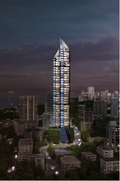
The most prominent buildings on the street are Lodha Altamount, Antilia, One Altamount, Prithvi Apartments, Mafatlal Bungalow, Bombarci and Pemino.

The street

[edit]

On Altamount Road are the consulates of Indonesia (Plot no. 19) and of South Africa (Plot no. 20); on the connecting Carmichael Road are the Belgian, Chinese, and Japanese consulates. In 2008, it was rated as the 10th most affluent street in the world.[4] Altamount Road is a very wealthy area, and also home to several industrialists. The Mafatlal complex is also located here.[5][6] Also, it is home to Lodha Altamount which created history in November 2015 by selling the most expensive apartment in the country.[7]

The road was officially renamed "S. K. Barodawalla Marg" in the 1990s, but residents, the city's taxi-drivers, and others continue to refer to it by its former name. It has a large number of trees and heritage buildings, such as the official residence of the Chairman of the Bombay Port Trust, the residence of the Municipal Commissioner of Mumbai, the consulate residence of Japan, Belgium and formerly the United States, and the official residence of the General Manager of Western Railways. The residential bungalow of the Bombay Port Trust was originally made by George Wittet, who also designed the Gateway of India and The Grand Hotel at Ballard Estate.[8]

[edit]

References

[edit]
Revisions and contributorsEdit on WikipediaRead on Wikipedia
from Grokipedia
Altamount Road is an affluent residential street in South Mumbai's Cumballa Hill neighborhood, India, parallel to Peddar Road and intersecting at Kemp's Corner. Known as "Billionaires' Row," it features some of India's highest real estate prices and serves as home to prominent industrialists and ultra-high-net-worth individuals. The street hosts iconic luxury structures, including the 27-storey Antilia, a private residence completed in 2010 with an estimated value exceeding $1 billion, and Lodha Altamount, a postmodern glass skyscraper offering sea-facing apartments opposite Antilia. Its exclusivity stems from stringent building regulations preserving low-density development amid Mumbai's dense urban landscape, commanding per-square-foot rates among the world's highest for residential properties.

Location and Geography

Position within Mumbai

Altamount Road lies in the Tardeo locality of South Mumbai, encompassing the upscale Cumballa Hill area and extending through affluent residential zones. This positioning places it within Mumbai's southern peninsula, a historic core characterized by high-density urban development juxtaposed against pockets of exclusivity. The road functions as a connector in the city's elite corridor, running parallel to Pedder Road (officially Gopalrao Deshmukh Marg) and linking to arterial routes like Dr. E. Moses Road, facilitating access to nearby districts such as Mahalaxmi and Kemps Corner. Its alignment underscores a strategic placement between residential enclaves and broader infrastructural networks, approximately 3-4 kilometers north of the commercial epicenter at Nariman Point. Accessibility relies primarily on private vehicles due to the area's gated and low-traffic design, with public options limited to proximate stations like Grant Road on the Western Line, about 1.5 kilometers away, necessitating walks or short drives for residents. Bus routes and the Bandra-Worli Sea Link enhance regional connectivity, but the neighborhood's emphasis on seclusion minimizes direct mass transit integration.

Topography and Accessibility

Altamount Road occupies a relatively elevated position within South Mumbai's locality, affording unobstructed vistas of the and urban skyline from its higher vantage points. This topographic advantage, set amid the city's generally low-lying coastal terrain averaging 14 meters above , enhances by distancing the street from denser, lower-elevation surroundings. The road's linear layout features limited vehicular entry points, primarily accessed via connecting arterials like Pedder Road and Dr. E. Moses Road, which link to broader networks including the Bandra-Worli Sea Link and Eastern Freeway. Gated property entrances and security measures restrict through-traffic, fostering an exclusive environment despite the street's narrow width. These infrastructural elements, while promoting seclusion, contribute to localized congestion during peak hours due to the constrained road dimensions in a high-density urban context.

Historical Development

Pre-Independence Era

Altamont Road emerged in the mid-19th century on the southern slope of Cumballa Hill in Bombay, named after a bungalow called Altamont that stood as an early landmark on the tree-canopied avenue. The bungalow existed by 1849 and was owned by Sir William Yardley, Chief Justice of the Supreme Court of Judicature at Bombay, who resided there with Lady Yardley; she gave birth to a child at the property that year, and the family remained until at least 1852. This naming reflects the colonial practice of honoring prominent residences or figures, with some accounts linking it to Colonel Altamont, a military officer who settled on the hill after service with the Nawab of Lucknow. Initially, the area featured sparse suited to British officials seeking respite from the dense Fort , embodying colonial urban planning's emphasis on low-density and spacious compounds with gardens. Structures like the mid-19th-century 'Mount Petit' bungalow exemplified this early residential character, designed for ventilation and views amid the hill's topography. Affluent Parsi merchants, who had amassed wealth through trade and industry under British rule, also gravitated to such elevated enclaves on Cumballa Hill alongside European elites, transitioning from earlier settlements in . Anecdotal evidence from local histories describes the surrounding undeveloped hills as teeming with , including tigers, underscoring the rural fringe quality of the locale before systematic plot allocation in the Bombay Presidency's expansion. By the 1860s, amid the cotton trade boom, further villas dotted the road, formalizing its role as an exclusive residential stretch while maintaining a verdant, low-rise profile that prioritized privacy and elevation over commercial density.

Post-Independence Expansion

In the decades following India's independence in , Altamount Road underwent modest redevelopment as Bombay's elite residential character adapted to post-colonial urban pressures, with some colonial-era bungalows giving way to low-rise apartments amid from industrial expansion. The marked initial shifts, including the construction of apartment buildings to house affluent professionals and business families, reflecting broader trends in where land scarcity prompted vertical development on consolidated plots. By the , further transformations occurred, such as the partial demolition of the Manize for , signaling a transition from standalone heritage structures to multi-unit residences suitable for emerging industrial elites. Open plots, including the site later occupied by Chitrakoot, were built upon after , contributing to denser occupancy while preserving the area's low-density, tree-lined appeal. This era's changes were driven by Bombay's role as India's industrial hub under the Five-Year Plans, attracting trading and manufacturing families who favored the road's proximity to commercial districts and sea views, though municipal infrastructure like remained basic until incremental upgrades in the late . The shift emphasized residential exclusivity, with early migrants from established Gujarati and Parsi trading communities consolidating holdings to erect mid-rise structures, reducing any residual mixed-use elements from the pre-independence period. These developments laid groundwork for the road's enduring status as an enclave for old-money families, without the high-rise boom of later decades.

Transformation into Elite Enclave (1980s–2000s)

India's in 1991, which reduced industrial licensing, lowered tariffs, and encouraged foreign , catalyzed private sector expansion and wealth accumulation among entrepreneurs and industrial families. This shift from a socialist framework to market-oriented policies accelerated GDP growth from an average of 3.5% pre-1991 to over 6% in the subsequent decade, enabling industrialists to invest in high-status residences amid Mumbai's constrained . Altamount Road, with its limited plots on Cumballa Hill, benefited from this influx as established elite families and newly affluent business leaders sought proximity to commercial hubs while preserving privacy and exclusivity. Property values in south Mumbai's core areas, including Altamount Road, surged in the due to heightened demand from economic boom-driven liquidity and speculative activity, exacerbating land scarcity in a city where prime southern locales like and Peddar Road commanded premium rates. Real estate prices in central business districts such as quadrupled between 1991 and 1996, reflecting broader trends that elevated Altamount Road's appeal for wealth preservation and status signaling among industrial magnates. By the early 2000s, the road's bungalows and plots had become markers of post-reform success, with relocations underscoring the causal link between liberalization-fueled fortunes and spatial concentration of . In the mid-2000s, media narratives crystallized Altamount Road's transformation, dubbing it "Billionaire Boulevard" in reference to its alignment with rankings of Indian billionaires residing there. A survey ranked it the world's 10th most expensive street, tying its prestige to the visibility of tycoons like the Ambanis, whose Antilia project epitomized the era's opulent developments amid rising exclusivity. This period marked the road's evolution into a fortified enclave, where enhancements and limited access reinforced its role as a nexus for India's emergent corporate .

Architectural Features and Properties

Traditional Bungalows and Early Structures

The early development of Altamont Road featured standalone constructed primarily in the colonial style, designed for affluent residents seeking elevated sites on Cumballa Hill for ventilation and sea views. These structures, often single- or two-story edifices with verandas, high ceilings, and expansive gardens, adapted to Mumbai's by promoting cross-breezes and shading to mitigate heat and humidity. The road's name derives from one such bungalow, "Altamont," documented as early as 1849 when it served as the residence of Sir William Yardley, then of Bombay, with a circa 1853 photograph capturing its prominent position marked by a flagstaff for maritime signaling. By the late 19th century, additional bungalows like "The Cairn," built around 1870 on a lane off the road, exemplified durable low-density layouts with red-tiled roofs and landscaped grounds suited to the area's once-forested terrain. "Mount Petit," possibly dating to the mid-19th century, represented another early example, later repurposed while retaining elements of its original form. Into the 1930s, influences appeared in residences such as Mafatlal House (completed 1937), which incorporated modern materials like 120 tonnes of alongside verandas and dual-road access for enhanced airflow. Preservation of these foundational structures has been limited amid urban pressures, with many original demolished for , including the namesake "Altamont" by 1887 and the Manize bungalow largely razed in the . Heritage listings protect select sites, such as those tied to notable figures like at "The Cairn," but often results in partial reconstructions that mimic original aesthetics like red roofs rather than full retention. This tension underscores the shift from low-rise exclusivity to higher-density forms, though surviving examples maintain the area's historical character through adaptive features prioritizing natural cooling.

Modern Luxury Residences

Modern luxury residences on Altamount Road emerged prominently in the , featuring high-rise towers designed with advanced to meet (BMC) guidelines and local zoning constraints. These developments prioritize seismic resilience, incorporating ductile reinforcement and shear walls in line with Indian Standard IS 1893 updates following the , which heightened awareness of Mumbai's placement in III. Such measures ensure buildings can withstand moderate seismic activity, reflecting causal adaptations to regional rather than mere regulatory compliance. Typical units in these residences span built-up areas of 3,000 to 7,000 square feet, often including private elevators for direct access and expansive layouts suited to high-net-worth families. Amenities emphasize functionality, such as integrated smart home systems for climate control, , and , which align with residents' demands for seamless connectivity in . Imported finishes, including Italian and UV-resistant glass facades, enhance durability while minimizing maintenance in Mumbai's humid climate. Sustainability features are increasingly standard, with projects incorporating eco-friendly elements like double-glazed windows for energy efficiency and provisions for , though formal green certifications such as IGBC remain selective amid promotional claims by developers. These attributes underscore a shift toward resilient, tech-enabled living over extravagant display, driven by empirical needs for longevity in a seismically active urban setting.

Iconic Buildings like Antilia

Antilia, the private residence of , serves as a defining structure on Altamount Road, completed in 2010 following construction that started in 2006. The 27-story tower covers roughly 400,000 square feet, incorporating three helipads, multiple elevators, and extensive parking across six dedicated floors. Its design emphasizes vertical luxury adapted to the site's elevated terrain, with high ceilings equivalent to standard two-story buildings per level. The project's cost approached $2 billion, underscoring investments in custom engineering for stability on the hilly Cumballa Hill locale, including piled foundations to address soil challenges. Features like hanging gardens and energy-efficient systems contribute to operational , though exact reductions in consumption vary by report. Lodha Altamount, developed by the , represents another pinnacle of high-rise innovation on the road, standing at 195 meters with 43 floors including podium levels for parking. The structure's black glass facade, designed for UV resistance and aesthetic uniformity, supports one luxury residence per floor, optimizing privacy and views within Mumbai's constraints that limit horizontal expansion. This vertical approach aligns with the area's shift toward , preserving the character while intensifying .

Notable Residents and Community Dynamics

Prominent Industrialists and Celebrities

Altamount Road has attracted India's foremost industrialists, with Mukesh Ambani, chairman of Reliance Industries Limited, residing in the 27-story Antilia building completed in 2010. Ambani, whose net worth stood at $105 billion in 2025 according to Forbes, spearheaded the launch of Reliance Jio Infocomm on September 5, 2016, which drastically reduced data prices by up to 90 percent and elevated India to the world's largest mobile data consumer, consuming over 1 billion GB monthly within six months. This disruption fostered digital inclusion, spurring e-commerce, fintech growth, and an estimated 5.65 percent boost to India's GDP through network effects. Kumar Mangalam Birla, chairman of the —a conglomerate spanning metals, , textiles, and telecom with revenues exceeding $50 billion annually—maintains his primary residence, Mangalyaan Bungalow, on Altamount Road. The group, under Birla's oversight since 1995, has expanded globally, contributing to India's manufacturing and consumer sectors via subsidiaries like , the nation's largest producer with a 2024 capacity of over 150 million tonnes. Financial services magnate , founder and chairman of with assets under management surpassing ₹3 lakh as of 2025, also resides on the road, exemplifying the shift from 1980s-era traditional tycoons like JRD Tata—who lived in the nearby Cairn bungalow until 1993—to contemporary finance and diversified business leaders. This evolution reflects broader economic transitions toward services and digital innovation among the area's elite.

Security Measures and Exclusivity

Altamount Road employs layered security infrastructure tailored to protect high-value residents and assets, including private security personnel deployed across luxury properties and extensive systems monitoring access points and boundaries. Resident welfare associations coordinate these efforts, implementing strict visitor verification protocols such as logging entries and requiring prior approvals to prevent unauthorized intrusions. These arrangements address risks inherent to concentrating substantial wealth and industrial influence, where threats like or gathering necessitate proactive defenses rather than reactive policing. Gated developments dominate the street, featuring controlled entry points and restrictions on non-resident access to minimize exposure to external hazards. This setup fosters an environment of elevated safety, with the area registering among 's lowest incidences of property crimes due to combined private and public oversight. Police deployments, including periodic patrols and rapid response units, further bolster these private initiatives, particularly around high-profile residences like Antilia, where enhanced protocols have been enacted following specific threat assessments. Exclusivity is reinforced through community governance structures, where housing societies manage and amenities via mandatory maintenance contributions often surpassing ₹1 monthly per unit, funding advanced systems and personnel. These fees reflect the causal link between in fortified and the preservation of asset integrity in a densely urban setting prone to opportunistic risks, prioritizing empirical risk mitigation over open accessibility.

Social and Economic Networks

Residents of Altamount Road, including executives from major Indian conglomerates such as Reliance Industries and Tata Sons, maintain extensive philanthropic commitments through affiliated foundations, channeling substantial resources toward education, healthcare, and rural development initiatives. The Reliance Foundation, linked to Mukesh Ambani's Antilia residence on the street, reported donations of Rs 407 crore in 2024 alone, ranking second among India's top philanthropic entities per the Hurun India Philanthropy List. Similarly, the Sir Dorabji Tata Trust and allied entities associated with Tata Group leadership have historically directed billions in rupees toward scientific research and social welfare, with annual CSR expenditures exceeding Rs 500 crore in recent filings. These efforts, documented in corporate tax disclosures and audited reports, underscore a pattern of value creation extending beyond personal wealth to broader societal impact, though independent verification highlights varying efficacy in outcomes like program scalability. Proximity among industrialists on Altamount Road facilitates informal social interactions that occasionally underpin business synergies, particularly in overlapping sectors like and . For instance, collaborations between Reliance and Tata entities in areas such as joint projects have been noted in industry reports, though causal links to residential adjacency remain anecdotal rather than systematically evidenced. Such networks prioritize empirical partnerships over speculative alliances, with deal-making often formalized through corporate channels rather than neighborhood proximity alone. Cultural events hosted at Altamount properties, notably Antilia, serve as pivotal nodes in Mumbai's elite social fabric, drawing attendees from business, entertainment, and political spheres to reinforce interpersonal ties. High-profile gatherings, including the 2024 Mosalu ceremony for Anant Ambani and Radhika Merchant, as well as annual celebrations, have hosted hundreds of influencers, shaping the city's upper-echelon calendar and enabling discreet discussions on ventures. These events, while extravagant, align with strategic networking, contributing to indirect economic value through relationship-building in a competitive landscape.

Property Values and Market Dynamics

Property prices on Altamount Road in 2025 typically range from ₹70,000 to ₹1.80 per , driven by severe supply constraints in this prime locality. Average rates stand at approximately ₹92,750 per for , according to listings and trends data. These premiums stem from limited land availability, stringent floor space index (FSI) regulations that cap , and a preference for generational inheritance among owners, resulting in minimal new inventory. Annual price appreciation has been robust post-2020, with luxury segments in comparable enclaves showing steady gains amid high demand from ultra-high-net-worth individuals. Recent one-year trends indicate an 11.3% increase in flat rates, though longer-term dynamics reflect compounded growth from post-pandemic recovery and restricted supply. Turnover remains exceptionally low, with fewer than 1% of plots or units transacting annually, as properties are held long-term by families or institutions rather than flipped for profit. Rental yields hover at 2-3% annually, subdued by rates exceeding 90% and reluctance to premium assets. This low yield profile underscores the market's focus on capital appreciation over income generation, with investors prioritizing location scarcity and prestige over immediate returns. Such dynamics perpetuate exclusivity, as entry barriers deter speculative entry while sustaining value escalation for entrenched holders.

Contributions to Mumbai's Economy

Residents of Altamount Road, such as , lead major conglomerates headquartered in or near , generating trillions of rupees in annual revenue that bolsters the city's economic output. Limited, under Ambani's chairmanship, reported consolidated revenues exceeding ₹9 (approximately $111.8 billion) in recent fiscal years, with core operations in refining, petrochemicals, telecom, and retail concentrated in 's industrial ecosystem. This activity supports direct employment for over 300,000 individuals across its subsidiaries, alongside indirect jobs for millions through supply chains, logistics, and consumer-facing ventures like and , which dominate 's digital and retail landscapes. High property values on Altamount Road translate into substantial municipal revenues, funding public infrastructure and services citywide. Properties in the area, often valued at hundreds of s, fall under the Brihanmumbai Municipal Corporation's (BMC) taxation framework, where rates range from ₹60 to ₹120 per square meter in premium wards. The encompassing Cumballa Hill ward collected ₹203 in property taxes in 2017 from over 11,000 buildings, a figure that has likely grown with rising assessments and contributes disproportionately to BMC's overall annual haul surpassing ₹6,000 . The concentration of influential business figures fosters innovation ecosystems, with resident-led firms investing in startups across and renewables, amplifying Mumbai's role as a financial and tech hub. Reliance's ventures, including Jio's digital platforms and new energy initiatives, have catalyzed investments in infrastructure and sustainable technologies, enabling job growth in high-skill sectors like and green energy financing. These efforts align with Maharashtra's push to expand renewable capacity, drawing capital and talent that enhance local productivity without relying on redistributive policies.

Investment Patterns and Recent Transactions

In July 2025, the promoter family of Lloyds Group, including Chairman Ravi Agarwal, purchased six ultra-luxury sea-view apartments totaling 20,749 square feet across consecutive floors in the Kalpataru Prive project on Altamount Road for ₹227 crore. This deal, facilitated through established real estate channels and involving ready-to-occupy units, highlights growing interest from Indian corporate promoters and family offices in consolidating holdings on Mumbai's Billionaires' Row. Buyer profiles in Altamount Road transactions primarily consist of domestic high-net-worth individuals and business families, rather than foreign investors, reflecting a preference for assets with proven appreciation in prime locations. While institutional investments across Indian real estate have included a 57% foreign share since 2010, ultra-luxury residential purchases like those on Altamount Road remain dominated by Indian ultra-high-net-worth entities seeking long-term stability. Investment patterns favor ready-to-move properties over under-construction developments, driven by regulatory stability under frameworks like RERA, which minimize delivery risks and appeal to conservative high-value buyers. Such preferences signal sustained demand, as high-profile deals persist even amid a reported softening in ultra-luxury transaction volumes exceeding in the first half of 2025.

Challenges, Controversies, and Criticisms

Civic and Infrastructure Issues

Residents of Altamount Road have long cited parking shortages as a primary infrastructure challenge, with limited dedicated spaces leading to widespread on-street parking and traffic congestion. In March 2025, local resident Sudhir Behl attributed the scarcity to unchecked construction activity, stating that "there are no parking spaces left, which means cars are parked on roads." This issue persists despite proposals for multi-level and stack parking in area developments, as opposition from resident associations has delayed implementation. The Altamount Road Area Citizens' Committee has contested the Brihanmumbai Municipal Corporation's (BMC) pay-and-park policy, refusing payments since its 2018 rollout on grounds of excessive fees, which has strained relations with civic authorities over street space allocation. inadequacies have also been flagged historically, with 2003 resident petitions against high-rise projects highlighting insufficient municipal provisions for reliable distribution, even as the area relies on BMC infrastructure supplemented by private arrangements during shortages. management faces delays tied to broader BMC projects, compounded by construction debris that hinders clearance and maintenance, though area-specific municipal resolution data is not publicly detailed.

Development and Redevelopment Disputes

In , residents of Altamount Road, along with those from nearby Pedder Road and , filed petitions in the opposing the construction of high-rise towers in , citing concerns over increased population density, , and strain on local . These actions followed a litigation by Tardeo and Haji Ali residents in April of that year, which sought to halt projects perceived as violating norms and exacerbating urban pressures in South 's affluent enclaves. Although the state government temporarily stayed some developments in , the petitions highlighted tensions between preservation of low-density character and developer interests in vertical expansion. By 2011, intra-building disputes intensified within aging structures on Altamount Road, such as a dilapidated society where residents debated comprehensive redevelopment against piecemeal repairs, fearing displacement or unequal benefits. In Giriraj Apartments, one faction pushed for full redevelopment to modernize facilities, while opponents approached regulatory forums to stall it, arguing it would disrupt community cohesion and favor select owners. The intervened in a related 21-year conflict at another Altamount Road society, quashing BMC attempts to regularize unauthorized flat alterations and mandating adherence to original plans, thereby resolving the standoff in favor of structural integrity over ad-hoc changes. Disputes over Floor Space Index (FSI) relaxations under BMC's Development Control Regulations have pitted developers against preservationists, with incentive FSI allowances—potentially reaching up to 3.0 in the through premiums for open spaces or amenities—enabling taller structures like . In 2016, Developers contested BMC's deduction of 15% plot area for recreational grounds before FSI computation, arguing it unfairly capped buildable space at around 4 times net area (approximately 91,494 sq ft for their project), a position later supported by a state department but underscoring resident arguments for maintaining to preserve exclusivity and viewsheds amid fears of over-densification. Preservationists, including local societies, have invoked heritage and environmental concerns to challenge such relaxations, as seen in broader Malabar Hill-area oppositions to redevelopments that could alter the area's low-rise aesthetic.

Debates on Wealth Concentration

Critics of concentration on Altamount Road have highlighted the stark of opulent residences like Antilia against Mumbai's widespread , portraying such displays as emblematic of systemic inequality. In 2010, media outlets described Antilia as "soaring above India's ," emphasizing its 27-story scale and estimated $1 billion cost amid surrounding slums and economic disparity. Similar sentiments persisted into the , with reports framing the structure as a " in the sky" overlooking underprivileged areas, fueling arguments that billionaire lifestyles exacerbate social divides in a nation where the top 1% captured 22.6% of national by 2022-23. Left-leaning analyses, such as those from the World Inequality Lab, contend that India's "Billionaire Raj" has surpassed colonial-era inequality levels, with billionaire growing tenfold faster than national since economic reforms, attributing this to favoritism rather than broad-based . Counterarguments emphasize empirical contributions to and , positing that residents' fortunes stem primarily from entrepreneurial risk-taking and value creation rather than mere accumulation. For instance, Antilia reportedly employs approximately 600 staff members, including roles in housekeeping, security, and culinary services, with the residence producing around 4,000 rotis daily to sustain them; these positions offer competitive salaries, such as up to ₹2 monthly for specialized staff, making them among India's most sought-after private sector opportunities. Broader data underscores that many Altamount Road residents, including of , amassed wealth through scaling businesses from modest origins—Reliance expanded from textiles into , telecom, and retail via and market competition, not alone—thereby generating millions of indirect jobs nationwide. Right-leaning perspectives, including economic commentaries, frame such success as merit-driven outcomes of high-risk ventures in India's competitive markets, arguing that vilifying achievement ignores causal links between private investment and , as evidenced by India's fluctuations amid post-reform GDP growth exceeding 6% annually. In Mumbai's context, where consumption-based Gini estimates hover around 0.447 and wealth Gini reaches 82.3, debates pivot on whether localized concentration signals failure or dynamism. Proponents of the latter view note that the city's status as an entrepreneurial hub draws talent and capital, fostering upward mobility; for example, and industrial expansions have created new classes independent of legacy fortunes, countering narratives of static . While mainstream critiques often amplify visibility of disparity—potentially influenced by institutional biases toward redistributionist frames—data on firm-level job multipliers and outputs suggest that Altamount Road's affluence reflects productive outcomes, not zero-sum extraction, with resident-led conglomerates contributing disproportionately to tax revenues and infrastructure indirectly benefiting wider populations.

Recent Developments and Future Outlook

Luxury Projects in the 2020s

Kalpataru Prive, developed by Kalpataru Limited on Altamount Road, represents a prominent ultra-luxury residential project launched in the . The development comprises 17 exclusive 4 BHK and 7 BHK units across a 0.37-acre site, with carpet areas ranging from 2,682 square feet to 10,729 square feet. Prices for these residences start at ₹33.89 for smaller 4 BHK configurations and reach up to ₹67.77 for larger units, reflecting the premium positioning in Mumbai's high-end market. Possession is scheduled for October 2027, with the project currently under construction. Lodha Altamount, completed around 2020 by , continues to influence luxury sales dynamics on Altamount Road through its 40-floor tower featuring 3, 4, and 5 BHK sized between 1,998 and 4,122 square feet. The project emphasizes panoramic views of the and modern architecture, attracting buyers seeking established luxury assets. Ongoing transactions in the area, such as a semi-furnished 4 BHK listed at ₹55 with possession in 2025, underscore sustained demand for properties exceeding ₹40 , though broader ultra-luxury sales above this threshold softened in the first half of 2025 amid market adjustments. These projects highlight Altamount Road's evolution as a hub for high-end residences, with developers prioritizing expansive layouts and strategic locations near South 's elite enclaves. While specific sustainability features like are promoted in some luxury developments, verifiable details for these sites remain limited in public disclosures.

Ongoing Civic Improvements

The (BMC) has advanced its cement concretization initiative across 2,121 roads in , completing 771 roads and over 342 km of the 798 km under work as of September 2025, enhancing road durability and reducing maintenance needs in high-traffic premium locales including those near Altamount Road. A public launched in September 2025 tracks progress, promoting accountability by detailing contractor responsibilities and timelines, with directives to penalize utility damage and mandate trench rebuilding within 15 days. The phased completion of the Mumbai Coastal Road, particularly the full opening from Marine Drive to in early 2025, has reduced on (SoBo) routes by approximately 60%, alleviating pressure on internal arteries like Pedder Road that connect to Altamount Road. This infrastructure upgrade supports smoother access to the area without direct excavation on existing roads, aligning with directives against new digs during the October 2025 concretization phase. In response to 2024 monsoon disruptions, BMC has intensified sewer and upgrades city-wide, targeting capacity for 120 mm of hourly rainfall—more than double current levels—through drain widening and hi-tech cleaning with AI tools and robots for hard-to-reach culverts. These efforts include post- debris clearance and enhanced handling, directly mitigating flooding risks in low-lying upscale neighborhoods.

Projections for Property Market

Analysts project annual property appreciation rates of 10-12% for luxury segments in , including Altamount Road, through the late 2020s, underpinned by persistent land scarcity and constrained new supply in prime locales. This forecast aligns with broader expectations for Mumbai's premium micromarkets, where limited developable land amid high demand from affluent buyers sustains upward pressure on values, even as redevelopment initiatives add inventory elsewhere in the city. Ongoing infrastructure enhancements, such as Line 3's extension toward hubs, are anticipated to elevate accessibility to Altamount Road's vicinity, potentially amplifying appreciation by reducing commute barriers for high-net-worth residents and spurring ancillary demand. Metro connectivity improvements have historically correlated with 10-15% value uplifts in proximate premium areas, though Malabar Hill's exclusivity may temper mass-market spillover effects. Surging demand from India's expanding (HNWI) base—reaching 85,698 individuals as of early 2025, with ranking among global leaders in ultra-wealthy population growth—bolsters resilience against downturns. This cohort's preference for secure, low-density luxury enclaves like Altamount Road offsets potential supply increases from HNWI-driven investments. Regulatory risks, including fluctuations in Floor Space Index (FSI) norms, could introduce volatility; while recent incentives for higher FSI in have accelerated projects, stricter enforcement on premium plots might cap density and indirectly support exclusivity-driven pricing. Such changes must be weighed against inelastic demand, as evidenced by sustained HNWI inflows amid policy shifts.

References

Add your contribution
Related Hubs
User Avatar
No comments yet.