Hubbry Logo
AsiavoratorAsiavoratorMain
Open search
Asiavorator
Community hub
Asiavorator
logo
8 pages, 0 posts
0 subscribers
Be the first to start a discussion here.
Asiavorator
Asiavorator
from Wikipedia

Asiavorator
Temporal range: Late Eocene–Early Oligocene
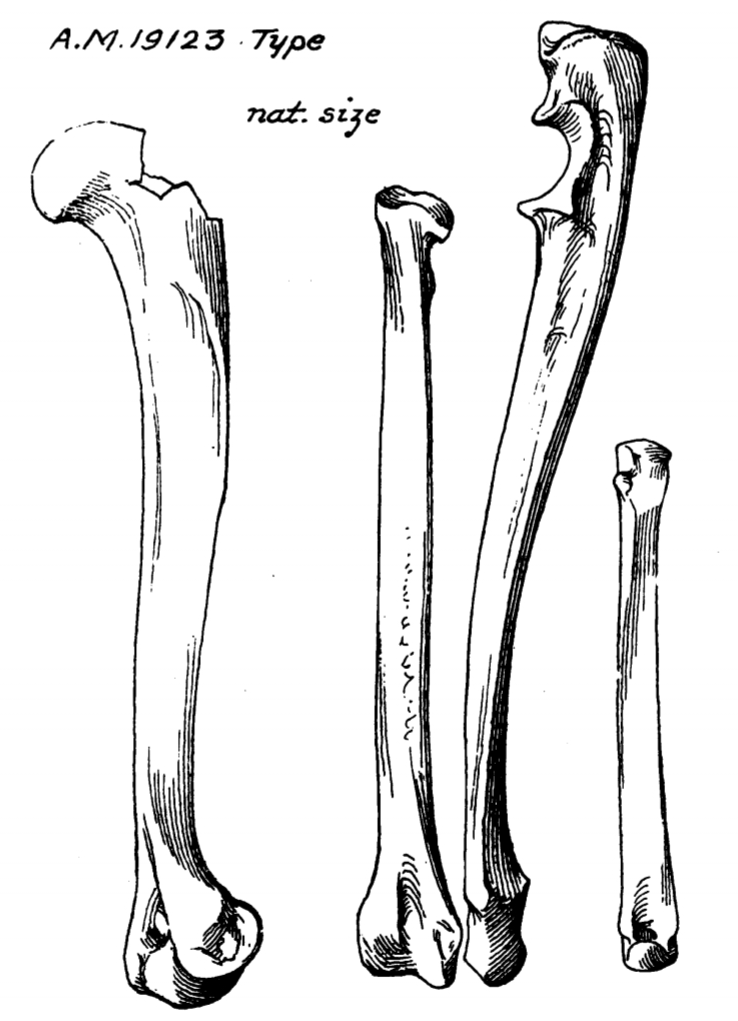
Holotype limb bones of A. gracilis
Scientific classification Edit this classification
Kingdom: Animalia
Phylum: Chordata
Class: Mammalia
Order: Carnivora
Genus: Asiavorator
Spassov & Lange-Badré, 1995
Species:
A. gracilis
Binomial name
Asiavorator gracilis
Matthew & Granger, 1924
Synonyms
List

Asiavorator (meaning "Asian devourer") is an extinct genus of civet-like carnivoran belonging in the family Stenoplesictidae. It was endemic to Asia and lived during the Eocene and Oligocene epochs.[1]

The teeth of Asiavorator suggest that it was omnivorous or more precisely, ranged from hypercarnivorous to mesocarnivorous.[2][3]

Taxonomic history

[edit]

The first remains of Asiavorator to be found were collected in the 1922 field season of the Central Asiatic Expeditions near the Loh campsite in Övörkhangai Province, Mongolia. This locality is part of the Hsanda Gol Formation. The specimens, designated AMNH 19123, included limb bones and lower teeth. Matthew and Granger (1924) described AMNH 19123 as the type specimen of a new carnivoran species they named Palaeoprionodon gracilis.[4]

The genus Asiavorator was erected by Spassov and Lange-Badré in 1995 as a monotypic genus for their new species A. altidens, with the type specimen of A. altidens being a mandible (FM 487-95) from the Hsanda Gol Formation.[5] Dashzeveg (1996) described a new species of stenoplesictid, Stenoplesictis simplex, based on a mandible (PSS 27-25) from the Ergilin Dzo Formation of Mongolia.[6] In 1998, Hunt reassigned S. simplex to the genus Shandgolictis, renaming it Shandgolictis simplex and assigning it to Aeluroidea.[7]

Later authors found that Asiavorator altidens and Palaeoprionodon gracilis were synonymous and represent a distinct genus, thus the two were synonymized as Asiavorator gracilis, retaining the specific name of the latter and the generic name of the former. A re-examination by Egi et al. (2016) found that the tooth measurements of PSS 27-25 are not notably different from those of AMNH 19123, thus concluding that Stenoplesictis simplex and Shandgolictis simplex are junior synonyms of Asiavorator gracilis. Currently, A. gracilis is the only accepted species in the genus.[8]

Description

[edit]

Using the carnivoran regression on the specimen PSS 21-25, Asiavorator has been estimated to have a body mass of 3.6 to 5.6 kg. This is larger than Alagtsavbaatar, a feliform known to have been sympatric with Asiavorator, whose body mass has been estimated at 2.6 to 3.6 kg.[8]

Skull and teeth

[edit]
Top and side views of the teeth in the specimen AMNH 19123

Like many other carnivorous mammals, Asiavorator has long and sharp-pointed canine teeth, presumably used in killing prey. The upper and lower canines were approximately equal in length. The carnassial resembles that of a cat, being compressed and possessing a vestigial heel and reduced metaconid. The first upper molar is very elongated, measuring 10 mm long and 4.5 mm wide in the specimen PSS 27-25. An obtuse angle is formed by the shearing edges of the protoconid and paraconid, while the well-developed metaconid is placed against the internal posterior side of the protoconid. The base of the crown has a cingulum on the external side. The second molar is bunodont, and possesses two roots and a flattened trigonid of three low cusps and a trenchant heel. The fourth premolar is large and compressed, similar to the condition seen in domestic cats.[4][6]

Asiavorator had a well-developed masseteric fossa and a thin mandible. The mandibular corpus has a prominent lower edge below the molars. Below the first molar, the mandibular ramus of the specimen PSS 27-25 measures 13.4 mm in height and 5.6 mm in width.[6]

Limbs

[edit]

The limb bones of Asiavorator were slender and long. At its distal end, the humerus expanded transversely with a strong epicondylar bridge. The ulna was wide, and at the proximal half of the shaft it was flattened, whereas the distal half was triangular, though significantly less so than the slender radius in sectional area. Asiavorator had long and slender metatarsals, and the first metatarsal bone was vestigial or absent. The calcaneum lacks a fibular facet. The talus bone possessed deep and narrow trochlea, with a well-developed inner crest.[4]

Classification

[edit]

In the original description of the holotype, Matthew and Granger (1924) assigned the species to the genus Palaeoprionodon as P. gracilis, referring it to the European genus based on similarities in the dentition and proportions of the limbs, though they did clarify that this referral is provisional until the dentition is better known.[4]

The referred mandible PSS 27-25 was described as a new species, Stenoplesictis simplex, by Dashzeveg (1996). The author placed S. simplex in the family Viverridae following Hunt (1989), which listed the Stenoplesictinae as a probable subfamily of viverrids.[6][9] This subfamily would later be elevated to family level and renamed Stenoplesictidae. The placement of S. simplex in the genus Stenoplesictis was refuted by Peigné and de Bonis (1999) based on the dentition, though they did not assign the species to another genus. However, they did note that the type specimens of "Palaeoprionodon" gracilis and "Stenoplesictis" simplex were very similar, and that this species likely belonged in the same lineage as "Stenoplesictis" indigenus (later renamed Alagtsavbaatar indigenus).[10]

Spassov and Lange-Badré (1995) did not assign Asiavorator to any family in their description of the genus, placing it as Feliformia incertae sedis.[5] Egi et al. (2016) made the same taxonomic placement for the genus, though they do state that the Mongolian small feliforms (Asiavorator, Alagtsavbaatar and Shandgolictis) appear to form a monophyletic clade relative to the European genera Stenoplesictis, Palaeoprionodon and Haplogale, which independently evolved hypercarnivory. They state this clade is a sister taxon to the extant Feliformia excluding the Nandiniidae.[8]

Paleoecology

[edit]

The oldest known fossils of Asiavorator originate from the late Eocene-aged Ergilin Dzo Formation of Mongolia, suggesting the genus first evolved during the Ergilian age. Sedimentary analyses suggest the Ergilin Dzo Formation was a floodplain environment with a braided stream network formed by fluvial systems.[11] In this environment, sympatric predators included the nimravids Nimravus and Eofelis, the entelodontid Entelodon, and the related stenoplesictid Alagtsavbaatar.[8][12]

Most known specimens of Asiavorator were found in the Hsanda Gol Formation, which is dated to around 33.4 to 31 million years ago (early Oligocene). This formation is believed to have been deposited in an open, semi-arid steppe environment with playa lakes and ephemeral rivers.[13] Many types of small mammals would have coexisted with Asiavorator in this habitat, such as several rodent species, the lagomorph Desmatolagus and the erinaceid Palaeoscaptor.[14][15] Sympatric predators included several species of Hyaenodon, the feliforms Shandgolictis, Nimravus and Palaeogale, the amphicynodontids Amphicynodon and Amphicticeps, and the didymoconids Didymoconus and Ergilictis.[16] Herbivorous mammals were also present, such as the gelocid Pseudogelocus, the largest of these being the hornless rhinocerotoid Paraceratherium transouralicum.[17][18]

References

[edit]
[edit]
Revisions and contributorsEdit on WikipediaRead on Wikipedia
from Grokipedia
Asiavorator is an extinct of small, carnivorous feliform belonging to the infraorder , known exclusively from the late epoch in . The is represented by a single , Asiavorator gracilis, originally described as Palaeoprionodon gracilis and later including Asiavorator altidens as a junior synonym, based on mandibular fossils exhibiting hypercarnivorous dental adaptations, including a narrow, bladelike (m1) with a reduced metaconid and talonid, and a plesiomorphic m2 featuring three trigonid cusps and a well-developed talonid. These features suggest a specialized predatory similar to that of early sabercats like Anictis, though Asiavorator was likely more civet-like in overall build, with a body adapted for agility in a forested or environment. First named and described in based on a from the Shand Gol Basin (equivalent to the Hsanda Gol Formation), A. gracilis highlights the diversity of early aeluroid carnivorans in during a period of faunal transition. Subsequent studies have synonymized A. altidens with A. gracilis, consolidating the genus to this one . evidence indicates Asiavorator occupied a niche as a , preying on small vertebrates in a shared with other primitive carnivorans, contributing to our understanding of feliform evolution before the radiation of modern cat-like mammals.

Taxonomy and naming

Etymology

The genus name Asiavorator was established by Spassov and Lange-Badré in 1995 for a new carnivoran from the Late of , derived from "" (indicating its endemic Asian distribution) and the Latin vorator (devourer), underscoring its predatory, carnivorous adaptations. The A. altidens bears the altidens, coined in the same from the Latin roots altus (high or elevated) and dens (tooth), in reference to the notably tall, robust dental morphology evident in the specimen (a nearly complete ). Earlier material now assigned to Asiavorator was originally named Palaeoprionodon gracilis by Matthew and Granger in , with the species epithet gracilis (Latin for slender or graceful) selected to denote the animal's slim, elongated skeletal proportions as inferred from the fragmentary remains. Subsequent taxonomic revisions, including synonymy of P. gracilis with A. altidens, have retained this for the species in its current combination. Provisional names for additional species, such as A. neelegans, lack formally established etymologies due to their tentative status and ongoing synonymy discussions.

Discovery and classification history

The first fossils attributable to Asiavorator were collected in 1923 during the third Central Asiatic Expedition of the , led by , from the Hsanda Gol Formation in the eastern of . These specimens, including the holotype (AMNH 19123, fragmentary lower jaw and postcranial elements), were formally described by William Diller Matthew and Walter Granger in 1924 as a new species, Palaeoprionodon gracilis, within the viverravid subfamily , based on their small size, morphology, and overall dental structure suggestive of a primitive civet-like carnivoran. This initial classification reflected the limited comparative material available at the time and the expedition's broader focus on documenting Tertiary mammal faunas from . In 1995, Nikolai Spassov and Brigitte Lange-Badré proposed the new genus Asiavorator to accommodate Asian stenoplesictid carnivorans, erecting the type species A. altidens based on a Bulgarian-held holotype (a nearly complete mandible, NMNHS 86/85) from the Upper Oligocene Shand Gol Formation. They reclassified the Mongolian P. gracilis as A. gracilis, emphasizing shared apomorphies such as elongated carnassials and reduced premolars that distinguished it from European viverravines and aligned it with early feliforms. The A. altidens holotype originated from the Loh-us Huduk locality, approximately 1.5–2 km south of the Shand Gol type area, highlighting the genus's restricted distribution in Late Oligocene deposits. Spassov and Lange-Badré also synonymized Stenoplesictis simplex (described by Dashzeveg in 1996 from the Ergilin Dzo Formation) and Shandgolictis simplex under Asiavorator, based on comparable mandibular and dental features, though these referrals were later refined in subsequent revisions. Subsequent fieldwork by the Austrian-Mongolian Paleontological Expeditions in the Taatsiin Gol region uncovered additional Asiavorator material from the Hsanda Gol and Shand Gol formations, prompting provisional recognition of undescribed taxa. In their 2003 analysis of carnivore guild structure, Doris Nagel and Madelaine Morlo mentioned an Asiavorator new species based on mandibular fragments (e.g., NHMW 2007z0038/0001) from the Lower Taatsiin Gol localities, characterized by distinct proportions but not formally named. This was elaborated in the 2006 carnivore guild study by Gertrud Daxner-Höck, Martin R. B. Reichardt, and colleagues, which referenced Asiavorator sp. nov. (provisionally termed "neelegans" in field notes) alongside Shandgolictis elegans from the same area, underscoring ongoing taxonomic refinements without erecting new species. These works built on Dashzeveg's 1996 descriptions of Mongolian carnivores, integrating Asiavorator into biostratigraphic correlations across the .

Accepted species

The taxonomy of Asiavorator remains debated, with some authors (e.g., Hunt 1998) proposing A. gracilis as a senior of the type species A. altidens, consolidating the genus to a single , while others maintain separation based on dental differences; as of 2024, the consensus is unresolved but often treats them as distinct. The genus is known exclusively from deposits in . The species A. gracilis (originally Palaeoprionodon gracilis) was described based on fragmentary lower and postcranial elements ( AMNH 19123) from the Hsanda Gol Formation in the Valley of Lakes region. This material exhibits slender dentition with low-crowned and relatively gracile body proportions, suggesting a , insectivorous to carnivorous lifestyle adapted to open paleoenvironments. Synonyms for A. gracilis include Stenoplesictis simplex, a junior based on additional mandibular and dental fragments from the same formation, later reassigned due to overlapping morphology. A. altidens was erected in 1995 from a nearly complete right (NMNHS 86/85) preserving p3–m2, collected from the Shand Gol Formation near Loh-us Huduk in southern . This species is diagnosed by its higher-crowned cheek teeth (reflected in the specific epithet altidens, meaning "high-toothed") and a more robust mandibular ramus compared to A. gracilis, indicating potential specialization for processing tougher prey or increased bite force. No synonyms have been proposed for A. altidens, though some authors have debated its distinction from A. gracilis based on limited comparative material. Referred specimens include additional isolated teeth from the Taatsiin Gol area, reinforcing its validity as a separate . A potential third species has been informally recognized from fragmentary remains, including a right with p3–m2 (NHMW 2007z0038/0001), collected from the Taatsiin Gol Formation in central . This material, described as Asiavorator n. sp. in preliminary accounts, differs in dental proportions but remains unnamed and unaccepted due to its incompleteness and lack of formal diagnosis. Overall, the known fossil record of Asiavorator is sparse, comprising approximately five specimens across the recognized taxa, all derived from Mongolian localities spanning the late .

Description

Cranial and dental features

The cranial morphology of Asiavorator remains poorly known, with no complete skulls preserved; the genus is primarily documented from mandibular fragments and isolated teeth. However, it likely exhibited features similar to closely related early aeluroids such as Stenoplesictis, including a relatively short muzzle with wide nasals that taper toward the orbits, moderately developed postorbital processes, and forward-facing orbits partially encircled by bone to facilitate stereoscopic vision. The braincase in Stenoplesictis minor is oval-shaped with a moderate postorbital constriction and a small overall size relative to the rostrum, reflecting primitive feliform conditions. Zygomatic arches, though incompletely preserved in known early aeluroid material, appear robust to support temporalis musculature and enhanced bite force, a common adaptation in early aeluroids for processing vertebrate prey. Basicranial features in early feliforms such as Stenoplesictis align with primitive conditions, featuring double-chambered auditory bullae divided by a true bony septum and a prominent ventral process on the promontorium for articulation with the ectotympanic, indicating advanced auditory capabilities. The dental formula of Asiavorator follows the typical feliform pattern of I 3/3, C 1/1, P 4/4, M 2/2. Dental adaptations in Asiavorator altidens emphasize carnivory, with long, sharp canines suited for piercing and sectorial (P4/m1) resembling those of primitive cats for efficient shearing. The m1 is narrow and bladelike, featuring a small, low metaconid on the trigonid, a reduced and less basined talonid, and a large paraconid-protoconid blade, marking incipient hypercarnivory. The m2 is small and plesiomorphic, with three trigonid cusps arranged in an and a well-developed talonid. Upper molars, though not directly known for Asiavorator, parallel those of Stenoplesictis in being transversely elongated with a low protocone, no metaconule, a larger paracone than metacone, and trenchant cusps for slicing. The teeth of A. altidens display higher-crowned structures and stronger paracones on upper premolars, enhancing shearing efficiency, with sectorial premolars (p/3–4) featuring moderately developed buccal cingulids and accessory cuspids, a narrow m1 trigonid, and a double-rooted m2 with a trenchant talonid.

Postcranial skeleton

The postcranial skeleton of Asiavorator is represented by fragmentary but informative remains, particularly from the type specimen (AMNH 19123), which preserves portions of the limbs and pes. These elements reveal a lightweight, agile build adapted for versatile locomotion on the ground and in trees, with overall proportions resembling those of small felids or viverrids. The includes presacral vertebrae that indicate a flexible spine similar to that of modern (), enabling sinuous movements and maneuverability. Associated ribs are slender, further supporting an agile without heavy for specialized locomotion. bones exhibit elongation for reach and speed: the is long and slender with transverse expansion at the distal end and a strong epicondylar bridge for robust extension; the is similarly elongated and slender. The is broad and flattened proximally, narrowing to a triangular distal portion with a smaller cross-sectional area than the . The possesses a pronounced process, enhancing mobility for or . Claws are semi-retractile, akin to those in modern linsangs (Prionodon), aiding grip on substrates. Hindlimb elements are likewise slender, with the indicating a lightweight design for quick acceleration. The and show distal fusion, stabilizing the ankle for efficient weight transfer in a stance. The astragalus features a narrow, deep trochlea with a prominent inner crest, while the calcaneum lacks a fibular facet. Metatarsals are long and slender, with the first metatarsal vestigial or absent, reinforcing adaptations for agile, semi-arboreal or terrestrial . Illustrations of the limbs from the type specimen depict cat-like proportions, with no notable variations across the . These traits align closely with modern analogs such as linsangs, underscoring Asiavorator's role as an early feliform with versatile locomotor capabilities.

Body size and proportions

Asiavorator altidens is estimated to have had a body mass ranging from 3.6 to 5.6 kg, derived from allometric scaling using measurements of approximately 12–15 cm and limb bone dimensions from available specimens. This size is consistent with early aeluroids and exceeds that of contemporaneous small carnivorans like Alagtsavbaatar (2.6–3.6 kg). The total body , including a , is reconstructed as 60–80 cm, with the tail likely serving for balance during agile movement. The of Asiavorator exhibits a slender, civet-like build, characterized by a low-slung and short legs relative to body , indicative of adaptations for both pursuit and scansorial climbing. Fragmentary postcranial elements, such as slender humeri and long metatarsals, support this agile physique, with the first metatarsal vestigial or absent, suggesting locomotion. These proportions align with those of modern small viverrids or felids, such as the genet or , emphasizing hypercarnivorous efficiency in forested or mixed habitats. Body mass estimates for the genus have been refined in recent studies using updated regressions on (M1) dimensions and length, incorporating broader feliform datasets to account for phylogenetic scaling biases.

Phylogeny and

Family affiliation

Asiavorator is placed within the infraorder of the suborder , with its family-level affiliation remaining indeterminate among early feliform carnivorans. While some early feliform genera, such as Stenoplesictis, Shandgolictis, and Moghradictis, have been attributed to the polyphyletic family Stenoplesictidae—a grouping of Eocene to taxa characterized by primitive features—Asiavorator is not formally included and shares only general resemblances in and build. Shared diagnostic traits among these genera include civet-like , such as a double-rooted m2 that is less reduced compared to European forms like Stenoplesictis, a slender postcranial build adapted for , and overall primitive cranial morphology. Historically, genera attributable to such early feliform assemblages were initially assigned to other families, such as (as primitive nimravines) or Viverravidae, based on superficial resemblances in and build. The 1995 description of Asiavorator altidens by Spassov and Lange-Badré erected the genus and positioned it within based on dental and cranial features indicative of hypercarnivory, such as a trenchant m1 carnassial, without assigning a specific family. Although groupings like Stenoplesictidae remain referenced in some classifications for early feliforms, studies from the late and have debated their , proposing due to of dental specializations rather than shared ancestry; for instance, Hunt (1998) highlighted paraphyletic arrangements based on auditory region disparities, a view echoed in analyses of material.

Evolutionary relationships

Phylogenetic analyses position Asiavorator as a basal member of within the suborder , representing an early diversification of cat-like carnivorans in during the late Eocene to . In a 1995 cladogram constructed by Spassov and Lange-Badré based on dental and cranial morphology, Asiavorator altidens emerges near the base of aeluroids, distinct from hyaenodont creodonts and showing primitive feliform traits such as a trenchant m1 and plesiomorphic m2 structure. This analysis highlights its divergence from , emphasizing Asiavorator's placement within true rather than the extinct order. Asiavorator shows close affinities with other Mongolian basal aeluroids such as Alagtsavbaatar and Shandgolictis, supported by shared features including a reduced upper second molar () and elongated limb elements indicative of scansorial locomotion. Hunt's 1998 morphological study further refines this positioning, suggesting affinities near the origins of based on postcranial adaptations like slender, forelimbs and basicranial features retaining plesiomorphic conditions seen in extant Nandinia. These traits suggest Asiavorator as a stem-feloid, bridging early aeluroid experimentation with later viverrid diversification. Post-2006 analyses, including Egi et al.'s revision of Mongolian feliforms, extend Asiavorator's temporal range into the late Eocene and affirm its basal aeluroid status through reassignment of related taxa like Stenoplesictis simplex to A. gracilis, based on shared dental specializations toward hypercarnivory. More recent analyses, as reviewed by de Bonis et al. (2024), question the utility of polyphyletic assemblages like Stenoplesictidae and underscore the unresolved branching of basal feliforms, positioning Asiavorator as part of an endemic radiation; the new genus Fejfarictis from is proposed as a sister taxon, supporting dispersal from Asia to in the early .

Distribution and paleoecology

Geological occurrences

Fossils of Asiavorator are restricted to in , with no known occurrences elsewhere. The genus spans the Late Eocene to Early , approximately 37.2–31 Ma. The earliest records derive from the Ergilin Dzo Formation in southeastern (), correlated to the Late Eocene (37.2–33.9 Ma) based on and regional correlations. The Late Eocene record is based on material originally described as other taxa but later synonymized with A. gracilis comb. nov. from the Ergilin Dzo Formation. Most specimens, however, come from the Hsanda Gol Formation (formerly partly known as the Shand Gol Svita) in central (Taatsiin Gol Basin), dated to the Early (~34–31.5 Ma for lower beds, extending to ~28 Ma overall) via U-Pb of interbedded basalts and . Key fossil sites include the Taatsiin Gol area and Loh-us Huduk locality within the Hsanda Gol Formation, as well as the Ergilin Dzo locality in Dornogovi Province for the older formation. These fossils occur in fluvial-lacustrine deposits, characterized by sandstones, mudstones, and conglomerates indicative of riverine and playa lake environments. Specimens are typically fragmentary, consisting of isolated teeth, jaw fragments, and partial skeletons, reflecting taphonomic processes such as fluvial transport and surface exposure. Holotype material includes the type specimen of A. altidens at the National Museum of Natural History in Sofia (NMNHS) and specimens of A. gracilis (originally described as Palaeoprionodon gracilis) at the American Museum of Natural History (AMNH).

Habitat and associated fauna

Fossils of Asiavorator are known from southeastern (Ergilin Dzo Formation, late Eocene) and central (Hsanda Gol Formation in the Taatsiin Gol Basin, early ). In the late Eocene Ergilin Dzo Formation of southeastern , the region consisted of humid floodplains supporting woodlands and forested landscapes. By the early in the central Taatsiin Gol Basin (Hsanda Gol Formation), environments had transitioned to semi-arid steppes and open terrains due to and regional associated with the Eocene- boundary. This climatic shift, part of a broader arid/semiarid belt across , likely influenced the evolution of adaptations in Asiavorator for navigating more open environments. As a hypercarnivorous predator, Asiavorator occupied a niche as a small to medium-sized hunter (estimated 3–10 kg body mass) targeting small vertebrates such as and birds, or possibly scavenging, based on its dental morphology resembling that of modern cats. Its cat-like , with sectorial , indicates a diet dominated by and , placing it within a where approximately 35% of were flesh specialists and 24% included bone in their diet. Asiavorator competed for prey with contemporaneous , including the hyaenodontid eminus (a common small predator) and the nimravid Nimravus mongoliensis (rarer and larger), in a diverse, endemic assemblage adapted to savannah-like conditions. The associated fauna in the Taatsiin Gol Basin reflects a mixed ecosystem with large herbivores and smaller mammals. Asiavorator coexisted with the gigantic indricothere Paraceratherium species during the early Oligocene in the Hsanda Gol Formation. Smaller carnivorans and insectivores included Amphicticeps (a weasel-like feliform, first appearing in Zone B, ~31.5–28.1 Ma, very rare at <1.4% of specimens) and Palaeogale sectoria (an early mustelid insectivore, also rare in Zone B). Guild analysis from the Taatsiin Gol carnivore assemblage highlights Asiavorator's role as a medium-sized predator in a highly endemic community dominated by hyaenodontids (five species of Hyaenodon), alongside didymoconids and other carnivorans, underscoring intense competition and niche partitioning in this post-Eocene transition ecosystem. Inferences from postcranial remains suggest agile locomotion; the slender, elongate limb bones of Asiavorator indicate capabilities for climbing or running in varied terrains, consistent with its small size and the opening of habitats.

References

Add your contribution
Related Hubs
User Avatar
No comments yet.